democracynow.org
Stories:

Ralph Nader: Sanders Should Stay in Democratic Race, Is Only Losing Due to Anti-Democratic System
Polls have opened in West Virginia, where Vermont Senator Bernie Sanders and Hillary Clinton are vying for the 29 delegates up for grabs. Eight years ago, Clinton won West Virginia in a landslide, beating Barack Obama by 40 percentage points—but many polls project Sanders will win today. We speak to longtime consumer advocate and former presidential candidate Ralph Nader, who argues that Sanders would be winning the primary race if every state had open primaries.
TRANSCRIPT
This is a rush transcript. Copy may not be in its final form.
AMY GOODMAN: We’re on the road today in Minneapolis, Minnesota, headed to Cambridge, Massachusetts. Well, polls, though, have opened in West Virginia, where Vermont Senator Bernie Sanders and Hillary Clinton are vying for the 29 delegates up for grabs. Eight years ago, Hillary Clinton won West Virginia in a landslide, beating Barack Obama by 40 percentage points. But many polls project Sanders will win today. Clinton has faced widespread criticism in West Virginia after she recently said, quote, "We’re going to put a lot of coal miners and coal companies out of business." While Clinton maintains a lead in both pledged and superdelegates, Sanders is vowing to continue his fight to the Democratic National Convention in July.
SEN. BERNIE SANDERS: There are nine more primaries and caucuses remaining, tomorrow one in West Virginia. We hope to win there. And then on June 7th, there is the big day, because it’s New Jersey and California. And if we can win here in New Jersey and win in California and win in some of the other states, and if we can win a majority of the pledged delegates, we’re going to go into Philadelphia and the Democratic convention and expect to come out with the Democratic nomination. So don’t let—don’t let anybody tell you this campaign is over. We’re going to fight for the last vote we can find in New Jersey and California.
AMY GOODMAN: Over the weekend, Hillary Clinton urged Bernie Sanders to help unify the Democratic Party. She spoke on CBS.
HILLARY CLINTON: I’m 3 million votes ahead of Senator Sanders, nearly 300 pledged delegates ahead of him. He has to make his own mind up, but I was very heartened to hear him say last week that he’s going to work seven days a week to make sure Donald Trump does not become president. And I want to unify the party. I see a great role and opportunity for him and his supporters to be part of that unified party, to move into not just November to win the election against Donald Trump, but to then govern based on the progressive goals that he and I share.
AMY GOODMAN: For more, we’re joined by former presidential candidate and longtime consumer advocate Ralph Nader. His recent piece for The Huffington Post headlined "The Need for Progressive Voices." His forthcoming book, Breaking Through Power: It’s Easier Than We Think.
Ralph, welcome back to Democracy Now! Talk about the state of the presidential race today.
RALPH NADER: Well, the state is that the corporatist and militarist Hillary Clinton is making a premature boast of victory. The only reason she’s ahead is because of two anti-democratic systems: one, the unelected superdelegates, her cronies, mostly, in Congress, who were elected by nobody to be delegates—they were appointed; and second, the closed primaries. Primaries are paid by taxpayers; they should not be closed to independent voters. And if independent voters could have voted in these primaries, Bernie Sanders would have defeated Hillary Clinton. In fact, in one Tuesday a couple weeks ago, he lost four primaries, in Pennsylvania, Delaware, Connecticut, because of closed primaries. The one that was open to independent voters, in Rhode Island, he won. So, I wouldn’t be as boastful as Hillary Clinton.
She’s got to divulge her transcripts. The Wall Street Journal just reported that she is getting more money from Wall Street than all other candidates combined, in the Republican and Democratic Party, running for president. And that’s one reason why she has to divulge those transcripts, which she had her sponsors, the big bankers and other closed business conventions, pay a thousand dollars each for a stenographer to write—to have these stenographic transcripts. So she’s got them. And she’s got to divulge them, so the American people can see how she says one thing in closed doors to the business lobbyists and another thing sweet-talking the public and mimicking the language of Bernie Sanders.
AMY GOODMAN: I want to turn to Hillary Clinton’s press secretary, Brian Fallon, who was speaking on CNN in April.
BRIAN FALLON: One week ago today, in this very chair, Tad Devine from the Sanders campaign was sitting here talking to you, and you asked him, "You know, why didn’t Senator Sanders decide to run as an independent? Why did he decide to run through the Democratic primary?" And Tad Devine said that for a very simple reason, he decided to run as a Democrat: He did not want to be a Ralph Nader, he did not want to be a spoiler. If he didn’t win the Democratic nomination, he didn’t want to spoil the chances for the Democrats to retain the White House.
I’m afraid that if the attacks in the style of yesterday’s baseless accusation continue, that that’s exactly what he’ll be doing. And this has been an extraordinary effort that the Sanders campaign has embarked upon. They’ve brought so many people into the process. But yesterday, the tone of the attacks was suggesting that if the Democratic Party doesn’t see fit to nominate Bernie Sanders, then it’s not a party worth supporting. And that is poisonous rhetoric that would seriously imperil our party’s ability to come together in these closing weeks.
AMY GOODMAN: So that was Hillary Clinton press secretary, Brian Fallon. Your response, Ralph Nader?
RALPH NADER: Well, the two-party tyranny is so exclusionary, of ballot access barriers, keeping independent candidates from being on the debates, and on and on—here we go again—that the Hillary coterie is getting ready basically to say, "Drop out, drop out, drop out, Bernie Sanders." I don’t think anybody should be told to drop out. They’re exercising their First Amendment rights of speech, petition, assembly. You want to oppose them, fine. But to tell them to drop out is to tell them to shut up and give up their First Amendment rights. I wrote—in 2008, I wrote a letter to Hillary Clinton urging her not to drop out when the Obama forces, in June of that year, were telling her to drop out. So I think that’s very anti-democratic and very presumptuous, especially since the only reason Hillary Clinton is ahead now in delegates is because of closed Democratic primaries and the superdelegates, who are her cronies, as I mentioned, mostly in Congress.
AMY GOODMAN: Explain that, Ralph. I think people, for the first time in 2016, may be waking up to all these rules, and they may seem obvious, especially to you, a presidential candidate, but even the term "closed presidential primary."
RALPH NADER: Yeah, well, as explained in a nice article by my former campaign manager, Theresa Amato, what happens is that first an independent candidate has to surmount 50 state ballot access laws, some of them so draconian as to defy satire, like in North Carolina and Texas and California.
The second thing they have to do is ward off all kinds of frivolous lawsuits, for example, by the Democratic Party. They confronted us with 24 lawsuits in 12 weeks in 2004 in various states to get us off the ballot, drain our resources, distract our focus. We won most of them. But it was a—it was a typical example of the workings of the two-party tyranny.
And third, these primaries, whether Democrat primaries or state primaries, Amy, are paid by the taxpayer. And many states have open primaries. They say, "OK, anybody can cross over and vote in any primary." Well, I think that’s proper. If the parties want to pay for their own primaries with their own private money, that’s one thing. But you don’t have taxpayer-supported official primaries that become the private preserve of closed primaries, Democrat or Republican.
AMY GOODMAN: Last month, Bernie Sanders appeared on ABC’s This Week with George Stephanopoulos.
GEORGE STEPHANOPOULOS: If the contest doesn’t go the way you hope, will you be able to follow the Clinton model of 2008, which she talked about on this GMA town hall this week, and make an enthusiastic case for her, the way she pushed for President Obama?
SEN. BERNIE SANDERS: Well, that is totally dependent on what the Clinton platform is and how she responds to the needs of millions of Americans who are sick and tired of establishment politics and establishment economics. You know, I can’t snap my finger and tell people what to do. But what I will do is do everything that I can to make sure that somebody like a Donald Trump or some other right-wing Republican does not become president of the United States. We do not need more tax breaks for billionaires, more cuts to Social Security, Medicare, more ignoring the fact—the Republicans don’t even accept the reality of climate change, let alone being prepared to do something about it. So I will do everything that I can to defeat any Republican candidate.
If Secretary Clinton is the nominee, she is going to have to make the case to the American people, not just to my supporters, but all Americans, that she is prepared to stand up to the billionaire class, she is prepared to fight for healthcare for all Americans, that she is prepared to pass paid family and medical leave, make sure that college is affordable for the young people in this country. That is what she has got to do. And I hope, if she is the nominee, that she does that well.
AMY GOODMAN: That was Bernie Sanders speaking on ABC. Ralph Nader?
RALPH NADER: Well, that’s what he should say, but he should go further. Like, she’s not going to support his Wall Street speculation tax, his full Medicare for all with free choice of doctor and hospital, much more efficient, much more life-saving. She is not going to support his tax proposals. She certainly is not going to support a $15 minimum wage. She’s at $12. She is not going to support having diplomacy start with waging peace instead of waging war. She’s a certified hawk. I never saw a weapons system or a war she didn’t like. So there are huge differences.
So, Bernie Sanders has got to—if he doesn’t make the nomination, he has got to lead a civic mobilization, that could be directed against Trump, but directed against all politicians, based on his broader agenda. And I suggest that he have a huge rally on the Mall in Washington sometimes in the early fall, and then break it down to regional rallies all over the country, in order, number one, not to disappoint and disillusion millions of his followers, and, second, to make a declaration that elections in our country should not be off-limits to democracy—or democracy, civil society—because when they are, elections become, as they have been, very vulnerable to commercialism, to politicians selling themselves to super PACs, and to the mass commercial media making a bundle of money on outrageously outspoken candidates like Donald Trump, who get ratings for Fox and CNN and others, and they’ve turned it into a profit center. So it’s like an industry separated from the democratic society.
And to give you an example, Amy, of what happens when we allow this to occur, we are assembling the largest gathering of accomplished citizen advocacy groups over the largest number of reforms and redirections in our country ever brought together in American history. And that is on May 23rd, 24th, 25th and 26th of this year at Constitution Hall in Washington, D.C. And it will be streamed all over the country. These are many people who appeared on Democracy Now! It’s almost like an alumni reunion, Amy. And these are the people who make America great. These are the people who advance health, safety, economic well-being, democratic procedures, push for cleaner elections, mobilize labor and small taxpayers, and try to rebuild public works and have a better healthcare system and a better set of voices. And they’re completely excluded. They’re excluded from the election coverage. They’re excluded from the candidates, except for Bernie Sanders.
Here are some quick examples. Recently there was a gathering in Washington for the press on solitary confinement, by the leading specialist in the area, Jim Ridgeway, and several people who were arbitrarily and cruelly confined in a solitary cell. No press whatsoever. And then, about the same time, George Washington University had a major symposium on tax havens, tax escapes of corporations, in places like the Grand Cayman Island. No press whatsoever. And then they had these Democracy Awakening and Democracy Spring in Washington, D.C. The Washington Post just completely declined to cover it. Democracy Now! covered it, NPR covered it. But they were trying to push into the electoral process issues like campaign finance reform.
And here’s the real kicker. Former FCC Commissioner Michael Copps, a very progressive man, has been trying to get the mass media to pay attention to Section 317 of the 1934 communications law. What does that say? It requires, without exception, the disclosure of all donor names to these PACs and super PACs. There is no exception. And the FCC has been sitting on a Common Cause petition and other previous petitions, and doing nothing. Gets no coverage by the mass media, that is focusing on an ever-increasing trivial presidential race, avoiding major issues, avoiding the great issues of the distribution of power, wealth and income in our society and its impact abroad, continuing to do that and not allowing the civil society to break in.
That’s why we call our gathering at Constitution Hall "Breaking Through Power." You can go—to get tickets, you can get tickets by going to BreakingThroughPower.org. And there are also scholarships for people who can’t afford the ticket. We want to fill that great hall and make a progressive demonstration that it’s a lot easier than you think to make change. And we’ve got 18 groups on day one to demonstrate that. And the second is that the whole is greater than the sum of its parts. No one’s ever brought these groups together.
And the third is a surprise, is that a lot of these issues are supported by left-right. They’re supported by left-right. Conservatives like to have their children breathe clean air and drink clean water and eat safe foods and have safe medicines and have a voice and have a decent education, and when they grow up, to have a living wage. There’s 75 to 80 percent of the people support a higher minimum wage. So I hope people will really come together on this in Washington, D.C., May 23, 24, 25, 26. We have to move to civic mobilization, because that’s the root, Amy, of the quality of elections that we’re given. And if we don’t become active and engaged civically, outside the election process, we get the terrible politics that we’re seeing today.
AMY GOODMAN: Ralph, we have to break, but we’re going to come back. I want to ask you about the West Virginia primary, about the possibility of a third-party candidate, both on the Republican side, Democratic side, what would happen if Bernie Sanders didn’t clinch the nomination, what do you think he should do. We’re talking to Ralph Nader, longtime consumer advocate, corporate critic and former presidential candidate. We urge you to stay with us as we continue to discuss the 2016 presidential race and the state of America today. ... Read More →
Nader: The U.S. Political & Media System Is Designed to Obstruct, Silence Third-Party Candidates
Polls show Donald Trump and Hillary Clinton are on pace to be the least popular major-party presidential nominees in decades. Will some voters look to cast votes with third-party candidates? We speak to former presidential candidate Ralph Nader about how the U.S. political system is designed to exclude third-party candidates from the debates and media.
TRANSCRIPT
This is a rush transcript. Copy may not be in its final form.
AMY GOODMAN: I also wanted to ask you about the challenges facing third-party candidates. Last month, I spoke to former New Mexico Governor Gary Johnson, who ran for president on the Libertarian ticket in 2012, who’s seeking the Libertarian nomination again.
GARY JOHNSON: Right now, running for president of the United States as a Libertarian, there is no way that a third party wins. There’s no way that I have a chance of winning, unless I’m in the presidential debates. There is the possibility of being at 15 percent in the polls, though, if I’m in the polls, that I could be in the presidential debates.
AMY GOODMAN: You’re part of a lawsuit going after the Presidential Debate Commission?
GARY JOHNSON: Yes, on the basis that—on the basis of the Sherman Act, that politics is a business, that Democrats and Republicans collude with one another to exclude everybody else. We think that the discovery phase of this lawsuit is going to provide national insight into just how rigged the system is. I come back to the fact that 50 percent of Americans right now declare themselves as independent. Where is that representation?
AMY GOODMAN: So that’s Gary Johnson, the former governor of New Mexico. I was talking to him when I was in Albuquerque. This is Green Party presidential candidate Jill Stein, who appeared on Democracy Now! and announced her candidacy last year.
DR. JILL STEIN: It’s very exciting now that I’m a part, actually, of two cases, through the Green Party or as my campaign, two cases, one of which is being filed today, the so-called leveled field case against the Commission on Presidential Debates, and also the Federal Election Commission for overseeing them, basically for violating federal election law. People think that this is a public service institution. It’s not. It is a private corporation run by the Democratic and Republican parties. When they began to take control of the debates, which are basically rigged so that only their candidates can be in it, the League of Women Voters quit, saying this was a fraud being committed on the American public, and they would have no part of it. It’s an outrage that that fraud has been allowed to continue for decades.
AMY GOODMAN: So that’s Green Party presidential candidate Jill Stein. Talk about the commission, Ralph. Talk about who gets to debate, and also, if Bernie Sanders doesn’t get the Democratic nomination, what you feel he should do.
RALPH NADER: Well, you should have George Farah, who wrote the only book on the private corporation misnamed the Commission on Presidential Debates to give people the impression it’s a government agency. It is not. It’s a private corporation created in 1987 by the Republican and Democratic parties to get rid of the League of Women Voters, who they thought was too uppity, and they were sponsoring the presidential debates.
In no other Western democracy are there so many laws that obstruct voters from voting, obstruct third-party independent candidates from giving more voices and choices to the voter by getting on the ballot. We are at the bottom of the heap. Norway has several parties. Canada has several parties. Chile has several parties. They get on debates. But there are only two that get on the presidential debate—Republican and Democrat—because they control the gate. They control the way in. Had I got on the debates in my presidential run, I would—in one debate, I would have reached more people, by 50-fold, than I reached by filling all the major arenas—Madison Square Garden, Boston Garden, Target Center, etc.—as we did in the year 2000. So, it is very critical. Unless you’re a multibillionaire, you don’t—you don’t have the wherewithal to reach people, because you’re not going to be covered by the mass media.
The mass media, the mass commercial media, basically says, "You can’t win. Never mind that you represent majoritarian positions, like full Medicare for all, like loosening up the electoral process so more people can get in and run and vote. It doesn’t matter that you represent majoritarian positions that are taken off the table by the Republican and Democratic Party—undiscussable, like cracking down on corporate crime, like changing the corporate tax system, like demilitarizing foreign policy, like a public works program that really drains away the trillions of dollars from blowing apart countries like Iraq and other countries overseas in illegal, unconstitutional wars. It doesn’t matter."
So, the media—that’s why in the Constitution Hall mobilization, Amy, we have a day called "Breaking Through the Media." We have a day called "Breaking Through Congress." We have a day called "Breaking Through War." And then the first day is, here’s how it has been done. Here’s how 18 groups, representing so much of the quality of life of America, so successfully over the years have broken through power. So it’s a great four-day seminar for anybody who wants to learn to appoint where they want to then get engaged. So, please go through BreakingThroughPower.org for tickets or scholarships.
AMY GOODMAN: Do you think, Ralph Nader, that Bernie Sanders should become a third-party candidate?
RALPH NADER: It’s almost too late. The latest time someone started a third party was late April. I think it might have been John Anderson. And it’s almost too late now. But more than that is, he will be marginalized. He’ll be excluded. He won’t be reported on. Why should he want to take a very successful, spectacular campaign that he’s conducted so far and be marginalized, be called that politically bigoted word, "spoiler," as if the political system isn’t so spoiled. They’ve got the nerve to call someone who’s a reformer a spoiler.
What he should do—and I put this in my column recently; you can go to Nader.org—is, if he has to concede, what he has to do is go after Trump, not go around the country being a toady of Hillary Clinton and being given his little slogans to mouth. That’s not his character or his personality. He’s got to then cut out and lead a civic mobilization on all these issues, against the political process. And, of course, it will fall out in a way where it will probably undermine Trump more than Hillary, because she’s good in rhetorical adjustments to progressive agendas. That’s what I think he should do.
And then, after the election, he becomes the leader of a national mobilization that can affect local, state and national races, that can give concrete opportunities for the millions of young people who supported this 74-year-old grandfather—who would have predicted that, right?
And thirdly, and most important, is that the structure for a potential alternative party will be in its formation right after the election, for 2020, when districts will be redrawn, etc. Mark Green is going to give a presentation on electoral reform on day four, for example, of the Constitution Hall. We call it a civic marathon. Maybe you should call it "Citizens’ Revolutionary Week." We’ve got to build a civil society. You’re not going to get any elections worth their salt at the national level. Look at the Congress. Does the Congress represent the necessities and hopes and even political beliefs of the American people? Those are gerrymandered, monetized elections. It’s a disgrace to our country that we allowed that to happen. I always tell people—
AMY GOODMAN: Ralph—
RALPH NADER: —you know, if you don’t like your government, you’re looking in the mirror.
AMY GOODMAN: Ralph, we just have two minutes, but this latest crisis within the Republican Party, I mean, what you’re seeing, have you ever seen this before, in your years involved with politics, with really a reformation of the Republican Party? Now the—Ryan is saying, the House speaker is saying, that he will step down as head of the Republican convention if Trump wants him to. Trump wants—Trump has to raise, he says, one-and-a-half billion dollars, so he has to turn to the party that’s rejected him.
RALPH NADER: A lot of unpredictables ahead, Amy. Number one, I think the Republican Party will become the Trump dump for a while. It’s split in so many ways. You have the members of Congress of the Republican Party worrying about their own political skin. What’s going to happen to them? Are they going to get re-elected? Number one. How much down the ladder to the state and local races is this going to occur? Because, you know, Trump is only about Trump. It’s hard to consider him sacrificing his ego to campaign for other people. And there will always be an outrage of the day sucking the oxygen out of any media coverage of other politicians.
On the other hand, you know, Trump has some reformist positions. I mean, we do have to recast these corporate-managed trade agreements, for example. He is leaning toward a higher minimum wage. He has said there should be some tax reforms on Wall Street. On the other hand, you don’t know what he believes or what he says at any given time. This is a huge crisis for the Republican Party and, once again, the luck of the Clintons.
AMY GOODMAN: And for the Democratic Party, the significance of what Bernie Sanders has done?
RALPH NADER: Well, what Bernie Sanders has done, Hillary can undo and reduce any significance and produce huge disillusionment among Bernie Sanders supporters. And they can always stay home. You know, it doesn’t take many people to stay home, as in the congressional election of 2010, to develop a landslide for the Republicans in Congress. And so, Hillary’s got to be very, very careful of that. If her acolytes start beating up on Bernie Sanders, disrespecting him, telling him to drop out, they may be undermining their own cause in November. On the other hand, knowing that Bernie Sanders’ agenda has majoritarian support, I bet—I bet she’s going to start mouthing some of these things in order to beguile the voters.
AMY GOODMAN: Ralph, we have to leave it there. I want to thank you very much for being with us, Ralph Nader, longtime consumer advocate, corporate critic and former presidential candidate.
This is Democracy Now!, democracynow.org, The War and Peace Report. When we come back, we go south to Brazil with Glenn Greenwald. Stay with us. ... Read More →

Glenn Greenwald on Brazil: Goal of Rousseff Impeachment is to Boost Neoliberals & Protect Corruption
Brazil’s Senate has forged ahead with impeachment proceedings against President Dilma Rousseff, despite an earlier move by the interim house speaker to derail the process. The previous house speaker, Eduardo Cunha, had led the bid to oust Rousseff, before he himself was suspended over corruption. On Monday, his replacement, Waldir Maranhão, sought to annul the lower house’s vote in favor of impeachment charges, citing procedural flaws. But the speaker apparently reversed course in the middle of the night, releasing a statement reversing his decision, without explanation. The Senate appears poised to vote Wednesday on whether to put Rousseff on trial; if a majority side against her, she would be suspended. We speak with Pulitzer Prize-winning journalist Glenn Greenwald, who lives in Brazil. "People have started to realize, internationally but also here in Brazil, that although this impeachment process has been sold, has been pitched as a way of punishing corruption, its real goal, beyond empowering neoliberals and Goldman Sachs and foreign hedge funds, the real goal is to protect corruption," Greenwald says.
TRANSCRIPT
This is a rush transcript. Copy may not be in its final form.
AMY GOODMAN: This is Democracy Now!, democracynow.org, The War and Peace Report. I’m Amy Goodman. We’re on the road in Minneapolis, Minnesota, headed to Cambridge, Massachusetts, then to New Jersey, as we turn, though, now to Brazil, where the Senate has forged ahead with impeachment proceedings against President Dilma Rousseff, despite an earlier move by the interim house speaker to derail the process. The previous house speaker, Eduardo Cunha, had led the bid to oust Rousseff, before he himself was suspended over corruption. Well, on Monday, his replacement, Waldir Maranhão, sought to annul the lower house’s vote in favor of impeachment charges, citing procedural flaws. But Senate head Renan Calheiros insisted a vote on Rousseff’s fate in the upper house would still move forward.
RENAN CALHEIROS: [translated] No monocratic decision can superimpose a collective decision, especially when the decision was taken with the highest form of collectiveness in the house, in full plenary and, furthermore, with a verified quorum.
AMY GOODMAN: The Brazilian speaker later reversed his bid to annul the vote against the president, rescinding it in the middle of the night. The Brazilian Senate is scheduled to vote Wednesday on whether it will try Rousseff for violating budgetary laws. If it decides in favor of doing this, she will immediately be suspended for up to six months as the trial proceeds. Her potential replacement, Vice President Michel Temer, was ordered last week to pay a fine for violating campaign finance limits. On Friday, President Rousseff vowed to continue fighting.
PRESIDENT DILMA ROUSSEFF: [translated] I will stay here fighting, fighting because I am the proof of this injustice. They are condemning an innocent person, and there is nothing more serious than condemning an innocent person.
AMY GOODMAN: Despite the massive corruption scandal, President Rousseff herself has not been found guilty of any financial impropriety, and the Attorney General’s Office has called for the impeachment charges against Rousseff to be dropped, saying there’s no legal basis for the proceedings.
Well, last week, I had a chance to speak to _Intercept_’s Glenn Greenwald, the Pulitzer Prize-winning journalist, who joined us from Rio de Janeiro, Brazil, where he lives. I began by asking Glenn to explain what’s happening there.
GLENN GREENWALD: It’s actually remarkable, Amy, because as somebody who grew up in the United States, a democracy that is a couple of centuries old, you do sort of assume that once you live in a democracy, where the leaders are chosen through the ballot box, as opposed to just being imposed through force, that it’s always going to be that way. You kind of take it for granted. And being here in Brazil, where a majority of the country actually was born into a military dictatorship, one that overthrew the democratically elected government in 1964, then proceeded to impose military rule on the country for the next 21 years, very brutal and oppressive military rule, I’m living in a country here that’s actually a very young, and therefore fragile, democracy, although it’s become this kind of inspiring model for the world that has really thrived under its young democracy. It has this really vibrant political culture. It has made extremely impressive strides in terms of lifting people out of poverty and giving them opportunity and creating mature, democratic institutions.
And to sit here and witness the utter dismantling of a democracy, which is exactly what is taking place, by the richest and most powerful people in the society, using their media organs that masquerade as journalistic outlets, but are which in fact propaganda channels for a tiny number of extremely rich families, almost all of whom supported that coup and then the military dictatorship, is really disturbing and frightening to see. And I think that the ultimate question now becomes, once, you know, Brazilians have had their attention focused for so long on the president, on Dilma Rousseff, who—it is true—has become extremely unpopular, largely due to economic suffering here in the country and a lack of political charisma and lack of political skill on her part—and so, up until now, everyone’s been focused on Dilma and getting Dilma out of office.
But now the realization is starting to sink in that what this really is about is two things: one, installing as president and the controlling faction in Brasília a group of people who believe in very pro-business, neoliberal ideology, that want to dismantle core social programs that have been constructed over the last 20 years, and which, on its own, could never be accepted by the majority of Brazilian voters; and secondly, what it’s about is empowering the very people in Brasília who actually are corrupt, who actually have stolen money, huge amounts of money, and squandered it away in foreign bank accounts and used it to buy second and third and fourth homes in the names of other people. The actually corrupt thieves in Brasília, it’s about empowering them so they can protect themselves and kill the corruption investigation. And once people really start to focus on that, as they’re doing now—you’re starting to see civil disobedience, instability, increasingly violent protest—the real question is going to become: How is the population of this country going to react when they realize that democracy has been taken out of their hands?
AMY GOODMAN: So, is Dilma Rousseff going to make it?
GLENN GREENWALD: I think the only thing that can save her at this point is if Brazilian elites realize that there’s going to be too high of a cost to be paid by removing her and then installing the very corrupt, implicated, neoliberal nonentity of a vice president, Michel Temer, which is their current plan. If they come to believe that following through on their plan will cause lots of public protest, disruption, instability, especially as the Olympics is approaching, in a way that could damage this plan to reattract foreign capital back into Brazil, I think they’re going to have second thoughts about it. But short of that, I think they are dead set on removing her.
I think the votes will be there in the Senate, because you have the combination of the ideological factor of enough members of the right wing in Brazil who hate PT and have long hated PT and want it out of office, combined with the self-interest on the part of corrupt people in the Senate and the lower house who believe that removing Dilma is the way to end the corruption scandal, to give the country this cathartic sense that it has been resolved, and then to be able to kill the investigation. So this combination, this really toxic combination of ideology and self-interest, combined with what I cannot emphasize enough is the central role of Brazil’s oligarchical media in inciting and enflaming all of this, in not allowing a plurality of opinion to be heard, in this relentless parade of pro-opposition propaganda—that combination, I think, has made her removal inevitable, unless the public makes clear that they won’t tolerate it.
AMY GOODMAN: And Eduardo Cunha, the third in line to be president?
GLENN GREENWALD: Eduardo Cunha is the person most responsible for the impeachment proceeding taking place in the house. He’s the one who made the decision to allow it to happen. And then he, in one of the most shameless acts ever seen in modern politics, actually presided over the impeachment proceeding, even though Eduardo Cunha—and as you described him, you kind of understated not just the level of his corruption, but the proof of it—he was actually caught. The investigators found Swiss bank accounts that he owns and controls, with millions of dollars in them. He has no source of wealth beyond corruption and bribery. He doesn’t have businesses. He’s been in public life for a long time. He lied last year when he testified to congressional investigators and said he has no foreign bank accounts in his name, and then they were subsequently discovered. You have government informants who have testified that actually the amount of bribes he’s received and kickbacks he’s received is in the many, many, many millions of dollars, tens of millions of dollars, not just the $5 million they found in the Swiss bank account.
And so, he has become the kind of face of the—not just hypocrisy, but the deceit at the heart of this impeachment effort. In that house proceeding, that a lot of people around the world watched, one member of Congress after the next, who are accused of and implicated by the corruption investigation, stood up to Eduardo Cunha and said, "Mr. Speaker, Mr. President, I vote yes to impeach Dilma Rousseff, because we can’t tolerate corruption," speaking to somebody with millions of dollars in bribes in Swiss bank accounts. And so, people have started to realize, internationally but also here in Brazil, that although this impeachment process has been sold, has been pitched as a way of punishing corruption, its real goal, beyond empowering neoliberals and Goldman Sachs and foreign hedge funds—the real goal is to protect corruption.
AMY GOODMAN: That’s Pulitzer Prize-winning journalist Glenn Greenwald of The Intercept, speaking last week in Rio de Janeiro, Brazil.
That does it for our show. I’ll be speaking tonight at the First Parish Church Meetinghouse in Cambridge at 6:30, then Wednesday night in Montclair, New Jersey at Congregation Shomrei Emunah, on Thursday night at Barnes & Noble Union Square in New York. And Friday I’ll be in Washington, D.C., at Plymouth Congregational Church. Then, for the weekend, it’s on, on Saturday, to Portland and Bangor, Maine, Sunday to Bar Harbor, Maine.
And Democracy Now! has job openings: video news production fellowship and our internship program. Check out democracynow.org.
Special thanks to Denis Moynihan and our crew. I’m Amy Goodman. Thanks so much for joining us. ... Read More →

Nader: TV Networks Give Trump a "Free Ride" on Public Airwaves & Cash In on the Election
We speak with consumer advocate and former third-party presidential candidate Ralph Nader about presumptive Republican presidential nominee Donald Trump’s rhetoric and the corporate media’s coverage of Trump’s candidacy. Nader says TV networks are using public airwaves to "cash in" on the presidential race, while giving candidates like Trump a "free ride." "The questions aren’t particularly pointed when they interview them, and they’re very repetitious, and they give these candidates like Trump and others front stage," Nader says. "But also, they exclude leading citizens who could criticize the process, the candidates, and nourish the content of a presidential election campaign."
TRANSCRIPT
This is a rush transcript. Copy may not be in its final form.
AMY GOODMAN: Our guest is Ralph Nader, consumer advocate, former presidential candidate. Ralph, I want to ask you about the media and the rise of Donald Trump. This is CBS CEO Les Moonves speaking at a Morgan Stanley-hosted conference in San Francisco earlier this year.
LESLIE MOONVES: Who would have thought that this circus would come to town? But, you know, it may not be good for America, but it’s damn good for CBS. That’s all I’ve got to say. So, what can I say? It’s—you know, the money’s rolling in, and this is—
UNIDENTIFIED: Polls are open.
LESLIE MOONVES: This is—this is something. I’ve never seen anything like this. And, you know, this is going to be a very good year for us. But—sorry, it’s a terrible thing to say, but bring it on, Donald. Go ahead. Keep going.
AMY GOODMAN: That was Les Moonves, the CEO of CBS. Ralph Nader?
RALPH NADER: There’s—there’s a perfect monetized mind of the commercial media using public airwaves, our property, to cash in and give the candidates a free ride. By a "free ride," I mean that the questions aren’t particularly pointed when they interview them, and they’re very repetitious, and they give these candidates like Trump and others front stage. But also, they exclude leading citizens who could criticize the process, the candidates, and nourish the content of a presidential election campaign. And that’s what these networks do.
So, he says, "What can I say?" Well, here’s what you can say, Lester. You can say, yeah, you’re making a lot of money for CBS and your bonuses, but you’re also undermining democracy. There has to be commercially excluded zones for democracy. There’s got to be sanctuaries that are not commercialized and some things in our country that are not for sale. And elections should not be for sale, and they shouldn’t be driven by mass media profit. I mean, it’s really pretty amazing how insensitive a CEO can be about what your viewers just saw, Lester.
AMY GOODMAN: What kind of questions do you think should be put to Donald Trump? For example, people talk about, "Well, this country has to get right financially, right the ship. He can do it. He’s is a billionaire businessman." How many times has Donald Trump gone bankrupt? I mean, in one project alone, right? Atlantic City casino, was it three or four times?
RALPH NADER: He’s had four major bankruptcies of his companies. He refuses to divulge his huge tax returns. He keeps saying his auditors are working on it, as he bides his time and gets past one primary after another. And if we had his tax returns, we could see how little tax he really pays—he’s almost admitted that; second, whether he really does give to philanthropy like he says he does; third, what his entanglements are and his shady business dealings. And, of course, that kind of detailed tax returns would lead to other lines of inquiry by the media. But, you know, Chuck Todd asks regularly on Meet the Press, and he keeps putting him off.
But the way to deal with Donald Trump is to throw him on the defensive, because he talks in terms of delightful conclusions—he’s going to get jobs, he’s going to do this, he’s going to do that—like a father authority figure, but he never says how he’s going to do it. And he implies that he’s being elected to a one-branch government, the White House, as if Congress doesn’t have a role in whether he’s going to build a $25 billion wall on the Mexican border, or doesn’t have a role whether he’s going to slap a 45 percent tariff on Chinese imports.
The other thing that’s important is, I think there should be a nationwide petition, immediately, where all his wild bigotry, against women, Hispanics, Muslims, people with disabilities, on and on, are listed, and then the demand from hundreds and hundreds of thousands of people building day after day: Donald Trump, regret and recant. Donald Trump, regret and recant. He’s a master of repetition. You’ve got to feed him that kind of repetitious demand to throw him on the defensive. So, divulge the tax returns and start this nationwide petition. Donald Trump, regret and recant those remarks. And that will change the tone of the dynamics of the Trump campaign, which is always aggressive, always on the attack.
AMY GOODMAN: Ralph, talk about the significance of the West Virginia primary, also Hillary Clinton, on the issue of coal, turning around.
RALPH NADER: Well, first of all, I think she was right in what she said. Let’s not exaggerate the role of coal in West Virginia’s economy. It’s about 3 percent of the workers and 6 percent of the economy, and it’s declining. Putting solar panels on West Virginia homes is a much safer, cleaner, better way to transition coal miners out of that deadly, dangerous underground work that has caused the loss of over 400,000 coal miner lives in the last 110 years—about what we lost in soldiers in World War II—from black lung disease, coal miners’ pneumoconiosis. So I think she was actually right. She’s trying to wiggle her way out of it now.
But West Virginia is an interesting case. It’s poor people, rich land, minerals, and it’s been voting Republican for members of Congress, voting Republican in the presidential races recently. And I think Bernie Sanders is going to do very well in West Virginia, because he cuts through the murkiness that has embroiled West Virginia politics for so long. Donald Trump actually just told people in West Virginia, "Don’t bother voting in the Republican primary. It’s over." I mean, imagine telling somebody not to vote in the Republican primary, especially since he’s going to win it on the Republican side. He’s the only one really on the ballot. ... Read More →
Headlines:Obama Admin Sues North Carolina over Anti-Transgender Law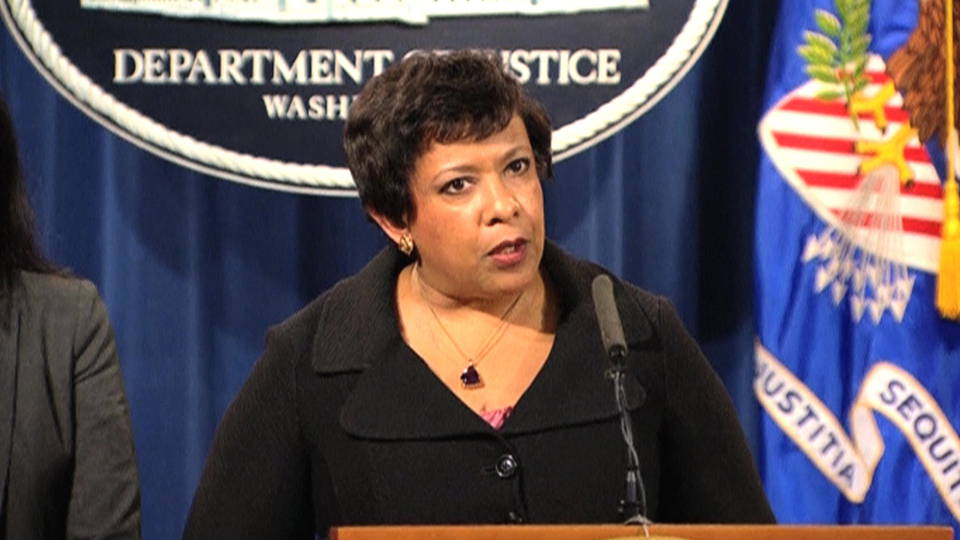
The Justice Department has sued North Carolina over its anti-transgender law. The law, known as HB 2 or the "bathroom bill," bars transgender people from using the bathroom that corresponds to their gender identity. It also invalidates local ordinances aimed at protecting LGBT people from discrimination. Attorney General Loretta Lynch announced the lawsuit Monday, saying the government stands with transgender people.
Attorney General Loretta Lynch: "This law provides no benefit to society, and all it does is harm innocent Americans. And instead of turning away from our neighbors, our friends and our colleagues, let us instead learn from our history and avoid repeating the mistakes of our past. And let us reflect on the obvious but often neglected lesson that state-sanctioned discrimination never looks good and never works in hindsight."
North Carolina officials, meanwhile, have sued the federal government in order to defend the anti-transgender law. Governor Pat McCrory criticized the Obama administration’s involvement.
Gov. Pat McCrory: "Our state Legislature believe this was an unnecessary government overreach into the private sector, imposing regulations and impacting one’s personal privacy. The state Legislature and this governor also believe that guidelines then need to be put in place, because of this new public topic, for government buildings, our schools and our rest stops to ensure privacy and expectation privacy for everyone."
The American Civil Liberties Union has also filed suit over the North Carolina law. Staff attorney Chase Strangio said the law will ultimately be defeated.
Chase Strangio: "This law will be either struck down in court or repealed by the Legislature once they realize that doubling down in this way is not politically wise or financially viable for their state. It’s just a matter of how long that will take and how much taxpayer dollars the North Carolina government is willing to spend in the meantime defending their discrimination."
TOPICS:
North Carolina
LGBT
California Lawmakers Advance Bill for Gender-Neutral Restrooms
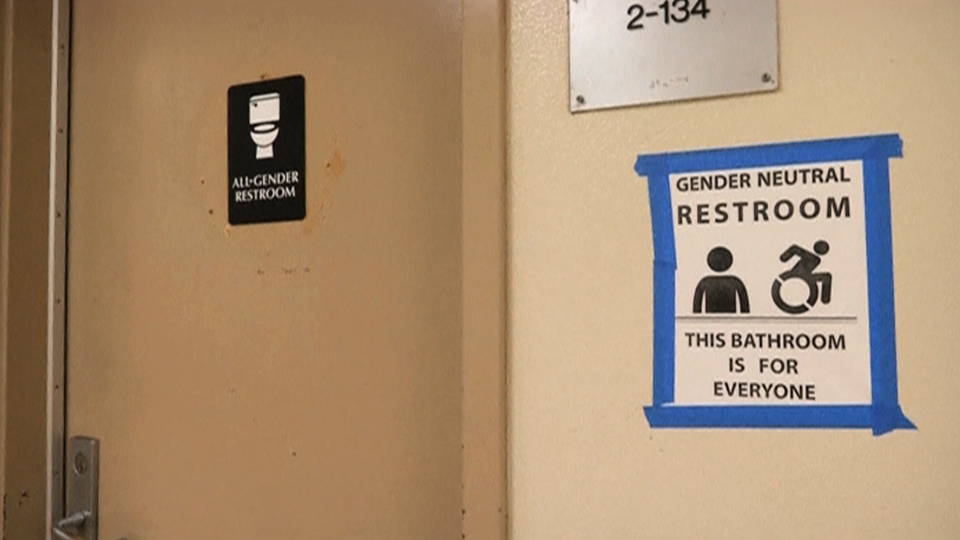
Just hours after North Carolina sued the Obama administration to defend the state’s anti-transgender law, lawmakers in California advanced a bill that would require all single-stall public restrooms to be gender-neutral.
TOPICS:
California
LGBT
Donald Trump Seeks Fundraising Aid from Republican Party
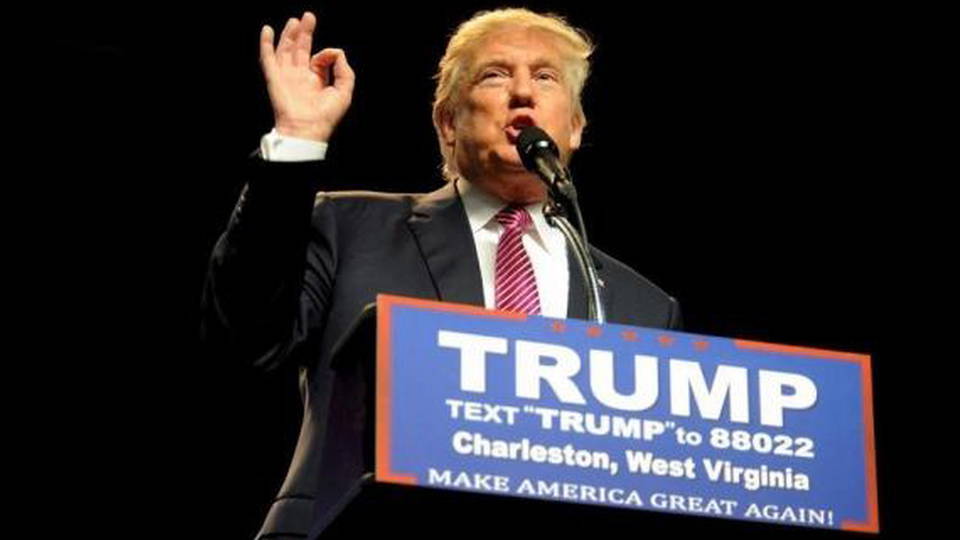
Donald Trump has moved to take over the financial apparatus of the Republican National Committee, despite tensions within the party over his role as the presumptive presidential nominee. Trump has said he needs up to $1.5 billion for the general election after pouring $40 million of his own money into the primaries. But Trump lacks his own fundraising infrastructure, and Republican megadonors like the Koch brothers have so far hedged at backing him. On Monday, House Speaker Paul Ryan said he would step down as chairman of the Republican National Convention if Trump asked him to. While Trump has all but sealed the nomination, voters still head to the polls today for Republican primaries in West Virginia and Nebraska.
TOPICS:
Donald Trump
Republican Party
2016 Election
Sanders, Clinton Face Off in West Virginia Primary
West Virginia is also holding its Democratic primary with Vermont Senator Bernie Sanders and Hillary Clinton vying for the 29 delegates up for grabs. Eight years ago, Clinton won West Virginia in a landslide, beating Barack Obama—but many polls project Sanders will win today. We’ll have more on West Virginia with former presidential candidate Ralph Nader after headlines.
TOPICS:
Bernie Sanders
Hillary Clinton
2016 Election
Democratic Party
Kerry: U.S., Russia Agree to Press for Nationwide Ceasefire in Syria
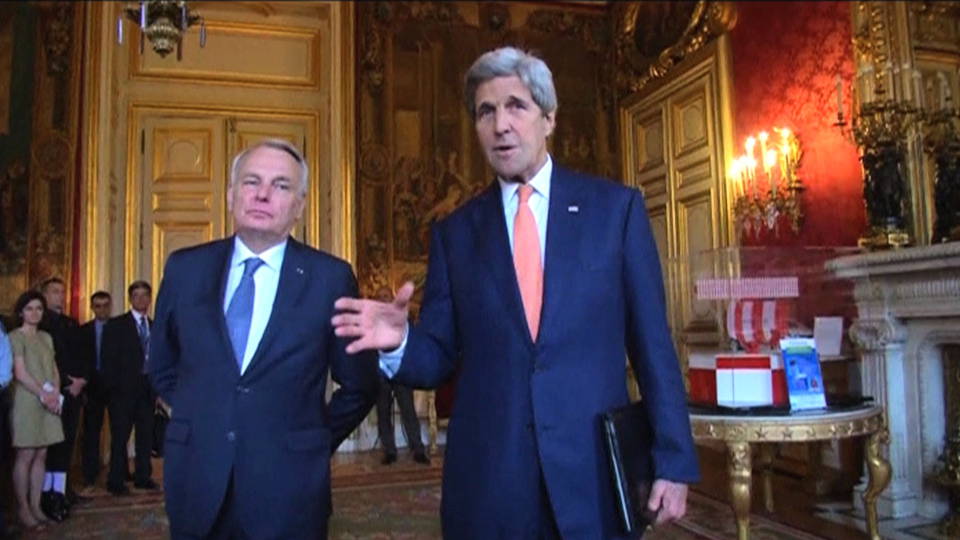
Secretary of State John Kerry says the United States and Russia have agreed to press for the reinstatement of a nationwide ceasefire in Syria. Kerry addressed reporters.
Secretary of State John Kerry: "Now, as I said before when we were in Vienna, these are words on a piece of paper, they are not actions. But they are a commitment by Russia to, in fact, limit the Syrian regime from its ability to fly in civilian-occupated areas, as well as to work with the commanders on the ground, in order to try to deliver stability and a reaffirmation of the cessation of hostilities."
The Syrian military meanwhile said it would extend for two days a ceasefire confined to the embattled city of Aleppo and its surrounding areas. Violence has continued in the area despite the truce.
TOPICS:
Syria
Pentagon: U.S.-Led Strike Kills ISIS Official in Iraq
The Pentagon says an airstrike by the U.S.-led coalition has killed a senior ISIS official in Iraq. Officials said the strike on Friday killed Abu Wahib, identified as the chief military official of ISIS in Anbar province. It hit a vehicle carrying Wahib and three other people described by the U.S. as ISIS members. Pentagon spokesperson Peter Cook said, "It is dangerous to be an ISIL leader in Iraq and Syria these days, and for good reason."
TOPICS:
Islamic State
Iraq
Brazilian Senate Forges Ahead with Bid to Impeach Rousseff
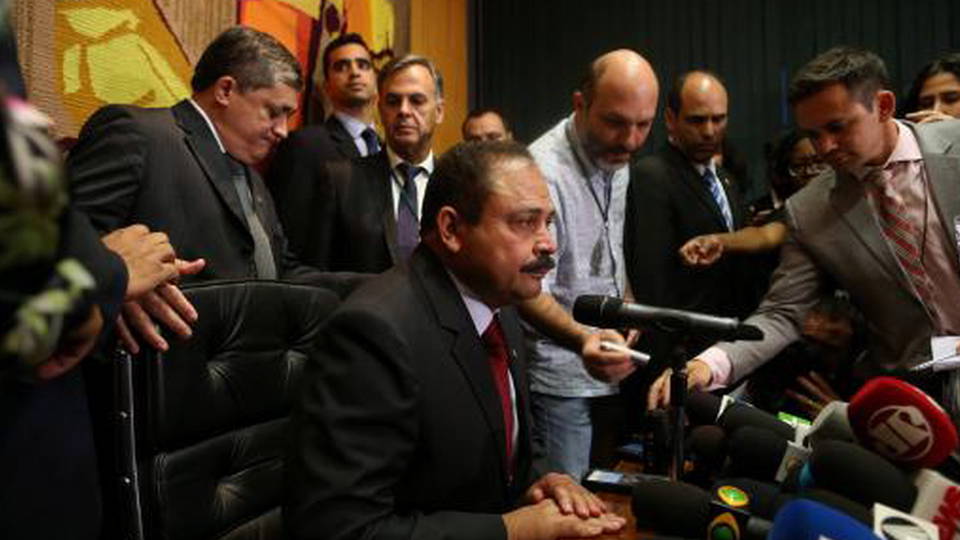
Brazil’s Senate has forged ahead with impeachment proceedings against President Dilma Rousseff, despite an earlier move by the interim house speaker to derail the process. The previous house speaker, Eduardo Cunha, had led the bid to oust Rousseff, before he himself was suspended over corruption. On Monday, his replacement, Waldir Maranhão, sought to annul the lower house’s vote in favor of impeachment charges, citing procedural flaws.
Waldir Maranhão: "I am aware that this is a delicate moment. We have the duty to save democracy through debate. We are not and will not be playing with democracy."
But the speaker apparently reversed course in the middle of the night, releasing a statement revoking his decision, without explanation. The Senate appears poised to vote Wednesday on whether to put Rousseff on trial; if a majority side against her, she would be suspended. Rousseff has been accused of tampering with government accounts to conceal budget shortfalls. She has accused her right-wing opponents of mounting a coup.
TOPICS:
Brazil
Philippines: Duterte Wins Presidency Despite Accused Death Squad Role
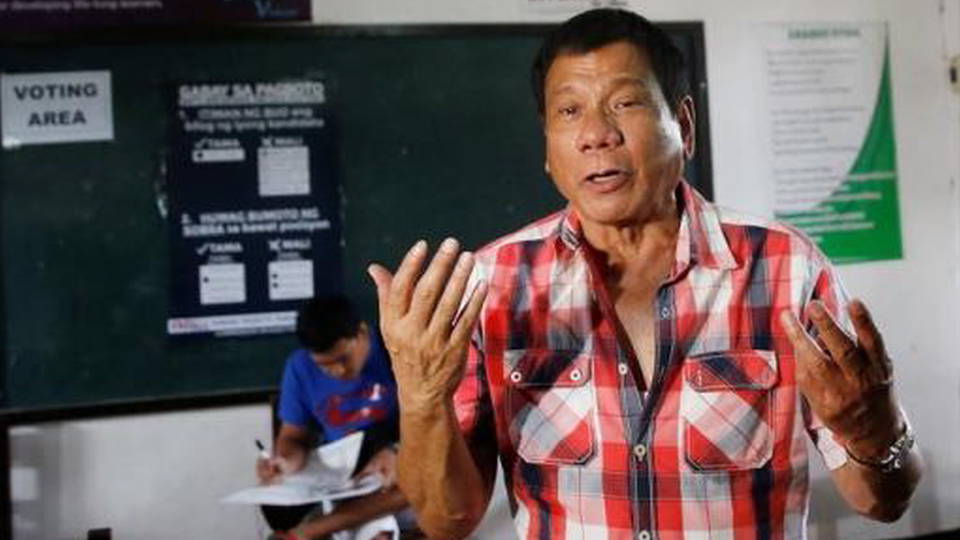
In the Philippines, Rodrigo Duterte has declared victory in the presidential election and vowed to rewrite the constitution. Duterte won the election despite periodically admitting to his role in death squads, joking about the gang rape of an Australian missionary, and pledging to kill tens of thousands of people. He’s been dubbed the Filipino "Trump." Meanwhile, the Philippines has also elected its first openly transgender politician. Geraldine Roman will serve in the House of Representatives.
TOPICS:
Philippines
Canada to Support U.N. Declaration on Indigenous Rights
Canada has announced it will back a United Nations declaration to protect the rights of the world’s more than 370 million indigenous peoples. Four countries opposed the declaration when it was first adopted by the U.N. General Assembly in 2007: Australia, New Zealand, Canada and the United States. Canada is the last of the four to finally embrace the statement; the United States signed on in 2010.
TOPICS:
Indigenous
Canada
Ferguson, Missouri Gets 1st Permanent African-American Police Chief
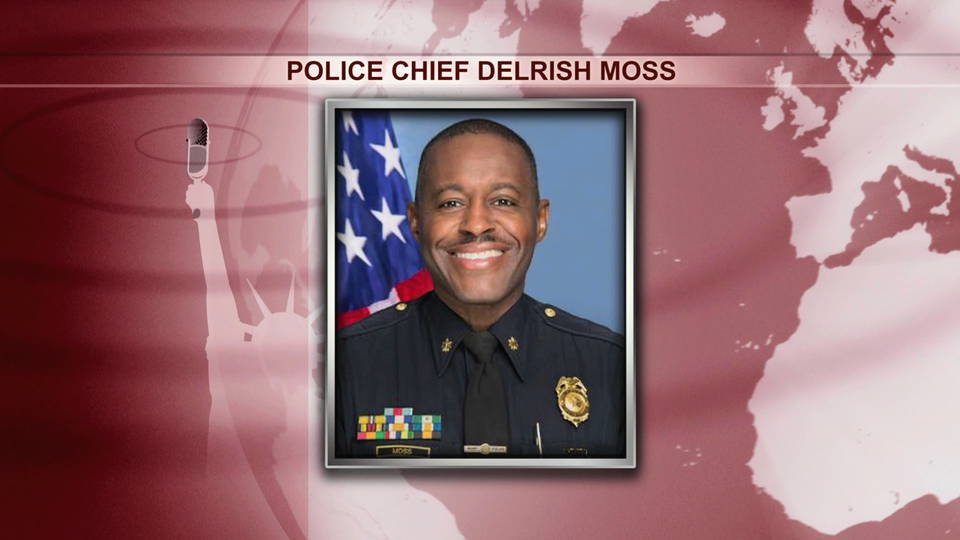
Ferguson, Missouri, has sworn in its first permanent African-American police chief. Delrish Moss takes over for Tom Jackson, who resigned after a scathing Justice Department report found police and courts in Ferguson routinely engaged in discrimination against African Americans. The bias came to light after the fatal police shooting of unarmed African American Michael Brown in 2014.
TOPICS:
Ferguson
Police
Panama Papers Scandal Widens as Journalists Publish Searchable Database
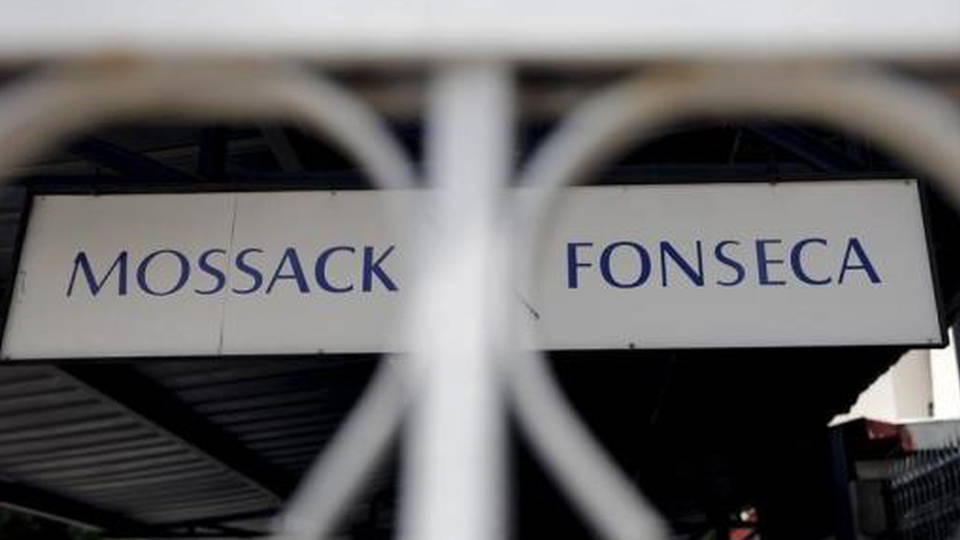
The so-called Panama Papers scandal has widened as an international team of journalists published a searchable database of documents online. A massive data leak revealed how the Panama-based Mossack Fonseca law firm set up a global network of shell companies for heads of state and other elites to store money offshore to avoid taxes and oversight. The International Consortium of Investigative Journalists says the new database "strips away the secrecy of nearly 214,000 offshore entities in 21 jurisdictions, from Nevada to Hong Kong and the British Virgin Islands."
TOPICS:
Panama Papers
Mexican Court Allows Extradition of Drug Lord Chapo Guzmán to U.S.
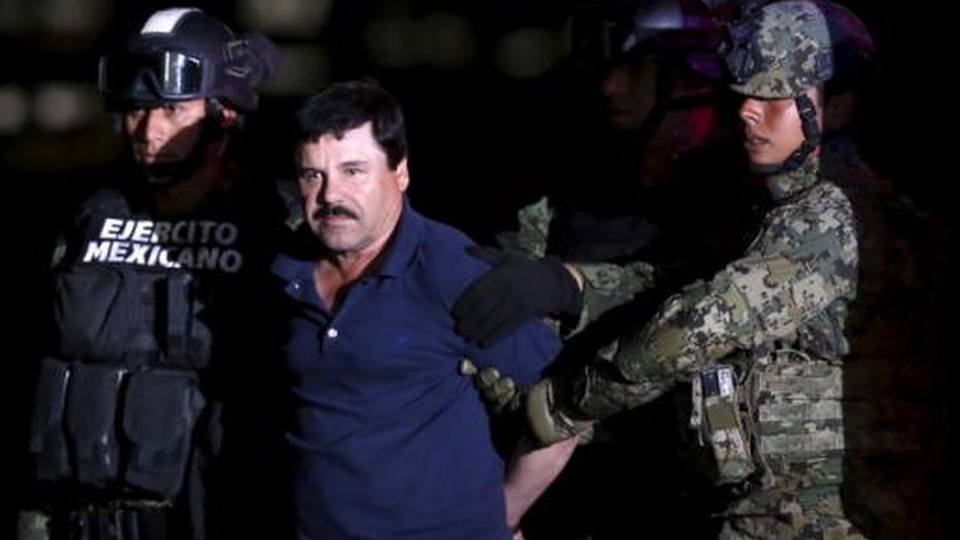
A Mexican judge has ruled drug lord Joaquín "El Chapo" Guzmán can be extradited to the United States to face trial. Guzmán has been moved to a prison on the U.S.-Mexico border. He previously escaped from jail in Mexico twice. His attorneys had fought his extradition in part by citing discrimination against Mexicans, including the words of now-presumptive Republican presidential nominee Donald Trump.
TOPICS:
Mexico
Drug War
Report: 1 in 5 Plant Species Worldwide at Risk of Extinction

One in five species of plants worldwide are at risk of extinction amid threats from farming, logging, urbanization and human-made climate change. The global study led by the Royal Botanic Gardens in London is the first of its kind. Researcher Steve Bachman described its findings.
Steve Bachman: "If we completely clear the land and have a kind of monoculture, what happens when a new plant disease emerges and wipes out the crop entirely? So having a more diverse and flexible approach to producing our crops means we’re more likely to be robust for the challenges in the future, especially as the climate changes, more diseases, more insects start to infest the crops. All of that stuff is likely to happen."
TOPICS:
Climate Change
5 Tiny Pacific Islands Disappear Due to Climate Change
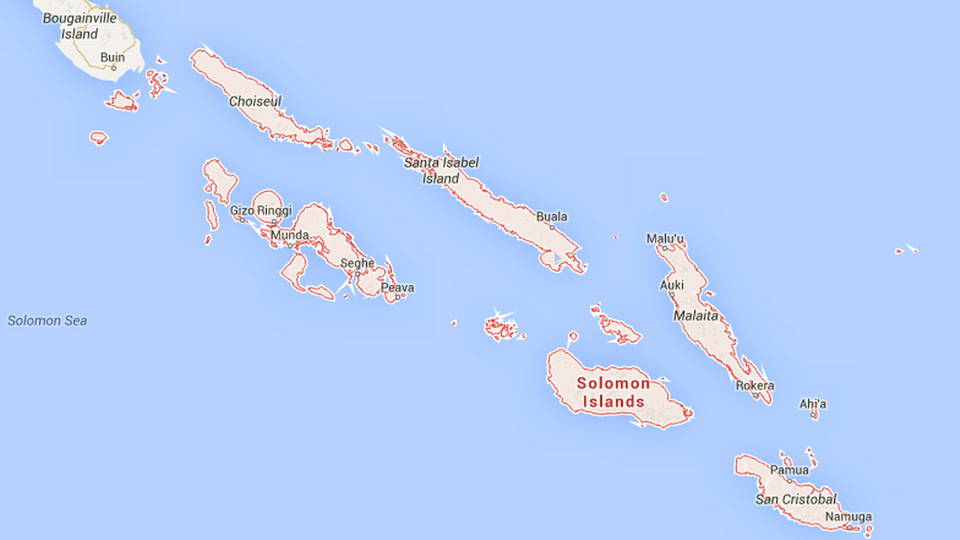
In another sign of the impact of climate change, at least five tiny Pacific islands have disappeared due to erosion and rising sea levels. They are part of the Solomon Islands, one of the most densely populated Pacific Island nations.
TOPICS:
Climate Change
Facebook Accused of Suppressing Conservative News Stories
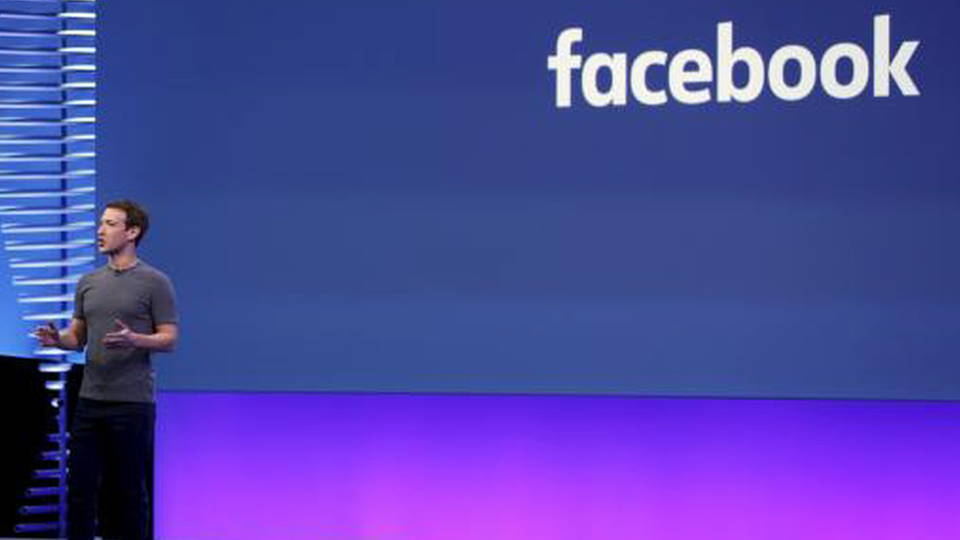
And the social media site Facebook has been accused of suppressing news stories on political grounds. Former Facebook workers told the website Gizmodo they routinely suppressed news stories of interest to conservative readers by keeping them out of the "trending" stories section on the sidebar. Among the topics they purportedly suppressed were those about the right-wing CPAC gathering, Mitt Romney and Rand Paul. They were also told to exclude news about Facebook itself, they said. Gizmodo technology editor Michael Nuñez wrote: "In other words, Facebook’s news section operates like a traditional newsroom reflecting the biases of its workers and the institutional imperatives of the corporation." Facebook has denied the allegations it filtered out conservative stories.
TOPICS:
Social Media
Donate today:
Follow:


SPEAKING EVENTS

5/10 Cambridge, MA
5/11 Montclair, NJ
5/12 New York, NY
5/13 Washington, DC
5/14 Portland, ME
5/14 Bangor, ME
5/15 Bar Harbor, ME
5/17 Chicago, IL
5/18 Madison, WI
5/19 Toronto, ON
5/20 Toronto, ON
more
NEW BOOK


Remembering Father Dan Berrigan, a Prophet of Peace
WORK WITH DN!

Video News Production Fellowship
Internships
WEB EXCLUSIVE

"A Moral Giant": ADemocracy Now! Special on the Life & Legacy of Father Daniel Berrigan
207 West 25th Street, 11th Floor
New York, New York 10001, United States
--------------------
--------------------

No comments:
Post a Comment