democracynow.org
Stories:

Jeremy Scahill Remembers His Longtime Friend, Father Daniel Berrigan: "The Man was a Moral Giant"
"I may not be here if it wasn’t for Dan Berrigan," says journalist Jeremy Scahill as we remember the legendary antiwar priest, Father Daniel Berrigan, who spent his lifetime nonviolently protesting militarism, nuclear proliferation, racism and poverty. Berrigan died Saturday in the Bronx, just short of his 95th birthday. Scahill was a college student when he first met Berrigan, and went on to become close friends with him and his brother, Philip. The conversations they had inspired him to pursue fiercely independent journalism. "This man was just a moral giant," Scahill says, "the closest thing we have in our society to a prophet."
TRANSCRIPT
This is a rush transcript. Copy may not be in its final form.
AMY GOODMAN: We’re on the road in our 100-city tour in Sarasota, Florida, headed to Atlanta, Georgia, tonight. But today we’re spending the hour with The Intercept’s Jeremy Scahill and Glenn Greenwald, looking at the stunning new book, The Assassination Complex: Inside the Government’s Secret Drone Warfare Program.
But first, Jeremy, I want to ask you about the death of Father Dan Berrigan, who died Saturday at the age of 94. Along with his late brother Phil, Dan Berrigan played an instrumental role in inspiring the antiwar and antidraft movement during the late '60s, as well as the movement against nuclear weapons. Jeremy, you were a dear friend of Dan and Phil Berrigan's. Can you talk about the significance of the life of Dan Berrigan, and just tell us who he was and what he meant to you?
JEREMY SCAHILL: Well, Amy, I would say that, you know, I actually may not be here if it wasn’t for Dan Berrigan. My dad—both of my parents are nurses. And my dad grew up on the South Side of Chicago, and he was going to be a seminarian. And, you know, his parents were Irish immigrants, very Catholic family. He was the only boy in the family. It seemed like a sort of fait accompli that he was going to have to be a priest. And he went to school, and he studied theology. And then, in the mid-1960s, there was the emergence of what was known in the United States as the Catholic left—people like Dorothy Day, the founder of the Catholic Worker Movement; Thomas Merton, who—the brilliant Trappist monk, who was one of the early intellectual voices against the war in Vietnam; and then these two rebel priests, Father Daniel Berrigan and Father Philip Berrigan. And Dan Berrigan had given a talk that my dad went to, and it deeply impacted my father, and he basically left home and moved to New York to the Catholic Worker house on the Lower East Side of Manhattan. And it forever altered who our family was and the sort of moral code that we were taught as children.
I mean, I grew up knowing of the Catonsville Nine, Philip and Dan Berrigan and seven of their friends going into the draft board in Catonsville, Maryland, in May of 1968 and taking hundreds of draft files that were being used to draft primarily African Americans in that area into the war in Vietnam. Of course, black Americans were deployed disproportionately to Vietnam along with the poor. And Phil Berrigan had been a civil rights priest, a member of the Josephite order, and had participated in the Freedom Rides in the South. Dan Berrigan was already a fairly famous literary figure. He had won a major poetry prize for his first book of poetry. And for these two priests, in their full religious garb, to have led this kind of a protest and then burn these draft files with homemade napalm reverberated around the world, and it energized a movement of young Catholics and people of faith to become very, very political about the war in Vietnam. And it also inspired a series of actions similar to Catonsville in Camden, in Milwaukee, around the country, where people, saying that they were motivated by their religious faith, going into draft boards and burning draft cards or pouring blood on draft cards. So I grew up in a household where Daniel Berrigan and Dorothy Day and Phil Berrigan and the late, great Dave Dellinger, legendary peace activist, one of the Chicago Eight in the conspiracy trial stemming from the Democratic National Convention in Chicago in 1968—
And so—but I didn’t meet Dan Berrigan because of that. I was in school at the University of Wisconsin, where I was—well, I would just say that I was enrolled in school; I wouldn’t necessarily say that I was participating in school. But I was doing work with people who were homeless, and I decided I didn’t want to be at the university anymore, and I hitchhiked out to Washington, D.C., in the summer of 1995. And at that—and I had no idea that the entire peace movement was descending on D.C. that summer to commemorate the 50th anniversary of the bombings of Hiroshima and Nagasaki. And I remember seeing all of these people that I had been told about during my childhood were the real heroes of our society and whose books lined my father’s bookshelf in our small apartment that we lived in as little kids. And one day, I—Dan Berrigan came. And he was outside of the Pentagon, just standing like anyone else. And to me, you know, it would be like seeing LeBron James, you know, for some kids today, where it was like, "Oh, my god! This is Father Daniel Berrigan!"
And anyway, I went up and introduced myself to him. And we were standing around, and Liz McAlister, who, of course, is an amazing activist and just an incredible, wonderful person, who also was Phil Berrigan’s partner and of course one of Dan Berrigan’s closest people ever to him, she—I think she realized that I was a little bit awestruck by being around Dan Berrigan, and she said, "Hey, kid, would you mind escorting Father Berrigan to go and use the bathroom?" And this is pre-9/11, so, you know, I’m like, "Wow! I get to walk Dan Berrigan to a bathroom!" And I didn’t know it, but we—it was pre-9/11: We could actually go into the Pentagon. So I walked into the Pentagon with Father Daniel Berrigan, who had served time in federal prison for burning the draft files they had used to send so many people to the war in Vietnam. And when we walked in, as uniformed members of the military were walking out, they greeted Dan Berrigan as though he was like a—you know, a cousin that they see from time to time at family reunions, because he had spent so much time protesting there. And then, we go into the Pentagon, and we’re in the bathroom, you know, using their facilities. And Dan says to me as we’re standing there, "You know, in the 1940s, when Roosevelt authorized the building of this place, there was talk of it being converted to a hospital when the war was over." And then he sort of pauses, and he says, "And, you know, in a way, they kept their word. It’s the largest insane asylum in the world."
And that started my relationship with Dan and Phil Berrigan, and I ended up living with Phil Berrigan, painting houses for the better part of a year and a half. And really, it was like having an alternative education. I always say that I—you know, I list as my university, on social media, Democracy Now! And I would say that the combination of—Amy, of hearing you for the first time on the radio and discovering this whole world of Pacifica and community media, and then having daily conversations with people like Phil Berrigan and Liz McAlister and Daniel Berrigan, really shaped who I wanted to be. And, you know, I put a picture up on Twitter, Amy, of you sitting with Dan Berrigan when my book Dirty Wars came out, and I was just saying that, you know, without these two, meaning you and Daniel Berrigan, I would not be who I am today and not be about what I’m about today.
And, you know, I don’t think we were shocked by the death of Dan. I mean, he was almost 95 years old. He was in very frail physical condition. But this man was just a moral giant and the closest thing we have in our society to a prophet. And last night I was watching one of the networks. The only real coverage, outside of Democracy Now!'s beautiful show on Dan Berrigan, was on Chris Hayes's show on MSNBC, and Chris Hayes played a clip of Chris Wallace, who’s now of course the Fox News Sunday host and son of the legendary 60 Minutes journalist Mike Wallace. And it was in 1981, and Chris Wallace says to Dan Berrigan, basically, "Well, you used to be famous, but nobody really pays much attention to what you do these days." Meanwhile, a year earlier, they had—Dan and his colleagues had gone into this nuclear plant at the General Electric factory in King of Prussia, Pennsylvania, and hammered on Mark 12A warheads, starting the Plowshares Movement, which became global. But Dan’s response to Chris Wallace was just classic Dan Berrigan and also just sort of stunning in its simple brilliance. He said, "Well, you know, we don’t view our conscience as being tethered to the other end of a television cord." And I thought that it was just—you know, it was such a commentary on the dingbat factory in Washington versus someone whose entire life was about not just saying something, like so many of these pundits do, but standing there. And, you know, I always loved what Dan Berrigan wrote about Dorothy Day, the founder of the Catholic Worker movement, when she died. He said that Dorothy Day lived as though the truth were actually true. So, too, to Dan.
AMY GOODMAN: Well, Jeremy, I thank you for introducing me to the Berrigans, Phil Berrigan, before he died, and Dan Berrigan. And it was really coming full circle when my colleague and co-author Denis Moynihan and I went up to Fordham to visit Dan a few years ago, to be able to bring him your latest book, Dirty Wars. Now, I want to go to an—oh, we also brought him one other thing: ice cream. His favorite food, ice cream. But—
JEREMY SCAHILL: Amy, can I tell you one thing about Dan Berrigan and ice cream that not that many people know? First of all, Dan Berrigan loved ice cream, and his fridge was always stocked with ice cream. But he loved ice cream so much that it caught the attention of Ben & Jerry’s, the Vermont ice cream company, manufacturer. And they—you know, they contribute to a lot of progressive causes. And Dan Berrigan and the Black Panther, Bobby Seale, and Michelle Shocked and Pete Seeger and Spike Lee all appeared in a Ben & Jerry’s ad. And I think Dan’s was like mocha chocolate fudge, and he’s holding it up as though it’s sort of like a Eucharist, you know, the communion at church.
But Dan was given, by Ben & Jerry’s, a lifetime supply of the ice cream, for any—so any event the Catholic Worker would have that Dan was involved with, Dan would make sure that like, you know, a massive like crate of Ben & Jerry’s was delivered. He always had it in his freezer. And if he would walk into an ice cream shop somewhere and they had Ben & Jerry’s, he would tell them that he was Dan Berrigan and he has a right to as much ice cream and ice cream for his friends. And so, I also think that it was allowed to be transferred to some of his family members. Frida Berrigan, Dan’s niece, who you had on the show yesterday, who’s a dear old friend of mine, she and I once went into a—we were outside of a trial that was going on for some antinuclear activists, and we went into a Ben & Jerry’s shop. And Frida said—looked at the poster of Dan, was up on the wall there, and she said, "That’s my uncle, and I demand my free ice cream." And they actually—they said, "Really, you’re Dan Berrigan’s niece?" She said, "Yes." They said, "What do you want?"
AMY GOODMAN: And they had a flavor named after him, right?
JEREMY SCAHILL: Right, Raspberrigan, yeah. No, it’s—he loved life. He loved ice cream. And the thing that—you know, sometimes when we—we look at the clips of Dan Berrigan, that are now increasingly circulating around online, and I encourage young people to look at them, but what you often don’t hear about these sort of incredible giants of our time, you know, Dan Berrigan, the—probably, you know, along with Pope Francis, the most famous Jesuit in modern history, and certainly the Jesuit who has had the most impact around the world in terms of confronting war and confronting the church’s complicity in making war, but you don’t necessarily know that these—Dan Berrigan was a hilarious person. He was warm. He was funny. And he loved to gather among friends and have a little whiskey, and occasionally he would smoke a cigarette out the window of the—you know, of his apartment. And his home was just lined with posters and art from all of these people who Dan had walked the Earth alongside in his struggles. Even his bathroom was just wall to wall with photos of images of protest and resistance. And, you know, I’ll just—I’ll never forget the feeling that people who had the honor of being around Dan would get just by hearing his infectious laugh. Both he and Phil would—were capable of laughing to the point of tears. And to see these guys, who were such militant confronters of the U.S. empire, also enjoying just the existence on this planet and the people around them is really what I’ll never forget.
AMY GOODMAN: Well, I wanted to end with an excerpt of Dan Berrigan. He was interviewed on NBC’s Today Show back in 1981. Again, this was him being interviewed by Chris Wallace.
CHRIS WALLACE: Back in the Vietnam days, the Berrigan brothers were big. You attracted tens of thousands of people. Now you’re not as big. You do not attract the same attention.
FATHER DANIEL BERRIGAN: Mm-hmm.
CHRIS WALLACE: Is that hard for you?
FATHER DANIEL BERRIGAN: No, I don’t think we ever felt our conscience was tied to the other end of a TV cord. I think we’ve tried for a number of years to do what was right, because it was right.
AMY GOODMAN: That was Father Dan Berrigan on The Today Show in 1981. His funeral will be held on Friday in New York City at 10:00 a.m. at the Church of St. Francis Xavier on West 16th Street in New York. A wake will be held Thursday night. You can visit democracynow.org for our full coverage of the life and death of Dan Berrigan. When we come back, The Intercept's Jeremy Scahill and Glenn Greenwald on The Assassination Complex: Inside the Government's Secret Drone Warfare Program.
[break]
AMY GOODMAN: "Me and Julio Down by the Schoolyard" by Paul Simon. The line about a radical priest is, yes, a reference to Father Dan Berrigan. ... Read More →

The Assassination Complex: Jeremy Scahill & Glenn Greenwald Probe Secret US Drone Wars in New Book
As the Obama administration prepares to release for the first time the number of people it believes it has killed in drone strikes in countries that lie outside of conventional war zones, we look at a new book out today that paints a very different picture of the U.S. drone program. "The Assassination Complex: Inside the Government’s Secret Drone Warfare Program" is written by Jeremy Scahill and the staff of The Intercept, and based on leaked government documents provided by a whistleblower. The documents undermine government claims that drone strikes have been precise. Part of the book looks at a program called Operation Haymaker in northeastern Afghanistan. During one five-month period, nearly 90 percent of the people killed in airstrikes were not the intended targets. The book is based on articles published by The Intercept last year. It also includes new contributions from NSA whistleblower Edward Snowden and The Intercept’s Pulitzer Prize-winning journalist Glenn Greenwald. We speak with Jeremy Scahill and Glenn Greenwald.
TRANSCRIPT
This is a rush transcript. Copy may not be in its final form.
AMY GOODMAN: This is Democracy Now!, democracynow.org, The War and Peace Report. I’m Amy Goodman. We’re on the road in Sarasota, Florida. I’ll be speaking in Atlanta, Georgia, tonight. But here in Sarasota, we’re less than an hour from Tampa, which houses the United States Special Operations Command. It’s the epicenter of planning for the global targeted killing program and other covert military action. Well, we turn now to look at President Obama and drones. On Saturday night, Comedy Central’s Larry Wilmore criticized Obama’s reliance on drone warfare during his remarks at the White House Correspondents’ Association dinner. He compared Obama’s foreign policy to that of reigning NBA MVP Steph Curry.
LARRY WILMORE: It looks like you’re really enjoying your last year of the presidency. Saw you hanging out with NBA players like Steph Curry, Golden State Warriors. That was cool. That was cool, yeah. You know, it kind of makes sense, too, because both of you like raining down bombs on people from long distances, right? Yeah, sure. What? Am I wrong?
AMY GOODMAN: Larry Wilmore’s comments come as the Obama administration prepares to release for the first time the number of people it believes it’s killed in drone strikes in countries that lie outside of conventional war zones. Speaking last month in Chicago, President Obama addressed the issue of civilian deaths in drone strikes.
PRESIDENT BARACK OBAMA: There’s no doubt that some innocent people have been killed by drone strikes. It is not true that it has been this sort of willy-nilly, you know, "Let’s bomb a village." That is not how it’s—folks have operated. And what I can say with great certainty is that the rate of civilian casualties in any drone operation are far lower than the rate of civilian casualties that occur in conventional war.
AMY GOODMAN: A new book being published today paints a very different picture of the U.S. drone program. It’s titled The Assassination Complex: Inside the Government’s Secret Drone Warfare Program. It’s written by Jeremy Scahill and the staff of The Intercept, based on leaked government documents provided by a whistleblower. The documents undermine government claims that drone strikes have been precise. Part of the book looks at a program called Operation Haymaker in northeastern Afghanistan. During one five-month period, nearly 90 percent of the people killed in airstrikes were not the intended targets. The book is based on articles published by The Intercept last year. It also includes new contributions from NSA whistleblower Ed Snowden and The Intercept's Pulitzer Prize-winning journalist Glenn Greenwald. Snowden's introduction to the book has just been published on The Intercept’s website.
Joining us now, still with us, Jeremy Scahill, and Glenn Greenwald is joining us from Rio de Janeiro, Brazil. They founded The Intercept with Laura Poitras. Jeremy, let’s go back to you. Lay out the scope of The Assassination Complex, especially now as President Obama is about to reveal at least what the government is willing to admit are the number of people killed in drone strikes.
JEREMY SCAHILL: Right, well, Amy, you know, the covert drone program, for the majority of its lifespan, has been shrouded in secrecy, and it was sort of a kind of macabre joke in Washington, because the entire world could see that the U.S. was raining bombs down on people across the globe and in an increasing number of countries in the early stages of Obama’s presidency, and yet the United States would never officially confirm that it had conducted a drone strike. And instead, you would see President Obama making jokes at the White House Correspondents’ Association dinner about how he was going to conduct a drone strike against the Jonas Brothers if they came near his daughters, and everybody yucks it up and laughs in Washington about it. He then answered a question on a Google Plus hangout, but never gave a substantive policy speech on the use of drones, really, until 2013.
And what the Obama administration is doing right now is basically trying to rebrand and engage in historical revisionism about what is going to be one of the most deadly legacies of the Obama era, and that is that somehow they came up with a cleaner way of waging war. I would say that the most significant aspect of what President Obama has done, regarding drones and regarding the so-called targeted killing program around the world, is that Obama has codified assassination as a central official component of American foreign policy. And he has implemented policies that a Republican probably would not have been able to implement, certainly not with the support that Obama has received from so many self-identified liberals. It will be very interesting to see, if a Republican wins, how many of the MSNBC pundits and other, you know, so-called liberals—what their position will be on these very same policies.
But the fact is that the White House—we understand the White House is going to be releasing statistics, that some indicate are going to say that upwards of 60 people—six-zero people—have been killed in drone strikes outside of Iraq and Afghanistan, which is a—it’s a horrifying piece of propaganda, if that is—if that’s true. The reason that the Obama administration and that the president can say to the American people, "Well, we’ve only killed a small number of civilians," is because—and our documents in the book show this—because they have embraced a system of counting the dead which almost always will result in zero civilians killed, because anyone who is killed in a drone strike, under this administration, is labeled as an enemy killed in action, an EKIA, until or unless posthumously proven to have not been a militant, a terrorist, what have you. This is a global assassination program that is authorized and run under what amounts to a parallel legal system or judicial system where the president and his advisers serve as the judge, jury and executioner of people across the globe. And so, the documents that we obtained will give lie to the proclamations that this somehow is a saner, less deadly form of warfare when it comes to impacting civilians.
And the final thing, Amy, that I would say is that I think what you really see come through in the military’s own assessments, that we’re publishing in this book, of the drone program is that the U.S. is creating self-fulfilling prophecies. Rather than stopping terrorism, the U.S., through its drone program, is encouraging terrorism and providing terrorist organization with recruitment material, just as the Guantánamo prison serves as recruitment material for the people that the Obama administration claims it’s trying stop from conducting acts of terrorism.
AMY GOODMAN: That’s Jeremy Scahill. We’re also joined by Glenn Greenwald. He’s in Rio de Janeiro, and I’m in Sarasota, Florida, right near SOCOM, the Special Operations Command. In the afterword, Glenn, of The Assassination Complex, you say that most of the revelations in the book, quote, "signify one of the most enduring and consequential aspects of the Obama legacy: the continuation of endless war." Can you expand on this?
GLENN GREENWALD: It seems like a really distant memory now, but if you look back to what President Obama, then-Senator Obama, was saying in 2006, 2007, as his critique of the Bush administration’s approach to terrorism, he was essentially railing against not just the policies, but the mindset and the approach that, once he became president, he ended up not only embracing, but strengthening and increasing. He talked all the time about how terrible it was to treat somebody like a terrorist and punish them with imprisonment in Guantánamo, with indefinite detention, without so much as giving them the right to have a trial. And not only has he continued the system of indefinite detention—and he intended to continue the system of indefinite detention, even if he were able to close Guantánamo; his plan was simply to shift it to American soil—he’s done much more than that. He has institutionalized a program where now we don’t only just imprison people without any charges or due process, we don’t just eavesdrop on them, which was one of his big critiques of the Bush administration, without first giving them due process or a trial, we now just target them for execution, for death, for a death penalty.
You know, for a long time, a staple of Democratic ideology has been that the death penalty is wrong, even with a full trial and appeals and due process and lawyers and all of the constitutional rights that are afforded to criminal defendants. And yet President Obama has embraced a policy that says that he can literally go around the world, target people for death anywhere in the world that he wants, including places where we’re not at war, including even American citizens, and simply eradicate their lives based on his order—not in a war zone, people who are not engaged in combat at the time they’re killed. They’re killed in cars, in their houses, while they’re working, driving with their children, at funerals, rescuing people. Wherever it is that they might be found, they can simply be killed.
And the most extraordinary aspect about it is that Democratic partisans, who were cheering his critiques in 2006 and 2007 and pretending to oppose this approach because it was a Republican who did it, switched completely on a dime. And the minute that President Obama embraced these policies, they, as public opinion polls show, completely switched how they think about all of these policies and started supporting them. And what this has meant is that these policies have shifted from being just a right-wing, extremist, Republican framework into one that is fully bipartisan, and therefore will be institutionalized and has been strengthened for years, if not decades, to come, in a way that George Bush and Dick Cheney could only have dreamed of.
AMY GOODMAN: I want to turn to a clip from National Bird, a new documentary on drone warfare that premiered at the Tribeca Film Festival last month. This is Lisa Ling, a former drone system technical sergeant.
LISA LING: This is global. This is getting information anywhere at any time, shooting people from anywhere at any time. And it’s not just one person sitting there with a little remote control, a little joystick, moving around a plane that’s halfway across the world. That’s not all there is. It’s like borders don’t matter anymore. And there’s a huge system that spans the globe, that can just suck up endless amounts of your life, your personal data. I mean, this could grow to get so out of control. And we’re not the only ones that have this. This is going to be commonplace, if it’s not already. It’s a secret program. And what that means is that I can’t just go shouting off the hilltops telling the public what it is. What I can tell you is that, to me, one person who worked within this massive thing, it’s frightening.
AMY GOODMAN: Drone whistleblower Lisa Ling in the documentary National Bird. ... Read More →

Jeremy Scahill: Clinton is Legendary Hawk, But Sanders Shouldn't Get Pass on Role in Regime Change
Jeremy Scahill and Glenn Greenwald weigh in on comments from Democratic presidential candidate Hillary Clinton and her rival, Bernie Sanders, who have both supported the use of drones. Scahill notes that while Clinton is often portrayed as a more hawkish "cruise missile liberal," Sanders also supported regime change in the 1990s. "Bernie Sanders signed onto neocon legislation that made the Iraq invasion possible by codifying into U.S. law that Saddam Hussein’s regime must be overthrown," Scahill says, and "then supported the most brutal regime of economic sanctions in world history, that killed hundreds of thousands of Iraqis."
TRANSCRIPT
This is a rush transcript. Copy may not be in its final form.
AMY GOODMAN: Jeremy, I want to turn to Democratic presidential candidate, former Secretary of State Hillary Clinton. Last year, Guardian columnist Owen Jones questioned her about the use of drone warfare.
OWEN JONES: You’re a loving parent. What would you say to the loving parents of up to 202 children who have been killed by drones in Pakistan in a program which you escalated as secretary of state?
HILLARY CLINTON: Well, I would argue with the premise, because, clearly, the efforts that were made by the United States, in cooperation with our allies in Afghanistan and certainly with the Afghan government, to prevent the threat that was in Pakistan from crossing the border, killing Afghans, killing Americans, Brits and others, was aimed at targets that had been identified and were considered to be threats. The numbers about potential civilian casualties, I take with a somewhat big grain of salt, because there has been other studies which have proven there not to have been the number of civilian casualties.
AMY GOODMAN: And last October on NBC’s Meet the Press, Chuck Todd asked Democratic presidential candidate Bernie Sanders about his position on drones.
CHUCK TODD: What does counterterrorism look like in a Sanders administration? Drones? Special forces? Or what does it look like?
SEN. BERNIE SANDERS: Well, all of that and more.
CHUCK TODD: You would—you’re OK with the drone, using drones as—
SEN. BERNIE SANDERS: Look, drone is a weapon. When it works badly, it is terrible and it is counterproductive. When you blow up a facility or a building which kills women and children—
CHUCK TODD: Sure.
SEN. BERNIE SANDERS: —you know what? It not only doesn’t do us—it’s terrible.
CHUCK TODD: But you’re comfortable with the idea of using drones if you think you’ve isolated an important terrorist?
SEN. BERNIE SANDERS: Well, yes, yes, yes.
CHUCK TODD: So, that continues in a Sanders administration.
SEN. BERNIE SANDERS: Yes. And look, look, we all know, you know, that there are people, as of this moment, plotting against the United States. We have got to be vigorous in protecting our country, no question about it.
CHUCK TODD: All right.
AMY GOODMAN: That’s Bernie Sanders; before that, Hillary Clinton. Jeremy Scahill, please comment.
JEREMY SCAHILL: Well, I mean, you know, first of all, Hillary Clinton is one of the sort of legendary Democratic hawks in modern U.S. history. She’s—you know, she is what I like to call a cruise missile liberal, where—you know, they believe in launching missiles to solve problems and show they’re tough across the globe. Hillary Clinton, while she was secretary of state, really oversaw what amounted to a paramilitarization of some of the State Department’s divisions, and was the main employer of the private contractors that were working on behalf of the U.S. government, and was one of the key people in the horrid destruction that we’re now—in creating the horrid destruction that we’re now seeing in Libya, because of her embrace of regime change. But Hillary Clinton, on these issues, is sort of, you know, an easy target, because she is so open about her militaristic tendencies.
But Bernie Sanders, in a way, has been given a sort of pass on these issues. Recently at a Democratic town hall meeting, Bernie Sanders was asked directly about whether or not he supports the kill list. The actual term "the kill list" was used in an interview with him. And he said that the way that Obama is currently implementing it, he supports. You know, Bernie Sanders goes after Hillary Clinton all the time for being a regime change candidate—and he’s right—and blasting her for her alliance with people like Henry Kissinger. But let’s be clear: Bernie Sanders in the 1990s was a supporter and signed onto legislation that was authored by Donald Rumsfeld, William Kristol and these notorious neocons, who created the disaster of the Iraq invasion with Democratic support. Bernie Sanders signed onto the key document that—the legislation that was created as a result of the Project for a New American Century, demanding that Bill Clinton make regime change in Iraq the law of the land. Bernie Sanders then voted for that bill, which, again, was largely authored by Donald Rumsfeld and the neocons. Bernie Sanders then supported the most brutal regime of economic sanctions in world history, that killed hundreds of thousands of Iraqis. He supported the bombings in Iraq under President Clinton, under the guise of the so-called no-fly zones, the longest sustained bombing campaign since Vietnam. Bernie Sanders was about regime change. Bernie Sanders signed onto neocon-led legislation that made the Iraq invasion possible by codifying into U.S. law that Saddam Hussein’s regime must be overthrown. So, when Bernie Sanders wants to hammer away at Hillary Clinton on this, go ahead. You are 100 percent right. She’s definitely the politics of empire right there. But Bernie Sanders needs to be asked about his embrace of regime change, because the policies that he supported in the 1990s were the precursor to the disastrous war in Iraq that he hammers on all the time without ever acknowledging his own role in supporting the legislation that laid the groundwork for it.
AMY GOODMAN: Glenn Greenwald, I’m going to give you the last word on this. You, too, have been writing about these candidates.
GLENN GREENWALD: It’s actually kind of amazing there’s nobody with a more adept skill at being able to just selectively concentrate on some things, while ignoring unpleasant things, than the Democratic partisan. I mean, Jeremy is right that Bernie Sanders has been given a pass, but that’s because Democrats have largely chosen to ignore foreign policy as part of the Democratic primary, because they simply don’t care. They only pretend to oppose wars when there’s a Republican in office and doing so can lead to partisan gain. So Hillary goes around the world vowing to get even closer to Netanyahu, to take our relationship with Israel to the next level, refuses even to talk about Palestinians like they’re human. She is responsible for one of the worst disasters of the last five or six years, which is the NATO intervention in Libya, and obviously supports President Obama’s bellicose policies and wants to escalate them. She criticizes him for not being aggressive enough. And yet Democrats just simply pretend none of that exists. They don’t care how many people outside the borders of the United States are killed by a Democratic president. And so Bernie has gotten a pass, unjustifiably, and hasn’t been asked about the things Jeremy described, because Democrats collectively—with some exceptions, but more or less generally—have decided to ignore all of the heinous things that Democrats do outside of the borders of the United States, because paying attention to them reflects so poorly on Hillary, and they just ignore things that reflect poorly on her.
AMY GOODMAN: And Donald Trump? Today, a key primary could determine whether he gets the nod to be the Republican candidate for president, in Indiana?
GLENN GREENWALD: Well, I mean, I just think it’s—in some sense, Washington, D.C.—not the United States, but Washington, D.C.—is getting exactly the election they deserve. These are the two most unpopular presidential candidates ever to run, I think, in 30 years. They have the highest unfavorable ratings of any nominees in decades. The only thing they’re able to do to one another is try and be as toxic and nasty and destructive as possible, because everybody has already decided, more or less, that they’re so unlikable. And so, it’s going to be the opposite of an inspiring election. It’s just going to be two extremely unpopular people trying to destroy the other on both a personal level, backed by huge amounts of money and serving more or less the same interests. And I think the two parties and the establishment leaders in Washington, and the people who support and run that whole system, have gotten exactly the election that they deserve. Unfortunately, Americans are going to have to suffer along with them.
AMY GOODMAN: We have to leave it there, and I want to thank you both for being with us, Pulitzer Prize-winning journalist Glenn Greenwald and Jeremy Scahill, author with the staff of The Intercept of The Assassination Complex: Inside the Government’s Secret Drone Warfare Program. It’s out today.
And that does it for our broadcast. I’ll be speaking tonight in Atlanta at the First Iconium Baptist Church, 542 Moreland Avenue Southeast, then on to Washington state. Spokane, I’ll be speaking Wednesday night, Olympia Thursday, Seattle Friday, Mount Vernon Saturday, then Eugene and Portland, Oregon, on Sunday. Check democracynow.org.
Special thanks to Denis Moynihan, Mike Burke. ... Read More →

"This Isn't a War on Leaks, It's a War on Whistleblowers": Snowden Pens Foreword to New Scahill Book
NSA whistleblower Edward Snowden wrote the foreword for the new book by Jeremy Scahill and the staff of The Intercept, "The Assassination Complex: Inside the Government’s Secret Drone Warfare Program," which is based on leaked government documents provided by a whistleblower. Snowden writes, "These disclosures about the Obama administration’s killing program reveal that there’s a part of the American character that is deeply concerned with the unrestrained, unchecked exercise of power. And there is no greater or clearer manifestation of unchecked power than assuming for oneself the authority to execute an individual outside of a battlefield context and without the involvement of any sort of judicial process." We speak with Scahill, who says the Obama administration has targeted Snowden for being a whistleblower, while allowing others to leak information that benefits it.
TRANSCRIPT
This is a rush transcript. Copy may not be in its final form.
AMY GOODMAN: Now, another whistleblower, Edward Snowden, who wrote the foreword for The Assassination Complex, Snowden writes, quote, "These disclosures about the Obama administration’s killing program reveal that there’s a part of the American character that is deeply concerned with the unrestrained, unchecked exercise of power. And there is no greater or clearer manifestation of unchecked power than assuming for oneself the authority to execute an individual outside of a battlefield context and without the involvement of any sort of judicial process." That’s Edward Snowden. Jeremy Scahill, take it from there.
JEREMY SCAHILL: Well, you know, and one of the things that Ed Snowden also addresses, and this—by the way, this is a very substantive essay that Ed Snowden wrote, that is both personal and political in nature. And he writes about how there’s a difference between whistleblowing and leaking. And he talks about the difference between the authorized leaks in Washington and the sharing of classified information with mistresses, as David Petraeus did, and then people like Daniel Ellsberg or Chelsea Manning and others. And Snowden says that, you know, it’s an act of political resistance when you are engaged in that kind of whistleblowing, and, of course, states what now has become painfully obvious, that the Obama administration is engaged in a war, not against leakers, but against whistleblowers.
There was just these—the CIA was live-tweeting, you know, their version of what happened in the compound in Abbottobad, Pakistan, the night that Osama bin Laden was killed. And, you know, the Central Intelligence Agency was basically a sieve in the immediate aftermath of that operation. But more, the political people in the White House, the people that were closest to President Obama, were deliberately feeding journalists and media a completely false narrative about what took place in that raid. And none of them were held accountable for—or even viewed as having done something wrong by releasing all of the information that turned out to be false that they did, about a firefight happening, about bin Laden putting one of his wives in front of him. I mean, almost everything that John Brennan and his buddies said in the immediate aftermath, because they were rushing to plant the flag of victory on Osama bin Laden’s dead corpse, turned out to be propaganda or just wrong.
And so, when you have people of courage who leak, who provide documents, classified documents, of the nature that Edward Snowden did to Glenn Greenwald and Laura Poitras, that the source for The Assassination Complex book did in providing these documents to us, these are people motivated by conscience who understand that their lives will never be the same as a result of what they’ve done. They are not people like Sandy Berger, who can go in and stuff classified documents down his pants and then walk away from it. They’re not David Petraeus, who gets a slap on the hand. These are people that know that they are going to be in the target sights of the most powerful institution in world history. And that is the U.S. empire.
AMY GOODMAN: We’re going to break and then come back to this discussion. We’re talking to Jeremy Scahill, The Intercept co-founder with Glenn Greenwald, who is also with us, from Rio de Janeiro, Brazil. The book is The Assassination Complex: Inside the Government’s Secret Drone Warfare Program. It’s out today. Stay with us.
[break]
AMY GOODMAN: "Homenagem ao Malandro," "A Tribute to the Trickster," by Leny Andrade, here on Democracy Now!, democracynow.org, The War and Peace Report. I’m Amy Goodman. We’re on the road in Sarasota, Florida. But in New York, Jeremy Scahill is with us; in Rio de Janeiro, Brazil, Glenn Greenwald. The new book by The Intercept, led by Jeremy Scahill, this book titled The Assassination Complex: Inside the Government’s Secret Drone Warfare Program, you talk about the—you say at the beginning of the book, Jeremy, that "Drones are a tool, not a policy. The policy is assassination." Talk about the documents that you got that back this up and how exactly you got them.
JEREMY SCAHILL: Well, I mean, first of all, what I mean by that is that the United States, throughout its history, has always engaged in assassination. But as a result of the global scandals of the—you know, involving the CIA, with the overthrow of—beginning with the overthrow of the democratically elected government of Jacobo Árbenz in Guatemala, the overthrow of Mosaddegh, the overthrow of Salvador Allende, and then the political assassinations that were taking place in the United States in the 1960s with JFK, Bobby Kennedy, Martin Luther King, Malcolm X, COINTELPRO—all of this sort of sparked, you know, congressional action, and there were committees formed to investigate this. And basically, the short version of the history is that President Gerald Ford issued an executive order that said that the United States would not conduct assassinations. And he used the term "political assassinations." And, you know, people think, "Oh, well, the U.S. has a ban on assassination." Every president since Ford, including Obama, has upheld that executive order that says that the U.S. doesn’t engage in assassinations. Jimmy Carter edited it at one point to take out the word "political" and to add, you know, contractors and other people working for the U.S. government.
But the U.S. Congress has stealthily avoided ever legislating the issue of assassination, because if it were to do so, it would call to question on one of the centerpieces of American doctrine around the world, that we can kill whomever we want, wherever we want, whenever we want, because—because we are America. And if Congress actually had to, say, define what an assassination was, which attempts to do that have just been clobbered by the permanent establishment, then you would have to look at things like the bombing—Reagan’s bombing of—an attempt to kill Gaddafi. You would have to look at the bombings that Bill Clinton did in the early stages of his presidency that were aimed at killing Saddam Hussein, but instead killed the famous Iraqi painter Layla Al-Attar and other civilians. You would have to look at the Obama administration’s targeting of Anwar al-Awlaki, a U.S. citizen who was never charged with a crime—and I think should have been charged with a crime and brought to justice, but instead he and another young American, Samir Khan, were executed by drone strike, authorized and ordered by the president of the United States. And so, if you’re going to say that that is not an assassination, then we live on a different planet. And so, the documents that we’ve obtained sort of show the banality of the immoral notion that we can kill people anywhere around the world without consequence and kill our way to victory. ... Read More →
Headlines:Honduras: 4 Arrested in Murder of Environmentalist Berta Cáceres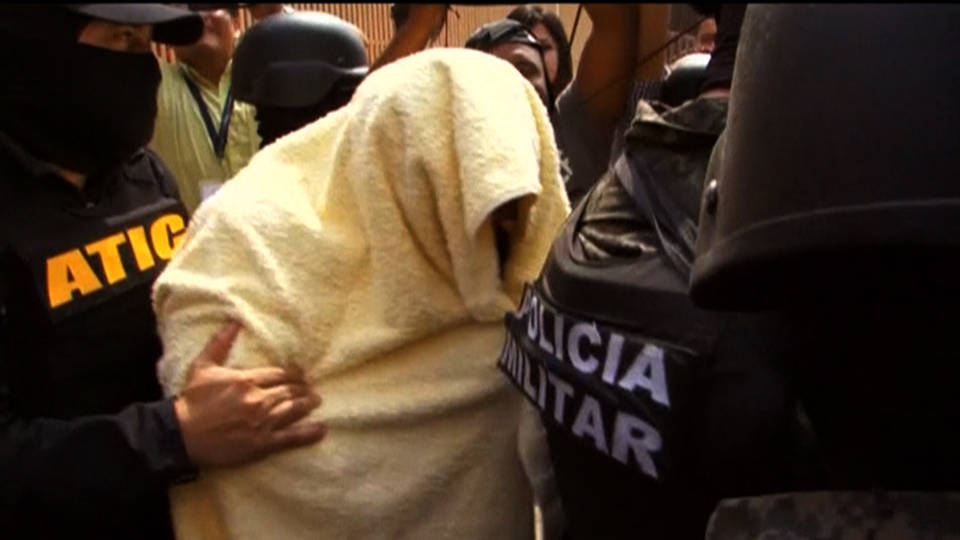
Honduran authorities have arrested four men in connection with the murder of environmentalist Berta Cáceres. Cáceres was gunned down in her hometown of La Esperanza last month. For a decade, she led the struggle against the Agua Zarca Dam, planned along a river sacred to her people, the Lenca. Last year she won the prestigious Goldman Environmental Prize. She had faced repeated threats. Honduran President Juan Orlando Hernández hailed the arrests.
President Juan Orlando Hernández: "The authorities have captured four suspects in the death of our fellow citizen Berta Cáceres. When this happened, we said this was a hit on the Honduran state. And I repeat it again. Taking the life of Berta Cáceres is a hit on the Honduran state."
The suspects include Sergio Rodríguez Orellana, a manager for social and environmental issues for DESA, the company building the Agua Zarca Dam, and Douglas Geovanny Bustillo, who has worked for a security firm hired by the dam project. The other two are reportedly a Honduran army major and retired captain. Berta Cáceres’ family has called for an independent investigation, saying they have been excluded from the Honduran government’s probe. In a statement, the family said: "Because we have been denied our right under Honduran law to participate in the investigative process from the beginning, we have no way of knowing if these arrests are the product of an exhaustive and diligent investigation, nor do we know if they include those who ordered the assassination. The news of the alleged participation of active and retired members of the military linked to DESA in the assassination should be investigated further and indicates involvement by state agents which is enough reason for the immediate suspension of and a definitive end to the Agua Zarca hydroelectric project."
Indiana Voters Head to Polls in Key Primary
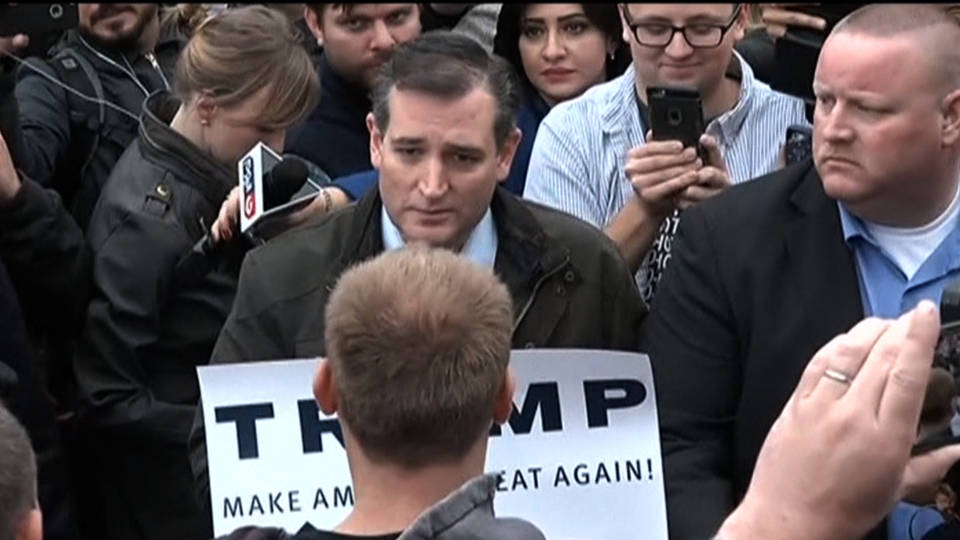
Indiana voters head to the polls today in a primary contest seen as pivotal for Republican front-runner Donald Trump’s path to the nomination. Texas Senator Ted Cruz has sought to derail Trump’s lead in Indiana. Campaigning in Marion alongside Indiana Governor Mike Pence, Cruz confronted a Trump supporter.
Sen. Ted Cruz: "America is a better country..."
Trump supporter: "Without you."
Sen. Ted Cruz: "Thank you for those kind sentiments. Let me point out, I have treated you respectfully the entire time, and a question that everyone here should ask..."
Trump supporter: "Are you Canadian? Are you Canadian?"
Ohio Governor John Kasich backed off campaigning in Indiana under a deal with Cruz aimed at blocking Trump’s nomination. Meanwhile, polls show Hillary Clinton and Bernie Sanders in a close race in Indiana. Campaigning in Kentucky Monday, Clinton said she would put her husband, former President Bill Clinton, to work on her jobs plan.
Hillary Clinton: "I’ve told my husband he’s got to come out of retirement and be in charge of this, because, you know, he’s got more ideas a minute than anybody I know. You’ve got to put people back to work and make it—make it happen."
Detroit Teachers Shut Down All But 3 Public Schools over Pay
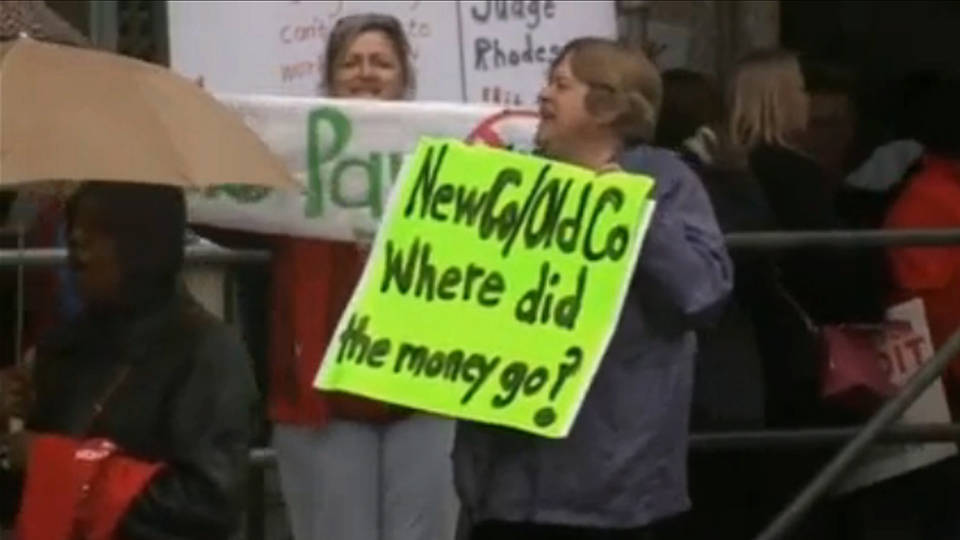
In Detroit, Michigan, all but three of the city’s 97 public schools shut down Monday after teachers called out sick to protest funding shortfalls. The teachers learned over the weekend the district is set to run out of money on June 30, meaning the teachers may not be paid. More than half of Detroit’s schools are closed again today as the protests continue. Ivy Bailey, interim president of the Detroit Federation of Teachers, said in a statement: "There’s a basic agreement in America: When you put in a day’s work, you’ll receive a day’s pay. [Detroit Public Schools] is breaking that deal."
Iraq: Car Bomb Kills 18 Shiite Pilgrims in Baghdad

In Iraq, a car bomb exploded in the Iraqi capital Baghdad Monday, killing at least 18 Shiite pilgrims and wounding 45 people. The attack came a day after two car bombs in the southern city of Samawah killed at least 31 people. ISIS claimed responsibility for both attacks.
White House Calls for Congress to Act as Puerto Rico Defaults on Debt Payment
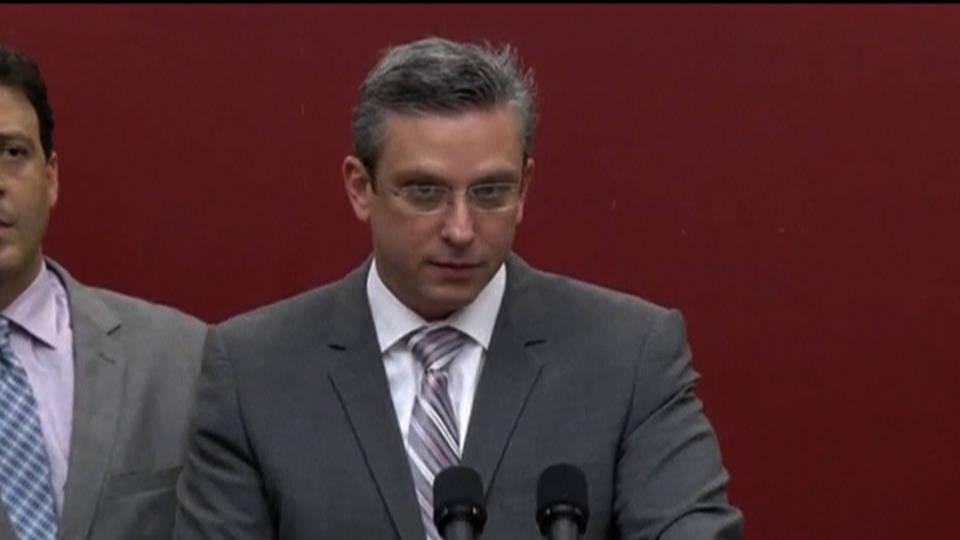
The White House has called for Congress to take urgent action on Puerto Rico’s debt crisis as the island defaulted on the bulk of a $422 million debt payment. White House Press Secretary Josh Earnest spoke Monday.
Josh Earnest: "The situation gets worse by the day. And in some days, in some situations, the—in some days, the situation gets notably worse. And it only makes a bailout more likely, which is why, you know, we continue to press hard for Republicans in Congress to stop dragging their feet and to address a situation that’s having a negative impact on more than 3 million Americans who live in Puerto Rico."
Monday’s default represents only a fraction of Puerto Rico’s $70 billion debt. Puerto Rican Governor Alejandro García Padilla echoed calls for congressional action.
Gov. Alejandro García Padilla: "We are going to end up in the hands of judges, both from here and from outside, federal and local judges, from Puerto Rico or from other parts of the United States. Recently, we had a federal judge that upon the choice of giving $115 million to Puerto Rico or to Wal-Mart, he opted for Wal-Mart. We are at the mercy of that type of decision. Congress needs to act."
U.S. Cruise Ship Reaches Cuba for 1st Time in 50 Years

The thawing ties between Cuba and the United States have reached a new commercial milestone. A Carnival cruise ship sailed into port in Havana after departing Miami, becoming the first U.S. cruise ship to reach Cuba in half a century. About 700 people were on board, many of them Cuban Americans returning for the first time in decades.
U.S. Signs New Military Deal with Senegal as Part of Africa Expansion
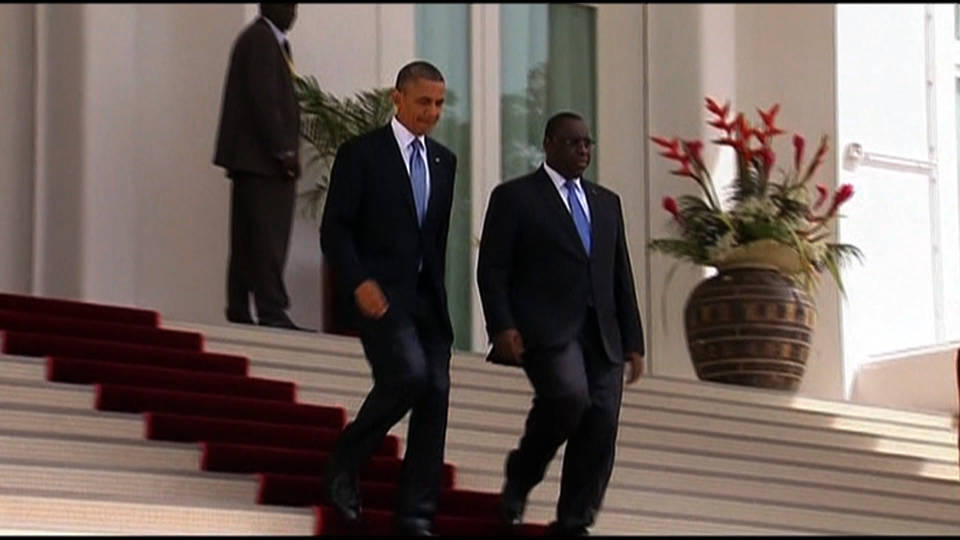
The United States has signed a new agreement with the West African nation of Senegal to allow easier deployment of U.S. troops there. The deal appears to be the first of its kind in the sub-Saharan region amidst an ongoing U.S. military expansion in Africa.
Somali Refugee Sets Herself on Fire on Nauru, 2nd Such Incident in a Week
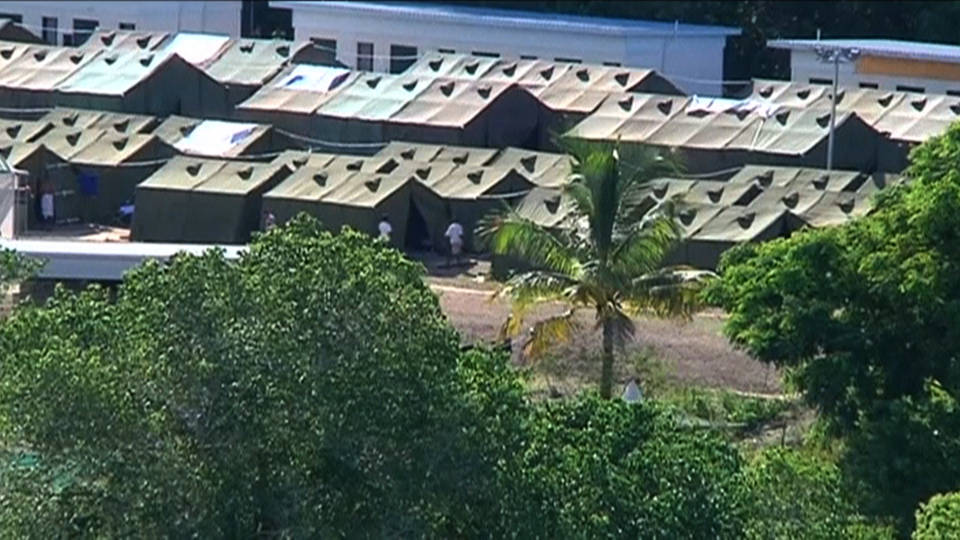
A Somali refugee has set herself on fire on the Pacific island of Nauru, where Australia sends asylum seekers who try to reach its shores by boat. It’s the second time within a week a refugee has self-immolated on the island. On Wednesday a 23-year-old Iranian man, Omid Masoumali, set himself on fire to protest conditions and Australian immigration policies. His wife said he went two hours without medical care. He died Friday. The 21-year-old Somali refugee, identified only as Hodan, is undergoing treatment.
Israeli Military Orders Palestinian Journalist Detained Without Charge for 4 Months
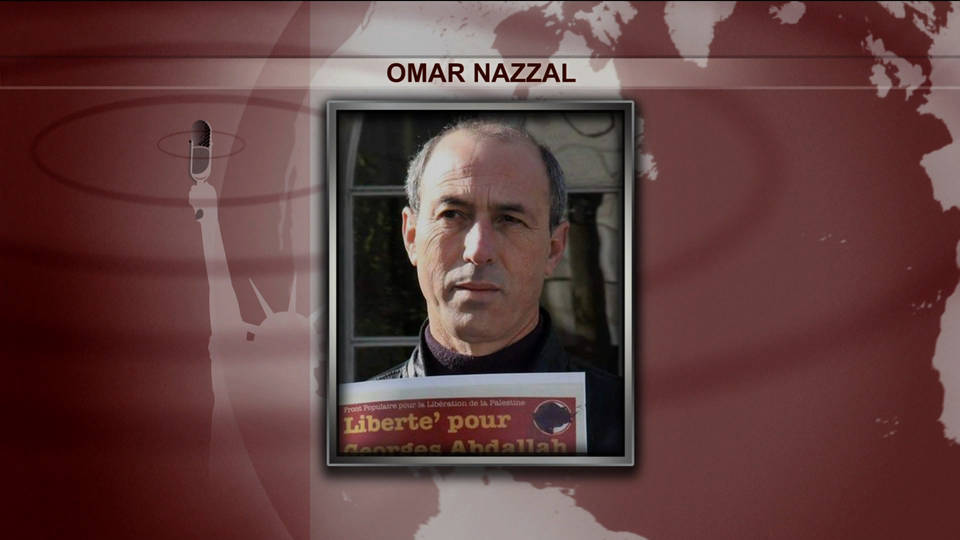
The Israeli military has ordered a Palestinian journalist to be held for four months without charge or trial. Omar Nazzal is a leading member of the Palestinian journalists’ union. Israeli authorities have claimed he is a member of the Popular Front for the Liberation of Palestine, which Israel deems a terrorist group. But his attorney says he is being targeted for his activism.
Colorado Supreme Court Rejects Local Bans on Fracking

The Colorado Supreme Court has blocked cities from imposing local bans on the oil and gas drilling process known as fracking. The court struck down a five-year fracking moratorium passed by the city of Fort Collins, saying it was trumped by state authority to promote industry.
Greenpeace Calls for Halt to TTIP After Leaking Secret Trade Docs
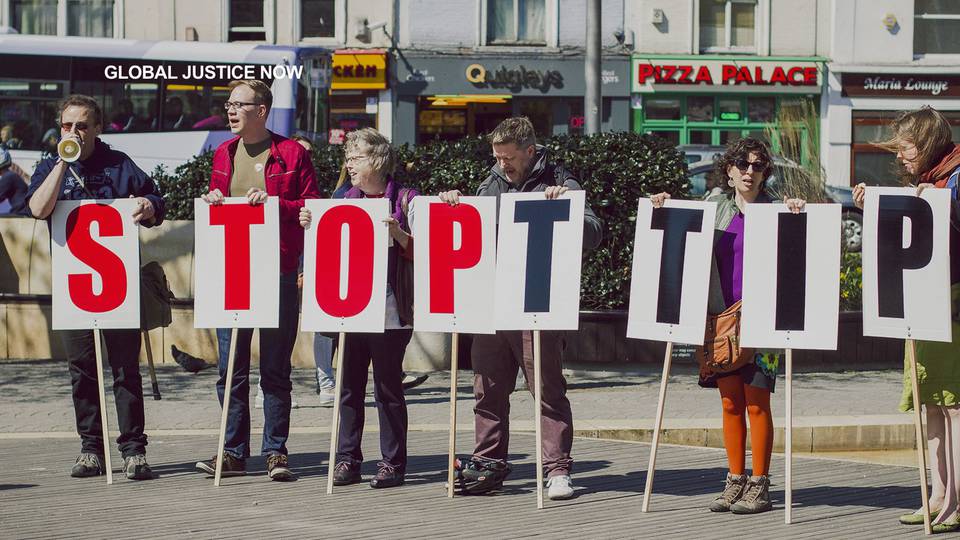
Greenpeace has called for a halt in secret U.S.-European Union negotations over the massive TTIP trade deal. Greenpeace made the call after leaking documents it says show how the U.S. is pressuring European countries to loosen environmental and consumer protections. Stefan Krug of Greenpeace spoke out.
Stefan Krug: "We are quite sure, and the text now confirmed that, that if the TTIP in its present form would become reality, that would result in a severe downshift of standards in Europe, on the environmental side, but also on the consumer side. It is quite clear that the Americans have a complete different philosophy of protecting the environment and the consumers. So I guess it’s a good moment to try to put transparency into this whole process and to really start a public debate about it."
Abortion Provider Files Complaint over Hospital's "Gag Order"
An abortion provider has filed a federal civil rights complaint, saying the Washington, D.C., hospital where she works forbade her from speaking out in support of abortion rights. Dr. Diane Horvath-Cosper accused officials with the MedStar Washington Hospital Center of imposing a "gag order" against her pro-choice advocacy. Following an attack by an anti-choice extremist on a Colorado Springs Planned Parenthood, the hospital’s medical director told Dr. Horvath-Cosper he "[did] not want to put a Kmart blue-light special on the fact that we provide abortions at MedStar."
DOJ Says South Dakota Holds Thousands in Group Homes Unnecessarily
The Justice Department says South Dakota has violated federal law by holding thousands of people in restrictive group homes unnecessarily. An investigation found people with disabilities, mental illness or diabetes are warehoused in nursing homes or long-term care facilities, even though many are capable of living at home.
Animal Rights Activist Sentenced to 2 Years in Prison for Vandalism, Freeing Mink
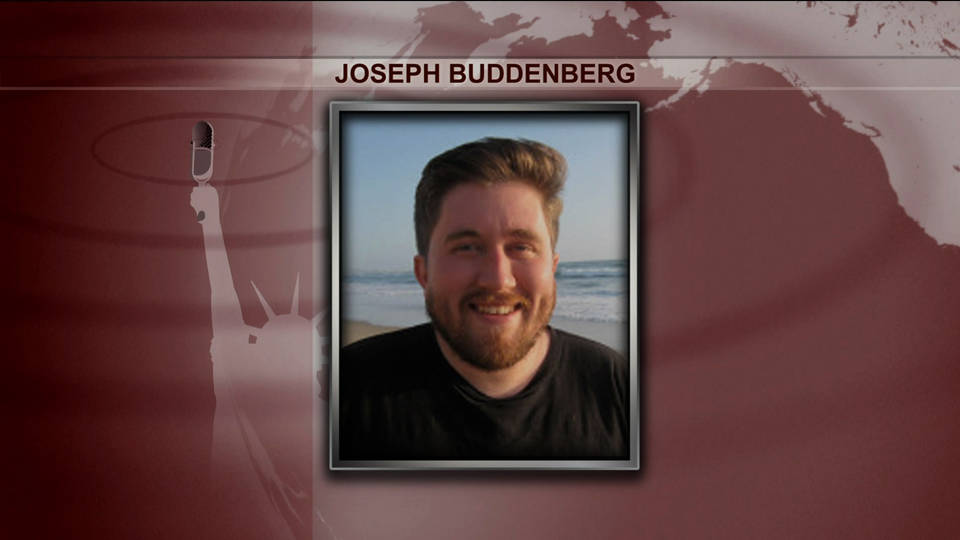
An animal rights activist has been sentenced to two years in prison on accusations of freeing mink from fur farms and vandalizing property linked to the fur and meat industries. Joseph Buddenberg had been charged under the Animal Enterprise Terrorism Act, a 2006 law that elevates crimes like vandalism to terrorist offenses if they threaten industry profits.
Ringling Bros. Circus Elephants Perform Final Show

In other animal rights news, the elephants of the Ringling Bros. and Barnum & Bailey Circus have performed their last show. The circus announced last year it would end its elephant acts amid mounting public concern over animal mistreatment. The elephants are headed to a refuge in Florida, where the company that runs the circus is based. Humane Society CEO Wayne Pacelle told NPR the decision to end the Ringling Bros. elephant acts was "almost like the [fall of] the Berlin Wall within the animal welfare [community]."
Bob Fitch, Who Photographed Civil Rights, Farmworker Movements, Dies at 76
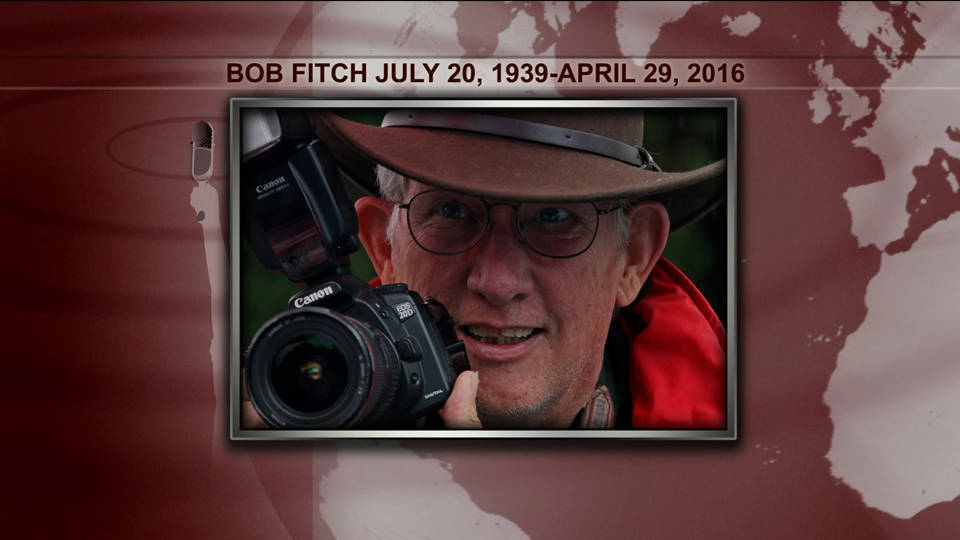
And the photographer and activist Bob Fitch has died at the age of 76. Fitch was known for his iconic photos of the civil rights and farmworker movements. He served as a staff photographer for Rev. Martin Luther King Jr.'s Southern Christian Leadership Conference and later followed Cesar Chavez and the United Farm Workers union. His photograph of Cesar Chavez became a postage stamp, but Fitch was disappointed the U.S. Postal Service removed the original background of the red-and-black UFW flag and replaced it with an image of a field. Fitch also captured photographs of Catholic Worker founder Dorothy Day, Joan Baez and an iconic image of legendary pacifist poet and priest Daniel Berrigan flashing the peace sign while in handcuffs. Father Dan Berrigan died Saturday. Fitch died Friday in Watsonville, California, after a battle with Parkinson's disease.
Donate today:
Follow:


SPEAKING EVENTS

5/3 Atlanta, GA
5/4 Spokane, WA
5/5 Olympia, WA
5/6 Seattle, WA
5/7 Mount Vernon, WA
5/8 Eugene, OR
5/8 Portland, OR
5/9 Minneapolis, MN
5/10 Cambridge, MA
more
NEW BOOK

Democracy Now!: Twenty Years Covering the Movements Changing America
DN! IN THE NEWS

Amy Goodman on AJ+: How the Media Ruins Elections
WORK WITH DN!

Video News Production Fellowship
Internships
WEB EXCLUSIVE

"A Moral Giant": ADemocracy Now! Special on the Life & Legacy of Father Daniel Berrigan
207 West 25th Street, 11th Floor
New York, New York 10001, United States
---------------------
---------------------

No comments:
Post a Comment