democracynow.org
Stories:

"Slickest Con Man Out of NYC": Donald Trump Set to Be GOP Nominee Despite Links to Organized Crime
As Donald Trump virtually clinches the Republican presidential nomination after Senator Ted Cruz suspends his campaign following a devastating defeat in the Indiana primary, we are joined by Tom Robbins, investigative journalist in residence at the CUNY Graduate School of Journalism, who has reported on Trump’s history of close relationships with organized crime figures in the United States. We examine some of the characters and connections Robbins helped expose as a reporter who covered politics, labor and organized crime for the Daily News and The Village Voice from 1985 to 2011. His recent article for The Marshall Project is "Trump and the Mob." Robbins also critiques the media’s coverage of Trump on the campaign trail.
TRANSCRIPT
This is a rush transcript. Copy may not be in its final form.
AMY GOODMAN: We are broadcasting from Atlanta, Georgia. Juan González is in New York. Hello, Juan.
JUAN GONZÁLEZ: Hello, Amy. And welcome to all of our listeners and viewers around the country and around the world. Well, Donald Trump has virtually clinched the Republican nomination after Senator Ted Cruz suspended his campaign following a devastating defeat in the Indiana primary. Trump won about 53 percent of the vote, capturing 51 delegates in the winner-take-all state. In his concession speech last night, Ted Cruz shocked his supporters by announcing his withdrawal.
SEN. TED CRUZ: From the beginning, I’ve said that I would continue on, as long as there was a viable path to victory. Tonight, I’m sorry to say, it appears that path has been foreclosed. Together, we left it all on the field in Indiana. We gave it everything we’ve got. But the voters chose another path. And so, with a heavy heart, but with boundless optimism for the long-term future of our nation, we are suspending our campaign. But hear me now: I am not suspending our fight for liberty. I am not suspending our fight to defend the Constitution, to defend the Judeo-Christian values that built America. Our movement will continue. And I give you my word that I will continue this fight with all of my strength and all of my ability.
AMY GOODMAN: With Senator Ted Cruz dropping out, Ohio Governor John Kasich becomes Donald Trump’s only remaining challenger. Reaction among the Republican establishment to Trump remains divided. Republican Party Chair Reince Priebus tweeted, "@realDonaldTrump will be presumptive @GOP nominee, we all need to unite and focus on defeating @HillaryClinton #NeverClinton." However, South Carolina Senator Lindsey Graham tweeted, "If we nominate Trump, we will get destroyed.......and we will deserve it." During a victory speech in New York, Donald Trump set his eyes on November.
DONALD TRUMP: We’re going after Hillary Clinton. She will not—she will not be a great president. She will not be a good president. She will be a poor president. She doesn’t understand trade. Her husband signed, perhaps in the history of the world, the single worst trade deal ever done. It’s called NAFTA. And I was witness to the carnage, over the last six weeks especially.
JUAN GONZÁLEZ: Meanwhile, in the Democratic race, Vermont Senator Bernie Sanders pulled a surprise upset by winning just over 52 percent of the vote.
SEN. BERNIE SANDERS: I understand that Secretary Clinton thinks that this campaign is over. I’ve got some bad news for her. Tonight, we won a great victory in Indiana. Next week, we’re going to be in West Virginia. We think we have a real shot to win in that great state. Then we’re going to Kentucky, and we’re going to Oregon; we think we have a pretty good chance to win there, as well. Then we’re going to another bunch of other states, culminating in the largest state in the United States, with the most delegates, and that is the state of California. And we think we have a pretty good chance to win there. And I think that as more and more delegates to the Democratic convention take a hard look at which candidate is generating the kind of enthusiasm, excitement, voter turnout that we need to make sure that somebody like a Donald Trump does not become president, I think we’re going to see more and more delegates concluding that that candidate is Bernie Sanders.
AMY GOODMAN: Despite Bernie Sanders’ victory, Hillary Clinton still holds a commanding lead in the delegate count. To talk more about Donald Trump’s rise to power and also the upset by Bernie Sanders, we’re joined by Tom Robbins, investigative journalist in residence at the CUNY Journalism School. He was recently named a Pulitzer Prize finalist for his reporting on the culture of violence in New York’s prisons. In the 1980s, he covered politics, labor and organized crime for the Daily News and The Village Voice from 1985 to 2011. His recent article for The Marshall Project is "Trump and the Mob."
Welcome to Democracy Now!, Tom. Well, why don’t you begin by talking about, really, this historic night in Indiana? Start with Donald Trump now becoming the presumptive Republican nominee, with Ted Cruz pulling out.
TOM ROBBINS: All right. Good morning. Who would have thunk it? Right? I mean, you have the slickest con man out of New York City, and has just been basically made the Republican nominee by the Hoosiers of Middle America. It’s an astonishing thing. And I guess it goes to show that the Republicans have just as little idea as to who their base is as the Democrats.
JUAN GONZÁLEZ: Well, Tom, you’re one of the few people who has touched on Trump’s amazing history in relationship to organized crime in America, that’s gotten virtually no attention. Could you talk about some of the characters that you and other reporters have unearthed years ago, but is not being paid attention to in this campaign, starting with the infamous Roy Cohn?
TOM ROBBINS: Yes, Roy Cohn is a figure in American history who is well known to people at least of our generation, probably not so much to the one that’s casting a lot of ballots now. But Roy Cohn was the sidekick and chief witch hunter for Senator Joseph McCarthy, a guy who reminds a lot of people of Ted Cruz. You know, they both look alike, and they talk alike. And after Roy—after Roy Cohn had left the Senate, he went into private practice, and he set himself up basically as the house counsel to a couple of the crime bosses in New York City—the Genovese crime family and the Gambino crime family. And at the same time, he adopted a young developer from Queens looking to make his first mark as a developer in Manhattan named Donald J. Trump. And Donald J. Trump will tell you, to this day, that he learned how to play politics and he learned how to play development from Roy Cohn, while he was sitting in Roy Cohn’s East Side townhouse next to "Fat Tony" Salerno and "Big Paul" Castellano.
JUAN GONZÁLEZ: And in terms of Trump’s forays first into Atlantic City and then some of the construction industry jobs he took on to build his towers in New York?
TOM ROBBINS: Well, to be a developer in New York City, to be fair, you had to, in those days—this is talking about the late ’70s and 1980s, early ’90s—you had to brush up against the mob. They were a force both on the employer side and particularly on the union side. But despite that problem, Don Trump seemed to keep running into them over and over again. They bought apartments in his Trump Tower, in Trump Plaza. You know, they kept showing up as people that he was carousing with.
And then, when he went to Atlantic City—and one of the things I did recently in this piece for The Marshall Project was I put up this old FBI memo that I’ve had for many years, in which Donald Trump met with a couple FBI agents, protesting that he was concerned that in Atlantic City there might be organized crime figures, and what could he do to protect himself from this, which is a little like saying, "Is it true that there was a guy named Al Capone once who didn’t pay his taxes?" And he did go to Atlantic City. He probably got in bed with half a dozen mobsters who he bought land from down there.
AMY GOODMAN: Tom, I want to turn to the memo. The memo says, quote, "TRUMP advised Agents that he had read in the press media and had heard from various acquaintances that Organized Crime elements were known to operate in Atlantic City. TRUMP also expressed at this meeting, the reservation that his life and those around him would be subject to microscopic examination. TRUMP advised that he wanted to build a casino in Atlantic City but he did not wish to tarnish his family’s name."
TOM ROBBINS: You know—
AMY GOODMAN: Tom Robbins?
TOM ROBBINS: Yes, you know, I’m so glad you read that in detail, Amy. You know, it’s one of the most remarkable statements coming from a man who has invited the most microscopic examination not only of his life, but his children’s life, all of his wives’ lives. Tarnish his name? You know, this is a man who has emblazoned his name all over every building that he can find, and without any compunctions as to who he associated with. And it didn’t just stop in Atlantic City. Right up until recently, this latest Trump hotel in New York—at least it has his name on it, even though he’s not the owner—the Trump SoHo down on Spring Street, as The New York Times revealed a few weeks ago, his partners in that were a bunch of Russian mobsters. And when he was asked about it, Donald Trump had the same thing that he said about the mobsters in Atlantic City, about the ones in development that he’d dealt with in New York: He wouldn’t know them if he met them."
JUAN GONZÁLEZ: What about Dan Sullivan? You write about him. And talk about that and the Polish immigrant workers that Trump employed.
TOM ROBBINS: You were there, Juan, at the News when I told that story. It’s one of my favorites. You know, there was—and I love it because of the fact that I got it from a crusty, old, rank-and-file member of the house records union who had sued Donald Trump for the fact that in making way for Trump Tower—and that is his signature accomplishment, is his high-rise condo palace right in the corner of 57th Street and Fifth Avenue—and to do that, he had to knock down a building that was a former famous New York City department store called Bonwit Teller. And he was in such a rush to do it, he got himself a contractor who had a union signatory to a union contract, but in fact was using all undocumented workers from Poland, hardly paying them at all. They were getting so little money that they were literally sleeping on the job site. And he, of course, made none of the donations to the union benefit fund, which he was supposed to do. So, this rank-and-file member filed a lawsuit against Donald Trump for the fact that he had cheated his union out of these benefits. And Trump ended up settling. Even though he claimed throughout the debates, "I never settle lawsuits," he settled that one, out of court. We never knew how much he settled for, but I can tell you that that crusty, old, rank-and-file guy and his lawyers were very happy with how it went.
JUAN GONZÁLEZ: And then there was the luxury limousine company—
TOM ROBBINS: That’s right.
JUAN GONZÁLEZ: —that he lent his name to, as well? Talk about that one.
TOM ROBBINS: Credit this one to my friend Bill Bastone at SmokingGun.com. In 1988, when Trump was at the peak of his days in Atlantic City, he teamed up with a guy named John Staluppi, who was a very successful and wealthy auto dealer out of Long Island, to create a new stretch limousine, kind of a Trumpmobile, that would be so lavish, with these leather seats and with paper shredders and bars and everything in the world you’d ever want. John Staluppi, according to the FBI, is a made member of the Colombo crime family. You know, I’m not saying that; the FBI says that. And again, when Donald Trump was asked about it, he said, "Well, I never knew anything about that. In fact, I didn’t know John Staluppi very well at all."
AMY GOODMAN: You talk about when Donald Trump was asked about it. Let’s talk about the media’s coverage of Donald Trump, Tom Robbins. What’s your assessment of it, and the significance of what this means, what happened in this last 24 hours with Ted Cruz pulling out and, clearly, Donald Trump becoming the presumptive Republican nominee for president of the United States of America?
TOM ROBBINS: You know, I don’t think, Amy, that the media has done a terrible job in covering these stories. There have been quite a few of them, actually. The problem that’s come is that no one has really compelled Trump to answer the questions, you know, in that he gets away with simply saying things like, "Well, I never heard of that guy," or, "I wouldn’t know him." No one ever—he’s never been forced to sit down in a chair and really answer the kind of questions that he would have to presumably do as the Republican nominee. And I think that will really be a telling point for the American media, is like, OK, we know all this stuff about him—and, look, he’s a gold mine of these kinds of stories. We’re only talking—we’re just scratching the surface here, the ones I just mentioned. There’s a lot more. This has been a deal maker in New York and across the world for 40 years. He’s come up against some incredibly shady characters. So now the question is: Will people get him to actually answer questions and try to get down below the level? So far, none of these stories, I think, have scratched the surface. The reason that he can win a state like Indiana is because nobody thinks badly of him.
JUAN GONZÁLEZ: And, of course, there’s still the big issue of when he will ever—when he will, or if he ever will, release his tax forms.
TOM ROBBINS: That’s right. I don’t think we’re going to see those. I mean, I think, look, Donald Trump says he’s running for president in a very different way, and that’s one of the ways it’s going to be different. You’re not going to see his tax forms.
AMY GOODMAN: Let me ask you, Tom Robbins—this issue of what Donald Trump says, just the outright lies just don’t seem to matter. Just take, for example, the Iraq War. One of the things that’s been mentioned, you know, ways he’s similar, for example, to Bernie Sanders, is that he was opposed to the war in Iraq, he’s against the so-called free trade deals that are made. On the issue of the war in Iraq, he was for the war in Iraq. I mean, back then in 2002, he talked about being for it.
TOM ROBBINS: You know, it’s a perfect example, Amy, because of the fact—there could be no more crucial difference that he claimed at the early Republican debates. He kept saying, "I knew. I was the guy who said I was against the Iraq War." And he kept saying it over and over again, and nobody challenged him on it, until people went back and they started looking at the public record and realized, well, wait a minute, that’s not really true. He was for the war in Iraq, until he was clever enough—and grant him this: He’s a smart man; he recognized a disaster in the making when he saw one, and he changed his position, and he started saying that—and very mildly at first. It wasn’t until much later, when the tide had turned, that he started really saying it was a bad idea. But I think that’s a really good example of like trying to get him to own up, is: "Well, what were you thinking? What were you saying at that time?"
And his ability to slide through this stuff is astonishing. You know, I mean, recently, Politico brought together all the people who had written biographies of Trump, just to sit down at a table and swap stories. And I commend that piece to everybody who wants to read it. My friend Wayne Barrett is one of them, Tim O’Brien is one of them, Gwenda Blair—folks who had written really most in-depth biographies of him. And they tell wonderful stories, I mean, one after another. But my favorite one was about Trump and the draft, which for people of our generation was a very big deal as to what you did during the draft. And Donald Trump has always claimed that his—he got out of the draft simply because of the fact that like they didn’t need him at that point. And he talked about having a high number, which was a lottery at one point. But one of the biographers went back and checked, and he said, "Well, actually, you know, your date was before they were even using the lottery. How did you get out of the draft?" At which point Donald Trump says, "Heel spurs. I got a 4-F because of my heel spurs." And the guy who wrote this book said, "You know, I can’t imagine how many miles on a golf course this fellow has walked, and he had too many heel spurs to walk in Vietnam." I mean, that’s those kind of stories which are out there waiting to be picked.
AMY GOODMAN: And then, of course, there’s the big story of Bernie Sanders last night. Once again, you know, the polls are wrong, the prediction that it was going to be Hillary Clinton. Now, this hasn’t gotten quite as much attention as Donald Trump winning, because Ted Cruz has pulled out, but Bernie Sanders won Indiana. Also, you know, it’s not a winner-take-all primary. But the significance of Bernie Sanders continuing on and these continued victories?
TOM ROBBINS: Well, you watched it closer than I did, Amy. My sense was that they knew it was going to be close. Perhaps they were predicting a narrow Clinton victory there. But, you know, Indiana demographically matches the kind of states that Bernie Sanders has done very well in, a largely white electorate. And, you know, he’s shown an ability to resonate with that portion of the voters in the Democratic Party that’s above and beyond. So, people shouldn’t be surprised about the fact that he did well. Is it enough to put him over? I guess, you know, now we get into the mathematical head counting for delegates.
JUAN GONZÁLEZ: And I’m wondering if you can look forward. If there is a Trump-Clinton contest, let’s say, what you would be looking for in terms of the potential of somebody like Trump actually pulling it out?
TOM ROBBINS: Well, you know, it’s interesting to hear Republicans talk about how scared they are of Trump being the candidate. I find that much more telling than when Democrats talk about, oh, he’s unpopular among women, he’s unpopular among minorities. You know, there’s a certain extent, I feel, the Democrats are whistling past the graveyard, that they don’t recognize the fact that American voters are scared, they’re anxious, they’re worried. They’ve been fed pablum and bromides about jobs that disappeared. Here’s a fellow who is telling them, "I can fix that. And it was wrong, and it shouldn’t have happened to you." And he comes across as a strongman. And there is a section of the electorate that responds to that. And if he can curb his own instinct to like—I mean, just he can’t—he’s got to stop beating up on Jeb Bush. He’s got to try to figure out a way to say some nice things about other people in his party. If he can do that, I think he could be a formidable contender, much more formidable than the Democrats are thinking right now.
AMY GOODMAN: And Hillary Clinton being the nominee, not that she is yet, but if she is, Tom Robbins? You’ve been in New York City for quite a long time. Your assessment of a Trump-Clinton race?
TOM ROBBINS: You know, Hillary Clinton, at her best, is a tremendous candidate. When Hillary Clinton lets her guard down and she speaks out, I think she resonates with people. And people feel a pride of the fact that, you know, it looks like there could for the first time be a woman who would be the candidate of a major party. And I think that that’s something that has the potential to really rally enormous numbers of voters. Hillary Clinton, at her worst, which is something unfortunately we see a lot of, is someone who is paranoid and who is fearful and who is distrustful. And as a result, voters see her that way. And I think she has the capability of being at her best. But she’s a flawed candidate. She carries a lot of baggage. And I think that Donald Trump is somebody who is incredibly good at skewing his rivals and finding the soft spot. And she’s got a lot of soft spots.
AMY GOODMAN: We’re going to break, and then, when we come back, we turn to our very own Juan González, who has just retired after 29 years as a columnist and staff writer—as a columnist at the New York Daily News. Tom Robbins, stay with us for this hour, because you have a lot to say about Juan, as well. And we’re going to play Juan’s speech, when he was inducted into the Deadline Club’s New York Journalism Hall of Fame. Stay with us. ... Read More →

"A Voice from Another Part of New York": Hear Juan González’s NY Journalism Hall of Fame Speech
Last week Democracy Now! co-host Juan González penned his final column for the New York Daily News, where he’s worked for 29 years. We play González’s speech from last November, when he was inducted into the Deadline Club’s New York Journalism Hall of Fame, becoming the first Latino journalist to be selected for the honor. González reflected on his career. "I figured my modest contribution would be a voice from another part of New York," he said. "Not writing about outcast neighborhoods, but from them. Not simply to entertain, but to change. Not after the fact, but before it, when coverage could still make a difference."
TRANSCRIPT
This is a rush transcript. Copy may not be in its final form.
AMY GOODMAN: This is Democracy Now!, democracynow.org, The War and Peace Report. I’m Amy Goodman in New York, with Juan González—oh, I’m Amy Goodman in Atlanta, Georgia. Juan González is in New York. But we’re going to turn right now to Juan González. That’s right, Juan has just become the first Latino journalist inducted into the New York Journalism Hall of Fame. He, last week, retired, after 29 years, from the New York Daily News. Over the years, Juan has used his column to break major corruption scandals and cover-ups, including the attempt to conceal the health impacts of the toxic dust released on 9/11 in New York.
In his sign-off, in his final column, Juan wrote, quote, "I opted to become a voice from another part of urban America. Not writing about outcast neighborhoods, but from them. Not simply to entertain, but to change. Not after the fact, but before it, when coverage could still make a difference."
In November of last year, Juan was inducted, yes, into the Deadline Club’s New York Journalism Hall of Fame, becoming the first Latino journalist to be selected for the honor. He was inducted along with Charlie Rose, New York Times journalist Max Frankel, 60 Minutes correspondent Lesley Stahl, ProPublica founder Paul Steiger and Time magazine journalist and editor Richard Stolley. Juan was introduced by the Deadline Club’s J. Alex Tarquinio.
J. ALEX TARQUINIO: Juan González has been a staff columnist with the New York Daily News since 1987 and co-host of the syndicated radio and television news program Democracy Now! since 1996. I believe there are a few of you here. His books include Harvest of Empire: A History of Latinos in America, News for All the People: The Epic Story of Race and the American Media and Fallout: The Environmental Consequences of the World Trade Center Collapse. González has received two George Polk Awards for Commentary and has been named to the Hall of Fame of the National Association of Hispanic Journalists. Please welcome Juan González.
DEMOCRACY NOW! STAFF: ¡Juan, presente!
JUAN GONZÁLEZ: My thanks to the Deadline Club for this honor. It’s still hard to believe you consider my writing and reporting worthy of being recognized next to the amazing figures you’ve previously inducted into the Hall of Fame and beside this extraordinary group of my fellow nominees this year. Are you sure somebody didn’t make a mistake?
I’m just amazed that I’m still—I still have a job at the Daily News, given all the—all the upheaval brought about in our media industry by the digital age. A few weeks ago, during our last round of heartbreaking layoffs at the News, I was sitting in an editorial board meeting with a bunch of reporters and editors interviewing Governor Cuomo, when my—one of my editors, Rob Moore, who was sitting next to me, suddenly pointed to his smartphone. "The Observer is reporting you’ve been fired," he told me. I took a deep breath and said to him, "Well, can you confirm that for me?" "You have nothing to worry about," Rob said. He didn’t add, "For now."
Well, I was already fired by the Daily News 25 years ago last month. Our owner at the time, the Tribune Company, declared me and 2,500 reporters, ad sellers, pressman, drivers permanently replaced for daring to go out on a labor strike. It took us five long months on picket lines and protests, through a bitterly cold winter, but we eventually won that strike, during which I somehow managed, as chair of the Guild’s strike committee, to earn the respect of all those old-line Irish and Italian reporters at the News who until then had disdained me as some kind of unqualified affirmative action hire. Tribune sold the paper to British billionaire Robert Maxwell, who then proceeded to negotiate a deal with the unions and welcomed us back. So I’ve actually been living on borrowed time for the past 25 years.
As some of you may know, mine has not been the typical journalism career these past 37 years. I’ve managed to work not only in mainstream journalism, but proudly in the alternative and dissident press, most notably for the past 20 years with Democracy Now!, with a terrific journalist and friend, Amy Goodman, who’s here tonight—today, but also at various times in the Spanish-language or ethnic press. In addition, I must be the only reporter in mainstream journalism with an extensive rap sheet, having been arrested about a dozen times over four decades, in the 1960s, '70s, ’80s and ’90s, on a variety of charges: criminal trespass, contempt of court, marijuana possession, inciting to riot, draft evasion—all, except for the marijuana bust, related to political protest. Mike McAlary often joked to me that one day he went into the old Daily News library and came across the paper's clips on my radical days. This was when papers still had massive, dusty files of yellowed, cut-out articles stuffed into pocket folders under various subjects and names. There, Mac found the old stories on me. The clip folder title was "Juan González, revolutionary." But by then, someone had crossed out "revolutionary" and changed it to "Daily News columnist."
So, yes, I had a prior life. And I didn’t really get started into mainstream journalism until I was already in my thirties. That I ended up a reporter at all, you can chalk up to Ms. Bonagura and to the Young Lords. One gave me the skills, and the other gave me the heart.
Pauline Bonagura was the one public school teacher every kid dreams about. She was an English and journalism instructor at Franklin K. Lane High School in East New York, Brooklyn. Young, charismatic, relentless, she had a hopeless love affair with the English language and was determined all her students would master not only grammar and writing, but the art of reporting. The number of fine journalists she produced is remarkable. David Vidal, who for years was a foreign correspondent from the Times; Steve Handelman, who worked for decades at the Toronto Star; Carole Carmichael, who was an editor at The Seattle Times; Janet McMillan, a reporter at The Philadelphia Inquirer for many years—all of us were Bonagura’s students. She plugged me, a shy kid from a working-class Puerto Rican family in the Cypress Hills projects of East New York, and chose me to be the editor of her paper, the Lane Reporter, the paper that almost every year won the Columbia Scholastic journalism prize. And that probably had a lot to do with my eventually getting into Columbia on a full scholarship. And it was there that I first became acquainted with dissident views and social protests, and ended up in SDS in the Columbia student strike of 1968.
Then came the Young Lords. Jimmy Breslin once wrote that the Lords produced more good journalism—journalists than Columbia J School. The Lords were a loud, brash, radical and talented group of Puerto Ricans. We became a thorn in the side of the establishment and the police in this town, and in cities throughout the East Coast for a brief time, and influenced a generation of young Latinos to demand more equitable treatment for our community. But of all the radical groups of the '60s—and there were many back then—we probably received the most sympathetic press coverage. Even as youngsters, we understood the power of the press, and we consciously cultivated good coverage. We were helped by the first brilliant crop of young black and Latino reporters in the city's media, to whom we fed exclusives and who in turn repaid us with more all-around and sound coverage—people like a young Ed Bradley at WCBS, Gil Noble at WABC, Gloria Rojas at WNBC, Rudy Garcia at the Daily News, and of course liberal white writers like Jack Newfield at The Village Voice. And we published our own newspaper, Palante, that I edited for a while. So it was no accident that when the Lords fell apart in the mid-1970s, several of us ended up going into journalism—Pablo Guzmán, Felipe Luciano, Geraldo Rivera, our first lawyer—everybody knows Geraldo—and myself, or that when we landed there, we were all drawn to uncovering injustices and digging deeper than some journalists were accustomed to.
My first job at the Philadelphia Daily News in 1978, I became friendly with Pete Dexter, one of the paper’s big-name columnists. "So what’s it like to write a column?" I asked Pete one day. "It sure beats working for a living," he told me. I quickly became hooked on the idea of becoming a columnist.
And so, what I’ve been doing the last 27 years or so—I think 27, 28 years now at the Daily News. Well, I had to figure out what I wanted to do as a columnist when I came here. And I decided that in a city brimming with extraordinary veteran newspaper columnists—Jimmy Breslin, Murray Kempton, Pete Hamill, Russell Baker, Sydney Schanberg—and awash with so many able young writers, I figured my modest contribution would be a voice from another part of New York. Not writing about outcast neighborhoods, but from them. Not simply to entertain, but to change. Not after the fact, but before it, when coverage could still make a difference. In daily newspaper writing, time becomes both an enemy and an ally. What you lose in the chance to chisel and refine for the relative few, you gain in the opportunity to influence and energize the many.
I have tried to use as many of my columns as possible to probe the injustices visited upon the powerless. Yes, the rich and the famous are also victims on occasion. But they have so many politicians, lobbyists, lawyers, gossip columnists, even editorial writers, ready to jump to their defense, that they will always do fine without my help. I prefer the desperate, unknown reader who comes to me because he or she has gone everywhere else and no one will listen. More often than not, I come across unexpected gems, human beings whose tragedies illuminate the landscape and whose courage hopefully inspires the reader to believe that there is indeed some greater good served by a free press than just chronicling or influencing the oustering of one group of politicians by another.
So, by giving me this award—and the first Latino journalist, I think, to be so honored by the Deadline Club—I assume you have looked beyond my rap sheet, beyond my rabble-rousing days, and determined that I did indeed add something of value to this great city, while not working for a living all these years. Thank you.
AMY GOODMAN: Juan González in November, speaking at Sardi’s in New York when he became the first Latino journalist inducted into the Deadline Club’s New York Journalism Hall of Fame. When we come back, Tom Robbins and Juan—well, we’ll all reflect on Juan’s 29-year career as a columnist at the New York Daily News. Stay with us. ... Read More →

Revolutionary, Strike Leader & Columnist: Juan González Retires from NY Daily News After 29 Years
Over the years, Juan González has used his column in the New York Daily News to break major corruption scandals and cover-ups, including the attempt to conceal the health impacts of the toxic dust released on 9/11. Tom Robbins, one of Juan González’s colleagues at the Daily News and a recent Pulitzer Prize finalist for his coverage of violence in New York’s prisons, joins us to reflect on González’s remarkable career as an organizer who led newspaper workers on a successful strike and published "one scoop after another." Robbins is now investigative journalist in residence at the CUNY Graduate School of Journalism. His piece "Juan González: Iron Man of the News Room" has just been published.
TRANSCRIPT
This is a rush transcript. Copy may not be in its final form.
AMY GOODMAN: This is Democracy Now!, democracynow.org, The War and Peace Report. We’re broadcasting from Atlanta, Georgia, and New York City. I’m Amy Goodman, with Juan González in New York. On Monday night, New York Governor Andrew Cuomo, New York Senator Chuck Schumer, New York Mayor Bill de Blasio, Congressmember José Serrano, journalist Geraldo Rivera and others celebrated Juan González’s 29-year career at the New York Daily News during an event Monday night at the Fraunces Tavern. We are joined by longtime New York journalist Tom Robbins, who is a recent Pulitzer finalist for his coverage of violence in New York’s prisons, Tom a longtime columnist and staff writer at The Village Voice and the New York Daily News, where he worked with Juan González for over a decade. He recently wrote an article headlined "Juan González: Iron Man of the News Room." Tom is now an investigative journalist in residence at the CUNY Journalism School.
So, Tom, you were there. What an amazing event! I’m so sorry I couldn’t be with you all. But, Juan, what a scene in New York, as I was getting live tweets of the photographs of, first, the governor, then the mayor—God forbid they should be in the same room at the same time, but it was you who brought them into the same room, even if they weren’t there at the same time. Tom, I’m not going to ask Juan, because he’s too modest, but talk about Juan’s significance as a journalist.
TOM ROBBINS: You know, Andrew Cuomo was singing Juan’s praises the other night. And a lot of us in the room who have watched Andrew Cuomo squirming in the last few weeks, given his own problems, you know, were sort of thinking, you know, he’s sort of escaping from the questions that reporters would otherwise be asking him. But, in fact, he was, I think, speaking from the heart about his true admiration for reporters like Juan, who get below the surface. Juan’s ability to both dig deep and ask tough questions has never gotten in the way of his relationships with people, which is an amazing thing. And I—that’s one of the reasons you had the crowded room at Fraunces Tavern. I think it’s another reason why you had the Deadline Club event, that we just witnessed, with—surrounded by adoring fans. Juan has an ability to both tell the truth and keep people liking him, which is sometimes a tough thing to do.
AMY GOODMAN: And the years of coverage, I mean, the kind of stories that Juan has broken?
TOM ROBBINS: You know, when—I got to the News about six months after Juan did. And me and Jack Newfield came together from The Village Voice. And the way Juan just described himself to the Deadline Club, in terms of like him being like kind of like odd man out, in a way, was really true. Juan was, you know, clearly, not only the only key Latino reporter in the room, he was the only columnist, you know, at that time. And he was looked at askance by other folks. And he never let that bother him for a moment. You know, he just marched on, and he did the stories.
He worked, as one of the editors said the other night at the party for him, Arthur Browne—Juan worked every day to dig the stories, and in the process of which he forged a bond with, I think, working New Yorkers—something I mentioned in this column I just wrote about him for the Public Employee Press, the municipal workers’ union—so that people trusted him enough to bring him news and information and stuff they weren’t supposed to talk about. And Juan was able to parlay that, along with his own inbred sense of like what’s a good story and his sticktoitiveness, into one scoop after another.
You know, you mentioned earlier in the show being the only reporter in New York to write the truth about what was happening to air quality in Lower Manhattan after the twin towers fell. I mean, just think about that for a moment. That’s a pretty remarkable scoop for anybody, under any circumstances. But more remarkable is the fact that after Juan wrote it—and it was, I think, a front-page story initially—there was such a ferocious roar back from the federal secretary for air quality, from the mayor, and then from his own editors, who then really asked Juan to tone it down and to stop doing what he was doing. And Juan, you know, he has this sheepish grin. I can—I wasn’t in the room, but I can see him just sort of shrugging and saying, "Sorry, I’m doing my job." And the editors, I think, understood that like saying no to Juan González was not a very good idea. It just didn’t work out very well. And they’re all gone, by the way, and Juan was still there, until he got up, of his own decision, from his seat last week.
AMY GOODMAN: So, Juan, you united politicians—I won’t say across the political spectrum. You have de Blasio and Cuomo, both Democrats. But you got all these people, well over a hundred people, in this room for your retirement. How did it feel?
JUAN GONZÁLEZ: Well, it was a—you know, it was a good feeling to know that as a—because Cuomo did say—when he gave me this award, he said, "Well, Juan González has never stopped beating me like a drum," but that he would think enough of my work to show up and to say goodbye. I even had a commissioner—former Police Commissioner Ray Kelly there, who, as Tom says, once cuffed me when I was in the Lords and he was a young cop. And so, he showed up with his wife to say goodbye. So I think it was a—it felt good to—because it’s been a long road. It’s definitely been a long road.
And I know, Tom, you and I bonded especially during the period, early on, of the Daily News strike, which was a traumatic experience for all of us. You know, five months—I don’t know how many people have been on—I’m sure many of our viewers and listeners have at one point or another been on strike. But a labor strike is a really traumatic experience in a person’s life. And we were out there for five months, and many people thought they’d never get their jobs back. But we were able to prevail, and I think that helped very much in terms of building the respect of the management of the paper, as well as of my fellow workers, that we were able to stick it out together and that I helped assist in trying to figure out the best way to do that.
TOM ROBBINS: You know, look, Juan was a two-fer. You know, I mean, papers are lucky enough to get a great reporter who’s going to dig it and can tell it really well. But Juan was an incredible organizer—is an incredible organizer. When he says that those five months were traumatic, it doesn’t begin to talk about it. But Juan never broke a sweat. You know, I mean, that was the remarkable thing. It was—the Newspaper Guild was in total chaos at the time we went out. And Juan led us together.
AMY GOODMAN: I want to thank you, Tom Robbins, for joining us. And, Juan, congratulations on all that you have accomplished. You may have left that New York Daily News, but I’m really thankful that you’re staying with your other DN. That’s right, with Democracy Now! And that does it for the show. Juan González, read all of his books: News for All the People, Harvest of Empire: A History of Latinos in America, Roll Down Your Window: Stories of a Forgotten America.
I’ll be speaking in Spokane, Washington, and then on to Olympia and Seattle. I’m Amy Goodman, with Juan González. Thank you so much for joining us. ... Read More →
Headlines:Trump Virtually Clinches Nomination with Indiana Win; Cruz Drops Out
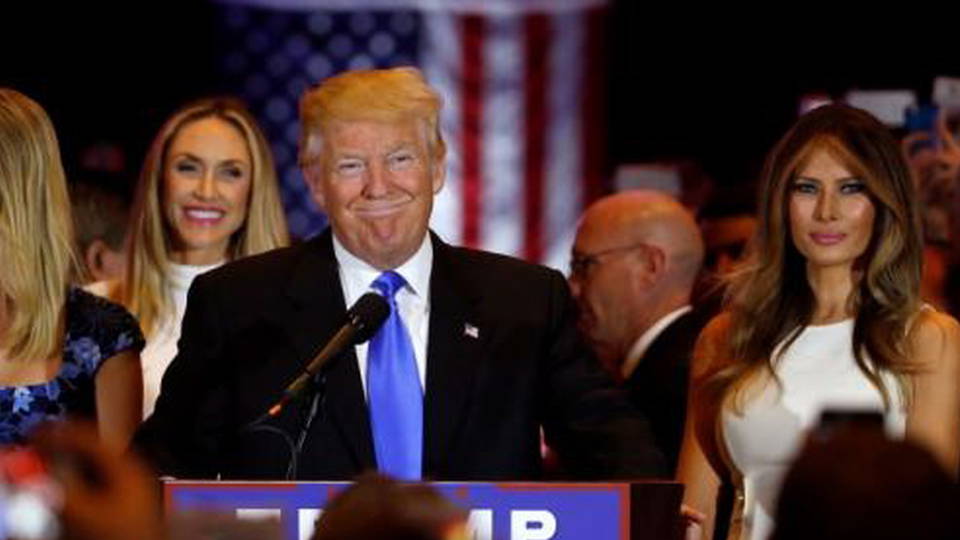
Donald Trump has virtually clinched the Republican nomination after his closest rival, Senator Ted Cruz, suspended his campaign following a devastating defeat in the Indiana primary. Trump won about 53 percent of the vote, capturing 51 delegates in the winner-take-all state. In his concession speech, Ted Cruz shocked his supporters by announcing his withdrawal.
Sen. Ted Cruz: "From the beginning, I’ve said that I would continue on, as long as there was a viable path to victory. Tonight, I’m sorry to say, it appears that path has been foreclosed. Together, we left it all on the field in Indiana. We gave it everything we’ve got. But the voters chose another path."
TOPICS:
Donald Trump
Ted Cruz
Republican Party
2016 Election
Bernie Sanders Wins Indiana Primary in Surprise Upset
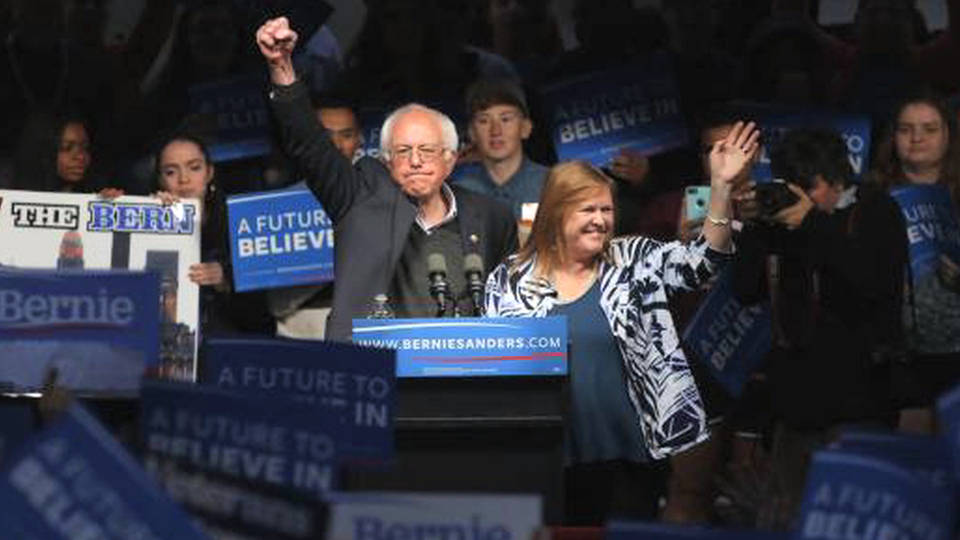
In the Democratic race, Vermont Senator Bernie Sanders pulled a surprise upset in Indiana by winning over 52 percent of the vote. We’ll have more on the results later in the broadcast.
TOPICS:
Bernie Sanders
2016 Election
Democratic Party
Hillary Clinton
Report: Less Than 1% of Clinton Fundraising Venture Goes to State Parties
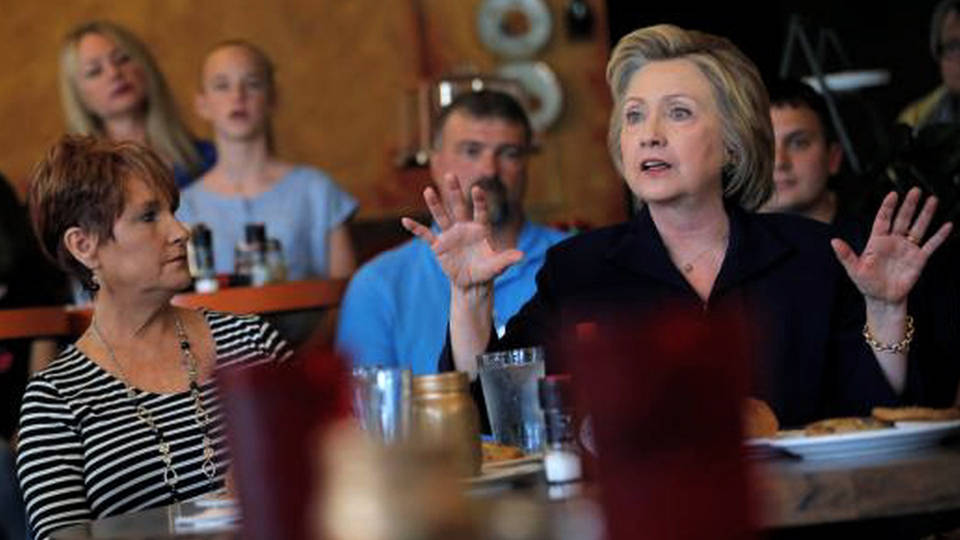
The Bernie Sanders campaign has launched a petition urging the Hillary Clinton campaign to transfer money raised by her massive joint fundraising venture to state parties. This comes after a Politico investigation into the unprecedented fundraising vehicle Clinton formed with state parties found less than 1 percent of the $61 million raised by the venture has actually gone to the state parties. The Hillary Victory Fund is a joint venture between the Democratic National Committee, 32 state committees and Clinton’s campaign. It allows Clinton to collect massive donations at events like the recent dinner at George and Amal Clooney’s house. But it turns out that of the $3.8 million the victory fund has transferred to the state parties, 88 percent of it was quickly moved back to the DNC by the Clinton staffer who controls the committee.
TOPICS:
Hillary Clinton
Bernie Sanders
Democratic Party
2016 Election
Campaign Finance
Syria: Dozens Killed in Aleppo Fighting; Rockets Hit Hospital
In Syria, fierce fighting has erupted between rebels and the Syrian regime in the city of Aleppo. The Syrian Observatory for Human Rights said the battle was the most intense the city had seen for more than a year. Dozens have reportedly been killed. This comes after at least three people were killed when a maternity hospital in a government-controlled section of the city was hit by rocket fire. Secretary of State John Kerry said the rockets appeared to have come from a rebel area.
Secretary of State John Kerry: "Today’s attack on a hospital appears to be rockets that have come from some area of opposition, and we are trying to determine precisely which. So the bottom line is, there is no justification for this horrific violence that targets civilians or medical facilities or first responders, no matter who it is."
The hospital attack came days after the Syrian regime destroyed a Doctors Without Borders-backed hospital, killing the last pediatrician in rebel-held east Aleppo.
TOPICS:
Syria
Doctors Without Borders Blasts U.N. Security Council over Hospital Attacks
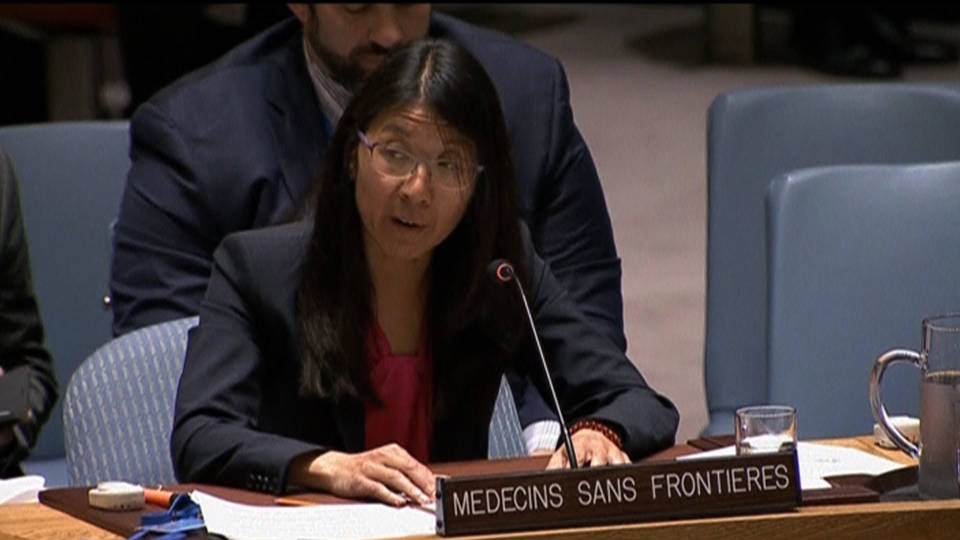
The U.N. Security Council has unanimously passed a resolution reminding states they must protect medical and aid workers. But Joanne Liu, president of Doctors Without Borders, noted four of the five permanent members of the U.N. Security Council have been tied to attacks on hospitals, including the United States for its destruction of a hospital in Kunduz, Afghanistan. Liu said the attacks must stop.
Joanne Liu: "Four of the five permanent members of this council have, to varying degrees, been associated with the coalition responsible for attacks on health structures over the last year. These include the NATO-led coalition in Afghanistan, the Saudi-led coalition in Yemen, the Russia-backed, Syrian-led coalition."
TOPICS:
Afghanistan
Syria
U.S. Navy SEAL Killed in Northern Iraq
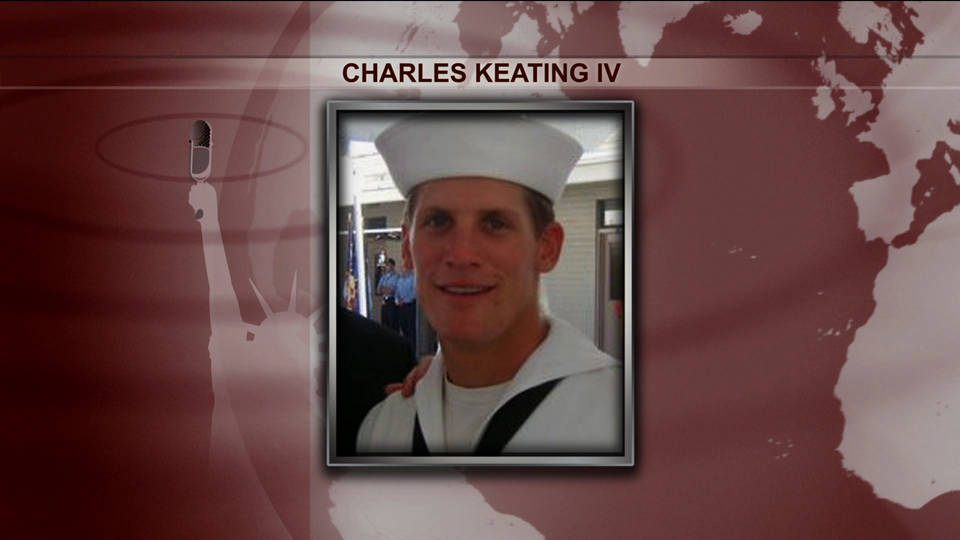
U.S. Navy SEAL Charles Keating IV has been killed in northern Iraq. The Pentagon said Keating was serving as an adviser to Kurdish Peshmerga forces and died as a result of a "coordinated and complex attack" by about 100 ISIS militants. Keating is the grandson of Charles Keating Jr., the late financier who served prison time for his role in the 1980s savings and loan scandals.
TOPICS:
Iraq
Wildfire in Alberta, Canada, Forces Tens of Thousands to Evacuate
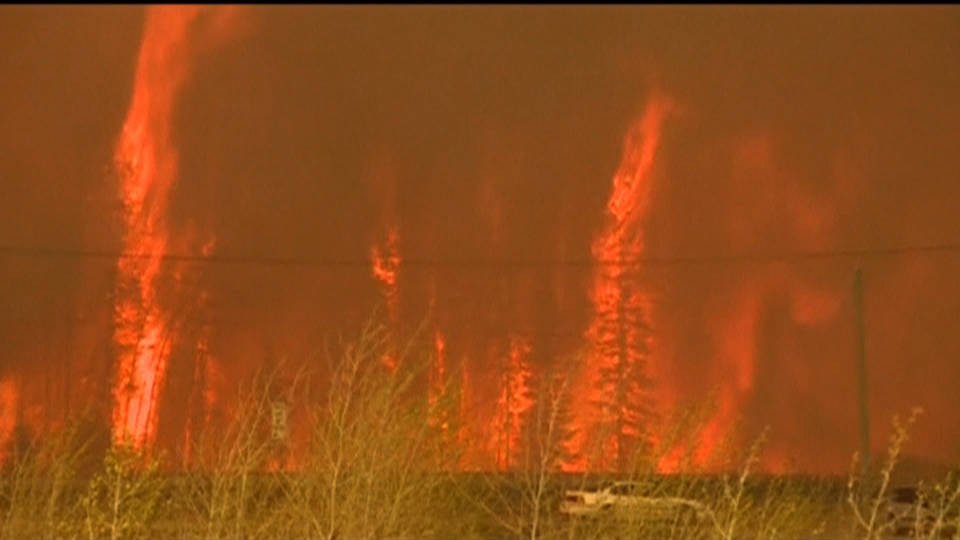
In Canada, a raging wildfire has forced tens of thousands of people to evacuate from the heart of the Alberta oil sands region. The entire community of Fort McMurray has been ordered to leave. It’s the largest wildfire evacuation in Alberta’s history. Scientists have linked the increase in wildfires to climate change.
TOPICS:
Climate Change
Canada
Detroit Teachers Return to Work After 2-Day Mass "Sickout"
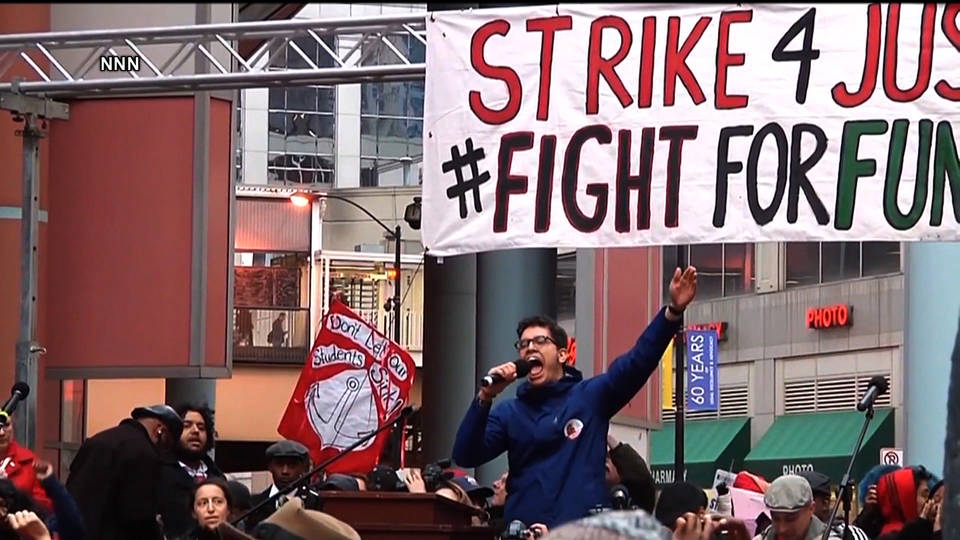
The Detroit teachers’ union has urged teachers to return to work today after teacher sickouts over a funding shortfall shuttered nearly all of the district’s 97 schools for a second day Tuesday. The teachers called out after learning the district may not have the money to pay them at the end of the school year. But union officials say they have now received assurances the teachers will be paid. Detroit teachers have also protested black mold, rat infestations and other dire conditions in their schools.
TOPICS:
Detroit
Education
Georgia GOP Governor Vetoes Bill Allowing Concealed Guns on Campuses
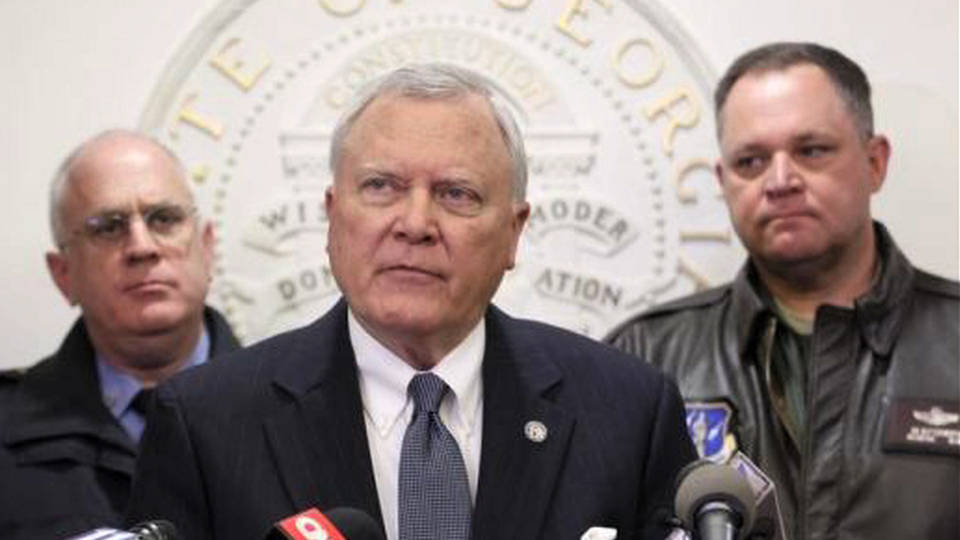
Georgia Republican Governor Nathan Deal has vetoed a bill that would have allowed people to carry concealed weapons on college campuses. In a statement, Deal said it was "highly questionable" the measure would make students safer. A similar measure became law in Tennessee this week.
TOPICS:
Georgia
Gun Control
Honduras: Journalist Survives 2 Attacks on Eve of Press Freedom Day
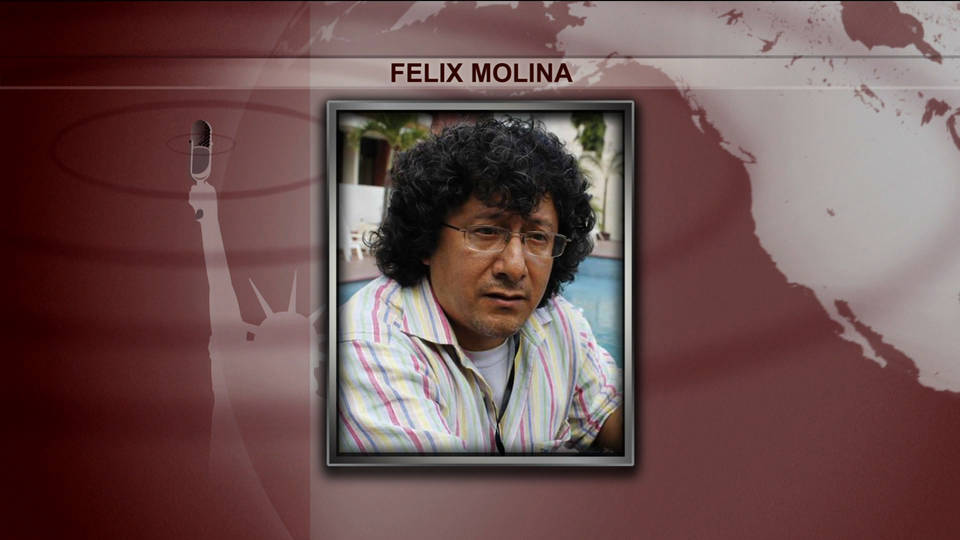
In Honduras, a prominent radio journalist has been shot four times, but survived. Félix Molina was reportedly attacked twice in the same day on Monday. He was shot twice in each leg. In a statement released by a human rights group, Molina said he believed he was directly targeted, and vowed to continue "practicing journalism without fear." "I declare myself a survivor of the insecurity that the majority of the country faces," he said. Molina’s shooting came on the eve of World Press Freedom Day.
TOPICS:
Honduras
Labor Activists Target H&M over Safety of Bangladesh Factories
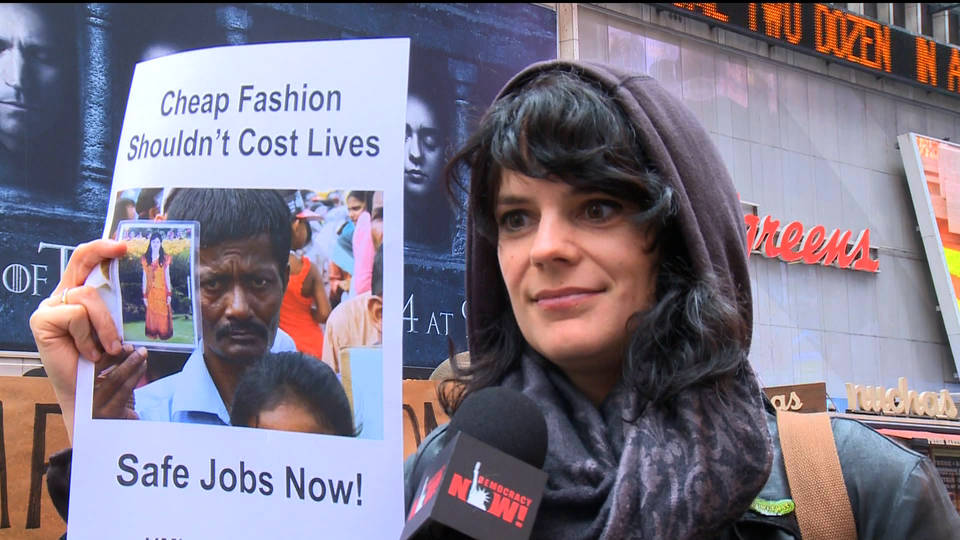
Labor activists targeted the clothing retailer H&M over the safety of its supplier factories in Bangladesh. As H&M shareholders met in Sweden, organizers rallied in front of the Times Square H&M store to demand safe conditions.
Elizabeth Cline: "My name is Elizabeth Cline. I am a journalist and the author of 'Overdressed: The Shockingly High Cost of Cheap Fashion.' And I’m out here today to demand that H&M provide safe working conditions for their Bangladeshi factory workers. They have over 100,000 workers making their clothes in Bangladesh, and currently the majority of them are in—working in facilities without legal fire exits. So, their lives are literally on the line in the name of making cheap clothes for Western consumers. No one should die in the name of making cheap fashion."
In February, an H&M supplier factory in Bangladesh caught fire early in the morning, before most of the factory’s 6,000 workers arrived.
TOPICS:
Bangladesh
Labor
Washington: 6 Workers Evaluated for Vapor Exposure at Hanford Nuclear Site
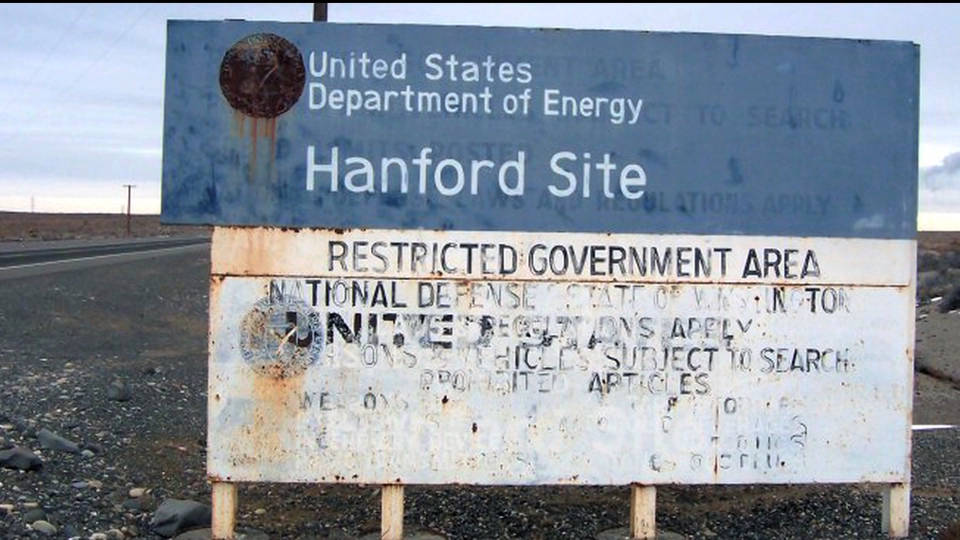
In Washington state, six workers at the Hanford nuclear site have undergone medical evaluations for possible exposure to chemical vapors. In total, more than 30 workers are being evaluated for possible exposure to vapors resulting from radioactive waste from the U.S. nuclear weapons program, which is stored in underground tanks at the site. Last month it was revealed thousands of gallons of radioactive waste had leaked between two walls of one of the tanks, an incident a former worked called "catastrophic."
TOPICS:
Nuclear Weapons
Former NY State Assembly Speaker Sheldon Silver Sentenced to 12 Years
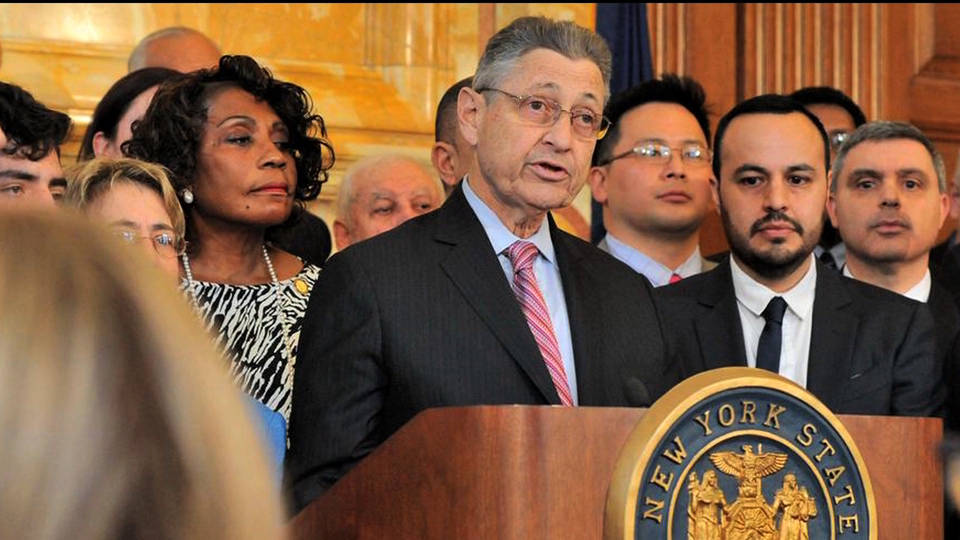
Former New York State Assembly Speaker Sheldon Silver has been sentenced to 12 years in prison after being convicted of corruption charges. Silver served as New York Assembly speaker for over two decades and was one of New York’s most powerful politicians. He was convicted of abusing his office to rake in more than $4 million in illegal bribes and kickbacks.
TOPICS:
New York
NYC Voters Pack Board of Elections Hearing to Protest Purge
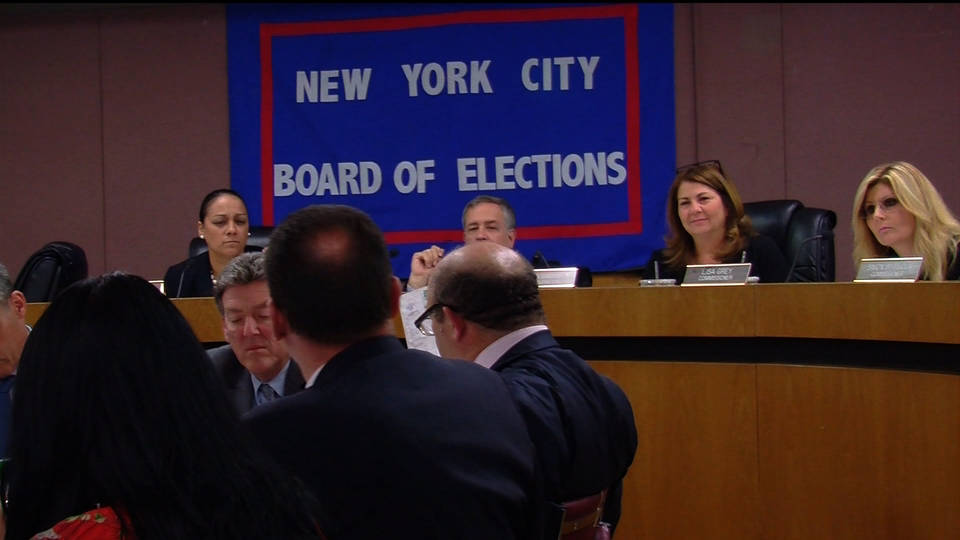
In New York City, voters who say they were blocked from casting a ballot in last month’s New York presidential primary packed a Board of Elections hearing Tuesday. Some 126,000 Brooklyn voters were purged from the Democratic rolls ahead of the primary. Voting rights activist Yvonne Gougelet spoke out.
Yvonne Gougelet: "May 5th, the New York City Board of Elections has to hand over their primary results, and that percentage, that number, is certified. If those votes are certified, no evidence that we find will matter in the court of law. If the votes are certified by the New York City Board of Elections on May 5th at 3:30 p.m., nothing that we find in the future is going to change that primary result. And so, we, as activists, are working alongside with the lawyers in court, Election Justice USA. They are fighting to get a court order. They are trying to stop the elections from getting certified. We are here at the Board of Elections to put pressure on them, ask questions, tell them what happened, find out what’s going on."
TOPICS:
2016 Election
New York
Voting
Sikh Man Says He Was Pulled Off Bus, Arrested for Speaking Punjabi
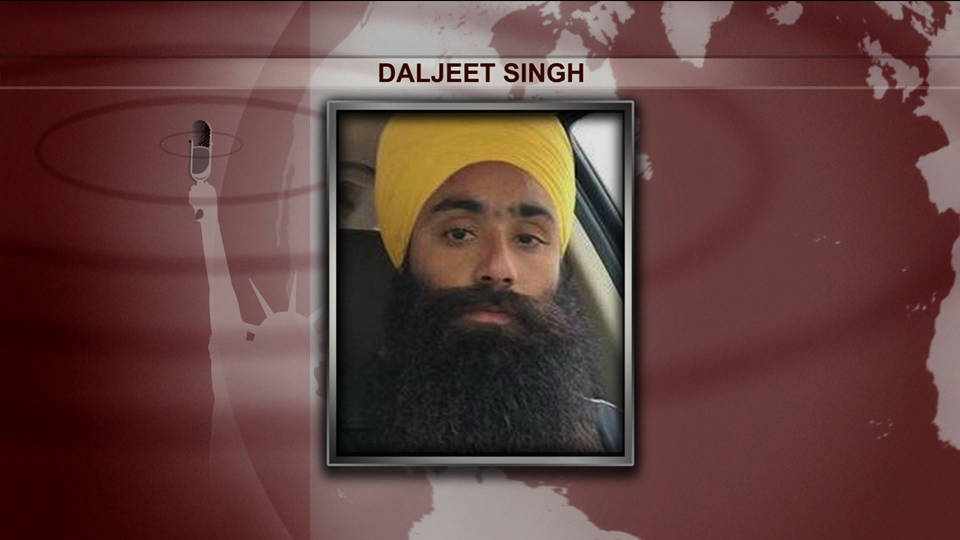
An Indian man who follows the Sikh religion is speaking out after he says he was pulled off a bus and detained for 30 hours for speaking Punjabi with another passenger. Daljeet Singh was traveling on a Greyhound bus from Arizona to Indiana when a fellow passenger falsely accused the two men of speaking Arabic and discussing a bomb threat. Fellow passengers detained the men in Amarillo, Texas, until police arrived and arrested them at gunpoint. The police also removed Singh’s religious turban and circulated mugshots of him without the turban to local media. Singh and the Sikh Coalition have demanded criminal charges against the passengers who accused and restrained him.
TOPICS:
Sikh
Racism
California: Women Say They Were Asked to Leave Cafe for Being Muslim
Meanwhile, in California, a group of women say they were kicked out of a cafe in Laguna Beach last month for being Muslim and wearing hijabs. Sara Farsakh said she and her friends were told to leave the restaurant within 10 minutes, while their desserts and coffee were still on the table. A worker said the restaurant needed to clear tables for other clients, but Farsakh said there were numerous empty tables, and other customers were not asked to leave.
TOPICS:
Muslim
Racism
Obama to Visit Flint, Meet with 8-Year-Old Impacted by Water Crisis

President Obama is heading to Flint, Michigan, today. His visit comes weeks after three Michigan officials were criminally charged for their involvement in the Flint water contamination crisis. The lead poisoning began when an unelected emergency manager appointed by Governor Snyder switched the source of the city’s drinking water to the corrosive Flint River. Obama is expected to meet today with Amariyanna Copeny, an eight-year-old Flint girl who wrote to him asking him to come to Flint. She wrote: "I am one of the children that is effected by this water and I’ve been doing my best to march in protest and to speak out for all the kids that live here in Flint."
TOPICS:
Flint Water Crisis
Obama
Afeni Shakur, Activist & Mother of Tupac Shakur, Dies at 69
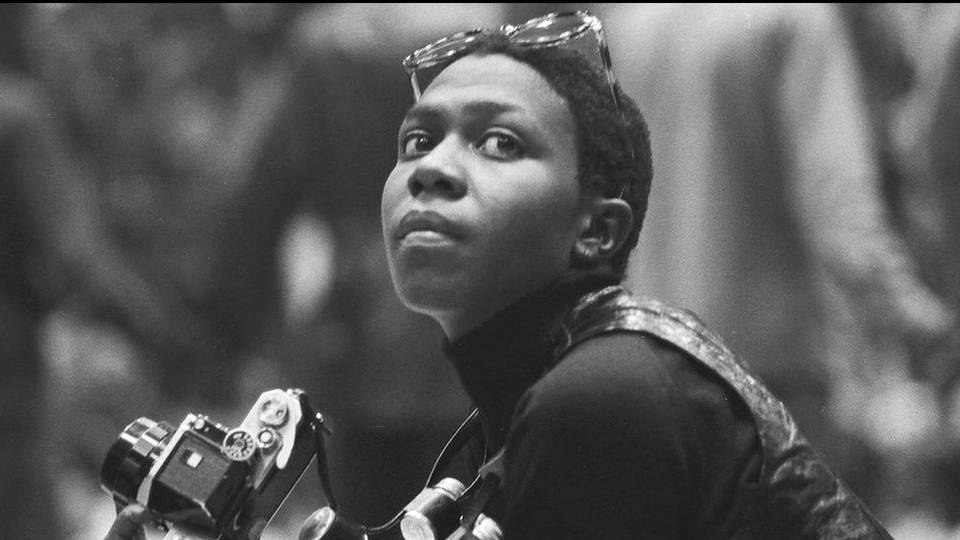
And Afeni Shakur, a former Black Panther, activist and mother of late hip-hop artist Tupac Shakur, has died at the age of 69. Afeni Shakur’s activism was a source of inspiration for her son’s music. Tupac Shakur was killed in a still-unsolved drive-by shooting in Las Vegas in 1996. Afeni Shakur died in California Monday after suffering what was believed to be a heart attack.
TOPICS:
Black Panthers
Donate today:
Follow:


SPEAKING EVENTS

5/4 Spokane, WA
5/5 Olympia, WA
5/6 Seattle, WA
5/7 Mount Vernon, WA
5/8 Eugene, OR
5/8 Portland, OR
5/9 Minneapolis, MN
5/10 Cambridge, MA
5/11 Montclair, NJ
5/12 New York, NY
more
NEW BOOK


Amy Goodman on AJ+: How the Media Ruins Elections
WORK WITH DN!

Video News Production Fellowship
Internships
WEB EXCLUSIVE

"A Moral Giant": ADemocracy Now! Special on the Life & Legacy of Father Daniel Berrigan
207 West 25th Street, 11th Floor
New York, New York 10001, United States
---------------------

No comments:
Post a Comment