democracynow.org
Stories:

As Britain Mourns MP Jo Cox, Her Killer Is Linked to Neo-Nazi National Alliance & Pro-Apartheid Club
Britain is in a state of mourning after a rising star in the British Parliament died Thursday when she was stabbed and shot in her district. Jo Cox was a 41-year-old mother of two who worked at Oxfam before being elected as a Labour MP last year. She was known for her passionate support for Syrian refugees and was a member of Labour Friends of Palestine. Her death comes just a week before the major Brexit vote—when British voters will decide whether the country should stay in the European Union. Cox was a vocal advocate for Britain to stay in the EU. During the attack, eyewitnesses said, her assassin, Thomas Mair, shouted "Britain first"—a possible reference to the far-right, anti-immigrant political party of the same name which is pushing for Britain to leave the EU. We speak with Richard Cohen, president of the Southern Poverty Law Center, which has revealed that Mair is a longtime supporter of the neo-Nazi National Alliance. He notes Mair’s attack comes on the first anniversary of when self-declared white supremacist Dylann Roof murdered nine people in the historic Emanuel AME Church in Charleston, South Carolina.
TRANSCRIPT
This is a rush transcript. Copy may not be in its final form.
JUAN GONZÁLEZ: Britain is in a state of mourning today for a rising star in the British Parliament who died Thursday after being stabbed and shot shortly following a meeting with her constituents. Jo Cox was a 41-year-old mother of two who worked at Oxfam before being elected as a Labour MP last year. She was known for her passionate support for Syrian refugees and was a member of Labour Friends of Palestine. Labour Party leader Jeremy Corbyn paid tribute to her on Thursday.
JEREMY CORBYN: She leaves behind a husband, a wonderful man who likewise spends his life campaigning for human rights and justice. And she leaves behind two young children, two young children who will never grow up to see their mum again. They can be proud of what she was. They can be proud of what she did. And they can be very proud of everything that she stood for. We come together at a time like this. We come together to support the family and to mourn and to reflect, that violence is not an answer. Violence is not an answer to anything.
JUAN GONZÁLEZ: Jo Cox is the first member of the British Parliament to be murdered in over 25 years. Her death came just a week before the major Brexit vote, when British voters will decide whether the country should stay in the European Union. Cox was a vocal advocate for Britain to stay in the EU. During the attack, eyewitnesses said, her assassin, Thomas Mair, shouted "Britain first"—a possible reference to the far-right, anti-immigrant political party of the same name which is pushing for Britain to leave the EU.
AMY GOODMAN: Meanwhile, the Southern Poverty Law Center here in the United States has revealed that the attacker, Thomas Mair, is a longtime supporter of the neo-Nazi National Alliance. Documents released by the center show Mair has spent over $600 buying periodicals and other items from the group, including a manual that contained information on how to build a pistol. In addition, The Daily Telegraph is reporting Mair subscribed to S.A. Patriot, a South African magazine published by White Rhino Club, a pro-apartheid group.
We go now to Montgomery, Alabama, where we’re joined by Richard Cohen, president of the Southern Poverty Law Center.
Richard, welcome back to Democracy Now! Can you explain what you know about who Thomas Mair is?
RICHARD COHEN: He was a longtime follower of the National Alliance. That’s the—that was the largest neo-Nazi party in the United States, with significant ties to Europe. Between 1999 and 2003, he bought things about weapons, he bought things about explosives, and, I think just as importantly, he subscribed to a variety of white supremacist literature.
JUAN GONZÁLEZ: And, Richard Cohen, for those folks who are not familiar with the National Alliance, its founder, the author of the notorious or infamous cult classic of the far right, The Turner Diaries?
RICHARD COHEN: Yes, the—William Pierce, the head of the National Alliance, as you said, was a prolific writer. He wrote a book called The Turner Diaries that was the blueprint for the Oklahoma City bombing. It was also the blueprint for a lot of other terrorist activities. Pierce was a devoted follower of Hitler, and that’s no exaggeration. He called Hitler the greatest man of the 20th century. And he talked in his manifesto about the need for white living space and how no—how his followers couldn’t be deterred by the momentary unpleasantness of their task—you know, a clear reference to genocide.
AMY GOODMAN: Can you talk about the link between—if there is one, between the National Alliance and the far-right group and anti-immigrant group in Britain that’s opposed to the—that’s opposed to—that wants Britain to leave the European Union?
RICHARD COHEN: Sure. I think the fundamental thing for people to understand is that the white nationalist movement in this country, the neo-Nazi movement in this country, is something that is really a worldwide phenomenon. Pierce, the leader of the National Alliance, traveled to England often, had ties with, for example, Golden Dawn, the neo-Nazi party in Greece. Members of the British National Party were also—a far-right nationalist party in England that’s opposed to the European Union—frequently travel to this country. Members of the British National Party were members of Pierce’s organization. So this kind of white ethnic nationalism that we see in our country is also very much alive in Europe. And groups like the National Alliance exploited that.
JUAN GONZÁLEZ: [inaudible] organization able to document the contributions and the subscriptions of someone like Mair, including to—for instance, there have been reports of his subscribing to right-wing South African publications, as well.
RICHARD COHEN: Well, it doesn’t surprise me that he subscribed to, you know, material from South Africa. You know, just to—I don’t want to jump too far ahead, but the Charleston shooter, you might remember, had patches from the apartheid regime in South Africa, a patch from the old Rhodesian white party. And so, again, this white nationalism is not just a phenomenon here, it’s really an international phenomenon.
AMY GOODMAN: Can you talk about the Britain First voicing support for the presumptive Republican presidential nominee here Donald Trump’s ban on Muslims entering the U.S.? According to The Huffington Post, Britain First told supporters to vote for Trump on Facebook. The group also applauded Trump’s statements about London last year on MSNBC. Let’s go to those comments.
DONALD TRUMP: We have places in London and other places that are so radicalized that the police are afraid for their own lives. We have to be very smart and very vigilant.
AMY GOODMAN: Richard Cohen, your response?
RICHARD COHEN: I mean, you know, Trump reflects the white nationalist trend in this country, so it shouldn’t be a surprise to anyone that white nationalists in England and in other Western European countries see him as their savior or champion. You know, one of the things that’s unusual about this campaign, Amy, is, you know, usually the white supremacists in this country sit it out. Their attitude is "a pox on both their homes." They see both parties as corrupt. This time, very famous white supremacists—David Duke, for example—see Trump as their champion. They’ve called him, for example, the glorious leader. So that’s what we’re seeing.
AMY GOODMAN: Today, Friday, June 17th, marks the first anniversary since the self-declared white supremacist Dylann Storm Roof claimed the lives of nine black men and women who gathered for Bible study at the historic Emanuel AME Church in Charleston, South Carolina. He gunned them down. He later confessed to the attack, now faces the death penalty. Can you talk about this anniversary?
RICHARD COHEN: Yeah. You know, I think the country has made some progress dealing with the symbols of hate. You know, Confederate flags have come down. Other monuments to the Confederacy have come down. Yet we’ve had a tougher time dealing with the substance of hate. There was a tremendous backlash, for example, to people taking down the Confederate flags. We’ve documented more than 300 pro-Confederate flag rallies last year. And those weren’t only in the South. They were as far as, you know, Washington state, Oregon, Pennsylvania. So, you know, again, those are eruptions of white pride, ethnic nationalism. We also saw last year an uptick in the number of hate groups in our country by about 14 percent. And, of course, so much of this is amplified by the rhetoric in the campaign this year, particularly the rhetoric coming out of Mr. Trump’s campaign.
AMY GOODMAN: Richard Cohen, we want to thank you for being with us, president of the Southern Poverty Law Center, speaking to us from Montgomery, Alabama. This is Democracy Now!, democracynow.org, The War and Peace Report. We’ll be back in a minute. ... Read More →

Bernie Sanders Vows to Continue His Political Revolution as Thousands Plan to Attend People's Summit
Democratic presidential candidate Bernie Sanders addressed supporters in a live webcast Thursday night and vowed to continue what he called his political revolution. He did not endorse former Secretary of State Hillary Clinton, but said he will work with her to defeat the presumptive Republican nominee Donald Trump. As thousands plan to attend a People’s Summit in Chicago to discuss the next steps of Sanders’ revolution, we speak with a key participant, RoseAnn DeMoro, head of National Nurses United, the first national union to back Sanders last year. Sanders recently tried to place her on the Democratic platform committee, but said he was blocked by the Democratic National Committee.
TRANSCRIPT
This is a rush transcript. Copy may not be in its final form.
JUAN GONZÁLEZ: We turn now to the presidential race. On Thursday night, Democratic presidential candidate Bernie Sanders addressed supporters in a live webcast, vowing the continuation of what he called his political revolution. The speech came two days after Hillary Clinton won the last primary in Washington, D.C. While Clinton has claimed victory in the Democratic race, Sanders announced he would stay in until next month’s convention. He did not endorse the former secretary of state, but vowed to work with her to defeat the presumptive Republican nominee, Donald Trump.
SEN. BERNIE SANDERS: The major political task that together we face in the next five months is to make certain that Donald Trump is defeated, and defeated badly. And I personally intend to begin my role in that process in a very short period of time. But defeating Donald Trump cannot be our only goal. We must continue our grassroots effort to create the America that we know we can become. And we must take that energy into the Democratic National Convention on July 25th in Philadelphia, where we will have more than 1,900 delegates.
JUAN GONZÁLEZ: Bernie Sanders went on to say he plans to push the Clinton campaign and the Democratic Party to adopt a more progressive agenda.
SEN. BERNIE SANDERS: I look forward in the coming weeks to continue discussion between the two campaigns to make certain that your voices are heard and that the Democratic Party passes the most progressive platform in its history, and that Democrats actually fight for that agenda. I also look forward to working with Secretary Clinton to transform the Democratic Party, so that it becomes a party of working people and young people, and not just wealthy campaign contributors, a party that has the guts to take on Wall Street, the pharmaceutical industry, the fossil fuel industry and the other powerful special interests that dominate so much of our political and economic life.
AMY GOODMAN: To talk more about the Sanders campaign, we’re joined by RoseAnn DeMoro, executive director of National Nurses United, the nation’s largest organization of nurses, the first national union to back Senator Sanders last year for president. Sanders recently attempted to place DeMoro on the Democratic platform committee, but according to Sanders, the move was blocked by the Democratic National Committee. This weekend, National Nurses United is helping organize a major conference in Chicago called the People’s Summit. RoseAnn DeMoro will be speaking there, but is speaking here first.
Welcome to Democracy Now!, RoseAnn. Why don’t you start off by responding to Bernie Sanders’ announcement last night that he’s staying in the race into the convention and what he wants to see happen, and then what you want to see happen?
ROSEANN DEMORO: Thank you. It was a—I listened to the announcement in a room with 1,400 registered nurses, and I have to say it was music to everyone’s ears. Prior to Bernie speaking on the teleprompter, we played his commercial, "America." And it just—it just so much symbolized—that beautiful commercial that he did with the Simon and Garfunkel song. And everyone was—just fell silent. And then, when Bernie spoke, there was a massive relief in the room that there was an advocate that would be fighting for them, for the nurses, for their patients. It was just—it was the—the passion was palpable. And it was beautiful. And I think that’s probably how it resonated with people across the country. What we know about Bernie is that he will be there. He’s always been there as a fighter in the Senate, but that he will continue to be there for us. But most importantly, his message was, we have to be there, we have to build a movement, we have to fight.
Now, following—I just have to say this, because it was just so sweet. Following his presentation, the nurses, because they always dance—we ascribe to Emma Goldman’s philosophy: If we can’t dance, we don’t want to have the revolution. So they were—you know, started up karaoke. They chose their songs. The Veterans Administration nurses who were in the room chose "My Guy," and they got up and they sang it for Bernie. And it was just—I mean, it made everybody tear up. And then, the next group did a song for Bernie called "Don’t Stop Believin’" by Journey. So that, actually, I think, is emblematic of where things stand.
JUAN GONZÁLEZ: RoseAnn DeMoro, I wanted to ask you about this issue of the DNC nixing you for being on the platform committee, and also the reasons that they felt that they didn’t want labor union representation, the ostensible reasons, what that signifies?
ROSEANN DEMORO: You know, Juan, I think, exactly, ostensible. Well, the fact that the DNC could use not having a labor leader on the platform committee as a reason says everything that you need to know about how far the Democratic Party has drifted from the working people of America. But actually, the real reason is that I am—I fight. You know, we are one of the only organizations, I’d say, that has systematically fought in its history for a single-payer healthcare system, because the nurses see the human suffering of people, and it’s not negotiable. And that’s the thing. You know, we’ve seen with the neoliberal agenda and the austerity programs, we’re all supposed to get on board and just accept cuts. Well, when it comes to health, the nurses see the consequences of that. They see the fallout. They see people who can’t afford their prescriptions. They see people who get to the hospital so late, and their lives are compromised because of it. And so, when it comes to single payer, we don’t compromise. We are going to fight. Every other country can achieve a single-payer system. People shouldn’t suffer. And that’s basically the bottom line and one of the reasons that the nurses are so heartfelt in the Sanders campaign and remain so.
And so, excluding me from—I was not surprised whatsoever. I mean, it was ironic, because, you know, they chose Cornel West, who we like very, very much, but they excluded me. And what that says is—to me, is the role of finance in healthcare and what they don’t want to see in the platform. There isn’t a commitment to taking care of America’s people by the Democratic Party any longer. A single-payer healthcare system is more cost-effective, it’s the most efficient, and it guarantees access for everyone. And that’s off the agenda. That’s what that says.
AMY GOODMAN: Would you like to see Bernie Sanders run as a third-party candidate?
ROSEANN DEMORO: You know, there is a massive amount of discussion about that. I don’t think Bernie is going to consider that. You know, we’re having a People’s Summit this weekend in Chicago, and, by the way, we will be live-streaming it. And it’s still open, so, folks in Chicago, feel free to come and join us. There will be approximately 3,000 people so far registered for that. And it’s grassroots activists, and it’s people who have been doing movement building for many, many years. It’s—Juan is there tonight with us. You know, we have performers. We have really new films out, progressive films. But most importantly why we’re there is to network. And I’m sure that there will be a variety of discussions, from supporting Clinton and just basically conceding the fact that we’re not going to achieve anything at this round in the electoral process at that level. And, you know, I’m sure people will talk about building third parties. There will be a variety of discussions. Everyone’s voice is going to be welcome here, because it’s a time for debate and it’s a time for deep considerations.
We saw the manipulation in the DNC of this election. We saw the horrendous campaign obstacles that we had to confront. It was a real eye-opener for the nurses, in particular, because they were across the country on the Sanders campaign, and they were, at first, quite stunned by the level of corruption, but eventually understood that you have to change things at a systemic level. So when Senator Sanders says that we have to transform the Democratic Party, we all kind of turn and look at each other and wonder, "With Wall Street’s money so invested in that party, is that possible any longer?" So, it just raises all the questions.
The nurses had a really good discussion at their executive board yesterday. And we’re staying to fight. We’re staying with Bernie. We’re going to fight for our issues through the convention, and we’re going to continue to fight for our issues. What I’m the most worried about is the disaffection by Sanders not achieving the nomination. Well, that’s still open. I mean, that’s still an open question. I know there’s a presumptive nominee, but that’s still an open question. A lot can happen between here and the end of July. Regardless of that, the Sanders campaign is about changing America. And it’s changing America from being a market to a society. And I think, at a visceral level, that’s what people really see and they want. They want their country back. And that’s what our campaign has been about.
JUAN GONZÁLEZ: And, RoseAnn, your organization obviously was very pivotal in organizing support for Bernie Sanders. But among the other things that he said last night in terms of not just transforming the Democratic Party, but he said that it was an immediate political task of the next five months to make sure Donald Trump does not become president. Do you agree with that aspect of what he said?
ROSEANN DEMORO: Absolutely. Well, I mean, we’re really not very interested in having, you know, some neofascism in our country, and that’s where this goes. My assumption is that Donald Trump will defeat himself, that the Republicans will wake up. I think, though, Juan, there’s something deeper and that can’t be ignored. And that is, you know—and the people who support Trump give voice to that. And that’s the deep frustration of where our country is going. And it seems to be continuing on that path by our electoral choices here in the presumptive nominees. Regardless of which side they were on, people want change. What—you know, I think we’ll all be unified in fighting Donald Trump. I also believe that many of the Clinton supporters basically walked—you know, just fell lockstep into the normal Democratic Party nomination process. But I believe, on the issues, they’ll be with us, they’ll be with Bernie. They want a better America. They want education for their children. They want healthcare for their families. They want a society that doesn’t pollute the air. They want immigrant rights. I mean, all of the things that this campaign is about, we continue on.
And, in fact, I think, you know, tonight and tomorrow and the next day at the People’s Summit, we’ll be talking a lot about that. There’s a lot of surrogates from the Sanders campaign who will be here—Nina Turner, Tulsi Gabbard. There’s really incredible speakers on the environment—Naomi Klein tonight, with you, Juan. And there’s—you know, the young generation of talent in the film industry and in the rock scene, actually, will be here. So we’ve got all of this young incredible talent. What I’m really—I guess the thing that I’m the—I’ve been an activist all my life. And what I’m the most happy about in this campaign is how intelligent the young people are. And look at this—and this cross-section of actors and actresses here tonight, for example, who are going to be doing readings—you know, Rosario Dawson, for example, who’s on the panel tonight with us, as well. They are just so—they’re so smart, and they’ve got a long future ahead. And they want this country to be returned to the people. And so, I am—I am just feeling so good about the moment. I mean, obviously, we would have loved to see Bernie as the—and we still do. We’d love to see Bernie as the leader of this country. He deserves that role. He fights for us.
AMY GOODMAN: RoseAnn DeMoro, we want to thank you for being with us, executive director of the National Nurses United and the California Nurses Association/National Nurses Organizing Committee. This is Democracy Now!, democracynow.org, The War and Peace Report. Of course, we’ll cover the summit that’s happening this weekend, the people’s conference that you’re holding in Chicago, and we’ll be covering it on Monday. But right now we’re turning to another issue. Juan? ... Read More →

NYPD Surveillance Unveiled: City Claims to Lose Docs on 1960s Radicals, Then Finds 1 Million Records
There has been a major break in the decade-long fight to unveil records related to the New York City Police Department’s surveillance of political organizations in the 1960s and 1970s. In recent years, the NYPD has come under fire for spying on Muslim communities and the Occupy Wall Street movement. But decades ago, the NYPD spied extensively on political organizations, including the Young Lords, a radical group founded by Puerto Ricans modeled on the Black Panther Party. The Young Lords staged their first action in July 1969 in an effort to force the City of New York to increase garbage pickups in East Harlem. They would go on to inspire activists around the country as they occupied churches and hospitals in an attempt to open the spaces to community projects. Among their leaders was Democracy Now! co-host Juan González. We speak with Baruch College professor Johanna Fernández, who has fought for a decade to obtain records related to the NYPD’s surveillance of the group. Last month, the city claimed it had lost the records. But this week its municipal archive said it had found more than 520 boxes, or about 1.1 million pages, apparently containing the complete remaining records. We’re also joined by Fernández’s attorney, Gideon Oliver.
TRANSCRIPT
This is a rush transcript. Copy may not be in its final form.
JUAN GONZÁLEZ: There’s been a major break in the decade-long fight to unveil records related to the New York City Police Department’s surveillance of political organizations in the 1960s and 1970s. In recent years, the NYPD has come under fire for spying on Muslim communities and the Occupy Wall Street movement. But decades ago, the NYPD also spied extensively on political organizations, including the Young Lords, a radical group founded by Puerto Ricans modeled on the Black Panther Party. The Young Lords staged our first action in July of 1969 in an effort to force the City of New York to increase garbage pickups in East Harlem. They would go on to inspire activists around the country as we occupied churches and hospitals in an attempt to open the spaces to community projects.
AMY GOODMAN: Among the leaders of the Young Lords, as you heard Juan going from "they" to "we," was Juan González himself, a Democracy Now! co-host. Well, a professor here at Baruch College in New York City has fought for a decade to obtain records related to the New York Police Department’s surveillance of the Young Lords. Last month, a judge dismissed a lawsuit filed by professor Johanna Fernández after New York claimed it had lost the records. Questioned by a NY1 reporter, Lawrence Byrne, the NYPD’s deputy commissioner for legal matters, said the records seemed to have disappeared.
LAWRENCE BYRNE: It’s not at all unusual or nefarious that physical documents, old folders from the 1970s, have disappeared. But this goes back 45 years. It’s unfortunate. We’ll continue to search for it. But we haven’t been able to locate it.
JUAN GONZÁLEZ: But this week, Johanna Fernández received word from the city that the records had not been lost or destroyed. In fact, the city’s Municipal Archive had found more than 520 boxes—about 1.1 million pages—apparently containing the complete remaining records documenting the NYPD’s surveillance of political groups in New York City throughout the 1960s and the 1970s.
AMY GOODMAN: To talk more about this revelation, we’re joined by Johanna Fernández herself, history professor at Baruch College here in New York. She filed a lawsuit in 2014 to force the City of New York to locate and make public records on police surveillance of the Young Lords. Her forthcoming book is on the Young Lords, is called When the World was Their Stage. And we’re joined by her attorney, Gideon Oliver.
We welcome you both to Democracy Now! So, Johanna, talk about how this all happened.
JOHANNA FERNÁNDEZ: Well, I began this search a decade ago. And the Police Department in New York City gave me the runaround. And I personally believe that they were duplicitous about three years ago. I went in person to 1 Police Plaza thinking that perhaps I could rationally talk to somebody. And they suggested that they were going to help me find the records, and they called me "professor" and "doctor." And then they sent me a letter like about six months later telling me that they were going to dismiss my request, my FOIL request. And it was then that I pulled resources together and hired Gideon Oliver, in part because I understood the historical significance of these records, not just for the Young Lords, but for the history of New York City and the history of activism, and the ways in which the police have systematically undermined and, essentially, destroyed radical organizations, such as the Young Lords.
JUAN GONZÁLEZ: And, Johanna, how does somebody lose and then suddenly find 500 boxes? I mean, where were these boxes? Where were they supposed to be, and how did they suddenly come up with them?
JOHANNA FERNÁNDEZ: Well, in 1971, radical lawyers in New York filed a suit demanding that these files of police surveillance be preserved. And in 1986, a judge said that they could not be discarded, that they had to be preserved for the historical record. And the judge at that point said that the police had to work with the Municipal Archive of the City of New York to preserve these records. And from 1986 to the present, they’ve been lost, over a million records. But they were found. One day they were lost, and now they were found. Now they are found, thankfully, in the—in what is known as the Queens warehouse, which houses currently not just the Handschu boxes—again, an epic find—
JUAN GONZÁLEZ: And Handschu was the original case that you were referring to.
JOHANNA FERNÁNDEZ: The Handschu was the original case I was referring to, which is an epic win for civil liberties and for historians seeking to understand the history of the city. But they—but this warehouse apparently houses over 10,000 boxes of records of the City of New York that have not been inventoried. So that’s exactly where they were found.
AMY GOODMAN: I want to turn to some of the New York City police index cards documenting surveillance of the Young Lords, including a number of these index cards on you, Juan. One dated April 4th, 1969, describes Juan’s height and weight—5’11", 150 pounds—and reads, quote—
JUAN GONZÁLEZ: I wish I was at that weight now.
AMY GOODMAN: "The above person"—this is what it says—"The above person was observed at a rally held at 110 St. and B’way. Sponsored by the West Side Community Council, against urban renewal, and Columbia expanision [sic]. He did not speak," unquote. Another dated January 18, 1970, reads, quote, "The above named person was present at the first Spanish Methodist Church on 111 St. & Lex. Ave. Manhattan. He along with a group of Young Lords and other sympathizers were at the church to feed the community children and give them clothes," unquote. There are detailed notes not only on Juan’s participation in the protests, but also on his published articles and media appearances. Your response to this, Juan?
JUAN GONZÁLEZ: Well, what I—
AMY GOODMAN: Is it true, first of all? Did you not speak at 110th and Broadway?
JUAN GONZÁLEZ: Yeah, yeah, I’m sure that there were many times when I did not speak—a surprise to many. But the—what I’m interested in is: Who was giving the reports? Because we’ve always had—we’ve always had debates among former Young Lords about who were the police undercovers. And, of course, while I’m sure that these files would have those names redacted, we could pretty much be able to piece together by when the events occurred and who we recall being there as who would be the likely informants. But it is a—it is an amazing fact, because, back then, the group—we knew it as BOSS, Bureau of Special Services, or the "Red Squad," that was the one that was in charge of collecting all of this information. And it was a very extensive organization with lots of informants that were providing reports.
AMY GOODMAN: Well, Juan, I want to play a clip of you from the Third World Newsreel film El Pueblo se Levanta: The People Are Rising.
JUAN GONZÁLEZ: The main thing that we’re clear on is that it’s such a simple thing to give us space. And now that we’ve gotten into this church and eaten here and been here for hours, we know what a big place it is—incredible space in the church, all unused, you know, never open to the community. And it’s just incredible to us how such a simple thing like granting us space has resulted in so many heads being busted and so much trouble in East Harlem.
And our only understanding of that has to be that religion, you know, organized religion, has so enslaved our people, has so destroyed their minds to thinking about salvation in the hereafter, they refuse to deal with the conditions that they have now and with the oppression that they have now. The people who come to this church are mostly Puerto Ricans who have already raised themselves to certain standards. Many of them have left the community. They no longer relate to the community except to drive in on Sundays and go to services.
And it’s amazing to us how people can talk about, you know, Jesus, who walked among the poor, the poorest and most oppressed, the prostitutes, the drug addicts of his time, that these people can claim to be Christians—right?—and they’ve forgotten that it was Jesus who said that it is easier for a camel to pass through the eye of a needle than for a rich man to enter the kingdom of heaven. And they forget that it was Jesus who said the last shall be first, and the first shall be last. And they forget that it was Jesus who said feed the hungry and clothe the poor. And this is what we’re after. We’re after following the tenets and the spirit of Christianity, not the letter of Christianity, of those Bibles that have perverted Jesus’s real revolutionary and social consciousness.
AMY GOODMAN: And that was Juan González. Thanks to the Third World Newsreel for that clip. And for our listeners, if you want to see a young Juan González, go to our website at democracynow.org. The significance, Gideon Oliver, of these documents that have been found in Queens?
GIDEON OLIVER: Can’t be understated. I mean, this is the entire trove of records of the NYPD’s political surveillance operations between 1955 and 1972. So we’re talking about not just records of surveillance of the Young Lords and Juan, but also of surveillance of the Black Panther Party, the Nation of Islam, the antiwar movement in New York City. And it was a part of the benefit of the bargain of the settlement in the Handschu litigation that these documents would be preserved, or if they were to be destroyed, they would only be destroyed after a process, a sign-off process that the Law Department and the Municipal Archive would have to participate in. So, the fact that these documents not only have now been discovered, but can be made available to the public, is just extraordinary.
JUAN GONZÁLEZ: Well, but now there’s going to have to be some kind of a cataloging process, right? I mean, because you’re talking about documents that have not even been properly organized. Are you marshaling a group of folks to do that? Or what—how is this going to work?
GIDEON OLIVER: That’s not my end.
JOHANNA FERNÁNDEZ: So, I think it’s important to say that the Municipal Archive of the City of New York is committed to making this available to the public and to working with scholars. And they’ve invited me, early on, to look through the records and to help identify the most important records for my project, but also to help in the process of inventorying this really epic trove of documents, which will help historians understand the hard hat demonstrations, for example. There is a whole section—
JUAN GONZÁLEZ: Famous Whitehall demonstrations, yes.
JOHANNA FERNÁNDEZ: Exactly. So there’s a whole section on that. There is an entire section of boxes on the Columbia strike of 1968, but also activities at Columbia in 1972. The Black Panther Party is identified by name and is one of the only organizations that is identified fully by name, along with the NOI. I imagine that there is information here about the murder of Malcolm X. And so, these records are really going to transform our understanding and critique of the parameters of allowable conduct on the part of the police. And we know that there has been a lot of debate and discussion about what the police can and cannot do in American society today in the aftermath of 9/11, but the historical record really allows us to step back and ask questions about civil, constitutional rights.
AMY GOODMAN: You’re talking about local surveillance. What about federal surveillance, like COINTELPRO, not that they didn’t also work with the local police, but the Counterintelligence Program of the FBI?
JOHANNA FERNÁNDEZ: So, there was an enormous amount of surveillance on the part of the FBI, the COINTELPRO project of the FBI, which, as we know, was responsible in working with the Chicago police in the assassination of Fred Hampton in Chicago in 1969, right around the time that the Young Lords were in fact about to occupy the First Spanish Methodist Church. What I found in my research, because I requested the COINTELPRO documents pretty early on, at the same time that I requested the police documents, is that the police documents are a lot more methodical and a lot more specific. And it makes sense, because the police is close to local communities. And this is not just about New York, but it was police departments across the nation that were engaged in disrupting and surveilling—violently, in many instances—the work of activists. And those records are more revelatory, I believe, from my study of collections of both, than the COINTELPRO documents.
AMY GOODMAN: Did police, Juan, ever approach you and say afterwards—you know, maybe someone you became friendly with—that they were monitoring you and following you?
JUAN GONZÁLEZ: Oh, yeah, well, there were former—yeah, there were former policemen, who afterwards, you know, clearly said to me, "Yeah, we were involved in following you." And also, for instance, in 1972, I was arrested by 13 FBI agents and the police on Selective Service violation. But they not only—they not only busted into our headquarters on 142nd and Willis Avenue in the Bronx, they broke down the doors, they ransacked the entire office and took all of our records. And then, when we went to court to say, "Hey, we want our records back," they denied that they ever had them. And so, I’d be interested to see if there are reports in there—
JOHANNA FERNÁNDEZ: If they’re there.
JUAN GONZÁLEZ: —about what they found when they ransacked our offices and then swore before a judge that they didn’t take anything. So, it would be interesting to see that.
JOHANNA FERNÁNDEZ: And whether they kept them. Right?
JUAN GONZÁLEZ: Right. Well, I’m sure they did.
JOHANNA FERNÁNDEZ: Maybe they’re there.
JUAN GONZÁLEZ: They definitely kept what they found, because we never got it back. But—
AMY GOODMAN: And, Juan, your thoughts today on all of these documents? I mean, a number of these documents involve you that are being released.
JUAN GONZÁLEZ: Well, you know, it’s—I think it’s great that they’ve been found. And as you said, it’s going to be a treasure trove for the historians to go back and recreate the history. The problem with these abuses is that it always takes decades to uncover them. And in the meanwhile, the damage has been done to the activists and the dissidents that were involved in these movements. And it’s almost as if the society never learns, that the abuses just keep on being repeated a generation or two generations later. And so that’s the big problem that I have with the continuing government abuse of the way that they look at dissidents.
AMY GOODMAN: And finally, Gideon Oliver, we do have to wrap up, but this whole issue of Handschu, what this agreement was—you just have a minute—and whether we know whether this surveillance is continuing?
GIDEON OLIVER: Well, certainly, political surveillance by the NYPD is alive and well in New York City, and in the Handschu context, Judge Haight is still on the case. He’s been on the case for many years. And he is in the process of considering whether the proposed settlement in the Muslim spying cases should be adopted by the court. And I think that debates like that are really—have been really shortchanged for the lack of these documents. And in the future, hopefully, the availability of these documents will enrich those debates.
AMY GOODMAN: We want to thank you both for being with us, Gideon Oliver, attorney, Johanna Fernández, for your persistence in getting these documents and, ultimately, a million of these documents being found. Johanna Fernández is professor of history at Baruch College. This is Democracy Now!, democracynow.org, The War and Peace Report. When we come back, stay with us. ... Read More →

Latest CIA Torture Docs Show "Evidence of War Crimes" & Level of Brutality That Even Shocked Bush
Shocking new details have been made public about the CIA’s torture program as the agency has declassified dozens of once-secret documents. A portion of the new documents deal with a prisoner named Gul Rahman, who froze to death at a secret CIA prison in 2002. Rahman’s family is now suing CIA-contracted psychologists James Mitchell and John "Bruce" Jessen, who helped design the U.S. torture program. The new records also show a prisoner who was waterboarded 83 times was likely willing to cooperate with interrogators before the torture. The account from medical personnel who helped with the first waterboarding of Abu Zubaydah deals a major blow to the CIA’s insistence it gained crucial information through torture. Zubaydah said he made up fake terrorist plots in order to stop the abuse. Another partially declassified document reveals President Bush was uneasy about what the agency was doing. One 2006 memo read, "The president was concerned about the image of a detainee, chained to the ceiling, clothed in a diaper and forced to go to the bathroom on themselves." We speak with Dror Ladin, an attorney with the American Civil Liberties Union who helped win the release of these documents.
TRANSCRIPT
This is a rush transcript. Copy may not be in its final form.
JUAN GONZÁLEZ: Shocking new details have been revealed in public about the CIA’s torture program as the agency has declassified dozens of once-secret documents. A portion of the new documents deal with a prisoner named Gul Rahman, who froze to death at a secret CIA prison in 2002. Rahman’s family is now suing CIA-contracted psychologists James Mitchell and John "Bruce" Jessen, who helped design the U.S. torture program.
The new records also show a prisoner who was waterboarded 83 times was likely willing to cooperate with interrogators before the torture. The account from medical personnel who helped with the first waterboarding of Abu Zubaydah deals a major blow to the CIA’s insistence it gained crucial information through torture. Zubaydah said he made up fake terrorist plots in order to stop the abuse.
AMY GOODMAN: Another partially declassified document reveals President Bush was uneasy about what the agency was doing. One 2006 memo read, quote, "The president was concerned about the image of a detainee, chained to the ceiling, clothed in a diaper and forced to go to the bathroom on themselves."
Joining us now is Dror Ladin, attorney with the ACLU, the American Civil Liberties Union, who helped win the release of these documents.
Dror, welcome to Democracy Now! What did you find?
DROR LADIN: I mean, we found so much more evidence of what everyone already knows, which is that the CIA torture program was not at all some scientific method of getting information from bad people who would only give it up under torture. But instead it was an exercise in brutality against people who the CIA didn’t know whether they had information, whether they didn’t have information, and where the only answer was more torture whenever they didn’t get the answers they wanted. The result, we learn, is not only the brutality against individuals, but also actual damage to the country’s ability to gather intelligence. So, these documents are the CIA’s own account of their failures.
JUAN GONZÁLEZ: And the role of psychologists in this? What do the documents show?
DROR LADIN: I mean, the role of psychologists is horrifying. So we represent also in another lawsuit Gul Rahman’s family over his death under torture. And these documents now reveal why he was singled out for such brutality. And it’s because of this psychological theory that they could identify someone who was a sophisticated resister, and then deploy this escalating set of tortures in order to break him. And when you now have these reports, we can see why they thought he was such a sophisticated resister. And this is what it is: He complained about the violations of his human rights. He complained about the poor treatment. And in a detention facility in which he would freeze to death from hypothermia, he said he had trouble thinking because it was so cold. They write this down in cables and say, "Gul Rahman is a very sophisticated resister. We need to employ even more brutality."
A different part of the documents describes how senior people at the agency believed that waterboarding was, quote, "a silver bullet," and they would rapidly escalate to it. So the whole torture program, when it finally became public, was sold by the CIA as if it was very carefully calibrated, they would only do what they needed to get people to cooperate. But the reality was nothing like that. They would just immediately go to the worst possible thing they could do. And people like Gul Rahman paid the price.
AMY GOODMAN: Talk about Abu Zubaydah, the waterboarding 83 times, and about the fact that they said he would talk before the torture.
DROR LADIN: Yeah, the remarkable thing is that a lot of people think that the CIA program, you know, they would only go to torture, again, when they knew that someone was holding information that’s a ticking time bomb, whatever. But the thing is, they don’t actually know that, going into it. And so, with Abu Zubaydah, they didn’t even know who he was. They were convinced he was the number three person in al-Qaeda. And in these new—some of the new transcripts we have are the testimony that he gave at Guantánamo, in which he says even the CIA tells him, "Oh, we made a big mistake with you."
But that big mistake, you know—the way the CIA operated is that you had the people on the ground doing the torture, and then you had these analysts back at headquarters who would say, "Oh, he hasn’t told you about the plot? Well, he definitely knows about a plot, so you should torture him further." And one of the remarkable things about the cables that we just uncovered is you see actually the torturers talking to headquarters and saying, "We don’t know. I mean, we’ve been torturing him for a while now, and it really doesn’t seem like there’s much left to say." And they say, "Oh, we can’t believe that there’s nothing more. Torture further."
JUAN GONZÁLEZ: And the information about the pangs of conscience of President Bush?
DROR LADIN: You know, it’s hard to credit that, but on the other hand, I think a lot of people think of torture in a more abstract way rather than thinking of a detainee chained to the ceiling in a diaper. And so, I think that, you know, the president or anyone else, when ultimately confronted with the brutality of it, has to really think again, you know, "Is this who we are? Is this—even imagining that it was, you know, effective"—which we know it wasn’t—"is this who we are?"
AMY GOODMAN: Do you now have evidence for lawsuits for crimes, charges of war crimes to be brought up against U.S. officials, right on up to the president, for what they knew and when they knew it?
DROR LADIN: I mean, that’s the thing that is horrifying about this, is that these are war crimes. This is evidence of war crimes. And yet no one’s been prosecuted. No senior official has ever been prosecuted. The ACLU can’t prosecute people. We have a damages lawsuit on behalf of the victims. But the Department of Justice, you know, needs to prosecute people. Human Rights Watch just called—you know, renewed its call for prosecutions based on these new documents. It’s something we’ve long said. But the government has to actually want to do it. And that’s a problem.
AMY GOODMAN: Very quickly, how did you get these documents? And are there more?
DROR LADIN: We got these documents through a Freedom of Information Act lawsuit. Some of them we’ve been fighting over for over a decade. And yes, there will be more. There’s so much more left to know about this program, and it’s essential that we know about it now.
AMY GOODMAN: Dror Ladin, we want to thank you for being with us, staff attorney at the ACLU National Security Project, counsel in the FOIA case that led to the release of the CIA documents, as well as in the ACLU suit against Mitchell and Jessen, the two psychologists who designed the CIA torture program.
That does it for our show. Democracy Now! has three job openings: office coordinator, news producer and a senior video news producer. Go to our website at democracynow.org and apply immediately. ... Read More →
Headlines:British Parliament Member Jo Cox Shot and Killed
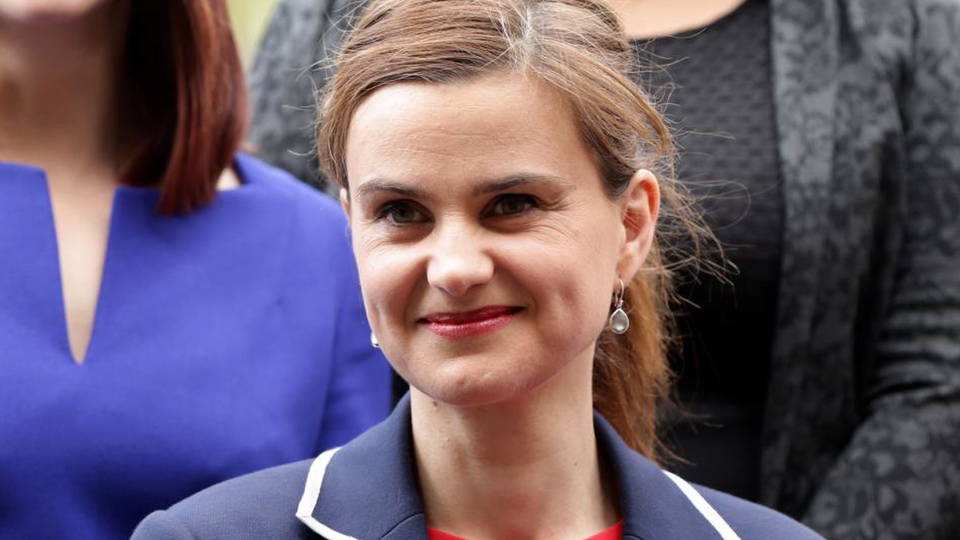
Britain is in a state of mourning today after British Parliament member Jo Cox was shot and killed shortly after a meeting with her constituents Thursday. Jo Cox was a 41-year-old mother of two who worked at Oxfam before being elected as a Labour MP last year. She was known for her passionate support for Syrian refugees and was a member of Labour Friends of Palestine. British Prime Minister David Cameron paid tribute to her on Thursday.
Prime Minister David Cameron: "This is absolutely tragic and dreadful news, and my thoughts are with Jo’s husband Brendan and the two children and their wider family. We have lost a great star. She was a MP, great campaigning MP with huge compassion, with a big heart, and people are going to be very, very sad at what has happened. Dreadful, dreadful news. It’s right that we’re suspending campaigning activity in this referendum, and everyone’s thoughts will be with Jo’s family and with her constituents at this terrible time."
Jo Cox is the first member of the British Parliament to be murdered in over 25 years. Her death came just a week before the major Brexit vote, when British voters will decide whether the country should stay in the European Union. Cox was a vocal advocate for Britain to stay in the EU. During the attack, eyewitnesses said, her assassin, Thomas Mair, shouted "Britain first"—a possible reference to the far-right, anti-immigrant political party of the same name which is pushing for Britain to leave the EU. The Southern Poverty Law Center says Mair is a longtime supporter of the neo-Nazi National Alliance. This comes as today marks the first anniversary of the attack by white supremacist Dylann Roof on the historic AME church in Charleston, South Carolina, that claimed nine lives. We’ll have more on the Charleston anniversary and Jo Cox’s murder after headlines.
TOPICS:
Britain
Obama, Gen. McChrystal, Veterans Call for Gun Control
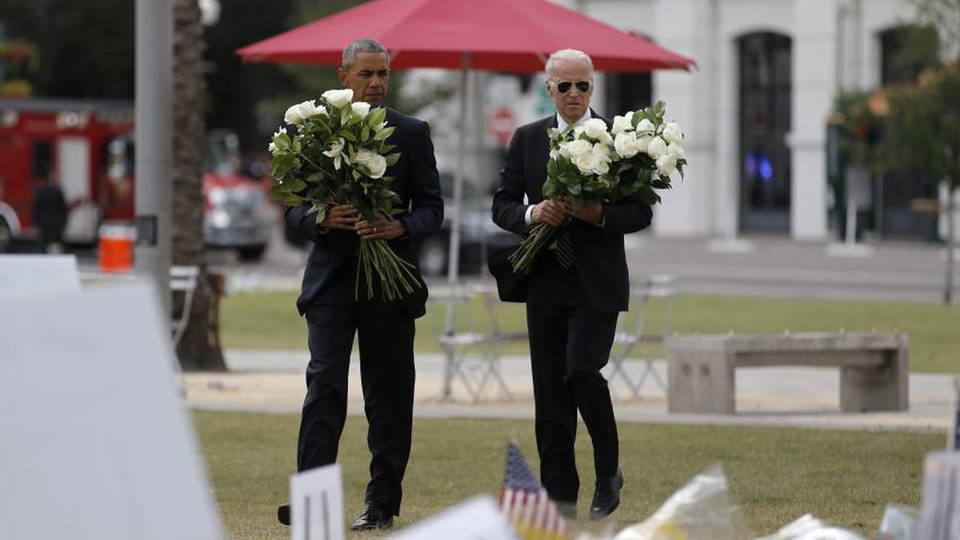
President Obama and Vice President Joe Biden visited Orlando, Florida, Thursday, where they met with the families of the 49 victims of Sunday’s shooting massacre at an LGBT nightclub. The meeting came one day after Senate Democrats mounted a nearly 15-hour filibuster to demand a vote on gun control measures. In Orlando, President Obama called for action on gun control.
President Barack Obama: "Those who were killed and injured here were gunned down by a single killer with a powerful assault weapon. The motives of this killer may have been different than the mass shooters in Aurora or Newtown, but the instruments of death were so similar."
Meanwhile, in a New York Times op-ed published Thursday, General Stanley McChrystal, the former U.S. commander in Afghanistan, also called for increased gun control, writing: "Our communities should not feel like war zones. Our leaders can start by doing more to keep guns out of the hands of those who cannot be trusted to handle them responsibly. That must be our mission." This comes one day after Massachusetts Congressmember Seth Moulton, a Marine veteran, appeared on the cover of the New York Daily News holding an assault rifle underneath the headline "No civilian should own this gun."
TOPICS:
Obama
Veterans
Gun Control
Orlando Massacre
John McCain Blames Obama for Orlando Massacre, Then Says He Misspoke
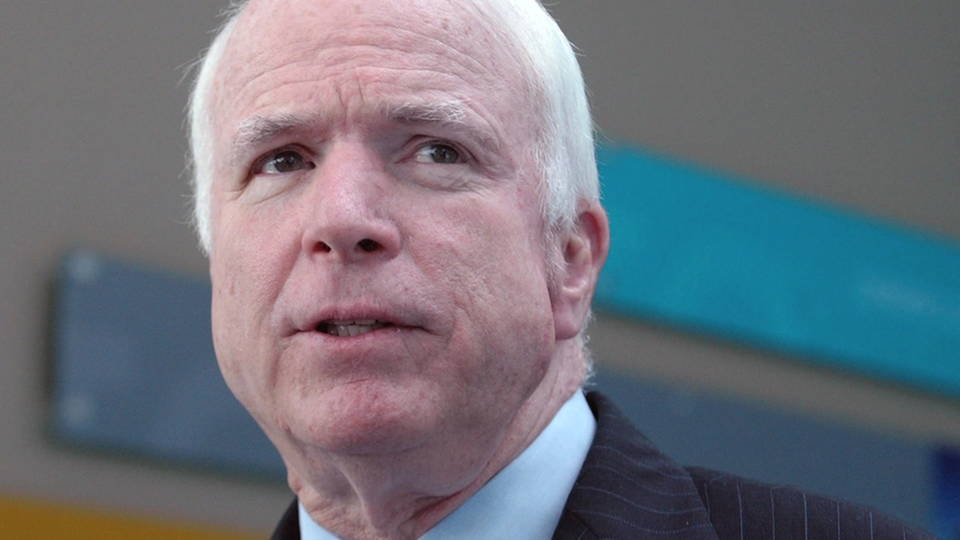
Meanwhile, Arizona Senator John McCain has blamed President Obama for Sunday’s massacre in Orlando while speaking to reporters Thursday.
Sen. John McCain: "I’m hearing a lot from my constituents about the—about what happened, and, of course, I’m making them realize that Barack Obama is directly responsible for it, because when he pulled everybody out of Iraq, al-Qaeda went to Syria, became ISIS, and ISIS is what it is today thanks to Barack Obama’s failures, utter failures, by pulling everybody out of Iraq, thinking that conflicts end just because we leave. So, responsibility for it lies with President Barack Obama."
McCain later tried to walk back these comments, writing, "I misspoke. I did not mean to imply that the President was personally responsible. I was referring to President Obama’s national security decisions, not the President himself." But presumptive Republican presidential nominee Donald Trump stood by McCain’s original comments, telling supporters in Dallas that while Obama is blaming guns, Trump thinks the shooting was caused by "weakness on behalf of our leadership."
TOPICS:
Donald Trump
Orlando Massacre
Obama
CIA Director: No "Direct Link" Between Omar Mateen and ISIS
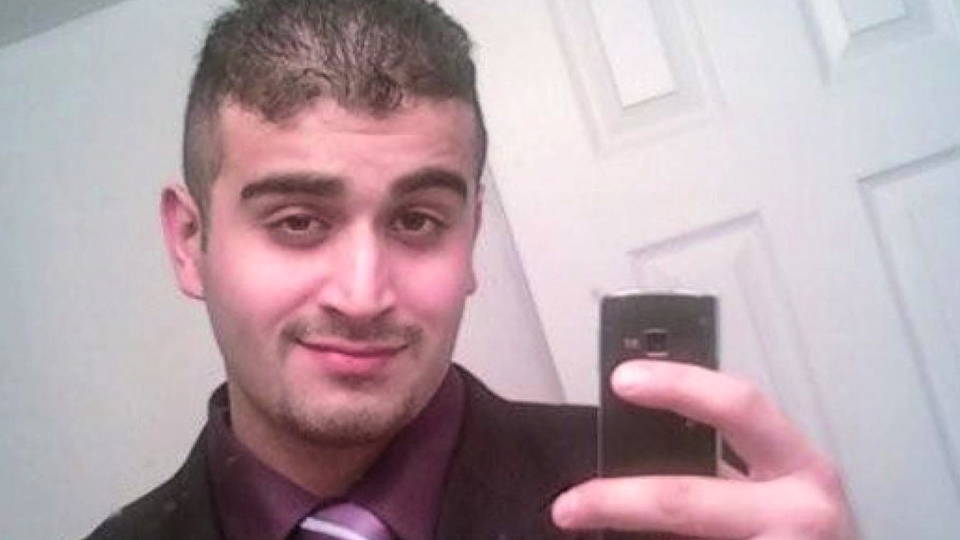
CIA Director John Brennan has told the Senate Intelligence Committee that Orlando shooter Omar Mateen had "no direct link" to the self-proclaimed Islamic State or any other extremist network, although Brennan said Mateen was inspired by ISIS. Meanwhile, Wisconsin Senator Ron Johnson has asked Facebook founder Mark Zuckerberg for data from multiple Facebook accounts allegedly associated with Omar Mateen. In the letter, Senator Johnson claimed Mateen had posted on Facebook calls for the U.S. and Russia to stop bombing campaigns against ISIS.
TOPICS:
CIA
Orlando Massacre
Islamic State
Mexico: Massacre in May in LGBT Nightclub Receives New Scrutiny
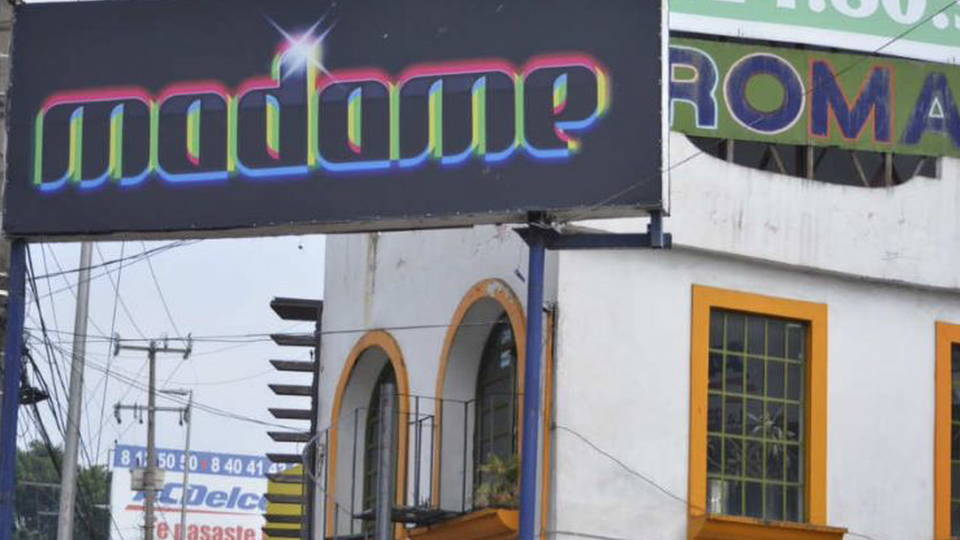
Meanwhile, in Mexico, new information is emerging about a shooting massacre at anLGBT nightclub in the southern state of Veracruz last month. On May 22, gunmen opened fire inside Madame, a popular LGBT bar, in Xalapa. There are conflicting reports of the number of people killed—between five and seven—while 14 people were injured. Authorities also said the shooting was drug-related, but community members are calling it a hate crime.
TOPICS:
Mexico
LGBT
Bernie Sanders Vows to Continue "Political Revolution"
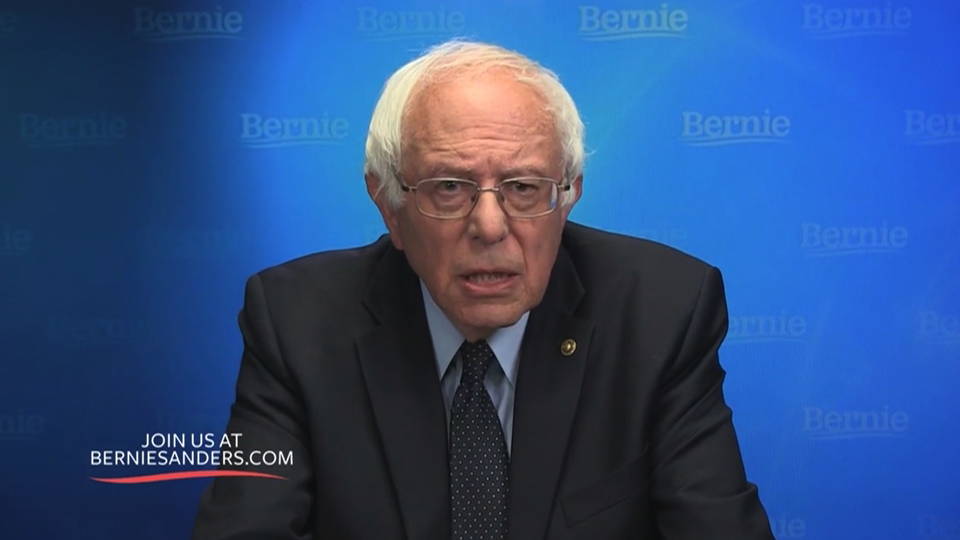
In news from the campaign trail, Democratic presidential candidate Bernie Sanders addressed his supporters in a live webcast Thursday night, vowing the continuation of what he called his political revolution. The speech came two days after Hillary Clinton won the last primary in Washington, D.C. While Clinton has claimed victory in the Democratic race, Sanders announced he would stay in until the Democratic convention. He did not endorse the former secretary of state, but vowed to work with her to defeat the presumptive Republican nominee, Donald Trump. He also said he plans to push the Clinton campaign and the Democratic Party to adopt a more progressive agenda. We’ll have more on the Sanders campaign later in the broadcast.
TOPICS:
Bernie Sanders
2016 Election
State Department Diplomats Urge Airstrikes Against Assad
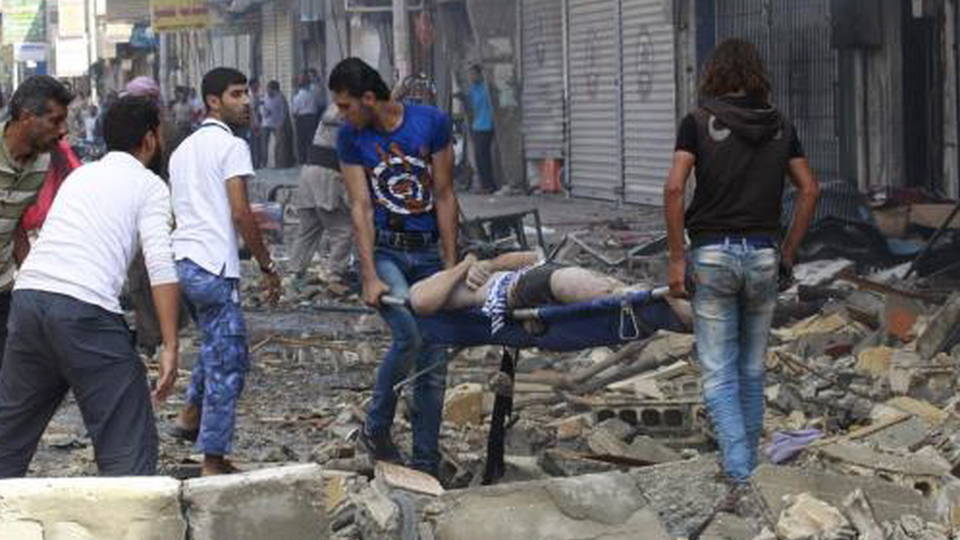
More than 50 State Department diplomats have called for U.S. military strikes against the regime of Syrian leader Bashar al-Assad, saying Assad has repeatedly violated Syria’s tenuous ceasefire. In an internal State Department memo, the diplomats argue for a sharp departure from President Obama’s policy on Syria, which includes targeting the self-proclaimed Islamic State but not the Assad regime. In the memo itself, however, the diplomats acknowledge the risks to increased U.S. military intervention, including the possibility of military confrontations with Russia, which is backing Assad. President Obama and his top military commanders, meanwhile, have raised concerns about the power vacuum that would emerge if Assad is removed. The memo comes as airstrikes on rebel-held sections of Aleppo forced a hospital supported by Doctors Without Borders to shut down Thursday. Aleppo residents also reported barrel bombs being dropped. Meanwhile, a federal judge has ruled against Texas, allowing the federal government to resettle Syrian refugees there.
TOPICS:
Syria
Report: Red Cross Lied to Congress About Haiti Earthquake Funds
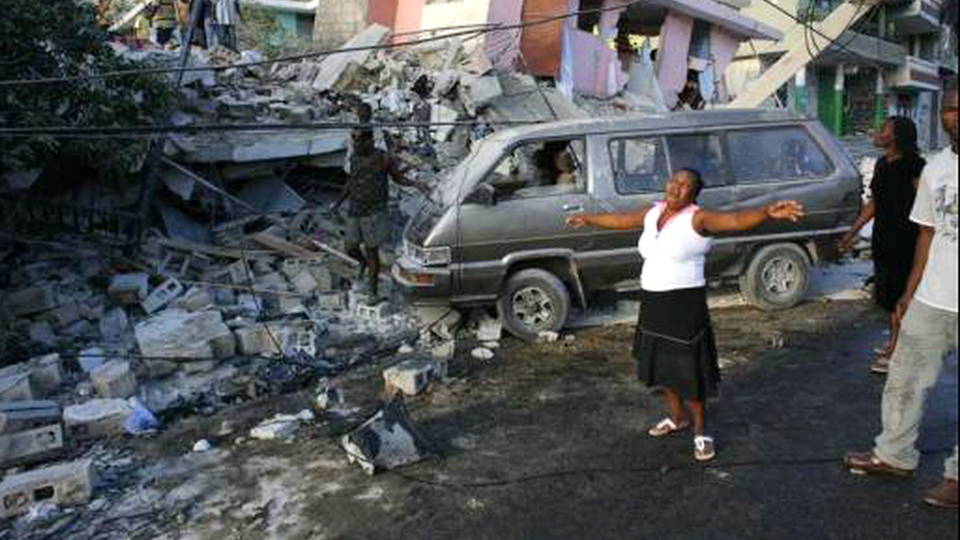
A new Senate report says the Red Cross lied to Congress in the wake of the 2010 Haiti earthquake and used far more donated money on its own overhead costs than previously acknowledged. The Red Cross raised nearly half a billion dollars in donations after the disaster. The 300-page report says the Red Cross used 25 percent of these donations—about $125 million—on its own fundraising, management and program costs, rather than on aid in Haiti. The report concludes there are "substantial and fundamental concerns about the Red Cross as an organization."
TOPICS:
Red Cross
Haiti
May was 13th Straight Month to Smash Previous Temperature Records
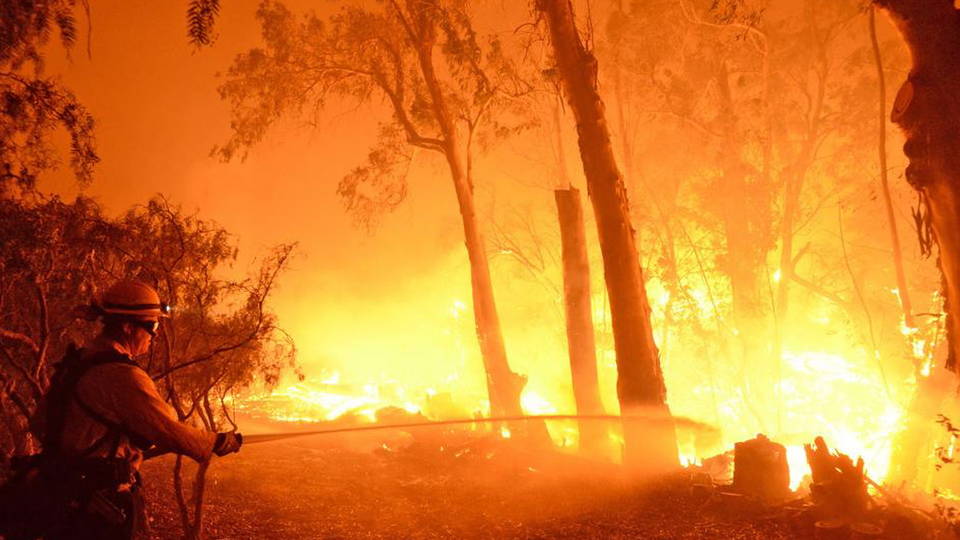
Last month was the hottest May on record. It was the 13th straight month to set a new record, amid increasing global warming. This comes as the Central United States is slated to experience a sweltering heat wave over the weekend. Meanwhile, hundreds of people in Southern California have been evacuated from their homes near Santa Barbara as a drought-fueled wildfire exploded in size Thursday. Scientists have linked the increase in wildfires to climate change.
TOPICS:
Climate Change
Texas: Authorities Investigating Murder of Journalist Jay Torres
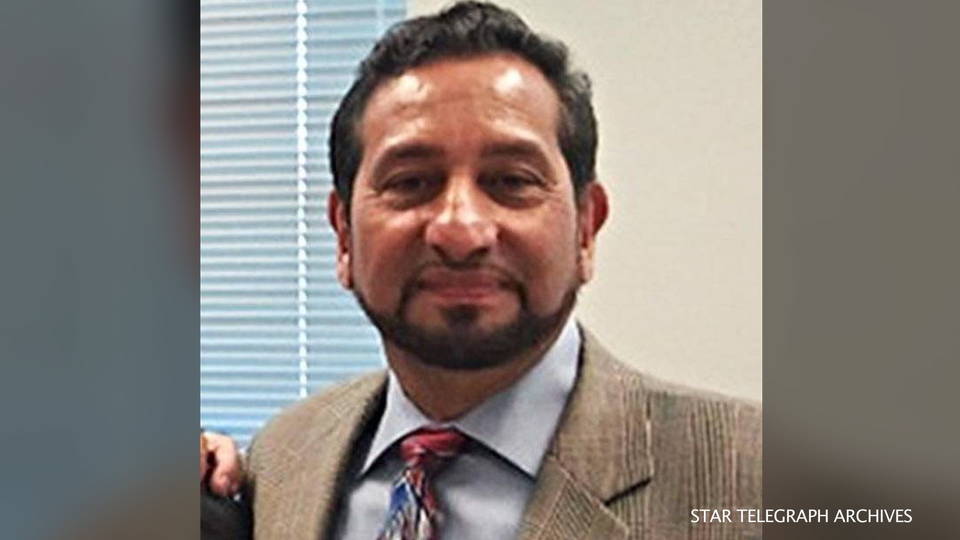
In Texas, authorities are investigating the murder of journalist Jacinto Torres Hernández, whose body was found Monday night in the Dallas suburb Garland. Torres was a reporter for the Spanish-language newspaper La Estrella and a member of the National Association of Hispanic Journalists. His daughter, Aline, says she believes her father may have been killed for his journalism, which involved investigations of human trafficking.
TOPICS:
Journalism
Seattle Teacher Pepper-Sprayed by Police Reaches $100,000 Settlement
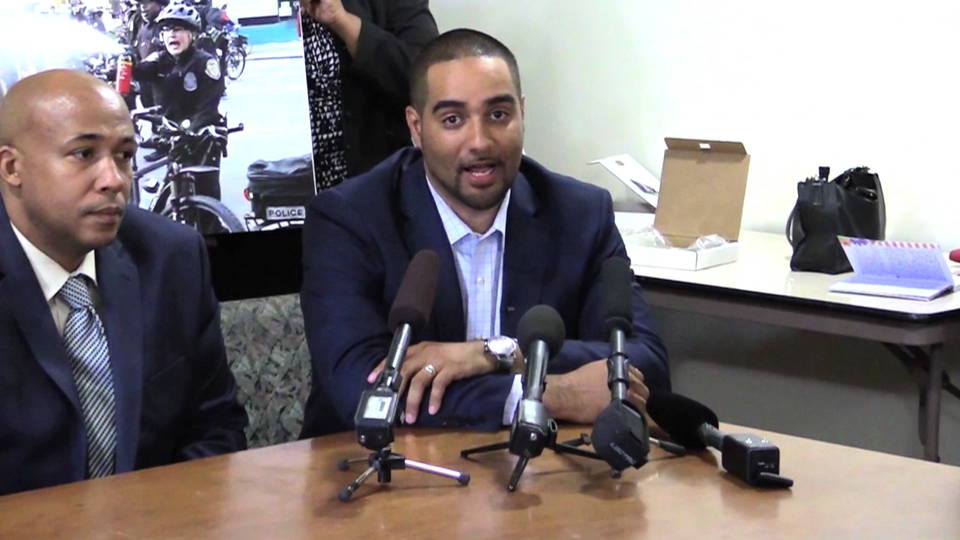
And in Seattle, a public school teacher who was pepper-sprayed by the police during a Black Lives Matter protest on Martin Luther King Day has reached a $100,000 settlement with the city, and he’s using the money to establish the Black Education Matters Scholarship for student activists. Jesse Hagopian is a history teacher at Garfield High School. He was pepper-sprayed by Seattle police officer Sandra Delafuente while talking on the phone with his mother after addressing the rally. He announced the settlement on Monday.
Jesse Hagopian: "I did reach a settlement with the city of Seattle for $100,000. But I want it to be clear that $100,000 is not justice."
TOPICS:
Police Brutality
Black Lives Matter
Donate today:
Follow:


SPEAKING EVENTS
Britain is in a state of mourning today after British Parliament member Jo Cox was shot and killed shortly after a meeting with her constituents Thursday. Jo Cox was a 41-year-old mother of two who worked at Oxfam before being elected as a Labour MP last year. She was known for her passionate support for Syrian refugees and was a member of Labour Friends of Palestine. British Prime Minister David Cameron paid tribute to her on Thursday.
Prime Minister David Cameron: "This is absolutely tragic and dreadful news, and my thoughts are with Jo’s husband Brendan and the two children and their wider family. We have lost a great star. She was a MP, great campaigning MP with huge compassion, with a big heart, and people are going to be very, very sad at what has happened. Dreadful, dreadful news. It’s right that we’re suspending campaigning activity in this referendum, and everyone’s thoughts will be with Jo’s family and with her constituents at this terrible time."
Jo Cox is the first member of the British Parliament to be murdered in over 25 years. Her death came just a week before the major Brexit vote, when British voters will decide whether the country should stay in the European Union. Cox was a vocal advocate for Britain to stay in the EU. During the attack, eyewitnesses said, her assassin, Thomas Mair, shouted "Britain first"—a possible reference to the far-right, anti-immigrant political party of the same name which is pushing for Britain to leave the EU. The Southern Poverty Law Center says Mair is a longtime supporter of the neo-Nazi National Alliance. This comes as today marks the first anniversary of the attack by white supremacist Dylann Roof on the historic AME church in Charleston, South Carolina, that claimed nine lives. We’ll have more on the Charleston anniversary and Jo Cox’s murder after headlines.
TOPICS:
Britain
Obama, Gen. McChrystal, Veterans Call for Gun Control
President Obama and Vice President Joe Biden visited Orlando, Florida, Thursday, where they met with the families of the 49 victims of Sunday’s shooting massacre at an LGBT nightclub. The meeting came one day after Senate Democrats mounted a nearly 15-hour filibuster to demand a vote on gun control measures. In Orlando, President Obama called for action on gun control.
President Barack Obama: "Those who were killed and injured here were gunned down by a single killer with a powerful assault weapon. The motives of this killer may have been different than the mass shooters in Aurora or Newtown, but the instruments of death were so similar."
Meanwhile, in a New York Times op-ed published Thursday, General Stanley McChrystal, the former U.S. commander in Afghanistan, also called for increased gun control, writing: "Our communities should not feel like war zones. Our leaders can start by doing more to keep guns out of the hands of those who cannot be trusted to handle them responsibly. That must be our mission." This comes one day after Massachusetts Congressmember Seth Moulton, a Marine veteran, appeared on the cover of the New York Daily News holding an assault rifle underneath the headline "No civilian should own this gun."
TOPICS:
Obama
Veterans
Gun Control
Orlando Massacre
John McCain Blames Obama for Orlando Massacre, Then Says He Misspoke
Meanwhile, Arizona Senator John McCain has blamed President Obama for Sunday’s massacre in Orlando while speaking to reporters Thursday.
Sen. John McCain: "I’m hearing a lot from my constituents about the—about what happened, and, of course, I’m making them realize that Barack Obama is directly responsible for it, because when he pulled everybody out of Iraq, al-Qaeda went to Syria, became ISIS, and ISIS is what it is today thanks to Barack Obama’s failures, utter failures, by pulling everybody out of Iraq, thinking that conflicts end just because we leave. So, responsibility for it lies with President Barack Obama."
McCain later tried to walk back these comments, writing, "I misspoke. I did not mean to imply that the President was personally responsible. I was referring to President Obama’s national security decisions, not the President himself." But presumptive Republican presidential nominee Donald Trump stood by McCain’s original comments, telling supporters in Dallas that while Obama is blaming guns, Trump thinks the shooting was caused by "weakness on behalf of our leadership."
TOPICS:
Donald Trump
Orlando Massacre
Obama
CIA Director: No "Direct Link" Between Omar Mateen and ISIS
CIA Director John Brennan has told the Senate Intelligence Committee that Orlando shooter Omar Mateen had "no direct link" to the self-proclaimed Islamic State or any other extremist network, although Brennan said Mateen was inspired by ISIS. Meanwhile, Wisconsin Senator Ron Johnson has asked Facebook founder Mark Zuckerberg for data from multiple Facebook accounts allegedly associated with Omar Mateen. In the letter, Senator Johnson claimed Mateen had posted on Facebook calls for the U.S. and Russia to stop bombing campaigns against ISIS.
TOPICS:
CIA
Orlando Massacre
Islamic State
Mexico: Massacre in May in LGBT Nightclub Receives New Scrutiny
Meanwhile, in Mexico, new information is emerging about a shooting massacre at anLGBT nightclub in the southern state of Veracruz last month. On May 22, gunmen opened fire inside Madame, a popular LGBT bar, in Xalapa. There are conflicting reports of the number of people killed—between five and seven—while 14 people were injured. Authorities also said the shooting was drug-related, but community members are calling it a hate crime.
TOPICS:
Mexico
LGBT
Bernie Sanders Vows to Continue "Political Revolution"
In news from the campaign trail, Democratic presidential candidate Bernie Sanders addressed his supporters in a live webcast Thursday night, vowing the continuation of what he called his political revolution. The speech came two days after Hillary Clinton won the last primary in Washington, D.C. While Clinton has claimed victory in the Democratic race, Sanders announced he would stay in until the Democratic convention. He did not endorse the former secretary of state, but vowed to work with her to defeat the presumptive Republican nominee, Donald Trump. He also said he plans to push the Clinton campaign and the Democratic Party to adopt a more progressive agenda. We’ll have more on the Sanders campaign later in the broadcast.
TOPICS:
Bernie Sanders
2016 Election
State Department Diplomats Urge Airstrikes Against Assad
More than 50 State Department diplomats have called for U.S. military strikes against the regime of Syrian leader Bashar al-Assad, saying Assad has repeatedly violated Syria’s tenuous ceasefire. In an internal State Department memo, the diplomats argue for a sharp departure from President Obama’s policy on Syria, which includes targeting the self-proclaimed Islamic State but not the Assad regime. In the memo itself, however, the diplomats acknowledge the risks to increased U.S. military intervention, including the possibility of military confrontations with Russia, which is backing Assad. President Obama and his top military commanders, meanwhile, have raised concerns about the power vacuum that would emerge if Assad is removed. The memo comes as airstrikes on rebel-held sections of Aleppo forced a hospital supported by Doctors Without Borders to shut down Thursday. Aleppo residents also reported barrel bombs being dropped. Meanwhile, a federal judge has ruled against Texas, allowing the federal government to resettle Syrian refugees there.
TOPICS:
Syria
Report: Red Cross Lied to Congress About Haiti Earthquake Funds
A new Senate report says the Red Cross lied to Congress in the wake of the 2010 Haiti earthquake and used far more donated money on its own overhead costs than previously acknowledged. The Red Cross raised nearly half a billion dollars in donations after the disaster. The 300-page report says the Red Cross used 25 percent of these donations—about $125 million—on its own fundraising, management and program costs, rather than on aid in Haiti. The report concludes there are "substantial and fundamental concerns about the Red Cross as an organization."
TOPICS:
Red Cross
Haiti
May was 13th Straight Month to Smash Previous Temperature Records
Last month was the hottest May on record. It was the 13th straight month to set a new record, amid increasing global warming. This comes as the Central United States is slated to experience a sweltering heat wave over the weekend. Meanwhile, hundreds of people in Southern California have been evacuated from their homes near Santa Barbara as a drought-fueled wildfire exploded in size Thursday. Scientists have linked the increase in wildfires to climate change.
TOPICS:
Climate Change
Texas: Authorities Investigating Murder of Journalist Jay Torres
In Texas, authorities are investigating the murder of journalist Jacinto Torres Hernández, whose body was found Monday night in the Dallas suburb Garland. Torres was a reporter for the Spanish-language newspaper La Estrella and a member of the National Association of Hispanic Journalists. His daughter, Aline, says she believes her father may have been killed for his journalism, which involved investigations of human trafficking.
TOPICS:
Journalism
Seattle Teacher Pepper-Sprayed by Police Reaches $100,000 Settlement
And in Seattle, a public school teacher who was pepper-sprayed by the police during a Black Lives Matter protest on Martin Luther King Day has reached a $100,000 settlement with the city, and he’s using the money to establish the Black Education Matters Scholarship for student activists. Jesse Hagopian is a history teacher at Garfield High School. He was pepper-sprayed by Seattle police officer Sandra Delafuente while talking on the phone with his mother after addressing the rally. He announced the settlement on Monday.
Jesse Hagopian: "I did reach a settlement with the city of Seattle for $100,000. But I want it to be clear that $100,000 is not justice."
TOPICS:
Police Brutality
Black Lives Matter
Donate today:
Follow:
SPEAKING EVENTS


News Producer
Office Coordinator
Senior TV Producer
207 West 25th Street, 11th Floor
New York, New York 10001, United States
---------------------
---------------------

No comments:
Post a Comment