democracynow.org
Stories:

Juan González to the Bernie or Bust Movement: Don't Repeat the Mistakes of 1968 That Elected Nixon
Thousands gathered over the weekend in Chicago for "The People’s Summit," a major conference that brought together activists, community leaders and organizations to discuss what’s next for the progressive movement in the United States. The meeting began one day after Bernie Sanders announced he would not concede to Hillary Clinton. On the opening night, Juan González moderated a panel featuring Naomi Klein, John Nichols, Rosario Dawson and RoseAnn DeMoro of National Nurses United. Juan looked back to 1968 to examine the role activists took in that pivotal election year that saw the election of Richard Nixon. "Our slogan was 'Vote with your feet, vote in the street,'" said González, who was a member of SDS, Students for a Democratic Society. "I’m here to tell you that the slogan was right, the tactic was wrong."
TRANSCRIPT
This is a rush transcript. Copy may not be in its final form.
AMY GOODMAN: Thousands gathered over the weekend in Chicago for The People’s Summit, a major conference that brought together activists, community leaders, organizations to discuss what’s next for the populist movement that helped fuel the [ 2016 ] presidential election. The conference began one day after Bernie Sanders announced he would not concede to Hillary Clinton.
SEN. BERNIE SANDERS: I recently had the opportunity to meet with Secretary Clinton and discuss some of the very important issues facing our country and the Democratic Party. It is no secret that Secretary Clinton and I have strong disagreements on some very, very important issues. It is also true that our views are quite close on others. I look forward in the coming weeks to continue discussion between the two campaigns to make certain that your voices are heard and that the Democratic Party passes the most progressive platform in its history, and that Democrats actually fight for that agenda.
AMY GOODMAN: Many key backers of Democratic presidential candidate Bernie Sanders attended The People’s Summit in Chicago, but organizers said the event wasn’t about any campaign in particular, but the future of the progressive movement in the United States. The event was organized in part by National Nurses United, the first national union to back Sanders as a presidential candidate last year. Today, we bring you highlights of the summit’s opening night panel discussion, moderated by Democracy Now!'s own Juan González. Panelists included author, climate justice activist Naomi Klein, and author and Nation contributor John Nichols, and actor and activist Rosario Dawson. We begin with Juan's opening remarks.
JUAN GONZÁLEZ: We’re going to try to get into where does this movement go from here, and hopefully we’ll be able to do it in a way recognizing our unities and our differences. But I want to share with you a brief experience of my own and the problems that I had in being able to deal with a presidential race.
It was 1968, right here in this city of Chicago. It was the Democratic National Convention of 1968. I was a young student right out of Colombia, the Columbia student strike of 1968, and we came to Chicago to confront the Democratic power brokers over the issue of the war in Vietnam and racism in America. Eugene—we had toppled the president. The movement had toppled the president, when Lyndon Johnson announced that he wasn’t going to run for re-election. And Eugene McCarthy had swept the country with young—his legion of McCarthy young people. Robert Kennedy had been killed in June of 1968, and it looked like the country was about to implode. We’re talking about 1968, when there was a riot not in one city, Ferguson or Baltimore; in April of 1968, there were a hundred riots in one week in the United States after the assassination of Martin Luther King. And so it looked like the country was on the verge of civil war.
And all of us from SDS and the anarchist group, which was at that time the Yippies, and a group called Up Against the Wall Mother[bleep] and the McCarthy kids, we all met in Lincoln Park to confront the power brokers. And, of course, there was tear-gassing, beatings. Richard Daley even had his police ordered to shoot people on sight who were—who he thought were looting. Our chant then was "The whole world is watching." And the whole world was watching.
But the world got a different message than the one that we were putting forth. The result was, as many of you probably recall, Richard Nixon was elected president against Hubert Humphrey in a very narrow race, only because George Wallace was also running for president and got about 13 percent of the vote and siphoned off all of these supporters of the Democratic Party, white working-class folks, which began the huge Republican Southern strategy that prevailed for years to come.
We in SDS refused to vote. We wouldn’t support McCarthy. We wouldn’t support Humphrey. Our slogan was "Vote with your feet, vote in the street." I’m—I’m here to tell you that the slogan was right, the tactic was wrong. And I think that the country, in retrospect, there would not have been a substantive change, there would have been a positive change, if Nixon had not been elected.
But you learn from your mistakes. Hopefully, other generations learn from the mistakes of those who came before them. So we’re going to open up this discussion now to discuss where does this movement go from here, this incredible movement. Do we seek to reform the system, transform the system, overthrow and replace the system? What are we trying to do?
... Read More →
"Our Dreams Don't Fit on Your Ballots": Naomi Klein on Next Steps for Pro-Bernie Sanders Movement
At The People’s Summit in Chicago, Naomi Klein praises Bernie Sanders for reshaping the debate over neoliberalism and so-called free trade agreements. Klein is author of "This Changes Everything: Capitalism vs. the Climate."
TRANSCRIPT
This is a rush transcript. Copy may not be in its final form.
JUAN GONZÁLEZ: And I’d like Naomi to start off, especially talking about the conversation has been won among the public against neoliberalism, but neoliberalism proceeds ahead anyway. And what—what do you see is the vision for where this movement should go?
NAOMI KLEIN: Thank you. Thank you, Juan, and thank you for sharing that hard-won wisdom. ...
We come here energized by all that we have accomplished, all the ways in which we’ve surprised ourselves, gone further than we imagined, the really tangible victories of our movements in recent months and years. But let’s not be afraid to admit that we also come here wounded and that we also come here in pain and that for a lot of us—and I don’t think I’m just projecting—that pain feels very close to the surface. We are grieving political losses, dreams tantalizingly tasted but ultimately unrealized. And we are also grieving the real loss of lives, grieving the extinguishment of those 49 bright, beautiful lights in Orlando less than a week ago, grieving the loss just yesterday of a young British politician named Jo Cox, a defender of Syrian refugees, of women’s rights, an anti-poverty crusader, gunned down and stabbed in her constituency office in an act of hate. And I could go on and on listing these attacks. Thank goodness for nurses, who have created for us a space in which we can begin to heal, from which we will emerge stronger and ready for battle once again. ...
You know, I don’t think that this is by happenstance that we are brought together by caregivers, because I think at the very heart of this revolution that we’re talking about is a revolution in shifting our economy, our political and economic system, away from one based on endless taking, endless extraction from the Earth, as if there are no limits, as if we can take and take and take without consequence, that endless taking from workers’ bodies, from our communities, as if there is no breaking point and no consequence, to a society that is grounded in that first principle of caretaking, of caring for the Earth and for one another. That is where we start. And of cherishing. This shift is a fundamental rejection of the sacrifice zone mentality, the sacrificing of particular places to oil drilling and fracking, and the sacrificing of bodies that are supposedly worth less because they are black and brown. This is a fundamental shift in values that we are talking about here, and it is revolutionary, but it grows from the heart. So, thank you, RoseAnn, and thank you, Nurses United, for bringing us here.
So neoliberalism lost the argument. They lost the argument, to the extent that not only was Bernie out there calling himself a socialist, not apologizing for it, making these arguments that, you know, we—not reductions in tuition, but free college, you know, just pushing the envelope, 100 percent renewables, just going all the way, and people were cheering. And he forced Hillary Clinton to move to the left. And we also saw that even Donald Trump had to throw out the rule—the neoliberal rule book, trashed free trade agreements, promised to defend the social safety net, in order to build his base. It wasn’t just racism that got him where he is, although that’s been a big part of it. So, you know, this ideology that has imprisoned our imagination for so long, that told us we could never get to this place, that our ideas had to be smuggled in under pseudonyms and, you know, under cover of night—right?—that all of that is not true, these ideas are deeply popular.
But that doesn’t mean that neoliberalism is dead, because neoliberalism was never first and foremost an ideology. The ideology was always the cover for the greed, right? And so now we still see these brutal neoliberal policies being pushed, not with any semblance of "this is going to be good, this helps," but under cover of crisis. Right? I mean, we see it in Puerto Rico. We are seeing it in Brazil in the aftermath of a coup—and I think it should be called a coup. We see it—we see it in Chicago. We see it in the Chicago school system. So the war against neoliberalism is not—is not over, and this is what we need to strategize about. But I don’t think we win this war defensively just by saying no. I think we have to say no, but we also have to articulate this incredibly inspiring, intersectional, holistic yes that we agree on, a new story, a new narrative.
And just one last thing, just about what you said about '68. I had the great privilege of living in Argentina for a couple of years making a film called The Take, La Toma, about workers who unfired themselves. Their factories were being closed down in the midst of economic crisis, and they occupied their factories—something that workers here in Chicago know a little something about at the Chicago [Republic] Windows and Doors—and they fired the boss. They said, "You know what? You might not want to keep this factory running, but we're going to turn it into a democratic worker cooperative. So we were there during an election campaign, and the slogan of the social movements was "Our dreams don’t fit on your ballots." And, you know, I think that—and that didn’t mean don’t vote. It meant some people voted, and some people didn’t vote. But no one was under any illusion that what that was being written on that ballot represented the world that they wanted. That was work that we were doing elsewhere. And that’s the work we’re doing here.
JUAN GONZÁLEZ: And, John, how does a—how does a movement, especially now at this critical time of a presidential race, and in the aftermath of a presidential race, how does a movement like this consolidate, learn the lessons necessary and go to another stage? Because movements rise, and movements fall. And unless you are able to consolidate the key lessons at each period, and as capitalism has been so resilient at shape shifting, how does the movement adapt to the new conditions?
JOHN NICHOLS: I’ve got good news for you: This movement is going to rise. ... Juan asked about struggle and moments and how we pull together. We already pulled together. We did a terrific job of pulling together. And we did it before a presidential race. If we had a media in this country that actually covered politics, we would know that since the Wall Street meltdown of 2008, when Americans saw exactly what the priorities of our economic and political elites were, and began to form movements against austerity, against economic injustice, against the racial divisions that extend from that injustice, in favor of immigrant rights—you know, we have had these movements. Climate change has been in the streets. The fact of the matter is these movements existed before this presidential campaign, and they were on the rise. And one of the biggest mistakes we make is to let a presidential campaign tell us we are not rising.
AMY GOODMAN: John Nichols of The Nation magazine speaking at The People’s Summit in Chicago; before that, Naomi Klein and Juan González, who we will both hear from again when we come back, along with actor Rosario Dawson. Stay with us.
. ... Read More →
If Australia Can Do It, Why Not Us? How a Conservative Gov't Enacted Gun Reform After Mass Shooting
In the wake of the shooting massacre that killed 49 people at a gay nightclub in Orlando, Florida, the Senate is expected to vote today on four gun control measures. None of them would reinstate an assault weapons ban. The vote comes after Democratic Connecticut Senator Chris Murphy staged a filibuster for nearly 15 hours last week to demand action on gun control. We look at how Australia fought to change its culture of gun violence and won. In April of 1996, a gunman opened fire on tourists in Port Arthur, Tasmania, killing 35 people and wounding 23 more. Just 12 days after the attack, Australia’s conservative government responded by announcing a bipartisan deal to enact gun control measures. Since the laws were passed—now 20 years ago—there has not been another mass shooting in Australia. Overall gun violence has decreased by 50 percent. We are joined by Rebecca Peters, an international arms control advocate.
TRANSCRIPT
This is a rush transcript. Copy may not be in its final form.
AMY GOODMAN: The Senate is expected to vote today on four gun control measures. None of the bills would reinstate an assault weapons ban. The vote comes after Democratic Connecticut Senator Chris Murphy staged a filibuster for nearly 15 hours last week to demand action on gun control after the Orlando massacre.
We turn now to look at how Australia fought to change its culture of gun violence and won. In April of 1996—20 years ago—a gunman opened fire on tourists in Port Arthur, Tasmania, killing 35 people, wounding 23 others. Just 12 days after the attack, Australia’s conservative government responded by announcing a bipartisan deal to enact gun control measures. Since the laws were passed, there has not been another mass shooting in Australia. Overall gun violence has decreased by 50 percent.
Last week, I spoke to Rebecca Peters, an international arms control advocate. I asked her about the campaign she helped lead to reform Australia’s gun laws after the massacre.
REBECCA PETERS: We had had, in those days, a series of massacres. We had a massacre about once a year. And each time, it was—there was an outcry, there was a lot of grief and anger and discussion about what should happen and pressure on the politicians. But each time, the politicians had said, "Well, this shouldn’t be"—everyone agreed it shouldn’t be a party political issue, but neither of the major parties was prepared to move first. And so, I suppose that the thing that happened was that the electoral—the electoral makeup of the government favored us at the time. We had just had a new government elected. It was a conservative government. And in a sense, it’s easier for a conservative government to change the gun laws, because they are more—the conservative party was seen more as the natural ally of the gun lobby. But really, you know, people die the same, whatever party they vote for. And so, that—but we thought it was particularly courageous of the conservative prime minister to say, "I’m going to deal with this once and for all."
AMY GOODMAN: And explain, over the two weeks and then the year, what exactly the rules were that got passed for the people of Australia, and this massively dramatic—well, I mean, no more massacres in Australia.
REBECCA PETERS: Yeah. So, one of the important—so, the principal change was that—the ban on semiautomatic weapons, rifles and shotguns, assault weapons. And that was accompanied by a huge buyback. And in the initial buyback of those weapons, almost 700,000 guns were collected and destroyed. There were several further iterations over the years, and now almost a million—over a million guns have been collected and destroyed in Australia. And the—but also, the thing is that sometimes countries will make a little tweak in their laws, but if you don’t, you have to take a comprehensive approach. It doesn’t—if you just ban one type of weapon or if you just ban one category of person, if you don’t do something about the overall supply, then basically it’s very unlikely that your gun laws will succeed. So this was a comprehensive reform related to the importation, the sale, the possession, the conditions in which people could have guns, storage, all that kind of thing that can—the situations in which guns could be withdrawn.
Often there’s not much thought given to, OK—often the focus is on how people can buy guns, but not much thought is given to in what circumstances those guns should be removed. For example, obviously, if someone doesn’t qualify to own a gun, then—if they qualify at the beginning, but if then they do something which makes them unqualified, they should lose their license and their guns. And that is an important part of Australia’s gun laws, as well. Someone who commits domestic violence, for example, who has a gun legally, will lose that gun and the license to have the gun.
AMY GOODMAN: And this is a critical point, because the ex-wife of Omar Mateen said that he beat her, said he had an obsession with guns. She was not talking about him as a Muslim extremist. She was talking about him as a wife abuser, as a man who was mentally ill, as a man who was obsessed with guns and wanting to be a cop.
REBECCA PETERS: Exactly. And particularly domestic violence is one of those things that usually doesn’t turn up in a criminal record, because, as we know, most domestic violence doesn’t result in a criminal conviction. In fact, most domestic violence doesn’t involve a legal process at all. But local police and family members know about domestic violence. And so, a crucial part of the new laws is proper checking of the background of people who are applying to have guns. So, in relation—and it’s not only domestic violence, it’s also depression and alcohol abuse, and many other factors can make a person at risk of violence, not to mention people who have—who are vehemently racist or resentful. I guess the thing is that what we all—what those of us in other countries think every time we see one of these tragedies in America, we have people all around the world who are full of unhappiness, of hatred, of resentment, whatever, but it seems to—but in other countries, those people don’t have easy access to weapons designed to kill lots of people.
AMY GOODMAN: I wanted to turn to a clip of President Obama speaking last week about the nation’s gun laws.
PRESIDENT BARACK OBAMA: I just came from a meeting today in the Situation Room in which I’ve got people who we know have been on ISIL websites, living here in the United States, U.S. citizens, and we’re allowed to put them on the no-fly list when it comes to airlines, but because of the National Rifle Association, I cannot prohibit those people from buying a gun. This is somebody who is a known ISIL sympathizer. And if he wants to walk into a gun store or a gun show right now and buy as much—as many weapons and ammo as he can, nothing’s prohibiting him from doing that, even though the FBI knows who that person is.
AMY GOODMAN: So that is President Obama speaking June 2nd. It’s not after this massacre that took place at the Pulse nightclub in Orlando. That was just June 2nd. Respond to what the president has said.
REBECCA PETERS: Well, that’s absolutely right. And that’s the approach that other countries take, that you can recognize that—I mean, in Australia, we still have hunting, we still have target shooting. People still own guns in Australia. It’s just that they don’t own assault weapons, and they don’t—and they have to qualify—they have to proceed through a much—a more stringent process to qualify.
AMY GOODMAN: Was there any campaign that was launched, like you’re a wimp if you need a semiautomatic weapon to take down an animal?
REBECCA PETERS: In fact, absolutely, we had some—we had some interesting allies that emerged during the—during the discussion after Port Arthur. One was that Australia’s Olympic shooters, who had done very well in the Atlanta Olympics, they handed in their semiautomatics, and they said, "We support the new gun laws." The other thing was, there’s an organization of professional shooters in Australia, who were the—they’re like the original Crocodile Dundee. They’re these super-macho guys who were employed to clear out feral animals from the national parks. And they said, "If you need a semiautomatic weapon to kill an animal, then you’re a city boy who shouldn’t be out here with a gun in the first place." So, and we know also—we knew in Australia, as, in fact, in the U.S., the opinion polls and the surveys of gun owners showed that most gun owners supported commonsense gun laws, reasonable restrictions. But the gun—it was the gun lobby that was—that always took this very extreme position that opposed absolutely any change. And that is similar in the U.S. It’s just that in Australia, that gun lobby didn’t get its way.
AMY GOODMAN: Rebecca Peters, you’re in New York because of a U.N. conference that just took place on gun control. Can you talk about what happened? And what was the role of the U.S. in it?
REBECCA PETERS: Yes. So, we just had the U.N. conference on small arms, that occurs every couple of years here at the United Nations. All countries of the world come together to talk about what to do about guns, gun trafficking, gun violence and the—and to try to move toward some kind of consensus so that countries can work together, because guns travel across borders internationally, just as they travel across state borders within the U.S. So, at this conference, there’s a—it’s an attempt to try to advance the process of cooperating between countries.
Unfortunately, at the U.S.—at this conference, the U.S. being the largest manufacturer and the largest exporter of guns in the world, the U.S. took a position that was limiting on the progress that could be made. So, for example, one of the topics up for discussion was: Should ammunition be regulated? Everyone in the U.N. agrees that guns should be regulated, but what about ammunition, since we know that ammunition is what makes guns so deadly? And, in fact, someone who has a gun illegally and undetected depends on being able to get ammunition without regulation in order to be able to commit crimes. So most countries of the world, overwhelmingly the majority of countries, want to regulate ammunition, as well. Unfortunately, the U.S., along with countries like Egypt, Iran, were—they took the position that ammunition should not be regulated. They did not—
AMY GOODMAN: The United States.
REBECCA PETERS: The United States.
AMY GOODMAN: The Obama administration.
REBECCA PETERS: Well, the United States delegation at the U.N. conference was one of the countries that was opposing the inclusion of ammunition in the final agreement. So—
AMY GOODMAN: On what grounds?
REBECCA PETERS: Well, it seems to be on the basis that it would restrict the liberty of American citizens to buy ammunition. I think—
AMY GOODMAN: And what is your response to that?
REBECCA PETERS: My response is that people who don’t have—that failing to restrict ammunition makes ammunition available for criminals. And there’s absolutely no reason why, if—I mean, you have gun control laws in the U.S. They’re not very strict in many places. But obviously ammunition should be regulated, as well.
AMY GOODMAN: So you’re saying the U.S. joined Egypt and Iran in trying to stymie world regulation around guns?
REBECCA PETERS: Well, what they tried to do was to reduce the strength of the agreement. So, various measures which most countries in the world wanted to have in order to have a strong agreement at the end of—and to provide a mandate for countries to do a lot more against the problem of guns, these countries, more conservative countries, like the U.S., Egypt and Iran, were against that.
AMY GOODMAN: We talked about Australia and the United States. Can you give us examples of other countries?
REBECCA PETERS: Sure. I mean, for example, in—the best comparison for the U.S. to make is with other developed countries, so other countries where the rule of law is in place and where police forces work reasonably well. There’s no point in comparing the U.S. with developing countries or countries that are in conflict or things like that. But say in Canada, in Germany, in France, in—you know, in European countries, and Australia, that the—all of those countries have a similar approach, which is you apply proper screening for people who want to have guns. You don’t permit people to have any gun they want. You do—you put some kind of limit on the arsenals that can be built up. And you take into account the knowledge of the people who are best able to tell you whether some—whether there’s anything of concern about a person. So, in those countries, the police are able to use their faculties to inquire, rather than just looking on a computer to see if someone has criminal convictions.
AMY GOODMAN: Let me toss to what the Republican presumptive nominee for president, Donald Trump, said today on CNN.
DONALD TRUMP: If you had some guns in that club the night that this took place, if you had guns on the other side, you wouldn’t have had the tragedy that you had. If people in that room—
ALISYN CAMEROTA: But there was.
DONALD TRUMP: had guns, with the bullets flying in the opposite direction right at him—
ALISYN CAMEROTA: I mean, but, Mr. Trump, there was an armed—there was an armed security guard.
DONALD TRUMP: —right at his head, you wouldn’t have had the same tragedy that you ended up having. And nobody even knows how bad that tragedy is, because I think probably the numbers will get bigger and bigger and worse and worse.
AMY GOODMAN: That’s Donald Trump. Your response, Rebecca Peters?
REBECCA PETERS: I mean, to have a crowded, dark place with a lot of noise and a lot of people moving around, to have more than—to have had another person shooting in that place, or many more people shooting in that place, that would have increased the danger. The idea that the answer to the problem of too many guns is an even larger number of guns makes absolutely no sense at all.
AMY GOODMAN: Where does the U.S. stand when it comes to gun massacres in the industrialized world?
REBECCA PETERS: Well, the U.S. has the highest rate of gun deaths in the industrialized world. And in terms of—so, for example, the rates of gun deaths in the U.S. are about 11 times higher than in Australia and up to 15, 20 times higher than in some other developed countries. But in terms of massacres, the U.S. has a larger number of massacres even than countries in the developing world or countries in conflict. The number of mass shootings that occur in the U.S. outstrips any other country in the world.
AMY GOODMAN: Rebecca Peters helped lead a campaign 20 years ago to reform Australia’s gun laws after the Port Arthur massacre that killed 35 people. Australia hasn’t had a mass shooting in the past 20 years. Rebecca Peters is part of the International Network on Small Arms. She was in New York last week for a major U.N. conference on guns. And that does it for our show. If you want to see Part 1 of that interview, go to democracynow.org.
Also, Democracy Now! has several job openings, including news producer and senior TV producer, open immediately. Go to democracynow.org for more information.
. ... Read More →
Rosario Dawson at People's Summit: We Need to Stay the Course to Build a New Movement
For months, actor Rosario Dawson has been campaigning across the country for Bernie Sanders. She spoke in Chicago at The People’s Summit on how to build off the momentum generated by Sanders’ campaign.
TRANSCRIPT
This is a rush transcript. Copy may not be in its final form.
AMY GOODMAN: We go back to The People’s Summit, a major conference that took place in Chicago over the weekend, of thousands, to chart the future of the progressive movement in the United States. We’ll hear more from Naomi Klein, but first we turn to Democracy Now!’s own Juan González questioning actor and activist Rosario Dawson.
JUAN GONZÁLEZ: I’d like to ask Rosario, who is very upfront in her support for Bernie Sanders, took a lot of heat from a lot of places. In terms of the—where you see this incredible movement going, what’s the vision that is most important for folks to cling to at this time, as we head into these conventions of both the Democrats and the Republicans, and then the election in November? And most importantly, what happens afterwards?
ROSARIO DAWSON: I’m so thrilled to be here. I’m so grateful that this exists, that this forethought and the movement was focused on and committed to in order to bring this moment for all of us to be together, not knowing what would be happening around us in the election, but just knowing that we would need to be together no matter what. And we do. We very much do need to have visibility with each other. It’s great that we have these hashtags that go off and that we are talking to each other in our different groups, but we need visibility. We need to see each other. We need to preach to the choir and invigorate each other. And that’s the thing that I feel like I’ve walked away with the most in this whole campaign, is this calling to encourage courage. And you all are doing that. And we need to continue doing that, to do, as you’ve said, like putting feet to the street and—help me out. I know I’m an actress. I—
JUAN GONZÁLEZ: Vote with your feet. Vote with your feet.
ROSARIO DAWSON: Vote with your feet, and—
JUAN GONZÁLEZ: Vote in the streets.
ROSARIO DAWSON: —vote in the streets. You know, I say you’ve got to march, and you’ve got to march to the polls. You’ve got to have both. Like, you have—this has to be a comprehensive thing. And sometimes that does mean some people are going to vote, and some people are going to organize, and some people are going to translate, and some people are going to get arrested, and some people are going to do this. But we really need to support each other in all of those different instances, understanding that corporations and businesses and trades and countries, all of those things, they all work with each other, and they have a long game. They’re like, "I’ll scratch your back, and in four or eight years, you scratch my back." And they’ve got this long game going, and we’re stuck in this cycle of reaction and fighting for the little bits of stuff that we can get. And that’s not working for us.
I’ve seen that over and over and over again in the philanthropic community, where people are going, "I have a certain amount of money I need to make this year, and I’m going to lobby for it, and if that other organization that’s helping children doesn’t get it because that’s the only funds that they have, oh, well, I kept my organization alive." No, you both need to persist. How can we make it so that those moneys come to all of us and we all work together, work collaboratively with each other, so no one is sacrificed? Because they’re not sacrificing each other up there. They’re all working with each other. And even when it looks like, oh, there’s something, maybe they’ve fallen out, like don’t get it twisted. Deborah Wasserman Schultz is going to be hooked up somewhere, somehow. Like don’t get—don’t get so excited by the news and being like, "Oh, she’s going to leave as the DNC chair," and something like that means like she’s getting a slap on the wrist. No, that’s long since been figured out. These are gestures and movements and things of—like, it’s not—we have to be able to see through these moments of being reactive, and be proactive.
And being proactive means staying the course. And that was required before this movement of movements, and will long since come after, because, you know, it’s never like you just win once. You win, and then you’ve got to defend your position. And you lose, and you’ve got to defend your position. You win and you lose, and you win and you lose, because there’s a lot of us here, and we’re all grappling towards things. And we need to have more understanding; otherwise, we’re stuck in the same cycle where like every couple of years we get a new president and half the country feels like they lost, and they just dig their heels in against everything and then run on a platform of undermining everything that just—any progress that was made. That’s not a way to have any kind of progress. That’s not building anything. That’s not creating anything.
And I talk to so many people who are absolutely interested in exactly that, creating things and developing things, particularly relationships, networking with each other, talking to each other, recognizing, "Wow, I did a lot of organizing. I did a lot of phone banking. I did a lot of door knocking and canvassing. You know what? I could do that for you. Do you want to run for office? Or how about me? Maybe I’ll run for office." You know, like, it’s like—but these are the conversations that I’m seeing of young people and people across the nation who are discovering their power, because they were compelled to do something that moved them, that was—felt like a calling, that they did without even really thinking about it. Like Shailene Woodley had this pin that says, you know, "I was going to get into Bernie Sanders, and I just thought, you know, it would be part of my life. And then I just decided, 'Why not let it consume to my soul?'" And that’s what this movement has done for people. They’re like, "This is what I need to do. This is my life. I wasn’t alive until this moment. And now I’m so alive." And there’s no going back on that. So, this narrative of like, "Oh, you lost, and you’re a sore loser," is like, wait, I’m sorry, I’m looking at a sea of thousands of people. I don’t know how this is losing. If this is losing, then give me some more of that.
... Read More →
Naomi Klein: There Would Be No Bernie Movement Without #FightFor15, Keystone XL & #BlackLivesMatter
At The People’s Summit in Chicago, author and activist Naomi Klein looks at the link between the Sanders campaign and the growth of other people-powered movements in recent years, from #BlackLivesMatter to the immigrant rights movement.
TRANSCRIPT
This is a rush transcript. Copy may not be in its final form.
JUAN GONZÁLEZ: Naomi, I wanted to ask you, because the international aspect of this, we are not in isolation, what is going on here, whether it’s Syriza or Podemos or—across the world, there is a people’s fightback going on. And this is only a reflection of that. I’m wondering your sense of that from your travels.
NAOMI KLEIN: Yeah, I mean, there has been this migration from the streets to forming political parties. And it’s complicated, right? Because I completely agree that all of this work on the electoral front and the diversifying and the—on every level and brand-new Congress, it’s really, really important. But we also have to remember that movements produced this moment. Right? So I think that we have to—we have to do something really complicated, where we have to—we have to build out all of these electoral possibilities while understanding that these politicians will be nothing unless they are backed by social movements and accountable to those social movements. Right? I mean, there would be no Bernie moment without the Fight for 15, Keystone XL, the movement against fracking, Black Lives Matter, the immigrant rights movement—all of it, right? So, it’s not an either-or.
And I think that that’s what’s really beautiful about the way we’re moving forward, is understanding how do we complement each other, how do we make sure that we don’t—because I think with some of these movements—right?—they went too far in. Right? I mean, speaking to some friends in Spain who—you know, who went from the squares to Podemos, realizing that they—you know, it was—they lost that street power. Syriza, as well, right? And so, you know, everybody is in this process of learning. We’re all—you know, we’re all in communication with each other. I mean, I remember being in Zuccotti square and having people from Spain and Egypt there, and that cross-pollination that fed the movements at the grassroots level and are now giving each other ideas at the political level. And by the way, the Podemos leadership will be the first to tell you that they learned from left-wing movements in Latin America. You know, they went to Ecuador, they went to Bolivia, you know? So, we are in conversation.
And I’ll tell you a funny story. You know, I have dual citizenship. I’m Canadian. I only tell this among friends, that I’m a child of draft dodgers. We came during the Vietnam War. And—but—but—but my father works in healthcare, so we left the U.S. because of the war, but we stayed for the healthcare, for the universal, single-payer healthcare. It works, by the way.
Anyway, so we found ourselves in a—I want to back up a little bit to around—I just want to insert one point, and I feel my friend Bill McKibben on stage with me now, who is, you know, fighting in a sweaty Phoenix hotel room, trying to get the best—you know, best language in the Democratic Party platform possible, trying to make sure it has strong anti-fracking language and strong language saying we can’t be handing out any new fossil fuel leases on federal lands. You know, he’s in there. And if Bill were here—and he wishes he was here—you know what he would say? We’ve got a deadline, folks. You know? Yes, we’re winning, but we don’t have all the time in the world. And this is the thing about climate change, is, you know, we—whoever the next president is, they come to power with their backs up against the wall when it comes to climate change, which means there’s no honeymoon, baby. There’s no "give her a chance," you know? I mean, we have to be in there demanding no new fossil fuel infrastructure. We need to build the infrastructure of the future. No fossil fuel money. We’re going to shame them for every dollar they take from an oil and gas company, from a coal company, every meeting they take. Yeah, we’re going to make it toxic, right? So, you know, I’m a writer, as I mentioned, and I think deadlines help. You know, this is the thing about climate change, is it says we have to turn this around by the end of this decade. No joke. Our emissions have to be pointing in a different direction. The challenge we face is: How do we transform our energy system, recognizing that we live at a time of multiple overlapping crises? That, yes, climate change is an urgent crisis banging down our doors, but so is racial injustice, so is economic inequality, so are all of these other crises we face. So we’re not going to play my crisis is bigger than your crisis, first we’ll save the planet, then we’ll worry about jobs. No, we are going to figure out ways to lower emissions while healing the wounds that date back to the founding of our countries. And it is possible to do.
So, in Canada, we found ourselves in a situation not dissimilar to the one that, you know, you are finding yourselves in, where we had an election a year ago, and mostly, the energy of that election, on the progressive side, was the energy of no. This is before everybody got really excited about our hot new prime minister. It was just about getting rid of our right-wing government. And so, it was very much a no vote, it was very much a strategic vote. And none of the major progressive—so-called progressive or liberal alternatives were taking climate change seriously, were connecting economic injustice, racial injustice, injustice towards indigenous people, and the need to act swiftly and with boldness in the face of the climate crisis. And so, a group of us got together, 60 movement organizers and leaders, and we wrote our own people’s platform called The Leap Manifesto. And it—and we launched it, right in the middle of the election platform. This was our attempt to say our dreams don’t fit on your ballot. We are going to vote out the worst guy, but that does not represent the world we want. And we created space to dream. And what was interesting, just—it was that platform—The Leap Manifesto was just sort of endorsed by one of our major political parties, the New Democratic Party. And it was the young people. They resolved—they endorsed it in spirit and resolved to debate it at the riding level across the country. And it was the young people in the party that drove it. And I was watching this play out. I wasn’t at the convention. But the young people, several of them, were wearing Bernie T-shirts, as they were—as they were making their impassioned pleas that now is the time for boldness, that we—that small steps are not enough. So we are all feeding each other’s movements, and we’re all drawing strength from each other.
AMY GOODMAN: That’s author and activist Naomi Klein; before that, Rosario Dawson and Democracy Now!'s Juan González, at The People's Summit in Chicago. We’ll be back to talk about gun control in a minute.
... Read More →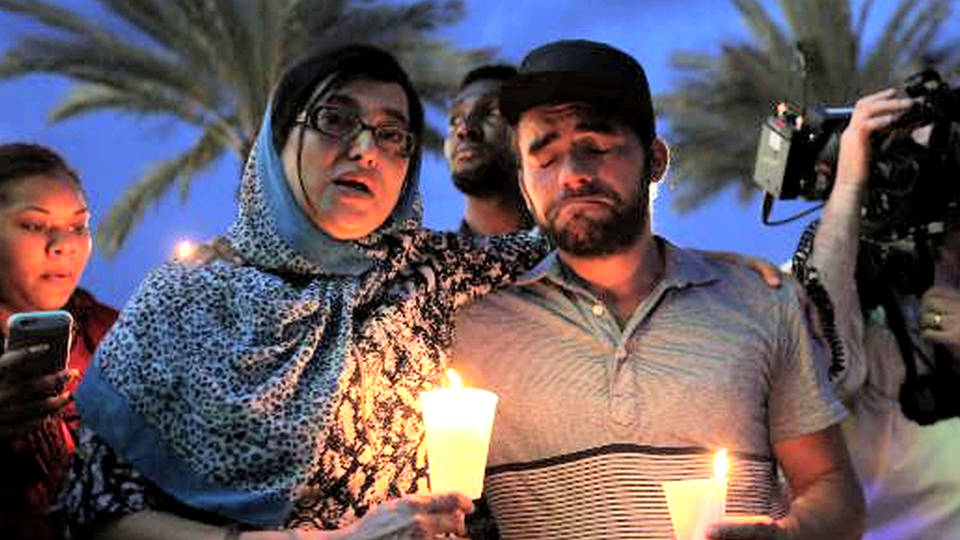
Thousands of people gathered at a lakeside park in Orlando, Florida, Sunday for the largest vigil to date honoring the 49 victims of an attack on a gay nightclub on June 12. Many of those killed in the attack were young, Latino and many members of theLGBTQ community. Perris Williams was among those to pay homage to the victims.
Perris Williams: "The 49 people who died at Pulse is that I would want you to know that this is not in vain, that I’m here for you, I’m one of you, and that I will continue to carry your spirit with me for the rest of my days."
TOPICS:
Orlando Massacre
Senate to Vote on 4 Gun Control Measures with Little Hope of Success
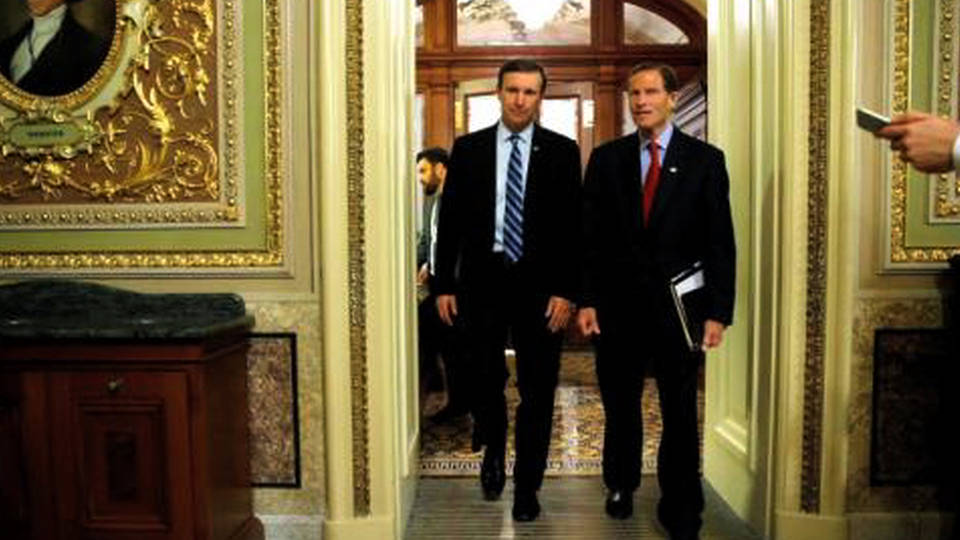
The Senate is expected to vote on four gun control measures today. All are expected to fail. The vote comes after Democratic Connecticut Senator Chris Murphy staged a filibuster for nearly 15 hours last week to demand action on gun control after the Orlando massacre.
TOPICS:
Orlando Massacre
Gun Control
Ohio Gun Shop Owner Fatally Shot During Concealed Carry Class
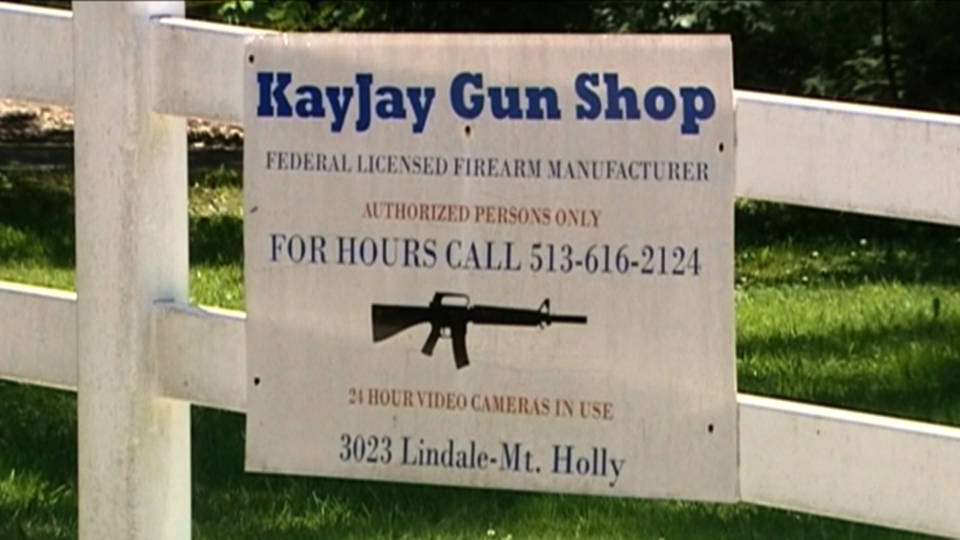
As the debate over gun control rages, an Ohio gun shop owner has been fatally shot during a class on concealed carry. Investigators say a student appears to have accidentally fired the gun, fatally hitting 64-year-old James Baker in the neck.
TOPICS:
Gun Control
Remington Seeks to Dismiss Lawsuit over Assault Rifle Used at Sandy Hook
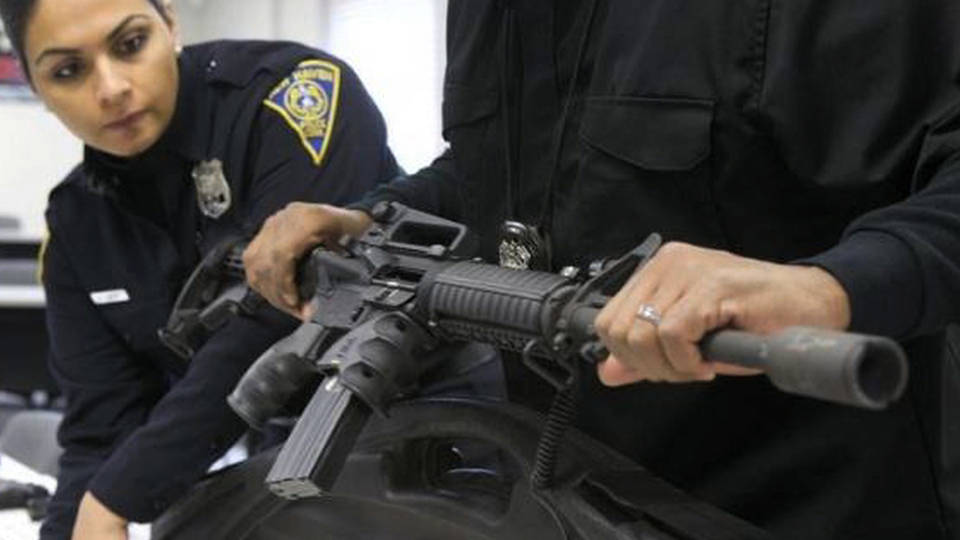
In Connecticut, a judge hears arguments today over whether to dismiss a lawsuit against the manufacturer of the gun used in the massacre at Sandy Hook Elementary School on December 14, 2012. Families of the victims are suing Remington Arms, the parent company of Bushmaster Firearms, which makes the military-style assault rifle used in the massacre. A similar gun was used in the Orlando nightclub killings. The families say the company should have known the gun is a military weapon, too dangerous to sell to civilians. Remington has sought to dismiss the lawsuit.
TOPICS:
Gun Control
Lawmaker Calls for Gun Control as Charleston Marks Anniversary of Church Massacre

As Orlando reels from the massacre of 49 people, Charleston, South Carolina, marked the first anniversary of its own massacre. On June 17, 2015, suspect Dylann Storm Roof opened fire at Emanuel AME Church during a Bible study, killing nine black worshipers. Roof embraced white supremacist views and was shown in photographs posing with the Confederate flag. State Senator Marlon Kimpson was among the officials at Friday’s memorial.
Sen. Marlon Kimpson: "Dylann Roof was not part of ISIS. He was a home-grown terrorist filled with hate right here in South Carolina. What sense does it make to have a background check law if the background check does not have to be complete before the gun is sold? What kind of sportsman needs an assault rifle to hunt deer? Why do we allow someone who is suspected of terrorism to purchase a gun, but not board a plane? If you can’t fly, you ought not be able to buy."
TOPICS:
Gun Control
Charleston Church Shooting
Donald Trump: "We're Going to Have to Start Thinking About" Racial Profiling
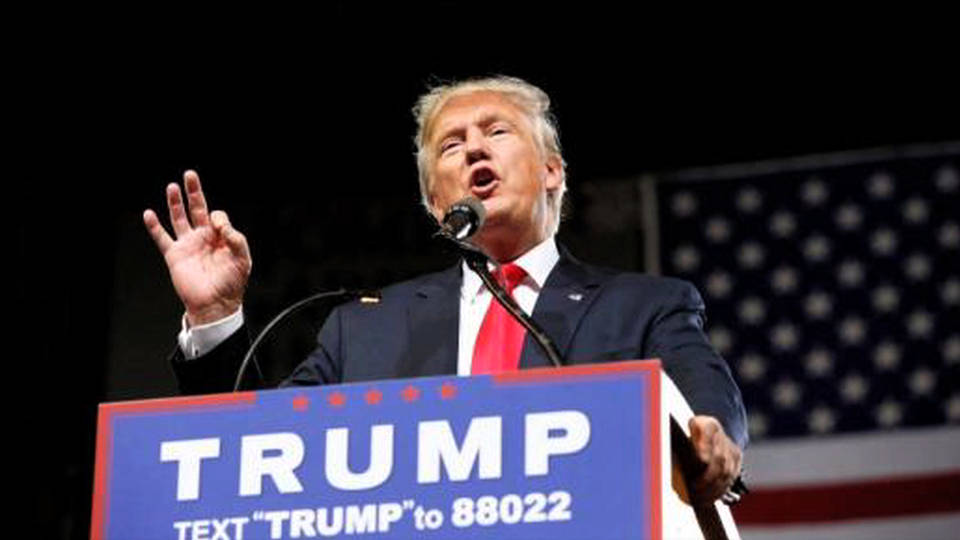
Presumptive Republican presidential nominee Donald Trump has spoken out in favor of racial profiling in the wake of the Orlando killings. Trump told CBS’s "Face the Nation" profiling is "not the worst thing to do."
Donald Trump: "I think profiling is something that we’re going to have to start thinking about as a country. And other countries do it. And you look at Israel and you look at others, and they do it, and they do it successfully. And, you know, I hate the concept of profiling, but we have to start using common sense, and we have to use—you know, we have to use our heads."
TOPICS:
Donald Trump
2016 Election
House Speaker Paul Ryan: Republicans Should Vote Their "Conscience"
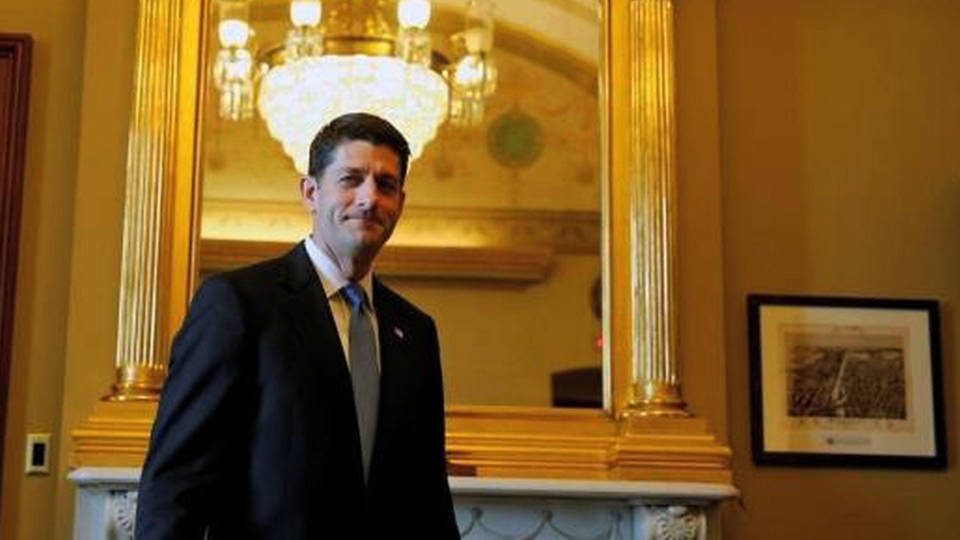
In the latest sign of a revolt within the Republican Party over Donald Trump, House Speaker Paul Ryan has said Republicans should follow their "conscience" when it comes to deciding who to vote for. Ryan made the comments on NBC’s "Meet the Press."
Speaker Paul Ryan: "The last thing I would do is tell anybody to do something that’s contrary to their conscience. Of course I wouldn’t do that. Look, believe me, Chuck, I get that this is a very strange situation. This is a very unique nominee. But I feel, as a responsibility institutionally as the speaker of the House, that I should not be leading some chasm in the middle of our party, because you know what I know that will do? That will definitely knock us out of the White House."
Richard Armitage, who was the deputy secretary of state under President George W. Bush, says he will vote for Hillary Clinton.
TOPICS:
Republican Party
Donald Trump
2016 Election
U.N.: Record 65 Million People Displaced by Conflicts
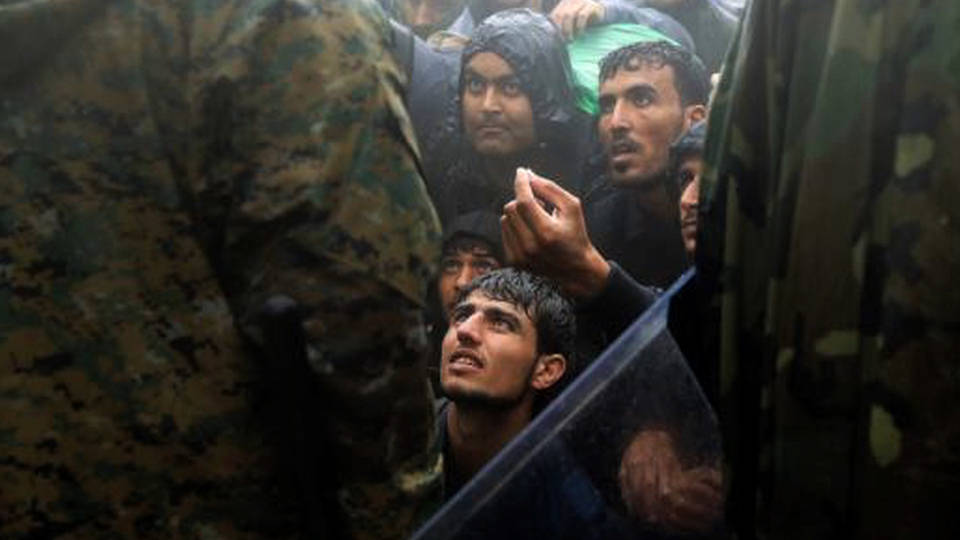
The United Nations says a record 65 million people have been displaced by conflicts around the world. It’s the first time the number of displaced people has topped 60 million. Most have been forced to flee to areas within their own countries, largely in Syria and Iraq. Despite the focus on the influx of refugees in European countries, 86 percent of the world’s refugees are hosted in developing regions close to conflict zones, like Turkey, Jordan and Ethiopia. Today is World Refugee Day.
TOPICS:
Refugees
Jo Cox Shooter Attended Meeting of White Supremacists Arranged by FBI Informant
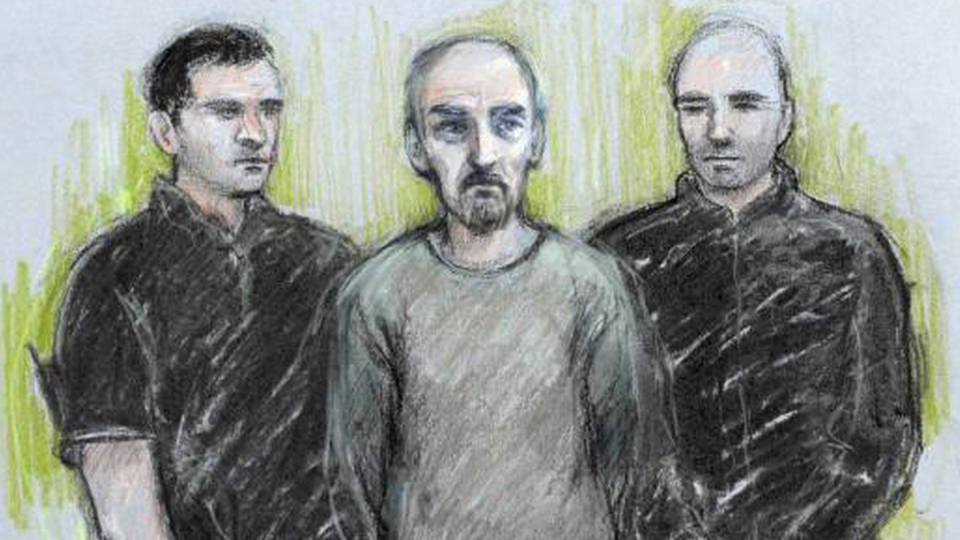
On Sunday, U.N. High Commissioner for Refugees Filippo Grandi warned of what he called a "climate of xenophobia" in Europe. His remarks came three days after Labour Party Parliament member Jo Cox was shot and killed by a constituent in Britain. The Southern Poverty Law Center said the shooter, Thomas Mair, is a longtime supporter of the neo-Nazi National Alliance and attended a 2000 meeting of British white supremacists. Todd Blodgett, a paid FBI informant, helped arrange the meeting in London. In court Friday, Mair gave his name as "Death to traitors, freedom for Britain." Britain votes Thursday on whether to leave the European Union.
TOPICS:
Britain
Okinawa: Tens of Thousands Protest U.S. Bases After Woman's Murder
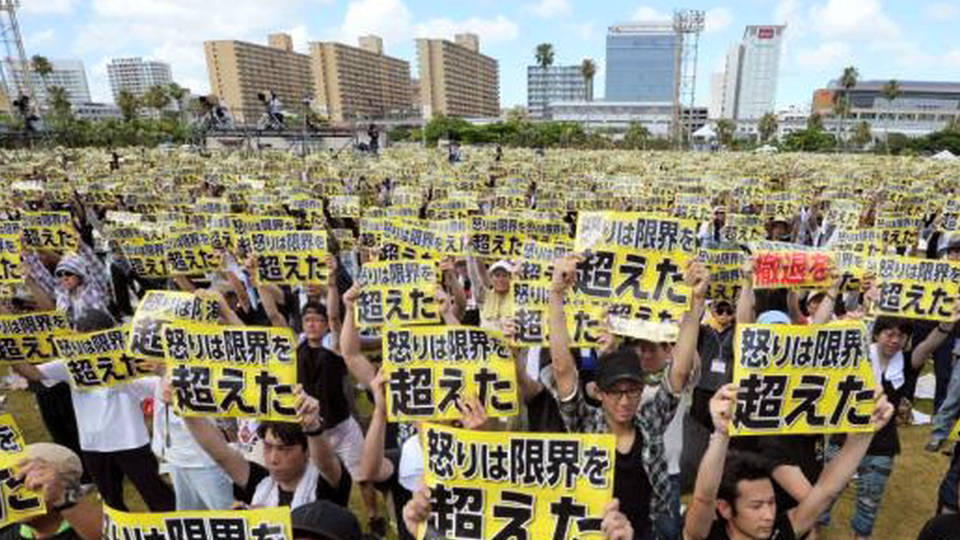
In Japan, tens of thousands of people gathered on the island of Okinawa to demand the ouster of U.S. military bases. Activists said 65,000 people attended what they called the largest protest in two decades against the U.S. military presence. The protests erupted after a former marine working as a civilian contractor at a U.S. base was accused of raping and murdering a 20-year-old woman. The victim’s father has called for the removal of all U.S. bases on Okinawa, which hosts about 26,000 U.S. troops. At Sunday’s rally, Lia Camargo said U.S. soldiers should also be held accountable for their crimes.
Lia Camargo: "The slogans are like 'get the bases out of here,' but I don’t think it’s that simple. I think making sure that the responsibility of the soldiers, if they do commit a crime, that has to be weighed in the same gravity as a Japanese person who commits that same crime."
TOPICS:
Japan
Aid Groups Warn of Humanitarian Crisis as Iraqi Troops Claim Fallujah
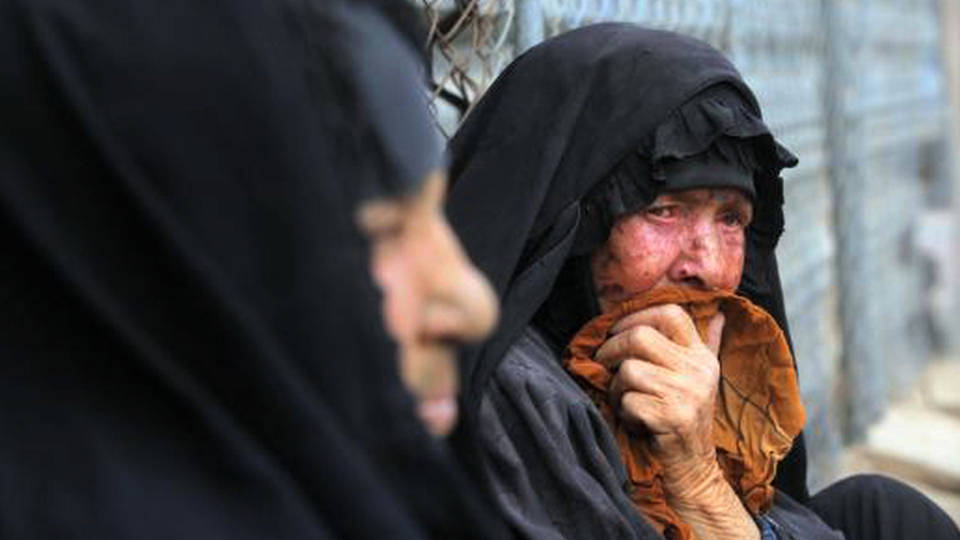
Aid groups have warned of a humanitarian crisis as tens of thousands of Iraqis flee the city of Fallujah. Iraqi forces said Friday they had reclaimed large swaths of the city from ISIL after a weeks-long offensive. The Norwegian Refugee Council warned about 30,000 people have fled to nearby camps since Friday alone, with another 32,000 displaced since the fighting began last month. The International Organization for Migration has put the total displaced in the four-week battle at more than 80,000.
TOPICS:
Iraq
Report: U.S. Drones Hit Taliban More Than Terrorist Networks Despite Purported End of War

A new investigation has found that despite the declaration of an end to the U.S. combat mission in Afghanistan, the majority of U.S. airstrikes there this year have been conducted in support of ground troops, including Afghan forces fighting the Taliban. President Obama declared an end to the U.S. combat role in Afghanistan in 2014, turning the fighting over to local forces. But the Bureau of Investigative Journalism said their data shows more than 200 strikes have been conducted in defense of ground forces, suggesting "the U.S. has been drawn quietly yet significantly into fighting the Taliban-led insurgency."
TOPICS:
Afghanistan
Black Lives Matter Activist Jasmine Richards Freed from Jail in "Felony Lynching" Case
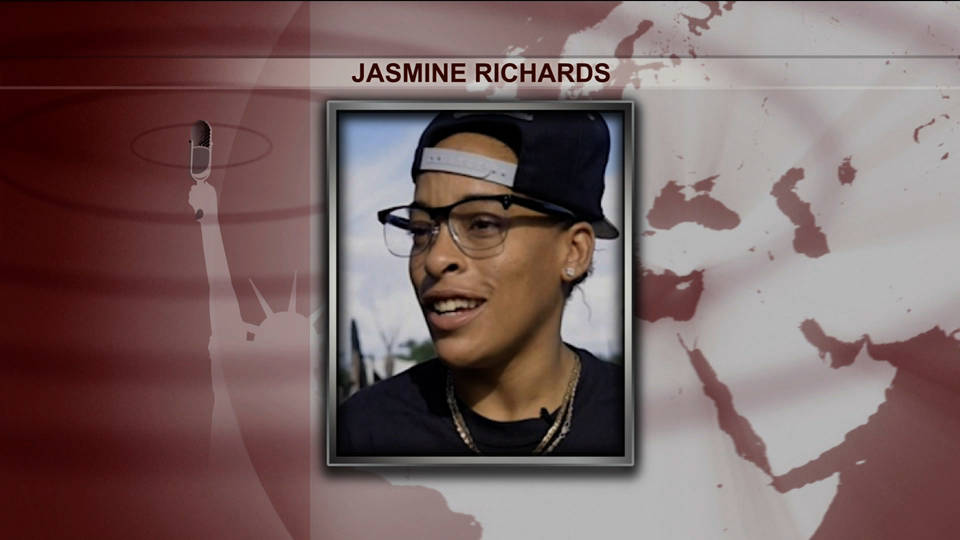
In California, Black Lives Matter activist Jasmine Richards, whose conviction on a charge known up until recently as "felony lynching" sparked protests around the country, has been freed. Police had accused Richards of trying to de-arrest someone during a peace march. She was released Saturday, less than two weeks after being sentenced to 90 days in jail, minus time served. She is due back in court next month for pretrial hearings in two other cases.
TOPICS:
California
Black Lives Matter
Vancouver, Washington: 100 Blockade Tracks to Protest Oil-by-Rail Shipments
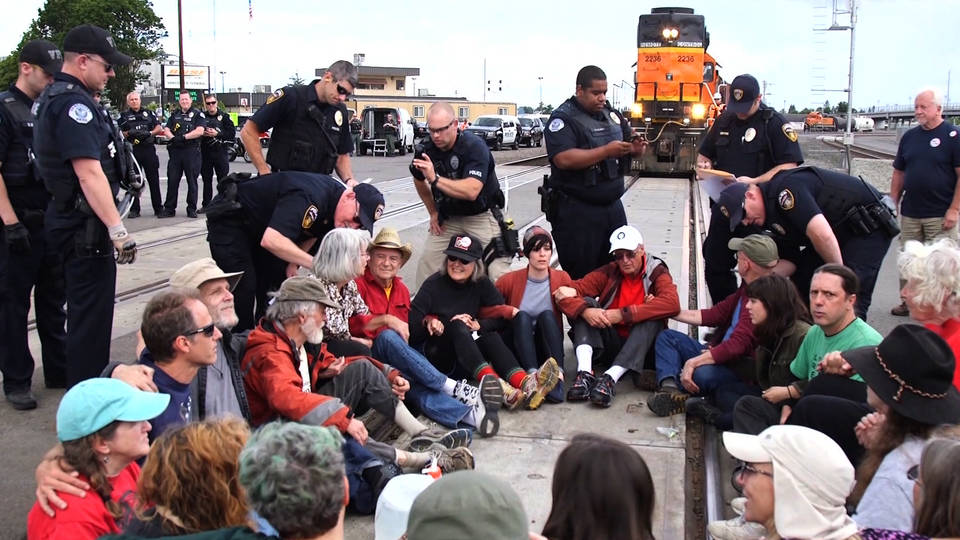
In Vancouver, Washington, more than 100 people formed a human blockade across railway tracks to protest the transportation of oil by rail. The action came after a Union Pacific oil train derailed in Mosier, Oregon, earlier this month, causing a massive fire and prompting evacuations. Mia Reback of Portland Rising Tide spoke as activists sat on the tracks.
Mia Reback: "Behind me right now over 100 people are sitting in on the rail tracks owned by BNSF, where oil trains are frequently sent through Vancouver, Washington. We’re responding to the recent oil train derailment in Mosier, Oregon, where an oil train derailed, catching fire, spilling oil into the Columbia River and polluting the city’s aquifer, and also calling for an immediate end to oil trains and fossil fuel infrastructure as a response to the climate crisis."
Earlier in the day, the fire chief of Mosier, Oregon, addressed the crowd who gathered before the direct action. Chief Jim Appleton had previously defended the safety of oil by rail, but he has become an outspoken opponent of the shipments following the fiery derailment in his town.
Chief Jim Appleton: "Our community would like to see the Mosier derailment and the process of putting our community back together as both the straw that broke the camel’s back and a model for our transition to renewable, global energy. Mosier proves that those trains are too dangerous. Let’s make our policies reflect that new realization and ban those trains."
TOPICS:
Natural Gas & Oil Drilling
Mexico: 6 Killed as Police Descend on Protesting Teachers in Oaxaca
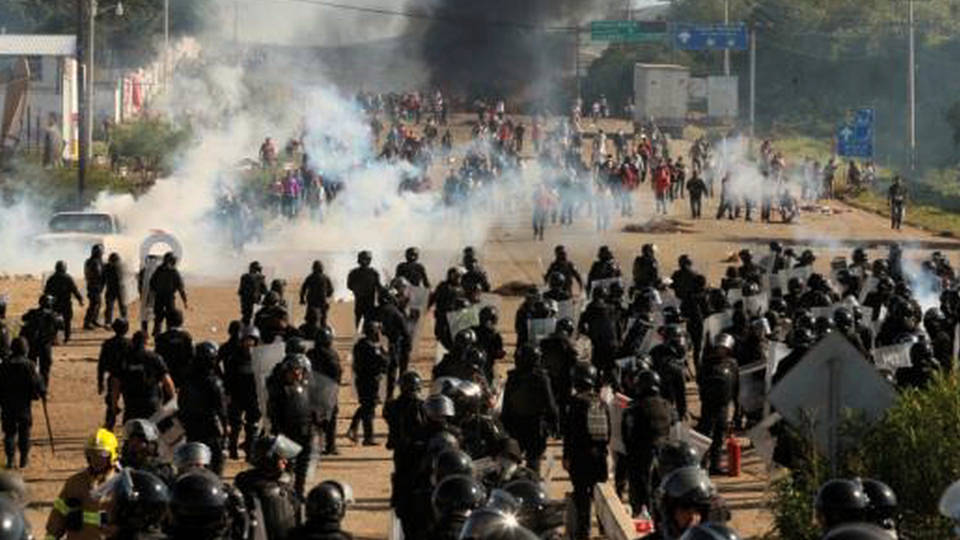
In the southern Mexican state of Oaxaca, police descended on teachers protesting against neoliberal education reform and the arrests of their colleagues. At least six people were killed and dozens more wounded. Activists said police also cut power to the Oaxaca city center. The teachers have set up blockades to protest the reforms and the arrest of two teachers’ union leaders last week on what protesters say are trumped-up charges. Last week marked the 10th anniversary of the popular rebellion in Oaxaca, when a bloody state crackdown on striking school teachers sparked a popular uprising against Governor Ulises Ruiz Ortiz. In Mexico City Friday, thousands took to the streets to protest President Enrique Peña Nieto’s education reforms, which include teacher evaluations opponents say could be used to justify mass layoffs. Teacher Francisco Bravo denounced the reforms.
Francisco Bravo: "There are two issues that we’re dealing with. We demand that the government reverse education reform, which is not about education. Fundamentally, it’s about labor and an end to repression. In particular, we demand our political prisoners to be freed and our dismissed colleagues to be reinstated."
TOPICS:
Mexico
Italy: Rome, Turin Get 1st Women Mayors
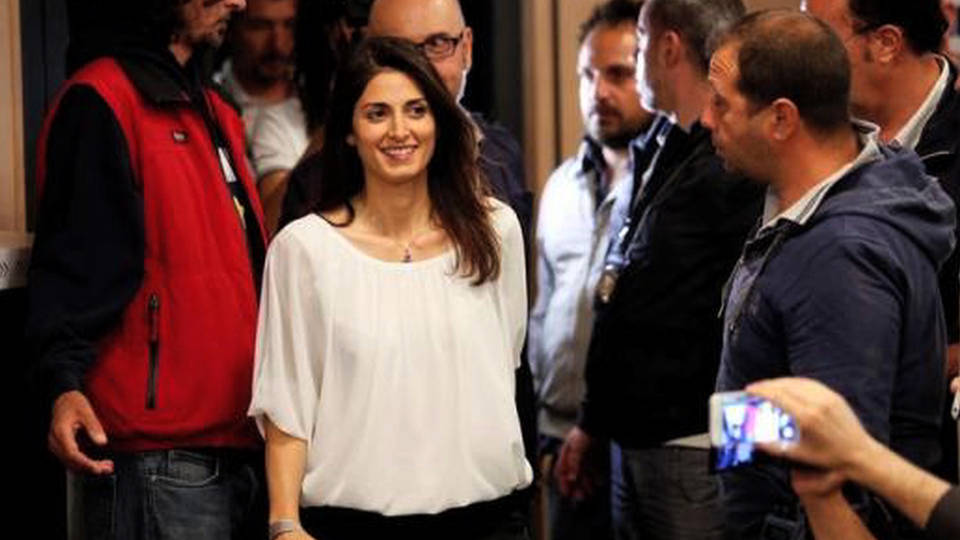
In Italy, Virginia Raggi has been elected the first woman mayor of the capital Rome. The Italian city of Turin also elected its first woman mayor, Chiara Appendino. Both candidates are from the anti-establishment Five Star Movement.
TOPICS:
Italy
Julian Assange Marks Start of 5th Year in Ecuadorean Embassy

And WikiLeaks founder Julian Assange has marked the beginning of his fifth year holed up in the Ecuadorean Embassy in London. Assange entered the embassy June 19, 2012, to avoid extradition on sex crimes allegations, most of which have been dismissed. Assange has repeatedly denied the allegations, for which he has never been charged. He fears Sweden would extradite him to the United States, where he could face trial for WikiLeaks’ revelations.
TOPICS:
Julian Assange
WikiLeaks
Donate today:
Follow:


SPEAKING EVENTS


News Producer
Office Coordinator
Senior TV Producer
207 West 25th Street, 11th Floor
New York, New York 10001, United States
-------------------
-------------------

No comments:
Post a Comment