democracynow.org
Stories:

Democratic Gun Control Filibuster Leaves Advocates Skeptical: "We Could Be Asking for a Lot More"
Senate Democrats took the chamber floor for a marathon, nearly 15-hour filibuster for stricter gun control legislation Wednesday, just days after a gunman opened fire at a gay nightclub in Orlando, killing 49 people and injuring dozens of others. Led by Connecticut Senator Chris Murphy, the filibuster was the ninth longest in U.S. history. It ended early Thursday morning after Republicans agreed to hold a vote considering two gun control measures that would require universal background checks for all firearm purchases and would bar anyone on a no-fly terror watchlist from buying guns. We speak with Caroline Fredrickson, president of the American Constitution Society for Law and Policy.
TRANSCRIPT
This is a rush transcript. Copy may not be in its final form.
AMY GOODMAN: We turn to the gun control debate on Capitol Hill. For nearly 15 hours, Democratic Senator Chris Murphy of Connecticut led a filibuster calling for stricter gun control in the wake of the Orlando massacre that left 49 people dead. Murphy began the filibuster at 11:21 Eastern time in the morning on Wednesday. He kept the filibuster going until 2:11 this morning, saying Republicans have agreed to hold votes on measures to expand background checks and prevent people on U.S. terror watchlists from buying guns. Murphy accused the Republican-led Senate of failing to address the nation’s gun epidemic.
SEN. CHRIS MURPHY: I think the people notice when we remain silent. I know it’s unintentional, but it almost seems to some people as if we don’t care about what happens, when we don’t try to do anything about it. And I understand that we have deep disagreements here about how to proceed, but with the—but with the exception of one week in 2013, we have not brought a debate to this floor in which we try to hash out our differences. Republican leadership didn’t announce in the wake of Orlando that we were going to spend this week working on trying to enact measures to make sure that another mass shooting doesn’t happen. And there’s a fundamental disconnect with the American people when these tragedies continue to occur and we just move forward with business as usual. And so I’m going to remain on this floor until we get some signal, some sign, that we can come together on these two measures, that we can get a path forward on addressing this epidemic in a meaningful, bipartisan way.
AMY GOODMAN: On the presidential campaign trail, Hillary Clinton tweeted her support of Senator Murphy’s effort, saying, quote, "Some fights are too important to stay silent. Preventing gun violence is one of them. Stand strong @ChrisMurphyCT." Meanwhile, Donald Trump suggested in a tweet he’ll push the NRA to accept some new forms of gun control. He wrote, quote, "I will be meeting with the NRA, who has endorsed me, about not allowing people on the terrorist watch list, or the no fly list, to buy guns." Meanwhile, the cover of today’s Boston Globe features a large photo of a military-style AR-15 next to just three words: "Make It Stop."
For more, we’re joined by Caroline Fredrickson, president of the American Constitution Society for Law and Policy.
Welcome to Democracy Now! You’re in Washington, D.C., where the ninth-longest filibuster in U.S. history took place on the floor of the Senate. Can you talk about what was accomplished?
CAROLINE FREDRICKSON: Well, sure. I think, you know, it’s pretty important to recognize that the Republican leadership has been unwilling to even discuss the most limited, basic, commonsensical restrictions on access to guns. And after this historic filibuster, they have agreed to allow votes to go forward on a couple—again, a very—I mean, we could be asking for a lot more, but these are some basic measures that the Senate will move forward to a vote on. At least the American people can get these senators on the record.
AMY GOODMAN: So, talk about this. One of them is a "no fly, no buy." Explain what that is.
CAROLINE FREDRICKSON: Well, you know, essentially, the idea is that we have these terrorist watchlists in the United States, where the government has determined that people are perhaps terrorists or associated with terrorists, and they’re dangerous. And the no-fly list prevents them from getting on an airplane. And the no-buy list would extend that to the purchase of guns and saying, you know, as we might think another commonsense measure, that if you’re thought to be a terrorist and we won’t let you fly, we should probably not let you buy a gun.
AMY GOODMAN: I mean, there’s something very interesting that happened with the Republicans yesterday on this issue. Because the Republicans have been so opposed, along with the NRA, to any kind of regulation, they find themselves, on the side of the terror watchlist, saying that there should be a way people can get off it, which is very interesting, and I think a lot of people would agree with that. You know, what happens when you’re put on this list and you have no recourse?
CAROLINE FREDRICKSON: For sure.
AMY GOODMAN: They’re calling for this now because, they’re saying, if people can’t get off it, they can’t buy guns. So explain what they’re pushing for.
CAROLINE FREDRICKSON: Well, you know, and I think all of us who care about civil liberties should want to make sure that those lists are fairly come to and that there’s a process for getting off if there’s a mistake. You know, I know the ACLU, where I used to work, has long pushed for that. So I think that’s important. But the idea is, what we need is a process that can recognize and deal with mistakes, but not put up a false effort to simply derail what the Democrats are trying to do, which is what I’m very afraid the NRA and the Republican leadership is aiming for here.
AMY GOODMAN: Explain.
CAROLINE FREDRICKSON: Well, you know, the best way to get something off the public stage is to set up meetings and to say there’s going to be a dialogue and a discussion, and take a long time to finally reach the end, which is that you can’t get to an agreement. So I’m somewhat skeptical. But I do think the Democrats should be pushing as hard as they can. And, you know, the filibuster was an important—it’s an important tool to bring people to the table. And I think Senator Murphy was right not to back down simply because some Republicans said that they were discussing a possible compromise with Senator Feinstein. You know, at the end of the day, that compromise discussion fell apart. And so, Senator Murphy was right to keep to the floor. And I think the Democrats have to be skeptical and continue to use these tools in order to make sure that any agreement is one that actually has teeth.
AMY GOODMAN: California Democratic Senator Dianne Feinstein has released new statistics showing more than 90 percent of known or suspected terrorists who have attempted to buy a gun since 2004 have passed a background check and been cleared to do so. The data from the Government Accountability Office shows between 2004 and 2015, nearly 2,500 people on the watchlist applied to purchase weapons; 2,300 of them were approved. Last year, individuals on the terrorist watchlist were involved in background checks to purchase firearms 244 times; only 21 of those were denied. Caroline Fredrickson?
CAROLINE FREDRICKSON: Well, you know, I think it shows we have a problem here. I know the FBI itself is talking about better ways to raise those warning signals up. But, you know, really, I’m sorry, but if you can get on an airplane—or you can’t get on an airplane, you really should not be able to buy a gun, and you shouldn’t be able to buy an automatic weapon of the kind that was used in Orlando. We could avert that tragedy.
AMY GOODMAN: Now, talk about an assault weapons ban. What’s amazing is CBS just did a poll that said more than half the country is for an assault weapons ban. This week we did an interview with one of the leading activists from Australia. After the Tasmanian massacre 20 years ago this spring, a gun-loving country, Australia, with all the Crocodile Dundees, turned around in 10 days—in fact, the guys on the horseback, the Crocodile Dundees, all said, "You’re a wimp to need an automatic weapon to kill animals." They turned that around completely and enforced strict gun reform. And since that time, 20 years ago, there has never been a mass shooting in Australia, gun violence down 50 percent. But it seemed off the table yesterday even for the Democrats.
CAROLINE FREDRICKSON: Well, you know, it’s a real shame, because I think one of the things we need to bring to the table in the discussions about gun violence in the United States is data. And the data you just cited about the ability to prevent mass shootings by getting rid of or making it impossible for average citizens to buy such a dangerous weapon, a military-style weapon, you know, it speaks for itself. We should be gathering data like that. We should be having an actual reasonable conversation about what measures can be taken. That doesn’t deny hunters the ability to go out. As you said, you know, I think real hunters don’t want to shoot down animals with automatic machine guns. And actually, you know, we’re not talking about restricting gun—hunting rifles. But really, let’s look at what’s out there, where these mass shootings—you know, what are the weapons that are being used. And, you know, I think if people could just be reasonable and sit around a table, we could come up with some appropriate regulations that would continue to allow people to exercise their Second Amendment rights, but not enable dangerous people who want to engage in mass murder to go out and buy these guns without any restrictions.
AMY GOODMAN: We’ve spent a lot of time talking about the terror watchlist, but what about overall in society? I mean, when you have, for example, the young man in Connecticut who gunned down the 20 schoolchildren and six staff and teachers in Sandy Hook, when you have the young man who killed people at the Aurora movie theater in Colorado, these are not people who are—who would traditionally [be] put on a terror watchlist. But these are people who are extremely unstable, had various ways where people could see that they were. And also the issue of domestic violence, which was one raised on the floor of the Senate yesterday, but that so often in these cases you can trace back to a man who beat his wife or partner, as is the case with Omar Mateen, his first wife leaving him after four months.
CAROLINE FREDRICKSON: Well, Amy, you raise a good point. I think, you know, this isn’t a one-size-fits-all answer, but there are a variety of proposals that have been suggested. And, you know, even as we go back to the assault weapons ban, something that has been law in the past—we lived under that law. We lived under that law. It’s constitutional, most likely, even under this Supreme Court’s most restrictive version of the Heller decision. But so, you know, there are a lot of limits that are constitutional that we can consider, and certainly expanding background checks, enforcing them. President Obama has proposed tightening up some of the existing loopholes, that would ensure that people who are engaged in domestic violence, that would extend to people who are in—not in a married relationship, but to others, that people with serious mental illnesses and other dangerous individuals would be barred from getting a gun. I think we can all agree that makes a lot of sense.
AMY GOODMAN: And in the case of the AR-15, which is the mass shooter’s weapon of choice, whether it’s Adam Lanza in Connecticut—and, of course, that’s where Chris Murphy comes out of; he had just been elected to the Senate when the Sandy Hook massacre took place—whether it’s James Holmes in the Aurora massacre, or whether it’s Mateen here in Orlando. Ten years, more than a decade ago, the assault weapons ban was allowed to lapse. What do you think its chances are of being reinstated, with more than half the population now, according to CBS, saying they want to see it again?
CAROLINE FREDRICKSON: Well, what we need is political will. We need people to, you know, stand up to the NRA. It’s about time. They’re out of step with where the American public is on so many gun issues. And as you mentioned at the beginning, 90 percent of the American public wants stricter gun safety laws. So, I think we need somebody to say, you know, "Enough. It’s time for us to actually move forward. We’re going to protect Second Amendment rights. We’re going to ensure that hunters can have their guns. But we’re also going to ensure that dangerous people and military-style weapons are—can’t meet, that those people can’t buy those guns. Those guns are not available." And I think, you know, it’s about time, and we’ve seen way too much of this. You know, the tragedies just keep mounting.
AMY GOODMAN: Well, we’ll continue to cover this and see what happens, Caroline Fredrickson, president of the American Constitution Society for Law and Policy.
CAROLINE FREDRICKSON: Thank you.
AMY GOODMAN: When we come back, we look at Donald Trump’s business record. A number of journalists have been delving into his business practices. Stay with us. ... Read More →

David Cay Johnston: There is "Incredibly Strong Evidence" Donald Trump Has Committed Tax Fraud
For months, presumptive Republican presidential nominee Donald Trump has refused to release his tax returns. We speak to Pulitzer Prize-winning reporter David Cay Johnston about what he may be hiding. His latest piece in The Daily Beast is headlined "New Evidence Donald Trump Didn’t Pay Taxes."
TRANSCRIPT
This is a rush transcript. Copy may not be in its final form.
AMY GOODMAN: We’re going to turn now to one of your former colleagues. We’re going to turn to a new exposé in The Daily Beast headlined "New Evidence Donald Trump Didn’t Pay Taxes," the article published as Trump is refusing to release his tax records. Joining us from Rochester, New York City [sic], is the Pulitzer Prize-winning reporter David Cay Johnston. He used to work at The New York Times, now reporting for The Daily Beast and other publications. David, what did you find?
DAVID CAY JOHNSTON: Well, Donald has done a very good job of trying to keep a number of things out of the public record and shut down investigations, but I found two tax appeals he filed from the year 1984, one with the City of New York and one with the state. And in one of these two cases, Donald filed something called a Schedule C. That’s what a freelancer files. He reported zero income and $626,000 of expenses, with no receipts and no documentation. That’s something that could be construed as tax fraud.
During the hearing, which lasted two days, the CPA and lawyer who had done Trump’s tax returns for years was shown the tax return, and he said, "Well, that’s my signature, but I didn’t prepare that tax return." Now, it was a photocopy. And, of course, you can put a name on a document with a photocopy machine. My first big national investigative reporting award was for just such a device used by a corrupt Michigan politician. And The Trump Organization didn’t respond to any of my questions—the Trump campaign—about this. Donald was hit in one case with a 35 percent penalty. And in the other case, the 25 percent penalty was not applied, only because nobody could find the original tax return, which I think suggests that a photocopy is what was mailed in in the first place.
It also shows, in these two cases, that in the year 1984 Donald paid no federal income taxes. And there’s very good reason to think he doesn’t pay them now, because of a provision in federal law that allows large real estate professionals to live without paying income taxes.
AMY GOODMAN: In May on ABC’s Good Morning America, Donald Trump fielded questions from George Stephanopoulos about his tax history.
GEORGE STEPHANOPOULOS: What is your tax rate?
DONALD TRUMP: It’s none of your business. You’ll see it when I release. But I fight very hard to pay as little tax as possible.
AMY GOODMAN: David Cay Johnston?
DAVID CAY JOHNSTON: Well, I think that tells you, the way he snapped at the question, that Donald has no intention of ever producing his tax returns. If he’s elected president, he won’t do so. So my column—I’m not a reporter now, I’m a columnist—my column showed how by adding one line to Section 6103 of the tax code, Congress could make public the returns of presidential candidates who appear on the ballot in many states. And back in the 1920s, tax returns were public record. So there’s no reason not to do this. Those Republicans who are very distressed about Mr. Trump, I would think, might be very interested in this as a way to bring forth the things that trouble them.
AMY GOODMAN: Now, go back to—because you said it very quickly before that clip, go back to why he doesn’t have to pay taxes.
DAVID CAY JOHNSTON: Because if Donald is anywhere near as wealthy as he claims to be, and Donald has acknowledged under oath that he basically makes up numbers that make him look good—if he has enough depreciation from his buildings, he is allowed to use that to offset income from the other things, like selling ties made in China and running golf courses. And that means that he effectively can get a zero-interest loan from the government of his taxes. In my USA Today column back in March, I showed how if Trump’s numbers that he’s publicly said were true, then he stands to make about $130 million net profit off his income taxes from a single year. The taxes would have only been $23 million.
AMY GOODMAN: You write, "The tradition of presidential candidates disclosing their tax returns has an august purpose: making sure that another criminal is not a heartbeat from the presidency or in the Oval Office." You note, "The disclosure tradition dates to when Spiro Agnew resigned as vice president in [1973 and] then plead guilty to a tax crime." Elaborate on this tradition.
DAVID CAY JOHNSTON: Well, when Richard Nixon was in the White House and famously said, "I am not a crook," and his tax returns were being audited, he actually released tax information. It turned out that his tax returns were in fact corrupt. His tax lawyer, Edward Morgan, went to prison over it. Spiro Agnew resigned as vice president and immediately plead to a felony involving a tax crime. So, that’s the reason that candidates have been releasing returns since then. We have, for example, Hillary Clinton and her husband Bill’s tax returns going back to the 1980s. And by the way, they changed the way they do their tax returns because of an article I wrote in The New York Times in 1997 showing that they had paid more than twice as much federal income tax as the law requires, even though they paid almost $10,000 that year for tax advice.
AMY GOODMAN: Now, again, Congress, you’re saying, could, with a very easy one-line amendment to the tax code, force Donald Trump to reveal his hand?
DAVID CAY JOHNSTON: Well, they—what they would do is simply direct the Internal Revenue Service to post the tax returns that it has online for any presidential candidate who appears in, let’s say, 10 or more states. That’s an objective standard, so it would apply to Hillary Clinton, to Donald Trump and Gary Johnson, the Libertarian candidate, and perhaps some others. Trump, no doubt, would try and challenge it as a bill of attainder, which the Constitution prohibits, but if it’s an objective standard, that shouldn’t stand. And I don’t see any reason not to do this. In fact, I think it would be a great public benefit, because Donald Trump signed those tax returns under penalty of perjury. And his assertions that he can’t release them because he’s being audited not only are absurd, but what about all his returns up to the year 2011, which are no longer under audit? And I fault my fellow journalists for not asking him, "Well, where are your 2011 and earlier tax returns, since they’re no longer under audit and that’s your standard for withholding?"
AMY GOODMAN: You also write, "[I]n the 1920s tax returns were public record and newspapers routinely reported the precise income and tax paid by prominent Americans." What changed?
DAVID CAY JOHNSTON: Well, some of those prominent Americans did what wealthy people always do: They spent some money getting people in Congress to change the law so that wouldn’t happen anymore. I actually think it’s a good disinfectant, but in this case I’m proposing that we only make them public for presidential candidates who are going to appear on the ballots of 10—pick a number—10 or 15 or 20 states, and that the government be the one doing the disclosing, because we really do need to know that our president or the people we are going to vote for as president aren’t crooks.
AMY GOODMAN: Do you believe Donald Trump engaged in outright tax fraud?
DAVID CAY JOHNSTON: I think there’s incredibly strong evidence of that. I think that it explains thoroughly Donald’s reasons for not disclosing. The work that was done by the other three reporters who have been on the show, all about things I’ve been intimately familiar with, is excellent and accurate work. Donald has a long history of not paying people, of saying things that are not true—not just to the news media, but under oath—of not paying his bills, of stuffing his own pocket while shorting other people. And to Donald, there’s nothing wrong with that. You have to understand who Donald is. Donald creates his own reality. Donald is a narcissist. And you and I exist for only one of two purposes: either to adore Donald or to be a foil to build more support from those people who adore Donald.
AMY GOODMAN: Well, we have to leave it there.
DAVID CAY JOHNSTON: Empirical reality is a different issue.
AMY GOODMAN: I want to thank you for being with us, David Cay Johnston, also Russ Buettner and Charles Bagli of The New York Times, and to Steve Reilly, speaking to us from USA Today.
I’m Amy Goodman. We have three job openings. Check our website. Thanks for joining us. ... Read More →

How Donald Trump Bankrupted His Casinos, Left Contractors Unpaid, Ruined Investors & Made Millions
A series of new investigative articles have revealed Donald Trump’s shady business dealings in Atlantic City, his failure to pay contracted workers over the years, and his decision to partake in what may amount to "calculated tax fraud"—a felony. We begin by looking at how Donald Trump bankrupted his Atlantic City casinos, but still earned millions. "Even as his companies did poorly, Mr. Trump did well. He put up little of his own money, shifted personal debts to the casinos and collected millions of dollars in salary, bonuses and other payments. The burden of his failures fell on investors and others who had bet on his business acumen," wrote Russ Buettner and Charles Bagli in The New York Times. They join us to discuss their piece, "How Donald Trump Bankrupted His Atlantic City Casinos, But Still Earned Millions"
TRANSCRIPT
This is a rush transcript. Copy may not be in its final form.
AMY GOODMAN: This is Democracy Now!, democracynow.org, The War and Peace Report. I’m Amy Goodman. An anti-Donald Trump playbook compiled by the Democratic National Committee has leaked online following this week’s report that the Democratic National Committee’s computers were breached by hackers. The DNC initially blamed Russian hackers, but on Wednesday a hacker using the handle Guccifer 2.0 took credit. In the document, Trump is pilloried as a "bad businessman" and "misogynist in chief."
Well, instead of devising a dossier on Trump, the DNC could have just encouraged voters to pick up a newspaper and read the facts for themselves. A series of new investigative articles reveal Trump’s shady business dealings in Atlantic City, his failure to pay contracted workers over the years, and his decision to partake in what may amount to "calculated tax fraud"—a felony.
We begin by looking at a lengthy article this past weekend in The New York Times detailing how Donald Trump bankrupted his Atlantic City casinos, but still earned millions. Reporters Russ Buettner and Charles Bagli write, "[E]ven as his companies did poorly, Mr. Trump did well. He put up little of his own money, shifted personal debts to the casinos and collected millions of dollars in salary, bonuses and other payments. The burden of his failures fell on investors and others who had bet on his business acumen." Their new article is headlined "How Donald Trump Bankrupted His Atlantic City Casinos, But Still Earned Millions."
Russ Buettner and Charles Bagli, welcome to Democracy Now! Russ, let’s begin with you. Talk about what you were most surpirsed by in this piece, how Trump profited on failed casinos.
RUSS BUETTNER: That’s a good question. I think the most surprising thing to me was the pattern that just repeated over and over again, which is him buying high, mortgaging even higher and then promising that everything was going to be wonderful, and the inevitable happens, that they run out of cash. The casinos can’t support the debt that he’s put on them. He’s able to get his investors to take a haircut, a big cut in the money they have coming. And then the pattern starts all over again. And that repeated itself four times, and probably would a fifth, except for the investors had finally had it with him by about 2010.
AMY GOODMAN: What do you mean four times? Four times bankruptcy?
RUSS BUETTNER: Four times bankruptcy, yes, yes.
AMY GOODMAN: Which is very interesting, because many who support Donald Trump, you know, people out on the road who go to his rallies, talk about just this country needing jobs and that we need a businessman to run this country correctly.
RUSS BUETTNER: That’s exactly right. That is the central core of his candidacy.
AMY GOODMAN: Charles, tell us the story of the empire that Donald Trump assembled in Atlantic City. Lay out the hole boardwalk geography.
CHARLES BAGLI: Sure. Voters in New Jersey approved gambling in Atlantic City in the late '70s. So, you saw the development of a bunch of casinos down there. Donald Trump came in in the second wave. And so, in 1982, he got licensed, he saw an opportunity, and he piggybacked on other people's efforts there. So, he had a great location. He had a piece of land right next to the—on the boardwalk next to the convention center. But he didn’t have the money to actually erect a casino. So along came Harrah’s, and they agreed to put up the money for the building, to pay him a construction management fee and to let him have half the profits. So, that was his first casino.
The second casino, Hilton had just about completed a casino in the marina district that couldn’t get licensed. Donald bought it. It was directly across from his patron’s casino, a Harrah’s casino. And they were outraged about this, so that partnership ended. Donald now has two casinos.
All of this was bought with debt. There wasn’t a lot of money that Donald was putting into the properties. So then, he’s no sooner done acquiring two, when Resorts International, which was the first company to build a casino, is now building what they say will be the biggest casino in the world. The chairman died. Donald made a play for the company, got into a fight with Merv Griffin, the talk show host, and they ended up splitting the baby. So he got the Taj Mahal. He told regulators, "Don’t worry. I’m going to do fine here. I hate junk bond debt. It makes for junk bond—junk companies." But then, five minutes later, he turned around and put $675 million of more debt, high-interest debt, on the properties.
So here he is now with three casinos by 1990, and they’re—
AMY GOODMAN: He had Trump Taj Mahal?
CHARLES BAGLI: Trump Taj Mahal. And they’re all competing with each other. So, Trump Taj Mahal opens. It’s siphoning off, ultimately that year, $58 million from his other two casinos. It was a fatal amount of debt that was there. In fact, the Casino Control Commission was appalled at the high levels of debt—$3.4 billion on his entire empire at that point.
AMY GOODMAN: So, how, Russ, did he make money?
RUSS BUETTNER: Well, that debt, each time he took it out, created a big pot of cash—right?—that could have supported the business for some numbers of years, that could have been reinvested into the business to make casinos look better and work better. Instead, what seems to happen is it supported a bottom line that was lagging, and then he pulled out large fees throughout the course of the thing—a million dollars a year basically for them using his name, that rose to $2 million a year later on. He charged the casinos $300,000 a year for occasional use of his jet. He took a $5 million bonus in 1996, which was the year that the stock both hit its peak and then sunk down and began a long slide from which it never recovered.
AMY GOODMAN: I want to turn to a clip from the Republican presidential debate in September. This is former Hewlett-Packard CEO Carly Fiorina sparring with Donald Trump.
CARLY FIORINA: There are a lot of us Americans who believe that we are going to have trouble someday paying back the interest on our debt, because politicians have run up mountains of debt using other people’s money. That is in fact precisely the way you ran your casinos. You ran up mountains of debt, as well as losses, using other people’s money, and you were forced to file for bankruptcy, not once—
DONALD TRUMP: I never filed for bankruptcy.
CARLY FIORINA: —not twice, four times. A record four times. Why should we trust you to manage the finances—
JAKE TAPPER: Mr. Trump—
DONALD TRUMP: I’ll tell you why. It’s very simple.
CARLY FIORINA: —of this nation any differently than you managed the finances—
DONALD TRUMP: I’ll tell you. I was running—
CARLY FIORINA: —of your casinos?
DONALD TRUMP: Carly, Carly, Carly—
JAKE TAPPER: Mr. Trump?
DONALD TRUMP: I’ve made over $10 billion. I had a casino company. Caesars just filed for bankruptcy. Chris will tell you—it’s not Chris’s fault either—but almost everybody in Atlantic City is either in trouble or filed for—maybe I’ll blame Chris.
CARLY FIORINA: Well—
DONALD TRUMP: But Atlantic City is a disaster
CARLY FIORINA: Mr. Trump also—
DONALD TRUMP: Wait a minute, Carly. Wait. I let you speak. Atlantic City is a disaster, and I did great in Atlantic City. I knew when to get out. My timing was great. And I got a lot of credit for it.
AMY GOODMAN: "I knew when to get out. My timing was great." Charles Bagli?
CHARLES BAGLI: Absolutely not. The problems in Atlantic City started in 2006 when Pennsylvania started opening up casinos and siphoning off potential revenue for Atlantic City. But Donald was full bore from 1990 through 2004, and, in fact, he was finally ousted from the company because the management didn’t want him around anymore.
AMY GOODMAN: You write, "[A] close examination of regulatory reviews, court records and security filings by The New York Times leaves little doubt that Mr. Trump’s casino business was a protracted failure. Though he now says his casinos were overtaken by the same tidal wave that eventually slammed this seaside city’s gambling industry, in reality he was failing in Atlantic City long before Atlantic City itself was failing.
"But even as his companies did poorly, Mr. Trump did well. He put up little of his own money, shifted personal debts to the casinos and collected millions of dollars in salary, bonuses and other payments. The burden of his failures fell on investors and others who had bet on his business acumen."
Russ Buettner, who suffered? Do you tell stories of the people who got hurt in this massive failure in Atlantic City?
RUSS BUETTNER: Yeah, there were large categories of people, several large categories, one where people who worked on the initial Taj Mahal—that bankruptcy, they really shorted contractors who were actually owed money. They had performed work, they hadn’t been paid, and they negotiated very small amounts for those people to be paid. We quoted one person in the article whose father almost lost their business, took 30 cents on the dollar for the work he had done on the Taj.
The other big categories were bondholders and stockholders. Now, some of those, as Mr. Trump has said, were sophisticated investors who should have been able to look at the balance sheet to see what they were getting into. Others were people who actually had their retirement income invested in these stocks or had their retirement income invested indirectly through mutual funds and whatnot that had purchased the stock. We spoke with one man, a stockholder, who at one time his stock had been worth $500,000, and he left with essentially nothing.
AMY GOODMAN: How unusual is it for a businessman to have four bankruptcies?
CHARLES BAGLI: Well, I think it’s somewhat unprecedented. And the idea that Wall Street continued to give him money—not once, not twice, three, four times—I mean, we were kind of holding onto our heads, when you look at the full record down in Atlantic City. I don’t think I’ve seen anything like it. Now, more recently, a number of casino companies have had trouble in Atlantic City, because the market is shrinking as other states put casinos online. But in my experience, I’ve never seen anything like it.
AMY GOODMAN: Was the state takeover similar to Flint?
RUSS BUETTNER: The state takeover of Atlantic City?
AMY GOODMAN: What they’re proposing.
RUSS BUETTNER: Atlantic City has been a mess for a long time. And you can see the casino industry has been there for more than 35 years, and it still looks like a gap-toothed city. There’s lots that are just sitting vacant. The state is edging towards a takeover of the city, where there’s a long history of corruption. But I think there’s equal blame for the city, the state and the casino industry.
AMY GOODMAN: We’re going to break and then come back to this discussion and broaden it out to USA Today reporters, reporter for The Daily Beast, looking at Donald Trump’s record from Atlantic City, well, and beyond. We’re talking with Russ Buettner and Charles Bagli, who wrote a piece, a major front-page Sunday piece in The New York Times, "How Donald Trump Bankrupted His Atlantic City Casinos, But Still Earned Millions." We’ll be back in a minute.
... Read More →

Dishwashers, Plumbers, Waiters & Lawyers: Hundreds Accuse Trump of Failing to Pay for Their Work
Dishwashers, Plumbers, Waiters & Lawyers: Hundreds Accuse Trump of Failing to Pay for Their Work
A new USA Today exposé finds hundreds of former employees and contractors have accused Republican presidential presumptive nominee Donald Trump and his businesses of failing to pay them for their work. Victims have included a dishwasher in Florida, a glass company in New Jersey, a carpet company, a plumber, 48 waiters, dozens of bartenders at his resorts and clubs, and even several law firms that once represented him in these labor lawsuits. We speak to Steve Reilly, an investigative reporter and data specialist for the USA Today Network. His new exclusive is called "Hundreds Allege Donald Trump Doesn’t Pay His Bills."
TRANSCRIPT
This is a rush transcript. Copy may not be in its final form.
AMY GOODMAN: Today we’re looking at the business record of the presumptive Republican presidential nominee, Donald Trump. We turn now to look at a new USA Today exposé that found hundreds of former employees and contractors have accused Donald Trump and his businesses of failing to pay them for their work. Victims have included a dishwasher in Florida, a glass company in New Jersey, a carpet company, a plumber, 48 waiters, dozens of bartenders at his resorts and clubs, and even several law firms that once represented him in these labor lawsuits.
Joining us from New Orleans is Steve Reilly, an investigative reporter and data specialist for the USA Today Network. His new exclusive is headlined "Hundreds Allege Donald Trump Doesn’t Pay His Bills."
Steve Reilly, welcome to Democracy Now! Explain. What evidence do you have for that? Tell us these individual stories.
STEVE REILLY: Right, so, just the broader context, USA Today started by gathering the history of litigation involving Donald Trump and his companies, more than 3,500 lawsuits which involved Trump or his companies over the past several decades. And so, our most recent article, we looked, within that body of litigation, at lawsuits involving allegations of nonpayment against Donald Trump’s companies, and specifically more than 60 lawsuits, along with hundreds of other mechanic’s liens, judgments, other filings, which indicate there are allegations Donald Trump hasn’t paid contractors, workers, employees for their services.
So, I can talk about specific examples. The article discusses the Friel cabinetry company, based out of Philadelphia, which did work on the casinos in Atlantic City in the 1980s. They built bases for slot machines, registration desks. And there was a dispute at the end of their work over about $83,000. And the allegation is that Donald Trump didn’t pay the company for the work, which eventually contributed to the bankruptcy of that company, which employed about 80—I’m sorry, 20 workers in the 1980s.
AMY GOODMAN: Well, let’s go to Paul Friel speaking to your paper, USA Today.
PAUL FRIEL: We did some work for a company called Perini Corporation, who was the general contractor for a hotel called Harrah’s that Trump bought. And Donald said, "Well, honestly, we owe you the money, and we are willing to let you—let you be happy with what you’ve been paid on the contract, and—or you can simply take us to court."
AMY GOODMAN: Steve Reilly, expand on that.
STEVE REILLY: Right, so, the company decided that, you know, they—what they do is they have what’s called a punch card approved by the general contractor. So the work was essentially approved, according to the gentleman who just spoke, Paul Friel. The work was approved. They went for the final payment and were called into a meeting with Donald and Robert Trump and were told, "You’re not going to be paid the final invoice of about $83,000, but you’re welcome to come back and do future work for The Trump Organization." So, the Friel cabinetry company tried to recoup the money. They hired a lawyer, but dropped any attempt to regain that money because of legal fees, eventually. And after that, Paul Friel related that the company was unable to find work in Atlantic City from that point on.
AMY GOODMAN: You talk about Juan Carlos Enriquez, who owned The Paint Spot in South Florida?
STEVE REILLY: Right. That’s another example of a company. This is a case that’s still ongoing. The dispute is over paint work at the Doral resort in Florida. There’s a foreclosure proceeding, and there’s a dispute over payment for the work there that’s still going on right now.
AMY GOODMAN: And you also talk about Trump’s companies having been cited for 24 violations of the Fair Labor Standards Act since 2005 for failing to pay overtime or minimum wage, according to the U.S. Department of Labor data. Can you talk about what you found there?
STEVE REILLY: Exactly. Those are, since 2005, disputes over back wages and overtime and minimum wage. And Trump was—had to resolve those cases by paying back wages in both cases to some of his hourly employees at Trump Mortgage and one of his casinos.
AMY GOODMAN: Steve Reilly, I want to turn to audio of your interview with Donald Trump. You raised allegations by a dishwasher and other hourly employees who said they weren’t paid fairly by Trump.
STEVE REILLY: I wanted to make sure I gave you a chance to respond to, as the article mentions, a couple allegations by, I believe, a dishwasher and a couple other hourly employees, and some Department of Labor citations for violations of the Fair Labor Standards Act. And they seem to be—
DONALD TRUMP: When is—
STEVE REILLY: —over unpaid overtime.
DONALD TRUMP: When is this?
STEVE REILLY: The U.S. Labor Department violations were in 2005 and 2008.
DONALD TRUMP: That’s 10 years ago, 10 years ago, Steve. I have thousands of employees, Steve. You’re talking about a dishwasher from 10 years ago. I don’t know, Steve. You don’t sound like you’re going to be very good to me, but that’s OK. Hey, look, treat it fairly, Steve. I can’t—you know, how do you respond when a reporter from a newspaper that you respect calls up and talks about a dishwasher 10 years ago who said he didn’t get paid or something happened?
STEVE REILLY: Right—
DONALD TRUMP: Not fair—not fair reporting, Steve. Not fair reporting. I pay my bills on time. I’m proud to do it. I have one of the best records in the country for paying on time, Steve, OK?
STEVE REILLY: OK. So your company doesn’t have any systematic effort to—you know, you don’t systematically—
DONALD TRUMP: We have a total systematic effort: We pay everybody what they’re supposed to get paid, and we pay on time. And we employ thousands and thousands of people.
AMY GOODMAN: And, Steve Reilly, I want to play one more excerpt of your interview with Donald Trump.
STEVE REILLY: We have some people here who said that you alleged they did shoddy work, and in response to that—
DONALD TRUMP: Yeah.
STEVE REILLY: —your companies didn’t pay them at all.
DONALD TRUMP: If people do bad work—we have a contract. I’ll pay—I actually pay on time and even ahead of schedule, if people do good jobs. Now, Steve, if somebody does a bad job, then, as far as I’m concerned, they violated their—our trust and their contract. You understand. But I pay—I pay my bills on time. I’m very proud of it. I’ve always paid my—you know, I just—I’m a believer in that.
AMY GOODMAN: Steve Reilly, your response? That, again, Donald Trump being interviewed by you for USA Today.
STEVE REILLY: Well, we heard Mr. Trump’s response to some of these cases. He is of the—you know, he argued that, you know, any case where he didn’t make full payment or his companies didn’t make full payment for work is a case where the work was late or incomplete or shoddy. That does contradict some of the allegations that we reviewed, you know, especially the Friels’ story, that they were invited to come back and do future work. That type of story was related by a couple other contractors, as well. And also, you know, regarding the U.S. Department of Labor violations, you heard, you know, Mr. Trump didn’t directly speak to those. He feels, you know, it was 10 years ago, which is—which is true, but we didn’t get a full, you know, response as to his feelings about those late payments to hourly employees.
AMY GOODMAN: And as you write, with your reporting coinciding with The New York Times reporters we were just talking to, at Trump’s Taj Mahal casino in Atlantic City, "records released by the New Jersey Casino Control Commission in 1990 show [that] at least 253 subcontractors weren’t paid in full or on time, including workers who installed walls, chandeliers [and] plumbing." Was this is also what you both found, Russ and Charles?
CHARLES BAGLI: Sure. I mean, there was, I think, $100 million worth of claims at the Taj Mahal in 1990, ’91.
AMY GOODMAN: How many? How much?
CHARLES BAGLI: I think it was about $100 million. And it created a huge turmoil in the community in Atlantic City, because a lot of these were small businesses. So, when you don’t get $83,000 and then you have to go to hire a lawyer to fight for you, you can bankrupt a small business.
AMY GOODMAN: What was Donald Trump’s response to your article, Russ?
RUSS BUETTNER: He didn’t question any of the points we made, that he saddled it with debt, that he pulled a lot of money out and that his revenue lagged behind other casinos, nor that he shifted his personal debt onto the shareholders in his casinos. Some of the more specific things, he said he didn’t recall. The thing that he stressed over and over and over again that he wanted to make sure everyone who thought about this understood was that he personally made a lot of money from the casinos. And he wasn’t too concerned with that other people might have not done well. ... Read More →
Headlines:Democrats Launch Marathon Filibuster to Demand Gun Control Vote
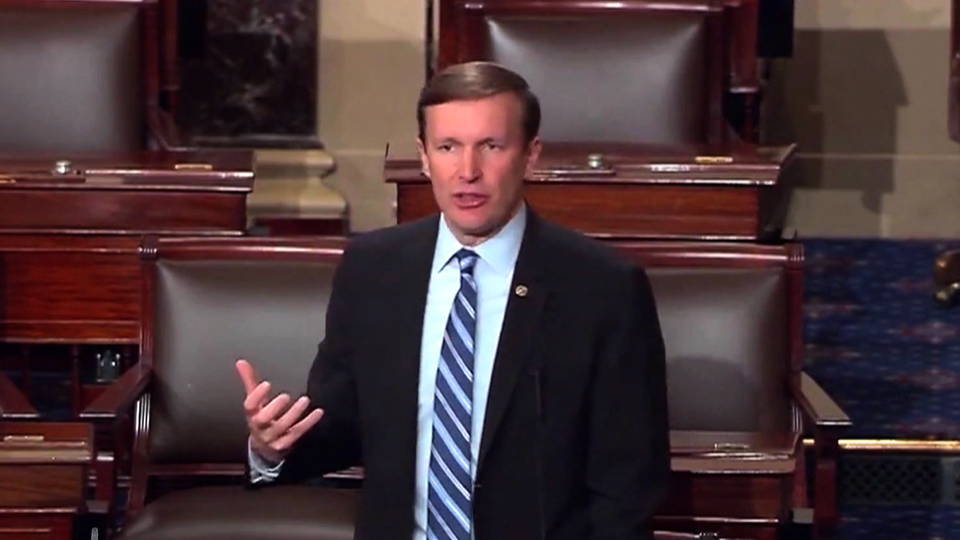
President Obama is slated to visit Orlando, Florida, today, following Sunday’s attack on an LGBT nightclub in Orlando which killed 49 people and was the deadliest mass shooting in modern U.S. history. The massacre has reignited calls for gun control by Senate Democrats, who mounted a nearly 15-hour filibuster. It ended early this morning after Republicans reportedly agreed to hold a vote on gun control measures, including prohibiting people on the government’s terrorist watchlist from obtaining gun licenses, and expanding background checks to include gun shows and internet sales. Connecticut Democratic Senator Chris Murphy launched the filibuster a little after 11 in the morning on Wednesday.
Sen. Chris Murphy: "I’m at my wits’ end. I’ve had enough. I’ve had enough of the ongoing slaughter of innocents, and I’ve had enough of inaction in this body. ... And so I’m going to remain on this floor until we get some signal, some sign, that we can come together on these two measures, that we can get a path forward on addressing this epidemic in a meaningful, bipartisan way."
It was the ninth-longest filibuster in U.S. history. About 90 percent of Americans support stricter gun control measures, while a new CBS News poll finds 57 percent of Americans support a full nationwide ban on assault weapons—up from 44 percent last December—although this was not one of the issues Republicans have agreed to vote on. We’ll have more on the filibuster after headlines. Presumptive Republican presidential nominee Donald Trump has said he’ll meet with the National Rifle Association today to discuss gun control measures to prohibit people on terrorism watchlists from purchasing firearms. The NRA has endorsed Trump.
Donald Trump Calls for Increased Surveillance at Mosques
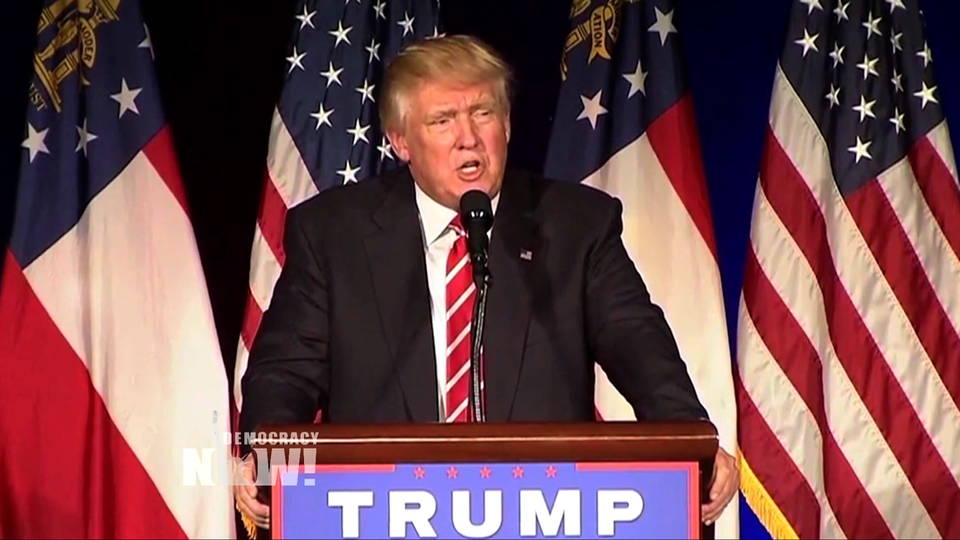
Meanwhile, Donald Trump reiterated his call for bans on Muslim immigration and called for increased surveillance of Muslim communities, including at mosques. He spoke at a news conference in Atlanta, Georgia, on Wednesday.
Donald Trump: "We have to stop, on a temporary basis at least, but we have to stop people from pouring into our country. We have to stop it, until we find out what the hell is going on. ... And we have to go, and we have to maybe check, respectfully, the mosques, and we have to check other places."
A new CBS News poll finds the majority of Americans disapprove of Trump’s response to the mass shooting in Orlando. During Trump’s speech in Atlanta, members of the press corps symbolically saved seats for the Washington Post reporters who had been banned by Trump from covering his events. Trump has also banned BuzzFeed, The Huffington Post, The Daily Beast, The Des Moines Register, the Union Leader, Univision and Fusion.
Orlando Refuses to Release Public Records About Massacre, Including 911 Calls
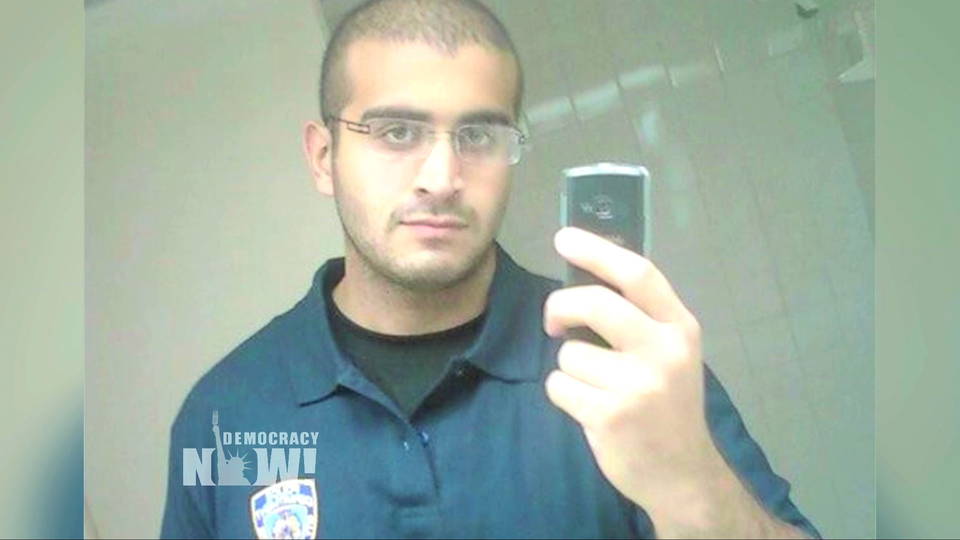
Meanwhile, government agencies are refusing to release public records about Sunday’s massacre in Orlando, Florida. Multiple media sources have reported shooter Omar Mateen called 911 during the time of the assault and declared his allegiance toISIS, but the city of Orlando is refusing to release any 911 calls. Other agencies are refusing to release documents about Mateen’s security guard license and records from Mateen’s stint as a corrections officer. Barbara Petersen of the First Amendment Foundation said, "They are trying to control the stream of information. They are trying to control what people know."
Report: Omar Mateen's Wife Says Media Reports About Her are Lies
This comes as a federal grand jury is reportedly considering whether to indict Omar Mateen’s wife, Noor Salman, on criminal charges related to the attack. Multiple news outlets, citing unnamed sources, have reported Salman knew about the planned attack ahead of time and even drove Mateen to the Pulse club one night. But other reporters have cast doubt on these claims. Sam Husseini of the Institute for Public Accuracy reports one of Noor Salman’s close friends says Salman is saying that she knew nothing of her husband’s plans and never drove her husband to the club. Husseini writes, "She is apparently telling people around her that virtually everything you’re hearing about her is a lie."
Imam Receives Death Threats After Inaccurate News Reports Linking Him to Mateen

Meanwhile, The Intercept is reporting an Orlando-based imam named Marcus Dwayne Robertson has received a slew of death threats after Fox News inaccurately reported Robertson had been arrested for alleged connections to Omar Mateen. Fox cited anonymous government officials claiming Mateen had been radicalized through Robertson’s online seminary. But Robertson had not been arrested, and Mateen was never a student of Robertson’s seminary. In fact, the two never had any contact. Robertson told The Intercept, "Some members of the media decided to start pushing their own narrative, in order to build this mentality that is trying to foment hatred and blame us for these terrible acts. ... They’ve put our lives in danger."
Utah Lt. Gov. Apologizes for His Past Homophobia in Wake of Orlando
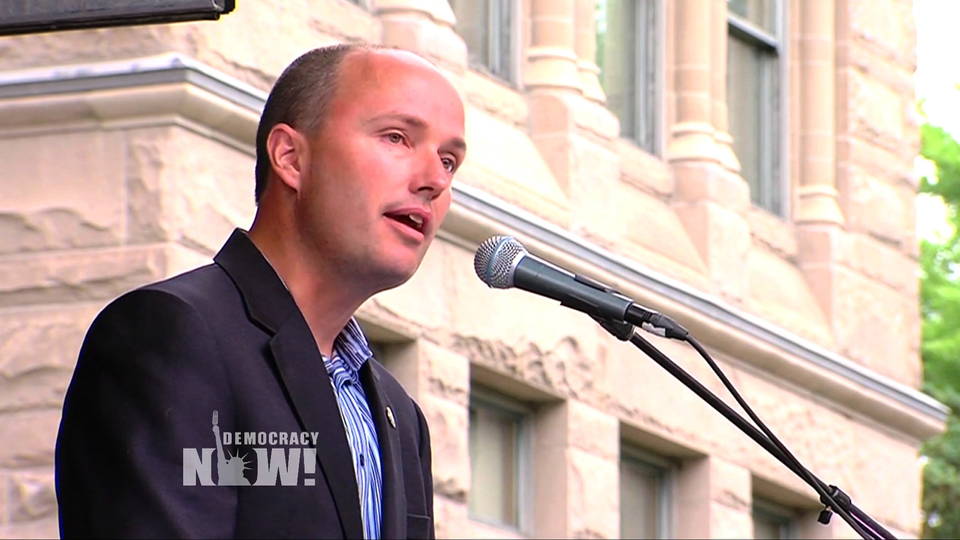
A video of Utah Republican Lieutenant Governor Spencer Cox has gone viral, after he apologized to the LGBT community for his own homophobia during a vigil in Salt Lake City on Monday.
Lt. Gov. Spencer Cox: "I went to a small rural high school. There were some kids in my class that were different than me, and sometimes I wasn’t kind to them. I didn’t know it at the time, but I know now that they were gay. I regret not treating them with the kindness, dignity and respect, the love that they deserved. For that, I sincerely and humbly apologize. ... And I’m speaking out to the straight community: How did you feel when you heard that 49 people had been gunned down by a self-proclaimed terrorist? That’s the easy question. Here’s the hard one. Did that feeling change when you found out that the shooting was in a gay bar at 2 a.m. in the morning? If that feeling changed, then we’re doing something wrong."
Sole Hacker Responsible for DNC Hack, Leak of Anti-Trump Playbook
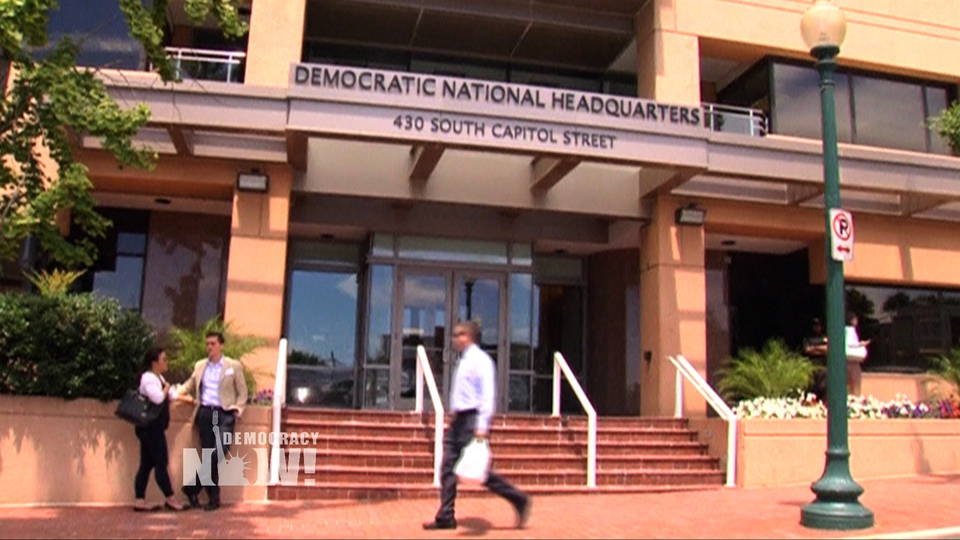
In news from the campaign trail, a single hacker, using the name Guccifer 2.0, has claimed responsibility for hacking into the Democratic National Committee’s computer network and obtaining a trove of donor information and a 200-page anti-Trump playbook. The DNC had previously blamed the attack on the Russian government. On Wednesday, the hacker leaked the "Donald Trump Report," which was created in December 2015 by Democratic strategist Warren Flood. The playbook highlights the DNC’s strategies to take down Trump, which include focusing on how Trump is a "misogynist in chief" and a "bad businessman." For more on Donald Trump’s business practices, we’ll be joined later in the broadcast by a roundtable of award-winning reporters from The New York Times, USA Today and The Daily Beast.
ACLU Sues Cleveland over Free Speech Restrictions Around RNC
In more news from the 2016 election, the ACLU has sued the city of Cleveland over restrictions on free speech Cleveland officials are planning to impose during the Republican National Convention in July. The city has demarcated a 3.3-square-mile "Event Area" in downtown Cleveland that will be subject to broad restrictions during the convention, including banning everyday items such as umbrellas with metal tips, glass bottles, canned goods, large backpacks and sleeping bags. The lawsuit argues the bans of such items are arbitrary and will criminalize the homeless community. The city has also delayed issuing permits for marches and parades for months, making it difficult to organize protests.
Ash Carter: U.S. Considering Keeping Troops in Afghanistan Longer
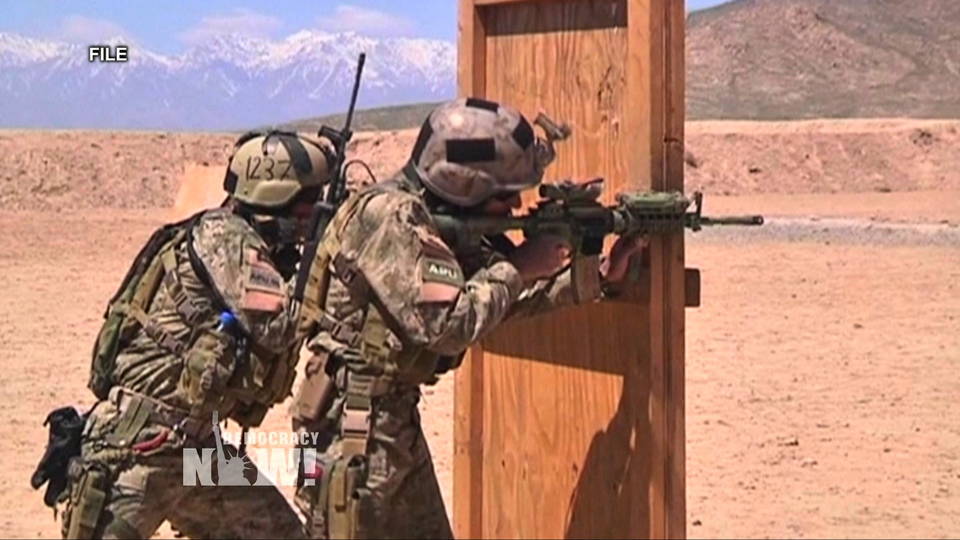
In news from the U.S. war in Afghanistan, Defense Secretary Ashton Carter has reportedly told NATO the U.S. is again reconsidering the proposed withdrawal of U.S. forces. The U.S. currently has 9,800 U.S. troops in Afghanistan. The current plan is to reduce this number to 5,500 by the end of this year. Carter’s comments Wednesday come as NATO countries agreed to extend the mission in Afghanistan through 2017 and to keep the network of bases across the country in place.
Tens of Thousands of Palestinians Without Access to Safe Drinking Water
Tens of thousands of Palestinians living in the Israeli-occupied West Bank are without access to safe drinking water during the holy month of Ramadan, after Israel’s national water company began siphoning off water supplies to multiple West Bank cities and villages. Meanwhile, European Union officials are warning 95 percent of the water in the Israeli-occupied Gaza Strip is currently not fit for human use.
U.S. and Israel Continue Negotiating Unprecedented Military Funding
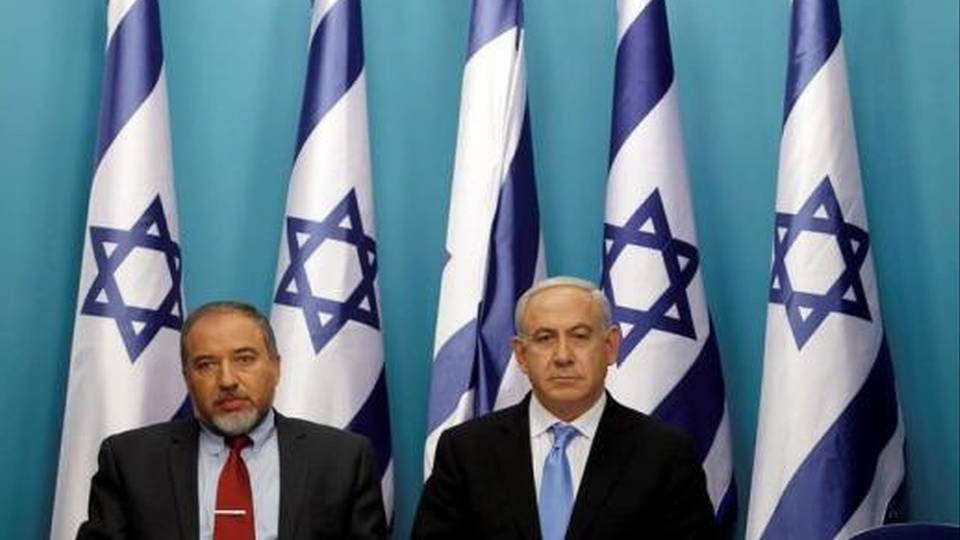
This comes as U.S. officials announce breakthroughs in talks over increased U.S. military funding to Israel. While visiting Israel for the talks, U.S. Deputy Secretary of State Antony Blinken spoke out.
Deputy Secretary of State Antony Blinken: "Under this administration, the United States has invested nearly $24 billion in foreign military financing for Israel since 2009, far more than for any other country, more than at any other previous time in the history of the U.S.-Israel relationship. We’re also prepared to sign a new 10-year memorandum of understanding that would constitute the largest single pledge of military assistance from the United States to any country in our history."
U.S. Deputy Secretary of State Antony Blinken also said U.S. military funding to Israel currently amounts to $8.5 million every single day.
JPMorgan Chase, Bank of America Funding Cluster Bomb Manufacturers
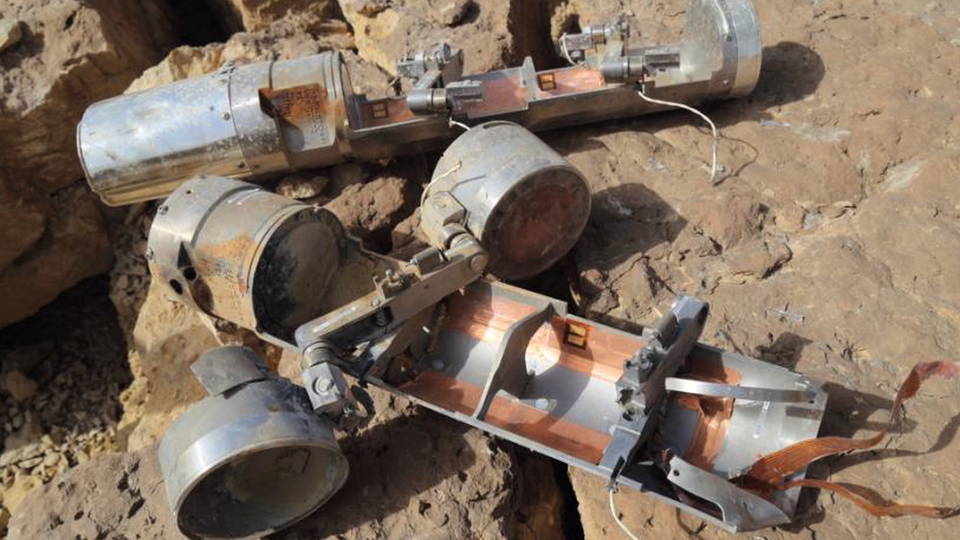
A new report by the Netherlands-based peace organization PAX accuses 150 financial institutions—including U.S. banking giants JPMorgan Chase and Bank of America—of investing billions of dollars in companies manufacturing internationally banned cluster bombs. The weapons contain bomblets which fan out over a wide area and often fail to explode until civilians pick them up later.
Divers Find Body of Toddler Attacked by Alligator at Disney Park
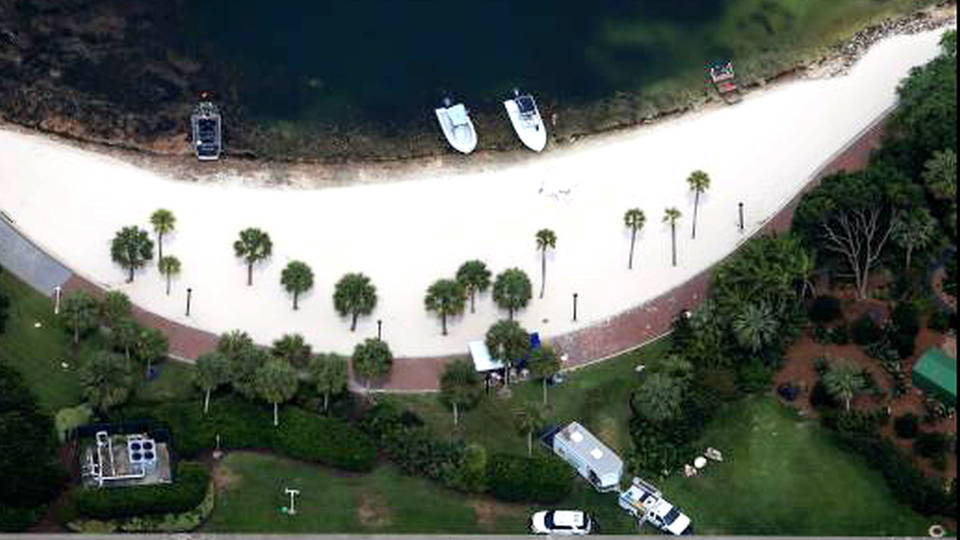
In Florida, divers have found the body of a 2-year-old boy following an alligator attack at Disney’s theme park just outside Orlando, Florida. Toddler Lane Graves of Nebraska was attacked and dragged away from his family on the shores of a man-made lake on Tuesday night. Disney has closed the beaches at its Florida resorts in the wake of the attack.
Oakland: Second Police Chief Ousted Amid Officer-Involved Sex Scandal
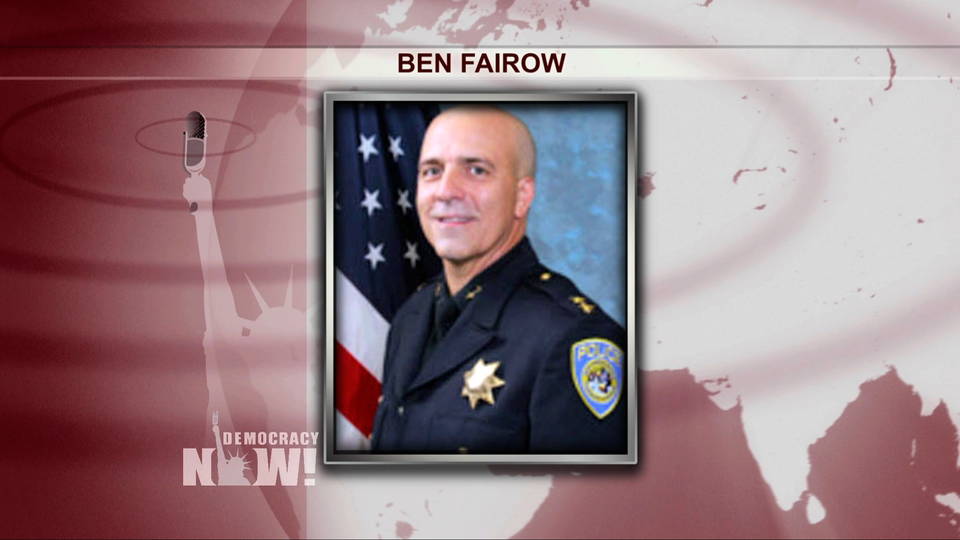
In Oakland, California, a second police chief has been ousted in less than a week amid a massive scandal in which multiple Oakland police officers are facing allegations of statutory rape and human trafficking after allegedly having sex with an underage girl who was working as a sex worker. On Wednesday, Oakland Mayor Libby Schaaf removed Ben Fairow as interim police chief. He had been appointed only six days earlier, after former Police Chief Sean Whent resigned amid the scandal.
50th Anniversary of Stokely Carmichael's "Black Power" Speech
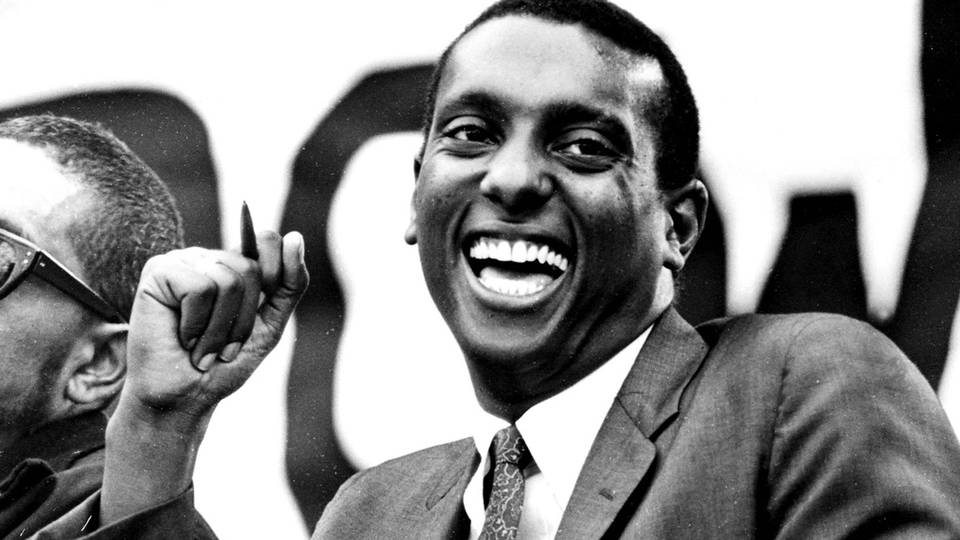
And today marks the 50th anniversary of Stokely Carmichael’s historic "Black Power" speech in Greenwood, Mississippi, on June 16, 1966. Carmichael was speaking after James Meredith, the first black student to attend the University of Mississippi, had been shot and wounded by a white man during the "Walk Against Fear" from Memphis, Tennessee, to Jackson, Mississippi. Following the shooting, Carmichael declared to a crowd of 3,000 people, "We been saying 'freedom' for six years. What we are going to start saying now is 'Black Power.'" Speaking years later, Carmichael explained the decision to adopt "Black Power" as the movement’s slogan.
Stokely Carmichael: "Luckily for us, the night in Greenwood, King had to go to do a taped television thing, I think for 'Meet the Press,' so he had to go to Memphis. So he was not there the night in Greenwood. Ricks had everybody primed. He said, 'Just get to your speech. We're going against Freedom Now; we’re going for Black Power. Don’t hit too much on Freedom Now, but hit the need for power.’ So we built up on the need for power. And just when I got there—before I got there, Ricks was there saying, 'Hit them now. Hit them now.' I kept saying, 'Give me time. Give me time.' When we finally got in, we dropped it: 'Black Power.' Well, of course, they had been primed, and they responded immediately. But I, myself, to be honest, I didn’t expect that enthusiastic response."
Stokely Carmichael later adopted the name Kwame Ture. He died in 1998.
Donate today:
Follow:


SPEAKING EVENTS
President Obama is slated to visit Orlando, Florida, today, following Sunday’s attack on an LGBT nightclub in Orlando which killed 49 people and was the deadliest mass shooting in modern U.S. history. The massacre has reignited calls for gun control by Senate Democrats, who mounted a nearly 15-hour filibuster. It ended early this morning after Republicans reportedly agreed to hold a vote on gun control measures, including prohibiting people on the government’s terrorist watchlist from obtaining gun licenses, and expanding background checks to include gun shows and internet sales. Connecticut Democratic Senator Chris Murphy launched the filibuster a little after 11 in the morning on Wednesday.
Sen. Chris Murphy: "I’m at my wits’ end. I’ve had enough. I’ve had enough of the ongoing slaughter of innocents, and I’ve had enough of inaction in this body. ... And so I’m going to remain on this floor until we get some signal, some sign, that we can come together on these two measures, that we can get a path forward on addressing this epidemic in a meaningful, bipartisan way."
It was the ninth-longest filibuster in U.S. history. About 90 percent of Americans support stricter gun control measures, while a new CBS News poll finds 57 percent of Americans support a full nationwide ban on assault weapons—up from 44 percent last December—although this was not one of the issues Republicans have agreed to vote on. We’ll have more on the filibuster after headlines. Presumptive Republican presidential nominee Donald Trump has said he’ll meet with the National Rifle Association today to discuss gun control measures to prohibit people on terrorism watchlists from purchasing firearms. The NRA has endorsed Trump.
Donald Trump Calls for Increased Surveillance at Mosques
Meanwhile, Donald Trump reiterated his call for bans on Muslim immigration and called for increased surveillance of Muslim communities, including at mosques. He spoke at a news conference in Atlanta, Georgia, on Wednesday.
Donald Trump: "We have to stop, on a temporary basis at least, but we have to stop people from pouring into our country. We have to stop it, until we find out what the hell is going on. ... And we have to go, and we have to maybe check, respectfully, the mosques, and we have to check other places."
A new CBS News poll finds the majority of Americans disapprove of Trump’s response to the mass shooting in Orlando. During Trump’s speech in Atlanta, members of the press corps symbolically saved seats for the Washington Post reporters who had been banned by Trump from covering his events. Trump has also banned BuzzFeed, The Huffington Post, The Daily Beast, The Des Moines Register, the Union Leader, Univision and Fusion.
Orlando Refuses to Release Public Records About Massacre, Including 911 Calls
Meanwhile, government agencies are refusing to release public records about Sunday’s massacre in Orlando, Florida. Multiple media sources have reported shooter Omar Mateen called 911 during the time of the assault and declared his allegiance toISIS, but the city of Orlando is refusing to release any 911 calls. Other agencies are refusing to release documents about Mateen’s security guard license and records from Mateen’s stint as a corrections officer. Barbara Petersen of the First Amendment Foundation said, "They are trying to control the stream of information. They are trying to control what people know."
Report: Omar Mateen's Wife Says Media Reports About Her are Lies
This comes as a federal grand jury is reportedly considering whether to indict Omar Mateen’s wife, Noor Salman, on criminal charges related to the attack. Multiple news outlets, citing unnamed sources, have reported Salman knew about the planned attack ahead of time and even drove Mateen to the Pulse club one night. But other reporters have cast doubt on these claims. Sam Husseini of the Institute for Public Accuracy reports one of Noor Salman’s close friends says Salman is saying that she knew nothing of her husband’s plans and never drove her husband to the club. Husseini writes, "She is apparently telling people around her that virtually everything you’re hearing about her is a lie."
Imam Receives Death Threats After Inaccurate News Reports Linking Him to Mateen
Meanwhile, The Intercept is reporting an Orlando-based imam named Marcus Dwayne Robertson has received a slew of death threats after Fox News inaccurately reported Robertson had been arrested for alleged connections to Omar Mateen. Fox cited anonymous government officials claiming Mateen had been radicalized through Robertson’s online seminary. But Robertson had not been arrested, and Mateen was never a student of Robertson’s seminary. In fact, the two never had any contact. Robertson told The Intercept, "Some members of the media decided to start pushing their own narrative, in order to build this mentality that is trying to foment hatred and blame us for these terrible acts. ... They’ve put our lives in danger."
Utah Lt. Gov. Apologizes for His Past Homophobia in Wake of Orlando
A video of Utah Republican Lieutenant Governor Spencer Cox has gone viral, after he apologized to the LGBT community for his own homophobia during a vigil in Salt Lake City on Monday.
Lt. Gov. Spencer Cox: "I went to a small rural high school. There were some kids in my class that were different than me, and sometimes I wasn’t kind to them. I didn’t know it at the time, but I know now that they were gay. I regret not treating them with the kindness, dignity and respect, the love that they deserved. For that, I sincerely and humbly apologize. ... And I’m speaking out to the straight community: How did you feel when you heard that 49 people had been gunned down by a self-proclaimed terrorist? That’s the easy question. Here’s the hard one. Did that feeling change when you found out that the shooting was in a gay bar at 2 a.m. in the morning? If that feeling changed, then we’re doing something wrong."
Sole Hacker Responsible for DNC Hack, Leak of Anti-Trump Playbook
In news from the campaign trail, a single hacker, using the name Guccifer 2.0, has claimed responsibility for hacking into the Democratic National Committee’s computer network and obtaining a trove of donor information and a 200-page anti-Trump playbook. The DNC had previously blamed the attack on the Russian government. On Wednesday, the hacker leaked the "Donald Trump Report," which was created in December 2015 by Democratic strategist Warren Flood. The playbook highlights the DNC’s strategies to take down Trump, which include focusing on how Trump is a "misogynist in chief" and a "bad businessman." For more on Donald Trump’s business practices, we’ll be joined later in the broadcast by a roundtable of award-winning reporters from The New York Times, USA Today and The Daily Beast.
ACLU Sues Cleveland over Free Speech Restrictions Around RNC
In more news from the 2016 election, the ACLU has sued the city of Cleveland over restrictions on free speech Cleveland officials are planning to impose during the Republican National Convention in July. The city has demarcated a 3.3-square-mile "Event Area" in downtown Cleveland that will be subject to broad restrictions during the convention, including banning everyday items such as umbrellas with metal tips, glass bottles, canned goods, large backpacks and sleeping bags. The lawsuit argues the bans of such items are arbitrary and will criminalize the homeless community. The city has also delayed issuing permits for marches and parades for months, making it difficult to organize protests.
Ash Carter: U.S. Considering Keeping Troops in Afghanistan Longer
In news from the U.S. war in Afghanistan, Defense Secretary Ashton Carter has reportedly told NATO the U.S. is again reconsidering the proposed withdrawal of U.S. forces. The U.S. currently has 9,800 U.S. troops in Afghanistan. The current plan is to reduce this number to 5,500 by the end of this year. Carter’s comments Wednesday come as NATO countries agreed to extend the mission in Afghanistan through 2017 and to keep the network of bases across the country in place.
Tens of Thousands of Palestinians Without Access to Safe Drinking Water
Tens of thousands of Palestinians living in the Israeli-occupied West Bank are without access to safe drinking water during the holy month of Ramadan, after Israel’s national water company began siphoning off water supplies to multiple West Bank cities and villages. Meanwhile, European Union officials are warning 95 percent of the water in the Israeli-occupied Gaza Strip is currently not fit for human use.
U.S. and Israel Continue Negotiating Unprecedented Military Funding
This comes as U.S. officials announce breakthroughs in talks over increased U.S. military funding to Israel. While visiting Israel for the talks, U.S. Deputy Secretary of State Antony Blinken spoke out.
Deputy Secretary of State Antony Blinken: "Under this administration, the United States has invested nearly $24 billion in foreign military financing for Israel since 2009, far more than for any other country, more than at any other previous time in the history of the U.S.-Israel relationship. We’re also prepared to sign a new 10-year memorandum of understanding that would constitute the largest single pledge of military assistance from the United States to any country in our history."
U.S. Deputy Secretary of State Antony Blinken also said U.S. military funding to Israel currently amounts to $8.5 million every single day.
JPMorgan Chase, Bank of America Funding Cluster Bomb Manufacturers
A new report by the Netherlands-based peace organization PAX accuses 150 financial institutions—including U.S. banking giants JPMorgan Chase and Bank of America—of investing billions of dollars in companies manufacturing internationally banned cluster bombs. The weapons contain bomblets which fan out over a wide area and often fail to explode until civilians pick them up later.
Divers Find Body of Toddler Attacked by Alligator at Disney Park
In Florida, divers have found the body of a 2-year-old boy following an alligator attack at Disney’s theme park just outside Orlando, Florida. Toddler Lane Graves of Nebraska was attacked and dragged away from his family on the shores of a man-made lake on Tuesday night. Disney has closed the beaches at its Florida resorts in the wake of the attack.
Oakland: Second Police Chief Ousted Amid Officer-Involved Sex Scandal
In Oakland, California, a second police chief has been ousted in less than a week amid a massive scandal in which multiple Oakland police officers are facing allegations of statutory rape and human trafficking after allegedly having sex with an underage girl who was working as a sex worker. On Wednesday, Oakland Mayor Libby Schaaf removed Ben Fairow as interim police chief. He had been appointed only six days earlier, after former Police Chief Sean Whent resigned amid the scandal.
50th Anniversary of Stokely Carmichael's "Black Power" Speech
And today marks the 50th anniversary of Stokely Carmichael’s historic "Black Power" speech in Greenwood, Mississippi, on June 16, 1966. Carmichael was speaking after James Meredith, the first black student to attend the University of Mississippi, had been shot and wounded by a white man during the "Walk Against Fear" from Memphis, Tennessee, to Jackson, Mississippi. Following the shooting, Carmichael declared to a crowd of 3,000 people, "We been saying 'freedom' for six years. What we are going to start saying now is 'Black Power.'" Speaking years later, Carmichael explained the decision to adopt "Black Power" as the movement’s slogan.
Stokely Carmichael: "Luckily for us, the night in Greenwood, King had to go to do a taped television thing, I think for 'Meet the Press,' so he had to go to Memphis. So he was not there the night in Greenwood. Ricks had everybody primed. He said, 'Just get to your speech. We're going against Freedom Now; we’re going for Black Power. Don’t hit too much on Freedom Now, but hit the need for power.’ So we built up on the need for power. And just when I got there—before I got there, Ricks was there saying, 'Hit them now. Hit them now.' I kept saying, 'Give me time. Give me time.' When we finally got in, we dropped it: 'Black Power.' Well, of course, they had been primed, and they responded immediately. But I, myself, to be honest, I didn’t expect that enthusiastic response."
Stokely Carmichael later adopted the name Kwame Ture. He died in 1998.
Donate today:
Follow:
SPEAKING EVENTS


"Let's Learn From Australia: Semi-Automatic Weapons Bans Work" by Amy Goodman & Denis Moynihan
“It’s a sweet little gun,” Martin Bryant said of his AR-15 semi-automatic assault rifle when being interrogated by police. Twenty years ago, on April 28, 1996, Martin took that gun and committed a massacre in the Australian state of Tasmania. Over 24 hours, in what became known as the Port Arthur Massacre, he killed 35 people and injured 23 more. The violence and senselessness of the act, the largest massacre in Australia’s post-colonial history, so shocked that nation that within 12 days, comprehensive gun-control legislation was agreed upon. There has not been another mass shooting in Australia since. Which brings us to Orlando, Florida, and another semi-automatic weapon.
About 10 days before he committed the single largest shooting massacre in modern U.S. history, Omar Mateen walked into the St. Lucie Shooting Center, in Port St. Lucie, Florida, and bought an AR-style semi-automatic rifle and a 9 mm semi-automatic pistol. “He passed the background check that every single person that purchases a firearm in the state of Florida undergoes,” store owner Ed Henson told the press. Mateen was a U.S. citizen, with a state-issued Florida photo ID permitting him to carry guns. He walked into Pulse, a gay nightclub in Orlando, on Latin Night, and opened fire. Forty-nine people were killed, and more than 50 were injured.
“In America, the background check consists of, usually, looking at a computer to see if someone has a criminal conviction. That’s not a background check,” Rebecca Peters of the International Action Network on Small Arms told us on the “Democracy Now!” news hour. “In New York City, if you want to apply to rent an apartment, if you want to apply to go to university, there’s a background check. The authorities talk to people who know you. They ask their opinion of you. And similarly, in Australia and most other developed countries, a background check consists of asking for references—your family doctor, talking to your spouse or your previous spouse, asking, ‘Is there any concern?’”
A more comprehensive background check on Omar Mateen might have exposed details, such as how he abused his first wife, Sitora Yusufiy, so severely that she left him after just four months of marriage. Or that Dan Gilroy, one of his co-workers at the security company Mateen worked at, G4S, felt that Mateen was “unhinged,” “unstable” and “full of rage,” a racist and a homophobe, as he told ABC News. Yet reports are that Mateen was seen at Pulse on numerous occasions, and used gay dating apps. Mateen, a New York-born U.S. citizen, the son of Afghan immigrants, was investigated twice by the FBI for potential terrorist sympathies or statements. Yet he bought two powerful semi-automatic weapons, with no problem.
In the wake of Australia’s Port Arthur massacre, Rebecca Peters led the national fight for gun control. “We had had a campaign for about 10 years at that time to reform the gun laws, which were weak in some states, and it was a patchwork across the country, as it is in the U.S.,” she told us. “In April of ‘96, this tragedy occurred ... at that moment, our prime minister said: ‘This is the time. After all this prevaricating, we’re going to do something.’” The Australian prime minister at the time was conservative John Howard.
Peters went on: “A crucial part of the new laws is proper checking of the background of people who are applying to have guns. It’s not only domestic violence, it’s also depression and alcohol abuse, and many other factors can make a person at risk of violence, not to mention people who have—who are vehemently racist or resentful.”
Guns are still legal in Australia, since, as Peters said, “the self-image of Australia is often sort of an outdoor guy on a horse with a gun type of thing, not too dissimilar from the traditional image of Americans.” In fact, iconic “Crocodile Dundee” Australian men supported the ban on semi-automatic weapons, arguing that “real men” didn’t need such weapons to survive in the Outback. Australia now has serious background checks, and semi-automatic weapons are illegal. When the law was passed, owners of guns like the AR-15 were legally compelled to sell them to the government, after which the weapons were destroyed.
As this column goes to press, U.S. Sen. Christopher Murphy, D-Conn., has launched a filibuster, vowing to speak, he said, “for as long as I can” to force a debate on gun control. Four years ago, he was in the U.S. House. Twenty schoolchildren and six adults were massacred at the Sandy Hook Elementary School in his district. The killer, Adam Lanza, used an AR-style semi-automatic weapon there, as James Holmes did in his shooting spree in the Aurora movie theater in Colorado earlier that year. These weapons would have been illegal under an assault-weapons ban that Congress let expire over a decade ago. We need a ban on semi-automatic guns, which are no more than weapons of mass destruction designed to efficiently kill as many people as possible.
WEB EXCLUSIVE


News Producer
Office Coordinator
Senior TV Producer
207 West 25th Street, 11th Floor
New York, New York 10001, United States
---------------------
---------------------

No comments:
Post a Comment