NOTE: This is a digest of news features provided by United Methodist Communications for Sept.1-5. It includes summaries of United Methodist News Service stories and additional briefs from around the United Methodist connection. Full versions of the stories with photographs and related features can be found at umc.org/news.
Top Stories
Special coverage: Game Changers Summit
NASHVILLE, Tenn. (UMNS) - More than 240 participants from nine countries gathered in Nashville to hear from experts in the fields of solar power, Internet technology, global health, and economic empowerment at Game Changers Summit 2014 hosted by United Methodist Communications.
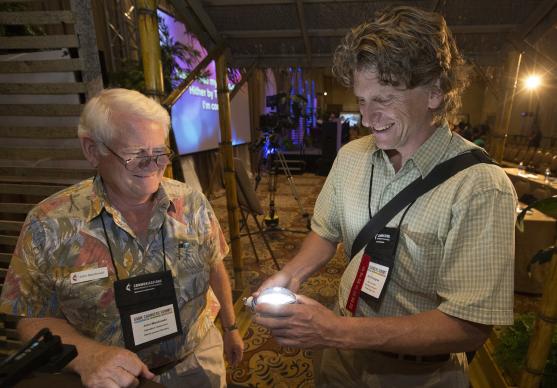
The Game Changers Summit in Nashville, Tenn., addresses how information and communications technology (ICT) can be used to help parts of the world left behind by the technological revolution.
Hear from globally-renowned leaders about how to solve problems in education, wellness, and community development by leveraging the world's growing access to cell towers, Internet and hardware.
Learn how your congregation can be part of this innovative, technology-based mission.
Flickr Slideshow
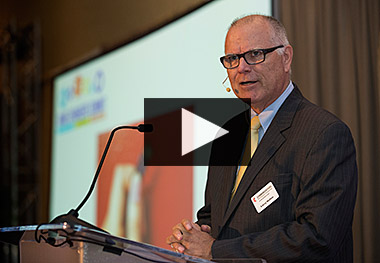 View slideshow on Flickr
Presentations and White Papers:
Day 1
State of ICT4D by The Rev. Larry Hollon, General Secreatry of United Methodist Communications (PDF)
ICT4D - Where Are We Heading by Chris Locke, Founder, Caribou Digital (PDF)
The Great Migration by April Mercado (Prezi Presentation)
Day 2
Hackers, fixers and reluctant innovators: The future of [technology and]
development? Keynote by Ken Banks (PDF)
Maximizing Information and Communications Technologies for Development in Faith-Based Initiatives (White paper, PDF)
From Dependency to Sustainability panel moderator: Chris Locke (PDF)
The Local Content Ecosystem: How Do We Collaborate to Drive Global Action? (PDF)
Thomas Food Project ICT Intervention (White paper, PDF)
Day 3
Communications & Unpredictability: How are ICT goals met and local programs sustained? by Bruce Baikie (PDF)
Text messaging can be life-saving by Kathy GilbertNASHVILLE, Tenn. (UMNS) - If you have been without water for three days, a text message from a United Methodist pastor that the church has safe water is lifesaving. That is just one example Priscilla Muzerengwa gave of how she has used Frontline SMS, a free texting program, in Zimbabwe. She spoke at the Game Changers Summit 2014 hosted by United Methodist Communications.
If you have been without clean water for three days, a text message from a United Methodist pastor that the church’s borehole has been certified as safe to drink is lifesaving.
Priscilla Muzerengwa gave that example of how she has used Frontline SMS, a free text-messaging program, in East Zimbabwe. She introduced the program’s inventor, Ken Banks, on the second day of the Game Changers Summit 2014. More than 240 people from nine countries are attending the Sept. 3-5 meeting about using technology for social good. United Methodist Communications is hosting.
Frontline SMS allows Muzerengwa and many others in Africa to send out messages to a large database in a short amount of time. Time is often the difference between life and death.
Banks wrote the code for Frontline in six weeks, on his wife’s kitchen table in Finland. The idea for the product came to him after he spent many years working in Africa.
Frontline is software that is free and works on a laptop or mobile phone in any remote area. “Even if you only have one bar,” he added. Since its invention in 2005, Frontline has been used in 180 countries to give people vital information in emergencies and in everyday life.
Muzerengwa said more people are visiting clinics because they get a message telling them when a doctor will be available.
“Imagine walking 50 kilometers (more than 30 miles) to see a doctor, only to be told the doctor is not in. Walk home another 50 kilometers and come back tomorrow, maybe the doctor will be available then.”
She also talked about how the text messages extend pastoral care. “If your mother passes away on Monday, you might have to wait until the next Sunday before anyone finds out. No one comes to stand with you; it is bringing church members together in times of need.”
Banks and other successful ICT4D innovators often have no money, no plan and no authority—they just see a problem and try to figure out a way to solve it. Key to that is doing it with knowledge of the people who will use the products. ITC4D stands for information and communications technology for development.
“Do not design solutions to problems you don’t understand,” he said, adding that good ideas are based on reality and support from the community.
_______
TECHNOLOGY FOR SOCIAL GOOD
Information and communications technology can help those left behind by the technological revolution.
Get ideas on how to be part of this innovative, technology-based mission.
Join the conversation at:
#ICT4DSummit14 on Twitter or Facebook.
_______
The energy divide
The Rev. Betty Kazadi Musau, an ordained elder and health care worker in the Democratic Republic of Congo, said simply, “Power is life.”
“Can you imagine in the 21st century, doctors performing C-sections by candles?”
Musau was part of a panel discussing solutions to technologies where unstable and limited electricity is a daily problem.
“It is not a digital divide, it is an energy divide,” said Bruce Baikie, who leads Inveneo, a company that provides technical guidance and hands-on training to bring Internet access to hard-to-reach schools in places like Haiti.
A partnership between the North Katanga Conference and the Church of the Resurrection in Leawood, Kansas, got a boost to their work to supply solar panels to a United Methodist public health school in Kamina, after Musau’s passionate presentation.
At the end of the panel presentation, the Rev. Cayce Stapp announced the Church of the Resurrection would match a collection taken from the participants of the summit.
The Rev. N. Neelley Hicks of United Methodist Communications told the gathering an offering of $1,629 was collected. “That means the Kamina solar project will get over $3,000.”
Gilbert is a multimedia news reporter for United Methodist News Service. Contact them at (615) 742-5470 or newsdesk@umcom.org.
Judicial Council plans hearing for Schaefer appeal by Linda BloomMEMPHIS, Tenn. (UMNS) - Judicial Council, the United Methodist Church's top court, will hold an oral hearing as it considers the appeal of the decision to reinstate the Rev. Frank Schaefer, a Pennsylvania pastor who had lost his ministerial credentials after performing a same-sex marriage ceremony for his son. The case is one of 21 docket items for the council's fall meeting Oct. 22-25.
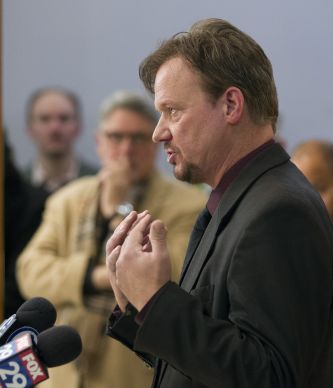
The United Methodist Church’s top court will hear an appeal next month of a decision to reinstate a pastor who had lost his ministerial credentials after performing a same-sex marriage ceremony for his son.
The appeal involving the Rev. Frank Schaefer, which provoked national media attention, is one of 21 docket items under consideration when the United Methodist Judicial Council meets Oct. 22-25 at the Marriott Courtyard Downtown in Memphis, Tennessee.
After a hearing in June, the denomination’s Northeastern Jurisdictional Committee on Appeals restored Schaefer’s credentials and ordered the Eastern Pennsylvania Annual (regional) Conference to compensate Schaefer for all lost salary and benefits dating from Dec. 19, 2013.
The Rev. Christopher Fisher, who served as counsel for the church, has appealed that decision to the Judicial Council. The appeal contends the decision was at odds with the 2012 United Methodist Book of Discipline, the denomination’s lawbook, and previous Judicial Council rulings.
At Fisher’s request, the Judicial Council has granted an oral hearing on the matter on Wednesday, Oct. 22.
Second oral hearing
The council also has agreed to an oral hearing request, scheduled the same day, from the denomination’s Western Pennsylvania Annual (regional) Conference. That hearing is related to a petition filed by the conference asking for a “declaratory decision” about Book of Discipline guidelines regarding the process for the review and dismissal of a complaint against a bishop.
Two years ago, the conference, which raised about $90,000 for church projects in Uganda, had asked the Judicial Council to rule whether funds given to the East Africa Conference were used in accordance with the intent of the donors as required by Paragraph 258.4 of the 2008 Book of Discipline.
The money had been sent to current Bishop Daniel Wandabula, who was then a district superintendent and project coordinator. In November 2012, the denomination’s finance agency lowered the bishop’s salary because of issues raised by financial audits conducted by the United Methodist Board of Global Ministries.
In April 2013, Judicial Council ruled that Wandabula should pay $3,000 owed to a pastor in South Sudan, but took no other action because it found there was no evidence the complaint process regarding Wandabula had concluded.
Review of sexuality resolutions
Also on the October docket are reviews of decisions of law from bishops on annual conference resolutions related to sexuality.
Bishop Sudarshana Devadhar ruled that a 2014 New England Annual Conference resolution urging a change in denominational policy toward same-sex marriage and an openness to all couples wanting to marry “is thoroughly aspirational in nature” and does not break church mandates.
Bishop Deborah L. Kiesey declared that language in a 2014 Detroit Annual Conference resolution to support lay members who chose same-sex marriage was aspirational, depending on the type of support. But she ruled “null and void” the call to stop filing complaints against those accused of violating church law or enforcing those laws.
Bishop Sally Dyck ruled a 2014 Northern Illinois Annual Conference resolution on marriage equality is “an historical and aspirational statement without prescriptive force which does not specifically negate, ignore or violate provisions of the Discipline.”
Bishop Marcus Matthews declared that the process used by the Baltimore-Washington Annual Conference “to vote on the five human sexuality resolutions was lawful and did not violate the Discipline.” He also ruled that one of those resolutions, entitled "Agree to Disagree on Issues Pertaining to Gender and Sexual Minorities," is aspirational and does not violate church law.
Change in council members
At its April meeting, the Judicial Council amended its “Rules of Practice and Procedure” to maintain the proper balance of lay and clergy, as required by the Book of Discipline. If a council member’s category changes from lay to clergy or clergy to lay, that member's position would be declared vacant.
Several such changes have occurred. Council vice president Angela Brown, who was elected and served as a layperson but was commissioned as clergy at the 2014 California-Nevada Annual Conference, has resigned. She is succeeded by Sandy Lutz of Canton, Ohio, the first lay alternate.
Kurt Glassco, another lay alternate, has been appointed as a local pastor in the Oklahoma Annual Conference, thus changing his category to clergy. Randall Miller of Oakland, California, is the new first lay alternate.
Two clergy alternate positions also have changed. The Rev. Susan Henry-Crowe resigned after becoming the top executive of the United Methodist Board of Church and Society and the Rev. Jane Tews is now deceased.
The entire October 2014 docket for the Judicial Council can be found here.
*Bloom is a United Methodist News Service multimedia reporter based in New York. Follow her at http://twitter.com/umcscribe or contact her at (646) 369-3759 or newsdesk@umcom.org.
Median age of elders climbs to 56DALLAS (UMNS) - The median age of United Methodist elders has hit 56 - a new high - and the percentage of older clergy continues to rise, according to an annual study by the Lewis Center for Church Leadership. But the study also found that the denomination has seen modest growth in the percentage of clergy under age 35.
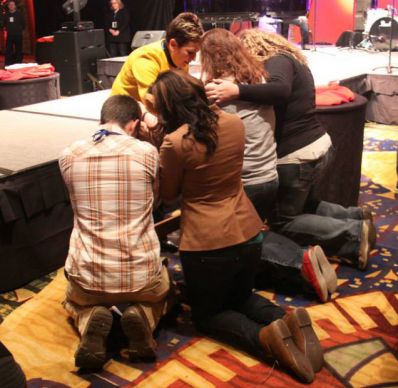
Church continues to see clergy aging trend by Sam Hodges
The graying of The United Methodist Church’s clergy ranks continues, with the median age of active elders reaching an all-time high of 56, the Lewis Center for Church Leadership found in its annual study of clergy age trends.
The just-released report also shows that active elders between ages 55 and 72 constitute a record high 55 percent of the active elders pool, while the share of active middle-aged elders (ages 35 to 54) continues to drop.
The percentage of young clergy is up, albeit modestly. Certain conferences and jurisdictions have seen good gains in that area, said the Rev. Lovett Weems Jr., Lewis Center director.
The 2014 study confirms that The United Methodist Church is increasingly dependent on licensed local pastors.
“It’s a changing landscape,” Weems said.
Awareness and action
The Lewis Center has long tracked United Methodist clergy age trends, using United Methodist Board of Pension and Health Benefits statistics, and including both ordained elders and deacons and those on the elder or deacon track.
A 2006 Lewis Center reported noted that from 1985 to 2005 the percentage of elders under age 35 dropped from about 15 to under 5 percent.
Weems said the factors for such a dramatic drop were several, including the length and cost of seminary education, the length of the ordination process, and the decline of church-going overall, which has caused fewer young people to grow up considering a Christian vocation.
But he said the denomination understands that its future is tied to its ability to cultivate young leaders and has been on the case, as evidenced by the Young Clergy Initiative and various conference efforts.
“The United Methodist Church is more aware and is addressing (the young clergy shortage) in ways that I don’t see happening in other mainline churches, although every mainline church has the same patterns,” Weems said.
The new study notes that the number of young United Methodist elders reached a historic low in 2005 and has climbed by nearly 100, or about 12 percent, since then. The overall numbers dipped slightly this year, but the percentage actually increased, due to an overall smaller pool of elders. The pool of deacons is much smaller still, but the percentage of under-35 deacons remained at 9 percent.
Women make up 39 percent of young clergy, and over three-quarters of young deacons are female, the study found.
The Texas Annual (regional) Conference, led by Bishop Janice Riggle Huie, has made cultivating young elders a priority, to the point of considering (and ultimately backing away from) officially discouraging those over age 45 from becoming candidates for ordained ministry.
The Lewis Center’s latest study found that the Texas Conference led all U.S. conferences with just over 10 percent of clergy under age 35.
TEXAS STRATEGIES.
The Rev. Gail Ford Smith, director of the Texas Annual Conference’s Center for Clergy Excellence, answers questions about strategy for developing young clergy.
While the Southeastern and South Central Jurisdictions have long led in concentration of young elders, the study found that the North Central Jurisdiction had the greatest gains in young elders last year.
“There’s a hopeful sign,” Weems said.
Within North Central, the East Ohio Conference went from 14 to 26 elders under age 35, between 2010 and 2014.
The conference formed a task force on the young clergy issue in 2006, and has employed various strategies, including a focus on making “good first appointments,” said the Rev. Gary George, administrative assistant to Bishop John Hopkins.
George noted that Hopkins also sent a signal by having the Rev. Janelle Kurtz, 26, preach at this year’s annual conference. She did so two days after having been ordained as an elder.
Kurtz, who leads Brimfeld Faith United Methodist Church in Kent, Ohio, agrees that her conference has been investing effectively in young clergy. She feels it’s important to be strong across the age groups.
“That gives a fuller representation of the community of God as well as how God is working in different ways in people’s lives,” Kurtz said.
Local pastor prominence
Whatever the shifts among age groups, The United Methodist Church has, overall, some 6,000 fewer active elders now than in 1990, the Lewis Center study shows.
Meanwhile — even as the denomination has seen decades of membership decline — the number of local pastors has grown by nearly 3,500.
The denomination had five elders for every one local pastor in 1990. Today, the ratio is close to two to one.
The number of fulltime local pastors dipped slightly in the last study, and has been essentially stable in recent years. But Weems said the number of part-time local pastors continues to climb.
He added that the explanation lies, at least in part, in the increasing number of congregations whose dwindling membership and attendance leaves them with financial constraints.
“I do think that the declining numbers of churches able to afford a fulltime pastor is a key indicator that we need to be attuned to,” he said.
Hodges, a United Methodist News Service writer, lives in Dallas. Contact him at (615) 742-5470 or newsdesk@umcom.org

How Texas Conference has developed young clergy
The Texas Annual (regional) Conference leads The United Methodist Church in percentage of elders under age 35, according to the Lewis Center for Church Leadership’s latest clergy age trends study. The Rev. Gail Ford Smith is the director of the conference’s Center for Clergy Excellence, and she answered questions from UMNS’s Sam Hodges about the conference’s strategy.
What has the Texas Conference done to try to recruit young clergy?
Honestly, we have an episcopal leader, Bishop Janice Riggle Huie, who made developing transforming leaders, lay and clergy, a high priority from day one. Bishop Huie helped us realize that the traditional pipeline that once existed for supplying pastors — grow up in a United Methodist church, go to a United Methodist college or university, become active in a Wesley Foundation, hear a call to preach, attend a United Methodist seminary — has dried up. We have to develop an alternative system and we did — an entire ecosystem, really, which begins with the local church reclaiming its “culture of call.”
We encourage local church folk to notice their own gifted and talented youth and encourage them towards the ministry or at least plant seeds that God can water. We have a conference camping program and the Texas Youth Academy, which is a two-week summer theological reflection camp with mission experiences. Our College Pastoral Internship Project provides summer local church internships for students interested in exploring pastoral ministry. Interns receive a $3,000 stipend and lodging.
An important part of our system is seminary visits to stay in touch with our students. Usually a district superintendent and a recent graduate of the seminary are on campus to offer encouragement and support and a great meal or two! We also use seminary students on campus who serve as liaisons between the conference and the campus to create continuous community.
We work hard to support young clergy. During their provisional years they are in a wonderful residency program with personality and leadership style assessments and coaching. We also have the Ambassadors’ Endowment, which graduates can apply to for grants to reimburse seminary costs over a five-year period. For ordained elders, Advancing Pastoral Leadership (APL) is available. It is a five-year intensive exploration of preaching, leadership, evangelism, stewardship and ministry in the public square.
Is there any one strategy you feel — or know from research — has been most effective?
I believe a significant attraction is our commitment to mission field appointments. Bishop Huie and this cabinet are committed to matching gifts and graces of pastors and churches to serve those who do not yet know Christ or have not yet found a home among God’s people. Said differently, there is no prescribed course that every pastor has to take. You know: “Well, everybody has to first serve a four-point charge, then a three-point charge, etc.” Mission field appointments have made a huge difference in how we act and talk.
It also means that those who feel called to start new churches and have the gifts to do so are placed more quickly where they are called to be. That has been attractive as well.
Why do you think it’s important for the church to bolster its numbers of young clergy?
We value all of our clergy; we need them all. But the truth is that many of us will be retiring in the next few years. I am one of them.
If more than half of our clergy retire in the next 10 years, we will need lots of gifted clergy of every age, but especially young and diverse clergy who can serve for a lifetime. Every morning I thank God for every clergyperson in this conference and pray God’s blessings upon them. And I ask God to send us more laborers for the fields!
Hodges, a United Methodist News Service writer, lives in Dallas. Contact him at (615) 742-5470 or newsdesk@umcom.org.
Pastors recall circuit riding on bicycles by Eveline ChikwanahHARARE, Zimbabwe (UMNS) - A bicycle was the only way they had to travel from one United Methodist congregation to another in 1977, recalled two pastors who found much to celebrate at the largest United Methodist Church convention ever held in Zimbabwe. Eveline Chikwanah, a communicator of the Zimbabwe East Annual (regional) Conference, interviewed the Revs. Jairos Mafondokoto and Kelvin Mwandira about how things have changed.
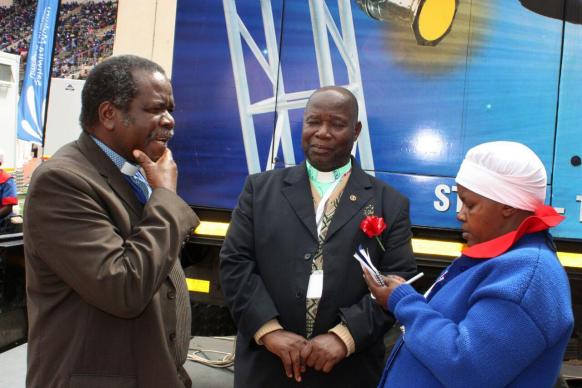
A bicycle was the only way they had to travel from one United Methodist congregation to another in 1977, recalled two pastors who found much to celebrate at the Ebenezer Convention, the largest United Methodist Church convention ever held in Zimbabwe.
The Rev. Kelvin Mwandira and the Rev. Jairos Mafondokoto, graduates of the United Theological College in Harare, said the Ebenezer Convention itself shows the denomination has reached new heights in Zimbabwe. More than 55,000 United Methodists from around the world attended the Saturday afternoon session of the convention held Aug. 15-17 at the National Sports Stadium.
When he started out, pastors in Zimbabwe got a bicycle when they graduated from college, Mafondokoto said.
“The annual conference gave each pastor a bicycle and we had to pay for it in installments. Years later, we were given motorbikes, which we also had to pay for,” he said.
His first appointment was at Zimunya Circuit and was comprised of 12 stations – now referred to as local churches.
“The furthest distance I travelled on that bicycle was from Munyarari to Rimiti and Himalaya stations, about 28 kilometers (17.36 miles). At times I walked or used buses depending on my mission,” Mafondokoto said.
It was impossible to visit two congregations in a week. “I would leave home on Tuesday in order to start my visitations on Wednesday. Thursdays were a day for home visits and station administration duties, while Fridays were reserved for the women’s union, Rukwadzano Rwe Wadzimai, and meetings.”
Sunday was for preaching and meeting with church committees. He rested on Monday before setting out for the next station. This routine usually meant Mafondokoto spent three weeks away from his family, relying on the goodwill of the congregation to provide accommodations.
Pastor lived in two classrooms
Mwandira faced many challenges during his early years in Bulawayo.
“I was one of the first pastors of Bulawayo West Circuit and when I arrived with my family, we discovered there was no parsonage,” Mwandira recalled.
He was offered two classrooms where he lived for a year. Then the church leased a four-room house with an outdoor toilet for him.
Mwandira said the congregation he served at the time included some members who lived in the city’s affluent suburbs, but said they were not disturbed by his living and working conditions.
“The congregation accepted the way we lived and worked. They thought we were better than our predecessors who walked since they had no bicycles, and ate a diet that included blackjack weeds (nhungumira).” Blackjack weeds are a common vegetable in Africa.
Mafondokoto said the level of giving in the church has greatly increased, resulting in better conditions for pastors.
“I remember a time when we were not paid salaries. Quarterly conferences were convened every three months where the 12 stations under my charge would gather and contribute finances to a common pool. The budget was written on a blackboard and the first item on the list was my tuso (compensation).”
The top priority expense was food for the conference delegates. The food included bread, ingredients for making tea, and a goat to slaughter for the main meal of the day, Mafondokoto said.
“Silver coins were used to purchase food while the remainder of the collection, usually pennies, were tied up in a handkerchief and handed to me as tuso. We have witnessed tremendous growth and pastors today have fixed salaries and fixed paydays. Circuits have good accommodation and new motor vehicles for pastors to use,” Mafondokoto said.
Ebenezer Convention was milestone for church
Mwandira recalled going five months without pay.
“I stayed five months without a circuit during the country’s liberation war when some churches were closed, and therefore had no income until my appointment to Bulawayo West on March 9, 1979.”
Mwandira says challenges But he welcomed those challenges, which he said made him prayerful.
“I worked as a pastor for 27 years before I was appointed district superintendent, which was another level of ministry for me,” he said.
Mwandira said the Ebenezer Convention was a milestone. “We are opening a new page for the church’s ministry. Ebenezer Convention is not the conclusion of the story,” he said.
Mafondokoto said the convention held great meaning for him. “To be able to meet in the country’s biggest stadium is a far cry from the bush camping we used to do where the hosting circuit spent two weeks building grass shelters for use during conventions.”
“I have travelled far and so has the church.”
Chikwanah is a communicator of the Zimbabwe East Annual Conference.
News media contact: Vicki Brown, news editor, newsdesk@umcom.org or 615-742-5469.
Changes planned for agency retiree benefits by Heather HahnNASHVILLE, Tenn. (UMNS) - For retirees of United Methodist agencies, going to the doctor or pharmacy this year often has seemed like investing in a bear market - unpredictable and extremely costly. The plan is for that to change next year, but retiree benefits remain a challenge throughout the denomination. Quarantined Liberians reject government offer

MONROVIA, Liberia (UMNS) - The Rev. Agrippa Nyentee, a United Methodist pastor trapped in the quarantined slum community of West Point, discusses the complaints of residents there about government actions in a phone interview with E. Julu Swen.
West Pointers reject Government of Liberia offer of Food Assistance by Julu Swen
Looking over the rooftops of the densely packed neighborhood of West Point, Monrovia, Liberia
 West Pointers reject Government of Liberia offer of Food Assistance
Monrovia, Liberia
E. Julu Swen
August 21, 2014
Residents of the quarantined slum community of West Point have turned down the offer of the Liberia Government to assist them with food and water amidst an imminent food shortage. Speaking to WAW on a telephone line, Rev. Agrippa Nyentee who is a United Methodist pastor now trapped in the community said the government brought in 300 bags of rice (25kg) and 60 large bags of water which each contain 30 small plastic bags of drinking water on Thursday morning (August 21, 2014). “The food aid will create more confusion between the government and the people of the community,” Rev. Nyentee said.
 The dense neighborhood of West Point Liberia
The UMC Liberia pastor said there are over 75,000 persons living in the community and supplying them with 1,800 bags of water is like a joke on the part of the Liberian government. He confirmed that authorities of the community were now holding meetings for their next course of action. “Some of the assistance we want from the government of Liberia is to open a corridor for business people to bring in needed food commodities.” “Let the government start their tracking and testing process which triggered the incident in the first place and work towards ending the lock-down,” the clergyman added.
Other sources in the community that spoke to WAW said the food truck was left with thugs in the community after the leadership decided that the food was not enough to serve the people. The thugs are now hauling the rice while some are tearing the bags and wasting the rice claiming that it is not worthy of human consumption. Another source said other West Pointers are taking the rice instead of letting go to waste. “Elders of the community are now locked in series of meetings to decide whether to accept the rice and water just as it is,” the source said.
Meanwhile, the Government of Liberia said twelve persons were released as of August 20, 2014 from the ELWA isolation unit after they were tested and found not to have the Ebola virus anymore. Speaking for the Health Ministry during the Government of Liberia regular press briefing, Deputy Health Minister, Torbor Nyenswah, about five of the released persons were Ebola confirmed and the rest were suspected cased. He also confirmed that the accumulated Ebola related death cases is 211, while cumulative total is 1,024 (suspected, probable, and confirmed) as of August 21, 2014.

The United Methodist Church and its partners are responding to the 2014 Ebola outbreak in West Africa. The deadly virus has claimed lives in Guinea, Sierra Leone, Liberia and Nigeria.
The church effort involves treatment, prevention, communication and public education. The response is a joint effort by West African United Methodist church leaders and regional health boards, denominational health facilities, missionaries and the denomination's general agencies.
Historic Methodist camp is 'God's Square Mile'OCEAN GROVE, N.J. (UMNS) - It's one of United Methodism's best-kept secrets. When organizers scouted in 1869 for a permanent camp meeting, a place where visitors focused on spiritual growth and holiness, they chose Ocean Grove, New Jersey, an idyllic setting that came to be called “God’s Square Mile.” At its peak, 660 tents stood on the grounds. That number is closer to 118 now, but the meeting's mission remains robust: to revive people so they go back to their home churches with new excitement for the Lord. In this UMTV video, locals give a tour of this unique piece of church history.
<iframe width="690" height="388" src="//www.youtube.com/embed/aH7O9vzrlHI" frameborder="0" allowfullscreen></iframe>
Historic Methodist Camp is ‘God’s Square Mile’
It could be one of Methodism’s best-kept secrets. A retreat site along the Jersey Shore has a past and present that inspires many.
The backstory is that after the Civil War, there was still unrest in the U.S., and Methodist leader William Osborn had a dream of establishing a permanent camp meeting, a place where visitors focused on spiritual growth and holiness. Organizers scouted seaside locations and in 1869, chose Ocean Grove, New Jersey, an idyllic setting that came to be called “God’s Square Mile.” At its peak, 660 tents stood on the grounds. That number is closer to 118 now, but the meeting’s mission remains robust: to revive people so they go back to their home churches with new excitement for the Lord.
Watch as locals give you an exclusive tour of this unique piece of church history. And see this
Script:
(Locator: Ocean Grove, NJ)
(Voice of J.P. Gradone, Executive Director, Ocean Grove Camp Meeting Association) “It’s a place of respite.”
(Voice of Steven Downing, Tent Resident, Ocean Grove) “When you come in the gates of Main Street, your mind goes to a different place.”
(Voice of Anna Nichols, Longtime Tent Resident, Ocean Grove) “It’s somewhat of an oasis. The world is out there, and I’m not so crazy about the world. But you can come to Ocean Grove and feel as though you’re at home.”
(Anna gives tour of tent) “I’ve been in this tent for 85 years. This is where we sleep. A lot of people sleep in the cabin but I think that’s blasphemy.”
(Steven gives tour of his tent) “It’s roughly 250 square feet, where we do most of our living and relaxing. The back section is the cabin where we have a kitchen and full bath.”
(Voice of Dale Whilden, President, Ocean Grove Camp Meeting Association) “Ocean Grove is a place that every United Methodist should visit. You could get a weeks’-long history lesson in Methodism by coming to Ocean Grove. There’s streets named after famous Methodists. If you look into the music of Ocean Grove and the Methodist hymnal, there’s a number of well-known hymns that have been written in Ocean Grove: ‘Great is thy Faithfulness,’ ‘When We All Get to Heaven.’ And you might remember that second verse (sings) ‘while we walk the Pilgrim Pathway…’ Well the Pilgrim Pathway is actually the name of the street that goes right by the Great Auditorium.”
(Voice of Dale Whilden, President, Ocean Grove Camp Meeting Association) “This committed group of clergy and laity wanted this to be a camp meeting, and a place where the Lord could be worshipped. And to combine the spiritual with recreation and relaxation and develop the whole person. That’s why we don’t have commercial establishments on our boardwalk. It’s just pure beach and ocean.”
David Best, Intern, Ocean Grove Camp Meeting Association: “People want to have their kids grow up in a good environment. The programs we do here at Ocean Grove can help them raise their kids to love Jesus and have fun at the same time.”
David Best, Intern, Ocean Grove Camp Meeting Association: “I’ve heard several kids say that where they come from they don’t have a church they can really go to. This is the only place that has a spiritual aspect to it. It’s not a summer vacation to them, it’s a spiritual feeding time.”
Dale Whilden, President of Ocean Grove Camp Meeting Association: “One of the purposes of Ocean Grove isn’t just to encourage people to live the Christian life, but the whole dream of the Camp Meeting era was to get people revived so they could go back to their home churches with a new enthusiasm and new excitement for the Lord.”
Steve Downing: “Ocean Grove still ingrains the Sabbath not only just on Sundays, but really it gives you that feeling every day, as part of the community.”
Anna Nichols: “I felt very comfortable. I know the music; I like the preaching. It’s a comfort zone for me. I think everybody should have a religious comfort zone. We have the other world to go to when the summer’s over and we need that armor to get through the winter in the secular world. I feel like I’ve got good armor and I’m not afraid.”
Tag:
In the middle of Ocean Grove stands the Great Auditorium, which holds 7,000 people and hosts worship services, and also performances by artists like Johnny Mathis or Kenny Loggins. The auditorium was built in 90 days, in 1894, in honor of the 25th anniversary of Ocean Grove. Learn more about it in this video. .
What not to say when someone has lost a job by Joe Iovino*MONUMENT, Colo. (UMNS) - No matter how you put it - downsized, let go, terminated, eliminated, pink-slipped - hearing from a friend who lost a job means a difficult day. It's in our United Methodist DNA to want to help, but you may worry about saying the wrong thing. Joe Iovino, a freelance writer and blogger who is associate pastor of Tri-Lakes United Methodist Church, has some tips on what NOT to say to someone who is unemployed.
Your phone vibrates and the picture of a dear friend appears on the screen. Excitedly you answer only to hear, “I got laid-off today.” Woah! No matter how you put it — downsized, let go, terminated, eliminated, pink-slipped — this is a difficult day. After the initial shock and grief, your friend will begin a dreaded period of unemployment.
You want to help of course. It’s in our United Methodist DNA, but sometimes you say the wrong thing at the wrong time. Not wanting to make matters worse, you may be tempted to keep your distance. Don’t. The journey of unemployment can be very discouraging. By drawing near as a traveling companion you can help someone close to you stay connected to their faith and the church.
To help you reinforce the positive, and keep your foot out of your mouth, here are some things NOT to say to someone who is unemployed.
“Have you found a job…YET?” You probably won’t say it that way, but this is how it may be heard. Jennifer Kaylor, who recently moved nearly 600 miles from her home and the Park City (Utah) Community Church, a United Methodist congregation where she had been active, when her husband accepted a new position, said, “The ‘yet’ really punctuated feelings of hopelessness, lostness, frustration, and despair” while looking for a new job in a new community. Ask more specific questions about the job search instead. For what type of work are you looking? How did that job interview go last week?
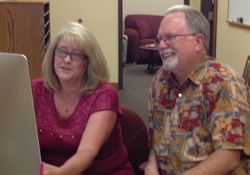 Volunteer coach Tim Boyle (right) shares his job hunting experience. Photo by Joe Iovino.
“How many resumes have you sent out?” This seemingly benign conversation starter may reinforce pressure your friend is already feeling. Tim Boyle, a United Methodist and volunteer counselor and coach with a community employment agency in Colorado Springs, and one who suffered a lengthy period of unemployment of his own, says many job-seekers become obsessed with the hunt. Rather than reinforcing the job search, Tim advises us to “encourage them to get involved in serving others, through volunteer organizations or the church.” Giving builds a sense of purpose and can do wonders for your unemployed friend’s morale. Suggest a ministry where you can serve together.
“Have you tried…?” Unless you are sharing a specific lead or personal experience from your own recent bout of unemployment, leave the job-hunting advice to those who are trained to give it. You may want to point your friend toward amazing resources like the Job Networking gatherings held at Roswell United Methodist Church in Georgia that offer support and job seeking advice. Look for similar gatherings in your area. Otherwise, resist the temptation to become a coach and remain a friend.
 Delia Cruz poses with her aunt Kathy, for whom she is a caregiver. Photo courtesy of Delia Cruz.
“It must be nice not having to go to work.” No. It’s not. It’s awful. Delia Cruz, a young woman who has chosen unemployment so she can care for aging and disabled family members who attend Warren Grove United Methodist Church in New Jersey, said, “Sometimes I wish I were them… I don't earn a paycheck… I don't have a place to go to escape and occupy my mind 8 hours a day. I don't have co-workers to talk to and sometimes my world can seem very isolating.” Your friend knows your job is a blessing. Treat it as such.
“Tell me all about it.” Although the last time you spoke with your friend you had a deep and apparently helpful talk, that conversation may not be welcome today. “Sometimes I wanted and needed encouragement,” said Jen Filla, an attorney and member of the Board of Trustees at Tri-Lakes United Methodist Church in Monument, Colorado, who recently went through a period of unemployment, “and other times, I just didn’t want to think or talk about it.” Be wise, listen intently, and let the other take the lead. Don’t try to force an unwelcome conversation. It will not be as supportive as you may think.
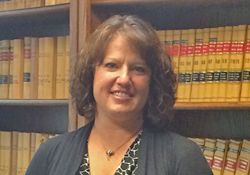 Jen Filla is glad to be in her new office. Photo courtesy of Jen Filla.
“How are you getting by?” No matter how much your friend has squirreled away for a rainy day, she is worried about money. Asking this question may raise your friend’s anxiety on a day he was winning that battle. Unless your friend brings it up, stay away from money talk. You may just be fueling the fire that jarred her from a sound sleep at 2:00 this morning. Todd Masman, a job seeker in Minneapolis, Minnesota suggests, “treat them to lunch or a movie. Send them a note and tuck in a $5 gift card to Starbucks, or McDonald’s, or Target.”
“God has a better plan for you.” Wendy Schlafley, who sometimes works in the office of her United Methodist congregation in Monument, Colorado and a former office administrator for Greater European Mission, says she used to say things like that. Then she went through her own bout with unemployment. “While it may be a true statement,” she continued, “it simply isn’t helpful.” Jay Litton, leader of the Roswell UMC Job Networking Ministry says, “We believe that God should be part of the job search” (from “Keeping God in Your Job Search”), but general statements about things eventually working out can be very frustrating. Instead, share what you know about your friend to offer encouragement when it seems in short supply— his giftedness, times God has come through for her, his remarkable network, and signs of God’s continued presence in her life even during this difficult time.
Unemployment is a journey through a dense forest where traveling companions are desperately needed. You don’t have to be the expert guide, you simply need to be what you have always been: a friend. Stay close. Listen. Offer a hand to hold and a shoulder to cry on. Provide some normalcy in the midst of uncharted territory, and a beacon of hope in the midst of despair.
*Joe Iovino is a freelance writer and blogger who currently serves as the Associate Pastor of Tri-Lakes United Methodist Church in Monument, Colorado.
RIP, average attendanceDURHAM, N.C. (UMNS) - Average weekly worship attendance is less reliable today as a measure of church vitality, argues David L. Odom, executive director of leadership education at United Methodist-related Duke Divinity School. He explains why and what he thinks are the implications. Faith & Leadership shares his commentary.
Average worship attendance was once such an important number. With it, I could predict the size of the church staff, the informal patterns of decision-making, most of the stresses on the pastor’s time, the leadership required for small groups, and more.
Back in the day, church consultant Lyle Schaller was quoted as saying that average worship attendance was a better indicator of congregational behavior than denomination, geography or neighborhood.
Today that number means much less because the definition of an active member has shifted.
At one time, “active” meant attending services three or four times a month. Today people feel active when they enter the church building once or twice a month. Some people engage worship more regularly online than from the pew. Others prioritize participation in a small group over worship attendance. Congregations have multiple services and, increasingly, multiple campuses.
It is more and more difficult to determine what “attending” means, much less judge someone as “active.”
These changes are signs that congregational culture is now less uniform, which has practical implications for things like the development of a Bible study curriculum.
When a denominational publishing house could predict the needs of congregations, curriculum materials could be mass-produced. While the number and variety of materials have expanded in recent years, teachers are often dissatisfied with their options. They then feel obligated to write congregation-specific material for children, youth or adults, requiring a huge commitment of time and creativity.
Developing customized curriculum and activities, such as missions experiences, means that the congregation feels a need for more staff, regardless of the church’s size. The needs are not connected to any predictable ratio of ministers to members, but the costs are.
In the old days, attendance was a good predictor of revenue for the church. Today, revenue can be up when attendance is down -- sometimes these trends can go in opposite directions for years.
In a doctoral seminar with experienced pastors last semester, the group begged for help in developing a score card of statistics by which they could monitor the vitality of their congregations. Each was tracking average worship attendance, giving, mission/ministry hours and more. Yet, the relationships between the numbers were not clear.
Church attendance was once a key indicator of a virtuous cycle. If the church could get a new person in the pew regularly, offerings would go up, involvement in small groups and missions would climb, and the church would be healthy. If attendance was declining then everything else would eventually decline.
The growing lack of dependability on attendance is a sign that the virtuous cycles that have sustained congregations since the end of World War II are collapsing. In order to sustain congregations over the long haul, new cycles need to be developed. Once that begins to happen, new measures can be identified.
One place to start is to map all the ways that a person engages a congregation -- joining a small group, attending group meetings and social functions, contributing to special causes and to the church’s general budget, reading sermons or other resources on-line, volunteering in a missions project, teaching a class and more.
What patterns of engagement emerge? Which activities encourage participation in other activities? What practices are most likely to lead to spiritual growth? These are the building blocks of virtuous cycles.
Having answered these questions, look at the numbers the congregation is gathering or could be gathering. How do these numbers help track the ways of engagement? What other data could be gathered easily? It is important to gather data that are measurable signs of the engagement that matters most.
Marketing is all about answering these sorts of questions. Rather than seek to master this field, I prefer to ask for help from an expert. No marketing professional knows the church like the leaders, but the expert can ask the questions and organize the data into something that can be tracked over time.
Yes, this is a lot of work. I wish we could go back to the good old days and track a couple of different numbers. But, most people know that is no longer working. What will we do about it? by David L. Odom
In Church membership | Congregations
Looking aheadHere are some of the activities ahead for United Methodists across the connection. If you have an item to share, email newsdesk@umcom.org and put Digest in the subject line.
Deadline to register for six online courses from United Methodist Communications, Tuesday, Sept. 9 - United Methodist Communications will offer the following courses Sept. 10-Oct. 22."Communicating Faith in the 21st Century," "Connectional Giving," "Moodle 100: Basic Training," "Tools for Increasing Your Church's Vitality," "Web Ministry 100: What is Web Ministry?" and "Welcoming Ministry 100." Costs vary. Connectional Giving is free. Details.
GO On Tour, Saturday, Sept. 13-Saturday, Nov.15 - A worship concert featuring Christian hip-hop artist Tedashii and speakers from next year's national United Methodist youth event YOUTH 2015, will visit each of The United Methodist Church's five U.S. jurisdictions this fall. Tickets are $15. Details of 10-city tour.
One Board Model Seminar, Sunday, Sept. 14 - 2 p.m. CT. The Rev. Bob Farr, director of congregational excellence for the Missouri Annual (regional) Conference, will lead training for churches to implement a one-board model at The Connection, 6701 Virginia Ave., St. Louis.Details on PDF.
Worship Design Studio Planning Retreat, Sunday-Wednesday, Sept. 14-17 - At Lake Junaluska Conference and Retreat Center, the Rev. Marcia McFee will guide participants through the entire liturgical year (starting with Advent) in order to map out worship themes and general plans for each season. Details.
Free webinar "Children and Sacrament" Monday, Sept. 15 - 10 a.m. CT, United Methodist Board of Discipleship staff will answer questions on involving children in sacraments. Details.
Catapult Conference, Monday-Wednesday, Sept. 15-17 - Conference on "launching leaders into kingdom mission" will be at Cornerstone Church, a United Methodist congregation, 2125 Hamilton Road, Auburn, Alabama. Details.
Hispanic/Latino/a Heritage Month, Monday, Sept. 15-Wednesday, Oct. 15 - The United Methodist Board of Discipleship shares worship resources.
Free webinar "Becoming a Praying Congregation" Tuesday, Sept. 16 - 6:30 p.m. CT, Event includes examples and ideas for the community, for small groups, for individuals and families to have a deeper connection with God. Details.
Webinar "In-Person Hybrid Learning in Congregational Faith Formation," Thursday, Sept. 18 - 7-8 p.m. ET, The Rev. Kyle Matthew Oliver will lead a discussion on how digital tools can make faith formation more accessible to congregation, including a hybrid approach that combines small groups and online activities. $10. Details.
How to Reach New People workshop by Jim Griffith, Friday-Saturday, Sept. 19-20 - Union United Methodist Church, 3543 Watson Road, St. Louis, will host event for pastors and church leaders. $25 per person or $75 per team of five (teams are encouraged). Details on PDF.
World Week for Peace in Palestine Israel, Sunday-Saturday, Sept. 21-27 - Organized by the Palestine Israel Ecumenical Forum and sponsored by the World Council of Churches.Resources.
United Methodist Church of the Resurrection Leadership Institute, Wednesday-Friday, Sept. 24-26 - Church is in Leawood, Kansas. The keynote speaker is Len Sweet, United Methodist scholar and best-selling author. Details.
Rich Church / Poor Church: Keys to Effective Financial Ministry, Wednesday, Sept. 24 and again Tuesday, Oct. 14 - Both seminars will be from 9 a.m. to 3:30 p.m. CT and feature United Methodist author and fundraiser, J. Clif Christopher. The Sept. 24 session will be Platte Woods United Methodist Church in Kansas City, Missouri, and the Oct. 14 session will be at Manchester United Methodist Church in St. Louis. $25. Details.
Workshop "Get Their Names," Saturday, Sept. 27 - 9:30 a.m. to 3 p.m. ET at Woodbury United Methodist Church, 577 Woodbury Road, Woodbury, New York. The Rev. Bob Farr of the Missouri Annual (regional) Conference will lead the seminar on sharing the Christian faith without anxiety. $20 per person for United Methodists. Details.
Deadline to apply for two discernment events for Deaconesses and Home Missioner Ministry, Wednesday, Oct. 1 - Events are Friday-Sunday, Nov. 7-9, in St. Louis and Friday-Sunday, Nov. 21-23, in Tempe, Ariz. A discernment event is an opportunity to explore a sense of call to lay ministry with a group of fellow discerners. Details.
Spaghetti dinner, Unity Run/Walk and Indian Mission Homecoming Service, Friday-Sunday, Oct. 3-5 - Spaghetti dinner is at 5-7 p.m. ET Friday, Oct. 3, the Unity Run/Walk starts at 8:45 a.m. ET Saturday, Oct. 4, and the homecoming service is at 11 a.m. ET Sunday, Oct. 5. Both the dinner and run are at Nanticoke Indian Center, and the service is at Indian Mission United Methodist Church. Details.
World Communion Sunday, Oct. 5 - United Methodists observe World Communion Sunday by celebrating communion with other Christians around the world on this special Sunday. Churches are also encouraged to receive a special offering to support ethnic undergraduate and graduate students, which often enables first-generation students to attend college. To download the World Communion Sunday pastors and leaders kit .World Communion envelopes.
Early-bird registration deadline for Reach New Disciples Conference: "Taking Church to the Community," Monday, Oct. 6 - Lewis Center for Church Leadership Conference is 9:30 a.m. to 1 p.m. ET Saturday, Nov. 1 at Wesley Theological Seminary, Washington. $40. Details.
Laity Sunday, Oct. 19 - The United Methodist Board of Discipleship has worship resources.
"Advocacy 201" Workshop on Advocacy, Tuesday-Thursday, Nov. 11-13 - Sponsored by Associates in Advocacy at the O'Hare Super 8 Motel, Elk Grove Village, Ill. The training is for anyone asked to be an advocate for a pastor or lay person facing complaints. To learn more and register, email the Rev. Jerry Eckert at aj_eckert@hotmail.com/.____________________________
We Think Students Matter

As many people head back to school this month, Rethink Church is letting people know about ways The United Methodist Church supports learning opportunities. The United Methodist Church believes that quality education opens doors of hope and possibility. Download :30 and :15 videos and share on social media to thank teachers and educators in your community for their service in education. Also, use it to educate people on ways we have been helping students discern where they are headed and helping them get there. Rethink Church has great content around how communities are supporting learning and putting beliefs into action. Learn more.
|


|


No comments:
Post a Comment