democracynow.org
Stories:

"He Has Summoned a Political Revolution": The Nation Magazine Endorses Bernie Sanders for President
With just weeks to go, polls show Vermont Senator Bernie Sanders is edging ahead of front-runner Hillary Clinton in the primary season’s first two contests. Numbers released this week give Sanders a five-point lead over Clinton in Iowa and a four-point lead in New Hampshire. Sanders has also narrowed Clinton’s once commanding lead nationwide, pulling within seven points. As the Democratic race tightens, The Nation magazine—the oldest continuously published weekly magazine in the United States—has issued a rare endorsement. On Thursday, the magazine ran the editorial "Bernie Sanders for President," saying: "[Sanders] has summoned the people to a 'political revolution,' arguing that the changes our country so desperately needs can only happen when we rest our democracy from the corrupt grip of Wall Street bankers and billionaires. We believe such a revolution is not only necessary but possible—and that’s why we’re endorsing Bernie Sanders for president." This marks only the third time in the magazine’s 150-year history that it has endorsed a candidate in the Democratic primary. Katrina vanden Heuvel, editor and publisher of The Nation magazine, joins us to discuss.
TRANSCRIPT
This is a rush transcript. Copy may not be in its final form.
JUAN GONZÁLEZ: Well, Katrina, in that you mentioned Bernie Sanders, The Nation, for the—only the third time in its history, has endorsed a candidate in a primary, Democratic primary, endorsed Bernie Sanders. And I’m wondering why you made that decision.
KATRINA VANDEN HEUVEL: For more than three decades, Bernie Sanders has championed ideas and issues, which have essentially been off the radar of our downsized politics. Those very ideas and issues are ones which have animated The Nation. At the heart of it, I would say, is you have someone in Bernie Sanders who is the real deal, who is honest, who has integrity and is a truth teller about the rigged system that is shafting so many people in this country, the inequality that is leading this country to be a plutocracy, not a democracy. And for those reasons, The Nation believed it was an important moment to speak to those issues—there are others—but in Bernie Sanders, there’s a political revolution that could upend the distorted priorities of this country, the sweetheart deals too many are getting, the grip of banks and insurance companies and pharmaceutical companies on this country, and speak to a better future. And I think he has opened, whatever happens—and we’re aware the road to the White House is steep—he has opened space for a more powerful progressive movement. And he has changed the kind of politics that is possible.
Think of the fact that he has raised—what struck me about our media—and, by the way, the Republicans rail against a liberal media last night—Donald Trump and The New York Times, as Mr. Turnipseed said. It’s not a liberal media. It’s a corporatized media system that is rigged against the public interest and our democracy. That’s why Democracy Now! exists or The Nation exists. And it has—this media system has failed to—you know, until recently, failed to cover Bernie Sanders and his ideas, and has shamefully lavished attention on Donald Trump. And we think that people have seen through that. And I think the media woke up—I’ll stop here—when Bernie Sanders raised what? Some $70-plus million from more small donors than President Obama had in 2008. And I think the sadness is our media system and our politics measure viability by money. But people woke up. But the fact that he is unbought, because he’s not taking PAC money, he’s not taking corporate money—these are small donors—suggests he could put forth a bold agenda and fight for it.
AMY GOODMAN: So, what made you decide to do this primary endorsement? You have done it twice before.
KATRINA VANDEN HEUVEL: Twice before.
AMY GOODMAN: Jesse Jackson.
KATRINA VANDEN HEUVEL: Jesse Jackson, and Barack Obama in 2008. I don’t think there’s any candidate who—you know, Bernie Sanders, again, has spoken to the issues, has lifted up the issues, has represented the issues and ideas, many of them, the key ones, that The Nation has also. And he—you know, I mean, we believe that inequality is probably the existential crisis of our time—inequality of political power, inequality of economic power, inequality of the ability to engage the world in a different way. And Bernie Sanders is speaking so honestly and truthfully about those issues. He doesn’t do small talk well. He also goes into rooms and rouses people. The rallies were as large as Trump’s over this last summer. But that is why we believe at this moment that Bernie Sanders is, with integrity and principle, summoning people for a political revolution, as he calls it, which is essentially participatory democracy on steroids and is needed to upend a system that is pretty corroded. And—
JUAN GONZÁLEZ: But, Katrina, in that vein, though, the lead—the big support he’s getting in places like Iowa—
KATRINA VANDEN HEUVEL: Yeah.
JUAN GONZÁLEZ: —and New Hampshire, these are two of the whitest states in the nation. And the reality is that the path to the Democratic nomination has to go through the cities of America, through the black and brown communities of America. And to what degree has Bernie Sanders been as active or been as well identified—
KATRINA VANDEN HEUVEL: Juan, absolutely.
JUAN GONZÁLEZ: —with the social movements around police abuse, against racial discrimination, around immigration—
KATRINA VANDEN HEUVEL: Yeah.
JUAN GONZÁLEZ: —as he has among Wall Street battling and antiwar issues?
KATRINA VANDEN HEUVEL: So, thank—I mean, I think the—thank you for reminding me of what is in our editorial. We speak to this very clearly. This is a movement moment in this country. It’s a fascinating moment. And Bernie Sanders is also intersecting and lifting up the voices of those movements, whether it’s Black Lives Matter. He had tough confrontations with them last summer. He has come forward with a very robust agenda on curbing abusive policing, on racial justice, on ending mass incarceration. He is in constant dialogue with these movements—the climate justice movement, the Fight for 15, reproductive justice movement, the DREAMers. There is no question that he has a tough road, Juan, for all the reasons you described. Those two states, first two states, are primarily white, though they’ve changed, too, the demography. But he is very tentative, Bernie Sanders is, to building a larger coalition. A lot of people haven’t met him yet. He’s heading and working in places like South Carolina and in those states.
But listen, I also want to say that the editorial notes that Hillary Clinton is someone of experience, of grit, of intelligence. She has responded to the populist moment. I think she’s come, more recently, to some of these issues of economic inequality. I think of the trade deal, where she was moved—again, by the movements of this time. But she would be far, far more preferable to those people we saw on the stage last night. We have a Supreme Court that could be reshaped by the next president. Her foreign policy is hawkish. And I think, unlike other progressive endorsements we’ve seen from groups, we lay out very clearly why we think there is a real distinction between Hillary Clinton’s hawkish foreign policy and Bernie Sanders, who’s one of the few candidates recently to say America alone should not be policing this world, as opposed to regime-change foreign policy, and, I think, speaks to a better vision of engagement with the world.
AMY GOODMAN: What’s your argument against Hillary Clinton on foreign policy, her hawkish views?
KATRINA VANDEN HEUVEL: You know, she has come out and said it was a mistake to vote for the war authorization in Iraq. Has she learned the lessons from that? We argue not. Libya? She was a key supporter of regime change in Libya. What has happened in Libya? It’s become a haven for ISIS. She was a key supporter of ousting Assad, which has fueled an ugly civil war. We need to find a diplomatic resolution to that crisis. She supported the Iran nuclear deal, but, in so doing, she has rejected a broader relationship with Iran. And so, all of those factors—she’s very much a cold warrior when it comes to relations with Russia.
And she—I think one power the president has, Amy and Juan, is you bring a new set of people to Washington. The Clintons—and I never want to link Hillary Clinton to her husband, because she’s her own person, her own woman. But there is a team of people, particularly in foreign policy, who will be brought back in. And in that context, the hope is with Bernie Sanders. And there is a project underway to—you know, other—fresh faces. Wouldn’t Washington be—could be a different place. Obviously, the power, the deep power, the deep state, but you could bring new people who could see, in new ways, what is possible.
AMY GOODMAN: I want to play a clip of Bernie Sanders, then Hillary Clinton. This is Sanders taking aim at Wall Street during a speech here in New York at Town Hall, vowing to break up the biggest banks within a year of taking office.
SEN. BERNIE SANDERS: Greed is not good. In fact, the greed of Wall Street and corporate America is destroying the very fabric of our nation. And here is a New Year’s resolution that I will keep if elected president, and that is, if Wall Street does not end its greed, we will end it for them.
AMY GOODMAN: So, that is Bernie Sanders in New York. Well, last night, Hillary Clinton appeared on Rachel Maddow’s show on MSNBC criticizing Bernie Sanders calling for single-payer healthcare system, accusing Sanders of not laying out how the plan would work or be funded.
HILLARY CLINTON: The only clue that I can find, because he hasn’t laid out a plan, is to go back and look at the bills that he’s introduced, nine different times. And it’s a bit concerning to me, because it would basically end all the kinds of healthcare we know—Medicare; Medicaid; the CHIP program, Children’s Health Insurance; TRICARE for the National Guard, military; Affordable Care Act exchange policies; employer-based policies. It would take all that and hand it over to the states. And—
RACHEL MADDOW: Well, he calls it Medicare for all.
HILLARY CLINTON: But—but—
RACHEL MADDOW: He’s basically saying we’d replace the existing system—
HILLARY CLINTON: But Medicare for all is not—is not the same, if you’re turning it over to the states. Now, if he has changed his mind, after introducing that bill nine times, he owes it to the public to tell them. If he has changed his mind about having the federal government pay 86 percent of the cost and having states have to come up with the remaining 14 percent, when in fact we know Republican governors won’t even pay for Medicaid, which they are going to get initially for nothing, well, that’s what we mean.
AMY GOODMAN: That’s Hillary Clinton. And she is running scared right now. I mean, the numbers, they are—I mean, he is really surging, if you believe the polls. Sanders is surging in both Iowa and, of course, in his neighboring state—
KATRINA VANDEN HEUVEL: Absolutely.
AMY GOODMAN: —from Vermont of New Hampshire. But what about what she said about single-payer healthcare and universal healthcare?
KATRINA VANDEN HEUVEL: The "Kumbaya" moment is over, Amy, as they enter into these two states. Let me just say, though, on the Wall Street clip you used, there’s no question that there are two different visions of regulating Wall Street. Bernie Sanders talks about breaking up the big banks; Hillary Clinton is more reliant on regulation. I think, again, Senator Sanders is unbought and able to speak honestly about what he would do. Hillary Clinton has moved on those issues.
On those single payer, what struck me is how politically, if I could, you know, tone-deaf what Hillary Clinton is doing, because Medicare for all is so popular among not just the Democratic base, but so many people. Why not say, you know, Senator Sanders may be unrealistic, we can’t get to Medicare for all as quickly as he’s saying, it’s too expensive? But, in fact, what she’s saying is mischaracterizing this idea that it’s all going to go back to the states, that he’s going to take away your Medicare, your Obamacare, your SCHIP. He’s not. And she’s not attributing the cost savings. We are the only Western industrialized country that doesn’t have healthcare for all. We’re paying more. The pharmaceutical companies are ripping us off. And she should be saying, "OK, Obamacare is here, but the history of American reform is we’ve got to build on it incrementally." Instead, she’s kind of saying, "He’s trying to take away your healthcare." No, he’s not. He’s trying to bring you Medicare for all, which is very popular and has been stymied by pharmaceutical companies. So I think it’s a misguided attack. And I think it’s misguided of her also to take Wall Street Journal editorials attributing how we’d all have to pay $15 trillion more, without understanding the benefits of savings if you had a single-payer, Medicare-for-all program.
JUAN GONZÁLEZ: Yeah, I’d like to ask Tom Turnipseed, if he’s still with us, to talk about the legacy of this politics of fear that you mentioned was shown in the Republican debate. George Wallace did not succeed, obviously, in 1968, but he did get 13 percent of the vote as an independent candidate. And he probably took more voters from the Democrats than he did from the Republicans, because that was the year that Nixon beat Hubert Humphrey, and basically paved the way, many believe, for the Republican Party to begin grabbing ethnic white voters out of the Democratic Party. Do you see, in this new politics of fear, any possibility of sort of a realignment of the voters around some of the ideas of a Trump or even a Ted Cruz?
TOM TURNIPSEED: Gosh, it’s hard to tell. I know that they’re appealing to, in my opinion, to poor white people that feel like they’ve been kind of left out. And that’s, you know, a big similarity. You know, the one thing, too, that’s very, very interesting to me is how this idea of Donald Trump, in, you know, how he’s really using that fear thing—and, you know, you got to be afraid of the Chinese and the Mexicans and so forth and so on—and then, you know, he’s doing a hell of a job doing it, too.
The other thing I want to say and get this in edge-wise—I was trying to tell it a minute ago—me being here in South Carolina and maybe knowing a little bit about what’s going on, is that when Bernie Sanders came down here, he spoke to a couple of African-American colleges, you know, that are predominantly African-American, and got a real good reception. He’s doing a good job at working the African-American vote down here. I guess Hillary is still a little bit ahead, you know, with the African-American vote, and maybe overall, but he’s coming on strong here in South Carolina, believe it or not.
AMY GOODMAN: Well, we’re going to leave it there right now, and I want to thank you both for being with us.
KATRINA VANDEN HEUVEL: Thank you.
AMY GOODMAN: Katrina vanden Heuvel, editor and publisher of The Nation magazine. For the first time in 150 years in its history—the third time, they have endorsed a candidate in the Democratic primary, rather than waiting 'til afterwards. And Tom Turnipseed, national director of the segregationist Alabama Governor George Wallace's 1968 presidential campaign, calls himself a "reformed racist" and became a leading civil rights activist in South Carolina.
This is Democracy Now! When we come back, we go to deal with Flint, Michigan, the latest. We’re not only talking about lead contamination in the water, but also at least 10 people, it looks like, have died of Legionnaires’ disease. It’s an astounding story—water and democracy. Stay with us.
[break]
AMY GOODMAN: A Democracy Now! premiere, "Time Dreams," a collaboration between the Minneapolis folk band The Pines and the late Native American activist and poet John Trudell, who died in December at the age of 69. Visit our website, democracynow.org, to hear and watch the whole song. This is Democracy Now!, democracynow.org, The War and Peace Report. I’m Amy Goodman, with Juan González.
... Read More →
What is This GOP Race About? S.C. Debate Shows Trump's Outsize Role Weeks Before Opening Contest
Republicans held their first debate in the key state of South Carolina last night. Voters head to the polls in South Carolina on February 20 in the third caucus or primary after Iowa and New Hampshire. The latest polls show front-runner Donald Trump continues to hold a commanding national lead at 33 percent—13 points ahead of his closest challenger, Texas Senator Ted Cruz. Cruz, however, has recently surged in the opening contest of Iowa, where he and Trump are now tied. With Cruz in second place, Trump has confronted his top challenger by raising questions about his eligibility to become president, because Cruz was born in Canada to a Cuban father and an American mother. We discuss Thursday’s Republican debate with two guests: Katrina vanden Heuvel, editor and publisher of The Nation magazine, and Tom Turnipseed, a self-described "reformed racist" who served as national director of segregationist Alabama Governor George Wallace’s 1968 presidential campaign, but has since become a civil rights attorney and social justice activist.
TRANSCRIPT
This is a rush transcript. Copy may not be in its final form.
JUAN GONZÁLEZ: Republicans held their first debate in the key state of South Carolina last night. Voters head to the polls in South Carolina on February 20th in the third caucus or primary after Iowa and New Hampshire. The prime-time lineup was narrowed to seven hopefuls after Senator Rand Paul and former HP CEO Carly Fiorina failed to make the cut. The latest polls show front-runner Donald Trump continues to hold a commanding national lead at 33 percent—13 points ahead of his closest challenger, Texas Senator Ted Cruz. Cruz, however, has recently surged in the opening contest of Iowa, where he and Trump are now tied.
AMY GOODMAN: Just before the debate, it emerged that Senator Cruz failed to disclose a Goldman Sachs loan used to finance his 2012 Senate bid in Texas. The New York Times reports Cruz took out loans from Goldman Sachs and Citibank totaling $1 million. Cruz’s Senate campaign did not report either of the loans in its filings with the Federal Election Commission. With Cruz in second place, Trump has confronted his top challenger by raising questions about his eligibility to become president, because Cruz was born in Canada to a Cuban father and an American mother. Senator Cruz was asked about his eligibility last night.
SEN. TED CRUZ: You know, back in September, my friend Donald said that he had had his lawyers look at this from every which way, and there was no issue there. There was nothing to this birther issue. Now, since September, the Constitution hasn’t changed. But the poll numbers have. And I recognize—I recognize that Donald is dismayed that his poll numbers are falling in Iowa. But the facts and the law here are really quite clear. Under long-standing U.S. law, the child of a U.S. citizen born abroad is a natural-born citizen. If a soldier has a child abroad, that child is a natural-born citizen. That’s why John McCain, even though he was born in Panama, was eligible to run for president. If an American missionary has a child abroad, that child is a natural-born citizen. That’s why George Romney, Mitt’s dad, was eligible to run for president, even though he was born in Mexico.
JUAN GONZÁLEZ: Ted Cruz went on to say Donald Trump might not even be eligible because his mother was born in Scotland. Also during the debate, moderator Maria Bartiromo of Fox Business questioned Trump about his call to ban Muslims from entering the United States.
MARIA BARTIROMO: Mr. Trump, your comments about banning Muslims from entering the country created a firestorm. According to Facebook, it was the most talked-about moment online of your entire campaign, with more than 10 million people talking about the issue. Is there anything you’ve heard that makes you want to rethink this position?
DONALD TRUMP: No.
AMY GOODMAN: That was Donald Trump. "No," he said.
For more on Thursday’s Republican debate, we’re joined by two guests. Katrina vanden Heuvel is with us, editor and publisher of The Nation magazine. And Tom Turnipseed joins us. He’s a self-described "reformed racist." He was national director of segregationist Alabama Governor George Wallace’s 1968 presidential campaign, but has since become a civil rights attorney and social justice activist. In the late 1990s, he was co-counsel in a lawsuit against the Ku Klux Klan for burning an African-American church in South Carolina and won a $37 million verdict against the Klan. He’s also a former South Carolina state senator. And he’s joining us from the state where the debate took place last night; he’s joining us from South Carolina, from Columbia, the capital.
We welcome you both to Democracy Now! Actually, Tom Turnipseed, I wanted to begin with you. The debate took place in North Charleston, South Carolina, to be exact. We were just recently there in Charleston after the killing of the worshipers at Emanuel Church. North Charleston, though, which is a separate city, is where Walter Scott was killed by the officer, Slager, the African-American motorist who was shot in the back repeatedly. Set the scene for us for where this debate took place and the significance of the Republican debate happening in South Carolina, Tom.
TOM TURNIPSEED: Well, it’s a larger venue, where they had it, you know, and I think it was appropriate, because it—being that North Charleston has the largest venue in the Charleston area, so it was pretty good for it. And, you know, South Carolina is a big deal in presidential politics. We have, you know, the third major focus primary. Of course, there’s the caucus up in Iowa, and then New Hampshire and then down here in South Carolina. So, it’s kind of a big deal.
AMY GOODMAN: Katrina vanden Heuvel, you heard that first clip that we just played about the eligibility of Senator Cruz, that Donald Trump first said it was not an issue, but now, because they are in a close contest in Iowa, continually raises.
KATRINA VANDEN HEUVEL: Well, first of all, I don’t think any of them are eligible, considering the failure to address the real issues confronting this country, whether it be economic anxiety or racial injustice. But we need some resolution. There are a passel of constitutional lawyers who should be put in a room and come out and say something. But you saw Ted Cruz, very sharp-edged in this nasty, brutish and long overlong debate, come back swinging. But I don’t think viewers come away with any better sense of it, except that—I really do mean what I said, which is that people—these candidates should be judged, it seems to me, on the issues, and not on this kind of new birtherism, which Donald Trump worked desperately against Obama right a few years ago. So...
AMY GOODMAN: I mean, it’s interesting. Did they talk about Laurence Tribe?
KATRINA VANDEN HEUVEL: He’s—yeah.
AMY GOODMAN: In this clip. But they talked about him in the debate last night with Donald Trump and saying that Laurence Tribe, who was Senator Cruz’s professor at Harvard Law School, has—says the issue isn’t settled. He even said, actually, surprisingly enough, of natural-born citizens—Tribe said it wasn’t even settled, though more so with John McCain—
KATRINA VANDEN HEUVEL: Right.
AMY GOODMAN: —who was born in Panama—
KATRINA VANDEN HEUVEL: Panama.
AMY GOODMAN: —at the base. He says that one, while it seems more obvious, even that is not completely settled. But he says Ted Cruz, that’s a question.
JUAN GONZÁLEZ: Right. Well, The Washington Post ran another op-ed piece this week also saying that there are legitimate questions that have not been resolved about what is the citizen’s—what does natural-born citizen, as the Constitution defines it, mean, especially when you’re dealing with territories, either—like in the Panama Canal Zone, it was a territory—it was a military base of the United States, but it was in a different country. And it’s even been raised in terms of people born in Puerto Rico, that Puerto Rico is a—belongs to, but is not part of, the United States, according to the Supreme Court. So if you’re born in Puerto Rico, can you legitimately run for president of the United States, even though you were born a citizen of the United States? So that there’s—the question of what does natural-born citizen mean is still—apparently, hasn’t been fully resolved, and it may take a Supreme Court case at some point or other to resolve it.
KATRINA VANDEN HEUVEL: I mean, I think it should be resolved, but is this the central, burning issue of a Republican debate? And, you know, it’s—again, it’s driven by Donald Trump, who just has the unerring ability, largely granted by media, to drive the debate. And it dominated last night in ways that I think excluded many other issues that a lot of people would have liked to hear.
JUAN GONZÁLEZ: And, Tom Turnipseed, I’d like to ask you about the Donald Trump phenomenon and how that might—the resonance it has for you to back to the 1968 campaign of George Wallace and how Trump appears to appeal to the same sort of sector of the society that Wallace appealed to back in 1968.
TOM TURNIPSEED: Well, it’s basically—fear is what they use. Of course, a lot of people in politics use fear. But anyway, with Wallace, you know, it was fear of the African-American people, is what he did. They’re a lot different in that Wallace was a, you know, kind of a poor, middle-class guy, and Trump is very, very wealthy. But Trump does the same thing with, you know, the Chinese and the Mexicans and so forth.
But, you know, let me jump to one other quick thing. The biggest trouble that what’s-his-name has right now is—that Ted has, is Goldman Sachs. Big time trouble with the Goldman Sachs issue, who just paid this tremendous fine. And there’s a movie out now called The Big Short. It’s a big movie. And his wife worked for Goldman Sachs. And his involvement there, you know, with Goldman Sachs, is really substantial. I mean, it’s a big, big issue that he’s not going to be able to get away from. And I think that he—you know, he’s just not really a populist, so to speak—
KATRINA VANDEN HEUVEL: Mr. Turnipseed—
TOM TURNIPSEED: —I mean, or anything close to it.
KATRINA VANDEN HEUVEL: Mr.—
TOM TURNIPSEED: He’s tied in with the big, big money folks. I beg your pardon?
KATRINA VANDEN HEUVEL: I was going to say, Mr. Turnipseed is right on, because I think a lot of what Donald Trump is playing on is legitimate economic anxiety. Then you get the racial grievances. But I think there’s a lot of us versus them, not left versus right, in this country. And Goldman Sachs, you just reported—
TOM TURNIPSEED: Oh, yeah.
KATRINA VANDEN HEUVEL: —just paid out a $5 billion fine today. It’s at the heart of the financial crisis, which has ravaged people’s pensions and home equity and their lives. And it’s a sweetheart deal. It’s emblematic of the very rigged system that Bernie Sanders rails against, and that when they try to, these so-called right-wing populists do, but it’s going to hurt them. It’s going to hurt them, it seems.
AMY GOODMAN: We’re going to go to break and then come back to this—
TOM TURNIPSEED: Yeah, Cruz got a big loan. He got a big loan—
KATRINA VANDEN HEUVEL: Sweetheart deal.
TOM TURNIPSEED: —to run for the Senate. And his wife works there.
KATRINA VANDEN HEUVEL: Yeah.
TOM TURNIPSEED: Yeah.
AMY GOODMAN: Well, we’re going to continue this discussion, when we come back, with Tom Turnipseed, the former national director of the segregationist Alabama Governor George Wallace’s 1968 presidential campaign. We’re also joined by Katrina vanden Heuvel, who is the editor and publisher of The Nation magazine. And after we discuss the Republican debate, we’ll talk with her about this rare primary endorsement that The Nation has made, one of only three times in The Nation’s 150-year history. Stay with us.
... Read More →
Flint Doctor Mona Hanna-Attisha on How She Fought Gov't Denials to Expose Poisoning of City's Kids
Protesters filled the Michigan state Capitol in Lansing on Thursday, calling on Governor Rick Snyder to resign over the contamination crisis his government has caused in the city of Flint’s water. Hours later, Snyder asked President Obama to declare a federal emergency in Flint. Flint residents are dealing not just with lead poisoning, but a Legionnaires’ disease outbreak that’s killed 10 people so far. The poisoning began in April 2014 after Darnell Earley, an unelected emergency manager appointed by Snyder, switched Flint’s water source to the long-polluted and corrosive Flint River in a bid to save money. We are joined by Dr. Mona Hanna-Attisha, the doctor who helped expose the lead poisoning. Dr. Hanna-Attisha headed a September study that found the proportion of children under five in Flint with elevated lead levels in their blood nearly doubled following the water switch. State officials initially dismissed those findings, but Dr. Hanna-Attisha refused to accept their denials. On Thursday, she was named the head of a new public health initiative to help those exposed to the contamination.
TRANSCRIPT
This is a rush transcript. Copy may not be in its final form.
JUAN GONZÁLEZ: Protests continue in Michigan calling for the resignation of Governor Rick Snyder over the contamination crisis his government has caused in the city of Flint’s water supply. On Thursday, a large crowd rallied inside the state Capitol in Lansing demanding that Snyder step down.
PROTESTER: Don’t let anybody tell you this is just about water. This is about emergency management. This is about greed. This is about political corruption. And he will either resign or be recalled.
JUAN GONZÁLEZ: The poisoning began in April 2014 after Darnell Earley, an unelected emergency manager appointed by Snyder, switched Flint’s water source to the long-polluted and corrosive Flint River in a bid to save money. For over a year, Flint residents complained about the quality of the water, but their cries were ignored. In February, the government knew of tests showing alarming levels of lead in the water, but officials told residents there was no threat. That same month, an EPA official wrote an email to the Michigan Department of Environmental Quality warning about lead contamination. No action was taken. Then in July, Governor Snyder’s chief of staff, Dennis Muchmore, wrote an email to health officials admitting Flint residents were, quote, "basically getting blown off by us," unquote. Critics say Flint’s health was ignored due to the political calculations of Snyder’s Republican administration. One of the poorest cities in the country, Flint has a 40 percent poverty rate and a majority African-American population.
AMY GOODMAN: Flint residents now face the threat of a major health crisis, whose full effects won’t be known for years. Lead can cause permanent health impacts, including memory loss, developmental impairment, irreversible brain damage, speech issues, serious chronic conditions, especially among children. At least 10 Flint residents now have also died from Legionnaires’ disease amidst a surge in infections caused by the water-borne bacteria. Experts say the Legionnaires’ outbreak may be tied to the contamination.
A study released in September found the proportion of children under five in Flint with elevated levels of lead in their blood nearly doubled following the water switch. State officials initially dismissed those findings. But the doctor who discovered them, Dr. Mona Hanna-Attisha, refused to accept the state’s denials. County officials finally acknowledged the problem by declaring a public health emergency October 1st. On Thursday, Dr. Hanna-Attisha was named the head of a new public health initiative to help those exposed to the contamination.
We’re joined now by Dr. Mona Hanna-Attisha, director of the pediatric residency program at Hurley Children’s Hospital and assistant professor of pediatrics at Michigan State University.
This is truly astounding, Dr. Mona, as you are known. Can you talk about when you realized that especially children were being contaminated by lead, and how the state responded?
DR. MONA HANNA-ATTISHA: Yeah. So, in late August, we were hearing reports from the Virginia Tech group that there was lead in the water. And when pediatricians hear about lead anywhere, we freak out. We know lead. Lead, as you said, is a known potent, irreversible neurotoxin. So we wanted to see if that lead in the water was getting into the bodies of children. So that’s when we started doing our research.
And what we found was alarming, but not surprising, based on what we knew about the water. The percentage of children with elevated lead levels tripled in the whole city, and in some neighborhoods—actually, it doubled in the whole city, and in some neighborhoods, it tripled. And it directly correlated with where the water lead levels were the highest. So we shared these results at a press conference, and you don’t usually share research at press conferences. It’s supposed to be shared in published medical journals, which now it is. But we had an ethical, moral, professional responsibility to alert our community about this crisis, this emergency.
JUAN GONZÁLEZ: And the research that you did, all it took was being able to go back in your own—
DR. MONA HANNA-ATTISHA: Yeah.
JUAN GONZÁLEZ: —medical records. And it wasn’t a series of new testing that you had to do. Could you talk about that?
DR. MONA HANNA-ATTISHA: Right. So, we routinely screen children for lead at the ages of one and at ages of two. Medicaid children, who are on public insurance, are recommended to get lead screenings. So we had the data. It was the easiest research project I have ever done. So all we did was go back and look at our data. And we compared the percentage of children with elevated lead levels before the water switch, which was 2013, to 2015, and that water switch happened in 2014.
AMY GOODMAN: So, talk about what happened after you held your news conference.
DR. MONA HANNA-ATTISHA: Well, that evening, we were attacked. So I was called an "unfortunate researcher," that I was causing near hysteria, that I was splicing and dicing numbers, and that the state data was not consistent with my data. And as a scientist, as a researcher, as a professional, you double-check and you triple-check, and the numbers didn’t lie. And we knew that. But when the state, with a team of like 50 epidemiologists, tells you you’re wrong, you second-guess yourself. But that lasted just a short period, and we regrouped and told them why, "No, you were wrong." And after about a week and a half or two weeks, after some good conversations, they relooked at their numbers and finally said that the state’s findings were consistent with my findings.
AMY GOODMAN: You have bust this thing right open. And you were standing behind the governor and his people just the other day in a news conference of—you’ve been named head of—well, you can tell us what you’ve been named head of. But as they read the figures of people who were contaminated, you were shaking your head "no," right there in the frame, standing behind the government health officials. You were supposed to be standing with them, and you were shaking your head "no."
DR. MONA HANNA-ATTISHA: Yes. So, I am willing to work with anybody for the benefit of children, and I was at that press conference with the governor and with state health officials, who we are working with now. However, they said that only 43 people since October had elevated lead levels. And it really minimizes this population-wide exposure. This is an entire population who was exposed to this neurotoxin. So when you say these small numbers, it just—once again, the population loses trust in government and in their ability to protect people.
... Read More →
Emergency for Democracy: Unelected Manager Who Caused Flint Water Crisis Now Runs Detroit Schools
Flint’s water contamination crisis began in April 2014 after Darnell Earley, an unelected emergency manager appointed by Snyder, switched Flint’s water source to the long-polluted and corrosive Flint River in a bid to save money. Earley is now the emergency manager of Detroit Public Schools. This week, Detroit’s teachers have staged a series of "sickouts" to protest the vast underfunding of the public schools, which have black mold, rat infestations, crumbling buildings and inadequate staffing. We are joined by Curt Guyette, an investigative reporter for the ACLU of Michigan whose work focuses on emergency management and open government. Michigan has the most sweeping emergency management laws in the country, which allow the governor to appoint a single person to run financially troubled cities.
TRANSCRIPT
This is a rush transcript. Copy may not be in its final form.
JUAN GONZÁLEZ: Well, we’re also joined by Curt Guyette, an investigative reporter for the ACLU of Michigan. His work focuses on emergency management and open government. Michigan has the most sweeping emergency management laws in the country, which allow the governor to appoint a single person to run financially troubled cities. Emergency Manager Darnell Earley, who presided over the Flint water switch, is now the emergency manager of the Detroit public school system. This week, Detroit’s teachers have staged a series of "sickouts" to protest the vast underfunding of the public schools, which have black mold, rat infestation, crumbling buildings and inadequate staffing. Detroit teachers say they have up to 45 or 50 students in some classrooms.
AMY GOODMAN: So, Curt Guyette, can you talk about how this man, who is the one who ultimately pushed the switch, relying on the—turning from the Detroit water system to Flint’s river, that has poisoned so many people, is now in charge of the Detroit Public Schools? And we’re hearing health problems, not to mention education problems.
CURT GUYETTE: Well, one of the things about the emergency manager law is that these managers were given extreme unchecked authority. And the thinking was, the reason for doing that is they were given the ability to come in, clean up the problems and get out. And so there was an 18-month time limit put on their terms. Except that this governor is exploiting what amounts to a loophole in that law. So what happens is that these emergency managers serve for 17 months and 29 days, and the day before their term expires, they resign. A new emergency manager is put in place, and the clock starts ticking all over again. And they just shuffle them from one place to another. So Earley goes from Flint to run DPS. And it just perpetuates this control. It can go on, really, forever, if they want it to, denying people of their democratically elected representation, because the school board, which has been fighting emergency management every step of the way, gets completely marginalized. They have zero authority whatsoever. And that goes to the heart of the problem of this law. It eliminates the democratic checks and balances that make a democracy functional.
And the other thing is, what we’re seeing here is really the imposition of austerity. This is what austerity looks like. So you have all the problems in these schools that you just reported on, because they’re treating it like a managerial problem rather than a structural problem. I’ve used before the analogy: It’s like being the captain of the Titanic, and you hit an iceberg. It doesn’t matter who’s at the helm; the ship is going down unless you plug the hole. And they haven’t plugged the holes. They haven’t fixed the structural problems.
JUAN GONZÁLEZ: And, Curt Guyette—Curt, we have just about a minute, but I just wanted to ask you, in terms of the cities that Governor Snyder has chosen to institute these emergency managers, what’s the racial composition of a lot of these cities?
CURT GUYETTE: With the exception of one, they are all majority African-American. And they’re also all very poor cities. So this is a racial issue, and it’s a class issue.
AMY GOODMAN: Finally, Dr. Hanna-Attisha, I wanted to go back to this question of Legionnaires’ disease. I mean, if it could get any worse, is there a connection between the water contamination, the lead poisoning and Legionnaires’ disease?
DR. MONA HANNA-ATTISHA: Well, I’m not an expert on Legionnaires’, but the water chemistry was a perfect setup for this to happen. The corrosive water that was untreated with corrosion control not only leached lead, but it also leached iron from the pipes. And iron eats up the chlorine, which you need to kill your bacteria. And then the iron also served as a nutrient or food for bacteria to overgrow. So it was a perfect setup for outbreaks like this.
AMY GOODMAN: I want to thank you both for being with us. Of course, we’ll continue to follow this story. Dr. Mona Hanna-Attisha of Hurley Children’s Hospital, and Curt Guyette, an investigative journalist with the ACLU of Michigan, thanks so much for joining us.
We have job openings at Democracy Now!: director of finance and operations as well as a development director. Go to democracynow.org.
- ... Read More →
Donald Trump, the New George Wallace? Head of Segregationist's 1968 Bid on GOP Front-Runner's Racism
Critics have noted the similarities in rhetoric between Donald Trump and segregationist Alabama Governor George Wallace’s 1968 presidential campaign. In November, a Black Lives Matter protester was kicked and punched by Trump supporters at a rally in Birmingham, Alabama, as Trump yelled, "Get him the hell out of here!" Trump later defended his supporters, saying "maybe [the protester] should have been roughed up, because it was absolutely disgusting what he was doing." George Wallace’s daughter, Peggy Wallace Kennedy, has also compared the two campaigns, but says her father may have actually been less extreme. We speak with Tom Turnipseed, who served as the national director of George Wallace’s 1968 presidential campaign, but has since become a civil rights attorney and social justice activist. We are also joined by Katrina vanden Heuvel, editor and publisher of The Nation magazine.
TRANSCRIPT
This is a rush transcript. Copy may not be in its final form.
AMY GOODMAN: MSNBC’s Rachel Maddow has been among those to note the similarities in rhetoric between Donald Trump and George Wallace’s 1968 presidential campaign. This clip is from her show. It begins with George Wallace.
GEORGE WALLACE: You know what you are? You’re a little punk. That’s all you are. You haven’t got any guts. You’ve got too much hair on your head, partner. You got a load on your mind. That’s right.
DONALD TRUMP: Boy, what a bunch of losers, I’ll tell you. You are a loser. You really are a loser. Get him out.
AMY GOODMAN: Presidential candidate Donald Trump. In November, a Black Lives Matter protester at a Trump rally in Birmingham, Alabama, was kicked and punched by Trump supporters as Trump yelled, "Get him the hell out of here!" Trump later defended his supporters, telling Fox News, quote, "maybe [the protester] should have been roughed up, because it was absolutely disgusting what he was doing."
I want to turn to George Wallace’s daughter, Peggy Wallace Kennedy, who told BuzzFeed she compared her father to Donald Trump, saying, quote, "There are a great deal of similarities as it relates to their style and political strategies. The two of them, they have adopted the notion that fear and hate are the two greatest motivators of voters." She went on to say, quote, "They both can draw a crowd and work up a crowd. My father was a very fiery and emotional speaker and was able to tap into the fears of the poor and working-class white people."
But Peggy Wallace Kennedy said her father may have actually been less extreme than Trump in some respects. She said, quote, "I think my father had more self-restraint and respect for the institutions of government than Trump does," she said, adding, quote, "I think my father understood the limitation of the executive branch of government, where I don’t think Trump does. And I think Daddy, even though he used coded language to use racial themes, he never attacked a culture based on their religion and race. He used coded language to suggest the racial themes. But he never specifically attacked a group of people based on their religion and [their] race."
Still with us, Tom Turnipseed, the national director of Alabama Governor George Wallace’s presidential campaign in 1968, since become a civil rights attorney. Your thoughts on what Wallace’s daughter said, and your own feelings and transformation around George Wallace?
TOM TURNIPSEED: Well, I agree with her 100 percent. It’s real interesting. Governor Wallace’s number one media target, believe it or not, was The New York Times. And so, Donald Trump jumped on The New York Times last night. Did you notice that? "I don’t believe anything in The New York Times!"
But anyway, Governor Wallace was a poor kid, you know, middle-class kid from southeast Alabama. And he—at first, he was just a populist, you know, without racism. He ran for governor and was endorsed by, believe it or not, the NAACP. And his opponent, John Patterson, was endorsed by the Klan, the Ku Klux Klan, and Patterson won. And then, I understand—I wasn’t over there then—that Wallace told one of his confidants, one of his staff people, that "I’ll never be out-N-worded again." And so, from then on, you know, he stood in the schoolhouse door and blah blah blah.
And, you know, he wasn’t—economically, even though what he did was just terrible, you know, as far as fighting about the separation of—you know, segregation, for that, and so forth, and making those speeches and standing in schoolhouse doors, he put more money into the poor school districts, which included African Americans, too, and community colleges than any other governor ever has. He was like an economic populist.
JUAN GONZÁLEZ: And, Tom Turnipseed, one of—
TOM TURNIPSEED: And I’m not saying that anything about him standing—yes, excuse me. Go ahead.
JUAN GONZÁLEZ: And also, one the things I’d like to note about him also, that he was a lot more qualified to run for president than Donald Trump was. He had—he was not only a governor. He had been a judge in Alabama. He had been an assistant attorney general.
TOM TURNIPSEED: Oh, yeah.
JUAN GONZÁLEZ: He had held public office and knew something about the runnings of government, whereas some critics, even within the Republican Party, have said of Trump he’s never held public office or served in the military or come up the military as some presidential—as some presidents have, from military commanders, to become president.
TOM TURNIPSEED: Right.
KATRINA VANDEN HEUVEL: I was going to say, I mean—
TOM TURNIPSEED: He was well qualified. Judge Chestnut—he was one of the best lawyers, he was an African-American guy from Selma—has said—and I was on TV with him a few years ago—said that Governor Wallace was the fairest judge that he’d ever been before. And this guy was an African American from Selma.
KATRINA VANDEN HEUVEL: To qualify—I mean, to have—
AMY GOODMAN: Katrina vanden Heuvel?
KATRINA VANDEN HEUVEL: The idea of government qualifications is a lofty one, Juan. I mean, it seems to me we’re living in a moment where—where Grover Norquist, the right-wing ideologue, said over a decade ago that the Republicans’ right wing wants to take government and strangle it, drown it in a bathtub—now they want to trash it. Doesn’t seem to me that Trump is hurting from his lack of government experience.
But back to what Mr. Turnipseed was saying, I mean, it seems—the struggle in this country over the last many decades has been one between fear and hope, between hate and justice. And what you saw last night, Donald Trump took on the mantle of hate, took on the mantle of grievance, took on the mantle of anger. And what does he do with it? He doesn’t talk to people about what could be. He trashes people around him. He foments division. And again, I would just say, I do think there are a few parallels between Bernie Sanders and Donald Trump. I could see Donald Trump heading into Ohio, for example, and talking about trade and really speaking to people whose lives have been dislocated and damaged by trade deals. But Bernie Sanders is not saying, "Turn on each other." He’s saying, in a kind of old-fashioned solidarity, "Turn toward each other." And I think that’s been lost in our politics on the Republican side.
... Read More →Obama Administration Transfers 10 Prisoners from Guantánamo
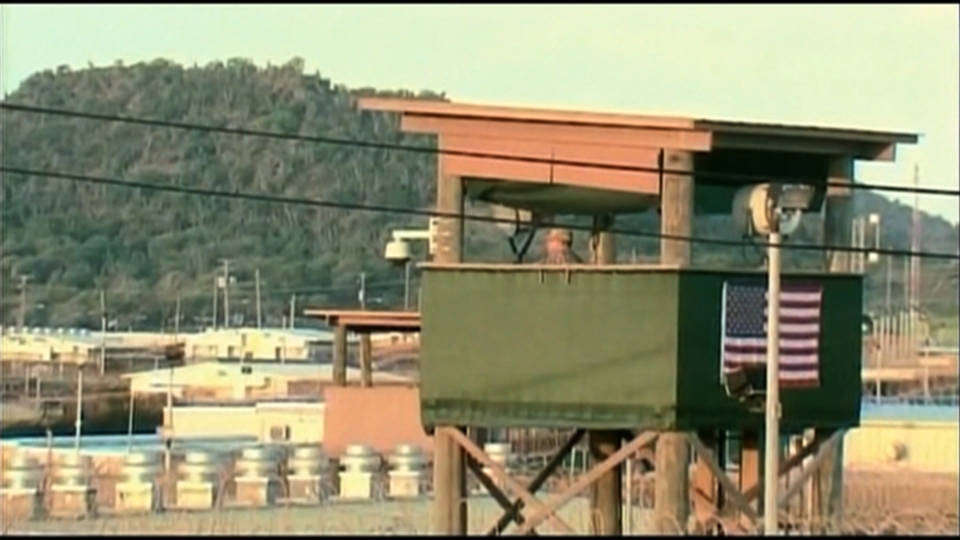
The Obama administration has transferred 10 Yemeni prisoners from Guantánamo Bay to Oman in what it calls a significant milestone. After the transfer, 93 prisoners remain at Guantánamo. Many have been cleared for release for years, some for over a decade. A review board has approved 34 prisoners for transfer, which the White House says will continue over the course of the year. Also Thursday, Defense Secretary Ashton Carter announced he’s prepared a plan that would move Guantánamo’s remaining prisoners to a secure site in the United States. President Obama is reportedly in the "final stages" of reviewing the plan.
Goldman Sachs Reaches $5 Billion Settlement over Financial Crisis

Goldman Sachs has reached a tentative $5 billion settlement with federal and state investigators over the investment bank’s role in the 2008 financial crisis. Goldman was under investigation for lying about the value of the mortgage-backed securities it sold in the years leading up to the crash. The sale of toxic securities helped trigger the global economic recession. Under the terms of the tentative settlement, Goldman will pay billions in civil penalties. No one will go to jail.
Michigan Attorney General to Investigate Flint Water Crisis

Michigan Attorney General Bill Schuette has announced he will investigate the water crisis in Flint to determine whether any Michigan laws have been violated. This comes as Governor Rick Snyder has appealed to President Obama to declare a major disaster over lead poisoning in Flint’s drinking water. The poisoning began after an unelected emergency manager appointed by Snyder switched the city’s water source to the corrosive Flint River in a bid to save money. Residents have reported lasting health impacts, including developmental and cognitive impairment in children. Governor Snyder asked for federal aid Thursday, amid new revelations that at least 10 Flint residents have died from Legionnaires’ disease during a surge in infections caused by the water-borne bacteria. This comes as the World Economic Forum’s annual Global Risks report has ranked water crises as the top global risk to industry and society over the next decade. We’ll go to Michigan to speak with Dr. Mona Hanna-Attisha, who headed the September study that discovered high levels of lead in the blood of Flint’s children, later in the broadcast.
Obama Expected to Announce Halt to All New Coal Mining Leases
The Obama administration is expected to announce plans to halt all new coal mining leases on public lands. Obama’s proposal follows demands by a coalition of more than 400 organizations that the White House stop issuing new leases for all fossil fuel extraction on public lands and oceans. Speaking on Democracy Now!, Tim DeChristopher explained the campaign’s significance.
Tim DeChristopher: "So there’s another 450 gigatons that could be kept in the ground by ending fossil fuel leasing. So it’s a major demand, and it’s something that I think is kind of a new step for the climate movement, for a lot of the mainstream groups that were a part of this coalition and are a part of this campaign, that we’re saying we’re no longer operating from a paradigm of deviating from the status quo, or operating from the paradigm of looking at the challenge of climate change and what’s actually necessary, and we’re going to find a way to make that happen."
In response to Obama’s planned announcement today to end all new coal leasing on federal lands, Luke Popovich, a spokesperson for the National Mining Association, said, "It appears that they’re going after the federal coal leasing program with the intention of keeping coal in the ground."
Nine Activists Go on Trial for Blocking Spectra Gas Pipeline
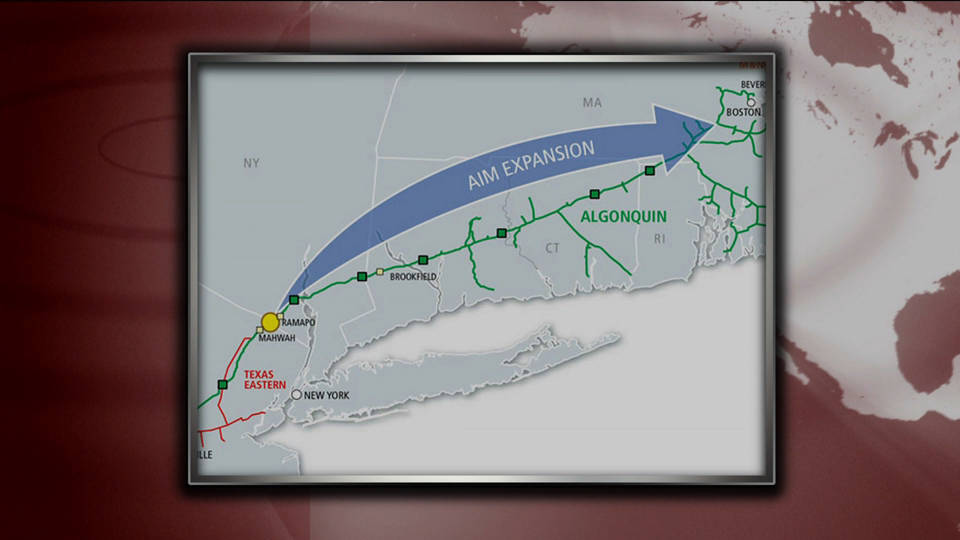
In New York state, nine activists arrested for blocking construction of a gas pipeline expansion are slated to begin trial, where they will use the necessity defense—arguing their actions were necessary because of the threat of climate change. On November 9, members of the group Resist AIM blocked the entrance to the construction area for the proposed expansion of the Spectra Energy Algonquin pipeline, which carries fracked methane gas across the East Coast. The use of the necessity defense in this case comes as five climate justice activists on trial in Washington state for blocking a mile-long oil train are also arguing their protest was necessary because of the climate change threat.
NCIS Reopens Probe of Navy SEALs' Alleged Beating of Afghan Detainees
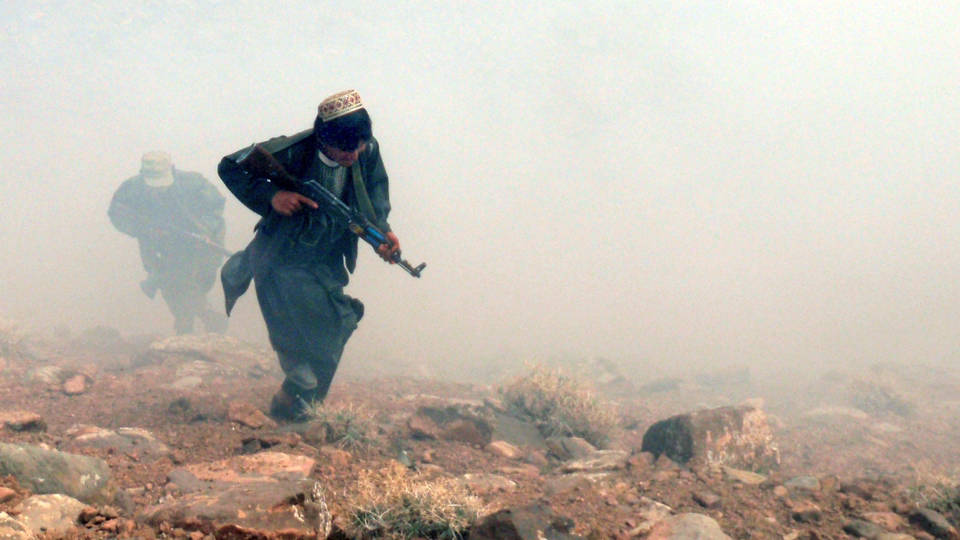
NCIS, the Naval Criminal Investigative Service, has reopened its investigation into accusations members of a Navy SEAL team brutally beat several Afghan detainees at a remote outpost in southern Afghanistan in 2012. This follows an investigation by The New York Times that found three Navy SEALs dropped heavy stones on the detainees’ chests, stomped on their heads, and poured bottles of water on their faces in a modified form of waterboarding. One of the detainees was beaten so badly he eventually died from his injuries.
Chicago Releases Footage of Another Police Killing of Black Teen

In Chicago, demonstrations dubbed "Black Wall Street" are planned for today to protest fatal police shootings of African Americans. The actions come one day after a federal judge forced Chicago to release video footage of the fatal police shooting of unarmed African-American teenager Cedrick Chatman. Seventeen-year-old Chatman was killed by Chicago police officer Kevin Fry in January 2013. The video footage from traffic surveillance cameras shows Chatman running away from two officers, who are chasing him down the street. One of the officers is clearly holding a gun. Both videos partially obscure the shooting itself, but each show Chatman crumpling to the ground after shots are fired. Police had claimed Chatman turned and pointed something at the officers, but neither video shows any signs the teenager turned. Police later learned Chatman was holding only the case of his iPhone. Police have said Chatman was pursued as a suspect in a car theft. Officer Kevin Fry, who killed Chatman, has reportedly had at least 30 civilians complaints filed against him over course of his career. Chatman’s family has sued the city over the shooting.
Chicago: Report Casts Doubt on Mayor's Claims He Did Not Know Details of McDonald Shooting
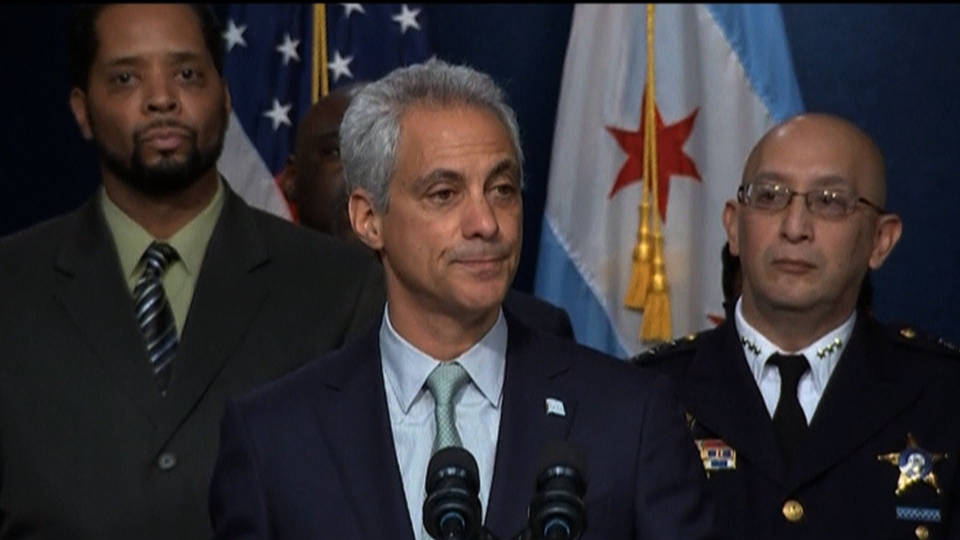
The release of this video footage comes amid increasing calls for Chicago Mayor Rahm Emanuel’s resignation over a possible cover-up after the fatal police shooting of another 17-year-old teenager, Laquan McDonald, who was shot 16 times by white police officer Jason Van Dyke more than one year ago. A new investigation by the Chicago Tribune suggests Emanuel may have known the details of the McDonald case far earlier than he’s admitted. The investigation shows Emanuel’s closest aides were concerned the McDonald case might create a political firestorm as early as December 2014. These aides and top police officials all began closely tracking the case. They also held multiple meetings with Emanuel over this time period. In April, during the mayor’s re-election campaign, the city agreed to a preemptive $5 million settlement with Laquan McDonald’s family after they obtained video footage of the killing.
Alabama Judge Throws Out Case Against Officer Who Partially Paralyzed Indian Grandfather
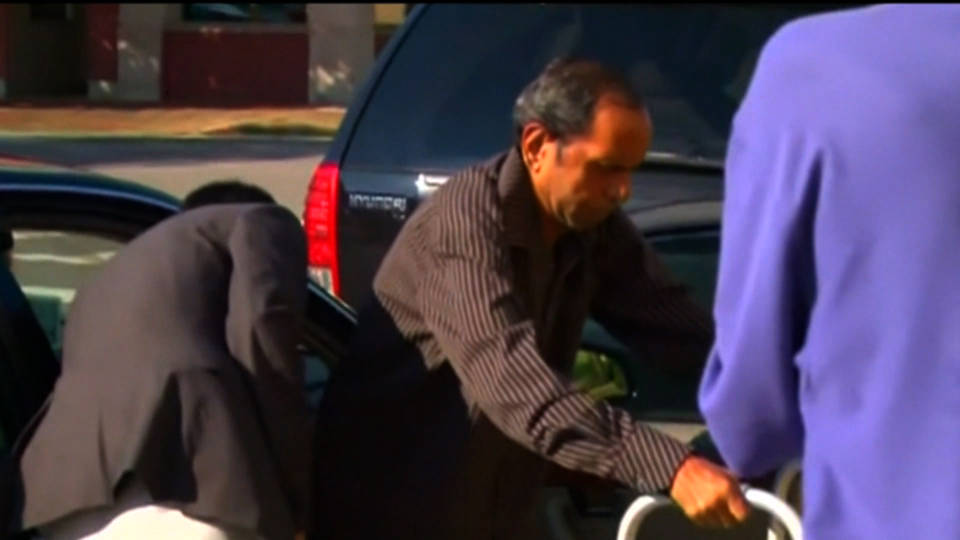
In Alabama, a federal judge has thrown out the civil rights case against the former Madison police officer accused of using excessive force against an unarmed Indian grandfather who was left partially paralyzed. In February 2015, Officer Eric Parker and other officers approached Sureshbhai Patel as he was taking a walk. A neighbor had called 911 to report a "skinny black guy" in the neighborhood. Dash camera footage shows police slamming Patel from a standing position face-first into the ground. On Wednesday, Judge Madeline Hughes Haikala granted a motion to acquit Officer Eric Parker, following two mistrials last year.
Ithaca College President Resigns Following Protests Against Racism
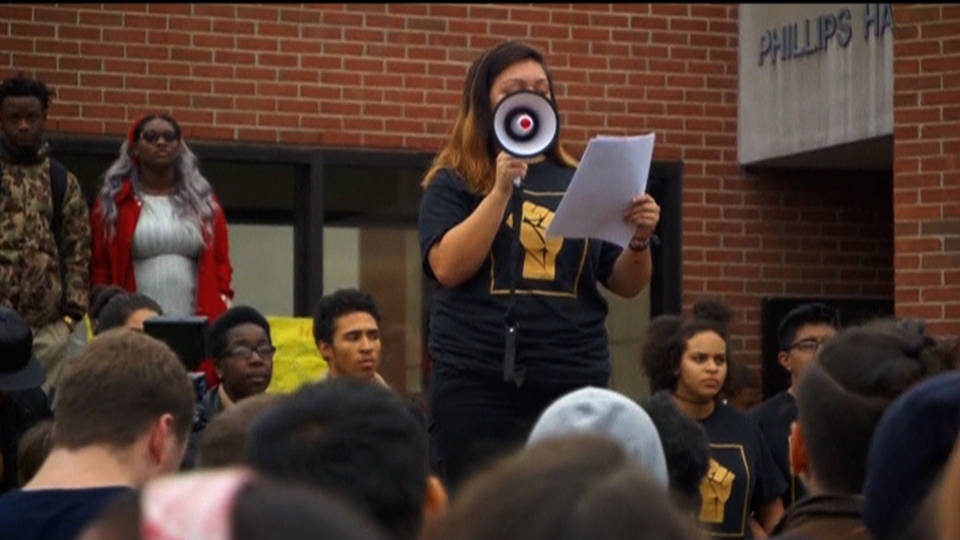
And in upstate New York, Ithaca College President Tom Rochon has resigned after months of protests against racism on campus. This comes one month after students voted overwhelmingly to cast a vote of no confidence against Rochon. Students have accused the college president of responding inadequately to racist incidents, including one where an African-American alum was repeatedly called a "savage" by two white male fellow alumni at a public forum on Ithaca College’s future. Speaking on Democracy Now! in November, Ithaca College professor Peyi Soyinka-Airewele discussed the campus’ grievances with Rochon.
Peyi Soyinka-Airewele: "I think the crisis we have at Ithaca College is certainly a long-standing historical struggle with President Rochon, who faculty, students and staff have found to be unaccountable, unresponsive, and alienated leadership. And so, this has been a long-standing struggle with the administration to create a community that is inclusive, not only of race, but of student voices, faculty input and staff input. And so, we’ve had many incidents over the past few years, since Rochon has been in office, that describe and show eloquently that he has absolutely no regard for the contributions of members of the community."
Donate today:
Follow:


WEB EXCLUSIVE

EXCLUSIVE M.I.A. Responds to French Soccer Team Demanding Takedown of "Borders" Video About Refugees
WEB EXCLUSIVE

The Look of Silence &What Happened, Miss Simone? Nab Oscar Nominations for Best Documentary
WEB EXCLUSIVE


Downtown Boys: "America's Most Exciting Punk Band" Performs & Discusses Making Change Through Music
WORK WITH DN!


Song Premiere: "Time Dreams" by The Pines with John Trudell
---------------------
207 West 25th Street, 11th Floor
New York, New York 10001, United States
---------------------
---------------------

No comments:
Post a Comment