democracynow.org
Stories:
 StoryCorps Launches #WhoWeAre Oral History Campaign to Feature Stories of Hope & Compassion
StoryCorps, the award-winning national oral history project, has launched a new campaign called #WhoWeAre to feature stories of hope and compassion. Some have a surprising twist. We feature two stories: one of Bronx social worker Julio Diaz, who was coming home from work when he had an encounter with a teenager who held him up at knifepoint, and an exchange between a father and son about living out their dreams.
TRANSCRIPT
This is a rush transcript. Copy may not be in its final form.
AMY GOODMAN: This is Democracy Now!, democracynow.org, The War and Peace Report, as we wrap up today’s show. Juan?
JUAN GONZÁLEZ: Well, we end with a new project from StoryCorps, the award-winning national social history project, the largest oral history project in the United States. Tens of thousands of people have recorded interviews with their loved ones in StoryCorps booths across the country.
AMY GOODMAN: Now StoryCorps has launched a new campaign called #WhoWeAre to bring stories of hope and compassion, some with a surprising twist. One is the story of Bronx social worker Julio Diaz, who was coming home from work when he had an encounter with a teenager who held him up at knifepoint. This is the unusual way Julio reacted.
JULIO DIAZ: So I get off the train. You know, I’m walking towards the stairs, and this young teenager pulls out a knife. He wants my money. So I just gave him my wallet and told him, "Here you go." He starts to leave, and as he’s walking away, I’m like, "Hey, wait a minute, you forgot something. If you’re going to be robbing people for the rest of the night, you might as well take my coat to keep you warm."
So, you know, he’s looking at me like, "What’s going on here?" You know? And he asked me, "Well, why are you doing this?" And I’m like, "Well, I don’t know, man. If you’re willing to risk your freedom for a few dollars, then I guess you must really need the money. I mean, all I wanted to do was go get dinner. And if you really want to join me, hey, you’re more than welcome." So I’m like, "Look, you can follow me if you want." You know, I just felt maybe he really needs help.
So, you know, we go into the diner, where I normally eat. We sit down in the booth, and the manager comes by, the dishwashers come by, the waiters come by to say hi, you know? So, the kid was like, "Man, but you know everybody here. Do you own this place?" I’m like, "No, I just eat here a lot." He’s like, "But you’re even nice to the dishwasher." I’m like, "Well, haven’t you been taught you should be nice to everybody?" So he’s like, "Yeah, but I didn’t think people actually behaved that way."
So I just asked him in the end; I’m like, you know, "What is it that you want out of life?" He just had almost a sad face. Either he couldn’t answer me or he didn’t want to. The bill came, and I look at him, and I’m like, "Look, I guess you’re going to have to pay for this bill 'cause you have my money and I can't pay for this, so if you give me my wallet back, I’ll gladly treat you." He didn’t even think about it. He’s like, "Yeah, OK, here you go." So I got my wallet back. And I gave—you know, I gave him $20 for it. You know, I figure maybe it’ll help him. I don’t know. And when I gave him the $20, I asked him to give me something in return, which was his knife. And he gave it to me.
You know, it’s funny, 'cause when I told my mom about what happened—you know, no mom wants to hear this, but with her, she was like, "Well, you know, you're the type of kid that if someone asked you for the time, you gave them your watch." I don’t know. I figure, you know, you treat people right, you can only hope that they treat you right. It’s as simple as it gets in this complicated world.
JUAN GONZÁLEZ: That’s Julio Diaz, one of the many voices in StoryCorps’s new #WhoWeAre campaign.
AMY GOODMAN: And we end with another story that hasn’t been released by StoryCorps yet. This is nine-year-old Aidan Sykes, who sat down to ask his father, Albert, a few questions.
AIDAN SYKES: Do you remember what was going through your head when you first saw me?
ALBERT SYKES: I remember when the doctor pulled you out, the first thing I thought was that he was being too rough with you. And he actually held you like a little Sprite bottle. And he was like, "Here’s your baby." That was the most proud moment in my life. Don’t tell your brothers, because there’s three of y’all. But it was like looking at a blank canvas and just imagining what you want the painting to look like at the end, but also knowing you can’t control the paint strokes. You know, the fear was just I got to bring up a black boy in Mississippi, which is a tough place to bring up kids, period. But there are statistics that say black boys born after the year 2002 have a one-in-three chance of going to prison. And all three of my sons were born after the year 2002.
AIDAN SYKES: So, Dad, why do you take me to protests so much?
ALBERT SYKES: I think I take you for a bunch of reasons. One is that I want you to see what it looks like when people come together, but also that you understand that it’s not just about people that are familiar to you, but it’s about everybody. Did you know the work that Martin Luther King was doing was for everybody, and it wasn’t just for black people?
AIDAN SYKES: Yes, I understand that.
ALBERT SYKES: Yeah. So that’s how you’ve got to think. If you decide that you want to be a cab driver, then you’ve got to be the most impactful cab driver that you can possibly be.
AIDAN SYKES: Are you proud of me?
ALBERT SYKES: Of course. You’re my man. I just love everything about you, period.
AIDAN SYKES: The thing I love about you, you never gave up on me. That’s one of the things I will always remember about my dad.
ALBERT SYKES: Wow, you say that like I’m on the way out of here or like I’m already gone.
AIDAN SYKES: So, Dad, what are your dreams for me?
AMY GOODMAN: That was nine-year-old Aidan Sykes, who sat down with his dad, Albert, to ask him a few questions for StoryCorps, the largest oral history project in the United States. Special thanks to Dave Isay. We’ll be playing some of these throughout next week. ...Read More →ALBERT SYKES: My dream is for you to live out your dreams. There’s an old proverb that talks about when children are born, children come out with their fists closed, because that’s where they keep all their gifts. And as you grow, your hands learn to unfold, because you’re learning to release your gifts to the world. And so, for the rest of your life, I want to see you live with your hands unfolded.
 "Because Scott Walker Asked": Leaked Docs Suggest Wisconsin Gov Illegally Raised Corporate Donations
An explosive new report by The Guardian reveals the extensive influence of corporate cash in U.S. elections through third-party groups that do not have to disclose their donors. It is based on 1,500 leaked court documents from an investigation by Wisconsin prosecutors into possible illegal fundraising by Republican Governor Scott Walker for the third-party group, Wisconsin Club for Growth. A conservative majority of Wisconsin’s Supreme Court halted the investigation last July before any charges were filed, and ordered all evidence from the investigation to be destroyed. But at least one copy of the documents survived. We speak with Ed Pilkington, chief reporter for The Guardian US, who used the files for his report, "Because Scott Walker Asked."
TRANSCRIPT
This is a rush transcript. Copy may not be in its final form.
JUAN GONZÁLEZ: We begin today’s show with an explosive new report that reveals the extensive influence of corporate cash in U.S. elections through third-party groups that do not have to disclose their donors. The report published by The Guardian is based on 1,500 leaked court documents from an investigation by Wisconsin prosecutors into possible illegal fundraising by Governor Scott Walker for the third-party group Wisconsin Club for Growth, a 501(c)(4) organization. Prosecutors gathered hundreds of email messages that show exchanges between Walker, his top aides, conservative lobbyists and leading Republican figures such as Karl Rove. Now-Republican presidential candidate Donald Trump also appears in the files from when he met with Walker and then donated $15,000 to the Wisconsin Club for Growth.
But last July, a conservative majority of Wisconsin’s Supreme Court halted the prosecutors’ investigation before any charges were filed. They said prosecutors had misread campaign finance law and that their targets were, quote, "wholly innocent of any wrongdoing." The justices also ordered that all evidence from the investigation should be destroyed. But at least one copy survived and was leaked to The Guardian.
AMY GOODMAN: This is how reporter Ed Pilkington begins his report: quote, "Scott Walker was under pressure. It was September 2011, and earlier that year the first-term governor had turned himself into the poster boy of hardline Republican politics by passing the notorious anti-union measure Act 10, stripping public sector unions of collective bargaining rights.
“Now he was under attack himself, pursued by progressive groups who planned revenge by forcing him into a recall election. His job was on the line.
“He asked his main fundraiser, Kate Doner, to write him a briefing note on how they could raise enough money to win the election. At 6.39am on a Wednesday, she fired off an email to Walker and his top advisers flagged 'red'.
“'Gentlemen,' she began. 'Here are my quick thoughts on raising money for Walker's possible recall efforts.’
“Her advice was bold and to the point. 'Corporations,' she said. 'Go heavy after them to give.' She continued: 'Take Koch's money. Get on a plane to Vegas and sit down with Sheldon Adelson. Ask for $1m now.’
“Her advice must have hit a sweet spot, because money was soon pouring in from big corporations and mega-wealthy individuals from across the nation. A few months after the memo, Adelson, a Las Vegas casino magnate who Forbes estimates has a personal fortune of $26bn, was to wire a donation of $200,000 for the cause.
“Adelson’s generosity, like that of most of the other major donors solicited by Walker and crew, was made out not to the governor’s own personal campaign committee but to a third-party group that did not have to disclose its donors. In the world of campaign finance, the group was known as a 'dark money' organisation, as it was the recipient of a secret flow of funds that the public knew nothing about.
One of the checks made out to the group, for $10,000, came from a financier called G Frederick Kasten Jr. In the subject line of the check, Kasten had written in his own hand:'Because Scott Walker asked'.
Well, for more, we’re joined by the man who wrote those words, Ed Pilkington, chief reporter for The Guardian US, author of this explosive report, "Scott Walker, the John Doe Files and How Corporate Cash Influences American Politics."
Welcome to Democracy Now! It’s great to be with you again. Ed, explain the significance of this and how you got these leaked 1,500 documents.
ED PILKINGTON: Well, I’m not going to discuss how I got the documents. You’ll understand that. We’re not talking about anything to do with sources, and which is a relevant matter today because in Wisconsin they are talking about launching a leak inquiry. The attorney general of Wisconsin has said he will consider appointing a special prosecutor himself to go after the source of these documents. So, it’s a sensitive and important issue, and one we’re being very clear on: We’re not going to discuss anything to do with sources.
But what we think we saw in these 1,500 pages of documents that we received is not only a very intense story about Wisconsin, which is a noble state with a very long tradition of very progressive politics, that has become, I think, a kind of ground zero of the battles, partisan battles, between left and right, ever since Scott Walker became governor in early 2011 and introduced this union-bashing law, Act 10, but it also tells us—and this is what we tried to focus on at The Guardian—it tells us a much wider picture of what’s happening right across the nation, which is all about, I think, the atmosphere and the environment created by Citizens United, the Supreme Court ruling of 2010, in which it seems to be that politicians, senior politicians around the country, are interpreting the ruling almost as anything goes. They’re entitled now to do pretty much anything. They can attract millions of dollars of funding from the top billionaires right across the country. They can channel it through these dark money groups, which do not—have no limits on how much they can collect, do not disclose their donations to the public, and go that way in order to—what the prosecutors alleged in Wisconsin—to circumvent campaign finance law to the detriment of the public, because the public doesn’t know that this stuff is going on.
JUAN GONZÁLEZ: And, Ed Pilkington, in your story, you note not only that these justices in Wisconsin decided there was no crime here that needed to be a prosecuted, but also that they, one, ordered the destruction of the documents, and, two, that some of these very justices had been re-elected as a result of dark money contributions to them.
ED PILKINGTON: That’s right. You know, once one delves into the documents and into the story, you find yourself going into a sort of vortex of ever-tightening circles, where everyone seems to be talking to everybody else. And again, we saw that as a sort of metaphor for what’s happening across the country.
We focused on one justice of Wisconsin’s Supreme Court called David Prosser, who has in fact just retired, but he was re-elected in 2011. And he himself drew upon the support of millions of dollars of corporate money, pushed through exactly the same third-party groups that then went on, at the same time, to help Republican senators, and then Scott Walker himself, go through their recall elections.
Now, the John Doe investigation that created all this evidence, that is the documents we received, was looking into exactly those groups, right? The Supreme Court of Wisconsin ordered the documents in which this material is contained to be destroyed. And yet, in the documents is evidence that the same groups were supporting one of those justices on the Supreme Court of Wisconsin in his own re-election. So, as I say, you find yourself going in ever-tighter circles, and you kind of wonder: You know, where is the sort of openness? Where is the transparency? Where is the being honest with the Wisconsin public about what is going on here?
AMY GOODMAN: We’re going to go to break and then come back to this discussion. We’ll also be joined also by John Nichols of The Nation in Madison, Wisconsin. These are astounding leaked documents, an explosive new report by Ed Pilkington, chief reporter forThe Guardian US. We will link to his piece, "Because Scott Walker Asked." But we’re going to talk with him further about it in a moment.
[break]
AMY GOODMAN: "Save the Clock Tower" by Body Futures, here on Democracy Now!, democracynow.org, The War and Peace Report. I’m Amy Goodman, with Juan González. We’re speaking with chief reporter for The Guardian US, author of an explosive new reportcalled "Because Scott Walker Asked."
JUAN GONZÁLEZ: Well, at a press conference on Thursday, Wisconsin Governor Scott Walker said he’ll leave an investigation into the John Doe documents leak to legal authorities.
GOV. SCOTT WALKER: We’ve been scrutinized more than any elected official in America. And we’ve had several courts, not just one, including a local circuit court judge, that was reserve judge, well respected, just over in Eau Claire County, who, to my knowledge, is not aligned politically with anyone, has shut down this baseless investigation multiple times. And we’ve seen it through various courts. And what you have are people who’ve failed to win in a court of law because their arguments were baseless when it comes to law, now trying to selectively put out bits and pieces of information to try and win in the court of public opinion. But they’re doing it without context. So, we’re going to abide by what was requested in the first place by the legal system, which was not to comment on those things until they’re fully resolved. And there’s still one more quest in terms of the U.S. Supreme Court that they’re going to; we don’t think it’s likely that they’ll get traction there. But it is frustrating when it’s been time and time shut down by the courts.
JUAN GONZÁLEZ: That was Wisconsin Governor Scott Walker speaking on Thursday. We’re speaking here with the chief reporter for The Guardian, the U.S. author of a new—explosive new report called "Because Scott Walker Asked." Ed Pilkington, I wanted to ask you not only to respond to what Walker said, but also, if you could, one of the people you mentioned in your article was Harold Simmons and his company NL Industries—if you could talk about their role and what you found?
ED PILKINGTON: Yes. I mean, at the heart of most campaign finance law is the fear that unless you protect—unless there is some degree of regulation, there could be quid pro quo, literally, this for that, or you scratch my back, I’ll scratch yours. And in the documents, there is some suggestion that at least even the appearance of quid pro quo could be there. And the Supreme Court of the United States has made it clear very many times that even appearance of quid pro quo must be avoided.
Now, in the documents is evidence that Scott Walker, in his own recall election in 2012, went after and encouraged donations from Harold Simmons. He was a very wealthy billionaire, right-wing funder. He bankrolled the Swift Boat smear campaign against John Kerry in the 2004 election. There is evidence of Walker’s campaign committee discussing the need to go after Harold Simmons, get money from him. And sure enough, three separate checks amounting to $750,000 did arrive in 2011 and 2012 at exactly the same time of the recall elections. They went through a third-party dark money group called Wisconsin Club for Growth that did not disclose those donations. And, in fact, the donations were never known until we received these leaked documents. At exactly the same time frame, the Republican-controlled Legislature in Wisconsin made several attempts to change the law to make it almost impossible for victims of lead paint poisoning to sue for compensation, if they were damaged by toxin—
JUAN GONZÁLEZ: And Harold Simmons’s connection to lead paint?
ED PILKINGTON: Harold Simmons owned a company called NL Industries, historically National Lead Industries. They were one of the biggest manufacturers of lead paint until lead paint was banned in 1978. And if the law had not been stopped by the federal courts, as it was, the law—the legal changes that the Republicans made in the Legislature, it would have been virtually impossible for children damaged by lead paint—as you know, it affects developmental—the development of children. The level of toxin in their blood was something like 50 times greater than the water—those damaged by the water in Flint, Michigan. And the changes the Republicans made would have made it virtually impossible for those children to sue for compensation for the very serious injuries they received.
AMY GOODMAN: So let’s go back to the other people who contributed money. At the beginning of this report, in the last segment, we talked about the Koch brothers, we talked about Sheldon Adelson. Explain what happened. I mean, I think our listeners, viewers, readers remember well 2011, when protests rocked the Wisconsin Capitol, the uprising of 150,000 people at the state Capitol as they took over the Capitol, occupied it. Police officers, firefighters, nurses, teachers, high school kids, environmentalists, union activists all slept at the Capitol night after night. Talk about what happened next with this recall campaign and the money that Walker was appealing for.
ED PILKINGTON: Right. You describe well these scenes that happened there and then, extraordinary events, very, very dramatic. Even the Democratic senators fled to Illinois, if you remember, for several days. And we all remember those heady events. Scott Walker put a bomb under Wisconsin in Act 10, and it turned it, as I said earlier, into this sort of ground zero of partisan politics in the country. And in the fallout from that, he was—he and his—six of his senator colleagues from the Republican Party were put through recall elections.
At that point, it kind of went dark for the public of Wisconsin, and they couldn’t follow what happened next, which was that Scott Walker’s campaign committee got together major fundraisers, political organizers, and they started fanning out across the country. Literally, Scott Walker himself made several trips down to Texas to call on oil money. He went over to New York. He did a journey one memorable day down Fifth Avenue in Manhattan, where he went to spend 45 minutes with Donald Trump. And he went to Morgan Stanley and a big law firm. And in every occasion, you see him going to visit these major billionaire donors, and a few days or weeks later, checks starting to arrive, not to his own campaign committee, but largely to the coffers of this third-party group, Wisconsin Club for Growth.
And I should say, if people are interested enough in what is a fiendishly complicated world, I have to warn you, of campaign finance in America—which is, I think, part of the problem—they can themselves go in and read all of these documents. We have lightly redacted them for personal information, but, otherwise, they’re on our website. You can go in, and you can absolutely make your own conclusions from this. And you may think it’s great, you may think it’s awful, but you can do it for yourself.
JUAN GONZÁLEZ: And you mention—you mention Donald Trump, whose campaign contributions are coming back to haunt him, several of them, in this campaign. What specifically happened with Trump?
ED PILKINGTON: Specifically, Scott Walker went across to New York in early, I think it was, 2012. He did this tour down Fifth Avenue. The documents show a sort of calendar of his day. We have no transcript of the discussion between them, but he did spend 45 minutes—it was in his schedule—with Donald Trump in his Fifth Avenue headquarters. On that very same day, Donald Trump wrote a check for $15,000. We have the check from the documents. We post—they are among the documents you can see in the database. And, you know, in the subject line, it was made out to Wisconsin Club for Growth.
JUAN GONZÁLEZ: I want to turn to a clip from the first Republican presidential debate held in August of last year. Wisconsin Governor Scott Walker was a candidate at the time, and he participated in the debate. This is moderator Bret Baier of Fox News questioning Donald Trump.
BRET BAIER: Mr. Trump, it’s not just your past support for single-payer healthcare. You’ve also supported a host of other liberal policies. You’ve also donated to several Democratic candidates, Hillary Clinton included, Nancy Pelosi. You explained away those donations, saying you did that to get business-related favors. And you said recently, quote, "When you give, they do whatever the hell you want them to do."
DONALD TRUMP: You better believe it. That’s true.
BRET BAIER: So what specifically did they do?
DONALD TRUMP: If I ask them, if I need them—you know, most of the people on this stage, I’ve given to, just so you understand. A lot of money.
SEN. MARCO RUBIO: Not me.
MIKE HUCKABEE: Not me. But you’re welcome to give me a check, Donald, if you’d like.
DONALD TRUMP: Many of them.
SEN. MARCO RUBIO: Actually, to be clear, he supported Charlie Crist, gave Charlie—
DONALD TRUMP: That’s right. Not—not Mike. But I—I have—
GOV. JOHN KASICH: If you end—hey, Donald, Donald, if you end your campaign, I hope you will give to me.
DONALD TRUMP: Good.
GOV. JOHN KASICH: OK.
DONALD TRUMP: Sounds good. Sounds good to me, Governor. I will tell you that our system is broken. I gave to many people, before this. Before two months ago, I was a businessman. I give to everybody. When they call, I give. And you know what? When I need something from them, two years later, three years later, I call them, they are there for me.
SEN. MARCO RUBIO: So what did you get?
DONALD TRUMP: And that’s a broken system.
JUAN GONZÁLEZ: That was Donald Trump at the Fox News Republican primary debate. Documents leaked in the John Doe investigation show Trump did give at least to one of the candidates on that stage: Scott Walker. And as we’ve mentioned, on April 3rd, 2012, he wrote a check for $15,000, not to Walker’s campaign fund, but to the Wisconsin Club for Growth. Ed Pilkington, this is business as usual at this stage in American politics.
ED PILKINGTON: Yes, I mean, it underlines what an extraordinary presidential election we’re going through. On the one hand, you had Bernie Sanders; on the other hand, you had Donald Trump—two complete opposites politically, saying exactly the same thing, that the political system is broken, that billionaires and corporations have politicians in their pocket. In the case of Donald Trump, he said it personally; he had politicians in his own pocket. And I think that speaks to something that is of increasing concern to voters, and explains the anger that voters have, that they feel their vote is—counts less than the money that is being contributed to politicians.
AMY GOODMAN: I wanted to go back to 2011. A blogger named Ian Murphy revealed he had impersonated David Koch in a recorded phone conversation with an unsuspecting Governor Walker. Murphy said he pulled the prank after learning that Walker was refusing to return phone calls from Democratic senators. During the 20-minute conversation, Governor Walker admitted he had considered disrupting opposition to his anti-union bill by planting troublemakers among the protesters. This clip begins with the blogger, Ian Murphy, impersonating David Koch.
IAN MURPHY: We’ll back you any way we can. But what we were thinking about the crowds was—was planting some troublemakers.
GOV. SCOTT WALKER: You know, the—well, the only problem with—because we thought about that. The problem with—or my only gut reaction to that would be, right now, the—the—and the lawmakers I’ve talked to have just completely had it with them. The public is not really fond of this.
AMY GOODMAN: Well, at the time of the call, the Public Campaign Action Fund was saying Governor Walker may have violated a law that forbids politicians from coordinating with political donors. The prank phone call ended with the David Koch impersonator inviting Governor Walker to visit him in California.
IAN MURPHY: Well, I’ll tell you what, Scott, once you crush these bastards, I’ll fly you out to Cali and really show you a good time.
GOV. SCOTT WALKER: All right, that would be outstanding. Thanks—
IAN MURPHY: All right.
GOV. SCOTT WALKER: Thanks for all the support and helping us move the cause forward. And we appreciate it. We’re—we’re doing it, the just and right thing for the right reasons, and it’s all about getting our freedom back.
IAN MURPHY: Absolutely. And, you know, we have a little bit of vested interest, as well.
GOV. SCOTT WALKER: Well, that’s just it. The bottom line is, we’re going to—we’re going to get to the—the world moving here, because it’s the right thing to do.
AMY GOODMAN: That’s Wisconsin Governor Scott Walker in 2011, speaking last year with a man he thought was Republican funder, the billionaire Republican funder David Koch, one of his supporters, but in fact it was an impersonator. The Governor’s Office had confirmed the authenticity of the recording. We’re talking to Ed Pilkington, who is the chief reporter for The Guardian US, and we’re going to link to his piece, "Because Scott Walker Asked."...Read More →IAN MURPHY: All right.
 Hit Man Recalls Violent Past of Philippine President as Wave of Killings Raises Human Rights Concerns
A wave of extrajudicial killings in the Philippines has claimed thousands of lives since Rodrigo Duterte became president in June. Duterte vowed during his campaign to crack down on drug users just like he did as the longtime mayor of the city of Davao, where his strongman tactics prompted Human Rights Watch to call him the "death squad mayor." His promises to end crime during his presidential campaign earned him a new nickname: "Filipino Trump." A former hit man testified Wednesday that while Duterte was mayor, he personally ordered him to carry out assassinations. This comes after President Obama canceled a meeting with Duterte during his trip to Laos after he called him a "son of a whore" and warned him not to ask about his so-called drug war. We speak with Ninotchka Rosca, a Filipina activist, feminist and author of “State of War,” a novel set in the Philippines during the dictatorship of Ferdinand Marcos.
TRANSCRIPT
This is a rush transcript. Copy may not be in its final form.
JUAN GONZÁLEZ: We turn now to the Philippines, where a wave of extrajudicial killings has claimed thousands of lives since Rodrigo Duterte became president in June. During his campaign, Duterte vowed to crack down on drug users just like he did as the longtime mayor of the city of Davao, where his strongman tactics prompted Human Rights Watch to call him the "death squad mayor." His promises to end crime during his presidential campaign earned him a new nickname: "Filipino Trump." Well, on Thursday, a former hit man testified that while Duterte was mayor, he personally ordered him to carry out assassinations.
EDGAR MATOBATO: [translated] The killings in Davao City started from 1988 to 2013. I think we have killed over a thousand people in Davao City alone.
JUAN GONZÁLEZ: The self-confessed hit man told senators that while Duterte was mayor, he once ordered him to kill Senator Leila de Lima, one of his outspoken critics.
EDGAR MATOBATO: [translated] They decided and ordered to ambush you.
SEN. LEILA DE LIMA: [translated] Who decided to ambush me?
EDGAR MATOBATO: [translated] Mayor Duterte.
SEN. LEILA DE LIMA: [translated] How did you know?
EDGAR MATOBATO: [translated] We were told about it inside the office. So we just stayed there, waiting for you. But you did not go up, and just stayed at the entrance. So we just stayed there waiting.
JUAN GONZÁLEZ: During the same hearing, a Philippine police chief said at least 1,500 people have been killed in police operations against illegal drugs. Another 2,000, murdered by unknown assailants, are under investigation. That brings the total to more than 3,500 people killed during Duterte’s 78 days as president.
AMY GOODMAN: Before he was elected, Duterte admitted he was linked to a death squad in Davao. He spoke on a local TV show in a mix of English and Visayan.
MAYOR RODRIGO DUTERTE: [translated] Me. They are saying I’m part of a death squad.
HOST: So, how do you react to that?
MAYOR RODRIGO DUTERTE: [translated] True. That’s true. You know, when I become president, I warn you—I don’t covet the position, but if I become president, the 1,000 will become 50,000. I will kill all of you who make the lives of Filipinos miserable. I will really kill you. I won because of the breakdown in law and order.
AMY GOODMAN: All of this comes as President Barack Obama was slated to meet with the controversial Philippine president during his three-day trip to Laos. But Obama canceled the meeting after Duterte called him a "son of a whore" and warned him not to ask about his so-called drug war. They later had a brief exchange behind closed doors. This is President Duterte.
PRESIDENT RODRIGO DUTERTE: I am a president of a sovereign state, and we have long ceased to be a colony. I do not have any master except the Filipino people, nobody but nobody. You must be respectful. Do not just throw away questions and statements. [translated] Son of a whore, I will swear at you in that forum.
AMY GOODMAN: Well, for more, we’re joined by Ninotchka Rosca, a Filipina activist, feminist and writer, author of State of War, a novel set in the Philippines during the Marcos dictatorship. In 1993, she received the American Book Award for her novel Twice Blessed.
It’s an honor to have you with us, Ninotchka.
NINOTCHKA ROSCA: Hi. Good morning.
AMY GOODMAN: Explain who your president is.
NINOTCHKA ROSCA: Rodrigo Duterte is actually a compound of all of the contradictions in Philippine society, contradictions which are now surfacing in very vicious ways. His father was a Marcos crony, but his mother organized demonstrations against the Marcos dictatorship, so you had these two. And he was actually appointed during the reign of Cory Aquino to be vice mayor of Davao, Davao City. So, he comes from the two main contending factions in Philippine politics. But this is very normal for politicians in the Philippines. They will align themselves with one faction and change affiliation the next day, because the truth of the matter is we don’t really have a political party, as political parties are understood in the West.
JUAN GONZÁLEZ: But how was he able to cobble together a victory to win the presidency, being so openly willing to say, "I’m going to kill people if I feel it’s necessary"?
NINOTCHKA ROSCA: I think there was an overwhelming sense of the effeteness of the traditional groups of—what would you call it?—the traditional oligarchs. Duterte’s alliance is built up of the left, Marcos cronies and everybody else whom the Aquino faction had offended—Gloria Macapagal Arroyo, Estrada and so on. So, I think people were just tired of the constant roiling, of these contradictions being postponed, the resolution of contradictions being postponed.
AMY GOODMAN: So, during Thursday’s Senate hearing—
NINOTCHKA ROSCA: Yes.
AMY GOODMAN: —you have this hit man who said that Duterte paid him to carry out summary executions while he was the Davao mayor. The Senate hearing was held to investigate this wave of extrajudicial killings that’s claimed more than 3,000 lives during President Duterte’s very short term here.
NINOTCHKA ROSCA: Three months, yes. Senator de Lima, who was—who used to be with the Commission on Human Rights in the Philippines, tried to investigate the reports of the Davao death squad, but she couldn’t make headway on this, because the witnesses would disappear or—not die, but run away and hide. I think she decided to open this, partly because she has a certain amount of power now as a senator, and because the president, Duterte, went after her in a really vicious manner, coming out with revelations about her sex life, her love life, and trying to link her to drugs in the Philippines.
JUAN GONZÁLEZ: President Duterte has also called for the removal of U.S. troops from the island of Mindanao.
NINOTCHKA ROSCA: Yes, yes.
JUAN GONZÁLEZ: A lot of our viewers and listeners, especially the younger ones, may not be that familiar with the historical relationship of the Philippines to—the special relationship that the Philippines has had with the United States since it was originally a colony or after the Spanish-American War.
NINOTCHKA ROSCA: Yes.
JUAN GONZÁLEZ: Could you talk about that relationship, and to the U.S. troops, especially?
NINOTCHKA ROSCA: Sure. We were the only colony of the United States in the Far East. It used to be called the Far East. And despite the fact that independence had been granted in 1946 to the Philippines, the United States kept control of two very important aspects of the Philippine governance. One is the military, because the Philippine armed forces grew out of the Philippine Scouts, which had been set up by the U.S. occupation, occupying troops, to run after the revolutionary forces in the 1800s. So, we have a military that is totally under the control of the United States. That’s one. And then the United States has also kept control over our foreign policy. It’s always been staunchly anti-communist, pro-United States. And so, so these two things. This has persisted to this day. There was a point around 1993 when the U.S. military bases were thrown out of the Philippines in the aftermath of the Marcos dictatorship, because people were so disgusted with the 20 years of support that the United States gave to the dictatorship that people said, "Throw out the bases." So that was thrown out.
AMY GOODMAN: After Marcos.
NINOTCHKA ROSCA: After Marcos. And then, what happened was this Abu Sayyaf came up in Mindanao and started launching raids and bombings, Davao included.
AMY GOODMAN: So, as we wrap up—
NINOTCHKA ROSCA: Yes.
AMY GOODMAN: —what will happen with Duterte? I mean, he’s been called the Philippines Trump. Why? And are people organizing? And do you think he’ll make it to the end of his term?
NINOTCHKA ROSCA: It has been a very volatile beginning. It’s only been three months. And what he has done is strengthen the police as a counterbalance to the military. So this is problematic. We actually cannot tell what’s going to happen. There are too many large forces operating around this question, yeah.
AMY GOODMAN: Well, Ninotchka Rosca, we thank you so much for being with us.
NINOTCHKA ROSCA: Thank you.
AMY GOODMAN: Filipina activist, feminist, writer, author of State of War, a novel set in the Philippines during the dictatorship of Ferdinand Marcos. ... Read More → Will SCOTUS Let Investigation Continue into Alleged Illegal Fundraising by Republican Scott Walker?
We go to Wisconsin to get reaction from The Nation’s John Nichols to a new report on possible illegal fundraising by the state’s Republican governor, Scott Walker, for the third-party group Wisconsin Club for Growth. The report is based on leaked documents from an investigation the state’s highest court halted in 2015. "Governor Walker has survived revelations of this sort before," Nichols says, but adds that he could face a challenge if the U.S. Supreme Court decides to allow the investigation to proceed. In its Citizens United ruling, Nichols notes, "the court said that transparency, knowing how the money is raised and who is raising it … was a vital part of guarding against the legitimate concerns of citizens about corruption and about the danger of allowing corporations and wealthy individuals to be so dominant in our politics."
TRANSCRIPT
This is a rush transcript. Copy may not be in its final form.
AMY GOODMAN: We’re also joined in Madison by John Nichols, political writer for The Nation. John, what’s response to this explosive Guardian report?
JOHN NICHOLS: It’s been big news in Wisconsin—front page of the newspapers, on radio. It’s funny. As I was driving to the studio this morning, it was the lead story on public radio. And so, this is being discussed a great deal.
But we do—I would suggest that Wisconsin is like the rest of the country in this regard, and it is a challenging situation, because the lines have been drawn so hard and so deeply that instead of what you would have seen maybe 20, 30 years ago, when you had a revelation of this sort, where everybody is shocked and horrified and says, "Well we’ve got to do something about this," you have Democratic legislators calling for investigations, you have public interest groups calling for investigations. You have Republican legislators kind of jumping into process and saying, "Well, you know, how did The Guardian—what’sThe Guardian got here? How did this happen?" And this—one thing to remember is that the John Doe investigations—a couple of them have been going on for a long time in Wisconsin—there have been a lot of leaks. Clearly, what The Guardian has now is the biggest leak and the most detailed one, but there have been a lot over the years. And so, I think that you’re seeing individuals and groups kind of go to their camp, go to their side, and fight this out.
And remember that Governor Walker has survived revelations of this sort before. And weirdly enough, that’s where you begin to see the intercept. The Wisconsin Democracy Campaign said back in 2012, or revealed back in 2012, when it analyzed all the money that the governor had, as well as many of the groups that helped him in that campaign or were sympathetic to him in that recall campaign, that he had roughly, in the final fight there, a two-to-one advantage financially. He literally was able to overwhelm the process with money. And at the heart of this, we now know more about where the money came from and how it was raised, but the reality of the money is still there, that great mass of money.
And so, in Wisconsin, one of the real challenges now is this question. In a state that is essentially under one-party rule, where you now have evidence of a governor flying around the country, collecting money from billionaires and corporate interests to protect himself, you have evidence of his legislative allies literally acting in the way that those interests and those allies would prefer, and then you have a court, a state Supreme Court, on which people who clearly should have recused themselves from these cases are not only voting on these cases, but actually writing decisions. I think an awfully lot of Wisconsinites are horrified, but also uncertain about how this thing gets fixed in this state. And so, I think that’s why there’s an awful lot of interest in the U.S. Supreme Court examination of these issues.
JUAN GONZÁLEZ: Well, John, precisely, I was going to ask you about that. The prosecutors who were denied the chance to go forward with this case have appealed. And what’s your sense of whether the Supreme Court will take the case up, and also what the results could be, given the current composition of the court?
JOHN NICHOLS: Well, the court is missing a member, so you’ve got a closer split on it than you historically have. And you should always be careful about trying to read the minds of members of the U.S. Supreme Court. However, one thing that’s interesting here, and I don’t think it’s discussed enough, when the United States Supreme Court did theCitizens United ruling—which I’ve been very, very critical of for a long time; in fact, Bob McChesney and I wrote a book about it called Dollarocracy, where we examine a lot of these issues—one of the interesting things in the Citizens United ruling is that the court said that transparency, knowing how the money is raised and who is raising it and who it’s coming from, was a vital part of guarding against the legitimate concerns of citizens about corruption and about the danger of allowing corporations and wealthy individuals to be so dominant in our politics. So this court, even conservative members of it, have acknowledged the necessity of transparency, of knowing what’s going on and, obviously, of maintaining campaign finance laws that were on the books, that are, in many cases, still on the books. So, one would hope that the United States Supreme Court would recognize the need to step in on this, if only to clarify their own statements of the past about the absolute necessity of transparency.
AMY GOODMAN: Well, we want to thank you both for being with us, John Nichols, political writer for The Nation; Ed Pilkington, chief reporter for The Guardian US, author of the explosive new report called "Because Scott Walker Asked." And you can go to thedocuments right at his site, and we’ll link to it at democracynow.org. Thanks, Ed. Thanks, John.
This is Democracy Now! When we come back, what’s happened to thousands of people killed in the Philippines? We’ll be talking about the new president, Duterte, and then a remarkable new StoryCorps project. Stay with us. ... Read More → Exclusive Video: Ex-Gitmo Prisoner Dhiab Awakes from Coma in Uruguay
And in Uruguay, former Guantánamo prisoner Abu Wa’el Dhiab has awoken from a coma amid an ongoing hunger strike demanding he be allowed to leave Uruguay and reunite with his family in Turkey or in another Arabic-speaking country. Dhiab was imprisoned in Guantánamo for 12 years without ever being charged with a crime. While in Guantánamo, Dhiab also launched a hunger strike to demand his freedom. He was among a group of prisoners subjected to forced feeding. The Obama administration is refusing to release video of the forced feeding to the public, but did give the redacted videotape to a court, which reportedly shows graphic images of guards restraining Dhiab and feeding him against his will. Human rights groups have long said the forced feeding of Guantánamo prisoners amounts to torture. On Thursday, only hours after Dhiab awoke from his coma, Amy Goodman spoke to him in an exclusive Democracy Now! interview. He was lying on his bed, very weak, in downtown Montevideo. Goodman began by asking him how he feels.
Abu Wa’el Dhiab: "I feel really very, very worse. All my body hurt me, and my kidney, my headache, my stomach, my right side really bad. Many things. But I feel all my body hurt me."
Amy Goodman: "There’s a battle in court in the United States to release the videotape of your force-feeding in Guantánamo. Can you describe what that force-feeding was like for you?"
Abu Wa’el Dhiab: "Like the United States always say in the media, 'Human rights, human rights, human rights.' There’s never in Guantánamo, don’t have any human rights. Never, never, never. He took the video from first time go to me in my cell to move me to chair and give me the tube for give me forced feeding. But if you see this video and see the guard, how treated with me, how beat me, how make with me, that’s not human."
Amy Goodman: "President Obama says he wants to close Guantánamo. Do you believe that will happen?"
Abu Wa’el Dhiab’s daughter is getting married this weekend in Turkey—an event Dhiab had longed to be at. He continues his hunger fast in Uruguay. ... Read More →Abu Wa’el Dhiab: "If he wants to close Guantánamo, he can. He can now. Now. He can give order, close Guantánamo. He can close Guantánamo. But he coward. He can’t take this decision, because he scared. But Guantánamo supposed to close, should be closed, Guantánamo, because Guantánamo, that’s not good for the United States. Never."
Headlines:
Trump Continues to Refuse to Acknowledge Obama Born in U.S.
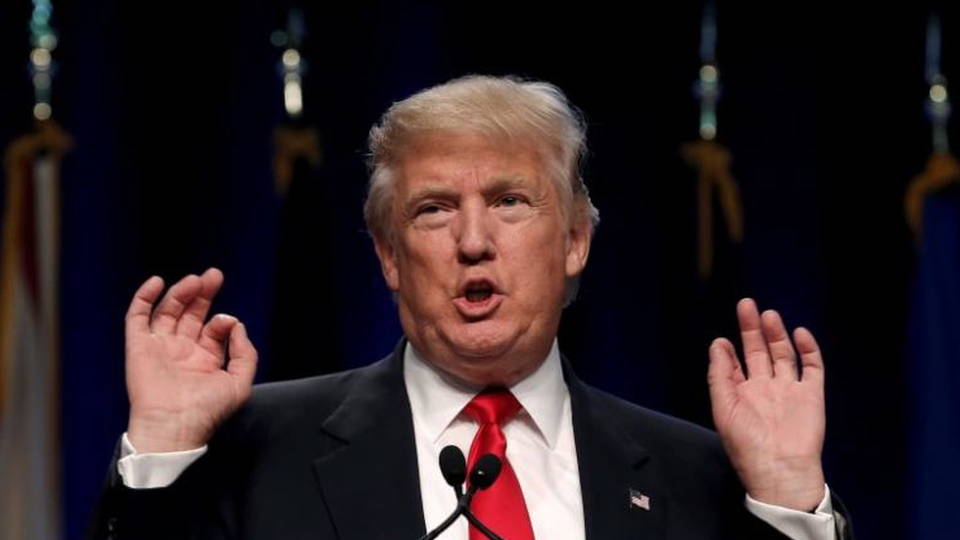 Donald Trump is continuing to refuse to acknowledge that President Obama was born in the United States. In an interview with The Washington Post on Wednesday, Trump refused to answer a reporter’s question about whether he accepts that Obama was born in Hawaii, instead saying, "I’ll answer that question at the right time. I just don’t want to answer it yet." In contrast, Trump’s vice-presidential running mate, Indiana Governor Mike Pence, acknowledges President Obama was born in Hawaii. Trump’s campaign manager Kellyanne Conway has also contradicted Trump, claiming he now accepts Obama was born in the U.S. Trump has long been a leader of the so-called birther movement, which former Secretary of State Colin Powell has slammed in recently leaked emails as being a "racist" movement.
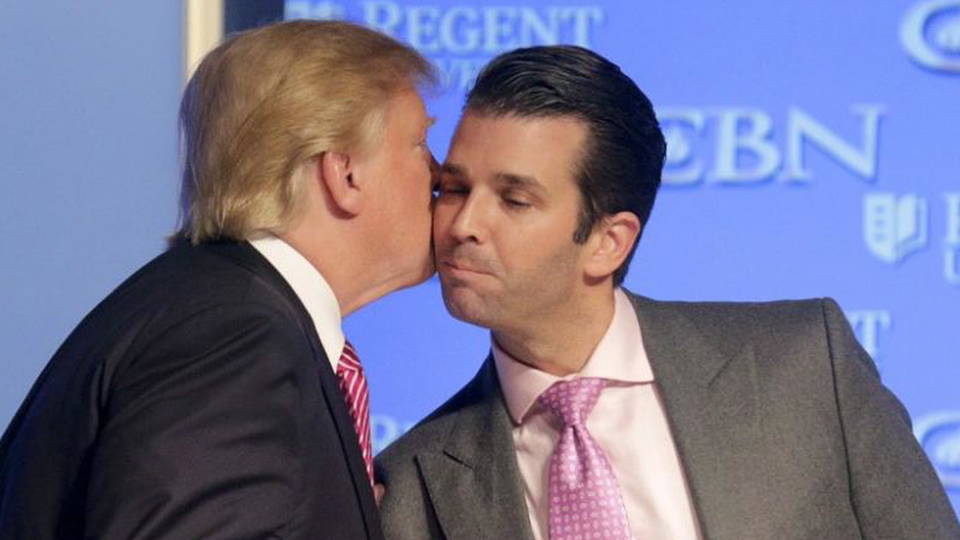 Meanwhile, Donald Trump’s son, Donald Trump Jr., has also sparked controversy by invoking the Holocaust while alleging media bias against his father, while speaking on a Philadelphia radio station.
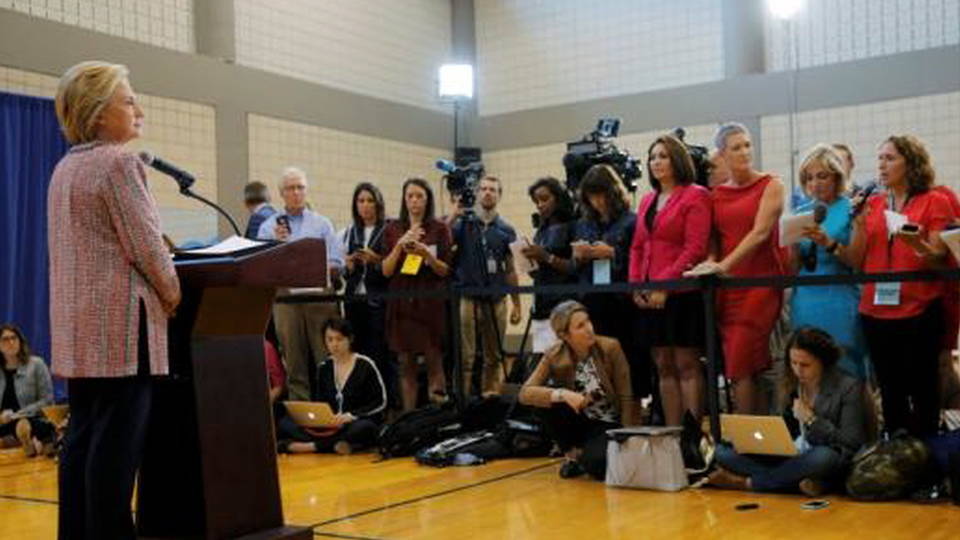 Meanwhile, Hillary Clinton returned to the campaign trail Thursday with a rally in Greensboro, North Carolina, where she addressed her recent pneumonia, saying, "I’m not great at taking it easy." Clinton spoke later in the day at the Congressional Hispanic Caucus in Washington, D.C.
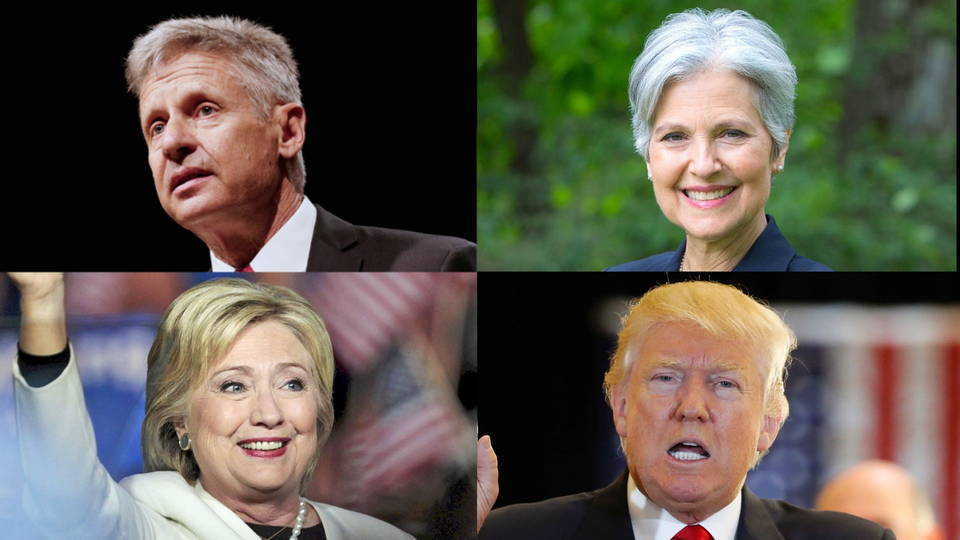 Clinton’s return to the campaign trail comes as the latest New York Times/CBS News poll shows Hillary Clinton and Donald Trump in a tight race—with Clinton leading Trump by two points nationally in a two-way race. In a four-way race, Trump and Clinton are tied, each with 42 percent, while Libertarian Party nominee Gary Johnson has 8 percent of the vote and Green Party nominee Dr. Jill Stein has 4 percent of the vote.
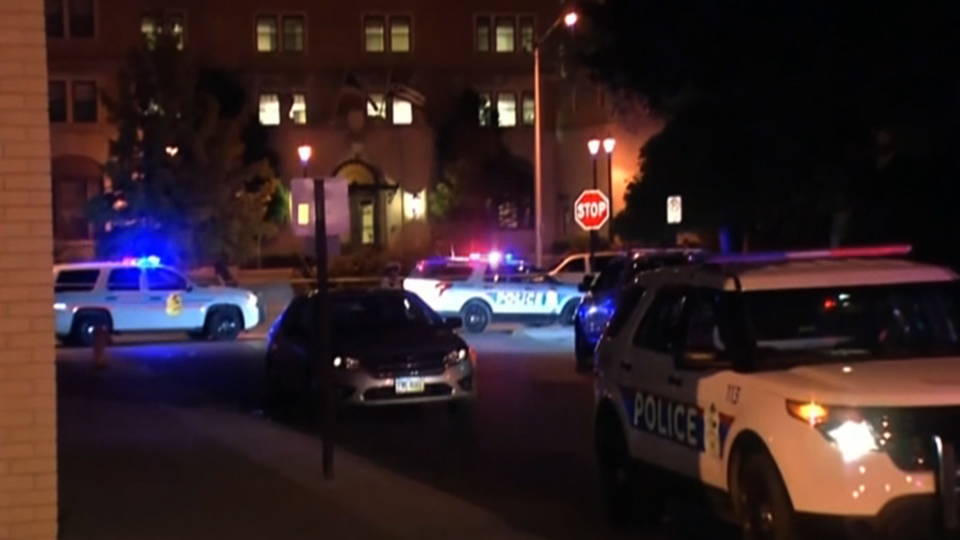 In Columbus, Ohio, more than 100 people gathered for a vigil to mourn the death of 13-year-old African American Tyre King, who was shot and killed Thursday night by a white police officer after the officer allegedly mistook the child’s BB gun for a real gun. King was an eighth-grader who played football and was in the young scholar’s program at his school. Police say he was shot after officers chased him down as they were responding to a 911 call of a man who says he was robbed of $10. Police claim King pulled the BB gun from his waistband before he was shot. This is a witness to the shooting.
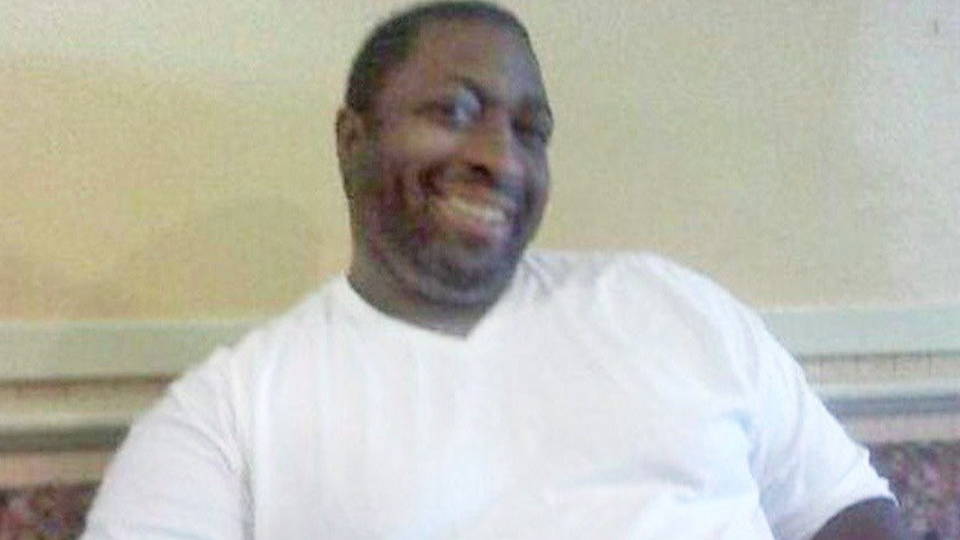 This comes as the family of Eric Garner, who was killed by a fatal police chokehold in Staten Island in 2014, has voiced outrage over new reports that the NYPD officer who killed Garner has received a 20 percent pay hike over the last two years. NYPD officer Daniel Pantaleo reportedly earned nearly $120,000 last year. He’s been on desk duty since placing Eric Garner in the fatal police chokehold, but he does not face criminal charges. Thursday would have been Eric Garner’s 46th birthday.
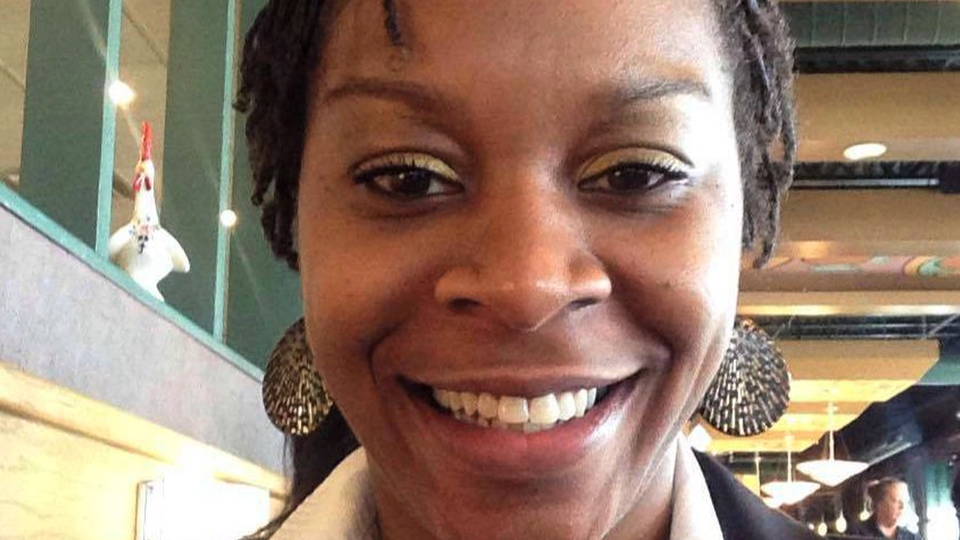 Meanwhile, the family of Sandra Bland has received $1.9 million in a wrongful death settlement with the Texas Department of Public Safety and the Waller County jail. Twenty-eight-year-old African American Sandra Bland died in a Texas jail cell in 2015, three days after she was arrested for allegedly failing to signal a lane change. Authorities have claimed Sandra Bland committed suicide while in jail by hanging herself with a garbage bag, but her family has rejected this claim.
 The U.S. Embassy in Rome has confirmed the Obama administration has agreed to pay the family of an Italian aid worker killed in a CIA drone strike in Pakistan last year 1 million euros, which is over $1 million. President Obama has acknowledged and apologized for the operation, which killed Giovanni Lo Porto and a U.S. government contractor named Warren Weinstein. Despite hundreds of hours of surveillance, Obama said the United States had not known that the hostages were present.
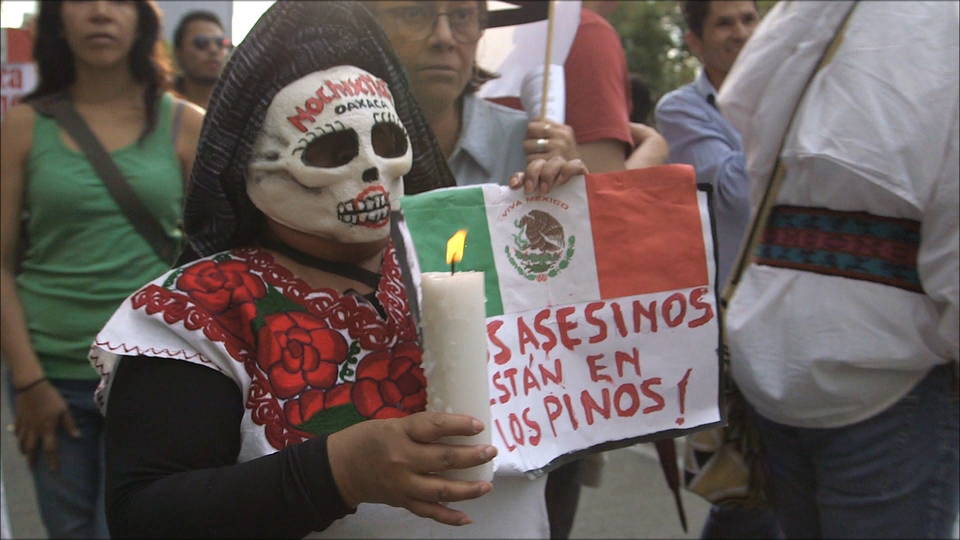 In Mexico, thousands of people marched in downtown Mexico City calling for the resignation of Mexican President Enrique Peña Nieto on the eve of Mexico’s Independence Day over the violence and corruption across the country.
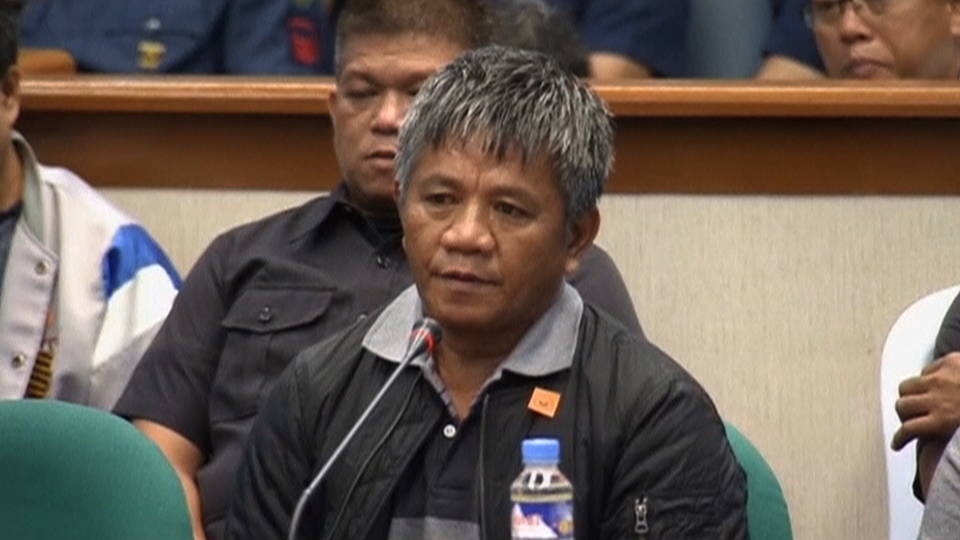 In the Philippines, the death toll of President Rodrigo Duterte’s so-called war on drugs continues to rise. More than 3,000 people have been killed by police and vigilantes since Duterte took office in late June. On Thursday, a man testified to the Philippine Senate that he was paid by Duterte to carry out a string of extrajudicial killings, including one in which he fed a body to a crocodile, while Duterte was serving as the mayor of Davao. This is Edgar Matobato.
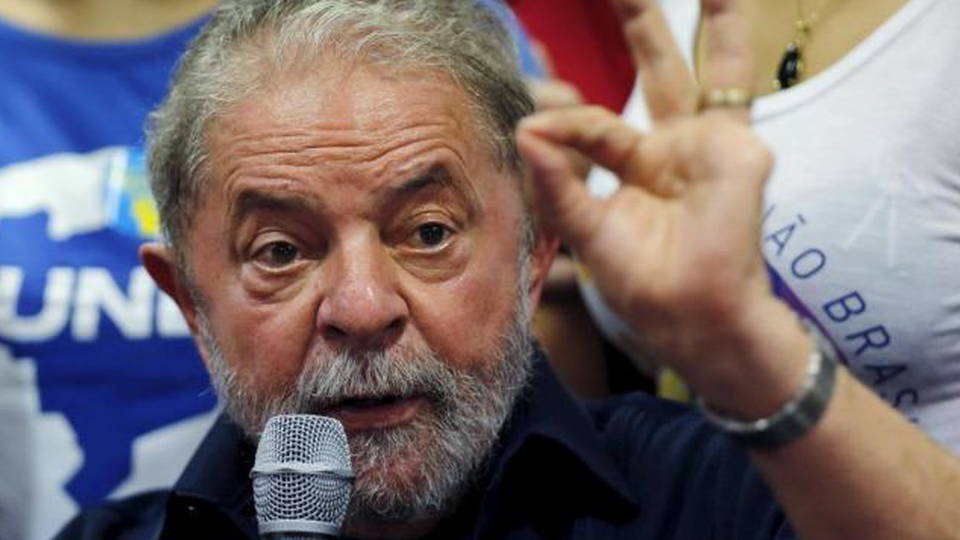 In Brazil, former President Luiz Inácio Lula da Silva has been charged of being the "maximum commander" of a corruption scheme at the state-run oil company Petrobras. Lula was charged along with his wife and six others. He slammed the charges on Thursday, saying they were politically motivated. This comes after his successor, ousted President Dilma Rousseff, was impeached by the Brazilian Senate in a move she has denounced as a coup. Sixty percent of Brazilian lawmakers are currently under criminal investigation or have already been convicted of crimes ranging from corruption to election fraud.
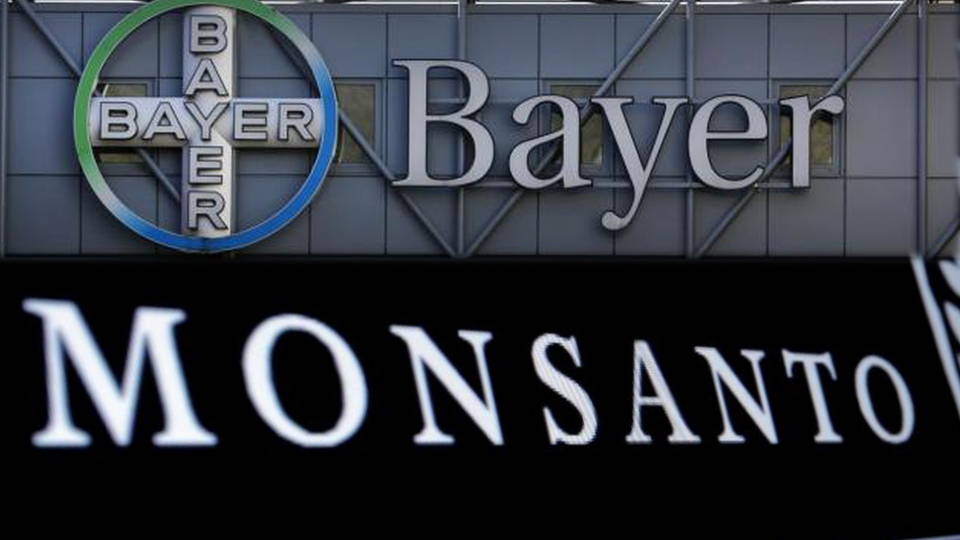 In financial news, German pharmaceutical firm Bayer has bought out agribusiness giant Monsanto in a record $66 billion takeover, creating the largest supplier of seeds and agricultural chemicals in the world.
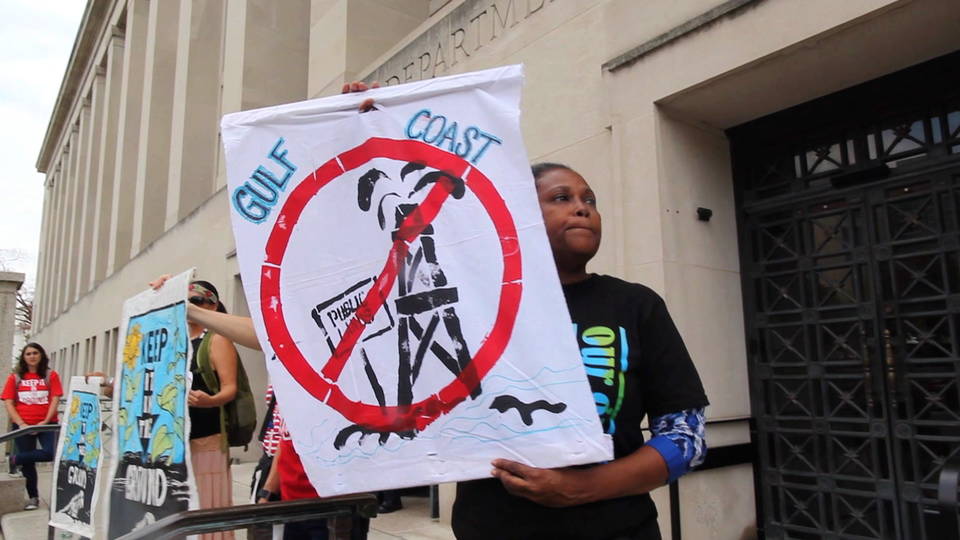 In Washington, D.C., several people were arrested during a sit-in at the headquarters of the Department of the Interior, demanding the Obama administration stop leasing of federal land for oil and gas drilling. The sit-in came after activists delivered a petition signed by more than a million people demanding the end of the lease sales. This is one of the protesters at the sit-in. bq.
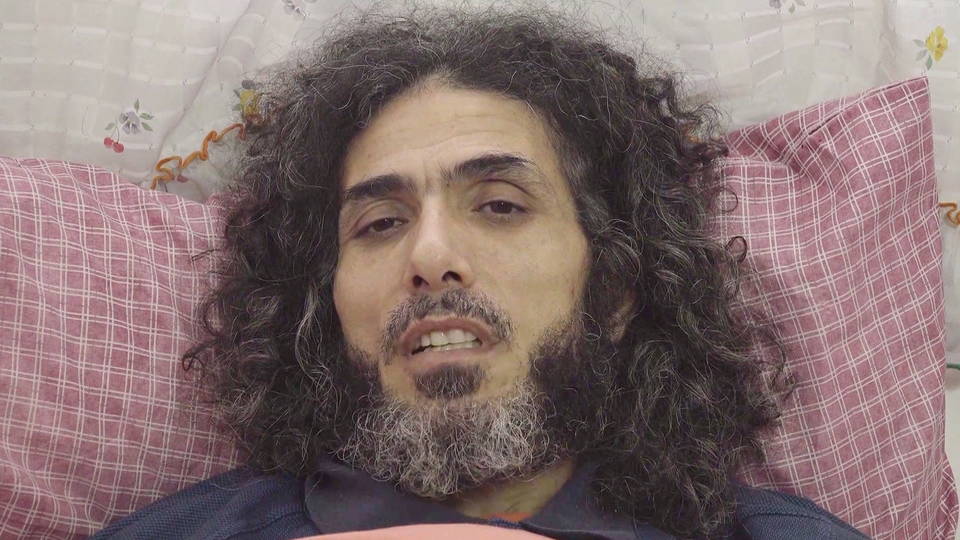 And in Uruguay, former Guantánamo prisoner Abu Wa’el Dhiab has awoken from a coma amid an ongoing hunger strike demanding he be allowed to leave Uruguay and reunite with his family in Turkey or in another Arabic-speaking country. Dhiab was imprisoned in Guantánamo for 12 years without ever being charged with a crime. While in Guantánamo, Dhiab also launched a hunger strike to demand his freedom. He was among a group of prisoners subjected to forced feeding. The Obama administration is refusing to release video of the forced feeding to the public, but did give the redacted videotape to a court, which reportedly shows graphic images of guards restraining Dhiab and feeding him against his will. Human rights groups have long said the forced feeding of Guantánamo prisoners amounts to torture. On Thursday, only hours after Dhiab awoke from his coma, Amy Goodman spoke to him in an exclusive Democracy Now! interview. He was lying on his bed, very weak, in downtown Montevideo. Goodman began by asking him how he feels.
Donate today:
And in Uruguay, former Guantánamo prisoner Abu Wa’el Dhiab has awoken from a coma amid an ongoing hunger strike demanding he be allowed to leave Uruguay and reunite with his family in Turkey or in another Arabic-speaking country. Dhiab was imprisoned in Guantánamo for 12 years without ever being charged with a crime. While in Guantánamo, Dhiab also launched a hunger strike to demand his freedom. He was among a group of prisoners subjected to forced feeding. The Obama administration is refusing to release video of the forced feeding to the public, but did give the redacted videotape to a court, which reportedly shows graphic images of guards restraining Dhiab and feeding him against his will. Human rights groups have long said the forced feeding of Guantánamo prisoners amounts to torture. On Thursday, only hours after Dhiab awoke from his coma, Amy Goodman spoke to him in an exclusive Democracy Now! interview. He was lying on his bed, very weak, in downtown Montevideo. Goodman began by asking him how he feels.
Donate today:
Follow:


DN! IN THE NEWS
Donald Trump is continuing to refuse to acknowledge that President Obama was born in the United States. In an interview with The Washington Post on Wednesday, Trump refused to answer a reporter’s question about whether he accepts that Obama was born in Hawaii, instead saying, "I’ll answer that question at the right time. I just don’t want to answer it yet." In contrast, Trump’s vice-presidential running mate, Indiana Governor Mike Pence, acknowledges President Obama was born in Hawaii. Trump’s campaign manager Kellyanne Conway has also contradicted Trump, claiming he now accepts Obama was born in the U.S. Trump has long been a leader of the so-called birther movement, which former Secretary of State Colin Powell has slammed in recently leaked emails as being a "racist" movement.TOPICS:
Donald Trump Jr. Invokes Holocaust to Allege Media Bias
Meanwhile, Donald Trump’s son, Donald Trump Jr., has also sparked controversy by invoking the Holocaust while alleging media bias against his father, while speaking on a Philadelphia radio station.Donald Trump Jr.: "The media has built her up. They’ve let her slide on every, you know, indiscrepancy, on every lie, on every DNC game trying to get Bernie Sanders out of the thing. I mean, if Republicans were doing that, they’d be warming up the gas chamber right now."
Donald Trump Jr. later told NBC his comments were a reference to capital punishment in the U.S., not the Holocaust. Donald Trump himself also faced accusations of anti-Semitism in July, after he defended his decision to tweet an anti-Semitic image which showed Hillary Clinton, a pile of $100 bills and a six-pointed Star of David along with the words "Most Corrupt Candidate Ever!" The image originally appeared on a white supremacist message board.
TOPICS:
Hillary Clinton Returns to Campaign Trail with Rally in NC
Meanwhile, Hillary Clinton returned to the campaign trail Thursday with a rally in Greensboro, North Carolina, where she addressed her recent pneumonia, saying, "I’m not great at taking it easy." Clinton spoke later in the day at the Congressional Hispanic Caucus in Washington, D.C.TOPICS:
Latest Poll Shows Clinton and Trump Tied in 4-Way Race
Clinton’s return to the campaign trail comes as the latest New York Times/CBS News poll shows Hillary Clinton and Donald Trump in a tight race—with Clinton leading Trump by two points nationally in a two-way race. In a four-way race, Trump and Clinton are tied, each with 42 percent, while Libertarian Party nominee Gary Johnson has 8 percent of the vote and Green Party nominee Dr. Jill Stein has 4 percent of the vote.TOPICS:
Ohio: White Police Officer Kills 13-Year-Old Black Child with BB Gun
In Columbus, Ohio, more than 100 people gathered for a vigil to mourn the death of 13-year-old African American Tyre King, who was shot and killed Thursday night by a white police officer after the officer allegedly mistook the child’s BB gun for a real gun. King was an eighth-grader who played football and was in the young scholar’s program at his school. Police say he was shot after officers chased him down as they were responding to a 911 call of a man who says he was robbed of $10. Police claim King pulled the BB gun from his waistband before he was shot. This is a witness to the shooting.Witness: "We looked out the window to see what was going on, saw an officer running after somebody this way down to the left and heard gunshots about five, 10 seconds afterwards."
Tyre King is the second-youngest person killed by police this year. His death recalls the police killing of 12-year-old Tamir Rice, who was gunned down by two officers in November of 2014 while he was playing with a toy pellet gun in Cleveland, Ohio. At Thursday night’s vigil, people mourned the ongoing killing of African Americans by police.
Amber Evans: "That’s what people are sick and tired of. They’re sick and tired of justice being reserved only for the few, not for communities of color. They’re sick and tired of not feeling safe."
Tyre King is at least the 761st person killed by police in the United States this year, according to an ongoing Guardian investigation.
TOPICS:
NYPD Cop Who Killed Eric Garner Received 20% Pay Hike
This comes as the family of Eric Garner, who was killed by a fatal police chokehold in Staten Island in 2014, has voiced outrage over new reports that the NYPD officer who killed Garner has received a 20 percent pay hike over the last two years. NYPD officer Daniel Pantaleo reportedly earned nearly $120,000 last year. He’s been on desk duty since placing Eric Garner in the fatal police chokehold, but he does not face criminal charges. Thursday would have been Eric Garner’s 46th birthday.Sandra Bland Family Settles for $1.9 Million
Meanwhile, the family of Sandra Bland has received $1.9 million in a wrongful death settlement with the Texas Department of Public Safety and the Waller County jail. Twenty-eight-year-old African American Sandra Bland died in a Texas jail cell in 2015, three days after she was arrested for allegedly failing to signal a lane change. Authorities have claimed Sandra Bland committed suicide while in jail by hanging herself with a garbage bag, but her family has rejected this claim.TOPICS:
U.S. to Pay €1 Million to Family of Italian Aid Worker Killed in Drone Strike
The U.S. Embassy in Rome has confirmed the Obama administration has agreed to pay the family of an Italian aid worker killed in a CIA drone strike in Pakistan last year 1 million euros, which is over $1 million. President Obama has acknowledged and apologized for the operation, which killed Giovanni Lo Porto and a U.S. government contractor named Warren Weinstein. Despite hundreds of hours of surveillance, Obama said the United States had not known that the hostages were present.TOPICS:
Mexico: Thousands Call for President Peña Nieto’s Resignation
In Mexico, thousands of people marched in downtown Mexico City calling for the resignation of Mexican President Enrique Peña Nieto on the eve of Mexico’s Independence Day over the violence and corruption across the country.Alicia Mercado: "It is time to say long live Mexico, but also emphasize a Mexico for us. And it’s time to say that Peña has go to go. Peña out! That is why I’m here, because I’m fed up with our bad government. Mexico smells like death, because all of its territory is a common grave full of assassinated and disappeared people and the journalists who are killed for saying the truth."
The protest comes as Peña Nieto also continues to face backlash after meeting with Donald Trump in Mexico City last month, only hours before Trump went on to give a fiery speech in Phoenix in which he promised to deport 2 million people within his first hour in office, if elected. Last week, Mexico’s finance minister, who orchestrated Trump’s visit, resigned.
TOPICS:
Philippines: 3,000+ Killed in Duterte’s So-Called War on Drugs
In the Philippines, the death toll of President Rodrigo Duterte’s so-called war on drugs continues to rise. More than 3,000 people have been killed by police and vigilantes since Duterte took office in late June. On Thursday, a man testified to the Philippine Senate that he was paid by Duterte to carry out a string of extrajudicial killings, including one in which he fed a body to a crocodile, while Duterte was serving as the mayor of Davao. This is Edgar Matobato.Edgar Matobato: "From my start, from 1988 to 2013, I have gunned down over 50 people when we were told to kill. I cannot remember their names, but I still remember being a hit man and what happened."
TOPICS:
Brazil: Former President Lula Slams His Corruption Charges
In Brazil, former President Luiz Inácio Lula da Silva has been charged of being the "maximum commander" of a corruption scheme at the state-run oil company Petrobras. Lula was charged along with his wife and six others. He slammed the charges on Thursday, saying they were politically motivated. This comes after his successor, ousted President Dilma Rousseff, was impeached by the Brazilian Senate in a move she has denounced as a coup. Sixty percent of Brazilian lawmakers are currently under criminal investigation or have already been convicted of crimes ranging from corruption to election fraud.TOPICS:
Bayer Takes Over Monsanto, Creating Largest Seed Supplier in World
In financial news, German pharmaceutical firm Bayer has bought out agribusiness giant Monsanto in a record $66 billion takeover, creating the largest supplier of seeds and agricultural chemicals in the world.TOPICS:
Sit-in at Interior Dept. Demands Obama End Oil Leases on Federal Land
In Washington, D.C., several people were arrested during a sit-in at the headquarters of the Department of the Interior, demanding the Obama administration stop leasing of federal land for oil and gas drilling. The sit-in came after activists delivered a petition signed by more than a million people demanding the end of the lease sales. This is one of the protesters at the sit-in. bq.Protester: "We are mothers. We are daughters. We are sisters. We are here because our American public needs to know. BOEM don’t want you to know; we want you to know. We need your help. Help us. Help our family. Help our land. Help our community."
TOPICS:
Exclusive Video: Ex-Gitmo Prisoner Dhiab Awakes from Coma in Uruguay
And in Uruguay, former Guantánamo prisoner Abu Wa’el Dhiab has awoken from a coma amid an ongoing hunger strike demanding he be allowed to leave Uruguay and reunite with his family in Turkey or in another Arabic-speaking country. Dhiab was imprisoned in Guantánamo for 12 years without ever being charged with a crime. While in Guantánamo, Dhiab also launched a hunger strike to demand his freedom. He was among a group of prisoners subjected to forced feeding. The Obama administration is refusing to release video of the forced feeding to the public, but did give the redacted videotape to a court, which reportedly shows graphic images of guards restraining Dhiab and feeding him against his will. Human rights groups have long said the forced feeding of Guantánamo prisoners amounts to torture. On Thursday, only hours after Dhiab awoke from his coma, Amy Goodman spoke to him in an exclusive Democracy Now! interview. He was lying on his bed, very weak, in downtown Montevideo. Goodman began by asking him how he feels.Abu Wa’el Dhiab: "I feel really very, very worse. All my body hurt me, and my kidney, my headache, my stomach, my right side really bad. Many things. But I feel all my body hurt me."
Amy Goodman: "There’s a battle in court in the United States to release the videotape of your force-feeding in Guantánamo. Can you describe what that force-feeding was like for you?"
Abu Wa’el Dhiab: "Like the United States always say in the media, 'Human rights, human rights, human rights.' There’s never in Guantánamo, don’t have any human rights. Never, never, never. He took the video from first time go to me in my cell to move me to chair and give me the tube for give me forced feeding. But if you see this video and see the guard, how treated with me, how beat me, how make with me, that’s not human."
Amy Goodman: "President Obama says he wants to close Guantánamo. Do you believe that will happen?"
Abu Wa’el Dhiab: "If he wants to close Guantánamo, he can. He can now. Now. He can give order, close Guantánamo. He can close Guantánamo. But he coward. He can’t take this decision, because he scared. But Guantánamo supposed to close, should be closed, Guantánamo, because Guantánamo, that’s not good for the United States. Never."
Abu Wa’el Dhiab’s daughter is getting married this weekend in Turkey—an event Dhiab had longed to be at. He continues his hunger fast in Uruguay.
TOPICS:
Follow:
DN! IN THE NEWS

Vogue: "What Amy Goodman's Arrest Warrant Means for the Dakota Access Pipeline and Free Speech"
FEATURED TOPIC


Democracy Now!: Twenty Years Covering the Movements Changing America
FEATURED INTERVIEW

Native American Activist Winona LaDuke at Standing Rock: It's Time to Move On from Fossil Fuels
WORK WITH DN!

Senior TV Producer
COLUMN

North Dakota vs. Amy Goodman: Journalism is not a crime
207 West 25th Street 11th Floor
New York, New York 10001, United States
-------
-------

No comments:
Post a Comment