democracynow.org
Stories:
 Protests Erupt over Police Killings of Terence Crutcher & Keith Lamont Scott in Tulsa & Charlotte
We host a roundtable on police killings of black men. Protests escalated in Charlotte, North Carolina, overnight when hundreds took to the street and blocked Interstate 85 to express outrage over the police shooting of 43-year-old African American Keith Lamont Scott on Tuesday. Video footage shows people blocking the highway, where fires were lit. This comes as police in Tulsa, Oklahoma, have released a video showing a white police officer shooting and killing 40-year-old African American Terence Crutcher while his hands were in the air. We are joined by Vincent Warren, executive director of the Center for Constitutional Rights; Bree Newsome, artist and activist from Charlotte who scaled the 30-foot flagpole on the South Carolina state Capitol and unhooked the Confederate flag last year; and Rashad Robinson, executive director of Color of Change. He has launched a new petition called "Terence Crutcher died for being Black. Indict Officer Betty Shelby."
TRANSCRIPT
This is a rush transcript. Copy may not be in its final form.
JUAN GONZÁLEZ: We begin today’s show looking at police killings of two African-American men—one in Tulsa and one in Charlotte, in North Carolina, which was rocked by protests overnight after hundreds took to the street and blocked Interstate 85 to protest the police shooting of 43-year-old African American Lamont Scott. Video shows protesters blocking the highway, where fires were lit. Police in riot gear responded by throwing tear gas at the crowds. Police say about a dozen officers were hurt during the conflict. Protesters were also hurt.
AMY GOODMAN: Keith Lamont Scott was shot and killed around 4:00 p.m. Tuesday after police arrived to serve an arrest warrant for another person at Scott’s housing complex. The accounts of the shooting diverge sharply. While the police claim they first tased and then shot Scott because he was armed and "posed an imminent deadly threat," Scott’s family says he was not armed—except with a book. They say he had been sitting in his car waiting to pick up his son after school. This is Scott’s daughter speaking in a Facebook live video recorded at the scene of the shooting.
LYRIC SCOTT: What are they over there doing? Shot my [bleep] daddy for being black. You little [bleep]. Shot my daddy for being black. And look, and they’re just standing there, because they—right? He’s [bleep] disabled! How the [bleep] he going to shoot y’all? He didn’t got no [bleep] gun.
JUAN GONZÁLEZ: This comes as police in Tulsa, Oklahoma, have released a video showing a white police officer shooting and killing unarmed 40-year-old African American Terence Crutcher while his hands were in the air. Officer Betty Shelby shot Crutcher around 8:00 p.m. on Friday after his car broke down. Some of the video released Monday came from police helicopter footage, in which one can hear the man in the helicopter saying about Crutcher, quote, "That looks like a bad dude, too." This is a clip from the police footage.
POLICE OFFICER 1: This guy is still walking and following commands.
POLICE OFFICER 2: Time for Taser, I think.
POLICE OFFICER 1: That’s—got a feeling that’s about to happen.
POLICE OFFICER 2: That looks like a bad dude, too. Could be on something.
POLICE OFFICER 3: Which way are they facing?
POLICE OFFICER 1: Police 1, they’re facing westbound. I think he may have just been tasered.
POLICE OFFICER 4: Shots fired!
POLICE OFFICER 3: Adam 3-21, we have shots fired. We have one suspect down. We need EMSA here.
POLICE OFFICER 2: They need to—they need to get this eastbound closed down, if they could, because they’re not going to be able to let anybody—
POLICE OFFICER 1: OK.
AMY GOODMAN: Other footage from a police dash cam vehicle shows Crutcher walking slowly away from officers with his hands in the air, then putting his hands on the side of his own car as he’s surrounded by officers. The video captures a voice coming over the police radio saying, "He’s just been tasered," and then a woman’s voice yelling "Shots fired!" as the video shows Crutcher’s arms falling to the pavement. The Justice Department says it’s investigating the shooting of Terence Crutcher as a possible civil rights violation. On Tuesday, hundreds gathered outside the Tulsa Police Department to demand the firing of Officer Betty Shelby.
For more, we’re joined here in New York by Vince Warren, executive director of the Center for Constitutional Rights. On the phone with us, Bree Newsome, artist and activist. Last year, armed only with a helmet and climbing gear, she scaled the 30-foot flagpole on the South Carolina state Capitol grounds and unhooked the Confederate flag. As police officers shouted at her to come down, Bree shimmied to the top of the flagpole, took the flag in her hand and said, quote, "You come against me with hatred. I come against you in the name of God. This flag comes down today." She is joining us—she is from Charlotte, North Carolina. And via Democracy Now! video stream in Washington, D.C., Rashad Robinson, executive director of Color of Change, who’s launched a new petition called "Terence Crutcher died for being Black. Indict Officer Betty Shelby."
So, we welcome you all to Democracy Now! Bree, I want to begin with you. These riots that broke—you could call them uprisings, riots of fear and anger, protests in Charlotte, North Carolina, that took place after the killing, the police killing, can you talk about what you understand—you’re not there now, but what you understood took place?
BREE NEWSOME: Yeah, absolutely. I think what took place in Charlotte, North Carolina—and I am in contact with folks who are on the ground there, who were there—is what we have witnessed several times in the past two years, what we’ve witnessed in America since the '60s, at least, and this is an incident of police brutality, that in many ways is the camel breaking—I'm sorry, the straw breaking the camel’s back kind of moment. Like many cities around the nation, in Charlotte we have a real issue of wealth inequality. We’ve had several incidents of police brutality. One of the most notable cases was the case of Jonathan Ferrell. This was a young man who was gunned down by police. He was also unarmed. He had crashed his car and was looking for help, knocked on a door; the police showed up and killed him. There was an acquittal in that case. So, like so many other cases, this moment that happened last night, this was not an isolated incident. This is a tipping point, a kind of boiling-over moment, for the city and for the nation, in a lot of ways. Folks are not just reacting to what happened in Charlotte, but also to what happened in Tulsa and what happened in Baton Rouge.
JUAN GONZÁLEZ: And, Vince Warren, the issue of—especially in Tulsa, a couple of things are quite different about this. One, we got the identity of the officer right away, and also the video surfaced pretty quickly, as opposed to in other instances there’s been battles over even getting the videos that the police have available to the public.
VINCENT WARREN: Yeah, a couple of things on that. That was significant, and I think it’s really important. Let’s be clear that the police departments don’t do this out of the kindness of their hearts; they do it because of political pressure. So it’s exactly these types of protests that we’re seeing today, it’s the independent journalists that are fighting for these things, make it politically hard for police departments not to put those things forward.
I’d also want to point out that the Tulsa situation highlights a central problem with policing, of black communities, in particular, which is that they’re trained to see noncompliance as escalation. So they ask you to do something; if you don’t do it, then the police departments increase the use of force. Then, of course, they have to try to justify that use of force afterwards. The good thing about having these video situations is that all of us can see for ourselves what really happened. So, I’m at this point now, with the 193rd killing of a black man this year, where I am not inclined—
AMY GOODMAN: The number again?
VINCENT WARREN: One hundred ninety-three, according to The Guardian count. You know, different people have different counts. It’s amazing to me that nobody in America can tell me specifically how many black people have been killed by police officers. But after 193, I am quite prepared not to believe the police department narratives about anything that happened, and these investigations and eyewitness reports become much more important.
AMY GOODMAN: Rashad Robinson, what do you understand about what took place in Tulsa? I mean, the protests that have been taking place there, coming out—on Monday, the video being released by the police, this helicopter footage, which is truly remarkable, showing Terence Crutcher with his hands in the air, walking very slowly—his car had broken down—to his car and then putting his hands on the car. The windows were up on this car.
RASHAD ROBINSON: Yeah. What we—what we understand is just how much black people are not seen with humanity. You know, Vincent was absolutely right: This video was not released out of the goodness of the hearts of the local police department in Tulsa; it was released because they knew they had to start figuring out how to get ahead of this story, because the video is simply that bad. And in situations like this, over and over again, we watch as police departments concoct stories. And now we’re seeing, you know, stories about drugs, stories with—they would have not known that, you know, he had drugs in the car, if he in fact did—all these reasons that try to legitimize the fact that the police were unable to sort of de-escalate and solve the situation, unable to figure out a story that makes it OK that a gun was pulled out and a man was shot dead. And police officers stood around for a while as this man laid on the ground, and did not even try to get him medical help. This speaks to the ongoing way that, from the start, black people are never given the benefit of the doubt, are not seen as human, are seen as enemy combatants and, even in their death, are seen as deserving—not deserving medical support and deserving of the situations.
This officer needs to be fired, because we continue to come to these conversations, where people want communities to come together, they want unity, they want conversations, and we don’t get sort of the results that actually send a message to police officers that they’ll be held accountable. But we also need to have a larger conversation, because this is not about one bad apple or two bad apples. This is about systemic problems in police departments around the country, incentive structures that make it OK and incentivize the killing of black people over and over and over again, and no one is held accountable.
AMY GOODMAN: I think—I think this is a very telling comment from a protester, extremely angry last night, in Charlotte, North Carolina.
NICHELLE DUNLAP: A terrorist, New Jersey, New York, he was taken alive. They say they wanted to question him. So, because of you wanting to question him, does his life mean more than our black men across the nation?
AMY GOODMAN: So, there you have a SOT from CNN, Vince Warren, where she says, "You’re telling me that you do not kill a man who is being referred to as a terrorist in New York, you can take him alive, because you want him for questioning, but an African-American man, you shoot dead."
VINCENT WARREN: Absolutely. That is the—that is the precise question that I think Rashad and Bree and I are talking about, that black lives are so dehumanized, that it is OK structurally—it is OK within the context of the police department, it’s OK in the context of the criminal justice system—to kill black people. And, you know, the reason why I think the Color of Change petition is so important is that a police officer is the only job in America where you can kill somebody and then you get desk duty. Desk duty almost becomes the default mechanism. If you asked anybody what’s going to happen with these cases, people don’t believe that this police officer—either of these police officers are going to face serious charges or they’re going to get indicted or they’re going to get convicted or they’re going to get sentenced. People don’t believe it. We’ve lost complete faith in the system, because the system is designed to do the exact opposite of what black people need.
JUAN GONZÁLEZ: And, Rashad Robinson, what about the issue of now the Justice Department jumping in right away, saying they’re going to do an investigation? We’ve seen this happen, time after time, after many of these shootings. And what inevitably happens is, the Justice Department almost always decides there’s no criminal offense that, even on the civil rights violations, they can prosecute.
RASHAD ROBINSON: Well, this is part of the structural problem, change that we need. The Justice Department actually doesn’t have a real budget for these type of investigations. And this is part of the problem. And currently, the standard is so high for the Justice Department to bring charges, that over and over in these situations they may actually find problems that—and situations in which police departments or individual police acted inappropriately, and they can’t bring charges, because they can’t meet this standard that is sort of so high and so hard to get over that, in fact, it really makes these situations OK over and over again.
And so, part of the long-term systemic work that we have to do—and we’ve been working on that, some of those campaigns are on ColorOfChange.org, as well—is, one, that we have to start tying the federal dollars that go into local law departments, local police departments, to their performance, and stop giving huge sums of money to police departments that don’t meet basic standards and don’t value black lives. If our federal government can defund local schools for not meeting standards, but still give huge block grants to local police departments that do not value our lives, then we are not dealing with the incentive structures and not sort of shifting the power dynamic and forcing real change. And if we don’t deal with the fact that the standards are so high that we can never hold anyone accountable, then we will be in this situation five, 10, 15 years from now. We will have people calling for unity, asking black people to stand down and be peaceful and not be upset, to tell people to give police officers the benefit of the doubt, when black people never get the benefit of the doubt.
AMY GOODMAN: I wanted—
RASHAD ROBINSON: We need systemic change.
AMY GOODMAN: I wanted to ask Bree Newsome—I mean, to remind people, when you climbed that flagpole on the grounds of the Columbia State House in South Carolina and said, "This flag comes down today," the Confederate flag, it was in response to the killing of the Beautiful Nine, the nine people at the Emanuel Church in Charleston, South Carolina, and their pastor, Clementa Pinckney, by a white supremacist who wrapped himself in the Confederate flag. In this case, Bree, you have Keith Lamont Scott in Charlotte, North Carolina, killed by an African-American officer, Brentley Vinson, and in the case of Tulsa, you have a white woman police officer, Betty Shelby, who killed Terence Crutcher. Your response?
BREE NEWSOME: Yes. I think sometimes there’s this type of focus on what is the race of the police officer. That’s not the issue. Everyone can participate in white supremacy and in the white supremacist system. And we have to recognize that the policing system in America is rooted in slavery and slave patrols. I would argue that slavery never ended, because in the 13th Amendment it is codified that slavery is legal in cases of criminal punishment. And when we look at history, we look at—we see that as soon as emancipation happened, there was the institution of the Black Codes. And I believe that is the root of mass incarceration and police brutality as it exists today.
I also want to remind everyone that what happened in Charleston last year was also within the context of police brutality, as well. You know, Clementa Pinckney had just succeeded in getting body camera legislation passed in North Charleston in response to the Walter Scott case. So, there is a—I mean, police brutality has always been woven throughout the story of civil rights and the struggle for equality in America. It’s always been there. This issue is as old as policing in America.
AMY GOODMAN: And, of course, Walter Scott was the man who was stopped for a tail light being out, a traffic stop, and a police officer blew him away as he ran through a park. It was only caught because a bystander flipped open his cellphone and started to film. We’re going to leave it there, but, of course, we’re going to continue to cover all of this. Bree Newsome, thanks so much for joining us, artist and activist from Charlotte, North Carolina. Vince Warren is the executive director of the Center for Constitutional Rights. And Rashad Robinson is executive director of Color of Change, has launched a petitionthat is titled "Terence Crutcher died for being Black. Indict Officer Betty Shelby."
This is Democracy Now! When we come back, we look at the massive global refugee crisis. Stay with us.... Read More → Holocaust Survivor: Trump Jr.'s Skittles Comment Brings Back Dark Images of Children Being Murdered
We get response from a Holocaust survivor to Republican presidential candidate Donald Trump’s son Donald Trump Jr.'s comparison of Syrian refugees to poisoned Skittles. On Monday, he tweeted a graphic reading, "If I had a bowl of Skittles and I told you just three would kill you. Would you take a handful? That's our Syrian refugee problem." The parent company of Skittles responded, saying, "Skittles are candy. Refugees are people. We don’t feel it’s an appropriate analogy." "It brings back the dark images of children being murdered," says Manfred Lindenbaum, a Holocaust survivor and advocate for refugees. In 1939, he and his brother fled from Poland to England on the famous Kindertransport just days before the Nazis invaded. In 1946, the Jewish refugee organization HIAS reunited Manfred with an aunt and an uncle in New Jersey. He has been in the U.S. ever since.
TRANSCRIPT
This is a rush transcript. Copy may not be in its final form.
AMY GOODMAN: I also want to bring in Manfred Lindenbaum. You bring, certainly, a long historical perspective to all of this. Can you explain how you, as a child, became a refugee?
MANFRED LINDENBAUM: Well, when I heard about this conference at the United Nations, my mind immediately went back to the Évian Conference in France in 1938, at which the countries got together, in effect, decided no matter what happens, we are not taking in any children refugees, we are taking in no refugees. Led by the United States, one country after another said that. And three weeks later, 17,000 of us Jews in Germany were actually rounded up and taken to the border and chased across the border, actually physically chased across the border, into Poland. And my fear was: Is this going to be one of these conferences where everybody says nice things and, in effect, says it’s going to continue as before? I didn’t feel quite that pessimistic. I think that it’s brought it back on the front page.
AMY GOODMAN: But explain what happened when you got to Poland. What was this Kindertransport?
MANFRED LINDENBAUM: Well, when I got to Poland, we actually—by the way, when we got to Poland, within 36 hours, there were two relief organizations which came. One wasHIAS, and one was the Joint Distribution Committee. And they brought us things like—and I think refugees today can relate to that—they brought us things like bags to put straw in so we didn’t sleep on the ground. And—
AMY GOODMAN: How old were you?
MANFRED LINDENBAUM: I was six. Some of the people slept in the stables. We got in the fourth story of a burnt-out building with no facilities in it. We were there for 10 months.
AMY GOODMAN: And then, what was the Kindertransport?
MANFRED LINDENBAUM: The Kinderstransport was when the Germany army was on the border. The Kindertransport was over, because the United States at that point said that we’re not taking in any Jewish children. And they couldn’t get their bill out of committee. England had decided, under great pressure, to take in 10,000. They were already there. And at the last minute, as the German army was coming over, they got us—they got a few hundred of us onto a Polish warship. And that was—took me and my brother to England. And they wouldn’t let my sister on. She was 14. So she was murdered with the rest of my family.
JUAN GONZÁLEZ: And, Raymond Offenheiser, this issue of the children and the United States back then saying it would not take any more Jewish children, part of the problem in terms of coming together in agreement this year was that the United States was objecting to calls for no detention for children who were refugees, and concerned about its policies toward Central American refugees on its Southern border.
RAYMOND OFFENHEISER: Yes. The United States actually objected to the final draft of the declaration in the middle of the summer and held up the final conclusion and vote for two days over this particular issue. And what they wanted to do was put in language that would allow the possibility of detention for the—particularly in reference to the Central American border cases, where there is active detention going on. And this was a very specific move by the United States that really would require the entire process to stop and new language to be put in to allow for that.
AMY GOODMAN: And we’re going to talk about that in our next segment. But I wanted to ask—I wanted to ask our guest Manfred Lindenbaum about the comments of the Republican presidential candidate Donald Trump’s oldest son, Donald Trump Jr., who compared Syrian refugees to poisoned Skittles. He tweeted a graphic that said, "If I had a bowl of Skittles and I told you just three would kill you. Would you take a handful? That’s our Syrian refugee problem." The company that makes Skittles then went on to tweet back, saying, "Skittles are candy. Refugees are people. We don’t feel it’s an appropriate analogy." Your response when you heard Donald Trump Jr.?
MANFRED LINDENBAUM: I think it’s absolutely horrible. It like brings back the dark images of children being murdered. I can only feel horrible for him that he has such a twisted mentality that he’s able to come out with that. He’s a very poor individual.
AMY GOODMAN: And, Mohammed Badran, he was talking about Syrian refugees. Your response?
MOHAMMED BADRAN: Well, you know, like, we—I mean, like, firstly, like when I talk, I talk not only about Syrian refugees. I talk about all refugees. And I talk about how we also are contributing to the society where we are living, and how we want to—like, eager to be part of the society. So, I think, like, this is like, you know, a good response for what he said.
JUAN GONZÁLEZ: Mohammed, I’d like to ask you about your experiences, because you’ve been co-founding the Syrian Volunteers in the Netherlands. How has the Netherlands responded, compared to other European countries, to the refugee crisis?
MOHAMMED BADRAN: Well, in the Netherlands, like, is quite—you feel welcome. So, there is, at the moment, actually, really great initiatives coming from the citizens, coming from the Dutch locals, to help refugees with integration. You know, but there’s still like, you know, sometimes challenges that you have to challenge in like a new community and a new society. So—but, like, we are working on this. So, like, you know—but I think the Netherlands, like I feel—I feel like really grateful to be in such a country.
AMY GOODMAN: Well, we want to thank you all for being with us. We’ve been speaking with Manfred Lindenbaum, who is a survivor of the Holocaust. He and his brother made it over on the Kindertransport from Poland to England. The U.S. would not take any more Jewish children. Raymond Offenheiser is the head of Oxfam America. And Mohammed Badran, speaking to us from Washington, a refugee from Damascus, Syria, organized Syrian Volunteers in the Netherlands. They’re all gathered here in New York for this refugee summit at the United Nations.
On the issue of the U.S. changing the language of children in detention, we’re going to talk about that next. Stay with us. ... Read More → U.N. Summit for Refugees & Migrants Creates New Urgency for Global Crisis of 65 Million Displaced
The first-ever United Nations Summit for Refugees and Migrants has produced a declaration for 193 member countries to conduct a more coordinated and humane response to the biggest migration upheaval since World War II. We get response from Mohammed Badran, co-founder of Syrian Volunteers in the Netherlands, who spoke at the summit; Manfred Lindenbaum, a Holocaust survivor and advocate for refugees; and Raymond Offenheiser, president of the international humanitarian and development organization Oxfam America.
TRANSCRIPT
This is a rush transcript. Copy may not be in its final form.
JUAN GONZÁLEZ: We turn now to the meeting of 193 member states of the United Nations for the first-ever Summit for Refugees and Migrants in New York City. The summit produced a nonbinding declaration detailing a more coordinated and humane response to the biggest migration upheaval since World War II. President Obama used his eighth and final address to the U.N. General Assembly as president to announce a pledge by 50 countries to admit 360,000 refugees from conflict-ridden areas this year. He said world leaders have vowed to double the number from last year.
AMY GOODMAN: A record 65 million people have been displaced by conflicts around the world. This is the first time the number of migrants has topped 60 million. Most have fled to areas within their own countries, largely in Syria and Iraq, but about 21 million refugees have been forced to leave their countries due to conflict or persecution. Nine million people have been displaced by the six-year conflict in Syria alone, while more than 4 million others have fled Syria.
Despite the focus on the influx of refugees in European countries, 86 percent of the world’s refugees are hosted in developing regions close to conflict zones, like Turkey, Jordan and Ethiopia. Speaking Tuesday, President Obama urged wealthy countries to do more to help resolve the global refugee problem.
PRESIDENT BARACK OBAMA: We have to imagine what it would be like for our family, for our children, if the unspeakable happened to us. And we should all understand that, ultimately, our world will be more secure if we are prepared to help those in need and the nations who are carrying the largest burden with respect to accommodating these refugees.
JUAN GONZÁLEZ: President Obama also announced the United States will resettle 110,000 refugees from around the world—a nearly 60 percent increase from 2015.
AMY GOODMAN: For more, we’re joined by three guests. In Washington, D.C., Mohammed Badran is with us, co-founder of Syrian Volunteers in the Netherlands. On Monday, he spoke at the U.N. Summit on Refugees and Migrants.
Here in New York, Manfred Lindenbaum is with us, Holocaust survivor, advocate for refugees. In 1939, Manfred and his brother fled from Germany to Poland and then to England on the famous Kindertransport, just days before the Nazis invaded. In 1946, the Jewish refugee organization HIAS reunited Manfred with an aunt and uncle living in New Jersey. He has been in the U.S. ever since.
Also with us is Raymond Offenheiser, president of the international humanitarian and development organization Oxfam America. The organization is participating in this year’s United Nations General Assembly.
We welcome you all to Democracy Now! Let’s start with Ray Offenheiser. Talk about what has to be done right now. I mean, we are seeing the largest influx of refugees since World War II.
RAYMOND OFFENHEISER: Right. I mean, it’s an unprecedented moment. And I think the urgency was felt by the international community to have this summit. And as you said, basically, the focus was this Declaration for Refugees and Migrants that was basically put together this summer and negotiated the summer, and it was brought to the U.N. General Assembly for approval.
At the heart of the problem, really, is this disproportionate responsibility that’s being felt by the neighboring countries, that—in the way that you mentioned. And the idea of having the summit was, in some sense, to get commitments about burden sharing. Unfortunately, what we found at the end of the day was somewhat of a minimalist approach to the way governments were actually negotiating the final outcome, and so we didn’t get the kinds of burden-sharing commitments that we had hoped for, but rather we got a reaffirmation of commitments to basic principles on the convention of refugees from 1951 and the protocol of 1967, but we didn’t get bold commitments for the kind of burden sharing across, you know, the hosting and non-hosting countries that we hoped would be at the heart of this agreement.
JUAN GONZÁLEZ: And what—and could you be more specific about this burden sharing? Because, clearly, we’re getting all the attention to what is happening to the refugees coming into Europe, and we’re seeing in the presidential debate the battle over how we’re going to deal with people coming to the United States, but what are the countries, and what are the problems faced by the developing countries near the conflict zones?
RAYMOND OFFENHEISER: Well, I mean, I think as we—as you’ve reported in the past, I mean, we’re seeing a country like Lebanon with, you know, literally a million-plus refugees in a country of 4 million, where you’re seeing, you know, comparable numbers, a million and a half or so, in Jordan, a country of 6 million. I mean, imagine that in the state of Massachusetts, literally a million-and-a-half refugees in a state with 6 million population. How would you support that?
These neighboring countries have been extraordinarily generous in providing basic education, basic health services and so forth. The World Bank has actually tried to subsidize some of that. But we’re at a point where these countries are at the breaking point, both socially, politically and economically, in their ability to manage this. So, the international community, in the face of this kind of migration and refugee crisis, has got to begin to develop new systems, new approaches and a more robust way of dealing with this, and particularly the burden sharing across countries. I think one of the key statistics to remember is that the five or six wealthiest countries in the world only host 9 percent of this refugee population.
AMY GOODMAN: In Syria, the U.N. has suspended all aid after its aid convoys were attacked by warplanes outside Aleppo. Oxfam had 9,000 hygiene kits ready to be delivered to Aleppo, but all aid has now been halted?
RAYMOND OFFENHEISER: That’s correct. And the ceasefire is now over, so we’re in a situation where all of that aid, some 31 trucks that were supposed to be getting in, did not get in, and there’s little promise that they will. In our view, this was an outrageous act. I mean, everyone knew that that convoy was on that road. They had been waiting for days for a green light to get in. And then there was an attack, and there was actually a double hit. In other words, the convoy was hit twice on that road. And so, literally, the consequence is all of those people that would have been receiving that aid will not receive it. And there’s little clarity as to what—you know, how we are going to return to a situation where we have enough of a ceasefire to get that aid in.
JUAN GONZÁLEZ: We’re also joined by Mohammed Badran, who’s a co-founder of Syrian Volunteers. What was the message that you gave to the summit? And can you talk about your own experience as a refugee?
MOHAMMED BADRAN: Yes, absolutely. Well, our message was like really clear at the summit. We showed—we showed the international community that they have to do more for refugees. And we showed them that, you know, being a refugee is more as an experience, that you—that you, like, for like—you know, for like a couple of time you will feel like, you know, you need help, but like afterwards you can’t provide help. So, not as like always you stay in a victim and as, like, people—you know, they always look at you, that you are, you know, like—they always underestimated you. So, that was actually our message to the—like, during the U.N. summit. And we also—we focused on how like the higher education is actually really almost impossible to get an access to real universities. So, that actually was our message. ... Read More → Did Obama Host a Summit on Migrants While Ignoring a Refugee Crisis in the U.S.'s Own Backyard?
We continue to look at the U.N. Summit for Refugees and Migrants, which produced a nonbinding declaration on developing a coordinated and humane response to the migration crisis. The United States objected to language in the original draft of the resolution that said children should never be detained. This comes as teenagers held at the Berks County Residential Center are protesting their indefinite detention. Some have been held more than a year while they seek asylum with their mothers, who are also detained. We get response from detained 16-year-old Estefany Adriana Méndez of El Salvador, and we’re joined by two guests who participated in a shadow summit focused on the U.S. response to Central American refugees. Dr. Allen Keller is associate professor of medicine at NYU School of Medicine and co-founder and director of the Bellevue/NYUProgram for Survivors of Torture and the NYU Center for Health and Human Rights. His letter published in today’s Washington Post is headlined "A refugee crisis in our own back yard." We also speak with Elvis Garcia, a migration counselor at Catholic Charities. He is a former unaccompanied minor who fled Honduras at the age of 15.
TRANSCRIPT
This is a rush transcript. Copy may not be in its final form.
JUAN GONZÁLEZ: We continue to look at the U.N. Summit for Refugees and Migrants, which produced a nonbinding declaration on developing a coordinated and humane response to the migration crisis. The United States objected to language in the original draft of the resolution that said children should never be detained. The agreement ultimately said children should, quote, "seldom, if ever, be detained," and calls it a, quote, "measure of last resort."
This comes as teenagers held at the Berks County Residential Center—an immigrant family jail in Pennsylvania—are protesting their indefinite detention. Some have been held more than a year while they seek asylum with their mothers, who are also detained. This is 16-year-old Estefany Adriana Méndez from El Salvador responding to the United States’s insistence on changing the language of the summit’s declaration.
ESTEFANY ADRIANA MÉNDEZ: [translated] They had said before they rejected it completely, but now they are saying it is an alternative measure. And I think it should not be that way, because the truth for all of us here, the children who are here, and the mothers, this is a horrible experience to be in detention, because more than a year of incarceration for a child is not just, without having committed any crime. The majority of us who are here, almost all of us—really, all of us—have family. We have family here to receive us. I have family in Maryland, in Los Angeles, in Florida. My father is in Texas waiting for us.
I am 16 years old. I am from El Salvador, and I entered the 20th of August in 2015. I arrived at Dilley, Texas, the 26th of August, and I was in that place for two months. There, my birthday passed; I turned 16. Then, on the 28th of October, we arrived at Berks and have been here for 11 months in this place. In total, I have 393 days in detention, and soon it will be my birthday. Truthfully, I hope not to turn 17 here, again, while incarcerated.
AMY GOODMAN: That’s 16-year-old Estefany Adriana Méndez from El Salvador.
For more, we’re joined by two guests who participated in the shadow summit to discuss the U.S. response to the Central American refugees. Dr. Allen Keller is back with us, associate professor of medicine at NYU School of Medicine, co-founder and director of the Bellevue/NYU Program for Survivors of Torture and the New York University Center for Health and Human Rights. He’s recognized internationally for his expertise in evaluating and caring for survivors of torture. We are also joined in this segment by Elvis Garcia. Elvis Garcia is a former unaccompanied minor who fled from Honduras to the United States when he was 15 years old.
Dr. Allen Keller, let’s go right to the U.S. change of the language of the resolution. Explain what happened.
DR. ALLEN KELLER: Well, it just goes to show, language matters. And if it were as simple as saying, "As a matter of last resort, we detain children," that sounds palatable. But I must tell you, the children at Berks and the thousands of women and children who have been detained from Central America infer this is not a measure of last resort, but a measure of first, second and third resort. And in addition to those teenagers that were mentioned, it’s important to note that in this gulag of family detention centers that has sprung up around the country, there, over the course of the last year, have been thousands of infants. At Berks, for example, there are several children who celebrated their first and second birthdays there. So these are kids, in addition to the young adults you mentioned. And it can only be said that these children and young adults are being robbed of that most sacred thing: childhood. And what really scares me is that in the case of the Central Americans, it’s without adequate protection.
JUAN GONZÁLEZ: And, Elvis Garcia, what message did you bring? Talk about your own experience leaving your homeland, Honduras, when you were 15 years old.
ELVIS GARCIA CALLEJAS: My message is that the United States has to do more, not only the U.S., but all the other countries that are in the world, that they have to start working, to start to—they have to start doing a little bit more for refugees and immigrants. My opinion on this is that they have to start treating what is happening in Central America as a humanitarian crisis. You see that all of these children, all of these families, are leaving because of violence. And it is important for the U.S. to start treating this as a humanitarian crisis.
AMY GOODMAN: I wanted to ask Dr. Keller: How did the U.S. exactly lobby to change no kids should be in detention, which now is not just about the United States, it’s about the whole world, to, well, only seldom? How do they actually do it behind the scenes?
DR. ALLEN KELLER: Well, because the United States has power. And frankly, it’s always been the case. In international politics, we play hardball. Now, I mean, this whole issue, though, speaks to a dichotomy or a disconnect with President Obama. I mean, his words about humanizing refugees, I think, are so compelling, so important, and I deeply believe he means them. On the other hand, somewhere along the line, in his head or his policy advisers’, it clicked: "Oh, these children and women are not refugees." So it all comes back to—there’s a saying in science: "garbage in, garbage out." So, the underlying problem was, from the very beginning, we didn’t realize or perceive them as refugees. We perceived them as illegal immigrants, and the solution was enforcement. And when the solution is enforcement, the solution is detention. When it’s a humanitarian crisis, there are other things.
It also speaks to—and the president mentioned this, as well—how we look at refugees has changed. We used to think of refugees as a group that was there for a few weeks, a month, maybe a year. We have refugee camps around the world that have basically been there for more than 20 years. And the Central Americans also demand us to broaden how we think about refugees, both in terms of how we treat them and how we address the root causes.
JUAN GONZÁLEZ: Well, I think probably President Obama’s most quoted line from yesterday’s address was that if you—countries who build walls imprison themselves. And yet here we are—in essence, his policy is imprisoning people once they get into the United States.
DR. ALLEN KELLER: Well, that’s why I remain, in spite of being deeply frustrated and saddened, I also remain deeply optimistic, because I know the president means that. I know his advisers do. And with the stroke of a pen, he could end family detention. And so, I look forward to holding that piece of paper for him to do so, because this is a matter not only of human rights, but of health.
AMY GOODMAN: Wait. With the stroke of a pen—I mean, instead of ending detention, he changed the language so that it wouldn’t be a resolution anywhere in the world that children would not be detained. And for that, I wanted to get, Elvis, your comment. You came over when you were 15. Your response to children detained?
ELVIS GARCIA CALLEJAS: I don’t think there should be detention for anybody who’s seeking protection. We understand that there are thousands of families fleeing Central America because of violence. And they come to the U.S. looking for protections. And I think that we should start welcoming immigrants and refugees to the U.S. We shouldn’t be putting them in detention. Especially when they come looking for protection, we should provide that protection instead of putting them in detention facilities.
AMY GOODMAN: We have 10 seconds. Juan?
JUAN GONZÁLEZ: And just quickly, how this violence has arisen so quickly over the last 10, 15 years in Central America?
ELVIS GARCIA CALLEJAS: Because when I came to the U.S., I came—even though there were a lot of violence where I was living, I came mainly for economic reasons. But that has changed now.
JUAN GONZÁLEZ: Ten seconds.
ELVIS GARCIA CALLEJAS: Many of the children that are coming today to the U.S., they are coming because of gang violence, because of violence in the area. Many of them are being persecuted, and they come to the U.S. for those reasons.
AMY GOODMAN: I want to thank you both for being with us, a conversation, of course, we will continue to have, Elvis Garcia and Dr. Allen Keller. We will link to your letter published in The Washington Post today at democracynow.org. ... Read More →Headlines:
Protests Erupt in Charlotte over Police Killing of Black Father
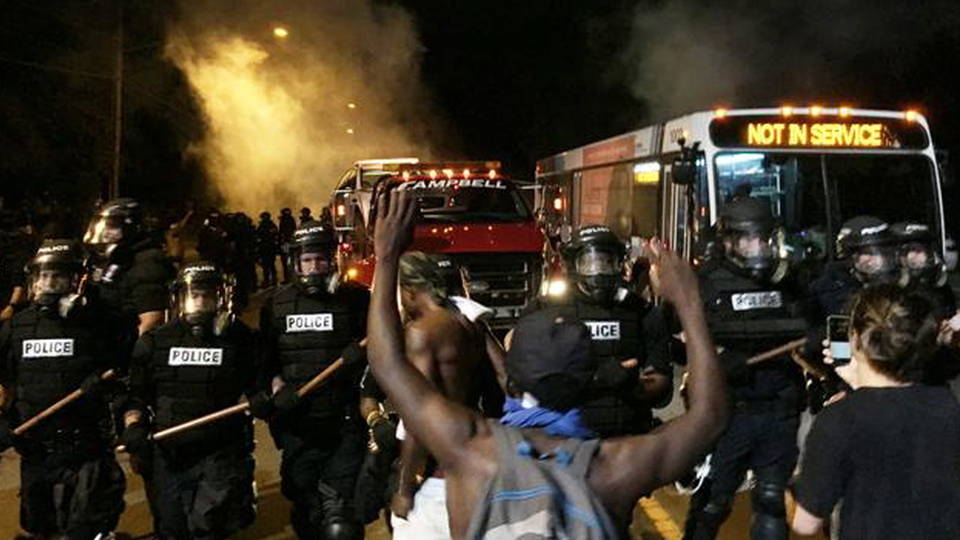 Charlotte, North Carolina, was rocked by protests overnight, after hundreds took to the street and blocked Interstate 85 to protest the fatal police shooting of 43-year-old African American Keith Lamont Scott on Tuesday. Video footage shows protesters blocking the highway, where fires were lit. Police in riot gear responded by throwing tear gas at the crowds. Police say about a dozen officers were hurt during the conflict. Protesters were also injured. Keith Lamont Scott was shot and killed around 4 p.m. after police arrived to serve an arrest warrant for another person at Scott’s housing complex. The accounts of the shooting diverge sharply. While the police claim they first tased and then shot Scott because he was armed and "posed an imminent deadly threat," Scott’s family says he was not armed—except with a book in hand. They say he had been sitting in his car, waiting to pick up his son after school. This is Scott’s daughter speaking in a Facebook live video recorded at the scene of the shooting.
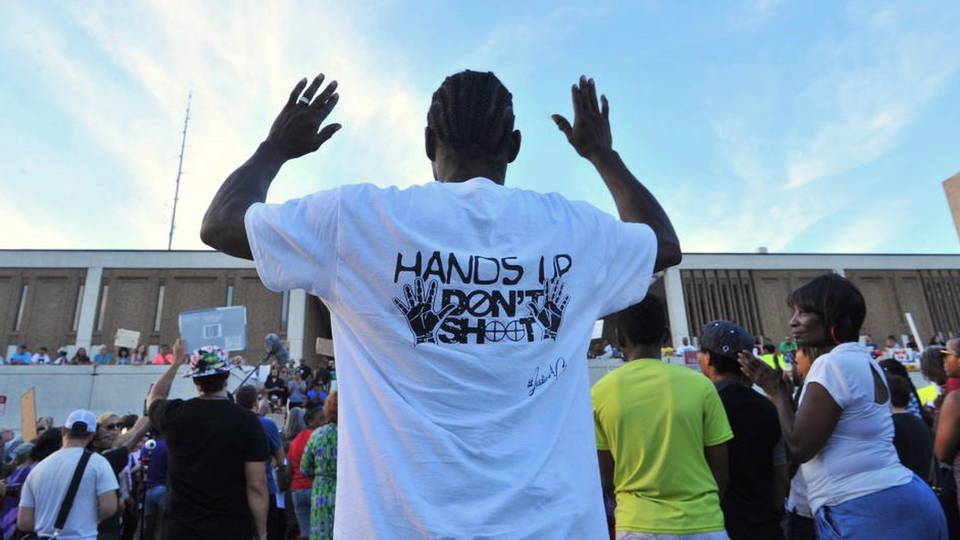 This comes as protests also erupted in Tulsa, Oklahoma, over the fatal police shooting of 40-year-old African American Terence Crutcher, who was shot by a white police officer, Betty Shelby, while his hands were in the air. Hundreds gathered Tuesday outside the Tulsa Police Department demanding her firing. Crutcher was shot and killed around 8 p.m. on Friday, after his car broke down. Some of the video released Monday came from police helicopter footage, in which one can hear the man in the helicopter saying about Crutcher, "That looks like a bad dude, too." Footage from police dash cam video shows Crutcher walking away from officers with his hands in the air, then putting his hands on the side of his own car, as he’s surrounded by officers. The video captures a voice coming over the police radio saying, "He’s just been tasered," and then a woman’s voice yelling "Shots fired," as the video shows Crutcher’s arms falling to the pavement. We’ll have more on these shootings with Bree Newsome and Vincent Warren of the Center for Constitutional Rights after headlines.
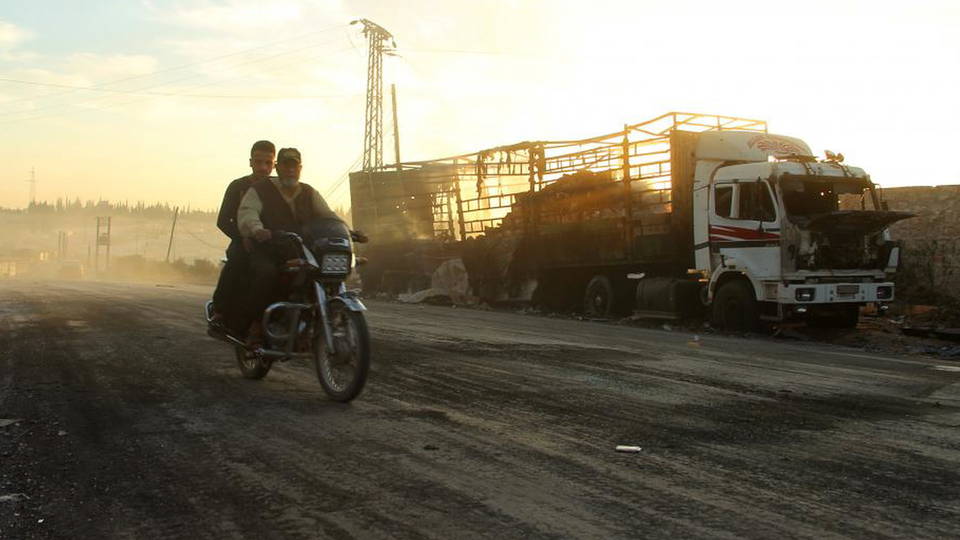 In news from the war in Syria, Secretary of State John Kerry and Russian Foreign Minister Sergey Lavrov are meeting in New York today to discuss the collapse of the ceasefire agreement and the attack on U.N. aid convoys on Monday. This comes as the United States is saying Russia is likely responsible for Monday’s attack, which destroyed 18 of the convoys as aid workers were unloading food and other supplies at a Red Crescent warehouse. The Red Cross says 20 people were killed. Russia has denied responsibility.
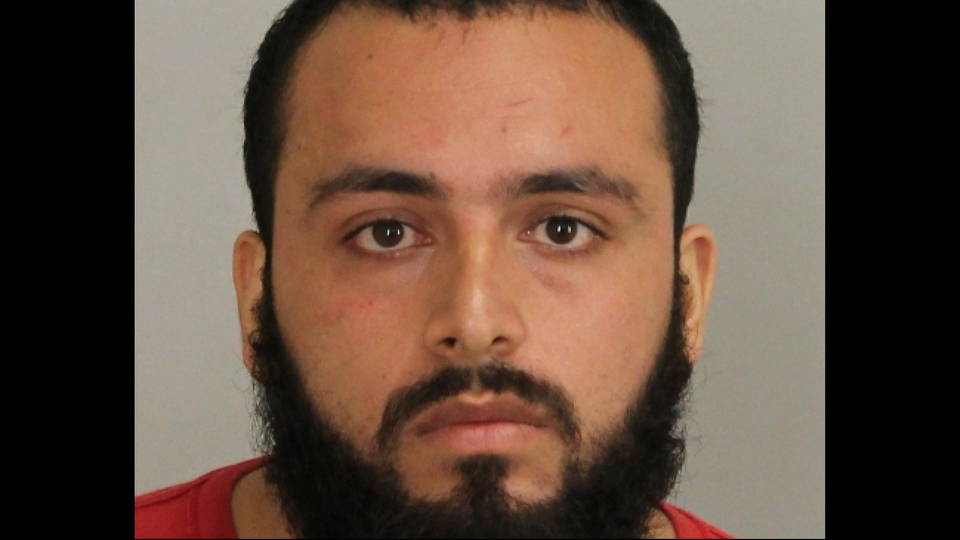 In updates to this weekend’s bombings in New York and New Jersey, suspect Ahmad Khan Rahami has been charged in a Manhattan federal court with bombing, property destruction and the use of weapons of mass destruction. He was not charged with any terrorism-related crimes. Rahami is the main suspect in the bombings. Police say they identified Rahami from surveillance video which showed him at both sites in Manhattan where bombs were planted—on 23rd Street, where a bomb did explode, injuring 29 people, and four blocks away, on 27th Street, where a bomb did not explode. Authorities also say his fingerprints were found on the device planted at 27th Street. He was arrested after a shootout in Linden, New Jersey, on Monday, in which he and officers were both injured, and he also faces multiple counts of attempted murder of a law enforcement officer. The charges filed Tuesday in the Manhattan courtroom suggest prosecutors have not been able to tie Rahami to any non-state terrorist organizations. This comes as information continues to emerge about Rahami. His father says Rahami was arrested in 2014 for allegedly stabbing a family member. He was not indicted on the charges. His father says at the time he called the FBI and referred to his son as a terrorist, prompting the FBI to open an investigation, which found no evidence to support his father’s statement.
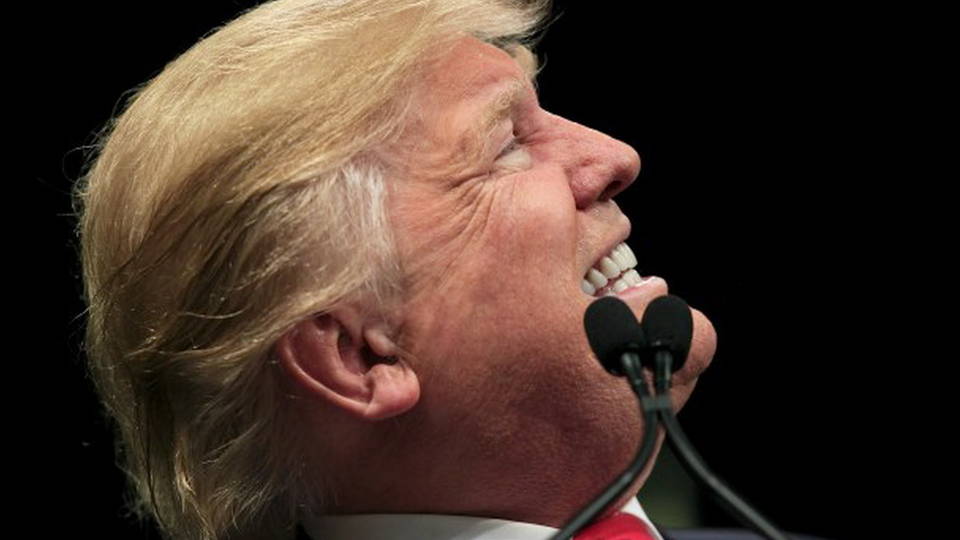 In news from the campaign trail, a new Washington Post investigation reveals Donald Trump used $258,000 from his family foundation, the Donald J. Trump Foundation, to pay off legal fees associated with his businesses—which is illegal under U.S. law. The disputes included $120,000 in unpaid fines over the height of a flagpole in Palm Beach, Florida, and a dispute over a Trump golf course in New York. In both cases, Trump reached settlements that involved him paying out foundation money to other charities. But this money should have been paid by his for-profit businesses, not the foundation. A previous Washington Post investigation showed Donald Trump has not donated any of his own money to his foundation since 2008. Meanwhile, the new Post investigation also reveals Trump used foundation money to buy advertisements for his hotels and to buy a $10,000 portrait—of himself. This is now the second documented case of Donald Trump using his own foundation’s money to buy portraits of himself. The other one was six feet tall and cost $20,000.
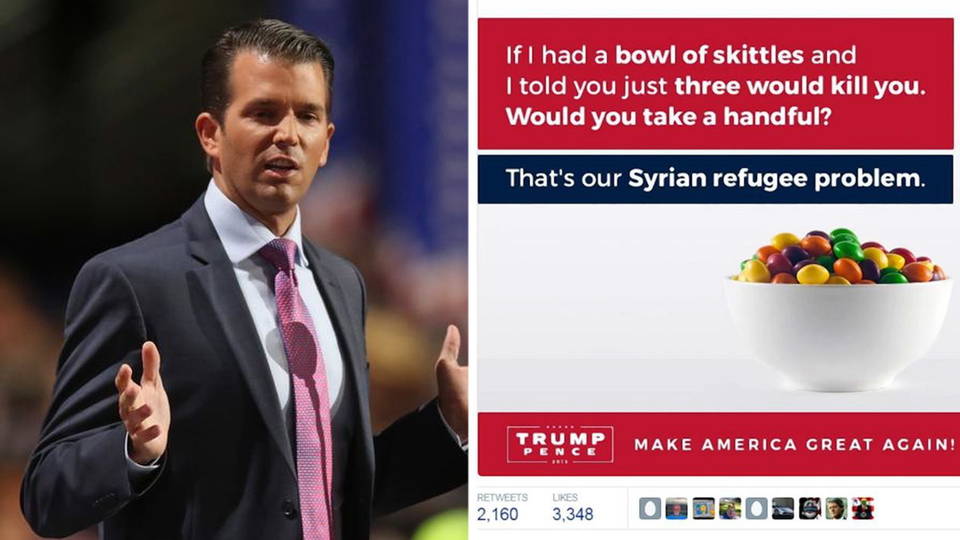 Meanwhile, Trump’s son, Donald Trump Jr., continues to spark controversy with his comments that compared Syrian refugees to poisoned Skittles. On Monday, he tweeted a graphic reading, "If I had a bowl of Skittles and I told you just three would kill you. Would you take a handful? That’s our Syrian refugee problem." Now, the man who shot the photo of the Skittles in the graphic has come forward, revealing he himself is a former refugee. David Kittos lives in Britain. He said, "In 1974, when I was six years old, I was a refugee from the Turkish occupation of Cyprus, so I would never approve the use of this image against refugees." The parent company of Skittles has also pushed back against the tweet, saying, "Skittles are candy. Refugees are people. We don’t feel it’s an appropriate analogy."
 In financial news, Massachusetts Senator Elizabeth Warren grilled Wells Fargo CEO John Stumpf during his two-hour testimony to the Senate Banking Committee Tuesday over a growing scandal at the major Wall Street bank involving thousands of employees who took private customer information to create 2 million fake accounts in order to meet sales targets. The scandal dates back to at least 2011, and CEO John Stumpf admits he’s known about the practice since 2013. Wells Fargo has been fined $185 million. On Tuesday, Senator Elizabeth Warren called on Stumpf to be investigated and to resign.
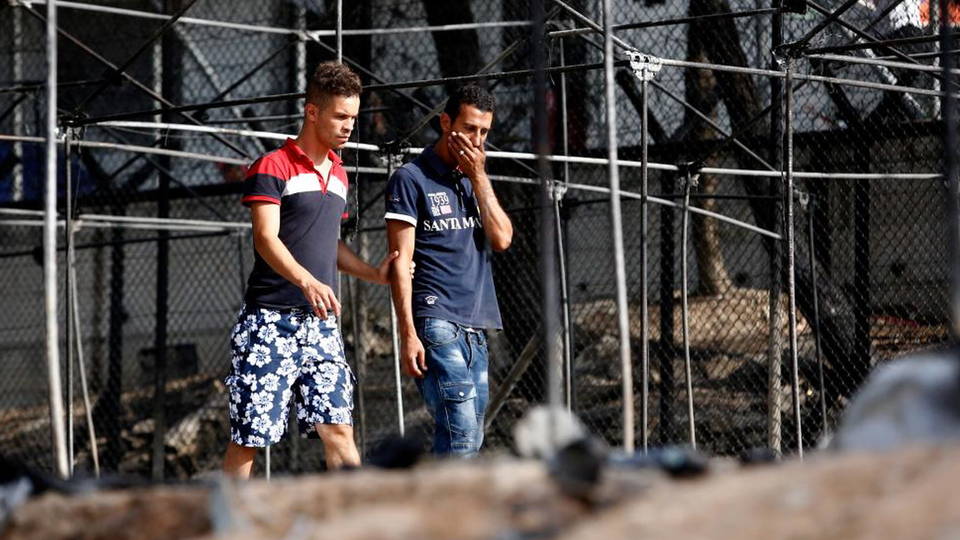 Here in New York, the United Nations General Assembly held its first-ever Summit for Refugees and Migrants. The summit produced a nonbinding declaration detailing a more coordinated and humane response to the biggest migration upheaval since World War II. President Obama also announced the United States will resettle 110,000 refugees from around the world—a nearly 60 percent increase from 2015, but still only a tiny fraction of the number of refugees resettled in other countries. Only hours after the meeting was occurring in New York, a massive fire swept through a refugee camp on the Greek island of Lesbos. The fire at the Moria camp destroyed dozens of homes and tents, and forced thousands of people to flee. We’ll have more on the Summit for Refugees and Migrants later in the broadcast.
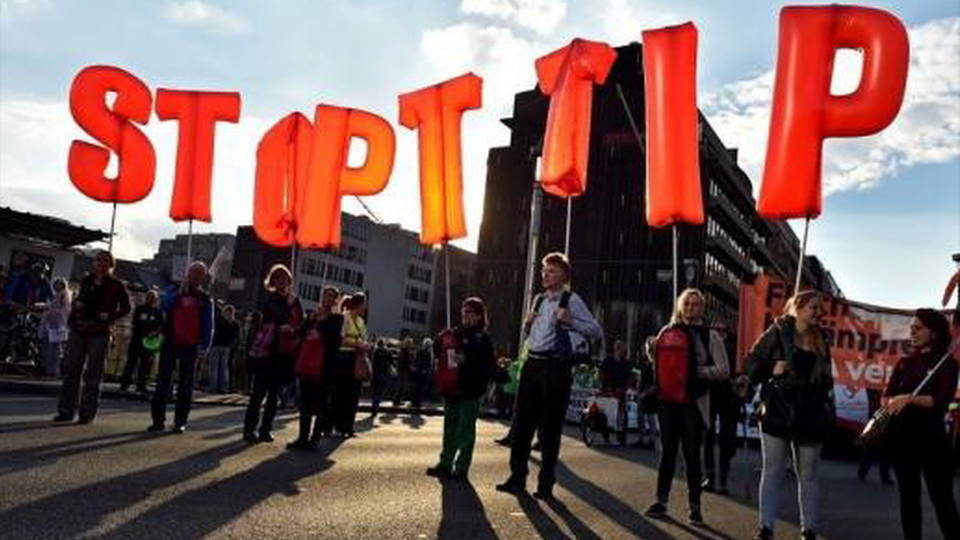 In Brussels, Belgium, as many as 15,000 people marched Tuesday to demand the EU abandon two controversial trade deals: the Transatlantic Trade and Investment Partnership between the EU and the U.S., and the Comprehensive Economic and Trade Agreement between the EU and Canada. This is one of the protesters.
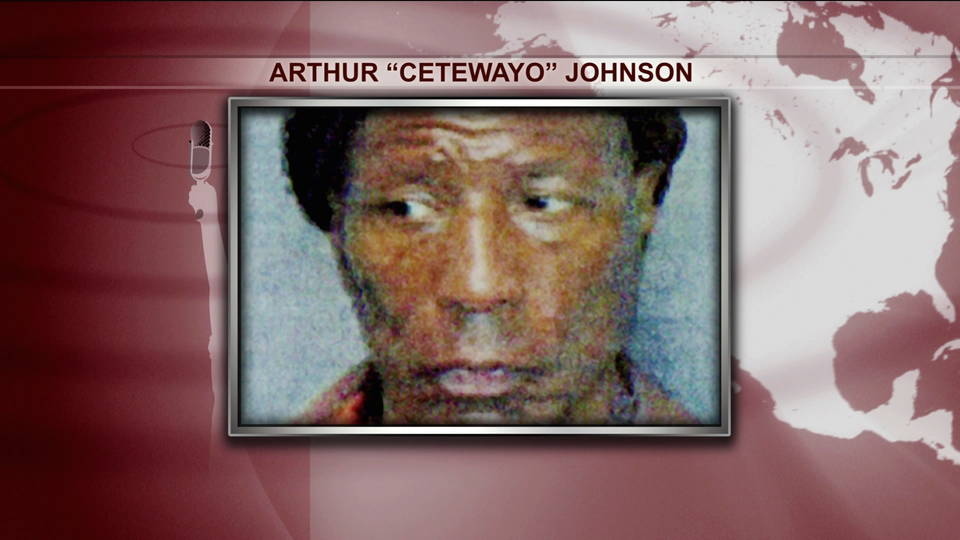 In a landmark ruling, a federal judge in Pennsylvania has ordered the immediate release of a prisoner from long-term solitary confinement. Arthur "Cetewayo" Johnson has not touched another human other than a guard since 1979. He is challenging his conditions as cruel and unusual. He described his isolation in a statement for the court, saying: "During my over 36 years in solitary confinement, my cell has been about 7 feet by 12 feet, smaller than many cages used to hold animals at zoos. … [M]y cell has been lighted 24-hours per day, with no break during day or night. … I have been allowed at most one hour of time outside, five days a week, in a fenced-in exercise cage that is slightly larger than my cell. ... I have been forced to eat all of my meals alone in my cell. Each time I leave my cell I am forced to undergo a mandatory strip-search. … I have not been accused of any serious disciplinary infraction in more than 25 years.” On Tuesday, Judge Christopher Conner called for a plan within a week to reintegrate Johnson into general population in 90 days. Johnson was convicted of homicide and sentenced to life without parole at age 18. He is now 64. While behind bars, he became politicized though the Black Liberation Movement. His case is handled by the Abolitionist Law Center and Jones Day law firm.
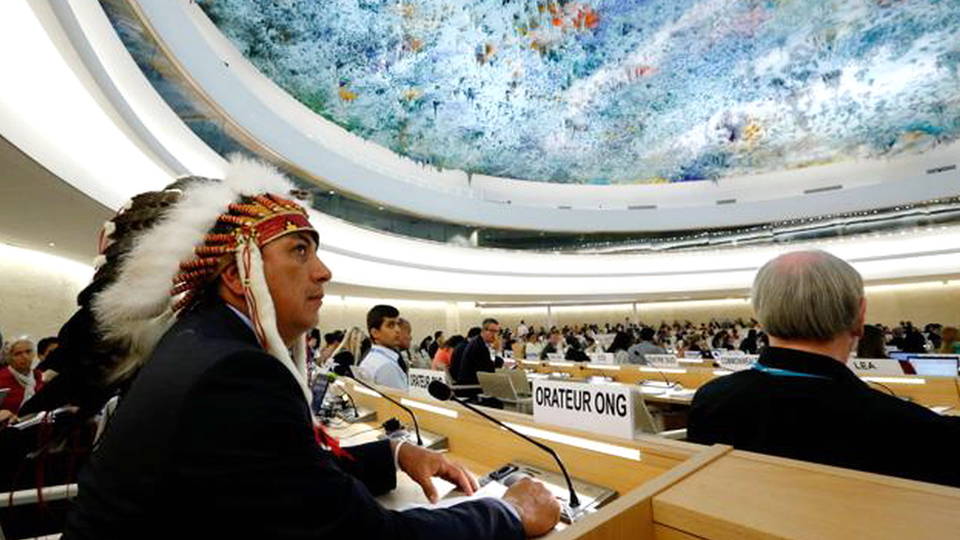 And in news from the ongoing movement to stop the $3.8 billion Dakota Access pipeline, Standing Rock Sioux Tribe Chairman Dave Archambault II has called on the United Nations Human Rights Council to oppose the project, saying the United States has failed to honor the tribe’s sovereign rights and treaty land.
-------
And in news from the ongoing movement to stop the $3.8 billion Dakota Access pipeline, Standing Rock Sioux Tribe Chairman Dave Archambault II has called on the United Nations Human Rights Council to oppose the project, saying the United States has failed to honor the tribe’s sovereign rights and treaty land.
-------
Donate today:
Follow:


DN! IN THE NEWS
Charlotte, North Carolina, was rocked by protests overnight, after hundreds took to the street and blocked Interstate 85 to protest the fatal police shooting of 43-year-old African American Keith Lamont Scott on Tuesday. Video footage shows protesters blocking the highway, where fires were lit. Police in riot gear responded by throwing tear gas at the crowds. Police say about a dozen officers were hurt during the conflict. Protesters were also injured. Keith Lamont Scott was shot and killed around 4 p.m. after police arrived to serve an arrest warrant for another person at Scott’s housing complex. The accounts of the shooting diverge sharply. While the police claim they first tased and then shot Scott because he was armed and "posed an imminent deadly threat," Scott’s family says he was not armed—except with a book in hand. They say he had been sitting in his car, waiting to pick up his son after school. This is Scott’s daughter speaking in a Facebook live video recorded at the scene of the shooting.Lyric Scott: "What are they over there doing? Shot my [bleep] daddy for being black. You little [bleep]. Shot my daddy for being black. And look, and they’re just standing there, because they—right? He’s [bleep] disabled! How the [bleep] he going to shoot y’all? He didn’t got no [bleep] gun."
The officer who shot Scott was also black; police identified him as Brentley Vinson, who has been placed on administrative leave. Three years ago, police in Charlotte shot and killed Jonathan Ferrell, an unarmed African-American college student who was seeking help after a car crash in 2013. Officer Randall Kerrick fired 12 bullets at Ferrell. Officer Kerrick was tried and acquitted of voluntary manslaughter last year.
Protesters Demand Firing of Cop Who Killed Black Man with Hands in Air
This comes as protests also erupted in Tulsa, Oklahoma, over the fatal police shooting of 40-year-old African American Terence Crutcher, who was shot by a white police officer, Betty Shelby, while his hands were in the air. Hundreds gathered Tuesday outside the Tulsa Police Department demanding her firing. Crutcher was shot and killed around 8 p.m. on Friday, after his car broke down. Some of the video released Monday came from police helicopter footage, in which one can hear the man in the helicopter saying about Crutcher, "That looks like a bad dude, too." Footage from police dash cam video shows Crutcher walking away from officers with his hands in the air, then putting his hands on the side of his own car, as he’s surrounded by officers. The video captures a voice coming over the police radio saying, "He’s just been tasered," and then a woman’s voice yelling "Shots fired," as the video shows Crutcher’s arms falling to the pavement. We’ll have more on these shootings with Bree Newsome and Vincent Warren of the Center for Constitutional Rights after headlines.TOPICS:
Kerry and Lavrov Meet in NY Amid Collapse of Syrian Ceasefire
In news from the war in Syria, Secretary of State John Kerry and Russian Foreign Minister Sergey Lavrov are meeting in New York today to discuss the collapse of the ceasefire agreement and the attack on U.N. aid convoys on Monday. This comes as the United States is saying Russia is likely responsible for Monday’s attack, which destroyed 18 of the convoys as aid workers were unloading food and other supplies at a Red Crescent warehouse. The Red Cross says 20 people were killed. Russia has denied responsibility.Ahmad Rahami Charged over NY & NJ Bombings
In updates to this weekend’s bombings in New York and New Jersey, suspect Ahmad Khan Rahami has been charged in a Manhattan federal court with bombing, property destruction and the use of weapons of mass destruction. He was not charged with any terrorism-related crimes. Rahami is the main suspect in the bombings. Police say they identified Rahami from surveillance video which showed him at both sites in Manhattan where bombs were planted—on 23rd Street, where a bomb did explode, injuring 29 people, and four blocks away, on 27th Street, where a bomb did not explode. Authorities also say his fingerprints were found on the device planted at 27th Street. He was arrested after a shootout in Linden, New Jersey, on Monday, in which he and officers were both injured, and he also faces multiple counts of attempted murder of a law enforcement officer. The charges filed Tuesday in the Manhattan courtroom suggest prosecutors have not been able to tie Rahami to any non-state terrorist organizations. This comes as information continues to emerge about Rahami. His father says Rahami was arrested in 2014 for allegedly stabbing a family member. He was not indicted on the charges. His father says at the time he called the FBI and referred to his son as a terrorist, prompting the FBI to open an investigation, which found no evidence to support his father’s statement.TOPICS:
WashPo: Trump Used $258,000 from Charity to Cover Legal Fees for Businesses
In news from the campaign trail, a new Washington Post investigation reveals Donald Trump used $258,000 from his family foundation, the Donald J. Trump Foundation, to pay off legal fees associated with his businesses—which is illegal under U.S. law. The disputes included $120,000 in unpaid fines over the height of a flagpole in Palm Beach, Florida, and a dispute over a Trump golf course in New York. In both cases, Trump reached settlements that involved him paying out foundation money to other charities. But this money should have been paid by his for-profit businesses, not the foundation. A previous Washington Post investigation showed Donald Trump has not donated any of his own money to his foundation since 2008. Meanwhile, the new Post investigation also reveals Trump used foundation money to buy advertisements for his hotels and to buy a $10,000 portrait—of himself. This is now the second documented case of Donald Trump using his own foundation’s money to buy portraits of himself. The other one was six feet tall and cost $20,000.TOPICS:
Man Who Shot Photo of Skittles in Donald Trump Jr. Anti-Refugee Tweet Himself was Refugee
Meanwhile, Trump’s son, Donald Trump Jr., continues to spark controversy with his comments that compared Syrian refugees to poisoned Skittles. On Monday, he tweeted a graphic reading, "If I had a bowl of Skittles and I told you just three would kill you. Would you take a handful? That’s our Syrian refugee problem." Now, the man who shot the photo of the Skittles in the graphic has come forward, revealing he himself is a former refugee. David Kittos lives in Britain. He said, "In 1974, when I was six years old, I was a refugee from the Turkish occupation of Cyprus, so I would never approve the use of this image against refugees." The parent company of Skittles has also pushed back against the tweet, saying, "Skittles are candy. Refugees are people. We don’t feel it’s an appropriate analogy."TOPICS:
Elizabeth Warren to Wells Fargo CEO: You Should Be Criminally Investigated
In financial news, Massachusetts Senator Elizabeth Warren grilled Wells Fargo CEO John Stumpf during his two-hour testimony to the Senate Banking Committee Tuesday over a growing scandal at the major Wall Street bank involving thousands of employees who took private customer information to create 2 million fake accounts in order to meet sales targets. The scandal dates back to at least 2011, and CEO John Stumpf admits he’s known about the practice since 2013. Wells Fargo has been fined $185 million. On Tuesday, Senator Elizabeth Warren called on Stumpf to be investigated and to resign.Sen. Elizabeth Warren: "But you squeezed your employees to the breaking point, so they would cheat customers and you could drive up the value of your stock and put hundreds of millions of dollars in your own pocket. And when it all blew up, you kept your job, you kept your multimillion-dollar bonuses, and you went on television to blame thousands of $12-an-hour employees who were just trying to meet cross-sell quotas that made you rich. This is about accountability. You should resign. You should give back the money that you took while this scam was going on. And you should be criminally investigated by both the Department of Justice and the Securities and Exchange Commission."
TOPICS:
Fire Destroys Greek Refugee Camp, Hours After UNGA Holds First Summit for Refugees & Migrants
Here in New York, the United Nations General Assembly held its first-ever Summit for Refugees and Migrants. The summit produced a nonbinding declaration detailing a more coordinated and humane response to the biggest migration upheaval since World War II. President Obama also announced the United States will resettle 110,000 refugees from around the world—a nearly 60 percent increase from 2015, but still only a tiny fraction of the number of refugees resettled in other countries. Only hours after the meeting was occurring in New York, a massive fire swept through a refugee camp on the Greek island of Lesbos. The fire at the Moria camp destroyed dozens of homes and tents, and forced thousands of people to flee. We’ll have more on the Summit for Refugees and Migrants later in the broadcast.TOPICS:
Brussels: Tens of Thousands March Against Free Trade Deals
In Brussels, Belgium, as many as 15,000 people marched Tuesday to demand the EU abandon two controversial trade deals: the Transatlantic Trade and Investment Partnership between the EU and the U.S., and the Comprehensive Economic and Trade Agreement between the EU and Canada. This is one of the protesters.Igor Lacoste: "The aim of the treaty is to remove all barriers nonrelated to tariffs to allow, they say, more competitivity, free trade, free market. But the problem is that those barriers also include food controls, food security, safety of the food chain. And that is not something we can tolerate as citizens, as human beings, fathers."
The Transatlantic Trade and Investment Partnership, known as TTIP, would be the largest trade deal in the world. It’s faced resistance both in the U.S. and across Europe.
PA Judge Orders Immediate Release of Arthur Johnson from Solitary Confinement
In a landmark ruling, a federal judge in Pennsylvania has ordered the immediate release of a prisoner from long-term solitary confinement. Arthur "Cetewayo" Johnson has not touched another human other than a guard since 1979. He is challenging his conditions as cruel and unusual. He described his isolation in a statement for the court, saying: "During my over 36 years in solitary confinement, my cell has been about 7 feet by 12 feet, smaller than many cages used to hold animals at zoos. … [M]y cell has been lighted 24-hours per day, with no break during day or night. … I have been allowed at most one hour of time outside, five days a week, in a fenced-in exercise cage that is slightly larger than my cell. ... I have been forced to eat all of my meals alone in my cell. Each time I leave my cell I am forced to undergo a mandatory strip-search. … I have not been accused of any serious disciplinary infraction in more than 25 years.” On Tuesday, Judge Christopher Conner called for a plan within a week to reintegrate Johnson into general population in 90 days. Johnson was convicted of homicide and sentenced to life without parole at age 18. He is now 64. While behind bars, he became politicized though the Black Liberation Movement. His case is handled by the Abolitionist Law Center and Jones Day law firm.TOPICS:
Standing Rock Sioux Tribe Chair Speaks at U.N. Human Rights Council
And in news from the ongoing movement to stop the $3.8 billion Dakota Access pipeline, Standing Rock Sioux Tribe Chairman Dave Archambault II has called on the United Nations Human Rights Council to oppose the project, saying the United States has failed to honor the tribe’s sovereign rights and treaty land.Dave Archambault II: "While we have gone to the court in the United States, our courts have failed to protect our sovereign rights, our sacred places and our water. We call upon the Human Rights Council and all members, all member states, to condemn the destruction of our sacred places and to support our nation’s efforts to ensure that our sovereign rights are respected. We ask that you call upon all parties to stop the construction of the Dakota Access pipeline and to protect the environment, our nation’s future, our culture and our way of life."
That’s Dave Archambault II speaking in Geneva at the United Nations Human Rights Council.
TOPICS:
Donate today:
Follow:
DN! IN THE NEWS

WATCH: Amy Goodman on PBS's Tavis Smiley on Dakota Access Pipeline & Land Defenders at Standing Rock
FEATURED TOPIC


Exclusive Interview with Ex-Gitmo Prisoner Dhiab on Hunger Strike in Uruguay & Lawyer Who Freed Him
WORK WITH DN!

Senior TV Producer
DN! IN THE NEWS

Vogue: "What Amy Goodman's Arrest Warrant Means for the Dakota Access Pipeline and Free Speech"
207 West 25th Street, 11th Floor
New York, New York 10001, United States
-------
-------

No comments:
Post a Comment