democracynow.org
Stories:
 Moral Mondays Leader Rev. Barber: Release Video of Keith Scott Shooting, It Belongs to the PublicFor a third night in a row, protesters chanted "release the video!" as they took to the streets and called for police to release video of the shooting of Keith Lamont Scott. His grieving family has been shown the dashboard and body camera videos of his fatal shooting, but Charlotte Police Chief Kerr Putney says he had no plans to release the video at this time. We get response from Rev. Dr. William Barber, president of the North Carolina NAACP and Moral Mondays leader. His most recent book is titled "Third Reconstruction: Moral Mondays, Fusion Politics, and the Rise of a New Justice Movement."
TRANSCRIPT
This is a rush transcript. Copy may not be in its final form.
JUAN GONZÁLEZ: We begin today’s show in Charlotte, North Carolina.
PROTESTERS: Release the video! Release the video! Release the video! Release the video! Release the video! Release the video! Release the video! Release the video!
JUAN GONZÁLEZ: For a third night in a row, protesters chanted "Release the video!" as they took to the streets and called for police to release video of the shooting of Keith Lamont Scott. Charlotte’s mayor imposed a midnight-to-6:00-a.m. curfew that some protesters defied.
JOYA: I don’t agree with that, simply because I’m grown and I feel like I should be able to, you know, stay out as long as I want. As far as my reasons for doing this, I have one sibling, and he is my brother, and I feel like it’s my duty to protect him. If anything, you know, he kind of looks up to me. So, that’s my reason for doing it. And if they take him away from me, I won’t have anything left.
JUAN GONZÁLEZ: Meanwhile, the protester who police say was the victim Wednesday of a civilian-on-civilian shooting has died. But several eyewitnesses dispute that explanation. A Charlotte public defender named Eddie Thomas, who was at the protest to observe interactions between police and the public, told The Guardian he saw what happened. Thomas said, quote, "There was no fight. There was no issue between protesters. It just didn’t happen." Thomas said he believes the protester was shot by a tear gas canister, pepper ball or other projectile that caused him to stumble back and hit his head on the brick sidewalk.
AMY GOODMAN: This comes as the grieving family of Keith Scott has been shown the dashboard and body camera videos of his fatal shooting. Police say they shot Scott after he got out of his car and brandished a gun. But in a statement for the family, attorney Justin Bamberg said that it’s not what he saw when he watched the video with the family. He spoke on MSNBC.
JUSTIN BAMBERG: What I see in that video is an individual who was sitting in a car, who gets out in a calm, peaceful manner. He never appears to be aggressive. It seems like he’s a tad confused. I don’t know if he’s getting yelled at from too many directions. His hands are down. There does appear to be some object in his hand, but you can’t make out what it is. At the moment he is shot, he’s actually stepping backwards.
GABE GUTIERREZ: OK. Did he have a gun?
JUSTIN BAMBERG: As far as I know, I don’t know. You know, we know that law enforcement is saying that he had a gun. I have not seen any definitive evidence aside from what law enforcement is saying.
AMY GOODMAN: Scott’s family has called for the videos of his death to be made public. But Charlotte Police Chief Kerr Putney says he had no plans to release the video at this time. On Thursday, he said the video is inconclusive.
POLICE CHIEF KERR PUTNEY: There’s your truth, my truth and the truth. Some people have already made up their minds what happened. We’ve given multiple facts, and there will be an update later this afternoon about more additional information we’re getting. But that still doesn’t change the mindset and the perspective of some who want to break the law and tear down our city. So, if there is compelling information that I think helps, we’ll show it. But again, I’m going to be—I’m going to be very intentional about protecting the integrity of the investigation, and in so doing, I’m not going to release the video right now.
AMY GOODMAN: That’s Charlotte’s police chief.
For more on the Keith Lamont Scott killing, we go to North Carolina, where we’re joined in Raleigh by the Reverend Dr. William Barber, president of the North Carolina NAACP, Moral Monday leader. He’s been participating in the Democracy Awakening mobilizations. His most recent book, Third Reconstruction: Moral Mondays, Fusion Politics, and the Rise of a New Justice Movement.
Reverend Barber, it’s great to have you back on Democracy Now! Can you please respond to what’s happening in Charlotte, first the killing and the refusal of the city, the police chief, to release the video, unlike what happened in Tulsa, where the police did release the video, and now the police officer who killed the African-American man in Tulsa has been indicted?
REV. WILLIAM BARBER: Well, thank you, first of all, for having me, Amy and both of you.
Here we have a situation where there are only three possible scenarios. One, an unarmed African-American man with a book was shot, and the police, black and white, conspired to place a gun at the scene to suggest that he had been aggressive. Two, an African-American man had a gun, which is not illegal in North Carolina, an open-carry state, and was shot by the police. Three, an African American had a gun, brandished it violently at the police and was shot.
Now, we don’t know what happened, because the—no one has released the tape. We’ve called on the governor—who, by the way, is against releasing tapes—the attorney general, the mayor, the prosecutor, the police chief to release the tapes. We know that if these tapes had shown a citizen, for instance, shooting a cop, these tapes would be released. We’ve also called for an independent federal investigation, not just the SBI, because in North Carolina the SBI is under the governor, and it’s—and, too often, that’s not enough.
We’ve also found out that some of the officers did not have their body cameras on. This came from the police chief. And the clergy there and organic organizers have called for the firing of those police. Why would you not have your body cameras on? This is a very serious matter.
And 99.999 percent of the protesters, who are, by the way, black and white and young and old and Christians and Jews and Muslims and people of different races, colors and creed, have been nonviolent justice protesters asking for what should automatically trigger—we believe it should be an automatic trigger in these kinds of shootings that the tapes are released and there’s a federal investigation.
JUAN GONZÁLEZ: And, Reverend Barber, yesterday afternoon, you and other faith leaders had a press conference where you called for the ability of the community to be able to protest peacefully, and also you called for no curfew. You requested no curfew.
REV. WILLIAM BARBER: Right.
JUAN GONZÁLEZ: But then, late yesterday, the mayor did order a curfew. How do you feel that has helped or made the situation worse in Charlotte?
REV. WILLIAM BARBER: Yeah, well, first of all, if you go back, even on Tuesday night, the protests were peaceful, until the police showed up in riot gear and actually herded a group of protesters down into a car garage and then proceeded, according to eyewitnesses, to take out their batons and hit people, create confusion. And that’s where the young man got shot, which is why there’s so much confusion about how he actually was shot.
You know, there are people who may want to politicize this. You know, our governor all of a sudden called for a state of emergency. Charlotte is a convention city. There’s enough police there and in surrounding areas, they did not need a state of emergency, because it was only about two dozen people that were engaging in the violence, provocateurs. It was not the overwhelming majority. Clergy were in the street on Tuesday night and on Wednesday night, and they were there last night. We thought we had an agreement that there would not be a curfew. There was no reason for a curfew. There’s no reason to try to militarize a city and put all of that focus on those things and to suggest we can’t contain a few provocateurs.
The real energy ought to be in releasing these tapes, getting an independent federal investigation. Remember, this man was not even the suspect they were looking for. This city is a city where you had another young man, Jonathan Ferrell, who was shot multiple times, a college student who was disoriented in a wreck and had asked for help. He was shot multiple times and killed. The officer was indicted, was tried, but there was a hung jury. And there’s been no attempt to retry that officer. Until there are indictments and convictions and prosecutions and incarceration by police who hide behind the badge and commit murder, we’re going to continue to have these problems. Now, we’re not saying that’s what happened here, but what we are saying is the video needs to be released. That’s public property. That’s the point of having the videos. And even the family is calling for the release of the video.
AMY GOODMAN: Now, Reverend Barber, I want to ask you about this, because Governor McCrory has just signed into law a bill that would seal the video. And it’s going into effect August—October 1st, which, again, is a few days away, so it wouldn’t apply here. So you have the cities of North Carolina—let’s look at Charlotte right now—putting millions into, you know, video of police and body cams and all of that. But then that information will solely be seen by the police, unless they choose to release it. But this—the law has not even gone into effect.
REV. WILLIAM BARBER: Right.
AMY GOODMAN: Can you explain McCrory’s move? So, the police get millions of dollars again.
REV. WILLIAM BARBER: That’s right.
AMY GOODMAN: But this just further empowers them, because they’re the only side that will have the information. And that’s what the police chief right now is enforcing, even though the family has called for its release, as well.
REV. WILLIAM BARBER: Yeah, the family, experts have called for it, around the country and both in Charlotte. You know, McCrory and Trump together are playing a dangerous game in our society. And this is what they’re doing. They’re trying to make the legitimate discontent of African Americans and white and brown people who are challenging bad police—nobody is challenging good police. We love good police. But good police don’t like bad police. So they want to, number one, not even have a conversation about race and police brutality. That’s number one. Number two, they want to make the narrative that the protesters are anti-police and that they are pro-protecting police. So, for instance, our Legislature comes up with a bill like this, basically saying we want to suppress the videos and protect the police.
Now, remember, McCrory, like Trump, or Trump, like McCrory, are suppressors-in-chief. He signed a bill to suppress the vote. That was found unconstitutional. He has suppressed access to Medicaid expansion for 500,000 people. You have to understand this context to understand the frustration. He’s suppressed people getting a living wage. He’s tried to suppress teachers’ right to have a union. He’s suppressed money for public education. He signed a bill to suppress the LGBTQ community. And he’s suppressed the ability for North Carolinians to file employment discrimination cases in federal—in state court.
And now he wants to suppress the public’s video. Understand, the public owns these videos. This is taxpayer money. It is wrong-headed. It is not the kind of openness that we need. It creates and causes more tension, more animosity, more distrust, because there is not transparency. And it sounds more like the old South, the South of suppression, the South that would hold things back, rather than what we need, is a new South and a new America that says let the tapes be shown. That’s not going to distract from investigation. It’s not going to take away from due process. We do not want people tried on the street, prosecuted on the street. But what we do want, when the facts dictate, and the tapes shall show, and there’s probable cause, for the law to say you cannot hide behind a badge and commit what we call MBP, murder by police. You cannot do that, because a badge, in the name of the state, paid by tax dollars, is too much power, with a gun, for a bigot or a trigger-happy person that does not protect and serve, and instead kills and destroys.
AMY GOODMAN: Reverend Dr. William Barber, we’re going to break, but we’re going to come back to this discussion, president of the North Carolina NAACP, leader of the Moral Mondays movement. This is Democracy Now! We’ll be back with him in a minute.
... Read More → Sen. Warren Calls for Wells Fargo CEO to Resign & Face Investigation Amid Growing Scandal
We get reaction to this week’s Senate Banking Committee hearing where Senator Elizabeth Warren grilled Wells FargoCEO John Stumpf over a growing scandal at the major Wall Street bank involving thousands of employees who took private customer information to create 2 million fake accounts in order to meet sales targets. The scandal dates back to at least 2011, and CEO John Stumpf admits he’s known about the practice since 2013. Wells Fargo has been fined $185 million. "John Stumpf let 5,300 people take the fall for his criminal behavior," says Nomi Prins. Prins is a former managing director at Bear Stearns and Goldman Sachs and previously an analyst at Lehman Brothers and Chase Manhattan Bank. Prins’s latest book is called "All the Presidents’ Bankers: The Hidden Alliances That Drive American Power."
TRANSCRIPT
This is a rush transcript. Copy may not be in its final form.
JUAN GONZÁLEZ: On Tuesday, Massachusetts Senator Elizabeth Warren grilled Wells Fargo CEO John Stumpf during his two-hour testimony to the Senate Banking Committee over a growing scandal at the major Wall Street bank involving thousands of employees who took private customer information to create 2 million fake accounts in order to meet sales targets. The scandal dates back to at least 2011, and CEO John Stumpf admits he’s known about the practice since 2013. Wells Fargo has been fined $185 million. Senator Elizabeth Warren called on Stumpf to be investigated.
SEN. ELIZABETH WARREN: Do you know how much money, how much value your stock holdings in Wells Fargo gained while this scam was underway?
JOHN STUMPF: Well, first of all, it was not a scam. And cross-sell is a way of deepening relationships. When customers—
SEN. ELIZABETH WARREN: We’ve been through this, Mr. Stumpf. I asked you a very simple question: Do you know how much the value of your stock went up while this scam was going on?
JOHN STUMPF: Yeah, it’s—all of my compensation is in our public filing.
SEN. ELIZABETH WARREN: Do you know how much it was?
JOHN STUMPF: It’s all in the public filing.
SEN. ELIZABETH WARREN: All—you’re right. It is all in the public records, because I looked it up. While this scam was going on, you personally held an average of 6.75 million shares of Wells stock. The share price during this time period went up by about $30, which comes out to more than $200 million in gains, all for you personally—and thanks, in part, to those cross-sell numbers that you talked about on every one of those calls. You know, here’s what really gets me about this, Mr. Stumpf. If one of your tellers took a handful of $20 bills out of the cash drawer, they’d probably be looking at criminal charges for theft. They could end up in prison.
JUAN GONZÁLEZ: More of Massachusetts Senator Elizabeth Warren grilling Wells FargoCEO John Stumpf during his two-hour testimony to the Senate Banking Committee Tuesday. She called on him to resign.
SEN. ELIZABETH WARREN: But you squeezed your employees to the breaking point, so they would cheat customers and you could drive up the value of your stock and put hundreds of millions of dollars in your own pocket. And when it all blew up, you kept your job, you kept your multimillion-dollar bonuses, and you went on television to blame thousands of $12-an-hour employees who were just trying to meet cross-sell quotas that made you rich. This is about accountability. You should resign. You should give back the money that you took while this scam was going on. And you should be criminally investigated by both the Department of Justice and the Securities and Exchange Commission.
AMY GOODMAN: That was Massachusetts Senator Elizabeth Warren grilling Wells FargoCEO John Stumpf earlier this week. The Consumer Financial Protection Bureau found Wells Fargo employees secretly opened phony bank accounts, issued credit cards to customers who did not want them. These practices led to overdraft charges, late fees, other penalties. The bank has fired at least 5,300 workers allegedly involved in the illegal activity. But not a single high-level executive has been fired or even forced to return the tens of millions of dollars in pay earned based on the fraud.
For more, we’re going to Los Angeles to speak with Nomi Prins, former managing director at Bear Stearns and Goldman Sachs, previously an analyst at Lehman Brothers and Chase Manhattan Bank. Her latest book, All the Presidents’ Bankers: The Hidden Alliances That Drive American Power.
Welcome to Democracy Now!, Nomi. Can you talk about this case and what will come of this hearing, what exactly John Stumpf did, the head of Wells Fargo, where he remains?
NOMI PRINS: What John Stumpf did is he let 5,300 people take the fall for his criminal behavior. That’s what he did. This particular case that was in front of the Senate Banking Committee early this week is a tiny portion of the array of criminal activity that Wells Fargo has basically done under the direction of John Stumpf. John Stumpf has been theCEO since 2007. He has been chairman of the board of Wells Fargo since 2010. He has been there through the beginning of the financial crisis ’til now, and he has presided not just on this case, where 5,300 people were involved in technically possibly creating phony accounts for credit cards and for depositors in order to charge fees, in order to make those cross-sell objectives, that are set on high, but for years he was knowledgeable of it. And during those years, Wells Fargo racked up about $10 billion. This fine, on this particular set of activities, was only $185 million. Wells Fargo has racked up $10 billion worth of fines for criminal activity, from foreclosure abuses to defrauding the government to abusing Hispanic and African-American communities with respect to mortgage-related activities. They have done an array of crimes, all under John Stumpf. He has let, in this particular case, 5,300 people take the fall for one of them.
JUAN GONZÁLEZ: Well, Nomi, you mention other previous cases. There was an article in yesterday’s New York Times about some of those mortgage fraud cases, where, in fact, Gretchen Morgenson quotes a federal judge in 2013 demanding that the bank provide him with a corporate resolution signed by its president and a majority of its board stating that they stood behind the conduct of the bank’s lawyers in one particular case. That judge said, "The disconnect between Wells Fargo’s publicly advertised face and its actual litigation conduct here could not be more extreme." So, this is, as you say, a serial situation of the bank. And yet, why did, do you think, the federal government end up with such a low fine, and still, again, no—even though they claim that they’re doing a criminal investigation, no sense that anyone’s actually going to be indicted for what happened here?
NOMI PRINS: Because in this case, and throughout all those multiple cases, of which Wells Fargo and all our other large banking institutions, I might add, have been involved in in different ways, the government refuses to prosecute any of these people, because it doesn’t want to. If you and I and Amy were sitting there committing grand larceny across state lines, we would not only walk out—we wouldn’t be in that room, right? We’d be walking out of that room, we’d be serving some serious jail time. But in the case of these people, they not only have committed crimes by directing crimes—that’s what happens when you are going through—you take your minions, and you just sort of direct them to do your bidding.
In John Stumpf’s case and in that mortgage case that you’re talking about, Juan, that was related to a $5.2 billion settlement that Wells Fargo did with the Department of Justice. And as part of that settlement, it was supposed to provide certain information and stop certain abuses. It was actually recharged by the attorney general in New York for not complying with its settlement. This was in 2012. This is where John Stumpf was supposedly knowledgeable of this other smaller crime and not doing anything about it. He should have walked out of that Senate committee, been handcuffed, been indicted and had all of these multiple charges put upon him as the director of this institution.
AMY GOODMAN: Nomi Prins, I wanted to switch gears to ask you about Donald Trump. Donald Trump, a recent Washington Post investigation found, used, among other things, about a quarter of a million dollars, $258,000, from his family foundation, the Donald J. Trump Foundation, to pay off legal fees associated with his businesses, which is illegal under U.S. law.
NOMI PRINS: Right. This is basically—you’re not supposed to take a charitable foundation and cross over the line into supporting your business dealings. What he did in the case of $285,000 worth of activities is he did that. And these are only the ones that we know about. But the pattern actually is not dissimilar to the pattern of Wells Fargo, which is effectively using other people’s money to meet his business obligations to make him either richer or to make problems go away, which is what he did in those cases and which it is likely he has done in many other cases. It shows a particular pattern of behavior where you find money in one place, that you shouldn’t be using, that you legally should not be using, and you use that to effect profit in another location. That’s what he did in those cases.
AMY GOODMAN: And he did not—hasn’t given to his own foundation in years, so he is spending—well, as he puts it, OPM, other people’s money.
NOMI PRINS: Exactly. And this is something we need to be concerned about if he were to be elected president. If you can find and use other people’s money illegally in one capacity, then you have the skill and you have the track record to do that in other types of capacities. He has done that not just in his charitable—you know, with respect to his charitable foundation. He has used money to effectively buy off government officials in order to make certain legal settlements related to his private business enterprises go better for him. You know, he’s basically funded, whether it’s political people or whether it’s in certain court cases, individuals behind the scenes to be able to effect a positive outcome for his businesses. So it’s not just in charities, it’s in public offices, as well, in which he has used his money to benefit his private interest. So there’s no doubt that that pattern exists. That’s proven. That’s real information. That’s not a conspiratorial accusation. And that is something for which he has been doing for, extensively, decades.
JUAN GONZÁLEZ: And, Nomi, I’d like to ask you—we’re heading into the last few months of the Obama administration. The title of your new book is All the Presidents’ Bankers, "presidents" with the plural, so you’re dealing with all past presidents. But how do you assess the record of the Obama administration in dealing with the criminal activity and the fraud of so many of the major banks in this country?
NOMI PRINS: Well, we just talked about John Stumpf at the beginning of this. The Obama administration has not gotten behind prosecuting any of the individuals at the top of these banks. So we basically have three sets of individuals at the head of three of the six largest banks in the country—we have John Stumpf at Wells Fargo, we have Lloyd Blankfein at Goldman Sachs, and we have Jamie Dimon at JPMorgan Chase—who have not only benefited from the post-crisis environment and what the government has allowed them to get away with, their institutions have all grown and flourished, as they’ve been paying very small settlements related to what their profits are to the United States government. So the Obama administration has done a very poor job of handling the criminality of the banking system, of changing the banking system, of personally making responsible, on a—from a criminal basis, the individuals that run the largest institutions in this country.
In addition, it has not broken up the banks. We have a situation where these large banks and these individuals control so many assets and so many deposits of the American people, because they are allowed to do so because of our regulatory framework. Our regulatory framework in the post-Glass-Steagall-repeal environment, which happened under Bill Clinton, before Obama came into power, still exists. That’s why there is so much power in these institutions. That’s why these individuals get away with so much. And that’s why the Obama administration has done a very poor job of changing any of that for the benefit of our country or for economic stability going forward.
AMY GOODMAN: Elizabeth Warren called for John Stumpf to resign and to be criminally investigated. What do you think actually will happen?
NOMI PRINS: I think he will do none of those. He has not—well, he might be criminally investigated. But as we’ve seen, that, A, hasn’t happened, so that makes a very, very low probability. And if he is, remember all the money that he has made, and that Elizabeth Warren talked about that he’s made during this period, and not just from this crime but from all the multiple ones that have led to those $10 billion worth of settlements, have not only enriched him, but even the fines for them have not come out of his own pocket. He’s had zero accountability, zero cost to himself personally, zero reason to resign.
And the other reason for not resigning is he runs the board there. Normally, in a situation in a company where you’re talking about a resignation, there’s a board decision, there’s an analysis of what’s going on in the company, there’s a recommendation to keep or get rid of a CEO. None of that’s happened, because he runs the board. And this is the case in other banking institutions, as well.
AMY GOODMAN: We’re going to—
NOMI PRINS: So, this is Jamie Dimon at JPMorgan Chase and so forth. But he runs the board—
AMY GOODMAN: We’re going to have to leave it there. But, Nomi Prins, thanks so much for being with us.
NOMI PRINS: —so that’s why it’s very unlikely he’ll resign. That’s why it’s very unlikely we’re going to see him in cuffs or indicted.
AMY GOODMAN: We have to wrap up. I’m Amy Goodman, with Juan González, for another edition of Democracy Now!... Read More → Protests over Tulsa & Charlotte Police Killings Stem from Economic Policies That Perpetuate Racism
The police killings of Keith Lamont Scott in Charlotte, North Carolina, and Terence Crutcher in Tulsa, Oklahoma, have drawn attention to policies backed by Republicans that have perpetuated racism and voter suppression, says our guest Rev. Dr. William Barber, president of the North CarolinaNAACP and Moral Mondays leader.
Headlines:
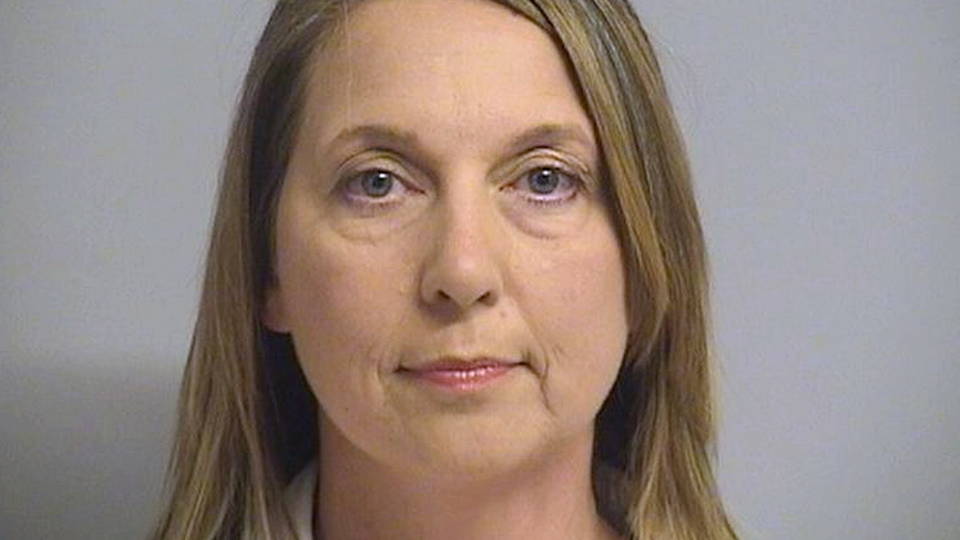 In Tulsa, police officer Betty Shelby has been booked and released, after she was charged with felony manslaughter in the fatal shooting of African American Terence Crutcher. Video footage shows Officer Shelby, who is white, shooting and killing Crutcher while his hands were in the air. The criminal complaint says Shelby’s "fear resulted in her unreasonable actions which led her to shooting." Crutcher’s killing has sparked protests throughout the week in Tulsa. If convicted, Shelby faces four years to life in prison.
Charlotte: Protesters Demand Police Release Video of Keith Scott's Killing
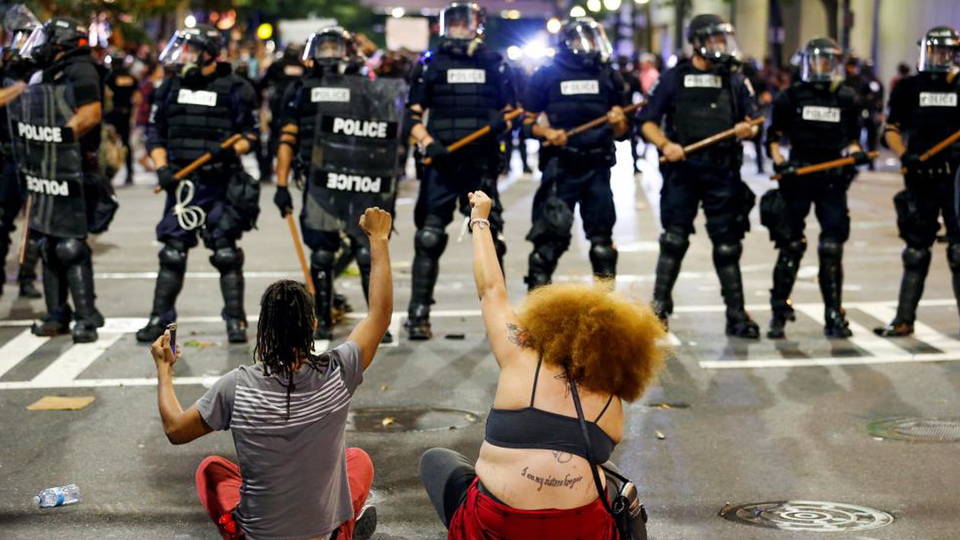 Meanwhile, in Charlotte, North Carolina, protests continue for a third day to demand police release video of the shooting of African-American father Keith Lamont Scott. North Carolina Governor Pat McCrory has declared a state of emergency and mobilized the National Guard. The Charlotte mayor has also imposed a midnight curfew, amid the ongoing protests. While the police initially claimed they tased and then shot Scott because he was armed, Scott’s family says he was not armed—except with a book in hand. They say he had been sitting in his car, waiting to pick up his son after school. On Thursday, Charlotte-Mecklenburg Police Chief Kerr Putney walked back the claims that Scott had a gun.
Police Chief Kerr Putney: "The video does not give me absolute, definitive visual evidence that—that would confirm that a person is pointing a gun. I did not see that in the videos that I’ve reviewed."
Scott’s family has now been shown the video, but it has not yet been released to the public. Meanwhile, the protester who police claimed was the victim Wednesday of a "civilian on civilian" shooting has died. Several eyewitnesses dispute the police’s explanation. Charlotte public defender Eddie Thomas told The Guardian he believes the protester was shot by a tear gas canister, pepper ball or other projectile that caused him to stumble back and hit his head on the brick sidewalk. We’ll go to North Carolina and Tulsa, Oklahoma, after headlines.
Politico: Trump Paid $8.2M of Campaign Money to His Own Businesses
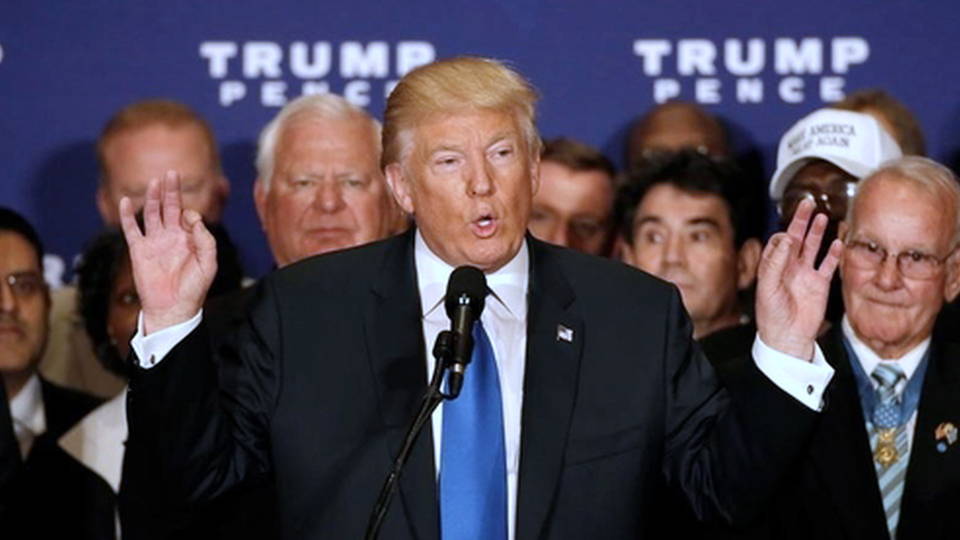 In news from the campaign trail, a new investigation by Politico has revealed Donald Trump’s campaign has paid more than $8.2 million to Trump-owned businesses for everything from office space rent to food for events, which Politico describes as "an unprecedented amount of self-dealing in federal politics." The $8.2 million accounts for a full 7 percent of the campaign’s expenditures. In 2000, Trump said, "I could be the first presidential candidate to run and make money on it."
Trump Ohio Campaign Chair Resigns After Racist Comments
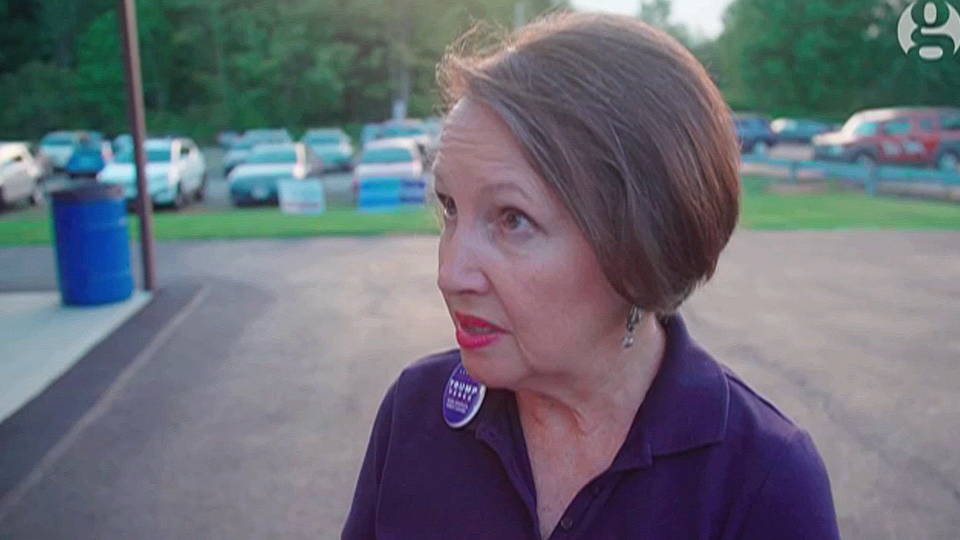 Meanwhile, Trump’s campaign chair in Ohio, Kathy Miller, has resigned after The Guardian published an interview in which she made a series of racist comments.
Kathy Miller: "I don’t think there was any racism until Obama got elected, that we never had problems like this. You know, I’m in the real estate industry. There’s none. Now, you know, with the people with the guns and shooting up neighborhoods and not being responsible citizens, that’s a big change, and I think that’s the philosophy that Obama has perpetuated on America. And if you’re black and you haven’t been successful in the last 50 years, it’s your own fault."
75 Former Diplomats: Trump "Entirely Unqualified" to Be President
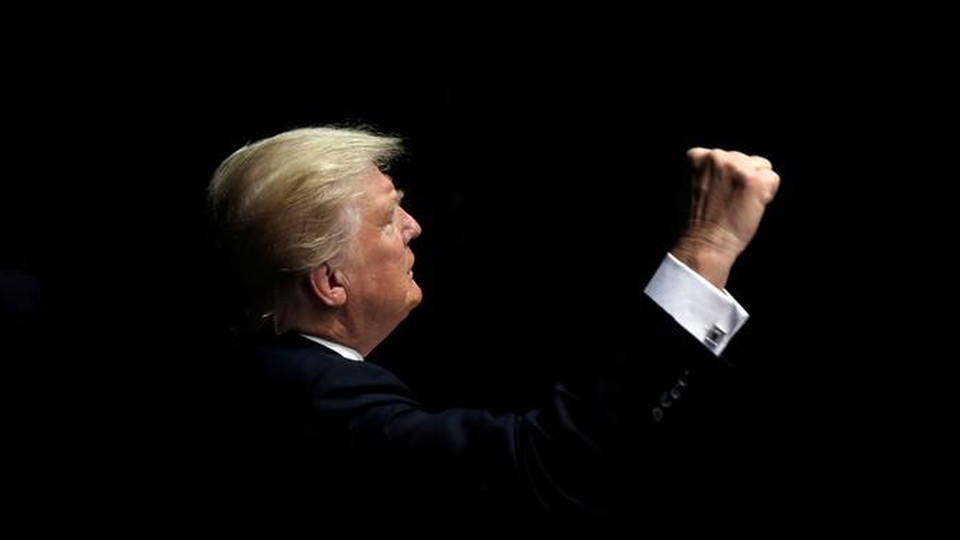 This comes as 75 former U.S. diplomats have signed onto a letter calling Donald Trump "entirely unqualified to serve as President and Commander-in-Chief." The signatories include ambassadors and high-level State Department officials. For many, it was the first time they’d endorsed a candidate, justifying the switch by saying "this election is different from any election we can recall."
Leaked Democratic Party Emails Reveal Clinton & Biden Schedules
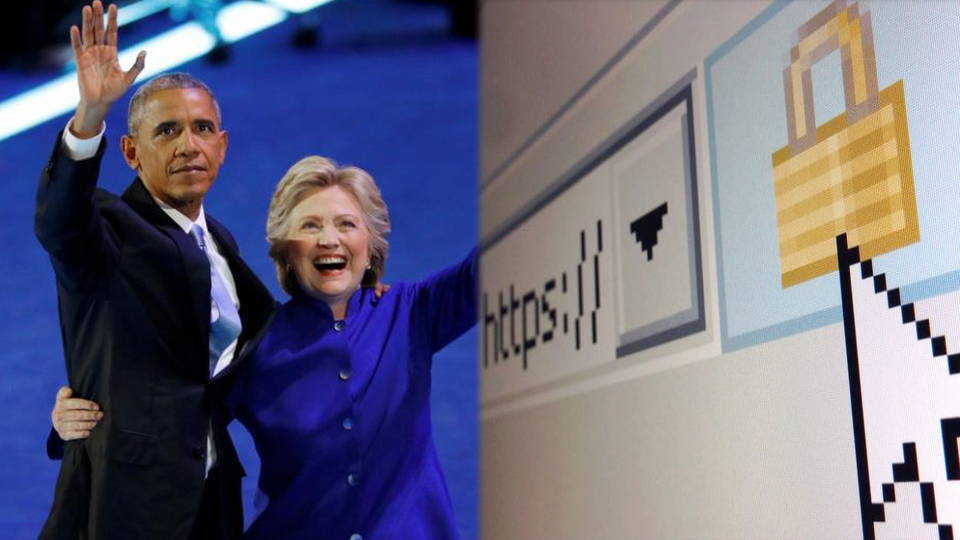 In more election news, more leaked Democratic Party emails have revealed documents detailing the schedules of Hillary Clinton, Michelle Obama and Joe Biden in recent weeks, as well as a possible image of Michelle Obama’s passport. The emails were posted to the site DCLeaks.com and came from the Gmail account of a young Democratic operative named Ian Mellul. It’s a further indication of how frequently sensitive information is shared over private email servers across the Democratic Party.
Yahoo: 500 Million Accounts Were Hacked
 Meanwhile, Yahoo says as many as 500 million of its accounts were hacked, and that private information including names, phone numbers, passwords and birthdates may have been stolen. It’s believed to be the biggest hack of an email provider to date. Yahoo has blamed a "state-sponsored actor."
Anthony Weiner Under Probe over Claims He Sexted with 15-Year-Old
 In more political news, New York authorities are investigating former New York Congressmember Anthony Weiner over allegations he sent sexually explicit text messages to an underaged girl. This comes a month after Hillary Clinton’s top aide Huma Abedin announced she was leaving Weiner, after photos and reports surfaced of him again sending sexual text messages. Weiner stepped down from Congress in 2011 after initially lying to the public about explicit phone and internet contact with women he met online.
Syria Gov't Launches Strikes on Aleppo as Kerry Calls for Grounding Aircraft
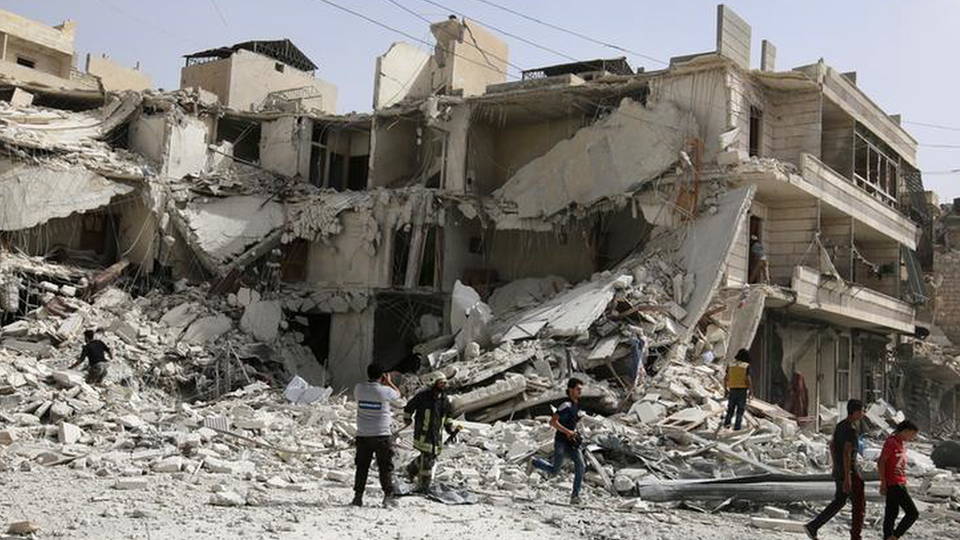 In Syria, the Assad government has launched a new round of airstrikes on Aleppo, after the ceasefire brokered between the U.S. and Russia collapsed earlier this week. This comes after Secretary of State John Kerry called Wednesday for a grounding of military aircraft in key areas across Syria—a call that stops short of calling for a no-fly zone but nevertheless represents an escalation of the United States’ position on the ongoing war in Syria.
Senate Approves $1 Billion Arms Sale to Saudis, as Saudi-Led Strikes Kill 30 in Yemen
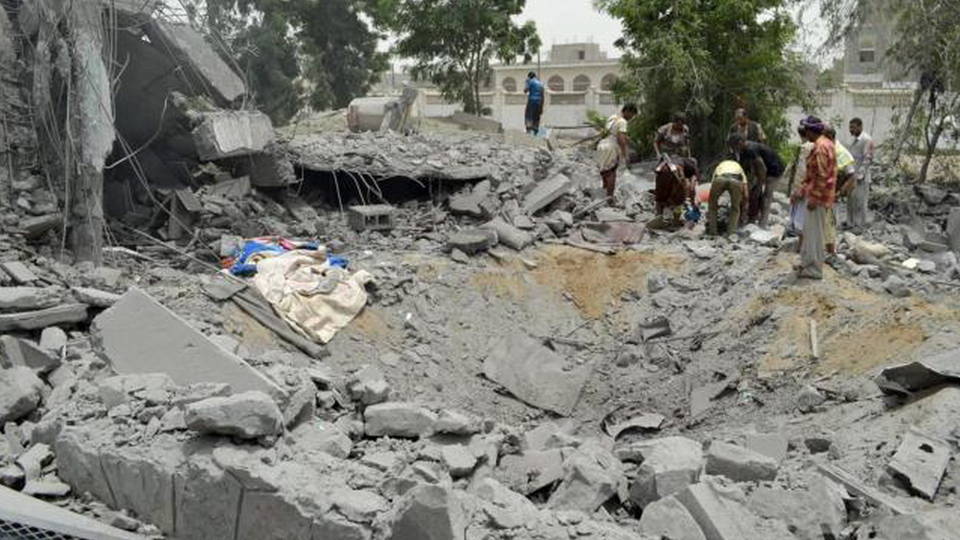 In Yemen, a U.S.-backed, Saudi-led airstrike has killed at least 30 people after it struck a neighborhood in the port city of Hudaydah Wednesday. The strike came the same day as the U.S. Senate voted down legislation to block a $1.15 billion arms sale to Saudi Arabia over concerns about the ongoing Saudi-led war in Yemen. Although the resolution failed, 27 lawmakers did vote to oppose the arms transfer.
Philippines Marks 44th Anniversary of Declaration of Martial Law
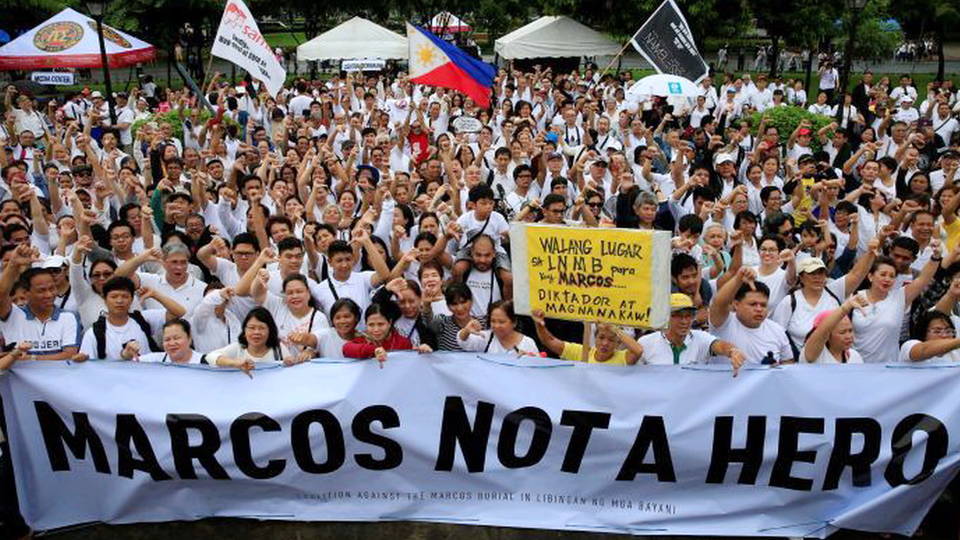 In the Philippines, several thousand students and activists have protested throughout the week to mark the 44th anniversary of former dictator Ferdinand Marcos’s declaration of martial law, which was announced on September 23, 1972. On Wednesday, youth groups organized a nationwide strike that led to school walkouts in about a dozen cities. Human rights activists protested Philippines President Rodrigo Duterte’s proposal to give the late dictator Marcos a hero’s burial.
Feliz Dalisay: "If Marcos is buried at the heroes’ cemetery and treated as a hero, it will change history. The real heroes will be erased from history, the heroes who fought martial law. We will make sure that he will not be buried at the heroes’ cemetery, because his resting place will be watered with spit, not tears."
This comes as President Duterte has lashed out at the European Union, after its Parliament called on him to end his so-called war on drugs, which has claimed more than 3,500 lives since Duterte took office in June. On Tuesday, Duterte said, "I have read the condemnation of the European Union. I’m telling them, 'F**k you.'"
Guatemala: Prosecutor Who Led Ríos Montt Genocide Trial Arrested
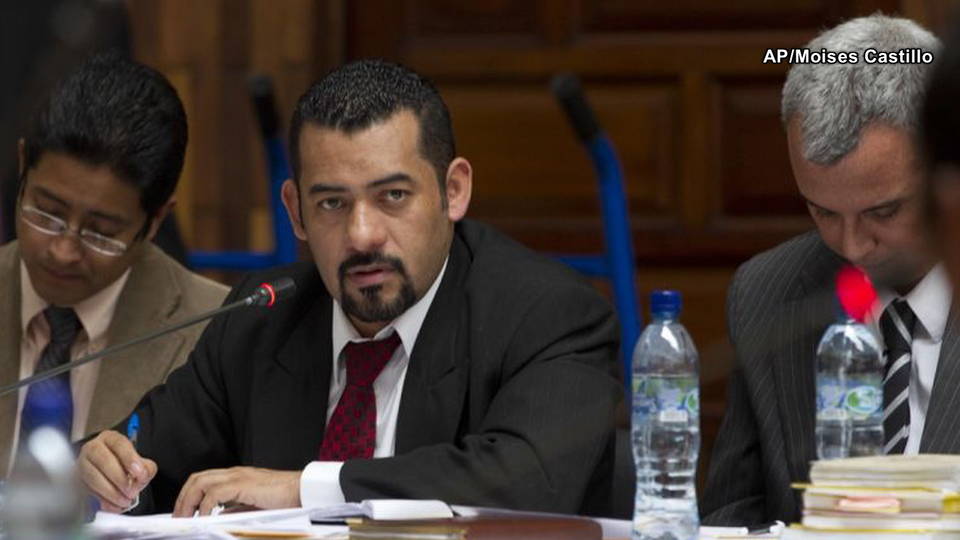 In Guatemala, the special prosecutor for human rights, Orlando López, has been arrested, sparking fears he may be killed in prison for his high-level prosecution of Guatemalan ex-military officials implicated in the 1980s genocide. López is best known for prosecuting the 2013 genocide trial of ex-dictator Efraín Ríos Montt, who was found guilty of killing nearly 2,000 Ixil Mayans under his rule in the 1980s. López’s arrest stems from hit-and-run allegations reported by a right-wing group tied to many former military generals.
Puerto Rico: Power Begins to Return After Island-Wide Blackout
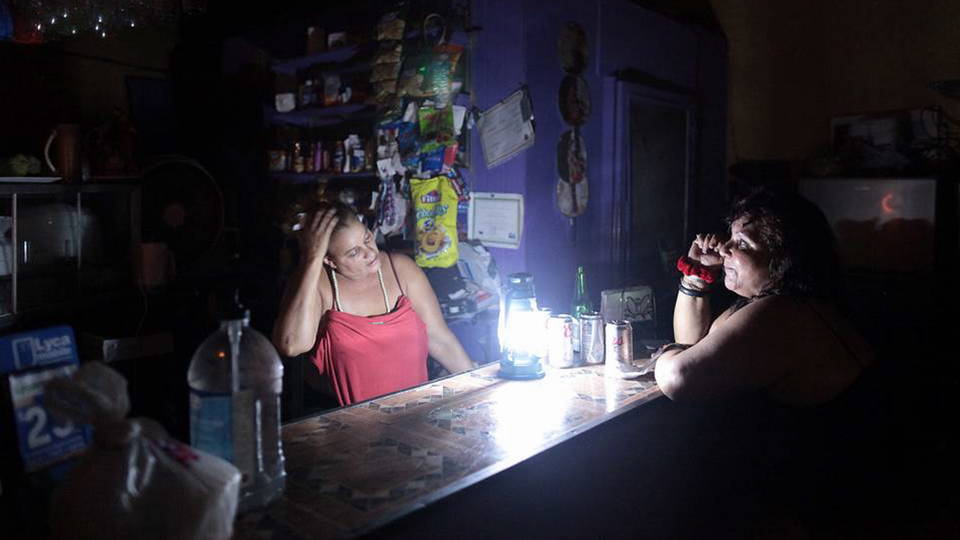 In Puerto Rico, residents erupted in cheers late Thursday night as neighborhoods began to emerge from an island-wide blackout, sparked by a fire at a power plant on Wednesday. The blackout affected all 3.5 million people across Puerto Rico.
TRANSCRIPT
This is a rush transcript. Copy may not be in its final form.
JUAN GONZÁLEZ: Speaking on Thursday, Republican presidential candidate Donald Trump said that because of the unrest in Charlotte, quote, "the country looks bad to the world." He again used the events to appeal to black voters.
DONALD TRUMP: The people who will suffer the most as a result of these riots are law-abiding African-American residents who live in these communities where the crime is so rampant. It’s their jobs, housing markets, schools, economic conditions that will suffer. And the first duty of government is to protect their well-being and safety. We have to do that. There is no compassion in tolerating lawless conduct. Crime and violence is an attack on the poor and will never be accepted in a Trump administration. Never, ever. Our job—thank you—our job is not to make life more comfortable for the violent disruptor, but to make life more comfortable for the African-American parent trying to raise their kids in peace, to walk their children to school and to get their children great educations.
JUAN GONZÁLEZ: That was Republican presidential candidate Donald Trump.
Well, for more, we’re joined by the Reverend Dr. William Barber, president of the North Carolina NAACP and Moral Monday leader.
And I wanted to ask you, the impact—Trump, in his remarks, never mentions the violence being perpetrated on African Americans by some of these police officers. I’m wondering your sense of the impact of his words, because he’s sounding more and more like a reversion back to Richard Nixon and "law and order" as his campaign theme for the presidency. His impact on the African-American community, especially on African-American youth, of Trump’s words?
REV. WILLIAM BARBER: Well, you just hit the nail on the head. It’s a hypocrisy, and it’s revisionist history, and he’s reaching back to the strategy that Kevin Phillips gave to Richard Nixon on how to hold onto the South and win the country. It’s called the Southern strategy: use all kind of code words and misdirection. But it’s full of hypocrisy, and it’s full of untruthful things.
First of all, Donald Trump is running to be-divider-in-chief, suppressor-in-chief, hater-in-chief and reverser-in-chief. No matter what he says in his cute teleprompter speech, we have to remember what he said with his mouth, and, more importantly, his policies. Now, let’s listen to what his policies are. First, he is for voter suppression. When the Supreme Court said that North Carolina had engaged in surgical racism against black people in voting laws, he came to North Carolina and said that that decision would open up fraud. He joined with those who perpetrated racism and surgical voter suppression. Number two, Donald Trump is for reversing Medicaid expansion, which would hurt 20 million Americans—many, many, many white Americans, but 3 million African Americans alone. He is—he believes that we have—number three, he believes we have too high of a minimum wage and is not for living wages. There are 64 million Americans—black, white and brown—who make less than the living wage, and 54 percent are African-American. He is not for raising the living wage. He’s for the proliferation of guns, the very cause of much of the violence in our community. He is for tax cuts on the wealthy and raising tax and fees on the poor and the working poor in ways that would take us back to the kind of recession policies that we saw under George Bush and the false notions of trickle-down. He is for the kind of policies that could possibly proliferate war, which will be negative to poor whites and blacks who end up fighting the wars often that rich people engage in. He is for taking money from public schools, which black, brown and poor white people need, and giving it to private schools that can segregate and that most black, brown and white people cannot go to. And so, over and over again, what he says on his teleprompter and what his policies actually show us are two different realities.
And he’s not talking to black people. If you listen to him or some of his campaign people, this is the narrative. And it’s a shrewd and sinister narrative out of the Southern strategy. "Black people will not let us help them," he’s saying, "will not trust us," the very people who since 1968 and the Southern strategy have been against everything that benefited the progression of black people. Number two, "Black people are their own problem. They are their own problem." And number three, "Black people are the cause of your problems," saying that to white people, "particularly in all of the money we’ve had to spend on welfare," which, in fact, most of the welfare is actually used by black people—white people—Social Security, Medicare, Medicaid and social safety net. It is a hypocritical argument, and it is a dangerous argument and is a sinister argument, because it is not a serious conversation about race and racial disparity.
AMY GOODMAN: Reverend Barber, I wanted to play for you the comment of Republican Congressmember Robert Pittenger, whose district includes parts of Charlotte, who said demonstrators were upset because, unlike North Carolina’s white residents, the African Americans are not successful. He made these comments on BBC.
JAMES O’BRIEN: With respect, Congressman, I don’t think the people on the streets last night and the night before were protesting against Lyndon B. Johnson’s almost half-a-century-old policies. What is their grievance, in their mind?
REP. ROBERT PITTENGER: Well, no, the grievance in their mind is that they—the animus, the anger. They hate white people because white people are successful and they’re not. I mean, yes, it is. It is a welfare state. We have—we have spent trillions of dollars on welfare. But we’ve put people in bondage so that they can’t be all that they’re capable of being.
AMY GOODMAN: Hours later, Congressman Pittenger apologized in several posts on Twitter, saying his anguish about what was happening in Charlotte prompted him to respond to a question, quote, "in a way that I regret." But I’m wondering if you could respond to this. And also, talk about North Carolina, your state. I mean, right now, people are voting for president, is that right? Or people are engaged in early voting. But first respond to Congressman Pittenger.
REV. WILLIAM BARBER: Well, he had to say he regretted, and what he really probably regrets is the first part of what he said. See, in this white Southern strategy, you’re not supposed to say, "They hate us because we’re successful." You’re not supposed to be that overt in your racism. You’re simply supposed to say "welfare state" as a code word for racism. You’re supposed to say "tax cuts" or "entitlement programs," that we need to get rid of, as code words. He blew the code, and he was out in the open.
Because what he said—racism, as you know, is not rooted in fact; it’s rooted in fear. It’s not rooted in truthfulness; it’s rooted in foolishness. His history is wrong. We know that the Great Society programs, many of them work, especially for white people. Many of the programs now that he and others demean are the very programs that helped lift many whites, particularly in the South and in other areas, out of poverty.
We know, when you look at that particular congressperson and look at his record, if we—if the country follows his voting record, we would have less voting rights, because he has refused to sign on to restoring the Voting Rights Act. We’d have less healthcare, less wages. We would have less love and less mercy.
And many of the very people that are hurt by the policies he promote are white. We have 1.9 million poor people in North Carolina. The majority of them are white. Three hundred and forty-six thousand of the 500,000 people being denied Medicaid expansion are white. What he and others are afraid of is what we’ve seen in the Moral Monday movement and what I’m seeing as I’m going around the country in "The Revival: Time for a Moral Revolution": black and white and Latino people coming together and forming fusion coalitions and understanding that all of this divisive rhetoric and these divisive policies and this white Southern strategy was designed to keep the very people apart from each other that need to be allies, who need to change this country. You know, lastly, Amy, if you look at the stats on Politico, PolitiFact, the majority of the states that—counties—are the poorest are those that have states that are so-called—led by so-called red states or people who claim to be Republican. The very policies that they promote hurt the people that they sell this false narrative.
JUAN GONZÁLEZ: Reverend Barber, we’ve been talking about the situation in Charlotte, but I’d like to also bring in what’s happened in Tulsa, where police officer Betty Shelby has been booked at the local county jail and released on $50,000 bond. On Thursday, Shelby was charged with felony manslaughter in the fatal shooting of Terence Crutcher. The criminal complaint says Shelby’s, quote, "fear resulted in her unreasonable actions which led her to shooting." She is accused of, quote, "unlawfully and unnecessarily" shooting Crutcher after he did not comply with her "lawful orders." If convicted, Shelby faces four years to life in prison. Could you talk about the difference between what happened in the situation in Tulsa versus what’s happened so far in Charlotte, and what you would hope to happen in Charlotte?
REV. WILLIAM BARBER: Well, first of all, you did not have the context like you’ve had in North Carolina in the kind of regressive, violent policy attacks that we’ve seen over the last three years by this governor. So there’s already a lot of unrest, hurt and pain in North Carolina. You know, we even have been a state that has launched the worst attack on theLGBTQ community, the living wage, people fighting for living wage, and even persons who wanted employment discrimination in the state courts. You also have in North Carolina a state that’s had the highest number of African Americans exonerated from death row in the last 10 years of any state in the country. You also have a state where we have innumerous people who are incarcerated—African Americans—for crimes they did not commit, and the governor has refused to pardon them. In fact, I have a press conference about two of them this morning. You also have a place where the crime lab was found to—abused over 200 cases, and people have—in terms of the way they dealt with DNAevidence. You also have a city where you had Jonathan Ferrell, and, even though someone was indicted, it ended up with a hung jury, and people said a hung jury was a spoken jury, when we know that’s not true. A hung jury is a hung jury.
So, you have to understand all of that, the context of all of that, all of the attacks on the poor, all of the attacks on healthcare and voting rights. And then you drop this situation in. And unlike Tulsa, where they had transparency, and they now have an indictment, we’ve actually had—we’ve not had transparency, and we’ve found out more and more evidence that points against the police narrative—which also proves something, too, that black people, as you said, are not just against cops or against white cops, because in this situation the chief is black and the alleged shooter is black. Black people are saying, whatever it is, we want transparency. And it’s not just black people; it’s black and white people saying it together. We want transparency. And that is the number one problem here in Charlotte. There was not transparency. And the police overreacted, did not listen to the community leaders that were on the ground, and exacerbated a problem that did not have to go this way.
AMY GOODMAN: Can you explain the governor of North Carolina, your state, the stance he has taken right now, where you see things going, his relationship with the governor—with the mayor of Charlotte? She did impose a curfew but said they wouldn’t enforce it if people were peaceful. And the people were peaceful.
REV. WILLIAM BARBER: Yeah.
AMY GOODMAN: Explain who gives the governor his power, and the movement that you’ve been leading, the Moral Mondays movement, and the effect you think it’s had.
REV. WILLIAM BARBER: Well, you know, supposedly, the people give the governor the power. But let’s look at the governor’s rhetoric, because my deep suspicion is there is some pushing around all of this to try to create some political movement, because, you know, he’s in trouble. So, my understanding from the clergy is that there wasn’t even a great desire by the City Council and other persons to create the emergency—state of emergency in the first place. Remember, we’re in a state—and God knows we are against any form of violence. Those officers that were hurt the first night, the young man that was killed, and we don’t know how he was killed—we do know that we have a lot of conflicting accounts of that. But, Amy, we understand the governor pushed for this emergency piece. Now, we’re in a state where we—for instance, UNC wins the championship, and we’ve seen cars overturned, bonfires started in the middle of the street, and we don’t have an emergency state. In fact, they open up the burn unit. So, how do you move from 99.9 percent of the protesters doing the right thing, a few dozen doing the wrong thing, and suddenly there’s an emergency state in a city that’s already prepared to handle even a presidential convention? That’s number one.
Number two, this curfew, we don’t know where it came from and what pressures were put on to have the curfew, and we saw that it was totally unnecessary. And the police and the community leaders could have handled legitimate discontent and anger and nonviolent justice protest.
Lastly, this governor has been a source of division throughout the country and here in North Carolina. And he actually has lied. And I don’t normally say that like that. But I heard him the other night say on CNN—he claimed his love for Dr. King, which all people—which they tend to run to every time people express legitimate discontent. Well, remember, Dr. King was called a militant. He said that he respected nonviolent protesters. Well, we protested for 21 weeks, were arrested, and he never met with us. He has refused to meet with clergy. As late as two weeks ago, clergy of all different faiths attempted to just deliver a moral declaration of values to his office, and they would not receive it. So, this governor is saying one thing for a political reason, but the political reality is something very different. He, like Donald Trump, has been a divider. He has helped to stir more division. He has dishonored the nonviolent tradition and now does not really have the credibility to challenge what’s going on, even in terms of the violence, because he has passed policies that has cost people their lives. You know, when a state denies 500,000 people Medicaid simply because they don’t like a black man in the White House, that means about a thousand to 1,500 people die every year, which means somewhere upwards of 5,000 people in North Carolina have died since this governor and Legislature has denied Medicaid expansion.
AMY GOODMAN: We want to thank you, Reverend Barber, for joining us. I also wanted to point out the lawyer for the Scott family, Justin Bamberg, is a member of the South Carolina House of Representatives, also represented Alton Sterling’s family in Baton Rouge, African-American man gunned down by police, as well as another Mr. Scott, Walter Scott. People may remember in North Charleston, South Carolina, Walter Scott gunned down by a police officer after the officer stopped him for a taillight being out. We’ll—
REV. WILLIAM BARBER: Yeah, Amy, if you would, I know you’ve got to run, but please—as people said, this man was not even the suspect. And also remember, the Walter Scott case, there was a plant. There was a plant, shown on the video. We are convinced that if this video was about a citizen shooting a cop and it showed it clearly, that the video would be out. And if the video was conclusive, it would be out. Something is wrong in the reason why they will not release that video, and we need to listen to the experts and the family and have it released.
AMY GOODMAN: Reverend Dr. William Barber, president of the North Carolina NAACP, Moral Mondays leader. His most recent book, Third Reconstruction: Moral Mondays, Fusion Politics, and the Rise of a New Justice Movement. Thanks so much for joining us from North Carolina.
This is Democracy Now! When we come back, a fiery session of the U.S. Senate. It was the Senate Banking Committee, and it was Senator Warren of Massachusetts grilling the CEOof Wells Fargo. Why were over 5,000 low-level employees fired, she asked, and not him? Stay with us.... Read More →Headlines:
Tulsa: Officer Who Killed Terence Crutcher Charged with Manslaughter
In Tulsa, police officer Betty Shelby has been booked and released, after she was charged with felony manslaughter in the fatal shooting of African American Terence Crutcher. Video footage shows Officer Shelby, who is white, shooting and killing Crutcher while his hands were in the air. The criminal complaint says Shelby’s "fear resulted in her unreasonable actions which led her to shooting." Crutcher’s killing has sparked protests throughout the week in Tulsa. If convicted, Shelby faces four years to life in prison.Charlotte: Protesters Demand Police Release Video of Keith Scott's Killing
Meanwhile, in Charlotte, North Carolina, protests continue for a third day to demand police release video of the shooting of African-American father Keith Lamont Scott. North Carolina Governor Pat McCrory has declared a state of emergency and mobilized the National Guard. The Charlotte mayor has also imposed a midnight curfew, amid the ongoing protests. While the police initially claimed they tased and then shot Scott because he was armed, Scott’s family says he was not armed—except with a book in hand. They say he had been sitting in his car, waiting to pick up his son after school. On Thursday, Charlotte-Mecklenburg Police Chief Kerr Putney walked back the claims that Scott had a gun.Police Chief Kerr Putney: "The video does not give me absolute, definitive visual evidence that—that would confirm that a person is pointing a gun. I did not see that in the videos that I’ve reviewed."
Scott’s family has now been shown the video, but it has not yet been released to the public. Meanwhile, the protester who police claimed was the victim Wednesday of a "civilian on civilian" shooting has died. Several eyewitnesses dispute the police’s explanation. Charlotte public defender Eddie Thomas told The Guardian he believes the protester was shot by a tear gas canister, pepper ball or other projectile that caused him to stumble back and hit his head on the brick sidewalk. We’ll go to North Carolina and Tulsa, Oklahoma, after headlines.
Politico: Trump Paid $8.2M of Campaign Money to His Own Businesses
In news from the campaign trail, a new investigation by Politico has revealed Donald Trump’s campaign has paid more than $8.2 million to Trump-owned businesses for everything from office space rent to food for events, which Politico describes as "an unprecedented amount of self-dealing in federal politics." The $8.2 million accounts for a full 7 percent of the campaign’s expenditures. In 2000, Trump said, "I could be the first presidential candidate to run and make money on it."Trump Ohio Campaign Chair Resigns After Racist Comments
Meanwhile, Trump’s campaign chair in Ohio, Kathy Miller, has resigned after The Guardian published an interview in which she made a series of racist comments.Kathy Miller: "I don’t think there was any racism until Obama got elected, that we never had problems like this. You know, I’m in the real estate industry. There’s none. Now, you know, with the people with the guns and shooting up neighborhoods and not being responsible citizens, that’s a big change, and I think that’s the philosophy that Obama has perpetuated on America. And if you’re black and you haven’t been successful in the last 50 years, it’s your own fault."
75 Former Diplomats: Trump "Entirely Unqualified" to Be President
This comes as 75 former U.S. diplomats have signed onto a letter calling Donald Trump "entirely unqualified to serve as President and Commander-in-Chief." The signatories include ambassadors and high-level State Department officials. For many, it was the first time they’d endorsed a candidate, justifying the switch by saying "this election is different from any election we can recall."Leaked Democratic Party Emails Reveal Clinton & Biden Schedules
In more election news, more leaked Democratic Party emails have revealed documents detailing the schedules of Hillary Clinton, Michelle Obama and Joe Biden in recent weeks, as well as a possible image of Michelle Obama’s passport. The emails were posted to the site DCLeaks.com and came from the Gmail account of a young Democratic operative named Ian Mellul. It’s a further indication of how frequently sensitive information is shared over private email servers across the Democratic Party.Yahoo: 500 Million Accounts Were Hacked
Meanwhile, Yahoo says as many as 500 million of its accounts were hacked, and that private information including names, phone numbers, passwords and birthdates may have been stolen. It’s believed to be the biggest hack of an email provider to date. Yahoo has blamed a "state-sponsored actor."Anthony Weiner Under Probe over Claims He Sexted with 15-Year-Old
In more political news, New York authorities are investigating former New York Congressmember Anthony Weiner over allegations he sent sexually explicit text messages to an underaged girl. This comes a month after Hillary Clinton’s top aide Huma Abedin announced she was leaving Weiner, after photos and reports surfaced of him again sending sexual text messages. Weiner stepped down from Congress in 2011 after initially lying to the public about explicit phone and internet contact with women he met online.Syria Gov't Launches Strikes on Aleppo as Kerry Calls for Grounding Aircraft
In Syria, the Assad government has launched a new round of airstrikes on Aleppo, after the ceasefire brokered between the U.S. and Russia collapsed earlier this week. This comes after Secretary of State John Kerry called Wednesday for a grounding of military aircraft in key areas across Syria—a call that stops short of calling for a no-fly zone but nevertheless represents an escalation of the United States’ position on the ongoing war in Syria.Senate Approves $1 Billion Arms Sale to Saudis, as Saudi-Led Strikes Kill 30 in Yemen
In Yemen, a U.S.-backed, Saudi-led airstrike has killed at least 30 people after it struck a neighborhood in the port city of Hudaydah Wednesday. The strike came the same day as the U.S. Senate voted down legislation to block a $1.15 billion arms sale to Saudi Arabia over concerns about the ongoing Saudi-led war in Yemen. Although the resolution failed, 27 lawmakers did vote to oppose the arms transfer.Philippines Marks 44th Anniversary of Declaration of Martial Law
In the Philippines, several thousand students and activists have protested throughout the week to mark the 44th anniversary of former dictator Ferdinand Marcos’s declaration of martial law, which was announced on September 23, 1972. On Wednesday, youth groups organized a nationwide strike that led to school walkouts in about a dozen cities. Human rights activists protested Philippines President Rodrigo Duterte’s proposal to give the late dictator Marcos a hero’s burial.Feliz Dalisay: "If Marcos is buried at the heroes’ cemetery and treated as a hero, it will change history. The real heroes will be erased from history, the heroes who fought martial law. We will make sure that he will not be buried at the heroes’ cemetery, because his resting place will be watered with spit, not tears."
This comes as President Duterte has lashed out at the European Union, after its Parliament called on him to end his so-called war on drugs, which has claimed more than 3,500 lives since Duterte took office in June. On Tuesday, Duterte said, "I have read the condemnation of the European Union. I’m telling them, 'F**k you.'"
Guatemala: Prosecutor Who Led Ríos Montt Genocide Trial Arrested
In Guatemala, the special prosecutor for human rights, Orlando López, has been arrested, sparking fears he may be killed in prison for his high-level prosecution of Guatemalan ex-military officials implicated in the 1980s genocide. López is best known for prosecuting the 2013 genocide trial of ex-dictator Efraín Ríos Montt, who was found guilty of killing nearly 2,000 Ixil Mayans under his rule in the 1980s. López’s arrest stems from hit-and-run allegations reported by a right-wing group tied to many former military generals.Puerto Rico: Power Begins to Return After Island-Wide Blackout
In Puerto Rico, residents erupted in cheers late Thursday night as neighborhoods began to emerge from an island-wide blackout, sparked by a fire at a power plant on Wednesday. The blackout affected all 3.5 million people across Puerto Rico.
50 Tribes & First Nations Sign Treaty to Fight Tar Sands Pipelines
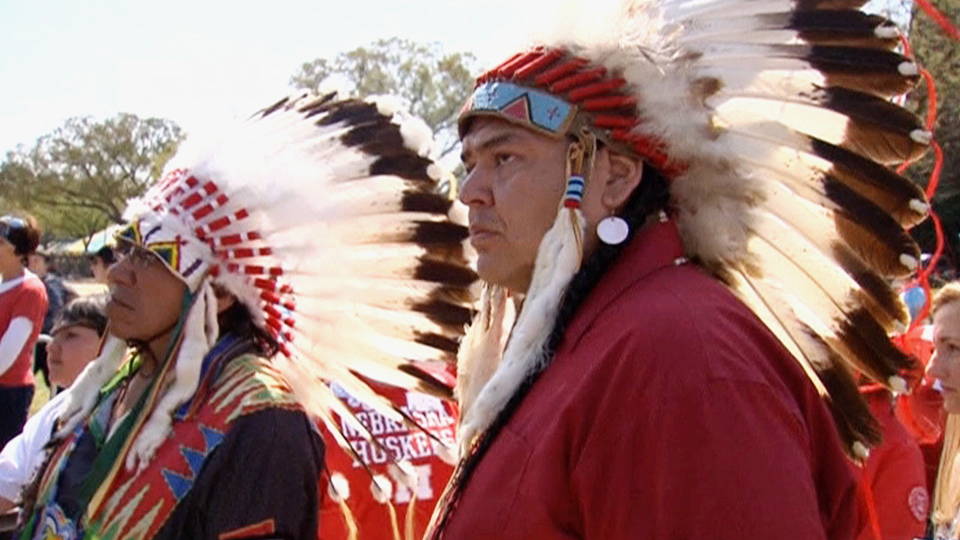 Fifty different tribes and First Nations from the United States and Canada have signed a continent-wide "Treaty Alliance Against Tar Sands Expansion," committing to a unified fight against the construction of pipelines in their territories. The proposed pipelines include Keystone XL, Enbridge Line 3, Kinder Morgan, Energy East and Enbridge Northern Gateway pipelines. The treaty means that dozens of First Nations in Canada, as well as the Standing Rock Sioux Tribe in North Dakota and the White Earth Nation in Minnesota, have now legally barred these pipelines from crossing their lands.
North Dakota: Lakota Land Defender Olowan Martinez Freed
Meanwhile, in North Dakota, Lakota land defender Olowan Martinez was freed Thursday. She had been held for more than a week, after she locked herself to a piece of heavy machinery to stop construction of the $3.8 billion Dakota Access pipeline on September 13. This is Martinez speaking to Democracy Now! when we were in North Dakota.
Amy Goodman: "So how long do you plan to stay here?"
Olowan Martinez: "Until we know for sure that this black snake is dead."
Amy Goodman: "Your T-shirt says 'Red Warrior Camp.'"
Olowan Martinez: "Yes."
Amy Goodman: "And it’s got a fist."
Olowan Martinez: "Yes, I believe it speaks the spirituality and the mentality of everyone here within Red Warrior Camp. We’re a camp of great minds that have come together, again, to kill this black snake by any means necessary."
Claudia Rankine, Author of "Citizen," Wins MacArthur "Genius Grant"
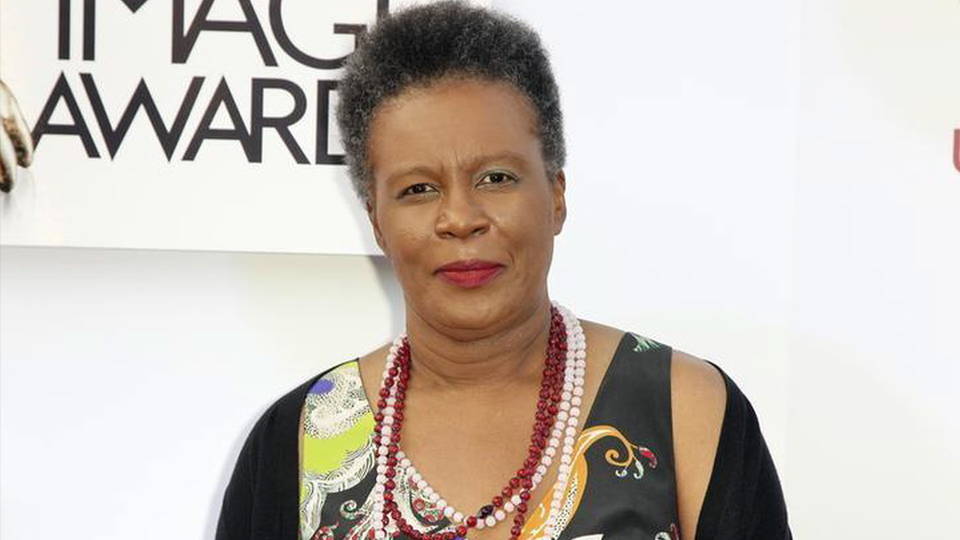 And the award-winning poet Claudia Rankine has won this year’s MacArthur "Genius Grant." Rankine is best known for her 2014 book "Citizen," an exploration of race, which New Yorker reviewer Hilton Als described as "the best note in the wrong song that is America. Its various realities—’mistaken’ identity, social racism, the whole fabric of urban and suburban life—are almost too much to bear, but you bear them, because it’s the truth."
Fifty different tribes and First Nations from the United States and Canada have signed a continent-wide "Treaty Alliance Against Tar Sands Expansion," committing to a unified fight against the construction of pipelines in their territories. The proposed pipelines include Keystone XL, Enbridge Line 3, Kinder Morgan, Energy East and Enbridge Northern Gateway pipelines. The treaty means that dozens of First Nations in Canada, as well as the Standing Rock Sioux Tribe in North Dakota and the White Earth Nation in Minnesota, have now legally barred these pipelines from crossing their lands.North Dakota: Lakota Land Defender Olowan Martinez Freed
Meanwhile, in North Dakota, Lakota land defender Olowan Martinez was freed Thursday. She had been held for more than a week, after she locked herself to a piece of heavy machinery to stop construction of the $3.8 billion Dakota Access pipeline on September 13. This is Martinez speaking to Democracy Now! when we were in North Dakota.
Amy Goodman: "So how long do you plan to stay here?"
Olowan Martinez: "Until we know for sure that this black snake is dead."
Amy Goodman: "Your T-shirt says 'Red Warrior Camp.'"
Olowan Martinez: "Yes."
Amy Goodman: "And it’s got a fist."
Olowan Martinez: "Yes, I believe it speaks the spirituality and the mentality of everyone here within Red Warrior Camp. We’re a camp of great minds that have come together, again, to kill this black snake by any means necessary."
Claudia Rankine, Author of "Citizen," Wins MacArthur "Genius Grant"
And the award-winning poet Claudia Rankine has won this year’s MacArthur "Genius Grant." Rankine is best known for her 2014 book "Citizen," an exploration of race, which New Yorker reviewer Hilton Als described as "the best note in the wrong song that is America. Its various realities—’mistaken’ identity, social racism, the whole fabric of urban and suburban life—are almost too much to bear, but you bear them, because it’s the truth."
-------
Donate today:
Follow:


SPECIAL BROADCAST

Monday & Tuesday:Democracy Now! 2016 Expanding the Debate Coverage
CLASS VISITS

Dear Educator: TheDemocracy Now!Education Team invites you to bring your students to our live broadcast at our New York City studio.
NEW BOOK

Democracy Now!: Twenty Years Covering the Movements Changing America
BREAKING NEWS

VIDEO: NBC Releases Wife's Cellphone Footage of Police Shooting of Keith Lamont Scott in Charlotte
WORK WITH DN!

Senior TV Producer
COLUMN

On Syria and Skittles, demagogues and the damned
-------
207 West 25th Street, 11th Floor
Donate today:
Follow:
SPECIAL BROADCAST
Monday & Tuesday:Democracy Now! 2016 Expanding the Debate Coverage
CLASS VISITS
Dear Educator: TheDemocracy Now!Education Team invites you to bring your students to our live broadcast at our New York City studio.
NEW BOOK
Democracy Now!: Twenty Years Covering the Movements Changing America
BREAKING NEWS
VIDEO: NBC Releases Wife's Cellphone Footage of Police Shooting of Keith Lamont Scott in Charlotte
WORK WITH DN!
Senior TV Producer
COLUMN
On Syria and Skittles, demagogues and the damned
-------
207 West 25th Street, 11th Floor
New York, New York 10001, United States
-------
-------

No comments:
Post a Comment