
 The Upper Room Daily Reflections, daily words of wisdom and faith in Nashville, Tennessee, United States “Jesus Christ Was Born for This!” for Monday, 12 December 2016
-------
Today’s Reflection:
THE ADVENT MESSAGE predicts a future of freedom and hope and also speaks to those of us who have food, education, and secure employment, revealing our need for release from the stranglehold of a lifestyle in which our possessions control us. It speaks deliverance to those in poverty as well. Jesus lives among us to bring the hope of freedom to everyone who seeks deliverance from oppression and bondage, to those who have much and those who have nothing.
The Advent hymn “Good Christian Friends, Rejoice” states, “Jesus Christ was born for this!” This Christmas will not be the same for anyone
who has lost a lifelong companion: “Jesus Christ was born for this!”
who is keeping a faithful vigil at the bedside of a loved one for whom the future appears dark and uncertain: “Jesus Christ was born for this!”
who is experiencing the deterioration of a relationship within a family or marriage: “Jesus Christ was born for this!”
who is burdened by the pain and hurt of abusiveness or abandonment: “Jesus Christ was born for this!”
The message of Advent is that, whatever our circumstance in life, Jesus Christ was born to be with us wherever we are.[John A. Stroman, Singing Mary’s Song]
From pages 21-22 of Singing Mary’s Song: An Advent Message of Hope and Deliverance by John A. Stroman. Copyright © 2012 by John A. Stroman. All rights reserved. Used by permission of Upper Room Books. http://bookstore.upperroom.org/ Learn more about or purchase this book.
Today’s Question:
Read the Advent hymn, “Good Christian Friends, Rejoice” as a prayer. Translator: John Mason Neale
Today’s Reflection:
THE ADVENT MESSAGE predicts a future of freedom and hope and also speaks to those of us who have food, education, and secure employment, revealing our need for release from the stranglehold of a lifestyle in which our possessions control us. It speaks deliverance to those in poverty as well. Jesus lives among us to bring the hope of freedom to everyone who seeks deliverance from oppression and bondage, to those who have much and those who have nothing.
The Advent hymn “Good Christian Friends, Rejoice” states, “Jesus Christ was born for this!” This Christmas will not be the same for anyone
who has lost a lifelong companion: “Jesus Christ was born for this!”
who is keeping a faithful vigil at the bedside of a loved one for whom the future appears dark and uncertain: “Jesus Christ was born for this!”
who is experiencing the deterioration of a relationship within a family or marriage: “Jesus Christ was born for this!”
who is burdened by the pain and hurt of abusiveness or abandonment: “Jesus Christ was born for this!”
The message of Advent is that, whatever our circumstance in life, Jesus Christ was born to be with us wherever we are.[John A. Stroman, Singing Mary’s Song]
From pages 21-22 of Singing Mary’s Song: An Advent Message of Hope and Deliverance by John A. Stroman. Copyright © 2012 by John A. Stroman. All rights reserved. Used by permission of Upper Room Books. http://bookstore.upperroom.org/ Learn more about or purchase this book.
Today’s Question:
Read the Advent hymn, “Good Christian Friends, Rejoice” as a prayer. Translator: John Mason Neale
1. Good Christian friends, rejoice
with heart and soul and voice;
give ye heed to what we say:
Jesus Christ was born today.
Ox and ass before him bow,
and he is in the manger now.
Christ is born today!
Christ is born today!
2. Good Christian friends, rejoice
with heart and soul and voice;
now ye hear of endless bliss:
Jesus Christ was born for this!
He has opened heaven's door,
and we are blest forevermore.
Christ was born for this!
Christ was born for this!
3. Good Christian friends, rejoice
with heart and soul and voice;
now ye need not fear the grave:
Jesus Christ was born to save!
Calls you one and calls you all
to gain his everlasting hall.
Christ was born to save!
Christ was born to save!
Today’s Scripture:Therefore the Lord himself will give you a sign. Look, the young woman is with child and shall bear a son, and shall name him Immanuel.[Isaiah 7:14, NRSV]
This Week: pray for people living in poverty.
-------
Did You Know?
In need of prayer? The Upper Room Living Prayer Center is a 7-day-a-week intercessory prayer ministry staffed by trained volunteers. Call 1-800-251-2468 or visit The Living Prayer Center website.
-------In need of prayer? The Upper Room Living Prayer Center is a 7-day-a-week intercessory prayer ministry staffed by trained volunteers. Call 1-800-251-2468 or visit The Living Prayer Center website.
This week we remember: John of the Cross (December 14).
John of the Cross
December 14
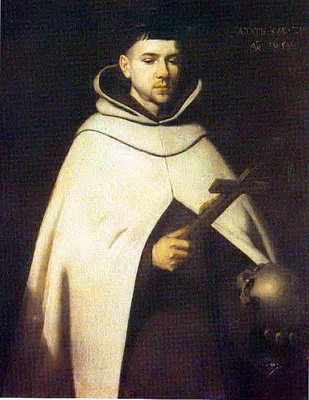 Born Juan de Yepes in 1542, this Carmelite monk took the name John of the Cross in 1568 when he opened the first men's house of Discalced Carmelites at Duruelo in Spain. Many Carmelites felt threatened by his idea that the order should put more emphasis on a life of prayer, and had him kidnapped in 1577. He was locked in a tower and subjected to beatings and starvation, with only a single tiny window for light. He escaped after nine months, following a dog to civilization, and renewed the writing that he had begun while in captivity.
John's most noted works are The Dark Night of the Soul, The Ascent of Mount Carmel, The Living Flame of Love, and The Spiritual Canticle. His enduring faith has given direction to countless souls; Teresa of Avila was his most famous student. He proposed a simple way of life: "Where there is no love, put love -- and you will find love."
If St. John had taken the Spiritual Types Test, he probably would have been a Lover. John's feast day is December 14.
Read some of John's writings in Loving God through the Darkness: Selected Writings of John of the Cross.
-------
Lectionary Readings(Courtesy of Vanderbilt Divinity Library)
Sunday, 18 December 2016
Fourth Sunday of Advent: Isaiah 7:10-16
Psalm 80:1-7, 17-19
Romans 1:1-7
Matthew 1:18-25
Scripture Texts: Isaiah 7:10 Adonai spoke again to Achaz; he said, 11 “Ask Adonai your God to give you a sign. Ask it anywhere, from the depths of Sh’ol to the heights above.” 12 But Achaz answered, “I won’t ask, I won’t test Adonai.”
13 Then [the prophet] said,
“Listen here, house of David!
Is trying people’s patience
such a small thing for you
that you must try the patience
of my God as well?
14 Therefore Adonai himself
will give you people a sign:
the young woman* will become pregnant,
bear a son and name him ‘Immanu El [God is with us].
15 By the time he knows enough
to refuse evil and choose good,
he will [have to] eat
curdled milk and [wild] honey.
16 Yes, before the child knows enough
to refuse evil and choose good,
the land whose two kings you dread
will be left abandoned.
Psalm 80:1 (0) For the leader. Set to “Lilies.” A testimony. A psalm of Asaf:
2 (1) Shepherd of Isra’el, listen!
You who lead Yosef like a flock,
you whose throne is on the k’ruvim,
shine out!
3 (2) Before Efrayim, Binyamin and M’nasheh,
rouse your power; and come to save us.
4 (3) God, restore us!
Make your face shine, and we will be saved.
5 (4) Adonai, God of armies, how long
will you be angry with your people’s prayers?
6 (5) You have fed them tears as their bread
and made them drink tears in abundance.
7 (6) You make our neighbors fight over us,
and our enemies mock us.
17 (16) It is burned by fire, it is cut down;
they perish at your frown of rebuke.
18 (17) Help the man at your right hand,
the son of man you made strong for yourself.
19 (18) Then we won’t turn away from you —
if you revive us, we will call on your name.
Romans 1:1 From: Sha’ul, a slave of the Messiah Yeshua, an emissary because I was called and set apart for the Good News of God.
2 God promised this Good News in advance through his prophets in the Tanakh. 3 It concerns his Son — he is descended from David physically; 4 he was powerfully demonstrated to be Son of God spiritually, set apart by his having been resurrected from the dead; he is Yeshua the Messiah, our Lord. 5 Through him we received grace and were given the work of being an emissary on his behalf promoting trust-grounded obedience among all the Gentiles, 6 including you, who have been called by Yeshua the Messiah.
7 To: All those in Rome whom God loves, who have been called, who have been set apart for him:
Grace to you and shalom from God our Father and the Lord Yeshua the Messiah.
Matthew 1:18 Here is how the birth of Yeshua the Messiah took place. When his mother Miryam was engaged to Yosef, before they were married, she was found to be pregnant from the Ruach HaKodesh. 19 Her husband-to-be, Yosef, was a man who did what was right; so he made plans to break the engagement quietly, rather than put her to public shame. 20 But while he was thinking about this, an angel of Adonai appeared to him in a dream and said, “Yosef, son of David, do not be afraid to take Miryam home with you as your wife; for what has been conceived in her is from the Ruach HaKodesh. 21 She will give birth to a son, and you are to name him Yeshua, [which means ‘Adonai saves,’] because he will save his people from their sins.”
22 All this happened in order to fulfill what Adonai had said through the prophet,
23 “The virgin will conceive and bear a son,
and they will call him ‘Immanu El.”[Matthew 1:23 Isaiah 7:14]
(The name means, “God is with us.”)
24 When Yosef awoke he did what the angel of Adonai had told him to do — he took Miryam home to be his wife, 25 but he did not have sexual relations with her until she had given birth to a son, and he named him Yeshua.
John Wesley's Notes-Commentary: Isaiah 7:10-16
Verse 12
[12] But Ahaz said, I will not ask, neither will I tempt the LORD.
I will not — By asking a sign, as if I questioned the truth of his word: but this was deep hypocrisy.
Verse 13
[13] And he said, Hear ye now, O house of David; Is it a small thing for you to weary men, but will ye weary my God also?
David — He reproves them all, because they were the king's counsellors.
Is it a small thing — Is it not wickedness enough.
My God — To vex God's prophets and people, with your oppressions and horrid impieties. And by your ingratitude and unbelief, and disobedience of his commands.
Verse 14
[14] Therefore the Lord himself shall give you a sign; Behold, a virgin shall conceive, and bear a son, and shall call his name Immanuel.
Therefore — Because you despise me, and the sign which I now offer to you, God of his own free grace will send you a more honourable messenger, and give you a nobler sign.
A sign — Of your deliverance. But how was this birth, which was not to happen 'till many ages after, a sign of their deliverance from present danger? This promised birth supposed the preservation of that city, and nation and tribe, in and of which the Messiah was to be born; and therefore there was no cause to fear that ruin which their enemies now threatened.
Immanuel — God with us; God dwelling among us, in our nature, John 1:14. God and man meeting in one person, and being a mediator between God and men. For the design of these words is not so much to relate the name by which Christ should commonly he called, as to describe his nature and office.
Verse 15
[15] Butter and honey shall he eat, that he may know to refuse the evil, and choose the good.
Butter — The common food of children in that country.
He — The virgin's son.
Know — To discern between things good and evil.
Verse 16
[16] For before the child shall know to refuse the evil, and choose the good, the land that thou abhorrest shall be forsaken of both her kings.
Yea — Not only this land shall be preserved until the virgin's son shall be born, but thine enemies land shall be sorely scourged, and these two kings destroyed within a very little time.
This child — Shear-Jashub, whom in all probability the prophet pointed at, and who was brought hither by God's special command, verse 3. for this very use.
The land — The lands of Syria and Israel.
Forsaken — So far shall Pekah and Rezin be from conquering thy land, that they shall lose their own lands, and their lives too; which they did within two years after this time, being both slain by the king of Assyria.
Psalm 80:1-7, 17-19
Verse 1
[1] Give ear, O Shepherd of Israel, thou that leadest Joseph like a flock; thou that dwellest between the cherubims, shine forth.
Joseph — The children of Joseph or Israel. The name of Joseph, the most eminent of the patriarchs, is elsewhere put for all the tribes.
Cherubim — Which were by the mercy seat above the ark.
Verse 2
[2] Before Ephraim and Benjamin and Manasseh stir up thy strength, and come and save us.
Before Ephraim — Here is an allusion to the ancient situation of the tabernacle in the wilderness, where these tribes were placed on the west-side of the tabernacle, in which the ark was, which consequently was before them.
Verse 3
[3] Turn us again, O God, and cause thy face to shine; and we shall be saved.
Turn us — To thy self.
Verse 17
[17] Let thy hand be upon the man of thy right hand, upon the son of man whom thou madest strong for thyself.
Be — To protect and strengthen him.
Right-hand — Benjamin signifies the son of the right hand, a dearly beloved son, as Benjamin was to Jacob.
Son of man — The people of Israel, who are often spoken of as one person, as God's son and first-born.
Verse 18
[18] So will not we go back from thee: quicken us, and we will call upon thy name.
Go back — Revolt from thee to idolatry or wickedness.
Quicken — Revive and restore us to our tranquility.
Romans 1:1-7
Verse 1
[1] Paul, a servant of Jesus Christ, called to be an apostle, separated unto the gospel of God,
Paul, a servant of Jesus Christ-To this introduction the conclusion answers, Romans 15:15, etc.
Called to be an apostle — And made an apostle by that calling. While God calls, he makes what he calls. As the Judaizing teachers disputed his claim to the apostolical office, it is with great propriety that he asserts it in the very entrance of an epistle wherein their principles are entirely overthrown. And various other proper and important thoughts are suggested in this short introduction; particularly the prophecies concerning the gospel, the descent of Jesus from David, the great doctrines of his Godhead and resurrection, the sending the gospel to the gentiles, the privileges of Christians, and the obedience and holiness to which they were obliged in virtue of their profession.
Separated — By God, not only from the bulk of other men, from other Jews, from other disciples, but even from other Christian teachers, to be a peculiar instrument of God in spreading the gospel.
Verse 2
[2] (Which he had promised afore by his prophets in the holy scriptures,)
Which he promised before — Of old time, frequently, solemnly. And the promise and accomplishment confirm each other. Deuteronomy 18:18; Isaiah 9:6,7; 53:1; 61:1; Jeremiah 23:5.
Verse 3
[3] Concerning his Son Jesus Christ our Lord, which was made of the seed of David according to the flesh;
Who was of the seed of David according to the flesh — That is, with regard to his human nature. Both the natures of our Saviour are here mentioned; but the human is mentioned first, because the divine was not manifested in its full evidence till after his resurrection.
Verse 4
[4] And declared to be the Son of God with power, according to the spirit of holiness, by the resurrection from the dead:
But powerfully declared to be the Son of God, according to the Spirit of Holiness — That is, according to his divine nature.
By the resurrection from the dead — For this is both the fountain and the object of our faith; and the preaching of the apostles was the consequence of Christ's resurrection.
Verse 5
[5] By whom we have received grace and apostleship, for obedience to the faith among all nations, for his name:
By whom we have received — I and the other apostles.
Grace and apostleship — The favour to be an apostle, and qualifications for it.
For obedience to the faith in all nations — That is, that all nations may embrace the faith of Christ.
For his name — For his sake; out of regard to him.
Verse 6
[6] Among whom are ye also the called of Jesus Christ:
Among whom — The nations brought to the obedience of faith.
Are ye also — But St. Paul gives them no preeminence above others.
Verse 7
[7] To all that be in Rome, beloved of God, called to be saints: Grace to you and peace from God our Father, and the Lord Jesus Christ.
To all that are in Rome — Most of these were heathens by birth, Romans 1:13, though with Jews mixed among them. They were scattered up and down in that large city, and not yet reduced into the form of a church. Only some had begun to meet in the house of Aquila and Priscilla.
Beloved of God — And from his free love, not from any merit of yours, called by his word and his Spirit to believe in him, and now through faith holy as he is holy.
Grace — The peculiar favour of God.
And peace — All manner of blessings, temporal, spiritual, and eternal. This is both a Christian salutation and an apostolic benediction.
From God our Father, and the Lord Jesus Christ — This is the usual way wherein the apostles speak, "God the Father," "God our Father." Nor do they often, in speaking of him, use the word Lord, as it implies the proper name of God, Jehovah. In the Old Testament, indeed, the holy men generally said, "The Lord our God;" for they were then, as it were, servants; whereas now they are sons: and sons so well know their father, that they need not frequently mention his proper name. It is one and the same peace, and one and the same grace, which is from God and from Jesus Christ. Our trust and prayer fix on God, as he is the Father of Christ; and on Christ, as he presents us to the Father.
Matthew 1:18-25
Verse 19
[19] Then Joseph her husband, being a just man, and not willing to make her a publick example, was minded to put her away privily.
A just man — A strict observer of the law: therefore not thinking it right to keep her.
Verse 21
[21] And she shall bring forth a son, and thou shalt call his name JESUS: for he shall save his people from their sins.
Jesus — That is, a Saviour. It is the same name with Joshua (who was a type of him) which properly signifies, The Lord, Salvation.
His people — Israel. And all the Israel of God.
Verse 23
[23] Behold, a virgin shall be with child, and shall bring forth a son, and they shall call his name Emmanuel, which being interpreted is, God with us.
They shall call his name Emmanuel — To be called, only means, according to the Hebrew manner of speaking, that the person spoken of shall really and effectually be what he is called, and actually fulfil that title. Thus, Unto us a child is born - and his name shall be called Wonderful, Counsellor, the Mighty God, the Prince of Peace - That is, he shall be all these, though not so much nominally, as really, and in effect. And thus was he called Emmanuel; which was no common name of Christ, but points out his nature and office; as he is God incarnate, and dwells by his Spirit in the hearts of his people. It is observable, the words in Isaiah are, Thou (namely, his mother) shalt call; but here, They - that is, all his people, shall call - shall acknowledge him to be Emmanuel, God with us.
Which being interpreted — This is a clear proof that St. Matthew wrote his Gospel in Greek, and not in Hebrew. Isaiah 7:14.
Verse 25
[25] And knew her not till she had brought forth her firstborn son: and he called his name JESUS.
He knew her not, till after she had brought forth — It cannot be inferred from hence, that he knew her afterward: no more than it can be inferred from that expression, 2 Samuel 6:23, Michal had no child till the day of her death, that she had children afterward. Nor do the words that follow, the first-born son, alter the case. For there are abundance of places, wherein the term first born is used, though there were no subsequent children. Luke 2:7.
-------
The Upper Room Ministries
PO Box 340004
Nashville, Tennessee 37203-0004, United States
-------
Fourth Sunday of Advent: Isaiah 7:10-16
Psalm 80:1-7, 17-19
Romans 1:1-7
Matthew 1:18-25
Scripture Texts: Isaiah 7:10 Adonai spoke again to Achaz; he said, 11 “Ask Adonai your God to give you a sign. Ask it anywhere, from the depths of Sh’ol to the heights above.” 12 But Achaz answered, “I won’t ask, I won’t test Adonai.”
13 Then [the prophet] said,
“Listen here, house of David!
Is trying people’s patience
such a small thing for you
that you must try the patience
of my God as well?
14 Therefore Adonai himself
will give you people a sign:
the young woman* will become pregnant,
bear a son and name him ‘Immanu El [God is with us].
15 By the time he knows enough
to refuse evil and choose good,
he will [have to] eat
curdled milk and [wild] honey.
16 Yes, before the child knows enough
to refuse evil and choose good,
the land whose two kings you dread
will be left abandoned.
Psalm 80:1 (0) For the leader. Set to “Lilies.” A testimony. A psalm of Asaf:
2 (1) Shepherd of Isra’el, listen!
You who lead Yosef like a flock,
you whose throne is on the k’ruvim,
shine out!
3 (2) Before Efrayim, Binyamin and M’nasheh,
rouse your power; and come to save us.
4 (3) God, restore us!
Make your face shine, and we will be saved.
5 (4) Adonai, God of armies, how long
will you be angry with your people’s prayers?
6 (5) You have fed them tears as their bread
and made them drink tears in abundance.
7 (6) You make our neighbors fight over us,
and our enemies mock us.
17 (16) It is burned by fire, it is cut down;
they perish at your frown of rebuke.
18 (17) Help the man at your right hand,
the son of man you made strong for yourself.
19 (18) Then we won’t turn away from you —
if you revive us, we will call on your name.
Romans 1:1 From: Sha’ul, a slave of the Messiah Yeshua, an emissary because I was called and set apart for the Good News of God.
2 God promised this Good News in advance through his prophets in the Tanakh. 3 It concerns his Son — he is descended from David physically; 4 he was powerfully demonstrated to be Son of God spiritually, set apart by his having been resurrected from the dead; he is Yeshua the Messiah, our Lord. 5 Through him we received grace and were given the work of being an emissary on his behalf promoting trust-grounded obedience among all the Gentiles, 6 including you, who have been called by Yeshua the Messiah.
7 To: All those in Rome whom God loves, who have been called, who have been set apart for him:
Grace to you and shalom from God our Father and the Lord Yeshua the Messiah.
Matthew 1:18 Here is how the birth of Yeshua the Messiah took place. When his mother Miryam was engaged to Yosef, before they were married, she was found to be pregnant from the Ruach HaKodesh. 19 Her husband-to-be, Yosef, was a man who did what was right; so he made plans to break the engagement quietly, rather than put her to public shame. 20 But while he was thinking about this, an angel of Adonai appeared to him in a dream and said, “Yosef, son of David, do not be afraid to take Miryam home with you as your wife; for what has been conceived in her is from the Ruach HaKodesh. 21 She will give birth to a son, and you are to name him Yeshua, [which means ‘Adonai saves,’] because he will save his people from their sins.”
22 All this happened in order to fulfill what Adonai had said through the prophet,
23 “The virgin will conceive and bear a son,
and they will call him ‘Immanu El.”[Matthew 1:23 Isaiah 7:14]
(The name means, “God is with us.”)
24 When Yosef awoke he did what the angel of Adonai had told him to do — he took Miryam home to be his wife, 25 but he did not have sexual relations with her until she had given birth to a son, and he named him Yeshua.
John Wesley's Notes-Commentary: Isaiah 7:10-16
Verse 12
[12] But Ahaz said, I will not ask, neither will I tempt the LORD.
I will not — By asking a sign, as if I questioned the truth of his word: but this was deep hypocrisy.
Verse 13
[13] And he said, Hear ye now, O house of David; Is it a small thing for you to weary men, but will ye weary my God also?
David — He reproves them all, because they were the king's counsellors.
Is it a small thing — Is it not wickedness enough.
My God — To vex God's prophets and people, with your oppressions and horrid impieties. And by your ingratitude and unbelief, and disobedience of his commands.
Verse 14
[14] Therefore the Lord himself shall give you a sign; Behold, a virgin shall conceive, and bear a son, and shall call his name Immanuel.
Therefore — Because you despise me, and the sign which I now offer to you, God of his own free grace will send you a more honourable messenger, and give you a nobler sign.
A sign — Of your deliverance. But how was this birth, which was not to happen 'till many ages after, a sign of their deliverance from present danger? This promised birth supposed the preservation of that city, and nation and tribe, in and of which the Messiah was to be born; and therefore there was no cause to fear that ruin which their enemies now threatened.
Immanuel — God with us; God dwelling among us, in our nature, John 1:14. God and man meeting in one person, and being a mediator between God and men. For the design of these words is not so much to relate the name by which Christ should commonly he called, as to describe his nature and office.
Verse 15
[15] Butter and honey shall he eat, that he may know to refuse the evil, and choose the good.
Butter — The common food of children in that country.
He — The virgin's son.
Know — To discern between things good and evil.
Verse 16
[16] For before the child shall know to refuse the evil, and choose the good, the land that thou abhorrest shall be forsaken of both her kings.
Yea — Not only this land shall be preserved until the virgin's son shall be born, but thine enemies land shall be sorely scourged, and these two kings destroyed within a very little time.
This child — Shear-Jashub, whom in all probability the prophet pointed at, and who was brought hither by God's special command, verse 3. for this very use.
The land — The lands of Syria and Israel.
Forsaken — So far shall Pekah and Rezin be from conquering thy land, that they shall lose their own lands, and their lives too; which they did within two years after this time, being both slain by the king of Assyria.
Psalm 80:1-7, 17-19
Verse 1
[1] Give ear, O Shepherd of Israel, thou that leadest Joseph like a flock; thou that dwellest between the cherubims, shine forth.
Joseph — The children of Joseph or Israel. The name of Joseph, the most eminent of the patriarchs, is elsewhere put for all the tribes.
Cherubim — Which were by the mercy seat above the ark.
Verse 2
[2] Before Ephraim and Benjamin and Manasseh stir up thy strength, and come and save us.
Before Ephraim — Here is an allusion to the ancient situation of the tabernacle in the wilderness, where these tribes were placed on the west-side of the tabernacle, in which the ark was, which consequently was before them.
Verse 3
[3] Turn us again, O God, and cause thy face to shine; and we shall be saved.
Turn us — To thy self.
Verse 17
[17] Let thy hand be upon the man of thy right hand, upon the son of man whom thou madest strong for thyself.
Be — To protect and strengthen him.
Right-hand — Benjamin signifies the son of the right hand, a dearly beloved son, as Benjamin was to Jacob.
Son of man — The people of Israel, who are often spoken of as one person, as God's son and first-born.
Verse 18
[18] So will not we go back from thee: quicken us, and we will call upon thy name.
Go back — Revolt from thee to idolatry or wickedness.
Quicken — Revive and restore us to our tranquility.
Romans 1:1-7
Verse 1
[1] Paul, a servant of Jesus Christ, called to be an apostle, separated unto the gospel of God,
Paul, a servant of Jesus Christ-To this introduction the conclusion answers, Romans 15:15, etc.
Called to be an apostle — And made an apostle by that calling. While God calls, he makes what he calls. As the Judaizing teachers disputed his claim to the apostolical office, it is with great propriety that he asserts it in the very entrance of an epistle wherein their principles are entirely overthrown. And various other proper and important thoughts are suggested in this short introduction; particularly the prophecies concerning the gospel, the descent of Jesus from David, the great doctrines of his Godhead and resurrection, the sending the gospel to the gentiles, the privileges of Christians, and the obedience and holiness to which they were obliged in virtue of their profession.
Separated — By God, not only from the bulk of other men, from other Jews, from other disciples, but even from other Christian teachers, to be a peculiar instrument of God in spreading the gospel.
Verse 2
[2] (Which he had promised afore by his prophets in the holy scriptures,)
Which he promised before — Of old time, frequently, solemnly. And the promise and accomplishment confirm each other. Deuteronomy 18:18; Isaiah 9:6,7; 53:1; 61:1; Jeremiah 23:5.
Verse 3
[3] Concerning his Son Jesus Christ our Lord, which was made of the seed of David according to the flesh;
Who was of the seed of David according to the flesh — That is, with regard to his human nature. Both the natures of our Saviour are here mentioned; but the human is mentioned first, because the divine was not manifested in its full evidence till after his resurrection.
Verse 4
[4] And declared to be the Son of God with power, according to the spirit of holiness, by the resurrection from the dead:
But powerfully declared to be the Son of God, according to the Spirit of Holiness — That is, according to his divine nature.
By the resurrection from the dead — For this is both the fountain and the object of our faith; and the preaching of the apostles was the consequence of Christ's resurrection.
Verse 5
[5] By whom we have received grace and apostleship, for obedience to the faith among all nations, for his name:
By whom we have received — I and the other apostles.
Grace and apostleship — The favour to be an apostle, and qualifications for it.
For obedience to the faith in all nations — That is, that all nations may embrace the faith of Christ.
For his name — For his sake; out of regard to him.
Verse 6
[6] Among whom are ye also the called of Jesus Christ:
Among whom — The nations brought to the obedience of faith.
Are ye also — But St. Paul gives them no preeminence above others.
Verse 7
[7] To all that be in Rome, beloved of God, called to be saints: Grace to you and peace from God our Father, and the Lord Jesus Christ.
To all that are in Rome — Most of these were heathens by birth, Romans 1:13, though with Jews mixed among them. They were scattered up and down in that large city, and not yet reduced into the form of a church. Only some had begun to meet in the house of Aquila and Priscilla.
Beloved of God — And from his free love, not from any merit of yours, called by his word and his Spirit to believe in him, and now through faith holy as he is holy.
Grace — The peculiar favour of God.
And peace — All manner of blessings, temporal, spiritual, and eternal. This is both a Christian salutation and an apostolic benediction.
From God our Father, and the Lord Jesus Christ — This is the usual way wherein the apostles speak, "God the Father," "God our Father." Nor do they often, in speaking of him, use the word Lord, as it implies the proper name of God, Jehovah. In the Old Testament, indeed, the holy men generally said, "The Lord our God;" for they were then, as it were, servants; whereas now they are sons: and sons so well know their father, that they need not frequently mention his proper name. It is one and the same peace, and one and the same grace, which is from God and from Jesus Christ. Our trust and prayer fix on God, as he is the Father of Christ; and on Christ, as he presents us to the Father.
Matthew 1:18-25
Verse 19
[19] Then Joseph her husband, being a just man, and not willing to make her a publick example, was minded to put her away privily.
A just man — A strict observer of the law: therefore not thinking it right to keep her.
Verse 21
[21] And she shall bring forth a son, and thou shalt call his name JESUS: for he shall save his people from their sins.
Jesus — That is, a Saviour. It is the same name with Joshua (who was a type of him) which properly signifies, The Lord, Salvation.
His people — Israel. And all the Israel of God.
Verse 23
[23] Behold, a virgin shall be with child, and shall bring forth a son, and they shall call his name Emmanuel, which being interpreted is, God with us.
They shall call his name Emmanuel — To be called, only means, according to the Hebrew manner of speaking, that the person spoken of shall really and effectually be what he is called, and actually fulfil that title. Thus, Unto us a child is born - and his name shall be called Wonderful, Counsellor, the Mighty God, the Prince of Peace - That is, he shall be all these, though not so much nominally, as really, and in effect. And thus was he called Emmanuel; which was no common name of Christ, but points out his nature and office; as he is God incarnate, and dwells by his Spirit in the hearts of his people. It is observable, the words in Isaiah are, Thou (namely, his mother) shalt call; but here, They - that is, all his people, shall call - shall acknowledge him to be Emmanuel, God with us.
Which being interpreted — This is a clear proof that St. Matthew wrote his Gospel in Greek, and not in Hebrew. Isaiah 7:14.
Verse 25
[25] And knew her not till she had brought forth her firstborn son: and he called his name JESUS.
He knew her not, till after she had brought forth — It cannot be inferred from hence, that he knew her afterward: no more than it can be inferred from that expression, 2 Samuel 6:23, Michal had no child till the day of her death, that she had children afterward. Nor do the words that follow, the first-born son, alter the case. For there are abundance of places, wherein the term first born is used, though there were no subsequent children. Luke 2:7.
-------
The Upper Room Ministries
PO Box 340004
Nashville, Tennessee 37203-0004, United States
-------


No comments:
Post a Comment