This is an edited version of a Chapel talk given at Gordon-Conwell Theological Seminary (South Hamilton, Massachusetts, USA) on 2 April 2014.
Historically our evangelical community sought the welfare of our neighbors, even when it required great sacrifice. Outsiders knew that our Christian fellowship was built for the benefit of the non-member. We took seriously the implications of Jesus’s ministry to the poor: dispensing biblical justice to the at-risk; creating whole institutions focused on those who were distressed and downtrodden, in prison, or insecure.
The legacy of evangelical mission includes the abolition of slavery, the Salvation Army, homes for orphans and the homeless, leprosy missions, ministries to the poor and prisoners, and even societies to protect animals from cruelty.
The Great Reversal
However, in the first part of the twentieth century, evangelicals associated the innovations of justice with a liberal brand of Protestantism that we thought put too much emphasis on human progress. We felt that personal faith and evangelism were in danger of being lost when put beside a spirituality that put weight on the reformation of sinful structures in society. Eventually, we could not help but place them in juxtaposition. According to Dr. Ted Engstrom, a long-time leader at World Vision, evangelicals felt strongly that our job was to populate heaven.
This came at a time when there was bold discovery in science and industrial technology, a time when humanity felt it could fix anything if they put their minds to it. Yet it was also a turbulent period, a time of world wars, global instability, and mass carnage. The twentieth century revealed that humans can create great things, but they can also unleash mass destruction, taking lives on a scale never before imagined.
During that era, evangelicals felt the world was spinning out of control, and to make sense of the global chaos, used Scripture for comfort and direction. You could hear it said: ‘We do not trust anything man-made to build the kingdom.’ My forbears, appropriately wary of humankind’s lack of ability to save itself, did not want their church to be tarnished with the liberal label. And so they largely dropped social engagement, in what has been called the Great Reversal.
We often looked for a convert’s hand to be raised in registering saving faith, forgetting that there is a body behind it that might also need to be lifted up.
This had unintended consequences as churches split over the theological shift, and in many places, ourwitness to the world was compromised. Evangelicals wanted to protect that which we held most dear, deeming it expedient to lessen the value of some biblical texts like the book of James, or verses on Christian unity or reconciliation, in view of our differences within the body of Christ. The holistic nature of our witness became less clear and in some cases completely lost.
The unintended consequence was corporate disunity in churches and divided fellowship in ministries. The worst part was that American evangelicals exported, in the words of theologian and social activist Ron Sider, a one-sided gospel thereby compromising our mission to the world. We often looked for a convert’s hand to be raised in registering saving faith, forgetting that there is a body behind it that might also need to be lifted up.
Rwanda
Twenty-five years ago the nation of Rwanda experienced numerous national crusades. Tens of thousands of hands were raised in revivals and evangelistic meetings. It was believed at that time, in somewhat conservative terms, that over 80% of the population of Rwanda had come to faith in Jesus.
However, 20 years ago, and in little over 100 days, over 800,000 people were slaughtered by their own countrymen in a genocidal frenzy of unparalleled proportion:
How could a nation so rich in converts to the faith not stave off the most brutal mass murder of its citizens in modern history? How could ethnicity trump spiritual identity and lead them into repudiating everything that their Christian formation stood for?
Could it be that they registered their faith with their heads and hearts, but left it unconnected to their fingers and toes? Is the sanctification process more than someone making a decision for Christ—is that just the beginning of the process?
Questions like these still demand an accounting in the global body of Christ. One of World Vision’s favorite verses are the words of Jesus as found in John 10:10: ‘The thief comes only to steal and kill and destroy; I have come that they may have life, and have it to the full’ (NIV). Life in all of its fullness was Jesus’ mission.
At the turn of the twentieth century, a chasm opened between personal faith and the expression of that faith to the world. The deeds of our belief became de-linked from our words and faith commitments, and the result was an incomplete witness to the world. We are still dealing with the unintended consequences of that one-sided gospel.
AIDS
In the early 1980s, the U.S. Surgeon General noticed an abnormally large number of young men diagnosed with Kaposi sarcoma, a rare form of cancer associated primarily with older men of Mediterranean origin. The affected populace hailed from the gay communities of San Francisco and New York and as such was involved in risky sexual behaviors.
The title given to these research findings was GRID (Gay-Related Immune Deficiency), a tag that only served to intensify homophobia. With the creation of a medical moniker, the devastation of a feared mysterious syndrome became yoked to the gay community, already held in contempt by many in the church. Medical researchers soon realized they had created a stigmatizing name and changed it to Acquired Immunodeficiency Syndrome (AIDS).
Evangelicals, like the rest of the world, were somewhat ignorant of what AIDS was. What we did know was that we wanted nothing to do with this group of people who brought it.
Flight or fight is usually what we do when we are afraid of something.
Homosexuality confronted our deepest understanding of our sense of self, our own creation narrative, and the way we relate to others. The science on this issue was incomplete, so people questioned whether same-sex attraction was something that you were born with or whether it was motivated by outside behaviors. Evangelicals were clear on what the Bible said on this issue, but less so with how to deal with someone who exhibited same-sex attraction. How do we walk alongside them, if we even walk alongside them at all? Flight or fight is usually what we do when we are afraid of something.
Those who remember this period have to admit to mismanaging this subject in a serious way. Some evangelicals, in our confusion and sloppy exegesis, tried to make spiritual sense out of the HIV infection by calling it God’s punishment for sinful behavior—in a phrase: you play, you pay. Our faith’s profession to love our neighbor, even our enemies, found an exception. We again delinked word and deed.
Compassion deficit
Thirteen years ago, World Vision launched a national advocacy campaign on AIDS in 18 major cities. It was a simple decision in that our own global community development work was being devastated, as we watched HIV gut communities of their heavy lifters—those in their 20s and 30s—leaving in its wake small children and the aged to sustain communal life. It was deemed an emergency decision to raise awareness so that the public, especially those in the faith community, could understand the difference between a virus and the people it inhabited; that we should fight the virus and love the person.
In gearing up for the campaign, World Vision conducted a national survey including a telling question to which the responses nearly stopped us in our tracks. The question went something like this: An organization asks you to give to a child who has been orphaned due to AIDS. Would you a) definitely give, b) probably give, c) probably not give, or d) definitely not give?
7% of those deemed to have no religious affiliation of any kind said that they would definitely give to an organization that is caring for children who are orphaned due to HIV/AIDS.
The percentage of those who considered themselves born again that would definitely give was 3%.
In short, a little over a decade ago, conservative Christian compassion toward those impacted by AIDS registered less than half that of their secular counterparts, all because of a virus’s connection to a community we did not love or understand. What is more devastating is that we exported the stigma we related to a certain community here to those who had HIV in other parts of the world.
In Africa, a Pentecostal pastor led a World Vision Channels of Hope meeting, training ordinary community members who want to volunteer in care of those affected and infected by HIV. He said of his former attitude toward AIDS: ‘I used to preach if you have that disease (AIDS) in my church, I want you out of here. You got it because of sin, and you are making God angry and I want you out of here right now!’ A leader from America asked what happened to his church when he said this. He replied: ‘We lost all of the women. Many of them got HIV/AIDS on their wedding night. They were faithful to their wedding vows.’
AIDS and morality
AIDS is no respecter of persons. AIDS then and now rages in communities beset by poverty and wealth. It often intensifies around tainted transfusions, casual sex, extramarital affairs, and infected drug needles. However, it then blows out into the ‘moral’ populace: it burns through the purity of marital pledges; it finds its way over the ramparts built by communities and churches.
I have been numerous times in communities that registered an over 30% HIV infection rate.
What do you do with that as a follower of Jesus? Not that long ago they cried out in need, but we were not listening. We were holding to our theological construct that divine justice was being served. At the end of the past century, AIDS had become the biggest orphan and widow creator in history, so that death tolls reached more than 8,000 daily.
All the while a large part of the church sat idle, unwilling to exhibit what James 1:27 says is true religion: ‘taking care of orphans and widows in their distress.’ Paul asks in his letter to the Romans: ‘What can separate us from the love of Christ?’ Back then we would have said ‘AIDS.’
Palestine
As apartheid came to an end in South Africa, one of our World Vision operatives involved with the struggle for freedom asked Bishop Desmond Tutu what more he could do. Tutu replied that he should go to Palestine. We took the Bishop’s advice and World Vision has been active in Palestine for the better part of 30 years, growing to become one of the largest organizations there.
Yet, for over 60 years, many evangelicals have clung to a very narrow theological narrative that weds Christian theology with a political ideology known as Zionism. This is a national movement to return Jews to Israel, which Jews perceive as their sovereign homeland. Evangelicals have used this theology in affirming biblical Israel as being the equivalent to the present political entity bearing the same name, with all of the rights, privileges, and promises directly conferred.1
Christian Zionists have tied what they have seen in numerous military victories and in the massive social work that is taking place to certain Bible verses, all to affirm the full circle of prophetic expression. To them, the strength of the nation of present-day Israel underlines the strength of our own Christian faith, as though it is an expression or a direct link. They have become so tied to these theological interpretations that they have labeled any critical comment against the nation-state as antithetical to Christian belief and even anti-Jewish.
This theological position has backed the largest and longest occupation of another people group in modern history, an oppressive Israeli legal system which Tutu and many other church leaders have called ‘apartheid on steroids’.
Justice and peace for all
In this context, what does justice and peace for all mean? What does is it mean when there is obvious economic and political disparity?
According to a 2009 report by Amnesty International, Palestinians on average get 70 liters of water per day, well below the World Health Organization’s recommendation of 100 liters per day. In contrast, Israelis get 300 liters per day, and in settlements that figure escalates to 350 liters.
It should challenge people when they hear the average income (GDP per capita in 2010) for an Israeli is $26,000, but for a Palestinian it is around $2,100.
This is not a one-sided issue: the church needs to deal with the injustices found on both sides. Everyone, Palestinian and Israeli, should have the benefits of a life lived in safety and freedom. And so we need to challenge any party in this present conflict that promotes either violent reprisals or an apathetic response. As followers of the Prince of Peace, our means of confronting conflict are conditioned by the life and teaching of Jesus himself.
‘We have felt abandoned by the global church. I don’t see a future.’
In part because this has not been our unified message or method as a church, we are presently experiencing the unintended consequence of a Palestinian church that used to be nearly 20% of the population, but is now hovers at a little over 1%, primarily due to the socio-economic impact of the present Israeli occupation. As one church leader told us: ‘We have felt abandoned by the global church. I don’t see a future.’
Conclusion
The litany of attempts to protect God in our theology is not branded Made in the USA or confined to our country’s timeline or borders. It was ill-conceived theology that launched the ships of the Spanish Inquisition and the legions of religious purifiers known as the Crusaders. Evangelism by the sword makes it hard to have conversations with Muslims or other unbelievers aware of this history. Even in the last century, amidst the horrors of apartheid in South Africa, many who voted to restrict the rights of the blacks were pillars in their church communities.
These consequences happen when we are tied to a particular theology that supersedes our call to love.
If I speak with the tongues of men or angels but I do not have love, then I am only a resounding gong or a clanging symbol. If I have the gift of prophecy and can fathom all mysteries and all knowledge and I have faith that can move mountains, and I do not have love, I am nothing. If I give all I possess to the poor and give over my body to hardships that I may boast, but I do not have love, I gain nothing. – I Corinthians 13:1-3
What is your theology? It is not stale coursework in which if you gain enough of it you are guaranteed to get a book-lined office and mix with nice moral people. That is not what theology is or does.
The gospel that infuses the body of Christ is about the restoration of broken relationships. It is broken relationships that make poverty possible. Poverty is a broken relationship with God, with my neighbor, with the earth, and the broken places inside me.
Our task as the followers of the true healer is to help mend these fissures we find in life. Without this understanding we easily become purveyors of I’m here and you’re over there. The truth is that because I am broken, through my wounds I get to heal somebody else who also, in some strange way, begins to heal me as well. Jesus said that because of the injury and death he experienced, he could heal us. In humility we follow his lead and offer ourselves as his agents in sacrificial love.
Faith and social action
Despite a history of mind-numbing theological dysfunction, the hallmark values of love, repentance, reconciliation, and passionate engagement still remain. In the last 25 years, we have seen evangelicals beginning to integrate personal faith and social action in ways that help people better understand who Jesus is. Stories are being told of reversing the Great Reversal and the demonstration of the holistic nature of the gospel message.
This change in attitude has already begun to show itself—witness the evangelical church’s nearly complete change of heart on the issue of HIV and AIDS. Promulgated by an awakened faith community, the U.S. government led by President George W. Bush initiated the President’s Emergency Plan for AIDS Relief (PEPFAR), at its height guaranteeing $50 billion for those affected by the disease. The government took action because the church began to speak out. The AIDS infection rate, the death rate, abject poverty, human trafficking, and malaria are being impacted because the church is beginning to arise.
What about Palestine? As peacemakers we have been tasked by a justice agenda of love and sacrifice. I truly believe we can be pro-Palestinian, pro-Israeli, and pro-justice because we are adamantly pro-Jesus. We have arrived at a point in history in which this question could not be more pertinent.
It is a kairos moment for the church, and you are the ones who will lead us into it. What is your theology of social engagement, of the proclamation of the gospel as it deals with issues and places like AIDS or Palestine? Make it your life’s work to respond to these questions, because our theology is going to force you to give an answer.
Steve Haas serves as the Vice President and Chief Catalyst for World Vision US. Steve has had a varied career of leadership posts from The Trinity Forum, to Prayer for the Persecuted Church, to the megachurch Willow Creek. Steve is a graduate of Fuller Seminary and lives near Seattle, Washington.
It is not often the UK government spends more than £300 million on a research project largely about religion. However, it did so quietly in 2009 when the Research Council UK Global Uncertainties Programme was launched, four years after four middle-class professionals who were also Muslim bombed the London Underground for religious reasons, shifting the social and political paradigm for good.
There was no publicity about this programme’s launch—just an unremarkable and low-profile website, although it has changed its name and its look and feel since then.1
Religion and violence research
It was noteworthy that the academic put in charge of the Religion and Violence strand of the research—orFellowship as it was called—was not just a Christian believer, but the country’s leading expert on evangelicalism, martyrdom, and William Wilberforce.
Under Professor John Wolffe’s capable, gentle mediation, a host of mostly left-wing academics from the world of religious studies—a profession noted mostly for its resolute determination never to define religion in a way that resonates with anyone who believes in Jesus Christ—have conducted a piece of research, theReligion, Security and Global Uncertainties Report,2 that was launched in Westminster on 6 January 2015.
It sends a powerful signal to our rulers that things have changed—or as Tony Blair famously said after the 7/7 London bombings: ‘It is not business as usual.’
What did he—and what do we—mean by that?
Secular public domain
Britain had been run as a ‘secular’ state for more than half a century. That ended on 7/7. For Christian philosopher Alasdair MacIntyre, then a Marxist, it was more than secular: it was self-consciously atheist, he wrote in Secularization and Moral Change in the 1960s, the wish being father to the fact.
Britain had been run as a ‘secular’ state for more than half a century. That ended on 7/7.
Furthermore, as regards religion, the state stands neutral was the famous legal doctrine that governed disputes concerning ethnic religious requirements. Secularization was viewed by all as a process of inevitable religious decline. To be secular was to be progressive; to have no faith. You could do what you wanted in the privacy of your own home, but religion in the public domain was simply considered anachronistic. Before 9/11 and 7/7 changed all that, judges under European directives were set on marginalising religion.
The Vienna-based Observatory on Intolerance and Discrimination against Christians in Europe (OIDACE) documented in its 2012 Report 41 examples of national laws with adverse effects on Christians in 15 European countries, plus 169 of what is described as ‘the most striking cases’ in the EU area.3 Lord Woolf, retiring as England’s Lord Chief Justice, said without irony in January 2011 on the BBC’s World This Weekend show, that the country’s judiciary had gone too far in curbing the rights of Christians to demonstrate their faith at work.
Failed multiculturalism
Lord Woolf demonstrated little awareness during his decade as a senior judge that the secular space minorities inhabited and in which they were making great demands for extra—not just equal—rights, was won at great cost by Christians. Multiculturalism is the disastrous policy of state-funded group identity politics that undergirded UK social policy since the 1960s. It was based on a hard-edged, legally embedded view of a religion-defined ethnicity that is, as commentators like Werner Menski of the School of Oriental and African Studies have noted, another word for informal apartheid.
However, it was a law of diminishing returns. The hospitality and tolerance that group politics exploits is Christian. Protestant tract-writers like John Milton regarded as the ultimate value the freedom of all to exercise their conscience against state coercion, and were prepared to die for it. However, when such conviction is itself excluded or regarded as merely one among many equal and equally irrelevant religiousopinions, the survival of the modern state itself is in jeopardy. Yet there has been little acknowledgement among politicians of the theology behind this. If we lose that knowledge, we lose the whole edifice of freedoms that so many millions have flocked to the West to enjoy.
When secularism begins to act like a religion itself, seeking to privilege itself at the expense of all others, including its parent religion, Christianity, the state begins to cannibalise society.
A combination of atheism and middle-European, Marxist-tinged ideology peddled by groups like the Socialist Workers Party produced activists who colluded with Islamists to subvert the hitherto dominant Christian-ish discourse. They rendered it first laughable, then terrifying to admit to a Christian faith in public, or even to act with even-handedness that might be construed as Christian.
The fight-back against secularism
However, now, at last, popular commentators are fighting back: Classicist Tom Holland came out this year as a Christian in the NewHumanist magazine with the headline: ‘Secularism is Christianity’s greatest gift to the world’.4
Professor John Milbank writing on the Public Spirit website said: ‘Christianity has always been different because, from the outset, it started to differentiate in a newly drastic way between the sacred and the secular by removing a religious aura from political formations through the invention of a new, post-legal polity, the ecclesia, whose aims of peace and reconciliation were in excess of those of legal and justice-seeking processes.’5
He cites the popular writer on religion Karen Armstrong who says in The Myth of Religious Violence: ‘Secularization . . . was not simply to do with a turning away in horror from religious violence to an already available secular option. Instead, that option had to be invented, and the exigencies behind its invention were in part the seizing of power by nation states against the authority of the sacral emperor as well as sacral Pope.’ She might have added: ‘seizing of power by Christian nation states’.
Kate Cooper, Professor of Ancient History at Manchester University contributes a startling piece to theReligion, Security and Global Uncertainties Report in which she locates the ideological underpinning for hospitable secularism in the writing of St Augustine. She writes: ‘In this age (saeculum) no human being can fully know God’s will—perfect knowledge of God is unattainable in the saeculum and will be revealed at the end of time . . . In light of this, it is fitting for human institutions to avoid unnecessary acts of aggression against the patrimony of minority faith traditions . . . where possible.’
Religious illiteracy
However, when secularism begins to act like a religion itself, seeking to privilege itself at the expense of all others, including its parent religion, Christianity, the state begins to cannibalise society. Business as usualmeant ignoring the facts of Europe’s own history and theology. It meant ignoring or being blind to the potency of theologies that could result in outrages on civilians, and as we are now seeing in Europe, the recruitment of suburban youth for holy war.
When religion was just an opinion, the intelligence services simply watched, without taking action, the development of a grievance theology among jihadis in Britain. Jihadism seeks justification for its adherents’ anarchic anomie and self-hatred in spurious global causes of no possible relation to themselves, as is documented in detail by Jonathan Birt in his chapter in the book Dying for Faith.6 State agencies recklessly arrogated to themselves permission to ignore what was happening—and people died.
This was religious illiteracy, and Lapido Media Centre for Religious Literacy in World Affairs has been mostly a lone voice—until now—campaigning to end it.
3 Roger Trigg, ‘Canary in the Coal Mine: Mounting Religious Restrictions in Europe’, Berkley Center for Religion, Peace & World Affairs, 23 January 2013, accessed 1 December 2014, http://berkleycenter.georgetown.edu/essays/canary-in-the-coal-mine-mounting-religious-restrictions-in-europe.
These fall into five categories of what it describes as particular concern: (1) Limiting Conscientious Objection (especially in: Belgium, France, the Czech Republic, Austria, and Ireland); (2) Curbing Free Speech by Hate Speech Legislation (France, Sweden, and the United Kingdom); (3) Violations of Freedom of Assembly and Association (Germany, France, Netherlands, Austria, and Spain); (4) Discriminatory Equality Policies (EU, United Kingdom, Denmark, Ireland, Netherlands, and Spain); (5) Limiting Parental Rights (Belgium, France, Germany, Slovakia, Spain, and Sweden).
It claims that cases of violence and intimidation against Christians across Europe are being reinforced by the negativity of courts towards Christians. It believes something fundamental has changed since Europe embarked on its project of economic merger, and that startling incidences of violence and hatred are what is being called elsewhere the canary in the mineshaft: new signs of trouble ahead.
6 Jonathan Birt, ‘The Radical Nineties Revisited: Jihadi Discourses in Britain’, in Dying for Faith, ed Madawi Al-Rasheed and Marat Shterin (New York: I B Tauris & Co Ltd, 2009), 105-110.
Dr Jenny Taylor is a journalist, author, and founding CEO of Lapido Media Centre for Religious Literacy in World Affairs at www.lapidomedia.com. Having studied for a doctorate in religion at the School of Oriental and African Studies, London University, she has published articles and papers on Islam and Christianity in Britain, and advises Muslim and Christian faith-based groups on their communication.
THE CHURCH’S ENGAGEMENT FOR JUSTICE AND EQUITY IN THE PUBLIC ARENA
EUGENE YAPP
Recent events in Malaysia have raised controversies over religious freedom and fundamental liberties to new heights. The unexpected raid on the Bible Society at the beginning of last year once again pushed theAllah/Alkitab (Malay Bible that contains the word Allah) issue to the forefront in Christian-Muslim relations. It also added to the continuing tension between Christians and Muslims since the Court of Appeal’s decision in the Catholic Herald case in October 2013 that use of the wordAllah is not integral and essential to the Christian faith.
Federal Court questions
The decision last year by the Federal Court to not grant leave to the Catholic Church to appeal has left important questions pertaining to freedom of religion unanswered.4 This is unfortunate. However, the Federal Court’s decision clearly means that the decision of the Court of Appeal remains as law.
The Court of Appeal’s decision is not limited to Peninsula Malaysia and applies to both Sabah and Sarawak regardless of the 10 point solution—a policy decision by the Malaysian Cabinet to allow the import and distribution of Malay Bibles freely in Sabah and Sarawak and local printing of Bibles in any language, including the Malay, Indonesian, and indigenous languages, without restriction.
Various groups have expressed their disappointment with these court decisions. Indeed there are several puzzling aspects to the Federal Court’s view that the Home Minister had exercised his discretion rightly under the Printing Presses and Publication Act to prohibit the Herald from using the word Allah in its Bahasa Malaysia publication, thereby affirming the Court of Appeal’s decision.
Decision impact
Christians in the country are now expected to practise their faith in a way that avoids confusing and offending Muslim sensitivities.
Following this decision, Christians in the country are now expected to practise their faith in a way that avoids confusing and offending Muslim sensitivities. It has often been said that such a wide-ranging judgment has the effect of relegating other religions and their practices to the private domain away from the reaches of Islam. Only then, can one safely say that sensitivities would not arise.
However, this would imply that religious space for non-Muslim faiths is now reduced and that they should never be prominent in public life in Malaysia. Christians in Malaysia should now be content with practising their religion in the confines of their own church premises and avoid activities that could potentially offend the Muslim community. Is this acceptable for the non-Muslim community in general and the Christian community in particular?
Religion and community
In Malaysia, as in much of Asia, religion has a dominant role in community and nation building. Religion in Malaysia makes a positive contribution in that it informs morality and provides judgments that are essential to law and policy. The issue is not whether religion should play a role in policy making or legal considerations.
Rather, the contention is that every religion should have its say about the common good in society, recognising that Malaysia is a plural and multi-religious society. Hence, to assert that Islam is the religion of the Federation and that all other religions should be practised in harmony with the sensitivities of Islam is contrary to the spirit of our constitution as well as our national polity.
Every religion should have its say about the common good in society, recognising that Malaysia is a plural and multi-religious society.
Privileges versus rights
However, the Court of Appeal decision also presents another formidable challenge for the church in Malaysia. In addition to saying that the use of the word Allah is a practice that is not essential and integral to Christianity, it went on to state that such religious practices are not a fundamental right but a privilege. This implies that only religious practices that are an essential and integral part of the religion are protected and guaranteed under the constitution. What is not essential and integral is not protected and guaranteed, but is merely a privilege. Such a position has support in case law on Muslim practices to the effect that the government is entitled to forbid non-essential and optional religious traditions in the public interest.5
Freedom of religion
For any religious group to live freely and have a vibrant witness for the good of communities and the public life of the nation, freedom of religion must necessarily extend to all faiths and protect the practices of all religions, including those which are peripheral and secondary. Anything less is the absence of religious freedom, or complete religious freedom, and will restrict or constrict religious space, ultimately leading to greater social tension and hostility rather than greater liberty or democratic space.
Our Christian scripture is unequivocal that man was created in the image of God (Gen 1:26-27). As persons created in the image of God, we are persons of dignity. As persons of dignity, we who have been created in his image also have freedom to choose and to act freely. This freedom to choose and to act must always be in relation to God as a response to God so that we may truly enjoy the universal goods and rights recognised by our Christian political tradition.6
Promoting religious freedom
Freedom of religion, including practising one’s religion freely, is therefore a fundamental human liberty that is divinely mandated and cannot be construed as a privilege given by another religious group or by the governing authorities. Such a truth is foundational and the Christian must uphold this truth all the time. It is also imperative for the church to harness this biblical truth to inspire and nurture engagement in the maintenance, promotion, and advocacy of greater religious freedom for all.
In promoting and advocating greater religious freedom, we recognise that we live in a multi-religious society. Hence, not all religious practices may be allowed if they bring harm or danger to another. Religious practices should also not be allowed if they impinge on public morality or disrupt social order so that they affect peaceful co-existence.
It is interesting to note that Professor Andrew Harding, who specialises in South East Asian legal studies and comparative constitutional law, questioned after the Court of Appeal ruling why freedom of religion means freedom to practise religion only in ways that are an essential part of that faith.7 Would not the correct question to ask, according to Professor Harding, be whether there is any consideration that prevents a person from practising their religion in the way they think fit?
Freedom of religion, including practising one’s religion freely, is therefore a fundamental human liberty that is divinely mandated and cannot be construed as a privilege given by another religious group or by the governing authorities.
Non-interference
This suggests that the State must adopt a minimalist position with respect to freedom of religion, ie it should refrain from interfering with matters of faith and religious practices and confine itself to those matters that endanger lives of others or disrupt public order. The State should let the various religious groups manage their own religions and decide for themselves what is permissible and what is good for the whole.
Such a position is not in the mainstream of Malaysian politics since we have a religion that is historically regulated by the State, and now the State wants to regulate other religions too. However, the defects in that approach have been shown in the recent spate of Allah court cases. Dr Timothy Shah has demonstrated that to allow religions free space to find their own equilibrium in their relationship with other religions and for the common good makes for greater social cohesion.8
Of course, state institutions and state actors will not readily agree to this because it presupposes a level playing field. However, this is what Christians in Malaysia and those advocating complete religious freedom must now work and strive for.
Strengthening the church
In this respect, it is imperative that the church strengthen herself and remain strong at this crossroads for our nation. The quest for a plural society and democratic way of life is an urgent priority in nation building. This requires Christians and all citizens alike to seek a country informed by a very different narrative—a secular polity governed by the rule of law and fundamental democratic principles rather than a religious state run by a religious bureaucracy.
The key is to enhance space for complete religious freedom. However, to do so, the church must be equipped to undertake the task by offering an alternative voice, an ideal in the form of a social vision that is shaped by our Christian faith as to what it means to live as free moral citizens, in peaceful co-existence with one another based on an independent civil society with mutual respect and acceptance alongside a strong democracy and public institutions of justice for the good of all.
Lessons learned
Evangelical churches appear in times past to have neglected such an enterprise due to the truncated worldview that it is not within the mission of the church to be engaged on socio-political-religious issues within the public arena. Consequently, priority and focus have often been given to evangelism, church growth, social-community concerns, and cross-cultural missions rather than developing a more holistic and robust social-public theology. This is certainly true for the church in Malaysia, but thankfully current events have served to awaken it to the danger. Its experience might serve as a positive example for churches in other Muslim-majority countries to pursue a strategic engagement for justice and equity in law and policy notwithstanding the difficulties and the prospect of state sanctions.
Response
As the one universal church and the one body of Christ, the global church could certainly offer informed prayers for Christians in Muslim-majority countries to continue faithfully on this quest for a pluralist democracy with the key agenda of religious freedom. Beyond prayers, the global church could share resources and ideas with churches in Muslim-majority countries. Defining the future and destiny of any nation in conformity with the kingdom of God demands collaborative efforts and sustained strategic partnership.9
3 Menteri Dalam Negeri & Ors v Titular Roman Catholic Archbishop of Kuala Lumpur, [2013] MLJU 1060 (Court of Appeal judgment).
4 Titular Roman Catholic Archbishop of Kuala Lumpur vs Menteri Dalam Negara & Ors, [2014] CLJ JT 6. A panel of nine judges heard the application for leave. A majority of five judges refused leave while the remaining four judges dissented.
5 Hajjah Halimatussaadiah binti Haji Kamaruddin v Public Services Commission Malaysia & Anor, [1994] 3 Malayan Law Journal 61.
6 These universal goods consist of the spiritual as well as the physical satisfaction that comes from our stewardship of creation, admiration of the aesthetic beauty of the created earth, the exclusive sexual communion in marriage and procreation, and the rest we have in desisting from our labour in order to render worship to God. See Joan O’Donovan, ‘Freedom, Law and Moral Community in the Christian Political Tradition’ (a paper presented at the KAIROS/INFERMIT Consultation on Democracy and Constitutionalism in the 21st Century, March 2006), 4.
7 Andrew Harding, Language, Religion and the Law: A Brief Comment on the Court of Appeal’s Judgment in the Case of the Titular Roman Catholic Archbishop of Kuala Lumpur, accessed 20 October 2014, http://www.loyarburok.com/2014/02/27/language-religion-law/.
Eugene Yapp is the current Secretary-General of the National Evangelical Christian Fellowship, Malaysia. He holds a Bachelor of Laws from the University of London and a Masters in Christian Studies from the Malaysia Bible Seminary. He was an Advocate and Solicitor of the High Court of Malaya for about 15 years during which time he was involved in religious liberty work before entering Christian ministry in a full-time capacity.
Integrity, the Lausanne Movement, and a Malaysian Daniel
DAVID BENNETT
Malaysia has a modern-day Daniel—a man renowned for his integrity, appointed to a high position in a government that is predominantly Muslim. Senator Datuk Paul Low serves as one of only two Christian non-political appointee Ministers in a cabinet of 32. He reports directly to the Prime Minister and his appointment is to initiate and oversee the government transformation program.
Malaysia has a modern-day Daniel—a man renowned for his integrity, appointed to a high position in a government that is predominantly Muslim. Senator Datuk Paul Low serves as one of only two Christian non-political appointee Ministers in a cabinet of 32. He reports directly to the Prime Minister and his appointment is to initiate and oversee the government transformation program.
His portfolio is Minister for Integrity, Governance and Human Rights. As far as he can determine, Malaysia, where Muslims comprise over 60 percent of the population and where Malay-language Bibles and other Christian literature are restricted, has the only government in the world that has created such a cabinet-level post.
Bringing righteousness to government
In the 2008 and 2013 elections, the Malaysian electorate expressed their growing dissatisfaction with public corruption and the lack of social justice, and the government lost its two-thirds majority.
Datuk Paul Low, the immediate past President of Transparency International Malaysia, was well known as an executive in the glass and auto industries, and served previously as President of the Federation of Malaysian Manufacturers, as well as in various key government agencies and a number of international multilateral organizations. He is also an elder in his church, and the founder of a Christian counseling ministry.
His present responsibilities include collaborating with Federal Ministers as well as State Governments to promote good governance, and to strengthen transparency and accountability. He says: ‘We must bringrighteousness to government . . . People want a clean government.’ Deeply and humbly aware of the magnitude of his responsibility, he earnestly and regularly requests prayer.
‘We must bring righteousness to government . . . People want a clean government.’
Datuk Paul Low served as a presenter and participant at a workshop in Hong Kong in September 2014 for one of the newest of the 36 issue networks of the Lausanne Movement, focusing on integrity, co-led by Bishop Efraim Tendero of the Philippines and Dr. Manfred Kohl of OC International. The Cape Town Commitment says: ‘We cannot build the kingdom of the God of truth on foundations of dishonesty . . . Let us strive for a culture of full integrity and transparency. We will choose to walk in the light and truth of God, for the Lord tests the heart and is pleased with integrity.’
As part of my role of overseeing the Lausanne Senior Associates and the issue networks, I was invited to speak on the connection between integrity and Lausanne’s historic focus on world evangelization.
1. Our understanding of integrity
The first connection is found in our fundamental understanding of integrity. Paragraph six of The Lausanne Covenant says: ‘World evangelization requires the whole Church to take the whole gospel to the whole world’ (emphasis added). The concept of whole is fundamental to the understanding ofintegrity.
Integrity. The basic meaning of the English word integrity is ‘whole, not divided’. It is related to the Latin word integer, which means a whole number, not divided into fractions. Integrity is about wholeness, completeness, consistency.
Tōm. The basic meaning of the Hebrew word tōm, translated ‘integrity’ in the Old Testament, is completeness, fullness. Nothing is missing. Nothing is deficient. Nothing is out of alignment.
Aphthoria. The meaning of the Greek word aphthoria, translated ‘integrity’ in the New Testament, is ‘morally sound, pure’, literally, ‘without corruption’. Integrity is in fact the opposite of corruption. To have integrity means to ‘have it all together’ morally.
When asked to name the greatest commandment, Jesus quoted from Deuteronomy 6, saying in Mark 12:29-30: ‘The most important one is this: “Hear, O Israel, the Lord our God, the Lord is one. Love the Lord your God with all your heart and with all your soul and with all your mind and with all your strength.”’ All . . . all . . . all . . . all . . . the whole . . . no admixture of other motives and agendas.
For 40 years the Lausanne Movement has been calling the whole church to take the whole gospel to the whole world—to leave no one and nothing out. The call to personal integrity is about bringing the whole of life into alignment with the person, the teaching, and the example of Jesus Christ. Jesus is Lord of all. There is no sector of society, no corner of creation, no aspect of personal life that Christ does not claim as his. Not finances, not business, not sexuality, not motives. Integrity is about wholeness on the personal level.
2. Our understanding of the gospel
The second point of connection comes in our understanding of the gospel, the good news of Jesus Christ. The Greek word euanngelizo, transliterated in English as ‘evangelize’, means to announce good news. That good news includes the whole of the story of God and his interactions with the human race, from creation, to the fall, to redemption, to the final consummation—all centered in the person and work of the promised Messiah, Jesus. This story is good news. It is not just words, but it is expressed in actions that are for the common public good, and for the individual’s personal good.
Jesus was full of grace and truth. He was the embodiment of the fullness of God’s character. As followers of Jesus we are called to be full of grace and truth. To have integrity is to be consistent, to be complete, to be free from corruption, in both grace and truth. And that kind of life is good news to those who encounter us.
Redemption and lift
Donald McGavran, the great missionary to India in the mid 20th century, documented the changes that happened when whole families and people groups began to turn to Jesus. He spoke of ‘redemption and lift’.
That is, when people repented and believed and welcomed the good news of Jesus, and began to align their lives with Jesus’ teaching, entire communities advanced. Their health improved, their educational level went up, public drunkenness and sexual debauchery went down, family life became more peaceful, they began to earn more and save more, their treatment of the disabled and the weak became more compassionate.
To have integrity is to be consistent, to be complete, to be free from corruption, in both grace and truth. And that kind of life is good news to those who encounter us.
When people start to live lives of integrity, full of grace and truth, they serve the common good. They become good news to the contexts in which they function—their homes, their extended families, their neighborhoods, their businesses, their institutions, their civic lives.
Daniel as a model
Daniel was a man of integrity, demonstrated in everything from the food he was willing to take into his body, to his refusal to worship or give ultimate allegiance to anyone except God alone. He was willing to speak the truth respectfully and graciously, without spinning it or shading it, even in the corridors of power to intimidating leaders like Nebuchadnezzar and Belshazzar. His leadership was considered so beneficial that he continued to serve despite several changes of administration and even changes of empire.
The living embodiment of the grace of God and the truth of God lifts a whole society. Consistent applications of grace and truth, expressed in straightforward business dealings, honest research, transparency in government leadership, fulfillment of contracts, concern for the last and least, respect and kindness toward all the different segments of society (ethnicity and national origin, age, ability and disability, gender) all contribute to shalom, that beautiful Hebrew word describing a state of peace and righteousness and wholeness toward which God’s mission is aimed.
Common ground
This provides the common ground for Lausanne’s Global Integrity Network with other networks and movements in society as a whole working toward integrity and against corruption. In obeying and serving Jesus Christ as Lord in every dimension of life, in being embodiments of the grace and truth expressed fully only in Jesus Christ, but awakened by his Holy Spirit’s operation in us as well, we become agents for the common good.
Many of the other Lausanne issue networks find this same common ground in working with others for the common good, such as those focused on Creation Care, Disability Concerns, and Freedom and Justice. Jeremiah called the Jewish exiles in Babylon to seek the peace, that is, the shalom and the prosperity of the city to which they had been taken (Jer 29:7).
A focus on integrity supplies us with common ground with those who seek the common good. It enables us to be good news to our societies, as agents of grace and truth, and it prepares the way for us to speak the more complete good news about God’s revelation in Jesus Christ. Jesus called us to be salt and light. Integrity beams light into the darkness. Integrity preserves a society from decay.
3. Our understanding of what may be the greatest hindrance to world evangelization
In the third place, a focus on integrity addresses what may be the greatest hindrance to world evangelization—that is, the lack of integrity in the church.
Hypocrisy is so destructive to the witness of the church. The Barna Group carried out a major research project on the increasingly negative reputation of evangelical Christians in the USA, especially among younger adults, resulting in a book entitled UnChristian.
First on the list of six common points of skepticism and objection is the perception among people outside the church community that Christians are hypocritical, saying one thing and doing another, pretending to be something unreal, conveying a polished image that is not accurate1—in other words, lacking integrity. I have heard similar statements numerous times in other countries as well, substantiating the assertion that the greatest threats to world evangelization do not come from the world but from the church itself.
Paul wrote to Titus: ‘In everything set them an example by doing what is good. In your teaching show integrity, seriousness and soundness of speech that cannot be condemned, so that those who oppose you may be ashamed because they have nothing bad to say about us’ (Titus 2:7-8).
High stakes
However, if our lives do not express integrity, wholeness, freedom from corruption, if there are inconsistencies and cracks, people will not believe or welcome our message—they will reject the good news as too good to be true, or as obviously not relevant. If people do not feel they can trust what we will do or say, if they are not assured that we are working for the common good, or for their personal good, they will not take seriously what we say about anything else—including the good news of Jesus Christ.
So the stakes are immensely high. The Global Integrity Network has an opportunity not only to build common ground with those who do not yet believe, and to prepare the way for the proclamation and further demonstration of the gospel, but also to rally the global church and its leaders, so that the church does not through its hypocrisy and its lack of integrity undermine or undo all that is being done to bear witness to the good news of Jesus throughout the world. People like Senator Datuk Paul Low of Malaysia are pointing the way.
Endnotes
1 David Kinnaman and Gabe Lyons, UnChristian: What a New Generation Really Thinks about Christianity . . . and Why It Matters (Grand Rapids, Michigan: Baker Books, 2007), 27.
As Chief Collaboration Officer and Teaching Pastor for the Lausanne Movement, David Bennett coordinates the work of the Lausanne Senior Associates. He holds a BS from MIT, and MDiv, DMin, and PhD degrees from Fuller Theological Seminary. David has engaged in teaching, preaching, and research on several continents, with particular focus on India.

 ‘All of Me’: Engaging a world of poverty and injustice
 The UK Campaign to End Religious Illiteracy
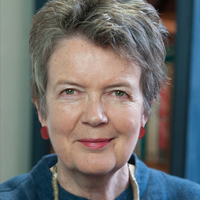 Dr Jenny Taylor is a journalist, author, and founding CEO of Lapido Media Centre for Religious Literacy in World Affairs at www.lapidomedia.com. Having studied for a doctorate in religion at the School of Oriental and African Studies, London University, she has published articles and papers on Islam and Christianity in Britain, and advises Muslim and Christian faith-based groups on their communication.
 Religious Freedom in Malaysia: The church’s engagement for justice and equity in the public arena
 Integrity, the Lausanne Movement, and a Malaysian Daniel
 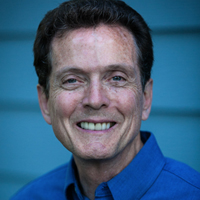 As Chief Collaboration Officer and Teaching Pastor for the Lausanne Movement, David Bennett coordinates the work of the Lausanne Senior Associates. He holds a BS from MIT, and MDiv, DMin, and PhD degrees from Fuller Theological Seminary. David has engaged in teaching, preaching, and research on several continents, with particular focus on India.
 Steve Haas serves as the Vice President and Chief Catalyst for World Vision US. Steve has had a varied career of leadership posts from The Trinity Forum, to Prayer for the Persecuted Church, to the megachurch Willow Creek. Steve is a graduate of Fuller Seminary and lives near Seattle, Washington.


No comments:
Post a Comment