

The Rev. John Heinemeier retired from ministry after 45 years, then returned to work and became the part-time vicar of St. Cyprian’s Episcopal Church in Oxford, N.C. Photo by York Wilson
In 45 years as a pastor, the Rev. John Heinemeier could predict where he would be on Saturday night: at home, writing his sermon. At all six congregations he served, Saturday night was the first chance he'd had all week to prepare his sermon.
But in the year and a half that he has been serving as vicar of St. Cyprian's Episcopal Church in Oxford, N.C., that has never happened. In retirement, working part time, he finally has been able to put first the very tasks he felt called to ministry to do.
"Now I am able to spend more time preparing to preach and teach," he said. "I have time to think and reflect sacramentally. For the first time, I have time to do the things that clergy are called to do utterly well."
The story of St. Cyprian's is more than just an Easter story about one small congregation's resurrection. St. Cyprian's holds lessons for all churches, and insights into new ways of doing pastoral ministry, say Heinemeier and the Rev. Michael B. Hunn, Canon to the Ordinary for Program and Pastoral Ministry for the Episcopal Diocese of North Carolina.
Hunn said the church is slowly emerging from an era where it operated based on a "priest-as-CEO" leadership model.
"The ethos was one priest, one building, one parish secretary and one very bad Xerox machine," he said. "That was the team you had to have. The professional staff ran the church, with lay oversight from a board."
Heinemeier and St. Cyprian's offer signs of the increasing role that lay leadership will play in the future, freeing up clergy to be true pastoral leaders. They also illustrate the untapped potential that retired clergy offer for leading underserved congregations, particularly those that can no longer afford full-time clergy.
At St. Cyprian's the vestry and other laity play a critical role, coming forward with new ministry proposals, handling most administrative matters and doing much of the visitation.
Recently, for example, Heinemeier asked a layperson to attend a custody hearing to provide moral support for another parishioner. "I don't need to be there," he said. "A layperson can do it."
The church is reclaiming a more active vision of lay ministry, one in which laity are ministering in the world on behalf of Jesus, and clergy are their servant leaders, equipping, teaching and supporting laity, Hunn said.
"Lay ministry doesn't mean having laypeople acting like priests, but a real partnership between laity and clergy," he said.
That lay-clergy partnership that has been so evident at St. Cyprian's has to happen more and more, Hunn said.
"No one went into seminary thinking they wanted to be the administrator of a nonprofit," Hunn said. "If you see yourself as an employee working for a board that hired you and that expects you to manage the church, that's a lot to put on one person.
"If you don't have time to pray and study and you're expected to chair meetings and make sure the budget is balanced and do the administrative management, and that's what your priesthood is measured on, then you will burn out."
Heinemeier, of course, now works only part time, generally one day a week. Few pastors outside of retirement can expect such great hours. But the pairing of part-time, retired clergy and lay leadership will also play an important role in leading congregations in the Episcopal Church, and likely other denominations as well, Hunn said. Nationally and in the diocese, the Episcopal Church is trying to work with retired clergy, changing the way it does clergy deployment and transition ministry. Last year, the denomination launched New Dreams - New Visions(link is external), a pilot project aimed at pairing retired clergy with small, underresourced congregations with strong lay leadership. The project was convened to address two key issues in the Episcopal Church, according to Episcopal News Service: a significant number of clergy are poised to retire, and a significant number of congregations will not be able to afford to pay for full-time clergy.
“In our denomination, we are seeing lots of baby boomer clergy coming up on retirement age, and a lot of them want to and are able to work part time,” Hunn said. “Retirement doesn’t mean what it used to mean.”
Monday, February 23, 2015
But in the year and a half that he has been serving as vicar of St. Cyprian's Episcopal Church in Oxford, N.C., that has never happened. In retirement, working part time, he finally has been able to put first the very tasks he felt called to ministry to do.
"Now I am able to spend more time preparing to preach and teach," he said. "I have time to think and reflect sacramentally. For the first time, I have time to do the things that clergy are called to do utterly well."
The story of St. Cyprian's is more than just an Easter story about one small congregation's resurrection. St. Cyprian's holds lessons for all churches, and insights into new ways of doing pastoral ministry, say Heinemeier and the Rev. Michael B. Hunn, Canon to the Ordinary for Program and Pastoral Ministry for the Episcopal Diocese of North Carolina.
Hunn said the church is slowly emerging from an era where it operated based on a "priest-as-CEO" leadership model.
"The ethos was one priest, one building, one parish secretary and one very bad Xerox machine," he said. "That was the team you had to have. The professional staff ran the church, with lay oversight from a board."
Heinemeier and St. Cyprian's offer signs of the increasing role that lay leadership will play in the future, freeing up clergy to be true pastoral leaders. They also illustrate the untapped potential that retired clergy offer for leading underserved congregations, particularly those that can no longer afford full-time clergy.
At St. Cyprian's the vestry and other laity play a critical role, coming forward with new ministry proposals, handling most administrative matters and doing much of the visitation.
Recently, for example, Heinemeier asked a layperson to attend a custody hearing to provide moral support for another parishioner. "I don't need to be there," he said. "A layperson can do it."
The church is reclaiming a more active vision of lay ministry, one in which laity are ministering in the world on behalf of Jesus, and clergy are their servant leaders, equipping, teaching and supporting laity, Hunn said.
"Lay ministry doesn't mean having laypeople acting like priests, but a real partnership between laity and clergy," he said.
That lay-clergy partnership that has been so evident at St. Cyprian's has to happen more and more, Hunn said.
"No one went into seminary thinking they wanted to be the administrator of a nonprofit," Hunn said. "If you see yourself as an employee working for a board that hired you and that expects you to manage the church, that's a lot to put on one person.
"If you don't have time to pray and study and you're expected to chair meetings and make sure the budget is balanced and do the administrative management, and that's what your priesthood is measured on, then you will burn out."
Heinemeier, of course, now works only part time, generally one day a week. Few pastors outside of retirement can expect such great hours. But the pairing of part-time, retired clergy and lay leadership will also play an important role in leading congregations in the Episcopal Church, and likely other denominations as well, Hunn said. Nationally and in the diocese, the Episcopal Church is trying to work with retired clergy, changing the way it does clergy deployment and transition ministry. Last year, the denomination launched New Dreams - New Visions(link is external), a pilot project aimed at pairing retired clergy with small, underresourced congregations with strong lay leadership. The project was convened to address two key issues in the Episcopal Church, according to Episcopal News Service: a significant number of clergy are poised to retire, and a significant number of congregations will not be able to afford to pay for full-time clergy.
“In our denomination, we are seeing lots of baby boomer clergy coming up on retirement age, and a lot of them want to and are able to work part time,” Hunn said. “Retirement doesn’t mean what it used to mean.”
Monday, February 23, 2015
Congregations cannot exist without finances, priorities, leadership, worship, and decision making, yet these five aspects breed the most conflict between church members and clergy. This book will help congregations avoid the pitfalls of conflict and instead head toward a healthy relationship between and among church staff and members.
Buy the book
Buy the book
Divided into three sections that explore the dynamics of conflict, conflict management techniques, and dealing with conflict in specific contexts, Conflict Management in Congregations serves as a comprehensive primer that no pastor or congregational leader will want to be without.
Buy the book
 More about Ministry into Retirement
Continuing the Call
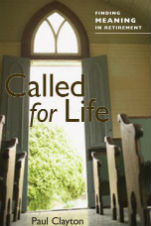
Paul Clayton
We are all called -- clergy, laity, the faithful, and the people on the fringe of a religious life. But people make many assumptions about what a call is, and many of those assumptions do not help us respond faithfully to our callings especially into retirement. Here are four assumptions that need to be challenged.
A colleague, Kim, and I fell into conversation over a cup of coffee. Kim had just retired after decades of hard work and profound growth. It had become clear in the past year that the time had come to retire. At 65, Kim’s pension was adequate, and colleagues had agreed that this was the time to step aside. The previous week, a farewell banquet had been held. “So what do I do now?” was the urgent question. “I no longer have a call from God, a meaningful vocation, an identity.”
From my viewpoint, our call makes life meaningful, and I believe that our calling extends into our retirement years. We are all called—clergy, laity, the faithful, and the people on the fringe of a religious life. But people make many assumptions about what a call is, and many of those assumptions do not help us respond faithfully to our callings. Here are four assumptions that need to be challenged at the outset.
Assumption 1
To be called is to be employed. Many are called to be pastors, firefighters, business executives, or plumbers. That is why Kim was so concerned: if there was no job, there would be no calling. Discerning our call in retirement is not a job-placement process. Although we are called to an occupation, our calling is larger than a job. The word “vocation” comes from the Latin vocare, which in Latin means “to call.” In the New Testament, Jesus called his disciples to follow. He promised no employment, no occupation, no clear task; they were invited simply to be disciples, learners. Over the centuries the meaning of the word “vocation” changed. The church linked the calling of the disciples to the role of clergy, to the extent that eventually the only people who were understood to be called were ordained people. The original meaning of the word “vocation” was changed by common usage over the years so that most people came to equate “calling” with “employment.” “Don’t worry, Kim,” is my advice. “Look for the original meaning of the phrase ‘called by God.’” To be called is to follow in the way, not to have a specific profession.
Assumption 2
To be called is to have had a spiritual experience. While it is often true that a calling involves a spiritual experience, two underlying assumptions need to be addressed. First, if we are called, does that mean we have heard the voice of God Almighty? Perhaps, but it might also be that God called us as he called the Twelve: through the voice of Jesus the carpenter. Many are called by God’s speaking through an aunt, a teacher, a pastor, a friend, or a parent. Second, if we are called, does that mean God is now in charge of our lives? God is God. But that doesn’t mean we are puppets at the end of a string. God created the world and calls us to follow by empowering us to make choices, to envision goals, and to take responsibility for our actions.
Assumption 3
To be called is to have one single direction in life. Many people feel locked for life into one task. But the disciples were called first to be followers and learners. Then, with the death and resurrection of Christ, they were to be leaders, healers, the embodiment of Christ himself. Although some encountered the risen Christ again before their change from disciple to apostle, even then it is clear that the original call to follow was part of the subsequent call to lead. Within our calling is the requirement to be open to change.
Assumption 4
To be called is to have a God-given map of life’s journey. Not only do we who are called need to be flexible; we need also to be able to grope our way through chaos with no guide. Look at the book of Acts. The apostles had no advance notice of what was to happen next. Like us, they stumbled along, praying to God that they were going the right way. “Praying to God” is the point here. Being called meant that they had to stay tuned to the Spirit’s leading; they had to be tuned to prayer as Jesus had been, day by day.
A New Definition of Calling
Three components are included in our calling: our identity; our gifts; and our occupation.
Identity
Our identity is a set of characteristics that make us recognizable, by which we are known, that make us unique. Each of us is recognized by our uniqueness and by our link to family, region, ethnicity, and nationality. Our identity—the way we answer the question “Who am I?”—is part of our calling. Our identity is a significant part of what we have to offer. Our identity is shaped by our life experiences. Characteristics of our identity change as we mature. Amid our growing, developing, and shifting, however, we maintain a stable personality. God called Jeremiah, saying, “Before I formed you in the womb, I knew you, and before you were born I consecrated you; I appointed you a prophet to the nations” (Jer. 1:5). Our calling includes the whole of life, all that we have been, all that we are, all that we will become.
Gifts
By gift, I mean a talent, an endowment, an aptitude, or a natural ability. These capabilities are bestowed upon us by God, and no compensation is expected from us. Even if we ignore the gift, it is still there and often comes alive much later in our lives. The link between identity and gift is clear. Both are bestowed upon us by God’s grace; both grow and develop; both are ingredients of our calling. But they are also distinct from each other. Identity is that which makes one recognizable as a unique person and as one who shares a common heritage with a larger community. Our gift is the talent, aptitude, or ability that was bestowed upon us from the beginning and in the course of life. Thanks be to God for both identity and gifts!
Occupation
Occupation has several definitions. We occupy a dwelling, a residence, a workplace. “To occupy” is also to seize control, to maintain the land. Still again, one can occupy an office or position. All these definitions focus on place. Our calling is also about a place in the world—not in the geographical but in the theological sense of the word. God makes room for us on the ground, a place for us in history, a role for us in the community. Our occupation might include several places, churches, positions, or careers, from childhood through retirement. Our occupation might evolve from student, to employee, to parent, to volunteer. Our call might include two or more occupations at the same time. The call is not to a specific occupation but to a pilgrimage in which one venture may lead to another.
An Authentic Calling
Identity, giftedness, and occupation are ingredients of a calling. But how do we know when a call is really of God and not something we created on our own? The call of God is always consistent with God’s saving purpose. Is this an authentic call? If this pilgrimage means that we are to share in the saving work of God that began with Noah, that we are to share in the saving work of Christ described in the New Testament, then the call is authentic indeed. The distinctive mark of a calling is not the nature of the work but the purpose of the worker.
The most remarkable sentence in the Bible is found in the Genesis story of Abraham and Sarah. God called Abram to go from Haran “to a land that I will show you.” I’ve been to Haran. It was a terrifying move God was asking of Abram and Sarai. The ruins indicate that Haran was a large and sophisticated city on the edge of a desert. God’s call to Abram and Sarai went against their identity as a wealthy urban couple. That call to a new occupation in an unknown place was outrageous. That call to live a gypsy life in the desert was unthinkable.
Abraham and Sarah were the first people to understand that there was one God; they were the first to be called by this God, called to be a blessing to all the families of the earth. Abraham and Sarah represent a new beginning for all of us in the traditions of Judaism, Christianity, and Islam. We are indeed blessed by those first pioneers. In a sense our call is part of their call, to go “to the land that I will show you” (Gen. 12:1). The most remarkable sentence in the Bible begins this way, “So Abram went . . .” (Gen. 12:4). As a result, we are all blessed and called to be a blessing.[Adapted from Called for Life: Finding Meaning in Retirement, copyright © 2008 by the Alban Institute. All rights reserved.
Copyright © 2008, the Alban Institute. All rights reserved. We encourage you to share Alban Weekly articles with your congregation. We gladly allow permission to reprint articles from the Alban Weekly for one-time use by congregations and their leaders when the material is offered free of charge. All we ask is that you write to us at alban@div.duke.edu and let us know how Alban Weekly is making an impact in your congregation. If you would like to use any other Alban material, or if your intended use of Alban Weekly does not fall within this scope, please submit ourreprint permission request form.]
A Time for Lasts
Bruce G. Epperly and Katherine Gould Epperly
While few pastors at retirement miss board meetings and budget sessions, the quotidian practices that structured her or his life day by day and month by month are what pastors often miss the most, say Bruce G. Epperly and Katherine Gould Epperly.A pastor contemplating retirement has a personal and professional history. In many ways a minister’s retirement is the reverse image of her or his first congregational call. Decades earlier, he or she walked to the pulpit with fear and trembling, about to preach her or his first sermon without the safety net of the seminary community or a field education supervisor. Now, hundreds of sermons and worship services later, when he or she walks to the pulpit for the last time as a full-time congregational pastor, he or she is filled with a different type of fear and trembling, the fear of letting go of a personal identity and theological practice that have defined her or his life for decades. While few pastors at retirement miss board meetings and budget sessions, the quotidian practices that structured her or his life day by day and month by month are what pastors often miss the most.
All transitions require saying goodbye, but some farewells are heart wrenching. When an elderly widow, whom a retiring pastor has visited week after week for more than a decade, asks, “Will you come back again next week to see me?” even the most self-differentiated and intentional pastor is tempted to reply, “Of course, I’ll be back next week.” When a pastor celebrates his last nursing home service and announces that he won’t be back again, the anguished looks from the residents are heartbreaking.
The caretaking and wisdom-giving void that follows these pastoral lasts is accompanied by a wide variety of feelings: For some, the feeling of relief at never having to chair another church session meeting or endure the petty conflicts of the church board triumphs over the void and its related grief. Others experience a new freedom at not having to prepare or deliver another sermon. Yet, for most pastors, the feelings of loss and ambivalence are tremendous because, despite the challenges of ministry, most pastors see a close relationship between what has been described as “soul and role.” They do not simply do ministry, they are ministers 24/7. Their vocation is a matter of character, lifestyle, and self-definition, even if they have healthy family lives, relationships outside the church, and interests outside ministry. Healthy preretirement pastors remind themselves that their choice to respond to God’s call to a lifetime of ministry has enabled God to be present in their lives and the lives of their congregants in unique and surprising ways, and they remember that God is still calling them toward faithful discipleship, albeit in yet unknown forms beyond congregational ministry.
Faith and vocation are profoundly defined and shaped by relationships. With retirement from full-time ministry, most pastors note that their relational world suddenly shrinks. Happily, phone calls no longer disturb family meals. But, sadly, days and weeks may go by without a phone call from persons who were once former colleagues or congregants. With no church office filled with congregational staff and volunteers to go to each morning, recent retirees often make visits to the coffee shop or corner restaurant to fill their days. As one suburban pastor noted, “My husband and I decided to retire in the home where we’d lived for two decades. Our children and grandchildren all lived within half an hour of home and the church we’d served for twenty years. I’m glad to be near family, but it’s painful to remain so near my old congregation. Sometimes it hurts to see former parishioners sharing lunch with the interim pastor at places that we once shared meals. As I pick up an afternoon coffee at Starbucks, I encounter my successor, former colleagues, and former parishioners, and while I’m tempted to sit down beside them, I know I have to wave and take my coffee on the road. I’ve had to let go of a congregation when I moved to another, but leaving my job and not having to go to another is heart wrenching. It’s difficult even to find a place to eat where I won’t encounter someone from the church.” With retirement from full-time congregational ministry, one pathway of life comes to an end, and developing new pathways and possibilities takes considerable effort.
The “lasts” of ministry’s winter season reminds us of the importance of work in shaping our personal identity prior to retirement and after it. According to students of the psychology of retirement, a person’s work serves a variety of psychological and structural functions in her or his life, including a sense of personal worth and accomplishment, relationships and friendships, prestige and recognition, novelty and creativity, service to the larger community, and the passing of time. From a holistic perspective on ministerial vocation in which being and doing are intimately related, the high degree of unsettledness pastors experience as they contemplate their retirement is normal, especially during the first months following their departure from full-time ministry. Even pastors well-versed in boundary training are tempted to quite innocently violate boundaries in order to hang on to some sense of their old identity. There are great temptations to drop in at the office on the way to the market or stop by the women’s or men’s fellowship group during its monthly meeting in the social hall. But after a few minutes of mutual awkwardness, the retired pastor and his former colleagues and parishioners know that it is time to go. As one recently retired United Church of Christ pastor noted, “It’s a humbling and somewhat alienating experience to know that you no longer belong in a place where you were once the center of action and the primary actor. More than that, your presence in the area may be seen by judicatory officials and the new pastor as an intrusion, undermining the authority of your successor. When judicatory officials ask how I’m doing, I feel the underlying message is ‘Are you behaving yourself? Are you staying away from the church?'”
Like a flowing stream, life goes on, and our accomplishments, at best, become the foundation upon which other pastors will build in their ministerial adventure. Even those pastors who have prepared well for retirement may experience some wistfulness as they admit that life is progressing well in the office and in the congregation now that they are gone.
“For everything there is a season.” Transformation from which new life springs is bought at the price of abandonment of old routines and letting go of old ways of self-definition. The leaves must fall from the tree to create mulch to support springtime’s renewal of life. Springtime’s new blooms eventually rise but not without the death of the old self and its habitual patterns. In such transitional moments, a pastor’s calling is to claim kairos time amid the fifty or more unstructured hours of chronos time that once defined each week’s tasks. What initially seems like a void in the few weeks following retirement may shortly thereafter become the womb of new possibilities for those who awaken to new pathways of spirituality, vocation, and relationship. What the psalmist described as numbering our days will mean embracing the joy of new adventures and new talents, rather than simply passing time in preoccupation with the past.
In Madeleine L’Engle’s A Ring of Endless Light, Grandfather Austin, a retired Episcopalian priest who is now debilitated and facing immanent death, notes that at this time of his life his vocation is simply to pray for the world. When pastors retire, they do not lose their pastoral identity or their calling to serve God, but their vocation is transformed. Their calling is to discern what new creation God is beckoning them toward now that they no longer have the role of public religious figure. Just as a person’s earlier callings have many possible shapes, so, too, God’s call in retirement encompasses many paths and possibilities in one’s particular time and place.
Wrestling with the Next Chapter
Robert Leventhal
As a synagogue consultant, Leventhal finds congregations all over the country called Beth Jacob, which prompted him to wonder what it might mean to be a house of Jacob. What might Jacob have said about his life? If he were here today, what questions might he raise for congregational leaders of a house of Jacob? During a recent trip to Israel, I participated in a three-week course at Pardes Institute,1 where I studied the life of Jacob, the halacha (laws) of Shabbat, the history of Jerusalem, and the theme of exile and return. Every day in each class we spent 30 to 45 minutes reviewing the assigned texts with a learning partner, called a chevruta. This daily practice brought diverse individuals together in a house of study (Beit Midrash) and set the tone for the whole Pardes community. It was transformative to wrestle with the voice of ancient texts and to do so with gifted, faithful teachers and contemporary partners.
Both the class assignments and the chevruta practice quickly taught me that if I was to deepen my experience at Padres I would have to embrace the discipline of what my teacher called a “close reading” of the text. We often focused on only 10 or 15 lines for a whole session. I realized that I (a self-confessed deep generalist) would have to pay more rigorous attention to what the text said. I would have to move out of my comfort zone, avoid the tendency to generalize and editorialize, and patiently look for clues among the various commentators and teachers to illumine the text. I was no longer reading the text just for myself. I had to consider my chevruta. I could not cut corners.
In one frustrating session on the halacha of Shabbat, I was partnered with a business grad who had received a Jewish orthodox education from kindergarten through high school. He was comfortable with the Hebrew and the Talmudic process. I, on the other hand, whined about the density of the material. At the end of our 45-minute discussion he smiled and said, “It was a hard passage, but you won’t soon forget it. That’s part of the wisdom of the Talmud.”
In another class, I was partnered with a recent graduate who was spending a year in Israel. At 56, I was able to make connections between the texts and other important parts of the Jewish tradition and life experience that he initially was not. However, the connections I made helped my partner make them as well. In chevruta we are both student and teacher. We are puzzle parts for each other—we help complete each other’s story.
My Bible class focused on the life of Jacob, and it, too, offered me new insights. As a synagogue consultant, I find congregations all over the country called Beth Jacob. As my class on Jacob progressed, I began to wonder what it meant to be a house of Jacob. What might Jacob have said about his life? If he were here today, what questions might he raise for congregational leaders of a house of Jacob?
As I reviewed Jacob’s evolving story, I also recalled how congregations I had worked with had sought to write a new chapter in their congregational story. I began to see how Jacob’s story addressed many of the issues congregations so often face, and raised many of the questions leaders of congregations need to be asking. As I studied the text at Pardes and thought about the many congregations I had worked with, I began to see more and more connections.
Overcoming Loss
Even the beginning of Jacob’s story offered insight into congregational life. Jacob was born in a state of unease (they say he grabbed his brother’s heel in the womb). There was a prophecy that Esau would serve him even though Esau was the older brother (Gen. 25:23). Jacob entered the world with a fateful legacy (Abraham and Isaac) and a story that had already been set in motion.
Likewise, congregations have their own legacies, their own stories that frame their current experience. How, I began to wonder, do we manage the legacy of our past? How do we bring the best of our past to the service of our future?
This brought to mind a congregation that was struggling with a legacy of clergy turnover when I first began my work with them. They had lost confidence. It was therefore hard for them to move forward on the remodeling of their facility or to develop new programs. When a new rabbi came, they began to be more hopeful. Out of their hopefulness they chose to try something new—a visioning and planning project. The process provided a safe place to explore the need for multiple approaches to worship and new ways to attract different kinds of members. The traditional critics of new things (whose thinking was colored by memories of the congregation’s troubled past) were still heard, but the size of the planning team protected new ideas and invited some new chapters to be submitted. Clearly, difficult legacies can be overcome.
Embracing a New Story
Elsewhere in Jacob’s story, we see that he is fearful as he approaches Esau. He chooses to prostrate himself so that Esau can look at him in a new way. Jacob wants to represent a different story. He no longer looks triumphant. He limps. He bows “low to the ground seven times until he is near his brother” (Gen. 33:3). The man who embraces Esau is now in a different place. Together they can write a chapter of reconciliation.
The congregation that came to my mind as I studied this passage was one that had struggled with governance issues. They had faced serious trauma over the years, and many members had felt betrayed by staff and lay leadership. When a congregation doesn’t know what went wrong, they will look for who went wrong. This particular congregation had developed a pattern of blaming each other. After the initial visioning and planning work we did with them, the governance task force continued to function. In the first year there was little progress. The board did not have enough trust to work through changes. Conceptually, people were open to the idea of term limits and a smaller board, but not for themselves. However, over time new approaches to board planning and executive committee/board relationships began to evolve. Leaders saw that the governance committee had proceeded humbly and respectfully. They had bowed low. In response, some new people stepped forward to serve on the board, and some longstanding members saw that it was time to step back. The leadership began to be less fearful and embraced change. Both Jacob’s story and the wise ways of this congregation have much to teach other congregational leaders wanting to learn how to help others embrace change.
Restoring a Reputation
In another passage of Jacob’s story, we learn that Jacob was concerned that his sons had slaughtered the people of Shechem in retaliation for the rape of their sister Dinah. Jacob said to Simeon and Levi, “You have brought trouble on me, making me odious among the inhabitants of the land” (Gen. 34:30).
Jacob knew that he—through the acts of his family members—had lost credibility in his community. The same can happen in our churches and synagogues. So how do we restore our credibility once it is lost?
The leaders of one congregation I consulted with lost credibility with the members when the actual cost of their building project was way over budget. To restore trust, they worked to share the real facts—to explain what had happened. They then agreed to do a visioning and planning project. They had more than 100 people go to parlor meetings to share their visions, and they had 60 people come to workshops on values and goals for the future. The costs of the overruns still had to be managed, but the leaders had begun to write a new more hopeful story. New people stepped forward to embrace that vision.
Changing Our Pattern
Later in Jacob’s story we find that he gets caught up in building a fortune. While he has reversals (deceived by Leah, swindled by Laban), he still prospers. He becomes focused on the material world as he counts his sheep (Gen. 30:3), but God shakes him out of this pattern by calling him to “arise and leave this land” (Gen. 31:13).
How do we avoid getting caught up in the managerial details? How can we remember to “arise” and deal with our mission and ministry?
In a board development workshop that I led, when synagogue leaders described their culture it became clear that the focus of all of their meetings was money. The treasurer was a committed, capable, and longstanding volunteer who had felt called for many years to warn the board about every possible financial risk. He gave his report at the beginning of the meeting, thus effectively putting a damper on all future ideas and proposals. After some reflection, the board members agreed to move the treasurer’s report to later in the agenda. They decided they needed to be aware of the data, but that they needed an agenda that went beyond counting sheep. They needed a process and a story with more vision.
Arise and Lead
Clearly, Jacob’s story is still alive and well in our congregations. How we respond to our own versions of his and other biblical characters’ stories, however, is up to us.
The chevruta-oriented learning community builds capacity to understand people’s different stories. I came into the Beit Midrash at the Pardes Institute with fear of the unknown, but, as a leader, I knew I had to “arise” to write a new chapter. After three weeks I had not only learned to live with the challenges of close text study, I had also found a home in the Beit Midrash. Our ancestor Jacob was not perfect. And the land of Canaan—rocky, arid (without oil), and surrounded by difficult neighbors—was also far from perfect. But God’s promise is not that we will be a nation at ease but that we will learn to be at ease with the tensions of real learning and living. Jacob’s story resonates with synagogue leaders because they can see their lives in its pages. Our congregations may be truly called Beth Jacob because, like the land of Israel, they provide the opportunity for a life fully lived and a mission worth wrestling with.
_______________
NOTE
1. For more information, seewww.Pardes.org. Photo by premasagar.
Robert Leventhal is an Alban Institute senior consultant specializing in synagogues. Prior to joining Alban, he worked as a marketing executive and management consultant. Bob is the author of Stepping Forward: Synagogue Visioning and Planning (Alban, 2007) and Byachad: Synagogue Board Development (Alban, 2007) .
Visit Alban.org


 Alban
Alban
Buy the book
Continuing the Call
Paul Clayton
We are all called -- clergy, laity, the faithful, and the people on the fringe of a religious life. But people make many assumptions about what a call is, and many of those assumptions do not help us respond faithfully to our callings especially into retirement. Here are four assumptions that need to be challenged.
A colleague, Kim, and I fell into conversation over a cup of coffee. Kim had just retired after decades of hard work and profound growth. It had become clear in the past year that the time had come to retire. At 65, Kim’s pension was adequate, and colleagues had agreed that this was the time to step aside. The previous week, a farewell banquet had been held. “So what do I do now?” was the urgent question. “I no longer have a call from God, a meaningful vocation, an identity.”
From my viewpoint, our call makes life meaningful, and I believe that our calling extends into our retirement years. We are all called—clergy, laity, the faithful, and the people on the fringe of a religious life. But people make many assumptions about what a call is, and many of those assumptions do not help us respond faithfully to our callings. Here are four assumptions that need to be challenged at the outset.
Assumption 1
To be called is to be employed. Many are called to be pastors, firefighters, business executives, or plumbers. That is why Kim was so concerned: if there was no job, there would be no calling. Discerning our call in retirement is not a job-placement process. Although we are called to an occupation, our calling is larger than a job. The word “vocation” comes from the Latin vocare, which in Latin means “to call.” In the New Testament, Jesus called his disciples to follow. He promised no employment, no occupation, no clear task; they were invited simply to be disciples, learners. Over the centuries the meaning of the word “vocation” changed. The church linked the calling of the disciples to the role of clergy, to the extent that eventually the only people who were understood to be called were ordained people. The original meaning of the word “vocation” was changed by common usage over the years so that most people came to equate “calling” with “employment.” “Don’t worry, Kim,” is my advice. “Look for the original meaning of the phrase ‘called by God.’” To be called is to follow in the way, not to have a specific profession.
Assumption 2
To be called is to have had a spiritual experience. While it is often true that a calling involves a spiritual experience, two underlying assumptions need to be addressed. First, if we are called, does that mean we have heard the voice of God Almighty? Perhaps, but it might also be that God called us as he called the Twelve: through the voice of Jesus the carpenter. Many are called by God’s speaking through an aunt, a teacher, a pastor, a friend, or a parent. Second, if we are called, does that mean God is now in charge of our lives? God is God. But that doesn’t mean we are puppets at the end of a string. God created the world and calls us to follow by empowering us to make choices, to envision goals, and to take responsibility for our actions.
Assumption 3
To be called is to have one single direction in life. Many people feel locked for life into one task. But the disciples were called first to be followers and learners. Then, with the death and resurrection of Christ, they were to be leaders, healers, the embodiment of Christ himself. Although some encountered the risen Christ again before their change from disciple to apostle, even then it is clear that the original call to follow was part of the subsequent call to lead. Within our calling is the requirement to be open to change.
Assumption 4
To be called is to have a God-given map of life’s journey. Not only do we who are called need to be flexible; we need also to be able to grope our way through chaos with no guide. Look at the book of Acts. The apostles had no advance notice of what was to happen next. Like us, they stumbled along, praying to God that they were going the right way. “Praying to God” is the point here. Being called meant that they had to stay tuned to the Spirit’s leading; they had to be tuned to prayer as Jesus had been, day by day.
A New Definition of Calling
Three components are included in our calling: our identity; our gifts; and our occupation.
Identity
Our identity is a set of characteristics that make us recognizable, by which we are known, that make us unique. Each of us is recognized by our uniqueness and by our link to family, region, ethnicity, and nationality. Our identity—the way we answer the question “Who am I?”—is part of our calling. Our identity is a significant part of what we have to offer. Our identity is shaped by our life experiences. Characteristics of our identity change as we mature. Amid our growing, developing, and shifting, however, we maintain a stable personality. God called Jeremiah, saying, “Before I formed you in the womb, I knew you, and before you were born I consecrated you; I appointed you a prophet to the nations” (Jer. 1:5). Our calling includes the whole of life, all that we have been, all that we are, all that we will become.
Gifts
By gift, I mean a talent, an endowment, an aptitude, or a natural ability. These capabilities are bestowed upon us by God, and no compensation is expected from us. Even if we ignore the gift, it is still there and often comes alive much later in our lives. The link between identity and gift is clear. Both are bestowed upon us by God’s grace; both grow and develop; both are ingredients of our calling. But they are also distinct from each other. Identity is that which makes one recognizable as a unique person and as one who shares a common heritage with a larger community. Our gift is the talent, aptitude, or ability that was bestowed upon us from the beginning and in the course of life. Thanks be to God for both identity and gifts!
Occupation
Occupation has several definitions. We occupy a dwelling, a residence, a workplace. “To occupy” is also to seize control, to maintain the land. Still again, one can occupy an office or position. All these definitions focus on place. Our calling is also about a place in the world—not in the geographical but in the theological sense of the word. God makes room for us on the ground, a place for us in history, a role for us in the community. Our occupation might include several places, churches, positions, or careers, from childhood through retirement. Our occupation might evolve from student, to employee, to parent, to volunteer. Our call might include two or more occupations at the same time. The call is not to a specific occupation but to a pilgrimage in which one venture may lead to another.
An Authentic Calling
Identity, giftedness, and occupation are ingredients of a calling. But how do we know when a call is really of God and not something we created on our own? The call of God is always consistent with God’s saving purpose. Is this an authentic call? If this pilgrimage means that we are to share in the saving work of God that began with Noah, that we are to share in the saving work of Christ described in the New Testament, then the call is authentic indeed. The distinctive mark of a calling is not the nature of the work but the purpose of the worker.
The most remarkable sentence in the Bible is found in the Genesis story of Abraham and Sarah. God called Abram to go from Haran “to a land that I will show you.” I’ve been to Haran. It was a terrifying move God was asking of Abram and Sarai. The ruins indicate that Haran was a large and sophisticated city on the edge of a desert. God’s call to Abram and Sarai went against their identity as a wealthy urban couple. That call to a new occupation in an unknown place was outrageous. That call to live a gypsy life in the desert was unthinkable.
Abraham and Sarah were the first people to understand that there was one God; they were the first to be called by this God, called to be a blessing to all the families of the earth. Abraham and Sarah represent a new beginning for all of us in the traditions of Judaism, Christianity, and Islam. We are indeed blessed by those first pioneers. In a sense our call is part of their call, to go “to the land that I will show you” (Gen. 12:1). The most remarkable sentence in the Bible begins this way, “So Abram went . . .” (Gen. 12:4). As a result, we are all blessed and called to be a blessing.[Adapted from Called for Life: Finding Meaning in Retirement, copyright © 2008 by the Alban Institute. All rights reserved.
Copyright © 2008, the Alban Institute. All rights reserved. We encourage you to share Alban Weekly articles with your congregation. We gladly allow permission to reprint articles from the Alban Weekly for one-time use by congregations and their leaders when the material is offered free of charge. All we ask is that you write to us at alban@div.duke.edu and let us know how Alban Weekly is making an impact in your congregation. If you would like to use any other Alban material, or if your intended use of Alban Weekly does not fall within this scope, please submit ourreprint permission request form.]
A Time for Lasts
Bruce G. Epperly and Katherine Gould Epperly
While few pastors at retirement miss board meetings and budget sessions, the quotidian practices that structured her or his life day by day and month by month are what pastors often miss the most, say Bruce G. Epperly and Katherine Gould Epperly.A pastor contemplating retirement has a personal and professional history. In many ways a minister’s retirement is the reverse image of her or his first congregational call. Decades earlier, he or she walked to the pulpit with fear and trembling, about to preach her or his first sermon without the safety net of the seminary community or a field education supervisor. Now, hundreds of sermons and worship services later, when he or she walks to the pulpit for the last time as a full-time congregational pastor, he or she is filled with a different type of fear and trembling, the fear of letting go of a personal identity and theological practice that have defined her or his life for decades. While few pastors at retirement miss board meetings and budget sessions, the quotidian practices that structured her or his life day by day and month by month are what pastors often miss the most.
All transitions require saying goodbye, but some farewells are heart wrenching. When an elderly widow, whom a retiring pastor has visited week after week for more than a decade, asks, “Will you come back again next week to see me?” even the most self-differentiated and intentional pastor is tempted to reply, “Of course, I’ll be back next week.” When a pastor celebrates his last nursing home service and announces that he won’t be back again, the anguished looks from the residents are heartbreaking.
The caretaking and wisdom-giving void that follows these pastoral lasts is accompanied by a wide variety of feelings: For some, the feeling of relief at never having to chair another church session meeting or endure the petty conflicts of the church board triumphs over the void and its related grief. Others experience a new freedom at not having to prepare or deliver another sermon. Yet, for most pastors, the feelings of loss and ambivalence are tremendous because, despite the challenges of ministry, most pastors see a close relationship between what has been described as “soul and role.” They do not simply do ministry, they are ministers 24/7. Their vocation is a matter of character, lifestyle, and self-definition, even if they have healthy family lives, relationships outside the church, and interests outside ministry. Healthy preretirement pastors remind themselves that their choice to respond to God’s call to a lifetime of ministry has enabled God to be present in their lives and the lives of their congregants in unique and surprising ways, and they remember that God is still calling them toward faithful discipleship, albeit in yet unknown forms beyond congregational ministry.
Faith and vocation are profoundly defined and shaped by relationships. With retirement from full-time ministry, most pastors note that their relational world suddenly shrinks. Happily, phone calls no longer disturb family meals. But, sadly, days and weeks may go by without a phone call from persons who were once former colleagues or congregants. With no church office filled with congregational staff and volunteers to go to each morning, recent retirees often make visits to the coffee shop or corner restaurant to fill their days. As one suburban pastor noted, “My husband and I decided to retire in the home where we’d lived for two decades. Our children and grandchildren all lived within half an hour of home and the church we’d served for twenty years. I’m glad to be near family, but it’s painful to remain so near my old congregation. Sometimes it hurts to see former parishioners sharing lunch with the interim pastor at places that we once shared meals. As I pick up an afternoon coffee at Starbucks, I encounter my successor, former colleagues, and former parishioners, and while I’m tempted to sit down beside them, I know I have to wave and take my coffee on the road. I’ve had to let go of a congregation when I moved to another, but leaving my job and not having to go to another is heart wrenching. It’s difficult even to find a place to eat where I won’t encounter someone from the church.” With retirement from full-time congregational ministry, one pathway of life comes to an end, and developing new pathways and possibilities takes considerable effort.
The “lasts” of ministry’s winter season reminds us of the importance of work in shaping our personal identity prior to retirement and after it. According to students of the psychology of retirement, a person’s work serves a variety of psychological and structural functions in her or his life, including a sense of personal worth and accomplishment, relationships and friendships, prestige and recognition, novelty and creativity, service to the larger community, and the passing of time. From a holistic perspective on ministerial vocation in which being and doing are intimately related, the high degree of unsettledness pastors experience as they contemplate their retirement is normal, especially during the first months following their departure from full-time ministry. Even pastors well-versed in boundary training are tempted to quite innocently violate boundaries in order to hang on to some sense of their old identity. There are great temptations to drop in at the office on the way to the market or stop by the women’s or men’s fellowship group during its monthly meeting in the social hall. But after a few minutes of mutual awkwardness, the retired pastor and his former colleagues and parishioners know that it is time to go. As one recently retired United Church of Christ pastor noted, “It’s a humbling and somewhat alienating experience to know that you no longer belong in a place where you were once the center of action and the primary actor. More than that, your presence in the area may be seen by judicatory officials and the new pastor as an intrusion, undermining the authority of your successor. When judicatory officials ask how I’m doing, I feel the underlying message is ‘Are you behaving yourself? Are you staying away from the church?'”
Like a flowing stream, life goes on, and our accomplishments, at best, become the foundation upon which other pastors will build in their ministerial adventure. Even those pastors who have prepared well for retirement may experience some wistfulness as they admit that life is progressing well in the office and in the congregation now that they are gone.
“For everything there is a season.” Transformation from which new life springs is bought at the price of abandonment of old routines and letting go of old ways of self-definition. The leaves must fall from the tree to create mulch to support springtime’s renewal of life. Springtime’s new blooms eventually rise but not without the death of the old self and its habitual patterns. In such transitional moments, a pastor’s calling is to claim kairos time amid the fifty or more unstructured hours of chronos time that once defined each week’s tasks. What initially seems like a void in the few weeks following retirement may shortly thereafter become the womb of new possibilities for those who awaken to new pathways of spirituality, vocation, and relationship. What the psalmist described as numbering our days will mean embracing the joy of new adventures and new talents, rather than simply passing time in preoccupation with the past.
In Madeleine L’Engle’s A Ring of Endless Light, Grandfather Austin, a retired Episcopalian priest who is now debilitated and facing immanent death, notes that at this time of his life his vocation is simply to pray for the world. When pastors retire, they do not lose their pastoral identity or their calling to serve God, but their vocation is transformed. Their calling is to discern what new creation God is beckoning them toward now that they no longer have the role of public religious figure. Just as a person’s earlier callings have many possible shapes, so, too, God’s call in retirement encompasses many paths and possibilities in one’s particular time and place.
Wrestling with the Next Chapter
Robert Leventhal
As a synagogue consultant, Leventhal finds congregations all over the country called Beth Jacob, which prompted him to wonder what it might mean to be a house of Jacob. What might Jacob have said about his life? If he were here today, what questions might he raise for congregational leaders of a house of Jacob? During a recent trip to Israel, I participated in a three-week course at Pardes Institute,1 where I studied the life of Jacob, the halacha (laws) of Shabbat, the history of Jerusalem, and the theme of exile and return. Every day in each class we spent 30 to 45 minutes reviewing the assigned texts with a learning partner, called a chevruta. This daily practice brought diverse individuals together in a house of study (Beit Midrash) and set the tone for the whole Pardes community. It was transformative to wrestle with the voice of ancient texts and to do so with gifted, faithful teachers and contemporary partners.
Both the class assignments and the chevruta practice quickly taught me that if I was to deepen my experience at Padres I would have to embrace the discipline of what my teacher called a “close reading” of the text. We often focused on only 10 or 15 lines for a whole session. I realized that I (a self-confessed deep generalist) would have to pay more rigorous attention to what the text said. I would have to move out of my comfort zone, avoid the tendency to generalize and editorialize, and patiently look for clues among the various commentators and teachers to illumine the text. I was no longer reading the text just for myself. I had to consider my chevruta. I could not cut corners.
In one frustrating session on the halacha of Shabbat, I was partnered with a business grad who had received a Jewish orthodox education from kindergarten through high school. He was comfortable with the Hebrew and the Talmudic process. I, on the other hand, whined about the density of the material. At the end of our 45-minute discussion he smiled and said, “It was a hard passage, but you won’t soon forget it. That’s part of the wisdom of the Talmud.”
In another class, I was partnered with a recent graduate who was spending a year in Israel. At 56, I was able to make connections between the texts and other important parts of the Jewish tradition and life experience that he initially was not. However, the connections I made helped my partner make them as well. In chevruta we are both student and teacher. We are puzzle parts for each other—we help complete each other’s story.
My Bible class focused on the life of Jacob, and it, too, offered me new insights. As a synagogue consultant, I find congregations all over the country called Beth Jacob. As my class on Jacob progressed, I began to wonder what it meant to be a house of Jacob. What might Jacob have said about his life? If he were here today, what questions might he raise for congregational leaders of a house of Jacob?
As I reviewed Jacob’s evolving story, I also recalled how congregations I had worked with had sought to write a new chapter in their congregational story. I began to see how Jacob’s story addressed many of the issues congregations so often face, and raised many of the questions leaders of congregations need to be asking. As I studied the text at Pardes and thought about the many congregations I had worked with, I began to see more and more connections.
Overcoming Loss
Even the beginning of Jacob’s story offered insight into congregational life. Jacob was born in a state of unease (they say he grabbed his brother’s heel in the womb). There was a prophecy that Esau would serve him even though Esau was the older brother (Gen. 25:23). Jacob entered the world with a fateful legacy (Abraham and Isaac) and a story that had already been set in motion.
Likewise, congregations have their own legacies, their own stories that frame their current experience. How, I began to wonder, do we manage the legacy of our past? How do we bring the best of our past to the service of our future?
This brought to mind a congregation that was struggling with a legacy of clergy turnover when I first began my work with them. They had lost confidence. It was therefore hard for them to move forward on the remodeling of their facility or to develop new programs. When a new rabbi came, they began to be more hopeful. Out of their hopefulness they chose to try something new—a visioning and planning project. The process provided a safe place to explore the need for multiple approaches to worship and new ways to attract different kinds of members. The traditional critics of new things (whose thinking was colored by memories of the congregation’s troubled past) were still heard, but the size of the planning team protected new ideas and invited some new chapters to be submitted. Clearly, difficult legacies can be overcome.
Embracing a New Story
Elsewhere in Jacob’s story, we see that he is fearful as he approaches Esau. He chooses to prostrate himself so that Esau can look at him in a new way. Jacob wants to represent a different story. He no longer looks triumphant. He limps. He bows “low to the ground seven times until he is near his brother” (Gen. 33:3). The man who embraces Esau is now in a different place. Together they can write a chapter of reconciliation.
The congregation that came to my mind as I studied this passage was one that had struggled with governance issues. They had faced serious trauma over the years, and many members had felt betrayed by staff and lay leadership. When a congregation doesn’t know what went wrong, they will look for who went wrong. This particular congregation had developed a pattern of blaming each other. After the initial visioning and planning work we did with them, the governance task force continued to function. In the first year there was little progress. The board did not have enough trust to work through changes. Conceptually, people were open to the idea of term limits and a smaller board, but not for themselves. However, over time new approaches to board planning and executive committee/board relationships began to evolve. Leaders saw that the governance committee had proceeded humbly and respectfully. They had bowed low. In response, some new people stepped forward to serve on the board, and some longstanding members saw that it was time to step back. The leadership began to be less fearful and embraced change. Both Jacob’s story and the wise ways of this congregation have much to teach other congregational leaders wanting to learn how to help others embrace change.
Restoring a Reputation
In another passage of Jacob’s story, we learn that Jacob was concerned that his sons had slaughtered the people of Shechem in retaliation for the rape of their sister Dinah. Jacob said to Simeon and Levi, “You have brought trouble on me, making me odious among the inhabitants of the land” (Gen. 34:30).
Jacob knew that he—through the acts of his family members—had lost credibility in his community. The same can happen in our churches and synagogues. So how do we restore our credibility once it is lost?
The leaders of one congregation I consulted with lost credibility with the members when the actual cost of their building project was way over budget. To restore trust, they worked to share the real facts—to explain what had happened. They then agreed to do a visioning and planning project. They had more than 100 people go to parlor meetings to share their visions, and they had 60 people come to workshops on values and goals for the future. The costs of the overruns still had to be managed, but the leaders had begun to write a new more hopeful story. New people stepped forward to embrace that vision.
Changing Our Pattern
Later in Jacob’s story we find that he gets caught up in building a fortune. While he has reversals (deceived by Leah, swindled by Laban), he still prospers. He becomes focused on the material world as he counts his sheep (Gen. 30:3), but God shakes him out of this pattern by calling him to “arise and leave this land” (Gen. 31:13).
How do we avoid getting caught up in the managerial details? How can we remember to “arise” and deal with our mission and ministry?
In a board development workshop that I led, when synagogue leaders described their culture it became clear that the focus of all of their meetings was money. The treasurer was a committed, capable, and longstanding volunteer who had felt called for many years to warn the board about every possible financial risk. He gave his report at the beginning of the meeting, thus effectively putting a damper on all future ideas and proposals. After some reflection, the board members agreed to move the treasurer’s report to later in the agenda. They decided they needed to be aware of the data, but that they needed an agenda that went beyond counting sheep. They needed a process and a story with more vision.
Arise and Lead
Clearly, Jacob’s story is still alive and well in our congregations. How we respond to our own versions of his and other biblical characters’ stories, however, is up to us.
The chevruta-oriented learning community builds capacity to understand people’s different stories. I came into the Beit Midrash at the Pardes Institute with fear of the unknown, but, as a leader, I knew I had to “arise” to write a new chapter. After three weeks I had not only learned to live with the challenges of close text study, I had also found a home in the Beit Midrash. Our ancestor Jacob was not perfect. And the land of Canaan—rocky, arid (without oil), and surrounded by difficult neighbors—was also far from perfect. But God’s promise is not that we will be a nation at ease but that we will learn to be at ease with the tensions of real learning and living. Jacob’s story resonates with synagogue leaders because they can see their lives in its pages. Our congregations may be truly called Beth Jacob because, like the land of Israel, they provide the opportunity for a life fully lived and a mission worth wrestling with.
_______________
NOTE
1. For more information, seewww.Pardes.org. Photo by premasagar.
Robert Leventhal is an Alban Institute senior consultant specializing in synagogues. Prior to joining Alban, he worked as a marketing executive and management consultant. Bob is the author of Stepping Forward: Synagogue Visioning and Planning (Alban, 2007) and Byachad: Synagogue Board Development (Alban, 2007) .
Visit Alban.org
STAY CONNECTED
312 Blackwell Street, Suite 101
Durham, North Carolina 27701 United States
____________________________
____________________________

No comments:
Post a Comment