Editor's Note:
Dear Friend,
If you’re in the Northeast like me, you’ve had enough of winter. You want it away, and if it won’t go away then you will. Thankfully, Chabad has you covered. With Purim just around the corner (March 4-5), Chabad will whisk you to a local Purim celebration that will put you in another time or place.
Live around N.Y. or N.J.? Celebrate Purim in England, Paris or under the sea. Near L.A. you can Purim party like they do in Israel, Dallas and even at thecircus! If Florida is where you reside, then try Purim in the Wild West, thejungle or the farm. Celebrate Purim in Hawaii in Boise; Purim in China in Leeds; and Purim in Italy in Reading.
There’s Purim in the 70’s, 60’s, and even the 1920’s! Can’t get far enough? There’s even an Intergalactic Purim!
But for me – I’ll even take a simple Purim in the shul.
Need to find your local Purim celebration? Click here for your ticket to a Purim celebration. And drop a line to your local center letting them know that you’ll be there – they will appreciate it!
Happy Purim,
Moshe Rosenberg
on behalf of the Chabad.org Editorial Team
P.S. Where will you celebrate Purim this year? Share with us!

This Is Good
"Who is rich? He who is satisfied with his lot." (Pirke Avot 4:1)With each event of life, you have a choice:
You can complain that you didn’t get what you deserve.
Or you can have faith that the One above, who is good and provides only good, is taking care of your life in its every detail…
…because what you understand is only a small good, but what you cannot understand is good beyond your understanding;
…because all that you encounter is but another step in your mission to repair this world…
…because nothing in G‑d’s world can truly be bad, everything He created only carries us upward…
…and then you are rich.
Wealth, it turns out, is all a matter of interpretation.[5742 volume 3 page 1662]
You can complain that you didn’t get what you deserve.
Or you can have faith that the One above, who is good and provides only good, is taking care of your life in its every detail…
…because what you understand is only a small good, but what you cannot understand is good beyond your understanding;
…because all that you encounter is but another step in your mission to repair this world…
…because nothing in G‑d’s world can truly be bad, everything He created only carries us upward…
…and then you are rich.
Wealth, it turns out, is all a matter of interpretation.[5742 volume 3 page 1662]


By Miriam Szokovski | February 19, 2015 12:24 AM
Traditional Poppy Seed Mohn Hamantaschen
It's that time of year again...Purim is a-comin' with great fanfare and, of course, the ever-popular hamantaschen.

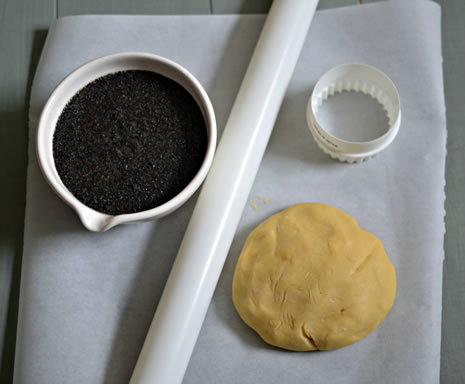
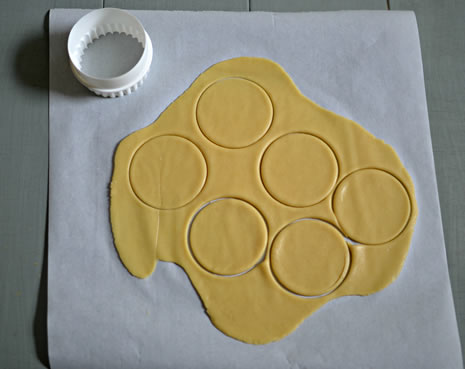


Keep the dough on the thinner side.
Do not overfill the hamantaschen.
Work patiently and consistently. Don't rush through. Take the extra 15 seconds to make sure the edges are tightly pinched.
Close the hamantaschen up more than you think you need to. See mine—I left a pretty small opening.
Be careful not to add too much flour to do the dough, because that will make the dough drier and harder to seal.

½ cup sugar
¼ cup oil
2 eggs
1 tsp. vanilla
2 cups flour
1 tsp. baking powder
Dough Directions
Mix the eggs, sugar, oil and vanilla.
Add 1 cup of flour and the baking powder. Mix.
Add the second cup of flour until the dough forms a soft, but not sticky ball. You may need 2-3 more tablespoons of flour if your dough is sticky.
Roll out the dough and cut out circles.
Put a teaspoon of filling in the center of each circle.
Gently fold the sides and pinch shut tightly.
Bake for 10-12 minutes on 350°F.
Yields: 20 Hamantaschen
Filling Ingredients
Note: Very closely based on Tori Avey's recipe
¾ cup poppy seeds
2 tbsp. butter (coconut oil or margarine, for pareve)
½ cup coconut milk
2 tbsp. honey
6 tbsp. sugar
1 egg
Filling Directions
Beat the egg in a bowl and set aside.
Melt the butter/margarine in a small saucepan. Whisk in the coconut milk, sugar and honey and simmer over a low flame until the sugar is melted.
Pour half the mixture into a cup.
Very slowly drizzle the hot mixture into the beaten egg, whisking constantly.
Slowly pour the egg mixture back into hot mixture in the saucepan, whisking constantly.
Simmer the mixture for 3-4 minutes until it thickens. Remove from fire.
Whisk in the poppy seeds and refrigerate until fully cooled before using.

For a deeper look at the message behind the Hamantasch, read The Secret of the Hamantasch, Holy Hamantaschen, and Mystic Purim Pastries.
What's your favorite hamantasch filling? Let us know in the comments.
Light, Clothing and IncenseA Lesson in Authenticity | ||||||||||||||||||||||||||||

Parshat Teztaveh begins with a discussion about the preparing and kindling of the menorah. It then moves on to describing the different priestly garments worn by the Kohanim while serving in the Temple, and concludes with the construction of the incense altar and the laws of the daily incense offerings.
What connection is there between these three ideas? What is the common thread that ties them together into one Parshah? Let’s first understand the nature of these three things: 1. MenorahThe theme of the menorah is light. What is light?Light is not an entity unto itself; it is merely an extension of its source. The source, be it the sun or a candle, is “full of brightness,” and this automatically radiates out, creating “light.” Light therefore can only exist as long as its source does, and its characteristics mirror precisely those of its source. 2. Incense and Incense AltarThe function of incense is to create an aroma. What is the nature of an aroma?An aroma works very much the same way light does. It too is not an entity unto itself; rather, it is something which emanates or wafts out from its source. The source contains very strong, pungent elements, and these automatically waft out, creating the aromas that we smell. An aroma therefore can only endure as long as its source remains, and its characteristics mirror those of its source. What light and smell have in common, therefore, is their authenticity. They are absolutely true reflections of their source and can never misrepresent their source. When you look outside in the morning and you see sunlight, you absolutely know that the sun is in the sky. When you walk into a kitchen and smell an aroma, you absolutely know something is cooking, and you might even know exactly what it is. Light and smells don’t lie. They are honest and real reflections of their source. 3. Priestly GarmentsWhat is the nature of clothing?Clothing, too, is not entirely an entity unto itself. It is attached to the person who is wearing it, and is nothing more than an extension of him. But clothing differs greatly from light and smell. Clothing does not necessarily represent the person wearing it. It is possible to dress as anything, even if it’s not who you really are. Clothing can be used in an inauthentic way. The Profound SandwichThis, then, is the connection between these three ideas and why they appear in the Parshah in the order that they do—menorah, priestly garments and incense.The Torah “sandwiches” the description of the priestly garments between the ideas of light and smell to convey a profound and important message. A Kohen serving G‑d in the Temple had to dress appropriately. He had to dress in a manner fit for the King of kings, with special garments that looked honorable and beautiful. But this alone was not sufficient. The Kohen couldn’t just dress this way on the outside; the garments had to be an authentic representation of who he was as a person, beautiful and honorable on the inside. Just as with light and smell, his external qualities had to mirror his internal ones. The same is true for us. The garments that G‑d wants us to wear are a reflection of the way G‑d wants us to be as people. It is very important to dress in a Jewish way, modestly and respectably. But more importantly, we have to be modest and respectable. We must be authentic in the way we present ourselves—not only holy and pure on the outside, but on the inside as well.
Rabbi Sholom Kesselman lives in Los Angeles CA. He teaches Chassidus at the Yeshiva Ohr Elchonon Chabad and advanced Talmud at the Cheder Menachem junior high.
© Copyright 2015, all rights reserved.
| ||||||||||||||||||||||||||||
Parshah
| ||||||||||||||||||||||||||||

Last week I carried out a social experiment. I changed into an unusual outfit before I walked into my third-period class. I teach Jewish History and a few other subjects at an excellent girls’ high school in Florida. And I really surprised my students. The outfit was technically modest according to the parameters of Jewish law, but not quite the conservative look I usually wear. I announced that we’d be having a pop quiz, and I slowly said each question while the students wrote down the answers. When I got to the third question, I asked, “Do you have any opinions or feelings about my outfit today?” I gave them a moment, and then I excused myself and changed back into my original outfit. When I returned to class, we discussed their answers to question three.
Last week I carried out a social experiment.Gila Manolson, author of the book Outside/Inside, notes that in the vast majority of societies, people wear some type of clothing, even in climates where the weather is hot all year round. Clothing does much more than protect us from the elements, she says, clothing is used as a tool of self-expression. Clothing becomes a message about ourselves that we convey without ever opening our mouths. Some clothes highlight what’s on the outside, while some manage to focus attention on what’s inside. I guess that’s why a female attorney likely wouldn’t wear something skimpy while arguing her case before the jury; why have them focus on her body instead of her mind? The Torah spends an entire chapter talking about clothing—the first chapter of Parshat Tetzaveh. G‑d had a specific architectural design in mind for the Mishkan, but before laying out the specs for the Mishkan’s structure and design, the Torah talks about the clothes that G‑d intended for the High Priest to wear: a robe, a tunic, a turban, a sash, linen trousers and an exquisite apron. On top of the clothing he was to wear a breastplate with twelve precious stones set in three rows of four. There was also specific clothing for all priests to wear while doing their service. Just in case you were wondering why G‑d cares what the priests wear, the Torah opens the discussion of their clothes by saying: “You shall make holy garments for your brother Aaron, for honor and glory.”1 If the service in the Mishkan is a template for the service in our personal sanctuary,2 what isWhat is the eternal message about our garments? the eternal message about our garments? How does this verse shift our instinctive perspective about the clothes that fill our closets and tantalize us from window displays? Perhaps the first message that’s apparent from the words “for honor and glory” is that clothing does more than play the functional role of keeping us protected from the elements. Neither is clothing a mere modest cover-up. Clothing brings honor and glory to the wearer. It’s not just that clothing can make you look good, it makes you look respectable and dignified. Rabbi Yochanan, one of the contributing authors of the Talmud, went as far as calling his clothing “my honorers”!3 Interestingly, the first two verses of Parshat Tetzaveh seem out of place. They discuss the oil for the menorah,4 and then the subsequent verses are consumed with the clothing of the priests. The Sfat Emet,5 the first rebbe of the Ger chassidic dynasty, gives a fascinating insight about the unusual juxtaposition of these ideas. Oil, the Sfat Emet says, represents knowledge. The oil that burns in the menorah, then, represents the knowledge that illuminates our existence and generates light in our sphere of influence. Clothing can convey this wisdom and set the stage for a wise conversation. These kinds of clothes bring“honor and glory.”6 They saw me in a new lightThe interrelationship between knowledge and clothes is also seen in a verse from Ecclesiastes: “At all times, let your garments be white, and let oil not be missing from your head.”7 King Solomon is alluding to the white priestly garments but talking to the general populace: “Let your garments be as dignified as the priests' garments, and don’t let your reservoir of oil (wisdom) run dry. Let your clothes absorb your wisdom and display who you are on the inside!” Which brings me back to my “social experiment”: When I walked into that classroom dressed in an outfit that focused too much on my body, it became difficult for my students to hold on to their perception of me as their wise teacher. All of a sudden, they saw me in a new light, and I think that was disappointing for them. My clothes may have made their heads turn, but it didn’t bring me honor.
Rochel is a mother of four children and the co-director of Chabad of Las Olas, Fla., serving the community of young professionals. She is a high-school
© Copyright 2015, all rights reserved.
| ||||||||||||||||||||||||||||
Parshah
| ||||||||||||||||||||||||||||

A rich man once invited a beggar to share his meal.
The host settled quietly into his seat and tucked his linen napkin beneath his chin. The guest, finding himself supported by silken cushions instead of the usual hard bench, sighed in surprised pleasure; with much creaking and squeaking he burrowed into the chair, determined to savor its opulence to the utmost. The soup arrived and proceeded to make its casual way down the rich man’s gullet. Across the table, a frontal attack was being launched against the delicate china bowl; the heavy silver spoon clanged and swooped, carrying every precious drop of steaming gold to an audibly eager mouth. The subsequent assault on the steak platter was no less enthused. As the wealthy man silently ingested bite-sized pieces of meat, his dinner partner, a maelstrom of clattering knives and chomping jaws, oohed and aahed his delighted way through the feast. In the kitchen, the cook remarked to the butler: “At last, a man who appreciates fine cuisine! The master may be indifferent to the finer things in life, but his guest! What passion! How involved he is, how worshipful of quality. Now, here is a man with a sense of the sublime . . .” “You are mistaken,” countered the butler. “The very opposite is true. The rich man’s tranquility indicates the depth of his involvement with his dinner, while the pauper’s noisy excitement only underscores how alien all this is to him. To the rich man, luxury is the very essence of life; so he no more exclaims over it than you jump for joy upon finding yourself alive in the morning. But for the poor man, life is a boiled potato, and this is an otherworldly experience. All that noise you hear is the friction between his habitual self and the luxuriating self he is attempting to assume.” The HemNoise is the mark of resistance. Consider the sounds emitted by a log fire, a pile of burning straw and an oil lamp. In each case, matter is succumbing to the energy locked within it. The log offers the most resistance, voicing its reluctance to part from its outer form with a noisy crackle and sudden explosions. The straw, not quite as physical as the log, protests with a whispering sizzle. And the oil in the lamp, the finest substance of the three, burns silently, freely yielding to the essence within.Thus, Elijah the Prophet experienced G‑d’s immanence as “a still, small voice.” In his refined self, the material of the body did not resist the spirituality of the soul. Thus, he perceived the divine reality not in a norm-shattering storm, but in the same tranquil manner in which a person is aware of the life within him. And yet, Aaron the kohen gadol (high priest), the epitome of refinement and spirituality, is commanded to wear a robe with bells sewn onto its hem, so that “its sound shall be heard when he enters into the holy area before G‑d.” For the kohen gadol represents the entirety of Israel in his service of the Almighty, including those for whom connection to G‑d is still a noisy struggle—the struggle to transcend their external, earthbound selves and bring to light their true, inner identity. Rabbi Israel Baal Shem Tov was once asked: Why do some of your disciples make such a ruckus while praying? They shout, they wave their arms, they virtually throw themselves about the room. Is this the appropriate way to commune with the Almighty? The founder of Chassidism replied: Have you ever seen a drowning man? He shouts, he thrashes his arms, he struggles with the waves that threaten to claim him. Throughout the day, a person is swamped by the demands of his material existence; prayer is the attempt to break free of the engulfing waters that threaten to extinguish his spiritual life. True, a noisy service of G‑d is an indication that the person has not yet fully “arrived.” Had he succeeded in transcending the mundane, his endeavor to draw close to the Almighty would be a tranquil one—his soul would strive upwards with a silent, frictionless flame. His tumultuous struggle reflects the fact that his spiritual self has not yet become the seat of his identity—that his “natural” self still lies with the material externalities of life. Nevertheless, this is a healthy sign: he has not succumbed. He is straining to free himself of the confining envelope of his material being, straining to rise above his presently defined self. So the bells on the hem of the kohen gadol’s robe are an indispensable part of his divine service. “Its sound shall be heard when he enters into the holy area before G‑d,” commands the Torah, “lest he die.” Were he to disclaim the lowly “hem” of the nation he represents, he would be violating the very essence of his mission. Were his service of the Almighty not to embody the struggles of his imperfect brethren, it would have no place in G‑d’s inner sanctum. Apples and PomegranatesIn light of the above, we can understand the deeper significance of the debate between two of our sages regarding the bells and pomegranates on the kohen gadol’s robe.The debate addresses the question of how to interpret the word b’tocham, which translates either as “between them” or, in a more literal rendering, “within them.” Does the Torah command to “make upon its hem pomegranates . . . and bells of gold between them,” or to affix the “bells of gold within them”? Rashi, in his commentary on this verse, maintains that the bells were “between them . . . Between each two pomegranates, a bell was attached and hanging on the hem of the robe.” Nachmanides disagrees. “I don’t know why the master [Rashi] made the bells separate, a bell between two pomegranates,” he writes. “According to this, the pomegranates served no function. And if they were there for beauty, then why were they made as hollow pomegranates? They should have been made as golden apples . . . Rather, [the bells] were literally within them, for the pomegranates were hollow—like small, unopened pomegranates—and the bells were contained within them . . .” The later commentaries enter into the debate. “Why does [Nachmanides] favor apples over pomegranates?” wonders Rabbi Elijah Mizrachi. Other commentaries explain that Nachmanides’ difficulty with Rashi’s interpretation is that the hollow form of the pomegranate (Rashi himself also says that they were “round and hollow”) indicates that they served a functional rather than a decorative purpose. But what does Nachmanides mean when he says that “if they were there for beauty . . . they should have been made as golden apples”? Indeed, the menorah was decorated with spheres resembling apples, whose sole purpose was for beauty. Perhaps Nachmanides derives from this that in the making of the Sanctuary and its accessories, the decorative fruit of choice was the apple. But this itself requires explanation. Why apples? And why, according to Rashi, was the menorah beautified with apples, and the kohen gadol’s robe with pomegranates? Insulated DeedsBoth the apple and the pomegranate are representative of the Jewish people. The Torah likens Israel to an apple (“Like an apple among the trees of the wood, so is my beloved”—Song of Songs 2:2) as well as to a pomegranate (“Your lips are like a thread of scarlet, and your mouth is comely; your temple is like a piece of pomegranate within your locks”—ibid. 4:3). But while the apple represents Israel in a virtuous state, the pomegranate refers to the “hollow” or “empty ones amongst you.” As interpreted by the Talmud, the verse “your temple is like a piece of pomegranate” comes to say that “even the empty ones amongst you are full of good deeds as a pomegranate [is full of seeds].” (Rakah, the Hebrew word used by the verse for “temple,” is related to the word reik, “empty.” Thus, “your temple” is homiletically rendered “the empty ones amongst you.”)The pomegranate is more than a model of something that contains many particulars. On a deeper level, this metaphor also addresses the paradox of how an individual may be “empty” and, at the same time, be “full of good deeds as a pomegranate.” The pomegranate is a highly “compartmentalized” fruit. Each of its hundreds of seeds is wrapped in its own sac of flesh, and is separated from its fellows by a tough membrane. In the same way, it is possible for a person to do good deeds—many good deeds—and yet they remain isolated acts, with little or no effect on his nature and character. So, unlike the “apple,” whose deliciousness is from core to skin, the “pomegranate” contains many virtues, but they do not become him. He may be full of good deeds, yet he remains morally and spiritually hollow. This explains the connection between the pomegranates and the bells on the hem of the priestly robe. As explained above, the noisy bells represent the imperfect individual who is striving to transcend his deficient state. Although he is still a spiritual pauper, he refuses to act like one—hence the noisy friction that characterizes his life. Beautiful NoiseTo become an apple, one must first be a pomegranate. One must act unlike himself, like a poor man feasting at a rich man’s table: a clumsy spectacle, perhaps, but an inevitable one if a person is to transcend the animalistic, egocentric self into which every man is born. The first step to becoming perfect is to behave as if perfect. Indeed, before Elijah experienced G‑d in a “still, small voice,” he first beheld the wind, the storm and the fire.Thus, Nachmanides sees the pomegranate-encased bells on Aaron’s hem as a preliminary phase of one’s divine service, rather than as the service itself. Beauty, however, is to be found in the “apple” perfection of the menorah: seven lamps of pure olive oil, representing the soul’s silent, tranquil flame. If the pomegranates on the priestly robe were for beauty, argues Nachmanides, they would not be pomegranates, but apples. These hollow fruits are purely functional, a preparatory stage in the soul’s quest for perfection and union with her source in G‑d. According to Rashi, however, the beauty of Israel lies also in its “pomegranates.” In fact, in a certain sense, the struggle of the imperfect soul is even more beautiful than the serene perfection of her more virtuous fellow. For the perfectly righteous individual serves G‑d by being what he is, while every positive deed of the “empty ones amongst you” is an act of sacrifice and self-transcendence. So even before a person attains perfection—even if his entire life is spent in the quest for perfection—the clamor of his efforts is music to G‑d’s ear. A Contemporary ApplicationThere are those who claim that the Torah and its mitzvot are a private matter between the Jew and his G‑d, not something to be paraded in the streets. Tefillin, Shabbat, the sanctity of family life, “esoteric” concepts such as “divine reality” or “Moshiach,” are not to be hawked on a downtown sidewalk or catchphrased on a slick billboard. Never, in our history as a nation, has anything like this been done, they say. You are vulgarizing the soul of Judaism, they accuse.But this is the “hem” of history, the lowliest and most superficial generation yet. To this generation, the still, small voice of G‑d sounds like alien noise. Should this voice be hushed, to be whispered only among the apples? Or should its call be sounded, noisy though it be, until it is heard above the din? Speaking to this generation in its own language—the language of the soundbite, of incessant compartmentalization and hollow packaging—ever further raises the noise level. But fighting fire with fire is not only effective; it also brings to light facets of one’s own potential that would otherwise remain unrealized. The bells and pomegranates that broadcast the divine truth are more than the means toward a tranquil end; they are themselves things of beauty.
Based on the teachings of the Lubavitcher Rebbe, Rabbi Menachem Mendel Schneerson; adapted by Yanki Tauber.
Originally published in Week in
Republished with the permission of MeaningfulLife.com. If you wish to republish this article in a periodical, book, or website, please
© Copyright 2015, all rights reserved.
| ||||||||||||||||||||||||||||
Zachor
| ||||||||||||||||||||||||||||

It isn't mere coincidence that every totalitarian regime in history, as the first step in cementing its hold on the people under its rule, has first exerted control over their memory. In wiping out both the memory of certain past achievements, beliefs, even peoples, along with the memories of their own atrocities, they seek to control what their citizens know, believe, feel, and hope for. Ultimately, the one who controls a nation's memory controls also what that nation will be willing to fight for, and what they will have the capacity to struggle against.
We tap into the capacity for miracles in our every day livesMemory plays a very central role in Judaism. We have an enormous collection of commandments which we refer to as "eidut"- witnesses. It is a Divine commandment to bear witness to the past and to the way it shapes present reality - and in so doing, to recognize that we are able to bear witness also to a delightful future. We make kiddush on Friday nights as witness to many things - that G‑d created the world, that He established the concept of spiritual rest, sanctified the seventh day, and that He redeemed us from slavery in Egypt. We eat matzah on Passover as witness to the matzah we ate when leaving Egypt, and move into foliage-topped huts every Sukkot as witness to the way G‑d sheltered and protected us as we journeyed into the wilderness. The Giving of the Torah, the conquering of Jericho, the Passover sacrifice, as well as the destruction of the First and Second Temple, the siege of Jerusalem, and many other events are re-experienced as we move through the cycle of the Jewish calendar each year. And as we recall and re-live these events, refining our minds and souls, we tap into the capacity for miracles in our every day lives, we remember Who is really running the world, we search for the blessings hidden within curses, the future hidden within our past. Such is the power of Jewish memory that upon witnessing a village of Jews observing Tisha B'Av, the day of mourning marking the destruction of the Holy Temple, Napoleon is said to have remarked, "You will surely merit to see your Temple rebuilt." On the Shabbat before Purim, we read the Torah portion that describes our encounter with Amalek, the epitome of evil and Israel's archenemy, as we left Egypt. It is known as Parshat Zachor, the Torah reading of "remember." "Remember what Amalek did to you on the way as you came out of Egypt; how he met you on the way, and cut down all the weak who straggled behind you, when you were weary and exhausted; and he did not fear G‑d. Therefore, when the L-rd your G‑d will relieve you of all your enemies around you, in the Land which the L-rd your G‑d gives you as a hereditary portion, you shall blot out the memory of Amalek from under heaven. Do not forget." Deuteronomy 25:17-19 Amalek attacked us, with unspeakable cruelty - striking at the weak and vulnerable - at a time when the rest of the world was still speaking with awe of the miracles done to redeem us from slavery. The word used for this clash can mean both that Amalek 'encountered' us as we journeyed and that Amalek 'cooled us off.' The second translation is two-fold in its implications: first, that Amalek 'cooled off' the feelings of awe and fear of the Jewish people which were then shared by every nation in the world, thus opening up the world to the possibility of anti-semitism and the oppression of the Jews, and secondly (and closely related), he 'cooled off' our fervor for serving G‑d. In Hebrew, the word amalek also shares the same numerical value as the word safek, "doubt." Amalek seeks to tamper with the pure faith that is part of the structure of the Jewish soulIn introducing a sense of doubt into our collective and individual psyches, Amalek seeks to tamper with the pure faith that is part of the structure of the Jewish soul and the Divinely inspired Jewish intellect. As we set out towards Mount Sinai, Amalek attempted to diminish the faith and passion with which we would accept and fulfill the Torah. He was attacking an essential component of Jewish memory - the ability to know on a gut level that just as G‑d has been with us all along, through slavery and unspeakable suffering as well as through better times, so too He is present in our lives now and always will be. We are taught that each and every day, each one of us must see him or herself as going out of Egypt, a place synonymous with "constraints" and "limitations." If the journey we are embarking on is one that will truly lead to a deeper, more meaningful relationship with G‑d and a way of life more in tune with the Divine (a personal Exodus), then there will certainly be protests - loud, angry, protests - from the "other side." Amalek is identified with, among other things, these internal and external obstacles towards genuine growth. As the first to attack the newly redeemed Jewish nation, he is also the culprit behind any lack of will and desire to affirm our existence, and the rightness of our existence, as a distinct people. Certainly, the desire to fully identify with one's fellow Jews is a component of individual and communal redemption, and thus a favorite target of Amalek's attacks. Of the six events which we are commanded to remember each day, only Parshat Zachor is read aloud in synagogue each year, and it is considered one of the few Torah portions that each and every Jew should be present to hear. It is only through steadfast memory of our historical confrontation with Amalek that we gather the strength to confront Amalek now, ensuring that we wipe out all Amalikite tendencies. The battle against Amalek is not only a personal, internal oneOnce a year, we gather in the synagogue and hear Parshat Zachor read out loud because doing so strengthens each of us in our personal struggles, but also because the battle against Amalek is not only a personal, internal one. There is such a thing as evil in this world. There is such a thing as tyranny. We must always remember our obligation, together with our capacity, to eradicate it. Yet, the Torah never intended that this memory should be passive. Each year, the Rebbe would urge us to utilize the power of Parshat Zachor in turning the darkness of this world into light through increasing in Torah and good deeds. Parshat Zachor is always read on the Shabbat preceding Purim. We progress from hearing Parshat Zachor to Purim, a day filled with additional mitzvot, commandments, and in particular mitzvot connected to joy, love for a fellow Jew, and unity among Jews - the most potent weapons against Amalek. The ultimate victory of light and our ability to bring that victory about through good deeds is clear. The Rebbe would often conclude his talks on Purim by saying, "May we go from redemption to redemption - from the redemption of Purim [when we were saved from annihilation by an Amalekite] to the final redemption." It seems there is the beginning of this "transition" from one redemption to another in the Shabbat preceding Purim, the Shabbat of "remember." There is a saying: "In memory lies the secret of redemption." How do we access this all-important secret? We must heed memory's call to action.
Chana Kroll is an alumna of Machon Chana Yeshiva for Women in Crown Heights, Brooklyn. Prior to moving to New York, she taught at a boarding school/shelter for runaways and young people whose families were homeless.
© Copyright 2015, all rights reserved.
| ||||||||||||||||||||||||||||
Voices
| ||||||||||||||||||||||||||||

“You didn’t know the real Josh,” his father told me when I came to his house during the shivah. “You knew him only after he became a user.”
I had to protest. “True, but I didn’t see him as depressed or as a drug addict. The Josh I knew was loveable, someone who wanted to help in any which way he could.” His father told me of a bright, young boy who always wanted to learn more about Judaism. “Just last night Cantor Horowitz came to visit us. He said that Josh was the only student who asked to continue his Judaic studies even after his bar mitzvah!” Mind you, Cantor Horowitz is in his 70s, so he taught perhaps hundreds of bar mitzvah students. Only one wanted to continue. Yes, Josh was exceptionally bright. His father always suspected that he had a higher-than-average IQ, but Josh wouldn’t take the test. During college, though, he had an opportunity to take it. He scored in the genius range. But then, on one unfortunate occasion, Josh tried something that made him feel good. Then again, and again, and he was addicted. And the horrible journey began. In and out, up and down. Clean in the morning, using drugs at night. Attending an AA meeting one day, then relapsing the following. Hell on earth, day after day, for four years. I once received a phone call from Josh. He was stuck somewhere and needed a few bucks to pay for his bus fare so he could get to work. If he didn’t show up, they would fire him. I asked him to call again in few minutes, and then I called our Chabad rabbi who was working with him. He explained to me that this was a cover story, and Josh was trying to get money to buy drugs. I knew it was true. But still, it was very difficult for me to say no. Josh was heartbroken. So was I. Finally, Josh checked himself into a program designed to help him, a wonderful program with wonderful staff members. Except they were Christian missionaries, and they had a clear goal: to show Josh the “light.” He wasn’t allowed to wear tefillin or a kipah. “Can I use my prayer book?” he wanted to know, and only after they examined it to make sure there was no “blasphemy,” permission was given. Every morning, he would rise early, stand next to his bed, and say the morning prayers. Every evening, he would stay up just a little bit longer, standing and reading the eternal verse of Shema: “Hear O Israel, G‑d is our Lord, G‑d is one”. The withdrawal symptoms were unbearable. But he was persistent. He knew he had to win this time. And he did. For one month, two months, and then three. He was really clean. When he graduated the program, he stood in front of hundreds of devoted Christians and said, “I want to thank G‑d, who guided me.” He then paused and corrected himself: “My G‑d,” he emphasized. And just when the sun started shining again, and his parents started seeing the light at the end of the tunnel, tragedy struck. While waiting for the train late at night, he started vomiting. He choked and lost consciousness. The EMTs arrived a few minutes later, but it was too late. At Josh’s funeral, our Chabad rabbi told us about his last conversation with him. In the middle of the conversation, completely unrelated to the previous topic, Josh asked the rabbi to forgive him if he ever hurt him. The rabbi didn’t understand, but perhaps Josh’s soul had told him that his time had come. The Talmud compares death to a battle between the forces above and the forces below. At times, Josh’s body was pulling him lower, but his neshamah, his beautiful soul, always rose above. At the very end, his soul won . . . Released from its bodily restraints, it flew ever higher, uniting with its Creator. So perhaps, when you meet the Joshes in your life, you will see, not the lies of their bodies, but the beautiful rays of their souls. Rest in peace, Josh.
© Copyright 2015, all rights reserved.
| ||||||||||||||||||||||||||||
Voices
| ||||||||||||||||||||||||||||

When I was sixteen, I went to Israel for two months and gained about twenty pounds. I had been thin, even skinny, my whole life and never gave my weight a second thought. Suddenly, I found myself feeling self-conscious about my weight for the first time. For the next four years, from high school graduation through my first two years of college, I suffered from body image problems. My weight yo-yoed as I tried to control my eating habits with various diets, not to mention the affirmations I needed from others in order to feel attractive.
When I felt thinner, I would dress accordinglyWhen I felt thinner, I would dress accordingly: tighter, more revealing clothes. When I felt heavier, my looser, less alluring clothing came out of the closet. While my body may have been more covered-up during those times, was I necessarily dressing more modestly? What was the motivation behind each of these wardrobes? In the beginning of the story of Esther, we are told of the lavish separate parties the Persian king Ahasuerus and his wife Vashti gave for the men and women of their kingdom. In his drunken revelry, Ahasuerus decides Vashti should be paraded in front of the men in her royal crown (and nothing else, according to the rabbis of Siftei Chachamim!). She refused and was subsequently dethroned. According to the rabbis, Vashti was not known for her modesty. What led her to reject the order of the king? The Megillah tells us she was a beautiful woman of beautiful form; what did she have to hide? The Midrash gives a surprising explanation. Apparently, Vashti grew a tail and was embarrassed about her unusual appendage! While this Midrash is enjoyed by elementary students and creates nice cartoons for animated Megillahs, it is a bit hard for an adult to digest. In a story where G‑d is not mentioned and there are no overt miracles, why would something as fantastic as a tail grow out of a woman's body? The Maharal of Prague provides a fascinating explanation. He explains that this Midrash does not need to be taken at face value; The tail could represent an extra heaviness added to her body which sapped her energy and added weight. Today we use the expression of a "spare tire" to imply a flabby stomach. What if the tail implied that Vashti had put on a few extra pounds and would not put her less than perfect body on display for public view? If she had been working out in the gym instead of indulging at her party, would she have willingly submitted to her husband's demand? If this were the motivation behind her refusal, does this constitute modesty? I was learning to appreciate the importance of inner beautyThe next time I was in Israel was four years later for my junior year of college. I quickly submerged myself in all aspects of Israeli life, even adjusting my diet to a more European way of eating. I was also doing a lot more walking given the distance between my dorm and the college campus. To my surprise, I quickly shed all the weight I had gained from my last stay in the Holy Land. I was my dream weight at the prime of my dating life! Ironically, this was also the year that I was nurturing my religious Jewish identity. As much as the secular world might have been telling me to flaunt my newly svelte figure, I was internalizing Jewish values of modesty. I was learning to appreciate the importance of inner beauty. I actually gave away all of my clothes that no longer fit with my new standards of dress. My choice of wardrobe no longer depended on the external factor of my outward appearance. Rather, I began to dress in a way that reflected the newfound internal dignity I had discovered. I still cared about my appearance, but I wasn't dressing to hide flaws or to flaunt perfections. My motivation was internal; my clothes represented my inner values of modesty. As I think back on this personal transformation, it makes perfect sense that I met the man who would become my husband that year, rather than merely dating a random string of boyfriends. When we are first introduced to Esther in the Megillah, her beauty is described in more detail than Vashti's. In addition to having a "beautiful appearance," Esther also has a "beautiful form." While the deeper meaning of the Purim story tends to gets lost in piles of tulle and satin as little girls dress up as the "beautiful queen Esther," the Megillah makes no further mention of Esther's physical appearance. Even during the "beauty contest" episode in which King Ahasuerus must choose the most beautiful woman in the land, we are told that Esther was chosen on account of her grace and kindness; there is no mention of her beauty! Esther was chosen on account of her grace and kindness; there is no mention of her beautyThe rabbis elaborate with several midrashim that actually downplay her physical beauty. They tell us that Esther was between the ages of thirty-five and eighty-five, average height, and of greenish complexion. This is all negated by what the rabbis refer to as a "thread of kindness" that ran through her being. The miracle appears to be an inside-out beauty contest! The most externally beautiful women were no competition for Esther's inner radiance. This is just one instance in which the Megillah topples our assumptions about classic fairytale storylines. The princesses we grew up with who were always chosen for their physical beauty and always needed to be saved by a prince were no match for our greenish Esther who saves the entire Jewish people by sheer force of personality! When Esther must approach the king in order to stop the mass murder of the Jews after not being summoned for ninety days, we are told that she was dressed in "royalty." The rabbis ask why it does not say "royal clothing" which would make more literary sense. They answer that this is an expression of divine inspiration, prophesy. Her outer clothing was secondary to the divine sprit that enveloped her being. Whether Esther was actually beautiful or not is irrelevant. Without her inner dignity and values, she never would have been able to complete her divinely mandated mission. Vashti's beauty was fleeting, tarnished by a few extra pounds and lethargy. Esther's beauty is eternal, continuing to inspire strong Jewish women throughout the ages.
Stacey Goldman teaches Torah in the Philadelphia area while raising a houseful of boys.
From our Women's Website. Visit the site for more writing and art by and for women in the following categories: Spirituality and the Feminine, Women's Narrative, Acts of Transformation, Relationships & Marriage, Pregnancy & Birth, Motherhood & Childrearing, Women's Health, Practical Tips, Creative Writing, and the Dear Rachel Advice Column.
© Copyright 2015, all rights reserved.
| ||||||||||||||||||||||||||||
Month of Adar
| ||||||||||||||||||||||||||||
The Jewish month of Adar begins this Friday, February 20, 2015. Known as a month of celebration and happiness, Adar contains the joyous holiday of Purim that takes place mid-month. Purim, however, isn’t the only thing that makes Adar special.
1. Be Happy Now!
Chabad Telethon/Youtube
2. What’s in a name?
Wikimedia
3. Double Your Joy. Double Your Fun.
Giphy
4. Moses Passed Away
Wikimedia
The Talmud tells us that when the evil Haman, villain of the Purim story, wished to destroy our nation, he staged a lottery to determine the most opportune date. When the lot (called a pur, hence the holiday name of Purim) fell on Adar, he rejoiced. What better month to punish the Jews, he thought, than Adar, when Moses passed away? Surely, no month could be lower for the Jewish people . . . 5. *Spoiler Alert* It was Moses’ Birthday as Well 6. A Whole New World
JEM
7. Under the Sea
Giphy
8. Haman Died in . . . Nissan!
Wikimedia
9. On the Way Out!
Wikimedia
Have a happy month!
© Copyright 2015, all rights reserved.
| ||||||||||||||||||||||||||||
Your Questions
| ||||||||||||||||||||||||||||

Question:
I am a doctorate student in biology. I work mainly in the laboratory and do research on animal models. I was wondering whether, from a Jewish perspective, it is okay to sacrifice animals for research and therapeutic purposes. Answer: From a Torah perspective, there is no question about the sensitivity required in caring for the physical as well as psychological well-being of animals. This we learn from (among other places in the Torah) the commandment to help a suffering donkey that is collapsing under its burden,1 as well as from the prohibition to muzzle one’s ox while plowing lest the ox be pained that it is surrounded by so much food it cannot eat.2 Every creation has an intrinsic value and purpose for its creation, as the Talmud puts it: “Of all that the Holy One, blessed be He, created in His world, He did not create a single thing without purpose.”3 And we are, therefore, prohibited from destroying or wasting resources for no reason.4 On the other hand, the Torah explicitly grants man dominion over the animal kingdom;5 and man may benefit from animals for both work and consumption. This power granted to man can perhaps be better understood by looking at the basic structure of creation. In general, all of creation can be divided into a hierarchy of four general realms or kingdoms: Inanimate (or Mineral), Vegetable, Animal and Human. Built into this hierarchy, G‑d created a natural means of progression from lower forms of creation to higher forms through the consumption or use of the lower form by the higher form. For example, plants grow from the soil and are then eaten by animals. The animal is then used or consumed by man, and elevated to a higher state. This progression reaches its peak when a person steps beyond himself in the service of his Creator.6 As the Talmud put it, “These creatures were created to serve man and man was created to serve his Creator.”7 Based on this principle, Rabbi Moshe Isserlis rules that when it comes to healing or other beneficial purposes there is no prohibition of causing pain to animals, (Tzaar Baalei Chayim).8 He adds in a gloss to this ruling, however, that even in cases where it may technically be permitted to cause pain to an animal, one should refrain from causing unnecessary pain9 since acting in a cruel manner can have a negative effect on a person’s character.10 In light of the above gloss, some postulate that while according to Jewish law it may be permitted to cause pain to animals for scientific research or medical study, one should, as a measure of piety, refrain from doing so as this may cause the person to develop a cruel nature.11 However, this position is countered by Rabbi Yechiel Yaakov Weinberg (1885-1966) who writes that one may opt to act with extreme piety only when it is his own welfare that is involved. But when the lives other people are involved, one is not allowed to let his personal morality or “piety” hold him to a standard higher than that set by Jewish law. For what type of morality is it that permits placing concern for the welfare of animals over that of human beings? Therefore, even according to Rabbi Moshe Isserlis, it is permitted to experiment on animals for the good of human beings.12 The above discussion about misplaced piety holds true with regards to research done for the sake of medicine and the like. However, when it comes to the use of animals for other purposes and forms of research, one has to take into account the warning of Rabbi Moshe Isserlis to refrain from cruelty.13 One should consult with a Rabbi who is an expert in these laws to determine whether a specific case is permitted. See also Does a Spider Have a Soul? Rabbi Yehudah Shurpin Chabad.org/AskTheRabbi
Rabbi Yehuda Shurpin responds to questions for Chabad.org's Ask the Rabbi service.
All names of persons and locations or other identifying features referenced in these questions have been omitted or changed to preserve the anonymity of the questioners.
© Copyright 2015, all rights reserved.
| ||||||||||||||||||||||||||||
Your Questions
| ||||||||||||||||||||||||||||

Question:
I go jogging every Friday afternoon and often pass your synagogue. I see you are getting some nice crowds. To be honest I don't see why people go to services every single Shabbat. I go once or twice a year and that seems quite enough! Answer: I am glad to hear that you have taken up jogging. But do you really have to jog every week? Isn't once a year enough? Of course not, you will say. To stay fit you have to keep a regular schedule. If you don't exercise enough the body becomes sluggish and lazy. People who don't exercise may say they feel fine, as if they really don't need to exercise at all. But really they're fooling themselves - they are so lazy that they can't face the fact that they're out of shape. At the same time, if you exercise too much you may overdo it and injure yourself; then not only can't you exercise - you collapse! You have to challenge your body and stretch it to its limits, but not beyond its limits. If you hit the right balance between overdoing and underperforming, then your fitness gradually improves, and in time you find that you can do much more and it gets much easier. The health of the soul is similar to the health of the body. If we don't challenge ourselves spiritually, we can easily become complacent and settle for a life of monotony and mediocrity. We become so desensitized that we don't even feel we are missing anything. But if we try to change our lives too fast and jump into spirituality, we can burn out and fall lower than we were before. Each person has to realistically assess what they need to do to keep their souls in shape. Where am I getting my inspiration from? When was the last time I made internal changes and grew as a person? Am I pushing myself to my soul's limits or just coasting? How can I challenge myself to advance my spiritual fitness? Going to synagogue is one form of spiritual exercise. It is a time to flex the muscles of the soul through prayer, contemplation and study. For some it would be overdoing it to go every week; perhaps once a month would be challenging enough. For others, once a week is just the right balance. Then there are those for whom once a week is not enough - they need to be there every day to keep their souls fit. Sometimes you need a "trainer" to advise you where to start and what to do next. I think I know just the rabbi you need...
Aron Moss is rabbi of the Nefesh Community in Sydney, Australia, and is a frequent contributor to Chabad.org.
© Copyright 2015, all rights reserved.
| ||||||||||||||||||||||||||||
VIDEO

Meet Your Mini Moses
The portion of Teztaveh coincides around the birthday and passing of Moses. The special qualities of Moses’ leadership enable us to discover our very own potential.
By Yehoshua B. Gordon
 Watch (35:52)
http://www.chabad.org/multimedia/media_cdo/aid/2481201/jewish/Meet-Your-Mini-Moses.htm
More in Video:
• Bringing Heaven Down to Earth (By Miriam Lipskier)
<script language="javascript" type="text/javascript" src="http://embed.chabad.org/multimedia/mediaplayer/embedded/embed.js.asp?aid=2798150&width=auto&height=auto"></script><span style="clear:both;" class="lb" id="lbdiv">Visit <a href="http://www.chabad.org/multimedia/default_cdo/aid/591213/jewish/Video.htm">Jewish.TV</a> for more <a href="http://www.chabad.org/multimedia/default_cdo/aid/591213/jewish/Video.htm">Jewish videos</a>.</span>
• What Can King Achashverosh Teacn You?
http://www.chabad.org/therebbe/livingtorah/player_cdo/aid/363472/jewish/What-Can-King-Achashverosh-Teacn-You.htm
http://www.chabad.org/363472
LIFESTYLE
• What Can King Achashverosh Teacn You?
http://www.chabad.org/therebbe/livingtorah/player_cdo/aid/363472/jewish/What-Can-King-Achashverosh-Teacn-You.htm
http://www.chabad.org/363472
LIFESTYLE
The Secret to Amazing Traditional Hamantaschen | ||||
It's that time of year again...Purim is a-comin' with great fanfare and, of course, the ever-popular hamantaschen.
Dough Ingredients
Dough Directions
Filling IngredientsNote: Very closely based on Tori Avey's recipe
Filling Directions
For a deeper look at the message behind the Hamantasch, read The Secret of the Hamantasch, Holy Hamantaschen, and Mystic Purim Pastries. What's your favorite hamantasch filling? Let us know in the comments.
Miriam Szokovski is the author of historical novel Exiled Down Under, and a member of the Chabad.org editorial team. She enjoys tinkering with recipes, and teaches cooking classes to young children. Miriam shares her love of cooking, baking and food photography on Chabad.org’s food blog, Cook It Kosher and in the N'shei Chabad Newsletter.
© Copyright 2015, all rights reserved.
| ||||
Lifestyle
| ||||
Pair these two items for a popcorn themed mishloach manot that kids will love.
Poppin’ Colorful Popcorn
Mock Popcorn Cupcake
JCreate is an online Jewish crafting magazine.
© Copyright 2015, all rights reserved.
| ||||
Lifestyle
| ||||
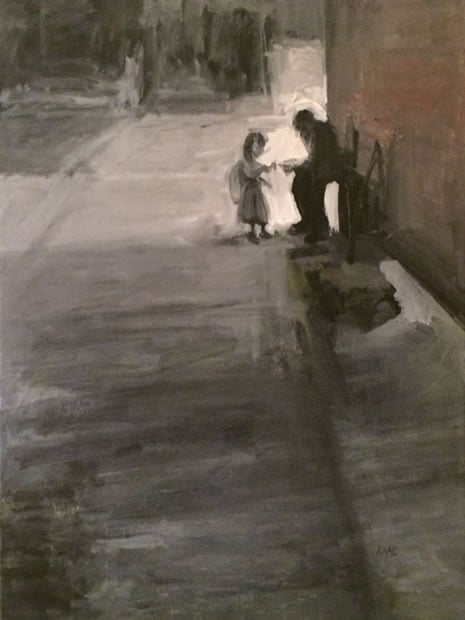
Acrylic on Canvas

Leah Raab has a BFA from the Bezalel Academy of Art in Jerusalem, an MFA from the NY Studio School, and taught art for many years. After living in Israel for many years, she now lives and paints in NYC.
© Copyright 2015, all rights reserved.
| ||||
Story
| ||||

Rebbe Zecharia, the son-in-law of Rabbi Levi, would tell this story:
Rebbe Meir would teach Torah on Friday nights in the synagogue in Chamat, a small town near Tiberius, and there was a woman who used to listen to his lectures. One night, Rebbe Meir spoke for longer than usual, and the woman stayed until he finished. By the time she got home, the candles had already burned down. “Where were you?!” demanded her husband. “I was listening to a Torah lecture,” she answered. Her husband, a scoffer, said to her, “I swear that you will not enter my house until you go spit in the face of the rabbi who was lecturing.” Not knowing what to do, she stayed outside, until her neighbors said to her, “Come, let’s go together to the rabbi.” When Rebbe Meir saw them coming, G‑d gave him insight into the problem. He immediately pretended that his eye hurt him. “I need someone to spit in my eye, to cure it! Can one among you do it?” he asked. Her friends nudged her forward. “Spit in my eye seven times and I’ll be cured,” Rebbe Meir told her. When she did, he told her, “Go home and tell your husband, ‘You said I should spit once, but I spit seven times!’” His students were appalled, and asked, “Rebbe, how could you let people disgrace you like that? When they disgrace a Torah scholar, they disgrace the Torah! If you’d told us to, we’d have forced her husband to let her come home!” Rebbe Meir answered, “The honor of Meir is not greater than the honor of G‑d! If the Torah tells us to erase the name of G‑d for the sake of peace between a husband and wife in the case of a sotah (wayward wife),1 surely Meir can be dishonored for the same reason!”
Translated by Esther Rabi.
© Copyright 2015, all rights reserved.
| ||||
Jewish News
| ||||
It has been 75 years since the sixth Lubavitcher Rebbe—Rabbi Yosef Yitzchak Schneersohn, of righteous memory, a refugee from Communist Russia, Nazi Germany and war-torn Europe—arrived on America’s shores in 1940, on 9 Adar, 5700, which corresponds this year to Feb. 28, 2015. And in that time, the Chabad-Lubavitch movement has developed into a vibrant presence in Jewish communities around the nation and the world, with the most dramatic recent growth taking place among young families.
There are few places where this phenomenon has been more documented than in South Florida. According to the recently released “2014 Greater Miami Jewish Federation Population Study: A Portrait of the Miami Jewish Community,” 42 percent of Jewish households with children in Miami-Dade County have engaged with Chabad-Lubavitch programming during the past year and, in the case of an even younger age bracket, 47 percent of those under 35 enjoyed involvement with Chabad over that same time period. When factoring in all age groups, including seniors, some 26 percent of Jewish households in the area connected with Chabad, according to the study. “When I saw that number, my jaw dropped,” said Ira Sheskin, director of the Jewish Demography Project of the Sue and Leonard Miller Center for Contemporary Judaic Studies at the University of Miami, and professor and chair of geography there. “I was thinking maybe 10 or 15 percent.” Among the other findings, the vast majority of attendees—some 75 percent—identified themselves as non-Orthodox. Sheskin, who has completed 42 major Jewish-community studies for Jewish Federations throughout the country, offered some theories on the reason for the big Chabad numbers. “I think a good part of it is that it’s welcoming, and it’s open to everyone,” he said. Additionally, people feel Chabad is a “very authentic Jewish experience.” He adds that because Chabad centers don’t charge annual dues, an economic barrier is lifted as well. 
Rabbi Sholom and Chana Lipskar on their wedding day in 1968; a year later, they left for Miami Beach, Fla.
“We’re glad we asked the question,” said Labgold. “What’s striking is the evident reach of Chabad in reaching a part of our population.” Chabad itself has grown greatly over the years in the Miami-Dade area, Sheskin said, from five centers in 1994 to 23 centers in 2014. “It’s becoming well-known that Chabad caters to Jews of all backgrounds. For people who are just coming in for the first time or for Jews who are already observant, Chabad offers a welcoming, nonjudgmental environment,” states Rabbi Sholom Lipskar, who was sent to Florida 46 years ago by the Rebbe—Rabbi Menachem M. Schneerson, of righteous memory—and has been living and working in the Miami Beach area ever since. Three decades ago, he started The Shul of Bal Harbour in Surfside, Fla., a thriving Chabad center that includes programming from infants to seniors. Committed to spreading Judaism far beyond his local area, Lipskar also founded the Aleph Institute, a nonprofit organization that supports Jews in the military and in prisons. The growth of the Jewish population in the Miami-Dade area has steadily increased since then, and Chabad’s presence has flourished right along with it. 
Dancing in the streets as part of a Torah dedication in South Florida; Rabbi Lipskar is in the center.
“For years, people tended to look for synagogues, schools and Jewish institutions that reflected their level of observance,” explains Fellig. “In the end, that approach didn’t work. “What we are seeing today is that young people—though not necessarily observant—are searching and looking for an authentic spiritual experience. They are looking to be connected, looking to be inspired,” he continues, “and Chabad provides them with an uncompromised approach to Judaism, which they love.” ‘Across the American Scene’For Rabbi Sholom and Chana Lipskar, that kind of success has been based not just on principles, but on programming. The Shul has been reconnecting Jews with Judaism since it opened its doors in 1981 (the same year the Aleph Institute was founded), moving from an apartment building to a storefront to its own $10 million building as membership grew.As more and more Jewish individuals and families moved south—many from Northeast states like Massachusetts, New York, New Jersey and Pennsylvania—the population expanded and the amenities followed. And so did the list of programs and services offered, including Hebrew school, summer camp, women’s classes, singles’ events and more. While seniors remained central to attendance, a different generation was calling Florida home. 
Rabbi Avrohom Korf, head shaliach and director of Merkos Lubavitch of Florida in Miami Beach
Within the next two years, the couple has plans to double their space to accommodate the growing community’s needs. The Shul holds five minyans (the quorum of 10 men needed for public prayer) every morning, and five on Shabbat. The rabbi says it mirrors “the saturation of Chabad across the American geographic scene, which is unprecedented.” ‘The Secret of Success’Miami today is a radically different place than when Rabbi Avrohom Korf, head shaliach and director of Merkos Lubavitch of Florida in Miami Beach, landed there on Nov. 14, 1960. (He remembers the date exactly.) Born in Russia and a relative newcomer to the United States, he and his wife, Rivka, set about making the place home.Now 82, he says the story of South Florida—and the success of Chabad in general—can be summed up by an anecdote. Korf explains that he went to the office building of an older professional who had shown not only disinterest in observant Judaism, but annoyance. He told the receptionist that he would like to speak with the gentleman; that he needed two minutes about something personal. The reply: He was too busy. So the rabbi waited … and waited. 
In 1960, the Florida East Coast Railway station, with the Dade County Courthouse in the background, was still a very busy place. (Photo: Copyrighted by and courtesy of the Bramson Archive, Miami)
The rabbi replied, “I only asked for two minutes. You already spent 20 minutes” on this. The man had Korf put on the arm tefillin and the head tefillin, and suddenly, he started to cry. He said he hadn’t seen tefillin for 60 years—since his bar mitzvah. He wound up calling his wife to tell her about the experience, and then his friends and colleagues, urging them to wrap tefillin as well. “The Rebbe imparted to us that there is no such thing as a ‘bad Jew’ or one too far gone,” explains Korf. “Every Jew is good, and every Jew wants to be close to G-d. The desire to do so might be covered up, so you have to reach deep down to find the real Jew underneath. But once you do, once you give a little injection into the heart, you’ve shaken them, moved them, uncovered something. This is the main secret of our success.” He recalls in the 1970s borrowing money to distribute 4,000 menorahs at Chanukah time. When he told the Rebbe the good news, the Rebbe countered: “But now what are you doing for the other 40,000 Jews?” Today, there are approximately 650,000 Jews in South Florida and 170 Chabad centers in the state. “We now have Chabad Houses in places where there was nothing,” states Korf. Could he have ever expected such numbers back when the Rebbe first sent him and his wife to the state? “I wouldn’t have imagined more than one small shtiebel,” he says. “But thank G‑d, thank G‑d, the Rebbe pushed us and guided us and helped us.” 
Rabbi Avrohom and Rivka Korf
‘A Radical Change’The Lipskars first arrived in Florida in 1969, under Rabbi Korf, a year after their wedding.They lived in Miami Beach for years, even for some time after they established the The Shul of Bal Harbour in 1981. For a while, they rented a Shabbat apartment, where Chana Lipskar says she kept two cholent pots in the bedroom to feed guests invited for lunch. As the shul grew, the couple realized the need to move to Bal Harbour—a village in Miami-Dade County on the northern tip of the barrier island popularly known as Miami Beach. It has a population of 2,513, according to the 2010 U.S. Census. But at the time, deeds to homes in the village specified that Jews were not allowed to buy there. Nevertheless, the Rebbe gave them a brachah (blessing), she recalls, encouraging that “when you change the place you live, you change your mazel (fortune). He told us we should always be joyous. He understood that it was a restricted area, and he gave us a blessing to get in there.” 
The Lipskars receive a dollar from the Rebbe—Rabbi Menachem M. Schneerson, of righteous memory—in the Crown Heights neighborhood of Brooklyn, N.Y. The Rebbe had earlier given them a blessing to move to the village of Bal Harbour, which was once restricted to Jews.
Chana Lipskar acknowledges that in the beginning, “it was very challenging. People threw eggs at the front door of our home, and made catcalls and taunts when we went outdoors. But we persevered. Today, it’s a marvelous place to live.” These days, she estimates that about 40 percent of the homes in the village of Bal Harbour are owned by Jews. And that was Rabbi Lipskar’s original goal—to open the area up to Jewish families. Everything else followed: Jewish schools, organizations, restaurants, culture. “I’ve seen a radical change in the overall landscape and the environment that I’m in,” he attests. “People didn’t accept Jews in this community. And presently, it’s teeming with Jews. More are continuing to move in.” In fact, the neighborhood changed even more, and many observant families have continued to move in. “It’s a very eclectic group of people, a wonderful mix,” describes Chana Lipskar. “It’s a community that is continuing to grow exponentially. It’s an exciting feeling because you realize that you created a whole new area where Jews could live and enjoy. 
The Lipskars immediately began meeting and welcoming young Jewish families. In 1981, The Shul of Bal Harbour was founded, as was the Aleph Institute, geared to support Jews in the military and in prison, as well as their families.
In a neighborhood that was outright hostile towards Jews, says Lipskar, “it’s revolutionary. Sometimes, I look at it with awe, and I know it came about due to the Rebbe’s encouragement and blessing.” The rabbi has been a driving force behind outreach innovations since arriving in Miami, including getting Federation, Young Leadership Cabinet and other Jewish organizations to focus on mitzvah campaigns, like hanging mezuzahs on the doorposts and inside of Jewish homes,, as cited in the Jewish Federation study. 
Holiday programs for children abound these days at The Shul of Bal Harbour.
Like other rabbis in South Florida, he has also taken into consideration significant demographic change. For years now, young families have been moving into the region for the weather, available housing, job opportunities, and boon in Jewish life and activities. “The streets are filled with children and young adults, where the community was once mainly seniors,” notes Lipskar. As if to underscore that dynamic, during the building stage of their new center, he insisted that stroller parking be included in the design, an aspect the architect thought was rather unusual. 
A group of girls visiting the Schakolad Chocolate Factory. South Florida is now brimming with kosher restaurants, cafes and markets where kosher food is readily available.
‘Familiar With Chabad’Rabbi Mendy Fellig opened the Chabad House at the University of Miami in Coral Gables, Fla., with his wife, Henchi, in 2001, at the start of the 21st century.What he has seen over the years working with young adults in their teens and 20s is that now many arrive with some previous knowledge of or experiences with Chabad. They may have gone to Chabad holiday programs or local services, attended Hebrew school there or accompanied their parents to certain events. “There’s no question that many more students today are familiar with Chabad,” says the rabbi, who is the son of Rabbi Yakov Fellig, of Chabad of South Dade in Miami. “In the beginning, it was rare that a student had an association with Chabad from back home.” He notes that in the last couple of years, a growing number of students he meets have been involved in volunteering for the Friendship Circle, which matches up teens with children with special needs. He suspects that soon, he will also start to see students who were involved in CTeen, Chabad’s Teen Network. Still, Rabbi Lipskar notes, there’s no time to rest on one’s laurels. Quite the opposite, the goal is to increase the number and variety of classes and programs as the area’s Jewish population continues to rise. “We have to keep moving forward,” says the rabbi. “The Rebbe taught that we cannot rest until every single Jewish child—literally and figuratively—has a Jewish education.” 
Students at the University of Miami in Coral Gables, Fla., co-directed by Rabbi Mendy and Henchi Fellig, participate in all kinds of Jewish programs, events and holiday activities.

Rabbi Fellig, far right, says that over the years, he has seen teens and young adults come with prior knowledge of or experiences with Chabad, which is supported in the recent population study.
© Copyright 2015, all rights reserved.
| ||||
Jewish News
| ||||
Dafna Shochat says she “gets the jitters” when she talks about her experiences on the annual CTeen International Shabbaton.
“I love talking about it and telling my friends about it,” says the 18-year-old from Cherry Hill, N.J., who has been on the Shabbaton twice already, and is going back again at the end of the month. “It’s amazing to hear people’s stories—to hear how keeping Shabbat has changed their lives.” “Every weekend, my parents are pushing me to do my homework, but they understand that this weekend is special to me,” she continues. “They let me go and enjoy without the stress of having to do this homework and that assignment.” Shochat’s special weekend is fast approaching. The 2015 Chabad Teen International Shabbaton will be held from Friday, Feb. 27, through Sunday, March 1, in New York City. Nearly 1,500 teenagers will gather for a weekend filled with social and educational activities, including touring famous New York landmarks, shopping, workshops and discussions about Judaism, Shabbat observance and more. And, of course, they experience a traditional Shabbat—some for the very first time. For kids who are used to being on call every moment in a world focused around electronics, phones, social media and texting, that can be a huge challenge, but certainly a rewarding one. 
Prayer and services are part of a social and educational program for teens from all over. (Photo: Bentzi Sasson/CTeen)
Last year, nearly 1,000 Jewish teens from 110 communities around the world attended the annual three-day program. “When Chabad started its teen programming more than 50 years ago, society dismissed the teenage years as ones of meaningless rebellion,” notes Rabbi Mendy Kotlarsky, executive director of strategic development at Chabad headquarters. “The Lubavitcher Rebbe [Rabbi Menachem M. Schneerson, of rightous memory] saw it very differently: that teens possess a deep level of passion and energy that when channeled in a positive way can create unbelievable change in the world.” Kotlarsky notes that the CTeen network was launched five years ago to bring extra focus to activities undertaken by the younger set at Chabad centers around the world, and “to harness this incredible power of youth towards a better world.” Many of the high school students come in from all parts of the United States, with a global contingent as well, drawing participants from as far away as Australia, Brazil and Europe, including a contingent this year of 100 students from France. 
A trip to New York isn't complete without taking the subway.
‘A Real Part of Their Lives’A group of six teens from Singapore are attending the conference this year, representing a first-time presence from this small but vibrant community. Rabbi Mordechai and Simcha Abergel have been serving the Jewish community in Singapore as Chabad emissaries since 1994. They were joined by Rabbi Netanel and Odelia Rivni in 2007.“It’s a one-of-a-kind experience. Many have attended Jewish camps and big Jewish teen events, but not one with total focus on Yiddishkeit,” says Abergel. “I think that the magnitude of the event alone will have a tremendous impact on them, and they will hopefully come out of the experience with the feeling that their Jewishness is about something bigger than themselves, about Achdus Yisrael”—a love of their fellow Jews. One participant, a local student, is a fifth-generation Singaporean of Sephardi Iraqi origins, notes the rabbi. The other five are Israelis who reside in Singapore because of their parents’ employment. 
Every year the group visits the Ohel in Queens, N.Y.—the resting place of the Rebbe, Rabbi Menachem M. Schneerson, of righteous memory, and the Previous Rebbe, Rabbi Yitzchak Yosef Schneersohn, of righteous memory. (Photo: Bentzi Sasson/CTeen)
Adds CTeen administrative assistant Rikki Gurewicz: “It’s nice for them to see that they are part of a global network of Jewish kids—that they are all one. While each chapter stays with their own group, they get to mingle with other groups a lot. It helps them make connections so they will always remember what Judaism means to them.” The real benefit, organizers say, can be seen once the teens return home. “We are committed to providing teens with unfiltered Judaism, and have seen time and again that teens recognize it, embrace it and make it a real part of their own lives,” says Kotlarsky. Kahan agrees: “They realize they can have Jewish pride wherever they go, even if they are not surrounded by a Jewish environment. A lot of them will get involved with Jewish programs that we offer or that others offer, and some have even gone to Israel to study for a year, connecting with their heritage even more.” 
At last year's Saturday-night main event in Times Square, after the Havdalah ceremony marking the conclusion of Shabbat. (Photo: Bentzi Sasson/CTeen)

Young men dance in Times Square, where last year they heard British singer and songwriter Alex Clare perform. (Photo: Bentzi Sasson/CTeen)
© Copyright 2015, all rights reserved.
| ||||
Jewish News
| ||||
After Yinon Cohen lost his legs in an accident involving a rocket-propelled grenade, it wasn’t clear he’d ever be able to walk again, much less ski down a peak in the Rocky Mountains.
A fresh-faced soldier in the Israel Defense Forces’ Golani brigade, Cohen was in an advanced-weapons training course in February 2003 when his sergeant inadvertently fired an RPG—an explosive weapon capable of piercing armored vehicles—straight into his legs. Just moments before, Cohen had been nodding off, and his exasperated sergeant ordered him to stand for the remainder of the class. That ended up saving Cohen’s life. Had he been seated, Cohen would have been struck in the torso and almost certainly killed. Instead, he found himself dazed in the smoke-filled room, trying to piece together what was happening as soldiers around him panicked. When he awoke a day later in the ICU unit of Rambam Medical Center in Haifa, a psychologist delivered the grim news: He had lost both legs below the knee. Cohen’s response was instinctive, he recalls. Looking at his parents’ tear-stained faces, he said, “Be thankful that I’m alive.” Then his father recited the Kiddush—it was Friday evening—and they all cried. ‘Out of the Wheelchair’Fast-forward to 2014, and Cohen, a native of the Tel Aviv suburb of Petach Tikvah, found himself standing on a snowy mountain 8,000 miles away and more than 8,000 feet above sea level, insisting to his incredulous ski instructor that he didn’t need any special equipment other than his prosthetic legs to ski down.It was Cohen’s first day on the slopes as part of Golshim L’Chaim-“Ski to Live” a Colorado program that brings wounded Israeli veterans and victims of terrorism to Aspen to learn how to ski—and boost their spirits. 
Loau Mrai, an Israeli Druze who participated in Golshim L’Chaim’s 2012 class, uses a mono-ski with outriggers to control his descent. (Photo: Nina Zale/JTA)
Golshim, which brings about a dozen Israelis there each winter, is focused on skiing and physical activity. The group eats breakfast and dinner together at the Chabad center, and most nights, local community members join the group for some kind of program or recreational activity. At a cost of about $5,000 per person, Golshim L’Chaim is supported by local donors, including the local Jewish federation, UJA Aspen Valley. The program is free for the Israeli participants. “Imagine someone without legs coming here to ski, and a week later skiing down Aspen,” said Mintz. “They feel they can do anything after that. The local community gains more than we give. It’s truly inspirational.” The logistics are daunting, starting from transporting the wounded from Israel over multiple flights. Some come with a spouse or sibling to assist in their care, and on the mountain, each Israeli may be escorted by up to three or four instructors. Medications must be managed, doctors must be consulted, and Golshim keeps oxygen on hand in case the altitude becomes difficult for the visitors. For the ski instruction, Golshim L’Chaim hires Challenge Aspen, an organization that runs adaptive ski programs for people with physical and cognitive disabilities, including wounded U.S. soldiers. Many participants ski with specially equipped chairs, tethers and outriggers—poles with mini-skis on the bottoms. “Our goal is to have the soldiers become as independent as possible,” said John Klonowski, director of Challenge Aspen’s military program and a veteran ski instructor with the Golshim L’Chaim groups. “The learning curve is pretty quick. It doesn’t really matter if you’re in adaptive equipment,” he said. “We’ll get folks out on a ski hill, and they have an opportunity to feel like they’re just like everyone else. Especially for people in wheelchairs, this is one of very few opportunities to be out of the wheelchair. Once you’re out there, everybody’s doing the same thing—feeling the speed, the wind in their face, out in the great outdoors.” 
Golshim L’Chaim-“Ski to Live” brings about a dozen wounded Israeli veterans and terrorism victims to Aspen to learn how to ski each year. This year's week-long program, which starts on Feb. 23, is slated to include veterans of last summer’s war with Hamas in Gaza. (Photo: Nina Zale/JTA)
‘Anything Is Possible’When Cohen turned up his first day, the instructors presented him with a mono-ski, a chair connected by a shock to a fat ski.“I said no, I’m doing it on my legs,” Cohen recalled. “They thought there was a language miscommunication. In the end, I did it on the legs.” Always athletic, Cohen had tried not to let his disabilities limit him. His initial rehab after the RPG explosion had lasted nearly a year. Because his knees were spared in the explosion, he was given prosthetics and slowly was able to learn to walk anew. Cohen joined other Israelis on their post-army trips to the Far East and South America, though instead of trekking, he rode horseback or on scooters. Back in Israel, he enrolled in Bar-Ilan University in Ramat Gan, studying criminology. “Without strong faith in G‑d, I couldn’t have gotten through it,” Cohen said, noting that the part of his legs left intact were what had been covered by the tzitzit ritual fringes he wears every day. “You talk to the man upstairs, and you know you’re not alone.” But there were limitations. Cohen couldn’t run. He often found himself the subject of curious stares. And like many wounded veterans, he struggled at times to keep his spirits up. At Aspen, Cohen said, his success while skiing gave him new energy. “When I skied all the way down, I saw that anything is possible,” said Cohen, now 31. “I came back to Israel, and it gave me strength to believe in myself. If I look at myself as handicapped, people will treat me that way. If I consider myself a healthy person, people will look at me that way.” Ariela Alush, 37, who also was on the Golshim L’Chaim program last year, said her Aspen trip proved transformative for her. Alush was vacationing with two friends in Egypt’s Sinai Peninsula in October 2004 when terrorists detonated a car bomb just a few feet from her bungalow. She suffered a spinal injury, a head fracture, a broken hand and shrapnel in her ear; one of her friends was killed. After two years of ear surgeries and rehabilitation, Alush was eventually given a clean bill of health. But she remained traumatized by her experience, disoriented and anxious. She was fearful of traveling overseas and never took vacations. After the bombing, she temporarily lost her sight, and she associated the idea of vacation with the darkness that had befallen her in Egypt. “When you have post-traumatic stress disorder, you never feel safe. You’re always bothered by something,” said Alush. “But as soon as I got to Aspen, I felt embraced by the Jewish community there. I felt like I was in a safe place; I experienced something primal. Just as in Sinai I had my first difficult, dark experience, Aspen was a good, positive experience of light.” 
Rabbi Mendel and Lieba Mintz, co-directors of the Jewish Community Center, Chabad of Aspen, and their children. Now in its eighth year, Golshim L'Chaim is the brainchild of Rabbi Mintz. (Photo: Ross Daniels Photography)
Then one of the program participants gave her a camera. Alush, a film student, perked up. She filmed the snow, the mountains, her friends on skis. Slowly, she said, she felt she was regaining control through the camera lens. Finally, she felt ready to try skiing again. “I only skied for two days that week and not even alone. But the therapeutic value of the experience was, in my eyes, worth everything,” said Alush. “In Aspen, something in my pace of life changed. I went back to Israel, and I returned to work in a different way. I went back to working on my movie, I had ambition again. Something new had awakened in me.” Agencies to the RescueFor Cohen, the high at Aspen soon was followed by one of the worst lows since his accident.After several years on artificial legs, his prostheses were worn out. Cohen wanted new prostheses that would allow him to be more athletic, but his Israeli doctors told him that because he had lost his legs in a violent explosion rather than a careful amputation, that wasn’t possible—at least not without additional risky surgery. For the first time since his rehab, Cohen was confined to a wheelchair. After months of research, Cohen found a New York outfit called A Step Ahead Prosthetics that said it could design him an advanced prosthetic. But it would cost $150,000, and Cohen couldn’t afford it. When his new friends in Aspen heard about his predicament, they sprang into action, within weeks raising 80 percent of the cost. An Israeli nonprofit—Dror for the Wounded, which provides medical, psychological and financial assistance to wounded Israeli soldiers—donated the balance. “Without Golshim L’Chaim, it wouldn’t have happened,” said Cohen. “They said the whole time: ‘Don’t worry, we’ll get the money.’ ” Cohen was fitted with his new prostheses late last summer. “It’s a real success,” he said. “I can walk and even run. I hadn’t run in 12 years.” This year’s Golshim L’Chaim program—scheduled from Feb. 23 to March 3—will include several soldiers injured in last summer’s Gaza war, according to Mintz. “When you see what these people have gone through and what they’re able to do, it’s mind-boggling,” said Mintz. “It puts life in perspective.” Republished with permission from jta.org.
© Copyright 2015, all rights reserved.
| ||||


Chabad.org Magazine - Editor: Yanki Tauber
____________________________
No comments:
Post a Comment