
Happy birthday to the new UMC.org!
One year ago, the denominational website received a content makeover with the goal of providing stories and resources that meet you where you are on your faith walk.
Our most popular features have touched you, shared stories of the soul and guided you through discernment, decisions and more. We hope you will continue to celebrate our renewal.
Stories people will be talking about:

 Right now we're "all about Lent"! Learn daily from aLent quiz that will reveal what you know and don't know about the season. Find the newest Lent and Easter resources, useful tips, inspirational stories. There's more. Journey through this season with adesktop meditation .
Real happiness is more than putting on a happy face
 Don't worry. Be happy. The pursuit of happiness may not be quite that simple, but one professor known as a "happiness education crusader" shares some of the lessons he teaches to college students.

Real happiness is more than putting on a face
A UMC.org Feature by Susan Passi-Klaus*
January 21, 2015
Christian Giraldo had lost all hope of ever being happy. During two tours in Iraq and one in Afghanistan, the former hospital corpsman tried to save others. When he received a medical discharge in 2010, he realized he couldn’t even save himself.
Diagnosed with Post Traumatic Stress Disorder, Giraldo felt overwhelmed with war-born guilt and shame. The 29-year-old sank into deep depression, nearly drowned himself in alcohol, and misusedprescription drugs. A suicide attempt landed him in a psychiatric hospital for six months. It was a dark place. The demons didn’t go away.
“I didn’t think I was salvageable,” Giraldo said. “I thought I was a horrible person.”
Putting his life back together has been excruciatingly difficult. Despite the counsel of doctors, input from therapists and support groups, Giraldo said the only treatment that has really helped him is the semester he spent studying happiness at United Methodist-related Wesley College, Dover, Delaware. He is currently a nursing student there.

“Pursuing happiness requires training,” Professor Armstrong said. “Part of the cure for depression, deprivation and disappointment is training ourselves to manage negative thoughts.”
Armstrong’s students discuss everything from accepting flaws and finding moments of appreciation to awareness of feelings and unconditional love.
Always first on the class agenda is dispelling misconceptions people have about living on the sunny side of the street.
“It’s a myth that life circumstances control your happiness,” the professor teaches. “It’s not about money, getting a bigger house, a nicer car,looking younger or finding an ideal relationship. Those expectations just lead to a bottomless pit of disappointments.”
Armstrong also debunks the conventional understanding of happiness being about “us” or the thinking that giving to others requires some kind of sacrifice.
“We shouldn’t focus on our own happiness, but on the happiness of others,” he said. “By playing a part in someone else’s happiness, we make ourselves happy.”
Another of Armstrong’s happiness-seeking students believed she’d be happy if she could do what she wanted, find someone who loved her like she wanted to be loved, and accomplish what she always planned to accomplish.

“Now I’ve learned that happiness is in the moment,” the psychology student said. “Happiness is hanging around with people who are good for me. It’s letting go and not being so hard on myself. Most of all I feel best when I am helping other people.”
Armstrong has always been a philosopher. His own search for happiness began with trying to understand what Jesus really meant when he talked about love. The deeper he searched, the more he discovered. Revelations came.
“They just fell from heaven,” he said.
“I’ve always believed that love was key and the purpose of life. I believe Jesus was very clear about that. The pure experience of love combines both the greatest love and peace—the greatest happiness—we can know.”
“When the experience of love is unpolluted with the fear and longing we usually attach to the word, we can begin to understand that the kind of love Jesus taught is agape.”
The Rev. Cara Stultz Costello, co-pastor at Faith United Methodist Church, Canton, Ohio, added to Armstrong’s message about happiness. Like Armstrong, she believes happiness is an inside job.
“We often begin looking outside of ourselves for the things that will make us happy,” she said. “Soon after we discover that these external--these grabs at self-security--are all plastic.”
These "plastic" things can’t live up to our expectations so the sense of happiness goes flat, she explained.
JOHN WESLEY ON HAPPINESS
In this alone can you find the happiness you seek; in the union of your spirit with the Father of spirits; in the knowledge and love of Him who is the fountain of happiness, sufficient for all the souls he has made.
John Wesley
Sermon 77, "Spiritual Worship," III, 8,
on Board of Global Ministries website.
“In my life and work, I intentionally replace the word happiness with joy,” she said. “Happiness is simply an evidence of joy. When we see happiness as the end result, we have stopped too soon. Joy is the fullness of God's intention for all of us."
As a counselor and comforter, Stultz Costello remembers the many times she’s heard people in crisis say, “I have nothing to be happy about.”
“Later,” she said, “after having been stripped of the externals, after having even recognized that security is something on which they cannot rely upon the self to provide, they paradoxically come to joy. They say, ‘The presence of God has been with me throughout my pain and despair. My relationship with God is pure joy.’”
When she counsels people with depression and disillusionment, she finds a common denominator.
“Most folks, who are not clear about their calling, their purpose, and their mission in life, experience diminished happiness,” Stultz Costello said.
“Whether we are a sanitation worker, a nurse, a journalist or something else, there is no greater joy in life than living into God’s call.”
For Giraldo, good things are happening. He’s a good husband and father, close to finishing school and looking forward to giving back--especially to other military vets who are suffering. He said he found happiness in Tony Armstrong’s atypical college classroom.
“His class woke me up with a spiritual awakening that has been instrumental in my recovery,” Giraldo said. “I never thought I’d be able to forgive and love myself.”
“Now I can see occasional bursts of sunshine. Dr. Armstrong is a light in a dark world. I finally see hope.”
*Susan Passi-Klaus is a freelance writer based in Nashville, Tenn.
News media contact: Joe Iovino, UMC.org, at 615-312-3733.
Black History Month: We were there then and are still there today

Come along as UMC.org visits two historic black churches in Philadelphia with early ties to United Methodism — everything from being a stop on the Underground Railroad and to being related to the preacher and composer of "We Shall Overcome."View on YouTube | Download VideoPreviousNext
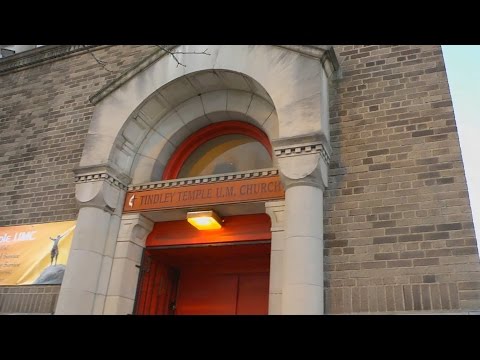
Tindley Temple: A Highlight of Methodist History
The history of The United Methodist Church oftentimes overlaps the history of the United States. One church in Philadelphia is on the national historic register because of its architecture. But Tindley Temple was really made famous because of the dynamic pastor who drew huge crowds in the ‘20s and composed the lyrics of a very familiar song.
script:
(Video clip from the National Archives and Records Administration)
(Crowd sings) “We shall overcome.”
Methodist preacher Charles Albert Tindley is credited with writing lyrics in 1901 that are now part of one of the most famous songs in American history.
The Rev. Robert L. Johnson, Tindley Temple United Methodist Church: “Blacks and whites and Jews and Catholics all stood across this country in the ‘60s singing ‘We Shall Overcome,’ not even understanding that the universal language they were singing came from a man who built a church right here on Broad Street in Philadelphia. Wow! Now, you want to talk about being proud to be Methodist, that’s a reason to be proud to be Methodist.”
The Rev. Robert Johnson is the pastor of Philadelphia’s Tindley Temple United Methodist Church, named after the figure known as one of the founding fathers of gospel music.
(Rev. Johnson praying) “Let us be grateful for the gift of music you have given us.”
(Choir singing) “… Emmanuel.”
The Rev. Robert L. Johnson: “The most exciting thing about being a congregation member here at Tindley is that you’re actually connected to a piece of history--living, breathing history that still is alive today. The organ. The ‘Messiah.’ The whole mystique about the building. You’re coming to a place that we built as African Americans. In the balcony, a dollar was given by every single member to purchase a chair. There’s members here who still remember their mothers and fathers putting up a dollar to purchase one of the chairs in the balcony.”
Charles Tindley was self-educated and known for his powerful preaching. His congregation became one of the largest Methodist churches in the United States in the 1920s, with nearly 10,000 members. In 1927, the church took the name Tindley Temple.
The Rev Robert Johnson: “You’ll see a congregation who, through the struggles and the adversities, exemplified the best of United Methodist culture and did the best that they could with what they had. It’s place that if you want to have a connection to what United Methodism really is in an African-American context, you’ve gotta come to Tindley.”
Reba Smith Poole is a lifelong member who is proud of the many generations of preachers, doctors, and leaders from Tindley Temple.
Reba Smith Poole, Tindley Temple United Methodist Church: “We are known for three things—good music, good preaching and good food. We have some of the best preachers you ever want to hear.”
(Rev. Johnson in the pulpit) “Whatever you do, enjoy yourself.”
The Rev. Robert Johnson: “We lose so much of our history and so much of who we are. And our generations to come need to understand that this belongs to you. I heard a kid sing the other day, ‘By and By.’ He had no idea that ‘By and By’ was a Tindley hymn. When I told the young man, and I brought him in here, the first thing he said was, ‘Wow. I walk by it every day and I never knew it was here.’ And people who don’t understand the history really can’t respect it. But when you understand it, you respect it and you hold it a little bit closer to your heart.”
Tag:
Tindley Temple has served its community in many ways over the years, including offering a school and providing meals to those in need.
Pastor Robert Johnson grew up attending Tindley and is one of the 50 pastors who were nurtured by the congregation.
A movie is in the works about the musical legacy of Charles Tindley also.
For more information about this historic church, contact Tindley Temple United Methodist Churchat 215-735-0442. And watch a video about the congregation that "birthed" Tindley, Mother African Zoar United Methodist Church.
“I’ll Understand it Better By and By” ℗ 2015 Abingdon Press. All rights reserved. Used by Permission. From the Africana Hymnal
This story was posted January 29, 2015.
Media contact is Fran Walsh, at 615-742-5458.
There's always a United Methodist connection!
What's the buzz about author Harper Lee's sequel to "To Kill a Mockingbird"? United Methodists have a spiritual connection.

by Sam Hodges UMNS
It’s a literary shocker. Harper Lee, long assumed the ultimate one-book author with “To Kill a Mockingbird,” will have a second novel published.
This week’s announcement made the front page of The New York Times, under the headline “After 55 years, a Sequel of Sorts from Harper Lee.”
What is not surprising, says Dawn Wiggins Hare — Lee’s friend, fellow Monroeville, Alabama, resident and fellow United Methodist — is that the book draws its title from the Old Testament.
“Nelle Harper is very well read in the Bible,” said Hare, top executive of the United Methodist Commission on the Status and Role of Women. “Years ago, she autographed a copy of `To Kill a Mockingbird’ for me, and quoted Scripture in the personalized autograph.”
Lee’s forthcoming book is called “Go Set a Watchman,” a line from the King James Version of Isaiah 21:6.
“It’s a kind of general statement about being alert to the dangers of the enemies of Israel,” said John Holbert, an Old Testament scholar and retired professor at Southern Methodist University’s Perkins School of Theology.
The novel doesn’t come out until July, so it is unclear how the title illuminates the story or themes. But Lee’s voracious reading has always included the Bible.
“The (biblical) title would not surprise me at all, because of her family’s faith and growing up in the church,” Hare said.
Lee, 88 and in an assisted living home, is a longtime member of First United Methodist Church in Monroeville. Her older sister Alice, a lawyer who died last year at age 103, held numerous lay offices in that church and served as a General Conference delegate.
Alice Lee’s will specified that her sister, known in Monroeville as “Nelle” and “Nelle Harper,” would get her books and other personal items, but the hometown church and other United Methodist causes were listed as financial beneficiaries.
`Humbled and amazed’
Harper Lee earned instant fame in 1960 when “To Kill a Mockingbird” came out. The novel, set in a small Alabama town during the Depression, is a lyrical coming-of-age story that also forthrightly deals with race prejudice.
“To Kill a Mockingbird” won a Pulitzer Prize and became a popular film with Gregory Peck playing Atticus Finch, the lawyer hero who represents a black man falsely accused of raping a white woman.
Lee’s book, which mentions Methodism and Methodism founder John Wesley in the first chapter, has sold some 40 million copies. It remains a fixture on high school and middle school reading lists. But a few years after its publication, Lee quit giving interviews, and over the decades, hope dwindled that she would produce another book.
The “new” novel was written in the mid-1950s, before “To Kill a Mockingbird.” It occurs in the same fictional Alabama town, and concerns a visit home by the grownup Jean Louise “Scout” Finch, the girl narrator of “To Kill a Mockingbird.”
A statement from publisher HarperCollins quotes Lee as saying that she submitted “Go Set a Watchman” for publication but was persuaded by an editor to write another novel from the point of view of the young Scout. Lee never went back to the first book, but said her lawyer recently discovered a manuscript of it.
“After much thought and hesitation, I shared it with a handful of people I trust and was pleased to hear that they considered it worthy of publication,” Lee said in the statement. “I am humbled and amazed that this will now be published after all these years."
While the first reaction among Lee’s millions of fans was elation at the prospect of reading more fiction by her, questions have arisen as to whether Lee, given her age and infirmity, could really have made the decision to publish “Go Set a Watchman.” The New York Times story noted that HarperCollins dealt with Lee’s lawyer, not with Lee herself.
Others who have met with Lee recently vouch for her ability to make such a decision, and the publisher released a statement Thursday quoting Lee as saying she was "happy as hell" to have the second book coming out.
Leaning forward
The Rev. Scott Smith, pastor of First United Methodist Church in Ormond Beach, Florida, is still in the flush of excitement at the prospect of another Harper Lee book.
Smith first read “To Kill a Mockingbird” in the eighth grade, drawn to it because it was banned by his North Florida school.
He has since read it 20-25 times, he estimates, and now makes a point of reading it yearly.
He’s drawn from the book and shown clips of the film in sermons.
“I love the integrity of Atticus Finch,” Smith said.
That the author wrote another novel, set in the same town as “To Kill a Mockingbird” and dealing with some of the same characters, has the pastor leaning forward.
“I’m thrilled,” Smith said. “The day it comes out, I’ll get it, and I’ll probably read it that day.”
*Hodges, a United Methodist News Service writer, lives in Dallas. Contact him at (615) 742-5470 or newsdesk@umcom.org
Just for fun, check out our top crowd pleasers in 2014:
• Faithful Resolutions
• Find Time to Pray
• Easter Egg video
• What Not to Say about Job Loss
• Bucket List
Spring and Easter are coming! Blessings on your journey.
Share:
Facebook
Twitter
Google+
LinkedIn
Forward
United Methodist Communications
810 12th Avenue South Nashville
One year ago, the denominational website received a content makeover with the goal of providing stories and resources that meet you where you are on your faith walk.
Our most popular features have touched you, shared stories of the soul and guided you through discernment, decisions and more. We hope you will continue to celebrate our renewal.
Stories people will be talking about:
Real happiness is more than putting on a happy face
Photo by Kathleen Barry, United Methodist Communications
True happiness is more than just putting on a happy face.Real happiness is more than putting on a face
A UMC.org Feature by Susan Passi-Klaus*
January 21, 2015
Christian Giraldo had lost all hope of ever being happy. During two tours in Iraq and one in Afghanistan, the former hospital corpsman tried to save others. When he received a medical discharge in 2010, he realized he couldn’t even save himself.
Diagnosed with Post Traumatic Stress Disorder, Giraldo felt overwhelmed with war-born guilt and shame. The 29-year-old sank into deep depression, nearly drowned himself in alcohol, and misusedprescription drugs. A suicide attempt landed him in a psychiatric hospital for six months. It was a dark place. The demons didn’t go away.
“I didn’t think I was salvageable,” Giraldo said. “I thought I was a horrible person.”
Putting his life back together has been excruciatingly difficult. Despite the counsel of doctors, input from therapists and support groups, Giraldo said the only treatment that has really helped him is the semester he spent studying happiness at United Methodist-related Wesley College, Dover, Delaware. He is currently a nursing student there.
Dr. Tony Armstrong spoke at aTEDx Conference in Wilmington, Delaware. Photo courtesy of Tony Armstrong.
Course # HU210, Happiness, is taught every semester by Dr. Tony Armstrong--philosopher, “happiness education crusader,” and author ofEducating Angels: Teaching for The Pursuit of Happiness.“Pursuing happiness requires training,” Professor Armstrong said. “Part of the cure for depression, deprivation and disappointment is training ourselves to manage negative thoughts.”
Armstrong’s students discuss everything from accepting flaws and finding moments of appreciation to awareness of feelings and unconditional love.
Always first on the class agenda is dispelling misconceptions people have about living on the sunny side of the street.
“It’s a myth that life circumstances control your happiness,” the professor teaches. “It’s not about money, getting a bigger house, a nicer car,looking younger or finding an ideal relationship. Those expectations just lead to a bottomless pit of disappointments.”
Armstrong also debunks the conventional understanding of happiness being about “us” or the thinking that giving to others requires some kind of sacrifice.
“We shouldn’t focus on our own happiness, but on the happiness of others,” he said. “By playing a part in someone else’s happiness, we make ourselves happy.”
Another of Armstrong’s happiness-seeking students believed she’d be happy if she could do what she wanted, find someone who loved her like she wanted to be loved, and accomplish what she always planned to accomplish.
Wesley College senior Tykia McGriff says she feels happiest when helping others. Photo courtesy of Tykia McGriff.
Like Giraldo, fellow student Tykia McGriff was also going through a tough time when she signed up for the popular class. She said she was looking for “completeness.”“Now I’ve learned that happiness is in the moment,” the psychology student said. “Happiness is hanging around with people who are good for me. It’s letting go and not being so hard on myself. Most of all I feel best when I am helping other people.”
Armstrong has always been a philosopher. His own search for happiness began with trying to understand what Jesus really meant when he talked about love. The deeper he searched, the more he discovered. Revelations came.
“They just fell from heaven,” he said.
“I’ve always believed that love was key and the purpose of life. I believe Jesus was very clear about that. The pure experience of love combines both the greatest love and peace—the greatest happiness—we can know.”
“When the experience of love is unpolluted with the fear and longing we usually attach to the word, we can begin to understand that the kind of love Jesus taught is agape.”
The Rev. Cara Stultz Costello, co-pastor at Faith United Methodist Church, Canton, Ohio, added to Armstrong’s message about happiness. Like Armstrong, she believes happiness is an inside job.
“We often begin looking outside of ourselves for the things that will make us happy,” she said. “Soon after we discover that these external--these grabs at self-security--are all plastic.”
These "plastic" things can’t live up to our expectations so the sense of happiness goes flat, she explained.
JOHN WESLEY ON HAPPINESS
In this alone can you find the happiness you seek; in the union of your spirit with the Father of spirits; in the knowledge and love of Him who is the fountain of happiness, sufficient for all the souls he has made.
John Wesley
Sermon 77, "Spiritual Worship," III, 8,
on Board of Global Ministries website.
“In my life and work, I intentionally replace the word happiness with joy,” she said. “Happiness is simply an evidence of joy. When we see happiness as the end result, we have stopped too soon. Joy is the fullness of God's intention for all of us."
As a counselor and comforter, Stultz Costello remembers the many times she’s heard people in crisis say, “I have nothing to be happy about.”
“Later,” she said, “after having been stripped of the externals, after having even recognized that security is something on which they cannot rely upon the self to provide, they paradoxically come to joy. They say, ‘The presence of God has been with me throughout my pain and despair. My relationship with God is pure joy.’”
When she counsels people with depression and disillusionment, she finds a common denominator.
“Most folks, who are not clear about their calling, their purpose, and their mission in life, experience diminished happiness,” Stultz Costello said.
“Whether we are a sanitation worker, a nurse, a journalist or something else, there is no greater joy in life than living into God’s call.”
For Giraldo, good things are happening. He’s a good husband and father, close to finishing school and looking forward to giving back--especially to other military vets who are suffering. He said he found happiness in Tony Armstrong’s atypical college classroom.
“His class woke me up with a spiritual awakening that has been instrumental in my recovery,” Giraldo said. “I never thought I’d be able to forgive and love myself.”
“Now I can see occasional bursts of sunshine. Dr. Armstrong is a light in a dark world. I finally see hope.”
*Susan Passi-Klaus is a freelance writer based in Nashville, Tenn.
News media contact: Joe Iovino, UMC.org, at 615-312-3733.
Black History Month: We were there then and are still there today
Come along as UMC.org visits two historic black churches in Philadelphia with early ties to United Methodism — everything from being a stop on the Underground Railroad and to being related to the preacher and composer of "We Shall Overcome."View on YouTube | Download VideoPreviousNext
Tindley Temple: A Highlight of Methodist History
The history of The United Methodist Church oftentimes overlaps the history of the United States. One church in Philadelphia is on the national historic register because of its architecture. But Tindley Temple was really made famous because of the dynamic pastor who drew huge crowds in the ‘20s and composed the lyrics of a very familiar song.
script:
(Video clip from the National Archives and Records Administration)
(Crowd sings) “We shall overcome.”
Methodist preacher Charles Albert Tindley is credited with writing lyrics in 1901 that are now part of one of the most famous songs in American history.
The Rev. Robert L. Johnson, Tindley Temple United Methodist Church: “Blacks and whites and Jews and Catholics all stood across this country in the ‘60s singing ‘We Shall Overcome,’ not even understanding that the universal language they were singing came from a man who built a church right here on Broad Street in Philadelphia. Wow! Now, you want to talk about being proud to be Methodist, that’s a reason to be proud to be Methodist.”
The Rev. Robert Johnson is the pastor of Philadelphia’s Tindley Temple United Methodist Church, named after the figure known as one of the founding fathers of gospel music.
(Rev. Johnson praying) “Let us be grateful for the gift of music you have given us.”
(Choir singing) “… Emmanuel.”
The Rev. Robert L. Johnson: “The most exciting thing about being a congregation member here at Tindley is that you’re actually connected to a piece of history--living, breathing history that still is alive today. The organ. The ‘Messiah.’ The whole mystique about the building. You’re coming to a place that we built as African Americans. In the balcony, a dollar was given by every single member to purchase a chair. There’s members here who still remember their mothers and fathers putting up a dollar to purchase one of the chairs in the balcony.”
Charles Tindley was self-educated and known for his powerful preaching. His congregation became one of the largest Methodist churches in the United States in the 1920s, with nearly 10,000 members. In 1927, the church took the name Tindley Temple.
The Rev Robert Johnson: “You’ll see a congregation who, through the struggles and the adversities, exemplified the best of United Methodist culture and did the best that they could with what they had. It’s place that if you want to have a connection to what United Methodism really is in an African-American context, you’ve gotta come to Tindley.”
Reba Smith Poole is a lifelong member who is proud of the many generations of preachers, doctors, and leaders from Tindley Temple.
Reba Smith Poole, Tindley Temple United Methodist Church: “We are known for three things—good music, good preaching and good food. We have some of the best preachers you ever want to hear.”
(Rev. Johnson in the pulpit) “Whatever you do, enjoy yourself.”
The Rev. Robert Johnson: “We lose so much of our history and so much of who we are. And our generations to come need to understand that this belongs to you. I heard a kid sing the other day, ‘By and By.’ He had no idea that ‘By and By’ was a Tindley hymn. When I told the young man, and I brought him in here, the first thing he said was, ‘Wow. I walk by it every day and I never knew it was here.’ And people who don’t understand the history really can’t respect it. But when you understand it, you respect it and you hold it a little bit closer to your heart.”
Tag:
Tindley Temple has served its community in many ways over the years, including offering a school and providing meals to those in need.
Pastor Robert Johnson grew up attending Tindley and is one of the 50 pastors who were nurtured by the congregation.
A movie is in the works about the musical legacy of Charles Tindley also.
For more information about this historic church, contact Tindley Temple United Methodist Churchat 215-735-0442. And watch a video about the congregation that "birthed" Tindley, Mother African Zoar United Methodist Church.
“I’ll Understand it Better By and By” ℗ 2015 Abingdon Press. All rights reserved. Used by Permission. From the Africana Hymnal
This story was posted January 29, 2015.
Media contact is Fran Walsh, at 615-742-5458.
There's always a United Methodist connection!
What's the buzz about author Harper Lee's sequel to "To Kill a Mockingbird"? United Methodists have a spiritual connection.
White House photo
Author Harper Lee received the Medal of Freedom from President George W. Bush in a 2007 White House ceremony.
Harper Lee’s surprise book has biblical titleby Sam Hodges UMNS
It’s a literary shocker. Harper Lee, long assumed the ultimate one-book author with “To Kill a Mockingbird,” will have a second novel published.
This week’s announcement made the front page of The New York Times, under the headline “After 55 years, a Sequel of Sorts from Harper Lee.”
What is not surprising, says Dawn Wiggins Hare — Lee’s friend, fellow Monroeville, Alabama, resident and fellow United Methodist — is that the book draws its title from the Old Testament.
“Nelle Harper is very well read in the Bible,” said Hare, top executive of the United Methodist Commission on the Status and Role of Women. “Years ago, she autographed a copy of `To Kill a Mockingbird’ for me, and quoted Scripture in the personalized autograph.”
Lee’s forthcoming book is called “Go Set a Watchman,” a line from the King James Version of Isaiah 21:6.
“It’s a kind of general statement about being alert to the dangers of the enemies of Israel,” said John Holbert, an Old Testament scholar and retired professor at Southern Methodist University’s Perkins School of Theology.
The novel doesn’t come out until July, so it is unclear how the title illuminates the story or themes. But Lee’s voracious reading has always included the Bible.
“The (biblical) title would not surprise me at all, because of her family’s faith and growing up in the church,” Hare said.
Lee, 88 and in an assisted living home, is a longtime member of First United Methodist Church in Monroeville. Her older sister Alice, a lawyer who died last year at age 103, held numerous lay offices in that church and served as a General Conference delegate.
Alice Lee’s will specified that her sister, known in Monroeville as “Nelle” and “Nelle Harper,” would get her books and other personal items, but the hometown church and other United Methodist causes were listed as financial beneficiaries.
`Humbled and amazed’
Harper Lee earned instant fame in 1960 when “To Kill a Mockingbird” came out. The novel, set in a small Alabama town during the Depression, is a lyrical coming-of-age story that also forthrightly deals with race prejudice.
“To Kill a Mockingbird” won a Pulitzer Prize and became a popular film with Gregory Peck playing Atticus Finch, the lawyer hero who represents a black man falsely accused of raping a white woman.
Lee’s book, which mentions Methodism and Methodism founder John Wesley in the first chapter, has sold some 40 million copies. It remains a fixture on high school and middle school reading lists. But a few years after its publication, Lee quit giving interviews, and over the decades, hope dwindled that she would produce another book.
The “new” novel was written in the mid-1950s, before “To Kill a Mockingbird.” It occurs in the same fictional Alabama town, and concerns a visit home by the grownup Jean Louise “Scout” Finch, the girl narrator of “To Kill a Mockingbird.”
A statement from publisher HarperCollins quotes Lee as saying that she submitted “Go Set a Watchman” for publication but was persuaded by an editor to write another novel from the point of view of the young Scout. Lee never went back to the first book, but said her lawyer recently discovered a manuscript of it.
“After much thought and hesitation, I shared it with a handful of people I trust and was pleased to hear that they considered it worthy of publication,” Lee said in the statement. “I am humbled and amazed that this will now be published after all these years."
While the first reaction among Lee’s millions of fans was elation at the prospect of reading more fiction by her, questions have arisen as to whether Lee, given her age and infirmity, could really have made the decision to publish “Go Set a Watchman.” The New York Times story noted that HarperCollins dealt with Lee’s lawyer, not with Lee herself.
Others who have met with Lee recently vouch for her ability to make such a decision, and the publisher released a statement Thursday quoting Lee as saying she was "happy as hell" to have the second book coming out.
Leaning forward
The Rev. Scott Smith, pastor of First United Methodist Church in Ormond Beach, Florida, is still in the flush of excitement at the prospect of another Harper Lee book.
Smith first read “To Kill a Mockingbird” in the eighth grade, drawn to it because it was banned by his North Florida school.
He has since read it 20-25 times, he estimates, and now makes a point of reading it yearly.
He’s drawn from the book and shown clips of the film in sermons.
“I love the integrity of Atticus Finch,” Smith said.
That the author wrote another novel, set in the same town as “To Kill a Mockingbird” and dealing with some of the same characters, has the pastor leaning forward.
“I’m thrilled,” Smith said. “The day it comes out, I’ll get it, and I’ll probably read it that day.”
*Hodges, a United Methodist News Service writer, lives in Dallas. Contact him at (615) 742-5470 or newsdesk@umcom.org
Just for fun, check out our top crowd pleasers in 2014:
• Faithful Resolutions
• Find Time to Pray
• Easter Egg video
• What Not to Say about Job Loss
• Bucket List
Spring and Easter are coming! Blessings on your journey.
Share:
Google+
Forward
United Methodist Communications
810 12th Avenue South Nashville
Tennessee 37203-4704 United States
umcom@umcom.org
umcom@umcom.org
Phone: 615.742.5400
 ____________________________

No comments:
Post a Comment