Democracy Now! Daily Digest: A Daily Independent Global News Hour with Amy Goodman & Juan González for Wednesday, May 11, 2016
democracynow.orgStories:

Obama to Make History with Hiroshima Visit, as U.S. Quietly Upgrades Nuclear Arsenal
President Obama will become the first serving U.S. president to visit Hiroshima, Japan, later this month. The White House said Obama will not apologize for dropping an atomic bomb on the city toward the end of World War II. The attack on August 6, 1945, caused massive and widespread destruction. Shock waves, radiation and heat rays took the lives of some 140,000 people. Three days later, the U.S. dropped a second atomic bomb on Nagasaki, killing another 74,000 people. President Obama is expected to tour the site of the world’s first nuclear attack with Japan’s prime minister, Shinzo Abe. Obama’s communications adviser Ben Rhodes said that Obama’s time in Hiroshima will "reaffirm America’s longstanding commitment—and the president’s personal commitment—to pursue the peace and security of a world without nuclear weapons." Obama’s visit comes as a report by the Alliance for Nuclear Accountability has revealed the United States has been quietly upgrading its nuclear arsenal to create smaller, more precise nuclear bombs as part of a massive effort that will cost up to $1 trillion over three decades. We speak with Kevin Martin, president of Peace Action.
TRANSCRIPT
This is a rush transcript. Copy may not be in its final form.
AMY GOODMAN: It’s great to be back in New York, though we are still on the road. The White House has announced President Obama will become the first serving U.S. president to visit the Japanese city of Hiroshima later this month. But officials said he will not apologize for what happened on August 6, 1945, when the United States dropped the first nuclear weapon in history on the civilian population of Hiroshima. The attack destroyed the city. Shock waves, radiation and heat waves took the lives of some 140,000 people. Three days later, the U.S. dropped a second atomic bomb on Nagasaki, killing another 74,000 people. President Obama is expected to tour Hiroshima with Japan’s prime minister, Shinzo Abe. On Tuesday, White House Press Secretary Josh Earnest said Obama will not issue an apology.
PRESS SECRETARY JOSH EARNEST: The president intends to visit to send a much more forward-looking signal about his ambition for realizing the goal of a planet without nuclear weapons. This also is an opportunity for the visit to highlight the remarkable transformation in the relationship between Japan and the United States.
AMY GOODMAN: Despite the administration’s call for the elimination of nuclear weapons, the United States is pursuing a 30-year, $1 trillion program to modernize its nuclear weapon arsenal by designing bombs with smaller payloads. Retired General James Cartwright recently told The New York Times, quote, "what going smaller does is to make the weapon more thinkable," unquote.
To talk more about the significance of Obama’s Hiroshima visit, we go to Washington, D.C., to speak with Kevin Martin, president of Peace Action.
Kevin, welcome to Democracy Now! Your response to President Obama going to Hiroshima and the press secretary making clear he would not apologize for the dropping of the bombs on Hiroshima and Nagasaki?
KEVIN MARTIN: We’re very glad that the president is going to Hiroshima, but we don’t want it to be just another pretty speech where he talks about some day maybe having the right conditions to move towards eliminating nuclear weapons. He’s done that before. He has some accomplishments to show for his presidency, which we can talk about, but, for now, we want him to go with concrete actions. He’s got a bit of time left in his administration, and he needs to take concrete action to further that goal. And we can talk about various steps.
As far as the apology is concerned, the hibakusha, the A-bomb survivors, are not asking for it. The Japanese government is not asking for it—for all kinds of reasons. The administration has ruled it out. And I think while I personally would like to see an apology, what might be more meaningful is if he meets with hibakusha and asks their forgiveness for not doing more during his term in office to move towards the elimination of nuclear weapons. But if he will take some concrete steps, then that apology—or that asking forgiveness would be unnecessary.
AMY GOODMAN: Can you talk about what you are demanding?
KEVIN MARTIN: First of all, as you just mentioned, this 30-year, $1 trillion cockamamie plan—a colleague of ours called it a "trillion-dollar train wreck"—to totally upgrade all of our nuclear weapons complex, from the research laboratories to new warheads to new missiles, bombers, submarines, I can’t think of a worse misappropriation of our tax dollars. And predictably, every other nuclear-weapon state has followed suit, saying that they are going to upgrade their nuclear weapons, as well. It totally shreds any credibility that the United States has on nonproliferation. So that would be the first thing, is cancel that.
There are a lot of other steps that he could take: taking our nuclear weapons off of hair-trigger alert, separating the warheads from their delivery systems, initiating negotiations for the elimination of nuclear weapons globally, initiating talks on a Middle East zone free of weapons of mass destruction, taking unilateral executive action that doesn’t require a long treaty process—negotiations with Russia and then Senate ratification, which would be very difficult. We could cut our reserve nuclear weapons, get rid of a bunch of those. But even the current deployed nuclear weapons, we could go down to a thousand or fewer, as the Pentagon has suggested in the past and the U.S. actually wanted to do with Russia, and then challenge Russia to reciprocate. Those are just some of the steps that would be meaningful and worth a trip to Hiroshima.
AMY GOODMAN: I want to turn to the words of Kenzaburo Oe, the acclaimed Japanese novelist, recipient of the 1994 Nobel Prize for Literature. When Democracy Now! was in Japan in 2014, I interviewed Kenzaburo Oe and asked him if President Obama should apologize for the bombing of Hiroshima and Nagasaki.
KENZABURO OE: [translated] I am not seeking an apology, whether from the president or from any kind of person, in regards to this issue. And I believe the fact that humanity did create these nuclear weapons is a crime that all of humanity is responsible for. And I believe this is an issue of a much greater scale than any individual politician could make an apology for. I believe that it would have great meaning if Obama, for example, was to come to Hiroshima and hear the experiences or the testimony of the survivors. But I don’t believe that what we should be seeing here is an apology from someone on behalf of the United States’ people for dropping the bomb.
So I believe that if Mr. Obama were to come to the memorial ceremonies in Hiroshima or Nagasaki, for example, what he could do is come together with the hibakusha, the survivors, and share that moment of silence, and also express considering the issue of nuclear weapons from the perspective of all humanity and how important nuclear abolition is from that perspective—I think, would be the most important thing, and the most important thing that any politician or representative could do at this time. I believe that the issue or the experience of nuclear weapons is something too large for any individual to apologize for, and it’s the responsibility of all humanity to take on board. So rather than an apology, I believe that what’s important is to call for an expression of the will and the dedication to create a world free of nuclear weapons. And so, if any influential U.S. politicians, or, for example, even French, were to come to Hiroshima and Nagasaki, that is what I would like to hear.
AMY GOODMAN: That’s the acclaimed Japanese author, Kenzaburo Oe, recipient of the 1994 Nobel Prize for Literature. I interviewed him in Japan in 2014. I also want to turn to the words of a Hiroshima survivor I spoke to during that same trip. Koji Hosokawa was 17 years old when the U.S. dropped the atomic bomb on Hiroshima. His 13-year-old sister Yoko died in the bombing. He gave us a tour of the city, speaking to us near the A-Bomb Dome in Hiroshima, one of the few structures in the city that survived the atomic blast.
KOJI HOSOKAWA: [translated] The A-bomb was dropped in Hiroshima and also one in Nagasaki. And I think that atomic bombs were dropped not just on our cities, but on the whole human beings. And so, I have many things to talk about, about my experience of the A-bomb, but if the next one, the third A-bomb is to be dropped, then the Earth will be annihilated. I want people to understand, this is going to be—you know, the Earth is going to be annihilated. So whenever I talk, I want them to understand this.
The Peace Memorial Park, until the A-bomb, people lived here. Everything was destroyed. Everyone died around this area. The Peace Memorial Park is a beautiful park today, with so many trees. But later, they planted small trees, and after decades these trees became bigger, and now a very beautiful park today. So, I tell the visitors about this, too. I want them to understand people lived here. Please tell the people that people used to live here. War makes everyone crazy.
AMY GOODMAN: That’s Koji Hosokawa, 17 years old when the U.S. dropped an atomic bomb on his city of Hiroshima. His 13-year-old sister Yoko died in the bombing. He was speaking to us next to the A-Bomb Dome, one of the few structures in the city that survived the blast. I want to end by asking you, Kevin Martin, head of Peace Action—you’ve been to Hiroshima. You’ve met with Hiroshima survivors, both in Hiroshima as well as in your home state of New Jersey. Will President Obama meet with hibakusha, Hiroshima survivors?
KEVIN MARTIN: I certainly hope so. I mean, I think he should. I think he needs to hear their stories, listen to their wisdom, listen to their sense of forgiveness, which is just awe-inspiring, as far as I’m concerned. And only thing that the hibakusha want—and, of course, many of them are very elderly—is to see the abolition of nuclear weapons, so that this never happens to anyone again.
I was in New Jersey just a few weeks ago for a dinner that New Jersey Peace Action had. And I was honored to meet again—I had met her years ago—Shigeko Sasamori, who was 13 years old when the bomb was dropped. She was a Hiroshima maiden who was brought to the United States for surgery and adopted by Norman Cousins, American peace activist. And she said she’ll be in Hiroshima, and she wants to sneak through the security line and meet President Obama and shake his hand and not let go until he promises to eliminate nuclear weapons. I can’t imagine that they’re going to stop this diminutive 84-year-old grandmother. But hearing those stories could be transformative for this president, who already is committed to nuclear disarmament but just hasn’t done enough during his presidency to move us toward that goal.
AMY GOODMAN: And the significance of it being Prime Minister Shinzo Abe who will take him around, the prime minister of Japan? When we were in Japan, I interviewed the prime minister at the time of the Fukushima meltdown, Naoto Kan, who was a big supporter of nuclear power before the meltdown, now is one of the leading proponents in the world against nuclear power and weapons. What about Shinzo Abe’s relationship with Obama and his role in renuclearizing Japan?
KEVIN MARTIN: Abe is terrible. He’s a nightmare for the people of Japan and the people of the region. He’s a militarist. He’s in league with the United States in terms of the so-called Asia-Pacific pivot to try to encircle and isolate China and Russia. And one of the worst things he’s doing is shredding Article 9 of the Japanese Constitution, the so-called pacifist part of the Constitution. So, he has to, I think, pay lip service to the goal of nuclear weapons abolition. I think most Japanese national politicians have to do that. But he’s no ally at all, as far as I’m concerned or the Japanese peace groups or Japanese survivors are concerned.
AMY GOODMAN: Kevin Martin, president of Peace Action, thanks so much for being with us. We’ll link to your piece in CounterPunch headlined "President Obama Should Meet A-Bomb Survivors."
This is Democracy Now!, democracynow.org, The War and Peace Report. When we come back, we look at a delegate chosen by the Trump organization to represent Trump in California. They say it was a database mistake that the white supremacist was chosen. We’ll look deeper. And then we’ll talk about "Madness"; we’ll talk about what happens to mentally ill prisoners in a prison here in the United States. Stay with us. ... Read More →

Trump Picks White Supremacist Leader as California Delegate, Then Blames Selection on Database Error
Donald Trump’s campaign is facing criticism after it named a prominent white supremacist leader to its list of delegates in California. William Johnson is the head of the American Freedom Party, which has openly backed the creation of “a separate white ethnostate” and the deportation of almost all nonwhite citizens from the United States. Johnson’s name appeared on a list of delegates published by California’s secretary of state on Monday. After Mother Jones broke the story on Tuesday, the Trump campaign blamed Johnson’s selection on a "database error." But correspondence published by Mother Jones shows the Trump campaign was in touch with Johnson as recently as Monday. We speak to Josh Harkinson of Mother Jones.
TRANSCRIPT
This is a rush transcript. Copy may not be in its final form.
AMY GOODMAN: We’re on the road, but back home here in New York. Well, Donald Trump’s campaign—Donald Trump’s campaign is facing criticism after it named a prominent white supremacist leader to its list of delegates in California. William Johnson is the head of the American Freedom Party, which aims to preserve, quote, "the customs and heritage of the European American people," unquote. Over the years, he has advocated for the creation of a white state and the deportation of almost all nonwhite citizens from the United States. Johnson’s name appeared on a list of delegates published by California’s secretary of state Monday. After Mother Jones broke the story on Tuesday, the Trump campaign blamed Johnson’s selection on a, quote, "database error" and removed him. But correspondence published by Mother Jones shows the Trump campaign was in touch with Johnson as recently as Monday. The Southern Poverty Law Center has described Johnson’s American Freedom Party as "arguably the most important white nationalist group in the country." Earlier this year, Johnson’s super PAC funded a pro-Trump robocall to voters.
AMERICAN NATIONAL SUPER PAC ROBOCALL: The American National Super PAC makes this call to support Donald Trump. I am William Johnson, a farmer and white nationalist. The white race is dying out in America and Europe because we are afraid to be called racist. This is our mindset: It’s OK that our government destroys our children’s future, but don’t call me racist. I’m afraid to be called racist. It’s OK to give away our country through immigration, but don’t call me racist. It’s OK that few schools anymore have beautiful white children as the majority, but don’t call me racist. Gradual genocide against the white race is OK, but don’t call me racist. I’m afraid to be called racist. Donald Trump is not a racist, but Donald Trump is not afraid. Don’t vote for a Cuban. Vote for Donald Trump. (213) 718-3908. This call is not authorized by Donald Trump.
AMY GOODMAN: A pro-Trump robocall from white nationalist leader William Johnson.
Joining us now from San Francisco is Josh Harkinson of Mother Jones. His piece, "Trump Selects a White Nationalist Leader as a Delegate in California," was published on Tuesday.
So, explain exactly what happened, Josh.
JOSH HARKINSON: Well, so, we—I spoke to William—I’ve been speaking with William Johnson over the last few months, and I checked in with him on Monday, and he told me he had a big announcement coming. We didn’t know what it was; he wouldn’t tell us. He had mentioned his interest in being a delegate, so I realized, and several people in the office realized, on Tuesday morning at our meeting that the delegate list had been released, so we looked at it, and there was his name: William Johnson.
AMY GOODMAN: So, explain further what then happened.
JOSH HARKINSON: Sure. So, you know, I called him up. And obviously, William Johnson is a pretty common name. So I asked him, "Are you a California delegate?" And he said he was. And I asked him to send me proof, just to be sure. So he forwarded me the email he had received from the Trump campaign. And from there, I reached out to them for comment, and they didn’t respond. So we put the story out. And, you know, it’s been picked up pretty widely since then.
AMY GOODMAN: So, talk more about who he is, how well known he is, and what exactly the conversations—that you understand, what the communication has been with the Trump campaign.
JOSH HARKINSON: Sure. So, he leads the American Freedom Party, which has—it’s a political party, a white nationalist political party. You know, it probably has just a few thousand members at most. They’ve never successfully elected a candidate yet. You know, as you mentioned, they are arguably the most important white nationalist group in the country, because of the people involved. They’re sort of like the brain trust for the white nationalist movement, such as it is. And, you know, some of their members are—you know, are sort of intellectual, whether—you know, there’s a former California State professor, there’s a former Reagan appointee on their board of directors. And, you know, they talk about—they are not—they don’t consider themselves to be white supremacists. They argue that they don’t claim that the white race is superior to other races, but they do want America to be a separate, white ethnostate. So they would like to kick out the nonwhites from America.
AMY GOODMAN: Last year during an interview of WFMZ in Pennsylvania, William Johnson openly called for the formation of a white state. This is what he said.
WILLIAM JOHNSON: We’re seeing now a dispossession of the majority in this country, and it’s not just through illegal immigration. It’s through legal immigration. But we’re—happening now is that America is being replaced by other peoples. And a group of people should not willingly open up their borders and allow other people to take it over. And what has happened is, the last 50 years, there’s been a relentless onslaught of propaganda, antiwhite propaganda. If you stand up and say, "I want to preserve this country for our own people," you’re called a racist. And as a result of that, every aspect of our society has gone downhill. And we have to address that issue.
TONY IANNELLI: From your perspective, would you close the borders entirely? Is that what you’re—is that what you’re—
WILLIAM JOHNSON: Well, even if you close the borders entirely, it is not going to correct the system. If you look at the demographics now, that the white children are the vast minority in the school districts everywhere in the United States. We need to look at it a total different way. We need to create a separate, white ethnostate. This diversity is a failure.
AMY GOODMAN: That is William Johnson, speaking on WFMZ in Pennsylvania. Josh Harkinson, talk more about—I mean, this is a person who’s extremely well known. This isn’t someone that you had to research their background to figure anything out about.
JOSH HARKINSON: Exactly. You know, he’s spoken at many of the major white supremacist conferences around the country and, you know, is well known in that world. But he should also be well known to Donald Trump, because he has taken out robocalls in support of Trump in seven different states. You know, Trump—the Trump campaign has responded to that already, distancing themselves, you know, albeit somewhat tepidly. And so, he should be known to them pretty well by now.
AMY GOODMAN: Can you talk about what it is about Donald Trump that attracts this kind of support? I mean, I want to turn back to a clip that we’ve played a few times: in February, Donald Trump coming under criticism for wavering on whether or not he wants the support of a former Klan leader, David Duke. Speaking on CNN’s State of the Union with Jake Tapper, Trump refused to disavow Duke’s support or the support of other white supremacists.
DONALD TRUMP: Well, just so you understand, I don’t know anything about David Duke. OK? I don’t know anything about what you’re even talking about with white supremacy or white supremacists. So, I don’t know. I mean, I don’t know—did he endorse me, or what’s going on, because, you know, I know nothing about David Duke. I know nothing about white supremacists. And so, when you’re asking me a question, that I’m supposed to be talking about people that I know nothing about.
JAKE TAPPER: But I guess the question from the Anti-Defamation League is—even if you don’t know about their endorsement, there are these groups and individuals endorsing you. Would you just say, unequivocally, you condemn them, and you don’t want their support?
DONALD TRUMP: Well, I have to look at the group. I mean, I don’t know what group you’re talking about. You wouldn’t want me to condemn a group that I know nothing about. I’d have to look. If you would send me a list of the groups, I will do research on them, and certainly I would disavow if I thought there was something wrong.
JAKE TAPPER: The Ku Klux Klan?
DONALD TRUMP: But you may have groups in there that are totally fine, and it would be very unfair. So give me a list of the groups, and I’ll let you know.
JAKE TAPPER: OK, I mean, I’m just talking about David Duke and the Ku Klux Klan here, but...
DONALD TRUMP: I don’t know any—honestly, I don’t know David Duke. I don’t believe I’ve ever met him.
AMY GOODMAN: That’s Donald Trump speaking on CNN. The New York Times quoted Donald Trump in February of 2000 talking about the Reform Party, saying it "includes a Klansman, Mr. Duke, a neo-Nazi." That was Trump’s words. Josh Harkinson?
JOSH HARKINSON: Yeah, so it’s curious. And, you know, Trump later claimed that he was having earpiece problems when he was on the set and didn’t understand what CNN was saying. But, you know, that is also similar to what he has said in response to this latest with William Johnson. He claimed that it was a database error, so—you know, that basically prevented him from—you know, he had already excluded Johnson from a list of potential delegates, but there was some problem with the database and the computer system. So, you know, he seems to be having an unusually large number of technical problems whenever the issue of his support for white nationalists or white supremacists comes up.
AMY GOODMAN: Would you say that Trump is legitimizing white nationalism, white supremacy in this country?
JOSH HARKINSON: Well, I think he is. The question is also: Does that—is that what he is intending to do? And you can debate that, but I think the effect of his rhetoric has been to normalize things that people didn’t used to say, that were considered too extreme to say in polite company, whether it’s his comment comparing Mexican immigrants to rapists, whether it’s his stated policy of wanting to prevent Muslims from immigrating, from traveling to the United States. I think, you know, those are things that do get associated with racists. And so, people who are racist and are proud of it are rightfully ecstatic that Trump is saying these things.
AMY GOODMAN: Well, Josh Harkinson, I want to thank you for being with us, senior reporter at Mother Jones. We’ll link to your piece, "Trump Selects a White Nationalist Leader as a Delegate in California."
This is Democracy Now! When we come back, we look at a Florida prison and "Madness," also the issue of police brutality. Stay with us. ... Read More →

Tortured, Killed & Driven to Suicide: Whistleblower Exposes Abuse of Mentally Ill in Florida Prison
A shocking new exposé in The New Yorker magazine documents how prison guards at the Dade Correctional Institution in Florida have subjected mentally ill prisoners to vicious beatings, scalding showers and severe food deprivation. Journalist Eyal Press notes the guards act with near impunity since prison staff, including mental health workers, often fear reprisals for speaking out. He writes that prisons have become America’s dominant mental health institutions. The situation is particularly extreme in Florida, which spends less money per capita on mental health than any state with the exception of Idaho. We speak with Eyal Press and one of his sources, George Mallinckrodt, a psychotherapist and whistleblower who lost his job after reporting on abuse of his patients in the Dade Correctional Institution’s Transitional Care Unit in 2011.
TRANSCRIPT
This is a rush transcript. Copy may not be in its final form.
AMY GOODMAN: This is Democracy Now!, democracynow.org, The War and Peace Report. We turn now to a shocking new exposé in The New Yorker magazine called "Madness: In Florida prisons, mentally ill inmates have been tortured, driven to suicide, and killed by guards." In it, journalist Eyal Press documents how prison guards at the Dade Correctional Institution have subjected mentally ill prisoners to vicious beatings, scalding showers, severe food deprivation. Press notes the guards act with near impunity, since prison staff, including mental health workers, often fear reprisals for speaking out.
According to the article, prisons have become America’s dominant mental health institutions. The situation is particularly extreme in Florida, which spends less money per capita on mental health than any state with the exception of Idaho. Meanwhile, between ’96 and 2014, the number of Florida prisoners with mental disabilities skyrocketed by 153 percent. According to Bureau of Justice statistics, an estimated 56 percent of state prisoners, 45 percent of federal prisoners, 64 percent of jail inmates suffer from mental health issues.
For more, we’re joined by two guests. Eyal Press is with us. He’s just written this article for The New Yorker. The piece is called "Madness." He’s also author of Beautiful Souls: Saying No, Breaking Ranks, and Heeding the Voice of Conscience in Dark Times. Eyal Press is a Puffin writing fellow at The Nation Institute. In Miami, Florida, we’re also joined by George Mallinckrodt, a psychotherapist, author and human rights activist. He is a whistleblower who lost his job after reporting on abuse of his patients in the Dade Correctional Institution’s Transitional Care Unit in 2011. His book is called Getting Away with Murder: A True Story.
We welcome you both to Democracy Now! Eyal, talk about how you discovered this story. And talk about particular cases inside the Florida prisons.
EYAL PRESS: Well, I discovered the story, actually, through people like George Mallinckrodt, one of your guests, and various other counselors and psychotherapists who worked at this prison you just mentioned, the Dade Correctional Institute. And what interested me is that, you know, in the abstract, these—these are people who worked in the mental health ward. When they saw abuse, they have a duty to report it. That’s part of basic medical ethics. And yet, they are, in reality, beholden to the guards for their own safety and security, for their ability to do their jobs.
And so, I wrote about various people in that ward, personnel, who witnessed the abuse and felt stifled, felt unable to say anything about it, in particular a counselor named Harriet Krzykowski, who very early on noticed that inmates were being verbally abused. She also noticed—or they told her, actually, that they weren’t getting their meals, that they were being starved. And when she reported this to her supervisor at the time, she was told, "Look, we have to have a good working relationship with security." Very quickly after she began, she actually sent an email expressing concern that she wasn’t being allowed to let these inmates out into the rec yard. This was their only fresh air during the day. Very soon after she did that, she experienced reprisal. Guards disappeared suddenly, leaving her alone with inmates. Guards left her alone in the rec yard. Guards left her alone when she was conducting psychoeducational groups. So she kind of got the message that you don’t say anything that might offend the guards. And as a consequence, as she discovers that the abuse is more and more severe, she does not speak out about it, and no one at the prison does.
AMY GOODMAN: When people speak out, they’re called "hug-a-thugs"?
EYAL PRESS: Actually, that term, "hug-a-thug," is a kind of insult that is used to characterize therapists and counselors who are—who think that the inmates are victims, who think—you know, who sort of imagine, when they report abuse or complain about it, that it’s real. "Oh, they’re just naive." And actually, Harriet Krzykowski, this therapist, when she took the job, she didn’t believe the inmates and their stories. She was quite skeptical. And I think George Mallinckrodt, as well, was skeptical. It took sort of quite a long time for them to kind of become aware that actually the abuse was real and that everything the inmates were telling them was actually happening.
AMY GOODMAN: Tell us the story of Harold Hempstead, and I’m going to bring Mr. Mallinckrodt into this, as well.
EYAL PRESS: So, the abuse—the murder in this story, that I wrote about, occurred in 2012, when an inmate named Darren Rainey, who was a schizophrenic—severely schizophrenic inmate, was locked in a shower stall and exposed to scalding water that was 180 degrees. He was left there for two hours. When his body was found, he had burns on 90 percent of his body. As I said, no one reported that incident, even though it was well known to the staff. The one person who did report it was an inmate named Harold Hempstead. It’s the only reason, actually, that we know that Darren Rainey—that this happened to Darren Rainey and that investigations have subsequently begun into his death.
AMY GOODMAN: And, George Mallinckrodt, tell us about this other prisoner, Harold Hempstead, and what he talked about when he described what happened to Rainey.
GEORGE MALLINCKRODT: Well, he described a situation where he was in the first floor area below the shower, but he could hear Darren Rainey begging for his life. And from what I understand, Harold Hempstead is actually suffering from post-traumatic stress disorder as a consequence of this event, even though it’s—June 23rd will be four years after his death. So, this deeply affected him. And I’ve always given Harold Hempstead a lot of credit for maintaining his perseverance in trying to get the Department of Corrections of Florida to open a case. And I found out about Darren Rainey two days after it happened, in a frantic phone call from a former co-worker. And I launched my own effort to get Darren Rainey justice, but it fell flat. And one of my responses was to write my book called Getting Away with Murder, never imagining that they could actually get away with murder.
AMY GOODMAN: And, I mean, explain what the shower is, the fact that he was burned on 90 percent of his body, and what Harold Hempstead heard, being imprisoned right below the shower, what he heard that day.
GEORGE MALLINCKRODT: Well, I know from working there that the water was extraordinarily hot. You could not hold your hand under it for a split second before it burned. But to hear Darren Rainey beg—he kept saying, "Please, let me out! Let me out! I won’t do it no more!" And what he had done, apparently, was he defecated in his cell, and the guards’ response was to put him in this scalding shower that was specially rigged, where Darren Rainey had no control over the water temperature. And we found out from other accounts that at least four other patients in the unit were tortured with this hot water treatment before they left Darren Rainey in there to die.
AMY GOODMAN: Talk about, Eyal Press, how he came to be known, Harold Hempstead, as "Miami Harold."
EYAL PRESS: So, Hempstead—actually, his counselors, he told me, when he first came to them and said, "Look, I want to report this. It’s haunting me, and I’m disturbed by it," he was told, "Look, don’t tell us too much. If you tell us too much, we’ll have to write an incident report. If we write an incident report, that will get you in trouble." And, of course, what they also meant was it will get us in trouble, with the guards, with the DOC, the Department of Corrections. But Hempstead has been diagnosed with obsessive-compulsive disorder. He pressed on. He kept—he kept sending out these complaints, many of which he has sent me copies of. No one—
AMY GOODMAN: That’s what it takes—
EYAL PRESS: Well—
AMY GOODMAN: —to get these complaints out, is obsessive-compulsive disorder?
EYAL PRESS: Essentially, yes. I mean, one would have to conclude. So he sends these out. He gets no response. He sends complaints to the Department of Corrections. No response—or, he gets a response, sorry, but they’re taking no action. He sends complaints to the Miami-Dade medical examiner and to the police. Nothing happens until May of 2014, when the Miami Herald publishes a story about his allegations, a cover story. And he had essentially, with the help of his sister, reached out to an editor at the Herald, who ended up following up.
AMY GOODMAN: And he himself has an unbelievable story, Harold Hempstead, for how long he is serving in prison for the particular crimes he was convicted of.
EYAL PRESS: That’s right. He was convicted of involvement in his early twenties in a string of burglaries. He is serving 165 years for that, 165 years. Since that time, he’s been, as you mentioned, a whistleblower, who has risked his own safety to expose these abuses. And yet, there’s been no indication from the governor of Florida that he will get clemency or that his case might be reconsidered. It’s quite—it’s quite an extraordinary story. And by the way, Florida is second in the nation when it comes to people serving lifetime sentences for nonviolent crimes.
AMY GOODMAN: As he told the Miami Herald and you noted in your piece, Eyal, he said, "You know, I made a lot of mistakes in my life, but nothing I did resulted in somebody dying." George Mallinckrodt, what happened to the guards who burned Rainey to death in that shower?
GEORGE MALLINCKRODT: Well, in the Florida Department of Corrections, there’s very little accountability. Both of those guards ended up resigning, and one of them actually works for the Miami Gardens police, and the other works for the Bureau of Prisons. So, nothing has happened in the time since his death. No charges have been filed.
AMY GOODMAN: I want to ask you about another case, George Mallinckrodt, about Latandra Ellington, a prisoner who was found dead at Lowell Correctional Institution in Ocala, Florida, in 2014. She died just days after telling her family, fellow prisoners and officers at the women’s state prison that a guard had threatened to kill her. Ellington’s aunt, Algarene Jennings, spoke to the Miami Herald.
ALGARENE JENNINGS: September 21st, she wrote a letter to me, and she was telling me about he took her into some room and told her she talked too much, and he will muzzle her like a dog and kill her, and he ought to take his radio and bust her in her head with it. Latandra feared for her life. They told her what "Sergeant Q" would do to you. She was afraid of him. She told me she couldn’t fight these people; and in the same line, she put in parentheses "the guards." "Please call, Auntie." And I did. I talked to Major Patterson on September the 30th. October the 1st, she was dead. Less than 18 hours after I talked to him, she was dead.
AMY GOODMAN: That was Algarene Jennings. Her niece, Latandra Ellington, was found dead at the Lowell Correctional Institution in Ocala, Florida, in 2014. Former Lowell Sergeant Berend Bergner also spoke to the Miami Herald. He said he faced reprisals for voicing concerns about Ellington’s safety.
BEREND BERGNER: The tone of voice that she had, her crying, you can tell. Especially after 10 years of working with the department, you can actually really tell when an inmate is being sincere and when they’re not sincere. And she just seemed so sincere and distraught. She started to tell me what she was upset about, and then some other inmates had come in the dorm, and then she automatically just stopped, and she kind of broke—you know, just stayed really quiet. And so, I had her fill out a witness statement.
After I took the report that morning from inmate Ellington, several staff members had threatened me for taking the report from that inmate, because they knew that it was true what she was putting in the report, and they didn’t want that to get out. They actually pulled me off to the side, away from a bunch of the inmates and staff, and they threatened to take care of me in the parking lot, is what they told me.
AMY GOODMAN: That’s former Lowell Sergeant Berend Bergner. George Mallinckrodt, he was speaking to the Miami Herald. Talk about this case. Also, for our listening audience, there was an image that passed by of the prison guard in a kind of Mr. America bodybuilder pose. Explain who he is, as well.
GEORGE MALLINCKRODT: Well, this was Sergeant Q. And she, Latandra, actually feared for her life, as he had made threats against her. And Latandra was a young woman with four children, and she was serving a short sentence. But the thing is, about the Florida Department of Corrections, this type of brutality and retaliation is the norm for any inmate that speaks up against a guard. Inmates will speak up, but they know they’ll pay a price. Every single prison in Florida is rife with corruption. I’ve heard from inmates in—from all over the state, that no matter what you want in prison, if you have the money, you can get it. Cellphones, drugs, you name it, you can get it. And one way it gets in is with the guards. So any inmate that questions these types of activities, including fight clubs that guards, you know, have inmates perform in, there is retribution, retaliation. That’s the norm. And so, it’s not surprising that Latandra was killed. We’ve seen evidence of other inmates dying suspicious deaths, too, after they raised issues about guards’ behavior.
AMY GOODMAN: George Mallinckrodt, in your experience working in the prison system, was a guard ever found guilty of abusing prisoners?
GEORGE MALLINCKRODT: Some recently have, but in my unit, that would be a resounding no. In fact, a co-worker was an eyewitness to a beating. She saw how guards handcuffed an inmate, threw him to the floor in a hallway where there were no cameras, and they started to kick the crap out of him, literally. And what happened from that was that she said on the incident report that she didn’t see anything, because she feared retaliation. But in terms of what happened to the guards, absolutely nothing. And the sergeant who orchestrated the beating has since been promoted to lieutenant. And we’re finding out that this is somewhat normal for the Florida Department of Corrections, as well.
AMY GOODMAN: Can you tell us, Eyal Press, about Daniel Geiger?
EYAL PRESS: Sure. In my New Yorker story, I mentioned that at least eight other inmates at Dade were put in the shower where Darren Rainey died. One of them was Daniel Geiger. He was put in there, from what we know, more than once, punished. And he’s severely—he was suffering from mental illness, and this was the punishment administered to him when guards wanted to mete it out. I interviewed his mother, and, heartbreakingly, she was not aware that this had happened to her son. She was not aware that, as we also know now, he was among the inmates who was starved. She had spoken to him, and he seemed to be slurring his words, he seemed alarmingly thin to her—he had lost a lot of weight—but she didn’t know the back story, that he was in this mental health ward where abuse was being administered systemically.
And I should say, and, you know, my New Yorker article makes very clear, that this wasn’t just one case, it’s not just one prison. But in a way, I think that as much as it’s important for guards who do these things to be held accountable, in some respects the guards are the easy targets, and I think it would be a mistake to walk away from this saying, "Well, if we just hold a couple of guards accountable, we’ll have accountability in the system." The problem is much, much deeper. The problem is that we’ve used prisons, in a sense, as a "safety net" for mentally ill people in this country, particularly poor people who become homeless, who then get involved in petty crimes and end up being funneled into the criminal justice system. And the very predictable result of that, when you put them in prisons where the security staff is not equipped to deal with them—they have not been trained to deal with him, they are understaffed, they are overworked—what’s going to happen? Well, what’s going to happen is a kind of system of sadistic abuse. And that’s what I think George has described, and that’s what the other people I interviewed witnessed and saw.
AMY GOODMAN: So what do you think has to happen?
EYAL PRESS: Well, I think, first of all, we have to expand the debate about mass incarceration to look at—not just at how many people we put in prisons, but the conditions that prevail within those prisons. This is a very hidden world. As a reporter, it’s extremely difficult to get information. And if you don’t have whistleblowers like George Mallinckrodt or people like I interviewed in my article who were willing to speak, you essentially don’t hear about these things. It all takes place behind the walls. So, we have to expand the conversation, and we also have to expand the conversation about how we treat the mentally ill, who were released from state psychiatric hospitals decades ago and are now winding up in jails and prisons.
AMY GOODMAN: And, George Mallinckrodt, as a whistleblower yourself from the Florida prisons, what you feel needs to be done?
GEORGE MALLINCKRODT: Well, as a psychotherapist, my focus is on ending the mass incarceration of the severely mentally ill. And the primary way to do that is to address the source. Every single man and woman suffering from severe mental illness was a child once. The point being, we need to address this at a level in our schools and communities. The mental health safety nets that exist right now are just a patchwork quilt, and few people actually get the treatment that they need.
I once worked for a program that targeted middle school children that had some fairly serious psychiatric diagnoses, like schizophrenia, bipolar, major depressive disorder. And I worked in the Miami-Dade County public school system, which was the fourth-largest school system in the United States. That program has been ended, and the agency I worked for is now bankrupt. So, in this system, there is no way to treat these children that have these diagnoses.
So, we need to shore up our mental health safety nets for children, adolescents and young adults. And keep in mind that anybody with a lifelong history of mental illness, by the time they were 14, 50 percent of these people had symptoms. By the age of 24, 75 percent had symptoms. So, we’re seeing this early, but we don’t have the resources to deal with the problem. Think of it this way—
AMY GOODMAN: We have five seconds.
GEORGE MALLINCKRODT: Children who get—oh, children who get treated early, it’s equivalent to a woman finding a lump in her breast early. That’s the time to treat children.
AMY GOODMAN: George Mallinckrodt and Eyal Press, I want to thank you both for being with us. We’re going to link to your piece, Eyal, "Madness," that’s in The New Yorker magazine. And, George Mallinckrodt, thanks for joining us, whistleblower who lost his job after reporting prisoner abuse to—prisoner abuse of his patients at the Dade Correctional Institution’s Transitional Care Unit in 2011.
That does it for our show. I’ll be speaking tonight in Montclair, tomorrow night at Barnes & Noble Union Square in New York City. ... Read More →
Headlines:Iraq: Car Bomb at Crowded Baghdad Market Kills At Least 64

A car bomb has exploded in a crowded market in the Iraqi capital Baghdad, killing at least 64 people. Another 87 people were wounded. The blast hit the predominantly Shiite district of Sadr City during the morning rush hour. ISIS has claimed responsibility.
TOPICS:
Iraq
Bernie Sanders Wins West Virginia Primary
Vermont Senator Bernie Sanders has won the Democratic primary in West Virginia. His victory comes a week after his surprise win in Indiana. While rival Hillary Clinton leads in the delegate count, Sanders has vowed to remain in the race. He spoke in Salem, Oregon.
Sen. Bernie Sanders: "When the voter turnout is high, we do well, we win. Next Tuesday here in Oregon, let us have the highest voter turnout in Oregon Democratic primary history. And let the great state of Oregon, the progressive state of Oregon, go on record and say, 'Yes, we want a political revolution!'"
TOPICS:
Bernie Sanders
Democratic Party
2016 Election
Hillary Clinton Shifts Healthcare Stance Closer to Sanders
Sanders’ victory comes amid new signs he may be influencing Clinton’s rhetoric. After months of criticizing Sanders’ call for a single-payer healthcare system, Clinton appeared to shift her stance Monday, saying she would support allowing people as young as 50 to buy into the Medicare system. Sanders has called for "Medicare for All." Last week more than 2,000 physicians signed onto a proposal backing single-payer healthcare.
TOPICS:
Hillary Clinton
Bernie Sanders
Healthcare
2016 Election
Trump Wins Nebraska, West Virginia Primaries
Meanwhile on the Republican side, Donald Trump won the Republican primaries in Nebraska and West Virginia Tuesday. His rivals, Texas Senator Ted Cruz and Ohio Governor John Kasich, have both dropped out of the race.
TOPICS:
2016 Election
Donald Trump
Republican Party
Obama to Become 1st Sitting U.S. President to Visit Hiroshima
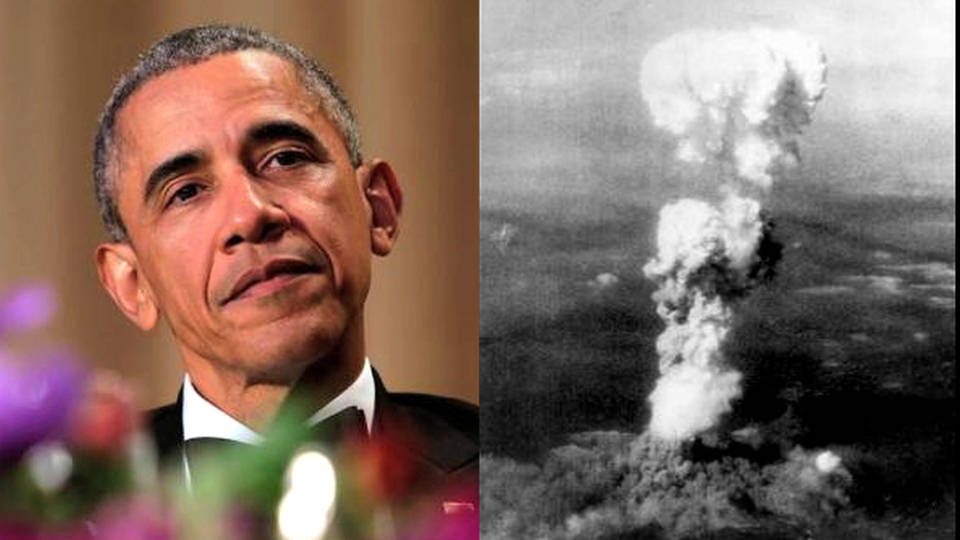
President Obama will become the first serving U.S. president to visit Hiroshima in Japan later this month. The White House said Obama will not apologize for dropping an atomic bomb on the city toward the end of the Second World War. The attack on August 6, 1945, caused massive and widespread destruction. Shock waves, radiation and heat rays took the lives of some 140,000 people. Three days later, the U.S. dropped a second atomic bomb on the Japanese city of Nagasaki, killing another 74,000 people. Obama is expected to tour the site of the world’s first nuclear attack with Japan’s prime minister, Shinzo Abe. We’ll have more on the visit after headlines.
TOPICS:
Obama
Hiroshima
Nuclear Weapons
Brazilian Senate Set to Vote on Suspending President Rousseff

Brazil’s Senate is set to vote today on whether to suspend President Dilma Rousseff and put her on trial on accusations of tampering with accounts to hide a budget shortfall. On Tuesday, Brazil’s attorney general asked the country’s Supreme Court to suspend the impeachment process. If the Senate votes to suspend Rousseff today, Vice President Michel Temer would take over during her trial. He has been implicated in Brazil’s massive corruption scandal; several of his top advisers are under investigation, and just last week he was ordered to pay a fine for violating campaign finance limits. Speaking Tuesday, President Rousseff said Brazil faces a decisive moment.
President Dilma Rousseff: "Look, for me, it is a very important moment. It’s a decisive moment. It’s a decisive moment for Brazil’s democracy, a moment we’re going through today. Without a doubt, we are going through a time when the people feel that we’re making history, the history of this country."
TOPICS:
Brazil
NYC: Activists Honor Slain Environmentalist Berta Cáceres on Mother's Day
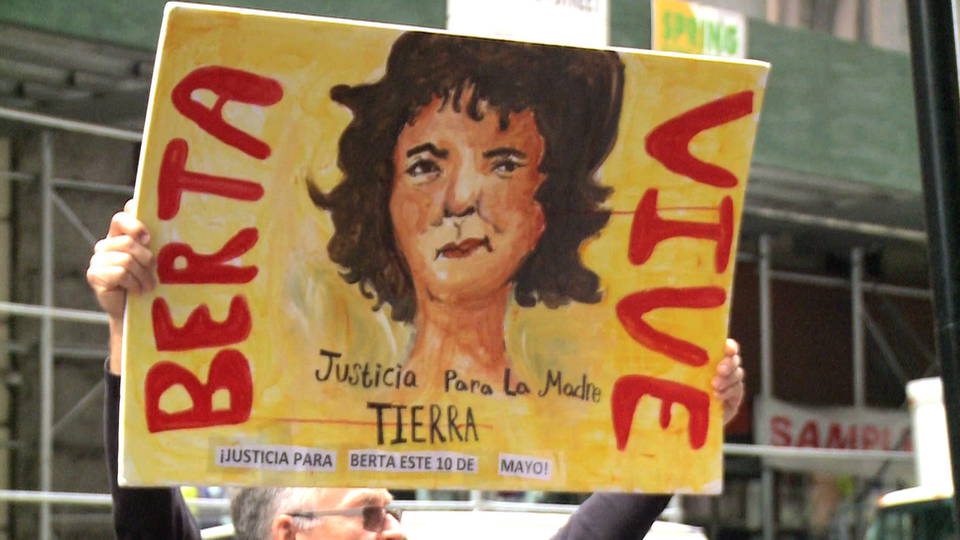
Tuesday marked Mother’s Day in parts of Latin America. Here in New York City, activists rallied in front of the Honduran Consulate to honor slain environmentalist Berta Cáceres. Cáceres was murdered in her home in La Esperanza, Honduras, in March. For a decade, she led the struggle against the Agua Zarca Dam, planned along a river sacred to the Lenca people. Honduran authorities have charged five people in connection with her death, including a Honduran army major and employees of DESA, the company behind the dam. But Cáceres’ family has called for an independent investigation. On Tuesday, protesters presented a Mother’s Day card honoring Cáceres to a representative from the Honduran Consulate in here New York.
Luz Guel: "My name is Luz Guel, and I’m originally from Mexico, but I’m working with WE ACT for Environmental Justice. And we’re here today outside of the Honduran Consulate to bring justice to Berta Cáceres for Mother’s Day. And she was fighting for the forest, for the water, for clean air, for all the environmental rights that everybody deserves. And today is the day to celebrate motherhood of all days outside the Honduran Consulate."
Zelene Pineda Suchilt: "My name is Zelene Pineda Suchilt. We are gathered here today to demand an independent investigation of her murder, to end U.S. aid, military aid, to Honduras and to stand against the coup in 2009 that led to these events."
TOPICS:
Honduras
Mexico: Parents of Missing Children March in the Capital on Mother's Day
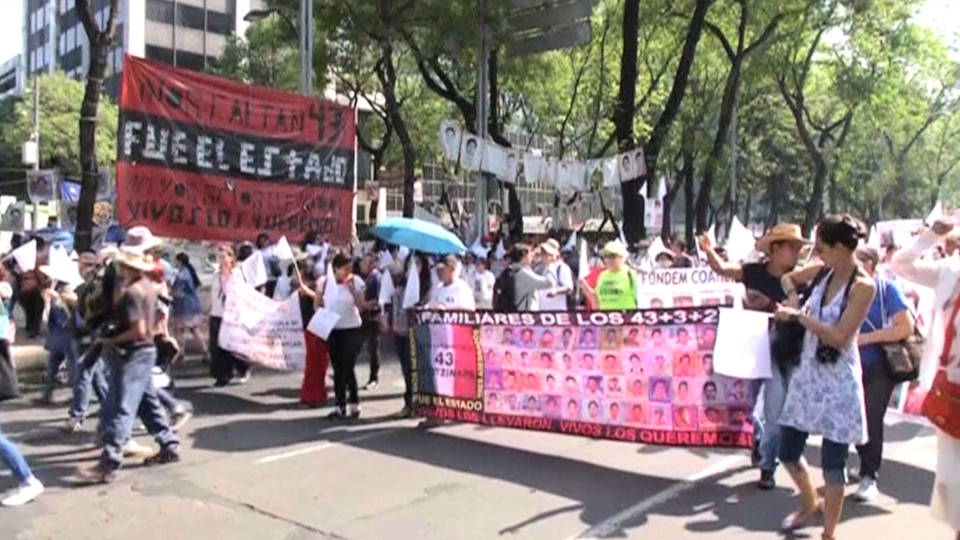
In Mexico, mothers of children who have disappeared gathered in Mexico City to demand justice for their loved ones. Monica Orozco and Gregoria Ortiz, two mothers of missing sons, spoke out about why they do not celebrate Mother’s Day.
Monica Orozco: "No, we don’t celebrate. We search. We search for justice and look for our children, our children who were taken away, and the government does nothing to look for them."
Gregoria Ortiz: "The authorities should make an effort to return our missing, who aren’t just the 43, but thousands of missing people. And this figure goes up every day."
TOPICS:
Mexico
Canada: Alberta Wildfire Spreads to More Than 880 Square Miles
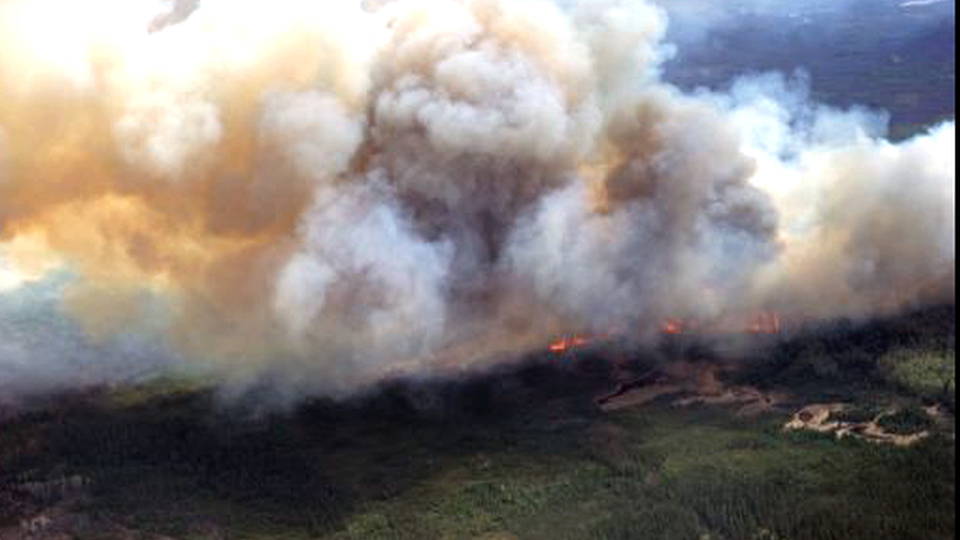
In Alberta, Canada, a massive wildfire continues to spread in the sprawling forest outside the city of Fort McMurray, after all 88,000 residents of the city fled last week. Two fires have merged and spread to more than 880 square miles. The fire in the heart of Canada’s oil sands region has shut down most of the oil sands industry. Scientists have long warned of the risks of climate change to forests in the region.
TOPICS:
Canada
Climate Change
Ethiopia: Flooding, Landslides Kill At Least 50 People

In Ethiopia, flooding and landslides caused by heavy rains have killed at least 50 people. The devastation comes as Ethiopia faces its worst drought in half a century. Such extreme weather has also been linked to climate change.
TOPICS:
Ethiopia
Climate Change
Baltimore Officer Chooses Trial by Judge over Death of Freddie Gray
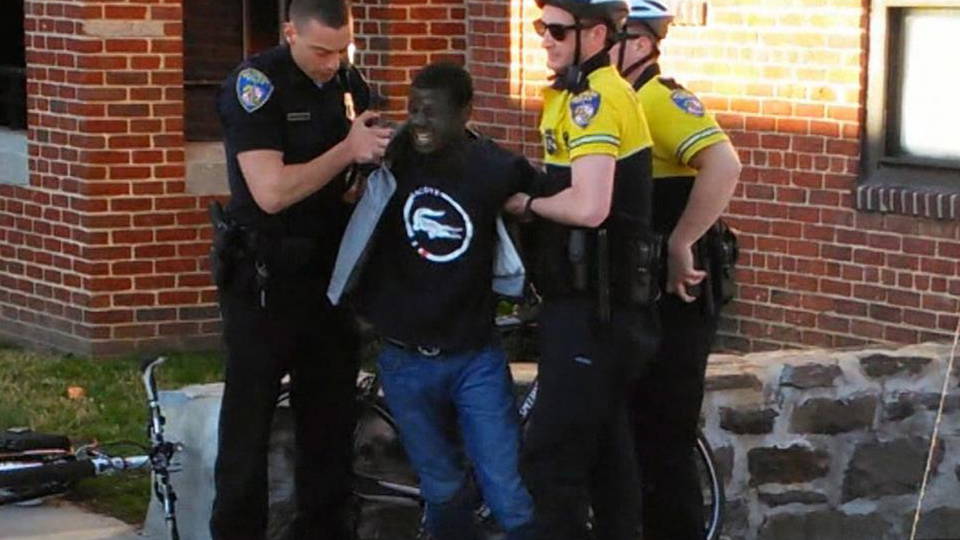
A Baltimore police officer has chosen to face trial before a judge rather than a jury over his role in the death of African American Freddie Gray. Gray died of spinal injuries last year after he was arrested and transported in a police van. His family attorney said his spine was "80 percent severed at his neck." Officer Edward Nero faces trial for his role in arresting Gray after officers said Gray made eye contact and then ran away. He is the second officer to go on trial in the case; the first officer’s trial ended in a hung jury in December.
TOPICS:
Police Brutality
Freddie Gray
Citadel Military College Refuses to Let Prospective Student Wear Hijab
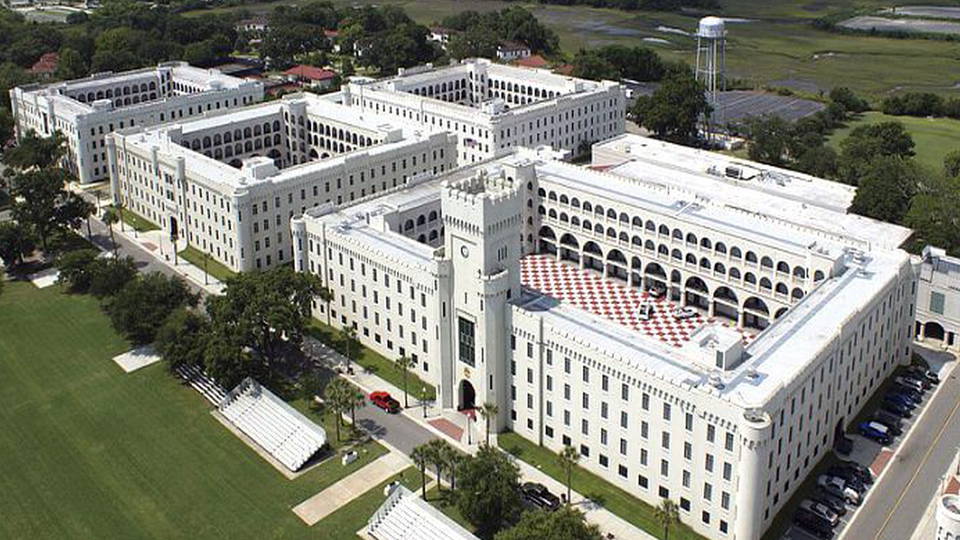
The Citadel Military College in South Carolina has refused to allow a prospective Muslim student to wear a hijab with her uniform. In a statement, the college president, Lt. Gen. John Rosa, said "uniformity is the cornerstone" of the Citadel’s educational model. The Council on American-Islamic Relations said it’s considering legal options to challenge the decision. In a statement, CAIR said: "We believe the desire to maintain an outdated 'tradition,' which was the same argument used to initially deny admittance to African-Americans and women, does not justify violating a student’s constitutional rights."
TOPICS:
Muslim
Military
Pentagon Gives Henry Kissinger Distinguished Public Service Award
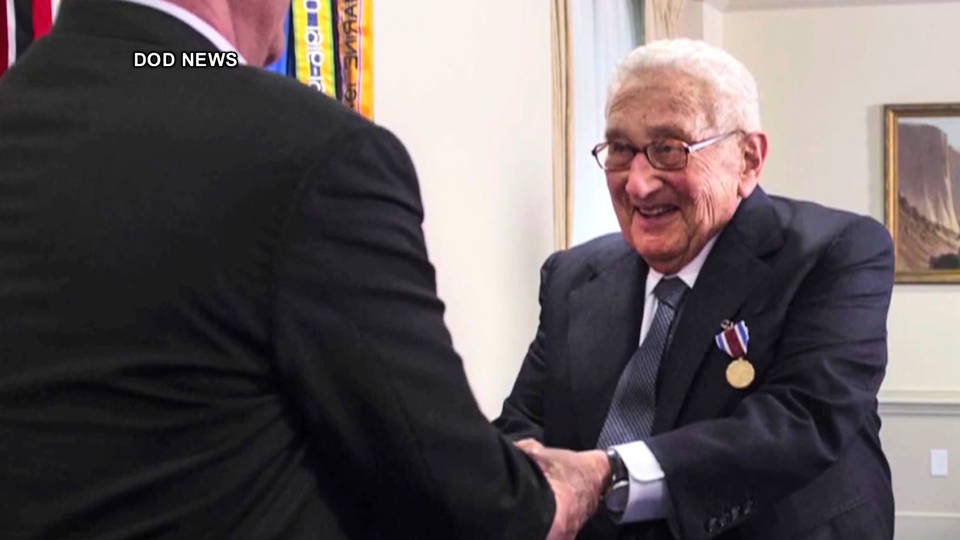
And Defense Secretary Ashton Carter has presented former Secretary of State Henry Kissinger with the Distinguished Public Service Award, the Pentagon’s highest award for private citizens. Writing in The Nation magazine, author Greg Grandin said: "Carter himself deserves an award for understatement, calling the man who is responsible, directly or indirectly, for the deaths of millions of people in Southeast Asia, East Timor, Bangladesh, and southern Africa, among other places—’unique in the annals of American diplomacy.’" Kissinger has been drawn into the 2016 election after Hillary Clinton praised Kissinger, while Bernie Sanders blasted his role in the U.S. bombing of Cambodia and the U.S.-backed coup against Chilean President Salvador Allende in 1973.
TOPICS:
Henry Kissinger
Donate today:
Follow:


SPEAKING EVENTS

5/11 Montclair, NJ
5/12 New York, NY
5/13 Washington, DC
5/14 Portland, ME
5/14 Bangor, ME
5/15 Bar Harbor, ME
5/17 Chicago, IL
5/18 Madison, WI
5/19 Toronto, ON
5/20 Toronto, ON
more
NEW BOOK


Remembering Father Dan Berrigan, a Prophet of Peace
WORK WITH DN!

Video News Production Fellowship
Internships
WEB EXCLUSIVE

"A Moral Giant": ADemocracy Now! Special on the Life & Legacy of Father Daniel Berrigan
207 West 25th Street, 11th Floor
New York, New York 10001, United States
---------------------
---------------------

No comments:
Post a Comment