democracynow.org
Stories:

Remembering Michael Ratner, Pioneering Lawyer Who Fought for Justice from Attica to Guantánamo
The groundbreaking human rights attorney Michael Ratner has died at the age of 72. For over four decades, he defended, investigated and spoke up for victims of human rights abuses across the world. Ratner served as the longtime president of the Center for Constitutional Rights. In 2002, the center brought the first case against the George W. Bush administration for the indefinite detention of prisoners at Guantánamo. The Supreme Court eventually sided with the center in a landmark 2008 decision when it struck down the law that stripped Guantánamo prisoners of their habeas corpus rights. Ratner began working on Guantánamo in the 1990s, when he fought the first Bush administration’s use of the military base to house Haitian refugees. We begin today’s show with a speech he gave in 2007 when he was awarded the Puffin/Nation Prize for Creative Citizenship.
TRANSCRIPT
This is a rush transcript. Copy may not be in its final form.
JUAN GONZÁLEZ: The trailblazing human rights attorney Michael Ratner has died at the age of 72. For over four decades, Michael Ratner defended, investigated and spoke up for victims of human rights abuses across the world. He served as the longtime head of the Center for Constitutional Rights. Attorney David Cole told The New York Times, quote, "Under his leadership, the center grew from a small but scrappy civil rights organization into one of the leading human rights organizations in the world. He sued some of the most powerful people in the world on behalf of some of the least powerful." In 2002, the center brought the first case against the George W. Bush administration for the indefinite detention of prisoners at Guantánamo. The Supreme Court eventually sided with the center in a landmark 2008 decision when it struck down the law that stripped Guantánamo prisoners of their habeas corpus rights. Ratner began working on Guantánamo in the 1990s, when he fought the first Bush administration’s use of the military base to house Haitian refugees.
Michael Ratner’s activism and human rights work dated back to the 1960s. He was a student at Columbia Law School during the 1968 student strike there. Michael was a clerk for the legendary Federal Judge Constance Baker Motley. When he graduated from law school, she was the first African-American woman judge and protégé of Thurgood Marshall. In a 2004 letter, Constance Baker Motley wrote, "Michael Ratner was in retrospect, the ablest law clerk I have had in my tenure on the bench."
AMY GOODMAN: Michael Ratner joined the Center for Constitutional Rights in 1971. His first case centered on a lawsuit filed on behalf of prisoners killed and injured in the Attica prison uprising in upstate New York. Michael Ratner was deeply involved in Latin America and the Caribbean, challenging U.S. policy in Cuba, Haiti, Nicaragua, Guatemala, Puerto Rico and elsewhere. In 1981, he brought the first challenge under the War Powers Resolution to the use of troops in El Salvador, as well as a suit against U.S. officials on behalf of Nicaraguans raped, murdered and tortured by U.S.-backed contras. In 1991, he led the center’s challenge to the authority of President George H.W. Bush to go to war against Iraq without congressional consent.
A decade later, he would become a leading critic of the George W. Bush administration, filing lawsuits related to Guantánamo, torture, domestic surveillance and the 2003 invasion of Iraq. He also helped launch the group Palestine Legal to defend the rights of protesters in the U.S. calling for Palestinian human rights. In recent years, he was the chief attorney for WikiLeaks founder Julian Assange and became a leading critic of the U.S. crackdown on whistleblowers, including Chelsea Manning and Edward Snowden. He also served as Democracy Now!’s attorney for many years and was the husband of Karen Ranucci, a longtime member of the Democracy Now! family.
Today we spend the hour looking at the life and legacy of Michael Ratner. Later, we’ll be joined by three lawyers who worked closely with Michael over the years, but we begin with a speech Michael Ratner gave in 2007, when he was awarded the Puffin/Nation Prize for Creative Citizenship.
MICHAEL RATNER: Over the last few years, I’ve become acquainted with a man named Henri Alleg. Henri Alleg is a French Algerian in his eighties who was water-tortured—or, as this administration says, waterboarded—by the French. Here is how Henri Alleg described his water torture, a practice that goes back to the Inquisition: "The rag was soaked rapidly. Water flowed everywhere: in my mouth, in my nose, all over my face. ... I tried, by contracting my throat, to take in as little water as possible and to resist suffocation by keeping air in my lungs ... as long as I could. But I couldn’t hold on for more than a few [moments]. I had the impression of drowning, and a terrible agony, that of death itself, took possession of me."
Think about Henri Alleg when you hear the CIA talk about enhanced interrogation techniques. Or think about a terrible agony, that of death itself—that of death itself—taking over you when you hear our new attorney general refuse to condemn waterboarding, or when you hear that some of our Democratic leaders were briefed and made not a peep—not a peep—of objection.
Let there be no doubt, the Bush administration tortures. It disappears people. It holds people forever in offshore penal colonies like Guantánamo. It renders them to be tortured in other countries. This is what was done to CCR’s client Maher Arar, who was rendered to Syria for torture. And sadly, a majority of our Congress, our courts and our media have given Bush a free hand—and, in fact, worse, have been the handmaidens of the torture and detention program. But it has not been given a free hand by the Center for Constitutional Rights. It has not been given a free hand by The Nation. It has not been given a free hand by Jeremy or Naomi.
Today we’re in the midst of a pitched battle, a pitched rattled to put this country back, at least ostensibly, on the page of fundamental rights and moral decency. The battle is difficult, and the road is long and hard. On occasion, I get pessimistic. Sometimes I and my colleagues feel like Sisyphus. Twice—not just once, twice—we pushed the rock up the hill and won rights for Guantánamo detainees in the Supreme Court, and twice the rock was rolled back down by Congress over those rights. So we pushed it back up again. Five days ago, we were in the Supreme Court for the third time. It was difficult, more difficult than before, because the justices have changed. Four are antediluvians, lost forever to humanity.
But before I get us all depressed, we’ve had our victories. We’ve gotten lawyers to Guantánamo, stopped the most overt torture and freed half of the Guantánamo detainees—over 300. We have gotten Maher Arar out of Syria. Canada has apologized for his torture, given him a substantial recovery—in Canadian dollars, which is no embarrassment anymore. They said he was an innocent man, but he remains on the U.S. terror list. We have slowed, but not yet stopped, a remarkable grab for authoritarian power.
I also don’t look hope—I also don’t lose hope, because I think about the early days of Guantánamo. At first, we were few. But now, we are many. At first, when CCR began, we were the lonely warriors taking on the Bush administration at Guantánamo. Now we are many. Now we, just on Guantánamo alone, are over 600 lawyers, most from major firms of every political stripe. These lawyers have an understanding of what is at stake: liberty itself. This struggle—this struggle will be seen as one of the great chapters in the legal and political history of the United States.
Today, war, torture, disappearances, murder surround us like plagues. Most in this country go on their way oblivious. Some don’t want to know and are like ostriches. Some want to justify it all. Some want to make compromises. But be warned: We are at a tipping point, a tipping point into lawlessness and medievalism. We have our work to do. For each of us, the time for talking is long, long over. This is no time for compromise, no time for political calculation. As Howard Zinn admonishes us, it is the job of thinking people not to be on the side of the executioners. The Puffin/Nation Prize reminds us all that the job for each of us is not to be on the side of the executioners. Thank you all.
AMY GOODMAN: Attorney Michael Ratner, speaking in 2007 when he was awarded the Puffin/Nation Prize for Creative Citizenship. Michael died Wednesday at the age of 72 as a result of complications related to cancer. When we come back, we’ll be joined by a roundtable of his colleagues and friends, beginning with WikiLeaks founder Julian Assange, who will speak to us from inside the Ecuadorean Embassy in London. This is Democracy Now!, democracynow.org, The War and Peace Report. We’ll be back in a minute. ... Read More →

Julian Assange: Michael Ratner was a "Campaigner for Justice" from Guatemala to Palestine
On Wednesday, the trailblazing attorney Michael Ratner died at the age of 72. In recent years, Ratner served as the chief attorney for WikiLeaks founder Julian Assange and became a leading critic of the U.S. crackdown on whistleblowers, including Chelsea Manning and Edward Snowden. We reached Assange in the Ecuadorean Embassy in London, where he sought asylum nearly four years ago.
TRANSCRIPT
This is a rush transcript. Copy may not be in its final form.
JUAN GONZÁLEZ: Today we are remembering the life and legacy of the trailblazing attorney Michael Ratner, who died on Wednesday at the age of 72. We’re joined by four guests who knew Michael well on a personal and professional level.
AMY GOODMAN: Reed Brody is counsel and spokesperson for Human Rights Watch. Michael Smith is an attorney and board member of the Center for Constitutional Rights. He co-authored a book with Michael called Who Killed Che?: How the CIA Got Away with Murder. We’re also joined in Pittsburgh by Jules Lobel. He is the president of the Center for Constitutional Rights and a law professor at the University of Pittsburgh.
And joining us from London is Julian Assange, founder of WikiLeaks, joining us from the Ecuadorean Embassy in London, where he has asylum. He has been there for almost four years. Julian Assange took refuge in the embassy in 2012. Assange wants to avoid extradition to Sweden over sex assault claims, which he has repeatedly denied. He says he fears Sweden will extradite him to the United States, where he could face trial for publishing classified information. He was represented during this time, through his years inside the embassy, by Michael Ratner.
Julian, welcome to Democracy Now! Your thoughts today on your late counsel, your late attorney and friend, Michael Ratner?
JULIAN ASSANGE: Michael touched many people throughout his life. And you’re seeing some of that today. He was my personal friend and adviser, our lead lawyer in the United States and in the English language. So, people here, people associated with WikiLeaks, its various staff, and our other lawyers in the United States are grieving.
But I want to reflect a little on Michael Ratner. Michael was important, not because of his—simply because of his talent and indefatigability, political and human consistency, but because he was a role model to so many who knew him, and a role model that is immutable. Michael was not a—one of these figures that plague the left so much. He was not a thundering genius, although he was brilliant. He was not someone who was ideologically hidebound. He was not someone who simply engaged in value projection or exhibitionism. Michael Ratner was a—led a life which was laudatory both at the—at his human level, in terms of his dealings with his family, his children, with his friends, and in terms of his work in law and political consistency. And he brought all these things together. And that is why you’re seeing the outpouring that you are seeing. Because people—because of Michael’s sensitivity across all of these domains, he is someone that you felt interacted with you as a human being, not simply someone who wanted something in a political direction or in terms of law. And while he had his flaws, these only made you understand that he really was a figure who you could strive to emulate. And I think this is probably—will be seen his most important legacy.
The other lawyers will talk about the cases that he was—the cases that he took. He certainly took many cases for us in relation to the ongoing, pending U.S. prosecution in the United States in relation to Chelsea Manning, in relation to banking blockades, in relation to all the politics surrounding this. He stepped forward first in relation to Guantánamo Bay, when other lawyers, such as groups associated with the ACLU, felt that this was not something that was politically achievable. But he is someone who inspires a model for people who are concerned about justice, that is achievable, not a model of self-destruction, not a model that is unable to achieve because it requires some particular kind of genius that cannot be worked towards. And that is something that deeply affected our young lawyers in the United States—for example—
JUAN GONZÁLEZ: Well, Julian—
JULIAN ASSANGE: [inaudible]—
JUAN GONZÁLEZ: Julian, I wanted specifically to ask you about this issue of the model that he provided to others. Could you talk a little bit about his impact both in terms of the work he did in defending whistleblowers like yourself, but also in terms of his ability to take the human rights issue to an international level and to deal across countries and mobilize legal battles across borders?
JULIAN ASSANGE: Yes. I mean, I’ve dealt with many lawyers in the United States and many people in the United States. And some of those, although they proclaim to be concerned with the abuse of state power in the United States, are in fact, themselves, very provincial and, in some ways, American exceptionalists of their own. Michael cut completely across that. He was genuinely concerned about people in Guatemala, about me, as an Australian, about people who face similar problems in Palestine, about people who have been extradited from the United Kingdom. And he was able to work with these other groups and other lawyers across jurisdictions, because they perceived that his genuine human concern for them was not simply about grabbing some prize that he could take back to the United States and exploit within his own, if you like, New York constituency.
And so, he was very effective as a lawyer and as a campaigner for justice, because he would do things—for example, seeing that people might be extradited to the United States, take up the battle at the place of extradition—for example, here in the United Kingdom, with one of my other lawyers, both on my case and in relation to some alleged terrorism cases, Gareth Peirce. Other lesser lawyers, lesser human beings, might have gone, "Well, I can get the glory, and I can get the credit, once that person is extradited to the United States, and then can be—the trial can be exploited, and great precedence can be set in the United States." Michael was much more concerned, at a human level, to take action early in the process, and try and stop grand juries or try and stop extraditions, before the person entered in to a U.S. justice system that has become increasingly difficult to deal with. ... Read More →

Suing Dictators Around the World: A Look at How Michael Ratner Helped Reshape Human Rights Law
Michael Ratner’s activism and human rights work dated back to the 1960s. He was a student at Columbia Law School during the 1968 student strike. He joined the Center for Constitutional Rights in 1971. His first case centered on a lawsuit filed on behalf of prisoners killed and injured in the Attica prison uprising in upstate New York. Ratner was deeply involved in Latin America and the Caribbean, challenging U.S. policy in Cuba, Haiti, Nicaragua, Guatemala, Puerto Rico and elsewhere. In 1981, he brought the first challenge under the War Powers Resolution to the use of troops in El Salvador, as well as a suit against U.S. officials on behalf of Nicaraguans raped, murdered and tortured by U.S.-backed contras. In 1991, he led the center’s challenge to the authority of President George H.W. Bush to go to war against Iraq without congressional consent. A decade later, he would become a leading critic of the George W. Bush administration, filing lawsuits related to Guantánamo, torture, domestic surveillance and the 2003 invasion of Iraq. He also helped launch the group Palestine Legal to defend the rights of protesters in the U.S. calling for Palestinian human rights. We speak to three close friends of Ratner, all fellow attorneys: Reed Brody of Human Rights Watch; Michael Smith, board member of the Center for Constitutional Rights; and Jules Lobel, president of the Center for Constitutional Rights and a law professor at the University of Pittsburgh.
TRANSCRIPT
This is a rush transcript. Copy may not be in its final form.
AMY GOODMAN: Julian Assange, I wanted to go to a video produced by the Ratner family to mark Michael’s 60th birthday, talking about his legal legacy.
BETH STEVENS: He has worked on a series of cases in different areas that are just pushing the ability to raise international human rights in U.S. courts.
REPORTER: For Helen Todd, nothing could justify the East Timor massacre, which killed her son Kamal. And today, a United States court agreed.
HELEN TODD: It’s been a long time, and I’ve come halfway around the world. But I feel satisfied that at last a court has said, "This is wrong."
REPORTER: Kamal was one of 200 killed in the student protest. And the Indonesian general who ordered his troops to open fire has now been ordered to pay.
MICHAEL RATNER: And it affected the judge very heavily. The judge, who would—was not familiar with this law, not familiar—probably didn’t know East Timor from, you know, Timbuktu, was incredibly—you could see she was incredibly moved. And we all left—left, I think, feeling—you know, feeling bad, obviously, about what happened, but very, very good that we had gotten—after a lot of work and a lot of people’s efforts, gotten it to a trial where it was really heard.
LIZZIE RATNER: He’s really, I think, helped pioneer this type of tort law, where you can actually sue dictators or sue war criminals from within the United States.
BETH STEVENS: I found out early in one fall that this general was studying at the Harvard School of Government. And the students worked for most of the school year pulling together information about the general’s role in genocide in Guatemala.
RAY BRESCIA: We needed to develop some of the facts, and the only way that we could really do some pieces were to actually interview the general. And so I sort of posed as this student doing some research on Guatemala.
BETH STEVENS: Michael and I flew up to Boston and went to Harvard graduation with the papers in hand.
RAY BRESCIA: Michael is not afraid to sue anyone at any time.
BETH STEVENS: He’s still wearing his Harvard graduation robes, and the process server, with a big smile, held out the papers, called his name, shook his hand. And General Gramajo took the papers with a big smile.
LIZZIE RATNER: And he’s won these huge cases. But, of course, many of the dictators have not forked over the billions of dollars that their victims are due.
AMY GOODMAN: That, an excerpt of a family video that was produced for Michael Ratner’s 60th birthday. That story that you heard, the attorney Beth Stevens talking about the lawsuit against Héctor Alejandro Gramajo, who was graduating from the Harvard Kennedy School of Government. In the corner, you see Michael’s profile. I was there, along with journalist Allan Nairn, as they, Beth Stevens and Michael Ratner and the private investigator, slapped Héctor Alejandro Gramajo with this lawsuit as he was walking in to get his Harvard Kennedy School degree, slapping him with a lawsuit for crimes against humanity.
We are joined by a roundtable of people to remember Michael Ratner, who died on Wednesday of complications due to cancer here in New York City, Michael Ratner, the longtime former head of the Center for Constitutional Rights. We’re joined by Michael Smith, his colleague, co-author and friend, as well, Reed Brody of Human Rights Watch and Jules Lobel, joining us from Pittsburgh, Julian Assange in the Ecuadorean Embassy in London. Give us the span of his work, Reed.
REED BRODY: You know, from defending human rights in the United States to defending Central American revolutions against the United States, from defending HIV-positive Haitians quarantined in Guantánamo to defending Muslims taken to Guantánamo 10 years later, you know, from defending foreign—from suing American torturers abroad to suing, as we saw, foreign torturers in America, to defending whistleblowers. Over 50 years, Michael was always instinctively on the right side of every battle, fighting the right battle from the right trench. You know, he had this unerring ability to know where to be at the right time.
AMY GOODMAN: Reed, you were arrested with Michael in 1984. Can you talk—and William Kunstler, right?
REED BRODY: Yes. It was—
AMY GOODMAN: And Arthur Kinoy? Can you talk about the circumstances?
REED BRODY: Sure. I had actually just come back from Nicaragua, where I documented systematic atrocities by the U.S.-backed contras, who were trying to undermine the Sandinista revolution. And there was a sit-in at the Federal Building in downtown Manhattan, organized by the National Lawyers Guild. And Michael was there, Bill Kunstler, Arthur Kinoy, Barbara Dudley, Ron Kuby, [Marilyn] Clements. And we were all—we were all arrested. But Michael didn’t stop there. When the International Court of Justice in The Hague ordered that the United States stop funding and supporting the contras, Michael and Jules Lobel and the CCR went into court, saying, "Well, you know, let’s enforce this order."
And actually, Michael asked me to go down to Nicaragua to talk to Americans who might be in harm’s way if the court—if contra funding continued. And I interviewed and took an affidavit from a friend named Ben Linder, who wrote in his affidavit that if the United States kept funding the contras, he was in danger of life and limb. And, of course, the lawsuit failed. The aid to the—an injunction was not granted. And Ben Linder was killed, the first American to be executed, the only American to be executed, by the U.S.-backed contras in Nicaragua. And then Michael defended the Linder family for many years in their suits against the contras and against the United States.
JUAN GONZÁLEZ: And, Michael Smith, for years, you co-hosted a show, Law and Disorder, with Michael Ratner. Talk about—
AMY GOODMAN: On WBAI.
JUAN GONZÁLEZ: On WBAI, yes. Talk about how you first met him, and also his perspective on the law and how lawyers dealt with the law.
MICHAEL SMITH: I lived around the corner from Michael 30-some years ago. Michael had just gotten elected as the president of the National Lawyers Guild. I was in a four-floor walkup, and he schlepped up one night, and he asked me if I would be on the editorial board of Guild Notes, which is the guild magazine. So he signed me up, and that’s when we started out working together. We did six books together. He did the foreword or the introduction or a chapter in a number of them.
We did the Che Guevara book. Michael greatly loved and admired Che, and he suspected that the U.S. story about Che’s death was BS. And so he did a FOIA request. And years went by, and nothing happened. And then, one day—and he was telling me. We were walking down the street, and he said, "You know," he said, "I just got this huge box of documents from the FBI and the CIA and the Defense Department and the White House. And what should we do?" So, I was representing Ocean Press at the time. And I called them up, and I said, "I think we’ve got a book here. Can you hold up putting out your catalog ’til we look through it?" And they said, "Sure." So, Michael and I and my wife Debbie looked through it, and we figured it out, and we put it all together, and we sent it down to Australia. We put out our first book. We were on the show with you, Amy. It was 20 years ago.
And then, out of nowhere, 10 years later, without Michael making a further request, he got another box of documents. And we looked at those. And there had been a lot of historical work done in the meantime. So we were able to take these new documents—I mean, stuff on White House stationery that said, "The troops we trained finally got him," a memo to Johnson, the president, stuff like that. And we put the story together. And we realized that there was a prior agreement with the Bolivian dictatorship. The CIA had two agents that were running intelligence. The Department of Defense was funding everything from ballots to bullets, funding the Bolivian army that captured Che. The CIA agents were working the intelligence. They captured Che. And they had a prior agreement with the head of the Bolivian military that if they captured, then they’d kill him. And so, that was America’s doing, and we proved that. And that book is all over Cuba. They sell it for 25 cents. It was featured last year at the International Book Fair. It’s all over Argentina, where Che—and it’s even coming out now in Iran in Farsi, and it’s going to be distributed in Uzbekistan and Tajikistan. So, Michael made a contribution there.
AMY GOODMAN: And Che Guevara killed in October 1967 in Bolivia.
MICHAEL SMITH: That’s right. And the moral responsibility for that, the actual responsibility for the assassination, which was a political murder, lies on the United States. There’s no statute of limitations to murder. The two people that directed the killing are still alive. They’re in Florida.
AMY GOODMAN: They are?
MICHAEL SMITH: And that was one of the many contributions that Michael made.
JUAN GONZÁLEZ: And this whole issue of he was a lawyer who did not really overestimate the power or the requirements of the law?
MICHAEL SMITH: He didn’t think that—he deeply believed in democracy and the rule of law. And he didn’t think that capitalism was compatible with that. He thought maybe fascism was, but certainly not—and we can see, what’s going on now, he was absolutely clear-sighted on that. Michael initially started off, like all of us, as, you know, liberals, thinking that the law was a civilized way of solving disputes. It may flawed here or there, but it could be fixed and so on. Well, we all quickly got over that notion. And Michael came to believe that the law was a means of social control by the 1 percent, who would fight to keep their control, by any means necessary, as long as possible. And that was what the law was. And Michael sought to promote true democratic law and to undermine that false ideology that thought that the law we have now is somehow fair. It’s not fair.
AMY GOODMAN: I wanted to go back to a moment with you, Michael Smith, and Michael Ratner. This was July [20th] in Washington, D.C., at the reopening of the Cuban Embassy after it was closed for more than five decades. Michael was drenched in sweat. It was boiling hot. But it was one of the happiest times I had ever seen Michael Ratner, as he talked about the significance of this historic day.
MICHAEL RATNER: Well, Amy, let’s just say, other than the birth of my children, this is perhaps one of the most exciting days of my life. I mean, I’ve been working on Cuba since the early ’70s, if not before. I worked on the Venceremos Brigade. I went on brigades. I did construction. And to see that this can actually happen in a country that decided early on that, unlike most countries in the world, it was going to level the playing field for everyone—no more rich, no more poor, everyone the same, education for everyone, schooling for everyone, housing if they could—and to see the relentless United States go against it, from the Bay of Pigs to utter subversion on and on, and to see Cuba emerge victorious—and when I say that, this is not a defeated country. This is a country—if you heard the foreign minister today, what he spoke of was the history of U.S. imperialism against Cuba, from the intervention in the Spanish-American War to the Platt Amendment, which made U.S. a permanent part of the Cuban government, to the taking of Guantánamo, to the failure to recognize it in 1959, to the cutting off of relations in 1961. This is a major, major victory for the Cuban people, and that should be understood. We are standing at a moment that I never expected to see in our history.
AMY GOODMAN: Bruno Rodríguez, the foreign minister of Cuba, gave a rousing speech inside the embassy. Talk about what he said still needs to be accomplished. He wasn’t exactly celebrating a total victory today.
MICHAEL SMITH: No, because things still aren’t normal.
AMY GOODMAN: Michael Smith.
MICHAEL SMITH: The United States is still spending $30 million a year trying to subvert the Cuban government. They still illegally are holding Guantánamo. And they still have—and this is the most important thing, because it’s costing Cuban people $1.1 trillion in funds to develop their country—they still have the blockade. So, unless those three things are changed, you’re not going to have a normal situation.
MICHAEL RATNER: Let me tell you, as someone said to me here, if Obama wants to solve Guantánamo and the prisoners at Guantánamo, give it back to Cuba. There will be no prisoners left in Guantánamo. Easy way to do it, satisfy the Cubans, satisfy Guantánamo. Let it happen now.
Think about Cuba’s place in history, when we think about it for young people, not just for the fact that it leveled a society economically, gave people all the social network that we don’t have in the United States, but think about its international role. You think about apartheid in South Africa, and the key single event took place in Angola when 25,000 Cuban troops repulsed the South African military and gave it its first defeat, which was the beginning of the end of apartheid. It had an internationalism that’s just unbelievable. And I remember standing in front of—in the 100,000 people in front of a square in Havana in 1976. I was on a Venceremos Brigade. And Fidel gave a speech, and he said, "There is black blood in every Cuban vein, and we are going into Angola." I’m telling you, I still cry over it.
AMY GOODMAN: That was Michael Ratner speaking July [20th], 2015, at the opening of the Cuban Embassy in Washington, D.C., after it had been closed for more than 50 years. Michael Ratner died on Wednesday, died yesterday, at the age of 72 of complications related to cancer. This is Democracy Now! We’ll be back remembering his life and legacy in a moment.
[break]
AMY GOODMAN: Bob Dylan, "He was a Friend of Mine." This is Democracy Now!, democracynow.org, The War and Peace Report. I’m Amy Goodman, with Juan González, as we remember the life and legacy of Michael Ratner, who died at the age of 72 Wednesday of cancer, of complications related to cancer. We have a roundtable of people remembering Michael’s life. He was the longtime president of the Center for Constitutional Rights. In a moment, we’ll go to Jules Lobel in Pittsburgh, who took over for Michael. Julian Assange, remembering him from inside the Ecuadorean Embassy in London, where Michael went scores and scores of times to meet his client and friend, Julian Assange, who has been holed up there, granted political asylum by Ecuador but afraid if he steps foot outside, he’ll be arrested and ultimately extradited to the United States. Michael Smith is with us, longtime friend, colleague and co-author of Who Killed Che?, and Reed Brody of Human Rights Watch, who wrote The Pinochet Papers with Michael Ratner. Juan?
JUAN GONZÁLEZ: Well, I’d like to bring in Jules Lobel from Pittsburgh. Jules, you replaced Michael as the head of the Center for Constitutional Rights. Could you talk about his impact on social activism and the law, and his model of lawyering?
JULES LOBEL: Yeah. Michael was a role model and inspiration for many lawyers and activists around the world, including myself. I never would have been involved with the center, and I never would have had the career that I did, if it wasn’t for Michael, who got me involved, urged me to stay involved, and gave me the model of lawyering that I subsequently used.
His model, which I think is used by many people now, but which he pioneered in many respects, is threefold. One is, he never backed down from a fight against oppression, against injustice, no matter how difficult the odds, no matter how hopeless the case seemed to be, no matter how much there was a lack of precedent. He took cases that nobody else would take, for clients that nobody else would represent, you know, whether it was the work in Central America in the '80s where nobody else would take these cases or the war powers cases or the Haitian cases that Reed talked about or the Guantánamo cases. He stood alone in many cases. You know, now you talk about 600 Guantánamo lawyers. When Michael first said to the center, "We have to take this case," he was standing alone, and the center was standing alone. There weren't 600 lawyers behind him. But he was willing to do that because he was unflinching in the face of oppression, and unfearful.
I remember in the war powers case when President Bush, the first President Bush, went to war against Iraq. Ron Dellums and 45 congressmen sued. And Ron Dellums told me, "We called the center, and we called Michael, because we knew you guys would do it. We knew that you guys were willing to take on the Bush administration, and we didn’t know if anybody else was going to do it." And that’s why he called us.
But secondly, Michael was brilliant in combining legal advocacy and political advocacy. You know, the clip that you had from Beth Stevens, where they brought this case against Gramajo, the former defense minister in El Salvador, and brilliantly—
AMY GOODMAN: Guatemala.
JULES LOBEL: In Guatemala, I’m sorry—and brilliantly sued him by filing the subpoena and the summons while he was graduating from Harvard. Irrespective of what happened legally with the case, Gramajo was finished, because that was the news, front-page news, throughout Guatemala. And when he filed the Guantánamo case, he didn’t have a prayer—he didn’t think he had a prayer of winning, but he was going to do this to, as Susan Anthony said a hundred years ago, keep up the drumbeat of agitation, of political education and agitation against what he thought was an oppressive U.S. policy, and which we now all know is an oppressive U.S. policy. So he—
JUAN GONZÁLEZ: And Jules, I wanted—
JULES LOBEL: He was brilliant in combining political activism and legal activism.
JUAN GONZÁLEZ: I wanted to ask you about his and the center’s pioneering work in using this obscure Alien Tort Act to go after international criminals.
JULES LOBEL: Yeah, Peter Weiss and Rhonda Copelon at the center pioneered this. Up until 20, 30 years ago, there had been no suits against foreign dictators, foreign human rights abuses in U.S. courts. U.S. courts said they didn’t have jurisdiction. The center, again, without any precedent, stood alone and said, "We’re going to—we’re going to sue human rights abuses wherever they are in the world." Michael took that up and sued Gramajo, sued dictators around the world. And now there’s a whole—hundreds of cases, following the lead of Michael and the center, in using international law and using international human rights in U.S. courts.
I just wanted to say one other thing about Michael on this, particularly in international law. He was—he loved people all around the globe. He represented them, met with them, shared their misery, shared their suffering. And one of the things he taught me is to—is to really be with the people, to really go out and meet people, to be compassionate, to be empathetic. And that’s why, I bet you, people all around the globe now are mourning the death of Michael. When I was in Cuba six months ago or so, I met with the foreign—the former foreign minister of Cuba, and the first question he asked me over dinner was: "How’s Michael doing?" Because he knew Michael cared about Cuba and the people in Cuba, and he cared about Michael. It was those kind of relationships that Michael built—
AMY GOODMAN: I want to—
JULES LOBEL: —that made him such a remarkable person.
AMY GOODMAN: I want to go back to 2006, when Michael Ratner and the Center for Constitutional Rights were awarded the LennonOno Grant for Peace. This was in Iceland. It was filmed by Karen Ranucci, journalist and wife of Michael Ratner. Michael was introduced by Yoko Ono.
YOKO ONO: As you are well aware, all of us are now living in darkness, of fear and confusion in this polluted world, which we ourselves created. But we really don’t have to live in such dreams of darkness. It is up to us to switch the channel and walk away from it, and, together, arrive into the future which is already in our hands.
Two important powers we possess will enable us to accomplish this: One is the power of healing, and the other is the power of protective law, which allows us to enjoy individual freedom and collective health.
The two recipients of this year’s LennonOno Grant for Peace—Doctors Without Borders, Médecins Sans Frontières, and Center for Constitutional Rights—are working on the very thing we need: to restore the balance of this planet we love and cherish.
MICHAEL RATNER: Thank you, Yoko. It’s an incredible honor for me, really, as the president of the Center for Constitutional Rights, to receive this honor. It has special significance for us. And, of course, a lot of people have said to me, "Michael, what are you guys going to do with the money?" And I sort of don’t want to get Yoko into more trouble than she already is, but one of the things we’ll be doing is continuing to represent some 500 men that are in cages at Guantánamo Bay, Cuba. the other thing, which some of you may be aware of, is that the United States—or, President Bush recently pardoned himself and all high-level U.S. officials for war crimes. And that pardon may be operative in the United States, but it’s not operative in the rest of the the world. And so, one thing we’re going to do is make this world uncomfortable for some of our officials who engaged in war crimes and torture.
AMY GOODMAN: That was Michael Ratner in 2006 in Iceland as he was awarded by Yoko Ono the LennonOno Grant for Peace. We only have a minute. Your remembrance, your fond remembrances, Reed Brody?
REED BRODY: You know, Michael and his wonderful wife Karen were at the center also of a huge progressive community here in New York. Their children, Jake, an activist with the Immokalee Workers, Ana, a performance artist. Each year, July—the only July 4th softball game in which the Zapatistas played against the ecosocialists, and everybody ended by singing "The Internationale." You know, this was a—they were the center of a community here.
AMY GOODMAN: Michael Smith?
MICHAEL SMITH: I took a singing class, Anyone Can Sing, with Jake and Ana and Elena, Michael’s children. And we put him on FaceTime, and we sang "The Internationale." And Michael was in a Barcalounger in his living room. And we sang, "Arise, ye prisoners of starvation! Arise, ye wretched of the earth!" and so on. And Michael put up his fist and sang it in French.
AMY GOODMAN: I want to end with a clip from a video produced by the Ratner family to mark Michael’s 60th birthday. Many of his friends were asked to briefly describe him.
ALBERT RATNER: Michael is unfaltering.
BETH STEVENS: Tenacious.
RON RATNER: Effervescent.
LARRY SINGERMAN: A very loyal friend.
JANE GOULD FRANKEL: Compassionate.
RICHARD MILLER: Very decent.
JEAN JEAN PIERRE: He’s relentless. He’s fearless.
BILL SCHAAP: Generous.
RUTH HIRSHFIELD: Super kind and warm.
RICHARD LEVY: It’s got to be some kind of tremendous optimism to keep going at the pace that he goes.
SUSAN SARANDON: I’m shocked to hear he’s this old. I thought he was about 22 myself.
AMY GOODMAN: Friends and family remembering Michael Ratner. He died on Wednesday at the age of 72 of complications related to cancer. If you have memories or stories you would like to share, you can go to MichaelRatnerPresente at Tumblr.com, and we’ll post that online. That does it for our show. Thanks so much to Julian Assange, to Jules Lobel, to Michael Smith and to Reed Brody.
I’ll be speaking tonight at Barnes & Noble at Union Square at 7:00.
We have job openings for internships and fellows at democracynoworg. ... Read More →
Headlines:Brazil: Rousseff Suspended as Senate Votes for Impeachment Trial

Brazil’s Senate has voted to suspend President Dilma Rousseff immediately and begin impeachment proceedings against her on accusations of tampering with accounts to hide a budget shortfall. The 55-22 Senate vote followed more than 20 hours of debate. One politician described it as the "saddest day for Brazil’s young democracy." Vice President Michel Temer will assume the presidency during Rousseff’s suspension. Temer himself has been implicated in Brazil’s massive corruption scandal; several of his top advisers are under investigation, and just last week he was ordered to pay a fine for violating campaign finance limits. Attorney General José Eduardo Cardozo called the vote a "historic injustice."
José Eduardo Cardozo: "An honest and innocent woman is, right at this moment, being condemned. A judicial pretense is being used to oust a legitimately elected president over acts which have been practiced by all previous governments. A historic injustice is being committed; an innocent person is being condemned."
During the Senate debate, military police fired tear gas at thousands of protesters who had gathered outside Congress, the vast majority whom were there to support President Rousseff. Teacher and protester Celma Pereira spoke out.
Celma Pereira: "It is revolting. We are here defending our democracy, and those yes-men spray us with tear gas. They are cowards."
TOPICS:
Brazil
Pioneering Human Rights Lawyer Michael Ratner Dies at 72
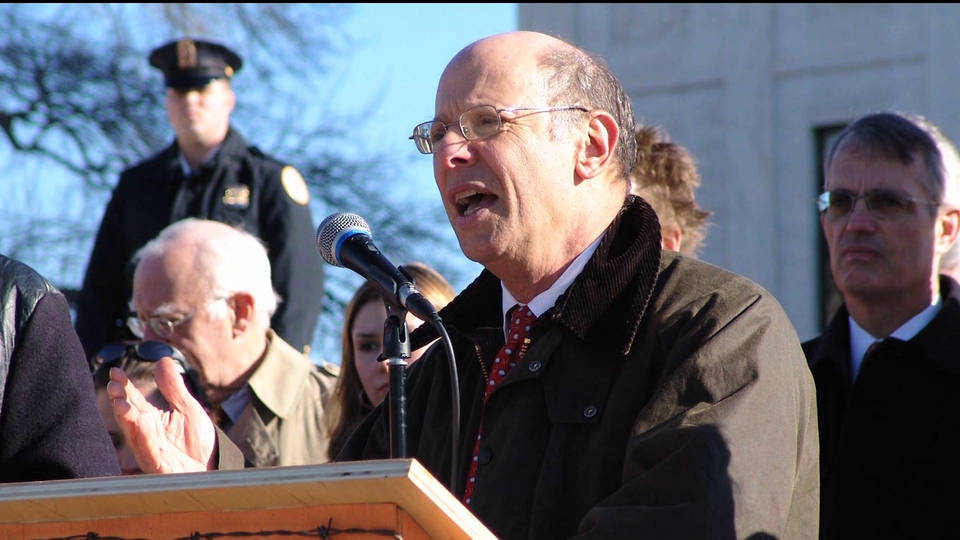
The pioneering human rights attorney Michael Ratner has died at the age of 72. For over four decades, he defended victims of human rights abuses across the world, from Haiti and Guatemala to Iraq and the Palestinian territories. Ratner served as the longtime president of the Center for Constitutional Rights. In 2002, the center brought the first case against the George W. Bush administration for the indefinite detention of prisoners at Guantánamo. The Supreme Court eventually sided with the center in a landmark 2008 decision when it struck down the law that stripped Guantánamo prisoners of their habeas corpus rights. In recent years he was the chief attorney for WikiLeaks founder Julian Assange and became a leading critic of the U.S. crackdown on whistleblowers, including Chelsea Manning and Edward Snowden. We’ll spend the hour honoring the life and legacy of Michael Ratner.
TOPICS:
Guantanamo
Donald Trump to Meet with Paul Ryan Amid Party Fissures
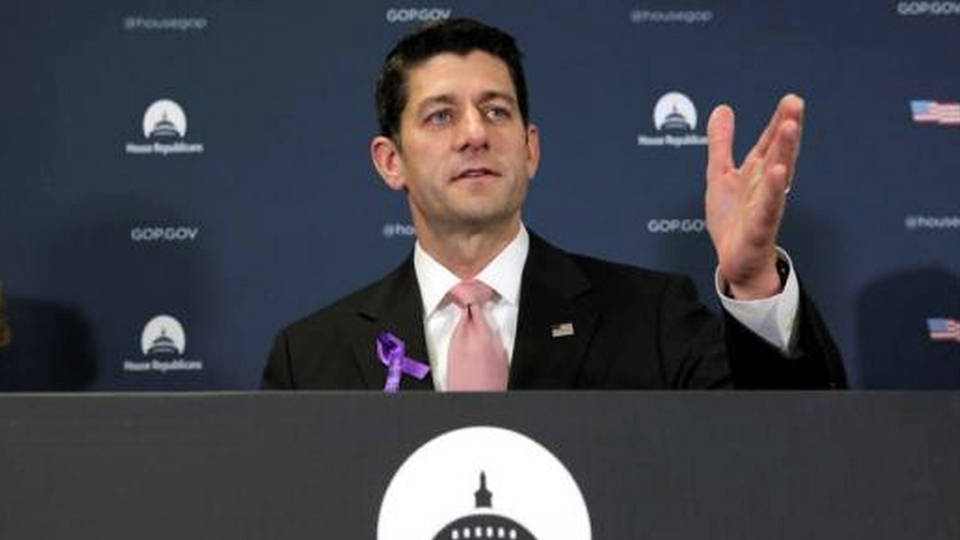
In Washington, D.C., presidential candidate Donald Trump is slated to meet today with Republican Party leaders, including House Speaker Paul Ryan, as the party faces a growing split over whether to support the presumptive presidential nominee. Ryan has said he’s not yet ready to support Donald Trump, whose calls to deport 11 million undocumented immigrants, to build a wall across the U.S.-Mexico border and to ban all Muslim immigrants and visitors from entering the U.S. have caused widespread backlash. House Minority Leader Nancy Pelosi addressed today’s anticipated meeting, saying that Donald Trump’s platform is nothing new for the Republican Party.
Minority Leader Nancy Pelosi: "Since when have the House Republicans been so concerned about intolerant statements and discriminatory ideas? They appear to be shocked by their candidate, not just the front-runner, the presumptive nominee, but all of their candidates. They appear to be shocked by their rhetoric on the campaign trail. But year after year, Republicans have enthusiastically turned their intolerance and their discrimination into legislation."
TOPICS:
2016 Election
Iraq: 93 Killed in Deadliest Day in Baghdad This Year

Wednesday marked the deadliest day in Baghdad so far this year as three separate car bombs killed at least 93 people across Iraq’s capital. ISIL has claimed responsibility for all three attacks. The largest car bomb killed 63 in a crowded market in the predominantly Shiite neighborhood of Sadr City. Hours later, two more bombs exploded at police checkpoints in different parts of the capital.
TOPICS:
Iraq
U.S. Has Resettled Only 1,736 Syrian Refugees in Last 7 Months
New government figures show the Obama administration has resettled only 1,736 Syrian refugees over the last seven months—despite President Obama’s pledge to resettle at least 10,000 Syrians by this coming September. In contrast, Canada has resettled more than 26,000 Syrian refugees since late 2015, while Turkey, Lebanon and Jordan have together taken in millions of Syrian refugees since the conflict began five years ago.
TOPICS:
Syria
Refugees
Turkish Forces Accused of Shooting Kurdish Civilians & Syrian Refugees
Human rights groups and the United Nations are accusing Turkish security forces of human rights violations, including deliberately shooting Kurdish civilians and Syrian refugees. Human Rights Watch has accused Turkish border guards of killing at least five Syrian refugees in the past two months. Separately, the U.N. has accused Turkey of intentionally shooting at civilians and destroying infrastructure in the largely Kurdish regions of the country’s southeast.
TOPICS:
Refugees
Turkey
Kenya Says It Will Close World's Largest Refugee Camp
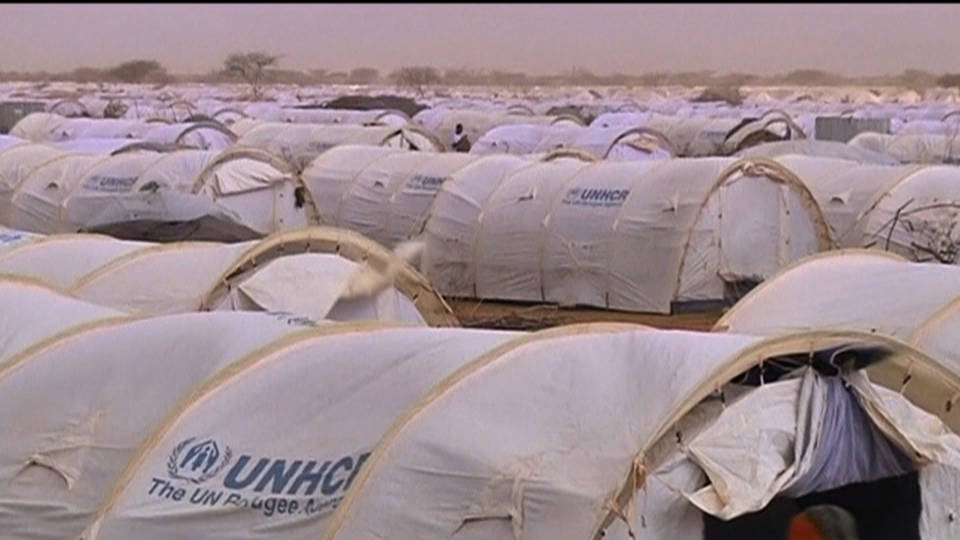
Kenya is vowing to close the world’s biggest refugee camp within a year, which could force up to 300,000 Somali refugees back into war-torn Somalia. Kenya justifies the closure, saying the Dadaab camp has been used by the militant group al-Shabab as a place to smuggle weapons. Human rights groups have decried the threatened closure. Kate Allen, director of Amnesty International UK, said, "Forcing [Somalis] back to violence and persecution is as immoral as it is unlawful, and risks increasing instability and displacement in the region."
TOPICS:
Refugees
Kenya
Italy Legalizes Civil Unions for Same-Sex Couples
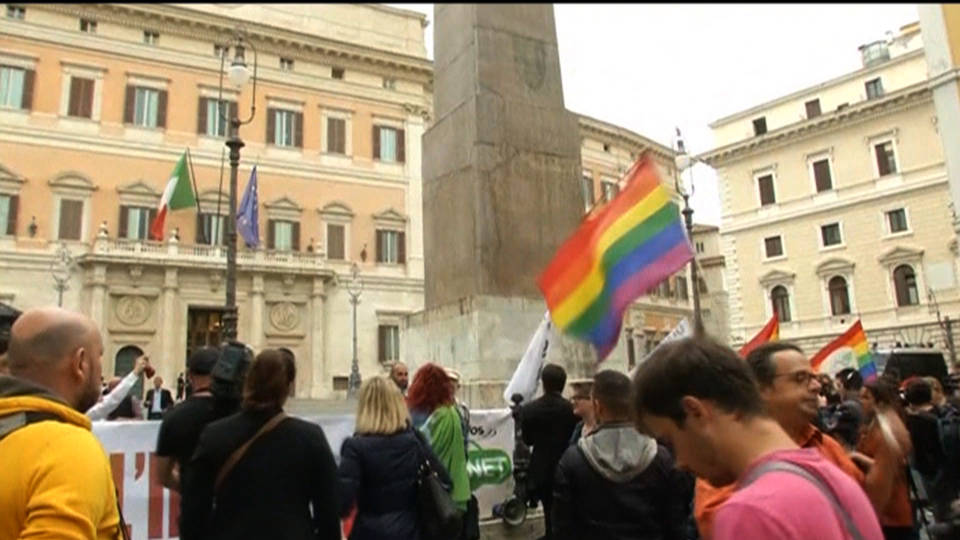
The Italian Parliament has approved a law recognizing civil unions for same-sex couples. The law falls short of legalizing same-sex marriages, and it will not allow people in same-sex civil unions to legally adopt their partner’s biological children. Aurelio Mancuso, president of Equality Italy, heralded the move.
Aurelio Mancuso: "Today is an historic day, historic like the historic days we had on divorce, on abortion, on family rights. Today, Italy will see a real change, civil rights will take a huge step forward. Our next objective is equal marriage rights. But today we are obviously satisfied."
TOPICS:
Italy
LGBT
Shell Abandons All But One Lease for Drilling in Arctic's Chukchi Sea

Oil giant Shell has announced it is abandoning all but one of its federal offshore leases for drilling in Alaska’s remote Chukchi Sea. Last summer, the Obama administration approved Shell’s permit to drill in the remote Arctic waters, despite fierce opposition from environmental groups. Shell dropped its leases after its exploratory well in the Chukchi Sea showed only traces of oil and gas. On Tuesday, Greenpeace campaigner Vicky Wyatt called for further protection of the Arctic, saying: "President Obama must seize this opportunity and place the entire Arctic and U.S. outer continental shelf off limits to the fossil fuel industry for good."
TOPICS:
Climate Change
Natural Gas & Oil Drilling
George Zimmerman to Auction Off Gun He Used to Kill Trayvon Martin
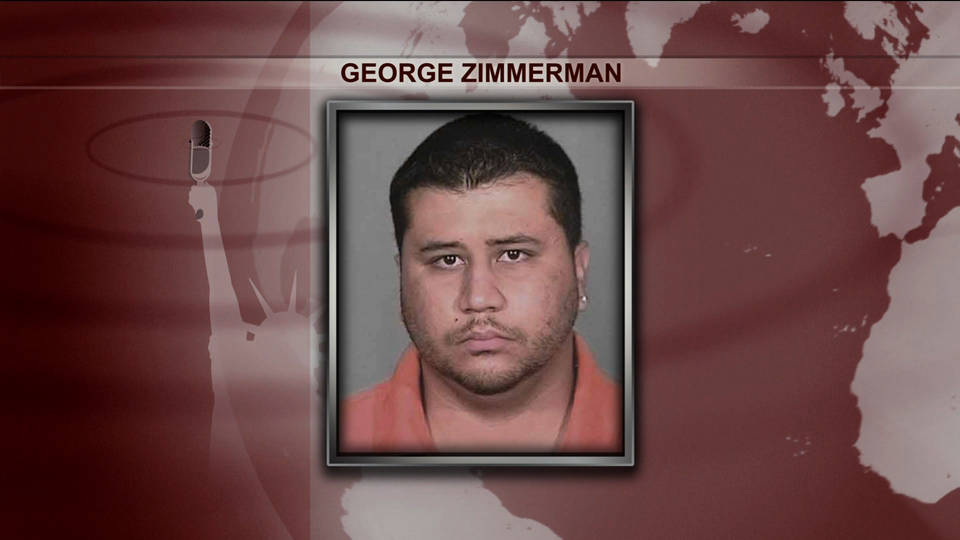
George Zimmerman is planning to auction off the gun he used to kill unarmed African-American teenager Trayvon Martin. Zimmerman has listed the firearm on GunBroker.com with a starting price of $5,000. Bidding is scheduled to begin today. Zimmerman wrote in the listing that he would donate a portion of the proceeds to "fight BLM [Black Lives Matter] violence against Law Enforcement officers."
TOPICS:
Trayvon Martin
Robert Dear, Who Killed 3 at Planned Parenthood, Unfit to Stand Trial
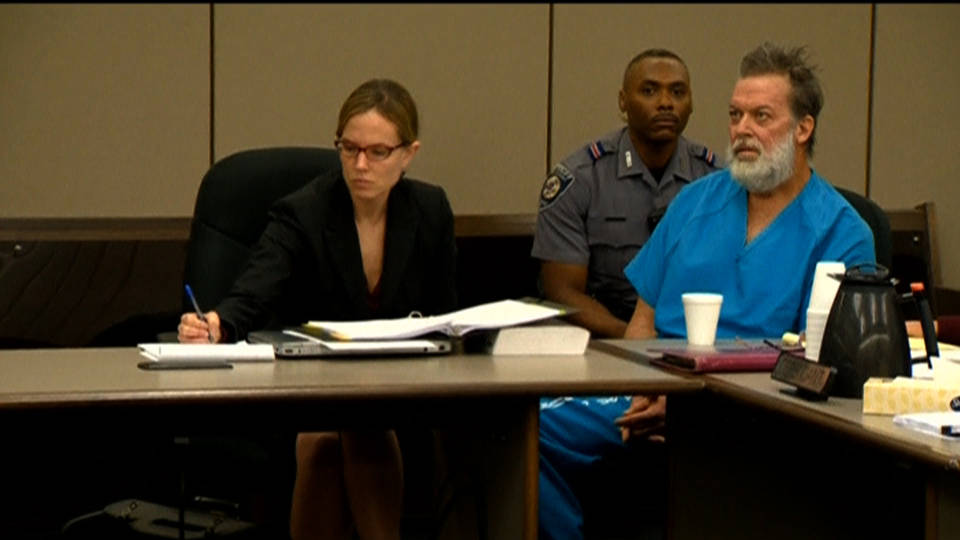
A Colorado judge has found Robert Lewis Dear mentally incompetent and unfit to stand trial over the November shooting spree at a Planned Parenthood clinic, which killed three people and wounded nine others. Dear has admitted to the shooting, saying he targeted Planned Parenthood "because it’s murdering little babies." The case is now on hold. Dear has been sent to a state mental hospital for treatment.
TOPICS:
Abortion
Top 25 Hedge Fund Managers Earn $13 Billion in 2015
In financial news, the world’s top 25 hedge fund managers earned a staggering $13 billion last year. This means that only 25 men earned more than the entire economies of some countries, including Nicaragua and the Bahamas. Two men—Kenneth Griffin of Citadel and James Simons of Renaissance Technologies—each earned $1.7 billion last year. Both men have poured millions into the 2016 presidential race backing Republican candidates who have since dropped out. Simons is now backing Hillary Clinton, with more than $2 million in donations so far. Griffin has also been a major supporter of Chicago Mayor Rahm Emanuel. He was the biggest donor to Emanuel’s 2015 re-election campaign and has been quoted as saying that instead of closing 50 Chicago public schools, Mayor Emanuel should have closed 125 schools across Chicago.
TOPICS:
Campaign Finance
Climate Activists Drive Chairman of Energy Commission from Stage
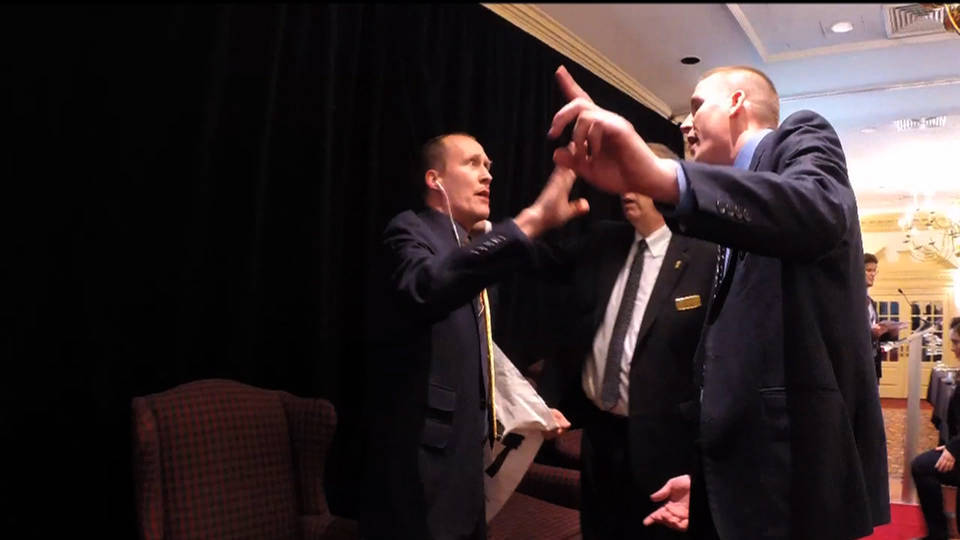
And in upstate New York, climate activists disrupted a power plant conference and forced the chairman of the Federal Energy Regulatory Commission, Norman Bay, off the stage. The protesters were calling for fossil fuels to be kept in the ground. It’s the latest disruption targeting the little-known federal agency, which is responsible for regulating the natural gas industry, hydroelectric projects and oil pipelines. This clip begins with Chairman Norman Bay.
Norman Bay: "A case to be made for a market-based approach to further important public policies has to be made."
Protester: "As you all know, the World Health Organization and the leading scientists on this planet have said, 'Keep it on the ground, or sign the death warrants of hundreds of millions of people.'"
TOPICS:
Climate Change
Donate today:
Follow:


SPEAKING EVENTS

5/12 New York, NY
5/13 Washington, DC
5/14 Portland, ME
5/14 Bangor, ME
5/15 Bar Harbor, ME
5/17 Chicago, IL
5/18 Madison, WI
5/19 Toronto, ON
5/20 Toronto, ON
5/21 Troy, NY
5/22 New York, NY
more
NEW BOOK


"Obama Should Heed Hiroshima's Survivors" by Amy Goodman & Denis Moynihan
The White House announced this week that President Barack Obama will visit Hiroshima, the site of the world’s first atomic-bomb attack. He will be the first sitting president to go there, and only the second president ever, after former President Jimmy Carter visited in 1984. Obama’s pilgrimage to Hiroshima, where 140,000 people were killed and another 100,000 seriously injured on Aug. 6, 1945, will not be accompanied by a formal apology. White House press secretary Josh Earnest said the trip was to highlight Obama’s “continued commitment to pursuing the peace and security of a world without nuclear weapons.” Yet the Obama administration also recently revealed its 30-year, $1 trillion plan to modernize the entire U.S. nuclear arsenal.
With each passing year, fewer and fewer survivors of the horrific attacks on Hiroshima and Nagasaki remain to provide eyewitness accounts. These survivors are referred to with great respect in Japan as “hibakusha.” In 2014, we were given a tour of the Hiroshima Peace Memorial Park by a hibakusha, Koji Hosokawa. He was 17 in 1945. His sister was 13. “My biggest sorrow in my life is about my younger sister, who died in the atomic bomb,” he said.
While in Japan, we also went to Tokyo to speak with the world-renowned writer Kenzaburo Oe in his publisher’s office. He won the 1994 Nobel Prize for literature. We asked him if President Obama should apologize for the two atomic bombings: “I am not seeking an apology, whether from the president or from any kind of person, in regards to this issue,” he told us. “I believe the fact that humanity did create these nuclear weapons is a crime that all of humanity is responsible for. And I believe this is an issue of a much greater scale than any individual politician could make an apology for.” Oe, 81, is not a hibakusha, but is a survivor of World War II, and the experience as a child deeply impacted him.
As if anticipating the criticism that Obama is now receiving, accused of mounting an “apology tour,” Kenzaburo Oe said in 2014: “I believe that if Mr. Obama were to come to the memorial ceremonies in Hiroshima or Nagasaki, for example, what he could do is come together with the hibakusha, the survivors, and share that moment of silence, and also express considering the issue of nuclear weapons from the perspective of all humanity and how important nuclear abolition is. [This,] I think, would be the most important thing that any politician or representative could do at this time.”
Since those two devastating bombings in 1945, on Aug. 6 in Hiroshima and Aug. 9 in Nagasaki, there have thankfully been no more military attacks with nuclear weapons. The U.S. and the Soviet Union came close, and nuclear warheads remain armed and aimed in both the U.S. and Russian arsenals. Kevin Martin of Peace Action, responding to the news of Obama’s planned trip to Hiroshima, also places little importance on an apology. Instead, he offers this brief list of to-do items for the president:
“Taking our nuclear weapons off of hair-trigger alert, separating the warheads from their delivery systems, initiating negotiations for the elimination of nuclear weapons globally, initiating talks on a Middle East zone free of weapons of mass destruction. ... But even the current deployed nuclear weapons, we could go down to a thousand or fewer, as the Pentagon has suggested in the past. Those are just some of the steps that would be meaningful and worth a trip to Hiroshima.”
The Hiroshima Peace Memorial Park is a beautiful, haunting place. The most iconic landmark is the “A-bomb dome,” atop a large building that was not completely destroyed. As we left the memorial, Koji Hosokawa told us to stop. He looked us in the eye and told us not to forget the victims: “People lived here. They lived here.” President Obama should meet Koji Hosokawa and other hibakusha, and hear their stories.
WORK WITH DN!

Video News Production Fellowship
Internships
WEB EXCLUSIVE

Web Exclusive: Reed Brody & Michael Smith Remember Michael Ratner (Part 2)
207 West 25th Street, 11th Floor
New York, New York 10001, United States
---------------------
---------------------

No comments:
Post a Comment