PCUSA faith community takes flight celebrating Appalachian music and culture"

PRACTICAL WISDOM FOR LEADING CONGREGATIONS

Faith and Leadership
PCUSA faith community takes flight celebrating Appalachian music and cultureAN ALTERNATIVE FAITH COMMUNITY CELEBRATES LOCAL CULTURE
Tuesday services, rockers for pews, a Mason jar chalice and mountain music -- Wild Goose Christian Community is an alternative faith community that celebrates local Appalachian culture.
The drive to Indian Valley in rural Floyd County, Virginia, a beautiful mountainous region off the Blue Ridge Parkway, is a time of preparation for some travelers making the trip on a recent late Tuesday afternoon.
In mid-April, the rolling hills are bright green. Miles of split-rail fences pass in a whoosh. Grazing cows dot the hillsides. Blooming dogwoods and flame azaleas streak the roadways.
At the top of Macks Mountain Road, a large sign appears: Wild Goose Christian Community. A brick church painted white rises in the distance. At the top of the front stairs, two white rockers sit on either side of a plain colonial-style door.

In mid-April, the rolling hills are bright green. Miles of split-rail fences pass in a whoosh. Grazing cows dot the hillsides. Blooming dogwoods and flame azaleas streak the roadways.
At the top of Macks Mountain Road, a large sign appears: Wild Goose Christian Community. A brick church painted white rises in the distance. At the top of the front stairs, two white rockers sit on either side of a plain colonial-style door.
Peggy Slate arrives for the Tuesday night service at Wild Goose Christian Community, former home of Indian River Valley Presbyterian Church.
Here, a group of mostly middle-aged people -- 16 this week -- gather on Tuesday evenings for a potluck followed by a conversation about the Christian faith, conducted in the round on mismatched rocking chairs.
"I know for me, personally, when I get in the car, church starts," said Greg Wolford, who drives an hour and 15 minutes from Roanoke, Virginia, to attend. "I start to get myself in a mindset of Wild Goose, and I stay that way until I get home."
That Wild Goose mindset is welcoming, open and supportive of mountain culture. It's especially appealing to Wolford, a 53-year-old computer professional who was born in the mountains but quit church more than 30 years ago.
"I know for me, personally, when I get in the car, church starts," said Greg Wolford, who drives an hour and 15 minutes from Roanoke, Virginia, to attend. "I start to get myself in a mindset of Wild Goose, and I stay that way until I get home."
That Wild Goose mindset is welcoming, open and supportive of mountain culture. It's especially appealing to Wolford, a 53-year-old computer professional who was born in the mountains but quit church more than 30 years ago.
When does church start for you? When does it end?
What is your church’s mindset?
Like some others, Wolford first heard about Wild Goose from a story broadcast on a local public radio station, and he quickly became a die-hard fan.
Since it opened five years ago, the congregation (which has no formal membership) has emerged as an example of an alternative faith community focused on drawing people who don’t find traditional churches -- whether old-style liturgical or big-box megachurch -- appealing.

Wild Goose is part of the Protestant mainline -- Presbyterian Church (U.S.A.) -- but it doesn’t act like it. Here the service begins with communion from a Mason jar followed by Appalachian singing led by two musicians on banjo and guitar.
There are no pews in this church. Right now, there’s no pastor, either. The founding pastor moved to Baltimore last fall to be closer to family, but the congregation is hoping to find a new one to fill the vacancy.
At a time when many churches are closing and dying, Wild Goose has drawn attention far beyond the Appalachian Mountains for its inspired approach to ministry. It is one of a dozen congregations profiled in “Divergent Church: The Bright Promise of Alternative Faith Communities,” by Tim Shapiro and Kara Faris of the Center for Congregations in Indianapolis.
“We were looking to find congregations that were innovative or creative or might be attractive to people who would otherwise not want to go to a traditional church or a contemporary church,” said Faris, the center’s resource grants director.
For Wolford, the congregation is a perfect fit: “There were a lot of elements to traditional church that really turned me off,” he said.
At Wild Goose, he’s been able to nurture his spiritual yearnings and remain true to who he is. He’s on a spiritual journey, and he looks to this fellowship of mountain people to guide him through.

It began with Appalachian music.
The Rev. Edwin Lacy grew up in the Appalachian Mountains hearing his father, a banjo player, make old-time mountain and bluegrass music. After graduating from college, he too took up the banjo and played professionally for about 15 years before going to seminary and becoming an ordained minister in the Presbyterian Church (U.S.A.).
In 2012, Lacy was leading a PCUSA church in Bristol, Virginia, about a two-hour drive to the west, when he heard that the Indian Valley Presbyterian Church in Floyd County had closed. Like many congregations in the Abingdon Presbytery, which stretches across 13 counties in southwestern Virginia, Indian Valley Presbyterian had dwindled in size over the years.
Lacy knew about the church, having lived in the county -- a renowned center of Appalachian music -- 20 years earlier. (The town of Floyd, 19 miles away, swells from 400 people to 4,000 on Friday evenings, when music lovers converge to listen, play and dance to Appalachian music.)
And Lacy had an idea. Instead of closing the church and selling the building, how about trying something different in that remote mountain spot?
Lacy wanted to take advantage of the area’s musical heritage to draw in a newer generation of mountain people: artisans, crafters, musicians and Florida snowbirds who had been buying up homes in the region.
Soon, he approached the presbytery with a plan to form an alternative congregation. It happened to coincide with a denominational initiative called “1001 New Worshiping Communities,”(link is external) a PCUSA project to start as many congregations in 10 years to meet the needs of a changing culture.
The presbytery agreed, and by 2013, Lacy and a retired contractor began ripping out the carpet and the pews in the old Indian Valley church and installing decorative wooden beams on the ceiling and a gas fireplace.
“We wanted to make sure it didn’t feel like a traditional church when you walked in,” Lacy said. “We knew we were reaching out to people who had decided for various reasons not to be part of a traditional church.”
Lacy didn’t want to hold services on Sunday mornings or Wednesday evenings, so as not to compete with other churches. He also wanted to avoid Friday evenings, when people might be heading out of town. That left Mondays, Tuesdays and Thursdays. He chose Tuesdays.
Music would be central to this alternative community. So he reached out to Mac Traynham(link is external), one of the best Appalachian musicians in the area and a master builder of old-time banjos. Traynham, it turned out, used to attend Indian Valley Presbyterian years ago when his children were young.
Lacy also came up with a novel name for the community: Wild Goose. He figured since the majority of people who settled Southern Appalachia were Scots-Irish, they might appreciate the Celtic symbol for the Holy Spirit. And there was another reason the name worked: creating such a community can seem, at times, like a proverbial wild goose chase.
So far, however, the goose chase has been a success. Though part of the PCUSA, Wild Goose is not officially a “church” but rather a mission, or “worshipping community.”

“In an area where things can get pretty static, it’s interesting to see the Holy Spirit working in new, wonderful ways,” said Palubicki, who serves on the Abingdon Presbytery’s church development committee.
History of Christian renewal
Today, many of those same churches are facing different headwinds: a nationwide decline in church attendance and the flight of many residents to more urban areas with better jobs and greater opportunities.
“I don’t go to church on Sundays,” said Susan Slate, 32, one of Wild Goose’s youngest and most active participants. “I find a lot of them to be pretty inauthentic. It’s hard to sit through a sermon. I’d rather be talked with than talked to.”
Under Lacy’s leadership, Wild Goose grew to a healthy size, especially in the summer months, when it would draw up to 50 people. Last fall, though, Lacy moved to Baltimore to be closer to his children and grandchildren. Tuesday evenings now draw around 15 to 20 people in the winter months, 30 to 40 in the summer. Most if not all of the regulars drive an average of 30 minutes to attend.

The community is now looking for a new leader and is working with the presbytery to find a pastor who could serve Wild Goose and two other, more traditional PCUSA churches in the area.
That leader will have to have an appreciation for Appalachian music. The community has monthly concerts and square dances in the church and would like to see those continue.
“It’s about enjoying the music and Appalachian traditions that bring people together, like songs and tunes for dancing,” said Traynham, the music leader. “Some churches look down on that stuff. [Lacy] wanted to try to encourage people to have a great time and get to know each other, become friends and support each other -- foster community spirit, I guess you could say.”
Though some participants attend other churches on Sundays, others consider Wild Goose their one and only church. The emphasis on local culture is especially appealing to many of those who don’t attend church anywhere else.
Unplugging from the world
On a recent Tuesday night, folks began streaming into the church basement after 6 p.m., bearing Crock-Pots and covered dishes: mac and cheese, pulled pork, mushroom lasagna, potato soup.

One woman relayed stories about her recent bicycle trip to Vietnam, Cambodia and Thailand. Another talked about a new church with the name Wild Goose that had just formed in Bonsack, a town north of Roanoke.
The Indian Valley area is so isolated that cellphone signals are especially weak, and at the Tuesday gatherings, nobody pulls out a phone. For Slate, who drives an hour from Blacksburg where she works as a residency coordinator at a hospital, that’s a relief.
“It’s nice to unplug and not get texts or phone calls or anything,” she said.
By 7:45, participants headed upstairs to take their seats in rocking chairs. Guydell Slate, Susan’s father, an elder in the Presbyterian Church, served communion, pouring wine into a Mason jar and passing around a long Italian roll for people to break off pieces and dip into the wine, while Traynham played a solo on the fiddle.
After singing “Keep on the Sunny Side” and “A Beautiful Life,” the group, led by Charlie Martin, discussed four verses from Luke 9 in which Jesus sends out his disciples to proclaim his message: “He told them: ‘Take nothing for the journey -- no staff, no bag, no bread, no money, no extra shirt. Whatever house you enter, stay there until you leave that town’” (Luke 9:3-4 NIV).
The discussion touched on changing expectations of hospitality, attitudes toward missionaries who knock on people’s doors and learning to accept rejection.
After 30 minutes, the discussion wound down and the banjo and guitar players picked up their instruments for another round of songs. Finally, people stood up, held hands in a circle and bid each other peace and goodbye.
Outside, the sun had long ago set. As engines revved and tires crunched across the gravel drive, the worshippers began their descent down the mountain with the stars to guide them home.
Questions to consider:
Since it opened five years ago, the congregation (which has no formal membership) has emerged as an example of an alternative faith community focused on drawing people who don’t find traditional churches -- whether old-style liturgical or big-box megachurch -- appealing.
Worship begins with communion, as Wild Goose participants pass bread and wine around the circle.
Communion from a Mason jarWild Goose is part of the Protestant mainline -- Presbyterian Church (U.S.A.) -- but it doesn’t act like it. Here the service begins with communion from a Mason jar followed by Appalachian singing led by two musicians on banjo and guitar.
There are no pews in this church. Right now, there’s no pastor, either. The founding pastor moved to Baltimore last fall to be closer to family, but the congregation is hoping to find a new one to fill the vacancy.
At a time when many churches are closing and dying, Wild Goose has drawn attention far beyond the Appalachian Mountains for its inspired approach to ministry. It is one of a dozen congregations profiled in “Divergent Church: The Bright Promise of Alternative Faith Communities,” by Tim Shapiro and Kara Faris of the Center for Congregations in Indianapolis.
“We were looking to find congregations that were innovative or creative or might be attractive to people who would otherwise not want to go to a traditional church or a contemporary church,” said Faris, the center’s resource grants director.
For Wolford, the congregation is a perfect fit: “There were a lot of elements to traditional church that really turned me off,” he said.
At Wild Goose, he’s been able to nurture his spiritual yearnings and remain true to who he is. He’s on a spiritual journey, and he looks to this fellowship of mountain people to guide him through.
The Wild Goose community sings a hymn, accompanied by Malcolm Smith on banjo and Mac Traynham on guitar.
The wild goose takes flightIt began with Appalachian music.
The Rev. Edwin Lacy grew up in the Appalachian Mountains hearing his father, a banjo player, make old-time mountain and bluegrass music. After graduating from college, he too took up the banjo and played professionally for about 15 years before going to seminary and becoming an ordained minister in the Presbyterian Church (U.S.A.).
In 2012, Lacy was leading a PCUSA church in Bristol, Virginia, about a two-hour drive to the west, when he heard that the Indian Valley Presbyterian Church in Floyd County had closed. Like many congregations in the Abingdon Presbytery, which stretches across 13 counties in southwestern Virginia, Indian Valley Presbyterian had dwindled in size over the years.
Lacy knew about the church, having lived in the county -- a renowned center of Appalachian music -- 20 years earlier. (The town of Floyd, 19 miles away, swells from 400 people to 4,000 on Friday evenings, when music lovers converge to listen, play and dance to Appalachian music.)
And Lacy had an idea. Instead of closing the church and selling the building, how about trying something different in that remote mountain spot?
Lacy wanted to take advantage of the area’s musical heritage to draw in a newer generation of mountain people: artisans, crafters, musicians and Florida snowbirds who had been buying up homes in the region.
Soon, he approached the presbytery with a plan to form an alternative congregation. It happened to coincide with a denominational initiative called “1001 New Worshiping Communities,”(link is external) a PCUSA project to start as many congregations in 10 years to meet the needs of a changing culture.
The presbytery agreed, and by 2013, Lacy and a retired contractor began ripping out the carpet and the pews in the old Indian Valley church and installing decorative wooden beams on the ceiling and a gas fireplace.
“We wanted to make sure it didn’t feel like a traditional church when you walked in,” Lacy said. “We knew we were reaching out to people who had decided for various reasons not to be part of a traditional church.”
Lacy didn’t want to hold services on Sunday mornings or Wednesday evenings, so as not to compete with other churches. He also wanted to avoid Friday evenings, when people might be heading out of town. That left Mondays, Tuesdays and Thursdays. He chose Tuesdays.
Music would be central to this alternative community. So he reached out to Mac Traynham(link is external), one of the best Appalachian musicians in the area and a master builder of old-time banjos. Traynham, it turned out, used to attend Indian Valley Presbyterian years ago when his children were young.
Lacy also came up with a novel name for the community: Wild Goose. He figured since the majority of people who settled Southern Appalachia were Scots-Irish, they might appreciate the Celtic symbol for the Holy Spirit. And there was another reason the name worked: creating such a community can seem, at times, like a proverbial wild goose chase.
So far, however, the goose chase has been a success. Though part of the PCUSA, Wild Goose is not officially a “church” but rather a mission, or “worshipping community.”
At the top of Macks Mountain Road, the Wild Goose Christian Community sign is a welcome sight for those journeying to the Tuesday night service.
Whatever its official status, Wild Goose Christian Community has been exciting to watch, said the Rev. Tony Palubicki, the pastor of Big Stone Gap Presbyterian Church in Big Stone Gap, Virginia.“In an area where things can get pretty static, it’s interesting to see the Holy Spirit working in new, wonderful ways,” said Palubicki, who serves on the Abingdon Presbytery’s church development committee.
History of Christian renewal
Renewing Christian community in rural Appalachia has a long history.
Back in the 1930s and ’40s, Floyd County and the surrounding region, like much of Southern Appalachia, was isolated and poor, with high rates of alcoholism and violence. The Rev. Bob Childress,(link is external) a Presbyterian minister who grew up in the county’s Buffalo Mountain community, took it upon himself to reform the region’s culture and educate its young. Traveling tens of thousands of miles a year as a circuit preacher, ministering to families and leading as many as 14 services a week, he helped establish a dozen schools and churches, including the Indian Valley church.Today, many of those same churches are facing different headwinds: a nationwide decline in church attendance and the flight of many residents to more urban areas with better jobs and greater opportunities.
“I don’t go to church on Sundays,” said Susan Slate, 32, one of Wild Goose’s youngest and most active participants. “I find a lot of them to be pretty inauthentic. It’s hard to sit through a sermon. I’d rather be talked with than talked to.”
Does your church talk "with" or "to"? How does that shape worship?
Today, only half the churches in the Abingdon Presbytery are served full time by ordained ministers. In some cases, one minister will serve several churches. In others, a lay pastor will be appointed to direct the local congregation.Under Lacy’s leadership, Wild Goose grew to a healthy size, especially in the summer months, when it would draw up to 50 people. Last fall, though, Lacy moved to Baltimore to be closer to his children and grandchildren. Tuesday evenings now draw around 15 to 20 people in the winter months, 30 to 40 in the summer. Most if not all of the regulars drive an average of 30 minutes to attend.
Worshippers gather in a circle, hold hands and pray as the service comes to a close.
But Wild Goose has a dedicated following. And those people are not about to give up.
What is the appeal of Wild Goose Christian Community? What does it provide that your church doesn’t?
“It’s my intention to do whatever I can to support that group and make it successful,” Wolford said. “If I have to climb up on the roof to clean the gutters or show up with a group to tear up the flooring, I’m gonna do what needs to be done.”The community is now looking for a new leader and is working with the presbytery to find a pastor who could serve Wild Goose and two other, more traditional PCUSA churches in the area.
That leader will have to have an appreciation for Appalachian music. The community has monthly concerts and square dances in the church and would like to see those continue.
“It’s about enjoying the music and Appalachian traditions that bring people together, like songs and tunes for dancing,” said Traynham, the music leader. “Some churches look down on that stuff. [Lacy] wanted to try to encourage people to have a great time and get to know each other, become friends and support each other -- foster community spirit, I guess you could say.”
Though some participants attend other churches on Sundays, others consider Wild Goose their one and only church. The emphasis on local culture is especially appealing to many of those who don’t attend church anywhere else.
Appalachia has a distinct local culture. How well does your church reflect its cultural context?
“At Wild Goose, [people] understood the music, they understood the food, they understood the interior space -- quilts and rocking chairs,” said Faris, the author of the book on alternative church. “It felt like home to folks who didn’t feel at home in other churches.”Unplugging from the world
On a recent Tuesday night, folks began streaming into the church basement after 6 p.m., bearing Crock-Pots and covered dishes: mac and cheese, pulled pork, mushroom lasagna, potato soup.
Before the Tuesday service, Wild Goose participants make their way through a potluck of comfort food.
One person volunteered a short blessing and then lines formed around a long table. After heaping comfort food onto paper plates, participants sat down at round tables to eat and talk.One woman relayed stories about her recent bicycle trip to Vietnam, Cambodia and Thailand. Another talked about a new church with the name Wild Goose that had just formed in Bonsack, a town north of Roanoke.
The Indian Valley area is so isolated that cellphone signals are especially weak, and at the Tuesday gatherings, nobody pulls out a phone. For Slate, who drives an hour from Blacksburg where she works as a residency coordinator at a hospital, that’s a relief.
“It’s nice to unplug and not get texts or phone calls or anything,” she said.
By 7:45, participants headed upstairs to take their seats in rocking chairs. Guydell Slate, Susan’s father, an elder in the Presbyterian Church, served communion, pouring wine into a Mason jar and passing around a long Italian roll for people to break off pieces and dip into the wine, while Traynham played a solo on the fiddle.
After singing “Keep on the Sunny Side” and “A Beautiful Life,” the group, led by Charlie Martin, discussed four verses from Luke 9 in which Jesus sends out his disciples to proclaim his message: “He told them: ‘Take nothing for the journey -- no staff, no bag, no bread, no money, no extra shirt. Whatever house you enter, stay there until you leave that town’” (Luke 9:3-4 NIV).
The discussion touched on changing expectations of hospitality, attitudes toward missionaries who knock on people’s doors and learning to accept rejection.
After 30 minutes, the discussion wound down and the banjo and guitar players picked up their instruments for another round of songs. Finally, people stood up, held hands in a circle and bid each other peace and goodbye.
Outside, the sun had long ago set. As engines revved and tires crunched across the gravel drive, the worshippers began their descent down the mountain with the stars to guide them home.
Questions to consider:
- When does church start for you? When does it end?
- What is your church’s mindset?
- What is the appeal of Wild Goose Christian Community? What does it provide that your church doesn’t?
- What does it mean to be talked with rather than to? How does that shape worship at your church?
- Appalachia is an area that still has a distinct local culture. What is the cultural context for your church? How does that shape its ministry?
Read more about Wild Goose Christian Community »

Faith and Leadership
CAN THESE BONESFaith and Leadership
A Faith & Leadership podcast »
EDUCATION, SEMINARY, TECHNOLOGY, TEACHING
Episode 10: Eric Barreto on why #Ferguson should be taught in seminary
CAN THESE BONES PODCAST: ERIC BARRETO

In this episode of “Can These Bones,” co-host Laura Everett talks with Eric Barreto, a professor at Princeton Theological Seminary, about training students to parse Greek verbs and become wise readers of Scriptures and communities.
The Rev. Dr. Eric Barreto moved around a lot growing up. Born in Puerto Rico, he moved with his family to Louisiana, Missouri, Kansas and upstate New York -- all before he went to college in Oklahoma and then seminary in New Jersey. This experience taught him how to incorporate himself quickly into new communities as well as sharpen his own sense of identity within those communities. It's a skill he uses -- and teaches -- as the Frederick and Margaret L. Weyerhaeuser Associate Professor of New Testament at Princeton Theological Seminary. In his conversation with "Can These Bones" co-host Laura Everett, he talks about why it's important to bring events of the world into the classroom, what he has learned from teaching online, and why he is excited about the millennial generation.


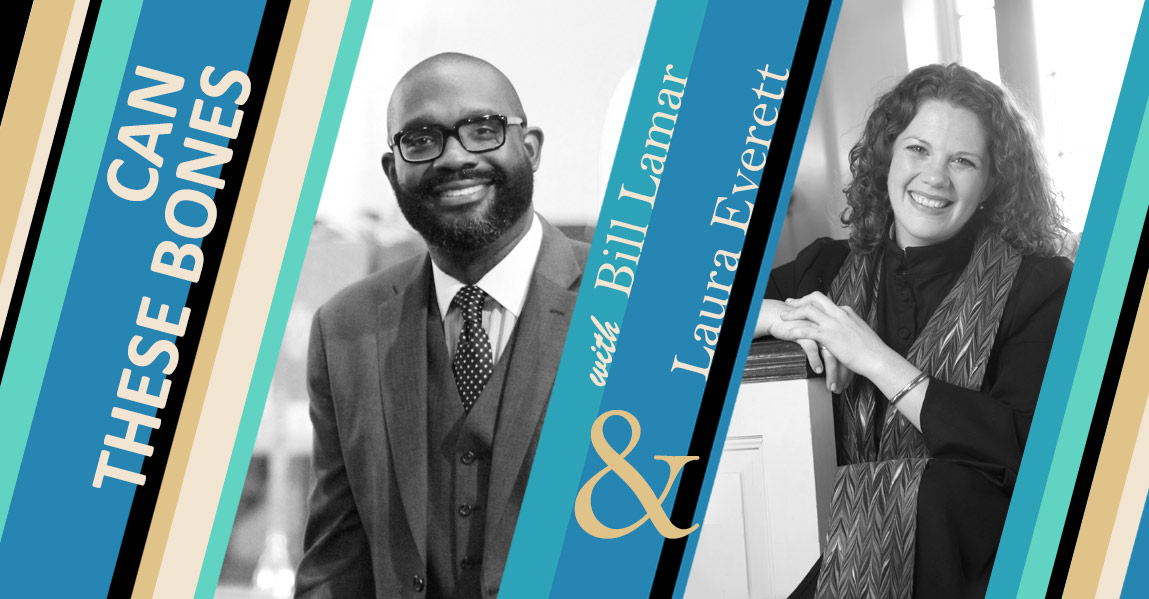
Listen to all the episodes and learn more about the hosts.
More from Eric Barreto
Princeton Theological Seminary(link is external)
Twitter: @ericbarreto(link is external)
Working Preacher: Barreto bio and contributions(link is external)
Sojourners: Barreto posts(link is external)
Huffington Post: Barreto stories(link is external)
Princeton Theological Seminary: Hispanic Theological Initiative(link is external)
The #Ferguson Syllabus,(link is external) by Marcia Chatelain
The Charleston Syllabus,(link is external) by the African American Intellectual History Society
The Charlottesville Syllabus,(link is external) by the UVa Graduate Coalition
Lemonade Syllabus,(link is external) by Candice Benbow
Transcript

Laura Everett: From Faith & Leadership, this is “Can These Bones,” a podcast that asks a fresh set of questions about leadership and the future of the church.
I’m Laura Everett.
Bill Lamar: And I’m Bill Lamar. This is episode 10 of a series of conversations with leaders from the church and other fields. Through this podcast, we want to share our hope in the resurrection and perhaps breathe life into leaders struggling in their own “valley of dry bones.”
I’m Laura Everett.
Bill Lamar: And I’m Bill Lamar. This is episode 10 of a series of conversations with leaders from the church and other fields. Through this podcast, we want to share our hope in the resurrection and perhaps breathe life into leaders struggling in their own “valley of dry bones.”
Laura Everett: Bill, I’m so glad we get to have Eric on this program. Eric is an amazing scholar, a deeply devoted Christian who puts his teaching in service of the church. And he’s carving out an interesting space as a public theologian. He’s writing for Working Preacher, ON Scripture and the Huffington Post.
He’s also been deeply invested in bringing up a new generation of scholars through the Hispanic Theological Initiative. Eric is a Baptist pastor of Puerto Rican descent, and he’s clear that his scholarship is in service to the church and forming Christian leaders who simultaneously engage with Scripture and the world around them. I’m so glad we get to have Eric on this program.
Bill Lamar: Let’s hear your conversation.
Laura Everett: Eric Barreto is the WeyerhaeuserAssociate Professor of New Testament at Princeton Theological Seminary. There is so much to say about Eric, but I want to begin with this: Eric has what I consider my favorite Twitter bio of all time. I’m hoping that drives you all to go find him. He is a public theologian and a public Scripture scholar. He is an exceedingly good human. Eric is invested in scholarship for the sake of the church.
Eric Barreto, welcome to “Can These Bones,” a Faith & Leadership podcast.
Eric Barreto: Thanks for the gracious introduction, Laura. Thank you so much.
Laura Everett: It’s really nice to be in conversation with you, Eric.
Eric Barreto: Thank you. Looking forward to it.
Laura Everett: So you’ve claimed a very clear identity as a teacher. I’m curious about how intentional you’ve been about how to be a good teacher, and what that looks like for you.
Eric Barreto: Part of it is that I had really great teachers growing up. I had great models of what it looks like to not just teach content but to help form students into lifelong learners, to form students in figuring out what their identity is, who they are in the eyes of God.
And I think the other thing that changed my teaching experience was that I had to teach online pretty early on in my career. I had no idea how I could teach Greek to 40 to 50 students online. I didn’t know how to do the fonts. I didn’t know how this would work, because all I had seen, all I had experienced, was sitting in a classroom at a desk with a professor or a teacher at the front of the desk.
Now, there is no front of the classroom online. There is no desk, so to speak. There is no classroom, really. But still, we’re trying to educate; we’re trying to learn from one another.
And I think it was that experience of having to basically start over -- strip teaching down to its essential parts and figure out, what does this look like? What is it that we’re trying to do, besides just communicating a whole bunch of data or getting people to be able to parrot back all the things that I spoke to them? I think that opened up a lot of possibilities for me.
Especially because these students were doing seminary usually in the midst of full-time jobs, full-time ministry. And the question was, if they’re willing to take time away from their family, from their work, and invest in this, what is it that I’m going to give them besides the ability to parse these verbs -- as important as that is? What’s that for?
I think that was really transformative for my teaching, to think in that kind of backward design idea: what is it that we’re doing this for?
Laura Everett: One of the things we’ve seen of late is that there’s been a proliferation of online syllabi created to help folks get the deeper context after an event. There’s been the Ferguson Syllabus or the Charleston Syllabus -- or even Candice Benbow’s Lemonade Syllabus, to help unpack all that’s within Beyonce’s latest album.
How has your engagement with social media shifted how you think about what comes into your classroom?
Eric Barreto: That’s a great question. A couple of academic years ago, this really came into sharp relief for me, because it was the summer of Ferguson and bracketed at the other end by a whole litany of other events around racial justice, including, at the end, the protests in Baltimore.
What I was struck by was that I first heard about Michael Brown on Twitter from African-American friends who I was following. I went to church that Sunday in a church that wasn’t an African-American church, and therefore I didn’t hear a word about Michael Brown that Sunday.
But I knew that there were other communities elsewhere that this was the primary thing on people’s hearts. This is what they were thinking about; this is what they were praying about; this is what they were worrying about.
And it struck me what different worlds these different ecclesial communities live in. And that it was important for my students to know that there was a bigger world beyond their congregations. It includes their congregation -- their congregation is important -- but that’s within a larger context of what God’s people are going through and what God is up to in the world.
So for me, part of teaching is to just spark people’s curiosity, imagination. When it comes to Scripture, for example, how [important] is it not just that I read, and have a full sense of my identity and how my identity shapes how and why I read, but also to know that there are other communities, other people, who read very differently than I do. And that their different readings aren’t just curiosities for me to collect and for me to kind of stare at, but there are these different readings that encounter me, that open up new possibilities, that maybe force me to think about the ways in which my vision is too narrow.
That, by itself -- the way that social media opens up other communities where you can kind of be a curious bystander, where you’re hearing other people’s conversations, you’re hearing other people’s stories, and you never take ownership over them, but you are a faithful witness to the things that other communities are going through -- I’ve realized that I want to inculcate that kind of curiosity, that kind of wisdom, that kind of listening, in the ways that my students read Scripture, and in the ways that they read other communities’ readings of Scripture as well.
Laura Everett: Let’s talk about those events, because I think you and I both started seminary in September 2001. So 9/11 shaped our seminary formation and what was at stake in that. And your students now, their semesters are framed by things like the presidency of Donald Trump or white supremacists on parade in Charlottesville and other catastrophic natural and human disasters.
I want to read to you something you wrote about theology in Ferguson. So I’m reading Eric Barreto back to Eric Barreto.
Eric Barreto: Let’s see if I recognize it.
Laura Everett: So Eric, this is what you wrote: “If our theology cannot speak in Ferguson, then I can’t help but wonder if our theology is worthy of its name and even more importantly worthy of the God we yearn to follow. And if we teachers don’t equip our students to speak in places like Ferguson and if we don’t invite them to do so even now, then our pedagogies will leave us poorer as a people and a church. In short then, Ferguson is revelatory. It betrays pedagogies that are not up to the task and belies theologies merely posing as God’s living word. Are we up to the task? Can we teach in such moments?”
That’s what you wrote. And so I want to know how, just at a very personal level, how do you teach after a tragedy? How do you teach about ethnicity in Acts a day after DACA is rescinded? Or how do you go back into the classroom to teach a new declension after Ferguson?
There is what is going on in the world around you and what’s going on in your classroom. What do you do before you step into that classroom at Princeton or go onto that online space?
Eric Barreto: I think that’s maybe the greatest teaching challenge we face in theological education when it comes to pedagogy, that the nature of social media and who our students are and their curiosity about the world means that I can’t just show up the day after anything happens and say, “Well, today we’re going to do the aorist tense.”
There were a couple of moments this last academic year where even in my Greek class I said, “Let’s talk about the things that are happening. Let’s talk about what the presidential election means for communities of faith. What does it mean for communities of color? What does it mean for undocumented folk?”
And I would create that space because I’m not sure people can learn a Greek tense if their hearts are burdened in that way. So you create that space, and then you say, “We’ve created that space. We’ve heard each other; we’ve learned something about each other. And now we’re going to study the aorist, not as a distraction, but because this will equip you to read Scripture in a faithful way that will equip you to answer whatever it is -- that moment of crisis, that moment of tragedy, that moment of joy, whatever it is -- when that community that you’re leading faces the heights or depths.”
There’s something about learning the stuff that matters, not because the aorist is the end to which we are striving, but because it’s a means toward a faithful reading of Scripture.
Same thing in my class on race. That was taught in the fall of last year. There were other events around racial justice. There was the election. And it was a weekly reminder that we were not just engaging an academic question that doesn’t reach out and touch the lives of everyday people all the time. We’re not just reading stuff, these ancient texts that are dusty and old. We are reading these living texts that are still with us and that people still need so, so desperately.
One of the challenges for us, of course, is we can’t respond to everything. And we are living in a media culture where everything is breaking news now, so that nothing is breaking news anymore. So part of what I hope my classes help inculcate is a wisdom to know something about history, to know something about theology, to know something about Scripture, to know something about where we’ve been and where we’re going, so that you know when to respond and how, and not in any kind of automatic way.
I can’t give students rules for how to preach after tragedy. What I can say is, “Here is a bunch of wisdom that we have in these Scriptures, that we have in the traditions that have interpreted these Scriptures. And now you have to go figure it out. And I need you to come back and teach me what you’ve learned in doing so, so that I can help the students who are coming in after you as well.”
It’s an extraordinary set of challenges, but it also feels like an honor that God would call us to this moment. It feels humbling and exciting. And every once in a while, it even encourages my courage along the way.
Laura Everett: You’re making both a pastoral and a pedagogical decision right there.
Eric Barreto: The pedagogical -- the decision that I think teachers are making at that moment is that our students aren’t just brains to be filled. Our students are embodied children of God who suffer, who rejoice. And don’t just know stuff -- they feel stuff. And that feeling stuff is as important as any of the knowledge stuff that we do. So how do we bridge those two?
I haven’t figured that out quite yet. I think our educational system is really good at filling our brains. We’re still trying to figure out what it looks like to be thoughtful, embodied, feeling students for a long time -- for a lifetime. And I think we’re still trying to figure that out.
Laura Everett: You know, one of the questions that we’re asking with “Can These Bones” is, are the bones of our historic institutions able to have life breathed into them? You know, you could be teaching in a high school; you could be teaching in many places. You have chosen theological education as the venue for your teaching vocation.
What is it about theological education that is worth giving your life to?
Eric Barreto: I think primarily, it’s because theological education shapes the church. Theological education shapes the church’s leaders, both ordained and not ordained. It shapes people’s imaginations of who they are, of who we are as God’s people, who we are as Jesus’ followers.
So the challenge of theological education -- I think the joy of it, too -- is that I don’t know what the church is going to look like. And yet I’m educating students to lead a church that we can’t quite see, because God is already running ahead of us, already shaping that church, already planting that church, already nurturing that church.
So that’s why I think theological education is so exciting right now. I think these old bones can live. We’ve seen this before; we’ve experienced this before. The church has learned from moments like this, or moments that are kind of like this but not quite like this. There are things that we can learn from our past. And I think there’s much to lean on in the wisdom of the people that have gone before us. They made a number of mistakes, but I’m sure people who follow after us will be able to point out our mistakes as well.
And unless we trust in God’s grace, [we’ll miss] that even in the midst of all those mistakes, we’ll do something that is for the sake of the church, because God is involved in the midst of all this.
So yeah, I do think these bones can live. And there’s no other place I’d rather be teaching.
Laura Everett: So let’s dig deep into that. The idea that theological education now is preparing leaders for a church that’s coming, that we do not yet know -- in some ways that seems less about content and more about a kind of formation, and maybe even a set of skills. Do you have a sense of what you think some of those skills are our church leaders are going to need for that church that’s coming?
Eric Barreto: I would say it this way, too: that it’s not skills versus content but content that leads toward the nurturing of a certain kind of formation identity and set of skills. Content is still really vital, but it’s not the end of the theological education we’re doing.
I think at least one skill is this online wisdom -- that’s not quite the right word. I always joke, there’s a website called Literally Unbelievable.(link is external) I don’t know if you’ve seen it; it’s -- I think it’s a Tumblr page, where all they do is they take Facebook posts when people post stuff from [sites like] The Onion and think it’s true. It’s just this constant mockery of people thinking this satirical article is actually true, and their outrage and their frustration.
So what kind of wisdom can you nurture in someone, and how they read both text and communities, to be able to tell what’s real and what’s not, what’s true or what’s not true? I think that’s a key set of wisdom, and I hope that reading Scripture well nurtures that kind of wisdom.
And part of what makes the reading of Scripture faithful is that we realize that there’s not just a text in front of us; there’s a whole tradition of reading that has gone before us, and there are many communities right now reading the text very differently than we do. So what does it look like to listen, to be critical, to be generous -- all at the same time? I think that’s one of the key skills that I hope I’m teaching.
Certainly, I want students to know what’s in the Gospel of Luke. I want students to be able to parse a verb. But in the end, it’s about being wise readers of Scriptures and communities. And to be able to then name the ways in which Scripture has formed these communities and the ways in which God is doing something new that God has done before, in a way. It’s that imagination, that God is doing new stuff all the time that actually God has done before, so it’s new but not new. Can you nurture that kind of imagination and help communities nurture that kind of imagination and lean into the realities of a changing world?
Laura Everett: Let’s talk about that that skill you mentioned about being wise readers of communities.
Eric Barreto: Part of the story, too, is that I moved from Puerto Rico when I was 9 years old. We moved to Louisiana and Missouri and to Kansas and upstate New York, and then I went to college in Oklahoma and seminary in New Jersey and then on and on and on -- all these moves.
Especially being usually, along with my sister, one of the only Latino, Latina, Latinx kids in these schools, you learn right away, especially as a teenager -- I learned how to fit in. I learned how to listen. I learned how to change my dialogue, to pick up new slang, to pick up a new accent, just to fit in. There’s that skill of learning how you incorporate yourself into new communities, especially communities that maybe aren’t particularly friendly to your own culture.
But I think that’s only half the lesson. More recently, what I’ve learned is you learn not just how to incorporate yourself; you learn how to sharpen your own sense of identity within these communities. So not just incorporate, not just fit in, but be the person that God has called you to be in this particular place. To say, “For whatever reason, God has brought me to this place. There are certain things that this community can teach me. There are certain things that hopefully I can teach this community.”
So what you do then -- at first, you listen very carefully. You think about history, you think about all the subtext underneath the arguments that go on in a faculty meeting or that drive theological debate. There’s always a long history behind that. And behind that, then, there are a lot of stories about people and relationships.
So you don’t just learn the ideas. You learn about the stories of the people and who they were and what might have driven them. It’s that same skill that I’m asking my students to inculcate. To listen to communities, to listen to stories, and listen how those stories shape identity and the reading of Scriptures.
I think also what I do in these new communities, as I’m moving from place to place, [is to come] with the expectation that God has brought me here for a particular purpose -- not sure what that is, not sure I’ll ever be able to really know, to pinpoint it -- but to know that God has brought me to this place and that there’s something in my story, something in the ways that God has shaped me that this community needs, and that’s why I’m here. That’s why the community brought me, and that’s why God has drawn me to this place.
Laura Everett: Eric, I’m struck by the humility of the way you talk about a classroom. I’m curious about how you think about mutuality and power in education.
Eric Barreto: It’s a great question. I think one of the things is that as a teacher, you eventually learn to lean into all these years of studying you did. I remember early in my years of teaching, I was going to teach a course, and I was worried that I hadn’t prepared enough. And one of my colleagues very helpfully reminded me, she said, “You know, you’ve been studying this stuff for a long time. You probably know a bit more than the students do right now.” So that’s part of it -- that you’ve been preparing for this one classroom session for more than that week and more than that month. It’s a lifetime of study and reflection.
But you’re right that these spaces are not democratic, in a way. I’m still giving grades at the end of the semester. I still get to write the syllabus. I still get to decide what we’re going to read together. I still get to steer where the class goes. So there is a lot of power I wield.
At the same time, for a lot of us, we carry these embodied -- or perceived embodied -- deficits. For those of us who are people of color, we walk into a classroom and we’re going to be, often, thought of differently than our white colleagues are going to be thought of. For my female colleagues, their body itself, for some students, is an obstacle, a deficit, that they need to work through.
Knowing those dynamics -- both that I hold a lot of power because I can shape what we do in the class and also that students hold a lot of power because how they perceive me, how they see me, will shape what we’re able to accomplish together -- thinking about [those dynamics] proves really important, really vital. It’s one of those things I don’t think I have figured out quite yet, but at least naming it is an important step in the midst of all this.
And I wonder, for those of us who don’t have a career in teaching, we spend a lot of time learning at the feet of other people. For us to think about the dynamics of these classroom spaces strikes me as a really important spiritual discipline for us to engage.
Laura Everett: You know, it was my Greek professor who, as I was struggling -- and Greek was not a strength -- Ellen [Bradshaw] Aitken of blessed memory said to me, “The attentiveness you give to these words is a learned attentiveness you give to your people.” That learning to pay attention with that kind of closeness and intimacy is part of what I can learn to do as a pastor.
Eric Barreto: And [knowing] that the people who wrote these words and the people who are still reading these words today really care about what they mean. And it intersects with their lives in the most intimate spaces and the most treacherous places, and the places that people are most afraid to show other people. That when we are leading congregations, inviting them to read Scripture with us, it’s a dangerous but vital thing that we’re doing. It’s inviting people to be really vulnerable. So yeah, even if you’re learning the Greek alphabet, it’s a vulnerable space for us.
Laura Everett: Eric, as we finish our conversation, I want to hear from you from the vantage point of a professor in theological education who looks out on the wide range of students that are coming to study with you -- and really, the other places in the church where you serve as a public scholar. Where are the places where you’re seeing bone connected to bone, and sinew connect, and life start to find some hope? Because the dominant narrative has often been about scarcity.
Eric Barreto: I think the first thing that pops into my mind is I think about all the students that I’ve gotten to meet. I think of two sets of students. I think about students who came back after a long career to a call they’d been feeling for a long time. That takes courage; that takes some gumption. I admire students who do that. And it’s extraordinary, then, how their life and their experiences -- whether it’s in business or doing other kinds of work -- how that feeds into ministry that’s faithful and needed today. That’s one set of students, ones that show this courage and say, “I’ve been running away from this call, and I’m not running away anymore.”
The other set of students -- despite all the things we read online, I am really excited about what this upcoming millennial generation is up to. I see so much hope. I see the future of the church embedded in them. I see so much talent and skill, so much generosity, so much empathy. All these things that are really hard to teach, they’re already carrying within them.
And I think in particular of -- and I’ve got to think of a better word for this -- but when I think about my younger students, I think about their “worldliness.” And not in a negative sense. What I mean by “worldliness” in that case is that they see themselves as members of local communities but connected to a bigger world. And I wonder if that kind of imagination is what the church might look like.
These local communities realize that we’re doing vital things right here. We’re doing vital things on Sunday mornings. But we’re connected to Christians and to people of other faiths around the world doing many of the same things that we’re doing. Asking sometimes the same questions we're asking, and sometimes very different questions than we’re asking. But that imagination that goes, “I’m deeply rooted in this place, and I’m reaching out beyond this community to the wider world,” I think is an imagination that can lead the church.
Laura Everett: Eric, that word of hope is a beautiful place to end.
Eric Barreto: Thank you, Laura.
Bill Lamar: That was my co-host Laura Everett’s conversation with Eric Barreto.
Indeed, it’s a breath of fresh air to hear a scholar who is very clear that his service is to and for and with the church -- and Eric embodies that.
One of the things he mentioned as a teacher -- and I think that this resonates for pastors and institutional leaders; it’s the kind of work I try to do at Metropolitan and you try to do at the Massachusetts Council -- is that students, in Eric’s case, or the persons that we serve, in our cases, are not just brains to be filled, but they are embodied children of God. That embodiedness, that understanding that the people before us are not just empty pitchers for us to fill with our stuff -- that was such a strong ethical and, for me, leadership statement.
Laura Everett: I agree. I’ve watched Eric teach in a number of settings, and he really does embody that awareness that the content is not the sole intellectual and formational good that happens in a classroom. That we are humans, we are people who come in with stories, we come from very clear communities as well, and we are accountable to specific communities.
I have such a strong sense that Eric has this mindset of giftedness, that the students he is in conversation with have something to teach him, and that he has something to teach them as well.
Bill Lamar: I broke into my theological happy dance on multiple occasions during this interview. But one, he talked about God being ahead of us, nurturing the church. Now, fundamental to my theology is that the church is not necessarily innovating, but that we are following God’s innovation, that we are following.
The work of the church is to prayerfully discern where God is at work in the world, changing, overthrowing, building, destroying -- all the things that God is doing in the world. And it is for us to find out where that work is happening -- well, really not to find out, but for the Spirit to lead us into those places.
And I was really, really refreshed to hear Eric say that that really is his pedagogical philosophy and the way that he lives. That we are to prepare the next generation to be able to discern where God is at work and to catch up to God where God is working. That was breathtaking.
Laura Everett: Wasn’t that beautiful? That sense that he is shaping students for a future we can’t yet see, but he’s got that foundational trust in that future.
You know this: I get a little antsy when all I’m doing is studying the church to try to figure out how to do this work. And one of the places that I’ve found some interesting parallels is thinking about architecture. Resilient design is the core concept -- the idea that architecture, especially in places that are prone to earthquakes, is designed for tremors.
Part of what Eric is saying is that there’s a future we cannot yet see, and so we cannot design our formation experience for a particular vocation that’s going to shape out to 40 hours as a full-time senior pastor in a stable community that meets in its majority form on every given Sunday, but that you design for a world that’s emerging. You sort of factor in the instability. That conversation has been giving me life.
And Eric puts it in a different way, about the kind of classroom that he is trying to cultivate, and what the boundaries of that classroom are. I really appreciate that Eric didn’t act as if his classroom is sort of a hermetically sealed bubble, and the news and the push announcements from the Washington Post and New York Times don’t show up on your phone, and Ferguson doesn’t happen, but we’re just here to study Greek. Instead, he has a real sense that people bring in the wholeness of their lives and the wholeness of who they are into the classroom, and that that is shaping how he’s teaching.
I wonder, Bill, as you’ve led in your congregation at Metropolitan, how do you do that balance of like, “OK, we’ve got administration and finance committee meeting, and there’s just been another tragedy that has taken our hearts and minds.” What do you do in situations like that?
Bill Lamar: I try to remember the three reasons that Metropolitan exists. We exist to worship. We exist to liberate. We exist to serve.
So when the tremors occur, worship is foundational, because fundamentally we exist because God has created us, and we have a longing for God. We come together as a community because that gathering as a community is not just us communing with ourselves, but as we commune one with another, we commune with the God who has called us into service.
So we struggle to look Godward. Now, the Godward glance is not just a vertical glance, but it’s also horizontal. So we are trying to remember that God is calling and then that God is also enlisting us to do the work of liberation wherever there is any kind of bondage in our community. That’s economic, that’s political, that’s racial, that’s gender -- whatever kind of bondage.
And then also from that impulse of worshipping God and being community and working toward liberation -- because we think that that’s what God does in the world -- then we are called to serve.
So what I try to do is what you mentioned when we were talking with Marty St. George about returning to principles and values. We worship, we liberate, we serve. And not like it’s some religious mantra, but it helps us to focus. It helps to keep us grounded in the midst of the vicissitudes of life. But also, Laura, just plain and simply, it helps to keep us grounded in the midst of the distractions that are all around us. The internal personal distractions and the distractions that our community can get caught up in that keep us from what’s fundamental and why we exist in the first place.
Laura Everett: I think that’s right. And I think one of the ways that I’ve tried to be mindful of that as a preacher -- I mean, part of my vocation with the [Massachusetts] Council of Churches is that I’m an itinerant preacher, so I’m somewhere around Massachusetts every Sunday, and it is super tempting to turn that into an infomercial for why a local church should support the Council of Churches.
But I’m always mindful as a preacher that there’s somebody in that congregation who just learned that their spouse is cheating on them. There’s someone in that congregation who just lost their parent. There’s someone in that congregation who just found out that their kid’s got an addiction problem, and they don’t know where to begin on that.
And so the awareness that we all bring the complexities of our lives into worship, into administration, into service -- that in no setting are we just brains here to work and to learn, but the fullness of who we are is present with us at every moment, whether we acknowledge it or not. That sort of fullness and the awareness of a wider world is part of what I heard in Eric’s conversation about social media and the ways that he listens to communities of which he is not a part -- different ecclesial communities -- through social media.
And he said, and I’m quoting him on this, that those stories are stories that he strives “never to take ownership” of but to be “a faithful witness” of these stories. And I wonder, Bill, do you have an experience of how social media is changing how you lead as a pastor?
Bill Lamar: I pretty much am interested in everything, very curious. So I listen to everything. I listen to right-wing political podcasts every now and then. I listen to people whose theology is definitely to the right of my own. I listen to “A Prairie Home Companion,” and I learn so much about Lutherans in the far reaches of the Midwest.
So I do my best to keep an ear open to other communities. I think part of the challenge historically in this nation and other nations that essentially have been empires, as the United States is, is the assumption that you can take control of bodies and that you can take control of cultures, that you can exorcise out of them the things that you think are not good or not normal. And [the challenge is] to refuse to take ownership, to listen graciously, and to know that there is not a culture or a human being, regardless of how difficult you find their perspectives, from whom you cannot learn.
What you may learn is, “I really don’t want to be like this person.”
[Laughter]
Laura Everett: That’s right.
Bill Lamar: What we call a lack of civil discourse is because people are insular and in echo chambers. But also, fundamentally -- I mean, to me, everything is a theological problem -- it’s that we do not see that all persons are created in the imago Dei. From that basic theological understanding, then conversation and respect is necessary.
So can you imagine -- this is a world where you have a highly trained teacher like Eric who respects his students not coming in tabula rasa that he must fill with all of his stuff, but they are learning together. And he learns from his students and teaches what he learns from them to the next group of students that comes in.
That hope of behaving that way ethically in the world is the reason why I don’t stay in the bed every morning.
Laura Everett: Eric is one of the people that I listen to and observe to watch how people make theological sense of some of the massive tremors that our country is experiencing now. And that beautiful way he wants to listen to stories from other communities without taking ownership of them, and take very seriously that stories from other communities are important perspectives on how we read Scripture.
So, for example, one of the things that’s happened since I interviewed Eric is the utter destruction and devastation of Hurricane Maria to Puerto Rico, and the unbelievably ineffectual response of our national resources and collective consciousness. And so Eric has been a really helpful voice for me to listen to as someone who was formed by that community, who can speak of what life is like in Puerto Rico and amplify those voices.
So he is sharing, “What does good news look like when there is utter devastation? What does the light of Christ look like when 90 percent, 80 percent of the island does not have power?” I really aspire to that care and ethical consideration of listening to voices from communities that are not my own and amplifying without taking ownership.
Bill Lamar: Eric said quite a bit about formation. And I think now often about formation and culture together, because as persons are being formed, we’re thinking about an ultimate cultural, theological, communal outcome. So how do you think about formation as an institutional leader? How do you help persons and local churches think about it?
Because everyone in the door -- whether we call it formation or not -- people are being formed when they come into the space. And Eric thinks richly, robustly about formation.
Laura Everett: I think we form people whether we are intentional about it or not. We form people to think they are unworthy, that they do not have things to say, or that their perspective on the gospel of what it means to be a human fully alive is of value and worth, either by how we invite their conversation or by how we ignore it.
So beyond the sort of particulars of a formation program as formalized as seminary education, one of the things I’m always mindful of when I facilitate or lead is asking, “Whose voice haven’t we heard? Are there folks who want to speak who haven’t had an opportunity to?” To keep an eye on -- look, I am a verbal processor. I am someone who speaks my ideas into being. I am the first one with my hand up. And so I know that impulse.
But I think a comprehensive formation that doesn’t just prioritize the formation of individuals for some sort of soloed, excellent, genius, lone-cowboy megapastor instead is thinking about formation in community. So how do we form communities to be polyphonic? To be places where we hear multiple voices and multiple perspectives? When I’m facilitating in that space, it’s always keeping an eye on who hasn’t spoken. Who haven’t we heard from? Who’s not even in the room? And who has gifts from other places of their life that we need to draw in?
One of the things I heard in Eric was -- you know, it’s kind of trendy to trash millennials -- but he sees a real giftedness in their global perspective. And at the same time, he sees giftedness in second-career pastors who are hungry and have a sense of urgency for their formation -- that they have to work deeply and intentionally right now, that there is an urgency in the formation work that they do.And so the combination of the mindset of giftedness, that every person is made in the image of God and has an angle on gospel truth that I need, to see the fullness of who God is, and the sort of watchful eye to who is missing from this story.
Bill Lamar: Laura, being fully aware of my penchant to stay in the clouds, I think a lot about the fact that the culture in our churches and institutions, whether or not we name it, instantly forms or malforms people. So with how people are treated when they walk in the door, their formation/malformation already begins.
So one of the things that I do -- because I’m very aware of the fact that after a while, if there is an odor in your space, you become habituated to it; you don’t know that it exists, but someone from the outside can walk in and say, “Wow, this smells different.”
So when new people join Metropolitan, I make it a point to spend an hour with them, asking them questions to find out who they are, what they feel like God is prompting them to do. And I ask them always, “So tell me, why did you join this space? What is it about this space? What do you feel like is going well, and where do you feel like we could do things a lot better?” And I have learned a whole lot from listening to the newer persons who have a fresh insight into the culture.
It’s not that I’m not listening to persons who have been in the culture for a long time, but I get a whole lot of fresh insight from those persons. And I think it’s good for us to think about what practical things we can do. There’s some leadership guru, whose name I have forgotten, who says that culture trumps vision every time. So you’ve got this grand vision of formation, and to save the world. But if you have a culture that kills new people, kills new ideas, that rotely, rigidly ascribes some set of dogma, some outdated principles, it’ll never happen, no matter how brilliant and beautiful you think you are.
Laura Everett: You’ve articulated clearly for me the image about the smell and losing sense of that. I'm sure I have become too habituated to the smell of my institution.
Bill Lamar: Well, Laura, here is to Christian institutions and churches that smell wonderful -- that are an olfactory treat of the goodness of God.
Laura Everett: I think the next time we do this, we’re going to have to figure out how to make a smelling podcast.
[Laughter]
Laura Everett: Next episode, Bill, next episode. Thanks for the conversation.
Bill Lamar: Thank you.
Laura Everett: Thank you for listening to “Can These Bones.” I hope you enjoyed it as much as we did. There’s more about Eric Barreto, including a link to his Twitter account and some of his writings at www.canthesebones.com(link is external).
Bill, who are you speaking to next time?
Bill Lamar: I am very, very excited to be speaking with Mr. Vernon Jordan. He’s a civil rights activist, an attorney, a close adviser to former presidents and a member of the church I’m privileged to serve, Metropolitan African Methodist Episcopal Church in Washington, D.C.
Laura Everett: I’m looking forward to it, Bill.
“Can These Bones” is brought to you by Faith & Leadership, a learning resource for Christian leaders and their institutions from Leadership Education at Duke Divinity. It’s produced by Sally Hicks, Kelly Ryan and Dave Odom. Our theme music is by Blue Dot Sessions, and Eric Barreto’s interview was recorded at Princeton Theological Seminary. Funding is provided by Lilly Endowment Inc.
Listeners, we’d love to hear from you. Share your thoughts about this podcast and the stories we’re sharing on social media. I’m on Twitter @RevEverett,(link is external)and you can find my colleague Bill @WilliamHLamarIV.(link is external)
You can also find both of us through our website, www.canthesebones.com.
I’m Laura Everett, and this is “Can These Bones.”
This transcript was edited for clarity.
Read or listen to this podcast »How do I listen to a podcast? »
IDEAS THAT IMPACT: NEW FORMS OF CHURCHFaith and LeadershipIt’s not that I’m not listening to persons who have been in the culture for a long time, but I get a whole lot of fresh insight from those persons. And I think it’s good for us to think about what practical things we can do. There’s some leadership guru, whose name I have forgotten, who says that culture trumps vision every time. So you’ve got this grand vision of formation, and to save the world. But if you have a culture that kills new people, kills new ideas, that rotely, rigidly ascribes some set of dogma, some outdated principles, it’ll never happen, no matter how brilliant and beautiful you think you are.
Laura Everett: You’ve articulated clearly for me the image about the smell and losing sense of that. I'm sure I have become too habituated to the smell of my institution.
Bill Lamar: Well, Laura, here is to Christian institutions and churches that smell wonderful -- that are an olfactory treat of the goodness of God.
Laura Everett: I think the next time we do this, we’re going to have to figure out how to make a smelling podcast.
[Laughter]
Laura Everett: Next episode, Bill, next episode. Thanks for the conversation.
Bill Lamar: Thank you.
Laura Everett: Thank you for listening to “Can These Bones.” I hope you enjoyed it as much as we did. There’s more about Eric Barreto, including a link to his Twitter account and some of his writings at www.canthesebones.com(link is external).
Bill, who are you speaking to next time?
Bill Lamar: I am very, very excited to be speaking with Mr. Vernon Jordan. He’s a civil rights activist, an attorney, a close adviser to former presidents and a member of the church I’m privileged to serve, Metropolitan African Methodist Episcopal Church in Washington, D.C.
Laura Everett: I’m looking forward to it, Bill.
“Can These Bones” is brought to you by Faith & Leadership, a learning resource for Christian leaders and their institutions from Leadership Education at Duke Divinity. It’s produced by Sally Hicks, Kelly Ryan and Dave Odom. Our theme music is by Blue Dot Sessions, and Eric Barreto’s interview was recorded at Princeton Theological Seminary. Funding is provided by Lilly Endowment Inc.
Listeners, we’d love to hear from you. Share your thoughts about this podcast and the stories we’re sharing on social media. I’m on Twitter @RevEverett,(link is external)and you can find my colleague Bill @WilliamHLamarIV.(link is external)
You can also find both of us through our website, www.canthesebones.com.
I’m Laura Everett, and this is “Can These Bones.”
This transcript was edited for clarity.
Read or listen to this podcast »How do I listen to a podcast? »
CONGREGATIONS, NEW FORMS OF CHURCH, INNOVATION, CONGREGATIONAL INNOVATION
Kara Faris: 'Divergent churches' are exploring innovative ways of congregational life

Detail of book cover
"Divergent churches" are exploring innovative ways of congregational life
Across the country, creative, alternative congregations are doing church in unconventional ways, the co-author of 'Divergent Church' says in this interview with Faith & Leadership. They may look different, but they are deeply rooted in tried-and-true practices of the faith.
Dinner churches, cowboy churches, farm-to-table gatherings and much, much more. Across the United States, new and alternative ways of congregational life are emerging.
Tim Shapiro and Kara Faris of the Center for Congregations in Indianapolis took a close look at a dozen of these creatively different congregations in their new book, “Divergent Church: The Bright Promise of Alternative Faith Communities.”(link is external)

“Today, the spiritual and congregational landscape in the United States is such that somebody’s got to innovate and take some risks and try to figure out how to make Christian life relatable,” she said.
The congregations she and Shapiro studied are doing just that, she said.
“They haven’t given up. They are driven by something outside of themselves to try this unusual thing.”
Although traditional forms of church are still greatly needed, “there are other ways,” Faris said.
Shapiro is the president of the Center for Congregations, and Faris, the center’s resource grants director and a resource consultant to congregations.

Kara Faris
Faris spoke recently with Faith & Leadership about their book. The following is an edited transcript.Q: Tell us about the research that you and Tim Shapiro did for the book, and what you mean by “divergent church.”
We spent a little over a year identifying congregations that, at first, we didn’t call “divergent.” We called them “innovative” or “alternative” -- people who were doing something unusual and noteworthy in the congregational world but didn’t have a name for it.
We had different ways of finding them. Some were just Google searches for keywords like “creative church” or “unusual congregations” or “alternative congregations.”
We also asked people if they knew of any congregations that were doing things that were very nontraditional but still served the function of a congregation for the participants. By that we meant in some way providing spiritual formation, a connection to other people, having some sort of cohesive gathering or sense of identity, but maybe it didn’t look like a traditional church.
We ended up finding 12 congregations that ranged from what looked like pretty traditional worship gatherings to gatherings that didn’t look at all like a congregation. But they all had in common what we call “church plus” -- church plus something else.
One example is Galileo Church in Texas. They meet on Sunday evenings for a worship service that is liturgical. They don’t have a bulletin, but there’s an order of service and hymns and prayers. It’s very handcrafted, with a lot written by their worship team rather than using the denomination’s worship book or hymnal.
They’re part of the Disciples of Christ but are very consciously a Christian worship space that is about LGBTQ people and issues. That’s the “plus” part of who they are.
I went to their Sunday worship, and it’s very novel. It’s beautiful. It’s in a nontraditional space that they rent, which alone isn’t revolutionary or different. But their intentional focus on one particular slice of human experience -- the LGBTQ experience -- is their “plus.”
Another example is Simple Church in Grafton, Massachusetts. They’re a house church and a dinner church -- which, again, isn’t new. They have a liturgy that flows with essentially a potluck meal, so it’s a nontraditional worship experience.
But they’ve had to figure out how to be financially sustainable with a membership of 40 people. Because they were so homespun about everything they were doing, and because they are located on a farm, they started incorporating food into everything they do.
They made a conscious effort to be a farm-to-table church. Their focus is on the ethics of food and how we eat, and how we eat together. They have homed in on that.
But as they baked bread for communion, people noticed that it was exceptionally good. So they started selling it, and now a large portion of their budget comes from selling bread. They’re going to spin off a separate bread-baking business, and they’re moving into pizza making.
That doesn’t distract them from being a worshipping community, but it provides a vehicle for generating revenue and income beyond passing the plate.
That’s new. And it allows them to engage with their town and their neighbors by selling at a farmers market, and they’ve parlayed that into summer internships for kids in the juvenile correctional system in their area.
The “plus” part for them is the bread and the farming. Without it, they would be a dinner church that rents a space. They have incorporated their entire reason for existence into this other, “plus” aspect of what they do.
Q: The book says that whatever form these congregations might take, very traditional Christian practices are at their core. Tell us about that.
We revisited the work by Craig Dykstra and Dorothy Bass on practice. We did a lot of work on spiritual practices and named quite a few -- things like eating together, welcoming the stranger, and music, which we’ve expanded into broader and creative practices.
Some of these practices are a natural part of the DNA of the Christian tradition but maybe, over time, have lost the sense of feeling like deeply spiritual practices.
Eating together is a simple one to explain. You don’t need a big program about food for eating together to be a spiritual practice, but it does require an intentional awareness of what we’re doing when we sit down together.
Welcoming the stranger is another. For cowboy church, the stranger may be the person who’s out at the horse pavilion who happens to smoke, which is verboten, however moderately, in some strains of Christianity. In other divergent congregations, expected cultural norms lose their significance in light of the “church plus” and other key congregational values.
In other words, adherence to moralistic cultural norms isn’t the pivot point upon which a person’s welcome depends.
Q: What’s the role of innovation in these churches?
Built into the word “innovation” is a sense of risk taking. Major companies recognize the need to take risks. They know there will be risk and failure and learning, but it’s in pursuit of some long-term goal -- profit or perfecting a craft or something -- so the risk is accepted.
But in the religion world, we don’t have a place to give permission for risk taking in the way that some of these innovative clergy do. They are willing to take the risk of, for example, being criticized by their denominational counterparts or by others in the Christian world.
I respect the heck out of their willingness to take a risk. They’re not getting a whole lot out of it. These aren’t big, fancy places. They don’t have big salaries. Some are sticking around long enough and meeting traditional metrics of success, like people in the seats and dollars in the bank.
But it is a conundrum. You can talk about welcoming the stranger, but if you don’t have a viable model to pay for the cowboy pastor, how do you make it happen? In the religion world, that sense of innovation doesn’t happen on such a formalized level.
People can be skeptical: “This is a flash in the pan and isn’t lasting. How are they successful? Show me their metrics.”
Part of my response to that is, yes, it looks different and it’s innovative. It might even seem kooky, and it may not last. But what they’re doing is deeply rooted in tried-and-true faith practices.
Today, the spiritual and congregational landscape in the United States is such that somebody’s got to innovate and take some risks and try to figure out how to make Christian life relatable.
Q: The book says that “meaning making” is one the most deeply innovative aspects of these churches but that many congregations today are so focused on surviving, they’ve lost the ability to do that. Speak some to that.
My hunch is that for many congregations, everything worked well in a different generation, where institutions matched the social fabric. There was a social capital that matched the world that people experienced in their work and in their social life.
That memory gets ingrained and passes from generation to generation but doesn’t get updated. So many congregations get in this pickle where their numbers are dwindling. They’ve got this rich history and a great facility, but they’re in a quagmire about how to stay alive.
Even if they have enough money, they may lack vitality or purpose or identity. They can genuinely want to figure it out and be relevant, but it’s hard to dislodge people from an ingrained way of being.
You get good at doing what you know. It’s not that it’s bad, but they haven’t found a compelling reason to do something different.
Q: What does all this mean for churches, now and in the future? What are the lessons we can learn from divergent churches?
First, if the people featured in “Divergent Church” all fold in a few years, I would see that as a natural evolution of humans figuring out the best way to survive. All these people are tinkering around and doing unusual stuff out of a sense of great conviction.
Even if [their churches] all die, it is still a necessary part of the organism renewing itself. Somebody’s got to do it. It’s a natural function. Certain cells die off; certain cells get rejuvenated. It’s a natural, basic function.
But another part of me thinks that people can learn from these divergent churches to give themselves permission to do something different. If they read about these other people, maybe they will be willing to take a chance and do it too.
There is a place for them. There is a growing community of people like the divergent church leaders who are connecting and doing the work. It’s just more subtle than some other expressions of church.
Q: At some level, the book is about the question of what constitutes a church. So what does a church look like? What will it look like in the future?
There’s still a huge need for a traditional church with a Sunday morning time slot. But there are other ways.
We talked in the book about WAYfinding in Indianapolis, which is the farthest from what anybody would identify as a congregation, because they’re so decentralized.
WAYfinding is a group that identifies as spiritual seekers. They meet in small groups for eight to 10 weeks on a topic that usually has nothing to do with religion, but the curriculum comes at that topic from a faith or a spiritual point of view. The groups meet all around Indianapolis and come together a couple of times a year for larger gatherings.
It’s not a house church, and it’s not like a congregation. It’s not a book club, because they are engaging in some spiritual practices and doing the meaning-making work.
There’s not a liturgy, but there is a flow to every meeting that’s more than an agenda. It’s not a worship service, though the gatherings can be seen as worship to some.
Some would say, “No way.”
But I think, “Yeah, those people are engaging with ultimate questions of meaning. They are talking about God and reading different scriptures and texts that tap into the other or ultimate concerns.”
Are they a congregation? Are they a movement? Are they an alternative gathering for people who want to be spiritual but not religious?
I don’t know. People used to be derogatory about the phrase “spiritual but not religious,” but that phrase isn’t going away.
It may sound spacey, because it’s not rooted in traditional faith language, but those people aren’t going away. They want community. They want leadership and expertise and opportunity to give and to connect with their spirituality.
They’re not going to find it at a megachurch where they can’t get on board with the theology. And they may not find it at a mainline Protestant church where they can’t feel a connection because they didn’t grow up with it or it’s stale or something.
Q: In the book, you say that divergent churches are a summons to the church to loosen up.
Yes. Because it’s going to be OK.
We gathered together many of the pastors featured in the book earlier this year. They’re a fun group, which is delightful, but the intellect and theological knowledge and the heart that was present in those gatherings was deeply serious.
A lot of traditional church concerns and hang-ups like whether to have a beer at dinner are ancient history for people involved with divergent church. Like, “Why are we worrying about this stuff? Let’s think about what really matters.”
Some of it is a reaction to some of the moralistic strains of Christianity.
Q: What do you admire about these congregations?
The hopeful part is that somebody is willing to try. They haven’t given up. They are driven by something outside of themselves to try this unusual thing.
That feels really hopeful. Because otherwise, the only options are what currently exist, which are working for many and aren’t working for many others.
It also feels hopeful because they’re finding people. They’re finding kindred spirits who resonate with doing church differently, people who are willing to give it a go.
Another part that was really interesting is that many of these churches are attached to denominations. I was surprised by how many of them are connected to denominations and are getting substantial denominational support, both financial and otherwise.
Q: How can traditional congregations use this book? What’s in it for them?
It’s a tough question, because the book isn’t a how-to. But you don’t need to duplicate what they’re doing.
Sharing these stories contributes to a greater awareness that other ways are available to express yourself as a person of faith. And if you’re the kind of person who wants to create that sort of space, there are predecessors. You can take heart from what these other people have done.
Humans have a very strong need to make meaning, and they’re going to get that need met, one way or the other.
It’s not going away. It’s just changing, and somebody’s got to figure it out, which is where I get back to these divergent church leaders. I’m proud of them and admire them, because they’re willing to figure it out in the midst of a lot of ambiguity. There’s no formula, but they’re still trying.
Read more about "divergent churches" »
Faith and Leadership
YOUTH & CHILDREN, YOUTH MINISTRY, CONGREGATIONS, NEW FORMS OF CHURCH, CHRISTIAN LEADERSHIP
Teen's online church draws young people from around the world

Teen's online church draws young people from around the world
Founded and pastored by a Tacoma teenager, The Robloxian Christians is a real -- albeit virtual -- church where young people gather to worship, pray and connect. And it has important lessons for those who lead traditional churches and church-related institutions.
Like many teenagers, Daniel Herron, 16, of Tacoma, Washington, has a busy life. He’s a member of the Sea Scouts, the nautical branch of the Boy Scouts of America. He serves on the Greater Tacoma Community Foundation’s Youth Philanthropy Board, helping to award thousands of dollars to local organizations. He’s active in his high school’s Bible study group.
And he’s also the founder and pastor of an online church that has attracted more than 4,500 members. Not a “pretend” or “make-believe” church, but a real -- albeit virtual -- church where teenagers from across the country and around the world gather to worship, pray and connect with one another.
 At a Good Friday service, Pastor Daniel says "God is good," and worshippers reply, "All the time."
Known as The Robloxian Christians(link is external), or TRC, this nontraditional congregation has important lessons for those who lead traditional churches and church institutions, theologians and youth ministers say.
Not the least of which is simply the fact that a young person created it. Entirely on his own, asking no one for permission, Herron established a virtual church where young people connect in very real ways.
Although many traditional churchgoers might be puzzled by the notion of an online church, Abigail Rusert, an authority on youth ministry, says The Robloxian Christians is worth paying attention to.
“Instead of giving us pause, perhaps TRC should excite and awaken us to the things we can learn,” said Rusert, the director of the Institute for Youth Ministry at Princeton Theological Seminary. “When a young person takes this kind of initiative, we should come alongside them to nurture them, raise them up and even support their potential for ministry leadership.”
The world of Roblox
But probably few have been created by teenagers -- or, in Herron’s case, preteens. Herron was 11 when he created TRC, not long after he began playing on Roblox(link is external), a popular online video game platform for children and teenagers.
Players on Roblox can create their own games and virtual worlds, and participate in other people’s as well. Socializing is a large part of the experience. Players can add people to two lists (Friends and Followers), create or join communities, and communicate by text with others on the site.
“The platform was really cool to me, because you can create anything you want,” Herron said. “If you can imagine it, you can create it.”
In 2011, Herron had been using Roblox for about six months when he realized that something was missing. The millions of games on Roblox featured a variety of “spaces,” from role-playing coffee shops to restaurants, castles, combat-type games and more, but he found few connected in any way to Christianity.
“There were other faith-based groups,” he said, “but they weren’t really interactive or community-based. They seemed to be saying, ‘Join us because we are Christians, and let’s not do anything about it.’”
So Herron created TRC as a community group, and it took off.
 Daniel Herron looks out at the sanctuary of Tacoma's Trinity Presbyterian Church, founded by his great-great-great grandfather in 1891. Photo by Lydia Brewer
“It was like a fan club for Jesus that transformed into a church,” he said.
Soon, Herron was serving as pastor to a congregation of young people just like him, scattered across every state and inhabited continent. In addition to the group on Roblox, Daniel also created a TRC website(link is external) and Facebook page(link is external).
Rooted in real-world faith
At the time, his parents, Anna and Tim Herron, didn’t know their son was starting an online church, but they weren’t completely surprised when they later learned about it. However virtual TRC might be, it is rooted in Daniel’s real-world faith.
Daniel’s family has a long history in pastoral ministry, with several clergy members in the family tree. In 1891, his great-great-great-grandfather, the Rev. Adrian F. Kirkpatrick, founded Tacoma’s Trinity Presbyterian Church, where the Herrons still worship. Daniel and his sister, Katie, are the sixth generation of the family to worship there.
His parents met in college through InterVarsity Christian Fellowship and spent several summers volunteering in urban ministry before settling in a low-income urban neighborhood in Tacoma.
Two decades later, Anna is a teacher at a local school, while Tim runs Degrees of Change(link is external), a nonprofit that helps underrepresented students across the Pacific Northwest succeed in college and then return home to become leaders in their communities.
When Anna and Tim first heard about TRC, they assumed that Daniel had created some kind of “game” church. But they later realized it was much more than a game.
“He told me it was his leadership team, and they were working on a mission statement, including values and strategic goals for the next year,” Tim said. “I thought, ‘Whoa! This is the kind of stuff I do for my job.’ This was a 14-year-old and other young kids, organizing themselves and thinking in a complex way. It was really remarkable.”
TRC’s organizational structure
Today, Daniel has a team of about 15 young people who work in groups -- via email, text and in-game chat -- to oversee various ministries such as worship, prayer partnerships and outreach, much like the organizational structure behind a physical church. More than 140 volunteers work in teams, carrying out the ministries.
The church is intentionally nondenominational, a place of worship open to everyone, Daniel said. He considers it “a big mixing pot” that draws from his and other members’ denominational traditions.
“I saw they were pretty low-tech, so I offered my services,” said Steinhauser, who attends an evangelical church with his family.
Welcome to TRC
After entering the church, worshippers can sit in a pew, stand in the red-carpeted aisle, walk around or even jump up and down. They can also visit the front of the sanctuary, where a table is laid with bread and wine.

“We built an invisible wall there to keep the trolls out,” Daniel said, referring to mischievous players who sometimes attend specifically to disrupt the service.
In the Roblox world, “talking” means typing. When an avatar speaks, a text bubble appears over the character’s head. During a typical TRC service, Daniel or an associate pastor delivers a short sermon while congregation members pray or “shout” amen. With some worshippers running around the room or jumping up and down, it’s a lively service, sort of a massive group-texting conversation that can include up to 100 participants -- the maximum capacity for each service.
With its emphasis on texting, Roblox is clearly speaking the language of young people. A 2015 Pew Research study(link is external) found that 88 percent of teens have access to a cellphone or smartphone, and 90 percent of those teens use texting. Overall, the average teen sends and receives 30 texts a day.
Although smartphone-wielding teens may appear silent and out-of-touch when on their devices, texting is a real and powerful form of connection for young people, said Andrew Zirschky, assistant professor of practical theology and youth ministry at Memphis Theological Seminary, academic director of the Center for Youth Ministry Training in Brentwood, Tennessee, and author of “Beyond the Screen: Youth Ministry for the Connected but Alone Generation(link is external).”

‘I was kind of blown away’
Jaden Bullard, 16, of Olympia, Washington, first learned about TRC through a banner ad Daniel had bought on the Roblox website. Curious, Bullard clicked on the link and was inspired by what he saw.
Although some adults might question whether TRC is truly a church, that’s not really the appropriate response, said Rod Nash, the director of outreach at Trinity Presbyterian, the Herrons’ congregation in Tacoma.
“If, as adults, our first reaction to TRC is, ‘I don’t know if that’s really church,’ then shame on us,” Nash said. “How about responding with, ‘How cool is it that a 16-year-old cares about pastoring other young people and is so dedicated to it?’”
However implausible it might seem to older outsiders, TRC is a faith community where young people are being shepherded and are connecting and finding God in their midst, Nash said.
“If we are not asking how we can learn from this,” he said, “then our churches may very well turn into museums.”
Being on the internet, TRC is accessible to anyone with a computer or smartphone. As a result, young people whose parents aren’t religious or who are otherwise unable to attend real-world church can experience church life.
“They already do this for their friends, in youth groups and in other settings,” she said. “We often treat them as if they don’t have the capacity for spiritual understanding, but young people have been handling difficult things on their own for eons.
“Can Daniel handle other teens’ prayer requests? Yes, of course. And we should expect that of our young people no matter what.”

“I asked him why he likes it so much, and his response was that he finds people who are interested in what he is interested in,” Zirschky said. “He says they will listen to him and treat him like someone worth talking to. Age and appearance fall away, and the community brings everyone along together.”
The real appeal of The Robloxian Christians -- and the broader Roblox platform -- isn’t the technology, Zirschky said.
“Teens are not just drawn to technology; they aren’t just inherently attracted to things that plug in and light up,” he said. “We have an assumption about that attraction. In actuality, they are attracted to relationships where they are known deeply and have a sense of belonging that is not contingent on their value.”
Connection and relationship
Digital interactivity is not the same as relational interaction, where teens connect with other teens. Being truly present to each other is not the same as having a youth leader or pastor or a sermon theme “connect” with teens.
Deep connection and relationship is an issue for congregants of all ages, not just young people, said Julia Corbett, the director of children, youth and family ministry at Trinity Presbyterian, where Daniel attends youth group.
The lesson of The Robloxian Christians is about the nature of community, Zirschky said.
“What teens are looking for is precisely what the church is called on to offer -- a relationality that is far deeper and more personally costly,” he said.
In his book, Zirschky contrasts the “face-forward” anonymity of most worship services with koinonia, the scriptural concept and Greek word for community, which can be translated as fellowship, sharing or communion in its most intimate sense.
“The answer,” Zirschky writes, “is not moving our interactions online, but instead recapturing the depth and meaning of gathering together as the body of Christ.”
Questions to consider:
Faith and Leadership
YOUTH & CHILDREN, YOUTH MINISTRY, CONGREGATIONS, NEW FORMS OF CHURCH, CHRISTIAN LEADERSHIP
Teen's online church draws young people from around the world
Via their avatars, children and teens gather for worship in the sanctuary of The Robloxian Christians.
Teen's online church draws young people from around the world
Founded and pastored by a Tacoma teenager, The Robloxian Christians is a real -- albeit virtual -- church where young people gather to worship, pray and connect. And it has important lessons for those who lead traditional churches and church-related institutions.
Like many teenagers, Daniel Herron, 16, of Tacoma, Washington, has a busy life. He’s a member of the Sea Scouts, the nautical branch of the Boy Scouts of America. He serves on the Greater Tacoma Community Foundation’s Youth Philanthropy Board, helping to award thousands of dollars to local organizations. He’s active in his high school’s Bible study group.
And he’s also the founder and pastor of an online church that has attracted more than 4,500 members. Not a “pretend” or “make-believe” church, but a real -- albeit virtual -- church where teenagers from across the country and around the world gather to worship, pray and connect with one another.
Known as The Robloxian Christians(link is external), or TRC, this nontraditional congregation has important lessons for those who lead traditional churches and church institutions, theologians and youth ministers say.
Not the least of which is simply the fact that a young person created it. Entirely on his own, asking no one for permission, Herron established a virtual church where young people connect in very real ways.
Although many traditional churchgoers might be puzzled by the notion of an online church, Abigail Rusert, an authority on youth ministry, says The Robloxian Christians is worth paying attention to.
“Instead of giving us pause, perhaps TRC should excite and awaken us to the things we can learn,” said Rusert, the director of the Institute for Youth Ministry at Princeton Theological Seminary. “When a young person takes this kind of initiative, we should come alongside them to nurture them, raise them up and even support their potential for ministry leadership.”
Are the children and youth in your church agents of ministry, or objects of ministry? What is the difference?
Virtual churches are not new or unique. The Methodist Church of Britain created an online church, Church of Fools(link is external), for a few months in 2004, which then continued for years as St. Pixels Church(link is external). And numerous virtual churches(link is external) have been created on Second Life(link is external), a virtual reality platform.The world of Roblox
But probably few have been created by teenagers -- or, in Herron’s case, preteens. Herron was 11 when he created TRC, not long after he began playing on Roblox(link is external), a popular online video game platform for children and teenagers.
Players on Roblox can create their own games and virtual worlds, and participate in other people’s as well. Socializing is a large part of the experience. Players can add people to two lists (Friends and Followers), create or join communities, and communicate by text with others on the site.
“The platform was really cool to me, because you can create anything you want,” Herron said. “If you can imagine it, you can create it.”
In 2011, Herron had been using Roblox for about six months when he realized that something was missing. The millions of games on Roblox featured a variety of “spaces,” from role-playing coffee shops to restaurants, castles, combat-type games and more, but he found few connected in any way to Christianity.
“There were other faith-based groups,” he said, “but they weren’t really interactive or community-based. They seemed to be saying, ‘Join us because we are Christians, and let’s not do anything about it.’”
So Herron created TRC as a community group, and it took off.
“It was like a fan club for Jesus that transformed into a church,” he said.
Soon, Herron was serving as pastor to a congregation of young people just like him, scattered across every state and inhabited continent. In addition to the group on Roblox, Daniel also created a TRC website(link is external) and Facebook page(link is external).
Rooted in real-world faith
At the time, his parents, Anna and Tim Herron, didn’t know their son was starting an online church, but they weren’t completely surprised when they later learned about it. However virtual TRC might be, it is rooted in Daniel’s real-world faith.
Daniel’s family has a long history in pastoral ministry, with several clergy members in the family tree. In 1891, his great-great-great-grandfather, the Rev. Adrian F. Kirkpatrick, founded Tacoma’s Trinity Presbyterian Church, where the Herrons still worship. Daniel and his sister, Katie, are the sixth generation of the family to worship there.
His parents met in college through InterVarsity Christian Fellowship and spent several summers volunteering in urban ministry before settling in a low-income urban neighborhood in Tacoma.
Two decades later, Anna is a teacher at a local school, while Tim runs Degrees of Change(link is external), a nonprofit that helps underrepresented students across the Pacific Northwest succeed in college and then return home to become leaders in their communities.
When Anna and Tim first heard about TRC, they assumed that Daniel had created some kind of “game” church. But they later realized it was much more than a game.
Anna first took it seriously about two years ago.
“I walked in and saw that Daniel had a list of names, and next to them things like ‘parents divorcing,’ ‘feeling lonely,’” she said. “It was a list of prayer requests from the church members. That was when I saw that this was real. I stumbled with getting my brain around it, but I trust Daniel’s faith a lot.”
What makes a church “real”? What are the essentials of church?
Tim had a similar experience when he realized that “this was not a kid playing make-believe church.” One day, when Daniel was at his computer, Tim saw on the computer screen five or six avatars, or virtual characters, sitting around a conference table and asked Daniel what he was working on.“He told me it was his leadership team, and they were working on a mission statement, including values and strategic goals for the next year,” Tim said. “I thought, ‘Whoa! This is the kind of stuff I do for my job.’ This was a 14-year-old and other young kids, organizing themselves and thinking in a complex way. It was really remarkable.”
TRC’s organizational structure
Today, Daniel has a team of about 15 young people who work in groups -- via email, text and in-game chat -- to oversee various ministries such as worship, prayer partnerships and outreach, much like the organizational structure behind a physical church. More than 140 volunteers work in teams, carrying out the ministries.
The church is intentionally nondenominational, a place of worship open to everyone, Daniel said. He considers it “a big mixing pot” that draws from his and other members’ denominational traditions.
How do “bricks and mortar” church experiences inform the practices of The Robloxian Christians?
Worship is held on Sundays at 5 p.m. Eastern time, an hour when most traditional churches aren’t in session, which allows both “real-world” churchgoers and nonchurchgoers to attend. The church also offers open prayer times, additional morning and evening services, and occasional classes.
To attend, worshippers have to register on the site and create avatars to represent themselves. The blocky, fixed-faced avatars resemble Lego minifigures or characters in the popular video game Minecraft (although Roblox has no connection to either). To move around the Roblox world, players use a mouse or keyboard taps.
TRC’s main sanctuary looks like a traditional church building, topped by a spire and set in a peaceful and green parklike area. Daniel originally created the elaborate, even beautiful, virtual world by himself, using building tools provided by Roblox.
Today, however, TRC’s environment and operations are supported by several tech-smart staff people whom Daniel has “hired,” including A.J. Steinhauser, 17, of Atlanta. Steinhauser was using Roblox to learn and practice coding when he came across TRC.“I saw they were pretty low-tech, so I offered my services,” said Steinhauser, who attends an evangelical church with his family.
After he started helping at TRC, Steinhauser became an “associate pastor” and began working on more than computer issues.
“I did whatever needed to be done, including talking to people,” he said. “I’m sure getting a degree and being professionally trained [as a pastor] gives you insights, but kids teaching and helping kids in this way is so vibrantly different. And we have the technology to do it.”Welcome to TRC
After entering the church, worshippers can sit in a pew, stand in the red-carpeted aisle, walk around or even jump up and down. They can also visit the front of the sanctuary, where a table is laid with bread and wine.
Daniel's avatar, Pastor Daniel
But they cannot climb the three steps that lead to the chancel, where the pulpit is located. Only Daniel and his staff members can enter that space; others are blocked.“We built an invisible wall there to keep the trolls out,” Daniel said, referring to mischievous players who sometimes attend specifically to disrupt the service.
Daniel and his staff members can also mute people who are disruptive, but he’s reluctant to use that option.
“I support people saying amen and praying out loud,” he said. “The majority of our people are young folks who get distracted easily and will want to talk [to each other].”In the Roblox world, “talking” means typing. When an avatar speaks, a text bubble appears over the character’s head. During a typical TRC service, Daniel or an associate pastor delivers a short sermon while congregation members pray or “shout” amen. With some worshippers running around the room or jumping up and down, it’s a lively service, sort of a massive group-texting conversation that can include up to 100 participants -- the maximum capacity for each service.
With its emphasis on texting, Roblox is clearly speaking the language of young people. A 2015 Pew Research study(link is external) found that 88 percent of teens have access to a cellphone or smartphone, and 90 percent of those teens use texting. Overall, the average teen sends and receives 30 texts a day.
Although smartphone-wielding teens may appear silent and out-of-touch when on their devices, texting is a real and powerful form of connection for young people, said Andrew Zirschky, assistant professor of practical theology and youth ministry at Memphis Theological Seminary, academic director of the Center for Youth Ministry Training in Brentwood, Tennessee, and author of “Beyond the Screen: Youth Ministry for the Connected but Alone Generation(link is external).”
Pastor Daniel preaches in a sermon of text bubbles during a recent worship service.
For teenagers, Zirschky said, texting and other social media are a means of “phatic communion,” a level of communication identified by anthropologist Bronislaw Malinowski in the 1920s that depends little on intellectual content. Even a brief, seemingly meaningless “phatic” exchange -- a smiling emoji, for example -- can have a profound effect by recognizing another’s presence and creating communion.‘I was kind of blown away’
Jaden Bullard, 16, of Olympia, Washington, first learned about TRC through a banner ad Daniel had bought on the Roblox website. Curious, Bullard clicked on the link and was inspired by what he saw.
“I was kind of blown away that there could be an actual church on a child’s game site,” he said.
It felt like an authentic worship experience.
“I went to one of the services and wanted to become a part of it,” Bullard said. “There are other Christian groups on [Roblox], but none of them identify as a legitimate church.”
What spiritual and faith formation needs of young people is TRC meeting that “real world” churches are not?
Daniel has always seen his church as real. “I definitely feel God is present there, and he is being transformative in the space and working through us to be a light even in an online platform.”Although some adults might question whether TRC is truly a church, that’s not really the appropriate response, said Rod Nash, the director of outreach at Trinity Presbyterian, the Herrons’ congregation in Tacoma.
“If, as adults, our first reaction to TRC is, ‘I don’t know if that’s really church,’ then shame on us,” Nash said. “How about responding with, ‘How cool is it that a 16-year-old cares about pastoring other young people and is so dedicated to it?’”
However implausible it might seem to older outsiders, TRC is a faith community where young people are being shepherded and are connecting and finding God in their midst, Nash said.
“If we are not asking how we can learn from this,” he said, “then our churches may very well turn into museums.”
Being on the internet, TRC is accessible to anyone with a computer or smartphone. As a result, young people whose parents aren’t religious or who are otherwise unable to attend real-world church can experience church life.
Holy Chea, a program officer at the Greater Tacoma Community Foundation, said Daniel views TRC through “an equity lens.”
“He sees youth who may not have access to these resources, and he gives them a safe space to ask questions and have dialogue,” Chea said. “He is a step ahead in his vision for making things accessible.”
How can your church provide a safe space for unchurched people to ask questions and have dialogue?
Teens ministering to teens?
Even so, isn’t it a problem that an untrained, unordained teenager is serving as pastor and minister to other young people, even if only in the virtual world?
Rusert, the director of the Institute for Youth Ministry at Princeton Theological Seminary, isn’t concerned.“They already do this for their friends, in youth groups and in other settings,” she said. “We often treat them as if they don’t have the capacity for spiritual understanding, but young people have been handling difficult things on their own for eons.
“Can Daniel handle other teens’ prayer requests? Yes, of course. And we should expect that of our young people no matter what.”
Daniel Herron sits in front of the computer through which he leads The Robloxian Christians. Photo by Lydia Brewer
At its core, Roblox has a distinct social component that makes it a perfect vehicle for Christian teens to find and connect with each other, said Zirschky, whose own son is an avid Roblox fan.“I asked him why he likes it so much, and his response was that he finds people who are interested in what he is interested in,” Zirschky said. “He says they will listen to him and treat him like someone worth talking to. Age and appearance fall away, and the community brings everyone along together.”
The real appeal of The Robloxian Christians -- and the broader Roblox platform -- isn’t the technology, Zirschky said.
“Teens are not just drawn to technology; they aren’t just inherently attracted to things that plug in and light up,” he said. “We have an assumption about that attraction. In actuality, they are attracted to relationships where they are known deeply and have a sense of belonging that is not contingent on their value.”
Connection and relationship
Digital interactivity is not the same as relational interaction, where teens connect with other teens. Being truly present to each other is not the same as having a youth leader or pastor or a sermon theme “connect” with teens.
Deep connection and relationship is an issue for congregants of all ages, not just young people, said Julia Corbett, the director of children, youth and family ministry at Trinity Presbyterian, where Daniel attends youth group.
“How can we say connection through technology is inauthentic and face-to-face connection is more authentic?” she said.
In the “real world,” people tend to maintain a mask over their real personas -- even in church.
“Our churches boast authenticity, but everyone is checking themselves to some degree,” she said. “There are people who will never feel comfortable asking for help.”The lesson of The Robloxian Christians is about the nature of community, Zirschky said.
“What teens are looking for is precisely what the church is called on to offer -- a relationality that is far deeper and more personally costly,” he said.
In his book, Zirschky contrasts the “face-forward” anonymity of most worship services with koinonia, the scriptural concept and Greek word for community, which can be translated as fellowship, sharing or communion in its most intimate sense.
“The answer,” Zirschky writes, “is not moving our interactions online, but instead recapturing the depth and meaning of gathering together as the body of Christ.”
Questions to consider:
- What does The Robloxian Christians tell us about the capacity of young people for imaginative leadership in the church?
- What spiritual and faith formation needs of young people is TRC meeting that “real world” churches are not?
- How do “bricks and mortar” church experiences inform the practices of The Robloxian Christians? Why are “brick and mortar” churches still an important part of Daniel and other members' lives?
- Is TRC a “real” church? What makes a church “real”? What are the essentials of church?
- Are the children and youth in your church agents of ministry, or objects of ministry? What is the difference?
- How can your church provide a safe space for unchurched people to ask questions and have dialogue?
Read more about The Robloxian Christians »
FROM THE ALBAN LIBRARY
 Varieties of Gifts: Multiplicity and the Well-Lived Pastoral Lifeby Cynthia G. LindnerIf there's one thing upon which contemporary pastors and their congregations can agree, it's that the practice of ministry in our rapidly changing, increasingly diverse context is a complicated business. Varieties of Gifts highlights the stories of ministers who thrive in this environment, offering inspiration to readers-ministers, seminary students, and people who care for them-on engaging their own multiplicity to build healthy, sustainable ministry.
Varieties of Gifts illuminates the inner lives of clergy who lead with courage and creativity, stamina, and soulfulness. The author mines in-depth interviews with twenty pastors in order to demonstrate that the human experience of multiple-mindedness is an essential ingredient for healthy, innovative ministry. Cynthia Lindner, herself an ordained minister, pastoral psychotherapist, and professor, illustrates how the Christian tradition bears witness to creation's complexity, and how our own multiplicity mirrors God's abundance. Through the accounts of the pastors themselves, the book illustrates how well-tended ministerial multiplicity can cultivate a rich pastoral identity, navigate congregational conflict, and embrace change in rich, life-giving ways.
Rather than an unattainable "quick fix," Varieties of Gifts profiles relatable pastors and congregations whose lives highlight the rich potential for multiple identities to enhance pastoral life, even in challenging times.
Learn more and order the book »


FROM THE ALBAN LIBRARY
Varieties of Gifts illuminates the inner lives of clergy who lead with courage and creativity, stamina, and soulfulness. The author mines in-depth interviews with twenty pastors in order to demonstrate that the human experience of multiple-mindedness is an essential ingredient for healthy, innovative ministry. Cynthia Lindner, herself an ordained minister, pastoral psychotherapist, and professor, illustrates how the Christian tradition bears witness to creation's complexity, and how our own multiplicity mirrors God's abundance. Through the accounts of the pastors themselves, the book illustrates how well-tended ministerial multiplicity can cultivate a rich pastoral identity, navigate congregational conflict, and embrace change in rich, life-giving ways.
Rather than an unattainable "quick fix," Varieties of Gifts profiles relatable pastors and congregations whose lives highlight the rich potential for multiple identities to enhance pastoral life, even in challenging times.
Learn more and order the book »
Follow us on social media:
Copyright © 2018. All Rights Reserved.
Alban at Duke Divinity School
***
No comments:
Post a Comment