democracynow.org
Stories:
 Debate: Should Obama Pardon NSA Whistleblower Edward Snowden?
It has been three years since National Security Agency whistleblower Edward Snowden released classified NSAfiles to media outlets that exposed global mass surveillance operations by the U.S. and British governments. If he returned to the United States from Russia, where he now lives in exile, he would face charges of theft of state secrets and violating the Espionage Act, and face at least 30 years in prison. This week his supporters launched a new call for President Obama to offer Snowden clemency, a plea agreement or a pardon before the end of his term. We host a debate about whether Snowden should be pardoned with Trevor Timm, executive director of the Freedom of the Press Foundation, and Bradley Moss, a national security attorney who has represented whistleblowers.
TRANSCRIPT
This is a rush transcript. Copy may not be in its final form.
NERMEEN SHAIKH: It’s been three years since National Security Agency whistleblower Edward Snowden released classified NSA files to media outlets that exposed global mass surveillance operations by the U.S. and British governments. He is now charged with theft of state secrets and violating the Espionage Act, for which he faces at least 30 years in prison. He currently lives in political exile in Russia.
This week, Snowden’s supporters launched a new call for President Obama to offer Snowden clemency, a plea agreement or a pardon before the end of his term. Today we look at how the new campaign has reignited a debate over what punishment, if any, Snowden should face. At an event in New York City on Wednesday, the ACLU, Human Rights Watch and Amnesty International called for Snowden to be pardoned. This is the ACLU’s Ben Wizner, Snowden’s attorney.
BEN WIZNER: With respect to the question about whether we’re applying to the Department of Justice, respectfully, the Constitution assigns this authority to the president, not to a lawyer in the Department of Justice. And it does so for a reason: because the pardon power is quintessentially a political power. It’s about when a president decides that there are overriding national reasons not to enforce the law as written. In a run-of-the-mill case, it might make sense to set up a bureaucracy to handle those kinds of requests. I don’t think I need to say this is not a run-of-the-mill case. And this is one that has serious geopolitical consequences. And so this campaign is directed only at one person, and that person is the president.
NERMEEN SHAIKH: That’s the ACLU’s Ben Wizner speaking Wednesday. On the same day,The Guardian published about 20 statements on the case from prominent figures, including professors Noam Chomsky and Cornel West, Black Lives Matter activists, and politicians. Among them was former Democratic presidential challenger Senator Bernie Sanders of Vermont, who argued Snowden educated the public about how the NSA’s mass surveillance program violated their constitutional rights. Sanders called for a resolution to the case that acknowledged Snowden’s troubling revelations should, quote, "spare him a long prison sentence or permanent exile."
AMY GOODMAN: The Guardian also published comments from those who do not defend Snowden. Former NSA Director Michael Hayden said Snowden should face, quote, "the full force of the law" if he returns to the United States. Former NSA counsel Stewart Baker wrote that Snowden’s leak caused harm to U.S. national interests.
Meanwhile, Edward Snowden himself spoke out on Wednesday in a press conference, where he and others announced a Pardon Snowden petition. Snowden spoke by video stream from Moscow.
EDWARD SNOWDEN: While I am grateful for the support given to my case, this really isn’t about me. It’s about us. It’s about our right to dissent. It’s about the kind of country we want to have, the kind of world that we want to build. It’s about the kind of tomorrow that we want to see, a tomorrow where the public has a say.
History reminds us that governments always experience periods in which their powers are abused, for different reasons. This is why our founding fathers, in their wisdom, sought to construct a system of checks and balances. Whistleblowers, acting in the public interest, often at great risk to themselves, are another check on those abuses of power, especially through their collaboration with journalists.
NERMEEN SHAIKH: That was Edward Snowden speaking Wednesday via video stream from Russia. Well, in 2013, while Snowden’s whereabouts were still undisclosed, Donald Trump called for Snowden’s execution during an interview on Fox & Friends.
DONALD TRUMP: Spies, in the old days, used to be executed. This guy is becoming a hero in some circles. Now, I will say, with the passage of time, even people that were sort of liking him and maybe trying to go on his side are maybe dropping out. But, you know, when you look at where he goes—and now nobody knows where he is. But we have to get him back, and we have to get him back fast. They’re talking about it could take years, it could take months, but maybe years. That would be pathetic. ... This guy is a bad guy. And, you know, there is still a thing called execution. You really have to—you have to take a strong hand. You have thousands of people with access to kind of material like this. We’re not going to have a country any longer.
AMY GOODMAN: Well, the new push to pardon Edward Snowden comes as the Hollywood version of his story opens in theaters this week. On Wednesday, we interviewed Snowdendirector Oliver Stone and actor Joseph Gordon-Levitt, who plays Snowden in the film.
Today we host a debate about whether Snowden should be pardoned. Joining us here in New York is Trevor Timm, executive director of the Freedom of the Press Foundation and a columnist at The Guardian. In Washington, D.C., we’re joined by Bradley Moss, national security attorney who’s represented whistleblowers as well as people from the intelligence community.
We welcome you both to Democracy Now! Trevor Timm, why do you think that Edward Snowden should be pardoned?
TREVOR TIMM: Well, quite simply, Edward Snowden is the most important whistleblower we have seen in at least a generation. You know, when you think about what has happened since he first came forward three-and-a-half years ago, a federal appeals court has ruled the NSA’s mass surveillance programs illegal. Congress has passed the most—or the first intelligence reform in 40 years. And there has been a sea change in public opinion on privacy online. And then we have seen, of course, the tech companies, on the private side, instead of collaborating with the NSA, which Edward Snowden also revealed, have now turned and are implementing all sorts of security and encryption features that protect people’s privacy and security, and prevent this mass—this type of mass surveillance from happening in the first place.
NERMEEN SHAIKH: Bradley Moss, your response? Do you think Snowden should be pardoned?
BRADLEY MOSS: No, sadly and unfortunately for Mr. Snowden, I do not at all. You know, Trevor and a lot of Mr. Snowden’s advocates do a very good job of focusing on the small number of domestic issues that Edward Snowden revealed—Section 215, which was the telephone data program, Section 702, which was the internet data collection—but they largely omit or gloss over everything else that Mr. Snowden leaked. He leaked how theNSA spies on Chinese government and how it was spying on certain Chinese companies that had ties to the Chinese military. They overlook how he exposed what is called operation MYSTIC, which was spying operations in Iraq and Afghanistan. They overlook how he exposed the technical details of a specific spy ship, a spy vessel, that was working in various parts of the world to intercept data. The idea of pardoning someone whose leaks went far beyond anything of American civil liberties, and was exposing the basic elements of signals intelligence—which is what NSA is supposed to do, that’s their job—the idea of pardoning someone in that circumstance is, as far as I’m concerned, ludicrous.
AMY GOODMAN: Trevor Timm?
TREVOR TIMM: Well, so, a couple things here. One, I think we have to realize that the amount of documents that Snowden released himself is zero. He gave these documents to some of the most respected journalists in the country, at some of the most well-known papers, which, by the way, ended up winning Pulitzer Prizes for their stories. And it was these journalists who decided what was in the public interest and what may have affected national security, and actually consulted with government officials before publishing these stories. And the government was allowed to make objections.
But beyond that, I think we have to, you know, think about this as a global issue. It’s not just the United States and American citizens that deserve privacy rights. You know, these mass surveillance systems that are happening around the globe, I think, are a cause for alarm for literally billions of people. And, you know, what Snowden critics don’t bring up a lot of times is that actually the Obama administration changed the rules for its global spying network, too, because of these stories. There was executive rules that have now been tightened also because of the Snowden revelations. So, certainly, the domestic spying revelations had the biggest impact, but I don’t think we should discount the other stories that were published by journalists at The Washington Post and The Guardian.
NERMEEN SHAIKH: Bradley Moss, do you agree with that? Do you think there have been some beneficial effects of Snowden’s revelations?
BRADLEY MOSS: Well, I’ll give him credit that there was some tightening of how things were run, particularly in terms of the domestic side, particularly in terms of things like data—sorry, the telephone data program and the USA Freedom Act that was passed. I’ll give him credit for that. In fact, as far as I’m concerned, if DOJ were to ever get this to a trial, I wouldn’t even bother bringing up those leaks, because they’re irrelevant—I mean, they would just muddy the water.
But what Trevor gets into here—and I’ve heard this argument a lot of times—is, OK, first they say Snowden didn’t actually publish anything. It’s irrelevant as far as the law is concerned. The law doesn’t care whether or not he published a document. He was authorized for access to classified information, he removed it from the secure location in which it was supposed to be, and he gave it to unauthorized individuals—namely, the journalists like Glenn Greenwald and Laura Poitras and Barton Gellman. None of those three individuals, for all of their credentials and qualifications, none of them had been vetted by the U.S. government for access to classified information. I hold a security clearance due to the nature of some of my clients’ classified affiliation with the U.S. government. I had to go through the vetting. There’s approximately 4 million people who also hold clearances. It is a sacred trust. And Snowden broke it by giving these documents to people who were not authorized to have it.
And in terms of the other point that Trevor has made, that certain restrictions or certain limitations were now placed on how spying was done on individuals overseas, if he—if Mr. Snowden believed that that should be reined in—and that’s not a legality issue, that’s a policy or a moral question—if he thought that Congress was not fully aware of the extent of it, those are things he could have brought to Congress. He could have gone to the intelligence committees. He could have gone to individual senators or members of Congress. I’m sure Senator Rand Paul would have been more than willing to have heard information about this. But that is Congress’s job from a purpose of oversight. We live in a republican—small R—a republican form of government, where we elect people to both serve us in the legislature to oversee the executive branch, and in which we elect a president and a vice president to implement the laws passed by Congress. By doing what he did, Mr. Snowden circumvented all of that and said, "I don’t care what any of you have already—excuse me—I don’t care what any of you have already decided; I’m going to shame you into changing it."
AMY GOODMAN: Trevor Timm, what about that—Snowden could have gone up either the chain of command where he worked or gone to Congress?
TREVOR TIMM: You know, this is a common thing that Snowden critics often say, and it’s actually pretty ridiculous. You know, first of all, Snowden was a contractor, so a lot of the whistleblower protections that exist wouldn’t have applied to him. But there’s actually a much larger issue here. You know, this wasn’t some rogue NSA agent that he was trying to expose or some program that only a handful people knew about. This was authorized, the mass surveillance program which collected every single phone call of every single American—this was authorized at the highest levels of government, by the executive branch, by the secret FISA court. And Snowden would have essentially been going to his superiors to tell them that what they were doing was illegal and unconstitutional. And it’s ridiculous to think that they would have responded in any way beyond casting more suspicion on him. You know, in fact, there was high-level NSA officials that had tried to go to the heads of the NSA before about this very same program and were rebuffed. And so, the only aspect—the only option that he had was to go to the press.
AMY GOODMAN: We’ll talk more about that in a minute. We’re going to break, then come back to Trevor Timm, who is executive director of the Freedom of the Press Foundation, columnist at The Guardian, and, joining us in Washington, Bradley Moss, national security attorney. We’ll be back with both in a minute. ... Read More → U.S. Foreign Policy for Sale? Behind the Trump Organization's Vast Financial Network
A sweeping new investigation has raised questions about the little-known Trump Organization and potential conflicts of interest should Trump become president. The investigation published in Newsweek magazine reveals the Trump Organization is a vast financial network that stretches from New York City to India, Ukraine, China, Brazil, Argentina, Turkey and Russia. It’s connected to Russian mining, banking and real estate billionaire Vladimir Potanin, who himself is closely tied to the Russian government. Trump’s frequent praise of Russian President Vladimir Putin has already sparked concern among national security experts about U.S. foreign policy under a possible Trump presidency. The report concludes, "If Donald Trump wins this election and his company is not immediately shut down or forever severed from the Trump family, the foreign policy of the United States of America could well be for sale." We speak with Newsweek senior writer Kurt Eichenwald, author of the new article, "How the Trump Organization’s Foreign Business Ties Could Upend U.S. National Security."
TRANSCRIPT
This is a rush transcript. Copy may not be in its final form.
NERMEEN SHAIKH: A sweeping new investigation has raised questions about the little-known Trump Organization and potential conflicts of interest should Trump become president. The investigation published in Newsweek magazine reveals the Trump Organization is a vast financial network that stretches from New York City to India, Ukraine, China, Brazil, Argentina, Turkey and Russia. It’s connected to Russian mining, banking and real estate billionaire Vladimir Potanin, who himself is closely tied to the Russian government. Trump’s frequent praise of Russian President Vladimir Putin has already sparked concern among national security experts about U.S. foreign policy under a possible Trump presidency. The report concludes, quote, "If Donald Trump wins this election and his company is not immediately shut down or forever severed from the Trump family, the foreign policy of the United States of America could well be for sale."
AMY GOODMAN: This comes as Donald Trump has repeatedly attacked the Clinton Foundation during the primary campaign, alleging, during Hillary Clinton’s term as secretary of state, she may have given major contributors to the foundation greater access. Clinton responded Wednesday to the Newsweek investigation with a tweet storm of 20 questions for Trump. Among the tweets, she writes, quote, "While refusing to release your tax returns, how will you confirm that you do not have dangerous financial ties to bad actors abroad?" and "If you were willing to work with Qaddafi—a known terrorist and dictator—is there anyone you aren’t willing to make a deal with? Who?"
Well, for more, we’re joined by Kurt Eichenwald, who is senior writer at Newsweek. His new report is headlined "How the Trump Organization’s Foreign Business Ties Could Upend U.S. National Security." He’s also a contributing editor at Vanity Fair and author of the book 500 Days, as well as The Informant.
Welcome to Democracy Now!, Kurt. Why don’t you lay out what you found?
KURT EICHENWALD: Well, the Trump Organization is—and very simply, Donald Trump cannot be in any way connected to the Trump Organization and be president of the United States. It’s—you start that—you start right there. The Trump Organization has connections overseas through business partners—business partners who are undisclosed, business partners who are tied to foreign governments, who are tied to foreign criminals, who are tied to—who have interests that run contrary to the interests of American national security. And they are paying Donald Trump through subsidiaries, that in turn are sending the money to the Trump Organization, that is in turn going to Donald Trump.
AMY GOODMAN: You have to be specific here.
KURT EICHENWALD: You have a circumstance where Trump is going to have to decide, to take a very simple example, whether he’s going to support his business partner who is paying him millions of dollars in Turkey or whether he is going to go against him so that we can keep the access to the air base there that’s part of the campaign against ISIS.
AMY GOODMAN: Can you be more specific, Kurt?
KURT EICHENWALD: I mean, we’re talking some very, very high-level issues—
AMY GOODMAN: Kurt, can you be more—
KURT EICHENWALD: —where there are financial conflicts.
AMY GOODMAN: Kurt, can you be more specific when you talk about bad actors and who exactly Donald Trump is doing business with?
KURT EICHENWALD: Well, let’s take his partner in Azerbaijan. This is a very easy one. The man is the son of a senior government minister who, American intelligence has concluded, is laundering money for the Iranian military. So, think about that for a second. Donald Trump’s business partner is family with a man that the American government says is laundering money for an enemy of the United States. You know, Donald Trump has tried to do business with Muammar Gaddafi. Donald Trump has done business with people who their governments are pursuing them criminally. And, you know, you end up in a situation where there are now governments, because of Donald Trump’s business dealings in their country, in Turkey and the UAE, also in a convoluted way in Saudi Arabia, where they say, publicly and privately, they’re not going to work with a Trump administration.
NERMEEN SHAIKH: And what about the points—
KURT EICHENWALD: And so, you know, we’re buying—we’re buying a pig in a poke here. We don’t know about this guy’s health. We don’t know about his businesses. This took me an incredible amount of time just to unwind 15 out of 500 partnerships.
NERMEEN SHAIKH: And, Kurt, what about the two—
KURT EICHENWALD: You know, what are the rest of them? Who is he doing business with? They won’t tell anybody.
NERMEEN SHAIKH: Well, in the article, you also talk specifically about the Trump Organization’s relationship with the South Korean company Daewoo, as well as the Indian property developer Rohan Lifescapes and other companies in India. Why are those relationships problematic?
KURT EICHENWALD: Well, with Daewoo, what you have is—you know, Trump has been going on in his campaign about how the South Korean government should pick up more of its military expenses and the South Koreans should be becoming a nuclear—a nuclear power. Well, if he pursues that policy, one of the biggest beneficiaries is going to be his business partner in South Korea, Daewoo.
You know, with India, you have a scenario where Trump’s business partners are directly interlinked with political—with two political parties there. They are—as a result, there is an issue that’s been created relating to India and Pakistan, because these are not two groups that get along well, and Pakistan, because of Trump’s anti-Muslim positions, already hates him. And so, you have a scenario where Trump has to make choices of: Is he going to put pressure on the Indians to benefit his partners, some of whom are in trouble there? Is he going to ignore his partners? Is he going to pursue an interest, you know, leaning toward Pakistan?
We have a mess of irreparable financial conflicts, where Trump’s position is just going to have to be "trust me." And given that his response to this has been an intentional effort at deception, I don’t see how anyone can trust him. What he says is he’s going to put his company into a blind trust. And people who don’t know any better will think that sounds good. A blind trust, what you do is you’re taking a portfolio of investments, turning them over to an individual who is independent from you, and then they’re trading the investments, and you don’t know what is in that trust. You can’t take a company and say, "I have now put my company in a blind trust." You know exactly what’s in the trust.
AMY GOODMAN: Well, let’s go to Donald Trump.
KURT EICHENWALD: It’s the company.
AMY GOODMAN: Let’s go to Donald Trump. During a Republican debate back in January, moderator Maria Bartiromo asked Trump about how he would handle his assets should he be elected president.
MARIA BARTIROMO: Mr. Trump, your net worth is in the multibillions of dollars and have an ongoing thriving hotel and real estate business. Are you planning on putting your assets in a blind trust should you become president? With such vast wealth, how difficult will it be for you to disentangle yourself from your business and your money, and prioritize America’s interests first?
DONALD TRUMP: Well, it’s an interesting question, because I’m very proud of my company. As you, too, know, I built a very great company. But if I become president, I couldn’t care less about my company. It’s peanuts. I want to make—I want use that same up here, whatever it may be, to make America rich again and to make America great again. I have Ivanka and Eric and Don sitting there. Run the company, kids. Have a good time. I’m going to do it for America. So, I would—I would be willing to do that.
MARIA BARTIROMO: So, you’ll put your assets in a blind trust?
DONALD TRUMP: I would put it in a blind trust—well, I don’t know if it’s a blind trust if Ivanka, Don and Eric run it, but—is that a blind trust? I don’t know. But I would probably have my children run it with my executives, and I wouldn’t ever be involved, because I wouldn’t care about anything but our country. Anything.
AMY GOODMAN: So, that was Donald Trump months ago. But on Wednesday—that’s yesterday—Donald Trump’s daughter, Ivanka Trump, appeared on ABC’s Good Morning America. She also was asked about a possible conflict of interest with the Trump Organization should Donald Trump become president.
IVANKA TRUMP: As a private business, we can make decisions that are not in our best interest. We’re not beholden to anyone, to shareholders. We can say, "You know what? We’re going to do less deals. We’re not going to do that deal, even though it’s a fine deal, it’s economically reasonable, because it could create a conflict of interest." And we’ll act incredibly responsibly. And my father already said that he would put the company into a blind trust, and it would be run by us. So he has been very articulate on that fact and outspoken. But this is so much bigger than another deal, and we all recognize that.
AMY GOODMAN: So that’s Ivanka Trump. Kurt Eichenwald, your response?
KURT EICHENWALD: They’re lying. I mean, you—they’re either lying or stupid. You cannot put a company into a blind trust. You cannot have your children running a blind trust. You cannot have people who are in a private company saying, "Well, I think this creates a conflict for national security." Is Donald Trump going to be sharing classified intelligence with the Trump Organization so they can figure out which one creates a conflict and which one doesn’t? Will they know that doing a deal, for example, in India is going to create a conflict of interest? How will they know? Who’s going to tell them? You know, we’re going to be relying on Ivanka Trump to decide whether or not America is going to have a president who is focused exclusively on the interests of the national—the national security interests of the United States? There has never been a scenario like this.
And it’s frustrating for me because, you know, I’ve been sitting here watching television and reading articles about what’s going on, and, you know, everybody’s hoopty-and-hawing about Dr. Oz getting, you know, a couple of pages from Donald Trump. And, you know, members of the press are spending 15, 20 minutes on TV talking about "Wow! This is ridiculous. Why would anyone cover this?" And then you get to, you know, topics that are important and that are meaty, and they let members of the Trump Organization go on TV, tell—make statements that are completely irrational and false, and move back on to Dr. Oz or Hillary Clinton’s hangnail or something like that. I mean, this—
AMY GOODMAN: How would Donald Trump releasing his tax returns, something he still refuses to do, let us know about the Trump empire?
KURT EICHENWALD: It actually wouldn’t do it. That’s the problem, is that the Trump—releasing the tax returns would let you know how much money is coming through the partnerships into the Trump Organization to Donald Trump. It would tell you his charitable contributions. It would tell you his marginal tax rate. But it would not tell you who are those entities doing business with. And, you know, in the end, what Donald Trump needs to release is not just his taxes; we need to see all of the taxes, all of the partnership relationships. You know, who are the people who are lined up that he is beholden to, that he goes into office knowing he’s beholden to? He’s not going to go into office and suddenly forget who all of his partners are right now. And so—but is there any chance that will happen? Of course not. I mean, we’re—
AMY GOODMAN: Kurt, your piece is so extensive, we’re going to ask you to stay for a few minutes after the show. We’re going to continue to talk about, well, what Donald Trump says about the Clinton Foundation and how it compares, also his role in Russia and how that might be determining his views of President Putin. We’re talking to Kurt Eichenwald, senior writer at Newsweek and contributing editor at Vanity Fair. His most recent piece, which we’ll link to at Newsweek, "How the Trump Organization’s Foreign Business Ties Could Upend U.S. National Security." He’s the author of the books 500 Days and The Informant.
And that does it for our show. Happy birthday to Sam Alcoff. ... Read More → What Would Happen to NSA Whistleblower Edward Snowden If He Is Tried Under the Espionage Act?
In Part 2 of our debate about whether National Security Agency whistleblower Edward Snowden should be pardoned, we examine whether he could get a fair trial if he returns to the United States to be tried for violating the Espionage Act. Snowden has said the Espionage Act does not allow a whistleblower or public interest defense, which means his motivations would not be considered in court. Under the act, "it would literally be inadmissible for [Snowden] to tell the jury his motivations," argues Trevor Timm, executive director of the Freedom of the Press Foundation. Meanwhile, Bradley Moss, a national security attorney who has represented whistleblowers, says Snowden "could have gone to the intelligence committees" with his revelations and stayed within legal guidelines.
TRANSCRIPT
This is a rush transcript. Copy may not be in its final form.
AMY GOODMAN: We continue to conduct a debate about the campaign this week that is calling for the pardoning of Edward Snowden. Nermeen?
NERMEEN SHAIKH: Well, during a Democratic presidential debate last year, Hillary Clinton was asked if she viewed NSA whistleblower Edward Snowden as a hero or a traitor. This excerpt begins with Hillary Clinton and then CNN’s Anderson Cooper.
HILLARY CLINTON: He broke the laws of the United States. He could have been a whistleblower. He could have gotten all of the protections of being a whistleblower. He could have raised all the issues that he has raised. And I think there would have been a positive response to that.
ANDERSON COOPER: Should he do jail time?
HILLARY CLINTON: In addition—in addition, he stole very important information that has, unfortunately, fallen into a lot of the wrong hands.
ANDERSON COOPER: Governor O’Malley?
HILLARY CLINTON: So, I don’t think he should be brought home without facing the music.
NERMEEN SHAIKH: Well, speaking via video stream at a press conference on Wednesday, Edward Snowden said whistleblowers should not be tried under the Espionage Act.
EDWARD SNOWDEN: If we are to sustain a free society through the next century, we must ensure whistleblowers can act again and safely as a check on future abuses of power. Under the Espionage Act, which is the law under which most modern whistleblowers are charged, it is not possible to receive a fair trial. I have long said that I would return, were it otherwise, but the Espionage Act does not permit a public interest or whistleblower defense. Those charged under it are silenced by law. They are prohibited from exercising their right to tell the jury why they acted, in their belief, to protect the Constitution or the public interest. This World War I-era law does not distinguish between those who freely give critical information to journalists in the public interest or spies who sell it to a foreign power for their own.
AMY GOODMAN: So that’s Ed Snowden speaking yesterday, on Wednesday, via video stream from Moscow into a news conference that’s calling for his pardon, calling for President Obama to act before the end of his term.
We’re joined by Bradley Moss, national security attorney, and Trevor Timm, executive director of the Freedom of the Press Foundation, to continue this debate. Bradley Moss, what about this point? You have—Hillary Clinton is not alone in saying Edward Snowden should return and face the music, and Edward Snowden saying, under the Espionage Act, he cannot make his case.
BRADLEY MOSS: Well, I think he is somewhat, you know, confusing the issue a bit, a little bit. So, to be clear, yes, at the culpability stage, at the initial part of a prosecution, under the law, which has been upheld by the courts as constitutional, in terms of these particular details of the Espionage Act, he would not be able to make a public interest defense at the culpability stage. However, at the sentencing stage, as a purpose—for purposes of mitigation, for purposes of trying to minimize the extent of his sentence, if any, he could bring it up. And this is something he almost always glosses over. And when you listen to how he explains it, he says, you know, "I will come home if the law is basically changed for me." It’s a bit of chutzpah on Mr. Snowden’s part here to basically say, "I’m more important than the law that was put in place by elected legislators, that’s being implemented by elected members of the executive branch, and that has been upheld by properly appointed members of the judiciary," that he alone should be special enough to get a special privilege.
AMY GOODMAN: So, what about that, Trevor Timm? He may not be able to raise his defense in the trial, but, if found guilty, he could raise it at sentencing.
TREVOR TIMM: Yeah, I mean, this is a really important point, which I don’t think a lot of the public understands, which is that it would literally be inadmissible for him to tell the jury his motivation, which was to inform the American public, or all of the benefits from his leaks, like the new laws that have been passed and the court rulings and the—
AMY GOODMAN: Why is that?
TREVOR TIMM: —tech companies. Unfortunately, the Espionage Act is this draconian law from the World War I era which is written so broadly that means that the prosecution only has to prove very small portions of the law, which include: Did he give classified information to a person unauthorized to see it? And, you know, he freely admits this.
AMY GOODMAN: So Bradley says change the law then; we live in a democracy.
TREVOR TIMM: Oh, we should absolutely change the law. But the law is unconstitutional, and it’s actually never been ruled on by the Supreme Court, because there hasn’t been a lot of these cases in the past. And, unfortunately, it’s very expensive to appeal all the way to the Supreme Court when you’re a whistleblower and your life has been destroyed by the government that you are trying to help.
And, you know, you can say that in the sentencing stage Snowden would be able to talk about these things, but let’s think about Chelsea Manning. Chelsea Manning also had the opportunity to talk about these things in her sentencing stage, the brave WikiLeaks whistleblower. And the government freely admitted that no one had come to harm because of Chelsea Manning’s disclosures, yet she received 35 years in prison. So I really don’t think that Edward Snowden should come back if he’s facing decades or life in jail and won’t even be able to tell a jury why he did what he did.
NERMEEN SHAIKH: So, Bradley Moss, can you respond to that? Is Chelsea Manning’s case relevant, and does it set a precedent?
BRADLEY MOSS: Sure, I mean, and I don’t dispute that Chelsea Manning got 30-something years. But here’s also the other part: Chelsea Manning was supposed to get more. That was a reduced sentence from what it could have been. I believe it could have been as much as life in prison. I think at one point there was talk they were going to pursue the death penalty, which I didn’t think they should have done, which, thankfully, didn’t happen. But that was not—the punishment that Chelsea Manning got was not what she could have gotten, because it was reduced at sentencing.
And so, here comes the point again where, as far as Mr. Snowden is concerned, it doesn’t matter that the Congress hasn’t changed the law, it doesn’t matter that he has an army of lawyers—as far as I’m concerned, who are largely well credentialed, well qualified, could take this case to the Supreme Court for him to challenge the constitutionality of the Espionage Act. He’s saying, "I am so special, you should do it anyways for me. You shouldn’t make me go through all of that."
AMY GOODMAN: Bradley Moss, you represent whistleblowers. Can you talk about how you see the whistleblowers you have represented versus Ed Snowden?
BRADLEY MOSS: Sure. Well, Amy, there’s many different types. And here is where there’s a difference sometimes between, I would say, the Ed Snowden and the Chelsea Manning whistleblowers versus some of the ones that I typically represent. For Edward Snowden, it wasn’t just about the ability to raise the concern. For him and for a lot of his advocates, it’s also that there has to be a change, that if they raise the concern, there’s some type of obligation on the government to make the change because of that concern. That’s not how a democratic—or, actually, excuse me, that’s not how a republican—small R—form of government works. If he wants to raise the concern, that’s fine. The elected officials are the ones who ultimately make that call. That’s not his call to make.
So, with our—with a lot of the individuals we represent, it’s all about raising your concern, going to the proper officials through proper channels, and then making sure you can go back and do your job and go back to your life. So, what I tell a lot of people is, look, there is no dispute—and Trevor and I are probably on mostly the same page here—the whistleblower process, as currently set up, is by no means great, by no means good. There’s a lot of holes. There’s a lot of retaliation that exists. But if you do what I will advise you to do, and go through the proper steps, you have a chance to raise your concerns and go back to your life. If you do what Edward Snowden did, you’re never going to do that. Your clearance is gone, you’re going to be fired, and you’re going to likely face criminal charges.
TREVOR TIMM: If Edward Snowden did what Bradley is saying he should do—
AMY GOODMAN: Trevor Timm.
TREVOR TIMM: —we would never have heard about this mass surveillance program. None of the changes that we have seen over the last three years would have happened. And he would have been put under a cloud of suspicion. He probably could have lost his job, like a lot of other whistleblowers who tried to go through these, quote-unquote, "proper channels." You know, back in the Bush of administration, William Binney, who was one of—a top NSA executive, tried to internally go to his NSA superiors and say that they were breaking the law. Well, the FBI showed up at his house, when he was in the shower naked, with their guns drawn, and put him through absolute hell of an investigation that lasted years. And this happened to multiple people. And so, I think Edward Snowden saw that and realized that the only way that he was going to effect change was to go to the press. And I think there are millions of people that are happy that he did.
NERMEEN SHAIKH: Well, I want to go to another point that critics of Snowden have made, namely, that his leaks have endangered U.S. national security. Glenn Greenwald, the lead journalist who exposed NSA mass surveillance based on Snowden’s leaks, in an interview[with] Democracy Now! following the terrorist attacks in Paris last November, [refuted claims] that the Snowden leaks may have helped the perpetrators.
GLENN GREENWALD: Think about how many large-scale mass terrorist attacks were successfully perpetrated long before anyone knew the name Edward Snowden. You had the 2002 bombing of the nightclub in Bali, the 2004, 2005 attacks on the trains in Madrid and London, you had the 2008 mass shooting spree in Mumbai, you had the April 2013 attack on the Boston Marathon—all of which were successful multi-terrorist plots carried out without the U.S. detecting them, long before anyone knew the name Edward Snowden. So, if you’re somebody who wants to blame Edward Snowden or the disclosures for this attack, you have to answer: How did all those other attacks take place without theCIA or the NSA discovering them? ...
What Edward Snowden taught the world is not that the U.S. government was trying to spy on terrorists—everybody, including the terrorists, have always known that. What the Snowden revelations showed the world is that it isn’t just the terrorists that they’re spying on, but everybody in the world. That’s why they’re so angry about these terrorist attacks.
NERMEEN SHAIKH: That was Glenn Greenwald speaking last November, arguing against critics who claim that Snowden’s leaks helped terrorists. Bradley Moss, your response to that?
BRADLEY MOSS: Oh, I think, unfortunately, Glenn doesn’t know, one way or the other, the extent to which the leaks by Mr. Snowden compromised vital intelligence operations that could have detected these things. And let’s be clear: Neither Trevor nor I nor anyone on this program knows those classified details, because they are classified at the moment. The only ones who know are various individuals within the intelligence community and various individuals in Congress. They know the details of what happened.
But here’s what we do know. We do know that various programs were compromised. Everyone—of course, everyone knew that NSA spied on people before Edward Snowden. But what Snowden showed was the vast extent of how much they had been able to do. He revealed which particular applications and software programs NSA had been able to hack into and intercept. He gave a playbook, essentially, of "Here’s what we’ve cracked, and here’s what we haven’t cracked. By all means, all of our adversaries, take note of this. You may have known, obviously, to use encryption, but now you know which encryption methods we have beaten and which ones we haven’t. So, please, by all means, use that to your advantage now and cut off whichever means—whichever communications you were using that were using those particular encryption apps." And there’s a lot of—a lot of discussion in the immediate aftermath of Mr. Snowden’s leaks that say that sources went quiet, that various programs that—which had been compromised, which had to be rebuilt, they lost months’, weeks’, years’ worth of data, in the interim, while rebuilding it, because of these leaks, because not just terrorists, various foreign adversaries learned how we were doing these things, learned the details of it, and were able to adjust.
AMY GOODMAN: Trevor Timm, your response to Bradley Moss?
TREVOR TIMM: You know, I mean, the idea that terrorists did not know the NSA was using any means necessary to spy on them is just laughable. You know, what Edward Snowden revealed was that the NSA was gathering information on the entire population of the United States and the world. Millions and millions of innocent people learned what their government was doing. By the way, which—what they were doing was illegal, which a federal appeals court ruled and which Congress later curtailed the program. So I think we have to keep it in perspective here. You know, there are countless stories from pre-Snowden in major newspapers around the world talking about how terrorists have been using sophisticated encryption since the ’90s, since they know that the NSA tracks their cellphone calls. And, you know, this is an obvious red herring that a lot of government officials try to bring up to distract from the fact that they were breaking the law.
AMY GOODMAN: I wanted to wrap up on—with both of you talking about what exactly is being asked for here, and get Bradley Moss’s response. The campaign, you know, full-page ads in Politico, in The Washington Post, the call for pardon, clemency or a plea deal—explain, Trevor, all of these options.
TREVOR TIMM: Well, you know, we’re calling for a pardon. You can—if anybody wants to sign on and support the campaign, they can go to PardonSnowden.org. We believe what he did was an extraordinary gift to the American public and that millions of people feel the same. And so, hopefully—
AMY GOODMAN: Were you surprised by Holder’s comment, the former attorney general of the United States, Eric Holder?
TREVOR TIMM: Yeah, Eric Holder said a few months ago that Edward Snowden did a public service. And, you know, even President—
AMY GOODMAN: But it’s not how he acted when he was attorney general.
TREVOR TIMM: I know. And—
AMY GOODMAN: And what were saying about Obama?
TREVOR TIMM: You know, Obama himself said that this debate would make us stronger as a nation. And so, you know, I think he can really put his words into actions and, in his final months—
AMY GOODMAN: So, pardon, clemency—what would that be?
TREVOR TIMM: Well, you know, clemency is usually for people who have already been convicted and are serving a sentence, so clemency would be appropriate for Chelsea Manning, for example, who has already served six-and-a-half years in prison yet faces 35 more. Of course, there is a possibility that the Obama administration could negotiate a plea deal with Edward Snowden, so that both sides agree to—
AMY GOODMAN: Is that, in any way, in the works?
TREVOR TIMM: You know, I can’t speak for Snowden and his legal team, but I can say that we think that a pardon is certainly appropriate here. And, you know, presidents often use pardons for people who have committed reprehensible crimes and often things that are—that the public is wary about. But in this situation, President Obama can actually use his pardon power proudly and give the most important whistleblower of our generation a chance to come home.
NERMEEN SHAIKH: And, Bradley Moss, your response to the points that Trevor Timm has raised?
BRADLEY MOSS: Yeah, I mean, look, if Edward Snowden had only leaked the details of the domestic programs that we’ve discussed already, I could empathize with the idea of pardon or a plea deal that had no jail time. I could empathize with that. I could, you know, be on board with it to an extent. I can’t fathom an American president—any American president—pardoning someone who revealed and leaked the extent of these offensive cyber—sorry, signals intelligence operations overseas on all number of foreign adversaries and terrorist organizations. As far as I’m concerned, the intelligence community would put its hair on fire if the president actually tried to pardon Edward Snowden here. And I just don’t see him doing it.
AMY GOODMAN: So, folks, what do you think? You can come to our website at democracynow.org, go to Facebook, tweet at us. Let us know what side you come down on.
I want to thank you both for this discussion, Bradley Moss, national security attorney in Washington, D.C., and Trevor Timm, executive director of the Freedom of the Press Foundation and a columnist at The Guardian.
This is Democracy Now! When we come back, we look at the vast Trump empire and what it would mean, what would happen with his businesses, if he became President Trump. Stay with us.
Watch Part 1: Debate: Should Obama Pardon NSA Whistleblower Edward Snowden?... Read More →Headlines:
New Campaign Asks Obama to Pardon Edward Snowden
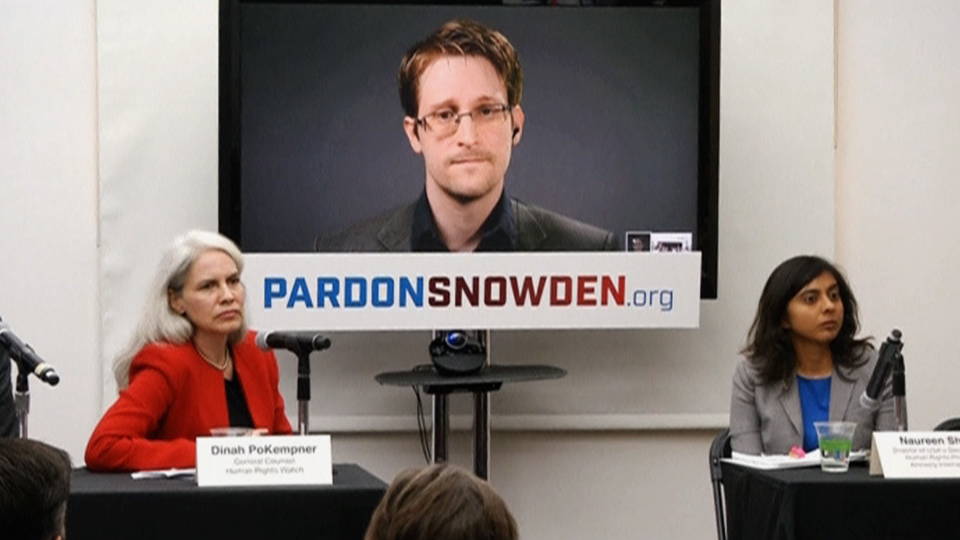 The American Civil Liberties Union and other human rights organizations have launched a campaign asking President Obama to pardon NSA whistleblower Edward Snowden before Obama leaves office. Among those who have signed onto the campaign are Apple co-founder Steve Wozniak; actors Martin Sheen, Danny Glover and Susan Sarandon; writers Rebecca Solnit and Terry Tempest Williams; and Pentagon Papers whistleblower Daniel Ellsberg. At an event in New York City, ACLU Executive Director Anthony Romero called for a pardon for Snowden.
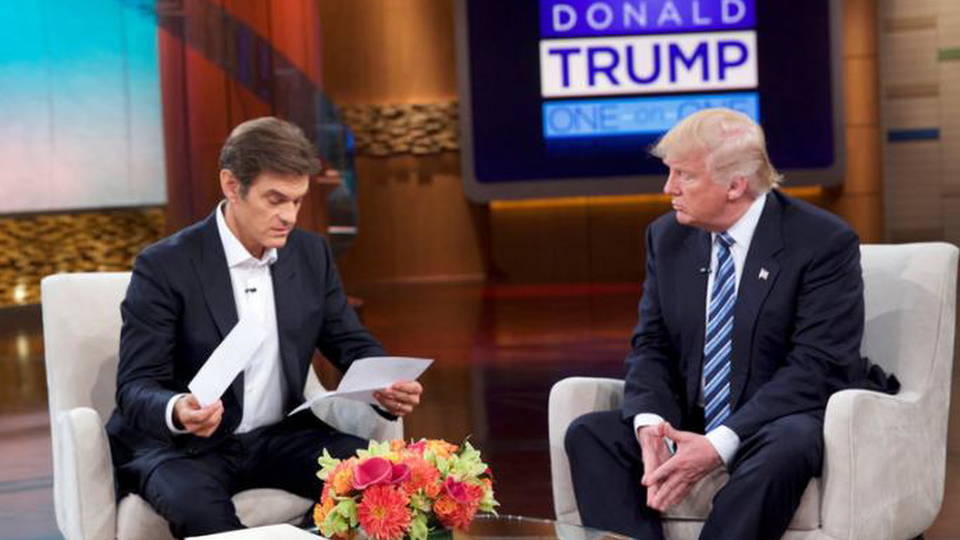 In news from the campaign trail, Hillary Clinton and Donald Trump have both released more information on their medical history. Hillary Clinton released a letter from her doctor saying Hillary Clinton "continues to remain healthy and fit to serve as president of the United States." This comes as Hillary Clinton returns to the campaign trail with an event in North Carolina today, after spending a few days this week recovering from pneumonia. Donald Trump, in contrast, taped an interview with the controversial television persona, Dr. Oz, in which Trump shows him copies of some results from a physical last week. The full interview is slated to air today, but this is a clip.
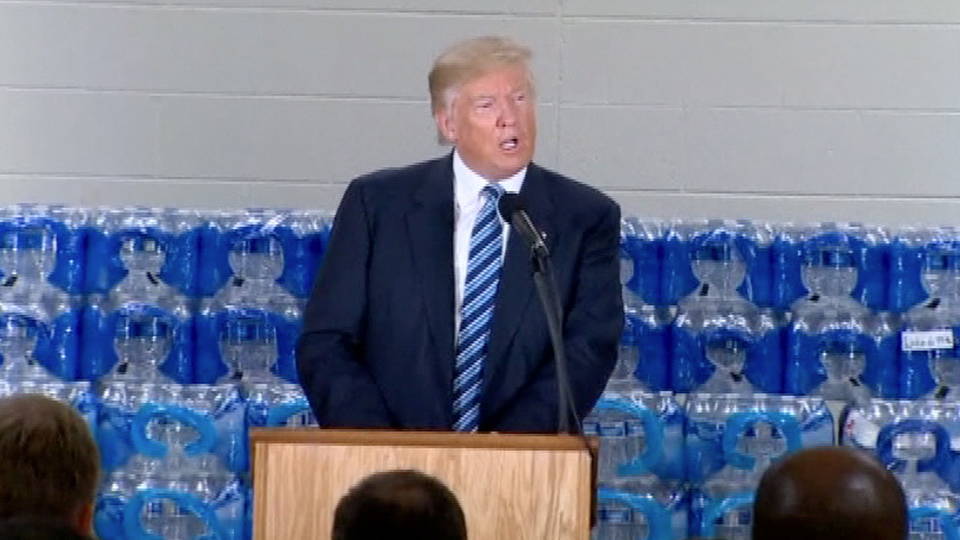 In more campaign news, Donald Trump was confronted by a pastor while speaking in Flint, Michigan, Wednesday. Trump had been invited by Rev. Faith Green Timmons to speak at the Bethel United Methodist Church. This was Trump’s first visit to Flint, where a lead contamination crisis has poisoned many of the city’s residents, who are predominantly African-American. But when Trump veered off course and began to attack Hillary Clinton over her support for NAFTA, the pastor stepped in.
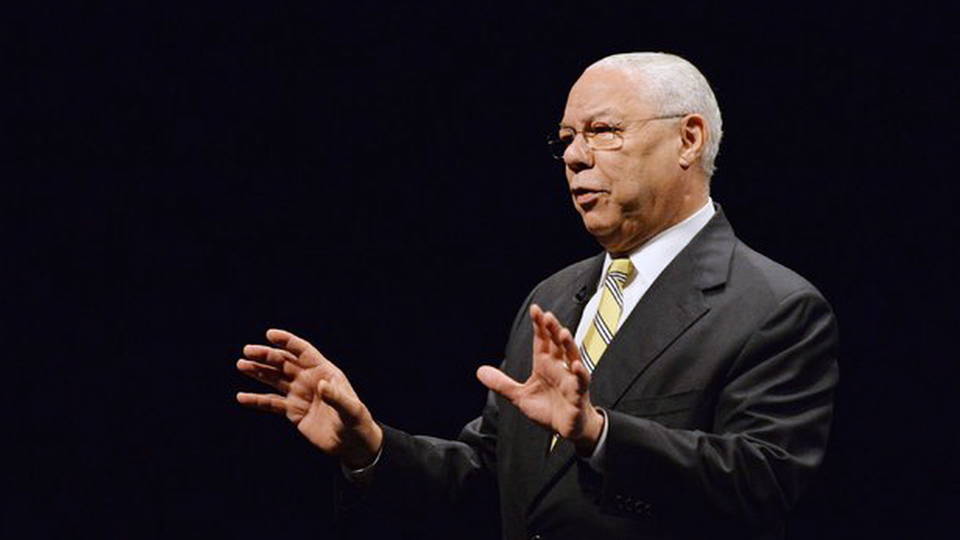 A trove of hacked emails released on the website DCLeaks.com continues to reveal statements made by former Secretary of State Colin Powell. In addition to a June 17 email in which he called Donald Trump a "national disgrace" and an "international pariah," Powell also attacked Trump in an email on August 21 for being one of the leaders of the "racist" "birther" movement, which falsely claims President Obama wasn’t born in the United States. In another email, Powell also called Dick Cheney and his daughter Liz "idiots," writing, "They are idiots and spent force peddling a book that ain’t going nowhere." The email was a reference to the Cheneys’ book "Exceptional: Why the World Needs a Powerful America."
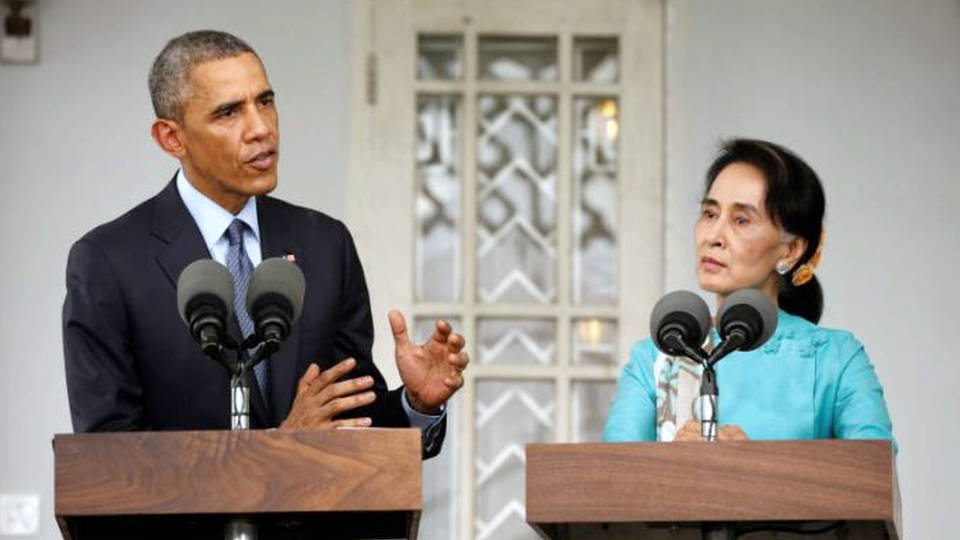 The United States is slated to end economic sanctions against Burma after nearly 20 years. The move follows a meeting at the White House between President Obama and Burma’s de facto leader Aung San Suu Kyi. The lifting of the sanctions comes as Burma has transitioned to civilian rule, after being ruled for more than 50 years by the military. The Obama administration and Burmese human rights activists are continuing to advocate for changes in Burma’s constitution in order to reduce the military’s power, as well as ensure better treatment for Burma’s ethnic minorities, including the persecuted Rohingya, who are not considered citizens in Burma and are effectively stateless.
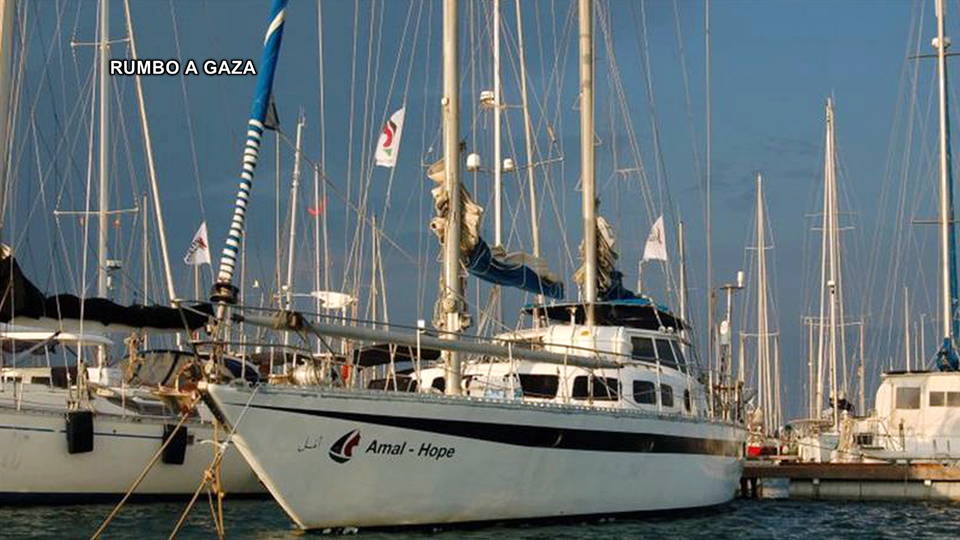 A flotilla bound for Gaza has set sail from the Spanish port city of Barcelona in efforts to break the ongoing Israeli blockade. Twenty-two female activists from across the world are aboard the Women’s Boat to Gaza. The two boats are also carrying medicine and food. Israel has maintained a blockade of the Gaza Strip since 2007. Last year, another Women’s Boat to Gaza was stopped and seized by the Israeli Navy.
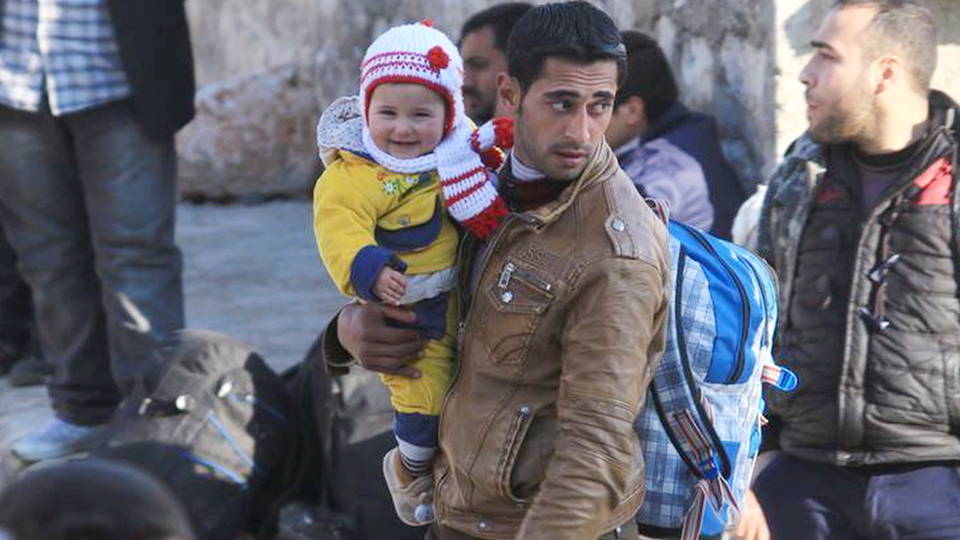 A new report by the United Nations Refugee Agency says more than 3.5 million refugee children have no school to go to. The agency says the crisis grows more acute as children get older; while half of refugee children are able to attend primary school, only about 20 percent are able to attend secondary school, and only 1 percent are able to attend university.
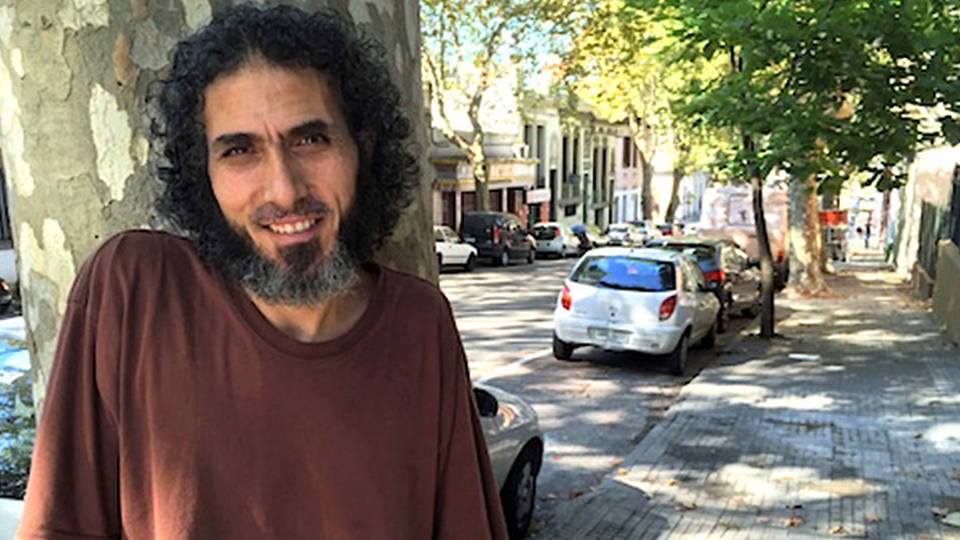 In Uruguay, a former Guantánamo prisoner emerged from a coma early Thursday amid an ongoing hunger strike demanding he be allowed to leave Uruguay and reunite with his family in Turkey. Abu Wa’el Dhiab was released from Guantánamo in 2014, but he was barred from returning home to Syria. Instead, he was resettled in Uruguay. Earlier this year, he left Uruguay in efforts to return home. In July, he was apprehended in Venezuela and sent back to Uruguay. Now, Dhiab is on hunger strike, demanding he be allowed to reunite with his family. While in Guantánamo, Dhiab also launched a hunger strike to demand his freedom. He was among a group of prisoners subjected to forced feeding. The Obama administration is refusing to release video of the force feeding to the public, but did give the redacted video tape to a court, which reportedly shows graphic images of guards restraining Dhiab and feeding him against his will. Human rights groups have long said the forced feeding of Guantánamo prisoners amounts to torture.
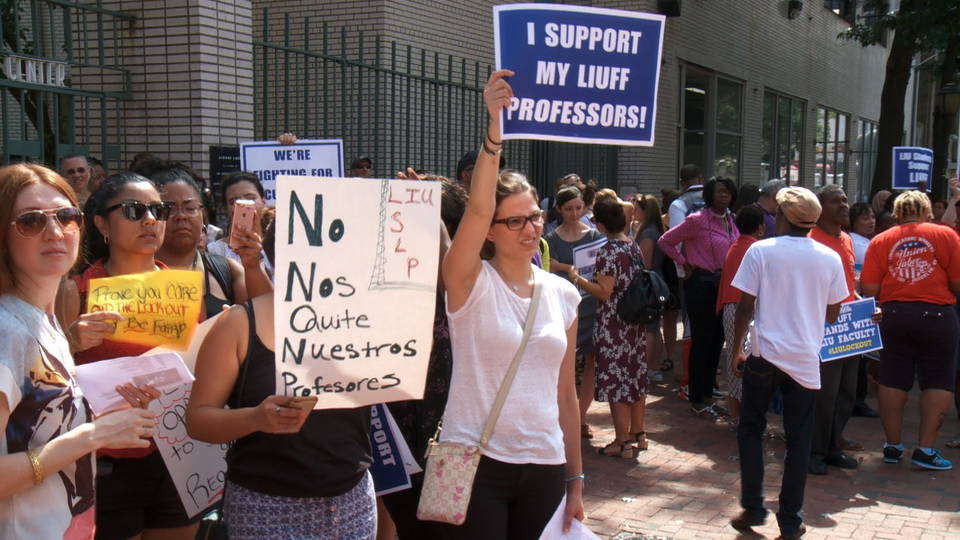 In New York, hundreds of unionized professors are returning to work at Long Island University’s Brooklyn campus, nearly two weeks after the administration took the unprecedented step of barring them from campus after their contract expired. As part of the lockout, LIU cut off 400 professors’ email accounts and health insurance, and told them they would be replaced. The lockout sparked a wave of protests by both faculty and students, who arrived for the beginning of the school year to find their classes being taught by administrators with no experience in the fields. On Wednesday, the administration agreed to end the lockout, restore faculty members’ health insurance and permit them to return to their classrooms. Contract negotiations remain ongoing. To see our full coverage of the LIUlockout, go to democracynow.org.
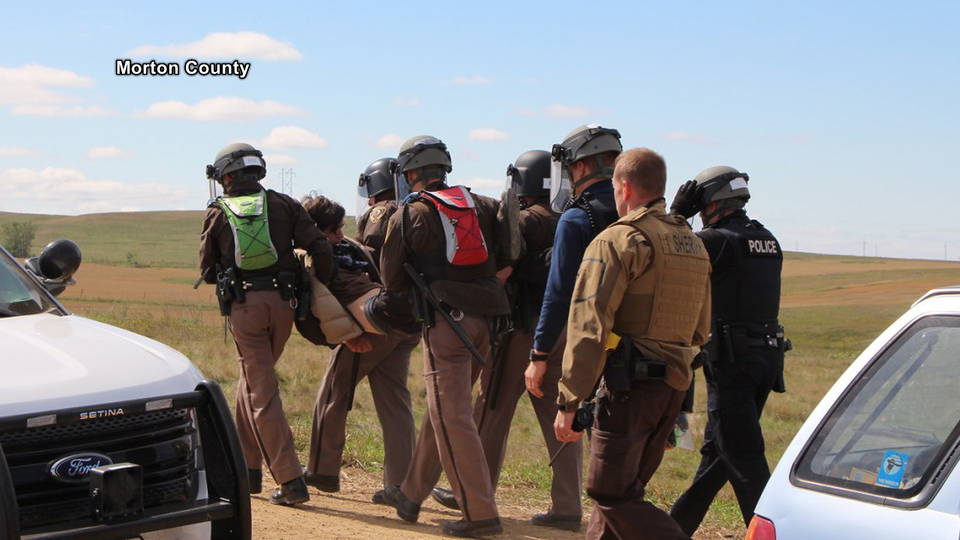 In North Dakota, another eight people were arrested Wednesday after people locked themselves to heavy machinery to stop construction of the $3.8 billion Dakota Access pipeline, which has faced months of resistance from the Standing Rock Sioux Tribe and members of hundreds of other tribes from across the United States, Canada and Latin America. Wednesday’s action took place near Almont, North Dakota, about 80 miles away from the main protest camps along the Cannonball River. This comes only one day after more than 20 people were arrested on Tuesday also stopping pipeline construction around the same area. Dallas Goldtooth of the Indigenous Environmental Network said Tuesday’s and Wednesday’s actions reflect that "Our opposition is not just to the river crossing, but to the very premise of this pipeline." The Morton County Sheriff’s Department says it is pursuing felony reckless endangerment charges related to Wednesday’s protest, which carries a maximum penalty of five years in prison.
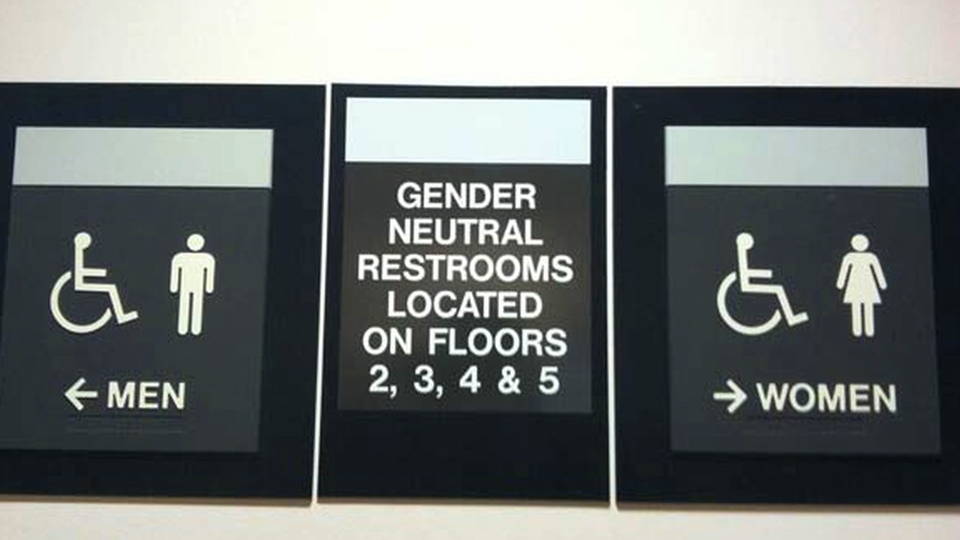 The Atlantic Coast Conference has announced it’s moving its sports championship events out of North Carolina in response to the state’s decision to pass the anti-LGBT law known as HB 2, or the "bathroom bill." The law nullifies ordinances protecting LGBT people from discrimination and prohibits transgender people from using the bathroom that matches their gender identity. This comes after the NCAA also announced it was moving its seven championship events out of North Carolina for this academic year.
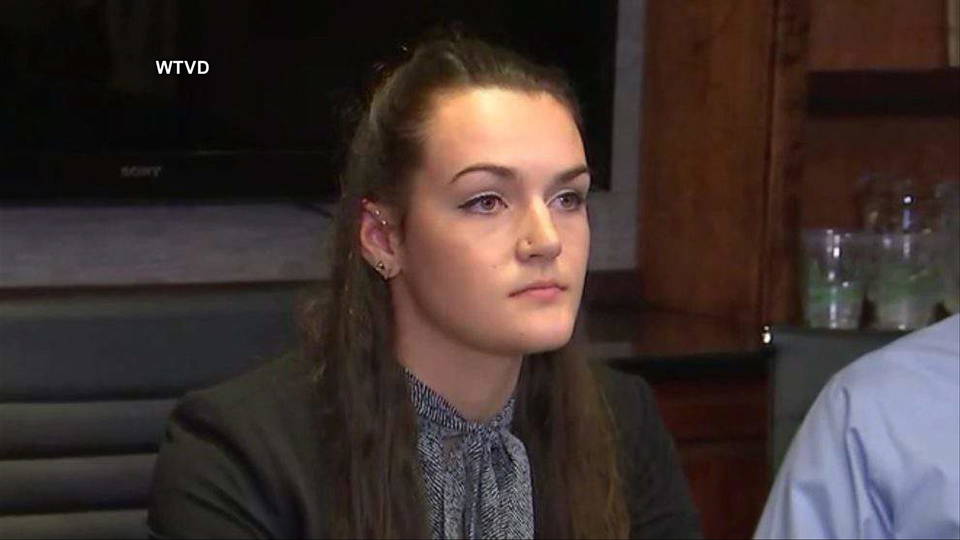 Also in North Carolina, a UNC football player has turned himself in—seven months after he was accused of raping a fellow student. The 19-year-old woman, Delaney Robinson, went public to denounce the way the university treated her and handled the case. She says she was attacked on Valentine’s Day night by linebacker Allen Artis, who she says pinned her down and raped her. She says she went to the hospital the next morning and then reported the attack to university administrators, who she says asked her accusatory questions, including whether she led him on and how many men she had slept with in her life. She says she was later enraged when she heard the recordings of the administrators’ questioning of the football player in a strikingly different manner.
Donate today:
Also in North Carolina, a UNC football player has turned himself in—seven months after he was accused of raping a fellow student. The 19-year-old woman, Delaney Robinson, went public to denounce the way the university treated her and handled the case. She says she was attacked on Valentine’s Day night by linebacker Allen Artis, who she says pinned her down and raped her. She says she went to the hospital the next morning and then reported the attack to university administrators, who she says asked her accusatory questions, including whether she led him on and how many men she had slept with in her life. She says she was later enraged when she heard the recordings of the administrators’ questioning of the football player in a strikingly different manner.
Donate today:
Follow:


SPEAKING EVENT
The American Civil Liberties Union and other human rights organizations have launched a campaign asking President Obama to pardon NSA whistleblower Edward Snowden before Obama leaves office. Among those who have signed onto the campaign are Apple co-founder Steve Wozniak; actors Martin Sheen, Danny Glover and Susan Sarandon; writers Rebecca Solnit and Terry Tempest Williams; and Pentagon Papers whistleblower Daniel Ellsberg. At an event in New York City, ACLU Executive Director Anthony Romero called for a pardon for Snowden.Anthony Romero: "Edward Snowden’s case presents one for President Obama to use the presidential power of pardon proudly and unequivocally, in recognition of one of the most important acts of whistleblowing in modern history. By standing up for the privacy rights of his fellow citizens—individuals who had no idea that the government had assumed such extraordinary and invasive powers in secret—Edward Snowden should be thanked, and not punished."
Full-page ads calling for the pardon also ran Wednesday in The Washington Post and Politico. Edward Snowden himself also appeared via video stream at the event in New York City Wednesday.
Edward Snowden: "I love my country, I love my family, and I have dedicated my life to both of them. These risks, these burdens that I took on, I knew were coming. And no one should be in a position to make these kind of decisions. That’s not the kind of place that we’re supposed to be. But it doesn’t have to be. Of course I look forward to coming home, but I cannot support the persecution of those charged under an Espionage Act, when they have committed no espionage."
Clinton & Trump Both Release More Health Information
In news from the campaign trail, Hillary Clinton and Donald Trump have both released more information on their medical history. Hillary Clinton released a letter from her doctor saying Hillary Clinton "continues to remain healthy and fit to serve as president of the United States." This comes as Hillary Clinton returns to the campaign trail with an event in North Carolina today, after spending a few days this week recovering from pneumonia. Donald Trump, in contrast, taped an interview with the controversial television persona, Dr. Oz, in which Trump shows him copies of some results from a physical last week. The full interview is slated to air today, but this is a clip.Dr. Oz: "If your health is as strong as it seems from your review of systems, why not share your medical records? Why not let people see?"
Donald Trump: "Well, I have really no problem in doing it. I have it right here. I mean, should I do it? I don’t care. Should I do it? It’s two letters. One is the report, and the other is from Lenox Hill Hospital."
Meanwhile, Donald Trump has continued to refuse to release his tax returns.
Donald Trump Confronted by Pastor in Flint
In more campaign news, Donald Trump was confronted by a pastor while speaking in Flint, Michigan, Wednesday. Trump had been invited by Rev. Faith Green Timmons to speak at the Bethel United Methodist Church. This was Trump’s first visit to Flint, where a lead contamination crisis has poisoned many of the city’s residents, who are predominantly African-American. But when Trump veered off course and began to attack Hillary Clinton over her support for NAFTA, the pastor stepped in.Donald Trump: "Hillary Clinton supported NAFTA, supported China’s entry into the World Trade Center."
Rev. Faith Green Timmons: "Mr. Trump, I invited you here to thank us for what we’ve done for Flint, not to give a political speech."
Donald Trump: "Oh, oh, OK. OK, OK, that’s good. And I’m going to go back onto Flint. OK. OK. Flint’s—Flint’s pain is a result of so many different failures."
Trump rapidly wrapped up his speech.
In Email, Colin Powell Slammed Trump over "Racist" Birther Movement
A trove of hacked emails released on the website DCLeaks.com continues to reveal statements made by former Secretary of State Colin Powell. In addition to a June 17 email in which he called Donald Trump a "national disgrace" and an "international pariah," Powell also attacked Trump in an email on August 21 for being one of the leaders of the "racist" "birther" movement, which falsely claims President Obama wasn’t born in the United States. In another email, Powell also called Dick Cheney and his daughter Liz "idiots," writing, "They are idiots and spent force peddling a book that ain’t going nowhere." The email was a reference to the Cheneys’ book "Exceptional: Why the World Needs a Powerful America."U.S. Slated to End Economic Sanctions Against Burma
The United States is slated to end economic sanctions against Burma after nearly 20 years. The move follows a meeting at the White House between President Obama and Burma’s de facto leader Aung San Suu Kyi. The lifting of the sanctions comes as Burma has transitioned to civilian rule, after being ruled for more than 50 years by the military. The Obama administration and Burmese human rights activists are continuing to advocate for changes in Burma’s constitution in order to reduce the military’s power, as well as ensure better treatment for Burma’s ethnic minorities, including the persecuted Rohingya, who are not considered citizens in Burma and are effectively stateless."Women's Boat to Gaza" Sets Sail in Efforts to Break Israeli Blockade
A flotilla bound for Gaza has set sail from the Spanish port city of Barcelona in efforts to break the ongoing Israeli blockade. Twenty-two female activists from across the world are aboard the Women’s Boat to Gaza. The two boats are also carrying medicine and food. Israel has maintained a blockade of the Gaza Strip since 2007. Last year, another Women’s Boat to Gaza was stopped and seized by the Israeli Navy.U.N.: 3.7 Million Refugee Children Have No School to Go To
A new report by the United Nations Refugee Agency says more than 3.5 million refugee children have no school to go to. The agency says the crisis grows more acute as children get older; while half of refugee children are able to attend primary school, only about 20 percent are able to attend secondary school, and only 1 percent are able to attend university.Uruguay: Fmr. Gitmo Prisoner, Held 12 Years without Charge on Hunger Strike
In Uruguay, a former Guantánamo prisoner emerged from a coma early Thursday amid an ongoing hunger strike demanding he be allowed to leave Uruguay and reunite with his family in Turkey. Abu Wa’el Dhiab was released from Guantánamo in 2014, but he was barred from returning home to Syria. Instead, he was resettled in Uruguay. Earlier this year, he left Uruguay in efforts to return home. In July, he was apprehended in Venezuela and sent back to Uruguay. Now, Dhiab is on hunger strike, demanding he be allowed to reunite with his family. While in Guantánamo, Dhiab also launched a hunger strike to demand his freedom. He was among a group of prisoners subjected to forced feeding. The Obama administration is refusing to release video of the force feeding to the public, but did give the redacted video tape to a court, which reportedly shows graphic images of guards restraining Dhiab and feeding him against his will. Human rights groups have long said the forced feeding of Guantánamo prisoners amounts to torture.Long Island University Professors Return to Classes as Lockout Ends
In New York, hundreds of unionized professors are returning to work at Long Island University’s Brooklyn campus, nearly two weeks after the administration took the unprecedented step of barring them from campus after their contract expired. As part of the lockout, LIU cut off 400 professors’ email accounts and health insurance, and told them they would be replaced. The lockout sparked a wave of protests by both faculty and students, who arrived for the beginning of the school year to find their classes being taught by administrators with no experience in the fields. On Wednesday, the administration agreed to end the lockout, restore faculty members’ health insurance and permit them to return to their classrooms. Contract negotiations remain ongoing. To see our full coverage of the LIUlockout, go to democracynow.org.8 People Arrested Blocking Dakota Access Pipeline Construction
In North Dakota, another eight people were arrested Wednesday after people locked themselves to heavy machinery to stop construction of the $3.8 billion Dakota Access pipeline, which has faced months of resistance from the Standing Rock Sioux Tribe and members of hundreds of other tribes from across the United States, Canada and Latin America. Wednesday’s action took place near Almont, North Dakota, about 80 miles away from the main protest camps along the Cannonball River. This comes only one day after more than 20 people were arrested on Tuesday also stopping pipeline construction around the same area. Dallas Goldtooth of the Indigenous Environmental Network said Tuesday’s and Wednesday’s actions reflect that "Our opposition is not just to the river crossing, but to the very premise of this pipeline." The Morton County Sheriff’s Department says it is pursuing felony reckless endangerment charges related to Wednesday’s protest, which carries a maximum penalty of five years in prison.ACC Joins NCAA in Moving Championships Out of NC over Anti-LGBT Law
The Atlantic Coast Conference has announced it’s moving its sports championship events out of North Carolina in response to the state’s decision to pass the anti-LGBT law known as HB 2, or the "bathroom bill." The law nullifies ordinances protecting LGBT people from discrimination and prohibits transgender people from using the bathroom that matches their gender identity. This comes after the NCAA also announced it was moving its seven championship events out of North Carolina for this academic year.UNC Football Player Turns Himself In for Raping Fellow Student
Also in North Carolina, a UNC football player has turned himself in—seven months after he was accused of raping a fellow student. The 19-year-old woman, Delaney Robinson, went public to denounce the way the university treated her and handled the case. She says she was attacked on Valentine’s Day night by linebacker Allen Artis, who she says pinned her down and raped her. She says she went to the hospital the next morning and then reported the attack to university administrators, who she says asked her accusatory questions, including whether she led him on and how many men she had slept with in her life. She says she was later enraged when she heard the recordings of the administrators’ questioning of the football player in a strikingly different manner.Delaney Robinson: "My humiliation turned to rage when I watched the recorded interview of my rapist by DPS investigators. Rather than accusing him of anything, the investigators spoke to him in a tone of camaraderie. They provided reassurances to him when he became upset. They even laughed with him when he told them how many girls’ phone numbers he had managed to get on the same night that he raped me. They told him, ’Don’t sweat it. Just keep on living your life and keep on playing football.’"
The football player, Allen Artis, has now been charged with two misdemeanors: sexual battery and assault on a female.
Follow:
SPEAKING EVENT

9/15 New York, NY
COLUMN

"North Dakota vs. Amy Goodman: Journalism is not a crime" by Amy Goodman and Denis Moynihan
Last Thursday, an arrest warrant was issued under the header “North Dakota versus Amy Goodman.” The charge was for criminal trespass. The actual crime? Journalism. We went to the Standing Rock Sioux Reservation to cover the growing opposition to the Dakota Access Pipeline.
Global attention has become focused on the struggle since Labor Day weekend, after pipeline guards unleashed attack dogs and pepper spray on Native American protesters. On that Saturday, at least six bulldozers were carving up the land along the pipeline route, where archeological and sacred sites had been discovered by the tribe. The Dakota Access Pipeline company obtained the locations of these sites just the day before, in a court filing made by the tribe. Many feel that the company razed the area, destroying the sites, before an injunction could be issued to study them.
Scores of people, mostly Native American, raced to the scene, demanding the bulldozers leave. The guards pepper-sprayed, punched and tackled the land defenders. Attack dogs were unleashed, biting at least six people and one horse.
We were there, filming the guards’ violence. When we released our video of the standoff, it went viral, attracting more than 13 million views on Facebook alone. CNN, CBS, MSNBCand scores of outlets around the world broadcast our footage of one of the attack dogs with blood dripping from its nose and mouth.
Five days after the attack, North Dakota issued the arrest warrant. North Dakota Bureau of Criminal Investigation Special Agent Lindsey Wohl, referencing the “Democracy Now!” video report in a sworn affidavit, states, “Amy Goodman can be seen on the video identifying herself and interviewing protestors about their involvement in the protest.” Precisely the point: doing the constitutionally protected work of a reporter.
“Charging a journalist with criminal trespassing for covering an important environmental story of significant public interest is a direct threat to freedom of the press and is absolutely unacceptable in the country of the First Amendment,” said Delphine Halgand, U.S. director of the global press freedom watchdog group Reporters Without Borders. Carlos Lauria of the Committee to Protect Journalists added: “This arrest warrant is a transparent attempt to intimidate reporters from covering protests of significant public interest. Authorities in North Dakota should stop embarrassing themselves, drop the charges against Amy Goodman and ensure that all reporters are free to do their jobs.”
Steve Andrist, executive director of the North Dakota Newspaper Association, told The Bismarck Tribune, “It’s regrettable that authorities chose to charge a reporter who was just doing her job,” adding that it “creates the impression that the authorities were attempting to silence a journalist and prevent her from telling an important story.”
This is a story that is critical to the fate of the planet. It’s about climate change, and indigenous rights versus corporate and government power.
The arrest warrant was issued on the same day that North Dakota Gov. Jack Dalrymple called out the National Guard in preparation for a court decision due out the next day. On Friday, the judge ruled against the tribe, allowing construction to continue. Fifteen minutes later, in an unprecedented move, the departments of Justice, the Interior and the Army issued a joint letter announcing that permission to build the pipeline on land controlled by the Army Corps of Engineers would be denied until after “formal, government-to-government consultations” with impacted tribes about “the protection of tribal lands, resources and treaty rights.” Construction and nonviolent blockades continue along nonfederal lands, despite the government’s request that Dakota Access halt construction voluntarily.
Many have said that journalism is the first draft of history. In the past 20 years, a hallmark of the “Democracy Now!” news hour has been our coverage of movements, because movements make history. The standoff at Standing Rock is a historic gathering of thousands of people from over 200 tribes from the U.S., Canada and Latin America who call themselves “protectors, not protesters.” It marks the largest unification of tribes in decades.
To date, none of the pipeline security guards have been charged, despite being clearly shown in the video assaulting protesters with dogs and pepper spray. Now, the North Dakota Private Investigation and Security Board is investigating the pipeline security guards’ use of force and their use of dogs.
In the meantime, we will fight this charge. Freedom of the press is essential to the functioning of a democratic society. North Dakota, muzzle the dogs, not the press.
NEW BOOK


Senior TV Producer
FEATURED INTERVIEW

Native American Activist Winona LaDuke at Standing Rock: It's Time to Move On from Fossil Fuels
Part 2: Kurt Eichenwald on How Trump Organization's Links to Russia Could Threaten U.S. Security
U.S. Foreign Policy for Sale? Behind the Trump Organization’s Vast Financial Network
TOPICS
GUESTS
KURT EICHENWALD
senior writer at Newsweek and a contributing editor at Vanity Fair. His most recent article for Newsweek is called "How the Trump Organization’s Foreign Business Ties Could Upend U.S. National Security." He’s the author of the books 500 Daysand The Informant.
This is viewer supported news
DONATE
In our extended interview with Kurt Eichenwald, he describes the Trump Organization’s links to Russia and how they could threaten U.S. national security if he became president.
TRANSCRIPT
This is a rush transcript. Copy may not be in its final form.
AMY GOODMAN: This is Democracy Now!, democracynow.org, The War and Peace Report. I’m Amy Goodman, with Nermeen Shaikh.
NERMEEN SHAIKH: This is Part 2 of our look at a sweeping new investigation which has raised questions about the little-known Trump Organization and potential conflicts of interest should Trump become president. The investigation published in Newsweekmagazine reveals the Trump Organization is a vast financial network that stretches from New York City to India, Ukraine, China, Brazil, Argentina, Turkey and Russia. It’s connected to Russian mining, banking and real estate interests.
AMY GOODMAN: This comes as Trump has repeatedly attacked Hillary Clinton over the Clinton Foundation, alleging that Clinton’s term as secretary of state, during that time, she may have given major contributors to the foundation greater access.
Now we’re going to Part 2 of our conversation with Kurt Eichenwald, who’s senior writer atNewsweek. His new report is titled "How the Trump Organization’s Foreign Business Ties Could Upend U.S. National Security." He’s also a contributing editor at Vanity Fair.
So, Kurt, let’s focus on Russia right now. What did you learn in your investigation about Donald Trump’s empire in Russia?
KURT EICHENWALD: That it’s—they’ve been digging in there pretty strongly. In 2008, Trump went in and actually trademarked his name in Russia. And the way he does his international business is by basically selling the rights to his name, so that other developers can slap it on their businesses. Now—or on their projects.
Now, the thing that people need to understand is real estate development overseas is not like real estate development here. It is extremely political. It is extremely tied to governments. And so, you have—for example, one of the organizations that Trump was negotiating with was something called Mos City Co., which in turn is very tied to the Putin government. Now, they did not do the deal because Trump was demanding too much money. Well, how much would having the name of the president of the United States on a building in downtown Moscow be worth now? You have the fellow you mentioned earlier who, you know, was already wrapped up in some of the questionable privatization deals that took place under Boris Yeltsin and has maintained his contacts very closely with the Russian government. He is—has been a partner of Donald Trump’s. And, you know, Trump Jr. has said they have lots of investors from Russia. Well, who are those investors and in what entity? We don’t know.
I mean, there is always—there is only so—you know, it took a long time to dig through and find the connections for 15 out of 500 of these partnerships. There are hundreds more that people in the press should be digging into, they should be demanding answers on, they should be, you know, trying. I mean, we don’t know anything about Donald Trump. We don’t know about his business. We don’t know about his finances. We don’t know about his health. We barely know anything about his policies. He just runs around, is entertaining, you know, says a lot of xenophobic things, gets—you know, is the perfect reality TV show president. And members of the press are just not doing the job trying to find out who this guy is.
AMY GOODMAN: Kurt, can you talk about, in this last minute, what you were most surprised by in this investigation you did for Newsweek?
KURT EICHENWALD: The scope of it, that basically every time I opened up a can of worms involving a foreign enterprise of Donald Trump, that he was doing business with bad actors who are tied to governments whose interests run counter to those of the United States’ national security.
AMY GOODMAN: Well, we’re going to leave it there. Kurt Eichenwald, thanks so much for being with us for Part 2 of our conversation about your very interesting piece inNewsweek. The piece is headlined "How the Trump Organization’s Foreign Business Ties Could Upend U.S. National Security." And we will link to it at democracynow.org. I’m Amy Goodman, with Nermeen Shaikh. Thanks so much for joining us.
207 West 25th Street, 11th Floor
New York, New York 10001, United States
-------
-------

No comments:
Post a Comment