Editor's Note:
Dear Friend,
Every so often I have the privilege of being home for bedtime, which usually includes a story—often from the Talmud.
My four-year-old’s favorite character is the famous first-century sage Hillel, who is famous for spending a snowy night on the roof of his yeshivah, where he had climbed up to hear the Torah conversations inside. Other stories describe his patience, love and concern for others.
In this week’s Torah portion, Kedoshim, we have the commandment “Love your fellow as yourself.” Rabbi Akiva comments that “this is a great principle of the Torah.”
This echoes a famous statement of Hillel’s, “That which is hateful to you, do not do to your fellow. That is the whole Torah.”
Hillel and Rabbi Akiva summarized the Torah to its essence. God wants His children to love each other.
The statements are quite different (and according to Rashi, unrelated), but the message is clear: keeping Shabbat, eating matzah, laying tefillin—while truly important mitzvahs—are dwarfed by how we treat others.
What better time is there to be able to apply this than after the lessons of humility from matzah, followed by the introspection of the Sefirat HaOmer?
Share these stories with your kids. But more than that—let’s be the role models that they can emulate.
Moshe Rosenberg,
on behalf of the Chabad.org Editorial Team
Do you have something to say about this note? Please click here to leave a response or ask a question.
Daily Thought
Meditation Through a Sea of ReedsAccept the world at its face value and it won’t let you move forward.
Every impulse must be bridled, every step carefully balanced—and even then, for every step forward, you fall back two.
You are enslaved within an Egypt of your own making.
Here is your route of escape:
Meditate deeply upon the inner soul of the world; struggle to see the vision described by our teachers.
Part the murky waters of a coarse, material world; enter the reality that lies beneath it; let that be your path from bondage.
Grasp that inner vision and it will flow outward through the heart to the conscious self, down to the heel that steps upon the earth, until all these, as well, become mind.
Your eyes are now open, your heart is awake, your hands themselves know what to grab and what to avoid, as your feet know where to walk.
In the struggle for deeper vision, life becomes effortless.
You are free.
This Week's Features
12 Things Children Wish Their Parents Knew by Nomi Freeman

1. I need to know for sure that you love me.
When you tell me you love me, I feel secure. When you show me you love me, I grow confident.
I feel loved when you give me your attention. When I come home from school and I see you don’t answer the phone because you’re spending time with me, I feel special. I see I’m more important to you than other people and other things.
When you tell me, “I made your favorite cookies,” “I made the dinner you like,” “I saw this sweater in the store, and it’s your favorite color, so I bought it for you,” I know I’m loved and feel I’m worth loving. It gives me more confidence to face the world.
2. You are the foundation of my life.
I want to please you and make you proud. Please give me positive feedback often.
I feel good when I know you like what I’m doing.
3. I love it when you make time for us to spend together.
We can go out for pizza once a month, or you can cuddle with me in my bed for a few minutes each night (when appropriate). Even though I know you also have to take care of my brothers and sisters, there are so many ways you can make me feel special.
4. I need you to listen to me.
School, homework and social interactions can be so stressful for me that I feel the world is blowing up. When I come home, please listen to me in an open, nonjudgmental way. If the teacher was unfair, I don’t need you to condemn him (that would be damaging). I need you to empathize with me and support me.
If I was at fault, please don’t blame me. I feel bad enough already. Help me learn by asking, “What do you think you could have done better?” and “How do you think you can fix things now?”
5. When you yell at me, my world falls apart.
I feel scared. My only thought is “I want this to stop.” I can’t learn anything, I’m so frightened.
6. I watch how you treat each other.
When the two of you argue, I worry that you might separate, or something scary might happen.
When you respect each other, I learn to respect you. When I see you resolving conflict in a friendly and considerate way, I learn to be altruistic and considerate. I learn that it’s possible to solve conflict without anger.
7. Don’t confuse me.
Am I a treasure or a burden? Sometimes you say you love me, and sometimes you say I drive you crazy. Then I wonder if you are happy I was born . . .
8. Be patient with me.
Of course I’m imperfect! I recently came into the world with a good share of bad middot, character traits. I need to learn, grow, and overcome the negative. Please help me by stressing the good in me. Show me, in a loving way, how I’m supposed to act. Please be patient and remain the adult in this relationship.
Please remember how difficult it is to change. Help me work on one thing at a time. I can’t change all my faults at once.
And if I’m rebelling, please investigate; something might be bothering me.
9. Please never put me down or call me names.
When you do, I believe you!
If you call me a brat, rude, chutzpadik, stupid . . . I might grow up to fit exactly that description.
10. Make me feel safe enough to make mistakes.
Please don’t get upset when I spill/break something by accident. Being clumsy is not a sin. That way I won’t grow to be a perfectionist, afraid to make a false move.
We all make mistakes. Smart people learn from their mistakes and try not to repeat them.
11. I need consistency in my world.
When you always enforce the same rules, life is more predictable.
I feel safer knowing there is an adult taking care of me.
12. You can demand from me only what you do yourself.
I don’t learn from lectures, and punishment leaves me resentful. I’m constantly observing you and absorbing from you, so if you show me love and kindness, I’ll want to be like you. Then, if I do something wrong, you can talk to me about it and explain the right way to do things.
I might not always do as you say, but most likely I’ll say as you say and I’ll do as you do.
Love,
Your child
This article is based on: Likkutei Sichot, vol. 27, pg. 158; Rambam, Hilchot De’ot, chs. 2–6; Igrot Kodesh of the Rebbe Rayatz, vol. 4, pp. 302–3; Klalei ha-Chinuch veha-Hadrachah; and Pirkei Avot 4:12.
PARSHAH
Soul Sister
I was feeling great before she walked into the room. She came in, our eyes met, and my joie de vivre started to deflate . . . by Rochel Holzkenner
 I was feeling great before she walked into the room. She came in, our eyes met, and my joie de vivre started to deflate. She’d never harmed me; in fact, we had a cordial relationship. But she had something that I didn’t have. Compared to her, I felt diminished.
Competition—wouldn’t it be nice to outgrow it! In kindergarten, it’s understandable; in high school, inevitable; but as an adult, it’s so . . . passé. I wish we could leave it behind with our senior sweatshirts and looseleaf folders. Yet it lingers into adulthood. The people we tend to like are those who validate our lifestyles and tickle our egos. Other people, we’d rather not be around. Not because they’ve done anything wrong, not at all. It’s just that we have very little in common—or, even worse, we feel threatened by their presence.Compared to her, I felt diminished
G‑d says, “Love your fellow as [you love] yourself.”1 That can’t mean everyone, can it? If we appreciate our fellow, we can probably love him. But if we don’t appreciate him, what’s to love? Didn’t G‑d set the benchmark a bit too high with this commandment?
G‑d can expect us to be nice to everyone. That’s an attainable goal. Indeed, many commentaries concede that this commandment is written euphemistically, and a more realistic interpretation of this verse would be, “Act in a loving way toward your fellow.”2 But if that’s what G‑d meant to say, then why not say that to begin with? There are a myriad of other mitzvahs that require us to treat people with respect, regardless of our personal relationship with them. But this mitzvah doesn’t tell us what to do—it tells us how to feel. Can you tell someone to feel love?
The last part makes it even more challenging: “Love your fellow as yourself.” A more moderate love should suffice. But to love others like we love ourselves? To look out for their best interests like we look out for our own? That type of affection could be reserved for a sister or best friend, but not for everyone.
Maybe this mitzvah is speaking to someone more spiritually attuned than your average Jew. For the rest of us, perhaps we should focus on the other 612 mitzvahs first. The problem is that this is apparently a really important one. Here is a case in point: One of the greatest sages of all times, Hillel the Elder, was challenged by a potential convert who said, “Teach me the entire Torah on one foot.” (In other words, “What’s the abridged version of the Torah?”) Hillel responded unequivocally that the mitzvah to love one’s fellow is essentially the entire Torah, and everything else is commentary to that mitzvah. But how is Shabbat a commentary to love? How is eating kosher predicated on love? What if you’re meticulous about the laws of Passover, but there are a lot of Jews you just don’t like?
The Baal Shem Tov cherished the mitzvah of ahavat Yisroel, love for one’s fellow Jews.3 In fact, he taught his students that appreciating other people is an objective indicator of how well one has internalized chassidic teachings. The Baal Shem Tov cultivated a following of spiritually vibrant people. They meditated, prayed, and sang soulful melodies. They viewed materialism as a means to an end, and spirituality as the central focus. And love was their litmus test of spiritual growth. Without authentic appreciation of others, their soulful meditation was all hype.They viewed materialism as a means to an end
The first Chabad rebbe, Rabbi Schneur Zalman of Liadi, expounded upon many of the Baal Shem Tov’s philosophical tenets in his groundbreaking work, the Tanya. In the thirty-second chapter, he discusses Hillel’s reasoning for placing love at the center of our religious paradigm. And it’s not by coincidence that this topic is discussed in Chapter 32. The number 32 corresponds to the Hebrew letters lamed and bet, which together spell the word lev, “heart”—and loving others is at the heart of Chassidism. Without the heart, all of the intellectual theories are just theories. You can stand on your soapbox and preach Kabbalah all day long, but if you still get irritated by other people, then you’re not quite there yet.
But how do we it? How do we appreciate people that we don’t appreciate? Rabbi Schneur Zalman not only advocates the importance of this mitzvah, but guides us through it.
It all begins with self-love, authentic self-love—an appreciation for the breath of G‑d inside us. This doesn’t mean loving any particular attribute or talent. That self-love is dangerously tenuous. Today, we’re stars; tomorrow . . . not so much. A truer self-value comes from the knowledge that G‑d created us and invested a G‑dly soul inside of us. We’re valuable because G‑d gave us a mission.
And that’s really the goal of all of Jewish practice. To empower the soul and to give it precedence. Whenever we do a mitzvah, especially if it’s an inconvenient one, we’ve proven that our priority is the wellbeing of the soul.
And which mitzvah most highlights the centrality of the soul? Loving a fellow Jew—for no other reason aside from the fact that he is a Jew. As individuals, we may have little in common. Maybe she’s not your type, or he’s in another social group. But as Jews, we feel a commonality that transcends our differences. The appreciation that we feel toward another is an objective indicator of how far our spiritual development has taken us.
That’s not to say that we become blind to people’s flaws. We notice them, but they don’t alienate us—just like family members who disagree, but at the end of the day they’re still family. When someone else criticizes our family When our siblings are successful, we celebrate with themmember, we take personal offense. And when our siblings are successful, we celebrate with them rather than become envious of them.
Rabbi Schneur Zalman explains that our souls are like siblings. We share a soul root, a father—G‑d. We have so much in common with each other. Your success is my success, too, because we’re part of the same family.
It takes a lifetime of concentrated focus to truly master this mitzvah. So, anytime we don’t feel our commonality, or we feel threatened by another’s success, we’re in good company. At its root, competition is an objective indicator that we don’t love ourselves deeply enough. Yes, I value my individuality, but that’s something that I can’t share with you. Not only that, my unique gifts and assets are threatened by yours. When we appreciate others naturally as common members of the Jewish tribe, we’ve proven that we value our soul more than our individuality.
I once asked a friend how she and her siblings got along so well. She shared the following story: “I remember as a teen going shopping with my mother and my sister. My sister was trying on a dress, and we both watched her reflection as she moved before the giant mirror. When she slipped back into her fitting room, I said to my mother, ‘She is so beautiful and thin!’ My mother responded with a smile, ‘Aren’t you pleased for her?’”
Like this Jewish mother, G‑d delights in seeing His children getting along and enjoying each other’s success. The Tanya explains that when we get along, G‑d is so pleased that he overlooks our personal imperfections. Unity creates a powerful magnetism that instinctively attracts G‑d’s blessing.4
I was feeling great before she walked into the room. She came in, our eyes met, and my joie de vivre started to deflate. She’d never harmed me; in fact, we had a cordial relationship. But she had something that I didn’t have. Compared to her, I felt diminished.
Competition—wouldn’t it be nice to outgrow it! In kindergarten, it’s understandable; in high school, inevitable; but as an adult, it’s so . . . passé. I wish we could leave it behind with our senior sweatshirts and looseleaf folders. Yet it lingers into adulthood. The people we tend to like are those who validate our lifestyles and tickle our egos. Other people, we’d rather not be around. Not because they’ve done anything wrong, not at all. It’s just that we have very little in common—or, even worse, we feel threatened by their presence.Compared to her, I felt diminished
G‑d says, “Love your fellow as [you love] yourself.”1 That can’t mean everyone, can it? If we appreciate our fellow, we can probably love him. But if we don’t appreciate him, what’s to love? Didn’t G‑d set the benchmark a bit too high with this commandment?
G‑d can expect us to be nice to everyone. That’s an attainable goal. Indeed, many commentaries concede that this commandment is written euphemistically, and a more realistic interpretation of this verse would be, “Act in a loving way toward your fellow.”2 But if that’s what G‑d meant to say, then why not say that to begin with? There are a myriad of other mitzvahs that require us to treat people with respect, regardless of our personal relationship with them. But this mitzvah doesn’t tell us what to do—it tells us how to feel. Can you tell someone to feel love?
The last part makes it even more challenging: “Love your fellow as yourself.” A more moderate love should suffice. But to love others like we love ourselves? To look out for their best interests like we look out for our own? That type of affection could be reserved for a sister or best friend, but not for everyone.
Maybe this mitzvah is speaking to someone more spiritually attuned than your average Jew. For the rest of us, perhaps we should focus on the other 612 mitzvahs first. The problem is that this is apparently a really important one. Here is a case in point: One of the greatest sages of all times, Hillel the Elder, was challenged by a potential convert who said, “Teach me the entire Torah on one foot.” (In other words, “What’s the abridged version of the Torah?”) Hillel responded unequivocally that the mitzvah to love one’s fellow is essentially the entire Torah, and everything else is commentary to that mitzvah. But how is Shabbat a commentary to love? How is eating kosher predicated on love? What if you’re meticulous about the laws of Passover, but there are a lot of Jews you just don’t like?
The Baal Shem Tov cherished the mitzvah of ahavat Yisroel, love for one’s fellow Jews.3 In fact, he taught his students that appreciating other people is an objective indicator of how well one has internalized chassidic teachings. The Baal Shem Tov cultivated a following of spiritually vibrant people. They meditated, prayed, and sang soulful melodies. They viewed materialism as a means to an end, and spirituality as the central focus. And love was their litmus test of spiritual growth. Without authentic appreciation of others, their soulful meditation was all hype.They viewed materialism as a means to an end
The first Chabad rebbe, Rabbi Schneur Zalman of Liadi, expounded upon many of the Baal Shem Tov’s philosophical tenets in his groundbreaking work, the Tanya. In the thirty-second chapter, he discusses Hillel’s reasoning for placing love at the center of our religious paradigm. And it’s not by coincidence that this topic is discussed in Chapter 32. The number 32 corresponds to the Hebrew letters lamed and bet, which together spell the word lev, “heart”—and loving others is at the heart of Chassidism. Without the heart, all of the intellectual theories are just theories. You can stand on your soapbox and preach Kabbalah all day long, but if you still get irritated by other people, then you’re not quite there yet.
But how do we it? How do we appreciate people that we don’t appreciate? Rabbi Schneur Zalman not only advocates the importance of this mitzvah, but guides us through it.
It all begins with self-love, authentic self-love—an appreciation for the breath of G‑d inside us. This doesn’t mean loving any particular attribute or talent. That self-love is dangerously tenuous. Today, we’re stars; tomorrow . . . not so much. A truer self-value comes from the knowledge that G‑d created us and invested a G‑dly soul inside of us. We’re valuable because G‑d gave us a mission.
And that’s really the goal of all of Jewish practice. To empower the soul and to give it precedence. Whenever we do a mitzvah, especially if it’s an inconvenient one, we’ve proven that our priority is the wellbeing of the soul.
And which mitzvah most highlights the centrality of the soul? Loving a fellow Jew—for no other reason aside from the fact that he is a Jew. As individuals, we may have little in common. Maybe she’s not your type, or he’s in another social group. But as Jews, we feel a commonality that transcends our differences. The appreciation that we feel toward another is an objective indicator of how far our spiritual development has taken us.
That’s not to say that we become blind to people’s flaws. We notice them, but they don’t alienate us—just like family members who disagree, but at the end of the day they’re still family. When someone else criticizes our family When our siblings are successful, we celebrate with themmember, we take personal offense. And when our siblings are successful, we celebrate with them rather than become envious of them.
Rabbi Schneur Zalman explains that our souls are like siblings. We share a soul root, a father—G‑d. We have so much in common with each other. Your success is my success, too, because we’re part of the same family.
It takes a lifetime of concentrated focus to truly master this mitzvah. So, anytime we don’t feel our commonality, or we feel threatened by another’s success, we’re in good company. At its root, competition is an objective indicator that we don’t love ourselves deeply enough. Yes, I value my individuality, but that’s something that I can’t share with you. Not only that, my unique gifts and assets are threatened by yours. When we appreciate others naturally as common members of the Jewish tribe, we’ve proven that we value our soul more than our individuality.
I once asked a friend how she and her siblings got along so well. She shared the following story: “I remember as a teen going shopping with my mother and my sister. My sister was trying on a dress, and we both watched her reflection as she moved before the giant mirror. When she slipped back into her fitting room, I said to my mother, ‘She is so beautiful and thin!’ My mother responded with a smile, ‘Aren’t you pleased for her?’”
Like this Jewish mother, G‑d delights in seeing His children getting along and enjoying each other’s success. The Tanya explains that when we get along, G‑d is so pleased that he overlooks our personal imperfections. Unity creates a powerful magnetism that instinctively attracts G‑d’s blessing.4 FOOTNOTES
1. Leviticus 18:19.
2. Rashi quotes Rabbi Akiva, who says, “This is a general principle of the Torah.” Rabbi Akiva explains this verse to be an overarching principle that covers all of the interpersonal commandments.
3. When the Baal Shem Tov was five years old, his father passed away. Before he died, he called his son to his bedside and said to him, “Yisroelik, love every Jew with every fiber of your being, and don’t fear anything except G‑d alone.”
4. In the Shmoneh Esrei prayer, we say, “Bless us, our Father, like one.”
________________________________________
More in Parshah:
• Kedoshim in a Nutshell
 The Parshah of Kedoshim begins with the statement: “You shall be holy, for I, the L‑rd your G‑d, am holy.” This is followed by dozens of mitzvot (divine commandments) through which the Jew sanctifies him- or herself and relates to the holiness of G‑d.
These include: the prohibition against idolatry, the mitzvah of charity, the principle of equality before the law, Shabbat, sexual morality, honesty in business, honor and awe of one’s parents, and the sacredness of life.
Also in Kedoshim is the dictum which the great sage Rabbi Akiva called a cardinal principle of Torah, and of which Hillel said, “This is the entire Torah, the rest is commentary”—“Love your fellow as yourself.”
© Copyright, all rights reserved. If you enjoyed this article, we encourage you to distribute it further, provided that you comply with Chabad.org's copyright policy.
• Kedoshim Poem (By Chana Engel)
You’re running full speed, as if in a race,
Someone sticks out their foot; you fall flat on your face.
Not such a big deal – that may be the impression,
But their little joke is a serious transgression.
In the parsha this week there’s a mitzvah we find,
“Don’t put a stumbling block before the blind.”
If someone is ignorant in any which field,
Don’t give them advice with results that won’t yield.
We’ve already been told, “Love your fellow Jew,”
“Don’t hurt another,” and, “Be honest,” too,
So why is this situation being specified?
There must be another commandment implied.
If there’s someone in need that comes to you for advice,
Don’t open your mouth, and then stop to think twice.
“Is this going to help me? How do I seek to gain?”
There’s a serious flaw in this kind of mind frame.
Your advice may not harm them, that’s true,
It’s just slightly tempered so it suits you too.
But a stumbling block doesn’t have to be stone,
It can be soft and cushioned – doesn’t break any bones.
We each see the world through our own pair of eyes,
But sometimes we have to climb out of our guise.
Step into your friends shoes, walk around for a moment,
Think of what they need – no selfish component.
Sometimes our giving is really to get,
We sadly lose focus and seem to forget,
That true love is selfless, because simply, you care,
It’s a love that is precious and much too rare.
In a certain element, everyone’s blind,
Your ulterior motives they may never find,
Don’t stumble and fool them into thinking you’re kind,
When really, your own benefit, is on your mind.
ESSAY
Are All Believers Insane?
Hi, my name is Rabbi Tzvi Freeman. I am the person your professor warned you about. Why? Because I believe first and prove afterwards. by Tzvi Freeman
 From a talk to students of Emory University, Georgia Tech and Georgia State University, in March 2014, billed as “Jews and the New Atheism.”
I’m A Believer
Hi, my name is Rabbi Tzvi Freeman. I am the person your professor warned you about.
Why? Because I am a true believer. I believe first and prove afterwards.
More than that, I am a dogmatist. Even when the reality before my eyes flies in the face of all I believe, I continue as doggedly as before. Until I get the facts to conform to what I believe.
What do I believe?I am the person your professor warned you about.
Well, I’m a dad, see. So, I believe in my kids. I believe that each one of them is a precious jewel with enormous gifts to grant the world.
Actually, I believe the same is true of every human being born on this earth, because each contains a spark of the divine, as hidden as it may be.
I believe the value of each individual is greater than the value of the entire society composed of those individuals. Even though the math doesn’t work.
I believe that life, each life, is worth living no matter what the struggle, just as the biosphere in which we live is worth saving no matter what the cost.
I have absolutely no evidence that this is so.
I believe that this world in which we live is totally amazing beyond anything we have yet to discover, that we have only begun to scratch the surface of treasures yet to be exposed—technology that will join the entirety of humanity in communication and dialogue, providing each of us access to all that can be known, unleashing the latent creativity of every human being, and placing before our eyes the oneness and harmony of this wondrous universe.
I believe that the world has one Creator, and that He is good, and that His intents in creating this place were good, even though it doesn’t always look that way. It sometimes looks quite the opposite. But I believe, so I dismiss evidence to the contrary as outlier data yet to be explained.
You can argue with me; you can bring a thousand proofs that my beliefs are wrong, absurd and harmful. Save your breath. I am a true believer. I am a fanatic. I am the person your professor warned you about.
Dangerous Beliefs
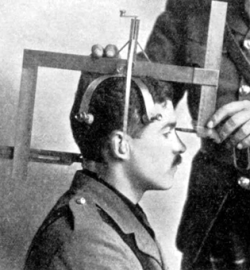 Now, let’s get this straight: Belief is dangerous. Lethal. Belief can destroy humankind—and it almost has, several times over.
Take the belief that human worth can be measured, “just as a rod of iron can be measured.” That belief was responsible for racist immigration quotas and tens of thousands of forced sterilizations in America. Shipped across the Atlantic, that belief gave warrant to the Nazis to terminate the lives of miscreants, crippled children, bedwetters, homosexuals, gypsies and Jews.
In the first half of the 20th century, eugenics was considered the cutting edge of science. But eugenics was not a science. It was a belief. A belief that ended up threatening the survival of humankind.Eugenics was not a science. It was a belief. A belief that threatened humanity’s survival.
Take the belief that the proletarian revolution would lead to emancipation of the people, fair distribution of wealth, the eventual dissolution of governments and peace on earth. In retrospect it sounds downright silly, but people really believed, truly believed in it. They believed it enough to fight bloody revolutions that relegated hundreds of millions of people to virtual serfdom, and stole tens of millions of lives through artificial famine and forced labor.
Communism was touted as social science. But it was not a science. It was a belief.
Take the belief that the state trumps the rights of the individual. Because the many are more important than the few. Because there is nothing divine or special about the life of any human being that accords any individual inalienable rights. Worship of the state—“statolatry,” as the Vatican called it—was an idea that captured the imaginations of philosophers, writers and statesmen—and brought with it the greatest atrocities of history.
 Fascism, it turned out, was nothing more than a belief. A lethal belief.
Take the belief that everything can be explained as emergent phenomena of a small set of physical laws—including your subjective experience of those laws. Nobody has explained how subjective consciousness can arise from matter, energy and physical law. Nobody has even explained what subjective consciousness is. But we are told to believe, just believe, that there is an explanation waiting to be found, and that therefore this is absolutely so. You are nothing more than a device, and all that is most real to you, all that matters the most to you—your joy and sadness, your love and fear, your aspirations and inspirations—all is an illusion, nothing more than software running on hardware made of meat.
Materialist reductionism has been a very successful strategy to predict observable phenomena. To believe that it can explain the observer as well is not science. It is a belief—a very radical belief. One that threatens to undermine the dignity of human life.
Take the belief that everything we see about us got here by accident, and so there is no purpose or meaning, other than whatever we wishfully assign to our inherently futile lives. Accordingly, saving the environment and leaving behind a better world for our grandchildren is of nothing more than sentimental value. The world really has no inherent meaning or purpose.Atheism is the belief that there is nothing in which to believe.
How do we know? We don’t know. Atheism is a belief. Atheism is the belief that there is nothing in which to believe.
All these beliefs—eugenics, communism, fascism, materialist reductionism and atheism—are regressive beliefs. Regressive, because they never assisted humanity’s progress forward towards a healthier, happier, more harmonious world. On the contrary, they have provided a fast escape route to the past.
As the Bolshevik revolution returned a populace only recently released from serfdom back to their chains, so materialism and atheism can only return humanity back to the era before the word progress was uttered, before the mavericks of the Renaissance spoke of human dignity, before the emancipators of the Age of Reason spoke of human rights, before humanity began to dream of an age of world harmony and peace. From physical law and a purposeless universe emerge neither dreams nor destiny.
But that’s not what’s most noxious about those beliefs. What makes them most pernicious is that those who believe those beliefs don’t believe they are beliefs. They believe they are pure reason. Proven fact. Science.
And therein lies the trouble with reason that denies belief. Not that it is bad reasoning. Quite often, it is very brilliant reasoning. It may even turn out to contain some great truths. The real trouble is that it doesn’t know who is its father and mother. It believes it gave birth to itself. It believes that reason has proven itself as fact, without recourse to any other faculty of the human being. And that therefore, anyone who believes otherwise is an ignorant, damned fool.
If anyone ever tells you that his beliefs have been proven absolutely true by science, he is playing with fire. Wildfire. It is such beliefs that have the capacity to destroy the world.
Is It Okay to Believe?
 The other day, I met an atheist. He told me he doesn’t believe in anything that cannot be proven to him beyond reasonable doubt.
I told him I don’t believe him.
“What don’t you believe?” he asked.
“That you don’t believe,” I answered. “Can you prove that to me—beyond reasonable doubt?”
“Well, I’m telling you so!” he replied.
“So,” I answered, “I’m just supposed to naively believe anything you tell me without proof?”
The truth is, there is no human being without beliefs. Without many, many beliefs.
Belief is to humankind as sunlight is to the forest.
Without belief, there is no life.
If lovers didn’t believe “this is the one!” if couples didn’t believe “our children will be beautiful!” if parents didn’t believe “one day they’ll grow up and it will all pay off”—oh, what a desolate world this would be.
And without belief, life is not worth living.
If businessmen didn’t believe their hunches, if athletes didn’t believe they’ll get that medal, if artists didn’t believe they can become eternal through their art—oh, what a dull, abysmal world.“The human being believes in eternal life, and therefore plants seeds.”
“The human being believes in eternal life,” the Talmud says, “and therefore plants seeds.” We live, love, build and create as though we will live forever, as though our deeds are eternal. Because we believe.
Without belief, there is no success.
Simon Sinek tells us that businesses succeed, inventors succeed, leaders succeed, movements, countries, projects—everything that succeeds—not because of what they do or how they do it, but because of the “why” in which they believe. People buy your product because of what you believe. And employees do their best job for you because they believe in what you believe. “If you hire people just because they can do a job, they’ll work for your money. But if you hire people who believe what you believe, they’ll work for you with blood and sweat and tears.”
We’re all feasting and enjoying one another’s company at this beautiful Chabad on Campus event. None of this could happen if the young couple who are your hosts didn’t believe in you. And they believe in you because their rebbe believed in you.
Without belief, there can be no progress.
If Newton had not believed that there is harmony in the universe, we wouldn’t have his exquisitely simple formulas for gravity and for motion. If a young Swiss patent clerk hadn’t believed the universe to be a single whole, we wouldn’t have relativity.
I have a little book on my shelf titled What I Believe But Cannot Prove. It’s a collection of essays by researchers in various fields providing their particular beliefs that they are either out to prove or just take as a given. That is how science works. Because no human being can put one foot forward without first reaching beyond his own intellect and believing—in himself, in his ideals and his ideas, and in his ability to transform a belief that is even beyond insight into a reality.
Reason is useful, very useful. But it goes nowhere without the faith that there is a somewhere to go.
Without belief, the human moral compass is doomed.
Yes, we have an innate moral compass. Our sense of reason is often its worst enemy.
If there were never people who believed that all human life is sacred, we would be living today in a world ruled void of civil rights. They never had proof. There still is no proof. It was, after all, the rational scientists of the first half of the 20th century who supported modern racism. At that time, reason was on the side of totalitarian states, the quashing of individualism, and the supremacy of “the Nordics.”
Thank G‑d for the believers who have saved us from the rationalists.
Because reason alone won’t get you ethics, won’t get you truth, won’t find you meaning. “There are people who live by reason alone,” writes social psychologist Jonathan Haidt, “and they are called psychopaths.”With reason, we observe the world. With faith, we change it.
Without reason, we cannot listen to the world and discover what it is. Without faith, we cannot speak back to it and tell it what it must be.
Without reason, we cannot know where we are. Without faith, we have no power to change our course.
Without reason, we lose touch with the here and now. Without faith, we forsake the future.
Betting on the Human Soul
 There are seven billion people living together in this tightly knitted global shtetl, carrying at least a million banners of diverse beliefs. Can such a cacophony of voices harmonize together without the tyranny of forced conformity?
That depends. If there can be dialogue, there can be harmony. But for there to be dialogue, we all need to come to a simple recognition: That just as we have two legs, two eyes, two ears, two ventricles of the heart and two lobes of the brain, so we have two faculties by which our minds interact with the the world: reason and faith.
But if someone refuses to recognize the sanity of faith, the channels of dialogue are closed.
If someone tells me they believe something is true but cannot prove it, I can speak with that person. I can say, “You have beliefs, and I have beliefs. I can’t prove mine; you can’t prove yours.” I can ask that person, “Just what sort of a world do you think these beliefs will take us to?” That’s a great measuring stick. Because if both of us agree on the same goal, we can work together.
But if that person tells me that if I don’t believe what they believe it’s because I’m ignorant, stupid and insane . . . well, you get the idea. I can’t see that as a route to a happy world.
All this means that no one has to give up their beliefs in order to live peacefully with everyone else. No one has to even compromise in the slightest. That would be nothing less than a death knell to the magnificent patchwork of wisdoms and cultures that multiculturalism purports to preserve.
It would also be murder of the human soul. You can’t tell a world, “Believe that you’re sort of right, maybe, under certain circumstances,” and expect a symphony of voices worth paying attention to.
There is just one condition for us to live in multiple cultures, each with its own beliefs and yet living together: We simply must know that what we believe is belief, and whatever we reason also starts with belief. There is no need to ridicule belief, because none of us can so much as breathe without it.
Those “others” may be unscientific, they may be heretics, or just plain wrong. But they are not insane. They may not be “us,” but they are still human as we are. We can understand them and they can understand us, once we both understand that “our beliefs are not your beliefs; my starting point is not yours.”
Basically, I’m betting on the human soul. I’m gambling that we all really do share common truths, a sense of the transcendent, of meaning to life and of human dignity, and that through dialogue we will discover those shared truths.
I believe in the human being. And I’ll admit, that’s a belief.
VIDEO
Just Be Happy and Positive!
Practical ideas on how we can change our perspective to create more happiness within our daily lives. by Shifra Sharfstein
Watch (57:06)
<script language="javascript" type="text/javascript" src="http://embed.chabad.org/multimedia/mediaplayer/embedded/embed.js.asp?aid=2535443&width=auto&height=auto"></script><div style="clear:both;">Visit <a href="http://www.chabad.org/multimedia/default_cdo/aid/591213/jewish/Video.htm">Jewish.TV</a> for more <a href="http://www.chabad.org/multimedia/default_cdo/aid/591213/jewish/Video.htm">Jewish videos</a>.</div>________________________________________
More in Video:
• Is Rain Good or Bad? (By Binyomin Bitton)
<script language="javascript" type="text/javascript" src="http://embed.chabad.org/multimedia/mediaplayer/embedded/embed.js.asp?aid=2513394&width=auto&height=auto"></script><div style="clear:both;">Visit <a href="http://www.chabad.org/multimedia/default_cdo/aid/591213/jewish/Video.htm">Jewish.TV</a> for more <a href="http://www.chabad.org/multimedia/default_cdo/aid/591213/jewish/Video.htm">Jewish videos</a>.</div>
QUESTION
Attending Non-Kosher Birthday Parties
Our eight-year-old son gets invited to birthday parties where non-kosher food is served. What’s the best way to handle this situation? by Yisroel Cotlar

My family is observant—we keep kosher in and out of the house—but hasn’t always been this way. Our eight-year-old son has several friends who are either not Jewish or not observant, and he gets invited to their birthday parties, where non-kosher food and cake is served.
What’s the best way to handle this situation? My wife and I have been discussing it for almost two years, but we haven’t come up with an answer.
Response:
I’m happy you brought this up. It’s an important question that applies not only to birthday parties, but also to a range of issues our children confront living a Torah life.
I can relate to the question quite well. We are Chabad shluchim in a small community, and many of the birthday parties our children are invited to are also in homes where kosher is not kept.
The short answer is, of course, that our children should never eat food that is not kosher. Keeping kosher isn’t something we try to do, but a part and parcel of our identity as Jews. Our essence does not change based on circumstances, and neither should our commitment to Torah. Whether we’re vacationing in Hawaii or attending a business conference, kosher is kosher.
The greatest gift you can give your children is this clarity about who they are and what their priorities should be.
The question then becomes a practical one: how to deal with the invitations.
In our situation, families know that we eat only kosher, and extending an invitation to our children means they will do what they can to accommodate. (Another advantage of clear identity is that it becomes obvious to others!)
There are stores in our area that sell kosher cupcakes, and most parents are happy to buy them. Other times, we’ll bake a quick Duncan Hines cake and send it along.
If the parents of your son’s friends are not aware that you keep kosher, let them know. There is no reason to be embarrassed. You will find that people are generally happy to accommodate.
One last suggestion: Whenever our kids are at an event where they can’t eat everything that’s being served, we try to treat them to something special afterward, whether it’s an extra dessert that evening or taking them out to a kosher restaurant. They need to the feel the joy, not just the oy, in mitzvahs.
This has to be communicated in words, too. From time to time, talk to your son about the beauty of keeping kosher, and let him know how lucky he is to know about and observe the mitzvahs. G‑d willing, soon others will learn about them as well.
WOMEN
Chasing Judaism
I am no longer chasing something out of reach. Judaism has permeated my life and integrated into who I am, how I act, the way I think and the choices I make. by Mindy Rubenstein

My “rebellion” came a little later in life—I was an adult, married, with two young children.
But I had always been searching for something meaningful, something with which to identify. My husband and I grew up around the block from each other. We both received pretty much the same dose of Judaism. Most of our peers and family members intermarried, and we didn’t think much of it at the time. As a couple, we had little if any connection to our religion.
Then, I had always been searching for something meaningfulduring a Friday night Shabbat meal with Rabbi Yossi and Dina Eber and their children—my first-ever immersive Shabbat experience—a light went off. This was it. This was the “something” I had been searching for: Judaism. It had been there waiting for me all along.
During that Friday night dinner—complete with prayers and songs and delicious kosher food—my soul came alive. Later I scoured the Internet, wanting to know more about my religion of birth. What had I been missing? What was Shabbat and kosher? How could I make up for lost time, and teach my children?
I wanted it all, immediately—the life, the rituals, the holidays, clothing and prayers.
So I started collecting mitzvahs like a child hoarding candy. I called to make an appointment to immerse in the local mikvah without first learning the laws. (The rebbetzin kindly offered to teach me.) I bought a challah, made chicken soup, and lit candles for our first Shabbat. I started dressing more modestly.
I admit it. I was obsessed. A “born-again” Jew.
I didn’t fully understand what it was I was getting myself into, or how to take on change in a healthy and meaningful way. For me, it was more about the destination—all or nothing. I wanted to be in the club and leave everything else behind. And unfortunately, I was not strengthening my relationship with G‑d, nor my husband, parents or children.
In the beginning, for example, before I fully understood all the laws of kosher, I rigidly refused to eat at my parents’ non-kosher home, and I was very vocal about it. I touted our newly religious lifestyle, frequently discussing the new things we were giving up and taking on. I judged. I was condescending and overly zealous. And I didn’t understand why my friends and family didn’t see the magic and beauty—the truth—as I saw it.
The journey of a baal teshuvah (Jewish returnee) can be tricky—trying to navigate gracefully into a new world while still retaining one’s own unique identity. Along the way, I dropped mitzvahs and picked them back up. I connected more with G‑d and with myself, except for the times I turned away. But I see everything as a point along the path that I am meant to take, one that’s leading me—I hope—to a better place.
Several years ago, I moved with my husband and children to a close-knit Jewish community in Atlanta. My kids attend a Jewish day school, where they learn Torah and apply it to their lives. I admire how easily and fluidly they soak it all in—academically and in real life. They are little mensches, most of the time.
We are considered completely observant now—we keep kosher, Shabbat and family purity. While there are still many details we have yet to acquire, the framework is there. And I feel it on the inside. That I’m no longer chasing after something just out of reach. It is all part of me. Judaism has permeated my life and integrated into who I am, how I act, the way I think and the choices I make.
I have I pray that I will set a good example for my childrendiscovered that being Jewish is a wonderful thing—we are to serve as a “light unto the nations,” G‑d’s ambassadors for goodness. But first, we must have the knowledge of what that means. And it doesn’t mean lecturing others. It doesn’t mean moralizing. The beauty of Judaism, the magic of Shabbat and the richness of Torah cannot be explained with words; they must be experienced. They must be felt.
I pray that I will set a good example for my children, by showing them that my Torah observance is genuine and done with love. I still have a long way to go. I still struggle daily with making the right choices. I still sometimes yell at my children and lose my patience with them. But I’m quick to forgive myself, apologize to them and move on.
I pray that my children will grow up to love Judaism and love themselves. That they will discover and rediscover their relationship with it many times along their own paths.
I pray that they will claim their birthright and live by the Torah—in the way that they treat others, as well as in the mundane details of their daily lives.
I pray that shalom bayit—peace at home—will permeate our lives, that my husband and I will continue to grow in our love and in our service of G‑d. Because that is the foundation of everything.
I still make mistakes, but I try to view myself, and others, with compassion. And every morning, thank G‑d, I get the chance to start fresh.
JEWISH NEWS
A Mother's Long Journey for a Boy’s First Taste of a Seder
After learning by email with Chabad emissaries and on Chabad.org at nearby Internet cafes, a Jewish woman living in an isolated village in Belize brought her young son to his first Passover seder in Cancun, Mexico. by Karen Schwartz

Khalil Elijah Burn went to his first seder this Passover. He and his mother, Naomi, who live in Belize, were guests of Rabbi Mendel and Rachel Druk, co-directors of Chabad Jewish Center of Cancun in Mexico.
“He’s extremely receptive to Jewish teaching, and I wanted to reward and encourage that,” Naomi Burn said of her 7-year-old son. She added that she wants him to feel connected to the Jewish people and to know that the story of the liberation of the Jews from Egypt is his story, too.
They were just two of hundreds of people there—Jewish residents, tourists and other invitees—who had come to spend a Passover seder with the area’s Chabad. Around the world, Passover was underway, with tables set and doors open for holiday celebrations and festive meals.
Burn had first written to Rachel Druk in 2011 after being connected through a chain of correspondence that started after her mother sent her a photography book called “Jewish Mothers: Strength, Wisdom, Compassion.” One story in the book that spoke to her strongly was that of Chanie Baron, a Maryland-based rebbitzen. Burn contacted her, and Baron responded.
As their conversation evolved, Baron encouraged her to get in touch with the Chabad closest to her, which wound up being in Cancun, a world-famous tourist destination. She finally got in touch, and the exchanges became frequent.

Since her village in Belize has no Internet access, Burn said she "lives off" Chabad.org's ”Daily Dose” emails—words of inspiration and wisdom adapted from the teachings of the Rebbe, Rabbi Menachem M. Schneerson, of righteous memory—and other small Chabad.org snippets of learning that she accesses every few days in the moments she can afford at an Internet cafe. She has been studying Judaism and sharing it with her children this way for quite some time now, while continuing her correspondence with the Druks, who have offered her invitations to visit.
This Passover, it all came together.
The rabbi and his wife helped her arrange accommodations and set her up for meals. Burn,who traveled from Belize to Mexico via overnight bus, said that her mother helped her finance the trip. “I’ve had a deeper desire to perform the mitzvot and to live my life in a way that’s pleasing to G‑d,” she said.

In Cancun, in a courtyard surrounded by greenery, were dozens of round tables set with white tablecloths and floral centerpieces, bottles of wine, water and grape juice, and all the accoutrements for the seder plate. Burn said she met Jews from Romania, Russia and Australia—even Belize—and basked in the traditional Jewish experience.
The guests, along with their children, were entranced by Khalil, who lives in a remote village in Belize with little, if any, access to the Internet, air-conditioning or electronic gadgets. Shoes are extraneous, and kids learn to be independent from a very young age. After climbing a tree to pick some coconuts while in Mexico, the boy showed others how to crack them by hand.
‘A Sense of Possibility’
Burn, originally from Los Angeles, grew up identifying Jewishly, but as an adolescent moved away from Judaism for nearly two decades. But she always remembered and cherished Passover seders.

Without a local community or synagogue to fall back on in Belize, Burn has become committed to building Jewish experiences for her children—she also has two daughters, ages 12 and 16, but couldn’t bring them on this trip—in the ways that are accessible to her. She makes her own candles for Chanukah and baked her own matzah from scratch for Passover.
“She has been on a remarkable journey to connect with authentic Yiddishkeit,” said Rabbi Druk, adding that she’s been working to involve her children as well.
And what she’ll take back, said Burn, goes far beyond the seder experience: “There’s more a sense of possibility … that I can be connected once again with the Jewish people after having separated myself for such a long time.”
On a more basic level, Burn said she also hoped to take a box of matzah home for her younger daughter, who has never seen the packaged product. “That’s the thing she’s latched on to, that she can’t wait for Mommy to bring back for her to see—a box of matzah,” she said.
This is what the Rebbe had in mind, said Druk. “One Jewish family in a far-off land so secluded with very little Jewish exposure can often be overlooked. The Rebbe taught us the value of the individual—the one neshama [soul] that can complete the puzzle.”
________________________________________
More in Jewish News
• 500th Weekly DVD Edition of ‘Living Torah' Marks a Milestone

On a crisp September morning in 2001, terrorists hijacked and slammed two airplanes into the World Trade Center’s twin towers in Lower Manhattan. (Another plane rammed into the Pentagon just outside Washington, D.C.; and a fourth crashed onto a swath of empty land outside Pittsburgh, Pa.).
Just miles away, in an office in Lubavitch World Headquarters in the Crown Heights neighborhood of Brooklyn, N.Y., Rabbi Elkana Shmotkin, executive director of JEM (Jewish Education Media), was hard at work on an exciting new project: a yearlong series of weekly VHS videos featuring talks and selected inspirational moments from Rebbe, Rabbi Menachem M. Schneerson, of righteous memory.
Just as he and his team were mastering the first video, he heard the news—and saw the smoke.
The new project—called “Living Torah”—quickly became a weekly fixture in homes, synagogues, schools and even prisons all over the world. It also served as the rabbi’s personal response to the destruction he witnessed on that day. One year later, he knew there was no way he would be able to stop the project.
“It’s become something that people live with every week,” he explains. “People who’ve never had the merit to meet the Rebbe in person tell me how the videos literally bring the Rebbe and his teachings to life for them.”
In its original format, the weekly “Living Torah” featured four parts: an excerpt from a farbrengen (public address) of the Rebbe; “Eye to Eye,” a private conversation with the Rebbe often held during the Sunday “dollars distribution; “Timeless Moments,” which showed the Rebbe during prayer or other moments of devotion; and “Soul Strings,” which often featured the Rebbe leading Chassidim in heartfelt singing.
In 2004, the project shifted from VHS to DVD. Now, nearly a decade after the switch to DVD, the rabbi and his staff are poised to release the 500th weekly DVD edition.
Behind the Scenes
In 2006, the fourth section was replaced by a popular feature, “My Encounter”—those who recall personal interactions they’ve had with the Rebbe, going back all the way to the 1930s. These clips are culled from 1,000 videotaped interviews conducted by JEM’s “My Encounter” teams in Israel and the United States, which travel the world documenting the Rebbe’s life and extensive reach via the words of those he touched.

Other significant changes took place along the way. Rabbi Mendel Gourarie, who has worked on the project in a variety of positions, says some of the most noteworthy changes were made behind the scenes.
Through the Living Archive Preservation Project, the JEM team has amassed and digitized a colossal, virtual treasure trove of audio and video recordings, in addition to photographs, of the Rebbe. This allows them to peruse and select content for the weekly features in a fraction of the time it would have once taken using film and paper.
More than just preserving and categorizing the footage, the digitization project allows technicians to restore old films (many of which had turned brittle with age) to their original vibrancy and crispness.
As time passes, Gourarie concedes that the team is challenged to find appropriate material to highlight without repeating old features. “Every few years,” he acknowledges, “we worry that we’re soon going to run out of videos. But it seems like there’s a never-ending fountain. We know that people rely on us for their weekly dose of Torah inspiration, and it’s our obligation to provide it, so we persevere.”

One creative innovation has been to match up audio-only recordings from early pre-video farbrengens with period photographs of similar gatherings to create a video-like experience. These photos have been matched up with poor-quality video to provide enhanced visuals.
In addition to hundreds of DVDs sent regularly to six continents, the “Living Torah” is available on Chabad.org’s theRebbe.org and on a mobile app released in 2013, where thousands of people log on for inspiration and learning.
Rabbi Yitzchok Tsap, who directs the project, says unofficial polls have revealed that “Living Torah” may be viewed by as many as 200,000 people a week. “In addition to private homes, ‘Living Torah’ is played in Chabad Houses, synagogues, Jewish community centers, so we really have no way of knowing just how far it reaches,” he adds.

He reports that the app has allowed relevant “Living Torah” content to be shown to a whole new audience: “In addition to the current ‘Living Torah’ and 2,000 archival clips from past weeks, the app allows us to easily feature talks of the Rebbe as their topics come up in the news.”
The videos—with subtitles in Hebrew, English, French, Russian, Spanish, Hungarian and Yiddish, as well as child-friendly English and Hebrew voiceovers—are geared to reach far beyond the Chassidic community.
Typical feedback includes the following email shared by Rabbi Menachem Katz, director of prison and military outreach at the Florida-based Aleph Institute—a national organization that provides religious, educational, humanitarian and social services to individuals in institutional environments—from a member of the U.S. Armed Forces:
“[When I hear] the Rebbe speak through Living Torah videos … I become so overcome by emotion that I cry tears of not sadness, but joy. I know it may seem so odd for one not raised in a household of Chabad, and having not even truly being exposed to the Rebbe until I was 22, to feel so strongly in this way, but nonetheless I do. The Rebbe has been my inspiration through my training and during the hard times. During ruck marches and intense training, I would envision the face of the Rebbe and his teachings, and they would energize me deep from within.”
• Despite Intimidation and Vandalism, Jewish Communities in Ukraine Remain Calm After False ‘Proclamation’ (By Dovid Margolin)

It was the second night of Passover, and the evening prayers had just concluded at the Beis Menachem Mendel Synagogue in Donetsk, Ukraine. Hundreds of worshippers in this border city with Russia were milling around, waiting for the second night’s community Passover seder to begin.
Just then, three or four masked men entered the synagogue and began distributing ugly, anti-Semitic fliers, ordering the city’s Jews to register and pay a $50 fee at a central office or risk having their “citizenship revoked, face deportation and see their assets confiscated.” The ominous leaflets were signed by the self-proclaimed pro-Russian Donetsk People’s Republic.
“The first minute the reaction was terrible,” said Rabbi Pinchas Vishedski, Donetsk’s Chabad representative and the synagogue’s rabbi. “But when people began reading the letter and saw its contents, it was so ridiculous; we saw that it was obviously a provocation.”
The paper, addressed to “Ukrainian citizens of Jewish nationality,” demanded that all Jewish citizens aged 16 and over register in Room 514 of one of the buildings controlled by pro-Russian separatists by May 3. When one local Jewish community member tried to test the legitimacy of the flier by following its instructions, the central office listed on the paper denied any knowledge of it.
Donetsk is a large, gray industrial city straddling the Russian border in eastern Ukraine and has been the site of some of the heaviest unrest in recent weeks. Pro-Russian separatists headed by Denis Pushilin—whose name was printed on the bottom of the flier—occupied central government buildings and declared an independent republic in the region on April 7, a move that has remained widely unrecognized.

Following talks last week with his European, Russian and Ukrainian counterparts in Geneva—aimed at de-escalating the rapidly deteriorating political circumstances in eastern Ukraine—U.S. Secretary of State John Kerry denounced the fliers.
“In the year 2014, after all of the miles traveled and all of the journey of history, this is not just intolerable—it’s grotesque,” Kerry was reported as saying. “And any of the people who engage in these kinds of activities—from whatever party or whatever ideology or whatever place they crawl out of—there is no place for that.”
No Spike in Anti-Semitism
The pro-Russian separatists were quick to deny any connection to the fliers, dismissing them as a hoax. Speculation of who was the true source of the fliers has run rampant, with some blaming Russia and its supporters, saying they are simply trying to raise hysteria in order to further destabilize the region, and others accusing the new government in Kiev, accusing them of fabricating the papers as a way of discrediting the Donetsk separatists.
With all of the regional turbulence, however, Vishedski—who arrived in Donetsk two decades ago with his wife, Nechama Dina—says that he has not seen any spike in anti-Semitism.
“Anti-Semitism is low here at this time,” said Vishedski, “that’s why I think this was just a cheap provocation. We are against anyone, on any side of this conflict, trying to use the Jewish community for their own political needs. It’s not a joke. The Jewish community must remain out of the game.”

Vishedski described the seder that followed as calm and relaxed, but noted that since the turmoil began, more people have been attending synagogue. “We had hundreds of people each night of Pesach; there was definitely an influx of people this year. The first night we had five sederim here,” he said. “The situation remains tense here, and I spoke about having faith and trusting in G‑d that everything will stay safe and turn out for the better.”
He did, however, say that the Jewish community was taking the fluid political situation and potential fallout seriously: “We have to remain vigilant. After Pesach, our kindergarten and school will be opening again, and we will be adding extra security. We don’t have money for it, businesses here have been stalled for months, but G-d will help us.”
In an unrelated anti-Semitic incident, on the Saturday morning following the Passover holiday, a vandal threw two Molotov cocktails at the synagogue in Nikolayev, a southern city that has witnessed some clashes between pro-Russian separatists and Ukrainian locals in recent weeks. The firebombs scorched the main door and a window, but did not result in major damage. More importantly, no one was hurt.
And in Crimea, the Holocaust Memorial in Sevastopol was sprayed with pro-Russian graffiti. The memorial, which honors 4,200 Jews who were murdered in the city in July 1942, was sprayed with a red star, a hammer and sickle, and the letters "USSR." As with the other incidents, there was no clear claim by perpetrators, and both pro-Ukranian and pro-Russian officials were lobbing responsibility for incitement on each other.
‘No One Knows What’s Going On’
Lugansk is another eastern city in Ukraine that sits on the Russian border and has been in turmoil in recent weeks.
“Lugansk is not quiet,” wrote the city’s rabbi, Chabad representative Rabbi Sholom Gopin, in a pre-Passover email. “Main roads are closed, demonstrations are increasing, and a question mark hovers in the air: Russia or Ukraine?”
Gopin said that he, too, has seen an influx of attendance over the last few weeks and during Passover. People have continued to come despite the synagogue’s central location, just meters away from the most serious demonstrations in the city’s center.

“Pesach was very nice, a lot of people came, and we had larger-than-expected sederim,” said Gopin.
Two hundred miles to the northwest, in Ukraine’s second largest city of Kharkov, the situation remains quieter than in Donetsk and Lugansk, but still unstable.
“It’s tense. There are Russian troops on the border, on weekends there are big demonstrations, it’s very uncertain,” said the city’s chief rabbi, Chabad representative Rabbi Moshe Moskowitz. “Demonstrators come and some people say they are locals; others say they’re not from here. No one really knows what’s truly going on.”

The Choral Kharkov Synagogue, two hundred miles to northwest of Donetsk, has been quieter, but Chabad representative Rabbi Moshe Moskowitz is remaining watchful there.
Yet when Passover set in on Monday night, the majestic, glowing Choral Kharkov Synagogue was filled to capacity, shining a bright light onto the city’s central Pushkinskaya Street.
As the Jewish community raised glasses to drink the third of four traditional cups of wine at the seder, Moskowitz spoke: “I asked that G‑d bless the Jewish community here and all of the citizens of Ukraine.”
Clinking glasses, the Jews of Kharkov leaned to the left, according to custom, and drained their wine.

Just a few days before Passover, the Kharkov Jewish community celebrated the completion and dedication of a new Torah scroll.
COOKING
Challah With Creamy Spinach Dip
Special challah for the first Shabbat after Passover by Miriam Szokovski

Sick of cooking? Whip up some creamy spinach dip to go along with the bread, put up a pot of chicken soup and enjoy a simple Shabbat. Take a break after all the holiday cooking and let the challah shine.
Choose a very large bowl. This recipe yields enough dough for six loaves, and the dough needs enough space to double in size while rising.
Pour 2 cups of warm water into the bowl and sprinkle the yeast on top. Mix briefly until combined (it’s okay if it’s a little lumpy), and let the mixture sit for about 15 minutes before continuing.
Add the rest of the warm water, oil, honey, eggs and salt. Mix. Start adding the flour, several cups at a time. Mix and watch a loose batter form. Keep adding flour and mixing until the dough begins to come together. You may not need all 18 cups of flour, so go slowly towards the end. Alternatively, you may need slightly more. The dough should be soft but not sticky. Once the dough has enough flour, knead it for a couple of minutes. I do this in the bowl. (You can do this recipe by hand or with a mixer. I prefer to do it by hand, to end up with less cleaning afterwards.)
Cover the bowl with plastic wrap or a damp towel and put it in a warm place to rise for about an hour and a half. In the summertime, I sometimes put the dough outside in a sunny spot. In the winter, I start preheating my oven and put the bowl on the stovetop. The heat comes up and creates a warm space for the dough. After an hour and a half, the dough should be double its original size and ready to work with.
You can see from my pictures that my bowl was not large enough, so after making the dough I transferred it to a large disposable pan to rise.
Punch the dough down and let it rest for 10 minutes before doing the mitzvah of separating challah. Say the blessing, separate a small piece of dough, and set it aside to burn after the challah has finished baking. For more about this mitzvah, and a step-by-step guide, watch this quick do-it-yourself clip.
Now divide the dough into six relatively equal pieces. I roll the dough into a line and cut it with a knife. Each of the six pieces will make one challah.
This recipe makes six braided loaves, or you can use some of the dough to make rolls. I made four fullsized challahs and eight rolls.
Ready to start? Pick up one of your chunks of dough, roll it out and cut into three (as pictured). Then roll out each of the three pieces, and you’ll be ready to braid.
Pinch the three strands together at one end and begin to braid. If you’ve ever braided hair, you know how to braid challah. It’s exactly the same. It’s a repetitive motion of crossing the outer strands over the middle strand. Start with the right strand and pull it over the middle so it’s now in the center. Now pull the left strand over the new center strand, and again pull the right strand over the middle. Repeat until the loaf is fully braided, then pinch the ends together tightly. For a neater, rounder look, tuck both ends under the loaf (see the difference in the picture).
Making challah rolls is a bit simpler. Instead of cutting the dough into three pieces, cut it into four. Roll each one up individually as pictured. Tuck the ends under when done—this will stop them from unrolling.
If you’re finding the braiding tricky, you can use the roll technique to make large round challahs as well. Simply roll one of the original six chunks of dough into a line, roll up as pictured and tuck the end underneath.
Place the challahs on lightly greased pans, and make sure to leave space around them, because they will spread and grow while baking.
Put the pans in a warm place and let the challah rise a second time, for about 40 minutes.
Combine the egg wash ingredients and brush over the loaves. If you don’t have a brush, you can use the back of a spoon. Bake for approximately 45 minutes at 375° F. You’ll know they’re ready when the bottoms of the loaves feel hard and the tops appear golden brown. The rolls need much less time—about 20–25 minutes. For best results, let the loaves sit for about 10 minutes, then transfer them to a cooling rack until fully cooled.
Dips and spreads are delicious on challah. My favorites are hummus, olive spread or some of this spinach dip. It’s easy to whip up while the dough is rising or while the challahs are in the oven.
Sauté 1 diced onion and 2 chopped garlic cloves in 2 tbsp. olive oil until golden. Add ½ cup chopped spinach and sauté until soft. Blend with ¼ cup mayonnaise and 1 tsp. salt (this works best in a food processor). Adjust mayonnaise and salt amounts to taste. Spread on challah and enjoy!
Dough Ingredients:
4 tbsp. dry yeast
5 cups very warm water
5 large eggs
1¼ cups honey
1 cup oil (canola or light olive oil)
2 tbsp. salt
Approximately 18 cups flour
For the egg wash:
1 egg
2 tbsp. honey
1 tbsp. oil
Directions:
In a very large bowl, dissolve yeast in 2 cups warm water and let sit about 15–20 minutes until slightly frothy.
Add the rest of the ingredients and half the flour. Mix until a loose batter forms. Add the rest of the flour a couple of cups at a time until the dough is soft but not sticky.
Cover the dough with a wet towel or plastic wrap and put it in a warm place to rise for about 1½ hours. Dough should double in size.
Punch the dough down and let it rest for 10 minutes. Divide into 6 equal pieces.
Braid according to pictures and directions above. Place loaves on lightly greased pans and let rise for another 40 minutes.
Egg wash the loaves and bake at 375° F for approximately 45 minutes. Loaves should be golden brown and firm on the bottom.
There is a tradition in some Jewish communities to make shlissel challah the week after Pesach. Shlissel means “key,” and the custom involves either baking the challah in the shape of a key, or wrapping ones real house (or business) key in foil and pressing it into the underside of the challah before baking. The key is removed before the challah is eaten, and the tradition is considered a segulah (spiritually propitious) for livelihood.
Have you made challah before? Or do you have bread-baking-phobia (not uncommon, even among seasoned cooks)? What’s your favorite way to eat challah? Do you have a special dip you like to spread on it? Leave a comment and let me know. I’d love to hear your ideas.
ART
Aliyah by Brooke Sendele

Ink, Colored Pencil & Chalk Pastel on Bristol Board
Artist’s Statement: After visiting a butterfly sanctuary, I became inspired to create a drawing using these magnificent creatures as the subject. I wanted to relate the butterflies to Judaism, and went searching for a word or phrase that was relevant to them and the idea of migration and ascension. I met with my local Chabad rabbi, Rabbi Shmuel Tiechtel, and we brainstormed and came up with the word “aliyah,” quite literally meaning to ascend and to migrate to Israel.
-------

No comments:
Post a Comment