democracynow.org
Stories:

Meet the Law Professor Leading a Bid to Recall the Judge Who Sentenced Stanford Rapist to 6 Months
A Stanford University law professor has launched a campaign to recall the judge who sentenced former Stanford swimmer Brock Allen Turner to six months in jail after he was convicted of three felony counts for sexually assaulting an unconscious woman behind a dumpster. Judge Aaron Persky expressed concern a longer sentence would have "a severe impact" on Turner. Under California law, Turner’s crime carries a minimum punishment of two years in prison. But Stanford law professor Michele Landis Dauber says Judge Persky "really bent over backwards in order to give this defendant a very light sentence." We speak with Michele Landis Dauber and read part of the powerful statement Turner’s victim delivered in court.
TRANSCRIPT
This is a rush transcript. Copy may not be in its final form.
AMY GOODMAN: We turn now to the effort to recall a judge who sentenced a former Stanford University swimmer, convicted of sexually assaulting an unconscious woman, to six months in jail. Judge Aaron Persky expressed concern that a longer sentence would have, quote, "a severe impact on him." Brock Allen Turner was caught by two witnesses thrusting on top of the victim as she lay unconscious behind a dumpster.
In a packed California court, the victim read aloud what the local prosecutor called "the most eloquent, powerful and compelling piece of victim advocacy that I’ve seen in my 20 years as a prosecutor." She began by recounting how she woke up in a hospital with pine needles in her hair and no memory of what happened to her. She said, quote, "You took away my worth, my privacy, my energy, my time, [my safety,] my intimacy, my confidence, my own voice, until today," she read, addressing her rapist directly. She said, "You bought me a ticket to a planet where I lived by myself." She concluded her statement with a message to survivors everywhere, saying, quote, "On nights when you feel alone, I am with you. When people doubt you or dismiss you, I am with you. I fought everyday for you. So never stop fighting, I believe you," she said. The survivor, who has not been named publicly, told The Guardian she was overwhelmed and speechless at the support she has received.
Brock Allen Turner was convicted of three felony counts of sexual assault and faced a maximum of 14 years in state prison, but was only sentenced to six months in a county jail and probation. That punishment is significantly less than the minimum prison time of two years prescribed by state law for his felony offenses. The judge is a Stanford alumnus, who led the university’s lacrosse team. His critics say he we was unduly influenced by Turner’s background as a fellow elite athlete. Turner’s father fueled the outrage by complaining his son’s life had been ruined for what he called, quote, "20 minutes of action."
Meanwhile, Stanford University has finally released Turner’s original booking photo from the night of his arrest last year. Up until now, most media outlets had been using a smiling yearbook photo of Turner rather than the mugshots that typically accompany stories of sexual assault and other crimes. Stanford surveys have found that 43 percent of female graduates have experienced sexual assault or misconduct, and that more than two-thirds of them said perpetrators took advantage of intoxicated victims. Brock Turner’s case has sparked outcry across the country, in part because campus sexual assaults seldom lead to criminal prosecutions and convictions.
For more, we go to Stanford, California, where we’re joined by Michele Landis Dauber, the Stanford law professor who’s leading the recall campaign against Judge Aaron Persky, the Santa Clara County Superior Court judge who sentenced Brock Allen Turner to six months in county jail.
Professor Michele Landis Dauber, welcome to Democracy Now! Explain what exactly your petition is calling for.
MICHELE LANDIS DAUBER: So, we are a group of Democratic and progressive women here in Silicon Valley who have come together to put together an actual recall campaign. So there are a number of Change.org petitions online, but those are not the official California recall effort. To participate in that, viewers and listeners should go to RecallAaronPersky.com, where they can sign up for information updates or donate to the effort. And we will be collecting signatures, getting this on the ballot and working to replace him with someone who understands violence against women.
AMY GOODMAN: Can you talk about Judge Persky’s handling of the case? Explain what happened in the trial.
MICHELE LANDIS DAUBER: Well, Turner was found guilty, beyond a reasonable doubt, by a jury for three felony sex crimes—two counts of sexual penetration of an intoxicated or incapacitated person, and one count of assault with intent to commit rape. And that’s a very serious charge that has a minimum, as you said, two-year sentence, and is presumptively not eligible for probation or a jail, you know, stay less than that two years; however, the judge really bent over backwards in order to give this defendant a very light sentence.
AMY GOODMAN: In his sentencing, Judge Persky seemed to sympathize with Turner’s assertion the encounter was consensual. He said, quote, "I take him at his word that subjectively that’s his version of his events. ... I’m not convinced that his lack of complete acquiescence to the verdict should count against him." Judge Persky also said, quote, "A trial is a search for the truth. It’s an imperfect process." He said his sentencing decision took into consideration the defendant had no significant prior offenses, he’d been affected by the intense media coverage, and, quote, "There is less moral culpability attached to the defendant who is ... intoxicated." Judge Persky also said, "A prison sentence would have a severe impact on him. ... I think he will not be a danger to others." Your response, Professor Dauber?
MICHELE LANDIS DAUBER: Yeah, this is the kind of talk that really has outraged the community, I mean, really, across the world, but here in Silicon Valley, in particular. Under the law, the judge had to make a finding in order to grant probation. The state Legislature requires that the judge make a finding that this is a, quote, "unusual" case and that the interests of justice require him to grant probation. And to do that, he found that because he was previously a very successful young man and a good swimmer, you know, with all of these accomplishments as an athlete, and that he was intoxicated, that that would be—make it unusual. And the problem with that is that that basically describes every sexual assault at Stanford.
AMY GOODMAN: Explain how Stanford—you’re professor at Stanford Law School. Explain how Stanford has dealt with this attack.
MICHELE LANDIS DAUBER: I’m sorry. There’s a lot of clicking on the line. Could you repeat the question, Amy?
AMY GOODMAN: Explain how your university, how Stanford University, dealt with the attack. It took place in January of 2015, is that right? And the reason that the—the reason that the perpetrator was found was because two people were riding by on a bicycle and saw him on top of this unconscious woman.
MICHELE LANDIS DAUBER: Yes, that’s right, Amy. So, Stanford—
AMY GOODMAN: And chased him.
MICHELE LANDIS DAUBER: Yes, that’s right. There were eyewitnesses to this assault, which makes it even worse, frankly, that the judge was so lenient in this sentence. And I think that one of the questions you asked me was, you know, how has Stanford done with respect to this question. And I think it’s important for viewers to understand that Stanford has a long history, really, of not treating these offenses particularly aggressively. For example, up until at least last year, Stanford had only ever expelled one student in the whole history of the university for sexual assault. And they have not, say, for example, as Harvard President Drew Faust has, taken on the fraternity culture of sort of toxic masculinity and the sexual assault that comes along with that, you know, sort of more directly. Harvard has taken some very strong measures against fraternities. And Stanford has—our provost, John Etchemendy, has really not stood up to the fraternities. And I think that, you know, in some ways, you can see that this is the kind of situation that you can end up with when you have a culture of elite, male, athletic privilege.
AMY GOODMAN: I wanted to read more from the statement that the victim made in the courtroom, which has been viewed by millions of people. Addressing Brock Allen Turner, she said, quote, "While you worry about your shattered reputation, I refrigerated spoons every night so when I woke up, and my eyes were puffy from crying, I would hold the spoons to my eyes to lessen the swelling so that I could see. I showed up an hour late to work every morning, excused myself to cry in the stairwells, I can tell you all the best places in that building to cry where no one can hear you. The pain became so bad that I had to explain the private details to my boss to let her know why I was leaving. I needed time because continuing day to day was not possible. ...
“My life has been on hold for over a year, a year of anger, anguish and uncertainty, until a jury of my peers rendered a judgment that validated the injustices I had endured. Had Brock admitted guilt and remorse and offered to settle early on, I would have considered a lighter sentence, respecting his honesty, grateful to be able to move our lives forward. Instead he took the risk of going to trial, added insult to injury and forced me to relive the hurt as details about my personal life and sexual assault were brutally dissected before the public. ...
“I told the probation officer I do not want Brock to rot away in prison. I did not say he does not deserve to be behind bars. The probation officer’s recommendation of a year or less in county jail is a soft timeout, a mockery of the seriousness of his assaults, an insult to me and all women. It gives the message that a stranger can be inside you without proper consent and he will receive less than what has been defined as the minimum sentence. Probation should be denied. I also told the probation officer that what I truly wanted was for Brock to get it, to understand and admit to his wrongdoing.
"Unfortunately, after reading the defendant’s report, I am severely disappointed and feel that he has failed to exhibit sincere remorse or responsibility for his conduct. I fully respected his right to a trial, but even after twelve jurors unanimously convicted him guilty of three felonies, all he has admitted to doing is ingesting alcohol. Someone who cannot take full accountability for his actions does not deserve a mitigating sentence. It is deeply offensive that he would try and dilute rape with a suggestion of 'promiscuity'. By definition rape is not the absence of promiscuity, rape is the absence of consent, and it perturbs me deeply that he can’t even see that distinction," she said.
The victim ended her statement with a message to fellow survivors. She said, "As the author Anne Lamott once wrote, 'Lighthouses don't go running all over an island looking for boats to save; they just stand there shining.’" She said, "Although I can’t save every boat, I hope that by speaking today, you absorbed a small amount of light, a small knowing that you can’t be silenced, a small satisfaction that justice was served, a small assurance that we are getting somewhere, and a big, big knowing that you are important, unquestionably, you are untouchable, you are beautiful, you are to be valued, respected, undeniably, every minute of every day, you are powerful and nobody can take that away from you. To girls everywhere, I am with you. Thank you."
The victim chose to remain anonymous. Professor Dauber, her statement in court?
MICHELE LANDIS DAUBER: It is so—I’m having trouble keeping my composure listening to you read it, as I think a lot of people probably are. And I really hope that you’ll post the full statement on the Democracy Now! website or link to the BuzzFeed site so that people can read it for themselves. It’s incredibly powerful. And it really has, I think, caused a lot of women who have been sexually assaulted, or other individuals who someone close to them has been sexually assaulted, to really understand the pain. But I really want your viewers to understand that she—although this has really inspired so many people, she didn’t write it for that purpose. She wrote it for the purpose of persuading the judge, Judge Aaron Persky. And unfortunately, unlike, you know, the millions of people who have been moved around the world, Judge Persky apparently was not moved by this, but was instead persuaded that he needed to have a lot of sympathy and solicitude for Brock Turner.
AMY GOODMAN: I wanted to end by asking you about something else that happened in California. Black Lives Matter activist Jasmine Richards has been sentenced to 90 days in jail after she was convicted of an offense known up until recently as "felony lynching." Police accused her of trying to de-arrest someone during a peace march in Pasadena last August. The arrest and jailing of a young black woman activist on charges of felony lynching sparked a firestorm of protests. Richards faced up to four years in prison. She was sentenced Tuesday to 90 days, with 18 days served, plus three years’ probation. Brock Allen Turner is expected to serve three months or less, with good behavior, and the same amount of probation time. Your response?
MICHELE LANDIS DAUBER: I think that this really does highlight the reason why we feel it’s important to recall Judge Persky, because we have one system of justice in this country, and we need to make sure that women are safe where they—regardless of where they’re assaulted, and that—whether it’s on a college campus or anywhere else, and that when an individual does perpetrate an offense, that they’re subject to the same kind of justice and to equal justice, regardless of who they are, whether they have high grades, whether they are a Stanford student or not, whether they are an excellent elite athlete or not. Everyone needs to be subject to the same standard.
AMY GOODMAN: Michele—
MICHELE LANDIS DAUBER: And for the judge to say—oh, I’m sorry.
AMY GOODMAN: We have to leave it there, but I want to continue this conversation and post it online, because I want to ask you what happened right before Brock was sentenced, a fascinating story that links really to what we’re seeing today. Michele Landis Dauber, Stanford law professor, leading the recall campaign against Aaron Persky, Santa Clara County Superior Court judge.
That does it for our show. I’ll be in Chicago on Saturday, June 11. We have two job openings. Go to our website, democracynow.org. ... Read More →

Dolores Huerta vs. Norman Solomon: A Debate on Best Path Forward for Democratic Party
With Bernie Sanders vowing to continue fighting until the Democratic National Convention, we speak to Hillary Clinton supporter Dolores Huerta and Sanders delegate Norman Solomon on where the race goes from here.
TRANSCRIPT
This is a rush transcript. Copy may not be in its final form.
AMY GOODMAN: During last night’s victory rally, Hillary Clinton addressed Bernie Sanders’ supporters.
HILLARY CLINTON: Now, I know it never feels good to put your heart into a cause or a candidate you believe in and to come up short. I know that feeling well. But as we look ahead—as we look ahead to the battle that awaits, let’s remember all that unites us. We all want an economy with more opportunity and less inequality, where Wall Street can never wreck Main Street again. We all want a government that listens to the people, not the power brokers, which means getting unaccountable money out of politics. And we all want a society that is tolerant, inclusive and fair.
AMY GOODMAN: So, Norman Solomon, you’re a Bernie Sanders delegate. Clearly, Hillary Clinton offering the olive branch to people like you, to Bernie Sanders’ supporters. Your response to what happened last night?
NORMAN SOLOMON: Well, I think Hillary Clinton’s speech was well crafted, and Bernie Sanders’ speech was transcendant. And that’s really symbolic of both campaigns. If we’re getting an olive branch now from Hillary Clinton, it’s a rather small one. It’s a rather brittle one. And it remains to be seen whether there’s going to be very much substance. You know, it is a glass ceiling that needs to be shattered. We need equal rights for women, as well as men, and we also need equal scrutiny. And when we think about the role that Hillary Clinton has played in terms of advocating for the so-called welfare reform of 1996 that decimated the lives of millions of women economically in this country, when you think of the women in the Middle East and North Africa whose lives have been shattered by the policies advocated and advanced by Hillary Clinton, it’s problematic to see her as some sort of advocate and champion for the rights of women or children or any human being. So, this is an ongoing challenge, and I think the most important words that we heard last night were three from Bernie: "The struggle continues."
AMY GOODMAN: Dolores Huerta, what about that? And what about the movement that Bernie Sanders has ridden over these months, the mass rallies that he has held in your state, California, dwarfs almost anything that Hillary Clinton has seen in the campaign that she has been conducting?
DOLORES HUERTA: Well, I think that that’s wonderful that we have so many people engaged in the rallies that Bernie has had. It’s wonderful to see so many young people that are engaged. But I think we’re a little shortsighted, because we need to understand that the person that we have to beat in November is Donald Trump. Hillary Clinton is not the enemy. She’s a very intelligent woman. She will be able to bring to fruition many, many of the ideas and the philosophy that Bernie Sanders and his supporters have. I have a lot of faith and trust in Hillary Clinton. I’ve known her, I’ve traveled with her, I’ve seen her. I’ve talked to hundreds of people that she has been involved with and helped.
And so, when we keep thinking of the words, "We’re going to keep fighting, we’re going to keep the struggle going," yes, we do have maybe a long way to go in our democracy in the United States to be able to erase the inequality, to be able to get our labor unions respected again, to get our people of color respected. Yes, and all of the things that—yes, we need to do something about college tuition. But we are going to have a nominee, and that’s Hillary Clinton. And at this point, we have to talk about unity, and we have to stop the—stop the talk about fighting. We’ve got to come together, because there is somebody that we have to defeat, and that is Donald Trump. And I do believe—
AMY GOODMAN: Norman Solomon—
DOLORES HUERTA: —at the end of the day, many of the values that Bernie Sanders has are the same values that Hillary Clinton has. And I hope that many of the Bernie Sanders supporters will understand that, and—because if we keep this—if the talk keeps going on about we’re going to fight, we’re going to fight, then, you know, this is going to help Donald Trump. It’s not going to help anybody but him. And so, we really have to be real about what’s going on in our country right now.
AMY GOODMAN: Do you think, Dolores Huerta, that at this point Bernie Sanders should drop out of the race?
DOLORES HUERTA: I think that some of the rhetoric that Bernie is using is also, I think—and especially when it comes to the young people that—many that he represents. I think he’s got to be a leader in this moment. This is what he has to be. Eventually, we know that Hillary is going to be the nominee. How he handles that—and I’m supposing that he’s having trouble, you know, dealing with that, that he’s not going to be the candidate of the Democratic Party. We know that he has half of the people—almost half of the people on the platform committee are Bernie Sanders supporters. And so, they will be able to craft the kind of a platform for the Democratic convention that we all want. We all want social justice. We all want reform. But, you know, let’s start working together and stop the fight talk, OK? It’s enough already. Let’s come together, because we’ve got to win in November, and we’ve got to defeat Donald Trump.
AMY GOODMAN: Norman Solomon, your response?
NORMAN SOLOMON: We definitely need to defeat Donald Trump. No self-respecting or human-respecting progressive would ever vote for Donald Trump. At the same time, you’re not going to be able to effectively defeat the bogus, racist, xenophobic type of pseudo-populism coming from Donald Trump with a sort of Wall Street, throw-in-a-little-bit-of-populist-rhetoric campaigning that we’ve been getting from Hillary Clinton.
Of course, while we defeat Donald Trump, we also need to keep on keeping on, to speak truth to and about power. And right now, corporate power has a stranglehold over domestic policy, over international policy. It’s fueling the warfare state and perpetual war. Since when do advocates for nonviolence and peace go silent when Hillary Clinton is an advocate for perpetual war? There are people in Libya, in Iraq, in Syria, who are suffering grievously because of policies not only in the past that she’s advanced, but ones that she’s prescribing for the future. Since when do we go silent when Hillary Clinton affectionately praises and describes Henry Kissinger as her friend? Now, let’s be clear: Hillary Clinton is a pro-war candidate. If Bernie Sanders is not exactly an antiwar candidate, he’s not a pro-war candidate. He has, for instance, symbolically said he would never want Henry Kissinger—who, you know, frankly, is a warmonger and a war criminal. I just think history bears that out. Bernie Sanders went out of his way in a debate, two debates, to say, "Look, I would never consider him my friend. He is a disgraceful historic figure in terms of being a secretary of state."
So, I think we need to get a clear grip on what our values are. And progressives are absolutely capable of holding in their minds and their hearts two fundamental precepts and goals. One, yes, we must defeat Donald Trump. The other is that we have eternal vigilance to challenge the kind of corporate power, Wall Street-friendly and militarism policies that are advocated by and now represented fully by Hillary Clinton.
AMY GOODMAN: Do you see a path for Bernie Sanders right now to the presidency, Norman Solomon?
NORMAN SOLOMON: Well, I think there’s a path to Philadelphia. And like many other Bernie Sanders delegates that I’ve spoken with in recent days, we want to hear the nominating speeches and the seconding speeches for Bernie Sanders inside the convention hall in Philadelphia. We want to hear him speak to the convention still as a candidate. And as delegates who have been elected in our congressional districts, for instance, in the state of California, we want to cast our votes for Bernie Sanders as the nominee for president of the United States of the Democratic Party. That need not be divisive at all. It’s inclusive, and it means that, as Jesse Jackson said way back in 1988, a plane and a party needs two wings to fly. And if this party tries to lop off the left wing of its vehicle and its possibilities, then we’re going to be fighting this campaign with one hand amputated behind our back.
AMY GOODMAN: We’re going to continue this discussion, Norman Solomon, a Bernie Sanders delegate to the Democratic National Convention, and Dolores Huerta, longtime Hillary Clinton supporter, one of the founders of the United Farm Workers of America with Cesar Chavez. I also want to ask Dolores about Helen Chavez, who just died, Cesar Chavez’s wife and longtime ally in the movement. Stay with us. ... Read More →

"Historic Moment for Women": Dolores Huerta on Hillary Clinton Declaring Victory in Democratic Race
Hillary Clinton has claimed the Democratic presidential nomination on Tuesday night, pulling off victories in California, New Jersey, New Mexico and South Dakota. Clinton is set to become the first woman to win a major party’s presidential nomination. With only one primary to go in the District of Columbia, Clinton has an insurmountable lead in pledged delegates over her challenger, Bernie Sanders. But Clinton’s pledged delegate count falls short of the 2,383 needed, meaning she will need to rely on the support of unelected superdelegates to officially secure the nomination at next month’s convention in Philadelphia. We hear excerpts of Clinton and Sanders, and speak to longtime civil rights activist Dolores Huerta, co-founder of the United Farm Workers of America with Cesar Chavez.
TRANSCRIPT
This is a rush transcript. Copy may not be in its final form.
AMY GOODMAN: Hillary Clinton has claimed the Democratic presidential nomination Tuesday night, pulling off victories in California, New Jersey, New Mexico and South Dakota. Clinton is set to become the first woman to win a major party’s presidential nomination. With only one primary to go in the District of Columbia, Clinton has an insurmountable lead in pledged delegates over her challenger, Bernie Sanders. But Clinton’s pledged delegate count falls short of the 2,383 needed, meaning she will need to rely on the support of unelected superdelegates to officially secure the nomination at next month’s convention in Philadelphia. On Tuesday night, Hillary Clinton held a victory rally at the Brooklyn Navy Yard.
HILLARY CLINTON: Thanks to you, we have reached a milestone: the first time—the first time in our nation’s history that a woman will be a major party’s nominee for president of the United States. Tonight’s—tonight’s victory is not about one person. It belongs to generations of women and men who struggled and sacrificed and made this moment possible. In our country, it started right here in New York, a place called Seneca Falls, in 1848, when a small but determined group of women and men came together with the idea that women deserved equal rights. And they set it forth in something called the Declaration of Sentiments, and it was the first time in human history that that kind of declaration occurred. So we all owe so much to those who came before, and tonight belongs to all of you.
AMY GOODMAN: Hillary Clinton, speaking at the Brooklyn Navy Yard last night. On Tuesday, Bernie Sanders recorded two victories, in Montana and North Dakota, but fell far short in California, where he had heavily campaigned for weeks. With 94 percent of the votes counted, Clinton is leading by a margin of 56 to 43 percent in California. It’s unclear how Tuesday’s results were impacted by the Monday announcement from the AP and NBC that Clinton had already secured enough support of superdelegates to become the party’s presumptive nominee. Speaking in Santa Monica after the California polls closed, Senator Sanders vowed to continue his fight all the way to next month’s Democratic convention.
SEN. BERNIE SANDERS: Next Tuesday, we continue the fight in the last primary in Washington, D.C. We are going—we are going—we are going to fight hard. We are going to fight hard to win the primary in Washington, D.C. And then we take our fight for social, economic, racial and environmental justice to Philadelphia, Pennsylvania. I am—I am pretty good in arithmetic, and I know that the fight in front of us is a very, very steep fight, but we will continue to fight for every vote and every delegate we can get.
AMY GOODMAN: Senator Sanders is laying off more than half of his staff and will meet with President Obama in Washington, D.C., on Thursday.
We go now to California, where we are joined by two guests. Dolores Huerta, civil rights activist, co-founder of the United Farm Workers of America with Cesar Chavez, president of the Dolores Huerta Foundation for community organizing, she’s endorsed Hillary Clinton for president. And we’re joined by Norman Solomon, a Bernie Sanders delegate to the Democratic National Convention and co-founder of RootsAction.org, the author of many books, including War Made Easy: How Presidents and Pundits Keep Spinning Us to Death.
We welcome you both to Democracy Now! Let’s go to Dolores Huerta first. Your response to the—Hillary Clinton’s victory last night? The headline in The New York Times: "Clinton Claims the Democratic Nomination."
DOLORES HUERTA: Well, I think it’s very historic, as Hillary Clinton said herself, that this is a historic moment that we have a woman who is going to be the nominee, a Democratic nominee, for the presidency of the United States of America. And I believe that when Hillary gets elected, she will lift the tide for all women throughout the United States, and not only women, but also children, because in her career Hillary has done very much for children, starting when she passed the first healthcare act for children, which covered 8 million children. So, I am very hopeful. I do believe that she also has the capacity to run against Donald Trump, and it will be a very interesting race to see Mr. Super Macho, Mr. Donald Trump, run against a feminist, Hillary Clinton, with very different values. And I do believe that Hillary Clinton has the values of the majority of the people of the United States of America, and that she will be successful and will gain the presidency of the United States of America. ... Read More →

"This is Huge": Voices from Hillary Clinton's Victory Rally in Brooklyn
On Tuesday night, thousands of Hillary Clinton supporters gathered in Brooklyn to witness Clinton claiming victory in the Democratic race, becoming the first woman to become the presumptive nominee of a major political party. Democracy Now! producers Charina Nadura and Carla Wills spoke to some of Clinton’s backers.
TRANSCRIPT
This is a rush transcript. Copy may not be in its final form.
AMY GOODMAN: On Tuesday night, Hillary Clinton held a victory rally at the Brooklyn Navy Yard as she claimed the Democratic presidential nomination, pulling off victories in California, New Jersey, New Mexico and South Dakota. Democracy Now! was there, speaking with some of her supporters.
JEN HECK: I’m Jen. I’m from Manhattan. And I’m here because after many months of painful back-and-forths, I’m just proud to be able to come out and say, "Go Hillary." I just can’t wait for her to put Trump in his place and to say things that I think not just women, but a lot of people have wanted to say, to stand up for social justice in this country, for women, for every—for everything.
FRANCES LIPPETTE: Hi. My name is Frances, and I’m here to support Hillary Clinton, number one, because she’s the most qualified to hold the position from day one, and, number two, because she—in my lifetime, I would love to see a female put these 44 men down.
ANDY KONRAD: My name’s Andy Konrad, and I’m from Long Island City, Queens. And I’m here to celebrate, because Hillary is going to be the nominee. I’m very happy. I like her ideas. I actually like the fact that Bernie Sanders even kind of shifted some of the ideas to the left, because I’m all about that, but I think that she is just more—would have a better—be more capable of making these ideas come into fruition. I do have a lot of friends that are on that side, and it’s a shame it got so contentious. I think that she should be—really lend out a hand to those people, make sure that they get their voices heard, but, you know, include them with us, because we’re all the Democratic Party, and we need to come together, especially to fight against Donald Trump, because that would be a nightmare if he was anywhere near the White House.
DIANE REISER: I’m Diane Reiser. I’m from Brooklyn, New York. And I’m here for my mother, my grandmother, my grandchildren, because it’s a historical moment. I’m 71 years old, and I am absolutely excited that we will have a woman president. This is the first time I—you know, Shirley Chisholm was nominated, but not by the Democratic Party, not by a major party. So this is huge, absolutely huge. It’s on the same level as having a black president. And I want it for my grandchildren.
AMY GOODMAN: Special thanks to Carla Wills and Charina Nadura for that report from the Brooklyn Navy Yard. ... Read More →

Dolores Huerta & Norman Solomon on Trump, Sanders' Next Steps & Media Coverage of the 2016 Race
Longtime civil rights activist Dolores Huerta and media critic Norman Solomon continue their debate on the morning after Hillary Clinton claimed victory in the Democratic race. They discuss Donald Trump’s racist remarks, Clinton’s plan to reach out to Sanders supporters, and the decision by the Associated Press and NBC to call the race for Clinton on the eve of the California primary.
TRANSCRIPT
This is a rush transcript. Copy may not be in its final form.
AMY GOODMAN: During her victory speech on Tuesday night, Hillary Clinton looked ahead to the general election, attacking Donald Trump.
HILLARY CLINTON: The stakes in this election are high, and the choice is clear. Donald Trump is temperamentally unfit to be president and commander-in-chief. And he’s—he’s not just trying to build a wall between America and Mexico, he’s trying to wall off Americans from each other. When he says, "Let’s make America great again," that is code for "Let’s take America backwards."
AMY GOODMAN: That was Hillary Clinton last night. And Donald Trump gave his victory speech at his country club in Briarcliff Manor, New York. It was the first time during this campaign that he was using a teleprompter. His campaign said that he wrote the script along with his inner circle, discussing people like his daughter, Ivanka Trump.
Dolores Huerta, the issue of the wall has been in the forefront in the last few days, because Donald Trump has raised it. He’s trying to get the judge to recuse himself, who is overseeing the civil lawsuit against his now-defunct Trump University, where students are accusing him of defrauding them out of millions of dollars. He says that the judge, Gonzalo Curiel, a federal judge, cannot be—is biased simply because of his Mexican heritage, or, as he says, "He’s a Mexican." And he directly links it to Trump’s support for the wall. Your response, Dolores Huerta?
DOLORES HUERTA: Well, that’s a ridiculous statement. And again, he is showing his overt racism that he has against Latinos, especially Mexicans. And to attack a judge that way is unethical and might even be illegal, the way that he is doing that. This is, I think, the way that Trump works. He just blows a lot of smoke up there and blows a lot of fire, and he thinks that that is going to somehow be able to cover his actions so that people will not see what the man is and what the man does and what a corrupt person Donald Trump is.
AMY GOODMAN: There’s a—
DOLORES HUERTA: And I know that the truth will all be coming out during this campaign.
AMY GOODMAN: There’s a very interesting—
DOLORES HUERTA: And I do want to say also that—
AMY GOODMAN: I just wanted to talk about the Daily News front page, the New York Daily News. It says, "I’m with racist!" "Trump’s 'Mexican' judge rant is the 'definition of racist,'" says House Speaker Paul Ryan, "but I still support him."
DOLORES HUERTA: Well, that’s what’s so sad. And I do believe that the racism in the United States of America has been so inherent and so part of the fabric of the United States of America. Hopefully, with Donald Trump bringing it up into the forefront and his supporters bringing it up into the forefront, it will be a call to action for all of our organizations, our agencies, our institutions and government, public and private, that we have to start doing something to end racism—
AMY GOODMAN: Let me turn—
DOLORES HUERTA: —and sexism.
AMY GOODMAN: Let me turn to—
DOLORES HUERTA: And I do want to say that I think disparaging Hillary Clinton—because she knows Henry Kissinger does not mean that she advocates the policies that Henry Kissinger advocated. I think that’s going a little far afield. And, you know, attacking Hillary Clinton for policies that other people have advocated or that have practiced, I believe, is wrong. And I hope that that does not continue between now and the time that she is running her election for the presidency of the United States.
AMY GOODMAN: Norman Solomon, your—Norman Solomon, your response?
NORMAN SOLOMON: Yes, well, they’ve praised each other. They’ve praised each other’s policies. Henry Kissinger and Hillary Clinton have publicly lauded each other’s policies. And I agree with the journalist at Consortium News, formerly at Newsweek and Associated Press, Robert Parry, who has documented in great detail that Hillary Clinton’s policies, her advocacies for foreign intervention, are essentially very similar to what we call neocon policies that prevailed under the presidency of George W. Bush. It’s now just called liberal interventionism; it’s now called Responsibility to Protect, or R2P. But the bottom line is the same. So, I just think we need to have a single standard of evaluating the advocacy and policies of presidential candidates. It is really fair to say that Hillary Clinton has advanced, through her words, through her deeds as secretary of state, policies of continual U.S. military intervention and de facto perpetual war. So I think we ought to debate that. Do we support that or not? Do we go silent about it or not?
AMY GOODMAN: I want to turn to a part of Donald Trump’s speech last night.
DONALD TRUMP: We’re going to rebuild our inner cities, which are absolutely a shame and so sad. We’re going to take care of our African-American people, that have been mistreated for so long.
AMY GOODMAN: "Take care of our African-American people." Dolores Huerta?
DOLORES HUERTA: Well, that sounds kind of a plantation talk, very patronizing. And I don’t think that African Americans are going to be—are going to be fooled by that kind of speech that Donald Trump is now engaging. I think people are too smart for that. And I’m sure that he’s going to be changing a lot of his rhetoric, maybe not so much against Mexicans, maybe against other people, because we will be seeing a change in Donald Trump by his handlers to try to make him more palatable so that people will vote for him. So, that will be interesting to see that.
AMY GOODMAN: I wanted to go—
DOLORES HUERTA: And he has shown us during this election cycle who he really is. And I don’t think people will be fooled.
AMY GOODMAN: I wanted to turn to a—
DOLORES HUERTA: There’s just too much of a record.
AMY GOODMAN: I wanted to turn to a part of Donald Trump’s speech where he addressed Bernie Sanders’ supporters.
DONALD TRUMP: To all of those Bernie Sanders voters who have been left out in the cold by a rigged system of superdelegates, we welcome you with open arms.
AMY GOODMAN: Norman Solomon, you’re a Bernie Sanders delegate. You’ll be in Philadelphia.
NORMAN SOLOMON: Well, you know, in his statement last night, Donald Trump was feeding on the ridiculous and absurd spin that has come from so much of the mass media in this country, conflating somehow the, quote, "antiestablishment" positions of Bernie Sanders and Donald Trump. As Bernie said in his speech last night, Donald Trump is antithetical to Bernie’s values and progressive values. And the fact is that unless we’re going to take on the need for democracy by challenging the power of Wall Street, then we are leaving open the door for the Donald Trumps of the world to just come right in and demagogue it out. The reality is that today, nobody who embraces the campaign of Bernie Sanders should do anything but try to defeat Donald Trump. And what Trump said last night to try to woo Bernie Sanders supporters, I think, will largely overwhelmingly be rejected, as it should be.
AMY GOODMAN: Very quickly—very quickly, Norman Solomon, your response to AP and NBC calling the Democratic nomination for Hillary Clinton on the eve of the largest primary in the United States, in your state, in California?
NORMAN SOLOMON: It really is an example of mass media genuflecting to elites within the Democratic Party—in this case, superdelegates. Those delegates were not elected for the purpose. Some of them are lobbyists for tobacco companies and so forth. And it’s a pattern where AP and NBC and the major media outlets, they have been clueless for more than a year about what the Bernie Sanders campaign is all about. They thought that progressives could not mount an effective presidential campaign. And I think it is de facto voter suppression, and more and more people are recognizing that kind of media manipulation as exactly that: efforts to manipulate.
AMY GOODMAN: I want to thank you, Norman Solomon, for joining us, a Bernie Sanders delegate, one of the founders of RootsAction.org. Among your books, War Made Easy: How Presidents and Pundits [Keep] Spinning Us to Death.
And, Dolores Huerta, I wanted to stay with you for one minute to talk to about Helen Chavez, the activist who played a crucial role in launching the United Farm Workers of America, who has just died at the age of 88, widow of Cesar Chavez, who, together with you, led the United Farm Workers of America for more than three decades. In a statement honoring Helen Chavez, President Obama said, quote, "She managed her union’s finances, prepared meals, marched in picket lines, and was even arrested for her actions, all because she believed in the dignity of America’s farmworkers—men and women she toiled with in the fields, even as she raised eight children and helped lead a movement." Helen Chavez died Monday in Bakersfield, California. You knew her well, is that right?
DOLORES HUERTA: Yes, I did. Helen was a very dear, very close friend. We worked together for many years, even before we started the United Farm Workers, in the previous organization, the Community Service Organization. She was truly the foundation and the rock. And I don’t think Cesar would have been able to accomplish what he did without her emotional and her physical support that she gave, and not just to Cesar, but to everybody in the movement, the staff and volunteers, and worked diligently in our credit union. And I do want to say, though, that, hey, in California, we had a popular vote, where Hillary Clinton won that popular vote.
AMY GOODMAN: Well, I want to thank you for being with us, Dolores Huerta.
DOLORES HUERTA: And by the way, Helen Chavez voted in her absentee ballot for Hillary Clinton. And her—just before she passed away, she said, "As soon as I get out of this hospital, I want to start doing commercials for Hillary Clinton." She was a very strong advocate for Hillary Clinton, and I know there’s been some word out there that the Chavez family itself was supporting Bernie. No, Cesar’s wife, Cesar’s children all supported Hillary Clinton.
AMY GOODMAN: Dolores Huerta, thanks for joining us, civil rights activist, co-founder of the United Farm Workers of America with Cesar Chavez, president of the Dolores Huerta Foundation for community organizing, and a Hillary Clinton supporter.
This is Democracy Now! When we come back, we go to Stanford University to find out about the case of a man who was convicted of felony after felony around sexual assault, sentenced to six months in prison. Stay with us. ... Read More →
Headlines:Hillary Clinton Claims Democratic Presidential Nomination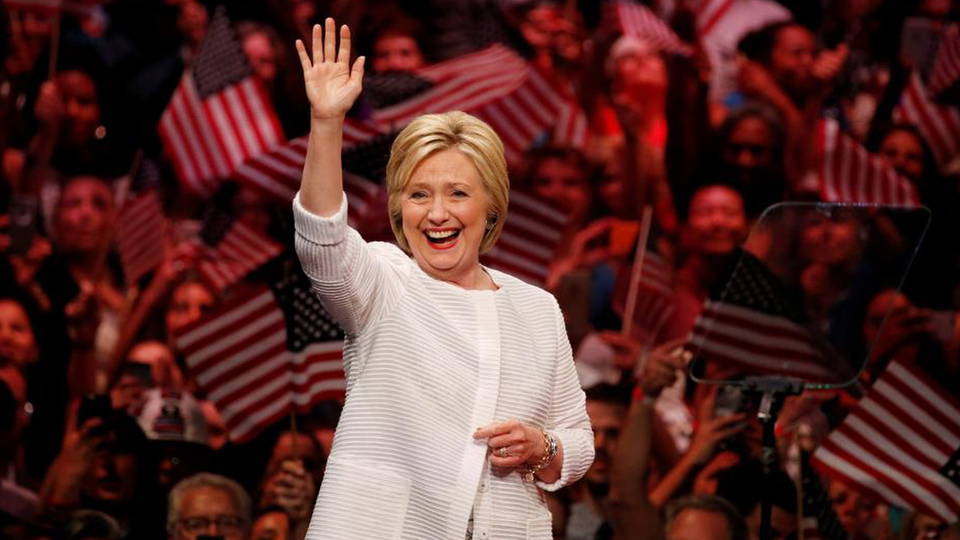
Hillary Clinton has claimed the Democratic presidential nomination. With Clinton’s wins in California, New Jersey, New Mexico and South Dakota, she is set to become the first woman ever nominated by a major party to run for the White House. With only one primary to go in the District of Columbia, Clinton has an insurmountable lead in pledged delegates over her challenger, Bernie Sanders. But Clinton’s pledged delegate count falls short of the 2,383 needed, meaning she will need to rely on the support of unelected superdelegates to officially secure the nomination at next month’s convention in Philadelphia. On Tuesday night at the Brooklyn Navy Yard, Clinton declared victory, celebrating what she called a "milestone" for women.
Hillary Clinton: "On the the very day my mother was born in Chicago, Congress was passing the 19th Amendment to the Constitution. That amendment finally gave women the right to vote. And I really—I really wish my mother could be here tonight."
TOPICS:
2016 Election
Hillary Clinton
Democratic Party
Bernie Sanders
Sanders Wins Montana and North Dakota, Vows to Remain in Race
Vermont Senator Bernie Sanders won in Montana and North Dakota. While laying off much of his staff, he has vowed to remain in the race to challenge Clinton at the convention in July.
Sen. Bernie Sanders: "I am pretty good in arithmetic, and I know that the fight in front of us is a very, very steep fight, but we will continue to fight for every vote and every delegate we can get. Tonight, I had a very kind call from President Obama, and I look forward to working with him to make sure that we move this country forward."
Sanders is expected to meet with President Obama at the White House Thursday. We’ll have more on the Democratic race after headlines.
TOPICS:
Bernie Sanders
Democratic Party
2016 Election
House Speaker Paul Ryan Calls Trump's Comments on Judge "Racist"
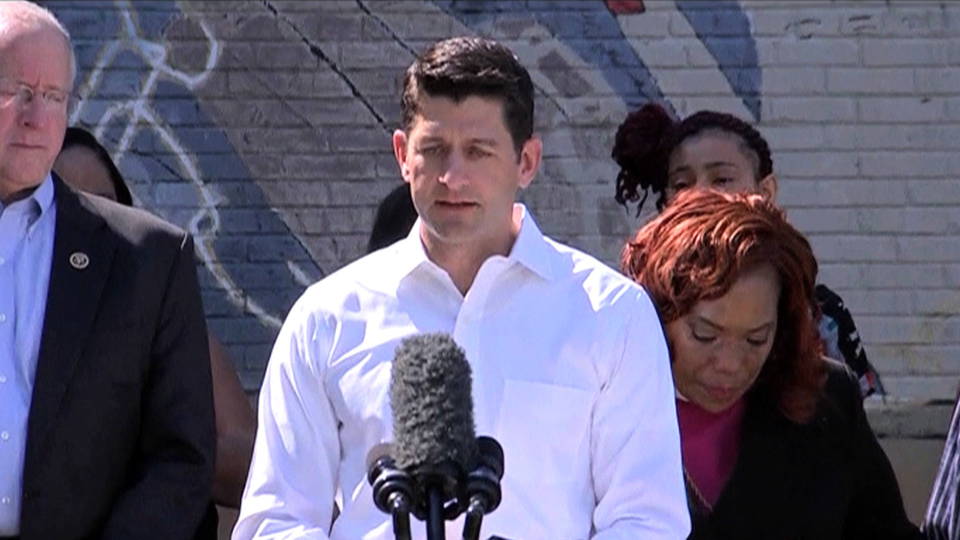
Racist—that’s the word Republican House Speaker Paul Ryan has called Donald Trump’s attacks on a Latino federal judge. Trump said Judge Gonzalo Curiel should recuse himself from litigation over the defunct for-profit Trump University because his Mexican heritage was a conflict of interest, since Trump has called for building a wall on the Mexican border. On Tuesday, Speaker Ryan, the highest-ranking Republican in the United States, condemned Trump’s remarks, but reiterated his support for Trump’s presidential candidacy.
House Speaker Paul Ryan: "I disavow these comments. I regret those comments that he made. I don’t think—claiming a person can’t do their job because of their race is sort of like the textbook definition of a racist comment. I think that should be absolutely disavowed. It’s absolutely unacceptable. But do I believe that Hillary Clinton is the answer? No, I do not."
TOPICS:
Republican Party
Donald Trump
Paul Ryan
After Repeating Himself for Days, Trump Says Comments on Judge Were "Misconstrued"
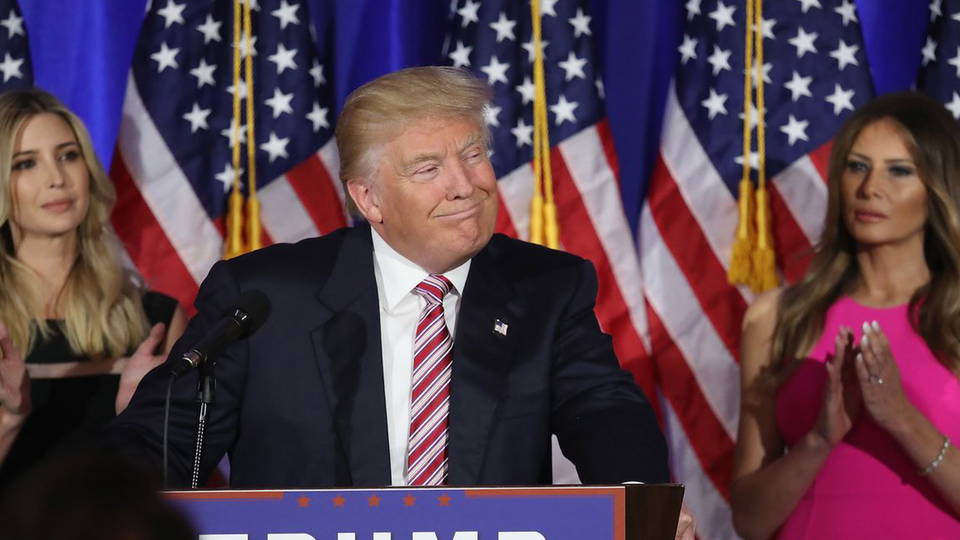
After days of doubling down on attacks against the judge, and even suggesting Muslim judges, too, might be biased against him, Trump released a statement late Tuesday afternoon saying his remarks had been "misconstrued." "It is unfortunate that my comments have been misconstrued as a categorical attack against people of Mexican heritage. I am friends with and employ thousands of people of Mexican and Hispanic descent," Trump’s statement read. Trump also said he did not "intend to comment on this matter any further." Trump, the only remaining candidate in the Republican race, swept all five Republican contests Tuesday, winning California, Montana, New Jersey, New Mexico and South Dakota. He spoke at his golf club in Briarcliff Manor, New York.
Donald Trump: "Now, I know some people say I’m too much of a fighter. My preference is always peace, however. And I’ve shown that. I’ve shown that for a long time. I’ve built an extraordinary business on relationships and deals that benefit all parties involved, always. My goal is always again to bring people together. But if I’m forced to fight for something I really care about, I will never, ever back down, and our country will never, ever back down."
TOPICS:
Donald Trump
Racism
2016 Election
Republican Sen. Mark Kirk Reverses Endorsement of Donald Trump
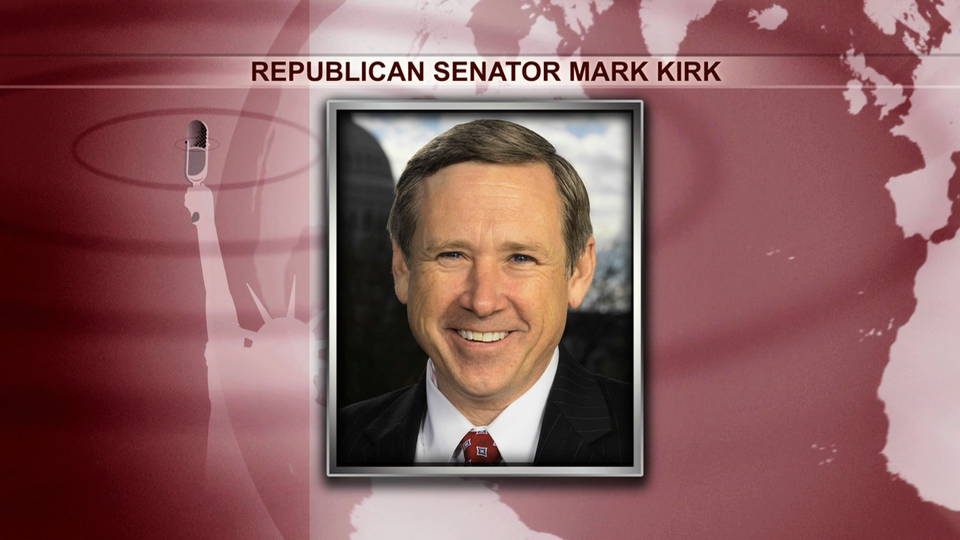
Illinois Republican Senator Mark Kirk has reversed his endorsement of Donald Trump, becoming the first person to unendorse the candidate. Kirk faces a tough re-election battle against Democratic Congressmember Tammy Duckworth. After Democrats criticized him for failing to condemn Trump’s attacks on the Mexican-American judge, Kirk released a statement saying, "While I oppose the Democratic nominee, Donald Trump’s latest statements, in context with past attacks on Hispanics, women and the disabled like me, make it certain that I cannot and will not support my party’s nominee for President regardless of the political impact on my candidacy or the Republican Party."
TOPICS:
Donald Trump
Republican Party
2016 Election
More Than 10,000 People Have Died Trying to Cross Mediterranean Since 2014

The number of people who have died crossing the Mediterranean in an attempt to reach Europe has topped 10,000 since 2014. The United Nations said this year has seen a sharp uptick in deaths, with more than 2,800 people drowning since January alone.
TOPICS:
Refugees
Papua New Guinea: Police Open Fire on Student Protesters
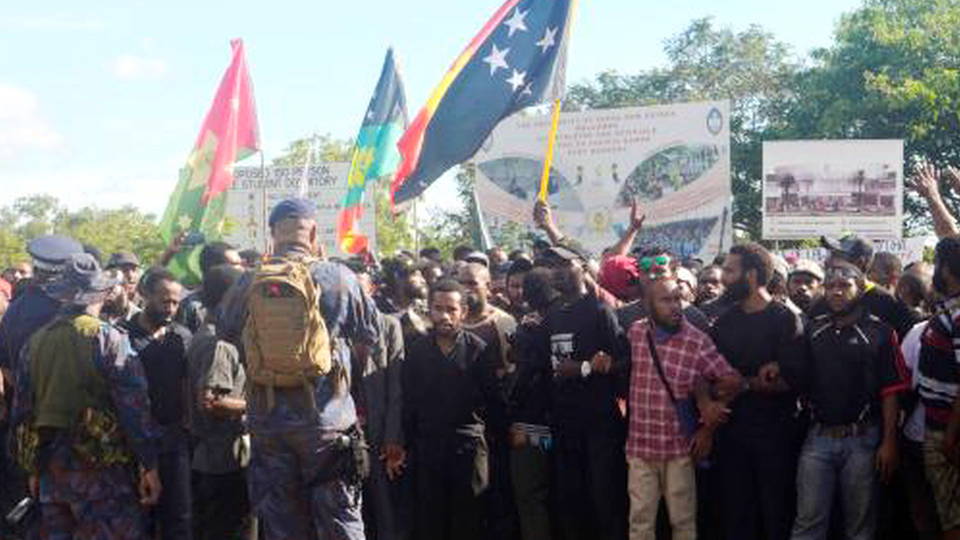
In Papua New Guinea, police have reportedly opened fire on student protesters in the capital, Port Moresby. Opposition lawmakers say four people were killed, but the government has denied the toll. More than 20 people have been wounded. The students were marching to demand the resignation of Prime Minister Peter O’Neill, who faces a corruption scandal.
Syria: 15 Killed in Airstrikes; Assad Vows to Reclaim "Every Inch" of Syria
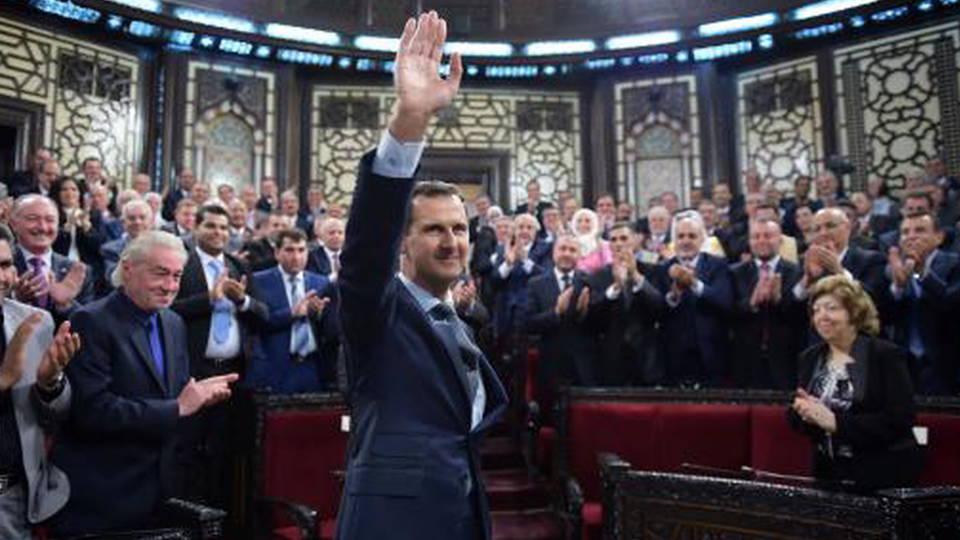
In Syria, at least 15 people have been killed and dozens wounded in a series of airstrikes on rebel-held areas in the city of Aleppo. There are reports one of the strikes hit a makeshift hospital in the eastern district of Shaar. On Tuesday, Syrian President Bashar al-Assad delivered a speech vowing to retake "every inch" of Syria.
TOPICS:
Syria
Guatemala: 8 Ex-Military Members Face Trial for Killings
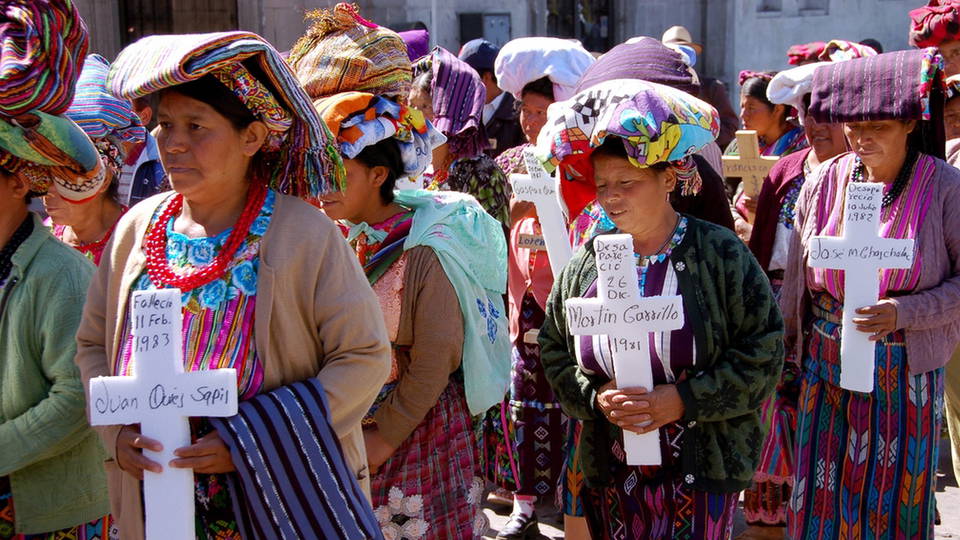
In Guatemala, eight former military members have been detained and are facing trial on charges of forced disappearances and crimes against humanity during the decades-long, U.S.-backed dirty war against Guatemala’s indigenous communities. The eight are accused of overseeing the killings of people found in mass graves.
TOPICS:
Guatemala
Afghanistan: Hundreds Attend Funeral for Journalist Zabihullah Tamanna
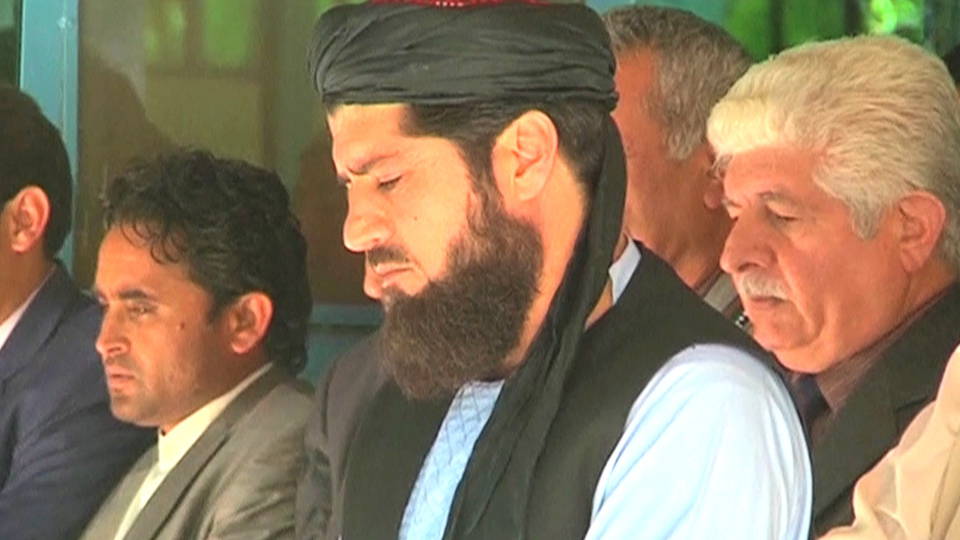
In Afghanistan, hundreds of people gathered outside Kabul for the funeral of Afghan journalist Zabihullah Tamanna. Tamanna was working as a translator for NPR when he was killed by a rocket-propelled grenade attack Sunday alongside NPRphotojournalist David Gilkey. Journalist and media advocate Abdul Mujeeb Khalvatgar was among those to attend Tamanna’s funeral on Tuesday.
Abdul Mujeeb Khalvatgar: "We have lost 10 journalists so far this year, and it means that this is a bloody year for journalists in Afghanistan. I believe that freedom of speech is not a priority for the Afghan government and international community anymore, because we have already noticed an increase in violence against journalists in the country. It can affect democracy and freedom of speech in Afghanistan."
TOPICS:
Afghanistan
Journalism
Black Lives Matter Activist Jasmine Richards Sentenced to 90 Days in Jail in "Lynching" Case
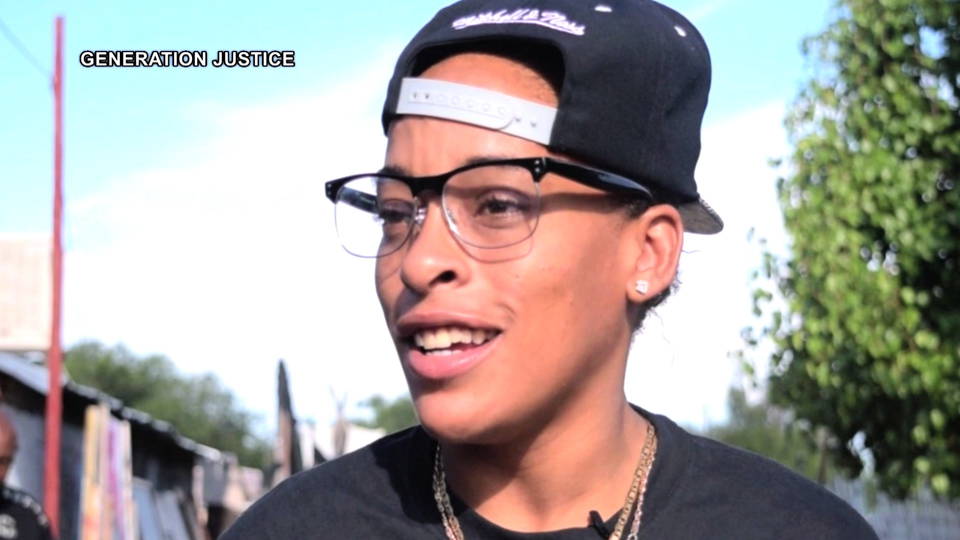
In California, Black Lives Matter activist Jasmine Richards has been sentenced to 90 days in jail after she was convicted of an offense known up until recently as "felony lynching." Police accused her of trying to de-arrest someone during a peace march in Pasadena last August. The arrest and jailing of a young black woman activist on charges of felony lynching sparked a firestorm of protest. Richards faced up to four years in prison. She was sentenced Tuesday to 90 days, with 18 days served, plus three years’ probation.
TOPICS:
Black Lives Matter
California
D.C. City Council Unanimously Approves $15-an-Hour Minimum Wage
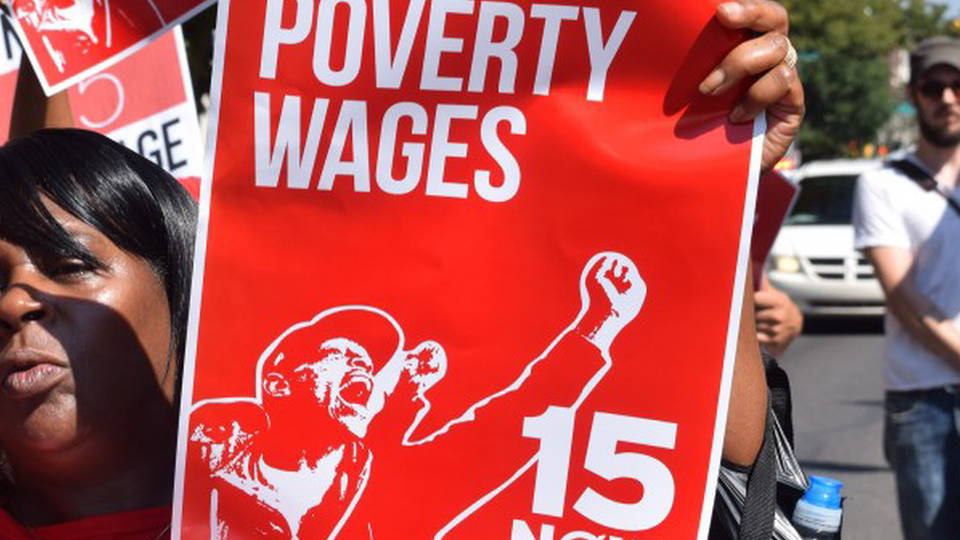
In Washington, D.C., the City Council has voted unanimously to raise the minimum wage to $15 an hour by 2020. D.C. joins the cities of Seattle, San Francisco and Los Angeles, as well as the states of California and New York, who have all passed measures to heed the growing call for a $15-an-hour minimum wage. D.C. Mayor Muriel Bowser has vowed to sign the measure, noting that even with $15 an hour, it’s hard to afford to live in the District of Columbia.
Farmworker Activist Helen Chavez Dies at 88
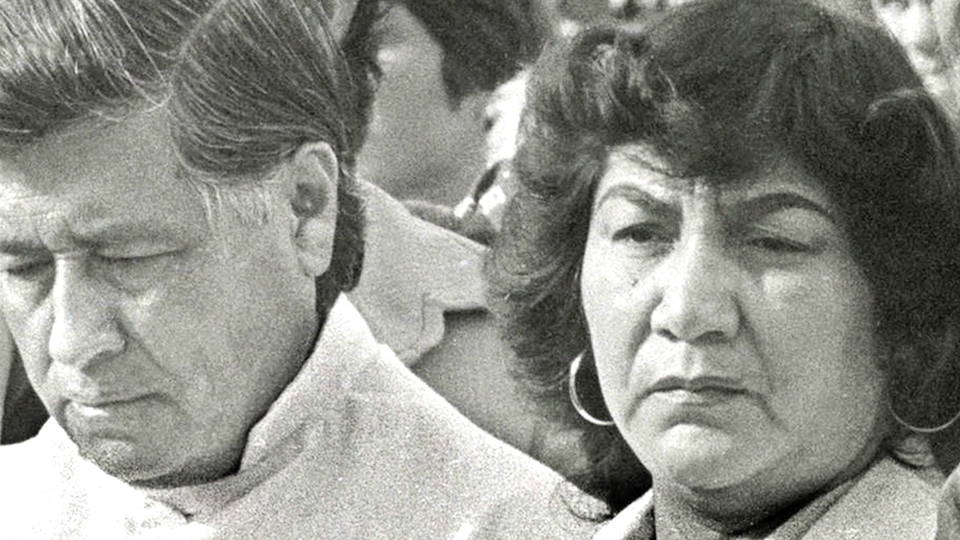
And Helen Chavez, an activist who played a crucial role in launching the United Farm Workers of America, has died at the age of 88. She was the widow of Cesar Chavez, who led the United Farm Workers of America for more than three decades. In a statement honoring Helen Chavez, President Obama said: "She managed her union’s finances, prepared meals, marched in picket lines, and was even arrested for her actions, all because she believed in the dignity of America’s farmworkers—men and women she toiled with in the fields, even as she raised eight children and helped lead a movement." Helen Chavez died Monday in Bakersfield, California.
Donate today:
Follow:


SPEAKING EVENTS

6/11 Chicago, IL
6/14 New York, NY
6/25 New York, NY
7/29 Provincetown, MA
7/30 Martha's Vineyard, MA
more
NEW BOOK

Democracy Now!: Twenty Years Covering the Movements Changing America
FEATURED TOPIC

Muhammad Ali
WEB EXCLUSIVE

Dave Zirin & Jules Boykoff on the 2016 Rio Olympics & Brazil's Collapsing Political System
WORK WITH DN!

News Producer
Office Coordinator
Senior TV Producer
207 West 25th Street, 11th Floor
New York, New York 10001, United States
---------------------
---------------------

No comments:
Post a Comment