democracynow.org
Stories:

Nightclubs are Our Safe Havens: Longtime Patron of Orlando LGBT Club Reacts to Mass Shooting
For over a decade, the Pulse nightclub in Orlando was a popular destination for the LGBT community in central Florida. It was opened in 2004 by Barbara Poma to celebrate her brother, who had died of AIDS. We speak to Orlando native Daniel Leon-Davis. He wrote a piece for Fusion titled "The Site of the Orlando Shooting Wasn’t Just a Gay Nightclub. It was My Safe Haven."
TRANSCRIPT
This is a rush transcript. Copy may not be in its final form.
AMY GOODMAN: Vigils are being held across the country following what’s been described as the deadliest mass shooting in modern American history. At least 50 people died in Orlando, Florida, early Sunday morning after a gunman opened fire at a packed gay dance club. More than 50 others were injured. The victims were mainly Latino, many of them Puerto Rican. Three hours after the shooting began, authorities say, the gunman was shot dead when police raided the club. The shooting was the deadliest attack on the LGBT community in American history. The attack came in the middle of Pride month. Witnesses described scenes of terror inside the club.
JANIEL GONZALEZ: He just kept on shooting and shooting and shooting and just walking around.
REPORTER: Was it rapid fire? Was it single shots?
JANIEL GONZALEZ: No, it was rapid fire. It was like brrrrrr. And then he’d like change, put another ammunition, brrrrrrrr, and then change, put another ammunition. And I could just smell the ammo in the air, and I was like, "This is a gun. This isn’t fireworks. Like, we need to leave."
AMY GOODMAN: For over a decade, the Pulse was a popular destination for the LGBT community in central Florida. It opened in 2004 by Barbara Poma to celebrate her brother, who had died of AIDS. President Obama addressed the nation on Sunday afternoon.
PRESIDENT BARACK OBAMA: So this is a sobering reminder that attacks on any American, regardless of race, ethnicity, religion or sexual orientation, is an attack on all of us and on the fundamental values of equality and dignity that define us as a country. And no act of hate or terror will ever change who we are or the values that make us Americans.
Today marks the most deadly shooting in American history. The shooter was apparently armed with a handgun and a powerful assault rifle. This massacre is therefore a further reminder of how easy it is for someone to get their hands on a weapon that lets them shoot people in a school or in a house of worship or a movie theater or in a nightclub. And we have to decide if that’s the kind of country we want to be. And to actively do nothing is a decision, as well.
AMY GOODMAN: Authorities identified the gunman as 29-year-old Omar Mateen. He used a semiautomatic weapon that would have been prohibited under the Assault Weapons Ban that Congress allowed to expire more than a decade ago. Since 2007, Mateen had worked as a security guard at G4S, the largest private security firm in the world. He was born in 1986 in New York to Afghan parents. The FBI interviewed him in 2013 and 2014 for possible terrorist ties. According to The New York Times, he was placed under FBI surveillance for a time, but the agency eventually closed its inquiry. There are reports Mateen called 911 just after the initial assault and when he was inside the club, and declared his allegiance to the Islamic State, but no audio of the call has been released to the public. Mateen’s father told NBC his son had been angered after seeing two men kissing in Miami. Mateen’s former wife told reporters he was mentally unstable and used to beat her.
SITORA YUSUFIY: In the beginning, he was a normal being, that cared about family, loved to joke, loved to have fun. But then, a few months after we were married, I saw his instability, and I saw that he was bipolar, and he would get mad out of nowhere. That’s when I started worrying about my safety. And then, after a few months, he started abusing me physically, very often, and not allowing me to speak to my family, keeping me hostage from them. And I tried to see the good in him even then, but my family was very tuned into what I was going through, and decided to visit me and rescue me out of that situation.
AMY GOODMAN: Joining us now in Orlando, Florida, is Hannah Willard, policy and outreach coordinator for Equality Florida. Here in New York, we’re joined by Daniel Leon-Davis. He grew up in Orlando. He was a regular at the Pulse nightclub. He’s the senior creative director of Soze. He wrote a piece for Fusion titled "The Site of the Orlando Shooting Wasn’t Just a Gay Nightclub. It was My Safe Haven."
Hannah and Daniel, welcome to Democracy Now! Hannah, let’s begin with you. You’re in Orlando near the scene of the crime. Can you describe what you understand took place and the significance of the nightclub where it happened?
HANNAH WILLARD: Well, thank you for having me. This act of senseless violence has left us all reeling. For this to have taken place during Pride Month, in June, adds an extra layer of horror to the LGBTQ community being targeted in this way. Gay nightclubs are absolutely safe havens for our community, for so many of us. They were the first place where we really could be our authentic selves. Pride Month is when we mark the Stonewall riots, when we come together to take pride in who we are. This act of hatred has left us all shocked and mourning for those we’ve lost.
AMY GOODMAN: You mentioned the Stonewall riots, and many flowers were placed at the Stonewall here in New York, really the launch of the modern-day gay rights movement in this country. Talk about the significance of the Pulse in Orlando.
HANNAH WILLARD: Pulse nightclub is an institution here in Orlando. This is my hometown. I grew up here. I’m proud to live here. And Pulse nightclub is a place where all of us went to have a fun night out with our friends. You know, gay and transgender people, we want the same things everyone else wants. We want to be able to earn a living, provide for our families and go out dancing with our friends.
And yesterday I was at a small gathering where someone asked, "Will we be able to make Pulse safe again?" And my answer is, I’m sure we will, because gay and transgender people have always carved out safe spaces for ourselves amidst adversity. Our community is no stranger to violence, to hatred and to antagonism, and we’re no stranger to getting back up and moving forward stronger than ever. I’m thankful for the solidarity that our community has felt yesterday and today in the midst of our grief.
AMY GOODMAN: Hannah, do you see this as a hate crime?
HANNAH WILLARD: There’s no question that homophobia and hatred and bigotry are alive and well here in Florida and across our country. We may never know exactly what was in the heart of this man that inspired him to commit this act of hatred and violence, but what we do know is that in the midst of this grief, we are more committed than ever to uproot the homophobia, the hatred and the bigotry that sparks this kind of violence. We’re committed to uprooting that anywhere it exists, be it homophobia, transphobia, Islamophobia, sexism, racism, anywhere it exists. That’s our commitment as Equality Florida.
AMY GOODMAN: Daniel Leon-Davis, you know, in the list of names, overwhelmingly Latino, they’ve identified 49 of the 50 now dead.
DANIEL LEON-DAVIS: Right.
AMY GOODMAN: One of the names is Daniel Leon.
DANIEL LEON-DAVIS: Yeah.
AMY GOODMAN: Your name is Daniel Leon-Davis. You grew up in Orlando?
DANIEL LEON-DAVIS: Mm-hmm. I think—I think something that’s very important to add to the conversation is that it’s not just Pride Month, it’s also Immigrant Heritage Month. Right? And so, the process of taking in, as a gay Latino who grew up literally—like, I went to Pulse all the time.
AMY GOODMAN: How many times do you think you went there?
DANIEL LEON-DAVIS: At least over a hundred times. Like my friends and I literally called each other and said, "Had I been in Orlando last night, chances are I would have been at Pulse." Or, the night before. And so, it’s like, processing that—
AMY GOODMAN: It was Latin night.
DANIEL LEON-DAVIS: Yeah, and it was Latin night. And so I think there’s definitely—there’s a home that’s gone now. Right? Like Pulse wasn’t—a lot of people view gay clubs as just clubs, but the reality is, gay and trans people get pushed out of churches all the time, and oftentimes our safe havens become nightclubs. Right? It’s the place that you feel safe. It’s the place you feel like you can be yourself. And so, to have something like this happen at a nightclub, a gay nightclub, is just like—it hurts. Right? It’s home. It hurts. And this morning I woke up and, when the updated list of the victims’ names came out, literally had to call two of my friends to let them know that the people that they had been looking for had been murdered.
AMY GOODMAN: Do you know people yourselves—do you know people yourself who died at the nightclub?
DANIEL LEON-DAVIS: I don’t know—there’s no one on the list that I’ve seen thus far that I know. I still have one friend I haven’t been able to get in contact with since yesterday.
AMY GOODMAN: You’re wearing a T-shirt, Daniel, that says "Bulletproof #BlackLivesMatter."
DANIEL LEON-DAVIS: Yeah, it was very intentional this morning. I was rummaging through my closet trying to figure out what I was going to wear. And one of my dear friends, Damon Turner, created this T-shirt as part of the Black Lives Matter movement. And something that came to me was just thinking about the fact that so much of the work that I do and that we do as a movement is around intersectionality. Right? Like, this wasn’t just a gay club. This was a gay club with so many young people of color who really took it as home.
AMY GOODMAN: In fact, it was also used as a place for political meetings and—
DANIEL LEON-DAVIS: Yes, yes. It was definitely—I mention it in my Fusion piece, but it was definitely—it was almost like a community center. Right? Like, there were weeks where I went to Pulse like three or four times. And it wasn’t all about dancing and drinking, right? It was about actually building community. And I think, for me, it was the first place I built community where I felt safe.
AMY GOODMAN: The owner, Barbara Poma, her brother died of AIDS?
DANIEL LEON-DAVIS: Mm-hmm, yeah. I think the story of how Pulse came together—something that’s been running through my mind is, do you—do you even open up another Pulse? Right? Do you—do you just let this be and let it go? And I think something that’s been running through my head is like all the experiences that have happened inside of that nightclub and everything that’s like the history that’s almost like been built there, right? Like Orlando is one of the gay-friendliest cities in the entire nation, but the reality is that it’s still the South.
AMY GOODMAN: I wanted to turn to a quote of Richard Kim, Richard Kim who wrote in The Nation, "That was my first lesson that gay bars are more than just licensed establishments where homosexuals pay to drink. Gay bars are therapy for people who can’t afford therapy; temples for people who lost their religion, or whose religion lost them; vacations for people who can’t go on vacation; homes for folk without families; sanctuaries against aggression. They take sound and fabric and flesh from the ordinary world, and under cover of darkness and the influence of alcohol or drugs, transform it all into something that scrapes up against utopia."
DANIEL LEON-DAVIS: Right. Like, it’s just something different, right? And what’s crazy to me is that it took something like this to happen for me to process that. As I was writing the piece yesterday, I just kept thinking, "Wow, this isn’t just a club. This isn’t just a club. This is literally people’s safe haven."
AMY GOODMAN: We’re going to break and then come back to our discussion and also talk about the role of weapons in the attack that took place. We don’t know everything that happened. We don’t know about this timeframe of three hours before the police moved in or who ultimately died by what bullets. This is all going to be unveiled, I assume, in the next few days. But what we do know is that at this point 50 people are dead, mainly young, overwhelmingly Latino, celebrating Latin night at the Pulse in Orlando, Florida. We want to thank Hannah Willard, who will stay with us, and Daniel Leon-Davis. We’ll also be joined by a state senator, and we’re going to be looking at what happened in another horrific massacre, this one in the gun-loving nation in Australia. It was several decades ago, but after this happened, almost overnight, it passed some of the most restrictive gun legislation in the world. Stay with us. ... Read More →

Openly Gay Muslim Imam Reacts to Orlando: Clubs Like Pulse are Safe Havens for LGBT Muslims, Too
Authorities have identified the Orlando gunman as 29-year-old Omar Mateen. He was born in 1986 in New York to Afghan parents. Since 2007 Mateen had worked as a security guard at G4S, the largest private security firm in the world. The FBI interviewed Mateen in 2013 and 2014 for possible terrorist ties. According to The New York Times, he was placed under FBI surveillance for a time, but the agency eventually closed its inquiry. There are reports that Mateen called 911 around the time of the assault and declared his allegiance to the Islamic State, but no audio of the call has been released to the public. We speak to Imam Daayiee Abdullah, executive director of Mecca Institute. Imam Abdullah also is one of the first openly gay imams in the Western Hemisphere.
TRANSCRIPT
This is a rush transcript. Copy may not be in its final form.
AMY GOODMAN: Vigils are being held across the country following what’s been described as the deadliest mass shooting in modern American history. At least 50 people died in Orlando, Florida, early Sunday morning after a gunman opened fire at a packed gay dance club. More than 50 others were injured, the victims overwhelmingly Latino and young, between 20 and—in their twenties and thirties. Authorities identified the gunman as 29-year-old Omar Mateen, who used a semiautomatic weapon that would have been prohibited under the Assault Weapons Ban that Congress allowed to expire more than a decade ago. On Sunday, the Council on American-Islamic Relations condemned the shooting. This is the group’s executive director, Nihad Awad.
NIHAD AWAD: Our hearts, thoughts and prayers are with the victims of their—with the victims and their families. We offer condolences to the families, and we pray for the recovery of the survivors. This is a hate crime, plain and simple. We condemn it in the strongest possible terms. It violates our principles as Americans and as Muslims.
AMY GOODMAN: Joining us now is Imam Daayiee Abdullah, executor director of Mecca Institute, one of the first openly gay imams in the Western Hemisphere.
Welcome to Democracy Now! Can you show your thoughts, Imam Daayiee Abdullah, about what took place in Orlando, Florida, this weekend?
IMAM DAAYIEE ABDULLAH: Yes. Thank you, Amy, for inviting me. And I’m wearing black today because I’m still in mourning, because I want to give out condolences to the families and friends of the—and the community there—of the victims there in Orlando, and basically to say that, overall, violence is never the answer to any type of response, but there are a number of different issues that, in intersection, lead to a major question as to why these things happen. It’s not just because of an individual with just hate, but there are things that underlie the reasoning behind them so that they can choose to use violence as a way to make a statement.
AMY GOODMAN: Can you talk about how the media is portraying what took place? I mean, when the words across the bottom of the screen, when people woke up yesterday, on television, "terror attack," you almost knew immediately it wasn’t a white supremacist who did this, because it would have said "white supremacist attack." "Terror" has become synonymous with "Muslim" in this country. Can you describe your response to hearing who was involved with this attack and what they’re saying about Omar Mateen right now?
IMAM DAAYIEE ABDULLAH: OK, well, typically, like any other attack that has happened, most Muslims, you know, there’s a gasp of breath, and they go, "I hope that they’re not Muslim." And there’s times, as being a black male, that I hope it wasn’t a black male that did this. So it’s a very similar feeling. But the way in which the media has portrayed, and continues to portray, it has gotten better, but the problem is that there’s always this leap directly towards, if the person is Muslim that did it, then it’s terrorism rather than someone who may have a mental illness or someone who have other causes that led them to fall into the process of using violence in terms of what they do.
So, I think that, generally, when it’s a white male, then it’s mental illness is the first thing that they utilize after reporting the crime. But in this instance, it’s always terrorism. And as Donald Trump commented yesterday evening, that this is—you know, keep the Muslims out. So it’s always a direct attack towards Muslims, who are American citizens, and as well as other individuals who are here who believe in their faith. And we find that we are now in a position again of trying to protect ourselves, and, again, in some instances, causing people to become more sequestered in their day-to-day lives.
AMY GOODMAN: You talk about mental illness, and you talk—we just played a clip of Sitora Yusufiy, his wife, his ex-wife, who said that he was mentally ill and that he beat her when he was married to her, Imam.
IMAM DAAYIEE ABDULLAH: Yes. Well, one of the issues I think is very important, in many communities of color, there’s a stigma about mental health. And in my pastoral counseling that I provide to not only LGBT Muslims, but also young Muslims, interfaith couples, older Muslims who are now in a different culture, we find that the shaming that comes from acknowledging that one may have some issues that may relate to mental health, often people are not willing to go and seek additional help because of that shaming or that cultural stigma that’s associated with it. And I think that we need to make this change in how people approach mental health, so that people can be helped much earlier in the process if they should exhibit certain issues or certain ways of—in which we show there’s some mental illness issues.
AMY GOODMAN: If you could talk about also his fascination with guns? Speaking to reporters Sunday, his ex-wife, Sitora Yusufiy, also described Mateen’s interest in guns.
SITORA YUSUFIY: He wanted to be a police officer. So he trained with his friends who are police officers, and he had a license to have a gun in Florida. You’re allowed to do that. So, he didn’t practice anything in front of me, but I’m sure he went to shooting ranges.
AMY GOODMAN: That was Sitora Yusufiy. Your response, Imam?
IMAM DAAYIEE ABDULLAH: Well, in growing up in Detroit, Michigan, both of my parents were gun owners, and that they taught us how to safely and carefully utilize them, because we had businesses, and they showed us out of a sense of protection. But that was something that was used to never use a gun unless you intend—never, you know, play with a gun unless you use it to intend—intend to use it. But it was for protection only.
And I think one of the issues quite often, from a mental health perspective, that people find power behind a gun. And I think this may be one of the issues that was prevalent with Mateen, in that he used that as a source of power where he may have felt powerless. There are other speculations for reasons why he may have felt powerless, too, which I’m not certain if we should even try to delve into until we have more information about it. But frequently, that is the issue behind most people. They feel a loss of power. They use a gun to sort of equalize things. And, of course, once the process begins, quite often people die in that process. ... Read More →

Australia Stopped Mass Shootings After 1996 Massacre, So Why Doesn't the U.S. Follow Suit?
As the United States struggles to make sense of yet another mass shooting, we look at one country that fought to change the culture of gun violence and won. In April of 1996, a gunman opened fire on tourists in Port Arthur, Tasmania, killing 35 people and wounding 23 more. Just 12 days after the grisly attack and the public outcry it launched, Australia’s government responded by announcing a bipartisan deal to enact gun control measures. The pact included agreements with state and local governments. Since the laws were passed—now 20 years ago—there has not been a mass shooting in Australia, and overall gun violence has decreased by 50 percent. We speak to Rebecca Peters, an international arms control advocate and part of the International Network on Small Arms. She led the campaign to reform Australia’s gun laws after the Port Arthur massacre.
TRANSCRIPT
This is a rush transcript. Copy may not be in its final form.
AMY GOODMAN: I wanted to turn to what happened in another country after a massacre like we’ve seen—actually, not as many people killed. As the U.S. struggles to make sense of yet another mass shooting, we’ll end the show with a look at one country that fought to change the culture of gun violence and won. It was 20 years ago, almost exactly, April of 1996. A gunman opened fire on tourists in Port Arthur, Tasmania, killing 35 people and wounding 23 more. This is Australia. Just 12 days after the grisly attack and public outcry it launched, Australia’s government responded by announcing a bipartisan deal to enact gun control measures. Totally amazing, a gun-loving country. The pact included agreements with state and local governments. Since the laws were passed—now 20 years ago—there’s not been a mass shooting in Australia, and overall gun violence has decreased by 50 percent.
We’re joined by Rebecca Peters, an international arms control advocate, part of the International Network on Small Arms, led the campaign to reform Australia’s gun laws after the Port Arthur massacre.
Rebecca, welcome back to Democracy Now!
REBECCA PETERS: Thank you.
AMY GOODMAN: Explain what took place in April of 1996. We only have about five minutes to go.
REBECCA PETERS: Well, we had had a campaign for about 10 years at that time to reform the gun laws, which were weak in some states, and it was a patchwork across the country, as it is in the U.S. In April of '96, this tragedy occurred, where 35 people were killed. And at that moment, our prime minister said, "This is the time. After all this prevaricating, we're going to do something."
AMY GOODMAN: Now, just to explain the context—
REBECCA PETERS: Yeah.
AMY GOODMAN: —I mean, would you describe Australia’s culture as a gun-loving culture of hunters?
REBECCA PETERS: Sure, yeah. Australia is a very—you know, the self-image of Australia is often sort of an outdoor guy on a horse with a gun type of thing, not too dissimilar from the traditional image of Americans.
AMY GOODMAN: Not too distant.
REBECCA PETERS: And hunting is very popular, and—but there were—there just were too many guns, and guns of a type which were assault weapons, which were not really suitable, not necessary for hunting. And it was known that that was the case, but it had taken—governments had continually fobbed it off, said, "Now’s not the time. Wait ’til a better moment." And so, at that moment, the prime minister stepped up and said, "This is it," and he called together all the states and territories, and put to them a plan which had been endorsed by the public health community, which had been endorsed by many hundreds of groups across the country who had been campaigning for a long time.
And that was the—one of the most important aspects of that law, of that set of laws, was a ban on assault weapons, on semiautomatic weapons, which are weapons designed to kill lots of people. And not surprisingly, as we’ve seen in Orlando, a weapon designed to kill lots of people kills lots of people. And so, the laws say those weapons cannot be owned by civilians.
And one of the other most important aspects of the laws, which is very applicable here, is that the background check system in the new laws is very comprehensive. You know, in America, the background check consists of, usually, looking at a computer to see if someone has a criminal conviction. That’s not a background check. I mean, you know, in New York City, if you want to apply to rent an apartment, if you want to apply to go to university, there’s a background check. People talk—the authorities talk to people who know you. They ask their opinion of you. And similarly, in Australia and most other developed countries, a background check consists of asking for references—your family doctor, talking to your spouse or your previous spouse, asking, "Is there any concern?"
AMY GOODMAN: I mean, this is key, given what his ex-wife, Mateen’s ex-wife, said, that he beat her, that he was violent, that he had an obsession with guns, wanted to be a cop, always wore that NYPD T-shirt, and ended up as a security guard.
REBECCA PETERS: Exactly. And relying on a computer list, which is subject to so many problems, whether local jurisdictions have put in information, whether there are even word processing errors—I mean, you have to use your brains.
AMY GOODMAN: What was the response of the equivalent of the NRA in Australia?
REBECCA PETERS: The gun lobby was very unhappy in Australia at the time and had lots of protests, and in fact very irresponsibly urged people not to comply with the new laws, which also—
AMY GOODMAN: They were passed within two weeks?
REBECCA PETERS: Well, the agreement—the agreement was made within two weeks, and then the laws had to be passed in each state, because the laws are state laws. Within one year, all the states had modified their laws. And we’ve seen gun violence decrease by 50 percent in that time.
AMY GOODMAN: State Senator Geraldine Thompson, do you think there’s a possibility of something like this happening in the United States?
SEN. GERALDINE THOMPSON: I am pushing for it, and I am going to continue to ask Governor Scott and other elected leaders to begin the process here in Florida. We need to close these loopholes. We need to make sure that you can’t buy a gun at a gun show without having a background check, and that you can’t buy a gun from a personal individual without having a background check. And so, it has to begin at the state level, because, unfortunately, at the federal level, the NRA and the gun lobby have a lock there. And we saw in Florida, in the last legislative session, two bills, one that would have allowed guns on campus. Even though every state university president, every college president was opposed to it, the NRA supported it, and so we had to work feverishly to defeat that. We also had a bill that—
AMY GOODMAN: Five seconds.
SEN. GERALDINE THOMPSON: —proposed open carry, where anyone could, in public view, walk around with a gun, and therefore you don’t know who is the person with ill intent and the person with good intent. And we were able to defeat that, as well.
AMY GOODMAN: We just have five seconds, and I wanted to go back to Rebecca Peters. In that five seconds, what you think is the most important way that you got this kind of legislation passed?
REBECCA PETERS: Definitely bipartisan agreement was the key, because—
AMY GOODMAN: And when you don’t have that?
REBECCA PETERS: And when you don’t, well, taking on board the opinions of the experts, the public health community, the crime prevention community.
AMY GOODMAN: We have to leave it there. I want to thank you both for being with us. ... Read More →

Orlando Massacre Comes After Lawmakers in U.S. Filed More Than 200 Anti-LGBT Bills
In a tweet that went viral after Sunday’s attack on an LGBT nightclub in Florida, ACLU staff attorney Chase Strangio wrote: "The Christian Right has introduced 200 anti-LGBT bills in the last six months and people blaming Islam for this. No." The attack has also renewed calls for lifting what advocates say is a medically unnecessary ban on blood donations from many gay and bisexual men. We speak with Hannah Willard of Equality Florida.
TRANSCRIPT
This is a rush transcript. Copy may not be in its final form.
AMY GOODMAN: I wanted to go back to Hannah Willard for a moment, who is with us from Orlando. She is with Equality Florida, a statewide advocacy organization for gay, lesbian, bisexual and transgender rights. Hannah, what are you calling for now?
HANNAH WILLARD: Well, we are calling for a myriad of next steps. Yesterday we moved very quickly to help people gain access to grief counseling resources. Immediately, we called for people to go to their local blood banks and make sure that they were giving blood. We also called for folks to donate if they felt called to do so, through a GoFundMe campaign that raised over a million dollars in one day alone. So many folks were looking for tangible next steps, and we wanted to provide those vehicles for folks to have those avenues to feel like they were standing in solidarity with those that we lost.
But, you know, the best tangible next step that folks can take is to teach our children to treat each other with dignity and respect, to treat those whom they don’t understand with empathy and compassion. That’s how we build a Florida where every single child growing up knows that they are celebrated and valued for exactly who they are, no matter who they love. And that’s the Florida that I want to see.
AMY GOODMAN: Talk about the ban on gay blood donors, Hannah. I know there’s been a major call for blood donations. We saw the lines yesterday in Orlando.
HANNAH WILLARD: Absolutely. Well, if there was ever a time when this ban was seen as the discriminatory and unnecessary thing that it is, it’s now more than ever. This ban has been debunked as medically unnecessary, as discriminatory. There were friends and family of those that we lost who were itching to be able to do something to support those who were still fighting for their lives in the hospital. Every single minute counts when you’re on—when you’re in surgery, open on the table and needing a blood donation. It’s really a shame that the FDA has yet to lift this unnecessary ban. But we also know that, moving forward, these types of tragedies always serve as a catalyst for changes in policy and lead to different actions so that we can move forward to prevent senseless violence like this from ever happening again.
AMY GOODMAN: ACLU staff attorney Chase Strangio tweeted, "The Christian Right has introduced 200 anti-LGBT bills in the last six months and people blaming Islam for this. No. #PulseNightclub." Hannah, your response?
HANNAH WILLARD: It is not up for debate that homophobia and bigotry are still alive and well in Florida and across our country. The LGBTQ community is under attack, plain and simple. We were very tangibly and violently under attack at Pulse nightclub this past weekend, but, of course, over 200 anti-LGBT bills filed here in Florida and in states across the country, legislators are targeting our community where we are most vulnerable, which is often transgender people and especially transgender people of color. I was so thankful that Daniel mentioned intersectionality earlier, because there’s so many reasons why marginalized communities must band together to ensure that we move forward together. We all have the same oppressors. We all have the same opposition. And I’m proud that we work with a diverse intersectional coalition here in Orlando and here in Florida to fight back against our opposition. And certainly we’ll be fighting back in the Legislature and through concrete policy changes in the coming years.
AMY GOODMAN: Daniel Leon-Davis, your final comment, as you continue to gather information about people you knew and didn’t know who are—who are either victims or the loved ones of victims?
DANIEL LEON-DAVIS: Of course. I think the thing that hit me the hardest yesterday was a tweet that basically said, "Our souls have died, and the only thing that remains alive is the Second Amendment." And I think just thinking about the fact that we remain in this cycle, like, it just feels like, at what point—what is the breaking point? Because every single breaking point we felt was going to be it—the Sandy Hooks, right? Like every single breaking point we felt was going to get us there hasn’t. And so, I guess my question is: Is this the breaking point?
AMY GOODMAN: We’re going to break, speaking of breaking points, and we’re going to come back and talk about guns, talk about what happened in another country when a massacre rocked that country, the worst in Australia’s history. And we’re going to continue our discussion with the imam. I want to thank Hannah Willard, and I want to thank, as well, Daniel Leon-Davis of—and we’ll link to your piece, "The Site of the Orlando Shooting Wasn’t Just a Gay Nightclub. It was My Safe Haven." This is Democracy Now! We’ll be back in a minute. ... Read More →

Deadliest Attack Ever on LGBT Community Claims Lives of 50 People in Orlando, Mostly Young Latinos
Vigils are being held across the country following what has been described as the deadliest mass shooting in modern American history and the deadliest attack ever on the LGBT community in the United States. At least 50 people died in Orlando, Florida, early Sunday morning after a gunman opened fire at a packed gay dance club. More than 50 others were injured. The victims were mostly Latino. Three hours after the shooting began, authorities say, the gunman was shot dead when police raided the club. We speak to Hannah Willard of Equality Florida.
TRANSCRIPT
This is a rush transcript. Copy may not be in its final form.
AMY GOODMAN: Vigils are being held across the country following what’s been described as the deadliest mass shooting in modern American history. At least 50 people died in Orlando, Florida, early Sunday morning after a gunman opened fire at a packed gay dance club. More than 50 others were injured. The victims were mainly Latino, many of them Puerto Rican. Three hours after the shooting began, authorities say, the gunman was shot dead when police raided the club. The shooting was the deadliest attack on the LGBT community in American history. The attack came in the middle of Pride month. Witnesses described scenes of terror inside the club.
JANIEL GONZALEZ: He just kept on shooting and shooting and shooting and just walking around.
REPORTER: Was it rapid fire? Was it single shots?
JANIEL GONZALEZ: No, it was rapid fire. It was like brrrrrr. And then he’d like change, put another ammunition, brrrrrrrr, and then change, put another ammunition. And I could just smell the ammo in the air, and I was like, "This is a gun. This isn’t fireworks. Like, we need to leave."
AMY GOODMAN: For over a decade, the Pulse was a popular destination for the LGBT community in central Florida. It opened in 2004 by Barbara Poma to celebrate her brother, who had died of AIDS. President Obama addressed the nation on Sunday afternoon.
PRESIDENT BARACK OBAMA: So this is a sobering reminder that attacks on any American, regardless of race, ethnicity, religion or sexual orientation, is an attack on all of us and on the fundamental values of equality and dignity that define us as a country. And no act of hate or terror will ever change who we are or the values that make us Americans.
Today marks the most deadly shooting in American history. The shooter was apparently armed with a handgun and a powerful assault rifle. This massacre is therefore a further reminder of how easy it is for someone to get their hands on a weapon that lets them shoot people in a school or in a house of worship or a movie theater or in a nightclub. And we have to decide if that’s the kind of country we want to be. And to actively do nothing is a decision, as well.
AMY GOODMAN: Authorities identified the gunman as 29-year-old Omar Mateen. He used a semiautomatic weapon that would have been prohibited under the Assault Weapons Ban that Congress allowed to expire more than a decade ago. Since 2007, Mateen had worked as a security guard at G4S, the largest private security firm in the world. He was born in 1986 in New York to Afghan parents. The FBI interviewed him in 2013 and 2014 for possible terrorist ties. According to The New York Times, he was placed under FBI surveillance for a time, but the agency eventually closed its inquiry. There are reports Mateen called 911 just after the initial assault and when he was inside the club, and declared his allegiance to the Islamic State, but no audio of the call has been released to the public. Mateen’s father told NBC his son had been angered after seeing two men kissing in Miami. Mateen’s former wife told reporters he was mentally unstable and used to beat her.
SITORA YUSUFIY: In the beginning, he was a normal being, that cared about family, loved to joke, loved to have fun. But then, a few months after we were married, I saw his instability, and I saw that he was bipolar, and he would get mad out of nowhere. That’s when I started worrying about my safety. And then, after a few months, he started abusing me physically, very often, and not allowing me to speak to my family, keeping me hostage from them. And I tried to see the good in him even then, but my family was very tuned into what I was going through, and decided to visit me and rescue me out of that situation.
AMY GOODMAN: Joining us now in Orlando, Florida, is Hannah Willard, policy and outreach coordinator for Equality Florida. Here in New York, we’re joined by Daniel Leon-Davis. He grew up in Orlando. He was a regular at the Pulse nightclub. He’s the senior creative director of Soze. He wrote a piece for Fusion titled "The Site of the Orlando Shooting Wasn’t Just a Gay Nightclub. It was My Safe Haven."
Hannah and Daniel, welcome to Democracy Now! Hannah, let’s begin with you. You’re in Orlando near the scene of the crime. Can you describe what you understand took place and the significance of the nightclub where it happened?
HANNAH WILLARD: Well, thank you for having me. This act of senseless violence has left us all reeling. For this to have taken place during Pride Month, in June, adds an extra layer of horror to the LGBTQ community being targeted in this way. Gay nightclubs are absolutely safe havens for our community, for so many of us. They were the first place where we really could be our authentic selves. Pride Month is when we mark the Stonewall riots, when we come together to take pride in who we are. This act of hatred has left us all shocked and mourning for those we’ve lost.
AMY GOODMAN: You mentioned the Stonewall riots, and many flowers were placed at the Stonewall here in New York, really the launch of the modern-day gay rights movement in this country. Talk about the significance of the Pulse in Orlando.
HANNAH WILLARD: Pulse nightclub is an institution here in Orlando. This is my hometown. I grew up here. I’m proud to live here. And Pulse nightclub is a place where all of us went to have a fun night out with our friends. You know, gay and transgender people, we want the same things everyone else wants. We want to be able to earn a living, provide for our families and go out dancing with our friends.
And yesterday I was at a small gathering where someone asked, "Will we be able to make Pulse safe again?" And my answer is, I’m sure we will, because gay and transgender people have always carved out safe spaces for ourselves amidst adversity. Our community is no stranger to violence, to hatred and to antagonism, and we’re no stranger to getting back up and moving forward stronger than ever. I’m thankful for the solidarity that our community has felt yesterday and today in the midst of our grief.
AMY GOODMAN: Hannah, do you see this as a hate crime?
HANNAH WILLARD: There’s no question that homophobia and hatred and bigotry are alive and well here in Florida and across our country. We may never know exactly what was in the heart of this man that inspired him to commit this act of hatred and violence, but what we do know is that in the midst of this grief, we are more committed than ever to uproot the homophobia, the hatred and the bigotry that sparks this kind of violence. We’re committed to uprooting that anywhere it exists, be it homophobia, transphobia, Islamophobia, sexism, racism, anywhere it exists. That’s our commitment as Equality Florida. ... Read More →

"How Many Shootings Must We Have?" Florida State Senator Calls for Gun Control After Pulse Massacre
In the wake of the deadly shooting at an LGBT nightclub in Orlando, we speak with Florida Democratic State Senator Geraldine Thompson, who represents the district where the shooting happened. Thompson is calling for Florida Republican Governor Rick Scott and other elected leaders to take action on gun control. "When will the time arrive? How many shootings must we have?" Thompson asks.
TRANSCRIPT
This is a rush transcript. Copy may not be in its final form.
AMY GOODMAN: Vigils are being held around the country following the deadliest mass shooting in modern American history. At least 50 people have died in Orlando, Florida, early Sunday morning after a gunman opened fire at a packed gay dance club—more than a dance club, a safe haven for so many in the LGBTQ community. More than 50 others are injured, many critical in the hospital, overwhelmingly Latino. It was Latin night at the Pulse.
Still with us in Washington is Imam Daayiee Abdullah, who is executive director of the Mecca Institute, one of the first openly gay imams in the Western Hemisphere. Can you talk about coming out, Imam, what it meant and how the Muslim community responded to you, and what you’re trying to do today?
IMAM DAAYIEE ABDULLAH: OK. Well, Amy, originally, I was 15 when I was about to graduate from high school and came out to my parents, in 1969, 1970. And so, I was accepted by my parents, because I upheld the ethics that were important to them. And so, with that, I continued forward to learn to be the kind of person that I’ve come to become today. But even some decades later, when I got introduced to Islam when I was in China—I was studying there at Beijing University—ethics remained an important part in becoming a Muslim, as well.
So, the process of coming out within the Islamic community was a slower one, meaning that it was one upon which—pushed me towards becoming a scholar in the arena, because I needed to understand the context of what the text meant both in context and in content, and therefore it was an important aspect. And while living in the Middle East at the time, I was able to go to school and do studies, and found that the issues towards homosexuality was really based on the prejudices of those interpreters who were there talking about these particular issues. So, I came to learn, through that process, that many times Islam, or any religion, when it goes into a culture, cultures have certain types of taboos, and then they will morph or evolve and match their taboos with the religious understanding. So, quite often, the prejudice is not based on the text, but it’s based on interpretation and the cultural acceptance and support of that particular stigma. So, coming out in the Muslim community continues to be a problem for many people, regardless of their age. But I’m very happy to say that, over the generations, more and more younger people are being self-accepting and learning to reach out to people like myself and other religious leaders, not only in Islam, but others.
AMY GOODMAN: And, Imam Abdullah, have you heard from members of the LGBT community, Muslim members, after this attack?
IMAM DAAYIEE ABDULLAH: Yes, very much so, and been in contact with a number of different organizations. We’ve come in solidarity. Many of them have put out commentary, both on Facebook and other social media arrangements, to acknowledge the horror, but also to acknowledge that there are safe places for us to be and that we should remain in contact with each other. And this is also true within the Muslim community, because like places like Pulse in major cities or in other places, this is a safe haven for them to remove themselves from their own sequestered sense in the community, and then being able to find a place where they’re open. So, the other organizations and myself and other religious leaders, too, welcome people to definitely find safe space and to contact us and talk to us when there is the need.
AMY GOODMAN: Imam Abdullah, I want to thank you for being with us, executive director of the Mecca Institute, one of the first openly gay imams in the Western Hemisphere. We’re going back to Orlando, now, where we’re joined by Florida State Senator Geraldine Thompson, who represents the district where the shooting happened, where the Pulse nightclub—really, cultural center, political center of the community—is in Orlando. Your response to the horror that took place this weekend, State Senator?
SEN. GERALDINE THOMPSON: Absolutely heartbreaking. I am mourning still for the victims, for the family members of the victims, and just devastated by this kind of horrific act here in Orlando. I think that part of the conversation, while we are comforting the family members, but part of the conversation has to be: How do we become safer in our communities? And I think that that safety is linked to the availability of guns to people who are unstable, who may be mentally disturbed, and how easily individuals like that get weapons, including assault-type weapons that allowed Omar Mateen to go into the Pulse nightclub and to literally shoot hundreds of people. We’ve got to look at whether we want to be the kind of America where you can buy ammunition in magazines with rounds of ammunition that is usually reserved for military operations, and therefore it’s available for people like Omar Mateen, who went to the Pulse nightclub. So that has to be part of the conversation.
AMY GOODMAN: You know, I was interested—I saw you yesterday morning on television. You followed the news conference of Governor Rick Scott.
SEN. GERALDINE THOMPSON: I did, yes.
AMY GOODMAN: He was saying people should pray. And as the group walked away, you came forward. They weren’t surrounding you when you spoke, to say the least. And you said you want this to be your first conversation with the governor. What is Governor Scott’s response, not only at the state level, but also nationally, when you talk about this issue? What exactly are you calling for? The weapon—one of the weapons used, I think Mateen had an AR-15, which was a semiautomatic rifle that would have been banned under the Assault Weapons Ban, that was allowed to sunset by Congress over 10 years ago. He had a Glock pistol. In his car, he had a Smith & Wesson. What are you calling for now? And what are the rules in Florida?
SEN. GERALDINE THOMPSON: I’m asking the governor and other elected leaders to re-examine our laws with regard to the availability of guns. Governor Scott said in the news conference yesterday that this is not the time. When will the time arrive? How many shootings must we have? This is the deadliest shooting, mass shooting, in our nation’s history. So when is the time going to arrive? One of the things that I remember about Dr. King’s Letter from the Birmingham Jail, when he said that people were saying, "It’s not the time for integration, and it’s not the time to end to segregation and to give people basic human rights," and his response that people who say "wait" really mean "never."
And so, I am calling on Governor Rick Scott, I’m calling on other elected officials, to look at our laws. Omar Mateen had a license to be a security guard, even though his wife had reported that he was abusive, that he was prone to violent outbursts. And we need a database that helps us identify unstable people. And our laws do allow the use of some of the weapons that he had in the performance of his duties as a security guard, but not off duty. And so, we have to look at that, as well. We know that if you’re on a terrorist watch list, for example, you could not board a plane in the United States, but you can buy a gun. And so, there’s a problem with that. We’ve got to close that terror loophole. And it’s up to our elected leaders to do that. And citizens at the grassroots level have to say to elected leaders that as elections come about—and elections do have consequences—one of the questions that citizens have to ask before they go to the polls is: Where does a person who wants to be elected stand with regard to ending gun violence in this country?
AMY GOODMAN: You know, it’s interesting. So often in these cases, the NRA says—the National Rifle Association—they won’t comment, they don’t to make it political at this time, right after the shooting. Immediately, you see "terror strikes," and everyone will talk about the issue of terrorism. But when it comes to guns, they say this isn’t the correct time or place. Do you see this as a terror attack, State Senator?
SEN. GERALDINE THOMPSON: I do see it as a terror attack. I am the former chair of the Florida Commission on Human Relations, and we dealt with hate crime. And this was obviously a hate crime that was targeted to individuals based on their sexual orientation and based on people—based on their ethnic background. It was Latin night at the Pulse nightclub. So, it was a hate crime perpetrated against two different groups of people.
And unfortunately, we hear people who are offering themselves for leadership, who are encouraging demeaning and disparaging other groups because they are different. And when people are seen as different, many times they are seen as inferior. And that difference could be based on the color of their skin, as we saw in Charleston, South Carolina. It could be on—based on an ideological idea or difference in perspective, as we saw in the shooting with the Planned Parenthood facility. And certainly, in this case, it’s based on sexual orientation and ethnic background. So, it’s a hate crime. And when leaders encourage violence at political rallies, for example, and demean and disparage certain individuals, that gives license to people who are unstable to say that this is acceptable and that this is OK, and they carry out these kind of acts. So I think we have to be very, very careful about the rhetoric that we’re hearing from individuals who are looked up to in this country. ... Read More →
Headlines:Orlando: 50 Killed at LGBT Nightclub in Worst Modern U.S. Mass Shooting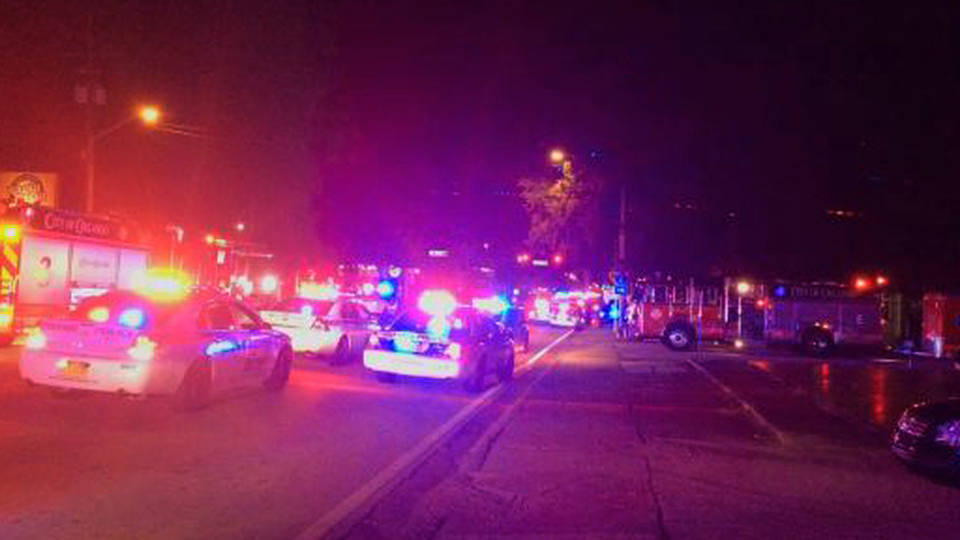
Vigils are being held across the country following what has been described as the deadliest mass shooting in modern American history. At least 50 people died in Orlando, Florida, early Sunday morning after a gunman identified as 29-year-old Omar Mateen opened fire at a packed gay dance club on Latin night. More than 50 others were injured. Three hours after the shooting began, authorities say the gunman was shot dead when police raided the club. The shooting was the deadliest attack on theLGBT community in American history, and it came in the middle of Pride month. President Obama addressed the nation on Sunday.
President Barack Obama: "This is an especially heartbreaking day for all of our friends, our fellow Americans, who are lesbian, gay, bisexual or transgender. The shooter targeted a nightclub where people came together to be with friends, to dance and to sing, and to live. The place where they were attacked is more than a nightclub, it is a place of solidarity and empowerment, where people have come together to raise awareness, to speak their minds and to advocate for their civil rights."
Since 2007, the suspected gunman, Omar Mateen, had worked as a security guard at G4S, the largest private security firm in the world. He was born in New York to Afghan parents in 1986. The FBI interviewed Mateen in 2013 and 2014 for possible terrorist ties. According to The New York Times, he was placed under FBI surveillance for a time, but the agency eventually closed its inquiry. There are reports Mateen called 911 around the time of the assault and declared his allegiance to ISIS, but no audio of the call has been released to the public. Mateen’s father told NBC that his son had been angered after seeing two men kissing in Miami. Mateen’s former wife told reporters that he was mentally unstable and used to beat her.
TOPICS:
Orlando Massacre
LGBT
Shooter at Pulse Nightclub Purchased Guns, Including AR-15, Legally
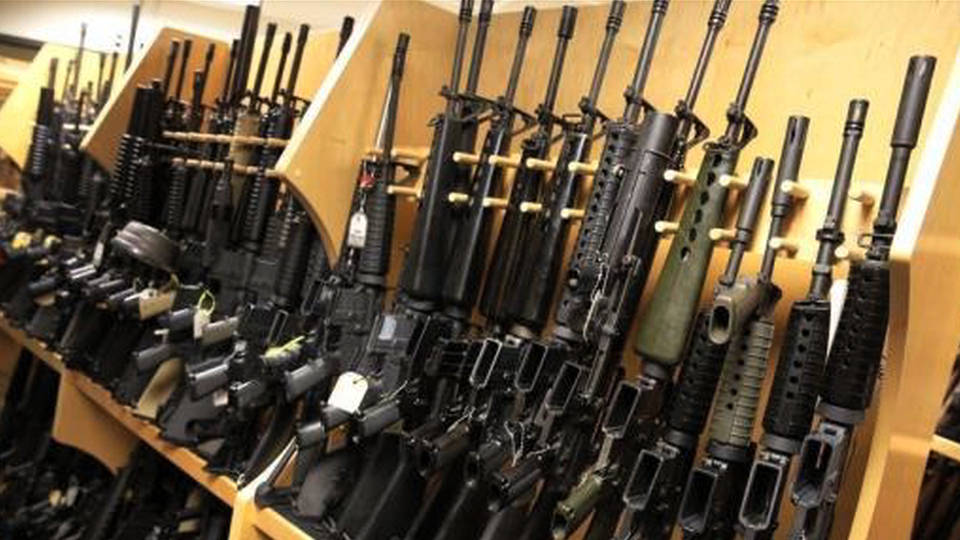
One of the guns used by Mateen at the Pulse nightclub was an AR-15 semiautomatic rifle. The gun was also used in the massacres at Sandy Hook Elementary School; the Aurora, Colorado, movie theater; and at the Inland Regional Center in San Bernardino, California. AR-15-style rifles like Mateen’s were once illegal under the Federal Assault Weapons Ban, which expired in 2004. Trevor Velinor of the Bureau of Alcohol, Tobacco and Firearms said Mateen purchased his guns legally.
Trevor Velinor: "Yes, ATF has traced those firearms. We know that this individual did purchase at least two firearms. He is not a prohibited person, so he can legally walk into a gun dealership and acquire and purchase firearms. He did so, and he did so within the last week or so. And thus far, we’re following up on that, so I’m not going to get into the detail as to the specific location of the purchase. But he did purchase two firearms—a handgun and a long gun—within the last few days."
TOPICS:
Gun Control
Orlando Massacre
Singer Christina Grimmie Shot Dead in Orlando on Friday
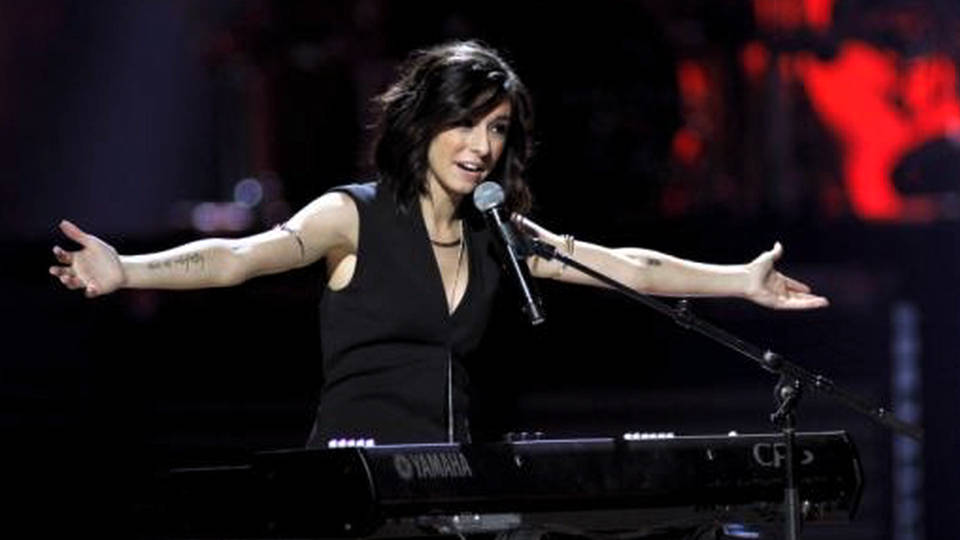
The Pulse nightclub shooting came just over a day after another fatal shooting in Orlando. On Friday, a man identified as Kevin James Loibl fatally shot singer Christina Grimmie as she signed autographs after a concert. Known as a contestant on the show "The Voice," Grimmie was 22 years old. Orlando Police Chief John Mina described the attack.
John Mina: "This white male approached her and opened fire, striking her. At that—almost immediately, her brother, Marcus Grimmie, tackled the suspect to the ground. Shortly after that, the suspect killed himself. And obviously, as we know, unfortunately, Christina Grimmie succumbed to those gunshot wounds and passed. The suspect had two handguns on his person. He had two additional loaded magazines for those handguns and a large hunting knife."
California: Authorities Arrest Heavily Armed Man Headed to LGBT Pride Parade
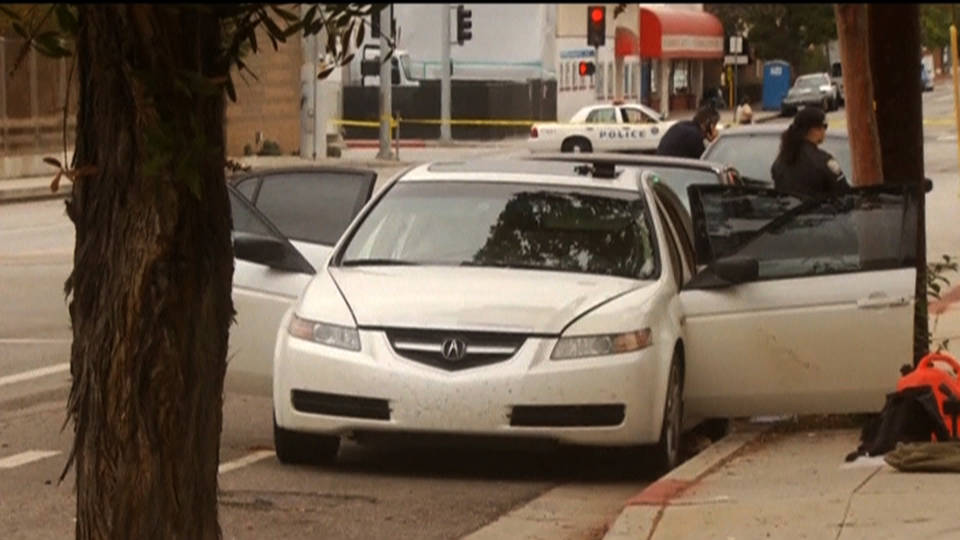
Meanwhile in California Sunday, authorities arrested a heavily armed man who said he was heading to the gay pride parade in Los Angeles. Santa Monica police, who responded to a call about a man knocking on a resident’s door and window, found James Wesley Howell of Indiana. In his car he had three assault rifles, high-capacity ammunition and a bucket with "chemicals capable of forming an improvised explosive device," police said.
TOPICS:
LGBT
California
Trump Renews Call for Muslim Immigration Ban, Even Though Shooter was from U.S.
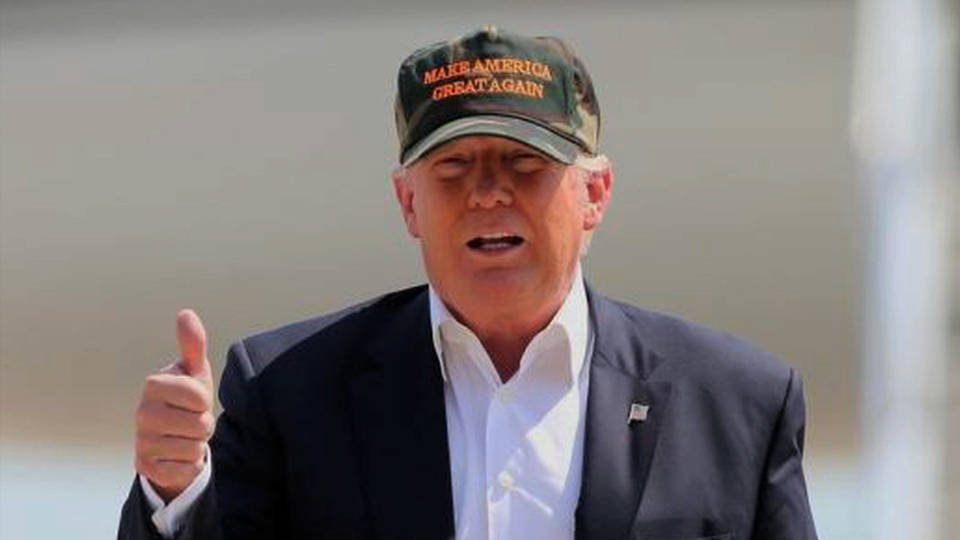
Presumptive Republican presidential nominee Donald Trump has used the shooting in Orlando to double down on his call for a ban on Muslim immigration to the United States—even though the shooter was a U.S. citizen born in New York.
TOPICS:
Donald Trump
Orlando Massacre
Muslim
Meg Whitman Compares Trump to Hitler and MussoliniHis comments came after Hewlett-Packard CEO and Republican donor Meg Whitman reportedly compared Trump to Adolf Hitler and Benito Mussolini during a closed-door meeting on Friday.
TOPICS:
Donald Trump
ISIS Kills 20 Near Damascus; Airstrikes Kill 39 in Idlib
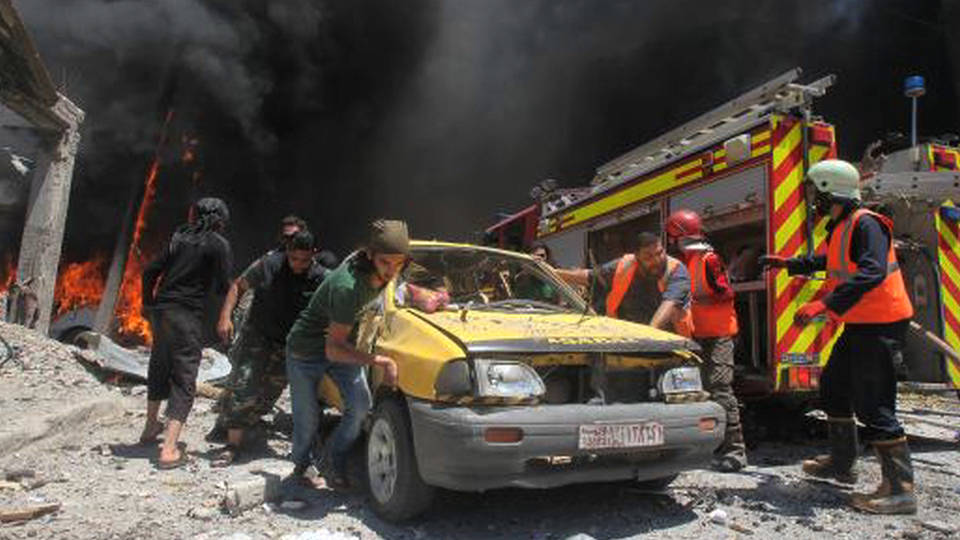
In Syria, ISIS has claimed responsibility for suicide and car bombings that reportedly killed at least 20 people in a suburb of the capital Damascus. Meanwhile, the Syrian government has reportedly dropped barrel bombs on Darayya, another Damascus suburb, just hours after it received its first delivery of food aid since 2012. Residents said the raids began as people gathered to collect the much-needed food. This comes as at least 39 people have been reported killed in airstrikes blamed on either the Syrian regime or Russian forces in the Syrian province of Idlib.
Bangladesh Arrests More Than 8,500 People in Crackdown
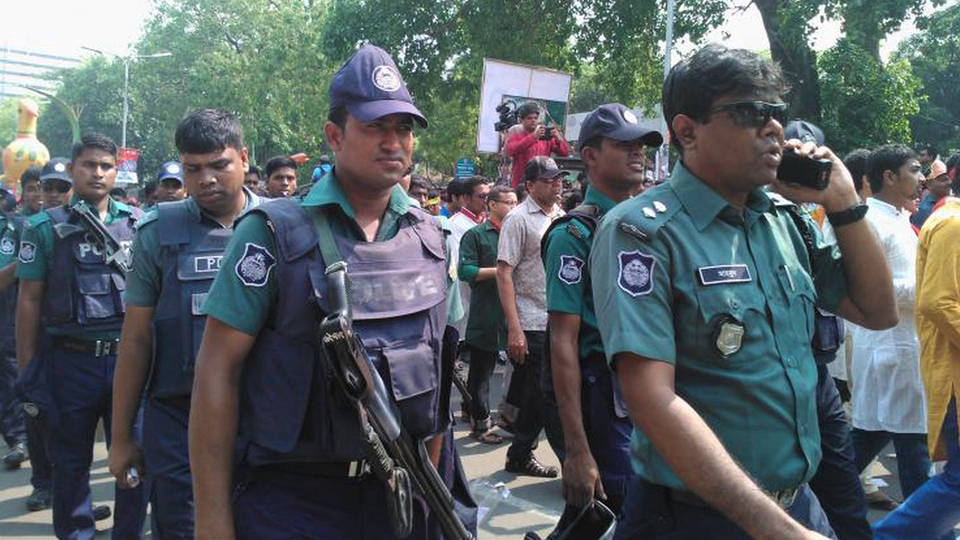
In Bangladesh, authorities say they have arrested more than 8,500 people over the course of four days as part of a nationwide crackdown they say is aimed at stopping violence against religious minorities and secular bloggers. Opponents say Bangladesh is using the effort to target political dissidents.
TOPICS:
Bangladesh
Germany: Thousands Protest U.S. Drone War at Ramstein Air Base
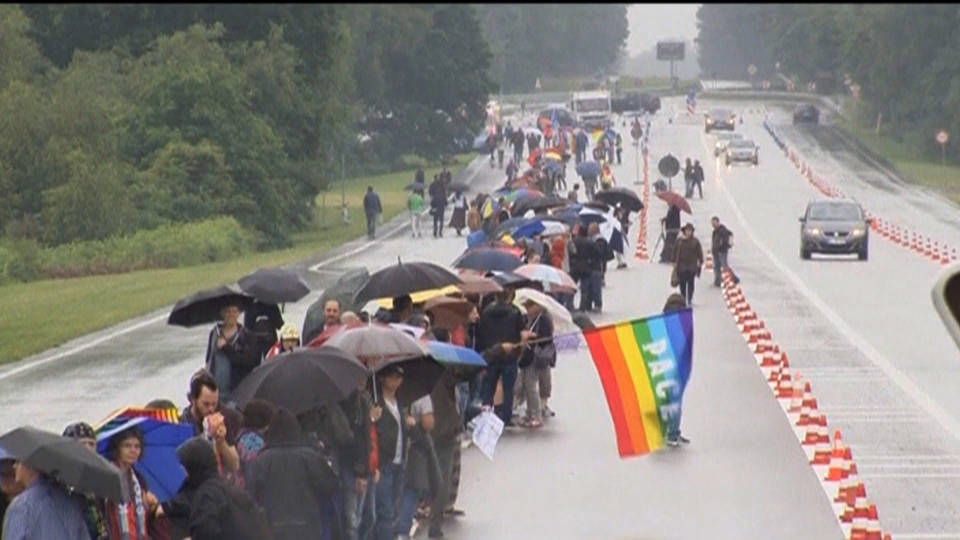
In Germany, thousands of people formed a human chain around a U.S. Air Force base to protest the U.S. drone wars. Ramstein Air Base hosts a station that relays communications between drone operators in the United States and the drones they pilot abroad. Clement Walter was among the protesters.
Clement Walter: "I am here because I don’t agree with American weapons, American rockets being directed toward other countries from German soil. We do not have to tolerate that. Above all, I am thinking about our children. I want them to understand that there must not be any war carried out from German soil."
TOPICS:
Germany
Drones
Bahraini Activist Zainab Alkhawaja Flees to Denmark
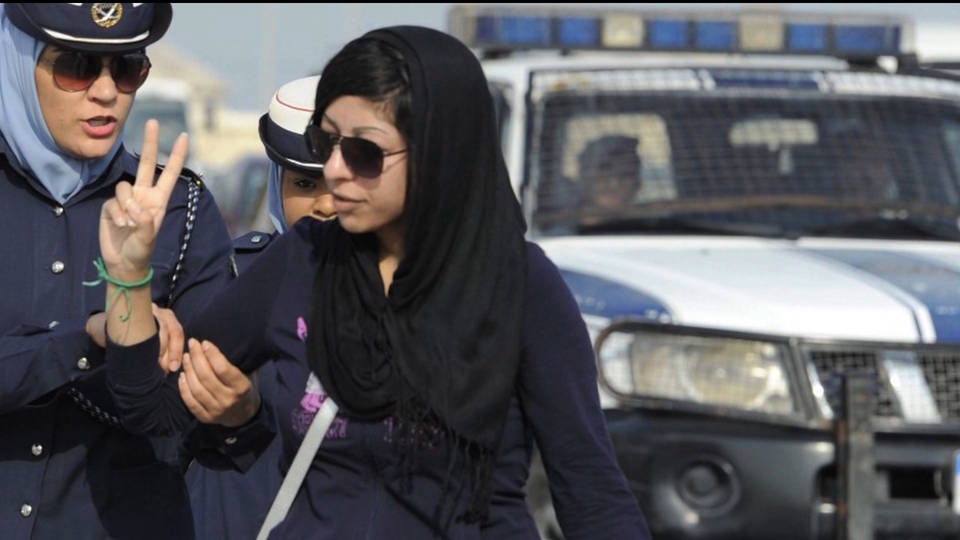
Bahraini human rights activist Zainab Alkhawaja has fled Bahrain amid warnings she could be arrested for a 12th time. Alkhawaja was released in May after two months imprisoned with her infant son. She has fled to Denmark, telling The New York Times Bahraini officials had warned the Danish Embassy she could be rearrested within months and separated from her son. Bahrain is a close U.S. ally, home to the Navy’s Fifth Fleet.
TOPICS:
Bahrain
Rep. Gutiérrez Invokes Flint Water Crisis to Oppose Board to Run Puerto Rican Economy
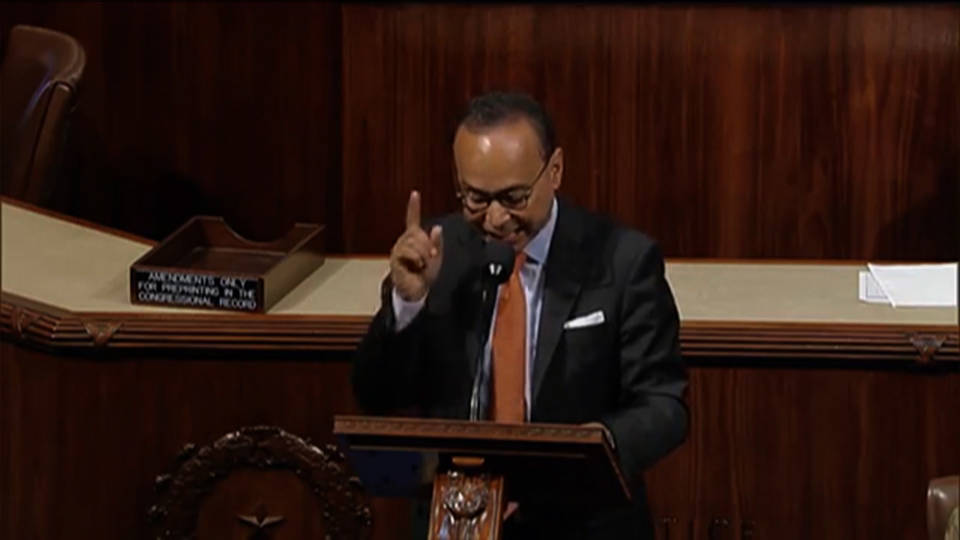
The Senate is set to consider a bipartisan bill to create a federally appointed control board to address Puerto Rico’s debt crisis. The measure passed the House last week. Speaking on the House floor, Illinois Congressmember Luis Gutiérrez blasted fellow Democrats for supporting the control board he compared to the unelected emergency manager who switched the water supply in Flint, Michigan, poisoning the city’s residents.
Rep. Luis Gutiérrez: "I expect my Democrats to join me in opposing that same type of unelected control board that has no accountability to the people that it is controlling, the kind of control board focused on austerity without examining the consequences of their actions for the people, the kind of control board that made decisions in Flint, Michigan—Flint, Michigan—that poisoned the people, that they were not ever elected."
TOPICS:
Puerto Rico
Texas: 2 Valedictorians Reveal They are Undocumented
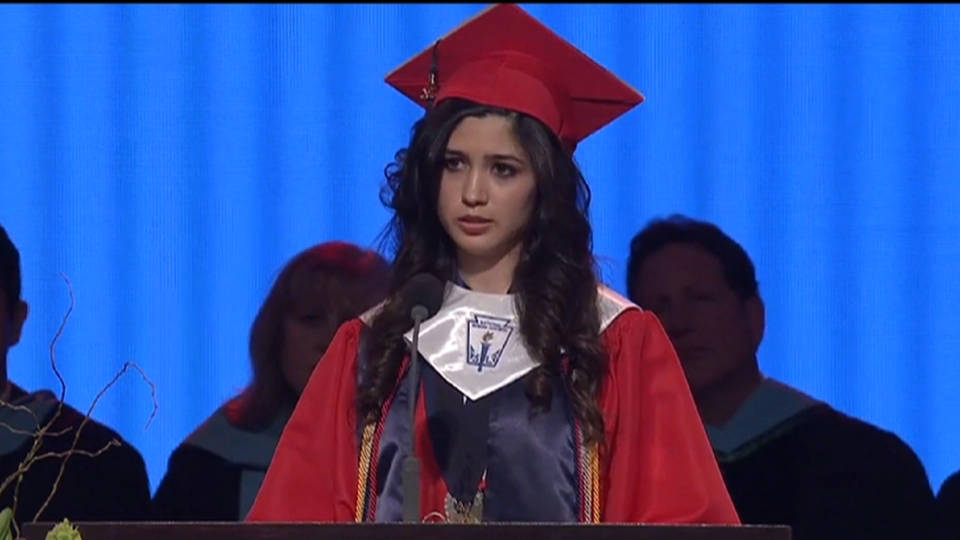
In Texas, two valedictorians have publicly announced they are undocumented. In Austin, Texas, Mayte Lara Ibarra, who plans to attend University of Texas at Austin on a scholarship, tweeted, "Valedictorian, 4.5GPA, full tuition paid for at UT, 13 cords/medals, nice legs, oh and I’m undocumented." Further north in McKinney, Texas, Larissa Martinez, who is heading to Yale University, disclosed her status during her address to her class.
Larissa Martinez: "I am one of the 11 million undocumented immigrants living in the shadows of the United States. I decided to stand before you today and reveal these unexpected realities, because this might be my only chance to convey the truth to all of you that undocumented immigrants are people, too ... people with dreams, aspirations, hopes and loved ones, people like me, people who have become a part of the American society and way of life and who yearn to help make American great again—without the construction of a wall built on hatred and prejudice."
Both young women have been subjected to a barrage of hatred on social media.
TOPICS:
Texas
Immigration
Gawker Declares Bankruptcy After Hulk Hogan Lawsuit

The digital media outlet Gawker has declared bankruptcy and put itself up for sale. The move comes after Gawker was ordered to pay $140 million in a lawsuit for publishing the sex tape of wrestler Hulk Hogan. Hogan’s lawsuit was financially backed by Silicon Valley billionaire Peter Thiel, who was outed as gay by a now-defunct Gawker blog.
TOPICS:
Journalism
Muhammad Ali's Daughter Speaks at Funeral: "We Crave for Peace"
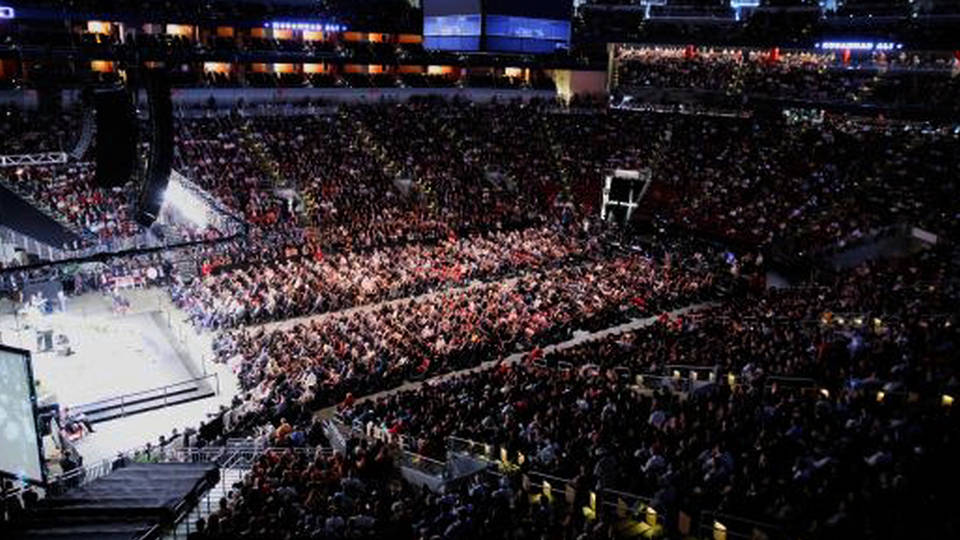
More than 20,000 people packed a sports arena in Louisville, Kentucky, Friday to bid farewell to heavyweight boxing champion Muhammad Ali. Ali will also be remembered for his activism against war and racism. His daughter, Maryum Ali, spoke at the interfaith funeral.
Maryum Ali: "Your family is so proud of the legacy you left behind. But I hope that the history of you can help turn the tide of self-hate and violence, because we are overwhelmed with moments of silence for tragic deaths. Here on this soil, American soil, in the Middle East or anywhere else in this world, we crave for peace, the peace that you rest in now."
TOPICS:
Muhammad Ali
Orlando Attacks Take Center Stage at Tony AwardsAnd the attacks in Orlando took center stage at the Tony Awards Sunday night. Host James Corden honored the victims.
James Corden: "Good evening. All around the world, people are trying to come to terms with the horrific events that took place in Orlando this morning. On behalf of the whole theater community and every person in this room, our hearts go out to all of those affected by this atrocity. All we can say is you are not on your own right now. Your tragedy is our tragedy. Theater is a place where every race, creed, sexuality and gender is equal, is embraced and is loved. Hate will never win. Together, we have to make sure of that. Tonight’s show stands as a symbol and a celebration of that principle. This is the Tony Awards."
TOPICS:
Orlando Massacre
"Hamilton" Creator Lin-Manuel Miranda Performs Sonnet for Orlando at Tonys
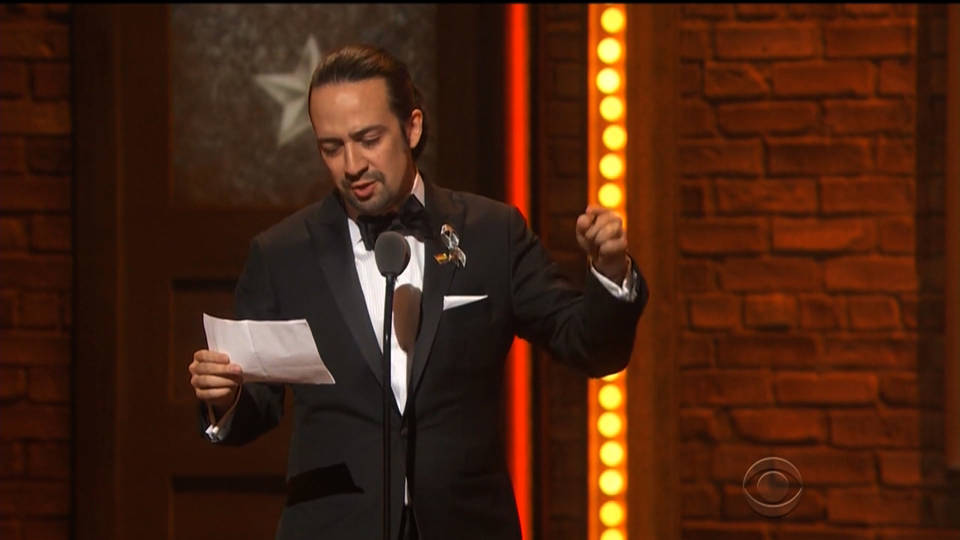
The Broadway hit "Hamilton" won 11 Tony Awards, including best musical. Creator Lin-Manuel Miranda delivered a sonnet about the Orlando attacks.
Lin-Manuel Miranda: "When senseless acts of tragedy remind us / That nothing here is promised, not one day / This show is proof that history remembers / We live through times when hate and fear seem stronger / We rise and fall and light from dying embers / Remembrances that hope and love lasts longer / And love is love is love is love is love is love is love is love / Cannot be killed or swept aside, / I sing Vanessa’s symphony, Eliza tells her story / Now fill the world with music love and pride. Thank you so much for this."
TOPICS:
Orlando Massacre
Donate today:
Follow:


SPEAKING EVENTS


Democracy Now!: Twenty Years Covering the Movements Changing America
SPECIAL LIVE STREAM


Just Before Giving Stanford Rapist 6 Months, Judge Dealt Another Light Sentence to Domestic Abuser
WORK WITH DN!

News Producer
Office Coordinator
Senior TV Producer
207 West 25th Street, 11th Floor
New York, New York 10001, United States
---------------------
---------------------

No comments:
Post a Comment