democracynow.org
Stories:

Activist: Latinx LGBTQ Community & Its Stories of Survival Should Be at Center of Orlando Response
On Monday night, thousands gathered in downtown Orlando for a candlelight vigil to remember the victims of the massacre at the Pulse nightclub. A nearby church bell tolled 49 times—once for each victim. Most of the victims were young and Latinx. To talk more about the Orlando shootings, we are joined by Isa Noyola. She is director of programs for the Transgender Law Center, the largest transgender organization. She’s a translatina activist and a national leader in the LGBT immigrant rights movement.
TRANSCRIPT
This is a rush transcript. Copy may not be in its final form.
AMY GOODMAN: Simon and Garfunkel’s "Bridge Over Troubled Water," the song sang out loud at vigils around the world for the victims of the Orlando shooting. This is Democracy Now!, democracynow.org, The War and Peace Report. I’m Amy Goodman. On Monday night, thousands gathered in downtown Orlando for a candlelight vigil to remember the victims of the massacre at the Pulse nightclub. A nearby church bell tolled 49 times—once for each victim. Most of the victims were young and Latino or Latina.
To talk more about the Orlando shootings, we’re joined by Isa Noyola. She’s director of programs for the Transgender Law Center, the largest transgender organization. She’s a translatina activist and a national leader in LGBTQ immigrant rights movement.
Welcome to Democracy Now!, Isa. Can you respond to not only what took place early Sunday morning, the 49 people killed, but then the reaction to it in this country, both the movement’s reaction and then those running for president, like Donald Trump?
ISA NOYOLA: Yes. Buenos días. This is an incredibly difficult moment that my community is facing at this moment. It’s of deep pain and one that I think our Latino, Latina, Latinx community is very much in the trenches. We are deep in sorrow. And so, I think that we are—as a community, we’re always perceived as sort of resilient, but that resiliency comes from, you know, being years in survival mode. And I know that my community has very much survived, is surviving violence on a daily basis.
These spaces, like at Pulse nightclub, these Latino nights, are very much sacred spaces for our community. They’re spaces of respite, of safety, of camaraderie, of community. And the fact that now that these spaces are now threatened, now we have to think twice before we enter these spaces, when they’re already far and few between, when we’re already under vigilance, when we’re already overpoliced, when we’re already feeling that our lives are at any moment—given moment, that our lives are threatened due to state violence, due to interpersonal violence, domestic violence, gun violence now.
It is increasingly troubling that my community is not centered in this moment, that in this moment there was a context for that shooting, and that context is that my community was deeply impacted and murdered. And we are not lifting appropriately our community of LGBT Latina, Latinx leaders in this moment, and how we’ve been in survival mode for many, many years. The fact of the matter is, just across the country, as I travel, there are very few spaces that really provide programming—monolingual programming, bilingual programming—for our community. And so often these spaces, these club spaces, are just a few—a few spaces that we can access safely.
AMY GOODMAN: Isa, for those who haven’t heard the term, explain "Latinx."
ISA NOYOLA: "Latinx" is a term that’s being used within social justice circles and in our community just to acknowledge sort of that we are, you know, all genders, that folks who identify not just as Latino, masculine, or Latina, feminine, but also just—it acknowledges a gender spectrum, essentially, because we are diverse in our gender expression.
AMY GOODMAN: Can you talk about what the media narrative is missing? You know, vigils are held all over the country—in New York, flowers, people gathering at Stonewall, the place where decades ago—really was the birthplace of the modern-day gay rights movement, when patrons of this bar, another sanctuary for gay, Latino, trans people, was raided by police. And those that led that raid at Stonewall were trans women, who took off their stiletto high heels, and they hammered on the heads and the bodies of the police that were raiding this bar, that were tormenting them. Can you talk about what we don’t hear and watch in the media now as this story around Orlando unfolds?
ISA NOYOLA: I think the stories of the individuals that were murdered and killed are starting to emerge. I think that the stories of survival and the stories of how our community is surviving on a daily basis is not being talked about, the ways in which our Latino immigrant communities are having to survive to exist, to really think about—you know, use creativity to really think about supporting each other, right? And we—often, we see our communities, really in ingenious ways, sort of supporting each other and providing space in moments of crisis, providing spaces in homes, providing spaces like in clubs, and offering services, because the fact of the matter is we don’t, as a broader LGBT mainstream movement. I think that the buzzword of diversity and sort of inclusion is always used, but so often it’s not met with real intentional efforts. And the fact of the matter is that our community is not adequately and intentionally looked at, and is often tokenized. And in these moments, our stories are used. Our stories are, you know, talked about in ways of just othering. And I think that it is a moment for the broader LGBT movement and for society to really think about how our Latinx, Latina, Latino communities have been surviving. And the fact of the matter is that through state violence, through detention centers, through the immigration process, through the journey of arriving to this country, that my community is suffering at every turn.
AMY GOODMAN: I want to turn to Donald Trump speaking yesterday in the aftermath of the Orlando attack.
DONALD TRUMP: We cannot afford to talk around issues anymore. We have to address these issues head on. I called for a ban after San Bernardino and was met with great scorn and anger. But now, many years—and I have to say many years, but many are saying that I was right to do so. And although the pause is temporary, we must find out what is going on. We have to do it. It will be lifted, this ban, when and as a nation we’re in a position to properly and perfectly screen these people coming into our country. They are pouring in, and we don’t know what we’re doing.
AMY GOODMAN: So that is Donald Trump calling for a ban on Muslims in the wake of the Orlando attacks. Your response, Isa Noyola?
ISA NOYOLA: You know, the U.S. government and the right-wing conservative leadership and groups really need to take a hard look and reflection in the mirror, because in the same ways that they’re wanting to demonize and portray other cultures and other religions as violent and as cruel, they are not really understanding how the United States government, in many ways—inside detention centers, through overpolicing, through criminalization—is enacting the same violence, enacting the same rhetoric. I mean, Chase was right, around sort of the policies that have been introduced this year. All are rooted in hate. All are rooted in really, you know, stigmatizing the community as predators, as nonhuman, essentially. They’re trying to dehumanize us, so that then violence can be enacted, so that then people can take action on that rhetoric and cause violence, bodily—you know, bodily harm to my community.
And I think that—you know, I was in North Carolina when HB 2 was announced, and I was in the middle of a hate rally from the—from conservative religious communities that were gathered. Thousands of people were gathered, and I was in the sea of it. And the hate was palpable. The rhetoric on stage was that my community is not human, that my community is disposable. And so, Donald Trump and many of those leaders really need to acknowledge this same rhetoric that is just—you know, that they are—that they are enacting, that they are actually, you know, causing in our society here in the United States.
AMY GOODMAN: Can you talk about these LGBTQ nightclubs? Are they—are they increasing, the number of them around the country as sanctuaries, or are they disappearing?
ISA NOYOLA: You know, unfortunately, that is not the case. You know, spaces for queer and trans people of color, for Latino, for black communities, for—are disappearing. Here in San Francisco, we’ve seen various spaces and clubs for black, queer and trans folks, for Latino folks—just this year, Esta Noche in the Mission was closed and is now a hipster bar. In Los Angeles, we’ve seen the closure of Circus and many other places due to displacement and gentrification, and now they’re becoming high-rise condos. And so we’re seeing the landscape for our communities change because of sort of the broader context of what’s happening, of how our communities of color are under attack, and we’re being pushed out of our own communities.
And so, these nights are rare. These Latino nights are sometimes once a week or once a month or once every other couple months. They’re not often. And so, the violation that took place in Orlando, that we—you know, already we are fighting so hard to keep the few spaces that are available to us, the few spaces that are carved out for us at LGBT centers, the few spaces that are created for us. We are fighting really hard to keep them, because we know how much we, as a culture, need to support each other, how these moments of crisis, we’re needing the spaces to mobilize and to organize. And so, it is—you know, it is a travesty that now Orlando is faced with yet another space that’s threatened and is not accessible for my community.
AMY GOODMAN: Isa Noyola, I want to thank you for being with us, director of programs for the Transgender Law Center, the largest transgender organization. She’s a translatina activist and a national leader in the LGBTQ immigrants’ rights movement. This is Democracy Now! When we come back, we look at the link between mass shootings and domestic violence. Stay with us.
[break]
AMY GOODMAN: "Love Me Like There’s No Tomorrow" by Freddie Mercury. And for those listening on the radio, you can go to our website at democracynow.org, as we played the images of those lost, those murdered at the Pulse nightclub in Orlando. This is Democracy Now!, democracynow.org, The War and Peace Report. I’m Amy Goodman.
... Read More →
When It Comes to Orlando Massacre, Domestic Violence is the Red Flag We Aren't Talking About
In a new article for Rolling Stone, journalist Soraya Chemaly writes, "The Washington Post reported Monday that 'although family members said [Omar] Mateen had expressed anger about homosexuality, the shooter had no record of previous hate crimes.' But that depends on how you categorize domestic violence." Mateen’s ex-wife, Sitora Yusufiy, has come forward to describe how Mateen beat her and held her hostage. ThinkProgress reports that between 2009 and 2012, 40 percent of mass shootings started with a shooter targeting his girlfriend, wife or ex-wife. Just this month in California, a UCLA doctoral student gunned down his professor, prompting a lockdown on campus. But first, Mainak Sarkar allegedly killed his estranged wife in Minnesota, climbing through a window to kill her in her home. Last year alone, nearly a third of mass shooting deaths were related in some way to domestic violence. We speak to writer Soraya Chemaly. Her recent article in Rolling Stone is called "In Orlando, as Usual, Domestic Violence was Ignored Red Flag."
TRANSCRIPT
This is a rush transcript. Copy may not be in its final form.
AMY GOODMAN: We turn now to an aspect of the Orlando massacre that’s received little coverage: the gunman’s history of domestic violence. In a new article for Rolling Stone, journalist Soraya Chemaly writes, quote, "The Washington Post reported Monday that 'although family members said [Omar] Mateen had expressed anger about homosexuality, the shooter had no record of previous hate crimes.' But that depends on how you categorize domestic violence," she wrote. Mateen’s ex-wife, Sitora Yusufiy, had come forward to describe how Mateen beat her.
SITORA YUSUFIY: In the beginning, he was a normal being, that cared about family, loved to joke, loved to have fun. But then, a few months after we were married, I saw his instability, and I saw that he was bipolar, and he would get mad out of nowhere. That’s when I started worrying about my safety. And then, after a few months, he started abusing me physically, very often, and not allowing me to speak to my family, keeping me hostage from them. And I tried to see the good in him even then, but my family was very tuned into what I was going through, and decided to visit me and rescue me out of that situation.
AMY GOODMAN: Mateen’s ex-wife, Sitora Yusufiy, said her family had to, quote, "pull [her] out of [Mateen’s] arms" when they came to rescue her.
We turn now to this often-overlooked connection between domestic violence and mass shootings. ThinkProgress reports between 2009 and 2012, 40 percent of mass shootings started with a shooter targeting his girlfriend, wife or ex-wife. Just this month in California, a UCLA doctoral student gunned down his professor, prompting a lockdown on campus. But first, Mainak Sarkar allegedly killed his estranged wife in Minnesota, climbing through a window to kill her in her home, and then he drove thousands of miles to California and killed his professor. Last year alone, nearly a third of mass shooting deaths were related in some way to domestic violence. And the majority of mass shootings in this country actually take place inside the home. Just this past weekend, as national attention was fixed to the massacre in Orlando, a man in New Mexico allegedly gunned down his wife and their four daughters.
To talk more about this connection, we’re joined by Soraya Chemaly. Her recent article in Rolling Stone is called "In Orlando, as Usual, Domestic Violence was Ignored Red Flag."
Welcome to Democracy Now! Talk about what you have found.
SORAYA CHEMALY: Good morning, Amy. I think many of us have been writing about this connection for a while. You see repeatedly in these cases of mass violence, particularly where four or more people are killed, that the perpetrator had a history of attacking an intimate partner, a parent. It happened in the Boston massacre. It happened in Sandy Hook. And so, for many of us, you kind of just wait for this information to come to the surface. And we wonder: Why is it that this kind of behavior isn’t seen as an essential element to understanding lethality in public violence?
And so, one of the things that I have been writing about in this regard is: How can we focus on behavior, intimate partner violence and similar behavior, to prevent it, before we get to the stage where it becomes a massacre in public? The statistics that you gave are very, very consistent over time. And indeed, if you look at murders that involve four or more people, the number goes up to 57 percent. And so, there’s no real surprise in the information. The question is: How do we connect these dots more effectively to create better public policy?
AMY GOODMAN: Policemen know how dangerous domestic violence situations are, right? It is the place they will most likely be injured, if they go—if they’re called to a home to deal with domestic violence.
SORAYA CHEMALY: Yes, that’s—I think that’s very true. I think we have a—that’s a very good point you make, because it actually indicates a much larger problem. With domestic violence, we tend to think still that it’s private, very often separated from the way we think about public violence or terrorism. And if we consider, however, the connection between institutionalized and state-sanctioned violence—and in this instance, I’m actually explicitly talking about extremely high levels of domestic violence in our policing communities; some estimates of self-reported domestic violence put that number at about 40 percent of policing communities—you begin to see the overlap between private behavior and public behavior, and then the implications in terms of state action or inaction. For many people who are suffering from domestic violence, going to the police is simply not an option, either for matters of their community and race or gender and sexual identity, but also simply because they feel that they don’t have faith that when they go to the police, that as an institution it will be supportive. And so, until we better address domestic violence in policing communities itself, it’s very difficult to say that the police are an active resource in these situations. They understand the violence, for sure. But the question is: How do they respond to it?
AMY GOODMAN: No record of hate crimes. So talk more about domestic violence as hate.
SORAYA CHEMALY: So, we have a problem, in general, addressing gender-based hate in the country. So, a hate crime has to be coded when it happens. And generally speaking, that isn’t happening in terms of gender-based hate crimes. So, for the past several years, after several incidents where gender and other intersectional factors seemed to be relevant—for example, in the Elliot Rodger case or in the Ariel Castro case in Ohio, I have called the police department and said, "Was there a hate crime filed? Was there any kind of hate crime investigation that was started in either of these instances, and others, as well?" And their response has always been no. And so, we don’t really assess accurately what the levels of gender-based violence in the country are, which is hugely problematic.
And I don’t mean to suggest that all domestic violence crimes are hate crimes. However, there is an element of hatred and misogyny that is pervasive in the culture that we simply don’t see. It’s so normalized. So, every day three women are killed by an intimate partner. Every week we have 12 murder-suicides. Levels of street harassment, sexual harassment, rape, domestic violence are extremely high in the country. And so, until we capture the right data, it’s extremely difficult for us to understand these patterns of behavior and then to connect them to these wider forms of violence that are manifested in different ways.
AMY GOODMAN: You write, Soraya—you write, "Homophobia is nothing if not grounded in profound misogyny."
SORAYA CHEMALY: Yes. I think that sometimes that’s difficult for people to appreciate. But if you reverse the trajectory of how we think about the targets of this violence—so, you know, here we had an LGBTQ community that was shattered by hatred. If we think not so much about the targets of the violence, whether it’s women in their homes, people on the streets, people in clubs, and we look instead at the perpetrator, focus on the perpetrator and the attitudes that are informing perpetrator action, then we might have a better way of understanding that connection. If you consider the role that rigid gender stereotypes play, that ideas about masculinity, particularly toxic masculinity, play, that ideas about male entitlement play, then it’s better—it’s clearer to see the ways in which a hatred of women or a hatred of things that are feminine gets tessellated into a sexual shame or homophobia, so that it’s just a different manifestation of the same types of entitlements.
AMY GOODMAN: Soraya, talk about the coverage that we’ve been hearing. We did hear the ex-wife of Omar Mateen—
SORAYA CHEMALY: Yes.
AMY GOODMAN: —which immediately sparked this for you, is that right? Today, in our headline, we go right to New Mexico to talk about what happened in North Roswell—
SORAYA CHEMALY: Yes.
AMY GOODMAN: —a man allegedly gunning down his wife and his four daughters.
SORAYA CHEMALY: Yes. So, I think that for people who are attuned to this, this information is everywhere. Headlines don’t often talk about domestic and intimate partner violence clearly. So you may see a headline that says "women and children shot in their home," but very rarely, by comparison, will you see the headline actively identify an intimate partner as an agent of that violence. And that’s a huge problem, because our media tends to erase the agency and perpetration factor. But this is happening every day. It’s happening all over the country. And until we have a way of clearly identifying the patterns in the crimes, we’ll continue to ignore it as a matter of public policy. I mean, last year after the Boston massacres, Pamela Shifman and Salamishah Tillet wrote very clearly about this in The New York Times; again, in The Huffington Post, Melissa Jeltsen identified the same patterns.
And this idea that there is this break between public and private violence is deeply destructive. And it’s also very patriarchal, because it’s based on the idea that there is a special preserve that we aren’t supposed to interfere with. But if you have a person living in your community that is violently abusive towards his family, that is a concern for the broader community. In this case in Orlando, which is often the case, there seems to be no report made to the police, which means that we’re inhibited as a society from taking further action. So, he, for example, was completely able to go and legally get guns. We have a federal law that should have prohibited that, if, for example, he had had a restraining order. But more than 50 states actually do not have laws that support that. And so, until we’re able to provide community services that support people in their own homes, not for the purposes of criminalization, necessarily, because we understand what the biases in our criminal system are, but for the purposes of really understanding the deep complexities of intimate partner violence, we won’t be able to address this violence.
This public violence is a direct outgrowth of tolerance for violence in homes. Boys and girls who grow up in these homes are four times—particularly the boys, four times more likely to be aggressors as adults. And so, when you look at a young man like this one, who went into this club and was clearly exhibiting patterns, very destructive patterns, before, you have to ask yourself: What could have been done to intervene earlier in the process? What was happening that inhibited the family from seeking more institutional help and support that would have been a red flag more broadly?
AMY GOODMAN: Soraya, you write, "The third major issue to address is that of violent men and their access to guns. In households where an abusive spouse has access to a gun, women are five times more likely to be killed."
SORAYA CHEMALY: Yes. I mean, I think that’s information that we have known for many, many years now. And very often on the gun advocacy side, you’ll hear the argument that women should just go get guns, which is kind of just absurd for many different reasons. Women don’t want to shoot the people they love, in the first place, if they’re in that sort of situation. But also, it just turns out that even when women have guns, they’re much more likely to be used against them in the home or against a child, or accidental shootings will happen. That really is not a practical solution to the problems that we face. And if you look at surveys of men and women, there is a huge gap between the feelings of security that men and women have when they own guns, and that gap is really meaningful. Women do not tend to feel safe when there are guns in the home, but men do. So, insisting that women go and buy guns is simply going along a norm that is extremely calibrated to the way men are experiencing violence, not the way women are experiencing violence.
AMY GOODMAN: I want to turn to Sitora Yusufiy, who was speaking to reporters on Sunday, Omar Mateen’s ex-wife—
SORAYA CHEMALY: Yes.
AMY GOODMAN: —who described Mateen’s interest in guns.
SITORA YUSUFIY: He wanted to be a police officer. So he trained with his friends who are police officers, and he had a license to have a gun in Florida. You’re allowed to do that. So, he didn’t practice anything in front of me, but I’m sure he went to shooting ranges.
AMY GOODMAN: That’s Omar Mateen’s ex-wife, Sitora Yusufiy. Chemaly, can you respond?
SORAYA CHEMALY: So, I think—I think that, very clearly, according to everything that his family and friends and co-workers have said, he had an authoritarian mindset. He had a very rigid approach to understanding certainly gender roles, probably sexuality, and the desire to exhibit sort of very hypermasculine behavior, which is part of being a strong man, having a gun. I mean, it’s really difficult to overstate the degree to which gun ownership is tied to ideas about masculinity in America. We have a long history of that. And so, for a man like this, having a gun, being in a position of authority, enacting state-sanctioned violence are all tied very, very closely to identity. And I think we see that over and over again. I mean, he had a co-worker that asked to be transferred because the man made him so uncomfortable at work. And if you consider that fact and you look at the degree to which, for example, workplace violence is also often grounded in domestic violence, you start to see how intricately related all of these problems are.
AMY GOODMAN: I want to turn to, again, the ex-wife of Omar Mateen speaking to reporters. Sitora Yusufiy said Mateen was violent towards her.
SITORA YUSUFIY: Yeah, he was very short-tempered. And he would often get into fights and arguments with his parents, you know, but because, I guess, I was the only one in his life, most of the violence was towards me at that time.
AMY GOODMAN: Soraya Chemaly, your response?
SORAYA CHEMALY: So, her—the rest of her description really supports the argument that he felt she was his property. He wanted her to stay in the home. He clearly felt that he could physically abuse her. He brutally attacked her at one point. As she said, he held her hostage. And as jarring as that may be, it’s not uncommon. We don’t tend to think about domestic violence and intimate partner violence in this country as honor crime, but what we’re really talking about, in terms of the levels of violence we see, are manifestations of deep shame, either shame about compromised masculinity or shame about sexuality that’s unresolved. And so, when, for example, a man like this acts with this violence, or like the man in New Mexico, he slaughters his family—or, frankly, you know, every week, every month, we see similar cases—we tend to disconnect it from either the deeper, broader social patterns that we see or also from this idea that male shame can cause this level of intimate violence in our own communities. And I think it’s very persistent.
AMY GOODMAN: You also quote, right away, Mateen’s co-worker, Daniel Gilroy—
SORAYA CHEMALY: Yes.
AMY GOODMAN: —who requested a transfer so he wouldn’t have to work with Mateen, describing him as "scary in a concerning way. ... He had anger management issues. Something would set him off, but the things that would set him off were always women, race or religion. [Those were] his button pushers."
SORAYA CHEMALY: Right. I mean, I think—I think, clearly, his co-worker saw this behavior. His wife saw this behavior. His family saw this behavior. But those things were never brought together in a way that could have possibly prevented this violence.
AMY GOODMAN: Doesn’t it also go to the issue of what we call terror?
SORAYA CHEMALY: Yes.
AMY GOODMAN: Women terrorized in their own homes, women’s health clinics, abortion clinics that are bombed, where doctors are gunned down—
SORAYA CHEMALY: Yes.
AMY GOODMAN: —where patients are killed—what we call terror and what we don’t.
SORAYA CHEMALY: Absolutely. And actually, again, in the Colorado Springs abortion attack, the perpetrator had also violently abused his wife. And, yes, I mean, I agree. I think that the degree to which women are living with everyday terror is undeniable. But we simply, in our media, do not categorize it that way. I mean, women are making tens of thousands of calls to domestic violence shelters a day. The National Network to End Domestic Violence issues regular reports on these things. And so, on the one hand, we’re—you know, we have this national concern with countering violent extremism, but on the other hand, we’re cutting social services to support the people who are on the front lines of recognizing and experiencing extreme violence. And that’s an incoherent way to approach this problem.
AMY GOODMAN: Soraya Chemaly, I want to thank you for being with us, writer and journalist who has written about mass shootings and domestic violence, her latest piece for Rolling Stone headlined "In Orlando, as Usual, Domestic Violence was Ignored Red Flag." We’ll link to it at democracynow.org.
That does it for our broadcast. Democracy Now! is hiring a news producer and an office coordinator as well as a senior video producer. You can go to our website at democracynow.org for details.
And tonight I’ll be speaking at the Fashion Institute of Technology here in New York with Irvin Jim, the general secretary of the National Union of Metalworkers of South Africa, the largest union in South Africa.
... Read More →
Nephew of Slain Gay Icon Harvey Milk: Orlando Massacre Marks One of the LGBT Movement's Darkest Days
The FBI investigation into the Orlando shooting massacre that left 49 people dead at a gay club has taken an unexpected twist after evidence emerged the gunman was a regular patron of the Pulse nightclub. The FBI has begun investigating multiple claims that the shooter, Omar Mateen, might have been gay himself and regularly frequented the Pulse nightclub. The claims have come from numerous people, including his ex-wife, a former high school classmate and several patrons of the Pulse nightclub. In the wake of the deadliest attack on the LGBT community in U.S. history, we speak to Stuart Milk, the nephew of gay rights pioneer Harvey Milk, one of the first openly gay politicians in the United States. Harvey Milk was assassinated in 1978, a year after winning election to the San Francisco Board of Supervisors. He was gunned down along with San Francisco Mayor George Moscone by a former city supervisor. Stuart Milk is the co-founder and president of the Harvey Milk Foundation.
TRANSCRIPT
This is a rush transcript. Copy may not be in its final form.
AMY GOODMAN: The FBI investigation into the Orlando shooting massacre that left 49 people dead at a gay club has taken an unexpected twist after evidence emerged the gunman was a regular patron of the Pulse nightclub. On Monday morning, FBI Director James Comey said the shooter, Omar Mateen, was likely radicalized online, but that no evidence has emerged he received outside help in the attack.
JAMES COMEY: So far, we see no indication that this was a plot directed from outside the United States, and we see no indication that he was part of any kind of network. It is also not entirely clear at this point just what terrorist group he aspired to support, although he made clear his affinity at the time of the attack for ISIL and, generally, leading up to the attack, for radical Islamist groups.
AMY GOODMAN: During a phone call to police Sunday morning, Omar Mateen expressed support for the self-proclaimed Islamic State, but Comey said at other times he also expressed solidarity with groups fighting against ISIS, like Hezbollah and al-Nusra Front. On the presidential trail, Donald Trump used the shooting to call for expanding his proposed ban on immigrants entering the United States, while Hillary Clinton called for ramping up the air campaign against ISIS.
However, more evidence is emerging that the gunman who attacked the gay nightclub may have had a very different motive. The FBI has begun investigating multiple claims that the shooter, Omar Mateen, might himself have been gay and frequented the Pulse nightclub. The claims have come from numerous people, including his ex-wife, a former high school classmate and several patrons of the Pulse nightclub. One Orlando resident named Cord Cedeno spoke with MSNBC’s Chris Hayes about the gunman.
CHRIS HAYES: So you’re saying you and friends of yours—
CORD CEDENO: Yeah, yeah.
CHRIS HAYES: —like, he is familiar to you from gay dating apps and from the gay club?
CORD CEDENO: Yeah, no, one of my friends has seen him in Pulse before. He’s been in that venue several times. That’s not his first time going there. I know that for a fact. He clearly had his picture open on Adam4Adam. He’s had his picture up on Grindr. In Jack’d, he’s had his pictures up on there. And then, I think one of them he didn’t have his pictures up, but he would send them to guys. I know there’s plenty of other guys that he has probably tried to contact and hook up from. A lot of them are scared to come out and tell the FBI. Two of my friends already went to the FBI, and they already spoke with them, they already turned in their phones, and they already got all their information.
AMY GOODMAN: Cord Cedeno, speaking on MSNBC. Two of his friends were killed inside the gay nightclub on Sunday. Orlando authorities say 49 people died in total, the vast majority young and Latino. On Monday, thousands gathered in downtown Orlando for a candlelight vigil to remember the victims. A nearby church bell tolled 49 times—once for each victim.
We begin today’s show with Stuart Milk, the nephew of gay rights pioneer Harvey Milk, one of the first openly gay politicians in the United States. Harvey Milk was assassinated in 1978, a year after winning election to the San Francisco Board of Supervisors. He was gunned down along with San Francisco Mayor George Moscone by a former city supervisor. Stuart Milk is the co-founder and president of the Harvey Milk Foundation.
We welcome you to Democracy Now! Talk about what took place in Orlando and how you link this to the legacy of your uncle, the famed gay rights activist Harvey Milk.
STUART MILK: Well, Amy, all of the elements, actually, that you’ve been talking about this morning are linked to my uncle. It’s the elements of our visibility, the elements of violence that are perpetrated against LGBT people, the elements of the use of guns in the U.S. to assassinate and to—and to commit violence on minority communities, and even the element that was—that you have mentioned today, which is of no surprise to LGBT activists around the world, that this individual may have himself been dealing with his own sexuality. And we have seen time and time again that those who come from cultures and who come from societal nonacceptance of LGBT people, that oftentimes they react angrily, and that internal torment gets expressed externally through either verbal or physical abuse and, in extreme cases, something like what we saw happen to a community that I happen to be very close to. The Harvey Milk Foundation plays a significant role in the Orlando community. These are—it’s a community that I have seen just absolutely blossom in their acceptance of not just LGBT people, but of diversity in general. It is, you know, what has been known as the happy—one of the—the happiest place, by the slogan, on Earth, has now become very, very dark. But they will get back to where they are—where they had come from.
AMY GOODMAN: We’re speaking—Stuart Milk, we’re speaking to you in Florida, in Fort Lauderdale, Florida. In a tweet that went viral after Sunday’s attack on the LGBT nightclub in Orlando—and I quoted is yesterday, but I think it’s very important to continue to raise—ACLU staff attorney Chase Strangio wrote, "The Christian Right has introduced 200 anti-LGBT bills in the last six months and people blaming Islam for this. No," he wrote. Your response?
STUART MILK: Yeah, I mean, the religious extremists of any religion have had shopping lists of people, and LGBT people are usually front and center. The Harvey Milk Foundation, we do work globally. And I can tell you that in a huge number of places in the world, we are still facing Judeo-Christian extremists. I’ll be, tomorrow, heading off—tonight, actually—to the Baltic states. And the type of extremism that diminishes not just LGBT people, but the role of women, the role of other minorities and other cultures, is still coming from the Judeo-Christian religion, so—of the extreme right. All those extremists have a agenda of separation and division.
And what that means for our young people and people who struggle with their sexuality is that they are torn. And what we—the result that we have seen here of any type of extremism is violence. But to then turn a dark—one of the darkest days that the LGBT movement has in modern history and to try to make that into a case to discriminate against another culture, a culture that’s a minority in this society, is simply unacceptable. And I can tell you that the LGBT community and the LGBT leadership, not only in the United States, but around the world, we are not going to allow that to happen.
AMY GOODMAN: Stuart Milk, tell us about your uncle. Tell us about Harvey Milk, the gay rights pioneer.
STUART MILK: Well, you know, Harvey’s dream—and it wasn’t Hollywood. This was—you know, he was up against so much opposition to his message, which was that we must be visible, that we must be out, that we must take our masks off, that we must be authentic. And by the way, the message was not just for the LGBT community, it was for anyone who was hiding who they were, what their background was, what their culture was. But his message was, in terms of society, simply unheard of. So, not only was he one of the first openly gay elected officials, but he was really the first person to publicly and consistently call for our visibility. He believed that if we were not at the table, we were on the menu. He believed that if we were not visible to our families, to our friends, to our neighbors, then all the lies and myths and innuendos would be out there.
And, you know—and in my uncle’s day, you know, I can tell that the jury, when they heard the killer, the perpetrator of that horrible crime, who killed not only my uncle, but Mayor Moscone, when the jury heard the confession of that killer, they cried, not in sympathy for my uncle or for Mayor Moscone, but they cried for Dan White, because he was portrayed as a good Christian Catholic who was a former member of the police force and a fireman, and he represented, at that time, American values. And I can tell you that he didn’t represent American values. American—and my uncle’s message was that our values are that diversity is our strength, diversity is not our enemy—
AMY GOODMAN: I wanted—
STUART MILK: —acceptance of those that are different.
AMY GOODMAN: I wanted to turn to a part of a speech delivered by your uncle, Harvey Milk, in 1978. At the time, he was an openly gay member of the San Francisco Board of Supervisors.
HARVEY MILK: We must destroy the myths once and for all, shatter them. We must continue to speak out. And most importantly—most importantly, every gay person must come out. As difficult as it is, you must tell your immediate family, you must tell your relatives, you must tell your friends—if indeed they are your friends—you must tell your neighbors, you must tell the people you work with, you must tell the people in the stores you shop in. And once they realize that we are indeed their children and we are indeed everywhere, every myth, every lie, every innuendo will be destroyed once and for all. And once—once you do, you will feel so much better.
AMY GOODMAN: That was Harvey Milk in 1978. And he also wrote a note, if, he said, he was assassinated, that he wanted people to know. Is that right, Stuart Milk?
STUART MILK: Yes, he—I mean, it wasn’t a note. It was actually a couple of—
AMY GOODMAN: Tapes.
STUART MILK: —tape recordings, where he said, "Let the bullets that smash through my brain smash through every closet door." He wanted—he knew that—he had death threats constantly, and he knew that he was going to be assassinated. He didn’t know who, and he didn’t know when. But he—and not only in terms of that tape recording, but letters to the family. And I can tell you that he wanted those bullets to be the last violence towards the LGBT community, the last violence towards any minority group. So, I can tell you it’s with a heavy heart that we’re here discussing this situation.
There are so many elements to this that we need to continue to talk about. But we cannot go backwards. There are young people who are going to be afraid, who are going to be afraid all around the world, to go into a club, which are safe spaces for the LGBT community, not just in the U.S., but all over the world. These are, in many ways, our community centers. They have historically been for years. And these young people are going to—are going to have this hesitation. And we must get the message out. We have moved too far forward to allow anything as dark as this to move us backwards. And we must get the message out that they must continue to be authentic. We need who they are. We need who they are. We need their differences. We need their authenticity for us to all prosper.
AMY GOODMAN: I want to thank you, Stuart Milk, for being with us, nephew of gay rights pioneer Harvey Milk, co-founder and president of the Harvey Milk Foundation, well-known Florida gay rights activist. This is Democracy Now! When we come back, we speak with a leading trans activist. The bar, the Pulse, was an LGBT watering hole, a cultural space, a place of gathering and sanctuary. Overwhelmingly, the number of people killed, the 49 people, were Latino and Latina, many of them Puerto Rican. Stay with us.
... Read More →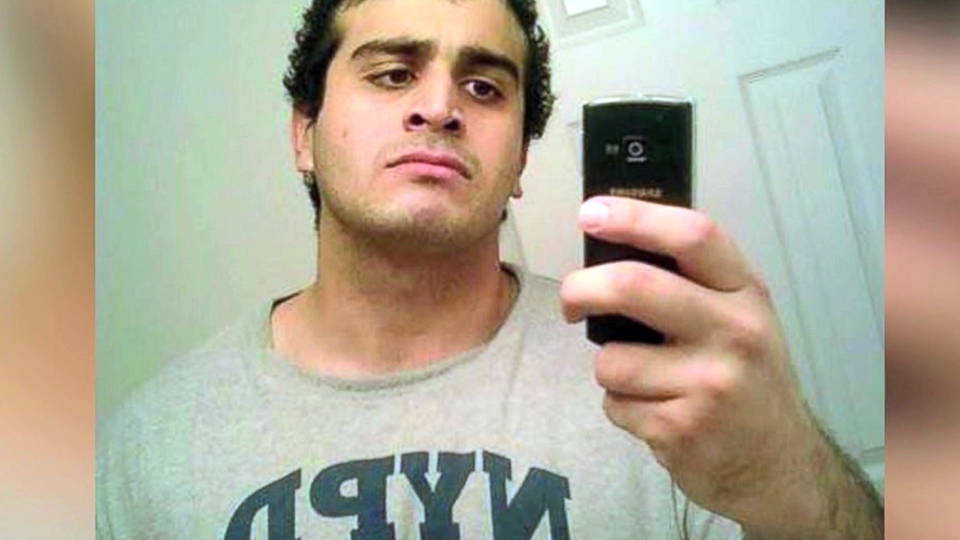
The FBI investigation into the Orlando shooting massacre that left 49 people dead at an LGBTQ club has taken an unexpected twist after evidence emerged the gunman was a regular patron of the club. On Monday morning, FBI Director James Comey said the shooter, Omar Mateen, was likely radicalized online, but that no evidence has emerged he received outside help in the attack. Comey said the FBI first interviewed Mateen in 2013 after co-workers said he made "inflammatory and contradictory" remarks about terrorism.
James Comey: "We then interviewed him twice. He admitted making the statements that his co-workers reported, but explained that he did it in anger because he thought his co-workers were discriminating against him and teasing him because he was Muslim. After 10 months of investigation, we closed the preliminary investigation."
During a phone call to police on Sunday morning, Mateen expressed support for the self-proclaimed Islamic State, but Comey said at other times he also expressed solidarity to groups fighting against ISIS, including Hezbollah and al-Nusra Front. Witnesses who were trapped in the club’s bathroom with Mateen during the attack said he also spoke about a need to stop the U.S. bombing in Syria. The FBI has begun investigating multiple claims that Mateen might have been gay himself and frequented the Pulse nightclub. The claims have come from numerous people, including his ex-wife, a former high school classmate and several club patrons. Meanwhile, solidarity vigils have been held across the country and around the world for the 49 victims of the attack, most of whom were young and Latinx. We’ll have more on the massacre after headlines.
Trump Calls for Ban on Immigration from Any Area with a History of Terrorism
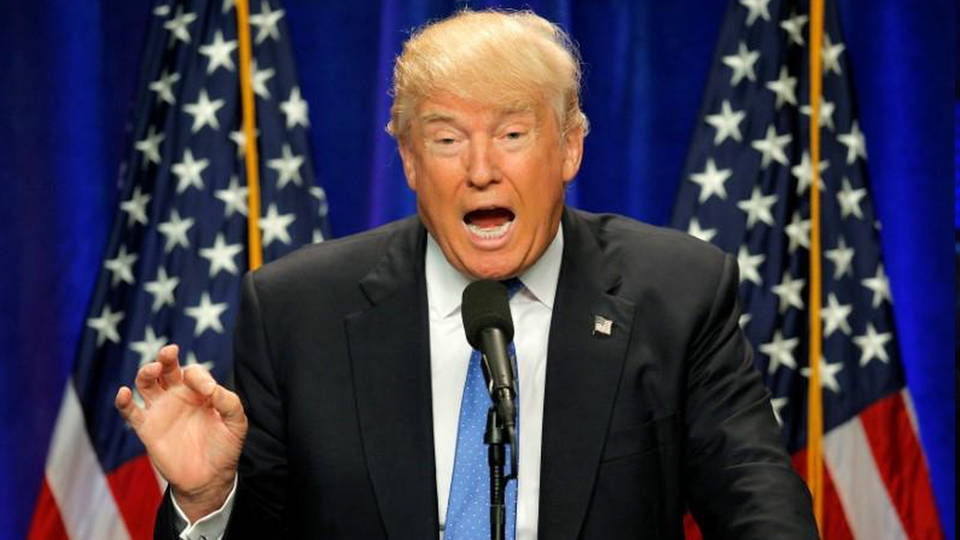
Presumptive Republican presidential nominee Donald Trump has cited the Orlando attack to call for banning all immigrants from any country with a history of terrorism against the U.S. or its allies. Trump said the shooter was "born an Afghan, of Afghan parents," even though Mateen was born in New York and is a U.S. citizen.
Donald Trump: "When I’m elected, I will suspend immigration from areas of the world where there is a proven history of terrorism against the United States, Europe or our allies, until we fully understand how to end these threats. ... We cannot continue to allow thousands upon thousands of people to pour into this country, many of whom have the same thought process as this savage killer."
TOPICS:
Donald Trump
Orlando Massacre
Trump Adds Washington Post to Outlets Banned from His Events
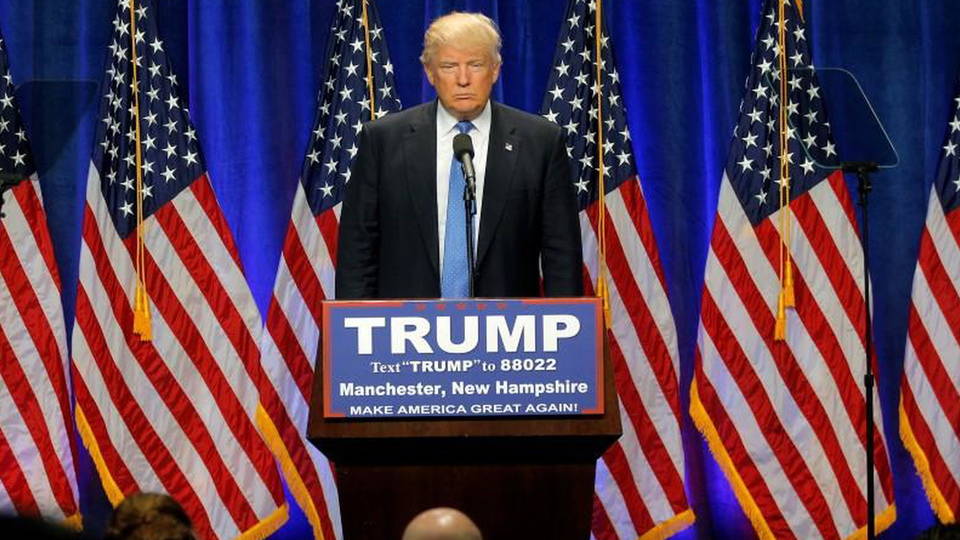
Donald Trump has banned The Washington Post from covering his events, accusing the paper of "incredibly inaccurate coverage." Washington Post editor Marty Baron called the move "nothing less than a repudiation of the role of a free and independent press." Trump has also banned BuzzFeed, The Huffington Post, The Daily Beast, The Des Moines Register, the Union Leader, Univision and Fusion.
TOPICS:
Donald Trump
Journalism
Trump Implies Obama Has Hidden Agenda on Orlando Attack
In objecting to The Washington Post’s coverage, Trump had pointed in particular to an online Post headline that read, "Donald Trump suggests President Obama was involved with Orlando shooting." The newspaper changed the headline, but said the change was made independent of Trump’s complaint. The current version reads, "Donald Trump seems to connect President Obama to Orlando shooting." The article refers to remarks Trump made about Obama on "Fox & Friends" Monday.
Donald Trump: "He doesn’t get it, or he gets it better than anybody understands. It’s one or the other. And either one is unacceptable."
TOPICS:
Donald Trump
Obama
Orlando Massacre
Mother of Orlando Victim Pleads for Assault Weapons Control in Emotional Interview
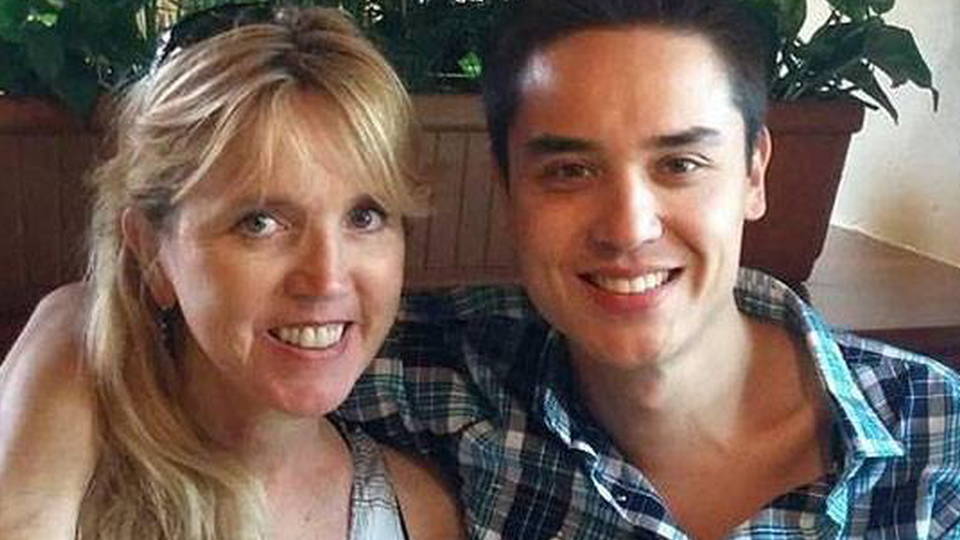
The 49 people killed in the Orlando massacre have all been identified. Among those now confirmed killed is Christopher Leinonen, whose mother Christine gave an emotional interview to ABC News Sunday as she was still waiting to hear news about her son.
Christine Leinonen: "I just wanted to say, though, that this is a club that nobody wants to be in. And please can we do something with the assault weapons, so that we can stop this club from ever getting any new members? I beg all of you. Please."
Christine Leinonen’s son Christopher was 32.
TOPICS:
Gun Control
Orlando Massacre
Democrats Erupt in Protests on House Floor over Inaction on Gun Control
On Capitol Hill, Democratic lawmakers erupted into protest over inaction by Republican leaders on gun control. Some left the chamber as House Speaker Paul Ryan held a moment of silence to honor the Orlando victims. South Carolina Congressmember Jim Clyburn took to the floor to ask Ryan when the House would consider gun control legislation. But Ryan shut him down on procedural grounds.
Rep. Jim Clyburn: "Thank you very much, Mr. Speaker. I am really concerned that we have just today had a moment of silence, and later this week, the 17th"—
House Speaker Paul Ryan: "Is the gentleman stating a parliamentary inquiry?"
Rep. Jim Clyburn: "Yes. Mr. Speaker, I am particularly interested about three pieces of legislation that have been filed in response to Charleston."
House Speaker Paul Ryan: "The gentleman is not stating a parliamentary inquiry. The gentleman is not stating a parliamentary inquiry. The clerk will report the title of the bill."
TOPICS:
Gun Control
Orlando Massacre
New Mexico: Woman, 4 Daughters Murdered in Alleged Domestic Violence Attack
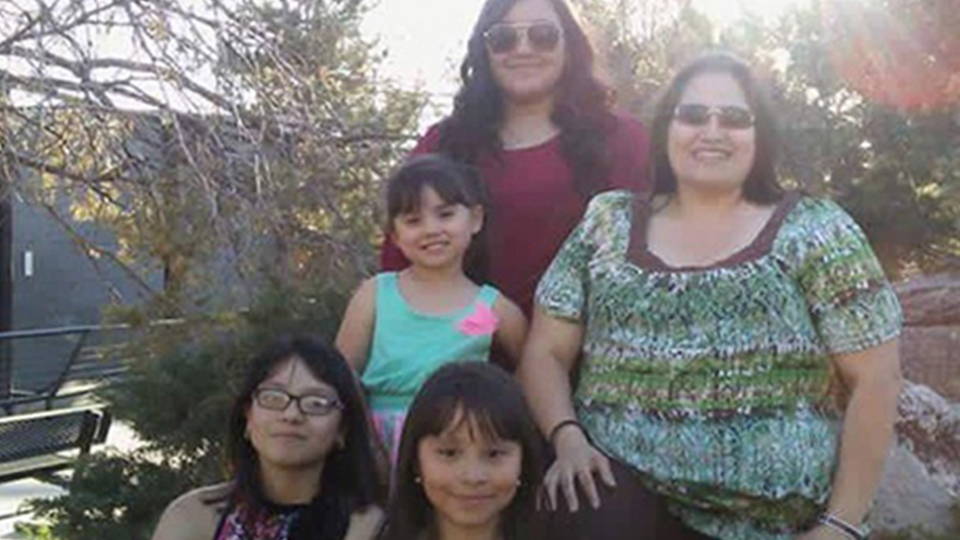
In New Mexico, the victims of another mass shooting have been identified. Cynthia Villegas and her four daughters—Yamilen, Cynthia Janeth, Abby and Ida—were murdered over the weekend in North Roswell. Villegas’ husband, Juan David Villegas, is charged with the murders. We’ll have more on the connection between mass shootings and domestic violence later in the broadcast.
TOPICS:
New Mexico
Domestic Violence
Transgender Woman Shot in California; 2nd LGBT Victim Found in Burnt Car in New Orleans
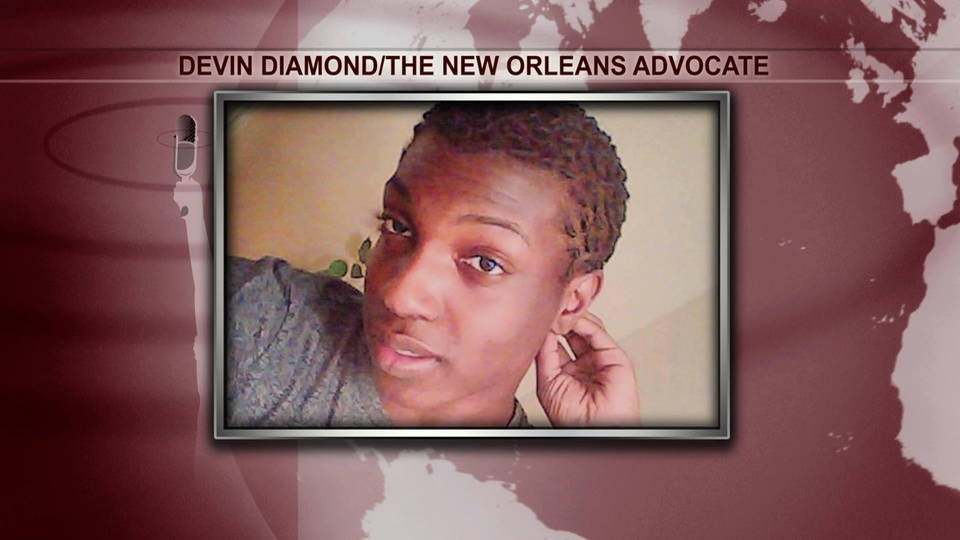
In Santa Ana, California, a transgender woman has been shot and injured. Authorities said the woman stumbled to a gas station Friday after being shot. Meanwhile, another LGBT victim was discovered dead in a burned-out car last Sunday. The victim’s family identified Devin Diamond as a gay man, and news reports referred to Diamond using male pronouns, but in The New Orleans Advocate a friend described Diamond as a woman in the midst of a gender transition.
TOPICS:
LGBT
France: ISIS Claims Responsibility for Killing 2 Outside Paris
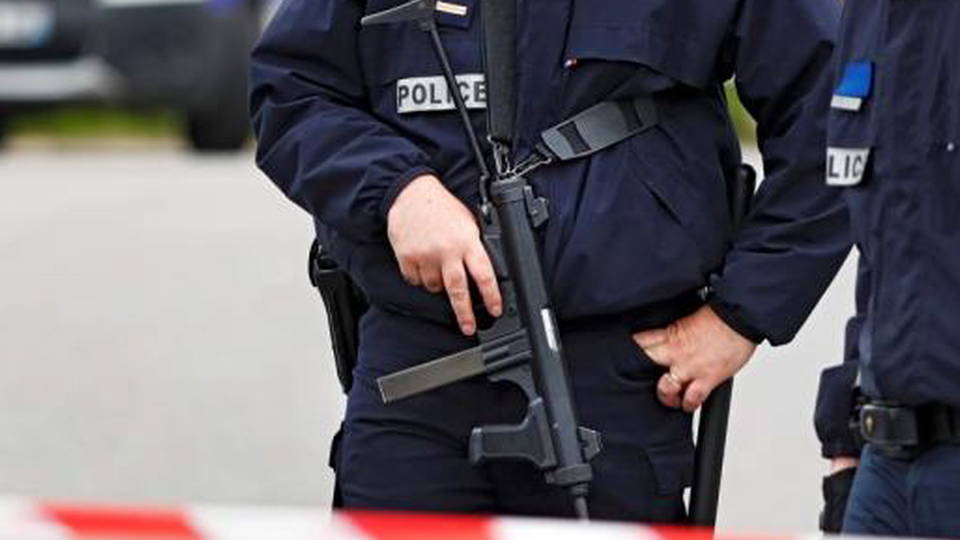
In France, ISIS has claimed responsibility for the fatal stabbing of a French police commander outside Paris. The attacker, identified as Larossi Abballa, then held the commander’s partner and the couple’s three-year-old son hostage, eventually killing the partner, who worked as an administrative police official. Police stormed the house and killed the attacker. French President François Hollande called the killing "incontestably a terrorist act."
TOPICS:
France
Islamic State
Turkey: Syrian Journalist Survives 2nd Assassination Bid in 3 Months
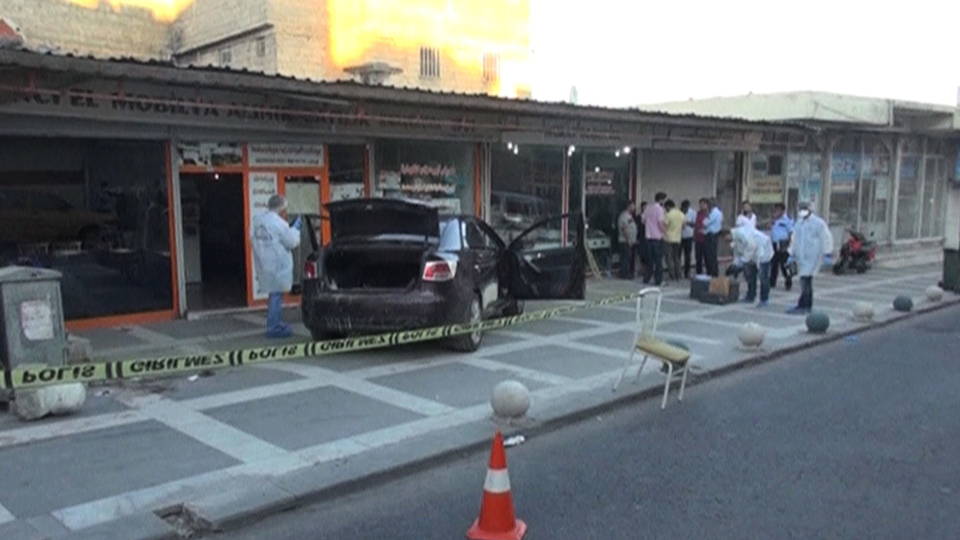
In southeastern Turkey, a Syrian journalist has been shot, but survived, marking the second attempt on his life in three months. An ISIS news agency said the militant group carried out the shooting against Abd al-Qader, founder of the exiled Syrian news outlet Eye on the Homeland.
TOPICS:
Syria
Turkey
Journalism
Yemen: 3 Killed in 2nd U.S. Drone Strike in 2 Days

In Yemen, a U.S. drone strike has killed three people identified by Yemeni officials as alleged al-Qaeda fighters. The victims were driving in a vehicle around the town of Habban. Sunday’s strike came after another U.S. drone attack killed two other people alleged to be al-Qaeda members in Yemen’s Marib province on Saturday.
TOPICS:
Drones
Yemen
Drone Attacks
Australian Rodent Becomes 1st Mammal to Go Extinct Due to Human-Caused Climate Change
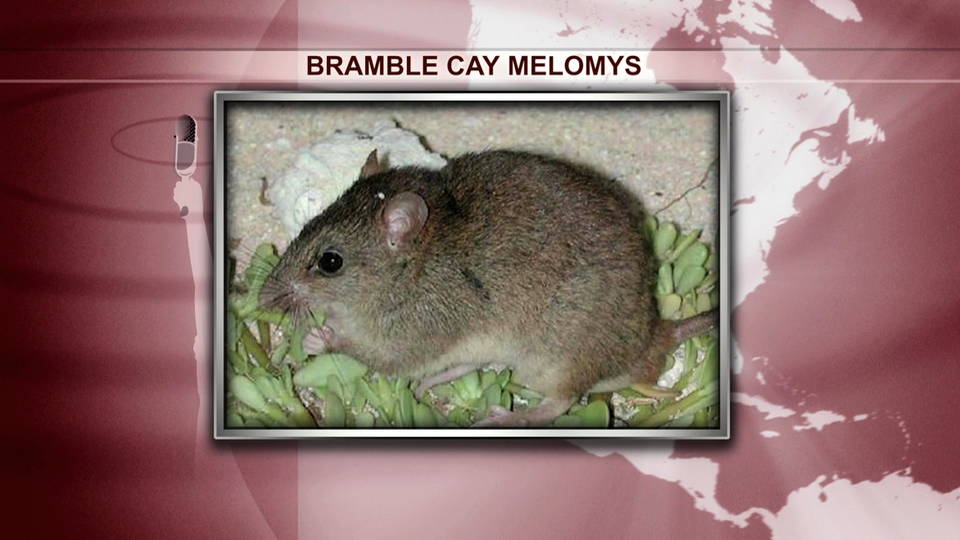
A small rodent from Australia has become the first known mammal to go extinct due to human-caused climate change. In a new report, scientists said they searched extensively for any trace of the rat-like rodent known as the Bramble Cay melomys, whose only known habitat was a tiny island off the coast of Australia. Researchers said the root cause of its extinction was sea level rise from climate change.
TOPICS:
Climate Change
Study: CO2 in Atmosphere to Remain Above Threshold of 400 PPM
In another climate milestone, a study projects levels of carbon dioxide in the atmosphere will smash the threshold of 400 parts per million this year and not fall below it again in our lifetimes. The 400-parts-per-million threshold has been an important marker in U.N. climate negotiations, widely recognized as a dangerous level that could drastically worsen global warming. The environmentalist group 350.org takes its name after the 350-parts-per-million threshold that scientists say is the maximum atmospheric concentration of carbon dioxide for a safe planet.
TOPICS:
Climate Change
Microsoft to Buy LinkedIn in $26.2 Billion Deal

Microsoft has announced it’s buying the digital networking platform LinkedIn for $26.2 billion. The deal marks the largest in Microsoft’s history and one of the largest in the history of the tech industry.
Stanford Rape Case Juror "Absolutely Shocked and Appalled" by 6-Month Sentence
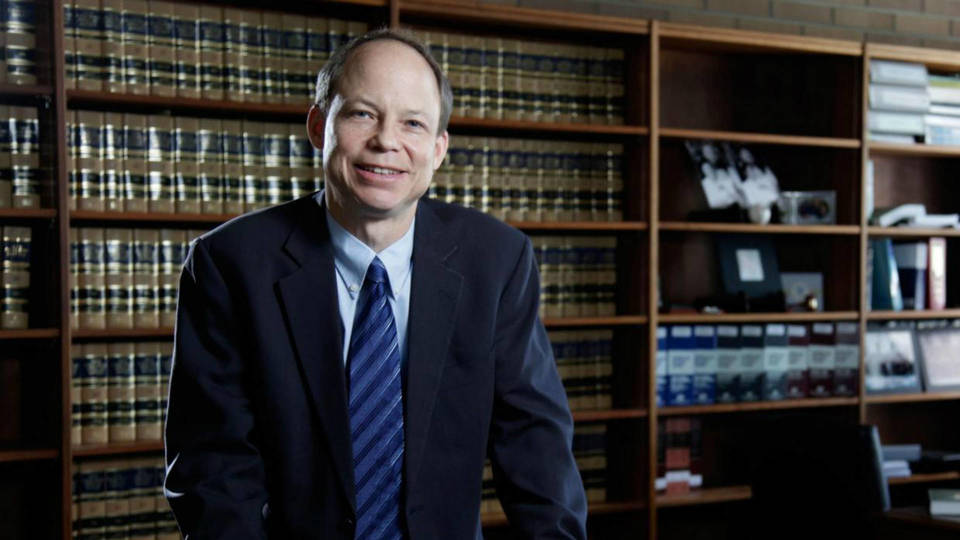
And in California, a juror has written to Judge Aaron Persky to say he is "absolutely shocked and appalled" by the six-month sentence he gave to the former Stanford swimmer who raped an unconscious woman. Brock Allen Turner was found guilty of three felony counts of sexual assault after two witnesses caught him on top of the woman last year. But Judge Persky sentenced him to only six months in county jail—which will likely be reduced to three months under good behavior—saying a longer term could have a "severe impact" on him. In a letter published by Palo Alto Weekly, the juror writes, "We were unanimous in our finding of the defendant’s guilt and our verdicts were marginalized based on your own personal opinion." A letter written by Turner’s victim has gone viral, drawing praise from prominent figures including Vice President Joe Biden, who wrote to her in an open letter, "I do not know your name—but I will never forget you."
TOPICS:
Rape
Sexual Assault
California
Donate today:
Follow:


SPEAKING EVENTS:


Democracy Now!: Twenty Years Covering the Movements Changing America
SPECIAL BROADCAST

Michael Ratner Memorial Livestream
WEB EXCLUSIVE

Just Before Giving Stanford Rapist 6 Months, Judge Dealt Another Light Sentence to Domestic Abuser
WORK WITH DN!

News Producer
Office Coordinator
Senior TV Producer
207 West 25th Street, 11th Floor
New York, New York 10001, United States
----------------------------
----------------------------

No comments:
Post a Comment