democracynow.org
Stories:
 "We're Going to Call That a Win": Water Protectors Promise More Protests as Felony Charges Dropped
At the Morton County Courthouse in North Dakota on Monday, authorities dropped or rejected multiple felony and misdemeanor charges against water protectors involved in the ongoing resistance to the $3.8 billion Dakota Access pipeline, including a felony charge against Marcus Frejo Little Eagle, known by his artist name Quese IMC. "Water is what’s going to bring our people back together," he says. "This destructive unnatural force that is trying to destroy this water is the same force that dismantled our homes back in the day during the Indian wars." The state also dropped a felony charge against Little Eagle’s nephew, Morgan Frejo. Misdemeanor charges against water defender Cody Hall were also dropped.
TRANSCRIPT
This is a rush transcript. Copy may not be in its final form.
AMY GOODMAN: Well, throughout the day Monday, authorities dropped or rejected multiple felony and misdemeanor charges against water protectors, including a felony charge against Marcus Frejo Little Eagle, known by his hip-hop artist name Quese IMC. The state also dropped a felony charge against Little Eagle’s nephew, Morgan Frejo. Misdemeanor charges against water defender Cody Hall were also dropped. Well,Democracy Now! was on the ground at the Morton County Courthouse and jail throughout Monday and bring you this report.
QUESE IMC: My name is Quese IMC. This water is what brought me here, and this water is what’s going to bring our people back together, because this destructive, unnatural force that is trying to destroy this water is the same force that dismantled our homes back in the day during the Indian wars. But what we can know as Native people—not just Native people, but all people—is that we have to come back to that water. You know, we have to carry that love of that water in our heart, because that water is going to be here long after we’re gone, just like the sacred rocks.
AMY GOODMAN: Today you went into the courtroom, and you were charged with a felony?
QUESE IMC: Yes.
AMY GOODMAN: What was the felony?
QUESE IMC: Unjust. That’s what it was. It was unjust.
AMY GOODMAN: How long have you been facing these charges for?
QUESE IMC: Oh, man, it was a shock. It was scary. Over a month, you know.
AMY GOODMAN: And how has that affected you during this month?
QUESE IMC: Emotionally, I know that everybody who’s been at the camp, they’re going to leave with anxiety, they’re going to leave withPTSD. A lot of things are going to—are going to give you anxiety. It’s real. And I faced those, and I had to pray, go through ceremony to release myself from those things, because it’s real, you know? But the thing about it, it’s a genetic memory that we have as Native people. All these things that we’re enduring, we remember that through our genetic memory. And so, our ancestors are with us still. And so, we can make it through, if we believe, you know, and we live—strive to live beautiful, good lives and be good to ourselves and be good to each other.
MYRON DEWEY: Ohoba Shunami [phon.], which means Strong Thinker in Paiute. My English name is Myron Dewey. And I’m going to walk into the place where I’m not comfortable at being. You know?
AMY GOODMAN: You’re turning yourself in.
MYRON DEWEY: Yes, I’m going to turn myself in.
AMY GOODMAN: There is an arrest warrant for you?
MYRON DEWEY: There is an arrest warrant for me, stalking the Dakota Access pipeline security, which these are guys that had no badges, no names, no license plates. So, it’s a little intimidating when you see these guys looking like Navy SEALs in the back, you know, when you’re traveling, when you’re documenting. You know, I came as a filmmaker and digital storyteller, and I’m leaving now as an environmental justice filmmaker and journalist.
AMY GOODMAN: Is this a misdemeanor or a felony?
MYRON DEWEY: This is a misdemeanor.
AMY GOODMAN: And why did you decide to turn yourself in today?
MYRON DEWEY: You know, we put our faith in the law. I’m a dual citizen. I’m also a Walker River Paiute tribal member, which is of a sovereign nation. And through this whole time, I’ve been using my tribal ID, which they have accepted. And now I’m going to go in with the same—the same—I’m just going to face what is out there. This is what anyone would do when you get a warrant. You just follow through and hope that the legal system will support that, as well, and be honest, as you are, coming in.
You know, we’re just journalists documenting the inaccuracies that’s happening here. And I’m a filmmaker. I came to film. But it ended up being not what I was expecting to do, was to document the way there was bullying going on, the way there was people being rammed off the road. People—the things that were just not true in the Morton County Police Department, we counteracted with drill media. Right now we’re going to walk into the jail. Looks like I’m going to be serving overnight in the jail.
ANGELA BIBENS: My name is Angela Bibens. I’m a licensed attorney in Colorado. I’m also Santee Dakota by heritage. My dad was enrolled member of the Santee Sioux Nation in Northeast Nebraska.
Today we have four preliminary hearings on water protectors who were charged with felonies regarding circumstances where they’re alleged to have locked down. We also have five bond hearings this afternoon, as well, for water protectors who were arrested on Saturday, one of whom is charged also with a felony. This State’s Attorney’s Office is overcharging at least the felony cases, if not many of the misdemeanor cases, as well. I think it’s to create more misperceptions of the water protectors as being, you know, able to commit felonies, therefore maybe they’re more, you know, violent or dangerous to the community. And I think that’s flatly wrong, and the judge agreed with us today. Our water protectors are unarmed and not dangerous. They’re elders and women and children and families at the front line. This is—this is water that we’re talking about, not weapons.
ROBIN MARTINEZ: And I’m Robin Martinez. I’m an attorney in Kansas City, Missouri. I practice in both Missouri and Kansas. I’m the regional vice president for the National Lawyers Guild.
Right now we’re at the very early stages of taking a look to see what has happened in terms of the civil rights violations that have occurred. Unfortunately, it seems like the local authorities here, the Morton County Sheriff’s Department and, in fact, the state of South Dakota, looks like they’re seriously disregarding the civil rights of many individuals. Some of the things that we’re taking a very close look at right now and probably anticipate at some point in the future filing, filing lawsuits in U.S. district court, would be for the violation of First Amendment rights against journalists that have occurred. The one thing that we have seen is particularly the sheriff’s department and law enforcement appears to be targeting journalists. There have been a number of citizen journalists arrested, and they seem to be particularly going after Native American journalists, as well.
Police have become increasingly militarized over the years. I mean, we saw that in my home state, you know, with the city of Ferguson and what occurred there. You know, we’ve obviously seen that on the East Coast, in Baltimore, as well. And now, you know, we know that it’s not only urban police departments that are heavily militarized, it’s the same thing in rural communities, as well. I don’t necessarily know that that, in and of itself, creates—creates something actionable, but from a public policy standpoint, it certainly is incredibly troubling.
SACHEEN SEITCHAM: [inaudible] with West Coast Women Warriors Media Cooperative. Indigenous people globally are all facing this environmental genocide by colonial people, the colonizers and the corporate greed that is happening. Energy Transfer Partners, Kelcy Warren, this is a message to you as the CEO: Investors and shareholders, divest. Your money is no good here anymore. You are not wanted here. Your dirty oil is not wanted here. And the time is now for the shareholders and the investors to see what you are up against: the spirit and the power of the people, the beautiful prayers that are happening, the warriors on the front lines who are standing for land and life, not only for the sacred water here, but for water across the globe. And as I always want to say is that one day, when this is over and we win this fight, I want my grandchildren to say and to know in their hearts and with their feelings, "My grandmother fought for me so I could be here today."
AMY GOODMAN: Special thanks for that report to Laura Gottesdiener, John Hamilton, Hany Massoud and Denis Moynihan. When we come back, we’ll have more on the standoff at Standing Rock, and we’ll look at the health impacts of oil extraction in North Dakota. Stay with us.... Read More →PROTESTER: My relatives, we came out here to show our support for these people in court. We’ve seen these felonies get dropped today. We’ve been maintaining our peaceful presence, we’ve been maintaining our song, and we’ve been maintaining our prayer. We’ve been rolling with the most [inaudible] integrity as we can. We did good today. I don’t know about y’all, but I’m going to take some photos, and we’re going to call that a win.
 Standing Rock Sioux Pediatrician: Threat from Fracking Chemicals is "Environmental Genocide"
In an extended interview with one of the first people arrested in the resistance movement against the Dakota Access pipeline, Dr. Sara Jumping Eagle explains, "as a physician, I’m very aware of what the health effects could be of a pipeline spill … among our communities." Jumping Eagle is a pediatrician and a member of the Standing Rock Sioux Tribe.
TRANSCRIPT
This is a rush transcript. Copy may not be in its final form.
AMY GOODMAN: Well, on Sunday, while we were on the reservation, we spoke more with Dr. Sara Jumping Eagle about why she, as a pediatrician, opposes the $3.8 billion Dakota Access pipeline.
DR. SARA JUMPING EAGLE: Anpétu wasté. I’m Dr. Sara Jumping Eagle. [speaking in Lakota]
AMY GOODMAN: You were one of the first people arrested during these resistance movements against the Dakota Access pipeline. What—when was it, and why did you do it as a doctor here?
DR. SARA JUMPING EAGLE: You know, I’ve been involved with environmental health issues for a long time. Since we moved to North Dakota, we had been aware of the fracking and flaring going on in the Bakken, and I’ve been paying attention to water issues here and across the United States, as well. We’re—I’m Oglala Lakota and Mdewakantonwan Dakota, and so we also are aware of the issues going on in the Black Hills with uranium mining, the other contaminations that have occurred across Indian country. So, as a physician, I’m very aware of what the health effects could be of a pipeline spill by the Dakota Access and Enbridge, Energy Transfer Partners corporation, among our communities, how that spill would directly affect our family members and community members. I went to the protest site to participate in the protests. And on that day was when—
AMY GOODMAN: When was it?
DR. SARA JUMPING EAGLE: I believe it was August 12th. And so, there had already been some people arrested prior to that, trying to stop the machines from going onto the land just north of the Oceti Sakowin camps. That was actually before the camp had really started. But the Sacred Stone Camp had been there since April. So I went there just with the intent of participating as any citizen would concerned about our environment.
AMY GOODMAN: And what was happening on the site that day?
DR. SARA JUMPING EAGLE: At that time, there were already machines that were digging up the earth, and they were already setting—they had marked out a path all the way to the river. We didn’t know all of that at that time. And so there were people that were collected along the road that were praying, and they were singing and saying different, you know, protest chants, basically. And there were community members of all ages and all races there to help us, you know, voice our opposition to what was going on. But, you know, at the time we were there, it was very traumatizing to see that these machines were coming onto our treaty territory, which is just north of the Cannonball River, and really not listening to the voices of the people who will be affected if a—when a pipeline spill occurs.
AMY GOODMAN: Now, can you give us a little history, Dr. Sara? This pipeline was originally slated to be built above the city of Bismarck, but the cities of Bismarck and Mandan said no, so they moved lower to the reservation?
DR. SARA JUMPING EAGLE: That’s our understanding. You know, the decisions that are made regarding pipelines in North Dakota, those decisions have to go through the Public Service Commission. And so, we were first aware of the Dakota Access pipeline route in 2014, is when I became aware. And so, the company had notified the tribe of the route they were going to take, and, you know, there were probably about 50 of us community members that attended and voiced our opposition at that time to the route.
The tribe’s historian at that time informed the company of the really special and sacred place that that area is. It’s called Sacred Stone Camp and Sacred Stone for a reason. The confluence of the rivers right there had created many stones that were sacred to our community members, to our people, and had been used in spiritual ways for hundreds of years. And so, the fact that the company—and also, that area is a historical place, the Cannonball Ranch. There are other stories of when our people had to flee the Army and the cavalry of places that they would cross, and those are historic places, as well. And so we knew that the company was already planning on violating national—national laws that have to do with national historic preservation. The graves and the stone effigies that are in that area are also important to our community members.
AMY GOODMAN: Were you there on September 3rd?
DR. SARA JUMPING EAGLE: When the dog attacks occurred? I was there, but I had already been arrested previously, and so I was one of the people named in the SLAPP suit with a restraining order. So, I actually was there, but I had to stay a hundred feet away.
AMY GOODMAN: Explain what that SLAPP suit is.
DR. SARA JUMPING EAGLE: So, the SLAPP suit, basically, it named several people, including the tribal chairman and other tribal councilmen and several other people, but then they added on Jane and John Doe onto that. And initially, you know, those of us that weren’t initially named in that SLAPP suit weren’t aware of that until we were served, which weren’t properly served papers in the SLAPP suit, which basically said that there was a restraining order on us, that we could not engage in protest or be near any Dakota Access areas.
AMY GOODMAN: Because?
DR. SARA JUMPING EAGLE: Because we had already previously been arrested and identified. Like, the charge that I was charged with was disorderly conduct.
AMY GOODMAN: So, explain what you did that day, on August 12th.
DR. SARA JUMPING EAGLE: Well, I mean, I won’t, you know, say all the details, but basically I had gone there to participate in the protest. And when the company, the people who are part of the company were leaving the area, the machines were—machines and trucks were going north and south on Highway 1806. And they were—they were basically violating our treaty rights. And so, the actions that I was involved with that day were to protest the company using our treaty lands to facilitate building a pipeline, which threatens our way of life.
AMY GOODMAN: When you say your treaty lands, can you explain what they are? And are some of those lands the Army Corps of Engineers’?
DR. SARA JUMPING EAGLE: Yes, the Army Corps of Engineer lands are included in our treaty territory. When you look back at the 1851 and 1868 treaties, those lands—I believe it’s south of the Heart River—are part of the treaty territory. And that includes the lands that the Army Corps has claimed are their lands, as well. And so, that’s something that I think isn’t really fully understood by people in North Dakota or in the United States. Once the lands were flooded in the—I believe it was 1962, with the dams, that the Army Corps claimed all the land along the river.
AMY GOODMAN: That created Lake Oahe.
DR. SARA JUMPING EAGLE: Yes, that created Lake Oahe and Lake Sakakawea up on Three Affiliated territory.
AMY GOODMAN: What do you think will happen at this point with the pipeline? Do you think you’ll be able to stop it?
DR. SARA JUMPING EAGLE: I do think we’ll be able stop it, and especially with the support of our allies across the world. I mean, that’s something that’s given us a lot of hope, is that people are recognizing that this is not just a local issue, but it’s an international issue. We know that there are people around the world that are also fighting to keep their waters clean and fighting for the health of their families and community members. And that’s really what I want people to know, is that we’re average people. We’re doctors, teachers. We’re moms. I’m a mother and a wife. And we’re standing up because we don’t want the corporations to make these decisions for my children anymore. I want my children to have clean water. I don’t want to worry about how many hydrocarbons, how much fracking waste has been dumped into our river. And we have communities all across South Dakota that depend on this river also. So, those are the things that I think people are recognizing, and that’s why they’re standing with us and helping us.
AMY GOODMAN: I was speaking with a non-Native person who had come to the reservation casino to see a concert, and I asked him what he thought about the pipeline. And he said it’s the safest way to carry the oil, better than trucks. Your response?
DR. SARA JUMPING EAGLE: My response is that if we need infrastructure here in our communities—we do need infrastructure. And so, the safest way is for us to change to renewable energy. Right now we’re standing here being buffeted by winds that could be harnessing energy for our communities. And North Dakota should be in the lead of harnessing that wind energy. Yes, we are still using fossil fuels, and our hope is that we’ll gradually use less fossil fuels and use renewable energy, which we know is healthier for our people and for the planet.
AMY GOODMAN: As a doctor and a pediatrician, Dr. Sara, what are your concerns right now?
DR. SARA JUMPING EAGLE: My concerns are that we—I feel that we’re part of one of the biggest public health experiments in our lifetime. We really don’t know the long-term effects of fracking and of hydrocarbons on our bodies. We know that other scientists have identified some of these chemicals that are being put into the water as neuroendocrine receptor—that they interact with our neuroendocrine receptors, that could affect our DNA and our reproductive health. So those are my concerns, is: How is this affecting my daughter right now as she drinks—as she drinks this water?
AMY GOODMAN: And speaking of health, there’s been recent regulations changed around radioactive waste here in North Dakota. How does that relate? And can you explain what that is?
DR. SARA JUMPING EAGLE: How that relates is that the state of North Dakota and the Public Health Department and the Public Service Commission had recently voted to raise the level of radioactive waste in the state of North Dakota, the level that could be stored here. Prior to that, I believe the level was 10 microcuries, and now they’ve raised it to 30 microcuries. The companies, a lot of times, have been using subcontractors who were dumping radioactive waste just in random warehouses. And those are found—I mean, there are stories like that every year or two here in North Dakota. And, of course, they’re not front-page news in the local media.
So those are things that we have to be aware of and continuing to fight against the lack of regulation of these environmental waste products in North Dakota and the lack, really, of a public health discussion in our state, that have not been given a voice in the Public Service Commission process or really a voice in the media, either. And I really think they don’t want people to be aware of what’s happening, so that we won’t be afraid of what’s going into our bodies.
AMY GOODMAN: What’s the status of the SLAPP suit now?
DR. SARA JUMPING EAGLE: Right now those SLAPP suits had been dismissed. As far as—I know I’d recently received an offer in the mail from the prosecutors for a plea deal, as well. But I know that I’m not guilty of disorderly conduct, and so that’s—that’s my fight that I’ll continue. And so will many of the water protectors, as well.
AMY GOODMAN: Where do you live?
DR. SARA JUMPING EAGLE: I live in Fort Yates, North Dakota, and I’ve also been a part of the camp at the Oceti Sakowin Camp.
AMY GOODMAN: Is Fort Yates on the reservation?
DR. SARA JUMPING EAGLE: Yes, it’s just about 20 miles south of Cannon Ball.
AMY GOODMAN: Thank you.
DR. SARA JUMPING EAGLE: Yes. Then, one last thing is that I really want to call people to notice that the companies are really trying to commit environmental genocide on our people and that the fact that they deemed that the Bismarck—the city of Bismarck was not a safe place to put this pipeline, but they then decided to place it north of our communities, points out the fact that this is environmental genocide. It’s been attempted in several other communities, including my original community, is the Oglala Lakota Nation. We see a pattern of corporations doing this. And as people, we’re going to stand up against that, and we’re going to continue to fight for our health and our way of life.
AMY GOODMAN: The issue of fracking and radioactive waste, can you explain the connection?
AMY GOODMAN: That’s Dr. Sara Jumping Eagle, a pediatrician on the reservation, member of the Standing Rock Sioux Tribe. When we come back, we’ll continue to look at healthcare in Standing Rock, including healthcare at the resistance camps, where the first baby was just born. Stay with us. ... Read More →DR. SARA JUMPING EAGLE: What happens when they are fracking and they’re pumping chemicals and using our water to squirt it down these holes that they create to then suck it back out, they suck it back through these fracking socks. And the fracking socks, over time, because they’re collecting so much sediment and minerals, some of that is the naturally occurring radioactive minerals in the ground, but it becomes concentrated in these fracking socks. So, the fact that we’re finding, you know, thousands of them in a warehouse that has not been monitored at all, and what—how is that affecting the groundwater underneath that, is very concerning.
 Midwives at Dakota Access Resistance Camps: We Can Decolonize, Respect Women & Mother Earth
Image Credit: Courtesy of @INDIGENOUSMIDWIFERY via Facebook
Thousands of people have flocked from across the United States, Latin America and Canada to join the resistance camps opposing the construction of the $3.8 billion Dakota Access pipeline. Most are Native Americans representing hundreds of tribes from across the Americas. The ongoing encampment is considered one of the largest gatherings of Native Americans in decades. People have set up multiple kitchens, a school that teaches Lakota languages and other subjects, and medical services to care for the thousands who come to join the resistance to the pipeline. On Monday, a group of indigenous midwives posted online that the first baby was born in the camp. When Democracy Now! was in Cannon Ball, North Dakota, this weekend, we spoke with women and midwives about the importance of reproductive healthcare at the resistance camps.
TRANSCRIPT
This is a rush transcript. Copy may not be in its final form.
AMY GOODMAN: We are just back from Cannon Ball, North Dakota, where thousands of people have flocked from across the United States, Latin America and Canada over the months to join the resistance camps opposing the construction of the $3.8 billion Dakota Access pipeline. Most are Native Americans representing hundreds of tribes and First Nations from across the Americas. The ongoing encampment is considered to be one of the largest gatherings of Native Americans in decades.
In the camps, people have set up multiple kitchens, a school that teaches Lakota languages and other subjects, medical services to care for the people who have come to resist the pipeline. And now it looks like there will be at least one more person to be taught and cared for at the camp. Just yesterday, a group of indigenous midwives posted online that the first baby was born in the camp.
Well, on Saturday at the main resistance camp in Cannon Ball, North Dakota, I spoke with women and midwives about the importance of reproductive healthcare at the resistance camps and on the reservation.
MELISSA ROSE: Melissa Rose.
CAROLINA REYES: Carolina Reyes.
YUWITA WIN: Yuwita Win.
AMY GOODMAN: And can you talk about what you have set up here at the resistance camp?
CAROLINA REYES: Yes. We’ve come with a group of women to be able to support women’s health here at the encampment. Sovereignty for indigenous people is only going to come about through the support of women and women’s health, in the same way that we defend and protect Mother Earth is the same way that we need to defend and protect women and the next generations of children being born. And that’s why not only is there a fully staffed and run, volunteer-run clinic here, that runs 24 hours, seven days a week, at the camp, but there’s also now going to be a women’s space, where traditional midwifery is going to be promoted and utilized to support the women here.
AMY GOODMAN: You’re a midwife?
CAROLINA REYES: I am.
AMY GOODMAN: And, Yuwita Win, you’re from Cheyenne River.
YUWITA WIN: Yes.
AMY GOODMAN: How far is the reservation from here?
YUWITA WIN: I don’t know exactly the reservation line, but where I live is about two, two-and-a-half hours from here, because, you know, Standing Rock and Cheyenne River are connected, so—there’s a highway. I’m not sure what it is, but—
AMY GOODMAN: So talk about what it means to you that there is this women’s health clinic, this midwifery clinic right on site.
YUWITA WIN: I believe—well, first of all, I want to say I’m speaking on behalf of the Wanbli Gleska Wiya Okolakichiye. And what we do is help in the community in healing the bonds between women and children, because, you know, the women are the backbone of the communities and the families. So, it’s very important to us that these healings take place, because it has an effect on our children. And having the midwives come back and us performing the ceremonies that needed to be performed, from the point of conception until birth and even after birth, is very important for the spiritual connectedness of our children with our families. And because we’re not doing that, we see so many of our children that are lost to drugs and alcohol and violence and suicide. So, by making these healing connections and performing these ceremonies and having the families involved in the births, I think that is very important for our people, not only mentally, but spiritually. And having that here at the camp is, I think, really going to be powerful for the women that are here.
AMY GOODMAN: What happens to women who give birth in Cheyenne River?
YUWITA WIN: Right now we have one doctor that comes from Pierre, and he schedules the women’s births based on his schedule and induces them. So, I would say like at least 90 percent of the women in Cheyenne River who have babies are scheduled on his schedule. And that’s not—it’s not right for our children to be born that way.
AMY GOODMAN: How did that happen? So they don’t go into labor at home and then, when they’re ready, come to the clinic or the hospital?
YUWITA WIN: If they—if they do not have their baby based on whatever due date he gives them, then he’s—and I’ve even had other personal family members that I have who said, "OK, well, it’s my due date, but he wants to have me come in early to schedule a birth." So then, you know, based on his schedule, he schedules them. They go in, they get induced, and then they’re out the door. So it’s almost like they’re running cattle through, you know, the IHS. And it’s not right.
AMY GOODMAN: Melissa, what does it mean to be a Native midwife?
MELISSA ROSE: We were discussing this earlier. And it is—there are ties, traditional ties, to the women who take care of women in the tribe and that take care of the children, and they have a lifetime tie to those children. And it’s very important that they grow up with those ties and that they are always connected to their home and their home place and their family. And that’s what it means.
AMY GOODMAN: And where do you live?
MELISSA ROSE: I live in Colorado Springs now.
AMY GOODMAN: And what has it meant for you to come to this camp? And why did you come here?
MELISSA ROSE: My family is here. My relatives are here. They’re fighting a really hard fight, and I have skills to offer them that’s very much needed here. And we found out, even after I got here, how much more it was needed than we even knew.
AMY GOODMAN: And what nation are you with?
MELISSA ROSE: Akwesasne Mohawk.
AMY GOODMAN: The battle against the pipeline, why is that a battle that matters to you in Colorado Springs?
MELISSA ROSE: I’m downriver. We’re all downriver at some point. We’re all ground zero. Everyone on the planet is on ground zero somewhere. And our first home is water. And I’m very intimately connected with that. And I think that’s why we’re all connected here.
AMY GOODMAN: So, the clinic you’re setting up here goes beyond midwifery.
CAROLINA REYES: Yes.
AMY GOODMAN: It is a women’s space.
CAROLINA REYES: Yes.
AMY GOODMAN: And explain what your plans are.
CAROLINA REYES: Yes. Well, Amy, the roots of this is—actually goes back to, you know, the recent history of healthcare for birth for indigenous women in North America, in this country, in particular, where, for instance, Indian Health Services had a policy of forcibly sterilizing indigenous women. From 1973 to 1976, more than 3,000 women were forcibly sterilized, even women under the age of 21. And so, that decreased in—between the 1970s and 1980s, that decreased the birth rate for Native population in the United States of America from 3.8 percent to 1.8 percent. So that is genocide. And that cannot continue to happen. That is genocide of indigenous women, and just the same way that this pipeline is the genocide of our Mother Earth, and it’s the genocide of the river and the water that feeds us all, that nourishes us all, just as it did in the womb.
So, that is why we’re doing this here to support the women, to come back from that colonization. You know, right now Native women—this space, in particular, creates the potential, the possibility, that women—that we can decolonize, not just through birth, but really come back to a place of matriarchy and respecting women in a way that we can also respect Mother Earth and not lay pipelines in her, not dig out her liver, her coal, just as they’re doing in Black Mesa, Big Mountain, Sovereign Dine Nation, just as they’re doing all across the world and across the globe.
AMY GOODMAN: Midwives Carolina Reyes and Melissa Rose, as well as Yuwita Win from Cheyenne River Reservation. ... Read More →And right now we’re here, but everywhere people are, in your home communities, find out who the Native folks are there that are living there. Find out what they’re battling. Find out what the battles are and how you can support them, because they are doing it for all of us, for all future generations, for all the babies to come. We need this water. We need this Earth to be healthy, to be beautiful for them to live in. I come from occupied Tohono O’odham land in so-called Tucson now, and there is a copper mine that’s trying to take away—to take a sacred land from the Apache there called Oak Flat. So I’ve been involved in that issue, as well. I mean, everywhere we come from, those battles are there. So I want to make that connection for folks at home to look around you and to find the Native people around you and the battles that they’re fighting for. If you can’t come here, support them there.
 Why Is North Dakota Strip-Searching Dakota Access Pipeline Protesters Charged with Misdemeanors?
Resistance to the Dakota Access pipeline has been met by an ongoing crackdown on water and land protectors by the Morton County Sheriff’s Department. In recent weeks, there has been widespread use of strip search in the Morton County jail. Democracy Now! spoke with Standing Rock Sioux Tribal Chair Dave Archambault II about whether he had been strip-searched after he was arrested at a protest and with Dr. Sara Jumping Eagle, a pediatrician and a member of the Standing Rock Sioux Tribe who also says she was strip-searched after she was arrested on August 11, taken to Morton County jail and charged with disorderly conduct.
TRANSCRIPT
This is a rush transcript. Copy may not be in its final form.
AMY GOODMAN: Yes, we’re continuing our coverage of the resistance to the Dakota Access pipeline and the ongoing crackdown against water and land protectors by the Morton County Sheriff’s Department. One of the things that comes to light in recent weeks is the widespread use of strip search in the Morton County jail. On Monday,Democracy Now! broadcast live from just across the street from the Morton County Courthouse and jail, where I asked Standing Rock Sioux Tribal Chair Dave Archambault whether he, the chair of his tribe, had been strip-searched after he was arrested at a protest.
AMY GOODMAN: What were you charged with?
DAVE ARCHAMBAULT II: Disorderly Conduct.
AMY GOODMAN: So it’s a misdemeanor, low-level misdemeanor.
DAVE ARCHAMBAULT II: Yes, yes.
AMY GOODMAN: Were you strip-searched?
DAVE ARCHAMBAULT II: Yes.
AMY GOODMAN: Is this common that for disorderly conduct you’re strip-searched?
DAVE ARCHAMBAULT II: I wouldn’t know, because that was the first time I ever got arrested. But, you know, when I was, I thought it was humorous, because I had to take all my clothes off, and then they wanted to check my braid for—and I don’t have a very thick braid for any weapons to hide, but so I thought it was pretty crazy and unnecessary to do a strip search and to check my hair. But I accepted. That’s how it was.
AMY GOODMAN: That’s Standing Rock Sioux Tribal Chair Dave Archambault. Another member of the Standing Rock Sioux Tribe, Dr. Sara Jumping Eagle, a pediatrician who works on the reservation, also says she was strip-searched after she was arrested in August, taken to the Morton County jail and charged with disorderly conduct.
DR. SARA JUMPING EAGLE: When I was taken to the jail, first I was taken by a corrections officer, transported from the protest site to the Morton County jail. And then, when they took me in there, you know, they had to take some basic information. And then, one of the things that they do is have you go into a small room, and there was a female officer there, and we had to—I had to take my clothes off, and then, I don’t know, basically—
AMY GOODMAN: Cavity search?
DR. SARA JUMPING EAGLE: No, not a cavity search, but I had to squat and cough. That’s what she said. I had to squat and cough and then put the orange suit on.
AMY GOODMAN: So you were put in an orange jumpsuit?
DR. SARA JUMPING EAGLE: Yeah, I was put in an orange jumpsuit. And then I was held there for several hours. And initially, you know, my family didn’t know where I was or didn’t—you know, they heard about it pretty quickly and were able to come and bond me out or bail me out. I don’t know what you call it. But I was in there for several hours.
AMY GOODMAN: How did it make you feel?
AMY GOODMAN: That’s Dr. Sara Jumping Eagle, pediatrician and member of the Standing Rock Sioux Tribe. ... Read More →DR. SARA JUMPING EAGLE: It made me feel—you know, it made me think about my ancestors and what had they gone through. And this was in no way a comparison to what we’ve survived before, so just made me feel more determined about what I’m doing and why I’m here.
 Press Freedom Victory: Riot Charges Dropped Against Amy Goodman Over Dakota Pipeline Coverage
We’re just back from North Dakota, where on Monday District Judge John Grinsteiner refused to authorize "riot" charges against Amy Goodman for reporting for Democracy Now! on an attack against Native American-led anti-pipeline protesters. The judge did not find probable cause to justify the charges filed on Friday, October 14, by State’s Attorney Ladd R. Erickson, which were presented after Erickson had withdrawn an earlier charge against Goodman of criminal trespass. After the judge’s decision, Morton County Sheriff Kyle Kirchmeier said, "After consulting with the Morton County States Attorney, I am assured charges are being considered against these individuals. Let me make this perfectly clear, if you trespass on private property, you will be arrested." Ladd Erickson, state prosecutor, told The New York Times: "I believe they want to keep the investigation open and see if there is any evidence in the unedited and unpublished videos that we could better detail in an affidavit for the judge. The 'Democracy Now' video that many people have seen doesn’t have much evidence value in it." After the decision was announced, Goodman’s attorneys Reed Brody and Tom Dickson joined her in speaking outside the Morton County Courthouse, where hundreds gathered to show support for more than a half-dozen water protectors who were facing charges related to the ongoing resistance to the $3.8 billion Dakota Access pipeline.
TRANSCRIPT
This is a rush transcript. Copy may not be in its final form.
AMY GOODMAN: We are just back from North Dakota, where on Monday I was supposed to appear in court to face a riot charge for Democracy Now!'s reporting on an attack against Native American-led anti-pipeline protesters. On Saturday, September 3rd,Democracy Now! filmed security guards working for the Dakota Access pipeline attacking protesters. The report showed guards unleashing dogs and using pepper spray, and featured people with bite injuries and a dog with blood dripping from its nose and mouth.Democracy Now!'s report went viral online, was viewed more than 14 million times on Facebook and was rebroadcast on many outlets, including CBS, NBC, NPR, CNN, MSNBCand The Huffington Post.
Days after Democracy Now! published the video, Morton County issued an arrest warrant for me. I was initially charged with criminal trespassing. On Friday, as I flew into North Dakota, that charge was dropped for lack of evidence. But it was replaced by a charge of rioting. Well, on Monday, North Dakota District Judge John Grinsteiner refused to authorize the riot charges. After the decision was announced, my attorneys, Reed Brody and Tom Dickson, and I spoke outside the Morton County Courthouse, where hundreds gathered to show support for more than a half-dozen water protectors who were facing charges related to the ongoing resistance to the $3.8 billion Dakota Access pipeline. This is, to begin, my attorney, Tom Dickson.
TOM DICKSON: Good afternoon. On Friday afternoon, the criminal trespass charge, which was a frivolous criminal charge, was dismissed against Amy Goodman. At that time, we were—at that time, we were informally informed there would be a second charge filed against her: engaging in a riot, a Class B misdemeanor charge. And we were informed that she was to appear in front of the judge at 1:30 today to hear the charge and to get bond set. This morning, we were informed the judge refused to find probable cause for that charge. I spoke with the Morton County state’s attorney, Al Koppy, this afternoon. The case against Amy Goodman is now dismissed. Amy Goodman is a free woman.
REED BRODY: Thank you very much. Let me just say that Amy Goodman was always a free woman. I think when the state, when the prosecutor misguidedly decided to file charges against Amy Goodman, she decided—he decided to go after the wrong person. Amy Goodman is not intimidated. And this dismissal, this rejection of the charges, is a complete vindication of the right of a journalist to report on the truth and, more importantly, the right of the public to know what is happening with the pipeline and with the struggle of the people here to protect their water and to protect their land.
AMY GOODMAN: It is a great honor to be here today. The judge’s decision to reject the State’s Attorney Ladd Erickson’s attempt to prosecute a journalist—in this case, me—is a great vindication of the First Amendment and of our right to report.
AMY GOODMAN: That was the scene outside the Morton County Courthouse and jail in Mandan, North Dakota, yesterday.
Also on Monday, after Judge Grinsteiner rejected multiple riot charges for lack of evidence, including the riot charge against me, Morton County Sheriff Kyle Kirchmeier said, quote, "After consulting with the Morton County States Attorney, I am assured charges are being considered against these individuals. Let me make this perfectly clear, if you trespass on private property, you will be arrested," unquote.
Ladd Erickson, the state’s attorney, told The New York Times, "I believe they want to keep the investigation open and see if there’s any evidence in the unedited and unpublished videos that we could better detail in an affidavit for the judge. The 'Democracy Now' video that many people have seen doesn’t have much evidence value in it," the state’s attorney said. ... Read More → Charges Dropped Against Cheyenne River Sioux Tribe Member; Surveillance of DAPL Resistance Continues
We speak with Cody Hall of the Cheyenne River Sioux Tribe, who had a warrant issued for his arrest for two misdemeanors of criminal trespass for land defense actions related to the Dakota Access pipeline and was arrested in a dramatic traffic stop that he says involved at least 18 law enforcement officials. On Monday, he learned the charges were dropped, but says he is still under surveillance.
TRANSCRIPT
This is a rush transcript. Copy may not be in its final form.
AMY GOODMAN: We end today’s show with Cody Hall of the Cheyenne River Sioux Tribe. He had two arrest warrants—he had an arrest warrant issued for two misdemeanors of criminal trespass for land defense actions. On Monday, he learned the charges were dropped. I spoke to Cody over the weekend about his arrest.
CODY HALL: In the manner of which I was arrested, was treated like—like I was the Native Osama, with at least 18 state officers that got out of their squad cars when I was arrested on a highway, Highway 1806, going up to Bismarck.
AMY GOODMAN: So, then you were taken to the Morton County jail in Mandan?
CODY HALL: Yeah, yep. Yeah, I was taken there, and I was met with state, you know, police officers dressed in their—you know, in their gear, and then also just really, you know, villainized. You know, just like I said, just—you know, FBI wanted to question me. I invoked my right, you know, silence.
AMY GOODMAN: Have you been targeted since your arrest?
CODY HALL: Yes, yes, I have been targeted. As I look at, you know, side mirrors and rear view mirrors, you know, I have DAPL security in their rented trucks that they drive around with no license plate on them. And so, I like to kind of play a game, and I’ll just drive around a little bit, just to see if that vehicle is tailing me. And sure enough, I get a lot of, you know, vehicles tailing me in the city.
AMY GOODMAN: We also spoke with Cody Hall about his experience inside the Morton County jail, including how he was strip-searched.
CODY HALL: As I exited out of the vehicles and entered Morton County, I came up an elevator, and as the elevator opened up, I was met with state police. And then, you know, of course, Morton County people were there to book people, but—and then, from there, started the process of the booking, and then, again, you know, went into a private room, where they ask you to, you know, get naked. You know, they had my arms. They, you know, kind of like extend your arms out. And you’re fully naked. And they have you, you know, lift up your genitals and bend over, you know, cough. And so, it’s really one of those tactics that they try to break down your mentalness of everyday life, because not every day do you wake up and say, "Hey, I’m going to get, you know, naked and have somebody search me today," you know? That’s a private—you know, that’s a private feeling for you, when you get naked, so...
AMY GOODMAN: And four days later, when you were finally released—they hadn’t allowed you to go out on bail or bond for those four days—you came before a judge in the orange jumpsuit?
AMY GOODMAN: That was water protector Cody Hall of the Cheyenne River Sioux Tribe. The charges were dropped against him. Special thanks to Denis Moynihan, Hany Massoud, Laura Gottesdiener and John Hamilton. ... Read More →CODY HALL: Yes, yes, I sat in the court office in my orange jumpsuit, locked, you know, still handcuffed, exited out of the courtroom. And as I left the courtroom, there were 20 or so state police all in their bullet-proof vests, everything just looking, you know, like—you know, like they’re going into action of some sort. And then they literally had a line from the courtroom to the door that connects you to the county jail. And my mother walked out with me. And as we got to the door, they were opening the door up. And as I looked behind me, my mother and I, all of the cops then proceeded to kind of swarm.
Headlines:
Pentagon: U.S. Special Forces on Ground in Battle for Mosul
The Pentagon has confirmed U.S. special forces are on the ground in Iraq and taking part in the battle to retake Mosul, Iraq’s second largest city, which fell to ISIS two years ago. Despite President Obama’s pledge against having boots on the ground, the Pentagon said U.S. special forces are on the front lines and finding targets for U.S. airstrikes. The offensive to take Mosul is expected to take weeks, if not months. Iraqi forces reportedly captured 20ISIS-held villages on Monday. Aid groups fear the fighting will force over a million residents of Mosul to flee. Courtney Lare works with the Norwegian Refugee Council in the Iraqi city of Erbil.
Courtney Lare: "NRC is currently preparing for massive waves of displacement coming out of Mosul. We are expecting in the first several weeks up to 200,000 individuals and, total, around 700,000 people fleeing Mosul in the coming months. The humanitarian community is desperately trying to prepare, but this many people at once is extremely challenging."
TOPICS:
Russia & Syria Temporarily Halt Airstrikes in Aleppo
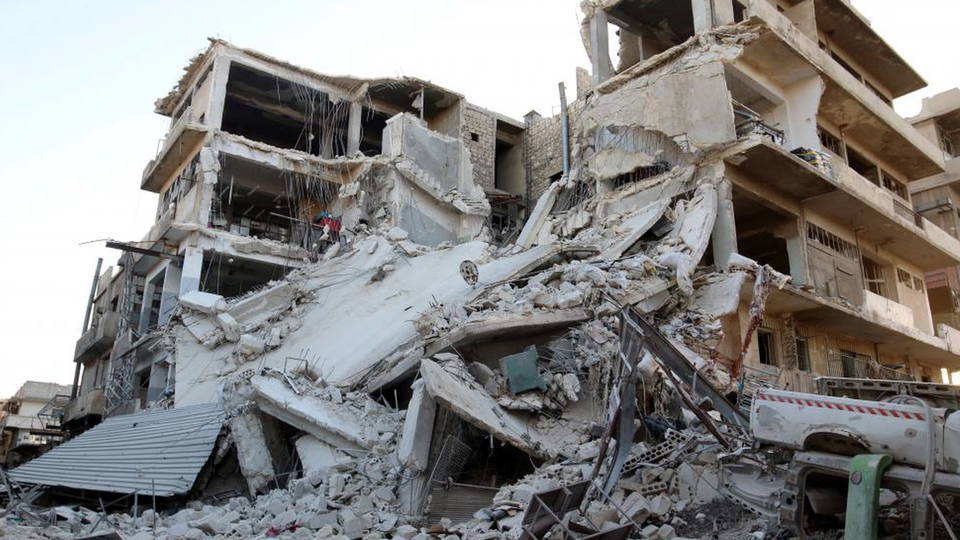 In news from Syria, Russia and Syria have temporarily halted airstrikes on the besieged city of Aleppo in what Russia described as a "humanitarian pause." A new round of talks is expected to begin tomorrow in Geneva.
TOPICS:
Trump Repeats Claim of Rigged Election, Alleging Widespread Voter Fraud
 In campaign news, The Guardian is reporting Donald Trump has hired Mike Roman, the former head of the Koch brothers’ "intelligence gathering" operation to run an “election protection” effort. For weeks, Trump has been claiming the election would be rigged at the voting booth. On Monday, Trump claimed dead people and undocumented immigrants are voting.
Donald Trump: "They even want to try to rig the election at the polling booths. And believe me, there’s a lot going on. Do you ever hear these people? They say, ’There’s nothing going on.’ People that have died 10 years ago are still voting. Illegal immigrants are voting. I mean, where are the street smarts of some of these politicians? They don’t have any is right. So many cities are corrupt, and voter fraud is very, very common."
Experts say cases of voting fraud are very rare. One study by Loyola Law School found just 31 instances involving allegations of voter impersonation out of 1 billion votes cast in U.S. elections between 2000 and 2014. Trump’s claims of a rigged election have been widely criticized by members of both parties. Ohio Secretary of State Jon Husted said Trump was “wrong and engaging in irresponsible rhetoric."
TOPICS:
Melania Trump Accuses Billy Bush of Egging Donald Trump On in Leaked Tape
Melania Trump has come to her husband’s defense following the release of a 2005 video in which he bragged about sexually assaulting women. Melania described his comments as "boy talk" and accused TV host Billy Bush of egging Donald Trump on.
Melania Trump: "Those words, they were offensive to me, and they were inappropriate. And he apologized to me. And I expect—I accept his apology. And we are moving on."
Ainsley Earhardt: "From a woman’s perspective, what were your thoughts when you heard those tapes?"
Melania Trump: "I—this is not the man that I know."
In related news, NBC has fired Billy Bush from his job as host at the "Today" show following the release of the Trump tape.
TOPICS:
Donald Trump: "When I Come Home at Night and Dinner’s Not Ready, I Go Through the Roof"
OCTOBER 18, 2016
HEADLINES
 Meanwhile, a transcript has been published of a 1994 interview Trump did on ABC’s "PrimeTime Live." During the interview, Trump said, "I don’t want to sound like a chauvinist, but when I come home at night and dinner’s not ready, I go through the roof." He also said, "I tell friends who treat their wives magnificently [and] get treated like crap in return, 'Be rougher and you’ll see a different relationship.'"
TOPICS:
State Department Official Accused of Pressuring to Declassify Clinton Email

Meanwhile, Republicans are calling for State Department official Patrick Kennedy to resign after newly released FBI documents suggest he pressured the agency last year to downgrade the classification of emails found on Hillary Clinton’s private server. According to the FBI documents, Kennedy offered to allow the FBI to place more agents in Iraq in exchange for declassifying the emails. The FBI and the State Department have denied that a quid pro quo ever existed.
TOPICS:
Gen. James Cartwright Pleads Guilty to Making False Statements to FBI
 A retired four-star Marine Corps general has pleaded guilty to making false statements to the FBI during an investigation into leaks of classified information. James Cartwright, who was known as President Obama’s favorite general, admitted he lied to the FBI during an investigation into who leaked classified information to The New York Times about Stuxnet, a secret U.S. cyberwarfare operation against Iran. According to Yahoo News, Cartwright is the 10th person to be criminally charged under President Obama in a case related to classified disclosures—more, by far, than were brought by any president before him.
"Guantánamo Diary" Author Mohamedou Ould Slahi Released After 14 Years
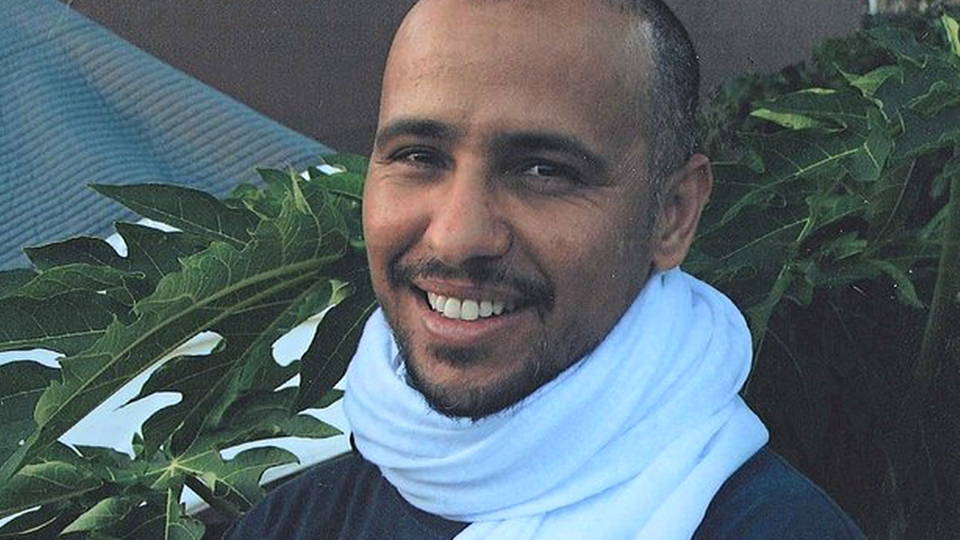 In news from Guantánamo, Mohamedou Ould Slahi has been released back to his home country of Mauritania after being held at Guantánamo since 2002 without charge or trial. Slahi wrote the best-selling memoir "Guantánamo Diary" in which he describes being severely tortured by U.S. guards.
TOPICS:
NASA: Last Month was Warmest September on Record
 In climate news, NASA is reporting last month was the warmest September on record. Eleven of the past 12 months have now broken records. Scientists say 2016 is almost certain to be the warmest year ever, breaking last year’s record. This comes as it still feels like summer throughout much of the East Coast and Midwest, with record-breaking temperatures expected today in dozens of cities. In Dodge City, Kansas, the temperature reached 101 degrees Fahrenheit on Monday.
TOPICS:
U.N.: Climate Change Could Drive 122 Million into Extreme Poverty
In other climate news, a new study by the United Nations has found climate change could drive 122 million more people into extreme poverty in the next 15 years in part due to the impact it is already having on small-scale farmers.
TOPICS:
ExxonMobil Asks Texas Court to Throw Out Subpoena over Climate Cover-up
 The Guardian is reporting ExxonMobil has asked a federal court in Texas to throw out a subpoena from New York state that would force the oil company to hand over decades of documents as part of a wide-ranging inquiry into whether it misled investors about climate change risks. Last year, InsideClimate News and the Los Angeles Times revealed that beginning in 1977, Exxon concealed its own findings that fossil fuels cause global warming.
TOPICS:
Police Association Apologizes for "Historical Mistreatment of Communities of Color"
 The nation’s largest police organization, the International Association of Chiefs of Police, has issued a formal apology for the "historical mistreatment of communities of color." The organization represents 18,000 members. Alicia Garza, a co-founder of the Black Lives Matter movement, told ThinkProgress the admission is a positive step toward "justice, reconciliation and healing," but doesn’t go far enough to address modern-day problems. Garza said, “If the last three years has shown us anything, it’s that these deplorable actions are still happening today. Black people are dying at the hands of police at the rate of one every 28 hours."
TOPICS:
British Bank Cuts Services to Russian-Backed RT Network
 In media news, a British state-owned bank has reportedly cut services to the Russian-backed broadcaster RT. The station, which relies on state funds from Moscow, decried the move as a form of a political censorship. Margarita Simonyan is RT’s editor-in-chief.
Margarita Simonyan: "For us, it is absolutely obvious that it’s all politically motivated. And it is yet another step—now a serious one—by Britain to shut us up so that we stop broadcasting, stop telling what we are telling, so that the orchestrated choir of mainstream media, which pushes for a single narrative, would not be interrupted, and viewers won’t get distracted and won’t listen to another point of view."
TOPICS:
WikiLeaks Accuses Ecuador of Cutting Off Julian Assange's Internet Access
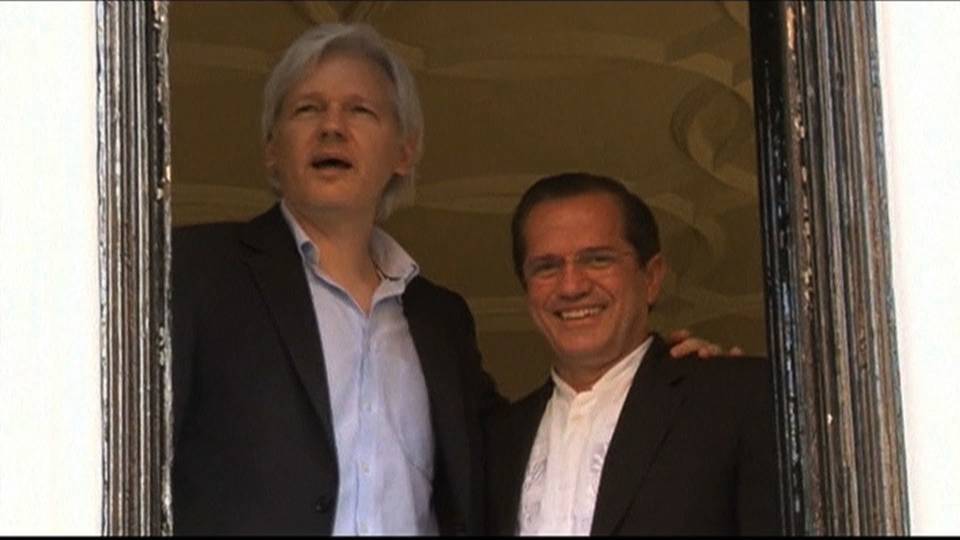 WikiLeaks has accused Ecuador of cutting off Julian Assange’s internet access on Saturday. Assange has been living in the Ecuadorean Embassy in London for more than four years. Over the past week, WikiLeaks has published thousands of emails from the account of John Podesta, the chair of Hillary Clinton’s presidential campaign.
TOPICS:
Amnesty Accuses Australia of Turning Nauru into Open-Air Prison for Refugees
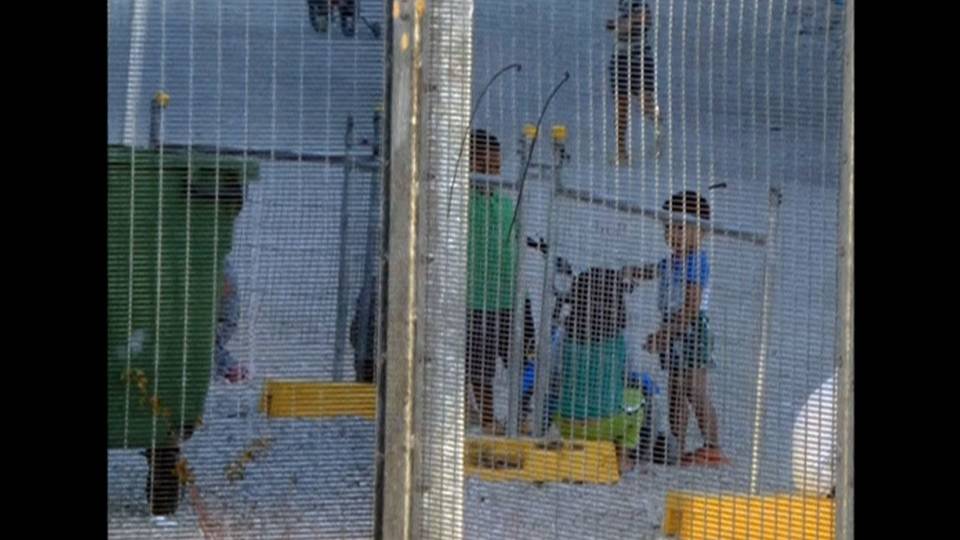 Amnesty International has accused Australia of turning the island of Nauru into an open-air prison to house refugees and asylum seekers. Amnesty said the conditions on the tiny South Pacific island amount to torture.
Anna Keistat: "What I found on Nauru was shocking—the level of mental trauma, the level of physical illness, the daily assaults and a complete failure of the authorities of the police to do anything about this, the daily humiliation and abuse that refugees and asylum seekers are subjected to."
NAACP Votes to Back Moratorium on Charter Schools
In education news, the NAACP board of directors has voted to back a call for a moratorium on the growth of charter schools. NAACP Chair Roslyn Brock said, “We are moving forward to require that charter schools receive the same level of oversight, civil rights protections and provide the same level of transparency, and we require the same of traditional public schools."
Donate today:
Follow:


WEB EXCLUSIVE

VIDEO: Amy Goodman Speaks After ND Judge Dismisses "Riot" Charges for Covering Pipeline Protest
SPEAKING EVENT

10/18 New York, NY
NEW BOOK

Democracy Now!: Twenty Years Covering the Movements Changing America
WEB EXCLUSIVE

Part 2: Winona LaDuke & Tara Houska on the Indigenous Resistance to the Dakota Access Pipeline
WORK WITH DN!

Senior TV Producer
SPECIAL BROADCAST

Democracy Now!Special: Final Presidential Debate (10/19)
207 West 25th Street, 11th Floor
New York, New York 10001, United States
-------

No comments:
Post a Comment