democracynow.org
Stories:
 Amid Media Blackout over Climate Change Links to Hurricane Matthew, Top Scientist Speaks Out
States of emergency have been declared in Florida, Georgia and the Carolinas as Hurricane Matthew barrels toward the Southeast coastline. More than 2 million people have been urged to evacuate their homes. The record-breaking storm has already killed at least 26 people in Haiti and four in the Dominican Republic. The storm is soon expected to hit the Bahamas and then strengthen as it moves toward Florida. Meteorologists are predicting Matthew could be the strongest hurricane to hit the United States since Wilma in 2005. Many scientists are saying climate change has intensified Hurricane Matthew because warmer ocean waters help create stronger hurricanes. Matthew is already the longest-lived Category 4 or 5 hurricane in the Eastern Caribbean on record. To talk more about Hurricane Matthew and climate change, we speak to Guardian journalist Oliver Milman and Michael Mann, a distinguished professor of atmospheric science at Penn State University. His latest book, co-authored with political cartoonist Tom Toles, is titled "The Madhouse Effect: How Climate Change Denial Is Threatening Our Planet, Destroying Our Politics, and Driving Us Crazy." Mann is also author of "The Hockey Stick and the Climate Wars: Dispatches from the Front Lines."
TRANSCRIPT
This is a rush transcript. Copy may not be in its final form.
NERMEEN SHAIKH: States of emergencies have been declared in Florida, Georgia and the Carolinas as Hurricane Matthew barrels towards the Southeast coastline. More than 2 million people have been urged to evacuate their homes. The record-breaking storm has already killed at least 26 people in Haiti and four in the Dominican Republic. The storm is expected to soon hit the Bahamas and then strengthen as it moves towards Florida. Meteorologists are predicting Matthew could be the strongest hurricane to hit the United States since Wilma in 2005. On Thursday, President Obama urged residents in the Southeast to take precautions.
PRESIDENT BARACK OBAMA: I want to emphasize to the public: This is a serious storm. It has already hit Haiti, with devastating effect. It is now in the process of moving through the Bahamas. Because it’s not going to be hitting enough land, it is going to be building strength on its way to Florida. We anticipate that by tomorrow morning it will already begin to have significant effect in Florida and then has the potential to strengthen and move on up the coast during the course of the day.
AMY GOODMAN: Hurricane Matthew was the first Category 4 hurricane to hit Haiti in 52 years. The storm displaced thousands across Haiti still recovering from the devastating 2010 earthquake. The storm also knocked out most communications across Haiti and flooded a major bridge connecting southern Haiti to the rest of the country. The United Nations warned the hurricane poses the greatest humanitarian threat to Haiti since the earthquake six years ago. Haiti’s presidential election scheduled for Sunday has been postponed indefinitely.
NERMEEN SHAIKH: Many meteorologists are saying climate change has intensified Hurricane Matthew because warmer ocean waters help create stronger hurricanes. Matthew is already the longest-lived Category 4 or 5 hurricane in the Eastern Caribbean on record.
AMY GOODMAN: To talk more about Hurricane Matthew and climate change, we’re joined by two guests. In Philadelphia, Michael Mann joins us, distinguished professor of atmospheric science at Penn State University. His latest book, co-authored with the political cartoonist Tom Toles, is titled The Madhouse Effect: How Climate Change Denial Is Threatening Our Planet, Destroying Our Politics, and Driving Us Crazy. Michael Mann is also author of The Hockey Stick and the Climate Wars: Dispatches from the Front Lines. And here in New York, we’re joined by Oliver Milman, environmental reporter at The Guardian. His new piece is titled "Hurricanes will worsen as planet warms and sea levels rise, scientists warn."
Let’s begin with Michael Mann. So, I’ve been watching TV, nonstop coverage of the hurricane that’s barreling up through the Southeast, just having left carnage in its wake in Dominican Republic and Haiti. There is—there’s interview after interview. There’s "extreme weather" signs flashing on the TV. But the two words I don’t hear discussed are "climate change." Even today on CNN, as they were talking to the head of the National Hurricane Center, they said, "Is there anything else you want to share with people?" He was in Florida. Where is the discussion of climate change, Michael Mann? And what is the connection between this Hurricane Matthew and climate change?
MICHAEL MANN: Thanks, Amy. You know, it’s unfortunate that some in the weather community are not providing that critical context for understanding this trend towards increasingly devastating tropical storms and hurricanes. Matthew is a very good example of a storm that was unique, unprecedented, in certain respects. It intensified far more quickly than any other storm that we’ve seen in modern history, basically going from not even a tropical depression to a near-hurricane-strength storm over the course of, you know, less than half a day, and then, the next day, of course, strengthening into a major hurricane, a Category 5 hurricane. It’s weakened a little bit, but now it’s restrengthening.
And where that intensification, where that rapid intensification occurred was in the region of the Caribbean that has the greatest heat content, not just that the ocean surface temperatures are warm, but there’s a very deep layer of warm water. And that’s important, because that helps sustain these storms as they churn up the ocean. The churning doesn’t bring cold water to the surface to weaken the storm, if there’s a deep layer of warmth. And that all has a climate change signature with it, not just the fact that the ocean surface temperatures in the Caribbean are at near-record levels, but the—just the sheer depth of that warm water is unprecedented. And as the surface warming penetrates into the ocean, we are seeing increases in ocean heat content. Last year was the warmest our oceans have ever been on record. And that’s critical context. It’s that warmth that provides the energy that intensifies these storms. And it isn’t a coincidence that we’ve seen the strongest hurricane in both hemispheres within the last year.
NERMEEN SHAIKH: And, Oliver Milman, can you talk about the fact that governors, some governors, in the U.S. have declared states of emergency, and how likely that is to be effective as a means of protecting the devastation that’s being anticipated?
OLIVER MILMAN: Sure. So, there’s states of emergency, Florida up to—up to the Carolinas. About 2 million people, as you mentioned before, have been asked to evacuate. Barrier islands on the east coast of Florida have already been completely evacuated now. Rick Scott, the governor of Florida, has said that the state is expected to get a direct hit, although the National Hurricane Center said the path will run very close to Florida, so it’s not quite sure exactly how hard Florida will be hit, although this is one of the most significant hurricanes, certainly, to hit the U.S. in many years.
AMY GOODMAN: And what do you make of the coverage? Because that’s how people learn about hurricanes like this.
OLIVER MILMAN: Sure, yeah, I would kind of concur with what you and Michael said on the coverage: It’s been—it’s been fairly—fairly abysmal, really, if you look at—if you look at the link between extreme weather and climate change. That just isn’t articulated regularly, especially by cable TV. News channels, I think, online and in print, there are certainly media that are kind of exploring that link and have done so quite eloquently. But certainly, if you tune into most TV channels, that is fairly absent.
AMY GOODMAN: Michael Mann, your book, The Madhouse Effect: How Climate Change Denial Is Threatening Our Planet, Destroying Our Politics, and Driving Us Crazy, talk about who the denialists are, the climate deniers are, and the effect it has on science and public understanding, and what we need to do right now as we face this catastrophe.
MICHAEL MANN: Yeah, so, you know, there’s been a decades-long campaign by fossil fuel interests and politicians who earn their pay, paid talking heads, front groups, all of which exist essentially for no other purpose than to confuse the public and policymakers about climate change, to convince the public and policymakers that the scientific—that there is no scientific consensus. The forces of denial, again, most of them funded or tied in some way to fossil fuel interests, understand that all they need to do is divide the public and confuse the public about this issue to prevent progress from taking place.
And I wanted to actually draw upon something that Oliver mentioned. Governor Rick Scott of Florida has received quite a bit of funding from the Koch brothers over the years. He is a climate change denier. So here you have a state which is on the front lines of dealing with the impacts of climate change, and not just because of the possibility of more extreme weather events, more intense hurricanes, a trend that we see and a trend that we know is related to climate change, but you combine these intensifying storms with the rising sea level, and, forgive the pun, you get a perfect storm of consequences for coastal flooding. And we’re going to see exceptional coastal flooding associated with Matthew, not just because of the intensity of the storm, but because of the fact that sea level rise has added substantially to the impact of storms like Matthew. So there’s this amazing hypocrisy, which we explore in the book, when it comes to politicians like Rick Scott, who are almost literally burying their heads in the sand when it comes to acknowledging and recognizing the impacts of climate change.
And ironically, you know, the city of Miami is already dealing with this problem. They’re spending millions of dollars building pumps to help pump out the seawater as it encroaches upon Miami Beach. They’re dealing with the impacts of climate change on a regular basis, and yet their governor, Rick Scott, actually tried to outlaw any discussion of climate change or global warming in state-related business. So there’s this amazing disconnect. And we do find ourselves in a madhouse, quite literally, when it comes to dealing with climate change deniers like Rick Scott and many other politicians, who are essentially acting as agents for the fossil fuel industry rather than representing our own interests.
Now, we can change that. If people vote in November, vote climate, not just at the top of the ticket, but all the way down. The only way this is going to change is if we elect politicians who are willing to represent our interests rather than the special interests that have funded these campaigns in the past.
AMY GOODMAN: We’re going to talk about top of the ticket in just a minute. We’re speaking with Michael Mann—his new book is The Madhouse Effect: How Climate Change Denial Is Threatening Our Planet, Destroying Our Politics, and Driving Us Crazy—and Oliver Milman, who writes for the Guardian US, about climate change. We’ll talk about the top of the ticket and climate denial. We’ll talk about the debates, how the last debate that just took place this week, the only vice-presidential debate, not one question asked on climate change, as Hurricane Matthew was smashing Haiti on its way to the U.S. Stay with us. ... Read More →
 America Divided: New TV Series Explores Inequality from Water to Housing to Mass Incarceration
With the presidential election less than five weeks away, the explosive new documentary "America Divided" explores inequality in America. The show follows high-profile correspondents as they explore aspects of inequality in education, housing, healthcare, labor, criminal justice and the political system. Oscar-winning hip-hop artist Common returns to his hometown of Chicago to examine disparities in the criminal justice system. Actress Rosario Dawson travels to Flint, Michigan, to investigate the man-made disaster behind the city’s water crisis. And legendary TV producer Norman Lear investigates gentrification and displacement in New York City and goes undercover to expose racial discrimination in housing. For more on this groundbreaking series, we speak with the three creators of "America Divided": Rick Rowley, Solly Granatstein and Lucian Read.
TRANSCRIPT
This is a rush transcript. Copy may not be in its final form.
NERMEEN SHAIKH: What do Rosario Dawson, Common, Norman Lear, Peter Sarsgaard, America Ferrera and Zach Galifianakis have in common? With the presidential election less than five weeks away, they have all teamed up for a new television series, America Divided, which explores inequality in the United States.
ROSARIO DAWSON: My name is Rosario Dawson. I’m conducting interviews about the water crisis here, and I would love to be able to speak to Governor Snyder.
America is in crisis.
UNIDENTIFIED: Did we invest in those communities? No, instead we declared war.
ROSARIO DAWSON: Our democracy threatened.
ZACH GALIFIANAKIS: There’s a darker element to control the uneducated and the poor.
ROSARIO DAWSON: Our society, frayed. Our economy, split.
UNIDENTIFIED: I don’t feel that young people have the feeling they have that chance.
ROSARIO DAWSON: We inherited a promise of justice, democracy, equality under the law. But we live in an America divided.
NORMAN LEAR: This is America. Equal opportunity.
UNIDENTIFIED: Nobody has a right to have our communities under siege and have people live in fear.
COMMON: Communities don’t feel safe, that the police are going to keep them safe.
AMERICA FERRERA: What about people who say, "Well, that’s not our problem. Why doesn’t—why don’t the governments in those countries deal with it?"
ZACH GALIFIANAKIS: I see things, people getting taken advantage of. The rich guys, yeah, they get money. They get to hire people, lower-income. But where’s the middle people?
AMY POEHLER: What you don’t like about this bill is it is taking some control away from how you can operate your business.
BUSINESSWOMAN: Well, no.
AMY POEHLER: It’s about money.
ROSARIO DAWSON: When was the moment that you started to see an effect or that there might be something wrong?
TAMMY LOREN: They’re completely different kids. And these days, he can’t even get out of bed.
NORMAN LEAR: And he wants to go from $900 to $2,100 in one leap.
PETER SARSGAARD: So, if I want heroin right now, where do I go out there?
PRISONER: Go out here and take a left, then go up the street right there to the first gas station and stand there.
SCHOOL RESOURCE OFFICER: As a school resource officer, you have to have a desire and a love to work with young people.
JESSE WILLIAMS: What’s on your belt today? You have a—you have a gun. You have what? Some kind of mace. Same things you would have on the street. That’s pretty alarming.
PROTESTER: The way things are working aren’t working at all.
ROSARIO DAWSON: It’s time to cut through the noise. It’s time to uncover the roots of the problem and how it affects us all. Once in a generation, a window opens for a real conversation that cuts to the heart of who we are as a nation.
REV. WILLIAM BARBER II: If you just keep pushing, if you just keep trying, if you refuse to let the nightmares have the last say, eventually the dawn will break, the sun will come out, and you will be in a brand-new day.
ROSARIO DAWSON: The conversation starts now.
NERMEEN SHAIKH: That’s the trailer for the new five-part Epix network series America Divided. The show follows high-profile correspondents as they explore aspects of inequality in education, housing, healthcare, labor, the criminal justice system and the political system. Oscar-winning hip-hop artist Common returns to his hometown of Chicago to examine disparities in the criminal justice system. Actress Rosario Dawson travels to Flint, Michigan, to investigate the man-made disaster behind the city’s water crisis. And legendary TV producer Norman Lear investigates gentrification and displacement in New York City and goes undercover to expose racial discrimination in housing.
AMY GOODMAN: For more on this groundbreaking series, we’re joined in our studio by three—the three creators of America Divided: Rick Rowley, Solly Granatstein and Lucian Read.
We welcome you all to Democracy Now! Solly, why don’t you talk about the overall concept? Then we’re going to quickly go through the clips of the different media personalities, actors, and as they delve into these critical issues.
SOLLY GRANATSTEIN: Well, we felt like the country is really at a crisis point when it comes to inequality. The fruits of the economic recovery were going, as we all know, to the 1 percent, and not to most of the people. And we wanted to examine different aspects of inequality in people’s daily lives. And so, we went to different parts of the country. Each one explored a different aspect of inequality. And each of these stories was presented and explored by a high-profile correspondent, who each have their own entrée into the different stories. So, you have Jesse Williams, for instance, who used to be a high school teacher, exploring a story about segregation in education. And the—
AMY GOODMAN: Before he starred in Grey’s Anatomy and was a fake doctor.
SOLLY GRANATSTEIN: Before—before he was a fake doctor, he was a teacher. And so—
AMY GOODMAN: A real teacher.
SOLLY GRANATSTEIN: And so, he—so, rather than do a, you know, sort of medical inequality, he did education inequality, and so forth and so on.
NERMEEN SHAIKH: Well, one of the high-profile correspondents in America Divided is Oscar-winning hip-hop artist Common, who was both an executive producer and a correspondent for the series. He returned to his hometown of Chicago to examine disparities in the criminal justice system there. In this clip, he speaks with Ben Breit, an official at Chicago’s Cook County Jail.
COMMON: Police shootings are only the most visible symptoms of a violence that runs much deeper, infecting the entire criminal justice system. And so I’ve come here to the network of tunnels beneath America’s largest single jail: Cook County.
BEN BREIT: We move a thousand people per day to their court hearings and back through this tunnel system. It connects the entire compound. So, we’re below Cook County Jail right now.
COMMON: Wait. You said sometimes it’s thousands of people—
BEN BREIT: Per day.
COMMON: Per day?
BEN BREIT: Per day, yeah.
COMMON: Coming through these tunnels?
BEN BREIT: Coming through these tunnels. So, what we’re walking into now is morning intake. Everyone you see around you, they’re not inmates yet. They’ve all been arrested last night in the city of Chicago. So the next stop for these guys is bond court. That’s the moment of truth, where could be walking at the door, could be here for two, three, four years with a bond that they simply can’t afford to pay.
COMMON: You can be here just because you can’t pay the bond.
BEN BREIT: Absolutely.
COMMON: For that many—that amount of years.
BEN BREIT: We have a couple hundred people in our jail right now who could walk out if they had $500. People are here because they’re poor. And it’s a perpetual cycle.
NERMEEN SHAIKH: That’s a clip from America Divided with hip-hop artist Common. So, Rick Rowley, can you talk about this?
RICK ROWLEY: Yeah. So, you know, I mean, these are really exciting, kind of volatile times that we’re living. I mean, we are seeing dangers and also possibilities that I haven’t seen in my lifetime here. There’s—you know, as Solly was saying, there’s levels of inequality that we haven’t seen since the Gilded Age and the eve of the Great Depression. There are populist movements on the left and right that are emerging around it. There’s an electoral season that is more polarized and insurgent than any one I can remember. And so, you know, this series is really trying to take head-on the kind of the issues around race, class, and gender that are at the heart of the American experience, and have been for the last 200 years.
And Chicago has really become the epicenter of a growing national debate around race, policing and the criminal justice system. So Common returned to Chicago in the immediate aftermath of the release of the Laquan McDonald video, the police video of the killing of Laquan McDonald, and began an investigation of that killing, that led into a look at the entire criminal justice system. So we talked to everyone from Garry McCarthy, the former police superintendent, to the sheriff of Cook County and the jail, to the state’s attorney. And every person at every level of the criminal justice system in Chicago agrees, no matter what their position is, no matter what their politics are, that the system is completely broken, that it’s not keeping people safer, that it is—
AMY GOODMAN: That these people would get out of jail—they’re held for years because they don’t have $500 bond.
RICK ROWLEY: Yeah. Cook County was the most intense, I think, shoot that we had with Common. I mean, traveling through those hundred-year-old tunnels beneath an acre-wide compound—
AMY GOODMAN: Made me think of Gorée Island.
RICK ROWLEY: Yeah.
AMY GOODMAN: Right? I mean, the slave trade, when you have a thousand people that are going through each day.
RICK ROWLEY: Yeah. And on top of that, aside from being the largest single site jail in America—I mean, Los Angeles County is a bigger jail system, but has multiple jails. This, in one sort of compound, is the largest jail. It also, as a result, is the largest—the largest mental health facility in the country, because all the mental health clinics have been shut down, and so we are imprisoning people instead of dealing with those problems. Basically, social problems that we can’t come up with the collective political will to handle, we throw the criminal justice system at, and the jail is the warehouse for those people.
NERMEEN SHAIKH: Well, I want to turn to another clip from America Divided. Actress Rosario Dawson traveled to Flint, Michigan, to investigate the man-made disaster behind the city’s water crisis. She speaks with Tammy Loren, whose family was affected.
TAMMY LOREN: We have completely different kids. They went from straight-A students to failing. Jeremiah, he’s been to school 44 days this year, because he’s so sick. Elijah has been fighting a bacterial infection from the water for two years. These days, he can’t even get out of bed. Sorry I’m getting all teary.
ROSARIO DAWSON: No, it’s OK.
TAMMY LOREN: You know, it’s devastating knowing we’re going through this, as well, but to have to see our kids go through it? It’s heartbreaking. If a neighbor poisoned and killed his wife, he’d be in prison.
ROSARIO DAWSON: Yeah.
TAMMY LOREN: And we have an entire city that’s been poisoned.
NERMEEN SHAIKH: That was Rosario Dawson in America Divided, a clip from America Divided, talking to someone in Flint, Michigan, about the water crisis. So, Solly Granatstein, can you talk about that?
SOLLY GRANATSTEIN: Yeah. You know, the Flint water crisis is certainly one of the most heartbreaking sagas, you know, in recent memory. And, you know, Rosario Dawson went there to investigate what had happened. And I would say the two themes that came out, one was that this was a community that was battered and had—and really nobody had any idea what was going on. And it was down to the actual citizens of the community, citizen scientists, launching their own investigation in the face of an official denial that anything was wrong, that really turned this story into sort of a national—a national story and a catastrophe that we all know about.
And then, you know, as was shown in that clip, no one knows exactly how much damage was done. And no one will know for years how much damage was done by the lead in the water, because lead poisoning is invisible, and it’s something that only can come out, you know, years hence. And it affects—it affects—when children are exposed to it, it can affect the rest of their lives in terms of their psychology, in terms of their ability to control impulses and their functioning in society. So it’s really—
AMY GOODMAN: And as the clip said, I mean, if a man poisoned his kid—
SOLLY GRANATSTEIN: Yeah.
AMY GOODMAN: —he would go to jail—
SOLLY GRANATSTEIN: Yeah.
AMY GOODMAN: —for a very long time.
SOLLY GRANATSTEIN: Exactly.
AMY GOODMAN: This is the poisoning of an entire American city—
SOLLY GRANATSTEIN: Yeah. And it—
AMY GOODMAN: —an African-American city.
SOLLY GRANATSTEIN: Absolutely, and had everything to do with the austerity policies of a succession of state governments, but especially the government of Rick Snyder, the Republican governor.
AMY GOODMAN: I want to turn to a clip of actor and activist Peter Sarsgaard, who explored the addiction crisis in rural Ohio. Here he speaks to women held in a prison in Ohio.
ADDICT 1: I’m 22. I don’t have my GED. I didn’t graduate from high school. I’ve lost everything and everybody that I loved. I don’t have anything.
ADDICT 2: I learned just by my boyfriend. It just started out recreational. Before I knew it, I was a full-blown addict.
ADDICT 3: My husband has lifelong health issues, and then he couldn’t get his painkillers, so he went and got heroin. I’m probably on the verge of losing two of my children, and I’m in here and can’t do a damn thing about it.
ADDICT 2: I have four kids. I hadn’t seen them in six months, and their dad finally brought them to see me last week here. And my 10-year-old daughter looked at me and said, "I thought you were dead in a ditch." My youngest children just don’t understand. For them, everything is just scary. So that’s rough. And that’s something that not only I have to deal with, but they have to live with. I’ve done that to them.
AMY GOODMAN: Part of the America Divided series. Lucian Read, you followed Peter Sarsgaard into this prison.
LUCIAN READ: Yes. So, the sort of the wider story is about the opioid epidemic in the country, and we chose to focus on Dayton, Ohio, sort of a Heartland American city that’s really been just ravaged by this addiction crisis. It’s, from time to time, listed as the city in America with the highest rates of overdose deaths. And so, you know, we approached Peter. Peter was very interested in the story. He’s got sort of addiction issues in his own past, for himself and in his family, and was very engaged and really wanted to understand this crisis. And so, we took him through, you know, sort of the series of steps of the crisis, in terms of where it came from and the people it affects in Dayton.
And in the scene we just watched, we went to the Montgomery County Jail, which has been just kind of overwhelmed by the number of addicts who have been sort of caught in the system and brought in there, many of them repeatedly, and increasingly women, young women, you know, so that we—the sheriff of Montgomery County, who’s actually a very conservative law enforcement officer, was like, "You know, you really need to see this to understand that this is not—that, you know, we can’t arrest our way out of this. You need to hear the stories of the women in here who have been caught up in this because of economic dislocation, who have been caught up in it because of, you know, sort of being led into this crisis by their addiction, by their family members, by loved ones, by husbands, by boyfriends." You know, it’s very consistent across their stories. And to really sort of see that, you know, you have this idea of addicts, you know, sort of the criminality and the sort of shame and all that, and that really, you know, in this place, in the prison, where people are sort of—have been taken out of that—out of that life and kind of have a moment of clarity to really go in there and be able to let Peter tell their—hear their stories. And it was—I mean, it was, you know, incredibly, incredibly moving, incredibly powerful.
NERMEEN SHAIKH: Well, Grey’s Anatomy star and former teacher Jesse Williams goes back to the classroom in America Divided. He visited the Gulf Coast town of St. Petersburg in Pinellas County, Florida, to study the battle to fix inequality in education. In this clip, he speaks with school board member Mary Brown, who repeatedly tried to sound the alarm about a loss of funding for children of color.
MARY BROWN: Each year, of course, you look at the budget and see where you can cut costs.
JESSE WILLIAMS: Right.
MARY BROWN: The school board felt, well, we have a budget cut that we have to make, and we’ve got to cut out busing some children.
JESSE WILLIAMS: So we are talking about a vote on whether we end busing.
MARY BROWN: The vote was that we would go back to neighborhood schools.
JESSE WILLIAMS: And now, you call the neighborhood schools—
MARY BROWN: They’re segregated schools.
JESSE WILLIAMS: It’s segregated schools.
MARY BROWN: Yeah, that’s the bottom line. They’re segregated schools. The parents thought that they would get everything they needed. Some of the people in the black community thought, oh, the money has to come with the children.
JESSE WILLIAMS: Yeah.
MARY BROWN: And the money should go with the children.
JESSE WILLIAMS: Yeah.
MARY BROWN: But the money didn’t quite go with the children.
JESSE WILLIAMS: Why do you think the money never came, never went to where it was promised to go?
MARY BROWN: Because it went to other schools where they felt the need was greater.
JESSE WILLIAMS: Why might they think the need is greater? What are some differences between South County and those other schools?
MARY BROWN: Well, North County has more white children. South County has more minority children.
JESSE WILLIAMS: OK.
MARY BROWN: And therefore, you can—you can take that and think of it in any way you want to. Funds didn’t come like they were supposed to come.
JESSE WILLIAMS: Right.
MARY BROWN: I just see a whole decade of children losing.
NERMEEN SHAIKH: That was Jesse Williams speaking to someone in the—
RICK ROWLEY: Mary Brown.
NERMEEN SHAIKH: Yeah, that’s right, Mary Brown. Rick, can you talk about that?
RICK ROWLEY: Yeah, just very quickly, we—our attention was drawn to the Pinellas County, Florida, because of a great series of reports in the Tampa Bay Times about a cluster of schools where the educational standards had collapsed in the course of seven years. They were in the poor black neighborhood of Pinellas County, five schools in a five-square-mile radius that had gone from A and B schools in the Florida system to F schools in seven years. And quickly, it became apparent, when Jesse went down there and started meeting with activists and organizers and school board, teachers, that it all began—the problems began in 2007, when the school board voted to resegregate the school system. They ended the busing program, and the school system collapsed. And this is a problem that actually is happening across the country. Desegregation pushes that began during the civil rights era peaked in the '80s, and now they've been eroded, as Brown v. Board has been eroded.
AMY GOODMAN: So, you’ve done this series for Epix network. Where can people see it?
SOLLY GRANATSTEIN: Well, the easiest way to see the whole series is to go to Epix.com, E-P-I-X.com-slash-freetrial. It’s a premium cable channel like HBO and Showtime; you have to subscribe. But, actually, you can stream the whole thing online, and actually, right now, you can do it for free.
AMY GOODMAN: This is incredible and explosive, and to be here in the midst of the election season raising all of these issues. We’re going to continue the conversation, and we’ll post it online at democracynow.org. Solly Granatstein, Rick Rowley and Lucian Read, an astounding series you have done. I was just at the big opening for the one on housing in New York. You’ll be, Rick, today at NYU at 6:00 as you show another part of the series. It’s called America Divided. ... Read More → Atmospheric Scientist: Donald Trump & Mike Pence are a Climate Change Denial Dream Team
While 2016 is on pace to become the warmest year on record, climate change has been largely ignored at the presidential and vice-presidential debates so far. We look at Donald Trump’s history of climate change denialism. He has called it a scam and a hoax. In 2012, Donald Trump tweeted: "The concept of global warming was created by and for the Chinese in order to make U.S. manufacturing non-competitive." We speak to Guardian journalist Oliver Milman and Michael Mann, a distinguished professor of atmospheric science at Penn State University.
TRANSCRIPT
This is a rush transcript. Copy may not be in its final form.
NERMEEN SHAIKH: States of emergencies have been declared in Florida, Georgia and the Carolinas as Hurricane Matthew barrels towards the Southeast coastline. More than 2 million people have been urged to evacuate their homes. Many climate scientists are saying climate change has intensified Hurricane Matthew because warmer ocean waters help create stronger hurricanes.
During last week’s first presidential debate between Donald Trump and Hillary Clinton, moderator Lester Holt did not ask about climate change, but it came up once during a brief exchange.
HILLARY CLINTON: Take clean energy. Some country is going to be the clean energy superpower of the 21st century. Donald thinks that climate change is a hoax perpetrated by the Chinese. I think it’s real.
DONALD TRUMP: I did not. I did not.
HILLARY CLINTON: I think the science is real.
DONALD TRUMP: I do not say that.
HILLARY CLINTON: And I think it’s important—
DONALD TRUMP: I do not say that.
HILLARY CLINTON: —that we grip this and deal with it, both at home and abroad.
NERMEEN SHAIKH: That’s Hillary Clinton speaking last week at the presidential debate. And she references Trump talking about climate change as a hoax, which he subsequently denied, a hoax, he said, designed by China to undermine the U.S. economy. You have said that—Michael Mann, that Trump is, quote, "a threat to the planet." So could you talk about the way that climate change has figured in this presidential election, and your comments on Trump?
MICHAEL MANN: Sure. It is unfortunate, as you folks have alluded to, that despite constituting perhaps the greatest challenge we face as a civilization—climate change—there has been no question about climate change thus far in the debates. So, we’re two down, two to go. We’ll see if it enters into the discussion in one of the subsequent debates. But it is literally the greatest challenge and threat facing human civilization. So, for the moderators to not ask a single question about climate change is indefensible, and it’s conspicuous.
It’s interesting, in that exchange, you heard Donald Trump say he didn’t say that. And it’s true: He didn’t say that climate change is a hoax perpetrated by the Chinese. He tweeted it. And that’s his primary mode of communication. And, in fact, he has tweeted at least a half-dozen times various climate change—you know, standard climate change denial talking points. The problem isn’t just Trump. You have, in his vice-presidential candidate, somebody who is also on record denying climate change. So it’s a climate change denial dream team—
AMY GOODMAN: Let’s—
MICHAEL MANN: —Mike Pence and Donald Trump. Yeah.
AMY GOODMAN: Let’s go to Donald Trump appearing on Hugh Hewitt Show last year, when he was asked about global warming.
HUGH HEWITT: Do you believe that the temperature of the Earth is increasing? And what would you do, if you do believe that, vis-à-vis global climate change?
DONALD TRUMP: Well, first of all, I’m not a believer in global warming. I’m not a believer in man-made global warming. It could be warming, and it’s going to start to cool at some point. And, you know, in the early—in the 1920s, people talked about global cooling. I don’t know if you know that or not. They thought the Earth was cooling. Now it’s global warming. And actually, we’ve had times where the weather wasn’t working out, so they changed it to "extreme weather," and they have all different names, you know, so that it fits the bill.
AMY GOODMAN: And in December, Donald Trump was asked a similar question by Bill O’Reilly on Fox News.
BILL O’REILLY: Do you believe in global warming, climate change? Do you think the world’s going to change for the worse because it’s getting warmer?
DONALD TRUMP: I think that there’ll be little change here. It’ll go up, it’ll get a little cooler, it’ll get a little warmer, like it always has for millions of years. It’ll get cooler, it’ll get warmer. It’s called weather. I do believe in clean—and I’ve received—a lot of people don’t know this: I’ve received many environmental awards, many, many environmental awards, for the work I do. And I believe strongly in clean water and clean air. But I don’t believe that what they say—I think it’s a big scam for a lot of people to make a lot of money.
AMY GOODMAN: "A big scam." And in 2012, Donald Trump tweeted: "The concept of global warming was created by and for the Chinese in order to make U.S. manufacturing non-competitive." Oliver Milman, as we go through these clips of the man who could be president, could be elected in just five weeks?
OLIVER MILMAN: Yeah, I mean, as Michael alluded to, this is really the defining issue of our age. In a rational world somewhere, the media and all politicians would be focusing on climate change as a top priority instead of seeing it as just some kind of niche kind of sideshow to what they should be talking about. I mean, as recently as 2008, you had two presidential candidates who accepted that climate change is real, and something needs to be done. Both accepted there needs to be kind of some kind of price on carbon—John McCain and Barack Obama. Since then, we’ve seen one side of politics, unfortunately, descend into climate denialism, to the extent that it’s called a hoax dreamed up by the Chinese, which is, you know—any other time, would be laughable. Somebody who’s purporting to be the most powerful person in the world, it’s quite worrying.
AMY GOODMAN: I mean, it is really something. You have Haiti canceling their election on Sunday indefinitely because of this storm. You have some who are saying that the peace deal in Colombia, that was just voted down by just a sliver, may well have been deeply affected by climate change because of the weather in Colombia that caused so many people not to go out and vote. How, Michael Mann, this affects global politics, not to mention refugees, the largest number of refugees we’ve seen since World War II, how climate change weighs into this, whether or not presidential candidates believe it, or whether or not leading TV personalities who are moderating these debates even raise it?
MICHAEL MANN: Yeah. And, you know, Neil deGrasse Tyson, a great science communicator, I think, has put it very well. He says the wonderful thing about science is that it doesn’t matter whether or not you believe it; it’s still true. And so, while politicians like Donald Trump can say they don’t believe in climate change, they’re not entitled to their own facts. And the facts are in. There’s very widespread consensus among the world scientists that climate change is real, it’s caused by human activity, it’s already causing lots of problems, it will cause far more problems if we don’t do anything about it.
And you allude to sort of the repercussions, the national security and conflict repercussions, of climate change. The Syrian uprising was fundamentally related to a drought. And it’s had implications worldwide for instability, political instability. As a growing global population, 7 billion, maybe reaching 9, possibly even 11 billion by later this century—you’ve got a growing global population competing for less food, less water and less land as a result of climate change. And that is—to use the term again, it’s a perfect storm of consequences for instability, for conflict. And it is for reasons like that, and the fact that many of the poorest nations, like Haiti, are feeling the worst impacts—they have the least adaptive capacity, the least resilience to deal with impacts like this—this is going to create—you know, climate change impacts are going to create mass migration from regions which are no longer livable. That means, once again, more people in the remaining areas competing for resources.
It’s a national security and conflict nightmare. And our armed forces, our national security community here in the U.S. has recognized climate change as the greatest threat we face in the years ahead. So while politicians like Donald Trump are denying it even exists, our defense community, our national security leaders recognize that this is actually the greatest threat that we face in the decades ahead, from a national security standpoint, because it means more conflict, and conflict leads to global chaos and instability.
NERMEEN SHAIKH: Well, Michael Mann, despite what you said about the scientific consensus and what the national security leaders in this country say, a report by a U.K.-based research group, which surveyed 20 countries, including China and India, found that the United States had more climate change deniers among their respondents than any other country. So what do you think accounts for that?
MICHAEL MANN: Well, you know, what are the countries where we have the most powerful and entrenched fossil fuel companies and corporations? The U.S., Australia. And that’s where we see the most rampant climate change denial. It’s not coincidental. Fossil fuel interests are doing exactly what tobacco interests did decades ago. They have manufactured a campaign of misinformation and disinformation to confuse the public and policymakers from acting. In the case of tobacco, we know that millions of people died because the tobacco industry hid the adverse health impacts of their product. With climate change, many more people will suffer and perish if we don’t act. In some ways, the campaign by fossil fuel interests to confuse the public about the reality and threat of climate change is an even greater crime against, you could say, humanity or the planet. It’s literally a crime against the planet.
And we need to make sure that they’re answerable for the disinformation campaign that they have run. They’ve set us back decades. If we had acted on this problem when ExxonMobil’s own internal documents from the 1970s revealed that they recognized—this is their own words—they recognized the impacts of climate change could be catastrophic. These are in their own internal documents from the 1970s. But what did ExxonMobil do in the subsequent decades? They spent tens of millions of dollars on a disinformation campaign to deny the reality of climate change.
We can’t allow that. We have to move on. We have to hold bad actors accountable, and we have to move on to the worthy debate, which is what we should be debating in Congress: how to solve this problem. What are the mechanisms to decrease our carbon emissions and to transition to renewable energy? There’s a worthy political debate between progressives and conservatives to be had about that topic, but there’s no worthy debate to be had about whether the threat exists. We have to get past that. Again, in November, we may have an opportunity to try to get past that by electing leaders who will act on climate.
AMY GOODMAN: On Wednesday, President Obama announced a threshold had been passed for the ratification of the Paris Agreement to combat climate change. He hailed it as an historic day for protecting the planet.
PRESIDENT BARACK OBAMA: Today, the world has officially crossed the threshold for the Paris Agreement to take effect. Today the world meets the moment. And if we follow through on the commitments that this Paris Agreement embodies, history may well judge it as a turning point for our planet. ... The Paris Agreement alone will not solve the climate crisis. Even if we meet every target embodied in the agreement, we’ll only get to part of where we need to go. But make no mistake: This agreement will help delay or avoid some of the worst consequences of climate change.
AMY GOODMAN: Oliver Milman, your final comment on the significance of this? And could a new president in the United States undo the Paris accord?
OLIVER MILMAN: Sure. So, you’ve got the biggest emitters in the world now have fully ratified the Paris deal, meaning they’ve committed to emissions cuts—so, U.S., China, India, so on, the U.K., European Union. In terms of the cuts, they need to be far more ambitious to get us to the—what the Paris accord sets out, which is a 2-degree Celsius limit on warming. And rapid transformation towards clean energy is required.
In terms of undoing it, Donald Trump has promised to do—to exit the U.S. from the Paris deal. That won’t be actually possible for the next four years, because the U.S. is locked in because of its ratification. But regardless of that, the emissions cuts need to be far steeper if the world is going to avoid the kind of dangerous climate change we’re seeing examples of through Hurricane Matthew and others.
AMY GOODMAN: Well, we’re going to leave it there. Oliver Milman, thanks for being with us, of Guardian US. Michael Mann, Penn State, congratulations on your new book, The Madhouse Effect: How Climate Change Denial Is Threatening Our Planet, Destroying Our Politics, and Driving Us Crazy. Stay with us, folks.
[break]
AMY GOODMAN: "Too Hot to Handle" by Heatwave. Songwriter/producer Rod Temperton died last week at the age of 66. This is Democracy Now!, democracynow.org, The War and Peace Report. I’m Amy Goodman, with Nermeen Shaikh. ... Read More →Headlines:2 Million Urged to Evacuate as Hurricane Matthew Barrels Toward U.S.
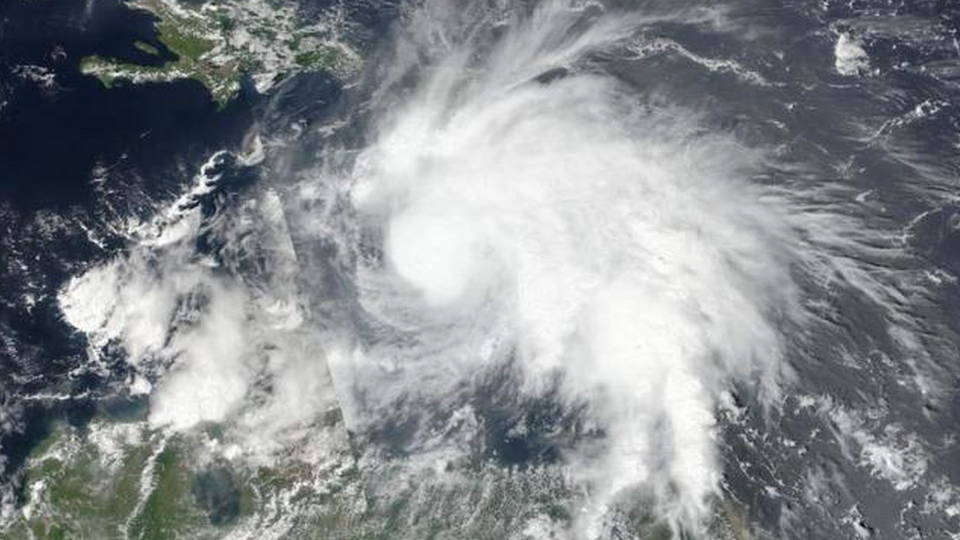 States of emergency have been declared in Florida, Georgia and the Carolinas as Hurricane Matthew barrels toward the Southeast coastline. More than 2 million people have been urged to evacuate their homes. The record-breaking storm has already killed at least 26 people in Haiti and four in the Dominican Republic. The storm is soon expected to hit the Bahamas and then strengthen to a Category 4 as it moves toward Florida. Meteorologists are predicting Matthew could be the strongest hurricane to hit the United States since Wilma in 2005. Hurricane Matthew was the first Category 4 hurricane to hit Haiti in 52 years. The storm displaced thousands across a country still recovering from the devastating 2010 earthquake. Haiti’s presidential election scheduled for Sunday has been postponed indefinitely. Many meteorologists are saying climate change has intensified Hurricane Matthew because warmer ocean waters help create stronger hurricanes. We’ll have more on Hurricane Matthew after headlines.
TOPICS:
Climate Change
Former NSA Contractor Charged with Stealing Classified Documents
 The FBI says the agency secretly arrested a former NSA contractor from the company Booz Allen Hamilton in August, after he allegedly stole highly classified NSA computer codes. The contractor, Harold Martin, has been charged with theft and unauthorized removal or retention of classified documents. He worked for the same company, Booz Allen Hamilton, as NSA whistleblower Edward Snowden. The U.S. government claims he had thousands of pages of classified documents, as well as hardware and multiple computers at his home. The U.S. government does not know whether Martin has leaked the information or given it to other governments or entities.
TOPICS:
NSA
Domestic Surveillance
Officials Confirm Yahoo Secretly Scanned Emails for Gov't Surveillance
 Meanwhile, multiple anonymous government officials have confirmed Yahoo secretly scanned the contents of hundreds of millions of email accounts and turned the information over to the NSA or FBI. The Justice Department obtained a secret FISA, or Foreign Intelligence Surveillance Act, court order for the information last year. To comply, Yahoo redesigned a software program, allowing it to search every user’s emails for a computer "signature" provided by the U.S. government.
CNN: Trump Appeared in 2 More Softcore Porn Videos in 1994 & 2001
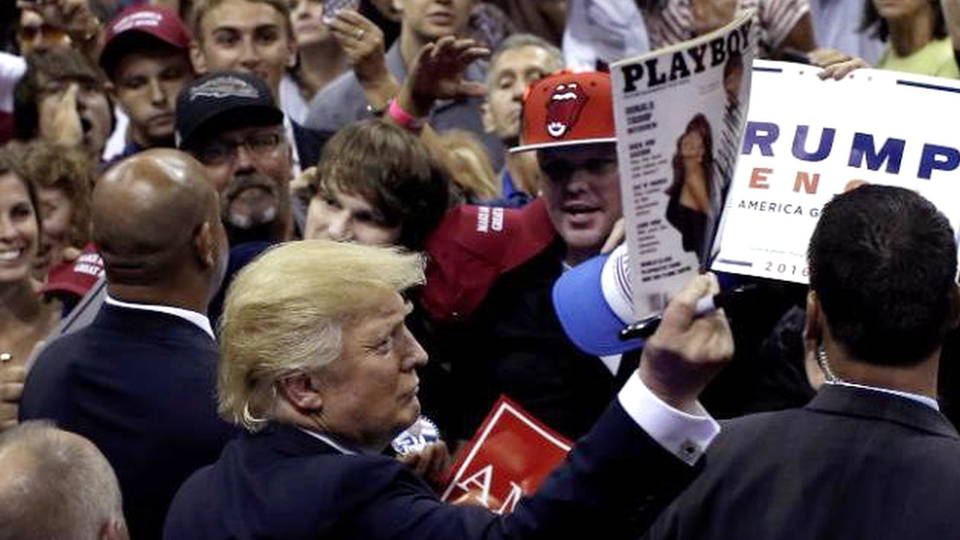 In news from the campaign trail, CNN has uncovered at least two more softcore pornographic videos that Donald Trump appeared in, in addition to the 2000 Playboy softcore porn video revealed last week. In the two newly discovered videos from 1994 and 2001, Trump appears, fully clothed, interviewing a potential Playboy model and photographing other clothed models.
TOPICS:
Donald Trump
Donald Trump Invested in Companies Behind Dakota Access Pipeline
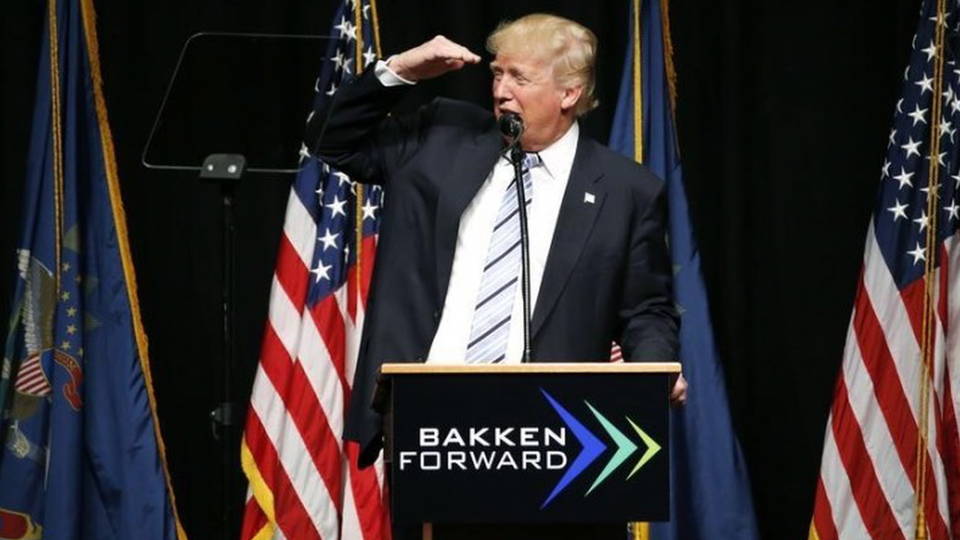 Meanwhile, Greenpeace has revealed that Donald Trump has multiple financial ties to the $3.8 billion Dakota Access pipeline, which has faced months of resistance from the Standing Rock Sioux Tribe in North Dakota and members of hundreds of other tribes from across the U.S., Canada and Latin America. One of Trump’s financial disclosure forms shows he has between $500,000 and $1 million invested in Energy Transfer Partners, the main company behind the Dakota Access pipeline. Trump also has $50,000 to $100,000 invested in Phillips 66, which is slated to own 25 percent of the pipeline, if it is completed.
TOPICS:
Donald Trump
Dakota Access Pipeline
D.C. Appeals Court Hears Suit Seeking to Block Dakota Access Pipeline
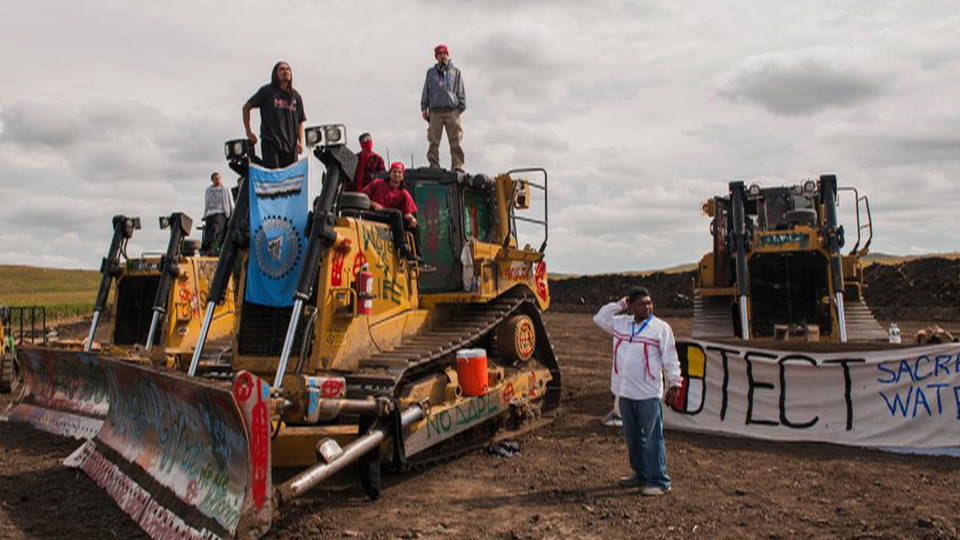 This revelation comes as three federal appeals court judges in Washington, D.C., heard oral arguments on Wednesday in a lawsuit seeking an emergency injunction to stop construction of the Dakota Access pipeline over concerns it could destroy sacred sites and burial grounds. The court is not expected to issue a ruling for months. Meanwhile, in more news on the struggle to stop the Dakota Access pipeline, the Lee County Attorney’s Office in southeast Iowa is threatening to evict land defenders from a permanent encampment established to stop the Dakota Access pipeline company from boring under the Mississippi River. The threatened eviction is slated for today. It’s been the site of a series of protests in which dozens of people have been arrested blocking pipeline construction over the past two months.
Colombia: Gov't and FARC Ceasefire to End October 31
 Colombian President Juan Manuel Santos has announced the ceasefire between the government and the FARC will end at the end of October, following the shocking results of Sunday’s nationwide referendum in which voters narrowly rejected the peace deal. The outcome now threatens to prolong the nation’s 52-year-old civil war. This comes as thousands of students gathered in Bogotá for a silent peace march. This is Carlos Fillippo.
Carlos Fillippo: "We are asking that the peace process be sped up. What’s been accomplished has been fragile, as we saw with the news yesterday that the bilateral ceasefire is already not definite. We want peace that’s not politicized, a peace for the citizens of Colombia, not for the political parties, not for the president, not for the ex-president, but for all Colombians, because we students are another political force."
Women's Boat to Gaza Seized by Israeli Military
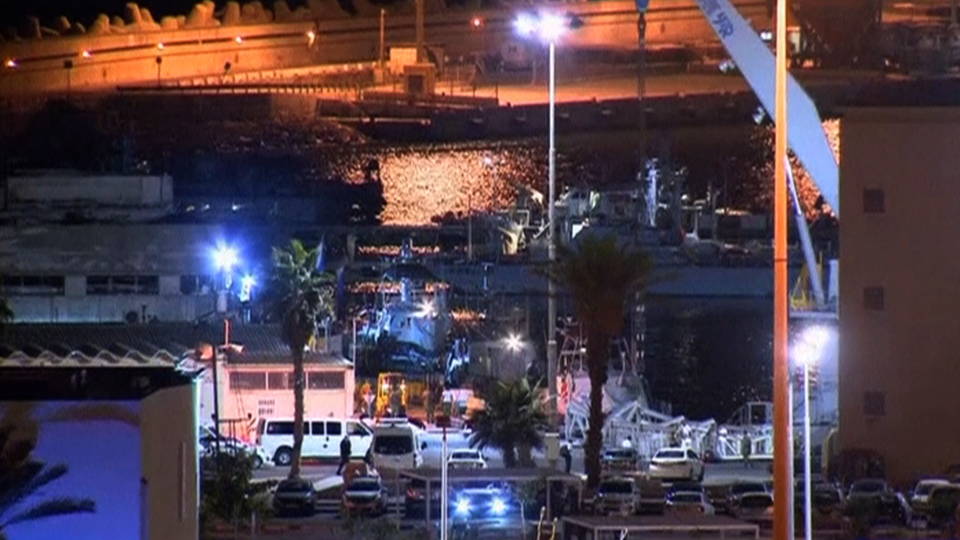 A flotilla bound for Gaza carrying food, medicine and other humanitarian aid was intercepted and seized by the Israeli Navy Wednesday. The Women’s Boat to Gaza had set sail from the Spanish port city of Barcelona in mid-September in efforts to break the ongoing Israeli blockade. Organizers say the Israeli military seized the boat and detained the 13 human rights activists aboard in international waters about 40 miles away from Gaza’s port. Organizers are now calling for the release of both the activists and the boat, and an end to the ongoing blockade. Within hours of the boat’s seizure, Israel also launched airstrikes into the Gaza Strip, which Israel says was in retaliation for a rocket launched from Gaza.
Israel Approves 300 New Settlement Homes in Occupied West Bank
 This comes as Israel has approved the construction of 300 new settlement homes far into the Israeli-occupied West Bank. The White House criticized Israel over the plan, saying it was a betrayal of trust. The approval comes only weeks after the U.S. approved a new military aid package to Israel of $38 billion over 10 years—the largest military funding package the U.S. has ever offered to any nation.
Poland: Lawmakers Back Down from Abortion Ban, Following Protests
In Poland, lawmakers have abruptly reversed their position on a proposed total abortion ban, after as many as 6 million Polish women poured into the streets across the country in a mass protest Monday. The proposed legislation would make all abortions illegal and punishable by up to five years in prison for patients who obtain them. Doctors could also be jailed for providing abortions.
U.N. Court Rejects Marshall Islands' Suit Against Nuclear Powers
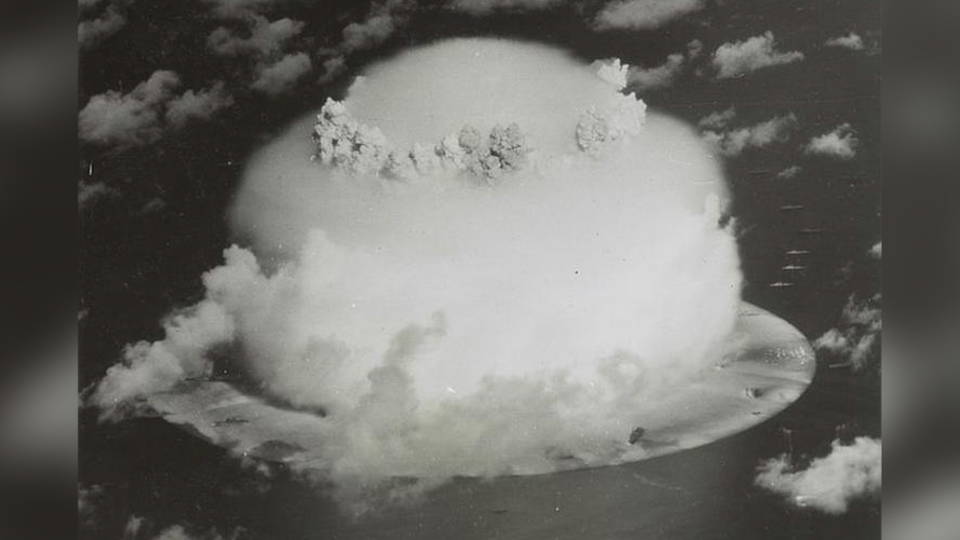 The United Nations International Court of Justice has rejected the Marshall Islands’ bid to sue the United States and other nuclear powers for violating the 1968 Nuclear Nonproliferation Treaty. The Marshall Islands chain, which includes Bikini Atoll, was the subject of dozens of U.S. nuclear tests in the 1940s and 1950s, which have left lasting health and environmental impacts. The Pacific Island nation filed the suit in 2014, but it was rejected Wednesday after the court said it did not have jurisdiction over the case.
U.N. Calls for Probe of U.S. Drone Strike in Afghanistan That Killed 15
 The United Nations is calling for an independent investigation into a U.S. drone strike in Afghanistan in September, which the U.N. says killed at least 15 civilians and wounded 13 more. U.S. officials say the strike was targeting ISIS militants, but the U.N. Assistance Mission in Afghanistan says it killed a teacher, students and members of a family that supports the U.S.-backed Afghan government.
"I Can't Breathe": Video Shows Jail Guards Pinning Down, Pepper-Spraying Man Before His Death
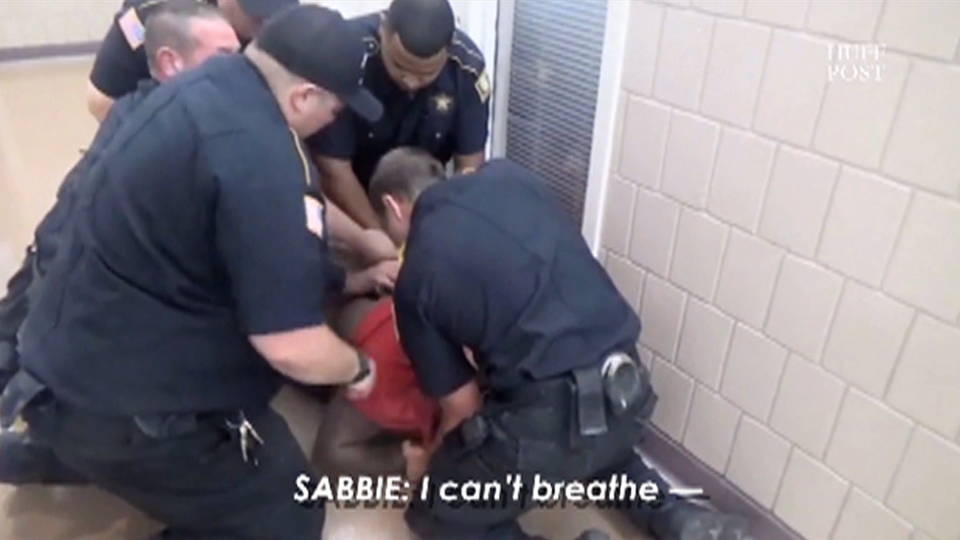 Disturbing new video footage shows multiple guards at a for-profit jail on the border between Texas and Arkansas pinning down an African-American father and pepper-spraying him as he cried repeatedly, "I can’t breathe." Thirty-five-year-old Michael Sabbie died in a jail cell only hours after the attack, which took place in July 2015. This is video surveillance footage of the attack. Listen carefully. A note for our TV audience: The video is disturbing.
Michael Sabbie: "I can’t breathe."
Officer 1: "What exactly occurred?"
Michael Sabbie: "I can’t breathe. I can’t breathe. I can’t breathe."
Officer 2: "Put your hands behind your back. Get your hands behind your back! If you don’t put your hands behind your back, you’ll be gassed. Chemical agents will be administered."
Michael Sabbie: "Man, I can’t breathe."
Officer 2: "Put your hands behind your back. You’re resisting."
Michael Sabbie: "Ow! Ow!"
Despite the attack, a medical examiner ruled that Sabbie died of "natural" causes. He’d been arrested three days earlier after a domestic dispute with his wife. The Bi State Jail in which he died is run by the for-profit company LaSalle Corrections. Sabbie was one of more than 800 people who died in jail across the United States in 2015.
TOPICS:
Prison
Fox News Under Fire for Racist Segment About Asian Americans
Michael Sabbie: "Ow! Ow!"
Despite the attack, a medical examiner ruled that Sabbie died of "natural" causes. He’d been arrested three days earlier after a domestic dispute with his wife. The Bi State Jail in which he died is run by the for-profit company LaSalle Corrections. Sabbie was one of more than 800 people who died in jail across the United States in 2015.
TOPICS:
Prison
Fox News Under Fire for Racist Segment About Asian Americans
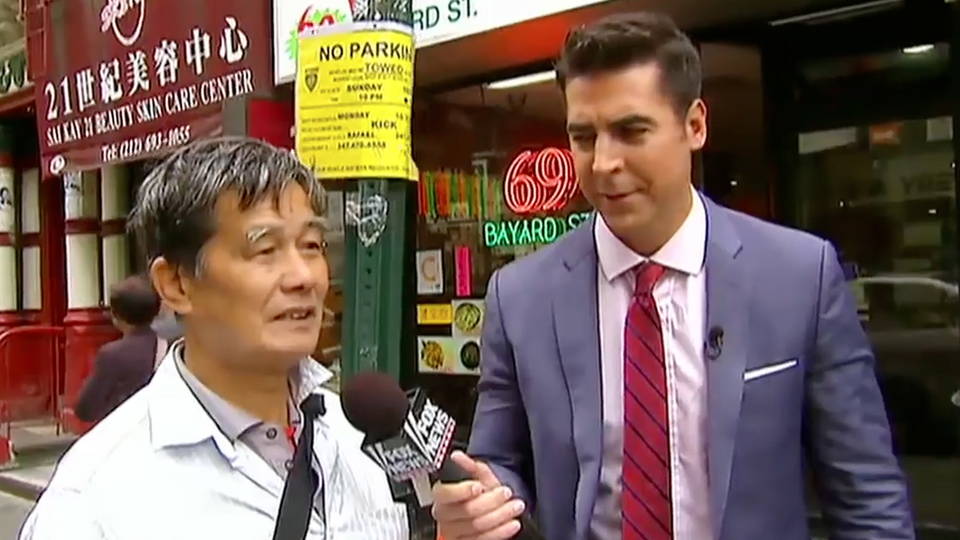 Civil rights groups and the Asian American Journalists Association are criticizing Fox News for a racist segment on "The O’Reilly Factor," in which Fox correspondent Jesse Watters went to New York City’s Chinatown and asked residents everything from whom they’d be voting for in the presidential election, to whether they knew karate. Here’s a clip of the video.
Jesse Watters: "Is everything made in China now?"
Interviewee 1: "Not everything."
Jesse Watters: "Tell me what’s not made in China."
Interviewee 1: "I can’t think of it right now."
Jesse Watters: "Me neither."
Peter Falk (clip): "I’m explaining to you because you look nervous."
Jesse Watters: "Is China America’s friend or enemy?"
Interviewee 2: "China, America, of course, are friends."
Jesse Watters: "Can you guys take care of North Korea for us?"
Interviewee 2: "Wow. That is too much."
TOPICS:
Journalism
António Guterres Picked to Succeed Ban Ki-moon as U.N. Secretary-General
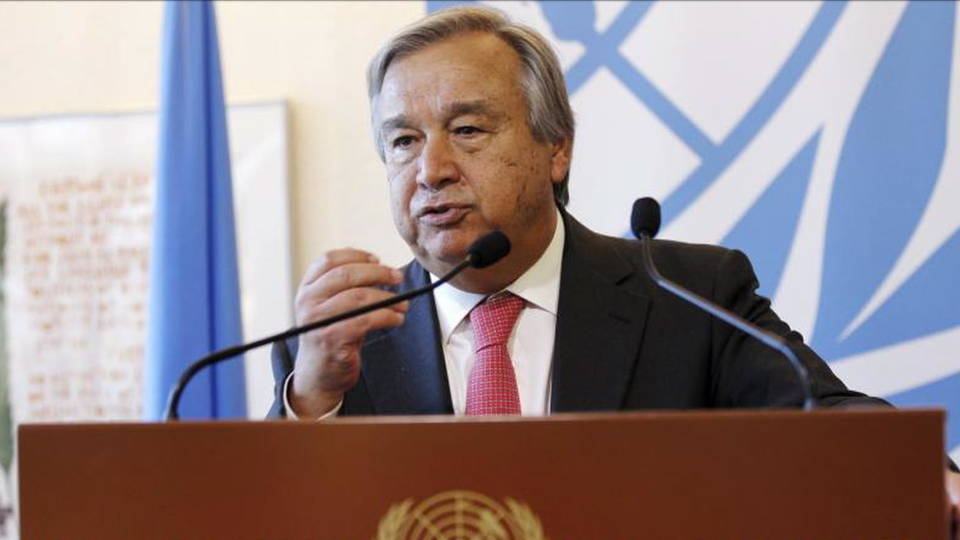 And the United Nations Security Council has announced it’s chosen António Guterres to succeed Ban Ki-moon as U.N. secretary-general. António Guterres is from Portugal. He led the U.N. refugee agency for a decade. The Security Council will formally vote on his election today, and then he’ll face a full General Assembly election as early as next week.
-------
Donate today:
Follow:


SPECIAL BROADCAST


WORK WITH DN!

Senior TV Producer
COLUMN

"Where is Climate Change in the Debates?" by Amy Goodman & Denis Moynihan
President Barack Obama made a brief statement in the Rose Garden Wednesday, announcing that the global accord to combat climate change, the Paris Agreement, had achieved enough signatories to enter into force. “This gives us the best possible shot to save the one planet we’ve got,” Obama said. At that moment, about 1,200 miles due south, Hurricane Matthew, as reported by Weather Underground, was “reorganizing” and “restrengthening” over the Bahamas, after pounding Haiti and Cuba. Millions along Florida’s east coast and many more in South Carolina were battening down their homes and evacuating. Nature’s fury raged onward, unmoved by the diplomatic efforts to tame her.
The Paris Agreement is a clear measure of the limits of diplomacy. Facing a global threat of almost unimaginable proportions, the best the world’s nations could muster was a voluntary agreement. In pursuit of the goal of limiting the average planetary temperature increase to 1.5 degrees C (2.7 degrees F) over preindustrial levels, or, failing that, to limit the increase to 2 degrees C (3.6 degrees F), the agreement includes, Obama said, “a strong system of transparency that allows each nation to evaluate the progress of all other nations.” The voluntary emission reduction pledges that each nation makes will allow countries to “carbon shame” those that don’t behave.
Last week, Robert Watson, the former chair of the Nobel Prize-winning Intergovernmental Panel on Climate Change, along with a group of climate scientists, released a paper titled, “The Truth About Climate Change.” The scientists state that “current pledges ... are far from sufficient to put the world on a pathway to meet the 2 degrees C target,” adding, “the 1.5 degrees C target has almost certainly already been missed because of the lack of action to stop the increase in global GHG emissions for the last 20 years.”
What are the consequences of this rapid warming of the planet? The severe impacts can be seen everywhere. “Climate change is happening now, and much faster than anticipated,” Watson and his colleagues write. “The evidence is what most have been experiencing as unusual weather events, such as changes in average rain patterns leading to floods or droughts, more intense storms, heat waves and wildfires, among other daily examples.” It is not just natural disasters that we have to worry about either. Many have traced the roots of the civil war in Syria, in part, to a persistent drought there. Scientists at the University of California, Berkeley, meanwhile, have found that “warming trends since 1980 elevated conflict risk in Africa by 11 percent.”
Climate activist Bill McKibben writes in the New Republic: “A World at War: We’re under attack from climate change — and our only hope is to mobilize like we did in WWII.” He is the co-founder of the group 350.org, named after the concentration of carbon dioxide in the atmosphere, in parts per million (ppm), that many feel is the highest safe level. Last year, as reported by the Mauna Loa Observatory, “the annual average carbon dioxide concentration was 400.8 [ppm] — a new record, and a new milestone.”
McKibben told us on the “Democracy Now!” news hour: “If you look at how America mobilized during World War II, the industrial might that we brought to bear, and then you do the calculations, it’s at the outside edge of possible that we could, in the short time that we have, build enough solar panels and wind turbines. But it’s going to take the same kind of focused effort.”
Following the only U.S. vice-presidential debate on Tuesday, May Boeve, executive director of 350.org, said: “Yet again, tonight’s debate moderator dropped the ball on climate change. Silence is another form of denial, and the TV networks are doing the public a great disservice by ignoring the issue, especially when there are such clear differences between the candidates.”
Her point could not have been more timely. The VP debate was held in Virginia. Governors throughout the Southeast were declaring states of emergency in preparation for Hurricane Matthew. “While Donald Trump has received all the climate-denying attention recently, Governor Mike Pence is equally guilty of attempts to refute the science on climate change,” Annie Leonard, executive director of Greenpeace USA, said in a statement. “From refusing to implement the Clean Power Plan as Indiana governor to claiming global warming is a myth, Governor Pence’s aggressive attacks on science should be nowhere near the White House. A Trump-Pence combination would be catastrophic for this country, and for its critical role in making global progress on climate change.”
Robert Watson’s paper opens with a quote by Albert Einstein: “We cannot solve our problems with the same level of thinking that created them.” Climate change is real, and it is worsening. That it should play a central role in the U.S. elections is undebatable.
-------
207 West 25th Street, 11th Floor
New York, New York 10001, United States
-------
-------
Making Money from Misery? Disaster Capitalism from the Migrant Crisis to Afghanistan and Haiti
When disaster strikes, who profits? That’s the question asked by journalist Antony Loewenstein in his new book, “Disaster Capitalism: Making a Killing out of Catastrophe.” Traveling across the globe, Loewenstein examines how companies such as G4S, Serco and Halliburton are cashing in on calamity, and describes how they are deploying for-profit private contractors to war zones and building for-profit private detention facilities to warehouse refugees, prisoners and asylum seekers. Recently, Loewenstein teamed up with filmmaker Thor Neureiter for a documentary by the same name that chronicles how international aid and investment has impacted communities in Haiti, Afghanistan, Papua New Guinea and beyond.
TRANSCRIPT
This is a rush transcript. Copy may not be in its final form.
AMY GOODMAN: This is Democracy Now!, democracynow.org, The War and Peace Report. I’m Amy Goodman. When disaster strikes, who profits? That’s the question asked by journalist Antony Loewenstein in his new book, Disaster Capitalism: Making a Killing out of Catastrophe. Traveling across the globe, Antony examines how companies, such as G4S, Serco, Halliburton, are cashing in on calamity. He describes how they’re deploying for-profit private contractors to war zones and building for-profit private detention facilities to warehouse refugees, prisoners, asylum seekers. Now Loewenstein has teamed up with filmmaker Thor Neureiter for an upcoming documentary by the same name that chronicles how international aid and investment has impacted communities from Haiti to Afghanistan to Papua New Guinea and beyond. This is the trailer.
ANTONY LOEWENSTEIN: For three years, I’ve investigated what happens after the spotlight fades from disasters in developing countries. What comes when the money and goodwill ends?
UNIDENTIFIED: This country is like a republic of NGOs. And these people, as employees, they are getting paid very fat salaries.
ANTONY LOEWENSTEIN: Often these natural and man-made disasters create an atmosphere reliant on foreign money.
UNIDENTIFIED: They say first we should bring security, then investment. I say first we should invest, then security will come.
ANTONY LOEWENSTEIN: When aid runs out and most NGOs move on to the next disaster, pro-business policies are created in the name of recovery. This investigation has taken me to the streets of Haiti, the mountains of Afghanistan and the lush forests of Papua New Guinea, where I’ve met the people caught up in a struggle between recovery and the policies that cater to foreign interests.
UNIDENTIFIED: When you talk about disaster capitalism and the capitalists coming in and sweeping up and taking over, they don’t need a conspiracy, because those are the interests that prevail, and they’re going to get their way.
AMY GOODMAN: The trailer for the forthcoming documentary based on Antony Loewenstein’s new book, Disaster Capitalism: Making a Killing out of Catastrophe. Well, journalist and author Antony Loewenstein joins us now in studio, also a columnist for The Guardian.
Welcome back to Democracy Now!
ANTONY LOEWENSTEIN: Thanks for having me.
AMY GOODMAN: It’s great to have you with us, Antony. So, explain disaster capitalism.
ANTONY LOEWENSTEIN: People who make money from misery. So, one of the reasons—I was inspired by Naomi Klein’s book, The Shock Doctrine, and she coined the term "disaster capitalism" in 2007. For me, it was really about deepening and widening that definition. So I focus particularly on Afghanistan, Haiti, Papua New Guinea, U.S., U.K., Greece and Australia. Immigration is a key part of that. So, the fact that—as you said in your introduction, there are key companies—G4S, Transfield, Serco and others—who are very happy about the massive influx of refugees. Warehousing refugees is huge profit-making business. So I was focusing on that, going to these places and actually seeing the effects of that on both immigrants and also those who work in those centers; looking at, say, in Haiti, the issue of aid and development after the earthquake in 2010, which was a key reason why the U.S. government, as WikiLeaks documents showed, were keen for U.S. contractors to make a fortune; in Papua New Guinea, a country near my own country, Australia, a situation where you have massive mining interests—Rio Tinto and others—again, making a fortune from mining and misery. So, for me, it was about making the connections between various different countries and corporations, and saying—I’m not arguing that Afghanistan is the same as Greece, of course they’re different, but ultimately often the same corporations are at play, and the fact that the corporation has become more powerful than the state, which, to me, is a problem.
AMY GOODMAN: I want to ask you about a place some call the Guantánamo Bay of the Pacific. The Manus Island detention center is paid for by the Australian government and run by an Australian contractor, Transfield Services, but located offshore on Papua New Guinea’s soil. The prisoners are not accused of any crimes; they’re asylum seekers from war-ravaged countries who are waiting indefinitely for their refugee status determination. Earlier this year, Democracy Now! spoke to Australian human rights lawyer Jennifer Robinson about Manus Island.
JENNIFER ROBINSON: I’ve been to PNG, and I’ve spent times in West Papuan refugee settlement camps, so I can speak with first-hand experience that PNG is not a state that is capable of accepting our asylum seekers and refugees. Ninety percent of these people who come by boat to Australia have been determined to be refugees in the past. The conditions in PNG are terrible. Australia is—it is unlawful for Australia to be continuing to send asylum seekers to conditions the U.N. has found to amount to inhuman, degrading treatment. We are in breach of our international obligations.
AMY GOODMAN: That’s Australian human rights lawyer Jennifer Robinson. Antony Loewenstein?
ANTONY LOEWENSTEIN: It’s a problem. I mean, one of the things also we should also say is there’s Manus Island in Papua New Guinea, but also Nauru, which is a Pacific island. So, Australia for the last years has been sending thousands of refugees to essentially prison camps in these islands, as you rightly say. They run for profit. It was G4S, it’s now Transfield. In a recent Australian Senate report, it was found, clear evidence, that often refugees are being raped and tortured. This is not an allegation, this is a fact. There was one allegation by a guard that he saw evidence of waterboarding. So, ultimately we have a situation where the Australian government, which increasingly, I might add, is being used by the European Union as inspiration in potentially how to deal with their refugee crisis—the key point about the offshore detention camps, and indeed onshore in Australia, is that they’re privately run. And the key problem—it wouldn’t make a difference if it was publicly run. I mean, it shouldn’t be there in the first place. But Australia wants an unaccountable system. Journalists can’t get there, as Jennifer rightly said. You essentially have a—it’s a black site. The journalists can’t get in there, human rights workers can’t get in there. You can visit Manus Island as a tourist, but you can’t get into the center. Nauru charges $8,000 to apply for a visa. And if you don’t get the visa, which you wouldn’t, you don’t get that money back. So, essentially, many Australians—and sadly, I would argue, only a minority of Australians are outraged by this. But the truth is, like in Europe and like in the U.S., after decades in my country have privatized detention camps, sadly, a lot of people regard those people as a threat who need to be essentially seen as silenced and as a number, that’s all. It’s a massive problem, and I write about that in the book.
AMY GOODMAN: I want to go to the larger issue of for-profit prisons. Last month, Vermont Senator Bernie Sanders, the Democratic presidential candidate—
ANTONY LOEWENSTEIN: Yeah.
AMY GOODMAN: —introduced new legislation aimed at banning government contracts with private prisons. Sanders said banning for-profit incarceration is the first step to ending the system of mass incarceration.
SEN. BERNIE SANDERS: As a first step, we need to start treating prisoners like human beings. Private companies, private corporations should not be profiteering from their incarceration.
AMY GOODMAN: That’s presidential candidate Bernie Sanders, also a senator.
ANTONY LOEWENSTEIN: Yeah.
AMY GOODMAN: So he’s introduced legislation.
ANTONY LOEWENSTEIN: So encouraging. I mean, one of the things that is less talked about in the U.S., Jeb Bush, Hillary Clinton, Marco Rubio have taken massive amounts of money from the private prison industry. I’m not saying that their policies are solely based around that, but it’s an important part. In the book, I visit some private detention camps in Georgia, particularly run by CCA, which is the largest American privatized corporation running prisons and detention camps. In these centers, human rights are awful. Healthcare is bad. Food is bad. Mental health is bad. And ultimately, like we see in Australia and the U.K. and elsewhere—
AMY GOODMAN: And CCA is Corrections Corporation of America.
ANTONY LOEWENSTEIN: Indeed, indeed. And ultimately, I think one of the things is, these corporations have no incentive to provide decent care. I mean, that’s the bottom line. Profit, of course, is the most important. So putting aside the rights of refugees and immigrants themselves, what I find also in the book is that the guards who are working in those centers, without proper training, they’re almost by definition going to abuse refugees. That’s part of the problem. I think Bernie Sanders’ call was an important one, but sadly, no other major candidate has come out and agreed. And I think one of the interesting things in the U.S., as we move forward with your presidential campaign, someone like a Donald Trump, who talks, as we know, about potentially getting rid of 11 million undocumented migrants, the private prison industry is very excited about his presidency, and they’re scared of any serious reform in the U.S. One of the things thatCCA and GEO Group, the two major companies, talk about in their annual reports are that serious reform—in other words, less people locked up—is bad for business. And they’ve spent over the last 20 years at least $30 million to $40 million. One of the things that comes out in my book, in my investigations, is that this is legalized corruption, that it’s nothing—it’s not illegal for CCA to assist a congressman or woman in their campaign. That’s legal. But the problem is that the result, in state—in state after state in the U.S., is a mass incarceration culture. And sadly, even under President Obama, there’s been no serious look at removing that incentive. I mean, there’s a Congress-approved quota that every single night there are 34,000 refugees locked up in the U.S.—every night.
AMY GOODMAN: "Richard Sullivan"—this is from The Intercept, I believe—"of the lobbying [group] Capitol Counsel, is a bundler for the Clinton campaign, bringing in $44,859 in contributions in a few short months. Sullivan is also a registered lobbyist for the GEOGroup, a company that operates a number of jails, including immigrant detention centers, for profit."
ANTONY LOEWENSTEIN: That’s the nexus, Amy, that I’m talking about in the book, that is—again, this sort of thing is not illegal. It is legal. But the problem is that almost by definition that means that major candidates—Hillary Clinton has said, Jeb Bush, particularly Marco Rubio in his state, as well, has taken massive contributions. And the fact is, without those contributions, the policies would be different, obviously.
AMY GOODMAN: I want to turn to Afghanistan. Wednesday marked the 14th anniversary of the U.S. war in Afghanistan, which began on October 7, 2001. President Obama declared an official end to the U.S. combat mission in Afghanistan last year; however, the U.S. has around 9,800 troops there. And according to Foreign Policy magazine, there are three times as many for-profit private contractors in Afghanistan than U.S. troops, not including the contractors supporting the CIA, State Department, USAID or other government agencies. You have traveled to Afghanistan, Antony Loewenstein, and spoke to some of these contractors. What did they tell you?
ANTONY LOEWENSTEIN: They are worried about the war winding down. For them, they are scared about—I was there in 2012 and also this year in May, in 2015. And one of the things that many of them were saying, both in 2012 and in 2015, is that they realize that the U.S. is winding down its war, but ultimately, as you say, Obama has declared the war finished. It’s been rebranded. The occupation continues. There is now talk about possibly raising troops. The Afghan security forces, which, I might add, were trained by private companies—DynCorp trained the Iraqi security forces and the Afghan security forces, massive failures on both fronts, which has had no impact on DynCorp getting more contracts, I might add. So, ultimately, one of the things in Afghanistan—and the attack on the Kunduz medical center, MSF medical center, goes to the heart of that—there’s a reduction in space for humanitarian actors.
I mean, I was there this year with my film partner, Thor Neureiter. We were looking at what Afghanistan’s likely to look like in the next five or 10 years. And the resource industry is what the Afghan government and the U.S. government talks about. Briefly, there are apparently $4 trillion of resources under the ground in Afghanistan, mostly untapped, including copper. And one of the things we do in our film is go to an area called—in Logar province about an hour from Kabul, which has the largest copper deposit in the world, run by a Chinese company. They are desperate to start mining those resources. And the problem is, in the last years, the U.S. has given hundreds and hundreds and hundreds of millions of dollars to support a resource industry there. So the nexus between private security and mining industry in that country is devastating for the local people.
AMY GOODMAN: I wanted to go to testimony just yesterday in the House. The U.S. commander in Afghanistan, General John Campbell, is pushing to keep more U.S. troops in Afghanistan than under President Obama’s scheduled drawdown, following the Taliban seizure of Kunduz last week. California Congresswoman Loretta Sanchez pressed General Campbell during his testimony to the House Armed Services Committee Thursday.
REP. LORETTA SANCHEZ: So, within your own current testimony, let alone the testimony that Mr. Jones brought before you from before, you basically are saying, "I don’t know that there’s a long-term viability for these security forces." We’re paying the majority of that. How much is the majority? How much money does that mean, to have a force that you don’t believe has a long-term viability?
GEN. JOHN CAMPBELL: Ma’am, if I could—
REP. LORETTA SANCHEZ: How much? How much? That’s the question. How much?
GEN. JOHN CAMPBELL: Yes, ma’am. Today, for calendar year ’15, the United States put $4.1 billion to build the Afghan security forces.
REP. LORETTA SANCHEZ: $4.1 billion.
GEN. JOHN CAMPBELL: For ’16, $3.86 billion.
REP. LORETTA SANCHEZ: Thank you. $4.1 billion.
GEN. JOHN CAMPBELL: Every year we continue to reduce that by gaining efficiencies. We’re not providing infrastructure that—
REP. LORETTA SANCHEZ: General, I’ve heard this. I’ve heard this for 14 years.
AMY GOODMAN: This comes as Doctors Without Borders says 24 of its staff members are still missing, following the U.S. airstrike on its hospital in Kunduz Saturday. That’s in addition to at least 22 people who died in the strike, including 12 medical workers, 10 patients, including three children. Antony Loewenstein?
ANTONY LOEWENSTEIN: I mean, what that testimony shows is that the U.S. has spent over $100 billion since 2001. As you say, it’s the 14-year anniversary now. And even the U.S. government itself, SIGAR, which is the sort of the government arm to investigate where money has gone, has found that the vast majority of that has gone to corruption. It’s disappeared. It’s gone to helping a failing mining industry. It’s gone to pay private security. Afghanistan is one of the great disgraces, in some ways, of our time, because, in many ways, the fact that private companies—U.S. companies, Australian companies, British companies—have been used as a replacement for government. One of the things that’s so often ignored, and I talk about this in the book, is that the U.S. routinely was paying, to transport goods from A to B, Afghan security, private security or foreign security to basically give money to pay off insurgents to not hit them, to not attack them. So, really, the U.S. taxpayer is weirdly either comfortable or doesn’t know about the fact that America is fighting a war against insurgents that they’re also paying off to not attack them. It’s a crazy situation, but that’s what’s been happening for years.
AMY GOODMAN: I want to end with Haiti. This year marks the fifth anniversary of the devastating Haiti earthquake that killed, oh, 300,000 people and left more than one-and-a-half million Haitians homeless in what was already the poorest country in the Western Hemisphere. In tent camps housing the displaced, Haitian residents said international donors have left them behind.
CLAUTAIRE FENEL: [translated] My message to the international donors is that the money they gave to help the people in Haiti is being put to use for the interest of other people instead. It is used to buy luxury cars, pay for hotels and go to high-priced restaurants paid in U.S. dollars.
EUNICE ELIASSAINT: [translated] I don’t see a future here. I can’t hide anything from you. There is no tomorrow. Last night, the children went to bed without anything to eat.
AMY GOODMAN: Lay out what’s happened in Haiti, Antony.
ANTONY LOEWENSTEIN: Soon after the Haiti earthquake in 2010, the U.S. ambassador at the time—WikiLeaks documents showed this—wrote a cable essentially saying that a gold rush is on, a gold rush meaning for U.S. corporations and others. The U.S. has spent billions of dollars there, mostly for U.S. contractors. Most of the money the U.S. has spent there since the earthquake has remained in America. Haitians are not really being trained. Haitians are not really being supported. The solution that the Obama administration gave for Haiti, pushed by Obama, Hillary Clinton, Bill Clinton and Chelsea Clinton, their daughter, were industrial parks—essentially, places that Haitians can get underpaid and not trained to make cheap clothing for Gap and Wal-Mart that you and I maybe, hopefully, won’t buy in the U.S. That’s the solution that the U.S. sees for Haiti.
AMY GOODMAN: You know—
ANTONY LOEWENSTEIN: And many Haitians—sorry—actually also argue that they feel occupied by foreign interests, the U.N. and the U.S.
AMY GOODMAN: Democracy Now! went down to Haiti a number of times before and after the earthquake. And I remember one of those times, President Clinton, he was down in Haiti giving a speech, saying there’s two things he cares about in the world. One is his daughter’s wedding. She was just—Chelsea Clinton was about to get married. And the other is restoring Haiti.
ANTONY LOEWENSTEIN: Well, the legacy of the Clinton Foundation—and I examine this deeply in the book—is utterly appalling. There are example after example of the Clinton Foundation funding a number of centers that have been infected by chemicals, which also, I might add, the Clinton Foundation were investing in failed things after Hurricane Katrina, as well, here in the U.S. Bill Clinton, Hillary Clinton and others—I mean, they’re one example—their solution has primarily been industrial parks. And one of the things that comes out very clearly, the suggestions—and we talk about this in our film, as well—that the solution for Haiti is not to build massive industrial parks to make clothing that you and I can buy in the U.S. The solution is empowering locals. It’s about speaking to locals and saying, "We actually have a solution that empowers you and trains you." And one of the things that comes out also clearly is that so many Haitians feel pretty pissed off with the fact that so often there’s actually little or no encouragement of them. And ultimately, Haiti really has never been an independent country, Amy. I mean, the U.S. has had involvement there for a hundred years. And many Haitians ultimately feel that they actually really need to separate themselves from the U.S., but America doesn’t actually view that as a viable option. And the book goes into detail about why that is the case. Haiti is seen as too economically viable for America to let it go.
AMY GOODMAN: Finally, where do you see the hope in this dark history of multinational corporations and the plunder of the most vulnerable?
ANTONY LOEWENSTEIN: The hope are hearing local stories. And one of the things I talk about in the book, and we do in the film, is actually say that so many in the media—and I’m obviously part of that, and you are, as well—I know Democracy Now! is an exception to this—but too often don’t report local stories, don’t actually hear local people saying what they want. So when disaster strikes in Haiti, don’t just focus on celebrities like Sean Penn, focus on other people actually there who are doing good work, empower them, pay them, train them. It’s not rocket science how to change this. Ultimately, Haiti’s economic structure, as one example, needs to change, but it’s not going to change with U.S. contractors doing the job.
AMY GOODMAN: Antony Loewenstein’s new book is Disaster Capitalism: Making a Killing out of Catastrophe. This is Democracy Now!, democracynow.org, The War and Peace Report. When we come back, the new U.S. poet laureate. Stay with us.
-------

No comments:
Post a Comment