democracynow.org
Stories:
 Colombian President Wins Nobel Prize for Peace Accord, Days After Deal Loses National Referendum
We go to Bogotá to get reaction to the selection of Colombian President Juan Manuel Santos as this year’s Nobel Peace Prize winner for his role in pursuing a peace deal to end the nation’s 52-year-old civil war. The move comes after Colombians rejected the peace deal just this past Sunday in a nationwide referendum. Nobel Peace Prize Committee. "It would have been better ... if the [peace prize] had been granted both to President Santos and to Rodrigo Londoño, the head of the FARC," says Daniel García-Peña, who was Colombia’s high commissioner for peace from 1995 to 1998. He is a professor of political science at the National University in Bogotá. García-Peña is also the founder of the organization Planeta Paz, or Planet Peace, dedicated to building grassroots participation in the Colombian peace process.
TRANSCRIPT
This is a rush transcript. Copy may not be in its final form.
JUAN GONZÁLEZ: Colombian President Juan Manuel Santos has been chosen to receive this year’s Nobel Peace Prize for his role in pursuing a peace deal to end the nation’s 52-year-old civil war. The move comes after Colombians rejected the peace deal just this past Sunday in a nationwide referendum. Nobel Peace Prize Committee Chairperson Kaci Kullmann Five announced the award earlier this morning.
KACI KULLMANN FIVE: The Norwegian Nobel Committee has decided to award the Nobel Peace Prize for 2016 to Colombian President Juan Manuel Santos for his resolute efforts to bring the country’s more than 50-year-long civil war to an end, a war that had cost—has cost the live of at—lives of at least 220,000 Colombians and displaced close to 6 million people. The award should also be seen as a tribute to the Colombian people, who, despite great hardships and abuses, have not given up hope of a just peace, and to all the parties who have contributed to this peace process. This tribute is paid not least to the representatives of the countless victims of the civil war.
AMY GOODMAN: That was the Nobel Peace Prize Committee announcing this morning that this year’s award goes to Colombian President Juan Manuel Santos for his role in pursuing a peace deal to end the nation’s 52-year-old civil war. The conflict began in ’64, has claimed 220,000 lives. More than 5 million people have been estimated to have been displaced. Kullmann Five was asked whether the Nobel Committee considered including the leader of the FARC rebel group in the award; she refused to comment on the selection process.
For more, we go now to Bogotá, Colombia, where we’re joined by Daniel García-Peña. He was Colombia’s high commissioner for peace from ’95 to 1998, a professor of political science at the National University in Bogotá. Professor García-Peña is also founder of the organization Planeta Paz, or Planet Peace, dedicated to building grassroots participation in the Colombian peace process.
We welcome you back to Democracy Now! Your response to the award to President Santos?
DANIEL GARCÍA-PEÑA: Well, in the first place, I think that it’s very welcome news. It highlights the fact that the Colombian peace process has had much more support in the international community than it has had here in Colombia. And I think the hope is that this award will help motivate not only President Santos, that has been committed to this process, but all the parties involved, so that the process can continue despite the negative vote of the referendum.
JUAN GONZÁLEZ: And where does Colombia go from here, after the rejection of the peace process, in terms of the potential resumption of hostilities?
DANIEL GARCÍA-PEÑA: Well, the good news is that all the parties, even those that have voted for the "no," including ex-President Uribe, have stated that they do not want a return to the war. The ceasefire that was agreed upon has been continued. And talks began a few days ago between the ex-president, Uribe, and those that supported the "no" in the referendum, with President Santos and the negotiating team to see what they can figure out to move the process forward. There is still no clear indication of how that can take place, of what the specific actions can be taken. But I think that the first reaction on all parties, that we look for solutions to move forward, is positive.
And the reaction of the Colombian people has also been very important. There was huge marches in Bogotá and throughout Colombia the day before yesterday that demanded that the process continue. So we all hope that this news of the Nobel Peace Prize can help to move things in the right direction.
JUAN GONZÁLEZ: And in about a minute that we have left, your reaction to President Santos receiving the award, but not the leader of the FARC?
DANIEL GARCÍA-PEÑA: Well, I was a bit surprised. I think that there’s no doubt that President Santos has had a huge role. His perseverance, his dedication is very important and merits the recognition. But I also think that it’s important to recognize the decision on the part of the FARC. Their role in all of this has been very, very important from the beginning. And their reaction, in fact, to the defeat of the referendum has also, in my view, been very important. They’ve state over and over again that they do not want to return to war, that they are committed to peace. So I think it would have been better, in my view, if the award had been granted to both President Santos and to Rodrigo Londoño, the head of the FARC.
AMY GOODMAN: And finally, less than half of the population voted. What was it? Maybe 40 percent. What is your sense, if more people had been involved?
DANIEL GARCÍA-PEÑA: Well, it’s hard to say, but I think that there’s very specific issues that you can look at. The fact is that the Hurricane Matthew, that is now hitting the coast of the United States, was just beginning in the Caribbean. And the day of the vote, the whole northern coast of Colombia was swamped by rain, and so the voter turnout was the lowest precisely on the Atlantic coast, while the—that area voted overwhelmingly for the "yes." But if the voter turnout had been just the same—the same degree that it had been throughout the country, maybe the vote would have been different.
AMY GOODMAN: Daniel García-Peña, we want to thank you for being with us, Colombia’s high commissioner for peace from 1995 to ’98, professor of political science at National University in Bogotá and founder of Planet Peace.
That does it for our show. Again, a note about Sunday night, the night of the second debate. It will be a town hall. We will be broadcasting from 8:00 Eastern [Daylight] Time until 11:30, a roundtable discussion, then we’ll break the sound barrier by having Jill Stein answer the same questions put to the major-party candidates. ... Read More → Edwidge Danticat Predicts "Ongoing Disaster" in Impoverished Haiti After Hurricane Matthew
As the death toll from Hurricane Matthew continues to rise to more 330, across the country some 15,000 have been displaced and 350,000 more are in need of assistance. The storm knocked out most electricity and phone service across the country. It also washed out a major bridge connecting southern Haiti to the rest of the country. Aid organizations are warning that food and water is scarce. We get reaction from Haitian-American novelist Edwidge Danticat, who says the storm has caused what will be an "ongoing disaster" in the poorest country in the Western Hemisphere, which is still recovering from a devastating earthquake six years ago that left more than 300,000 dead and twice as many people displaced.
TRANSCRIPT
This is a rush transcript. Copy may not be in its final form.
JUAN GONZÁLEZ: We begin today’s show in Haiti, where the death toll from Hurricane Matthew continues to rise. More than 330 bodies have been discovered so far, as waters recede from the most powerful storm to hit the Caribbean in a decade. Across the country, some 15,000 have been displaced and 350,000 more are in need of assistance. The storm knocked out most electricity and phone service across the country. It also washed out a major bridge connecting southern Haiti to the rest of the country. Aid organizations are warning that food and water are scarce.
AMY GOODMAN: Haiti is the poorest country in the Western Hemisphere, still recovering from a devastating earthquake six years ago that left more than 300,000 people dead and twice as many displaced.
For more, we’re joined by Haitian-American novelist Edwidge Danticat. She’s speaking to us from Miami, Florida. Her new piece for The New Yorker is headlined "Facing Hurricane Matthew."
Edwidge, welcome back to Democracy Now! From one hurricane target, in Florida, to another, Haiti, can you talk about what you understand has happened in your home country, in Haiti?
EDWIDGE DANTICAT: Good morning, Amy. Good morning, Juan. Thank you so much for having me once again.
What I understand and what the world is starting to see is that parts of Haiti have been decimated. The images that were just emerging yesterday from the south, from Jérémie, from Port-Salut, show that in some towns—in Jérémie, for example—something like 90 percent-plus of the houses are either flattened or have lost their roofs. There was an enormous sea surge, so the sea came in pretty far inland. And that, of course, means that a lot of vegetation has been lost, a lot of farming. And there are places where it was close to harvest time, so that harvest is gone. And livestock, for which people, especially people in rural areas, the livestock is like their bank account, and so much of that is washed away.
So it’s a case of extreme devastation, that started—we started getting very low numbers in terms of the death tolls, because there was no access to these areas. And there are areas to which there is still no access. So, it’s a very, very dire and grave situation—equal, for some of the towns affected, to the earthquake in 2010.
JUAN GONZÁLEZ: And, Edwidge, what about that—how has the government been able to cope, given the fact that it’s still—Haiti is still recovering from the earthquake of 2010 and also from the cholera epidemic that has continued to rage there?
EDWIDGE DANTICAT: Well, I’m not in Haiti at the moment, but I’ve been following very closely on the radio. I think, like—as in the case of 2010, and perhaps even more so now, I think no government is really, least of all the Haitian government, which is a provisional government, is prepared for something like that fully. It was so much more drastic. Haiti has not been hit by a storm like this in decades.
So, I think the—you know, to what I’ve seen, the first job has been to assess even the damage. The interim president yesterday was able to do a flyover, I believe, with the U.S. Coast Guard and actually see the devastation that we are now all going to see, and I think there’s going to be a lot of coordination needed to reach the most remote areas. I think that, unlike the earthquake, which was primarily in an urban area and much more easily accessible, now you have this devastation in some very remote areas that I fear that it will take the government or others who—international partners or aid organizations, local and international, that it will take them a lot longer to get to people who are very desperate, because, for example, people in rural areas are very—they have a strong interconnection and sometimes really have to rely very much on themselves, but their staple of their survival has been wiped away, and it’s very hard to now get to them. So that’s going to be, I think, the biggest challenge, because right now the only way to get to some areas to even assess what’s happening is by air, and we don’t have access to a lot of airplanes and helicopters and so forth. And where would they land, in some cases?
So, the first, I think, focus is—that I’ve noticed that they’re working on—is the roads, to make these places accessible so that people who are willing to help, who are able to help, can actually access those places and give people their—just provide immediate needs, like food and water, to try to get them to the next place where they can actually start to rebuild their lives.
AMY GOODMAN: Edwidge, how does poverty affect, intensify what has taken place? Now, we—something like 330 bodies have been found as the water recedes. Haiti is the poorest country in the Western Hemisphere.
EDWIDGE DANTICAT: Well, it’s going to aggravate the poverty, and extremely. I mean, it’s going to get so much worse. This is not an immediate disaster. It’s not a today disaster. It’s an—it’s going to become an ongoing disaster.
And the first thing that will be affected, certainly, you will have an increase in the cholera, which was—which has become endemic and epidemic now, since it was introduced in Haiti by the U.N. peacekeepers, which they admitted recently. So the cholera—you will have a spike in the cholera, because there is less access now to clean water. Even the water sources have been eroded by the flooding.
And the food—food insecurity will certainly rise, because not only are people’s immediate supply reduced, but their ability now to plant for the next harvest, to use that—you know, people who farmed, and we have a lot of subsistence farmers, and their resources have just been wiped out.
And so, I think you will have a—it’s a very—it’s a long-term disaster, and that it’s something also people who are now going to go to seek to help should think about, not just the immediate effects of this, but it will certainly, certainly, most certainly, deepen the poverty, especially rural poverty, which has always existed, but it’s the fact that people’s few resources now have been wiped away and that they have to rebuild a home and that they have to now find other ways to send their children to school. I think it will—it will certainly aggravate the poverty that has already existed. Now, also you have to remember that this area, the south, which is an area that I go to often, that I know quite well, was going through a drought for quite a few years before this happened. So it’s really going to compound the difficulties of people’s lives.
JUAN GONZÁLEZ: And, Edwidge, you’re speaking to us from Miami, where there is a large Haitian-American community, some of the poorest residents of Miami, and now they’re also facing, as the whole of Florida is, the Hurricane Matthew. As happened—as has happened with other storms, it’s the poorest folks in every city that end up suffering the brunt of these megastorms.
EDWIDGE DANTICAT: Yes, which is what we’re seeing in Haiti. I think people, when they talk about Haiti sort of as a—where all these things are directed towards us, I mean, it’s—what’s happening in Haiti is showing also how the poorest, the developing nations, really are the ones that carry the brunt of things like climate change and all of these effects.
In Florida, we were, thankfully, in South Florida, where there is a very large Haitian population. We were, thankfully, spared the hurricane here. It was expected to—it went from being expected to be a tropical storm to going from a Category 4 to 5. But, thankfully, it’s bypassed us, and it’s gone up north. And it’s even not as brutal as it was expected to hit up north.
So, we were spared here, which—which, thankfully, will allow people—and a lot of us here have family in Haiti, some family, because the south was cut off from communications, that we haven’t been able to reach. It’s now—the fact that this storm has bypassed us will allow a lot of Haitian families here to now focus a little bit easier on their—on helping family back in Haiti and seeing what we can do for our loved ones and friends there.
AMY GOODMAN: We’re about to talk more extensively about climate change relationship with this hurricane. But I wanted to ask you, Edwidge, about the lack of discussion about climate change, so often affecting countries that have not been the source of, the cause of climate change, but are so deeply affected by it, like your own—like your own, Haiti.
EDWIDGE DANTICAT: Well, absolutely. I think that discussion of climate change has to involve that aspect of it, because—and probably because these developing nations don’t often have a voice at the table in this conversation of climate change, but end up being, as you said, the people who bear the brunt of it. And it’s like people should see this storm as a kind of a canary in the mine, because these storms are getting bigger and more frequent and having more devastating effects. And they are affecting people who are using the fewest of the world’s resources, but are getting the brunt of the aftermath of these storms. But we also have to think so goes all these—you know, New Orleans, I thought Katrina would have taught us so much 10 years ago. But that discussion of climate change always excludes these events as sort of oddball events or once in a lifetime. But more and more, we are seeing these storms and people actually suffering, as they are now in Haiti, as a result of climate change.
AMY GOODMAN: We want to thank you so much for being with us. Edwidge Danticat is a Haitian-American novelist. She’s speaking to us from Miami, Florida. Her new piece forThe New Yorker, which we’ll link to at democracynow.org, "Facing Hurricane Matthew."
This is Democracy Now! When we come back, where is climate change in the discussion of this devastating hurricane that has devastated the Caribbean and now making its way up the Southeast coast of the United States? Stay with us. ... Read More → As Hurricane Matthew Lashes U.S., Are TV Networks the Last Bastion of Climate Denial?
As Hurricane Matthew bears down on the Florida coast, onto Georgia and South Carolina, we discuss how the role of climate change has been largely ignored in media coverage of the storm. "If the TV networks don’t start making these links between climate change and extreme weather events, they will be one of the last bastions of climate denial," says May Boeve, executive director of 350 Action, the political arm of the climate organization 350.org.
TRANSCRIPT
This is a rush transcript. Copy may not be in its final form.
JUAN GONZÁLEZ: Hurricane Matthew is now bearing down on the Florida coast. The tropical storm’s wind gusts of 107 miles per hour and torrential downpours have already knocked out power for 300,000 people in Florida. Meteorologists are warning of devastating storm surges. One wave 17 feet high has already been spotted off the coast near Cape Canaveral. President Obama has declared a state of emergency for Florida, Georgia and South Carolina. Florida Governor Rick Scott has activated the 3,500 members of the state’s National Guard. Scott also urged residents living in mandatory evacuation zones to flee, warning, quote, "This storm will kill you," unquote.
AMY GOODMAN: More than 3 million people in Florida, Georgia and South Carolina are under evacuation orders.
To discuss how the role of climate change has been largely ignored in media coverage of Hurricane Matthew, we’re joined now in our New York studio by May Boeve, executive director of 350 Action, the political arm of the climate organization 350.org.
May, it’s great to have you with us. We so often see the words "extreme weather" and "severe weather" flashing in the lower thirds of the TV screens. Where are the words "climate change" and "global warming"?
MAY BOEVE: You’re exactly right. And Hurricane Matthew is, unfortunately, just the latest example of a trend where the impacts of climate change get more serious, politicians continue to have a break and say not nearly enough about it.
We have unequivocal reason to know that these kinds of storms are made worse by climate change. Particularly when we look at the amount of storm surge, Hurricane Matthew is coming into these coast on seas that are almost a foot higher because of sea level rise linked to climate change. Climate change brings more rainfall and threatens further flooding. So, without a doubt, we know we can make these connections. The science is clear.
And we’re seeing a deafening climate silence from journalists and in this presidential cycle, where there have been no questions asked in the debates about this issue. And even today, we saw an op-ed from Paul Krugman suggesting that if this weekend in the debates there is not a question about climate change, he said it is almost criminally irresponsible.
JUAN GONZÁLEZ: Well, in the vice-presidential debates, there were no questions, but Mike Pence—I don’t know how many times he kept talking about the war on coal that he believed Hillary Clinton was involved in, and yet even then the journalist didn’t take it up.
MAY BOEVE: Well, that’s exactly right. And we know who is responsible for this problem. That’s why the climate silence is such a serious issue and something we have to confront, because it’s not like we don’t know why this is happening and we don’t have a solution. In fact, the opposite is true. We know that the fossil fuel industry benefits when climate change is not discussed, because these storms scare people. They alarm the public, and people want to see leadership. And when there’s no discussion of the issue, it leaves the fossil fuel industry players, like Exxon, without any real focus on their activities. We know what needs to happen to reduce the threat of climate change, and it’s leaving fossil fuels in the ground. And so, these moments are times when we need to talk about just how serious this problem is.
The devastation in Haiti is incredible, and it is a reminder to us, just as Edwidge said, that the poorest and most vulnerable are always affected first by these problems. And so the climate silence in that context is even more devastating.
AMY GOODMAN: I wanted to go to the first presidential debate between Donald Trump and Hillary Clinton Clinton. The moderator, Lester Holt, did not ask about climate change, but it came up once during the brief exchange.
HILLARY CLINTON: Take clean energy. Some country is going to be the clean energy superpower of the 21st century. Donald thinks that climate change is a hoax perpetrated by the Chinese. I think it’s real.
DONALD TRUMP: I did not. I did not.
HILLARY CLINTON: I think the science is real.
DONALD TRUMP: I do not say that.
HILLARY CLINTON: And I think it’s important—
DONALD TRUMP: I do not say that.
HILLARY CLINTON: —that we grip this and deal with it, both at home and abroad.
AMY GOODMAN: Last year, Donald Trump appeared on The Hugh Hewitt Show and was asked about global warming.
HUGH HEWITT: Do you believe that the temperature of the Earth is increasing? And what would you do, if you do believe that, vis-à-vis global climate change?
DONALD TRUMP: Well, first of all, I’m not a believer in global warming. I’m not a believer in man-made global warming. It could be warming, and it’s going to start to cool at some point. And, you know, in the early—in the 1920s, people talked about global cooling. I don’t know if you know that or not. They thought the Earth was cooling. Now it’s global warming. And actually, we’ve had times where the weather wasn’t working out, so they changed it to "extreme weather," and they have all different names, you know, so that it fits the bill.
AMY GOODMAN: And in December, Donald Trump was asked a similar question by Bill O’Reilly on Fox.
BILL O’REILLY: Do you believe in global warming, climate change? Do you think the world’s going to change for the worse because it’s getting warmer?
DONALD TRUMP: I think that there’ll be little change here. It’ll go up, it’ll get a little cooler, it’ll get a little warmer, like it always has for millions of years. It’ll get cooler, it’ll get warmer. It’s called weather. I do believe in clean—and I’ve received—a lot of people don’t know this: I’ve received many environmental awards, many, many environmental awards, for the work I do. And I believe strongly in clean water and clean air. But I don’t believe that what they say—I think it’s a big scam for a lot of people to make a lot of money.
AMY GOODMAN: And in 2012, Donald Trump tweeted: "The concept of global warming was created by and for the Chinese in order to make U.S. manufacturing non-competitive," he said. Well, yesterday, we reported on Greenpeace revealing Donald Trump has multiple financial ties to the $3.8 billion Dakota Access pipeline, which has faced months of resistance from the Standing Rock Sioux Tribe in North Dakota, as well as members of hundreds of tribes across the U.S., Canada and Latin America. One of Trump’s financial disclosure forms shows he has between $500,000 and a million dollars invested in Energy Transfer Partners, the main company behind the Dakota Access pipeline. Trump also has $50,000 to $100,000 invested in Phillips 66, which is slated to own 25 percent of the pipeline, if it’s completed. What about Donald Trump’s climate denialism? We’ll see what happens on Sunday, if he even has to raise it, if he’s even asked.
MAY BOEVE: Well, we might consider calling Hurricane Matthew "Hurricane Donald." There’s a start, actually linking that climate denial helps lead to inaction, and therefore more problems. But debate moderators have not asked Donald Trump during the primary a single question about climate, so he has been left relatively off the hook on this issue, so we have to hear from him. And if people listening want to get involved, you can Google open questions, open debates, and vote for a climate question. Right now it’s ranked sixth in the order. And I think this weekend we have to hear. If the TV networks don’t start making these links between climate change and extreme weather events, they will be one of the last bastions of climate denial. And that has to change.
JUAN GONZÁLEZ: I want to ask you—Trump has vowed to undo the Paris climate accords if he becomes president. Can he? Or what could he do to sabotage the accord, if he did becomes president?
MAY BOEVE: Well, as we know, it only entered into effect a few days ago. So, there’s a lot of concern about what would happen if he were elected president, given what he has said. I think we have some mechanisms to stop that, but the most important thing is we have to stop that outcome from happening. Donald Trump in the White House is a disaster for the climate. It cannot be overstated.
AMY GOODMAN: Well, let’s talk about Hillary Clinton for a moment, in her own words, on fracking, from March, during a debate with Bernie Sanders.
HILLARY CLINTON: You know, I don’t support it when any locality or any state is against it, number one. I don’t support it when the release of methane or contamination of water is present. I don’t support it, number three, unless we can require that anybody who fracks has to tell us exactly what chemicals they are using. So by the time we get through all of my conditions, I do not think there will be many places in America where fracking will continue to take place. And I think that’s the best approach, because right now there are places where fracking is going on that are not sufficiently regulated. So, first, we’ve got to regulate everything that is currently underway, and we have to have a system in place that prevents further fracking unless conditions like the ones that I just mentioned are met.
ANDERSON COOPER: Senator Sanders, you—
SEN. BERNIE SANDERS: My answer—my answer is a lot shorter: No, I do not support fracking.
AMY GOODMAN: That was a town hall with Bernie Sanders and Hillary Clinton that was moderated by Anderson Cooper, who will be the moderator of the town hall in St. Louis on Sunday. And by the way, Democracy Now! will be broadcasting the whole town hall debate between Donald Trump and Hillary Clinton, but we will expand the debate. After each question is put to Hillary Clinton and Donald Trump, we will put the same question to Green Party presidential candidate Jill Stein, breaking the sound barrier. We’ll also have a roundtable discussion. That is 8:00 Eastern [Daylight] Time to 11:30 on Sunday night. But let me ask you that question about fracking and Hillary Clinton.
MAY BOEVE: We know that to prevent the worst effects of climate change, there can be no fracking. In fact, a new report that just came out from Oil Change International makes it abundantly clear: no more pipelines, no more mines, no more fracking. So, there is no question that we are going to push whoever is elected on this issue.
AMY GOODMAN: And DAPL, the Dakota Access pipeline. In the midst of this debate, we see lockdown after lockdown. Now, the sheriff of North Dakota, in the area where the encampments are of thousands of people, is calling in law enforcement, possibly from other states.
MAY BOEVE: This is a fight of historic proportion. And I want to thank you, in particular, for highlighting it. I think what we’re seeing on the ground in the Dakotas is a sign that the movement to keep fossil fuels in the ground is stronger all the time. Moreover, the story of the historic unity among these tribes has inspired people all around the world. We’re going to continue to support their fight as much as we can, and we hope everyone listening will do everything they can, as well.
JUAN GONZÁLEZ: And one quick question about fracking. There’s big—there are obviously big battles here in the United States, but what’s happening abroad in terms of fracking, which is—
MAY BOEVE: Too much. They’re starting to frack in the Amazon. But the good news is 180 municipalities have banned fracking in Brazil. There’s fracking throughout Europe, and there’s fracking in North Africa. And for the next climate conference of the U.N., happening in Morocco later this month, fracking will be a major issue we’ll be profiling there, as well. So, there’s a lot of investment in fracking. Of course, you can see Exxon’s footprints all over that. But equally impressive are the groups that are standing up to fight fracking, just like they have in New York, where a moratorium was declared.
AMY GOODMAN: And Democracy Now! will be in Marrakesh for the U.N. climate summit. It starts the week of the election and then goes for another week. May Boeve, thanks so much for being with us, executive director of 350 Action, the political arm of the climate organization 350.org.
When we come back from break, a cold case is solved, a serial killer of women. The solution started with a tip from a woman who was listening to Democracy Now! when she made a call to a Mississippi reporter. Stay with us. ... Read More → Reporter Cracks Serial Killer Cold Case After Receiving a Tip Based on His Democracy Now!Interview
Late last month, 77-year-old Felix Vail was sentenced to life in prison for killing his first wife, Mary Horton Vail, who died on a fishing trip in 1962 with Vail. Eleven years after Mary died, Felix’s new wife, Sharon Hensley, mysteriously disappeared. Then, 11 years later, in 1984, Felix’s new wife, Annette Craver Vail, disappeared. She was just 17 years old. Sharon and Annette were never heard from again. All three women were last seen with Felix Vail, but Felix was never charged in any of the cases. But that changed after the Mississippi Clarion-Ledger ran a multi-part series re-examining the deaths and disappearances. The lead reporter on the series was the prize-winning investigative reporter Jerry Mitchell, who has appeared on Democracy Now! multiple times over the years. Shortly after his DN! interview in 2010, he received a call from a woman named Mary Rose who heard the interview. She wanted his help in investigating the death of her daughter, Annette Craver Vail, the 17-year-old wife of Felix Vail who disappeared in 1984. Mitchell soon began investigating the case, and six years later it is no longer a cold case. For more, we speak with Jerry Mitchell and Mary Rose, Annette Craver Vail’s mother.
TRANSCRIPT
This is a rush transcript. Copy may not be in its final form.
JUAN GONZÁLEZ: We turn now to what’s been described as the oldest prosecution of a serial killer suspect in U.S. history. Late last month, 77-year-old Felix Vail was sentenced to life in prison for killing his first wife, Mary Horton Vail, who died on a fishing trip in 1962 with Vail. Eleven years after Mary died, Felix’s new wife, Sharon Hensley, mysteriously disappeared. Then, 11 years later, in 1984, Felix’s new wife, Annette Craver Vail, disappeared. She was just 17 years old. Sharon and Annette were never heard from again. All three women were last seen with Felix Vail, but Felix was never charged in any of the cases. But that changed after the Mississippi Clarion-Ledger ran a multi-part series re-examining the life sentences and disappearances.
AMY GOODMAN: And Democracy Now! plays a small part in this story. The lead reporter on the series was the prize-winning investigative reporter Jerry Mitchell, who’s spent decades investigating cold cases, mostly civil rights killings. He’s appeared on Democracy Now! many times in the past, including one appearance in 2010, when he discussed the 1964 murders of civil rights workers James Chaney, Andrew Goodman and Michael Schwerner in Neshoba County.
JERRY MITCHELL: Every day there seems to be another case that resurfaces around the country—I mean, not just in Mississippi, but around the entire country. And so, that’s why it’s important. There needs to be an accounting. There needs to be, you know, some attempt to come back and document each one of these cases—who was killed and what the circumstances were—even if justice can’t be bought in these cases, because it’s very important.
AMY GOODMAN: That was Jerry Mitchell on Democracy Now! six years ago. Shortly after that program, Mitchell got a call from a woman named Mary Rose, who heard the interview. She was in Massachusetts. She wanted his help in investigating the death of her daughter, Annette Craver Vail, the 17-year-old third wife of Felix Vail who—she disappeared in 1984. She asked Mitchell, "Would you be interested in writing about a serial killer living in Mississippi?" Mitchell soon began investigating the case.
Well, six years later, it’s no longer a cold case. Vail was arrested in 2013 based on a tip given by Mitchell. In August, Vail was convicted of murdering his first wife. Authorities also now say they believe Felix also murdered Annette and Sharon, but no charges have been filed. Today we’re again joined by Jerry Mitchell of the Jackson Advocate in Mississippi, as well as Mary Rose, Annette Craver Vail’s mother.
We welcome you both to Democracy Now! So, Annette Craver—Mary Rose, can you describe what—when you first got in touch with Jerry Mitchell, what you knew at the time, and what this week means to you with Vail going to jail?
MARY ROSE: What I knew at the time—and, by the way, hello, Amy, and good morning, and thank you so much for all that you do.
When I contacted Jerry Mitchell, after hearing him on your program, I knew that there were two other women who were last seen with Felix Vail, and one of them had supposedly drowned, and the other had also disappeared like my daughter. And so, I told him that, and he asked for more information, which I sent him. And—and what was your other question?
AMY GOODMAN: And talk about what happened this week, the fact that Vail has now gone to jail, though not for the killing of your daughter.
MARY ROSE: Right, right. Well, I feel, even though he was only convicted for the death of Mary Horton Vail, because she’s the—her body was found, and my daughter and Sharon Hensley’s bodies have never been found—I felt that justice has been done for all three women. He only has one life to spend—one lifetime to spend in prison. And I—it’s been a long time coming, but I feel that justice has been done for all three women.
JUAN GONZÁLEZ: And, Jerry Mitchell, I wanted to ask you: Once you got the tip, did you immediately start investigating this story? Or—and once you did start, what was it that really turned the case for you in terms of a cold case?
JERRY MITCHELL: Well, we had continuing conversations. And in May of 2012, Mary Rose came down to Mississippi, and she said she wanted to confront Felix Vail. And I told her, "Well, I want to go with you, you know?" And so, we literally went out to where he lived, in a very remote part of Mississippi. I went out with her. She knocked on the trailer. He didn’t answer. But there was another trailer that was kind of storm-damaged. And she walked over to that trailer, and the back window was missing, so she crawled in and opened the front door—and so I could see in—and started rummaging around. And she threw out a machete, and it like clanked on the floor. And then another machete, and then another machete, and then another machete, and then all these swords.
And that was kind of the beginning of it. It was wild. It was like, "What have I gotten myself into?" And so, that kind of began the journey. And I did the piece that ran, about 9,000 words, in November of 2012, and Felix Vail ended up being arrested seven months later. But Mary had saved all these documents. And really, the case would not have happened if Mary—she really became an investigator herself and collected all these documents on all these women, and that really helped to form the basis of the case. The disappearances were allowed into the evidence in this case, so it really was an important part of the case.
AMY GOODMAN: I want to turn to a clip from the USA Today mini-documentary, Gone, which accompanies your newspaper series in The Clarion-Ledger. This is Mary Horton Vail’s brother, Bill Horton, followed by fisherman Hubert Hooper, who knew of the murder. Jerry Mitchell then explains the autopsy results. Our television viewers will see the pictures of Mary Horton Vail after she was pulled from the river.
BILL HORTON: We know they were out in the boat. And she, according to him, had a flashlight and said, "Watch out, there’s a stump." And he jerked to avoid it, and she fell out. And he implied that she may have hit her head on a stump. I later learned that that area was dredged to 60 feet in 1945, and there were no stumps there.
HUBERT HOOPER: He was—killed that woman before they got to the river. When they done—they found her, she didn’t even have—she didn’t have water in her lungs. She didn’t drown.
JERRY MITCHELL: What the autopsy shows is that Mary had a very large bruise on the back part of her right head, extending all the way down onto her neck. It also shows that she had a scarf stuffed in her mouth, four inches into her mouth. We also see that it appears from the photograph she would have been dragged, and there was no water found in the lungs.
AMY GOODMAN: That was a clip from Gone, the mini-documentary that accompanies Jerry Mitchell’s newspaper series in The Clarion-Ledger. That was Mary Horton Vail’s brother Bill Horton, followed by the fisherman Hubert Hooper, who knew of the murder. I want to go to a second part. This is Billy Vail, who was the only son of Mary Horton Vail and Felix Vail. Felix had taken Billy with him to California, where he lived with Sharon Hensley. This is Billy recalling a conversation he overheard his father having with Sharon.
BILLY VAIL: My father thought I was outside playing, and overheard him just sobbing, which caught my attention. And he told her that he had murdered my mother. And, you know, that just shocked me to no end. And I heard the girlfriend saying, "I know you must just feel responsible for it." And he confessed to her that he had actually murdered her, that he said, "No, you don’t understand. I really did kill her." And from that point on, I don’t remember what else they said; I just was in shock. That was too much for an eight-year-old.
AMY GOODMAN: So that was Billy Vail, who is the only son of Mary Horton Vail and Felix Vail, and he’s describing this conversation that his father, Felix, had with his second wife, Sharon Hensley, who would disappear, as would Annette, the third wife. Jerry Mitchell, it’s a little hard to follow. You have spent so many thousands of words writing about this. Why wasn’t this investigated before? Did it have to do with the fact that these murder victims were women?
JERRY MITCHELL: That may have definitely played a role. With the first killing, of Mary Horton Vail, one of the issues, the coroner at the time had ruled it an accidental drowning. The district attorney, it turns out, was friends with Felix Vail’s family, the uncle and the aunt. And then, it turned out, too, that the district attorney had dismissed something like 800-and-something criminal cases in a year, so this was a common practice of him dismissing cases, so that those kind of issues were the ones I discovered. And I know that Mary Rose talked to the FBI in the '90s, as well, and it still didn't—it still didn’t go anywhere. So, I don’t know all the answers to that, actually.
JUAN GONZÁLEZ: And, Jerry Mitchell, this was a quite distinct cold case from the others that you have uncovered throughout your career, that were mostly civil rights cases. But did authorities act soon after your series came out to reopen the cases?
JERRY MITCHELL: Yes, actually, they did. It was—he was arrested—Felix Vail was arrested seven months after "Gone," the original piece I wrote, ran in the newspaper.
AMY GOODMAN: Finally, your reaction, Mary Rose, to the trial, and how you’re feeling now? Did your daughter know what had happened to his first two wives when she married Felix Vail?
MARY ROSE: No. Annette knew nothing about his history, nor did I. And I don’t—yeah, I don’t even think she knew about—well, she possibly knew about a drowning of his first wife, but it was—we didn’t discuss it. And it seems like maybe she had some inkling that that had happened, but all she felt for him was sympathy about it. But I didn’t suspect anything until much later, when I spoke with one of his sisters. And so, your question about how do I feel now that the trial is over?
AMY GOODMAN: Yes.
MARY ROSE: I feel like, like I said earlier, justice has been done, and I can rest in peace that there’s no more that I need to do, that he’s—it’s been a long time coming, but he’s finally serving time and being held accountable for his deeds.
AMY GOODMAN: Well, I want to thank you both for being with us. Mary Rose, mother of Annette Craver Vail. She was the third wife of Felix Vail, who has just recently been convicted of the 1962 murder of his first wife in the oldest cold case in U.S. history, Vail also implicated in the ’84 disappearance of Annette, as well as another partner, Sharon Hensley. And thanks so much, Jerry Mitchell, for all of your work over these decades withThe Clarion-Ledger in Mississippi. We will link to your series, "Gone." And please let us know if you get another call after this interview.
JERRY MITCHELL: I definitely will.
MARY ROSE: Thank you.
AMY GOODMAN: Thanks so much. Both of them joining us from Chicopee, Massachusetts. Massachusetts is where Mary Rose lives. ... Read More →Headlines:
Death Toll Rises to More Than 300 in Haiti After Hurricane Matthew
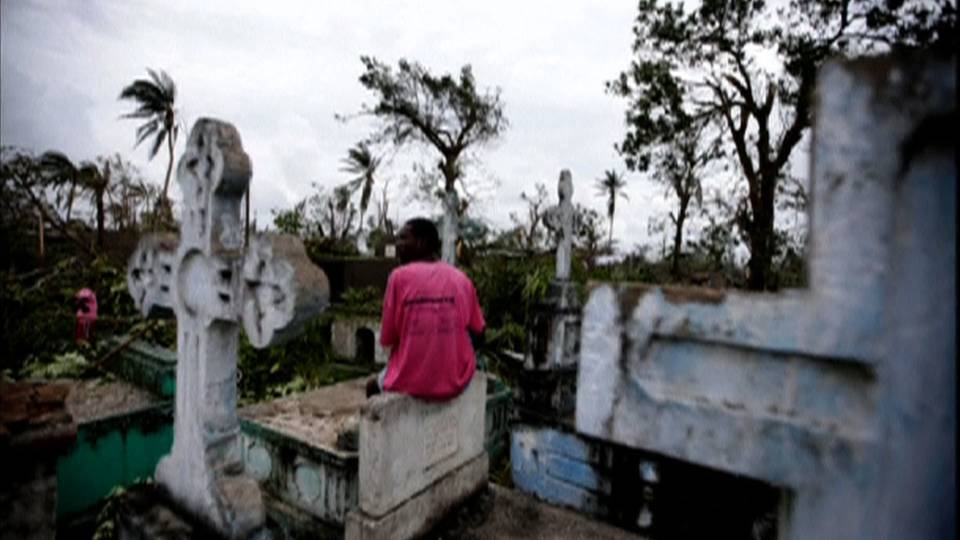 The death toll is continuing to rise in Haiti after the massive Category 4 Hurricane Matthew hit the island. More than 330 bodies have been discovered so far as the waters recede. Hurricane Matthew was the most powerful storm to hit the Caribbean in a decade. Across the country, 15,000 people have been displaced and 350,000 more are in need of assistance. The storm knocked out most electricity and phone service across Haiti. It also washed out a major bridge connecting southern Haiti to the rest of the country. Haiti is the poorest country in the Western Hemisphere and is still recovering from a devastating earthquake six years ago that left more than 300,000 dead and twice as many people displaced. We’ll have more on Haiti after headlines with Haitian-American novelist Edwidge Danticat.
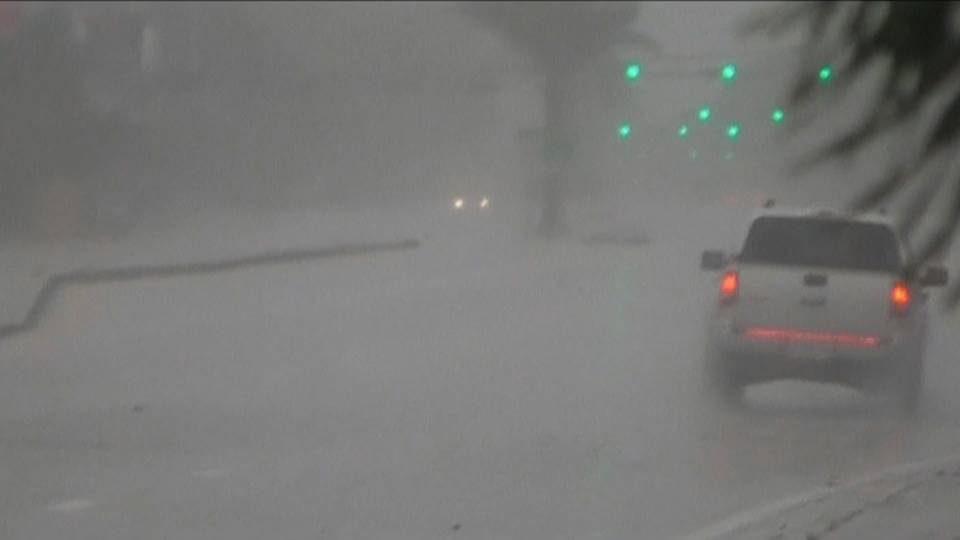 Hurricane Matthew is now bearing down on the Florida coast. The tropical storm’s wind gusts of 107 miles per hour and torrential downpours have already knocked out power for 300,000 people in Florida. Meteorologists are warning of devastating storm surges. One wave 17 feet high has already been spotted off the coast near Cape Canaveral. President Obama has declared a state of emergency for Florida, Georgia and South Carolina. Florida Governor Rick Scott has activated the 3,500 members of the National Guard. Scott also urged residents living in mandatory evacuation zones to flee, warning, "This storm will kill you." More than 3 million people in Florida, Georgia and South Carolina are under evacuation orders. We’ll go to Florida for more on the latest on Hurricane Matthew later in the broadcast.
 Colombian President Juan Manuel Santos has been chosen to receive this year’s Nobel Peace Prize for his role in pursuing a peace deal to end Colombia’s 52-year-old civil war. The move comes as a surprise after Colombians narrowly rejected the peace deal just this past Sunday in a nationwide referendum. FARC leader Timoleón Jiménez did not also win the Nobel Peace Prize. The conflict between the Colombian government and the FARC began in 1964 and has claimed some 220,000 lives. More than 5 million people are estimated to have been displaced. Last year, the Colombian army was accused of a long-running scandal of extrajudicially killing unarmed civilians and then identifying them as FARC rebels in order to portray the government as winning the war against the FARC. President Santos’s top military generals were accused of being implicated in the so-called "false positives" scandal. We’ll go to Colombia for more on the Nobel Peace Prize announcement later in the broadcast.
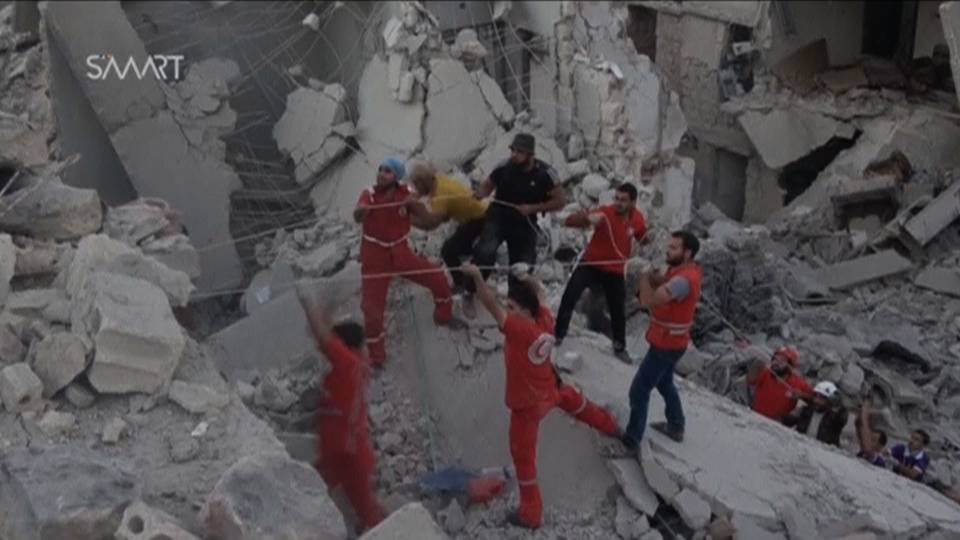 The United Nations special envoy for Syria, Staffan de Mistura, is warning the entirety of eastern Aleppo could be destroyed by Christmas if the ongoing bombing campaign by Russia and the Syrian government is not stopped. In a speech in Geneva, he called on Russia and the Syrian government to stop the airstrikes.
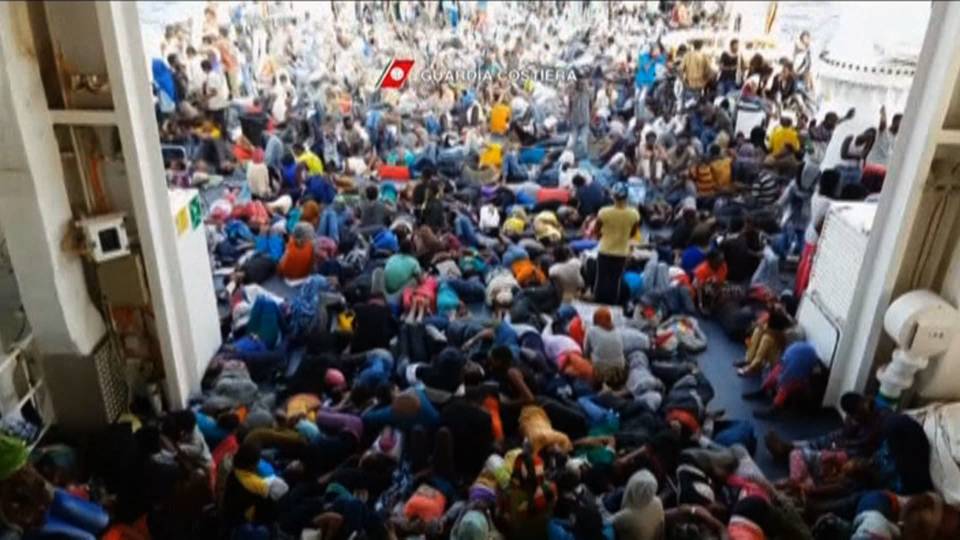 The Italian coast guard says it rescued a staggering 11,000 refugees trying to make the deadly crossing from Libya into Europe this week alone, amid the greatest refugee crisis since World War II. The coast guard says at least 50 people died in the crossing, including 20 people who reportedly suffocated in the hold of a boat. An aid worker has compared the conditions in the cargo holds of the overcrowded fishing boats used to transport refugees to those of slave ships. This is the deputy mayor of the Italian coastal town of Pozzallo.
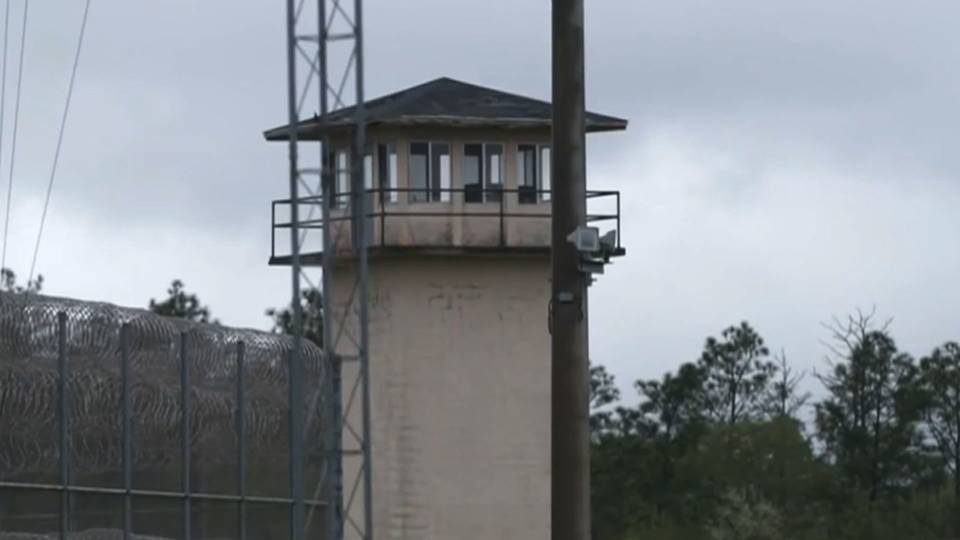 The Justice Department has launched an investigation into the Alabama prison system amid a series of strikes by both prisoners and guards. The probe focuses on living conditions and physical and sexual abuse of prisoners. Alabama prisoners have been leaders in the organizing of the nationwide prison strike launched on September 9. On September 24, guards at the Holman Correctional Facility in Atmore, Alabama, also went on strike, refusing to show up for the evening shift, amid safety concerns and overcrowding.Click here to hear our interview with incarcerated organizer Kinetik Justice, speaking from inside Holman about the prison strike.
 President Obama has commuted the sentences of 102 federal inmates, bringing his total number of commutations to 774. Many of the 102 prisoners have been serving life sentences on drug-related charges. Their sentences will now end in October 2018.
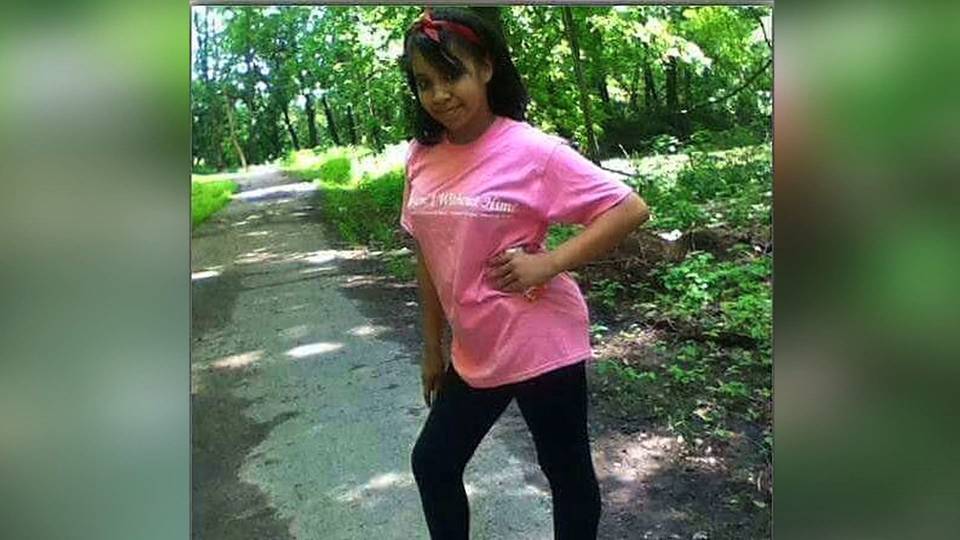 Activists in cities across the country gathered for two days of action Wednesday and Thursday to support Bresha Meadows, a 15-year-old girl who allegedly killed her abusive father. Jonathan Meadows, Bresha’s father, reportedly made life for his family a living hell, routinely attacking his wife—Bresha’s mother—breaking her ribs, puncturing her blood vessels, blackening her eyes and slashing her body. Meadows now may face life in prison. This week, activists gathered for rallies and letter-writing campaigns to support Meadows in Chicago; Boston; Milwaukee, Wisconsin; Warren, Ohio; and up and down California, including in Los Angeles, Davis and Riverside. Organizers say Meadows is currently on suicide watch in jail.
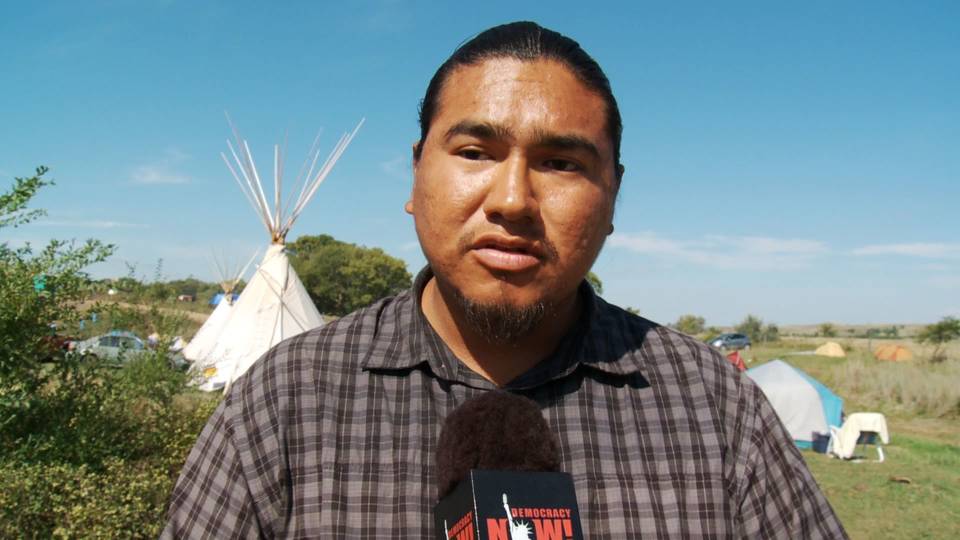 In North Dakota, land defenders opposing the $3.8 billion Dakota Access pipeline are facing increasing repression. On Thursday, Morton County Sheriff Kyle Kirchmeier announced he may call on law enforcement agencies from outside North Dakota to come assist North Dakota deputies, saying, "We have basically tapped the resources to a level that we’ve never seen here in North Dakota for one particular incident." The announcement came as land defenders again shut down construction at multiple construction sites Thursday. In recent weeks, police have begun deploying military-grade equipment, including armored personnel carriers and surveillance helicopters. Meanwhile, the first person to lock himself to active Dakota Access pipeline construction equipment is now facing felony charges, after his misdemeanor case was dismissed and then refiled as a felony case. Dale "Happi" American Horse locked himself to an excavator on August 31, stopping construction for hours. Democracy Now! spoke to him a few days later, on September 3, as we visited the Sacred Stone encampment in North Dakota.
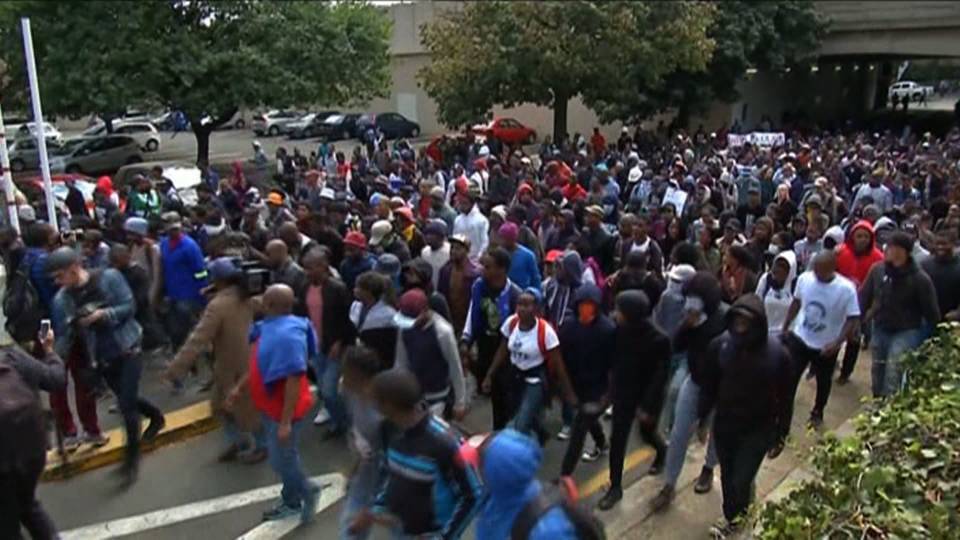 In South Africa, growing student protests against a proposed 8 percent tuition fee hike for 2017 have shut down classes at campuses across the country this week. The "Fees Must Fall" campaign is demanding free education. It’s facing an increasing crackdown by police, who deployed stun grenades, rubber bullets and tear gas against protesting students in Johannesburg on Tuesday. This is Wits University student leader Fasiha Hassan.
 In news from the campaign trail, one in every 40 Americans will not be able to vote in this November’s presidential election as a result of state laws that prohibit people with felony convictions from voting, even after they have served their full sentences. The states in which the greatest percentage of people will not be able to vote are Florida, Mississippi, Kentucky and Tennessee.
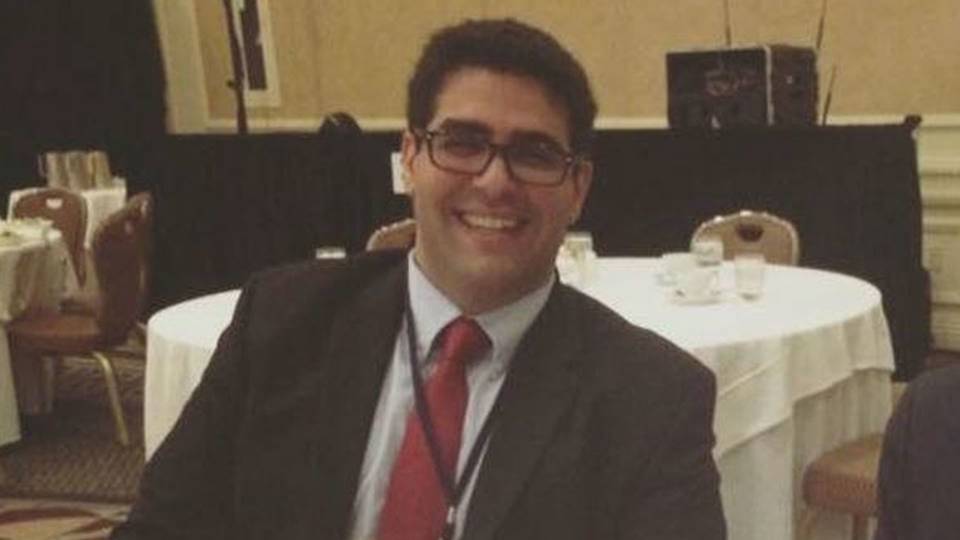 In San Francisco, the Council on American-Islamic Relations has filed a complaint against Southwest Airlines with the Transportation Department, calling for an investigation into whether the airline company is racially profiling Muslim Americans. This comes after recent UC Berkeley graduate, Khairuldeen Makhzoomi, was pulled off a Southwest Airlines plane after another passenger complained about him speaking in Arabic on his cellphone. The passenger claimed he was using words related to an attack. In fact, he was using the word "inshallah," which means "God willing" or "hopefully" and is one of the most common words in the Arabic language. Makhzoomi is an Iraqi who has been living in the U.S. since 2010. He says he was pulled off the plane and then interrogated by police officers.
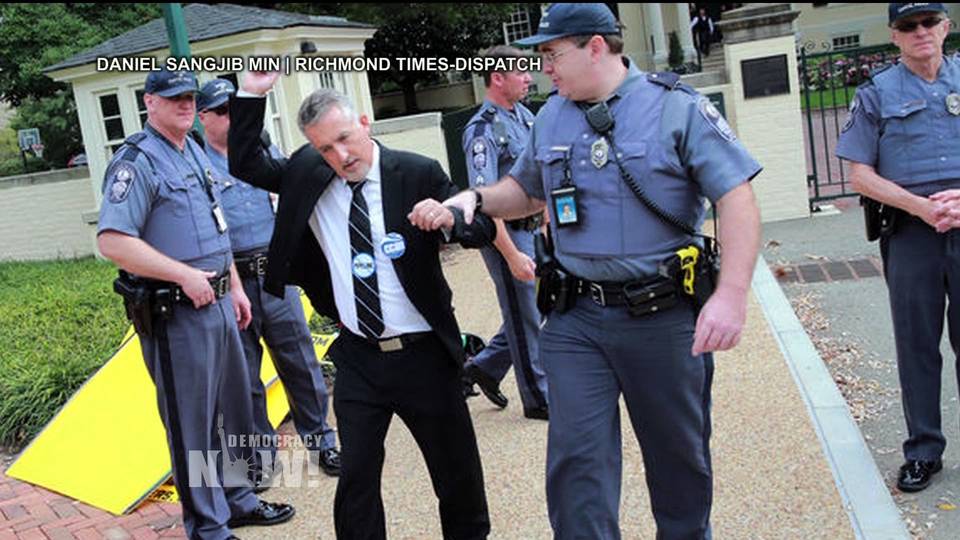 And in Virginia, 23 people were arrested amid a three-day protest in front of Gov. Terry McAuliffe’s mansion Wednesday, demanding action to address climate change. The protesters are demanding McAuliffe reject two proposed fracked gas pipelines, force companies to clean up toxic coal ash ponds and invest in renewable energy. The protest was organized by Chesapeake Climate Action Network. The activists were arrested after they blocked the doors to his mansion.
-------
And in Virginia, 23 people were arrested amid a three-day protest in front of Gov. Terry McAuliffe’s mansion Wednesday, demanding action to address climate change. The protesters are demanding McAuliffe reject two proposed fracked gas pipelines, force companies to clean up toxic coal ash ponds and invest in renewable energy. The protest was organized by Chesapeake Climate Action Network. The activists were arrested after they blocked the doors to his mansion.
-------
Donate today:
Follow:


SPECIAL BROADCAST
The death toll is continuing to rise in Haiti after the massive Category 4 Hurricane Matthew hit the island. More than 330 bodies have been discovered so far as the waters recede. Hurricane Matthew was the most powerful storm to hit the Caribbean in a decade. Across the country, 15,000 people have been displaced and 350,000 more are in need of assistance. The storm knocked out most electricity and phone service across Haiti. It also washed out a major bridge connecting southern Haiti to the rest of the country. Haiti is the poorest country in the Western Hemisphere and is still recovering from a devastating earthquake six years ago that left more than 300,000 dead and twice as many people displaced. We’ll have more on Haiti after headlines with Haitian-American novelist Edwidge Danticat.TOPICS:
Hurricane Matthew Bearing Down on U.S. Coast as Millions Evacuate
Hurricane Matthew is now bearing down on the Florida coast. The tropical storm’s wind gusts of 107 miles per hour and torrential downpours have already knocked out power for 300,000 people in Florida. Meteorologists are warning of devastating storm surges. One wave 17 feet high has already been spotted off the coast near Cape Canaveral. President Obama has declared a state of emergency for Florida, Georgia and South Carolina. Florida Governor Rick Scott has activated the 3,500 members of the National Guard. Scott also urged residents living in mandatory evacuation zones to flee, warning, "This storm will kill you." More than 3 million people in Florida, Georgia and South Carolina are under evacuation orders. We’ll go to Florida for more on the latest on Hurricane Matthew later in the broadcast.TOPICS:
Colombian President Juan Manuel Santos Wins Nobel Peace Prize
Colombian President Juan Manuel Santos has been chosen to receive this year’s Nobel Peace Prize for his role in pursuing a peace deal to end Colombia’s 52-year-old civil war. The move comes as a surprise after Colombians narrowly rejected the peace deal just this past Sunday in a nationwide referendum. FARC leader Timoleón Jiménez did not also win the Nobel Peace Prize. The conflict between the Colombian government and the FARC began in 1964 and has claimed some 220,000 lives. More than 5 million people are estimated to have been displaced. Last year, the Colombian army was accused of a long-running scandal of extrajudicially killing unarmed civilians and then identifying them as FARC rebels in order to portray the government as winning the war against the FARC. President Santos’s top military generals were accused of being implicated in the so-called "false positives" scandal. We’ll go to Colombia for more on the Nobel Peace Prize announcement later in the broadcast.TOPICS:
U.N. Envoy Warns Eastern Aleppo Could Be Destroyed by Christmas
The United Nations special envoy for Syria, Staffan de Mistura, is warning the entirety of eastern Aleppo could be destroyed by Christmas if the ongoing bombing campaign by Russia and the Syrian government is not stopped. In a speech in Geneva, he called on Russia and the Syrian government to stop the airstrikes.Staffan de Mistura: "In the eyes of the world and of the public opinion, are you really ready to continue this type of level of fighting using that type of weapons and, de facto, destroy the whole city, eastern city of Aleppo, ancient city of Aleppo, with its own 275,000 people, for the sake of eliminating 1,000—1,000—al-Nusra fighters?"
Staffan de Mistura also said he’d personally accompany al-Nusra fighters out of Aleppo if that would end the Russian and the Syrian government’s bombing campaign, which he warned could become "another Srebrenica, another Rwanda."
TOPICS:
Italian Coast Guard: 11,000 Refugees Rescued in One Week
The Italian coast guard says it rescued a staggering 11,000 refugees trying to make the deadly crossing from Libya into Europe this week alone, amid the greatest refugee crisis since World War II. The coast guard says at least 50 people died in the crossing, including 20 people who reportedly suffocated in the hold of a boat. An aid worker has compared the conditions in the cargo holds of the overcrowded fishing boats used to transport refugees to those of slave ships. This is the deputy mayor of the Italian coastal town of Pozzallo.Francesco Gugliotta: "From what I know, among the victims, there was also a very unlucky pregnant woman, who lost her life. I think the death of these people is to be blamed on the terrible conditions they are made to travel in."
TOPICS:
DOJ Launches Probe of Alabama Prisons Amid Nationwide Prison Strike
The Justice Department has launched an investigation into the Alabama prison system amid a series of strikes by both prisoners and guards. The probe focuses on living conditions and physical and sexual abuse of prisoners. Alabama prisoners have been leaders in the organizing of the nationwide prison strike launched on September 9. On September 24, guards at the Holman Correctional Facility in Atmore, Alabama, also went on strike, refusing to show up for the evening shift, amid safety concerns and overcrowding.Click here to hear our interview with incarcerated organizer Kinetik Justice, speaking from inside Holman about the prison strike.TOPICS:
Obama Commutes Sentences of 102 Federal Prisoners
President Obama has commuted the sentences of 102 federal inmates, bringing his total number of commutations to 774. Many of the 102 prisoners have been serving life sentences on drug-related charges. Their sentences will now end in October 2018.TOPICS:
Rallies in Cities Across U.S. Demand Freedom for Bresha Meadows
Activists in cities across the country gathered for two days of action Wednesday and Thursday to support Bresha Meadows, a 15-year-old girl who allegedly killed her abusive father. Jonathan Meadows, Bresha’s father, reportedly made life for his family a living hell, routinely attacking his wife—Bresha’s mother—breaking her ribs, puncturing her blood vessels, blackening her eyes and slashing her body. Meadows now may face life in prison. This week, activists gathered for rallies and letter-writing campaigns to support Meadows in Chicago; Boston; Milwaukee, Wisconsin; Warren, Ohio; and up and down California, including in Los Angeles, Davis and Riverside. Organizers say Meadows is currently on suicide watch in jail.TOPICS:
Land Defenders Face Growing Repression in Fight to Stop Dakota Access Pipeline
In North Dakota, land defenders opposing the $3.8 billion Dakota Access pipeline are facing increasing repression. On Thursday, Morton County Sheriff Kyle Kirchmeier announced he may call on law enforcement agencies from outside North Dakota to come assist North Dakota deputies, saying, "We have basically tapped the resources to a level that we’ve never seen here in North Dakota for one particular incident." The announcement came as land defenders again shut down construction at multiple construction sites Thursday. In recent weeks, police have begun deploying military-grade equipment, including armored personnel carriers and surveillance helicopters. Meanwhile, the first person to lock himself to active Dakota Access pipeline construction equipment is now facing felony charges, after his misdemeanor case was dismissed and then refiled as a felony case. Dale "Happi" American Horse locked himself to an excavator on August 31, stopping construction for hours. Democracy Now! spoke to him a few days later, on September 3, as we visited the Sacred Stone encampment in North Dakota.Dale "Happi" American Horse: "I couldn’t stand by and watch this pipeline go through, get torn through the Mother Earth. And it’s a hard thing to stand by and watch. And I couldn’t take it anymore, so we used nonviolent direct action to delay them in any way for as long as possible."
TOPICS:
South Africa: "Fees Must Fall" Campaign Demands Free Education
In South Africa, growing student protests against a proposed 8 percent tuition fee hike for 2017 have shut down classes at campuses across the country this week. The "Fees Must Fall" campaign is demanding free education. It’s facing an increasing crackdown by police, who deployed stun grenades, rubber bullets and tear gas against protesting students in Johannesburg on Tuesday. This is Wits University student leader Fasiha Hassan.Fasiha Hassan: "We’ve just been opened fire with stun grenades, tear gas, totally unprovoked. We were just marching as students. Then they trapped us in a small space."
TOPICS:
Belize: National Teachers' Strike Continues
This comes as a nationwide teachers’ strike continues in Belize for a fifth day. On Thursday, the teachers’ union held demonstrations in multiple cities. Teachers are demanding a 3 percent salary increase, as well as anti-corruption measures and workplace safety.
1 in Every 40 Americans Cannot Vote in Election in November
In news from the campaign trail, one in every 40 Americans will not be able to vote in this November’s presidential election as a result of state laws that prohibit people with felony convictions from voting, even after they have served their full sentences. The states in which the greatest percentage of people will not be able to vote are Florida, Mississippi, Kentucky and Tennessee.TOPICS:
Southwest Pulled Iraqi American Off Plane After He Said "Inshallah" in Phone Call
In San Francisco, the Council on American-Islamic Relations has filed a complaint against Southwest Airlines with the Transportation Department, calling for an investigation into whether the airline company is racially profiling Muslim Americans. This comes after recent UC Berkeley graduate, Khairuldeen Makhzoomi, was pulled off a Southwest Airlines plane after another passenger complained about him speaking in Arabic on his cellphone. The passenger claimed he was using words related to an attack. In fact, he was using the word "inshallah," which means "God willing" or "hopefully" and is one of the most common words in the Arabic language. Makhzoomi is an Iraqi who has been living in the U.S. since 2010. He says he was pulled off the plane and then interrogated by police officers.23 Arrested Demanding VA Gov. McAuliffe Reject Fracked Gas Pipelines
And in Virginia, 23 people were arrested amid a three-day protest in front of Gov. Terry McAuliffe’s mansion Wednesday, demanding action to address climate change. The protesters are demanding McAuliffe reject two proposed fracked gas pipelines, force companies to clean up toxic coal ash ponds and invest in renewable energy. The protest was organized by Chesapeake Climate Action Network. The activists were arrested after they blocked the doors to his mansion.TOPICS:
Donate today:
Follow:
SPECIAL BROADCAST

WATCH Sunday 10/9: 2nd Presidential Debate with Clinton, Trump—and Green Party's Jill Stein at8pm ET
NEW BOOK


Senior TV Producer
COLUMN

Where is Climate Change in the Debates?
-------
207 West 25th Street, 11th Floor
New York, New York 10001, United States
-------
-------

No comments:
Post a Comment