
The Upper Room Daily Reflections: daily words of wisdom and faith of Nashville, Tennessee, United States "Daily Faith" for Sunday, 27 August 2017
Today’s Reflection:
 FAITH IS NOT merely a belief in ideas or concepts but a belief that moves us to action. The New Testament usage of “faith” derives largely from the Hebrew understanding that “to believe” is to have firmness, reliability, or steadfastness. Faith in action is a steadfast trusting in God and in our relationship with God. …
A significant part of our faith is how we live it out daily, for our actions and our lifestyles witness to the true faith we hold. Somehow in our upbringing, many Western Christians have missed the critical link between faith and lifestyle. Faith should express itself in what we eat, how we spend our time, how we entertain ourselves, and how we spend our money. …
For faith to grow, we must be open and listening to God through scripture, prayer, worship, music, nature, people, and the circumstances of our lives. Then we must be obedient to God’s will and direction for us as we discern them. True Christian faith leads us to involvement with others and sensitivity to their needs. [Climbing the Sycamore Tree]
From pages 73-74 of CLIMBING THE SYCAMORE TREE by Ann Hagmann. Copyright (C) 2001 by Ann Hagmann. All Rights Reserved. Used with permission. Available through The Upper Room Bookstore. http://bookstore.upperroom.org/ Learn more about or purchase this book.
Today’s Question: Do your daily activities reflect the faith you espouse?
Today’s Scripture: “And I tell you, you are Peter, and on this rock I will build my church, and the gates of Hades will not prevail against it.” [Matthew 16:18, NRSV]
This Week: pray for victims of violence.
-------
Did You Know?
In need of prayer? The Upper Room Living Prayer Center is a 7-day-a-week intercessory prayer ministry staffed by trained volunteers. Call 1-800-251-2468 or visit The Living Prayer Center website.
-------
This week we remember: Victoria Rasoamanarivo (August 21).
Victoria Rasoamanarivo
August 21
Victoria Rasoamanarivo (1848-1894) was born into a wealthy family in
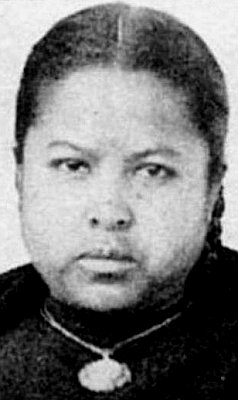 Madagascar at a time when Queen Ranavalona I had outlawed all things European. Practicing Christianity was against the law; belief in Jesus merited persecution and death. When Queen Ranavalona I died in 1861, her son was more open to the church. French Jesuit priests founded a mission school, which Victoria attended. She was baptized in 1863.
Like their former queen, many in Madagascar wanted nothing to do with European culture or religion. Victoria's choice to be Christian meant that she stood outside her culture and tradition. As a Catholic she would not have the right to be buried in her family tomb.
Victoria was devout in public and private prayer. She considered joining a religious order, but decided to live out her faith as a layperson. In 1883, during the Franco-Malagasy War, all French religious were banished from Madagascar. Victoria Rasoamanarivo stood up to soldiers who forbade the Catholics worship and challenged them to kill her. She founded Catholic Action and was instrumental in holding together the Catholic community during the two years until the missionaries returned.
After a short illness, Victoria died on August 21, 1864.
If Victoria Rasoamanarivo had taken the Spiritual Types Test, she probably would have been a Prophet. Victoria Rasoamanarivo is remembered on August 21.
Did You Know?
In need of prayer? The Upper Room Living Prayer Center is a 7-day-a-week intercessory prayer ministry staffed by trained volunteers. Call 1-800-251-2468 or visit The Living Prayer Center website.
-------
This week we remember: Victoria Rasoamanarivo (August 21).
Victoria Rasoamanarivo
August 21
Victoria Rasoamanarivo (1848-1894) was born into a wealthy family in
Madagascar at a time when Queen Ranavalona I had outlawed all things European. Practicing Christianity was against the law; belief in Jesus merited persecution and death. When Queen Ranavalona I died in 1861, her son was more open to the church. French Jesuit priests founded a mission school, which Victoria attended. She was baptized in 1863.Like their former queen, many in Madagascar wanted nothing to do with European culture or religion. Victoria's choice to be Christian meant that she stood outside her culture and tradition. As a Catholic she would not have the right to be buried in her family tomb.
Victoria was devout in public and private prayer. She considered joining a religious order, but decided to live out her faith as a layperson. In 1883, during the Franco-Malagasy War, all French religious were banished from Madagascar. Victoria Rasoamanarivo stood up to soldiers who forbade the Catholics worship and challenged them to kill her. She founded Catholic Action and was instrumental in holding together the Catholic community during the two years until the missionaries returned.
After a short illness, Victoria died on August 21, 1864.
If Victoria Rasoamanarivo had taken the Spiritual Types Test, she probably would have been a Prophet. Victoria Rasoamanarivo is remembered on August 21.
-------
Lectionary Readings for Sunday, 27 August 2017
(Courtesy of Vanderbilt Divinity Library)
Exodus 1:8-2:10
Psalm 124
Romans 12:1-8
Matthew 16:13-20
-------
Lectionary Readings for Sunday, 27 August 2017
(Courtesy of Vanderbilt Divinity Library)
Exodus 1:8-2:10
Psalm 124
Romans 12:1-8
Matthew 16:13-20
-------
Scripture Texts: Exodus 1:8 Now there arose a new king over Egypt. He knew nothing about Yosef 9 but said to his people, “Look, the descendants of Isra’el have become a people too numerous and powerful for us. 10 Come, let’s use wisdom in dealing with them. Otherwise, they’ll continue to multiply; and in the event of war they might ally themselves with our enemies, fight against us and leave the land altogether.”
11 So they put slavemasters over them to oppress them with forced labor, and they built for Pharaoh the storage cities of Pitom and Ra‘amses. 12 But the more the Egyptians oppressed them, the more they multiplied and expanded, until the Egyptians came to dread the people of Isra’el 13 and worked them relentlessly, 14 making their lives bitter with hard labor — digging clay, making bricks, all kinds of field work; and in all this toil they were shown no mercy.
15 Moreover, the king of Egypt spoke to the Hebrew midwives, one of whom was called Shifrah and the other Pu‘ah. 16 “When you attend the Hebrew women and see them giving birth,” he said, “if it’s a boy, kill him; but if it’s a girl, let her live.” 17 However, the midwives were God-fearing women, so they didn’t do as the king of Egypt ordered but let the boys live. (ii) 18 The king of Egypt summoned the midwives and demanded of them, “Why have you done this and let the boys live?” 19 The midwives answered Pharaoh, “It’s because the Hebrew women aren’t like the Egyptian women — they go into labor and give birth before the midwife arrives.” 20 Therefore God prospered the midwives, and the people continued to multiply and grow very powerful. 21 Indeed, because the midwives feared God, he made them founders of families. 22 Then Pharaoh gave this order to all his people: “Every boy that is born, throw in the river; but let all the girls live.”
2:1 A man from the family of Levi took a woman also descended from Levi as his wife. 2 When she conceived and had a son, upon seeing what a fine child he was, she hid him for three months. 3 When she could no longer hide him, she took a papyrus basket, coated it with clay and tar, put the child in it and placed it among the reeds on the riverbank. 4 His sister stood at a distance to see what would happen to him.
5 The daughter of Pharaoh came down to bathe in the river while her maids-in-attendance walked along the riverside. Spotting the basket among the reeds, she sent her slave-girl to get it. 6 She opened it and looked inside, and there in front of her was a crying baby boy! Moved with pity, she said, “This must be one of the Hebrews’ children.” 7 At this point, his sister said to Pharaoh’s daughter, “Would you like me to go and find you one of the Hebrew women to nurse the baby for you?” 8 Pharaoh’s daughter answered, “Yes, go.” So the girl went and called the baby’s own mother. 9 Pharaoh’s daughter told her, “Take this child away, and nurse it for me, and I will pay you for doing it.” So the woman took the child and nursed it. 10 Then, when the child had grown some, she brought him to Pharaoh’s daughter; and she began to raise him as her son. She called him Moshe [pull out], explaining, “Because I pulled him out of the water.”
Psalm 124:1 (0) A song of ascents. By David:
(1) If Adonai hadn’t been for us —
let Isra’el repeat it —
2 If Adonai hadn’t been for us
when people rose to attack us,
3 then, when their anger blazed against us,
they would have swallowed us alive!
4 Then the water would have engulfed us,
the torrent would have swept over us.
5 Yes, the raging water
would have swept right over us.
6 Blessed be Adonai, who did not leave us
to be a prey for their teeth!
7 We escaped like a bird from the hunter’s trap;
the trap is broken, and we have escaped.
8 Our help is in the name of Adonai,
the maker of heaven and earth.
Romans 12:1 I exhort you, therefore, brothers, in view of God’s mercies, to offer yourselves as a sacrifice, living and set apart for God. This will please him; it is the logical “Temple worship” for you. 2 In other words, do not let yourselves be conformed to the standards of the ‘olam hazeh. Instead, keep letting yourselves be transformed by the renewing of your minds; so that you will know what God wants and will agree that what he wants is good, satisfying and able to succeed. 3 For I am telling every single one of you, through the grace that has been given to me, not to have exaggerated ideas about your own importance. Instead, develop a sober estimate of yourself based on the standard which God has given to each of you, namely, trust. 4 For just as there are many parts that compose one body, but the parts don’t all have the same function; 5 so there are many of us, and in union with the Messiah we comprise one body, with each of us belonging to the others. 6 But we have gifts that differ and which are meant to be used according to the grace that has been given to us. If your gift is prophecy, use it to the extent of your trust; 7 if it is serving, use it to serve; if you are a teacher, use your gift in teaching; 8 if you are a counselor, use your gift to comfort and exhort; if you are someone who gives, do it simply and generously; if you are in a position of leadership, lead with diligence and zeal; if you are one who does acts of mercy, do them cheerfully.
Matthew 16:13 When Yeshua came into the territory around Caesarea Philippi, he asked his talmidim, “Who are people saying the Son of Man is?” 14 They said, “Well, some say Yochanan the Immerser, others Eliyahu, still others Yirmeyahu or one of the prophets.” 15 “But you,” he said to them, “who do you say I am?” 16 Shim‘on Kefa answered, “You are the Mashiach, the Son of the living God.” 17 “Shim‘on Bar-Yochanan,” Yeshua said to him, “how blessed you are! For no human being revealed this to you, no, it was my Father in heaven. 18 I also tell you this: you are Kefa,” [which means ‘Rock,’] “and on this rock I will build my Community, and the gates of Sh’ol will not overcome it. 19 I will give you the keys of the Kingdom of Heaven. Whatever you prohibit on earth will be prohibited in heaven, and whatever you permit on earth will be permitted in heaven.” 20 Then he warned the talmidim not to tell anyone that he was the Messiah.
-------
11 So they put slavemasters over them to oppress them with forced labor, and they built for Pharaoh the storage cities of Pitom and Ra‘amses. 12 But the more the Egyptians oppressed them, the more they multiplied and expanded, until the Egyptians came to dread the people of Isra’el 13 and worked them relentlessly, 14 making their lives bitter with hard labor — digging clay, making bricks, all kinds of field work; and in all this toil they were shown no mercy.
15 Moreover, the king of Egypt spoke to the Hebrew midwives, one of whom was called Shifrah and the other Pu‘ah. 16 “When you attend the Hebrew women and see them giving birth,” he said, “if it’s a boy, kill him; but if it’s a girl, let her live.” 17 However, the midwives were God-fearing women, so they didn’t do as the king of Egypt ordered but let the boys live. (ii) 18 The king of Egypt summoned the midwives and demanded of them, “Why have you done this and let the boys live?” 19 The midwives answered Pharaoh, “It’s because the Hebrew women aren’t like the Egyptian women — they go into labor and give birth before the midwife arrives.” 20 Therefore God prospered the midwives, and the people continued to multiply and grow very powerful. 21 Indeed, because the midwives feared God, he made them founders of families. 22 Then Pharaoh gave this order to all his people: “Every boy that is born, throw in the river; but let all the girls live.”
2:1 A man from the family of Levi took a woman also descended from Levi as his wife. 2 When she conceived and had a son, upon seeing what a fine child he was, she hid him for three months. 3 When she could no longer hide him, she took a papyrus basket, coated it with clay and tar, put the child in it and placed it among the reeds on the riverbank. 4 His sister stood at a distance to see what would happen to him.
5 The daughter of Pharaoh came down to bathe in the river while her maids-in-attendance walked along the riverside. Spotting the basket among the reeds, she sent her slave-girl to get it. 6 She opened it and looked inside, and there in front of her was a crying baby boy! Moved with pity, she said, “This must be one of the Hebrews’ children.” 7 At this point, his sister said to Pharaoh’s daughter, “Would you like me to go and find you one of the Hebrew women to nurse the baby for you?” 8 Pharaoh’s daughter answered, “Yes, go.” So the girl went and called the baby’s own mother. 9 Pharaoh’s daughter told her, “Take this child away, and nurse it for me, and I will pay you for doing it.” So the woman took the child and nursed it. 10 Then, when the child had grown some, she brought him to Pharaoh’s daughter; and she began to raise him as her son. She called him Moshe [pull out], explaining, “Because I pulled him out of the water.”
Psalm 124:1 (0) A song of ascents. By David:
(1) If Adonai hadn’t been for us —
let Isra’el repeat it —
2 If Adonai hadn’t been for us
when people rose to attack us,
3 then, when their anger blazed against us,
they would have swallowed us alive!
4 Then the water would have engulfed us,
the torrent would have swept over us.
5 Yes, the raging water
would have swept right over us.
6 Blessed be Adonai, who did not leave us
to be a prey for their teeth!
7 We escaped like a bird from the hunter’s trap;
the trap is broken, and we have escaped.
8 Our help is in the name of Adonai,
the maker of heaven and earth.
Romans 12:1 I exhort you, therefore, brothers, in view of God’s mercies, to offer yourselves as a sacrifice, living and set apart for God. This will please him; it is the logical “Temple worship” for you. 2 In other words, do not let yourselves be conformed to the standards of the ‘olam hazeh. Instead, keep letting yourselves be transformed by the renewing of your minds; so that you will know what God wants and will agree that what he wants is good, satisfying and able to succeed. 3 For I am telling every single one of you, through the grace that has been given to me, not to have exaggerated ideas about your own importance. Instead, develop a sober estimate of yourself based on the standard which God has given to each of you, namely, trust. 4 For just as there are many parts that compose one body, but the parts don’t all have the same function; 5 so there are many of us, and in union with the Messiah we comprise one body, with each of us belonging to the others. 6 But we have gifts that differ and which are meant to be used according to the grace that has been given to us. If your gift is prophecy, use it to the extent of your trust; 7 if it is serving, use it to serve; if you are a teacher, use your gift in teaching; 8 if you are a counselor, use your gift to comfort and exhort; if you are someone who gives, do it simply and generously; if you are in a position of leadership, lead with diligence and zeal; if you are one who does acts of mercy, do them cheerfully.
Matthew 16:13 When Yeshua came into the territory around Caesarea Philippi, he asked his talmidim, “Who are people saying the Son of Man is?” 14 They said, “Well, some say Yochanan the Immerser, others Eliyahu, still others Yirmeyahu or one of the prophets.” 15 “But you,” he said to them, “who do you say I am?” 16 Shim‘on Kefa answered, “You are the Mashiach, the Son of the living God.” 17 “Shim‘on Bar-Yochanan,” Yeshua said to him, “how blessed you are! For no human being revealed this to you, no, it was my Father in heaven. 18 I also tell you this: you are Kefa,” [which means ‘Rock,’] “and on this rock I will build my Community, and the gates of Sh’ol will not overcome it. 19 I will give you the keys of the Kingdom of Heaven. Whatever you prohibit on earth will be prohibited in heaven, and whatever you permit on earth will be permitted in heaven.” 20 Then he warned the talmidim not to tell anyone that he was the Messiah.
-------
John Wesley's Notes-Commentary: Exodus 1:8-2:10
Verse 8
[8] Now there arose up a new king over Egypt, which knew not Joseph.
There arose a new king (after several successions in Joseph's time) which knew not Joseph - All that knew him loved him, and were kind to his relations for his sake; but when he was dead he was soon forgotten, and the remembrance of the good offices he had done was either not retained or not regarded. If we work for men only, our works at farthest will die with us; if for God, they will follow us, Revelation 14:13.
Verse 10
[10] Come on, let us deal wisely with them; lest they multiply, and it come to pass, that, when there falleth out any war, they join also unto our enemies, and fight against us, and so get them up out of the land.
Come on, let us deal wisely with them, lest they multiply — When men deal wickedly it is common for them to imagine that they deal wisely, but the folly of sin will at last be manifested before all men.
Verse 11
[11] Therefore they did set over them taskmasters to afflict them with their burdens. And they built for Pharaoh treasure cities, Pithom and Raamses.
They set over them task-masters, to afflict them — With this very design. They not only made them serve, which was sufficient for Pharaoh's profit, but they made them serve with rigour, so that their lives became bitter to them; intending hereby to break their spirits, and to rob them of every thing in them that was generous: to ruin their health, and shorten their days, and so diminish their numbers: to discourage them from marrying, since their children would be born to slavery; and to oblige them to desert the Hebrews, and incorporate with the Egyptians. And 'tis to be feared the oppression they were under did bring over many of them to join with the Egyptians in their idolatrous worship; for we read, Joshua 24:14, that they served other gods in Egypt; and we find, Ezekiel 20:8, that God had threatned to destroy them for it, even while they were in the land of Egypt.
Treasure-cities — To keep the king's money or corn, wherein a great part of the riches of Egypt consisted.
Verse 12
[12] But the more they afflicted them, the more they multiplied and grew. And they were grieved because of the children of Israel.
But the more they afflicted them, the more they multiplied — To the grief and vexation of the Egyptians. Times of affliction, have oft been the church's growing times: Christianity spread most when it was persecuted. v. 15.
And the king spake to the Hebrew midwives — The two chief of them. They are called Hebrew midwives, probably not because they were themselves Hebrews; for sure Pharaoh could never expect they should be so barbarous to those of their own nation, but because they were generally made use of by the Hebrews, and being Egyptians he hoped to prevail with them.
Verse 16
[16] And he said, When ye do the office of a midwife to the Hebrew women, and see them upon the stools; if it be a son, then ye shall kill him: but if it be a daughter, then she shall live.
The stools — Seats used on that occasion.
Verse 17
[17] But the midwives feared God, and did not as the king of Egypt commanded them, but saved the men children alive.
But the midwives feared God — Dreaded his wrath more than Pharaoh's, and therefore saved the men-children alive.
Verse 19
[19] And the midwives said unto Pharaoh, Because the Hebrew women are not as the Egyptian women; for they are lively, and are delivered ere the midwives come in unto them.
I see no reason we have to doubt the truth of this; it is plain they were now under an extraordinary blessing of increase, which may well be supposed to have this effect, that the women had quick and easy labour, and the mothers and children being both lively, they seldon needed the help of midwives; this these midwives took notice of, and concluding it to be the finger of God, were thereby emboldened to disobey the king, and with this justify themselves before Pharaoh, when he called them to an account for it.
Verse 20
[20] Therefore God dealt well with the midwives: and the people multiplied, and waxed very mighty.
Therefore God dealt well with them — That is, built them up in families, and blessed their children.
Chapter 2 Verse 1
[1] And there went a man of the house of Levi, and took to wife a daughter of Levi.
And there went a man — Amram, from the place of his abode to another place.
A daughter — That is, grand-daughter of Levi.
Verse 2
[2] And the woman conceived, and bare a son: and when she saw him that he was a goodly child, she hid him three months.
Bare a son — It seems just at the time of his birth that cruel law was made for the murder of all the male-children of the Hebrews, and many no doubt perished by the execution of it. Moses's parents had Miriam and Aaron, both elder than he, born to them before that edict came out. Probably his mother had little joy of her being with child of him, now this edict was in force. Yet this child proves the glory of his father's house. Observe the beauty of providence: just when Pharaoh's cruelty rose to this height, the deliverer was born.
She hid him three months — In some private apartment of their own house, though probably with the hazard of their lives had he been discovered. It is said, Hebrews 11:23. That Moses's parents hid him by faith: some think they had a special revelation that the deliverer should spring from their loins; however, they believed the general promise of Israel's preservation, and in that faith hid their child.
Verse 3
[3] And when she could not longer hide him, she took for him an ark of bulrushes, and daubed it with slime and with pitch, and put the child therein; and she laid it in the flags by the river's brink.
And when she could no longer hide him, she put him in an ark of bulrushes — By the river side. God put it into their hearts to do this, to bring about his own purposes: that Moses might by this means be brought into the hands of Pharaoh's daughter, and that by his deliverance, a specimen might be given of the deliverance of God's church.
Verse 5
[5] And the daughter of Pharaoh came down to wash herself at the river; and her maidens walked along by the river's side; and when she saw the ark among the flags, she sent her maid to fetch it.
And the daughter of Pharaoh came — Providence brings no less a person than Pharaoh's daughter just at that juncture, guides her to the place where this poor infant lay, inclines her heart to pity it, which she dares do, when none else durst. Never did poor child cry so seasonably, as this did; the babe wept, which moved her compassion, as no doubt his beauty did.
Verse 10
[10] And the child grew, and she brought him unto Pharaoh's daughter, and he became her son. And she called his name Moses: and she said, Because I drew him out of the water.
And he became her son — The tradition of the Jews is, that Pharaoh's daughter had no child of her own, and that she was the only child of her father, so that when he was adopted for her son, he stood fair for the crown: however, it is certain he stood fair for the best preferments of the court in due time, and in the mean time had the advantage of the best education, with the help of which, he became master of all the lawful learning of the Egyptians Acts 7:22. Those whom God designs for great services he finds out ways for to qualify them. Moses, by having his education in a court, is the fitter to be a prince, and king in Jeshurun; by having his education in a learned court, (for such the Egyptian then was) is the fitter to be an historian; and by having his education in the court of Egypt, is the fitter to be employed as an ambassador to that court in God's name. The Jews tell us, that his father at his circumcision called him Joachim, but Pharaoh's daughter called him Moses, Drawn out of the water, so it signifies in the Egyptian language, The calling of the Jewish lawgiver by an Egyptian name is a happy omen to the Gentile world, and gives hopes of that day when it should be said, Blessed be Egypt my people, Isaiah 19:25. And his tuition at court was an earnest of the performance of that promise, Isaiah 49:23. Kings shall be thy nursing fathers, and queens thy nursing mothers.
[5] Then the proud waters had gone over our soul.
The proud — Our enemies, compared to proud waters, for their great multitude and swelling rage.
[1] I beseech you therefore, brethren, by the mercies of God, that ye present your bodies a living sacrifice, holy, acceptable unto God, which is your reasonable service.
I exhort you — St. Paul uses to suit his exhortations to the doctrines he has been delivering. So here the general use from the whole is contained in the first and second verses. The particular uses follow, from the third verse to the end of the Epistle.
By the tender mercies of God — The whole sentiment is derived from Rom. i.-v. The expression itself is particularly opposed to "the wrath of God," Romans 1:18. It has a reference here to the entire gospel, to the whole economy of grace or mercy, delivering us from "the wrath of God," and exciting us to all duty.
To present — So Romans 6:13; 16:19; now actually to exhibit before God.
Your bodies — That is, yourselves; a part is put for the whole; the rather, as in the ancient sacrifices of beasts, the body was the whole. These also are particularly named in opposition to that vile abuse of their bodies mentioned, Romans 1:24. Several expressions follow, which have likewise a direct reference to other expressions in the same chapter.
A sacrifice — Dead to sin and living - By that life which is mentioned, Romans 1:17; 6:4, etc.
Holy — Such as the holy law requires, Romans 7:12.
Acceptable — Romans 8:8.
Which is your reasonable service — The worship of the heathens was utterly unreasonable, Romans 1:18, etc.; so was the glorying of the Jews, Romans 2:3, etc. But a Christian acts in all things by the highest reason, from the mercy of God inferring his own duty.
Verse 2
[2] And be not conformed to this world: but be ye transformed by the renewing of your mind, that ye may prove what is that good, and acceptable, and perfect, will of God.
And be not conformed — Neither in judgment, spirit, nor behaviour.
To this world — Which, neglecting the will of God, entirely follows its own.
That ye may prove — Know by sure trial; which is easily done by him who has thus presented himself to God.
What is that good, and acceptable, and perfect will of God — The will of God is here to be understood of all the preceptive part of Christianity, which is in itself so excellently good, so acceptable to God, and so perfective of our natures.
Verse 3
[3] For I say, through the grace given unto me, to every man that is among you, not to think of himself more highly than he ought to think; but to think soberly, according as God hath dealt to every man the measure of faith.
And I say — He now proceeds to show what that will of God is.
Through the grace which is given to me — He modestly adds this, lest he should seem to forget his own direction.
To every one that is among you — Believers at Rome. Happy, had they always remembered this! The measure of faith - Treated of in the first and following chapters, from which all other gifts and graces flow.
Verse 5
[5] So we, being many, are one body in Christ, and every one members one of another.
So we — All believers.
Are one body — Closely connected together in Christ, and consequently ought to be helpful to each other.
Verse 6
[6] Having then gifts differing according to the grace that is given to us, whether prophecy, let us prophesy according to the proportion of faith;
Having then gifts differing according to the grace which is given us — Gifts are various: grace is one.
Whether it be prophecy — This, considered as an extraordinary gift, is that whereby heavenly mysteries are declared to men, or things to come foretold. But it seems here to mean the ordinary gift of expounding scripture.
Let us prophesy according to the analogy of faith — St. Peter expresses it, "as the oracles of God;" according to the general tenor of them; according to that grand scheme of doctrine which is delivered therein, touching original sin, justification by faith, and present, inward salvation. There is a wonderful analogy between all these; and a close and intimate connexion between the chief heads of that faith "which was once delivered to the saints." Every article therefore concerning which there is any question should be determined by this rule; every doubtful scripture interpreted according to the grand truths which run through the whole.
Verse 7
[7] Or ministry, let us wait on our ministering: or he that teacheth, on teaching;
Ministering — As deacons.
He that teacheth — Catechumens; for whom particular instructers were appointed.
He that exhorteth — Whose peculiar business it was to urge Christians to duty, and to comfort them in trials.
Verse 8
[8] Or he that exhorteth, on exhortation: he that giveth, let him do it with simplicity; he that ruleth, with diligence; he that sheweth mercy, with cheerfulness.
He that presideth — That hath the care of a flock.
He that showeth mercy — In any instance.
With cheerfulness — Rejoicing that he hath such an opportunity.
[13] When Jesus came into the coasts of Caesarea Philippi, he asked his disciples, saying, Whom do men say that I the Son of man am?
And Jesus coming — There was a large interval of time between what has been related, and what follows. The passages that follow were but a short time before our Lord suffered. Mark 8:27; Luke 9:18.
Verse 14
[14] And they said, Some say that thou art John the Baptist: some, Elias; and others, Jeremias, or one of the prophets.
Jeremiah, or one of the prophets — There was at that time a current tradition among the Jews, that either Jeremiah, or some other of the ancient prophets would rise again before the Messiah came.
Verse 16
[16] And Simon Peter answered and said, Thou art the Christ, the Son of the living God.
Peter — Who was generally the most forward to speak.
Verse 17
[17] And Jesus answered and said unto him, Blessed art thou, Simon Barjona: for flesh and blood hath not revealed it unto thee, but my Father which is in heaven.
Flesh and blood — That is, thy own reason, or any natural power whatsoever.
Verse 18
[18] And I say also unto thee, That thou art Peter, and upon this rock I will build my church; and the gates of hell shall not prevail against it.
On this rock — Alluding to his name, which signifies a rock, namely, the faith which thou hast now professed; I will build my Church - But perhaps when our Lord uttered these words, he pointed to himself, in like manner as when he said, Destroy this temple, John 2:19; meaning the temple of his body. And it is certain, that as he is spoken of in Scripture, as the only foundation of the Church, so this is that which the apostles and evangelists laid in their preaching. It is in respect of laying this, that the names of the twelve apostles (not of St. Peter only) were equally inscribed on the twelve foundations of the city of God, Revelation 21:14.
The gates of hell — As gates and walls were the strength of cities, and as courts of judicature were held in their gates, this phrase properly signifies the power and policy of Satan and his instruments.
Shall not prevail against it — Not against the Church universal, so as to destroy it. And they never did. There hath been a small remnant in all ages.
Verse 19
[19] And I will give unto thee the keys of the kingdom of heaven: and whatsoever thou shalt bind on earth shall be bound in heaven: and whatsoever thou shalt loose on earth shall be loosed in heaven.
I will give thee the keys of the kingdom of heaven — Indeed not to him alone, (for they were equally given to all the apostles at the same time, John 20:21,22,23;) but to him were first given the keys both of doctrine and discipline. He first, after our Lord's resurrection, exercised the apostleship, Acts 1:15. And he first by preaching opened the kingdom of heaven, both to the Jews, Acts 2:14 etc., and to the Gentiles, Acts 10:34 etc. Under the term of binding and loosing are contained all those acts of discipline which Peter and his brethren performed as apostles: and undoubtedly what they thus performed on earth, God confirmed in heaven. Matthew 18:18.
Verse 20
[20] Then charged he his disciples that they should tell no man that he was Jesus the Christ.
Then charged he his disciples to tell no one that he was the Christ — Jesus himself had not said it expressly even to his apostles, but left them tb infer it from his doctrine and miracles. Neither was it proper the apostles should say this openly, before that grand proof of it, his resurrection. If they had, they who believed them would the more earnestly have sought to take and make him a king: and they who did not believe them would the snore vehemently have rejected and opposed such a Messiah.
Verse 8
[8] Now there arose up a new king over Egypt, which knew not Joseph.
There arose a new king (after several successions in Joseph's time) which knew not Joseph - All that knew him loved him, and were kind to his relations for his sake; but when he was dead he was soon forgotten, and the remembrance of the good offices he had done was either not retained or not regarded. If we work for men only, our works at farthest will die with us; if for God, they will follow us, Revelation 14:13.
Verse 10
[10] Come on, let us deal wisely with them; lest they multiply, and it come to pass, that, when there falleth out any war, they join also unto our enemies, and fight against us, and so get them up out of the land.
Come on, let us deal wisely with them, lest they multiply — When men deal wickedly it is common for them to imagine that they deal wisely, but the folly of sin will at last be manifested before all men.
Verse 11
[11] Therefore they did set over them taskmasters to afflict them with their burdens. And they built for Pharaoh treasure cities, Pithom and Raamses.
They set over them task-masters, to afflict them — With this very design. They not only made them serve, which was sufficient for Pharaoh's profit, but they made them serve with rigour, so that their lives became bitter to them; intending hereby to break their spirits, and to rob them of every thing in them that was generous: to ruin their health, and shorten their days, and so diminish their numbers: to discourage them from marrying, since their children would be born to slavery; and to oblige them to desert the Hebrews, and incorporate with the Egyptians. And 'tis to be feared the oppression they were under did bring over many of them to join with the Egyptians in their idolatrous worship; for we read, Joshua 24:14, that they served other gods in Egypt; and we find, Ezekiel 20:8, that God had threatned to destroy them for it, even while they were in the land of Egypt.
Treasure-cities — To keep the king's money or corn, wherein a great part of the riches of Egypt consisted.
Verse 12
[12] But the more they afflicted them, the more they multiplied and grew. And they were grieved because of the children of Israel.
But the more they afflicted them, the more they multiplied — To the grief and vexation of the Egyptians. Times of affliction, have oft been the church's growing times: Christianity spread most when it was persecuted. v. 15.
And the king spake to the Hebrew midwives — The two chief of them. They are called Hebrew midwives, probably not because they were themselves Hebrews; for sure Pharaoh could never expect they should be so barbarous to those of their own nation, but because they were generally made use of by the Hebrews, and being Egyptians he hoped to prevail with them.
Verse 16
[16] And he said, When ye do the office of a midwife to the Hebrew women, and see them upon the stools; if it be a son, then ye shall kill him: but if it be a daughter, then she shall live.
The stools — Seats used on that occasion.
Verse 17
[17] But the midwives feared God, and did not as the king of Egypt commanded them, but saved the men children alive.
But the midwives feared God — Dreaded his wrath more than Pharaoh's, and therefore saved the men-children alive.
Verse 19
[19] And the midwives said unto Pharaoh, Because the Hebrew women are not as the Egyptian women; for they are lively, and are delivered ere the midwives come in unto them.
I see no reason we have to doubt the truth of this; it is plain they were now under an extraordinary blessing of increase, which may well be supposed to have this effect, that the women had quick and easy labour, and the mothers and children being both lively, they seldon needed the help of midwives; this these midwives took notice of, and concluding it to be the finger of God, were thereby emboldened to disobey the king, and with this justify themselves before Pharaoh, when he called them to an account for it.
Verse 20
[20] Therefore God dealt well with the midwives: and the people multiplied, and waxed very mighty.
Therefore God dealt well with them — That is, built them up in families, and blessed their children.
Chapter 2 Verse 1
[1] And there went a man of the house of Levi, and took to wife a daughter of Levi.
And there went a man — Amram, from the place of his abode to another place.
A daughter — That is, grand-daughter of Levi.
Verse 2
[2] And the woman conceived, and bare a son: and when she saw him that he was a goodly child, she hid him three months.
Bare a son — It seems just at the time of his birth that cruel law was made for the murder of all the male-children of the Hebrews, and many no doubt perished by the execution of it. Moses's parents had Miriam and Aaron, both elder than he, born to them before that edict came out. Probably his mother had little joy of her being with child of him, now this edict was in force. Yet this child proves the glory of his father's house. Observe the beauty of providence: just when Pharaoh's cruelty rose to this height, the deliverer was born.
She hid him three months — In some private apartment of their own house, though probably with the hazard of their lives had he been discovered. It is said, Hebrews 11:23. That Moses's parents hid him by faith: some think they had a special revelation that the deliverer should spring from their loins; however, they believed the general promise of Israel's preservation, and in that faith hid their child.
Verse 3
[3] And when she could not longer hide him, she took for him an ark of bulrushes, and daubed it with slime and with pitch, and put the child therein; and she laid it in the flags by the river's brink.
And when she could no longer hide him, she put him in an ark of bulrushes — By the river side. God put it into their hearts to do this, to bring about his own purposes: that Moses might by this means be brought into the hands of Pharaoh's daughter, and that by his deliverance, a specimen might be given of the deliverance of God's church.
Verse 5
[5] And the daughter of Pharaoh came down to wash herself at the river; and her maidens walked along by the river's side; and when she saw the ark among the flags, she sent her maid to fetch it.
And the daughter of Pharaoh came — Providence brings no less a person than Pharaoh's daughter just at that juncture, guides her to the place where this poor infant lay, inclines her heart to pity it, which she dares do, when none else durst. Never did poor child cry so seasonably, as this did; the babe wept, which moved her compassion, as no doubt his beauty did.
Verse 10
[10] And the child grew, and she brought him unto Pharaoh's daughter, and he became her son. And she called his name Moses: and she said, Because I drew him out of the water.
And he became her son — The tradition of the Jews is, that Pharaoh's daughter had no child of her own, and that she was the only child of her father, so that when he was adopted for her son, he stood fair for the crown: however, it is certain he stood fair for the best preferments of the court in due time, and in the mean time had the advantage of the best education, with the help of which, he became master of all the lawful learning of the Egyptians Acts 7:22. Those whom God designs for great services he finds out ways for to qualify them. Moses, by having his education in a court, is the fitter to be a prince, and king in Jeshurun; by having his education in a learned court, (for such the Egyptian then was) is the fitter to be an historian; and by having his education in the court of Egypt, is the fitter to be employed as an ambassador to that court in God's name. The Jews tell us, that his father at his circumcision called him Joachim, but Pharaoh's daughter called him Moses, Drawn out of the water, so it signifies in the Egyptian language, The calling of the Jewish lawgiver by an Egyptian name is a happy omen to the Gentile world, and gives hopes of that day when it should be said, Blessed be Egypt my people, Isaiah 19:25. And his tuition at court was an earnest of the performance of that promise, Isaiah 49:23. Kings shall be thy nursing fathers, and queens thy nursing mothers.
Psalm 124
Verse 5[5] Then the proud waters had gone over our soul.
The proud — Our enemies, compared to proud waters, for their great multitude and swelling rage.
Romans 12:1-8
Verse 1[1] I beseech you therefore, brethren, by the mercies of God, that ye present your bodies a living sacrifice, holy, acceptable unto God, which is your reasonable service.
I exhort you — St. Paul uses to suit his exhortations to the doctrines he has been delivering. So here the general use from the whole is contained in the first and second verses. The particular uses follow, from the third verse to the end of the Epistle.
By the tender mercies of God — The whole sentiment is derived from Rom. i.-v. The expression itself is particularly opposed to "the wrath of God," Romans 1:18. It has a reference here to the entire gospel, to the whole economy of grace or mercy, delivering us from "the wrath of God," and exciting us to all duty.
To present — So Romans 6:13; 16:19; now actually to exhibit before God.
Your bodies — That is, yourselves; a part is put for the whole; the rather, as in the ancient sacrifices of beasts, the body was the whole. These also are particularly named in opposition to that vile abuse of their bodies mentioned, Romans 1:24. Several expressions follow, which have likewise a direct reference to other expressions in the same chapter.
A sacrifice — Dead to sin and living - By that life which is mentioned, Romans 1:17; 6:4, etc.
Holy — Such as the holy law requires, Romans 7:12.
Acceptable — Romans 8:8.
Which is your reasonable service — The worship of the heathens was utterly unreasonable, Romans 1:18, etc.; so was the glorying of the Jews, Romans 2:3, etc. But a Christian acts in all things by the highest reason, from the mercy of God inferring his own duty.
Verse 2
[2] And be not conformed to this world: but be ye transformed by the renewing of your mind, that ye may prove what is that good, and acceptable, and perfect, will of God.
And be not conformed — Neither in judgment, spirit, nor behaviour.
To this world — Which, neglecting the will of God, entirely follows its own.
That ye may prove — Know by sure trial; which is easily done by him who has thus presented himself to God.
What is that good, and acceptable, and perfect will of God — The will of God is here to be understood of all the preceptive part of Christianity, which is in itself so excellently good, so acceptable to God, and so perfective of our natures.
Verse 3
[3] For I say, through the grace given unto me, to every man that is among you, not to think of himself more highly than he ought to think; but to think soberly, according as God hath dealt to every man the measure of faith.
And I say — He now proceeds to show what that will of God is.
Through the grace which is given to me — He modestly adds this, lest he should seem to forget his own direction.
To every one that is among you — Believers at Rome. Happy, had they always remembered this! The measure of faith - Treated of in the first and following chapters, from which all other gifts and graces flow.
Verse 5
[5] So we, being many, are one body in Christ, and every one members one of another.
So we — All believers.
Are one body — Closely connected together in Christ, and consequently ought to be helpful to each other.
Verse 6
[6] Having then gifts differing according to the grace that is given to us, whether prophecy, let us prophesy according to the proportion of faith;
Having then gifts differing according to the grace which is given us — Gifts are various: grace is one.
Whether it be prophecy — This, considered as an extraordinary gift, is that whereby heavenly mysteries are declared to men, or things to come foretold. But it seems here to mean the ordinary gift of expounding scripture.
Let us prophesy according to the analogy of faith — St. Peter expresses it, "as the oracles of God;" according to the general tenor of them; according to that grand scheme of doctrine which is delivered therein, touching original sin, justification by faith, and present, inward salvation. There is a wonderful analogy between all these; and a close and intimate connexion between the chief heads of that faith "which was once delivered to the saints." Every article therefore concerning which there is any question should be determined by this rule; every doubtful scripture interpreted according to the grand truths which run through the whole.
Verse 7
[7] Or ministry, let us wait on our ministering: or he that teacheth, on teaching;
Ministering — As deacons.
He that teacheth — Catechumens; for whom particular instructers were appointed.
He that exhorteth — Whose peculiar business it was to urge Christians to duty, and to comfort them in trials.
Verse 8
[8] Or he that exhorteth, on exhortation: he that giveth, let him do it with simplicity; he that ruleth, with diligence; he that sheweth mercy, with cheerfulness.
He that presideth — That hath the care of a flock.
He that showeth mercy — In any instance.
With cheerfulness — Rejoicing that he hath such an opportunity.
Matthew 16:13-20
Verse 13[13] When Jesus came into the coasts of Caesarea Philippi, he asked his disciples, saying, Whom do men say that I the Son of man am?
And Jesus coming — There was a large interval of time between what has been related, and what follows. The passages that follow were but a short time before our Lord suffered. Mark 8:27; Luke 9:18.
Verse 14
[14] And they said, Some say that thou art John the Baptist: some, Elias; and others, Jeremias, or one of the prophets.
Jeremiah, or one of the prophets — There was at that time a current tradition among the Jews, that either Jeremiah, or some other of the ancient prophets would rise again before the Messiah came.
Verse 16
[16] And Simon Peter answered and said, Thou art the Christ, the Son of the living God.
Peter — Who was generally the most forward to speak.
Verse 17
[17] And Jesus answered and said unto him, Blessed art thou, Simon Barjona: for flesh and blood hath not revealed it unto thee, but my Father which is in heaven.
Flesh and blood — That is, thy own reason, or any natural power whatsoever.
Verse 18
[18] And I say also unto thee, That thou art Peter, and upon this rock I will build my church; and the gates of hell shall not prevail against it.
On this rock — Alluding to his name, which signifies a rock, namely, the faith which thou hast now professed; I will build my Church - But perhaps when our Lord uttered these words, he pointed to himself, in like manner as when he said, Destroy this temple, John 2:19; meaning the temple of his body. And it is certain, that as he is spoken of in Scripture, as the only foundation of the Church, so this is that which the apostles and evangelists laid in their preaching. It is in respect of laying this, that the names of the twelve apostles (not of St. Peter only) were equally inscribed on the twelve foundations of the city of God, Revelation 21:14.
The gates of hell — As gates and walls were the strength of cities, and as courts of judicature were held in their gates, this phrase properly signifies the power and policy of Satan and his instruments.
Shall not prevail against it — Not against the Church universal, so as to destroy it. And they never did. There hath been a small remnant in all ages.
Verse 19
[19] And I will give unto thee the keys of the kingdom of heaven: and whatsoever thou shalt bind on earth shall be bound in heaven: and whatsoever thou shalt loose on earth shall be loosed in heaven.
I will give thee the keys of the kingdom of heaven — Indeed not to him alone, (for they were equally given to all the apostles at the same time, John 20:21,22,23;) but to him were first given the keys both of doctrine and discipline. He first, after our Lord's resurrection, exercised the apostleship, Acts 1:15. And he first by preaching opened the kingdom of heaven, both to the Jews, Acts 2:14 etc., and to the Gentiles, Acts 10:34 etc. Under the term of binding and loosing are contained all those acts of discipline which Peter and his brethren performed as apostles: and undoubtedly what they thus performed on earth, God confirmed in heaven. Matthew 18:18.
Verse 20
[20] Then charged he his disciples that they should tell no man that he was Jesus the Christ.
Then charged he his disciples to tell no one that he was the Christ — Jesus himself had not said it expressly even to his apostles, but left them tb infer it from his doctrine and miracles. Neither was it proper the apostles should say this openly, before that grand proof of it, his resurrection. If they had, they who believed them would the more earnestly have sought to take and make him a king: and they who did not believe them would the snore vehemently have rejected and opposed such a Messiah.
-------
The Upper Room Ministries ®. Copyright © 2017
The Upper Room Ministries ®. Copyright © 2017
PO Box 340004
Nashville, Tennessee 37203-0004, United States
-------
-------

No comments:
Post a Comment