
Lausanne Global Analysis · May 2018
SHARE:


Welcome to the May issue of the Lausanne Global Analysis, which is also available in Portuguese and Spanish. We look forward to your feedback on it.In this issue we feature two articles examining how we should respond to the global refugee crisis, focusing on living out Christian hospitality to migrants and welcoming the Global Stranger. We also consider how the church should respond to the rise of religious nationalism in South Asia, and how the growth of orality-training resources can advance the Great Commission.
 May 2018 Issue Overview
David Taylor
Welcome to the May issue of the Lausanne Global Analysis, which is also available in Portuguese and Spanish. We look forward to your feedback on it.
In this issue we feature two articles examining how we should respond to the global refugee crisis, focusing on living out Christian hospitality to migrants and welcoming the Global Stranger. We also consider how the church should respond to the rise of religious nationalism in South Asia, and how the growth of orality-training resources can advance the Great Commission.
‘Today’s refugee crisis is the worst humanitarian crisis since World War II’, writes Cindy Wu (author of A Better Country: Embracing the Refugees in Our Midst). War and conflict are the primary causes, but there are other factors, such as economic deprivation, environmental degradation, and persecution. Faced with this global phenomenon, how are Christians to respond? The Bible commands charity and hospitality to strangers and sojourners. Therefore, people who follow Jesus have a special mandate to address the refugee crisis. However, the complexities of the refugee system and concerns over national security often overshadow the call to justice and mercy. Even though our human nature makes us wary of strangers, God decreed that strangers were entitled to his love and concern; so caring for refugees today is not merely a compassion or pity issue—it is a justice issue. Furthermore, in some ways, we can relate to refugees because we, like them, are sojourners, with no permanent home in this life; and we experience God through hospitality offered to strangers, challenging us to view refugees, not as a burden, but as an asset to our communities. We can extend this welcome through typical hospitality of meals and fellowship, but also through advocacy and education. ‘We have a tremendous opportunity to share the love of God and light of Christ to people from far-away lands who otherwise might not receive such ministry’, she concludes.
‘The issue of Muslim immigration shows no sign of going away anytime soon in either Europe or North America’, writes Matthew Kaemingk (assistant professor of Christian Ethics at Fuller Theological Seminary). Christians cannot ignore the issue. So how should Christians respond? For the past 20 years most Western Christians have reacted to Muslim immigration by following the lights of the political right or left and treating them with either fear and suspicion or liberal paternalism and religious relativism. However, the answers of the right and left to Muslim immigration are politically unsustainable, and theologically bankrupt. There is, in fact, an alternative and uniquely Christian response to this urgent question that grasps a critical opportunity for Christian service, witness, and hospitality. The article introduces five individual disciples, who are embodying a humble alternative witness. The current crisis represents a critical missiological space in which the church can consider new opportunities for Christian witness and hospitality. These disciples are living out a theology of Christian hospitality amidst the conflict between Islam and the West. Christians in the West desperately need more models of gospel vulnerability and witness amidst this global conflict. ‘The dead-end paths of the political right and left demand a renewed gospel-shaped imagination in this critical missiological space’, he concludes.
‘Across the region of South Asia, religion is an important component of the identity of a person’, writes Tehmina Arora (Senior Counsel, South Asia, for ADF International). In the recent past, a growing overlap between violent religious fundamentalism, nationalism, and majoritarianism has led to increased violence and hostility against religious minorities, especially Christians. The increased violence has resulted in insecurity and loss of life and property. It has also resulted in increased government restrictions on religious life. The main factors that fuel religiously motivated violence are a culture of impunity that allows mob violence to go unpunished, propaganda directed against religious minorities, and a failure to forge common identities among citizens. Christians should work towards strengthening the rule of law, responding to the propaganda, and building common identities. In response to the growing overlap between religious and nationalistic identities and the resultant violence against religious minorities, the diversity within one body, and the love and respect for different members of it that the global church represents is a unique and important model for a hurting world. It is imperative that Christians continue to live this out. ‘Christians must work towards strengthening the justice delivery system and building deep and meaningful relationships in our neighbourhoods and wider society and with those who are most vulnerable’, she concludes.
‘Increasing numbers of missionaries, mission executives, pastors and cross-cultural church planters are coming to a recognition that the Orality movement is transformational in our time’, writes Jerry Wiles (North America Regional Director of the International Orality Network). In fact, some now acknowledge that Orality is changing the face of missions and is one of the most significant breakthroughs of the past 500 years. The Orality Movement seeks to rediscover the most effective ways that people have used to learn, communicate, and process information from the beginning of time. As it becomes more visible and credible, the academic community is gaining interest and looking at ways of engagement. When we engage with a broader understanding of the Orality movement, we recognize the variety of academic disciplines related to the overall Orality domain. Despite a massive volume of scholarly research, theses, and dissertations, there seems to be a shortage of contemporary application in terms of mission and ministry strategies. However, that is now changing. Reports and feedback from mission boards and agencies are providing new and much-needed data that can be very helpful to institutions implementing Orality studies in seminaries and other institutions. Amid the multi-faceted aspects of the Orality Movement, the central focus is on the Great Commission. ‘That means communicating the gospel and making disciples, and doing so in ways that are international, cross-cultural, and reproducible to all places and every people group on earth’, he concludes.
We hope that you find this issue stimulating and useful. Our aim is to deliver strategic and credible analysis, information and insight so that as a leader you will be better equipped for the task of world evangelization. It’s our desire that the analysis of current and future trends and developments will help you and your team make better decisions about the stewardship of all that God has entrusted to your care.
Please send any questions and comments about this issue to analysis@lausanne.org. The next issue of The Lausanne Global Analysis will be released in July, when we hope to revisit the issue of balancing grace and truth in our approach to Muslims and Islam.
 David Taylor serves as the Editor of the Lausanne Global Analysis. David is an international affairs analyst with a particular focus on the Middle East. He spent 17 years in the UK Foreign and Commonwealth Office, most of it focused on the Middle East and North Africa. After that he spent 14 years as Middle East Editor and Deputy Editor of the Daily Brief at Oxford Analytica. David now divides his time between consultancy work for Oxford Analytica, the Lausanne Movement and other clients, also working with Christian Solidarity Worldwide (CSW), the Religious Liberty Partnership and other networks on international religious freedom issues.
 Loving Our Muslim Neighbour - Five stories of migrants and their neighbours in the Netherlands
Matthew Kaemingk
The city of Amsterdam has been a flashpoint for battles over Muslim immigration in the West since the beginning of the 21st century. In 2004, Theo van Gogh, a Dutch filmmaker and vocal critic of Muslim immigrants, was shot and stabbed to death on the streets of Amsterdam by a Muslim extremist.
A national firestorm erupted. In the ensuing weeks more than 40 mosques and churches were either vandalized or burned. Shifting hard to the right, Dutch political culture saw the rise of populist leaders who were virulently anti-Islamic. These nationalists argued that Muslim immigrants had two options: assimilate or leave. On the streets of Amsterdam a sense of distrust, division, and suspicion was palpable—on both sides.
A Christian response
The issue of Muslim immigration shows no sign of going away anytime soon in either Europe or North America. The church cannot ignore the issue. So, how should Christians respond?
For the past 20 years the majority of Western Christians have reacted to Muslim immigration by following the lights of the political right or left:
- The right has called them to relate to Muslims migrants with a sense of fear and suspicion.
- The left has called Christians to relate to them with a sense of liberal paternalism and religious relativism.
CONFLICT BETWEEN ISLAM AND THE WEST REPRESENTS A CRITICAL OPPORTUNITY FOR CHRISTIAN SERVICE, WITNESS, AND HOSPITALITY
- I believe that there is, in fact, an alternative and uniquely Christian response to this urgent question. Moreover, I believe that this conflict between Islam and the West represents a critical opportunity for Christian service, witness, and hospitality. I want to introduce five individual disciples, who are embodying a humble alternative witness amidst this clash.[1]
- I believe that the conflict represents a critical missiological space in which the church can consider new opportunities for Christian witness and hospitality.[2] These five disciples capture in small and humble ways what it means to learn from and lean into this ‘clash of civilizations’.
 A pastor
Two-thirds of the people living in Amsterdam’s Nieuw-West neighbourhood were not born in the Netherlands—half of them are Muslim. Like many urban neighbourhoods in Europe, Nieuw-West struggles with high rates of poverty, crime, violence, unemployment, and inter-ethnic tension.
In 2009, Serge de Boer and four other Christians came to the multi-cultural neighbourhood and planted a church. They called it Oase voor Nieuw-West (Oasis for New West). As eager church-planters, they began visiting their Muslim neighbours and frequenting the market. They would engage young immigrants in conversation and invite them to come to their community for a free meal. The usual response was negative.
Discouraged, Oase made a critical turn that would forever change their posture toward the neighbourhood. Instead of offering to cook for them, Oase began to invite the new immigrants to come to Oase and cook a meal for their community.
The response was revealing. Migrants from all over the neighbourhood started coming to Oase to share their own traditional dishes with the community. When I asked Serge to explain what happened, he noted that there were three significant factors:
- Migrants in the Netherlands are constantly treated as clients of the state in need of Dutch support, education, and civilization. Oase was offering these newcomers an opportunity to contribute and take action for themselves. Rather than be served, they had an opportunity to serve.
- Oase was offering their neighbours an opportunity to share their unique food and culture in a country that often treats their cultural background with either suspicion or a patronizing nod. The newcomers considered the opportunity to cook for large amounts of people an exciting honour and an important social responsibility.
- ‘God has given their culture something beautiful and the mealtime gives us all a chance to celebrate that,’ says de Boer. He goes on to say, ‘In every culture there are good and bad things but when you eat together you share in the good things that God has done in a person’s culture.’ And, ‘They don’t want to be served by a community, they want to be a part of a community.’ He also says, ‘When we eat together, we are much more relaxed, open, and willing to talk to those around us.’
 A seamstress
Some of Europe’s fiercest debates over Muslim immigration take place in the city of Rotterdam. Trust is low and tensions are high.
Amid this urban fray a group of Christian women have decided to make their mark. They do not protest, run for office, or call for national dialogues or programmes. They sew. Every month these women gather in a heavily Muslim neighbourhood to stitch, knit, and talk, and they invite their Muslim neighbours to join them. As the women work, the barriers crack and bonds begin to form:
- The Christians begin to realize that Muslims are not what they see on the news.
- The Muslims begin to realize that Christians are not what they see in the red-light district.
- They discover a mutual concern for the state of Dutch morality, character, and family.
- They worry together about their children in an increasingly materialistic and secular culture.
Achieving what no government programme could, this little sewing group is producing a rare social phenomenon in Dutch civil society: inter-ethnic, interfaith dialogue, and—more than that—affection.
STONES OF MISUNDERSTANDING, MISTRUST, AND ENMITY NEED TO BE UPROOTED THROUGH CARE AND CONVERSATION.
The Christian women unapologetically stated that their hope was to share the story of Jesus with their new Muslim friends. ‘But,’ they hastened to add, ‘that is a very long road.’ They say, ‘God alone sows the seeds of conversion in a person’s soul. God alone makes the seeds of faith grow.’ And, ‘Our calling [is simply] to remove the stones from their garden.’ Stones of misunderstanding, mistrust, and enmity need to be uprooted through care and conversation. As they sew, they pray that God will sow seeds.
 A professor
Martien Brinkman says,
I tell every student who comes to study theology at the Free University: you are all welcome here whether you are Christian, Jewish, Muslim, liberal, Atheist, or something else. We will not ask you to hide, change, or apologize for your faith. However, in our programme, you will have to learn about and listen to the beliefs of those around you.
Serving as a Christian professor of theology at the Free University of Amsterdam, Martien Brinkman is cultivating a unique culture of academic hospitality across the faiths. In a time of interfaith tension and animosity, this is no easy task. Brinkman argues that education can never be a religiously neutral activity. All students and professors will unavoidably bring their religious and ideological commitments into their teaching and research.
INTER-FAITH HONESTY AND HOSPITALITY IN THE ACADEMY IS NOT OPTIONAL; IT IS AN ABSOLUTE NECESSITY.
If this is true, Brinkman argues, then all students and faculty must be encouraged to be open and honest about their religious commitments. Inter-faith honesty and hospitality in the academy is not optional; it is an absolute necessity.
Brinkman argues that pretending to assimilate or refusing to recognize or wrestle with our religious differences is not helpful for student development, academic research, or for society at large. Brinkman is here resisting a dominant academic culture in the West, which often sees faith commitments as impediments to critical thought and academic reflection. By contrast, Brinkman models radical academic hospitality and witnesses to his God of hospitality.
 A family
Gert and Rita Hunink say, ‘Muslims coming to the Netherlands should never have to fear Christian oppression. If they are going to fear anything, Muslims should fear that Christians will be so loving to them that they will feel the strong temptation to convert!’
Muslim immigration was not a question Sint-Joriskerk in Amersfoort was looking to answer until the question came to the church’s front door. They were not sure what to do when Shawky Hafez, a drug-addicted Muslim from Egypt, knocked on their door and announced, ‘I want to know about Jesus. Can you help me?’
Members of the church Rita and Gert Hunink began inviting Shawky into their home for coffee. They walked alongside Shawky as he worked through numerous challenges with addiction, unemployment, housing, and faith.
Amersfoort is home to an asylum centre which houses many displaced people from Africa, the Middle East, and Asia. After Shawky’s arrival, more asylum-seekers began to join the gathering in the Hunink home. Every week, they would come to play games and enjoy cake, coffee, and conversation. They would discuss the weather, the eccentricities of Dutch culture, the challenges of migration, and stories of Jesus. Their numbers continued to grow.
 Christian Hospitality and Muslim Immigration in an Age of Fear by Rev Dr Matthew Kaemingk
While opening one’s home may be a common practice in some cultures, it is not in the Netherlands. Shawky recalls that he had lived in the Netherlands for 18 years before he was invited into a Dutch home—the Huninks were the first to open their door.
Rita remarks that asylum-seekers coming to her home and church were not looking for a good sermon, exciting music, or even financial help—they were looking for a home, for a family. They did not want a visit from another government social-worker; they wanted a relationship with a brother or sister.
The experience had a profound impact on more than Huninks’ church and home. It started to impact their politics as well. Gert is a local leader in the Christian Union political party. As a national political movement, the push to the political right on the issue of Muslim immigration is particularly strong and tempting.
Gert argues within the party that the fearful rhetoric of the right is not an acceptable guide for Christian political action. Being in Christ, he argues, disciples have no right to fear Islam. He says, ‘The only thing we can be afraid of is a weak church that does not faithfully reflect our saviour’s love and hospitality.’
IN CITIES SO BEREFT OF TRUST AND FRIENDSHIP, FEW THINGS ARE MORE COURAGEOUS AND MORE DESPERATELY NEEDED THAN AN OPEN DOOR AND A CUP OF COFFEE.
- Hunink argues that the Christian Union’s advocacy for national security and peace must begin with small and local acts of Christian hospitality. The families, schools, churches, and institutions within the Dutch Christian community must embody the peace they desire.
- Hunink understands that a political platform founded on hospitality is at risk of being dismissed as naïve, cowardly, and weak. To these charges his retort is simple: in cities so bereft of trust and friendship, few things are more courageous and more desperately needed than an open door and a cup of coffee.
These disciples are living out a theology of Christian hospitality amidst the conflict between Islam and the West. The church in the West desperately needs more models of gospel vulnerability and witness amidst this global conflict. The dead-end paths of the political right and left demand a renewed gospel-shaped imagination in this critical missiological space.
Endnotes
The following accounts can be found in a more extended form in the author’s book Christian Hospitality and Muslim Immigration in An Age of Fear, Eerdmans: Grand Rapids, 2018. These are used with the permission of Eerdmans Publishing. ↑
Editor’s Note: See article by Sam George entitled, ‘Is God Reviving Europe through Refugees: Turning the greatest humanitarian crisis of our times into one of the greatest mission opportunities’, in May 2017 issue of Lausanne Global Analysis https://www.lausanne.org/content/lga/2017-05/god-reviving-europe-refugees. ↑
 Rev Dr Matthew Kaemingk, former Fulbright scholar with doctoral degrees in Systematic Theology from the Vrije Universiteit in Amsterdam and in Christian Ethics from Fuller Theological Seminary, is an assistant professor of Christian Ethics at Fuller Theological Seminary and the associate dean of Fuller Texas in Houston. He serves as a fellow for the Center for Public Justice in Washington DC. His new book, Christian Hospitality and Muslim Immigration in an Age of Fear, engages the burgeoning conflict over Muslim immigration in both Europe and the United States. You can follow on Twitter @matthewkaemingk.
 We Too Were Once Strangers - Living out our faith during the worst refugee crisis of all time
Cindy Wu
My friend, Abeer, is a former refugee from Iraq. An Orthodox Christian, Abeer fled from Islamic State, fearing for her personal safety as churches in her neighbourhood were being burned down. Abeer’s family was resettled in the United States, where we met through a refugee friendship program. Their children and ours became friends immediately.
In Iraq Abeer was a scientist, and her husband was an engineer, but here in Houston, Texas, they have settled for whatever hourly-wage jobs they can find to support their children and give them a life they can no longer aspire to for themselves. They join the tens of millions like them who have left behind home, livelihood, and life as they knew it in hopes for a fresh start. Abeer’s story is more common than we would like to imagine.
28,000 people are being forcibly displaced every day
An unprecedented global problemAccording to the United Nations High Commissioner for Refugees (UNHCR), we live in a time where more than 28,000 people are being forcibly displaced every day. Over 65 million persons—roughly the population of the United Kingdom—have fled their homes.
One third of those (22 million) are classified as ‘refugees’, people outside their country of origin who are ‘unable or unwilling to return to [their] country of origin owing to a well-founded fear of being persecuted for reasons of race, religion, nationality, membership of a particular social group, or political opinion’.[1] Today’s refugee crisis is the worst humanitarian crisis since World War II, surpassing what was then the largest mass human displacement in history.
ONE-QUARTER OF ALL REFUGEES TODAY ARE SYRIAN, WITH HALF OF ITS PRE-WAR POPULATION KILLED OR FORCED FROM THEIR HOMES IN JUST THE PAST SIX YEARS.
The majority of refugees are women and children, with one half under the age of 18. Millions of refugees have lived in protracted situations, waiting decades for resolution. One-quarter of all refugees today are Syrian, with half of its pre-war population killed or forced from their homes in just the past six years.[2]Many have wondered at the causes of this sudden surge in forced migration. War and conflict—especially long-standing wars—are the primary causes, but there are other factors:
- Faced with economic deprivation, workers move in search of opportunity.
- Natural disasters and environmental degradation can cause large-scale displacement, especially when exacerbated by political tensions.
- Persecution forces people out of their homelands in search of safety and freedom.
Charity and hospitality
The Bible commands charity and hospitality to strangers and sojourners, as well as care for the distraught and downtrodden. Therefore, people who follow Jesus and take his Word seriously have a special mandate to address the refugee crisis. However, the complexities of the refugee system and concerns over national security often overshadow the call to justice and mercy. In fact Christians are among those calling for their countries to close their doors to immigrants.
PEOPLE WHO FOLLOW JESUS AND TAKE HIS WORD SERIOUSLY HAVE A SPECIAL MANDATE TO ADDRESS THE REFUGEE CRISIS.
Nowhere is this perhaps more ironic than in the United States, which has long taken pride in its identity as a land that was founded by refugees seeking religious freedom. As the ‘land of the free, home of the brave’, we resettle more refugees every year than any other country. Our national icon, the Statue of Liberty, has this welcoming inscription on its pedestal:
Give me your tired, your poor,
Your huddled masses yearning to breathe free,
The wretched refuse of your teeming shore.
Send these, the homeless, tempest-tost to me,
I lift my lamp beside the golden door!
Nevertheless, the US immigration debate rages over undocumented immigrants, refugees, and Muslims, with our president implementing travel bans and setting a historically low refugee admissions cap for fiscal year 2018. Amid this storm, American Christians find themselves politically and ethically divided on this controversial subject. Regardless of where one stands on immigration, Christians should acknowledge that they have a role to play in what is the primary humanitarian issue of our day. Where do we start? I suggest we begin with our imagination.
Forming our imagination of the stranger
When you hear ‘refugee’ what images or words spring to mind? Is it a bedraggled woman in hijab wading to shore? A dirt-caked child sitting in a dilapidated desert tent? Or is it a scientist who developed the theory of relativity? An award-winning artist? A philanthropist?
Our mental picture of who a refugee is affects our attitudes towards them. Since the first international effort to address the refugee crisis of the early 1900s, citizens have expressed concern about immigrants’ impact on local culture and economy; refugees are strangers, often not speaking the local language and not knowing local customs and ways. In recent years, national security has been at the forefront when weighing compassion for the world’s most vulnerable people against protecting one’s own, making resettlement seem risky, even foolish, for some. The acceleration of technologies of mass destruction and information infiltration makes it all the more threatening.
Biblically informing our imagination of the stranger
Even though our human nature makes us wary of strangers, there are times when God calls us instead to embrace the stranger. To do that we must allow God to shape our imagination of who the stranger is, especially as ‘welcome the stranger’ is one of the most oft-repeated commands in the Hebrew Scriptures.
Strangers among the Israelites were to be treated with equality, like natives of the land (Numbers 15:15-16). Israel played host to foreign guests and was expected to protect, serve, love, and provide for them (Leviticus 19:34, Deuteronomy 26:12, Ezekiel 47: 21-23). God decreed that strangers were entitled to his love and concern, so caring for refugees today is not merely a compassion or pity issue—it is a justice issue.
MANY REFUGEES ARE CHRISTIANS BEING PERSECUTED FOR THEIR FAITH, MAKING THEM OUR BROTHERS AND SISTERS IN THE LORD, AND THUS FAMILY MEMBERS.
Many refugees are Christians being persecuted for their faith, making them our brothers and sisters in the Lord, and thus family members. When these refugees come, they change the landscape, not just of our nations, but also of our churches. In significant ways churches are being revitalized by refugees.[3]
Every Christian, besides belonging to the global Christian family, also belongs to another family—the global human family.[4] With over 7 billion people on the globe today, we must remember that we all belong to the same human family. This perspective humanizes refugees, reminding us that they are more than statistics—they are people made in the image of God, deserving of our compassion and protection.
You once were strangers
Finally, perhaps the most compelling argument for caring for refugees is that, like them, we are sojourners. From patriarch Abraham to Jesus and his disciples to the global church, the sojourner metaphor is deeply embedded within our history and theology, and thus our very identity:
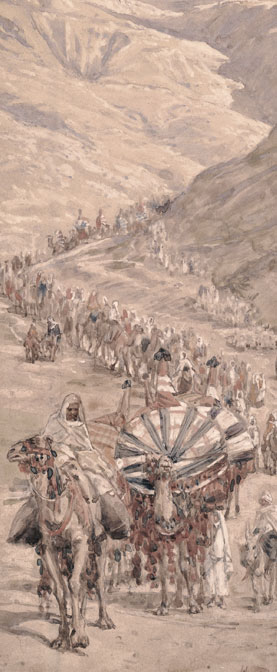 God chose to bless Abraham by turning him into a sojourner, not as a punishment but as part of God’s plan for the salvation of the nations (Acts 7:6).
Before Christ, the nations were separate from Christ (Ephesians 2:12), but then God adopted us into his family through Jesus Christ and we are ‘no longer strangers and aliens’ (Ephesians 2:14, 2:19).
The stranger motif also describes our relationship to our heavenly home. Like refugees, all we who are in Christ are considered sojourners, aliens, and pilgrims on earth (1 Chronicles 29:15, Hebrews 11, 1 Peter 1:17). Yet as strangers and exiles we are not aimless; we are just waiting for a better country—a heavenly one (Hebrews 11:16); and so we fix our eyes on heaven, where our true citizenship lies: ‘Our citizenship is in heaven, and from it we await a Savior, the Lord Jesus Christ’ (Philippians 3:20). In some ways, we can relate to refugees because we, too, have no permanent home in this life. We are on a shared journey, equals in the eyes of the Lord, all dependent upon his grace.
The response of the globally-minded church
In light of the magnitude of the refugee crisis, churches around the world will need to know how to address trauma and identity in an increasingly globalized society. Globally-minded Christians would do well to embrace a global identity combined with a doctrine of hospitality. This perspective should inform the way we view government immigration policies, especially with respect to refugees.
The term ‘refugee’ has often been applied generically to various types of migrants affected by any negative push factor, whether economic or environmental. However, when discussing the global migration phenomenon, the term pertains specifically to those fleeing war or persecution and who can substantiate the danger of returning or staying home, as we saw above.
Refugees are especially vulnerable because they do not leave by choice; once outside the borders of their country, they lose whatever protections of citizenship they had and are at the mercy of (and entitled to the assistance of) the international protection regime. While biblical hospitality needs not distinguish between persons, refugees do make an especially compelling case for hospitality and mercy.
When we are able to use our biblical imagination to view refugees, we come to realize that we have often let patriotism and fear override faith and action, and we come to believe that we experience God through hospitality offered to strangers. This spiritual reality challenges us to view refugees, not as a burden, but as an asset to our communities, and to view immigration issues as moral issues, not just economic and political ones. Seminary professor Christine Pohl writes:
Reception of refugees is one of the few places in modern politics where the explicit language of hospitality is still used. People continue to connect theological notions of sanctuary, cities of refuge, and care for aliens with the needs of today’s displaced people. Christians have a vital role in making sure that the needs of refugees are taken seriously by national governments. But our response must extend beyond public policy to more personal involvement in voluntary agencies, communities, churches, and homes where acts of welcome offer refuge and new life to some of the world’s most vulnerable people.[5]
WHEN CHURCHES ARE INFORMED, THEY HAVE AN OPPORTUNITY TO DISPEL FEARS AND EMPOWER THEIR COMMUNITIES FOR ENGAGEMENT.
We can extend this welcome through typical hospitality of meals and fellowship, but also through advocacy and education. Much of the fear surrounding the refugee crisis is based on misinformation. When churches are informed, they have an opportunity to dispel fears and empower their communities for engagement.
Refugees are persecuted because of race, religion, nationality, and social or political affiliation. May we who follow Christ embrace refugees without regard to those categories. We have a tremendous opportunity to share the love of God and light of Christ to people from far-away lands who otherwise might not receive such ministry. Holocaust survivor Elie Wiesel praised the ‘righteous Gentiles’ who risked their lives protecting Jewish refugees. For Christians, walking with uprooted people through the process of restoring their lives is a vicarious act of grace, for we, too, were once strangers.
Endnotes
- Official definition of the United Nations High Commissioner for Refugees; for example, see http://www.unhcr.org/afr/publications/brochures/3b779dfe2/protecting-refugees-questions-answers.html. ↑
- See article entitled, ‘The Refugee and the Body of Christ’, by Arthur Brown in the September 2016 issue of Lausanne Global Analysis. https://www.lausanne.org/content/lga/2016-09/the-refugee-and-the-body-of-christ. ↑
- See article entitled ‘Is God Reviving Europe Through Refugees?’ by Sam George in the May 2017 issue of Lausanne Global Analysis. https://www.lausanne.org/content/lga/2017-05/god-reviving-europe-refugees. ↑
- For reflection on global identity, see Todd M. Johnson and Cindy M. Wu, Our Global Families: Christians Embracing Common Identity in a Changing World (Grand Rapids: Baker Academic, 2015). ↑
- Christine Pohl, Making Room: Recovering Hospitality as a Christian Tradition (Grand Rapids: Eerdmans, 1999), 166. ↑
 Cindy M. Wu is a wife and homeschooling mom in Houston, TX. She is co-author of Our Global Families: Christians Embracing Common Identity in a Changing World (Baker Academic, 2015) with Todd M. Johnson and author of A Better Country: Embracing the Refugees in Our Midst (William Carey Library Publishers, June 2017), a resource challenging Christians to respond to the global refugee crisis.
 Religious Identity, Nationalism, and Violence - Restoring the fractured identity landscape of South Asia
Tehmina Arora
Across the region of South Asia, religion is an important component of the identity of a person. In the light of its history of colonialism and its wide diversity of language and culture, religious identities have naturally strengthened there. However, some social and political groups have manipulated them to mobilize support. In the recent past, a growing overlap between violent religious fundamentalism, nationalism, and majoritarianism has led to increased violence and hostility against religious minorities, especially Christians. For instance:
- In Hindu-majority India, Christians are routinely attacked by mobs allegedly outraged by ‘forcible’ religious conversions. Muslims have also suffered violent attacks, including lynching by cow protection vigilantes on the pretext that they either ate beef or were taking cattle for slaughter.
- In Bangladesh, Buddhist and Hindu communities have suffered violent attacks at the hands of mobs claiming allegiance to Islam. The recent killings of bloggers and atheists are also evidence of the increased hostility to non-Muslims.
- In Sri Lanka, Buddhist monks lead the charge against evangelical Christians and Muslims and have lobbied for strict anti-conversion laws.[1]
- In Pakistan, Hindus, Christians, and even minority Muslim sects such as Ahmadis and Shias find themselves on the receiving end of violent attacks and false accusations under the country’s blasphemy law.
The increased violence has resulted in insecurity and loss of life and property. It has also resulted in increased government restrictions on religious life. This is because governments often use the existence of social hostilities to restrict religious life in general through increased regulation of how religious communities can meet, how they receive funds, and even how they practise their religious beliefs. For instance, violence against Christians in India by Hindu nationalists has repeatedly resulted in the government calling for the enactment of anti-conversions laws which will only further restrict the rights of Christians.[2]
Factors fueling religiously motivated violence
The main factors that fuel religiously motivated violence are a culture of impunity that allows mob violence to go unpunished, propaganda directed against religious minorities, and a failure to forge common identities among citizens:
 1. Weak Rule of Law and the Culture of Impunity
The Rule of Law Index 2017 produced by the World Justice Project surveyed 113 countries on 44 indicators such as constraints on government powers, absence of corruption and upholding fundamental rights, civil justice, etc. Most of the South Asia countries ranked in the upper 60s to lower 100s. Nepal was the best in the region, ranked at 58. These poor rankings reflect a deterioration and slowdown in the justice delivery system that fuels a culture of impunity towards violence by mobs and the excesses of the state.
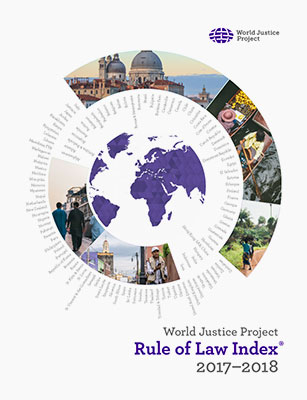 World Justice Project The Rule of Law Index 2017
For instance, in India, according to reports collated by the United Christian Forum, over 250 incidents of violence occurred against Christians in 2017; yet in only 23 cases was a First Information Report (FIR) or criminal complaint filed. According to a government statement to Parliament in February 2017,[3] during the last three years, over 278 people have been killed and over 6,500 injured due to communal violence. There were over 2,000 ‘communal incidents’ across the country but few prosecutions and even fewer convictions.
In a 2016 judgement[4] in WP (Civil) 76/2009 with reference to the widespread and horrific communal violence against Christians in 2008, which resulted in close to 100 deaths and displacement of over 50,000 people in the eastern Indian state of Odisha (formerly known as Orissa), the Supreme Court of India observed:
- The affidavit filed on behalf of the State on 01.03.2013 discloses that out of 827 registered cases, 512 cases resulted in filing of charge-sheets while in 315 cases final reports were submitted. In other words, in 315 cases either no offence was found to have been made out or the offenders could not be detected. Such a large proportion is quite disturbing. The State could do well in looking into all these 315 cases and see that the offenders are brought to book. Similarly, out of 362 trials which stand completed only 78 have resulted in conviction, which again is a matter of concern.
- When combined with low levels of education, corruption and poverty, weak justice delivery systems have proved to be instrumental in creating a culture where violent religious nationalism is able to operate with impunity. Mobs know that they can get away with violence.
 2. Majoritarianism and Propaganda against Religious Minorities
Religious nationalism is extremely problematic when the majority religion uses it to create a clear distinction between the majority and the minority:
We are taught how ‘they’ are different from ‘us’. We learn how ‘their’ aspirations are detrimental to ‘ours’. The walls are quickly erected and become difficult to knock down.
Soon, stereotypes take hard shape and we become prejudiced. ‘The Muslims are like this’, ‘the Christians are like that’, ‘Pentecostal groups always act like this’, ‘Catholics never do that’, ‘their culture is different’, and so on.
 In India, literature and propaganda material, often in the vernacular and circulated though social media, create myths about both Christians and Muslims, the two minority communities being targeted in the country. The myths, repeated often enough, have now gained a semblance of truth and are echoed even by members of the minority communities themselves.
The most common allegation against Christians in India is that they engage in unethical and forcible conversion. According to rumours, Christians give large sums of money and other inducements to convert people. In response, various provinces in India have enacted legislation to ensure that forcible conversion or conversion by inducement is a punishable offence.[5] However, in spite of the enactment of such laws since the late 1960s, there has been only one known conviction under them. Furthermore, India now has very tight laws regulating how foreign funds can enter the country and how they may be used.
Yet, the propaganda against Christians remains strong and fuels a sense of distrust of Christians in India. This is, sadly, the experience of Christians in many parts of the world,[6] especially the southern Asia region. The propaganda lays the foundation for violence and hostility by creating the ‘other’ who is different from us.
 3. Failure to Forge Common IdentitiesOften, religious nationalist groups focus on only one aspect of the identity of a person or a group. Thus, a divide between the communities is created, by highlighting differences rather than similarities. Even language and culture, which should help bind people and help ideas flow, become a point of contention.
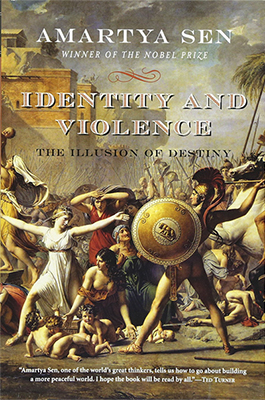 Identity and Violence: The Illusion of DestinyIn fact, no one has only one identity. We are composite beings enjoying a wide variety of interests. Nobel Laureate and noted author, Amartya Sen, writes in his book, Identity and Violence: The Illusion of Destiny:[7]
In our normal lives, we see ourselves as members of a variety of groups—we belong to all of them. A person’s citizenship, residence, geographic origin, gender, class, politics, profession, employment, food habits, sports interests, taste in music, social commitments, etc., make us members of a variety of groups. Each of these collectivities, to all of which this person simultaneously belongs, gives her a particular identity. None of them can be taken to be the person’s only identity or singular membership category.
Religious nationalist groups tend to reduce our identities simply to religious identities, thereby isolating minorities and successfully targeting them.
How should we respond?
How should Christians act in the face of this growing violence and hostility? Based on the experience here in India, I would like to offer some suggestions to tackle these three factors fueling them:
1. Work towards strengthening the Rule of Law
a. Legal Literacy: The church and other civil society groups should commit to strengthening the rule of law by helping communities better understand legal processes and basic human rights frameworks. Communities can be made more resilient in the face of violent religious extremism as they understand how to access justice to remedy violations of their human rights by both state and non-state actors.
b. Litigation Assistance: Legal systems are slow and complex; and victims often require assistance to navigate them. Cases frequently are not followed up and taken to their logical end in the courts because victims and witness are fearful, vulnerable, and alone. Christians would do well to stand alongside these victims to enable them to follow through their cases through providing legal assistance to the victims.
c. Advocacy for policy changes: Christians must continue to create opportunities for religious minorities and other vulnerable communities to participate in advocacy for policy changes. Better protection of fundamental rights, greater separation of the powers between the various state institutions, and increased transparency in all state institutions are crucial steps towards strengthening the rule of law.
2. Respond to the Propaganda
a. It is imperative for Christians and civil society to confront the lies with the truth told in a winsome manner. One way to do this is to create opportunities for people to share their own faith journeys.
b. Opportunities need to be created in schools and colleges to help children and younger people understand the composite culture of a region. No one religious community can lay claim to the culture of a nation; this is especially true in South Asia.
c. Christians must also, where appropriate, initiate legal action against agencies or individuals who incite violence against religious minorities, by filing complaints with the police.
3. Forge Common IdentitiesTo build common identities, churches must create opportunities for the body of Christ to work on shared joint events with the public at large on issues that concern the greater common good. Far too often, divisive politics drive vulnerable groups into silos. Christians in South Asia, as minorities, must resist that temptation and rather embrace their larger shared identities to forge new relationships. The Lausanne Covenant offers an important reminder to each of us that, ‘The church is the community of God’s people rather than an institution, and must not be identified with any particular culture, social or political system, or human ideology.’
CHRISTIANS MUST WORK TOWARDS STRENGTHENING THE JUSTICE DELIVERY SYSTEM AND BUILDING DEEP AND MEANINGFUL RELATIONSHIPS.
ConclusionIn response to the growing overlap between religious and nationalistic identities and the resultant violence against religious minorities, the diversity within one body, and the love and respect for different members of it that the global church represents is a unique and important model for a hurting world. It is imperative that Christians continue to live this out. Christians must work towards strengthening the justice delivery system and building deep and meaningful relationships in our neighbourhoods and wider society and with those who are most vulnerable.
Endnotes
Editor’s Note: See article by Kamal Weerakoon, entitled ‘Christianity in Sri Lanka: How we can learn from and support the church there,’ in March 2014 issue of Lausanne Global Analysis https://www.lausanne.org/content/lga/2014-03/christianity-in-sri-lanka-how-we-can-learn-from-and-support-the-church-there ↑
https://economictimes.indiatimes.com/news/politics-and-nation/bjp-chief-amit-shah-pitches-for-anti-conversion-law/articleshow/45584917.cms ↑
http://164.100.47.190/loksabhaquestions/annex/11/AU849.pdf ↑
https://www.lausanne.org/wp-content/uploads/2018/04/Initiative-of-Justice-Judgment.pdf ↑
Editor’s Note: See article by Tehmina Arora entitled, ‘The Spread of Anti-Conversion Laws from India: A threat to the religious freedom of minorities,’ in May 2016 issue of Lausanne Global Analysis https://www.lausanne.org/content/lga/2016-05/anti-conversion-laws-india ↑
Editor’s Note: See article by Thomas Harvey, entitled ‘The State of Religious Persecution: The global rise of secular and religious restriction and their impact on missions,’ in March 2016 issue of Lausanne Global Analysis https://www.lausanne.org/content/lga/2016-03/state-and-religious-persecution ↑
Amartya Sen, Identity and Violence: The Illusion of Destiny (UK: Penguin Random House, 2006). ↑
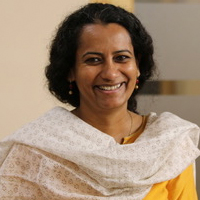 Tehmina Arora is a human rights lawyer practicing in Delhi. She serves as Senior Counsel, South Asia, for ADF International and Senior Fellow, South and Southeast Asia Action Team, Religious Freedom Institute.
 Orality in the Academy and Beyond - Practical resources for advancing the Great Commission
Jerry Wiles
Increasing numbers of missionaries, mission executives, pastors, and cross-cultural church planters are coming to an awareness and recognition that the Orality Movement is transformational in our time.[1] In fact, some now acknowledge that Orality is changing the face of missions and is one of the most significant breakthroughs of the past 500 years.
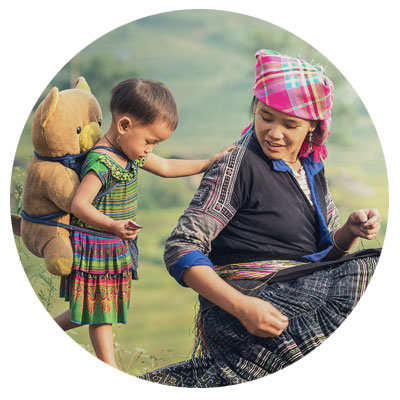 The Orality Movement seeks to rediscover the most effective ways that people have used to learn, communicate, and process information from the beginning of time. It is how the gospel spread throughout the entire populated world in the first century, before radio, television, the printing press, and other modern technological resources were available. It also seeks to understand better the various worldviews and cultural value systems of Oral societies and to appreciate comparatively relational and communal Oral people groups and Oral Preference Communicators.
As the Orality Movement becomes more visible and credible, the academic community is gaining interest and looking at ways of engagement. While Orality Studies have been around for more than 100 years, it is only in the past 40 years or so that they have become a significant conversation in the church and mission world.
Multiple disciplines of oralityWhen we engage with a broader understanding of the Orality Movement, we recognize the variety of academic disciplines related to the overall Orality domain:
- It may not be obvious on the surface, but with a deeper look, we can see that there are actually many aspects and disciplines connected to Orality.
- These include various facets of theology, missiology, psychology, sociology, cultural anthropology, and epistemology—just to name a few.
- There are also other fields of study that are important but may be even less obvious, such as learning and communication theory, communitarianism, narratology, transportation imagery, trauma therapy, arts and architecture, action learning, and guided discovery model.
Orality missiologyStill in its early stages, the Orality Missiology Collaboration Group (website not created yet) consists of a growing number of practitioners, trainers, researchers, and scholars. It now also includes several doctoral candidates doing dissertations on Orality and related topics. In our research and innovation efforts, we are discovering seminaries, universities, and other institutions of higher education with excellent programs that fit within the Orality domain. Some of those include areas such as ethnomusicology, ethnodoxology, ethnodramology, and theological aesthetics.
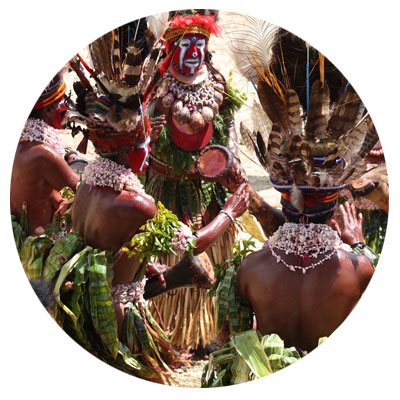 Other disciplines or fields of study related to Orality include narrative communication, Oral traditions, Early Church history, linguistics, cross-cultural studies, Oral literature and worldview issues. There is growing recognition within the Orality missions community and educational institutions that there are many resources available to enable one to gain understanding of this important field of learning and practice:
Two of those are the Center for Studies in Oral Tradition (www.oraltradition.org) and the International Society for Studies in Oral Tradition (www.issot.org).
There are numerous scholars, conferences, lecture series, articles, and events which are addressing issues such as Biblical Performance Criticism, Rhetoric, Arts, Oral Poetry and Village Proverbs.
Orality-based resources
Despite the massive volume of scholarly research, theses, dissertations and documents, there seems to be a shortage of contemporary application in terms of mission and ministry strategies. However, that is changing, as there is greater awareness of these resources and as we get feedback and reports from grass-roots movements. One of the advantages we have now, in contrast to approximately 40 years ago, is we can access the lessons learned and ‘impact stories’ from the work of practitioners and trainers in the Orality Movement. Many case studies, articles, and journals have come out of recent applications and can be useful to seminaries, universities, and other institutions implementing Orality Study Programs.
WE ARE DISCOVERING WORK THAT HAS BEEN DONE OVER THE YEARS, BUT MAY NOT BE VISIBLE TO THE CHURCH OR MISSION WORLD.In our ever growing Orality learning journey, we are discovering work that has been done over the years, but may not be visible to the church or mission world. The World Oral Literature Project (www.oralliterature.org) is a good example of great scholarly work from many difference presenters and participants. For example, its 2012 Workshop included scholars from Yale University, SIL International, University of Hawaii, San Diego State University, University of Amsterdam, University of Cambridge, University of Missouri, Charles University – The Netherlands, University of Melbourne, and several others from Africa and Asia.
Orality Studies and Oral Traditions
The Oxford Biblical Studies Online (www.oxfordbiblicalstudies.com) is another source for Orality Studies and Oral Tradition. A good number of scholars and institutions provide a wealth of research and knowledge. Many articles and resources can be found relating to areas such as historical criticism, narrative hermeneutics, performance communication, reception theory, theatre and performance studies, rhetorical criticism, typology, form criticism, and many others. On the surface, these may not seem related to the field of Orality, but are important in understanding the broad Orality domain.
One of the great needs within the evangelical church and mission world, in developing an awareness of the Orality Movement, is a broader exposure to the scholarly research and study that has already been done over a long period of time. Because of the wide variety and diversity of traditions involved, many have not crossed over their own denominational or institutional comfort zone to see the bigger picture.
North-south collaboration
As an example of north-south collaboration in reaching oral learners, the recent International Orality Network – Southeast Asia Convergence (ION-SEA), held in the Philippines, was a platform for multi-level exchange and collaboration. ION leaders from North America, Africa and the Middle East engaged with leaders from more than 20 nations in that region. Representatives from the Asia Theological Association and the International Council for Evangelical Theological Education are part of ION SEA and the global network of ministries and mission organizations.
Institutions such as the Asia Graduate School of Theology and South Africa Theological Seminary are able to connect with North American-based institutions like Biola University, Fuller Theological Seminary, Wheaton College, University of Toronto, and others. Oklahoma Baptist University now offers a Minor in Orality Studies. Other institutions will have an emphasis on or concentration in Orality as part of their Intercultural and/or Cross-Cultural Study programs.
While many in the Church in the global North think of Orality as storytelling or storying, understanding within the Orality Missiology conversation of the multiple aspects and applications of Orality is growing fast and will continue to do so. One of the advantages we enjoy now, in contrast to just a few years ago, is the availability of impact stories and examples of how the concepts, principles and practices of Orality are working in practical ways. Increasing numbers of case studies and reports are demonstrating its effectiveness in areas such as relief and development work, community health, church planting, disciple-making movements, and many others.
 Orality impact storiesReports and feedback from mission boards and agencies are providing new and much-needed data that can be very helpful to institutions implementing Orality studies in seminaries and other institutions. For example, Living Water International (https://water.cc/) and others have now put in place monitoring and evaluation programs to measure better how Orality is improving effectiveness in community development, as well as serving churches, ministries and church planting efforts. Many other members of the ION can now provide documentation to assist and support classroom training curricula.
Orality forums and consultations
The Orality in Theological Education Consultations that have been held since 2012 have also made a key contribution to Orality-related study programs in the United States and around the world. They have been hosted by Wheaton College, Hong Kong Baptist Seminary, Asbury Theological Seminary, Houston Baptist University, Oklahoma Baptist University, Daystar University in Nairobi, Kenya and Jos Theological Seminary in Nigeria. Preliminary plans are underway for other forums and consultations on Orality Missiology, and related topics, to be held in the United Kingdom, Latin America, the United States, Asia and Africa.
 The International Society for Orality Missiology is still in its formation stages but will exist to serve and support scholars and institutions that desire to create Orality Studies programs. Presently members of the ION leadership team are coaching and coordinating with several doctoral students writing dissertations on Orality and related topics. These dissertations will be valuable resources for other scholars, students, practitioners and trainers, as well as seminaries and universities.
A global community of learning and collaborationA significant reason for the growing body of knowledge and experience in Orality is the cross-pollination and partnerships between the ION and other networks and alliances, such as the Global Alliance for Church Multiplication (www.gacx.io) National Religious Broadcasters, Accord Network, Christian Leadership Alliance, Missio Nexus, Mission America Coalition, and the Lausanne Movement. Connecting and networking with Bible Societies and Bible translators is also contributing to the knowledge base that can benefit Orality Studies. Another important aspect is the availability of modern communications technology.
Amid the multi-faceted aspects of the Orality Movement, the leadership of ION is striving to make the Great Commission the central focus. That means communicating the Gospel and making disciples, and doing so in ways that are international, cross-cultural and reproducible to all places and every people group on earth.
For those who are relatively new to the Orality Movement and would like to learn more, there are a good number of articles and resources posted at www.orality.net. A good place to learn more about Orality and Bible Storying training opportunities would be www.water.cc/orality, or contact Jerry Wiles at jerrywiles@water.cc. For additional scholarly resources, visit http://www.biblicalperformancecriticism.org/
Endnotes
Editor’s Note: See article by Tom Steffen entitled, ‘Tracking the Orality Movement: Some implications for 21st century missions’, in March 2014 issue of Lausanne Global Analysis https://www.lausanne.org/content/lga/2014-03/tracking-the-orality-movement-some-implications-for-21st-century-missions. ↑
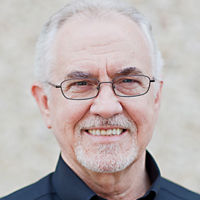 Jerry Wiles serves as North America Regional Director of the International Orality Network and as President Emeritus of Living Water International. He has more than 35 years of experience in ministry and international mission work, and he is recognized as one of the paradigm pioneers in the Orality Movement. He is an author and radio program producer and has been a frequent guest on radio and television talk shows and traveled extensively as a public speaker.
Lausanne Global Analysis seeks to deliver strategic and credible information and insight from an international network of evangelical analysts to equip influencers of global mission. Browse all the past issues at lausanne.org/lga. The publication of the LGA is overseen by its Editorial Advisory Board. Articles represent a diversity of viewpoints within the bounds of our foundational documents. The views and opinions expressed in these articles are those of the authors and do not necessarily reflect the personal viewpoints of Lausanne Movement leaders or networks. Inquiries regarding the Lausanne Global Analysis may be addressed to analysis@lausanne.org.
***

No comments:
Post a Comment