Eurasia Region Newsletter of The Globaql Church of the Nazarene in
Buesingen Am Hochrhein,
Switzerland 8238, Europe

Two churches, one body
Congregations come together across Europe through shared need for ministry space.

For several years, Nazarenes in Yerevan, the capital city of Armenia, worshiped and conducted community outreach in a three-bedroom apartment of a residential building.
The highly missional community maximized the space as best they could. They split their growing kids’ club and vacation Bible school into shifts so they could fit all the children. They ran a knitting project for Syrian-Armenian women who had fled the war in Syria and found refuge in Yerevan. They also held a youth group for teenagers. About 35 adults crowded into the living room for Sunday worship or training events. The group even organized their ongoing outreach ministry to a nearby town from the apartment.
“It was a ‘multi-purpose’ apartment,” says Pastor Rita Lao with a grin.
But the small space limited their potential for growth.
The Nazarenes prayed and fasted for a time, asking God to provide them with a bigger space that would also give them credibility in the community. Their prayers centered on the promises in Jeremiah 29:11, “For I know the plans I have for you,” declares the LORD, “plans to prosper you and not to harm you, plans to give you hope and a future,” and in Isaiah 54:2, “Enlarge the place of your tent, stretch your tent curtains wide, do not hold back; lengthen your cords, strengthen your stakes.”
In early 2016, Trino Jara, leader of the Yerevan group, visited one of the Nazarene churches in Berlin and gave a short presentation about how God is working through Nazarenes in Armenia. He mentioned the space limitations facing the group in Armenia.
It was a problem this church in Berlin understood all too well. A number of years ago, after the merger with another Nazarene church in Berlin, they had sold their old building to buy something more centrally located to the area where they are meeting now. But this became more difficult than they had anticipated.
The Berlin church had searched and searched, but never found a building and property that fit their needs and their budget. Because they didn’t want to leave the community, they continued renting a facility. The funds remained in their bank account.
The pastor of the Berlin church empathized with the Nazarenes in Yerevan and felt moved to act.
“I felt somehow that the Lord wanted us to do something about that,” he said.
At the following board meeting, the church board discussed the idea of helping their brothers and sisters in Yerevan buy their own building.
“We were pretty quickly ready to go for it,” said the SDMI president. “Then we had a meeting at church. We wanted the whole church to be behind it.”
The board presented their proposal to the congregation, expecting some reluctance or at least numerous questions and lengthy discussion.
“But there hardly were any really serious questions about if we should do that. The church immediately said, ‘Oh yes, we want to do that.’”
And they were also unified in stating that what they shared did not belong to them in the first place; it was God’s. Thus, the pastor and congregation have requested to remain publicly anonymous.
“I think it’s good stewardship,” said one of the board members. “God had given the money, so we provided. It’s God who made it possible for us to give generously.”
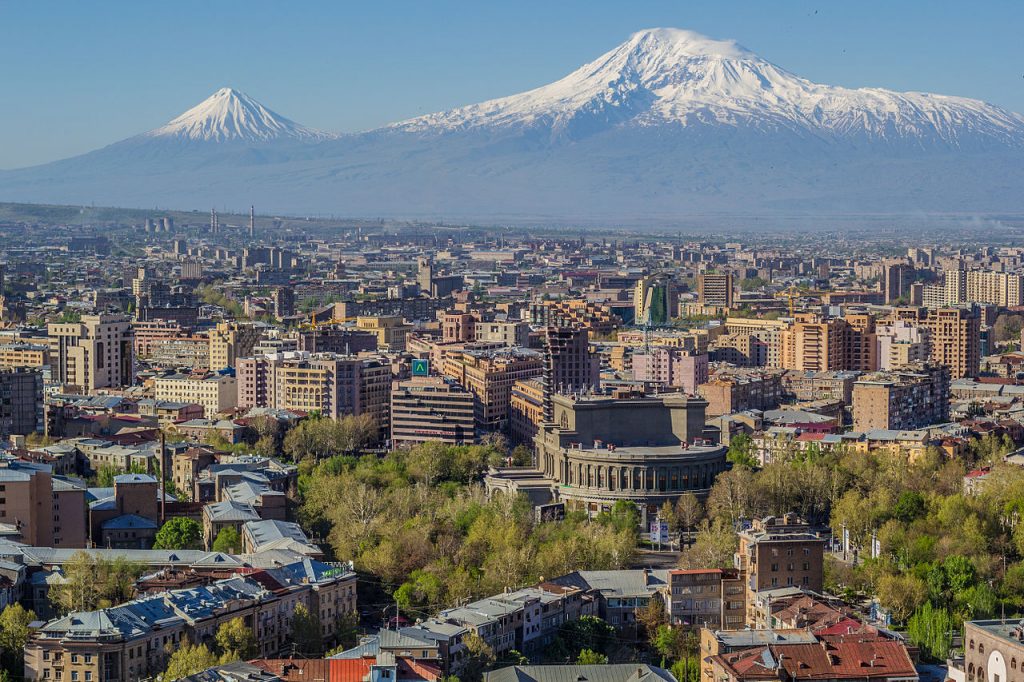
The Yerevan group prayed until the right space became available – a three-story building that had been part of a former kindergarten, just seven minutes’ walk from the apartment complex where they’d been ministering for years. Their new building has rooms spacious enough for larger kids’ club and VBS gatherings, as well as a basement room for combined worship. There is a large kitchen, and also the possibility to add one more floor on top.
When the purchase took place, they introduced themselves to their new neighbors, who were all favorable to the Nazarenes’ presence and purpose. More children began coming to the kids’ activities. Regular attenders of all ages began inviting friends and family.
The Yerevan Nazarenes have now been meeting in the building for about a year, and dedicated it to the Lord during Armenia’s annual Nazarene District Assembly in March 2018, when representatives from the four Nazarene groups meeting in Armenia were able to gather in the space. For previous annual assemblies, the groups were forced to rent space when having the assembly in Yerevan.
Eight members from the Berlin church attended the assembly as representatives from their church.
“When we went there it was almost like family,” said the NMI president of the Berlin church. “It is almost like we have a church building now – far away, but close on our hearts.
“Eurasia Region believes that healthy Nazarene churches develop in an interdependent way. We really need each other,” said Arthur Snijders, Eurasia Region director. “This example of German Nazarenes and Armenian Nazarenes connecting and helping the other is a beautiful expression of what it means to be the body of Christ together. Generosity, faith, love for one another, mission, are all part of this real life story. (Written by Gina Grate Pottenger – Previously published in the May 2018 edition of Where Worlds Meet.)
Read the full story.

 Youth ministry is a 'Road to Emmaus' journey
Regional youth leader Diego Lopez reveals why he believes training is critical for the development of youth ministers and the growth of Nazarene Youth International.
I went to college to study youth ministry and theology, mostly because at the time it made sense. It was an available course at Nazarene Theological College, and I was interested in working with youth. Little did I know how it would grow and develop me as a person, and help me to influence those young people and leaders whose journeys I have been part of over the years.
In my youth ministry training, I was exposed to subjects such as understanding others, pedagogy (or, as it is also known, informal education), advocacy, youth work in the community, pastoral care for youth, etc. All those subjects formed my journey in youth ministry.
The story in Luke 24: 13-35(Luke 24:
At the following board meeting, the church board discussed the idea of helping their brothers and sisters in Yerevan buy their own building.
“We were pretty quickly ready to go for it,” said the SDMI president. “Then we had a meeting at church. We wanted the whole church to be behind it.”
The board presented their proposal to the congregation, expecting some reluctance or at least numerous questions and lengthy discussion.
“But there hardly were any really serious questions about if we should do that. The church immediately said, ‘Oh yes, we want to do that.’”
And they were also unified in stating that what they shared did not belong to them in the first place; it was God’s. Thus, the pastor and congregation have requested to remain publicly anonymous.
“I think it’s good stewardship,” said one of the board members. “God had given the money, so we provided. It’s God who made it possible for us to give generously.”
After the pastor informed Jara about the church’s intentions, Jara gathered the Yerevan Nazarenes together, saying only that he wanted to share good news with them. With everyone crowded into the three-bedroom apartment, he introduced the Berlin pastor to the group through a Skype video call. Together they told them about the Berlin church’s belief that God wanted them to share some of what they been unable to use on themselves for the new building in Yerevan
“Some people were crying,” recalls Lao. “We had a couple of new people there who were surprised. They didn’t comprehend how a church in Berlin, who never knew us, would give what they had for us to have a space. It was a beautiful testimony as a church and to the people who were new to us.”The Yerevan group prayed until the right space became available – a three-story building that had been part of a former kindergarten, just seven minutes’ walk from the apartment complex where they’d been ministering for years. Their new building has rooms spacious enough for larger kids’ club and VBS gatherings, as well as a basement room for combined worship. There is a large kitchen, and also the possibility to add one more floor on top.
When the purchase took place, they introduced themselves to their new neighbors, who were all favorable to the Nazarenes’ presence and purpose. More children began coming to the kids’ activities. Regular attenders of all ages began inviting friends and family.
The Yerevan Nazarenes have now been meeting in the building for about a year, and dedicated it to the Lord during Armenia’s annual Nazarene District Assembly in March 2018, when representatives from the four Nazarene groups meeting in Armenia were able to gather in the space. For previous annual assemblies, the groups were forced to rent space when having the assembly in Yerevan.
Eight members from the Berlin church attended the assembly as representatives from their church.
“When we went there it was almost like family,” said the NMI president of the Berlin church. “It is almost like we have a church building now – far away, but close on our hearts.
“Eurasia Region believes that healthy Nazarene churches develop in an interdependent way. We really need each other,” said Arthur Snijders, Eurasia Region director. “This example of German Nazarenes and Armenian Nazarenes connecting and helping the other is a beautiful expression of what it means to be the body of Christ together. Generosity, faith, love for one another, mission, are all part of this real life story. (Written by Gina Grate Pottenger – Previously published in the May 2018 edition of Where Worlds Meet.)
Read the full story.
Regional youth leader Diego Lopez reveals why he believes training is critical for the development of youth ministers and the growth of Nazarene Youth International.
I went to college to study youth ministry and theology, mostly because at the time it made sense. It was an available course at Nazarene Theological College, and I was interested in working with youth. Little did I know how it would grow and develop me as a person, and help me to influence those young people and leaders whose journeys I have been part of over the years.
In my youth ministry training, I was exposed to subjects such as understanding others, pedagogy (or, as it is also known, informal education), advocacy, youth work in the community, pastoral care for youth, etc. All those subjects formed my journey in youth ministry.
The story in Luke 24: 13-35(Luke 24:
13 That same day, two of them were going toward a village about seven miles from Yerushalayim called Amma’us, 14 and they were talking with each other about all the things that had happened. 15 As they talked and discussed, Yeshua himself came up and walked along with them, 16 but something kept them from recognizing him. 17 He asked them, “What are you talking about with each other as you walk along?” They stopped short, their faces downcast; 18 and one of them, named Cleopas, answered him, “Are you the only person staying in Yerushalayim that doesn’t know the things that have been going on there the last few days?” 19 “What things?” he asked them. They said to him, “The things about Yeshua from Natzeret. He was a prophet and proved it by the things he did and said before God and all the people. 20 Our head cohanim and our leaders handed him over, so that he could be sentenced to death and executed on a stake as a criminal. 21 And we had hoped that he would be the one to liberate Isra’el! Besides all that, today is the third day since these things happened; 22 and this morning, some of the women astounded us. They were at the tomb early 23 and couldn’t find his body, so they came back; but they also reported that they had seen a vision of angels who say he’s alive! 24 Some of our friends went to the tomb and found it exactly as the women had said, but they didn’t see him.”
25 He said to them, “Foolish people! So unwilling to put your trust in everything the prophets spoke! 26 Didn’t the Messiah have to die like this before entering his glory?” 27 Then, starting with Moshe and all the prophets, he explained to them the things that can be found throughout the Tanakh concerning himself.
28 They approached the village where they were going. He made as if he were going on farther; 29 but they held him back, saying, “Stay with us, for it’s almost evening, and it’s getting dark.” So he went in to stay with them. 30 As he was reclining with them at the table, he took the matzah, made the b’rakhah, broke it and handed it to them. 31 Then their eyes were opened, and they recognized him. But he became invisible to them. 32 They said to each other, “Didn’t our hearts burn inside us as he spoke to us on the road, opening up the Tanakh to us?”
33 They got up at once, returned to Yerushalayim and found the Eleven gathered together with their friends, 34 saying, “It’s true! The Lord has risen! Shim‘on saw him!” 35 Then the two told what had happened on the road and how he had become known to them in the breaking of the matzah.
(Complete Jewish Bible)) of the road to Emmaus is one that resonates with my style of youth ministry. In this story, the resurrected Jesus met a couple of his followers on their journey to Emmaus. He did not impose Himself or reveal who He was or any particular agenda. But along the way, He listened and accompanied them as they explored their concerns. As a result of His presence and conversation, they invited Him into their house because they felt at home and comfortable around Jesus. His time with them helped open their hearts to what the Holy Spirit was saying to them.
Likewise, youth ministry is a journey. It is a two-way road. Young people have as much to teach us as we have to give to them.
We, as leaders, tend to start from the perspective that we know it all. We can often disregard what the youth know and what God is already doing in their lives. We should look at our relationship as walking the journey with them.
To journey with youth, we need to find points of connection with them – maybe a common interest or a hobby or sport. Perhaps we can draw them in through their technological expertise, or understanding of the world. Youth always have something to contribute.
When I was given the opportunity to coordinate the youth ministry in Eurasia, in consultation with leaders across the region, we made youth ministry training a priority. The purpose of regional NYI coordinator is to equip youth leaders at the local grassroots level to more effectively minister to youth. Every international training should make a local difference for young people in their church.
Nazarene Theological College in Manchester has helped us develop our training by allowing Rev Louise Kenyon to design and tailor a training tool called Nexūs to meet our current needs. Nexūs is an intensive course over a minimum of two-weekends in which people are invited to prepare themselves better for youth leadership.
Over the past two years, we have delivered Nexūs training in eight locations across Eurasia, with 132 students participating from 22 different districts. The training is delivered in two segments of one, two or three days long. The material has been translated into seven languages. It is our goal to reach all 52 districts of Eurasia in the next three years.
Our most recent Nexūs was held in Manchester. Alexandra Marinescu, from the Bucharest Church of the Nazarene in Romania (Biserica Nazarineanului Binescuvantarea, Bucarest) took part. She says that this training opened her eyes to God’s calling to youth ministry, while also providing her with the tools to answer His call. (Read her story on page 6).
Thank you to all of those who have supported us and opened the doors of your churches to deliver Nexūs.
Please pray for more resources and doors to be open so that we can continue equipping youth leaders across our region and beyond. (Written by Diego Lopez who is the Eurasia Region youth leader. Learn more about Nazarene Youth International in Eurasia: www.eurasianyi.org., This article was published in the May edition of Where Worlds Meet.)
Read the story.
 Portugal District celebrates translation of theology book on mission
Recuperando a Missão Completa de Deus ("Recovering the Full Mission of God: A Biblical Perspective on Being, Doing and Telling") is now available on Amazon.
About 75 people gathered on May 1 in Lisbon to celebrate the publication of a Portuguese translation of Dr. Dean Flemming’s book, Recovering the Full Mission of God: A Biblical Perspective on Being, Doing and Telling.
Over an entire year, Recuperando a Missão Completa de Deus was translated by three people representing the Portuguese Language Literature Committee. The book provides a Wesleyan-Arminian resource for theological education and preparing people for ministry, according to Raquel Pereira, Portuguese Nazarene Literature Coordinator in Portugal.
However, the content of the book is accessible to any reader, she added. With discussion questions at the end of each chapter, the volume can be a resource to Portuguese-speaking Sunday school classes and small groups anywhere in the world.
“The dynamics of being, doing and telling in the Christian life from a biblical perspective is relevant to a broad audience,” Pereira said. “Besides our ministerial students, the present ministers (pastors included) and all God’s people who want to be faithful to God’s call to participate in His mission in the world will benefit greatly from reading this book.”
We, as leaders, tend to start from the perspective that we know it all. We can often disregard what the youth know and what God is already doing in their lives. We should look at our relationship as walking the journey with them.
To journey with youth, we need to find points of connection with them – maybe a common interest or a hobby or sport. Perhaps we can draw them in through their technological expertise, or understanding of the world. Youth always have something to contribute.
When I was given the opportunity to coordinate the youth ministry in Eurasia, in consultation with leaders across the region, we made youth ministry training a priority. The purpose of regional NYI coordinator is to equip youth leaders at the local grassroots level to more effectively minister to youth. Every international training should make a local difference for young people in their church.
Nazarene Theological College in Manchester has helped us develop our training by allowing Rev Louise Kenyon to design and tailor a training tool called Nexūs to meet our current needs. Nexūs is an intensive course over a minimum of two-weekends in which people are invited to prepare themselves better for youth leadership.
Over the past two years, we have delivered Nexūs training in eight locations across Eurasia, with 132 students participating from 22 different districts. The training is delivered in two segments of one, two or three days long. The material has been translated into seven languages. It is our goal to reach all 52 districts of Eurasia in the next three years.
Our most recent Nexūs was held in Manchester. Alexandra Marinescu, from the Bucharest Church of the Nazarene in Romania (Biserica Nazarineanului Binescuvantarea, Bucarest) took part. She says that this training opened her eyes to God’s calling to youth ministry, while also providing her with the tools to answer His call. (Read her story on page 6).
Thank you to all of those who have supported us and opened the doors of your churches to deliver Nexūs.
Please pray for more resources and doors to be open so that we can continue equipping youth leaders across our region and beyond. (Written by Diego Lopez who is the Eurasia Region youth leader. Learn more about Nazarene Youth International in Eurasia: www.eurasianyi.org., This article was published in the May edition of Where Worlds Meet.)
Read the story.
Recuperando a Missão Completa de Deus ("Recovering the Full Mission of God: A Biblical Perspective on Being, Doing and Telling") is now available on Amazon.
About 75 people gathered on May 1 in Lisbon to celebrate the publication of a Portuguese translation of Dr. Dean Flemming’s book, Recovering the Full Mission of God: A Biblical Perspective on Being, Doing and Telling.
Over an entire year, Recuperando a Missão Completa de Deus was translated by three people representing the Portuguese Language Literature Committee. The book provides a Wesleyan-Arminian resource for theological education and preparing people for ministry, according to Raquel Pereira, Portuguese Nazarene Literature Coordinator in Portugal.
However, the content of the book is accessible to any reader, she added. With discussion questions at the end of each chapter, the volume can be a resource to Portuguese-speaking Sunday school classes and small groups anywhere in the world.
“The dynamics of being, doing and telling in the Christian life from a biblical perspective is relevant to a broad audience,” Pereira said. “Besides our ministerial students, the present ministers (pastors included) and all God’s people who want to be faithful to God’s call to participate in His mission in the world will benefit greatly from reading this book.”
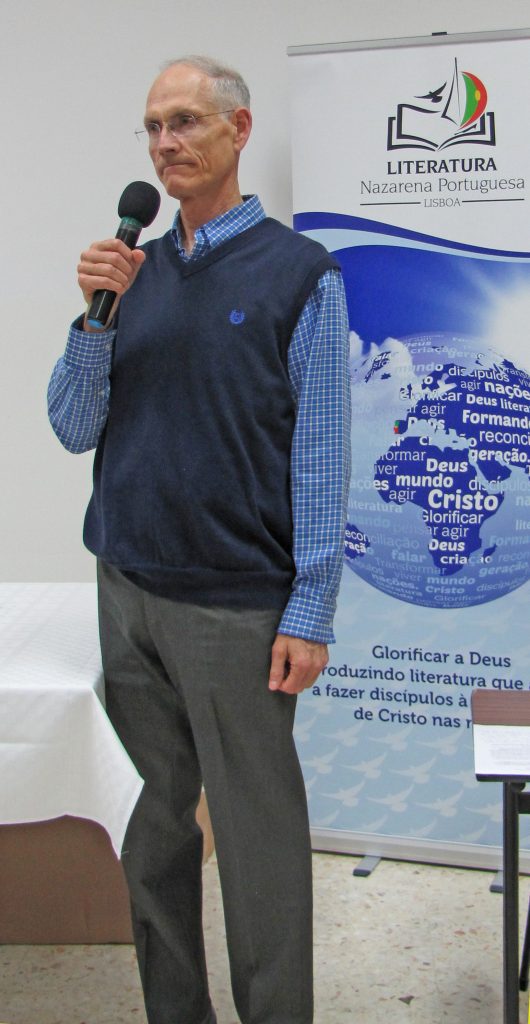
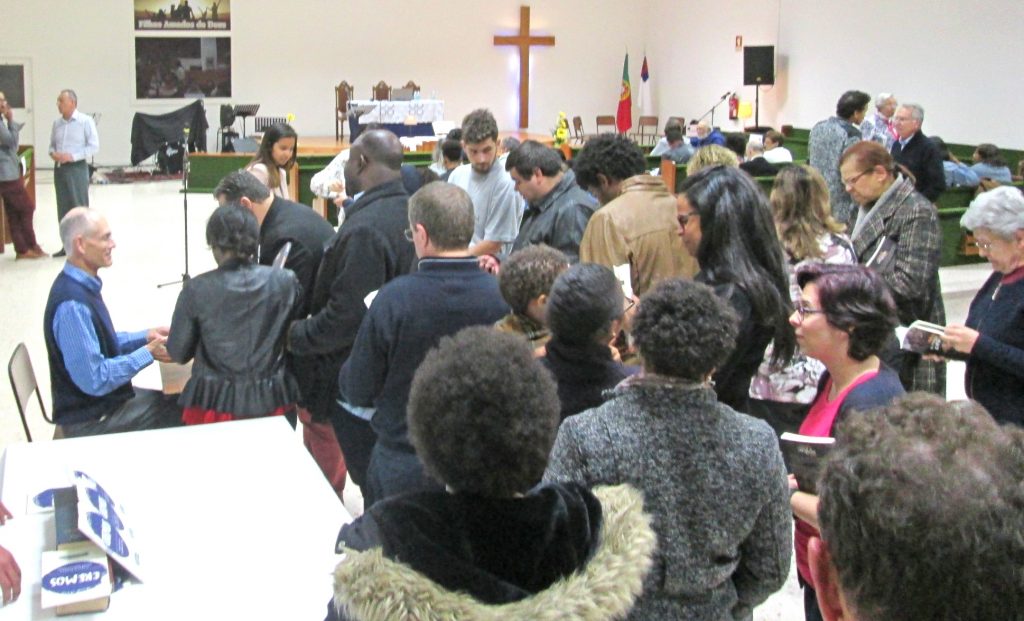
The book launch was part of Theological Conversations Day, of which Flemming was a main speaker. The event was hosted jointly by the European Nazarene College Portugal Learning Center and District Ministerial Studies Board. Participants separated into small groups to discuss missional ecclesiology in Revelation, based on the paper, “Living the Future,” which was presented at the Nazarene Global Theology Conference in South Africa in 2014.
“People really engaged, they were encouraged, cried together, talked with each other, even during lunch, and shared in groups on how we need to be intentional about being the Church of God in the here and now,” Pereira said.
“This is a clear sign of how much people need meaningful and helpful resources in their language for themselves, and to serve others,” said Nikolaj Sawatzky, Eurasia Region Literature Coordinator. “I am very grateful to Raquel Pereira and her team for their tireless efforts in making this book available for our Portuguese-speaking brothers and sisters around the world.”
Flemming is professor of New Testament and Missions at MidAmerica Nazarene University, in Kansas, USA. Previously, served as a Nazarene missionary, teaching for many years at European Nazarene College, based in Germany, as well as Asia-Pacific Nazarene Theological Seminary, in the Philippines. He has published four other books, including Why Mission? and Contextualization in the New Testament: Patterns for Theology and Mission.
 This article was previously published in the May 2018 edition of Where Worlds Meet.
“People really engaged, they were encouraged, cried together, talked with each other, even during lunch, and shared in groups on how we need to be intentional about being the Church of God in the here and now,” Pereira said.
“People really engaged, they were encouraged, cried together, talked with each other, even during lunch, and shared in groups on how we need to be intentional about being the Church of God in the here and now,” Pereira said.
The 44 copies of Recuperando a Missão Completa de Deuswere not enough to meet demand, so more copies will be printed for the Portugal District Assembly in November.“This is a clear sign of how much people need meaningful and helpful resources in their language for themselves, and to serve others,” said Nikolaj Sawatzky, Eurasia Region Literature Coordinator. “I am very grateful to Raquel Pereira and her team for their tireless efforts in making this book available for our Portuguese-speaking brothers and sisters around the world.”
Flemming is professor of New Testament and Missions at MidAmerica Nazarene University, in Kansas, USA. Previously, served as a Nazarene missionary, teaching for many years at European Nazarene College, based in Germany, as well as Asia-Pacific Nazarene Theological Seminary, in the Philippines. He has published four other books, including Why Mission? and Contextualization in the New Testament: Patterns for Theology and Mission.
Read the story.
 The Eurasia Region Church of the Nazarene is one of six regions in the Church of the Nazarene global denomination. The Eurasia Region is home to about 8,000 churches in Europe, the Middle East and South Asia. Learn more about us at www.eurasiaregion.org.
Founded in 1908, the global Church of the Nazarene denomination is the largest in the classical Wesleyan-Holiness tradition, with 2.3 million members, in 29,000 churches, sharing Christ’s love with their communities in 162 world areas.
Learn more at www.nazarene.org.
 Don't miss previous stories! Visit www.eurasiaregion.org/news to read more.
 Have you sensed God might be calling you to serve as a cross-cultural volunteer? The Eurasia Region's M+Power initiative exists to recruit, train and mobilize Eurasia Nazarenes into mission. Learn more and sign up to attend a training: https://eurasiaregion.org/volunteers/


Founded in 1908, the global Church of the Nazarene denomination is the largest in the classical Wesleyan-Holiness tradition, with 2.3 million members, in 29,000 churches, sharing Christ’s love with their communities in 162 world areas.
Learn more at www.nazarene.org.
Copyright © 2018 Eurasia Region, All rights reserved.
Our mailing address is:
Eurasia Regional Office
Buesingen Am Hochrhein
Switzerland 8238, Europe
***
No comments:
Post a Comment