
Today’s Reflection:

The toughest part of practicing sabbath is letting go of our maladaptive coping so that we may experience fulfillment through an ancient medicine God put in place for everyone. This elixir works — no matter what century, country, or circumstance we find ourselves in.
If we can swing one entire day off (a privilege that others may not have) or one hour off, we ought not turn to the screen. We can use this time to enrich our lives through activities that may not be valued by our culture or economy. We can take a nap, sit in silence alone, pray, read a devotional, attend a church service, enjoy a slow meal with someone, or offer our time to others in a way that doesn’t benefit us in a material way. When we don’t keep sabbath, we are embezzling time from ourselves, as Rabbi Heschel reminds us. Time is our only nonrenewable resource. Sabbath, then, helps us to number our days rightly. (J. Dana Trent, For Sabbath’s Sake)
From pages 120-121 of For Sabbath’s Sake: Embracing Your Need for Rest, Worship and Community by J. Dana Trent. Copyright © 2017 by J. Dana Trent. All rights reserved. Used by permission of Upper Room Books. http://bookstore.upperroom.org/ Learn more about or purchase this book.
Today’s Question: What are sabbath activities for you?
Today’s Scripture: And wherever he went, into villages or cities or farms, they laid the sick in the marketplaces, and begged him that they might touch even the fringe of his cloak; and all who touched it were healed. (Mark 6:56, NRSV)
This Week: pray for the peace of Christ.
Did You Know?In need of prayer? The Upper Room Living Prayer Center is a 7-day-a-week intercessory prayer ministry staffed by trained volunteers. Call 1-800-251-2468 or visit The Living Prayer Center website.
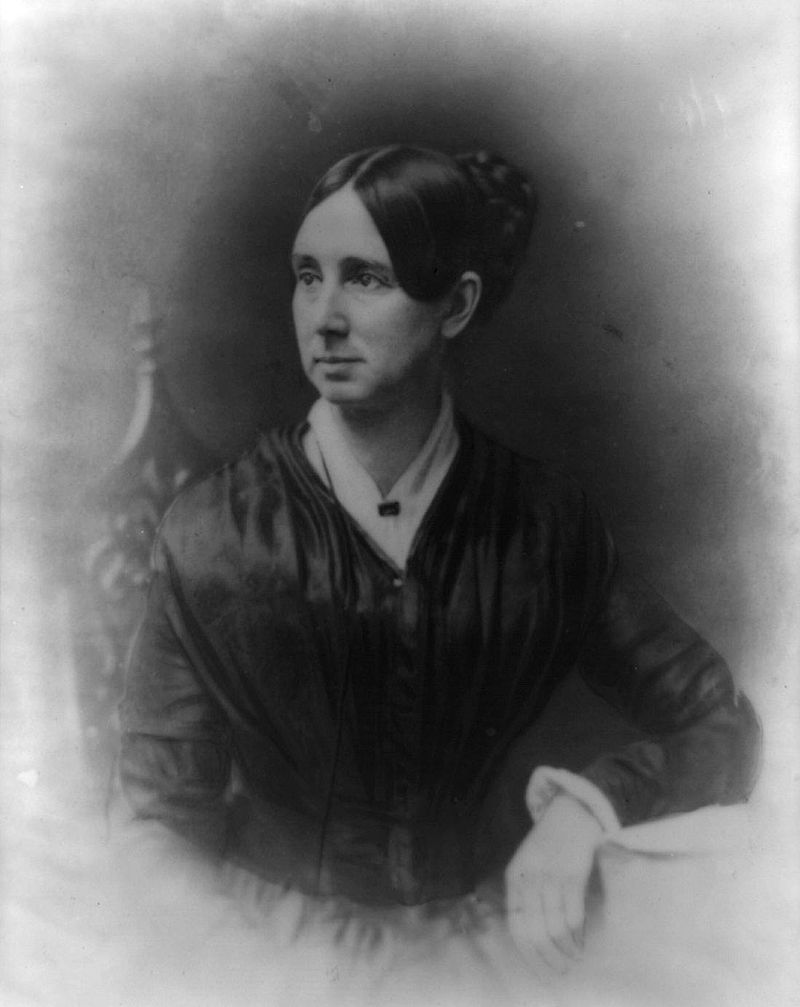
This week we remember: Dorothea Dix (July 18).
She found spiritual solace in the Unitarian Church. In 1841 she volunteered to lead Bible study in a Cambridge prison. What she saw there changed her life. Mentally ill patients were locked up as common criminals. She was so moved by their suffering that she visited hundreds of towns in the next two years, recording the often-brutal conditions in which mentally-ill people lived. Armed with this data, Dix called for more humane treatment for the mentally ill. Eventually, Massachusetts passed a reform bill in 1843. Dix pressed the issue in other states. She founded or improved over thirty hospitals and also traveled abroad to push reform in other nations.
During the Civil War, Dorothea Dix worked as Superintendent of Nurses, then returned to the reform work about which she was so passionate. She finally retired from public service when she was 79 and died on July 18, 1887.
If Dorothea Dix had taken the Spiritual Types Test, she probably would have been a Prophet. Dorothea Dix is remembered on July 18.
 Lectionary Readings for Sunday, 22 July 2018
(Courtesy of Vanderbilt Divinity Library)
2 Samuel 7:1-14a
Psalm 89:20-37
Ephesians 2:11-22
Mark 6:30-34, 53-56
2 Samuel 7:1 After the king had been living in his palace awhile and Adonaihad given him rest from all his surrounding enemies, 2 the king said to Natan the prophet, “Here, I’m living in a cedar-wood palace; but the ark of God is kept in a tent!” 3 Natan said to the king, “Go, do everything that is in your heart, for Adonai is with you.”
4 But that same night the word of Adonai came to Natan: 5 “Go and tell my servant David that this is what Adonai says: ‘You are going to build me a house to live in? 6 Since the day I brought the people of Isra’el out of Egypt until today, I never lived in a house; rather, I traveled in a tent and a tabernacle. 7 Everywhere I traveled with all the people of Isra’el, did I ever speak a word to any of the tribes of Isra’el, whom I ordered to shepherd my people Isra’el, asking, “Why haven’t you built me a cedar-wood house?”’
8 “Therefore say this to my servant David that this is what Adonai-Tzva’ot says: ‘I took you from the sheep-yards, from following the sheep, to make you chief over my people, over Isra’el. 9 I have been with you wherever you went; I have destroyed all your enemies ahead of you; and I am making your reputation great, like the reputations of the greatest people on earth. 10 I will assign a place to my people Isra’el; I will plant them there, so that they can live in their own place without being disturbed any more. The wicked will no longer oppress them, as they did at the beginning, 11 and as they did from the time I ordered judges to be over my people Isra’el; instead, I will give you rest from all your enemies.
“‘Moreover, Adonai tells you that Adonai will make you a house. 12 When your days come to an end and you sleep with your ancestors, I will establish one of your descendants to succeed you, one of your own flesh and blood; and I will set up his rulership. 13 He will build a house for my name, and I will establish his royal throne forever. 14 I will be a father for him, and he will be a son for me. If he does something wrong, I will punish him with a rod and blows, just as everyone gets punished;
Psalm 89:20 (19) There was a time when you spoke in a vision;
you declared to your loyal [prophets],
“I have given help to a warrior,
I have raised up someone chosen from the people.
21 (20) I have found David my servant
and anointed him with my holy oil.
22 (21) My hand will always be with him,
and my arm will give him strength.
23 (22) No enemy will outwit him,
no wicked man overcome him.
24 (23) I will crush his foes before him
and strike down those who hate him.
25 (24) My faithfulness and grace will be with him;
through my name his power will grow.
26 (25) I will put his hand on the sea
and his right hand on the rivers.
27 (26) He will call to me, ‘You are my father,
my God, the Rock of my salvation.’
28 (27) I will give him the position of firstborn,
the highest of the kings of the earth.
29 (28) I will keep my grace for him forever,
and in my covenant be faithful with him.
30 (29) I will establish his dynasty forever,
and his throne as long as the heavens last.
31 (30) “If his descendants abandon my Torah
and fail to live by my rulings,
32 (31) if they profane my regulations
and don’t obey my mitzvot,
33 (32) I will punish their disobedience with the rod
and their guilt with lashes.
34 (33) But I won’t withdraw my grace from him
or be false to my faithfulness.
35 (34) I will not profane my covenant
or change what my lips have spoken.
36 (35) I have sworn by my holiness once and for all;
I will not lie to David —
37 (36) his dynasty will last forever,
his throne like the sun before me.
38 (37) It will be established forever, like the moon,
which remains a faithful witness in the sky.” (Selah)
Ephesians 2:11 Therefore, remember your former state: you Gentiles by birth — called the Uncircumcised by those who, merely because of an operation on their flesh, are called the Circumcised — 12 at that time had no Messiah. You were estranged from the national life of Isra’el. You were foreigners to the covenants embodying God’s promise. You were in this world without hope and without God.
13 But now, you who were once far off have been brought near through the shedding of the Messiah’s blood. 14 For he himself is our shalom — he has made us both one and has broken down the m’chitzah which divided us 15 by destroying in his own body the enmity occasioned by the Torah, with its commands set forth in the form of ordinances. He did this in order to create in union with himself from the two groups a single new humanity and thus make shalom, 16 and in order to reconcile to God both in a single body by being executed on a stake as a criminal and thus in himself killing that enmity.
17 Also, when he came, he announced as Good News shalom toyou far off and shalom to those nearby,[Ephesians 2:17 Isaiah 57:19] 18 news that through him we both have access in one Spirit to the Father.
19 So then, you are no longer foreigners and strangers. On the contrary, you are fellow-citizens with God’s people and members of God’s family. 20 You have been built on the foundation of the emissaries and the prophets, with the cornerstone being Yeshua the Messiah himself. 21 In union with him the whole building is held together, and it is growing into a holy temple in union with the Lord. 22 Yes, in union with him, you yourselves are being built together into a spiritual dwelling-place for God!
Mark 6:30 Those who had been sent out rejoined Yeshua and reported to him all they had done and taught. 31 There were so many people coming and going that they couldn’t even take time to eat, so he said to them, “Come with me by yourselves to a place where we can be alone, and you can get some rest.” 32 They went off by themselves to an isolated spot; 33 but many people, seeing them leave and recognizing them, ran ahead on foot from all the towns and got there first. 34 When Yeshua came ashore, he saw a huge crowd. Filled with compassion for them, because they were like sheep without a shepherd, he began teaching them many things.
53 After they had made the crossing, they landed at Ginosar and anchored. 54 As soon as they got out of the boat, the people recognized him 55 and began running around throughout that whole region and bringing sick people on their stretchers to any place where they heard he was. 56 Wherever he went, in towns, cities or country, they laid the sick in the marketplaces. They begged him to let them touch even the tzitzit on his robe, and all who touched it were healed. (Complete Jewish Bible).
Dorothea Dix
July 18
Dorothea Dix was born April 4, 1802 into an unstable family. Because of her own tumultuous childhood, Dorothea decided to become a teacher and opened a school for disadvantaged children. A siege of tuberculosis ended her teaching career.She found spiritual solace in the Unitarian Church. In 1841 she volunteered to lead Bible study in a Cambridge prison. What she saw there changed her life. Mentally ill patients were locked up as common criminals. She was so moved by their suffering that she visited hundreds of towns in the next two years, recording the often-brutal conditions in which mentally-ill people lived. Armed with this data, Dix called for more humane treatment for the mentally ill. Eventually, Massachusetts passed a reform bill in 1843. Dix pressed the issue in other states. She founded or improved over thirty hospitals and also traveled abroad to push reform in other nations.
During the Civil War, Dorothea Dix worked as Superintendent of Nurses, then returned to the reform work about which she was so passionate. She finally retired from public service when she was 79 and died on July 18, 1887.
If Dorothea Dix had taken the Spiritual Types Test, she probably would have been a Prophet. Dorothea Dix is remembered on July 18.
U.S. Library of Congress DIX, DOROTHEA LYNDE. Retouched photograph. [No date found on item.] Location: Biographical File Reproduction Number: LC-USZ62-9797
(Courtesy of Vanderbilt Divinity Library)
2 Samuel 7:1-14a
Psalm 89:20-37
Ephesians 2:11-22
Mark 6:30-34, 53-56
2 Samuel 7:1 After the king had been living in his palace awhile and Adonaihad given him rest from all his surrounding enemies, 2 the king said to Natan the prophet, “Here, I’m living in a cedar-wood palace; but the ark of God is kept in a tent!” 3 Natan said to the king, “Go, do everything that is in your heart, for Adonai is with you.”
4 But that same night the word of Adonai came to Natan: 5 “Go and tell my servant David that this is what Adonai says: ‘You are going to build me a house to live in? 6 Since the day I brought the people of Isra’el out of Egypt until today, I never lived in a house; rather, I traveled in a tent and a tabernacle. 7 Everywhere I traveled with all the people of Isra’el, did I ever speak a word to any of the tribes of Isra’el, whom I ordered to shepherd my people Isra’el, asking, “Why haven’t you built me a cedar-wood house?”’
8 “Therefore say this to my servant David that this is what Adonai-Tzva’ot says: ‘I took you from the sheep-yards, from following the sheep, to make you chief over my people, over Isra’el. 9 I have been with you wherever you went; I have destroyed all your enemies ahead of you; and I am making your reputation great, like the reputations of the greatest people on earth. 10 I will assign a place to my people Isra’el; I will plant them there, so that they can live in their own place without being disturbed any more. The wicked will no longer oppress them, as they did at the beginning, 11 and as they did from the time I ordered judges to be over my people Isra’el; instead, I will give you rest from all your enemies.
“‘Moreover, Adonai tells you that Adonai will make you a house. 12 When your days come to an end and you sleep with your ancestors, I will establish one of your descendants to succeed you, one of your own flesh and blood; and I will set up his rulership. 13 He will build a house for my name, and I will establish his royal throne forever. 14 I will be a father for him, and he will be a son for me. If he does something wrong, I will punish him with a rod and blows, just as everyone gets punished;
Psalm 89:20 (19) There was a time when you spoke in a vision;
you declared to your loyal [prophets],
“I have given help to a warrior,
I have raised up someone chosen from the people.
21 (20) I have found David my servant
and anointed him with my holy oil.
22 (21) My hand will always be with him,
and my arm will give him strength.
23 (22) No enemy will outwit him,
no wicked man overcome him.
24 (23) I will crush his foes before him
and strike down those who hate him.
25 (24) My faithfulness and grace will be with him;
through my name his power will grow.
26 (25) I will put his hand on the sea
and his right hand on the rivers.
27 (26) He will call to me, ‘You are my father,
my God, the Rock of my salvation.’
28 (27) I will give him the position of firstborn,
the highest of the kings of the earth.
29 (28) I will keep my grace for him forever,
and in my covenant be faithful with him.
30 (29) I will establish his dynasty forever,
and his throne as long as the heavens last.
31 (30) “If his descendants abandon my Torah
and fail to live by my rulings,
32 (31) if they profane my regulations
and don’t obey my mitzvot,
33 (32) I will punish their disobedience with the rod
and their guilt with lashes.
34 (33) But I won’t withdraw my grace from him
or be false to my faithfulness.
35 (34) I will not profane my covenant
or change what my lips have spoken.
36 (35) I have sworn by my holiness once and for all;
I will not lie to David —
37 (36) his dynasty will last forever,
his throne like the sun before me.
38 (37) It will be established forever, like the moon,
which remains a faithful witness in the sky.” (Selah)
Ephesians 2:11 Therefore, remember your former state: you Gentiles by birth — called the Uncircumcised by those who, merely because of an operation on their flesh, are called the Circumcised — 12 at that time had no Messiah. You were estranged from the national life of Isra’el. You were foreigners to the covenants embodying God’s promise. You were in this world without hope and without God.
13 But now, you who were once far off have been brought near through the shedding of the Messiah’s blood. 14 For he himself is our shalom — he has made us both one and has broken down the m’chitzah which divided us 15 by destroying in his own body the enmity occasioned by the Torah, with its commands set forth in the form of ordinances. He did this in order to create in union with himself from the two groups a single new humanity and thus make shalom, 16 and in order to reconcile to God both in a single body by being executed on a stake as a criminal and thus in himself killing that enmity.
17 Also, when he came, he announced as Good News shalom toyou far off and shalom to those nearby,[Ephesians 2:17 Isaiah 57:19] 18 news that through him we both have access in one Spirit to the Father.
19 So then, you are no longer foreigners and strangers. On the contrary, you are fellow-citizens with God’s people and members of God’s family. 20 You have been built on the foundation of the emissaries and the prophets, with the cornerstone being Yeshua the Messiah himself. 21 In union with him the whole building is held together, and it is growing into a holy temple in union with the Lord. 22 Yes, in union with him, you yourselves are being built together into a spiritual dwelling-place for God!
Mark 6:30 Those who had been sent out rejoined Yeshua and reported to him all they had done and taught. 31 There were so many people coming and going that they couldn’t even take time to eat, so he said to them, “Come with me by yourselves to a place where we can be alone, and you can get some rest.” 32 They went off by themselves to an isolated spot; 33 but many people, seeing them leave and recognizing them, ran ahead on foot from all the towns and got there first. 34 When Yeshua came ashore, he saw a huge crowd. Filled with compassion for them, because they were like sheep without a shepherd, he began teaching them many things.
53 After they had made the crossing, they landed at Ginosar and anchored. 54 As soon as they got out of the boat, the people recognized him 55 and began running around throughout that whole region and bringing sick people on their stretchers to any place where they heard he was. 56 Wherever he went, in towns, cities or country, they laid the sick in the marketplaces. They begged him to let them touch even the tzitzit on his robe, and all who touched it were healed. (Complete Jewish Bible).
2 Samuel 7:1-14a
Verse 1
[1] And it came to pass, when the king sat in his house, and the LORD had given him rest round about from all his enemies;
Sat — That is, was settled in the house which Hiram's men had built for him, then he reflected upon the unsettled state of the ark.
Verse 2
[2] That the king said unto Nathan the prophet, See now, I dwell in an house of cedar, but the ark of God dwelleth within curtains.
Curtains — That is, in a tent or tabernacle, verse 6, composed of several curtains.
Verse 3
[3] And Nathan said to the king, Go, do all that is in thine heart; for the LORD is with thee.
Nathan said — Pursue thy intentions, and build an house for the ark. The design being pious and the thing not forbidden by God, Nathan hastily approves it, before he had consulted God about it, as both he and David ought to have done in a matter of so great moment. And therefore Nathan meets with this rebuke, that he is forced to acknowledge his error, and recant it. For the holy prophets did not speak all things by prophetic inspiration, but some things by an human spirit.
Verse 4
[4] And it came to pass that night, that the word of the LORD came unto Nathan, saying,
The word of the Lord came — Because David's mistake was pious, and from an honest mind, God would not suffer him to lie long in it.
Verse 5
[5] Go and tell my servant David, Thus saith the LORD, Shalt thou build me an house for me to dwell in?
Shalt thou — That is, thou shalt not.
Verse 6
[6] Whereas I have not dwelt in any house since the time that I brought up the children of Israel out of Egypt, even to this day, but have walked in a tent and in a tabernacle.
Tent and tabernacle — These two seem thus to be distinguished, the one may note the curtains and hangings within, the other the frame of boards, and coverings upon it.
Verse 8
[8] Now therefore so shalt thou say unto my servant David, Thus saith the LORD of hosts, I took thee from the sheepcote, from following the sheep, to be ruler over my people, over Israel:
My servant — Lest David should be too much discouraged, or judge himself neglected of God, as one thought unworthy of so great an honour, God here gives him the honourable title of his servant, thereby signifying that he accepted of his service, and good intentions.
Verse 10
[10] Moreover I will appoint a place for my people Israel, and will plant them, that they may dwell in a place of their own, and move no more; neither shall the children of wickedness afflict them any more, as beforetime,
Appoint — That is, I will make room for them, whereas hitherto they have been much distressed by their enemies. Or, I will establish a place for them, that is, I will establish them in their place or land.
My people — Among the favours which God had vouchsafed, and would vouchsafe to David, he reckons his blessings to Israel, because they were great blessings to David; partly, because the strength and happiness of a king consists in the multitude and happiness of his people; and partly, because David was a man of a public spirit, and therefore no less affected with Israel's felicity than with his own.
Before time — Namely in Egypt.
Verse 11
[11] And as since the time that I commanded judges to be over my people Israel, and have caused thee to rest from all thine enemies. Also the LORD telleth thee that he will make thee an house.
And as since — Nor as they did under the judges. But all this is to be understood with a condition, except they should notoriously forsake God.
And have caused thee — That is, and as until this time in which I have given thee rest. But these words, though according to our translation they be enclosed in the same parenthesis with the foregoing clauses, may be better put without it, and taken by themselves. For the foregoing words in this verse, and in verse 10, all concern the people of Israel; but these words concern David alone, to whom the speechs returns after a short digression concerning the people of Israel. And they may be rendered thus.
And I will cause thee to rest, … — More fully and perfectly than yet thou dost.
He will, … — For thy good intentions to make him an house, he will make thee an house, a sure house, that is, he will increase and uphold thy posterity, and continue thy kingdom in thy family.
Verse 12
[12] And when thy days be fulfilled, and thou shalt sleep with thy fathers, I will set up thy seed after thee, which shall proceed out of thy bowels, and I will establish his kingdom.
And when, … — When the time of thy life shall expire. This phrase implies, that his days shall be prolonged to the usual course of nature, and not cut off in the midst, by any violent or untimely death.
I will set — I will set up in thy throne, thy posterity, first Solomon, and then others successively, and at last the Messiah. So the following words may be understood, part of his posterity in general, part of Solomon, and part of Christ only, according to the different nature of the several passages.
Verse 13
[13] He shall build an house for my name, and I will stablish the throne of his kingdom for ever.
He shall — This is meant literally of Solomon, who alone did build the material house or temple; but ultimately of Christ, who is the builder of God's spiritual house or temple.
For my name — That is, for my service, and glory.
For ever — This is not meant of Solomon, for his kingdom was not for ever. But it is to be understood of David's posterity, in general, and with special respect to Christ, in whose person the kingdom was to be lodged for ever.
Verse 14
[14] I will be his father, and he shall be my son. If he commit iniquity, I will chasten him with the rod of men, and with the stripes of the children of men:
His father — I will carry myself towards him as a father, with all affection, and I will own him as my son. This is intended both of Solomon, as a type of Christ; and of Christ himself as is evident from Hebrews 1:5.
If he commit — This agrees only to Solomon and some others of David's posterity; but not to Christ, who never committed iniquity, as Solomon did, who therein was no type of Christ, and therefore this branch is terminated in Solomon; whereas in those things wherein Solomon was a type of Christ, the sense passes through Solomon to Christ.
Rod of men — With such rods as are gentle and moderate, and suited to man's weakness.
Psalm 89:20-37
Verse 22
[22] The enemy shall not exact upon him; nor the son of wickedness afflict him.
Exact — Not conquer him or make him tributary.
Verse 25
[25] I will set his hand also in the sea, and his right hand in the rivers.
Set — Establish his power and dominion.
The sea — The mid-land sea.
The rivers — Euphrates, called rivers, in regard of divers branches of it, and rivers which flow into it. So here is a description of the uttermost bounds of the promised land.
Verse 27
[27] Also I will make him my firstborn, higher than the kings of the earth.
My first-born — As he calls me father, verse 26, so I will make him my son, yea my first-born; who had divers privileges above other sons. This and the following passage in some sort agree to David, but are properly accomplished in Christ.
Higher — This also was in some sort accomplished in David, but more fully in the Messiah.
Verse 29
[29] His seed also will I make to endure for ever, and his throne as the days of heaven.
For ever — To sit upon the throne for ever, as the next words explain it. This was accomplished only in Christ.
Verse 37
[37] It shall be established for ever as the moon, and as a faithful witness in heaven. /*Selah*/.
A witness — The rainbow, which is God's faithful witness, a token of God's everlasting covenant between God and every living creature for perpetual generations, Genesis 9:12,16.
Ephesians 2:11-22
Verse 11
[11] Wherefore remember, that ye being in time past Gentiles in the flesh, who are called Uncircumcision by that which is called the Circumcision in the flesh made by hands;
Wherefore remember — Such a remembrance strengthens faith, and increases gratitude.
That ye being formerly gentiles in the flesh — Neither circumcised in body nor in spirit. Who were accordingly called the uncircumcision - By way of reproach.
By that which is called the circumcision — By those who call themselves the circumcised, and think this a proof that they are the people of God; and who indeed have that outward circumcision which is performed by hands in the flesh.
Verse 12
[12] That at that time ye were without Christ, being aliens from the commonwealth of Israel, and strangers from the covenants of promise, having no hope, and without God in the world:
Were at that time without Christ — Having no faith in, or knowledge of, him.
Being aliens from the commonwealth of Israel — Both as to their temporal privileges and spiritual blessings.
And strangers to the covenants of promise — The great promise in both the Jewish and Christian covenant was the Messiah.
Having no hope — Because they had no promise whereon to ground their hope. And being without God - Wholly ignorant of the true God, and so in effect atheists. Such in truth are, more or less, all men, in all ages, till they know God by the teaching of his own Spirit.
In the world — The wide, vain world, wherein ye wandered up and down, unholy and unhappy.
Verse 13
[13] But now in Christ Jesus ye who sometimes were far off are made nigh by the blood of Christ.
Far off — From God and his people.
Nigh — Intimately united to both.
Verse 14
[14] For he is our peace, who hath made both one, and hath broken down the middle wall of partition between us;
For he is our peace — Not only as he purchased it, but as he is the very bond and centre of union.
He who hath made both — Jews and gentiles, one church. The apostle describes, 1. The conjunction of the gentiles with Israel, Ephesians 2:14,15. And, 2. The conjunction of both with God, Ephesians 2:15-18. Each description is subdivided into two parts. And the former part of the one, concerning abolishing the enmity, answers the former part of the other; the latter part of the one, concerning the evangelical decrees, the latter part of the other.
And hath broken down the middle wall of partition — Alluding to that wall of old, which separated the court of Israel from the court of the gentiles. Such a wall was the ceremonial law, which Christ had now taken away.
Verse 15
[15] Having abolished in his flesh the enmity, even the law of commandments contained in ordinances; for to make in himself of twain one new man, so making peace;
Having abolished by his suffering in the flesh the cause of enmity between the Jews and gentiles, even the law of ceremonial commandments, through his decrees - Which offer mercy to all; see Colossians 2:14.
That he might form the two — Jew and gentile.
Into one new man — one mystical body.
Verse 16
[16] And that he might reconcile both unto God in one body by the cross, having slain the enmity thereby:
In one body — One church.
Having slain — By his own death on the cross.
The enmity — Which had been between sinners and God.
Verse 17
[17] And came and preached peace to you which were afar off, and to them that were nigh.
And he came — After his resurrection.
And preached peace — By his ministers and his Spirit.
To you — Gentiles.
That were afar off — At the utmost distance from God.
And to them that were nigh — To the Jews, who were comparatively nigh, being his visible church.
Verse 18
[18] For through him we both have access by one Spirit unto the Father.
For through him, we both — Jews and gentiles.
Have access — Liberty of approaching, by the guidance and aid of one Spirit to God as our Father. Christ, the Spirit, and the Father, the three-one God, stand frequently in the same order.
Verse 19
[19] Now therefore ye are no more strangers and foreigners, but fellowcitizens with the saints, and of the household of God;
Therefore ye are no longer strangers, but citizens of the heavenly Jerusalem; no longer foreigners, but received into the very family of God.
Verse 20
[20] And are built upon the foundation of the apostles and prophets, Jesus Christ himself being the chief corner stone;
And are built upon the foundation of the apostles and prophets — As the foundation sustains the building, so the word of God, declared by the apostles and prophets, sustains the faith of all believers. God laid the foundation by them; but Christ himself is the chief corner-stone of the foundation. Elsewhere he is termed the foundation itself, 1 Corinthians 3:11.
Verse 21
[21] In whom all the building fitly framed together groweth unto an holy temple in the Lord:
On whom all the building fitly framed together — The whole fabric of the universal church rises up like a great pile of living materials.
Into an holy temple in the Lord — Dedicated to Christ, and inhabited by him, in which he displays his presence, and is worshipped and glorified. What is the temple of Diana of the Ephesians, whom ye formerly worshipped, to this?
Mark 6:30-34,
Verse 30
[30] And the apostles gathered themselves together unto Jesus, and told him all things, both what they had done, and what they had taught.
Luke 9:10.
Verse 31
[31] And he said unto them, Come ye yourselves apart into a desert place, and rest a while: for there were many coming and going, and they had no leisure so much as to eat.
Verse 1
[1] And it came to pass, when the king sat in his house, and the LORD had given him rest round about from all his enemies;
Sat — That is, was settled in the house which Hiram's men had built for him, then he reflected upon the unsettled state of the ark.
Verse 2
[2] That the king said unto Nathan the prophet, See now, I dwell in an house of cedar, but the ark of God dwelleth within curtains.
Curtains — That is, in a tent or tabernacle, verse 6, composed of several curtains.
Verse 3
[3] And Nathan said to the king, Go, do all that is in thine heart; for the LORD is with thee.
Nathan said — Pursue thy intentions, and build an house for the ark. The design being pious and the thing not forbidden by God, Nathan hastily approves it, before he had consulted God about it, as both he and David ought to have done in a matter of so great moment. And therefore Nathan meets with this rebuke, that he is forced to acknowledge his error, and recant it. For the holy prophets did not speak all things by prophetic inspiration, but some things by an human spirit.
Verse 4
[4] And it came to pass that night, that the word of the LORD came unto Nathan, saying,
The word of the Lord came — Because David's mistake was pious, and from an honest mind, God would not suffer him to lie long in it.
Verse 5
[5] Go and tell my servant David, Thus saith the LORD, Shalt thou build me an house for me to dwell in?
Shalt thou — That is, thou shalt not.
Verse 6
[6] Whereas I have not dwelt in any house since the time that I brought up the children of Israel out of Egypt, even to this day, but have walked in a tent and in a tabernacle.
Tent and tabernacle — These two seem thus to be distinguished, the one may note the curtains and hangings within, the other the frame of boards, and coverings upon it.
Verse 8
[8] Now therefore so shalt thou say unto my servant David, Thus saith the LORD of hosts, I took thee from the sheepcote, from following the sheep, to be ruler over my people, over Israel:
My servant — Lest David should be too much discouraged, or judge himself neglected of God, as one thought unworthy of so great an honour, God here gives him the honourable title of his servant, thereby signifying that he accepted of his service, and good intentions.
Verse 10
[10] Moreover I will appoint a place for my people Israel, and will plant them, that they may dwell in a place of their own, and move no more; neither shall the children of wickedness afflict them any more, as beforetime,
Appoint — That is, I will make room for them, whereas hitherto they have been much distressed by their enemies. Or, I will establish a place for them, that is, I will establish them in their place or land.
My people — Among the favours which God had vouchsafed, and would vouchsafe to David, he reckons his blessings to Israel, because they were great blessings to David; partly, because the strength and happiness of a king consists in the multitude and happiness of his people; and partly, because David was a man of a public spirit, and therefore no less affected with Israel's felicity than with his own.
Before time — Namely in Egypt.
Verse 11
[11] And as since the time that I commanded judges to be over my people Israel, and have caused thee to rest from all thine enemies. Also the LORD telleth thee that he will make thee an house.
And as since — Nor as they did under the judges. But all this is to be understood with a condition, except they should notoriously forsake God.
And have caused thee — That is, and as until this time in which I have given thee rest. But these words, though according to our translation they be enclosed in the same parenthesis with the foregoing clauses, may be better put without it, and taken by themselves. For the foregoing words in this verse, and in verse 10, all concern the people of Israel; but these words concern David alone, to whom the speechs returns after a short digression concerning the people of Israel. And they may be rendered thus.
And I will cause thee to rest, … — More fully and perfectly than yet thou dost.
He will, … — For thy good intentions to make him an house, he will make thee an house, a sure house, that is, he will increase and uphold thy posterity, and continue thy kingdom in thy family.
Verse 12
[12] And when thy days be fulfilled, and thou shalt sleep with thy fathers, I will set up thy seed after thee, which shall proceed out of thy bowels, and I will establish his kingdom.
And when, … — When the time of thy life shall expire. This phrase implies, that his days shall be prolonged to the usual course of nature, and not cut off in the midst, by any violent or untimely death.
I will set — I will set up in thy throne, thy posterity, first Solomon, and then others successively, and at last the Messiah. So the following words may be understood, part of his posterity in general, part of Solomon, and part of Christ only, according to the different nature of the several passages.
Verse 13
[13] He shall build an house for my name, and I will stablish the throne of his kingdom for ever.
He shall — This is meant literally of Solomon, who alone did build the material house or temple; but ultimately of Christ, who is the builder of God's spiritual house or temple.
For my name — That is, for my service, and glory.
For ever — This is not meant of Solomon, for his kingdom was not for ever. But it is to be understood of David's posterity, in general, and with special respect to Christ, in whose person the kingdom was to be lodged for ever.
Verse 14
[14] I will be his father, and he shall be my son. If he commit iniquity, I will chasten him with the rod of men, and with the stripes of the children of men:
His father — I will carry myself towards him as a father, with all affection, and I will own him as my son. This is intended both of Solomon, as a type of Christ; and of Christ himself as is evident from Hebrews 1:5.
If he commit — This agrees only to Solomon and some others of David's posterity; but not to Christ, who never committed iniquity, as Solomon did, who therein was no type of Christ, and therefore this branch is terminated in Solomon; whereas in those things wherein Solomon was a type of Christ, the sense passes through Solomon to Christ.
Rod of men — With such rods as are gentle and moderate, and suited to man's weakness.
Psalm 89:20-37
Verse 22
[22] The enemy shall not exact upon him; nor the son of wickedness afflict him.
Exact — Not conquer him or make him tributary.
Verse 25
[25] I will set his hand also in the sea, and his right hand in the rivers.
Set — Establish his power and dominion.
The sea — The mid-land sea.
The rivers — Euphrates, called rivers, in regard of divers branches of it, and rivers which flow into it. So here is a description of the uttermost bounds of the promised land.
Verse 27
[27] Also I will make him my firstborn, higher than the kings of the earth.
My first-born — As he calls me father, verse 26, so I will make him my son, yea my first-born; who had divers privileges above other sons. This and the following passage in some sort agree to David, but are properly accomplished in Christ.
Higher — This also was in some sort accomplished in David, but more fully in the Messiah.
Verse 29
[29] His seed also will I make to endure for ever, and his throne as the days of heaven.
For ever — To sit upon the throne for ever, as the next words explain it. This was accomplished only in Christ.
Verse 37
[37] It shall be established for ever as the moon, and as a faithful witness in heaven. /*Selah*/.
A witness — The rainbow, which is God's faithful witness, a token of God's everlasting covenant between God and every living creature for perpetual generations, Genesis 9:12,16.
Ephesians 2:11-22
Verse 11
[11] Wherefore remember, that ye being in time past Gentiles in the flesh, who are called Uncircumcision by that which is called the Circumcision in the flesh made by hands;
Wherefore remember — Such a remembrance strengthens faith, and increases gratitude.
That ye being formerly gentiles in the flesh — Neither circumcised in body nor in spirit. Who were accordingly called the uncircumcision - By way of reproach.
By that which is called the circumcision — By those who call themselves the circumcised, and think this a proof that they are the people of God; and who indeed have that outward circumcision which is performed by hands in the flesh.
Verse 12
[12] That at that time ye were without Christ, being aliens from the commonwealth of Israel, and strangers from the covenants of promise, having no hope, and without God in the world:
Were at that time without Christ — Having no faith in, or knowledge of, him.
Being aliens from the commonwealth of Israel — Both as to their temporal privileges and spiritual blessings.
And strangers to the covenants of promise — The great promise in both the Jewish and Christian covenant was the Messiah.
Having no hope — Because they had no promise whereon to ground their hope. And being without God - Wholly ignorant of the true God, and so in effect atheists. Such in truth are, more or less, all men, in all ages, till they know God by the teaching of his own Spirit.
In the world — The wide, vain world, wherein ye wandered up and down, unholy and unhappy.
Verse 13
[13] But now in Christ Jesus ye who sometimes were far off are made nigh by the blood of Christ.
Far off — From God and his people.
Nigh — Intimately united to both.
Verse 14
[14] For he is our peace, who hath made both one, and hath broken down the middle wall of partition between us;
For he is our peace — Not only as he purchased it, but as he is the very bond and centre of union.
He who hath made both — Jews and gentiles, one church. The apostle describes, 1. The conjunction of the gentiles with Israel, Ephesians 2:14,15. And, 2. The conjunction of both with God, Ephesians 2:15-18. Each description is subdivided into two parts. And the former part of the one, concerning abolishing the enmity, answers the former part of the other; the latter part of the one, concerning the evangelical decrees, the latter part of the other.
And hath broken down the middle wall of partition — Alluding to that wall of old, which separated the court of Israel from the court of the gentiles. Such a wall was the ceremonial law, which Christ had now taken away.
Verse 15
[15] Having abolished in his flesh the enmity, even the law of commandments contained in ordinances; for to make in himself of twain one new man, so making peace;
Having abolished by his suffering in the flesh the cause of enmity between the Jews and gentiles, even the law of ceremonial commandments, through his decrees - Which offer mercy to all; see Colossians 2:14.
That he might form the two — Jew and gentile.
Into one new man — one mystical body.
Verse 16
[16] And that he might reconcile both unto God in one body by the cross, having slain the enmity thereby:
In one body — One church.
Having slain — By his own death on the cross.
The enmity — Which had been between sinners and God.
Verse 17
[17] And came and preached peace to you which were afar off, and to them that were nigh.
And he came — After his resurrection.
And preached peace — By his ministers and his Spirit.
To you — Gentiles.
That were afar off — At the utmost distance from God.
And to them that were nigh — To the Jews, who were comparatively nigh, being his visible church.
Verse 18
[18] For through him we both have access by one Spirit unto the Father.
For through him, we both — Jews and gentiles.
Have access — Liberty of approaching, by the guidance and aid of one Spirit to God as our Father. Christ, the Spirit, and the Father, the three-one God, stand frequently in the same order.
Verse 19
[19] Now therefore ye are no more strangers and foreigners, but fellowcitizens with the saints, and of the household of God;
Therefore ye are no longer strangers, but citizens of the heavenly Jerusalem; no longer foreigners, but received into the very family of God.
Verse 20
[20] And are built upon the foundation of the apostles and prophets, Jesus Christ himself being the chief corner stone;
And are built upon the foundation of the apostles and prophets — As the foundation sustains the building, so the word of God, declared by the apostles and prophets, sustains the faith of all believers. God laid the foundation by them; but Christ himself is the chief corner-stone of the foundation. Elsewhere he is termed the foundation itself, 1 Corinthians 3:11.
Verse 21
[21] In whom all the building fitly framed together groweth unto an holy temple in the Lord:
On whom all the building fitly framed together — The whole fabric of the universal church rises up like a great pile of living materials.
Into an holy temple in the Lord — Dedicated to Christ, and inhabited by him, in which he displays his presence, and is worshipped and glorified. What is the temple of Diana of the Ephesians, whom ye formerly worshipped, to this?
Mark 6:30-34,
Verse 30
[30] And the apostles gathered themselves together unto Jesus, and told him all things, both what they had done, and what they had taught.
Luke 9:10.
Verse 31
[31] And he said unto them, Come ye yourselves apart into a desert place, and rest a while: for there were many coming and going, and they had no leisure so much as to eat.
Matthew 14:13; John 6:1.
Verse 32
[32] And they departed into a desert place by ship privately.
They departed — Across a creek or corner of the lake.
Verse 34
[34] And Jesus, when he came out, saw much people, and was moved with compassion toward them, because they were as sheep not having a shepherd: and he began to teach them many things.
Coming out — of the vessel. 53-56
Verse 53
[53] And when they had passed over, they came into the land of Gennesaret, and drew to the shore.
Matthew 14:34; John 6:21. (John Wesley’s Explanatory Notes).
Verse 32
[32] And they departed into a desert place by ship privately.
They departed — Across a creek or corner of the lake.
Verse 34
[34] And Jesus, when he came out, saw much people, and was moved with compassion toward them, because they were as sheep not having a shepherd: and he began to teach them many things.
Coming out — of the vessel. 53-56
Verse 53
[53] And when they had passed over, they came into the land of Gennesaret, and drew to the shore.
Matthew 14:34; John 6:21. (John Wesley’s Explanatory Notes).
***
The Upper Room Ministries ®. Copyright © 2018
PO Box 340004
Nashville, Tennessee 37203-0004, United States
***
No comments:
Post a Comment