
Alban Weekly "Forming Laity For Life and Ministry" by Christine A. Scheller for Monday, 25 May 2015

Bishop Joseph A. Galante at a commissioning service at St. Anthony of Padua, Hammonton, N.J. Photo by Christine Scheller
When Bishop Joseph A. Galante arrived at the Catholic Diocese of Camden, N.J., in 2004, he didn't introduce himself by issuing directives. He began by listening.
For 15 months, he hosted "Speak Up" sessions at every parish throughout the far-flung South Jersey diocese. He wanted to know: What were the most important pastoral issues facing his flock?
In meeting after meeting, some 140 sessions in all, people expressed concerns that would have been familiar in Catholic parish halls -- and more than a few Protestant churches -- across the country.
They were worried about young people leaving the faith. They wanted more compassionate outreach programs. They were concerned about the shortage of priests; where would new ones come from?
But again and again, they also told their new bishop they wanted better opportunities for theological formation. Across the diocese, laity -- who today serve the church in almost every capacity short of administering the sacraments -- said they needed deeper, richer theological and pastoral formation so they could perform the tasks of lay ministry well.
Based on those conversations, Galante and his staff created an extensive program of lay ministry formation. With few resources in the area -- South Jersey has no Catholic institutions of higher education -- they looked elsewhere for help, putting together a network of Catholic colleges and seminaries to provide both undergraduate and graduate instruction, online and in local classrooms.
"Basically, we've created a university without walls," Galante said.
Launched in 2009, the Lay Ministry Formation Program now has more than 300 students enrolled in both degree and certificate programs, taking classes in everything from spiritual direction to youth ministry. Without leaving the diocese, they're studying catechesis at the University of Dayton in Dayton, Ohio.
They're pursuing M.A. degrees in pastoral theology at Georgian Court University in Lakewood, N.J., and St. Joseph's College of Maine in Standish, Maine. They're working on M.S. degrees in church management at Villanova University in Radnor Township, Penn.
Patrick McGrory of Vineland, N.J., a Philadelphia-area financial adviser and a member of the diocese's Lifelong Faith Formation executive committee, has high praise for the program and Galante, who will retire next month at age 74 because of health problems.
In a time of great change in the diocese and the Catholic Church, the program is giving laypeople the skills they need to bring a new vibrancy and passion to the local parish, McGrory said.
This is your church
“Bishop Galante is saying to the laity, ‘This is your church,’” he said. “He is challenging us as individual Catholics to participate actively in our parishes, schools and other Catholic organizations.”
The Lay Ministry Formation Program is part of a much larger change process that has dramatically reshaped the diocese in a few short years. Shifting demographics, a shortage of priests, declining attendance and other factors have forced dioceses across the nation, especially in the urban centers of the Northeast, to close or consolidate parishes, and Camden was no exception.
In what he called a “rip off the Band-Aid” approach, Galante closed or merged almost half the diocese’s parishes between 2008 and 2011, cutting the total number from 124 to 70. The Philadelphia Inquirer recently called it “the most sweeping consolidation of any Catholic diocese in the history of the United States.”
The Lay Ministry Formation Program is separate from the restructuring effort, but they are both part of Galante’s overall vision to create vibrant parishes where people are excited to be part of a Catholic community, McGrory said.
“The lay ministry training program was intertwined with the mergers as a way to provide for training and education, but more importantly, to lay out a foundation of leaders who could then inspire the vibrancy within others,” he said.
The growing role of lay leadership in Camden and throughout the Catholic Church is clearly prompted in part by the priest shortage, but it is also about much more than that, said Linda K. Robinson, the director of the Lay Ministry Formation Program. Laity today are claiming and exercising the ministry that is and always has been theirs by virtue of their baptism, she said.
“Laity have always performed ministry,” she said. “This is about laity becoming theologically prepared and pastorally formed to do it.”
In the Camden diocese and across the church, laity today serve in a variety of roles, some as paid staff, others as volunteers. They work as youth ministry directors and business managers; they lead preparation classes for baptism and the Rite of Christian Initiation. They counsel couples before marriage, lead prayer groups and Bible studies, and serve as catechists and lectors.
The need for theological formation
But, as Galante heard in the listening sessions, many believe they lack the theological formation to do their ministries well. For most laity, formation comes haphazardly, if at all, through the occasional parish program or self-initiated study, Robinson said. Most have had no formal religious study since grade school.
Sister Roseann Quinn, the bishop’s delegate for lifelong formation, said traditional educational models, focused primarily on children, are not as effective as they once were.
“Those models worked for a while, when Catholic homes were stronger in their immersion in faith,” she said. “What we’re trying to do is not to cut the schooling model out completely but to have faith formation from early childhood through senior adulthood.”
The need for qualified lay ministers will only increase in the future, and most pastors realize that lay ministry is essential for the future of the church and the faith, she said. Even so, it’s going to take time for priests and laity to become completely comfortable in their evolving roles.
“Many [parishioners] never saw themselves as having a leadership role in the church, because they thought the priests and the nuns would do it all,” Quinn said.
Laity and clergy have complementary roles to play in today’s church, Galante said.
“Laity are not in competition with the clergy, but there should be a complementarity between what the clergy has been ordained to do and what the laypeople are commissioned to do,” he said.
A national issue
Though new to Camden, lay ministry formation programs are not new to the Catholic Church. Dioceses across the nation have been developing the programs for a quarter-century, said Christopher C. Anderson, the executive director of the National Association for Lay Ministry(link is external).
About a third of U.S. dioceses have lay ministry formation programs, with 18,493 students enrolled in 2011, he said. Because of economic pressures, some dioceses have been cutting the programs, with notable exceptions such as Spanish-language programs, which are flourishing both nationally and in the Camden diocese.
“Places where they are being discontinued always cite it as a budget issue, but every budget is a priority statement, too,” Anderson said. Moreover, cutting these programs can be counterproductive, because they help dioceses make up for limited resources by training a cadre of well-educated, well-formed volunteers, he said.
Twenty-five years ago, parish staffs averaged 10 non-school employees, six of whom were priests. Now only 1 in 10 is a priest or ordained minister.
“If we don’t have these kinds of programs that provide a true basis in Catholic teaching and Catholic theology, then we’re really going to have a brain drain,” he said. “We’re going to have a lot of burned-out people.”
The development of Camden’s program got underway in 2005, when Galante lured Quinn away from her post as dean of graduate studies at Chestnut Hill College in Philadelphia to head the diocesan Office of Lifelong Faith Formation.
She and other diocesan leaders soon met with Catholic college representatives from outside the diocese to hear about their offerings in pastoral theology and ministry, religious education, and other areas that could equip laity for service.
From those initial visits, the diocese eventually identified four colleges whose offerings best aligned with the pastoral priorities that emerged from the Speak Up sessions. Currently, eight institutions partner with the diocese to provide instruction to laity.
Under their agreements with the diocese, most give students a 50 percent tuition discount. The reduced costs are shared equally by students, their sponsoring parishes and grants from an endowment fund established by the bishop.
A diverse portfolio
The schools offer a diverse portfolio of classroom, online and hybrid courses that lead to a variety of degrees and non-degree certifications in areas such as spiritual direction, youth and young adult ministry, social justice and catechesis.
Georgian Court University, for example, offers a master’s degree in theology with a concentration in pastoral ministry through courses at two South Jersey locations, said Johann Vento, the director of the school’s graduate program in theology. Vento said the Camden diocese has done a particularly good job of providing diverse educational experiences.
“They’ve partnered with several different educational institutions, but they’re not doubling up,” she said. “In other words, they haven’t partnered with several different schools who are all offering the master’s in theology. They’re partnering with others who are doing things that we don’t do.”
Being a financial adviser, McGrory is especially excited about the partnership with Villanova’s M.S. program in church management. Lay ministry and formation is not only about things spiritual.
“To be able to manage the parishes to ensure a strong financial footing is integral to the success of any parish,” he said.
As a relative latecomer to lay ministry formation, the diocese was able to benefit from the experience of others. It borrowed heavily -- with permission -- from the Archdiocese of Philadelphia in developing its program. Robinson had taught in the Philadelphia program and was impressed with the faith community that had developed among the students.
“I knew the energy that came with it, both on the part of the instructor, but especially the students,” she said.
In November, the diocese held its third annual celebration honoring program participants. This time, 65 people received certificates marking the completion of some kind of formation program. In addition, five lay ecclesial ministers, who completed or already held master’s degrees in relevant fields and serve in significant leadership roles within the diocese or their parishes, were commissioned.
One of those, Andres Arango, who serves as the bishop’s delegate for Hispanic ministry and director of evangelization, said the lay ministry program has particular resonance for Hispanics, who now account for 20 percent of the diocese’s laity.
“It’s very important to show that there are not just opportunities for Hispanics here in the church in the United States but also a big need for Hispanic people in lay leadership positions,” Arango said.
Another newly commissioned lay ecclesial minister, Mary Lou Hughes, co-director of faith and family life formation in the Office of Lifelong Faith Formation, said her courses gave her concrete language for communicating with parishes about the ministry she was already doing.
Tender shoots
Galante, a diabetic who undergoes dialysis for kidney failure, has said he never expected to see the “full flowering” of his vision for the diocese -- he would have faced mandatory retirement at 75 even if his health were good. Yet he has been able to see the “tender shoots” coming up.
To help ensure the lay ministry program’s long-term success, Galante established the Lifelong Formation Endowment Fund, with a goal of raising $12 million to support formation programs. Though the economy has made fundraising more difficult than expected, the fund is over the $2 million mark, and the diocese is “going to have to keep working at it,” Quinn said.
As chairman of the board of the Raskob Foundation for Catholic Activities, a private foundation that supports Catholic projects around the world, McGrory knows the world of philanthropy and praises Galante for establishing an endowment to support the lay ministry program.
“Part of the bishop’s brilliance in all this is the endowment, because that does allow the program to continue even beyond his retirement,” he said. “Bishops are individuals, and they obviously have their own hopes and dreams for each diocese that they become a part of, but my hope would be that the next bishop would be as committed to the laity as our current bishop.”
McGrory, who also serves on the diocese’s finance council, said it can be a challenge to get potential donors to grasp the importance of a program that is not about buildings. Those who buy into Galante’s vision for lay ministry formation are typically either focused on education or have seen how students are able to enrich parish life, he said.
“The challenge is just to continue to spread the word around this program and what it’s doing,” he said. “When people see it in action, they get it.”
Fortunately, as evidenced by the many graduates at the November celebration, more “tender shoots” are coming up every day.
“Parish life blossoms, grows, deepens, and it keeps attracting people when their needs are being met, when they are being welcomed in a whole variety of ways,” Galante said after the ceremony, as the crowd finally dwindled.
Galante will officially step down Feb. 12, when his successor, Bishop Dennis J. Sullivan, an auxiliary bishop in the Archdiocese of New York, will be installed.
Two days after Galante’s retirement was announced, an editorial in the South Jersey Times noted that his tenure had “not always gone smoothly, but Galante will leave the 75-year-old Roman Catholic diocese in a stronger place than he found it.”
The editorial(link is external) closed by noting a particular mark of Galante’s leadership: “The bishop never stopped listening, and that is one mark of an effective spiritual leader.”
Questions to consider:
- How well do your organization's leaders listen? What can they do to listen better and to help people "speak up"?
- How well does your congregation prepare laity for ministry? How can it form and prepare them more effectively?
- What other institutions could you leverage to help you respond to the challenges your institution faces?
- What is the most surprising concern or comment you have heard recently in your organization? How might it help you effect change?
Monday, 25 May 2015
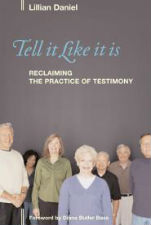
Lillian Daniel shares how her congregation re-appropriated the practice of testimony one Lenten season, a practice that would eventually revitalize their worship and transform their congregational culture.
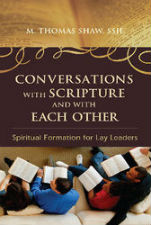
Lay leaders play an essential role in congregational life, but can find themselves spending more of their time at church balancing budgets than deepening their own faith. Written from his years of experience as a priest and as bishop of Massachusetts, M. Thomas Shaw's Conversations with Scripture and with Each Other is designed to encourage and strengthen the faith of lay leaders.
Continue Learning with The Church Network

A Church Network webinar
with Deborah Wipf Ike
May 28 at 2:30 p.m. EDT
In the life of congregations, risks aren't 100% preventable. But there are practical steps you can take to greatly reduce the likelihood they'll occur or to reduce the impact if they do. This is where risk management comes into the picture. It takes work and consistent effort, but it doesn't require a team of experts to put into place.
Ideas that Impact: Cultivating Lay Leadership
"Disruption and Leadership Development in Mainline Protestantism" by Ken Carter, Greg Jones and Susan Jones

Photo courtesy of Duke Divinity School
Mainline Protestantism has been slow to create new models of clergy leadership development that take into account the disruptive forces acting in congregations and the culture.
Editor's note: This is part of a series of articles in which three United Methodist Church leaders explore disruptive innovation and what it means for the future of mainline Protestantism.
Mainline Protestantism long assumed that it didn’t need to do anything extraordinary to develop clergy leadership. After all, in many cases, being a pastor was almost a “family business.” We could always rely on the strong families who had handed down the calling from generation to generation. For many pastors, mentoring took place in literal family systems, and regardless of how one was called to ministry, clergy gatherings had a family-like feel.
Even for those who were not born into pastoral ministry, the path to ordained leadership was clear and easily understood. Young people tested their leadership skills in church youth groups, developed them in campus ministries, and then nourished and strengthened them in seminaries. Family and denominational structures reinforced each other and prepared people for a particular kind of leadership that was rooted in established cultures. Ken recalls a clergy colleague who rebelled against his family, not by taking a year to follow the Grateful Dead, but by attending a different southern Presbyterian seminary than his father had!
Beneath this model of clergy development was a certain set of assumptions about the nature and role of seminary and the entire process of pastoral formation. Seminary was assumed to be the primary place that prepared clergy to serve as pastors. Would-be pastors were initially formed within families, congregations and denominations, but the seminary was where the real education occurred, transmitting and instilling the knowledge and skills necessary for effective congregational ministry. Beyond seminary, some modest continuing education might be good to have, but it wasn’t essential.
This model of leadership development seemed to function well for both church and clergy in an era when congregations were homogeneous, candidates for ministry were mostly middle-class Anglo men, and clergy skills were easily transferable from one congregation and community to the next. In retrospect, that model never was as effective as people thought it was, but in that very different time, it at least appeared to be working OK.
That time, however, has long since passed. Yet mainline Protestantism has been slow to adapt and develop new models that take into account the disruptive forces acting in congregations and the culture. Instead, we continue to rely mostly upon the same ineffective systems while failing to address the leadership development needs of clergy and congregations.
Seminaries still tend to offer curricula rooted in assumptions of cultural and denominational stability. Denominations continue to provide education and training based primarily on institutionally endorsed needs and categories. And even the way we identify and recruit future clergy depends more on people self-selecting for ministry than on any comprehensive and creative discernment of the church’s needs.
In short, we in the mainline have not paid attention to multiple disruptive forces affecting clergy leadership development. A more diverse population -- including women and people from a variety of ethnic and immigrant traditions -- are answering God’s call into ministry. Congregations and entire denominations are undergoing profound change. In an increasingly post-Christian America, churches have new and different expectations for clergy, including the possession of entrepreneurial skills.
For years, the “professional” model of leadership development -- focused on obtaining degrees, first from college and then seminary -- seemed able to cope with the forces of disruption. It could handle a broader range of clergy candidates as long as the women and ethnic candidates came from the middle class and could afford college and seminary tuition. But the old model has not worked as well for aspiring pastors from immigrant communities who lack either the money or the time necessary to acquire the requisite bachelor’s and master’s degrees.
At the same time, seminaries have been slow to recognize the new skills that clergy leaders need in today’s changing environment. Because many students lack basic formation in Scripture, history, doctrine and preaching, seminaries appropriately continue to emphasize knowledge and skills in these classical areas. Even in this new era, clergy and lay leaders need to know the church’s Scripture, traditions and practices.
Yet seminaries either haven’t seen or have resisted the need for new courses and training in areas of practical theology that are critically important in disruptive times. Clergy today need to know not only about Scripture but also about leadership and management, entrepreneurial approaches to mission and evangelism (including church planting), community development, and digital media and other new forms of communication.
Meanwhile, as seminaries operate much as they always have, mainline denominations have continued to focus on their standards and rules for becoming clergy. They have discounted the significance of lay leadership development other than in congregational roles or as part of recognized men’s or women’s groups.
As a result, rather than creatively discerning the church’s leadership needs, challenges and opportunities and then finding candidates to address them, denominational and seminary leaders have relied primarily on potential candidates working through their own sense of call to ministry. The result has been weak talent pools, poorly defined roles, narrow descriptions of essential clergy skills, and ineffective and underfinanced systems of leadership development.
But if seminaries and denominations have been blind to the forces of disruptive innovation, local congregations have not. Instead, they have felt the disruptive forces firsthand and, as a result, have launched a host of innovative experiments to develop the clergy they need. Congregations such as Willow Creek in Chicago, Saddleback in Southern California and Church of the Resurrection in Kansas City have become teaching congregations, with their own programs to develop congregational leaders. Other congregations, such as St. John’s United Methodist Church in Houston, have hired missions pastors to do innovative ministry in surrounding neighborhoods, programs such as Lanecia Rouse’s arts ministry(link is external) with homeless persons.
In addition, many congregations are looking not to seminaries but to their own laity for the next generation of leadership. They recognize that laypeople are likely better-equipped than seminary graduates to provide the skills they need in such areas as business, education and community development.
Other experiments in disruptive innovation are being supported by foundations, seminaries and other Christian institutions. For example, the Lilly Endowment Transition-into-Ministry project helps young clergy leaders get a good start in ministry.City Seminary in New York is exploring new ways to equip people for urban ministry, especially those from immigrant populations. Other seminaries are developing new degree programs and other initiatives to support, encourage and nurture future leaders. And Christian institutions such as church-related hospitals and camps are also developing Christian leaders in fresh ways.
The driving force behind these new forms of leadership development in mainline Protestantism is simple; as Clay Christensen’s work tells us, new problems had to be solved and new populations reached. Even though seminaries and denominations as a rule have been slow to adapt, some congregations and institutions have not, as these and other experiments have helped find new solutions and new populations.
Can mainline Protestants shift our mindsets so as to embrace such experiments? Can we create new ecosystems to encourage long-term, faithful and effective leadership development for both laity and clergy?
Clearly, seminaries will have to play an important part in this new ecology. So too will teaching congregations and other Christian institutions that support and nurture congregations.
And all of us, together, will need to learn to adapt and innovate.
"Sacred Journeys: A Lay-led Discovery of God through Spiritual Practice" by Anne Van Dusen
The Sacred Journeys program equips people to experience, moment by moment, the presence of God through relationships, work, recreation, and spiritual practice. It also encourages people to listen for God's calling into ministry and service to others. It is one model for spiritual formation of lay leaders.
It happened one morning during the sermon. Joe Duggan, a church leader participating in an initiative exploring ways to incorporate recent confirmands into the ongoing life of the parish, suddenly knew what he wanted to provide for them: a program that would help them discover how God is calling them to service through their everyday lives. He would call it “Sacred Journeys.” Duggan knew that confirmation marked a significant step in these confirmands’ faith journeys and that they were eager to be engaged. He also knew that unless they were connected quickly, their enthusiasm would dissipate or be redirected elsewhere.
Duggan doubts that simply reading a book or attending a committee meeting would have led to his inspiration, instead attributing it to being an active participant in parish life. “Sacred Journeys wouldn’t have come to me without my engagement in the regular worship life at All Saints,” he says. “It wasn’t a separate idea; it came out of my total experience.”
To flesh out the concept of Sacred Journeys, Duggan teamed up with other parishioners. One of them was Bob Cornell, a former Zen Buddhist monk. Cornell knew how the discipline of spiritual practice turned his faith into a way of life, how it transformed Buddhism from an idea into a daily experience. He was concerned that Christianity presented grace as a concept but didn’t provide the spiritual tools needed to access or experience it. You wouldn’t expect a concert pianist to play beautifully without practicing hours of scales and études, or an all-star football player to complete a touchdown pass without sweating through grueling field drills, so it was unrealistic, Cornell reasoned, to expect that simply reading or thinking about Christianity would lead to living life as a Christian.
Cornell’s passion was to see a rigorous framework for spiritual formation take root within All Saints, a progressive, inclusive Episcopal Church (www.allsaints-pas.org). Cornell wanted to help people answer the question, “What do I have to do to be open to grace?” He wanted the program to be evangelical, not in any Bible-thumping way but in the profound sense of being opened to God’s presence, God’s work, and God’s mystery. An intellectual experience wasn’t enough; the experience needed to incorporate daily practice to equip participants to find and welcome that presence in their everyday lives.
When Sacred Journeys finally launched, Duggan’s idea turned out to be more than the vocational discernment program he had initially imagined. Described as a process rather than a program, Sacred Journeys emphasizes regular prayer or meditation, group support, and experiencing life as a laboratory.
Sacred Journeys explores four basic elements of whole spirituality: practice, inquiry, community, and service. Practice refers to a daily set of focused activities that align one with God’s love in the moment and throughout the day. Inquiry refers to the insight provided through “contemplative engagement with great writings, teachers, and experience.” Community is being part of a committed group of seekers “willing to witness the divine insight in one’s own life and the lives of others” and to find compassion and forgiveness and/or acceptance of the “other stuff.” Service refers to acting “wisely in all things big and small.” Sacred Journeys equips people to experience, moment by moment, the presence of God through relationships, work, recreation, and spiritual practice. It also encourages people to listen for God’s calling into ministry and service to others.
How It Works
The process starts with a six- to nine-week course that explores the four elements of spiritual practice, reviews the process’ fundamental objectives, and introduces the small group concept. At each session, the emphasis is on teaching about the practice, giving participants the opportunity to experience it, and, most importantly, showing how the practice relates to everyday life. To ground the practice’s tangible realities, participants consider how their lives might change if they engaged in the practice for 15 minutes each day. Going a step further, they imagine what things would be like if everyone at All Saints—or society at large—practiced that same discipline.
The sessions are fairly structured. Each opens with music and prayer. After refreshments and logistics, conclusions from the last session and assumptions about the current session are reviewed. A spiritual practice is introduced, along with an exercise to try it out. (These range from yoga to centering prayer to Examination of Consciousness, a form of simple prayer developed by St. Ignatius.)
A facilitated small group session follows to discuss what did and didn’t work. Though not mandatory, participants are invited to do assigned journal exercises. They are encouraged to note lecture ideas which, when presented, elicit a strong reaction; which ring true and which do they find annoying? This awareness helps pinpoint areas that participants may want to explore further.
Once participants complete the introductory sessions, they may choose to continue in one of three small groups, each with a different emphasis: study and reflection, spiritual practice and healing, and discernment of vocation. The Study/Practice Group focuses on developing a rule of life that includes daily spiritual practice. Scripture and other spiritual texts are used in a “nondogmatic exploration of what it means to be a follower of the way of Jesus in the 21st century . . . Hearts, minds, and bodies are engaged in the practices of the group.”
The Community (Way of the Heart) Group “uses the foundational practice of heart-centered listening to explore how spirituality is manifest in relationship to others.” Case studies from spiritual communities such as the Catholic Workers, Quakers, and engaged Buddhists provide examples of communal work and worship. The group incorporates aspects of these communities as they select and serve in a community service project.
The Service Group supports members in discernment of their vocation. All members of the church, be they lay or ordained, are called to ministry in all aspects of life. This group focuses on the themes of vocation and God’s call: listening, discerning, and committing to and meeting the challenges presented by a call.
Sacred Journeys is not a process to be taken lightly. Throughout the experience, members are asked to commit to attending all sessions, assuming a regular daily practice, and to “listening and speaking from the heart.” Participants commit to the continuing small groups in three-month intervals. Now in its third year, some of the small groups have continued to meet; others have disbanded.
Flexibility is Key to Success
Anne Peterson, senior associate for leadership and incorporation at All Saints, explains that the program didn’t progress as first envisioned. All Saints provides incorporation programs through its Covenant Series. The Covenant I program is intended for newcomers preparing for membership or baptism. It includes an introduction to the small group experience and writing spiritual biographies. Covenant II focuses on church teachings and what they mean in an individual’s life. It leads to confirmation. The parish was originally looking for a Covenant III program to augment the Covenant I and II programs. Covenant I and II are “past and present tense” programs focused on helping the participant address “How did I get here? Where I am now? This is what I believe.” Covenant III would be a “future tense” program centered on “Where am I going?” and “How am I going to get there?”
The first group of Sacred Journeys participants was very diverse and brought a confused set of goals. Some wanted to focus on spiritual practice while others were expecting a Covenant III experience or personal discernment. So the participants hadn’t completed the prerequisite Covenant I or II classes. One of the program’s strengths is that it honors flexibility and diversity. Duggan and Cornell adapted their original concept to accommodate the participants’ different expectations. The result was a series of introductory sessions for all participants followed by three different small groups for further exploration.
“Sacred Journeys would not be a ministry open to new leaders, flexible in its programming, unless it was organically structured, ‘organic’ in its grassroots development from within the congregation, its crossing the boundaries between parish ministries, and its being connected to the core of the parish’s mission,” says Duggan.
Sacred Journeys didn’t end up being All Saints’ Covenant III program, but that doesn’t seem to matter. The church will find another way to meet that need.
A Practical Theology: Lay-Led Programs Don’t Just Happen
Sacred Journeys is inspired, created, and managed by lay leaders. It may seem remarkable that such a program exists, but it is just one of more than 60 lay initiatives offered at All Saints Church. “All Saints is constantly giving the message about the sin of clericalism,” says Rector J. Edwin Bacon, Jr. “We emphasize the importance of baptism as both a rite of inclusion and of ordination. Through baptism, everyone is initiated and ordained into the priesthood of Christ. Lay folks are just as powerful as deacons, priests, and bishops.” He reinforces that theological grounding every chance he gets—in sermons, small group training, weekly announcements, incorporation classes, and in as many other places and ways as he can.
Those theological words translate to an image Bacon offers as an example of practical theology: thirty brightly covered tables displayed on the church’s front lawn after each week’s services. Staffed only by laypeople, these tables invite parishioners into various forms of ministry. Each week a different ministry is given prominence. This ministry is mentioned in the liturgy, and a descriptive flyer about it is attached to the worship leaflet. The day a particular ministry is featured, its table is given a prominent place on the lawn. “That table image,” says Bacon, “is totally dependent on the creativity and prayer life, the courage, and the imagination of laypeople. When All Saints was founded, there were no lay ministries. Twelve people got together with a priest, a prayer book, a Bible, and bread and wine.”
People come to All Saints from a variety of faith traditions and experiences. Some are ardent evangelicals while others are agnostics. Disenfranchised Roman Catholics worship with former Baptists. Few are cradle Episcopalians. All Saints expects much from its members and shares much of the responsibility for ministry. This leads to a creative, enlivened congregation where inspiration and initiative are rewarded with the opportunity to implement ideas into ministry. Consequently, many creative people are drawn to the church, further enriching the diversity and initiative of the congregation. “Membership at All Saints is not a spectator sport,” says Bacon. “We encourage people to assume responsibility and ownership of ministry. We live out the idea of two or three gathered in Christ’s name in small groups. All Saints is ‘small-groupified.’”
Lay Ministry is More Than an Idea
To offer Sacred Journeys, Duggan first discussed the idea with Rusty Harding, All Saints’ director of incorporation, who oversees programs that welcome and integrate members into parish life. Harding and Duggan discovered that they had been thinking along similar lines, and Harding shepherded Sacred Journeys through the process of becoming a new ministry.
All Saints takes its commitment to lay ministry seriously. In the three years since Sacred Journeys was initiated, the parish has put a rigorous review and approval process for new ministry initiatives in place. The proposed ministry must be presented to a staff member by at least two parishioners. If acceptable, the staff member helps the lay leaders develop a working plan (including a mission statement, objectives, action steps, and budget requirements) which is presented to he management staff. Once approved by management, the ministry may move forward.
The lay initiative proposal is considered in the context of the All Saints mission statement, foundational values and current strategic plan, which are available for review on the parish Web site. Leaders proposing ideas must be pledging members and be vetted through the small group office. They must complete leader training and be approved to serve. Bacon concedes that the process can be demanding, but is not so rigid that there aren’t some ministries that haven’t been through the process: “We don’t have any desire to create a ‘ministry’ police.” Creative ideas and initiative seem to take precedence.
Creative Chaos
Harding describes the inherent tension that All Saints experiences between traditional Episcopal hierarchical structures and bottom-up leadership that emerges from the laity. At All Saints, there are different interpretations of these structures and different concepts of the term “ministry.” The staff and parishioners live together with this tension as committed members of the All Saints community.
The All Saints culture is affectionately described as “creative chaos.” “God created the world from chaos,” Bacon says. “Chaos is necessary for creativity to bring forth the fruit of the Spirit. Chaos theory tells us that there is order in chaos. If you hang in through the chaos, wonderful things take place. I’d rather err on the side of chaos rather than order.” Some people thrive in this environment, and others leave, seeking a smaller, more structured environment. “That’s fine,” Bacon says, “My interest is in promoting the journey of faith, which sometimes takes people to different places.”
It’s not that All Saints doesn’t recognize the value of quiet or spiritual practice. It actively promotes participation in meditative small groups and developing personal prayer disciplines. Developing a daily practice of stillness, listening in quiet for what one hungers for, is important and necessary work. That work is not viewed as the responsibility of the church but of the individual supported by the church.
Bacon and other staff leaders know peripherally about the Sacred Journeys program. “I’ve known about it since its inception,” Bacon says. “I touched bases with the leaders at certain developmental points, offering them my encouragement. It’s a perfect example of how two inspired folks felt authorized to take up their lay ministry. It has borne great fruit.”
Getting Started
For congregational leaders thinking about doing more to support and encourage lay ministry in their congregations, Bacon recommends starting with discovering the practical theology of your own faith community (see the box on page 20). Learn about the history of your congregation, he suggests, and try to find examples of lay leaders assuming responsibility and authority. Refer to those examples again and again in sermons, worship, and education opportunities. Reinforce those examples with new teaching.
He also recommends developing a good training process for lay leaders and selecting leaders carefully. Be sure you can trust them—really trust them—to establish healthy boundaries in groups and manage those taking too much airtime. Train them to know the legal guidelines and your congregational policies for sexual and other misconduct.
Empower leaders so that they are equipped to lead, but not in a controlling way. Once this is done, communications and expectations are clarified, making it easier for staff members and lay leaders to work together. Lay leaders are supported when they raise an issue or present a new idea. Those charged with authority can release their anxiety and stay calm through the confusion, trusting that the Holy Spirit works through chaos.
Finally, when hiring staff people, Bacon recommends putting them through an arduous interview process. Have them interview with the laypeople they will be leading. Embody your vision in all that you do.
He also suggests ministers be aware of congregational biases and preconceptions that could impede lay ministry, many of which are related to lay pastoral care. Most parishioners want or expect a ‘real’ minister to visit them when they are ill, in the hospital, or during a similar pastoral emergency. While recognizing that people do not intentionally hold onto old models of pastoral care, All Saints is always in the process of reminding its members that lay ministry can, at times, be best expressed through pastoral care. Healing and solace offered by laypeople may more closely resemble the hands and feet of Christ. Infusing this message and exploring hidden biases or expectations before the pastoral crisis makes lay pastoral care—and other forms of lay ministry—easier to implement.
Preparing for Lay Ministry
All Saints Episcopal Church in Pasadena, California is just one example of a congregation that has embraced lay ministry. The following guidelines, drawn from recent Alban research, will help you think about lay ministry in your congregation. The full report is available through the Congregational Resource Guide (www.congregationalresources.org).
- Know your own point of view. Identify your style of leadership, your own beliefs, and your tolerance for chaos.
- Know your congregation’s point of view. How does it understand the role of laypeople and ministry? What expectations of clergy do your members have?
- Know where you are. What education must you do and with whom do you need to do it—with governing bodies, staff members, the congregation?
- Don’t try to be all things to all people. Authenticity is essential to success, so identify your strengths and weaknesses, and be sure your plans are consistent with your vision.
- Have a clear framework for making decisions. A solid plan will do much to avoid future confusion and misunderstanding
- Be bold. Use your own prayer time to discern lay ministry.
- Test your motivations. Are you embracing lay ministry simply because it’s “right” or because you feel pressured to do so? Be clear about your motivation.
- Lay-led doesn’t mean less planned or less intentional. Be sure the passion, skills, and know-how are in place.
- Things don’t always go as planned. The evolution of lay ministry is likely to be messy. Embrace that evolution, and support the organic development of your congregation’s lay ministry efforts.
- Take commitment seriously. Lay ministry doesn’t mean lazy ministry; sometimes it takes more effort to support lay initiatives.
"Everything is Possible" by Abe Levy

The Rev. David McNitzky teaches at a Thursday night session of the Quarry, a leadership program of Alamo Heights UMC in San Antonio. Katie Clementson
Two pastors at a UMC church in San Antonio have created a new model of training they call the Quarry, which has developed into a creative community of leaders.
The Rev. David McNitzky hired a young man 15 years ago to launch a contemporary service in the church gym -- a new option for worship at his large and historic United Methodist congregation in San Antonio.
The new pastor shadowed him on hospital visits and pre-wedding talks with couples. McNitzky went over the young man’s sermons and narrowed his seemingly endless ideas to one or two practical ones.
A seasoned veteran and an enthusiastic upstart, the two pastors saw their friendship deepen into a father-son bond that both regard as a rabbinical model for mentoring.

A few years ago, the protégé, the Rev. Scott Heare, challenged his spiritual father with a proposal: What if together they molded a handful of laypeople, building the same kind of close, honest relationships within a larger group? They’d teach practical ministry, biblical theology and Christianity’s Jewish heritage in an organic, group setting.
The idea would be to empower laypeople with clergy-level vision and skills, incubating their sense of calling prior to seminary training -- or possibly instead of it.
Three years ago, the idea took off.
Called the “Quarry,” it started with 16 people and grew without formal advertising to more than 50. They gather for Thursday-night sessions at Alamo Heights United Methodist Church, where McNitzky is the senior pastor. Some come from as far as an hour’s drive away. And some are on staff at one of Alamo Heights UMC’s three campuses -- a mix of contemporary, traditional and recovery-based congregations.
At the meetings, they listen to McNitzky and Heare’s classroom instruction and participate in contemporary worship and soul-searching question-and-answer sessions. Throughout the week, McNitzky and Heare meet in coffee shops and restaurants with Quarry members for regular one-on-one visits. The members have also bonded with one another, creating their own community of support in ministry.
The name Quarry arose partly because the main campus stands on a former rock mine. But it’s also a nod to the lineage Christians may claim in Isaiah 51:1-2: “Look to the rock from which you were hewn, and to the quarry from which you were dug. Look to Abraham your father and to Sarah who bore you, for he was but one when I called him, but I blessed him and made him many” (NRSV).
“We are of the same stuff as Abraham and Sarah,” McNitzky said. “God can use us, too. They were not superhuman.”
‘This is the best time to be a part of the church’
Church consultants and executive pastors come to observe the Quarry, struck by the rare scenario of a senior pastor from a large church investing in such a broad-based group, including non-church members.
The Quarry demands no pledge cards or fees. Instead, the two leaders view the training program as worth their time because they believe that bivocational lay ministry is the future of the church.
“In most churches, ‘leadership development’ means giving church members some basic training so that they can fill roles in the church’s existing ministries,” said Mike Bonem, a church consultant from Houston who recently visited the Quarry.
“I think a key underlying belief [for the Quarry] is that you don’t have to be a vocational pastor or staff member to do ministry. In fact, they seem to believe that the church needs to have many volunteers who do the ministry.”
A few participants have gone on to seminary, but it’s not seen as an expected next step in the process. For most, the weekly two-to-three-hour gathering is their training for ministry, which takes many forms.
There are at-home moms befriending neighbors in suburbia. A chef keeping her cool in a frenzied, demanding kitchen serving downtown’s elite professionals. An engineer enriching his theology between trips to Africa to build water wells. And Jeff Wert, an oral surgeon who, along with his wife, is mentoring young married couples at Alamo Heights UMC.
“Because Scott and David are good leaders, if I’m trying to emulate what they’re doing, I’m automatically a better leader,” Wert said.
For those already in full-time ministry, the Quarry fosters confidence and passion, helping them avoid burnout while working in a culture that is gradually withdrawing from institutional Christianity.
“For a long time, it was, ‘Oh, this is a terrible time to be in the church,’” said Heare, now the lead pastor of Riverside Community Church, one of the outgrowth congregations of Alamo Heights UMC. “Everything’s falling apart. Now there’s a group of people saying, ‘This is the best time in the world to be a part of the church,’ because it’s wide open. Everything is possible.”
How it works
At a recent Thursday gathering, the lead singer in the worship band lifted her face, closed her eyes and belted out a song. Guitarist Chris Estus pumped out riffs with a mastery born of his years onstage in a praise band for a high-profile megachurch.
That experience was “plastic,” he said later of his past ministry.
A recovering alcoholic, he now leads recovery programs at Asbury Church, an urban congregation that last year became the third campus of Alamo Heights UMC.
Asbury was once on the brink of closure. Now, Quarry members make up the Asbury pastoral staff, inching their way toward revitalizing the congregation and using the church as a ministry lab. In fact, Quarry members from the three Alamo Heights campuses often visit one another’s services and mix and match in their worship bands and activities.
This is typical of Quarry members, who forge deep friendships that extend beyond the classroom. One group meets for dinner before class; others have coffee, visit each other’s homes or participate in Bible study together. These relationships continue after their training is complete.
“For me, it’s the connection,” Estus said. “The Quarry is not just a class in a classroom with someone getting up there and lecturing. It’s really a community of people who are all in ministry of one type or another. And we’re all in need of mentoring -- in addition to information.”
Such communal, lay engagement is what the mission statement of the United Methodist denomination calls for, said Gil Rendle, a senior consultant with the Texas Methodist Foundation in Austin who has visited the Quarry.
The Quarry is moving the seminary closer to the local church, he said, advancing the denomination’s goal of developing disciples and not just members, he said.
“This is a bridge to the academic world and formation of faith for people who don’t want to take on ordained leadership but sure do want the depth and discipline of the faith,” Rendle said. “This is one of those very rich experiments we need to be paying attention to.”
Two-man team
McNitzky and Heare share the mentoring duties for the Quarry, each complementing the other’s personality and teaching style. A former Army commander advised them as they created the program’s three central topics -- ministry calling, biblical theory and practical skills – which correspond to the leadership mantra “Be, know and do.”
In the five-semester, two-and-a-half-year program, this is the pair’s consistent focus.
Heare is a passionate storyteller, prone to using imagery in his talks and taking the class on outdoor exercises. An extrovert, he pulls from everyday experiences as a 41-year-old husband and father of young children. His 400-member congregation is in a budding yet rural community just north of San Antonio.
McNitzky is a 56-year-old veteran pastor whose 1,300-member congregation is in an established, well-to-do suburb near downtown. An introvert, he is a sage instructor who boils down his thorough research into memorable one-liners. And he readily cites from lessons learned in his 33-year ministry career.
While the curriculum started with clearly defined topics, the two have allowed the syllabus to be flexible. Baptism and communion took center stage once in the interest of members who were going before a Methodist review board. Often, while teaching conventional surveys of biblical books, McNitzky will linger on specific Scripture verses as the classroom expresses a spontaneous hunger for their deeper meaning.
“It’s another rabbinical method that you don’t teach a new lesson until they’ve grasped and lived out the old lesson,” said McNitzky, who gives most lectures.
At a recent Thursday night gathering, McNitzky dispensed 15 tips from his research into family system theory, sharing Scripture, theology and personal experiences with the group. He illustrated one point with a not particularly flattering personal story.
“Our marriage changed when I changed,” he said. “For 14 years, I had been waiting for her to change. When I was gone working six nights a week and I was leaving her with all these burdens, I kept waiting for her to change and appreciate my brilliance and how God was using me.”
He left them with a challenge to seek out their “leverage point” in situations -- the sweet spot where their effort produces the most good. For him, right now, it’s the Quarry, he said.
“Part of what I want to do is release obedient, discipled people into places of darkness and let them be light,” he said. “I have no great system for attracting people to church. No great system for retaining them. No great system for getting Austin or Washington, D.C., to respond in some other way.
“But I do think we have a number of folks like y’all who are released out into the streets.”
Teaching
Heare takes the group to the streets literally, employing a teaching method he has experienced on tours of Israel with the Rev. Ray Vander Laan, a Christian minister and expert on Jewish heritage.
Heare uses outdoor settings for teaching interactive lessons, both in downtown San Antonio and beyond.
“Come, follow me,” he said recently, kicking off a brisk journey along streets and sidewalks to downtown landmarks, stopping to tell short stories of their spiritually redemptive heritage.
The journey created a spontaneous forum. Many members of the group have traveled with Heare to Israel, so although they were clueless about the recent day’s agenda and itinerary, they trusted his guidance.
He challenged them to think about the familiar buildings in new ways. They stopped at the city’s theater district -- a symbol of the power of storytelling. A historic Catholic church surrounded by a modern mall spoke of persistent faith.
Heare also pointed out the city’s icon, the Alamo, cherished for its role in winning independence from Mexico. What began as an 18th-century church-based community, Heare said, can today evoke racial tensions between Anglo and Latino factions -- but it doesn’t have to be that way. “What if what we remembered at the Alamo was hope and joy and transformation and love and healing?” he said.
Submission and sonship
The two leaders are pastors, but they also consider themselves “rabbis.” Their students seek not just to absorb information from them but also to become like them.
“My whole theory of leadership is it’s who you are, not what you do,” McNitzky said. “What you do comes from who you are. So we spend time on our lives and talking about who we are. ... If that’s being shaped, then I know they’ve developed certain virtues and habits in their lives, and they’ll make decisions and take actions I wouldn’t necessarily do but I know will be appropriate. I spend little time having to go back to fix what they did.”
The Quarry’s lesson on sonship is the guiding principle in this approach.
Sonship stems from the biblical concept of adoption into the kingdom of God. Quarry members are taught not to try to earn value and acceptance but to embrace their existing identity as royal sons and daughters, forging a deep trust for their leaders to speak candidly into their lives.
“Too often people in the church act like God doesn’t love them,” McNitzky said. “And [they think] if they don’t grasp and strive and manipulate and come up with 10-year plans, they’re not going to be here in the future. To me, I tell people that’s more the method of King Herod than Jesus.”
This approach has influenced the rest of McNitzky’s ministry as well. For example, now when he leads staff meetings, instead of giving updates on programs, logistics and strategy, he prays and then teaches concepts from the Quarry.
In turn, Quarry members practice “submission,” which they describe not as blind obedience but rather as “coming under and pushing up” their leaders.
“You know yourself as a child when you are supported and live under a parent,” McNitzky said. “So it’s not because I say, ‘Here’s my robe, and here’s my degree on the wall.’ It’s more that we’re here. God’s gathered us. And we think, ‘[This] is the person God has put in this area to lead what God wants done.’ And we want to help.”
The future
The Quarry’s success with its first 30 alumni has prompted interest in expanding the program.
Heare and McNitzky are recruiting people to teach Quarry principles in Burundi. And the Quarry is being considered as a possible solution to train Spanish-speaking Methodist leaders.
Last year, a Hispanic Methodist body in South Texas merged with the larger Southwest Texas Conference. While the merger reduced duplication, it has presented the need for low-cost training for those unable to afford seminary and the toll of relocation.
UMC Bishop Jim Dorff said the Quarry will play a significant role in expanding the pool of leadership, hailing it as “plowing new ground for training and discipleship.”
“There’s a consistency and depth to it that’s unique and fresh,” he said. “It’s not hitting the surface. It’s really trying to assist people to drill down deep in terms of a theological and biblical understanding of their calling.”
While thrilled and hopeful that the Quarry can be replicated, Dorff has had the same question as other observers, wondering how much of the program relies on the two leaders’ chemistry and personal friendship.
McNitzky says replication is possible. “Hebraic roots, sonship and a heavy emphasis on learning and acting in community -- those are not unavailable ingredients to people,” he said.
And in some ways, the Quarry is already expanding.
As a Lenten experiment this year, Heare is practicing the Quarry principle of instructing students to learn as teachers.
He gathers seven members of his church for a lesson on the book of Jonah. He then challenges them to teach it to a few others and then urge those folks to continue the process.
“You don’t have to wait until you know something to share. Just share what you’ve got,” he tells them.
Heare talks to them as a teacher, mentor and rabbi -- just as McNitzky did to him 15 years ago.
Questions to consider:
- The Quarry includes a disciplined rhythm of community, content and practice.
- What is the rhythm of your preparation for ministry?
- Who are you preparing for ministry?
- How do you encourage their development?
- What would it look like to invite them into community around their commitment to ministry?
David McNitzky has focused his ministry on developing leaders to pastor Alamo Heights. What is the most critical need in your community?
How might you reorganize your ministry to address that need and get everything else done?
STAY CONNECTED


Alban
312 Blackwell Street, Suite 101
Durham, North Carolina 27701 United States
____________________________

No comments:
Post a Comment