
"Congregations Align with Public Institutions to Serve the Common Good" by G. Jeffrey MacDonald
 Sacramento police officers involved in the Cops & Clergy program raffle off a bicycle to a child at a community health fair at Ebenezer Christian Center. This kind of activity helps build relationships between police, clergy and congregations.
Photo courtesy of Sacramento Cops & ClergyOn the afternoon of May 10, 2014, Sacramento police responded to a deadly shooting in Peregrine Park and called for an unusual type of backup -- from a local pastor.
Officers were trying to calm an agitated crowd, including family members of 29-year-old Jacoby James, who had been shot dead during a child's birthday party in a gang-related attack. They were angry at police for leaving his body uncovered for hours in the sun behind a strip of police tape.
When the Rev. Anthony Sadler of Shiloh Baptist Church arrived, he tried to calm the onlookers by leading them in prayer. Then he explained: the police intended no disrespect; they simply couldn't cover James' body, because all evidence, including possible DNA on his clothing, wasn't yet collected from the crime scene.
Clergy "are able to explain it in a way that only a pastor can," said Lt. Roman Murrietta, the coordinator of Cops & Clergy, a two-year-old partnership between the Sacramento Police Department and about 20 local pastors. "It diffuses the entire situation."
The Peregrine Park episode is an example of faith leaders helping to ease law enforcement tensions, which have spiked around the country in the wake of police shooting deaths and massive protests in Ferguson, Missouri, New York City and Baltimore. Yet it's also part of a broader phenomenon: congregations aligning with public institutions to help serve the common good.
From police departments to public schools, congregations are finding new partners, and new mission outreach opportunities, as they team up to help the public sector be more effective. They're filling gaps and using a personal touch to prepare people, including at-risk kids, teens and adults, for productive relationships with institutions.
"Churches are very consciously looking at the work of the state and trying to align their ministries to best serve people," said Arthur Farnsley, the associate director of the Center for the Study of Religion and American Culture at Indiana University-Purdue University Indianapolis. "As health care changes, and as public education has changed, maybe it is the case that churches are aligning their missions to maximize their benefit."
American society relies on public institutions to deliver a range of basic human services, Farnsley said, but those institutions don't always have the resources, trust or neighborhood ties that lead to success. They often struggle to connect with wary segments of their clientele -- undocumented immigrants, gang members, the mentally ill, millennials who view institutions with suspicion.
That's where parish networks come in. They're leveraging social capital and volunteer power in ways that complement the work of public institutions.
Churches are "looking at these government programs and deciding that the need is for a buffer layer between government and individuals at specific points," Farnsley said.
What ministries might appropriately support the work of public institutions?
Approaches vary widely, and the partnerships come with risks as well as opportunities. But some faith leaders are finding the territory rewarding.
Risks and rewards
In Sacramento, partnering involves pastors and police working side by side, and not just when an incident calls for a pastor’s touch. Officers take clergy on weekly visits to schools, jails and homes, where they make introductions to young men who have been arrested or have felt pressure to join gangs. The hope is that pastors can build up trust among those at risk of becoming offenders and steer them away from gang life and crime.
Sadler, of Shiloh Baptist Church, has seen lives changed through these interventions. One officer introduced him to a teenager who had been arrested on drug charges and beaten up. When they met, the young man was thinking about joining a gang for protection. The pastor began paying him modest sums to do odd jobs around the church once a week on his way home from school. Sadler became a mentor to him, and the teen hardly ever missed a Sunday worship service. Having developed new friends and new focus, he’s now off probation and doing well in trade school.
“We’re partnering with [police] because we have the same objective: we’re tired of seeing our young people die prematurely due to violence,” Sadler said. “We’re tired of doing too many young people’s funerals and ministering to their families, including their mothers and grandmothers, after their child is gone. I’ve done far too many of those.”
Pastors in the Cops & Clergy program go through the Sacramento PD’s Ministers Academy, where they learn enough about law enforcement techniques to discuss them as de facto ambassadors of the police department in their respective neighborhoods. Pastors invite officers to church events, where locals get to know them as individuals and sometimes pray for their families and their police work.
This coziness with law enforcement comes with trade-offs. When demonstrators rallied against police violence and blocked traffic earlier this year, Sadler arrived on scene with other pastors and officers. But the protestors wouldn’t talk to the clergy, he said, because they were “associating us with law enforcement.”
“It’s a tightrope that we kind of walk, because we don’t want to lose our credibility with the community, but at the same time we need to be agents of change,” Sadler said. “We need to have influence.”
In Boston, working with police involves a different set of dynamics for faith leaders. In predominantly African-American neighborhoods such as Roxbury and Dorchester, pastors aren’t as closely aligned with police as their counterparts are in Sacramento.
Yet Boston clergy nonetheless have productive partnerships with police through the Boston TenPoint Coalition(link is external), which has paired faith leaders with public agencies to work on youth issues, including violence, since 1992. These relationships draw on pastors’ clout as community advocates who aren’t known for coziness with police.
When threats of violence run high in the summer heat or after controversial incidents, Boston congregations host public meetings where police and residents discuss problems and concerns.
Early this spring, Twelfth Baptist Church in Roxbury hosted a public meeting in a tense time after Boston police killed an African-American man. Prior to the meeting, police let pastors see a video of the incident, in which an officer was shot in the face, leaving him critically injured. When the community gathered to hear details, police were present, but pastors did the talking. They explained what the suspect had done to provoke the police response.
“We just told them that he got out of the car shooting and police shot back,” said the Rev. Miniard Culpepper Jr., the pastor of Pleasant Hill Baptist Church in Dorchester. “That served to neutralize a lot of the skepticism.”
Just as congregations help ease community tensions with police, so also officers help buttress community efforts of congregations to make parks crime-free and keep youth out of trouble. Pleasant Hill Baptist hosts its Trotter Park Peace Program from 5 to 9 p.m. on summer evenings at the church’s neighboring park, which at times has been a hotspot for crime. Activities are meant to get hot summer nights off to a peaceful start, Culpepper said.
For security at the peace program, the church hires members of a local gang in a bid to cultivate in them a sense of purpose and responsibility. Police make it possible by patrolling the park perimeter, in part to make sure rival gangs don’t clash.
It’s a partnership, but one that depends on the church’s relative independence from police and its clout as a trusted voice in the kids’ corner, willing to stand up to police when necessary.
“We have pretty tough conversations [with police] sometimes about the treatment of the young folks,” Culpepper said. “The young folks know we serve as advocates for them.”
Gospel commitment
Roxbury Presbyterian Church is pioneering a new forum that meets another important community need, according to the Boston Public Health Commission. Last fall, the church launched “Can We Talk?” as a venue to support healing among trauma victims. It’s a joint venture with other faith-based and secular organizations that serve as commission partners.
Whether attendees have lost a son in a gunfight or struggle with battle scars of their own, the relaxed setting with food and music gets them talking. More than 100 people show up every month. Some bare their souls at an open mic, some just listen, and some get help from professionals on-site. The hope is that they’ll find healing before past trauma gives rise to addictions, violence or other problem situations for the community.

In Sacramento, partnering involves pastors and police working side by side, and not just when an incident calls for a pastor’s touch. Officers take clergy on weekly visits to schools, jails and homes, where they make introductions to young men who have been arrested or have felt pressure to join gangs. The hope is that pastors can build up trust among those at risk of becoming offenders and steer them away from gang life and crime.
Sadler, of Shiloh Baptist Church, has seen lives changed through these interventions. One officer introduced him to a teenager who had been arrested on drug charges and beaten up. When they met, the young man was thinking about joining a gang for protection. The pastor began paying him modest sums to do odd jobs around the church once a week on his way home from school. Sadler became a mentor to him, and the teen hardly ever missed a Sunday worship service. Having developed new friends and new focus, he’s now off probation and doing well in trade school.
“We’re partnering with [police] because we have the same objective: we’re tired of seeing our young people die prematurely due to violence,” Sadler said. “We’re tired of doing too many young people’s funerals and ministering to their families, including their mothers and grandmothers, after their child is gone. I’ve done far too many of those.”
Pastors in the Cops & Clergy program go through the Sacramento PD’s Ministers Academy, where they learn enough about law enforcement techniques to discuss them as de facto ambassadors of the police department in their respective neighborhoods. Pastors invite officers to church events, where locals get to know them as individuals and sometimes pray for their families and their police work.
This coziness with law enforcement comes with trade-offs. When demonstrators rallied against police violence and blocked traffic earlier this year, Sadler arrived on scene with other pastors and officers. But the protestors wouldn’t talk to the clergy, he said, because they were “associating us with law enforcement.”
“It’s a tightrope that we kind of walk, because we don’t want to lose our credibility with the community, but at the same time we need to be agents of change,” Sadler said. “We need to have influence.”
In Boston, working with police involves a different set of dynamics for faith leaders. In predominantly African-American neighborhoods such as Roxbury and Dorchester, pastors aren’t as closely aligned with police as their counterparts are in Sacramento.
Yet Boston clergy nonetheless have productive partnerships with police through the Boston TenPoint Coalition(link is external), which has paired faith leaders with public agencies to work on youth issues, including violence, since 1992. These relationships draw on pastors’ clout as community advocates who aren’t known for coziness with police.
When threats of violence run high in the summer heat or after controversial incidents, Boston congregations host public meetings where police and residents discuss problems and concerns.
Early this spring, Twelfth Baptist Church in Roxbury hosted a public meeting in a tense time after Boston police killed an African-American man. Prior to the meeting, police let pastors see a video of the incident, in which an officer was shot in the face, leaving him critically injured. When the community gathered to hear details, police were present, but pastors did the talking. They explained what the suspect had done to provoke the police response.
“We just told them that he got out of the car shooting and police shot back,” said the Rev. Miniard Culpepper Jr., the pastor of Pleasant Hill Baptist Church in Dorchester. “That served to neutralize a lot of the skepticism.”
Just as congregations help ease community tensions with police, so also officers help buttress community efforts of congregations to make parks crime-free and keep youth out of trouble. Pleasant Hill Baptist hosts its Trotter Park Peace Program from 5 to 9 p.m. on summer evenings at the church’s neighboring park, which at times has been a hotspot for crime. Activities are meant to get hot summer nights off to a peaceful start, Culpepper said.
For security at the peace program, the church hires members of a local gang in a bid to cultivate in them a sense of purpose and responsibility. Police make it possible by patrolling the park perimeter, in part to make sure rival gangs don’t clash.
It’s a partnership, but one that depends on the church’s relative independence from police and its clout as a trusted voice in the kids’ corner, willing to stand up to police when necessary.
“We have pretty tough conversations [with police] sometimes about the treatment of the young folks,” Culpepper said. “The young folks know we serve as advocates for them.”
Gospel commitment
Roxbury Presbyterian Church is pioneering a new forum that meets another important community need, according to the Boston Public Health Commission. Last fall, the church launched “Can We Talk?” as a venue to support healing among trauma victims. It’s a joint venture with other faith-based and secular organizations that serve as commission partners.
Whether attendees have lost a son in a gunfight or struggle with battle scars of their own, the relaxed setting with food and music gets them talking. More than 100 people show up every month. Some bare their souls at an open mic, some just listen, and some get help from professionals on-site. The hope is that they’ll find healing before past trauma gives rise to addictions, violence or other problem situations for the community.
“With this [trauma program], we work with the police department, the hospitals and the schools,” said the Rev. Liz Walker, the senior pastor of Roxbury Presbyterian Church. “This is a neighborhood where you have a lot of trauma because of violence, unemployment and all kinds of reasons why people are feeling disconnected. [The monthly forum] is a soft entry into mental health services.”
When you partner with another institution, what guidelines do you follow?
In working with public institutions, faith leaders find that they’re able to put some of their deepest-held values into action, as long as they heed essential guidelines. Those working with public schools have found the formula to be relatively straightforward. In a nutshell: don’t proselytize, and don’t bring an agenda; let administrators explain their needs, and offer to help accordingly.
Example: the Micah Association(link is external), a parish network to support public education in Richmond, Virginia, connects local schools with as many as 1,800 volunteers from 130 congregations. Participants agree not to pray with children at school or seek to make converts to Christianity. As long as they pass background checks and follow the rules, they’re free to live out their faith in settings where they’re needed, in tutoring, administrative support or other areas.
“Public school is the only institution in society that has to take everybody,” said the Rev. Ben Campbell, a priest in the Episcopal Diocese of Richmond and a co-founder of the Micah Association. “That’s a gospel commitment. That is Jesus’ commitment. In that sense, public education is a genuine expression of gospel commitment. Churches understand that, but most other people don’t.”
Expanding reach through networks
While individual congregations have long had ties to one or two neighborhood schools, today’s trend is toward networks of multiple parishes collaborating to meet school needs in a district or city. They’re collaborating to build trust with administrators, who determine which organizations and volunteers get access. They’re also sharing insights and honing skills that make them valuable to individual schools.
Elementary-level reading skills, for instance, require one-on-one teaching to develop. But teachers increasingly can’t devote that kind of attention to every student, especially when they have 30 or more in a classroom.

Helina reads aloud to her tutor at Roxbury Presbyterian Church in Boston, where volunteers help local children with their studies.
Photo courtesy of Roxbury Presbyterian Church
That explains why some 250 schools in three states now rely on volunteer literacy tutors with training from the Augustine Literacy Project,(link is external) a network based at Church of the Holy Family in Chapel Hill, North Carolina. Eleven of its 14 chapters are church-based. All train their tutors in the widely accepted Orton-Gillingham method, which Holy Family started using in 1994.
“Other churches asked if they could basically copy or replicate our model, which we thought was a grand idea,” said Augustine Literacy Project Executive Director Debbie McCarthy. This was the beginning of the network that now guides congregations and volunteers in how to partner effectively.

Bob Hykes plants seeds with first graders in a garden
he built. Hykes' congregation, Church of the Holy
Comforter in Burlington, North Carolina, is part
of a parish network that supports schools.
Photo courtesy of Beth Glidewell
Augustine Literacy Project tutors meet a basic need for a targeted cohort: low-income children who are reading below grade level. It’s a task that technically falls under the purview of the public school system, but it’s also one that realistically won’t be met -- at least for the most disadvantaged or slow-learning children -- unless the church or someone else mobilizes teams of volunteers to act.
“It’s strictly a secular literacy curriculum, but we do it -- or I know I do it -- because I do feel it’s answering the call that Jesus asks of us to serve the least of these,” McCarthy said. “Without this intervention, many of them end up feeling so frustrated and humiliated that they drop out of school and end up in the criminal justice system.”
Partnerships are weaving congregations into the fabric of life at individual public schools. Blackstone Innovation School in Boston, for instance, counts the blessings it’s received from the 55 area congregations that partner with St. Stephen’s Episcopal Church, including after-school tutoring, a summer program at the church, donation of a 10,000-volume library at the school and volunteer librarians.
As experimentation continues, so also does the exploration of potential new partnerships. Los Angeles is considering a program based on Sacramento’s Cops & Clergy, which was prominently featured at the annual L.A. Gang Violence Prevention & Intervention Conference in May. California pastors in the cities of Seaside and Oxnard are exploring the same for their communities. On the school front, the Augustine Literacy Project has recently expanded to South Carolina and Texas and is soon to launch chapters in Tennessee and Georgia.
“Partnering with the state is not without some risk,” Farnsley said, adding that critics are apt to say the church’s mission has been co-opted by the state. But he says churches are likely evolving to embrace a new role as liaison between big, public institutions and individuals who need services.
“That the church would find some of its ministry to people is in trying to humanize those interactions -- that makes real good sense to me,” he said.
Questions to consider:
When you partner with another institution, what guidelines do you follow?
In working with public institutions, faith leaders find that they’re able to put some of their deepest-held values into action, as long as they heed essential guidelines. Those working with public schools have found the formula to be relatively straightforward. In a nutshell: don’t proselytize, and don’t bring an agenda; let administrators explain their needs, and offer to help accordingly.
Example: the Micah Association(link is external), a parish network to support public education in Richmond, Virginia, connects local schools with as many as 1,800 volunteers from 130 congregations. Participants agree not to pray with children at school or seek to make converts to Christianity. As long as they pass background checks and follow the rules, they’re free to live out their faith in settings where they’re needed, in tutoring, administrative support or other areas.
“Public school is the only institution in society that has to take everybody,” said the Rev. Ben Campbell, a priest in the Episcopal Diocese of Richmond and a co-founder of the Micah Association. “That’s a gospel commitment. That is Jesus’ commitment. In that sense, public education is a genuine expression of gospel commitment. Churches understand that, but most other people don’t.”
Expanding reach through networks
While individual congregations have long had ties to one or two neighborhood schools, today’s trend is toward networks of multiple parishes collaborating to meet school needs in a district or city. They’re collaborating to build trust with administrators, who determine which organizations and volunteers get access. They’re also sharing insights and honing skills that make them valuable to individual schools.
Elementary-level reading skills, for instance, require one-on-one teaching to develop. But teachers increasingly can’t devote that kind of attention to every student, especially when they have 30 or more in a classroom.
Helina reads aloud to her tutor at Roxbury Presbyterian Church in Boston, where volunteers help local children with their studies.
Photo courtesy of Roxbury Presbyterian Church
That explains why some 250 schools in three states now rely on volunteer literacy tutors with training from the Augustine Literacy Project,(link is external) a network based at Church of the Holy Family in Chapel Hill, North Carolina. Eleven of its 14 chapters are church-based. All train their tutors in the widely accepted Orton-Gillingham method, which Holy Family started using in 1994.
“Other churches asked if they could basically copy or replicate our model, which we thought was a grand idea,” said Augustine Literacy Project Executive Director Debbie McCarthy. This was the beginning of the network that now guides congregations and volunteers in how to partner effectively.
Bob Hykes plants seeds with first graders in a garden
he built. Hykes' congregation, Church of the Holy
Comforter in Burlington, North Carolina, is part
of a parish network that supports schools.
Photo courtesy of Beth Glidewell
Augustine Literacy Project tutors meet a basic need for a targeted cohort: low-income children who are reading below grade level. It’s a task that technically falls under the purview of the public school system, but it’s also one that realistically won’t be met -- at least for the most disadvantaged or slow-learning children -- unless the church or someone else mobilizes teams of volunteers to act.
“It’s strictly a secular literacy curriculum, but we do it -- or I know I do it -- because I do feel it’s answering the call that Jesus asks of us to serve the least of these,” McCarthy said. “Without this intervention, many of them end up feeling so frustrated and humiliated that they drop out of school and end up in the criminal justice system.”
Partnerships are weaving congregations into the fabric of life at individual public schools. Blackstone Innovation School in Boston, for instance, counts the blessings it’s received from the 55 area congregations that partner with St. Stephen’s Episcopal Church, including after-school tutoring, a summer program at the church, donation of a 10,000-volume library at the school and volunteer librarians.
As experimentation continues, so also does the exploration of potential new partnerships. Los Angeles is considering a program based on Sacramento’s Cops & Clergy, which was prominently featured at the annual L.A. Gang Violence Prevention & Intervention Conference in May. California pastors in the cities of Seaside and Oxnard are exploring the same for their communities. On the school front, the Augustine Literacy Project has recently expanded to South Carolina and Texas and is soon to launch chapters in Tennessee and Georgia.
“Partnering with the state is not without some risk,” Farnsley said, adding that critics are apt to say the church’s mission has been co-opted by the state. But he says churches are likely evolving to embrace a new role as liaison between big, public institutions and individuals who need services.
“That the church would find some of its ministry to people is in trying to humanize those interactions -- that makes real good sense to me,” he said.
Questions to consider:
- Which public institutions could your congregation or Christian organization partner with in order to more fully “serve the common good”?
- Does it make sense for your organization to align its ministries with the work of the state?
- What government functions could the church provide a "soft entry" into?
- What resources or forms of capital do you have in abundance? Which public institution in your ecology or neighborhood has a scarcity or need that you know of?
- What are the boundaries you might need to heed or the risks you might encounter in developing the kinds of partnerships the story describes?
- Could your existing ministries be expanded through a network with other organizations?
Monday, June 8, 2015

Public Offerings is a compelling and extensive resource with ways for all congregations to reach beyond themselves to better serve their neighborhoods, communities, and the world. The stories in the book address the ups and downs of public ministry, while offering the kind of practical wisdom that can support and encourage congregational leaders to continue to serve.
Buy the book
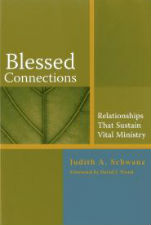
We cannot escape relationships in ministry, yet few seminaries offer courses in how to build healthy relationships. The assumption is that the type of person who is called to ministry will have all the "people skills" they need, which sadly is not always true. In Blessed Connections, seminary professor Judith Schwanz helps clergy cultivate the necessary relationships that can sustain their lives in ministry.
Buy the book
Ideas that Impact: Public Ministry
"Ministering to the Soul of a Community" by Alice Mann
Public Offerings is a compelling and extensive resource with ways for all congregations to reach beyond themselves to better serve their neighborhoods, communities, and the world. The stories in the book address the ups and downs of public ministry, while offering the kind of practical wisdom that can support and encourage congregational leaders to continue to serve.
Buy the book
We cannot escape relationships in ministry, yet few seminaries offer courses in how to build healthy relationships. The assumption is that the type of person who is called to ministry will have all the "people skills" they need, which sadly is not always true. In Blessed Connections, seminary professor Judith Schwanz helps clergy cultivate the necessary relationships that can sustain their lives in ministry.
Buy the book
Ideas that Impact: Public Ministry
"Ministering to the Soul of a Community" by Alice Mann
Congregations that take responsibility for their ecological relationships will have a deeper, more grounded ministry. As congregations explore the intersection between their own core narratives and those of their local community or communities, new possibilities for ministry and mission may emerge.Congregations are born from a generative spark of interaction between stories of faith and stories of place. Some person or group looks out on a particular landscape and says, “There should be a church—or there should be a congregation of our preferred type—in this particular community.” That conclusion is not an isolated thought but part of a larger narrative that has shaped the awareness of the founder or founding group, a story about “who we are” (cultural and religious identity), “what we are called to do or be” (religious purpose), and “where we are now” (community and cultural context). Throughout the history of a congregation, narratives of faith and narratives of place collide and converge, compartmentalize and connect, in many and changing ways.
Congregations that take responsibility for their ecological relationships will have a deeper, more grounded ministry. Even the congregation that is regional in scope and highly associational in style is still part of the physical, social, and narrative web of those communities where its building is located and where its members live, work, and play. As congregations explore the intersection between their own core narratives and those of their local community or communities, new possibilities for ministry and mission may emerge. Specifically, congregations may discover new ways to interact intentionally and redemptively with the narrative life of the places they inhabit.
Place-based narratives are a powerful component of personal, civic, and congregational life. My awareness of this was heightened when I moved to a new place in 2002. My experience is captured in poet and social critic Wendell Berry’s remark that it is good for the young to leave home and explore the wider world, but at some point it is important to stop and say, “This is it, this will be home.” The seeds of significance and commitment that were present at the time of my own move sprouted with surprising urgency during a sabbatical summer in 2005. In the stillness that summer allowed me, I experienced an almost physical ache to know and work with my fellow citizens, and to help make my city a good place to live. So my attraction to the subject of place-based narratives arises at the intersection of at least three personal story lines: a quest story about finding and claiming a home place; a discernment story about scratching the itch for some new departure in my professional life; and the palpable narrative force of this place itself as it works on my imagination.
As a result, I have come to believe that “Where am I?” and “What is happening here?” are among the most profound questions congregational leaders can ask. This vocabulary of place or location is often used metaphorically in congregational planning and discernment. “Where are we now?” may be a figurative way of asking what steps the congregation has completed in a planning process, how far the congregation has progressed in a size transition, or how close the capital campaign has come to meeting its goal. In this discussion, I want to wake up these dozing metaphors of place and refocus on their immediate and physical meanings.
Place-based narratives are shared, persistent, and dynamic stories people commonly tell about “here.” While one could look at narratives of place at a completely individual level, I use the term place-based narratives to mean the stories that are shared within the community context—those that may be referenced in civic life through commemorative events, memorial structures, newspaper articles, library displays, and the rhetoric of local controversies. The focus is also on persistent stories that have remained active in the public imagination over time and on dynamic stories that are called into service in a variety of ways and assigned new meanings as circumstances change.
Place-based narratives always accomplish certain tasks. First, they give “here” a name—a powerful act, to be sure. The title people bestow on their place defines a narrative space, a special little world. This power of naming came to my attention when I moved to my current home in Haverhill, Massachusetts, a city of sixty thousand people located about an hour north of Boston. My house is situated in a leafy old neighborhood called Bradford. When people ask me where I live, I usually say, “Haverhill—one of the old mill cities along the Merrimack Valley.” My neighbor, on the other hand, always says his home is in Bradford and describes himself as living in the suburbs. These place names and definitions locate us within different narrative frameworks, connect us with different channels of information, assign significance to different events, and lead us to connect with our shared environment in markedly different ways.
Second, place-based narratives provide “here” with a trajectory that stretches over time. They sketch out the remembered past—who came here first and from where, what used to be here that the community is proud of or pining for, what tragedies occurred here that marked people’s memories, and which notable personalities have left their imprint on local life. These narratives describe the place’s present reality—who lives here today and what they are like; what is changing now, for better or for worse; and what forces are affecting lives in the community. And they outline imagined futures—the paths of “progress” or “development”; the trends of breakdown and demolition (physical and social) that people seek to resist or to hasten; and the potential shape of the common life in years to come.
Finally, a shared narrative of place gives rise to a common field of concerns, possibilities, and relationships. Social theorists have begun to borrow from physics the concept of a field of forces (such as gravitational, electrical, or magnetic) to describe change and movement that cannot be accounted for by a visible, proximate force. Comparing one place to another, different patterns, tendencies, and habits of interaction and development become evident. A major “unseen force” is the story a community tells about itself. This is not the slick, promotional version on the Chamber of Commerce website but the grassroots version of the story, the one people tell each other to explain and comment upon important happenings or controversial proposals.
A new resident to a particular locale will notice certain events and eras that other residents reference repeatedly in a variety of settings. Over time one gains an impression of the meanings commonly attached to these events and the uses that are made of them. How does a community resident like myself become a true participant-observer who can maintain perspective, stay open to a variety of voices, and create trustworthy space for conversation? And how might a connection be made between local congregations and this important type of community dialogue?
A beginning point with an individual congregation might be to invite exploration of its own history in this place—to examine how the character, fortunes, and evolution of this city have affected the congregation’s own identity and development, and vice versa.
A second step might be to encourage a congregational group to use its spiritual, theological, and biblical heritage to develop images of the soul of the city they live in—that is, to discern and describe a corporate personality for the city, then to consider the soul struggles this personality is experiencing at this time.
A third step could be to ask what opportunities this congregation might have today to minister to the soul of their city. Such ministry could take myriad forms. A congregation with many public leaders might pay special attention to forming the conscience and attitude of those leaders. An African American congregation might remind the city that true success is measured by the way it treats the stranger, the widow, and the orphan. A congregation with a strong civic identity might cosponsor with other partners a series of public dialogues on issues of soul significance.
My hope is that new forms of ministry to the soul of place will be generated as the imagination of congregational leaders is stimulated by such inquiries. By exploring place-based narratives, through internal practices of congregational discernment and through new forms of community dialogue, a faith community can experience a profound renewal of its identity, its mission, and its role in its wider community.
_______________________________________
Copyright © 2008, the Alban Institute. All rights reserved. We encourage you to share articles from the Alban Weekly with your congregation. We gladly allow permission to reprint articles from the Alban Weekly for one-time use by congregations and their leaders when the material is offered free of charge. All we ask is that you write to us at alban@div.duke.edu and let us know how the Alban Weekly is making an impact in your congregation. If you would like to use any other Alban material, or if your intended use of the Alban Weekly does not fall within this scope, please submit our reprint permission request form.
Subscribe to the Alban Weekly.
Archive of past issues of the Alban Weekly.
_______________________________________
FEATURED RESOURCES
Congregations that take responsibility for their ecological relationships will have a deeper, more grounded ministry. Even the congregation that is regional in scope and highly associational in style is still part of the physical, social, and narrative web of those communities where its building is located and where its members live, work, and play. As congregations explore the intersection between their own core narratives and those of their local community or communities, new possibilities for ministry and mission may emerge. Specifically, congregations may discover new ways to interact intentionally and redemptively with the narrative life of the places they inhabit.
Place-based narratives are a powerful component of personal, civic, and congregational life. My awareness of this was heightened when I moved to a new place in 2002. My experience is captured in poet and social critic Wendell Berry’s remark that it is good for the young to leave home and explore the wider world, but at some point it is important to stop and say, “This is it, this will be home.” The seeds of significance and commitment that were present at the time of my own move sprouted with surprising urgency during a sabbatical summer in 2005. In the stillness that summer allowed me, I experienced an almost physical ache to know and work with my fellow citizens, and to help make my city a good place to live. So my attraction to the subject of place-based narratives arises at the intersection of at least three personal story lines: a quest story about finding and claiming a home place; a discernment story about scratching the itch for some new departure in my professional life; and the palpable narrative force of this place itself as it works on my imagination.
As a result, I have come to believe that “Where am I?” and “What is happening here?” are among the most profound questions congregational leaders can ask. This vocabulary of place or location is often used metaphorically in congregational planning and discernment. “Where are we now?” may be a figurative way of asking what steps the congregation has completed in a planning process, how far the congregation has progressed in a size transition, or how close the capital campaign has come to meeting its goal. In this discussion, I want to wake up these dozing metaphors of place and refocus on their immediate and physical meanings.
Place-based narratives are shared, persistent, and dynamic stories people commonly tell about “here.” While one could look at narratives of place at a completely individual level, I use the term place-based narratives to mean the stories that are shared within the community context—those that may be referenced in civic life through commemorative events, memorial structures, newspaper articles, library displays, and the rhetoric of local controversies. The focus is also on persistent stories that have remained active in the public imagination over time and on dynamic stories that are called into service in a variety of ways and assigned new meanings as circumstances change.
Place-based narratives always accomplish certain tasks. First, they give “here” a name—a powerful act, to be sure. The title people bestow on their place defines a narrative space, a special little world. This power of naming came to my attention when I moved to my current home in Haverhill, Massachusetts, a city of sixty thousand people located about an hour north of Boston. My house is situated in a leafy old neighborhood called Bradford. When people ask me where I live, I usually say, “Haverhill—one of the old mill cities along the Merrimack Valley.” My neighbor, on the other hand, always says his home is in Bradford and describes himself as living in the suburbs. These place names and definitions locate us within different narrative frameworks, connect us with different channels of information, assign significance to different events, and lead us to connect with our shared environment in markedly different ways.
Second, place-based narratives provide “here” with a trajectory that stretches over time. They sketch out the remembered past—who came here first and from where, what used to be here that the community is proud of or pining for, what tragedies occurred here that marked people’s memories, and which notable personalities have left their imprint on local life. These narratives describe the place’s present reality—who lives here today and what they are like; what is changing now, for better or for worse; and what forces are affecting lives in the community. And they outline imagined futures—the paths of “progress” or “development”; the trends of breakdown and demolition (physical and social) that people seek to resist or to hasten; and the potential shape of the common life in years to come.
Finally, a shared narrative of place gives rise to a common field of concerns, possibilities, and relationships. Social theorists have begun to borrow from physics the concept of a field of forces (such as gravitational, electrical, or magnetic) to describe change and movement that cannot be accounted for by a visible, proximate force. Comparing one place to another, different patterns, tendencies, and habits of interaction and development become evident. A major “unseen force” is the story a community tells about itself. This is not the slick, promotional version on the Chamber of Commerce website but the grassroots version of the story, the one people tell each other to explain and comment upon important happenings or controversial proposals.
A new resident to a particular locale will notice certain events and eras that other residents reference repeatedly in a variety of settings. Over time one gains an impression of the meanings commonly attached to these events and the uses that are made of them. How does a community resident like myself become a true participant-observer who can maintain perspective, stay open to a variety of voices, and create trustworthy space for conversation? And how might a connection be made between local congregations and this important type of community dialogue?
A beginning point with an individual congregation might be to invite exploration of its own history in this place—to examine how the character, fortunes, and evolution of this city have affected the congregation’s own identity and development, and vice versa.
A second step might be to encourage a congregational group to use its spiritual, theological, and biblical heritage to develop images of the soul of the city they live in—that is, to discern and describe a corporate personality for the city, then to consider the soul struggles this personality is experiencing at this time.
A third step could be to ask what opportunities this congregation might have today to minister to the soul of their city. Such ministry could take myriad forms. A congregation with many public leaders might pay special attention to forming the conscience and attitude of those leaders. An African American congregation might remind the city that true success is measured by the way it treats the stranger, the widow, and the orphan. A congregation with a strong civic identity might cosponsor with other partners a series of public dialogues on issues of soul significance.
My hope is that new forms of ministry to the soul of place will be generated as the imagination of congregational leaders is stimulated by such inquiries. By exploring place-based narratives, through internal practices of congregational discernment and through new forms of community dialogue, a faith community can experience a profound renewal of its identity, its mission, and its role in its wider community.
_______________________________________
Copyright © 2008, the Alban Institute. All rights reserved. We encourage you to share articles from the Alban Weekly with your congregation. We gladly allow permission to reprint articles from the Alban Weekly for one-time use by congregations and their leaders when the material is offered free of charge. All we ask is that you write to us at alban@div.duke.edu and let us know how the Alban Weekly is making an impact in your congregation. If you would like to use any other Alban material, or if your intended use of the Alban Weekly does not fall within this scope, please submit our reprint permission request form.
Subscribe to the Alban Weekly.
Archive of past issues of the Alban Weekly.
_______________________________________
FEATURED RESOURCES
Holy Places: Matching Sacred Space with Mission and Message by Nancy DeMott, Tim Shapiro, and Brent Bill
Buildings communicate. Stained glass windows, high altars, multi-purpose worship/gymnasium spaces, Plexiglas pulpits, padded pews—these and all other architectural elements say something about a congregation’s theology and mission. They point to a faith community’s beliefs about worship, identity, purpose, and more. Holy Places is designed to be used by congregations who are involved in or are contemplating work on their facilities. Approaching this work with mission at the forefront is the key to having a final result that strengthens the congregation’s ministry.

Buildings communicate. Stained glass windows, high altars, multi-purpose worship/gymnasium spaces, Plexiglas pulpits, padded pews—these and all other architectural elements say something about a congregation’s theology and mission. They point to a faith community’s beliefs about worship, identity, purpose, and more. Holy Places is designed to be used by congregations who are involved in or are contemplating work on their facilities. Approaching this work with mission at the forefront is the key to having a final result that strengthens the congregation’s ministry.
Memories, Hopes, and Conversations: Appreciative Inquiry and Congregational Change by Mark Lau Branson
Mark Lau Branson demonstrates how concentrating on needs and problems can mire a congregation in discouragement—and how, by focusing on memories of the congregation at its best—members are able to build on those positive experiences as they shape the church’s future. Grounded in solid theory and real-life practice, Memories, Hopes, and Conversations is a groundbreaking work of narrative leadership and the first book to apply the principles of Appreciative Inquiry to the lives of congregations.
Read more »
"Neighbors and Covenant Relationships" by Steve Willis
Mission and outreach grow naturally out of the depth and commitment of covenant relationships, and smaller membership congregations will preserve and protect these relationships. This is a good thing because, where these relationships are nurtured, they will inevitably reach neighbors.

Flickr / John Buie
Stu was one of the first people to help me see that the patient work of discernment was a big part of what I was called to do. I was right out of seminary at the time. I thought that the biggest part of my calling was to grow the church’s membership, and I was busy going about it. I bumped into Stu while I was caught up in these pursuits. Fortunately for me, Stu was a quiet, patient elder in the church. He rarely spoke, but he was someone who was intently listened to by the congregation when he did finally say something. Stu was several years past retirement age, but he still ran the grocery store his father had started. He had done well and was respected in town, even though he still drove the rusted-out, white Ford F150 that people loved to joke about.
I had not realized that I had roused the latent Scottish ire of Stu until he arrived at my study one morning. He came to dissuade me from changing the church’s lone Bible study of six to eight souls, which met at the horrible time of 3:00 p.m. on Wednesday afternoon. I had all the right reasons for changing to a better time that would accommodate more people. He seemed stubborn and hardheaded in his resistance to change. Before I could bring this up at a session meeting, his daughter called and wanted to start a new Bible study during Sunday school hour for the “young people.” At the moment I felt angry at being outmaneuvered, and now I had two Bible studies to go to!
It took a couple of years for me to appreciate the wisdom of what had happened. The “young people’s” Bible study took off, and they enjoyed being together. Over time I came to understand the depth of relationships in the other Bible study, which was a community of people who had spent much of their lives together. One day Stu came prepared for studying the good Samaritan parable. He was engaged in an unusually passionate way that afternoon in his questions and conversation about this passage. He was exploring what it means to serve the needs of neighbors.
Later that same night a crowd of people gathered for a town meeting about a proposal to build a new post office. The town had received word from the state that they could receive funds to build a brand new post office. Everyone was excited by the thought of a new building in town. People spoke enthusiastically for the benefits of an attractive new post office and how it might spruce things up a bit.
Then Stu slowly came forward to speak. People were surprised and wondered what he would have to say. The problem that Stu saw with this whole idea was that the state wanted to build the post office almost a mile out of town on the main highway. This strategy had been employed in numerous small towns as a matter of convenience to the postal workers for getting deliverers to their routes. But this strategy also presented a problem for many. Stu saw people walking to the post office when he drove along Main Street on his way to the store. He knew many of these folks personally, and he knew a number of them did not have cars. He liked the idea of a new building, especially because it would be close to his house, but he was concerned that it would force people to walk long distances to receive their mail. The last words of his short speech were a question, “Should we ask our neighbors to walk so far for the sake of our convenience?” The crowd was silent. And the post office stayed. Stu showed me that the small church that focuses so much attention on nurturing its own folks is a blessing to its people in order for them to be a blessing to their neighbors.
Mission and outreach grow naturally out of the depth and commitment of these covenant relationships. The small church will preserve and protect these relationships, and where these relationships are nurtured they will touch other people. People hear the sacred stories of Scripture amid the relationships of family and neighbors and respond by reaching out to their community. This dynamic is not unlike Jesus calling Simon Peter, Andrew, James, and John from their fishing boats to follow him. Their discipleship would grow amid these family and neighborly interrelationships and be nurtured in Peter’s home in Capernaum and around the table that they shared before they started traveling to other towns.
One Sunday after church, Sandy invited me to go with her to visit the veterans’ nursing home. I had recently begun supply preaching at this small, mountain church of approximately forty members. It seemed like a good way to get to know some church members, and so I rode with Sandy and her friend Jan. The veterans’ home was in very poor repair, and the men that I met that day were struggling with numerous physical and emotional illnesses, as well as having little to no family and no financial resources. But I was amazed to watch how the veterans greeted us, and later three others from the church, with such gratitude. It was a family reunion, like so many small-church gatherings.
Many years ago some friends from the church who had family in the military started visiting the isolated men of this veterans’ home. This group of friends has grown into a sizeable mission outreach. They visit twice a month, celebrate birthdays, play bingo, decorate for Christmas and holidays, and simply build community. One elder leads an informal worship service and prays for and with them. They have assisted and contributed to funerals for those who have died. They know all the men by name and are known by name. The depth and continuity of these long-lasting relationships of church friends has created community among the veterans. The continuity of these church relationships has helped the commitment to this ministry endure over many years.
As modern, technologically minded people, we often disdain continuity. We view it as a sign of bored indifference. Yet we rarely see how the pendulum often swings so far back the other way. Our Internet-driven, television-altered minds are addicted to changing scenery, changing images, and changing patterns. How strange it is that the rapid movement of Facebook pages and text messages have become numbing comforts in our highly mobile world. If we have to sit still with the same images in front of us, we are afraid that we will fall asleep. If our lives have to be still with the same people and places in front of us, we are afraid that we will die. “Novelty is a new kind of loneliness, . . . the faint surprises of minds incapable of wonder,” writes Wendell Berry [What Are People For? (New York: North Point Press, 1996), 9].
Covenant love lives with continuity. People have a smaller sphere of options within covenant. Living and ministering in the small-church context means a number of limits and constraints. They can feel like a straightjacket for the person who has not empathized with or embraced the small church’s vocation. But these limitations provide the necessary context for the good neighborhood of meaningful and deeply satisfying relationships. Small churches have quite a diverse range of theological and political perspectives, and the individuals within them have even more diverse perspectives. Yet a healthy small church will practice this limiting work of keeping first things first.
At the same time, the small church has a liberating impulse as well. Within the good neighborhood protected by the conserving temperament of its leaders is an organic hospitality that welcomes a wide-ranging diversity of God’s children.
______________________________________
This article is adapted and excerpted from Imagining the Small Church: Celebrating a Simpler Path by Steve Willis, copyright © 2012 by the Alban Institute. All rights reserved.
______________________________________

Mark Lau Branson demonstrates how concentrating on needs and problems can mire a congregation in discouragement—and how, by focusing on memories of the congregation at its best—members are able to build on those positive experiences as they shape the church’s future. Grounded in solid theory and real-life practice, Memories, Hopes, and Conversations is a groundbreaking work of narrative leadership and the first book to apply the principles of Appreciative Inquiry to the lives of congregations.
Read more »
"Neighbors and Covenant Relationships" by Steve Willis
Mission and outreach grow naturally out of the depth and commitment of covenant relationships, and smaller membership congregations will preserve and protect these relationships. This is a good thing because, where these relationships are nurtured, they will inevitably reach neighbors.
Flickr / John Buie
Stu was one of the first people to help me see that the patient work of discernment was a big part of what I was called to do. I was right out of seminary at the time. I thought that the biggest part of my calling was to grow the church’s membership, and I was busy going about it. I bumped into Stu while I was caught up in these pursuits. Fortunately for me, Stu was a quiet, patient elder in the church. He rarely spoke, but he was someone who was intently listened to by the congregation when he did finally say something. Stu was several years past retirement age, but he still ran the grocery store his father had started. He had done well and was respected in town, even though he still drove the rusted-out, white Ford F150 that people loved to joke about.
I had not realized that I had roused the latent Scottish ire of Stu until he arrived at my study one morning. He came to dissuade me from changing the church’s lone Bible study of six to eight souls, which met at the horrible time of 3:00 p.m. on Wednesday afternoon. I had all the right reasons for changing to a better time that would accommodate more people. He seemed stubborn and hardheaded in his resistance to change. Before I could bring this up at a session meeting, his daughter called and wanted to start a new Bible study during Sunday school hour for the “young people.” At the moment I felt angry at being outmaneuvered, and now I had two Bible studies to go to!
It took a couple of years for me to appreciate the wisdom of what had happened. The “young people’s” Bible study took off, and they enjoyed being together. Over time I came to understand the depth of relationships in the other Bible study, which was a community of people who had spent much of their lives together. One day Stu came prepared for studying the good Samaritan parable. He was engaged in an unusually passionate way that afternoon in his questions and conversation about this passage. He was exploring what it means to serve the needs of neighbors.
Later that same night a crowd of people gathered for a town meeting about a proposal to build a new post office. The town had received word from the state that they could receive funds to build a brand new post office. Everyone was excited by the thought of a new building in town. People spoke enthusiastically for the benefits of an attractive new post office and how it might spruce things up a bit.
Then Stu slowly came forward to speak. People were surprised and wondered what he would have to say. The problem that Stu saw with this whole idea was that the state wanted to build the post office almost a mile out of town on the main highway. This strategy had been employed in numerous small towns as a matter of convenience to the postal workers for getting deliverers to their routes. But this strategy also presented a problem for many. Stu saw people walking to the post office when he drove along Main Street on his way to the store. He knew many of these folks personally, and he knew a number of them did not have cars. He liked the idea of a new building, especially because it would be close to his house, but he was concerned that it would force people to walk long distances to receive their mail. The last words of his short speech were a question, “Should we ask our neighbors to walk so far for the sake of our convenience?” The crowd was silent. And the post office stayed. Stu showed me that the small church that focuses so much attention on nurturing its own folks is a blessing to its people in order for them to be a blessing to their neighbors.
Mission and outreach grow naturally out of the depth and commitment of these covenant relationships. The small church will preserve and protect these relationships, and where these relationships are nurtured they will touch other people. People hear the sacred stories of Scripture amid the relationships of family and neighbors and respond by reaching out to their community. This dynamic is not unlike Jesus calling Simon Peter, Andrew, James, and John from their fishing boats to follow him. Their discipleship would grow amid these family and neighborly interrelationships and be nurtured in Peter’s home in Capernaum and around the table that they shared before they started traveling to other towns.
One Sunday after church, Sandy invited me to go with her to visit the veterans’ nursing home. I had recently begun supply preaching at this small, mountain church of approximately forty members. It seemed like a good way to get to know some church members, and so I rode with Sandy and her friend Jan. The veterans’ home was in very poor repair, and the men that I met that day were struggling with numerous physical and emotional illnesses, as well as having little to no family and no financial resources. But I was amazed to watch how the veterans greeted us, and later three others from the church, with such gratitude. It was a family reunion, like so many small-church gatherings.
Many years ago some friends from the church who had family in the military started visiting the isolated men of this veterans’ home. This group of friends has grown into a sizeable mission outreach. They visit twice a month, celebrate birthdays, play bingo, decorate for Christmas and holidays, and simply build community. One elder leads an informal worship service and prays for and with them. They have assisted and contributed to funerals for those who have died. They know all the men by name and are known by name. The depth and continuity of these long-lasting relationships of church friends has created community among the veterans. The continuity of these church relationships has helped the commitment to this ministry endure over many years.
As modern, technologically minded people, we often disdain continuity. We view it as a sign of bored indifference. Yet we rarely see how the pendulum often swings so far back the other way. Our Internet-driven, television-altered minds are addicted to changing scenery, changing images, and changing patterns. How strange it is that the rapid movement of Facebook pages and text messages have become numbing comforts in our highly mobile world. If we have to sit still with the same images in front of us, we are afraid that we will fall asleep. If our lives have to be still with the same people and places in front of us, we are afraid that we will die. “Novelty is a new kind of loneliness, . . . the faint surprises of minds incapable of wonder,” writes Wendell Berry [What Are People For? (New York: North Point Press, 1996), 9].
Covenant love lives with continuity. People have a smaller sphere of options within covenant. Living and ministering in the small-church context means a number of limits and constraints. They can feel like a straightjacket for the person who has not empathized with or embraced the small church’s vocation. But these limitations provide the necessary context for the good neighborhood of meaningful and deeply satisfying relationships. Small churches have quite a diverse range of theological and political perspectives, and the individuals within them have even more diverse perspectives. Yet a healthy small church will practice this limiting work of keeping first things first.
At the same time, the small church has a liberating impulse as well. Within the good neighborhood protected by the conserving temperament of its leaders is an organic hospitality that welcomes a wide-ranging diversity of God’s children.
______________________________________
This article is adapted and excerpted from Imagining the Small Church: Celebrating a Simpler Path by Steve Willis, copyright © 2012 by the Alban Institute. All rights reserved.
______________________________________
Imagining the Small Church: Celebrating a Simpler Path
by Steve Willis
Imagining the Small Church: Celebrating a Simpler Path bears witness to what God is doing in small churches. Steve Willis tells stories from the small churches he has pastored in rural, town, and urban settings and dares to imagine that their way of being has something to teach all churches in this time of change in the American Christian Church.
FEATURED RESOURCES

by Steve Willis
Imagining the Small Church: Celebrating a Simpler Path bears witness to what God is doing in small churches. Steve Willis tells stories from the small churches he has pastored in rural, town, and urban settings and dares to imagine that their way of being has something to teach all churches in this time of change in the American Christian Church.
FEATURED RESOURCES
Inside the Small Church
by Anthony G. Pappas
Small-church expert Tony Pappas has gathered a cornucopia of essays into an indispensable book for anyone interested in the rich life of small congregations. Drawing on classic and updated articles by a variety of writers, and adding new pieces developed especially for this volume, Pappas provides timeless ideas on learning to value, pastor, develop, and lead the small church.

by Anthony G. Pappas
Small-church expert Tony Pappas has gathered a cornucopia of essays into an indispensable book for anyone interested in the rich life of small congregations. Drawing on classic and updated articles by a variety of writers, and adding new pieces developed especially for this volume, Pappas provides timeless ideas on learning to value, pastor, develop, and lead the small church.
Entering the World of the Small Church, Revised and Expanded Edition
by Anthony G. Pappas
What does ministering in small churches require? Leaders who are willing to enter into that world with wholehearted, unconditional love for their congregations. Tony Pappas shows how to do just that in this new edition of an old favorite that broadens and deepens his classic instruction on understanding small church tribes on their own terms. Grounded in proven principles, rich with anecdotes from real-life situations, and brimming with practical strategies, this is a fresh “must-read” for every small church pastor.

by Anthony G. Pappas
What does ministering in small churches require? Leaders who are willing to enter into that world with wholehearted, unconditional love for their congregations. Tony Pappas shows how to do just that in this new edition of an old favorite that broadens and deepens his classic instruction on understanding small church tribes on their own terms. Grounded in proven principles, rich with anecdotes from real-life situations, and brimming with practical strategies, this is a fresh “must-read” for every small church pastor.
Where 20 or 30 Are Gathered: Leading Worship in the Small Church
by Peter Bush and Christine O’Reilly
While worship is the primary purpose of all churches, worship in the small church is distinctive. Whether a house church, a new church plant, a rural church along a country road, or a city church whose neighborhood demographics have shifted, these small faith communities present unique opportunities and challenges for worship leaders. Bush and O’Reilly draw on their passion and experience equipping lay people to plan and lead worship to answer the question, what makes for effective worship leadership in family-size congregations, where fewer than 50 people gather Sunday by Sunday to worship?.

by Peter Bush and Christine O’Reilly
While worship is the primary purpose of all churches, worship in the small church is distinctive. Whether a house church, a new church plant, a rural church along a country road, or a city church whose neighborhood demographics have shifted, these small faith communities present unique opportunities and challenges for worship leaders. Bush and O’Reilly draw on their passion and experience equipping lay people to plan and lead worship to answer the question, what makes for effective worship leadership in family-size congregations, where fewer than 50 people gather Sunday by Sunday to worship?.
From a Mustard Seed: Enlivening Worship and Music in the Small Church
by Bruce G. Epperly and Daryl Hollinger
Small congregations can have beautiful worship! In From a Mustard Seed, an experienced pastor-professor and an experienced church musician provide a model for faithful and excellent worship in congregations that average 75 or fewer people in weekly worship. While the limitations of small congregations are obvious to their members and leaders, the possibilities for creative music and worship are often greater than we can imagine.
____________________________________

by Bruce G. Epperly and Daryl Hollinger
Small congregations can have beautiful worship! In From a Mustard Seed, an experienced pastor-professor and an experienced church musician provide a model for faithful and excellent worship in congregations that average 75 or fewer people in weekly worship. While the limitations of small congregations are obvious to their members and leaders, the possibilities for creative music and worship are often greater than we can imagine.
____________________________________
Vision and Skills for a Long Pastorate
Leader: Ed White, Alban consultant and author
April 9-11, 2013, Simpsonwood Conference and Retreat Center, (near) Atlanta, GA

Leader: Ed White, Alban consultant and author
April 9-11, 2013, Simpsonwood Conference and Retreat Center, (near) Atlanta, GA
Strategic Planning in Congregations
Leader: Dan Hotchkiss, Alban senior consultant and author
April 16-18, 2013, Doubletree Airport Hotel, Cincinnati, OH

Leader: Dan Hotchkiss, Alban senior consultant and author
April 16-18, 2013, Doubletree Airport Hotel, Cincinnati, OH
Finishing Strong, Ending Well: Crafting the Culminating Chapter of Your Ministry
Leader: Larry Peers, Alban senior consultant
July 9-11, 2013 Zypher Point Conference and Retreat Center, Lake Tahoe, NV
.jpg)
Leader: Larry Peers, Alban senior consultant
July 9-11, 2013 Zypher Point Conference and Retreat Center, Lake Tahoe, NV
Raising the Roof: Pastoral-to-Program Size Transition in Congregations
Leader: Sarai Rice, Alban consultant
July 16-17, 2013 Doubletree Airport Hotel, Cincinnati, OH

Leader: Sarai Rice, Alban consultant
July 16-17, 2013 Doubletree Airport Hotel, Cincinnati, OH
Leading Adaptive Change
Leader: Susan Beaumont, Alban senior consultant
July 23-25, 2013, Simsonwood Conference and Retreat Center, (near) Atlanta, GA

Leader: Susan Beaumont, Alban senior consultant
July 23-25, 2013, Simsonwood Conference and Retreat Center, (near) Atlanta, GA
Dealing with Congregational Discord
Leader: Susan Nienaber, Alban senior consultant
July 30-August 1, 2013, Roslyn Conference and Retreat Center, Richmond, VA

Leader: Susan Nienaber, Alban senior consultant
July 30-August 1, 2013, Roslyn Conference and Retreat Center, Richmond, VA
Motivating and Equipping Leaders and Volunteers: Understanding Personality Types n Your Congregation
Leader: Linda Rich, Alban consultant
November 12-14, 2013, Holy Family Retreat Center, West Hartford, CTRead more »
Leader: Linda Rich, Alban consultant
November 12-14, 2013, Holy Family Retreat Center, West Hartford, CTRead more »
"Creativity in Crisis: Responding to Community Hardship from Congregational Health" by John H. Hewett
The saving grace of most crises is their concomitant requirement for creativity. When people of faith muster the courage to get off the floor and think, we can recognize in the midst of crises wonderful new opportunities for faithful ministry.
I must love church work. Though I make my living ministering to a variety of congregations across the country, every Sunday finds me in the same pulpit. A Baptist by tradition and persuasion, I log many hours in Presbyterian, Episcopal, United Methodist, and Pentecostal fellowships and all points in between. It’s a bit of a crazy life. Sometimes I catch myself humming Amy Grant’s catchy tune, “Hats” (“Why do I have to wear so many things on my head?”)1
My business hat is running a consulting firm that assists nonprofits in fundraising, leadership training, strategic planning, and conflict resolution.2 Many of our clients are faith-based organizations. Most of those are local congregations needing help with stewardship drives, strategic planning, planned giving, and capital campaigns.
My other hat is a mitre, of sorts. I’m the senior minister of a four-hundred-member progressive Baptist congregation in a county seat town thirty minutes east of Charlotte, North Carolina.3 This delightfully unusual family of faith called me to join their journey fully aware of my itinerant missionary work with other churches. They apparently thought it helpful to have a minister with a finger on the pulse of so many other vital organisms of the faith. Now my other finger is on their pulse, which keeps me grounded to the daily rhythm of congregational life at the end of Main Street, U.S.A.
Lately both pulses have been racing with the adrenalin shock of successive jolts to our national and regional economic systems. We’ve seen companies crumble and others vanish outright. Flagship banks have folded. Small businesses are going under. Stock values are in the cellar. Layoffs are multiplying. Fear is evident in many faces.
It’s been a roller coaster. In my town we endured long lines for $4.60 gasoline last September and now pump in puzzlement fuel costing a third as much. Most of the retirees in my congregation have lost upwards of 45 percent of their retirement savings. Some are looking for work at ages seventy-five and eighty. William Wordsworth’s prophetic sonnet of two centuries ago perfectly presaged our current materialistic predicament:
The world is too much with us; late and soon,
Getting and spending, we lay waste our powers;
Little we see in Nature that is ours;
We have given our hearts away, a sordid boon! 4
And this recession has come to church. Tithes and offerings lag at many congregations, forcing them to postpone or cancel ministries and missions previously considered vital. In my church this reduction in giving isn’t evidence of pettiness or unfaith; it’s the simple fact that you cannot tithe what you do not have.
This is going to be our new reality for awhile. We are bracing ourselves for a Season of Less.
It seems to me that God is calling us to think creatively about this fine mess we’re in, and to do it with boldness and confidence. Indeed, the saving grace of most crises is their concomitant requirement for creativity. I’m convinced that when people of faith muster the courage to get off the floor and think at all, when we are intentional about finding our way when so many of our neighbors are losing theirs, we can recognize in the midst of crises like these wonderful new opportunities for faithful ministry.
Thinking Theologically
We begin by asking the first question for churches in times of crisis: “Where is God in all this?” The faithful pursuit of a satisfying answer to that question is among our best and most righteous work when the world is too much with us.
I’ve been humbled by the theological depth of my own congregants’ responses to that question. “Perhaps this is God’s judgment on our greed and materialism.” “This is a wake-up call, reminding us of the difference between what is fleeting and what endures.” “I hear God calling us away from ‘church work’ to the work of the church.” And the one which ticks like a time bomb in the basement of my soul: “The more we invest our time, energy, and money in gospel work, the less we’ll need to worry about our own survival as a church.” Which being translated is, if we circle the wagons, we’ll die; but if we strike out on mission to someplace important, we’ll live.
I know of no congregation facing critical issues that, having come through the storm, said in the aftermath, “We spent too much time praying.”
Thinking theologically also leads us to Holy Scripture, our textbook for answering the question, “Where is God in all this?” I recently led a group of thirty-five adults through a three-week Advent study of the infancy narratives. We took the time to dig beneath the flannel-board Christmas of legend and lore and actually reconnect with the biblical story. We wept with Rachel and huddled in fear with Mary and Joseph. We blushed with the shame of outdoor childbirth and unannounced visitors. We wised up with the manifestos of Zechariah and Mary, and departed with an uneasy peace following the painful prophecy of Simeon. Along the way, we reconnected with the daily practice of thinking about God in our daily lives, asking primary questions—doing theology. The study of Scripture will always have that effect, if we do it right. It reconnects us with salvation history.
Arguably the best running back in NFL history, Emmitt Smith was in the twilight of his career with the Dallas Cowboys when he was called on to mentor a young phenom filled with athletic promise. The first time the newbie scored a touchdown he went wild, dancing across the end zone, calling maximum attention to himself. After the demonstration was over and the young man had come to the sidelines, Smith pulled him aside and growled in his ear: “Rookie, act like ya been here before.”
We have been here before. Our own traditions have been shaped by crisis and turmoil, by faith born in hardship. Responding to difficulty is part of who we are. If the current economic crisis in our land sends us back to Scripture in search of how our spiritual forebears responded to crisis, we will be not far from the Kingdom. For the whole drama of redemption is one saga after another of God leading God’s people through wilderness and bramble and fire, through war and peace, through feast and famine, through faith and apostasy, through darkness and light. God’s people have been here before. And, time after time, God proved faithful.
Thinking theologically also elicits sensitive and informed preaching that speaks to deep human needs with deeper truths. Superficial sermons crafted to tickle the ears, shaped into “Top Ten” lists with catchy alliterations and billboard-worthy titles, skim the surface of a gospel written to people who were dying. Preaching to people in crisis is more than giving them a spiritual lollipop to lick. It is water to the thirsty, meat to the starving, life to the dying.
In his retirement years in Louisville, prince of preachers George Buttrick was invited by the Baptist seminary to teach a few homiletics classes adjunctively. One of the young theologs from Mississippi raised his hand early in the semester and asked, “Dr. Buttrick, just how many points should a good sermon have?” Buttrick gave that wry smile and replied, “Well, my young friend, I should think at least one.”
Crisis can be a liberating moment because it carries with it permission to change. Urgency supplants complacency every time. I love doing strategic planning with churches and other faith-based groups, but never so much as when their backs are to the wall. When the floor is getting slippery from the bursting of old wineskins, they find the courage to dream new dreams of faith and develop new tactics for accomplishing the dreams they’ve already got.
Crisis and hardship grant permission to ask primary questions. If the theological question is, “Where is God in all this?” the strategic questions are:
These days I see churches claiming permission to pour the new wine of the gospel into some new wineskins. They are opting for mission and ministry over the maintenance of status quo. They are reinvigorating worship. They are asking primary questions. They are, pardon the cliché, thinking outside the box, not with gimmicky tactics or marketing ploys but wholly new imaginings of how they should live together as followers of Christ.
Some are choosing to be freed from denominational imprisonment for a new, liberating ownership of their own initiatives. Others are intentionally crafting a congregational life tailored to a postmodern world, asking questions like, “How would we want our church to be if we were starting it new, today?” The churches that make it will be those who find the courage to be redeemed from a calcifying past. As Gustav Mahler said, tradition is passing on the fire, not worshiping the ashes.
This recession is also forcing churches to get serious about stewardship and the looming crisis in giving, which threatens to topple congregations like a tidal wave. I’m talking about the “aging out” of our best stewards, and the awful truth that it takes more and more new families to replace the financial support of these elder stalwarts who never got the word that tithing was an option. The minister at a neighboring church recently told me over coffee, “John, I buried $150,000 last year.” I feel his pain. I’ve got at least ten faithful givers in my church who are in their nineties. That tsunami is heading all our ways. The good news is, we now have the opportunity to learn from our nonprofit brothers and sisters, who could not survive with the funding model of anonymous giving and lackluster recognition practiced by most American congregations. Many of us have reached the point of embracing an intentional, clear-eyed approach to funding our mission and ministry. We perform the stewardship of leadership. We (gasp!) look at the giving records. And we make it a point to regularly thank those whose sacrificial gifts are keeping the doors open. (I’m always amused at the feeble arguments advanced by those who don’t want their ministers knowing how little they give. “It will affect how you relate to us,” they exclaim, forgetting that most of us know far more personal information about our parishioners than their giving patterns, and still manage to care for them with compassion and sensitivity.)
The recession may also prompt strategic congregations to take a fresh look at staffing, which in many churches still follows a model unchanged for generations. The technological revolution is allowing churches to do more with fewer employees. The ubiquity of cell phones and e-mail, for example, has rendered many full-time receptionist and clerical assistant positions obsolete. Creative use of part-time staff is the wave of the future.
Caring Pastorally
The pastoral question raised by healthy churches responding to community hardship is, “In which of these persons in need do we see the living Christ?”
My esteemed teacher and friend, Wayne Oates, always wanted us to know that the ministry of the Word involved “rightly dividing” two scripts: the written Word of God and what Anton Boisen called the “living human documents” of our shared faith. It is in our pastoral work in crisis that we live out our truest theologies and most strategic plans.
Already these times are shaking the foundations of the churches I serve. People in need are washing up on our shores like a floating population of refugees. But what an opportunity for the church of the Savior to get involved in the daily work of salvation!
Years ago I landed in a church ruled by a “Board of Deacons” mostly interested in power and authority. They were more “board” than they were “deacons.” There wasn’t much caregiving going on. So we worked around them, creating a series of Christian Care Groups aimed at people in crisis and staffed by volunteers with particular gifts or experience in each area. If someone got laid off, he or she got a call from a fellow believer who had survived unemployment faithfully. When death called, the grief group responded. We had care groups for people experiencing divorce, major surgery, financial need, and transportation issues. Today we’d add groups for victims of domestic violence, people working through gender identity issues, and family survivors of suicide.
Carlyle Marney was once asked by a young minister if his church’s inconspicuous location was the reason it wasn’t growing. Marney replied, “Son, start doing the work of Jesus, and you won’t have any problem with people finding you.”
Marney was right. People in crisis still come to churches for help. Rather than viewing them as a nuisance to be avoided or a problem to be handled, faithful churches will welcome them as an opportunity to welcome the living Christ. David Crocker’s Operation Inasmuch6 is taking many formerly passive churches by storm, leading them into a new, hands-on, year-round involvement with their own neighborhoods and communities. Many churches are rethinking their former fascination with expensive mission trips out of town and channeling their congregational energies into their own backyards. They are getting acquainted with jails and prisons in their hometowns, with homeless shelters, and shelters for battered persons. They are reaching out to the residents of halfway houses. They are getting to know the illegal immigrants and migrant workers populating their cities. They are caring for people in crisis, in Jesus’s name.
So many of Jesus’s teachings sail over the heads of the cocky and self-assured. Good economic times tend to blind people to spiritual need. But let the foundations of our materialistic culture begin to shake, or an outbreak of war or violence threaten our security, and people start looking for something like a Rock on which to stand. Let a crisis come, and they cling to Christ like drowning souls to a life preserver.
One of my client churches, an historic congregation in Washington, D.C., is surrounded by homeless men and women. The congregation has invited them in, offering food, and hot showers, and clean clothes. Not all the members are thrilled, as you might imagine. The homeless men sleep in the bushes and use the manicured lawn for a bathroom. A few months ago the pastor was a bit late for our planning meeting. When she came in, breathless, she said to me quietly, “Sorry, I was on poop patrol.” Part of her daily commitment to her neighbors of the street is cleaning their excrement off the church lawn, rendering it less offensive to her parishioners, to be sure, but also making it more welcoming to “the least of these.”
She is doing God’s work. And she is modeling for her flock what shepherds do when their sheep are in need.
Crises ought to bring out the best in Jesus people. They provide us an opportunity to think more clearly about God, work more strategically in Christ’s service, and care more deeply for those with the greatest need. It is why we are here. As James instructed his young flock in Jerusalem:
My brothers and sisters, whenever you face trials of any kind, consider it nothing but joy, because you know that the testing of your faith produces endurance; and let endurance have its full effect, so that you may be mature and complete, lacking in nothing (1:2–3).
_______________
NOTES1. Amy Grant and Chris Eaton, “Hats.” 1991 ©Age to Age Music, Inc. (ASCAP)/Clouseau Music Ltd. (PRS), adm. by Reunion Music Group, Inc.
2. For more information, see www.hewettconsulting.com.
3. The First Baptist Church, Monroe, North Carolina (www.monroefirstbaptist.org).
4. William Wordsworth, “The World is Too Much with Us,” The Complete Poetical Works (London: Macmillan and Co., 1888); Bartleby.com, Inc., 2008.
5. Learn more about the Sisters of St. Margaret at www.ssmbos.com.
6. For more information, see www.operationinasmuch.com.
_________________________
Questions for Reflection:
Visit Alban.org
Forward this email
STAY CONNECTED


Alban
I must love church work. Though I make my living ministering to a variety of congregations across the country, every Sunday finds me in the same pulpit. A Baptist by tradition and persuasion, I log many hours in Presbyterian, Episcopal, United Methodist, and Pentecostal fellowships and all points in between. It’s a bit of a crazy life. Sometimes I catch myself humming Amy Grant’s catchy tune, “Hats” (“Why do I have to wear so many things on my head?”)1
My business hat is running a consulting firm that assists nonprofits in fundraising, leadership training, strategic planning, and conflict resolution.2 Many of our clients are faith-based organizations. Most of those are local congregations needing help with stewardship drives, strategic planning, planned giving, and capital campaigns.
My other hat is a mitre, of sorts. I’m the senior minister of a four-hundred-member progressive Baptist congregation in a county seat town thirty minutes east of Charlotte, North Carolina.3 This delightfully unusual family of faith called me to join their journey fully aware of my itinerant missionary work with other churches. They apparently thought it helpful to have a minister with a finger on the pulse of so many other vital organisms of the faith. Now my other finger is on their pulse, which keeps me grounded to the daily rhythm of congregational life at the end of Main Street, U.S.A.
Lately both pulses have been racing with the adrenalin shock of successive jolts to our national and regional economic systems. We’ve seen companies crumble and others vanish outright. Flagship banks have folded. Small businesses are going under. Stock values are in the cellar. Layoffs are multiplying. Fear is evident in many faces.
It’s been a roller coaster. In my town we endured long lines for $4.60 gasoline last September and now pump in puzzlement fuel costing a third as much. Most of the retirees in my congregation have lost upwards of 45 percent of their retirement savings. Some are looking for work at ages seventy-five and eighty. William Wordsworth’s prophetic sonnet of two centuries ago perfectly presaged our current materialistic predicament:
The world is too much with us; late and soon,
Getting and spending, we lay waste our powers;
Little we see in Nature that is ours;
We have given our hearts away, a sordid boon! 4
And this recession has come to church. Tithes and offerings lag at many congregations, forcing them to postpone or cancel ministries and missions previously considered vital. In my church this reduction in giving isn’t evidence of pettiness or unfaith; it’s the simple fact that you cannot tithe what you do not have.
This is going to be our new reality for awhile. We are bracing ourselves for a Season of Less.
It seems to me that God is calling us to think creatively about this fine mess we’re in, and to do it with boldness and confidence. Indeed, the saving grace of most crises is their concomitant requirement for creativity. I’m convinced that when people of faith muster the courage to get off the floor and think at all, when we are intentional about finding our way when so many of our neighbors are losing theirs, we can recognize in the midst of crises like these wonderful new opportunities for faithful ministry.
Thinking Theologically
We begin by asking the first question for churches in times of crisis: “Where is God in all this?” The faithful pursuit of a satisfying answer to that question is among our best and most righteous work when the world is too much with us.
I’ve been humbled by the theological depth of my own congregants’ responses to that question. “Perhaps this is God’s judgment on our greed and materialism.” “This is a wake-up call, reminding us of the difference between what is fleeting and what endures.” “I hear God calling us away from ‘church work’ to the work of the church.” And the one which ticks like a time bomb in the basement of my soul: “The more we invest our time, energy, and money in gospel work, the less we’ll need to worry about our own survival as a church.” Which being translated is, if we circle the wagons, we’ll die; but if we strike out on mission to someplace important, we’ll live.
- In my experience, thinking theologically during crises is almost never done first, and rarely done at all. But we are a faith community. Thinking intentionally about God’s work among us is what we do. When we do it first, and well, our response to difficulty becomes a faith response, and not merely a programmatic one.
- Thinking theologically leads us to the prayer closet before the boardroom. Asking where God is inevitably beckons us to a holy conversation with . . . God.
I know of no congregation facing critical issues that, having come through the storm, said in the aftermath, “We spent too much time praying.”
Thinking theologically also leads us to Holy Scripture, our textbook for answering the question, “Where is God in all this?” I recently led a group of thirty-five adults through a three-week Advent study of the infancy narratives. We took the time to dig beneath the flannel-board Christmas of legend and lore and actually reconnect with the biblical story. We wept with Rachel and huddled in fear with Mary and Joseph. We blushed with the shame of outdoor childbirth and unannounced visitors. We wised up with the manifestos of Zechariah and Mary, and departed with an uneasy peace following the painful prophecy of Simeon. Along the way, we reconnected with the daily practice of thinking about God in our daily lives, asking primary questions—doing theology. The study of Scripture will always have that effect, if we do it right. It reconnects us with salvation history.
Arguably the best running back in NFL history, Emmitt Smith was in the twilight of his career with the Dallas Cowboys when he was called on to mentor a young phenom filled with athletic promise. The first time the newbie scored a touchdown he went wild, dancing across the end zone, calling maximum attention to himself. After the demonstration was over and the young man had come to the sidelines, Smith pulled him aside and growled in his ear: “Rookie, act like ya been here before.”
We have been here before. Our own traditions have been shaped by crisis and turmoil, by faith born in hardship. Responding to difficulty is part of who we are. If the current economic crisis in our land sends us back to Scripture in search of how our spiritual forebears responded to crisis, we will be not far from the Kingdom. For the whole drama of redemption is one saga after another of God leading God’s people through wilderness and bramble and fire, through war and peace, through feast and famine, through faith and apostasy, through darkness and light. God’s people have been here before. And, time after time, God proved faithful.
Thinking theologically also elicits sensitive and informed preaching that speaks to deep human needs with deeper truths. Superficial sermons crafted to tickle the ears, shaped into “Top Ten” lists with catchy alliterations and billboard-worthy titles, skim the surface of a gospel written to people who were dying. Preaching to people in crisis is more than giving them a spiritual lollipop to lick. It is water to the thirsty, meat to the starving, life to the dying.
In his retirement years in Louisville, prince of preachers George Buttrick was invited by the Baptist seminary to teach a few homiletics classes adjunctively. One of the young theologs from Mississippi raised his hand early in the semester and asked, “Dr. Buttrick, just how many points should a good sermon have?” Buttrick gave that wry smile and replied, “Well, my young friend, I should think at least one.”
- Here’s the first and only rule about preaching to people in crisis: have something to say. Say it clearly and compassionately, without artifice, in the prayerful hope that God might take your words and give them life. Feed your flock like a shepherd.
Crisis can be a liberating moment because it carries with it permission to change. Urgency supplants complacency every time. I love doing strategic planning with churches and other faith-based groups, but never so much as when their backs are to the wall. When the floor is getting slippery from the bursting of old wineskins, they find the courage to dream new dreams of faith and develop new tactics for accomplishing the dreams they’ve already got.
Crisis and hardship grant permission to ask primary questions. If the theological question is, “Where is God in all this?” the strategic questions are:
- Who are we? Why do we exist?
- What do we believe and highly value?
- Where are we headed in the midst of this crisis?
- How do we intend to get there?
These days I see churches claiming permission to pour the new wine of the gospel into some new wineskins. They are opting for mission and ministry over the maintenance of status quo. They are reinvigorating worship. They are asking primary questions. They are, pardon the cliché, thinking outside the box, not with gimmicky tactics or marketing ploys but wholly new imaginings of how they should live together as followers of Christ.
Some are choosing to be freed from denominational imprisonment for a new, liberating ownership of their own initiatives. Others are intentionally crafting a congregational life tailored to a postmodern world, asking questions like, “How would we want our church to be if we were starting it new, today?” The churches that make it will be those who find the courage to be redeemed from a calcifying past. As Gustav Mahler said, tradition is passing on the fire, not worshiping the ashes.
This recession is also forcing churches to get serious about stewardship and the looming crisis in giving, which threatens to topple congregations like a tidal wave. I’m talking about the “aging out” of our best stewards, and the awful truth that it takes more and more new families to replace the financial support of these elder stalwarts who never got the word that tithing was an option. The minister at a neighboring church recently told me over coffee, “John, I buried $150,000 last year.” I feel his pain. I’ve got at least ten faithful givers in my church who are in their nineties. That tsunami is heading all our ways. The good news is, we now have the opportunity to learn from our nonprofit brothers and sisters, who could not survive with the funding model of anonymous giving and lackluster recognition practiced by most American congregations. Many of us have reached the point of embracing an intentional, clear-eyed approach to funding our mission and ministry. We perform the stewardship of leadership. We (gasp!) look at the giving records. And we make it a point to regularly thank those whose sacrificial gifts are keeping the doors open. (I’m always amused at the feeble arguments advanced by those who don’t want their ministers knowing how little they give. “It will affect how you relate to us,” they exclaim, forgetting that most of us know far more personal information about our parishioners than their giving patterns, and still manage to care for them with compassion and sensitivity.)
The recession may also prompt strategic congregations to take a fresh look at staffing, which in many churches still follows a model unchanged for generations. The technological revolution is allowing churches to do more with fewer employees. The ubiquity of cell phones and e-mail, for example, has rendered many full-time receptionist and clerical assistant positions obsolete. Creative use of part-time staff is the wave of the future.
Caring Pastorally
The pastoral question raised by healthy churches responding to community hardship is, “In which of these persons in need do we see the living Christ?”
My esteemed teacher and friend, Wayne Oates, always wanted us to know that the ministry of the Word involved “rightly dividing” two scripts: the written Word of God and what Anton Boisen called the “living human documents” of our shared faith. It is in our pastoral work in crisis that we live out our truest theologies and most strategic plans.
Already these times are shaking the foundations of the churches I serve. People in need are washing up on our shores like a floating population of refugees. But what an opportunity for the church of the Savior to get involved in the daily work of salvation!
Years ago I landed in a church ruled by a “Board of Deacons” mostly interested in power and authority. They were more “board” than they were “deacons.” There wasn’t much caregiving going on. So we worked around them, creating a series of Christian Care Groups aimed at people in crisis and staffed by volunteers with particular gifts or experience in each area. If someone got laid off, he or she got a call from a fellow believer who had survived unemployment faithfully. When death called, the grief group responded. We had care groups for people experiencing divorce, major surgery, financial need, and transportation issues. Today we’d add groups for victims of domestic violence, people working through gender identity issues, and family survivors of suicide.
Carlyle Marney was once asked by a young minister if his church’s inconspicuous location was the reason it wasn’t growing. Marney replied, “Son, start doing the work of Jesus, and you won’t have any problem with people finding you.”
Marney was right. People in crisis still come to churches for help. Rather than viewing them as a nuisance to be avoided or a problem to be handled, faithful churches will welcome them as an opportunity to welcome the living Christ. David Crocker’s Operation Inasmuch6 is taking many formerly passive churches by storm, leading them into a new, hands-on, year-round involvement with their own neighborhoods and communities. Many churches are rethinking their former fascination with expensive mission trips out of town and channeling their congregational energies into their own backyards. They are getting acquainted with jails and prisons in their hometowns, with homeless shelters, and shelters for battered persons. They are reaching out to the residents of halfway houses. They are getting to know the illegal immigrants and migrant workers populating their cities. They are caring for people in crisis, in Jesus’s name.
So many of Jesus’s teachings sail over the heads of the cocky and self-assured. Good economic times tend to blind people to spiritual need. But let the foundations of our materialistic culture begin to shake, or an outbreak of war or violence threaten our security, and people start looking for something like a Rock on which to stand. Let a crisis come, and they cling to Christ like drowning souls to a life preserver.
One of my client churches, an historic congregation in Washington, D.C., is surrounded by homeless men and women. The congregation has invited them in, offering food, and hot showers, and clean clothes. Not all the members are thrilled, as you might imagine. The homeless men sleep in the bushes and use the manicured lawn for a bathroom. A few months ago the pastor was a bit late for our planning meeting. When she came in, breathless, she said to me quietly, “Sorry, I was on poop patrol.” Part of her daily commitment to her neighbors of the street is cleaning their excrement off the church lawn, rendering it less offensive to her parishioners, to be sure, but also making it more welcoming to “the least of these.”
She is doing God’s work. And she is modeling for her flock what shepherds do when their sheep are in need.
Crises ought to bring out the best in Jesus people. They provide us an opportunity to think more clearly about God, work more strategically in Christ’s service, and care more deeply for those with the greatest need. It is why we are here. As James instructed his young flock in Jerusalem:
My brothers and sisters, whenever you face trials of any kind, consider it nothing but joy, because you know that the testing of your faith produces endurance; and let endurance have its full effect, so that you may be mature and complete, lacking in nothing (1:2–3).
_______________
NOTES1. Amy Grant and Chris Eaton, “Hats.” 1991 ©Age to Age Music, Inc. (ASCAP)/Clouseau Music Ltd. (PRS), adm. by Reunion Music Group, Inc.
2. For more information, see www.hewettconsulting.com.
3. The First Baptist Church, Monroe, North Carolina (www.monroefirstbaptist.org).
4. William Wordsworth, “The World is Too Much with Us,” The Complete Poetical Works (London: Macmillan and Co., 1888); Bartleby.com, Inc., 2008.
5. Learn more about the Sisters of St. Margaret at www.ssmbos.com.
6. For more information, see www.operationinasmuch.com.
_________________________
Questions for Reflection:
- How can we avoid the temptation to interpret the current economic recession nationally rather than personally—that is, as a wake-up call for the country rather than an opportunity to be renewed spiritually as individuals?
- Is my church structured, organized, and funded for maintenance of the status quo or mission?
- Which ministry programs in my church have lost their effectiveness and are being maintained out of sentimental devotion to the past? If we were to start over from scratch in 2009, what would we jettison? What would we create or recreate for this present day?
- What biblical events are useful for interpreting the present economic uncertainty? How can God’s faithfulness to Israel inform our preaching to frightened parishioners? How can Jesus’s teaching about worrying over possessions encourage believers who are losing what they have?
- Is my church prepared to care for those injured or otherwise damaged by this economic crisis? What sort of disaster relief are we prepared to offer?
Visit Alban.org
Forward this email
STAY CONNECTED
Alban
312 Blackwell Street, Suite 101
Durham, North Carolina 27701 United States
___________________________
___________________________

No comments:
Post a Comment