democracynow.org
Stories:

Jill Stein to Bernie Sanders: Run on the Green Party Ticket & Continue Your Political Revolution
As Bernie Sanders prepares to meet with President Obama, we speak to Green Party presidential candidate Jill Stein, who has also been reaching out to the Vermont senator. With Hillary Clinton claiming victory in the Democratic race, Stein is attempting to start a dialogue with the Sanders campaign. In an open letter in April, Stein wrote, "In this hour of unprecedented crisis—with human rights, civilization, and life on the planet teetering on the brink—can we explore an historic collaboration to keep building the revolution beyond the reach of corporate party clutches, where the movement can take root and flourish, in the 2016 election and beyond?" Stein joins us from Albany ahead of this weekend’s New York Green Party convention.
TRANSCRIPT
This is a rush transcript. Copy may not be in its final form.
JUAN GONZÁLEZ: We turn now to the race for the White House. Hillary Clinton has dominated this week’s news after claiming victory in the Democratic contest, setting her on a path to become the first woman to win a major party’s presidential nomination. With only one primary to go in the District of Columbia, Clinton has an insurmountable lead in pledged delegates over her challenger, Bernie Sanders. But Clinton’s pledged delegate count falls short of the 2,383 needed, meaning she will need to rely on the support of unelected superdelegates to officially secure the nomination at next month’s convention in Philadelphia.
But Hillary Clinton isn’t the only woman aiming to be on the ballot in November. Jill Stein is moving closer to securing the Green Party nomination. On Tuesday, Stein won the Green Party’s primary in California. She has so far won 20 of the 21 contests ahead of the party’s national convention in August in Houston.
AMY GOODMAN: Jill Stein first announced her candidacy on Democracy Now! last June. She also ran for president on the Green Party ticket in 2012. In April, she wrote an open letter to Bernie Sanders urging him to consider joining forces to, quote, "ensure the revolution for people, planet and peace will prevail," unquote. Jill Stein joins us now from Albany, New York, ahead of Saturday’s nominating convention of the New York Green Party.
Jill Stein, welcome back to Democracy Now! Can you respond to what happened this week, Hillary Clinton clearly saying in the Brooklyn Navy Yard, before thousands of people, that she has secured the Democratic Party’s nomination, she is the presumptive nominee?
DR. JILL STEIN: Yes, and good morning, Amy and Juan. It’s great to be with you. You know, this is kind of what many people have foreseen all along. It was kind of in the cards. The Democratic machine has very steeply tilted the playing field, from the beginning, by limiting the debates, limiting the exposure of Bernie Sanders, some very questionable election practices, 100,000 voters disappearing from the rolls in Brooklyn, some very questionable things that happened in the Democratic primary in California where independent voters thought they could just show up at the polls and cast a vote for Bernie Sanders but were unable to, by large numbers, and huge discrepancies between the polls in advance and the actual outcome of the elections. So, you know, and needless to say, the superdelegates have massively tipped the playing field. And the announcement the night before by major news organizations that Hillary Clinton had already clinched it, you know, hard to call that just a coincidence, seems tailor-made for discouraging people from actually turning out and exercising their right to vote.
So, this is what the Democratic Party has done for decades—many decades, in fact. And after the election of George McGovern in 1972 as a peace candidate—I should say his election to the nomination of the Democratic Party, the party changed the rules to steeply tilt that playing field, creating superdelegates and Super Tuesdays that make it very hard for a grassroots campaign to prevail. And over the years, the party has allowed principled candidates to be seen and heard, but has, at the end of the day, sabotaged them in one way or the other, often through fear campaigns and smear campaigns, in the same way that Bernie is being called a spoiler now and has been for some weeks. Dennis Kucinich was redistricted and basically, you know, taken off the political map. We saw Jesse Jackson the victim of a smear campaign. People remember the Dean scream that was used against Howard Dean as a peace candidate who was doing well. So, in many ways, the Democratic Party creates campaigns that fake left while it moves right and becomes more corporatist, more militarist, more imperialist. This is why we say it’s hard to have a revolutionary campaign inside of a counterrevolutionary party. That’s why we’re here as the Green Party to build a place where a revolutionary movement can truly grow with a political voice.
JUAN GONZÁLEZ: Well, Jill Stein, you’ve been trying for months to reach out to Bernie Sanders, because you acknowledge that there are many similarities in your program and his, to join forces. What’s been the response from the Sanders campaign, and what are you hopeful for now?
DR. JILL STEIN: Well, the response over the last several weeks has been the same as the response over the last several years. And in fact, the Green Party reached out to Bernie Sanders before the last election to see if he might be interested in running on the Green Party ballot line. And that was in 2011. And basically, we haven’t heard back yet, so I’m not holding my breath that we are going to. And in fact, I think it was just yesterday that Senator Sanders announced that he would be meeting with President Obama to basically stay the course and to essentially move his campaign inside of the Democratic Party, which I think is a mistake and would be essentially an abandonment of the movement that has been built. We’ve seen many very principled and powerful efforts to reform the Democratic Party from within over the course of many years, and Democratic Party keeps marching to the right. So, you know, my hope, as Senator Sanders himself said, is that this is a movement, it’s not a man. And my hope is that the movement will continue. And we’ve offered—I’ve offered, basically, to put everything on the table and to see how we can work together and explore the—what it would take in order for that to happen—
AMY GOODMAN: Well, let’s go to Bernie Sanders—
DR. JILL STEIN: —to run a joint ticket, for example.
AMY GOODMAN: So, let’s talk about that for a minute. Let’s go to Bernie Sanders last July speaking at the U.S. Hispanic Chamber of Commerce, when he was asked if he would run on a third-party ticket if he failed to win the Democratic nomination.
SEN. BERNIE SANDERS: If it happens that I do not win that process, would I run outside of the system? No, I made the promise that I would not, and I’ll keep that promise. And let me add to that: And the reason for that is I do not want to be responsible for electing some right-wing Republican to be president of the United States of America.
AMY GOODMAN: So that is Bernie Sanders last July. You talked about the possibility of a joint ticket. Are you saying that you would—I mean, you are not the presidential nominee of the Green Party yet. You’re running in different state primaries and conventions. But are you suggesting that the Green Party would consider him being the presidential candidate, whether or not he would consider this?
DR. JILL STEIN: It would obviously take a major change of rules for that to happen. But what I’m saying is that if Senator Sanders made the case that now he understood, after the very, you know, disturbing experiences of the last many months and the way that he’s been mistreated and beaten up by the party, perhaps he has a different view of the potential to create revolution inside of a counterrevolutionary party. Maybe he has come to see the necessity for independent third parties to actually move this movement forward. That would be—you know, that would be a game changer if he made the case that he has come to understand the critical need to build the Green Party as the political voice of that revolution. If that were the case, I think many things would become possible at that point for making the rules changes. I can’t change those rules, but I can have those discussions with him and lay the groundwork for it. It would probably have to be taken to the Green Party convention. But in terms of my own view, you know, I’m a physician, not a politician. I don’t have a vested interest in a particular political career or a particular political office. My job is to do everything that I can to create an America and a world that we can live in and that we can survive in. And I would be very interested in having this discussion. I am not holding my breath that it’s going to happen. And I think it’s important that our campaign be plan B, if not for Senator Sanders, then for his supporters. ...Read More →

Green Party's Jill Stein: What We Fear from Donald Trump, We Have Already Seen from Hillary Clinton
Green Party presidential candidate Jill Stein takes aim at the presumptive nominees of both major parties, Donald Trump and Hillary Clinton. "Trump says very scary things—deporting immigrants, massive militarism and ignoring the climate. Hillary, unfortunately, has a track record for doing all of those things," Stein says. "Hillary has supported the deportations of immigrants, opposed the refugees—women and children coming from Honduras, whose refugee crisis she was very much responsible for by giving a thumbs-up to this corporate coup in Honduras that has created the violence from which those refugees are fleeing." Stein goes on to say, "We see these draconian things that Donald Trump is talking about, we actually see Hillary Clinton doing."
TRANSCRIPT
This is a rush transcript. Copy may not be in its final form.
JUAN GONZÁLEZ: And, Jill Stein, what do you say to those, for instance, who criticize third-party efforts as spoiler efforts throughout the history of the country—Ross Perot running in the early ’90s with the result that Bill Clinton was able to defeat the Republican candidate, then, of course, Ralph Nader in the 2000 race, blamed by some, although others disagree that that was the result, for resulting in George Bush being elected in 2000?
DR. JILL STEIN: So, let me say first off, this is a problem that could be fixed with the stroke of a pen, this electoral system that tells you to vote against what you’re afraid of and not for what you believe. And, you know, what we’ve seen over the years, this strategy has a track record: This politics of fear has actually delivered everything we were afraid of. All the reasons you were told you had to vote for the lesser evil—because you didn’t want the massive Wall Street bailouts, the offshoring of our jobs, the meltdown of the climate, the endless expanding wars, the attack on immigrants—all that, we’ve gotten by the droves, because we allowed ourselves to be silenced. You know, silence is not what democracy needs. Right now we have an election where even the supporters of Hillary Clinton, the majority don’t support Hillary, they just oppose Donald Trump. And the majority of Donald Trump supporters don’t support him, they just oppose Hillary. And the majority are clamoring for another independent or several independent candidates and an independent party, and feel that they are being terribly misserved and mistreated by the current politics. So to further silence our voices is exactly the wrong thing to do. And I’ll just point out, Donald Trump himself is lifted up by a movement which is very much the product of the Clintons’ policies. The lesser evil very much makes inevitable the greater evil, because people don’t come out to vote for a politician that’s throwing them under the bus. And so we see houses of—the houses of Congress, we have also seen statehouse after statehouse, flipping from red to blue over the years as the Democratic Party has become a lesser-evil party. And Donald Trump is buoyed up by the policies passed by Bill Clinton, supported by Hillary—that is, deregulation of Wall Street, which led to the disappearance of 9 million jobs, 5 million people thrown out of their homes, and by NAFTA, which exported those jobs. That’s exactly the economic oppression and stress that has led to this right-wing extremism. So you can’t get where you want to go through the lesser evil. At the end of the day, you’ve got to stand up.
But we could fix this right now simply by passing ranked choice voting, which takes the fear out of voting. If you can’t put your values into your vote, we don’t have a democracy. Ranked choice voting says you can rank your first choice first, and if your first choice doesn’t make it, is eliminated and loses, your vote is automatically reassigned to your second choice. This is used in cities across the country. My campaign actually proposed this in the Massachusetts Legislature through a progressive Democratic representative back in 2002 in the first race that I ran. I was running for governor. We proposed that bill, filed it, so that there would be no splitting of the vote. The Democrats refused to let it out of committee. And that tells you something very important: They rely on fear. They don’t want you to vote your values. They need to use the scary tactic of, "Oh, the other guy is worse." Why is that? Because at the end of the day, they are not on your side. They need you to be afraid of them, because they are not for you. That alone speaks volumes about how far we are going to get.
In this race, I’ll just conclude saying, this is a unique moment now. We’ve never been here in history before. What we are facing, you know, is not just a question of what kind of world we want to be, but whether we will be a world at all, the way the nuclear arms race has been re-engaged, the way Hillary Clinton wants to create an air war over Syria through a no-fly zone against another nuclear-armed power—that is, Russia—the climate crisis, where the day of reckoning is coming closer and closer all the time. We can’t keep using this failed policy of silencing ourselves with this politics of fear. It’s time to forget the lesser evil, stand up and fight for the greater good like our lives depend on it, because they do.
AMY GOODMAN: And to those Sanders supporters who have started saying, "If it’s Hill, it’s Jill"? And this is going back to the point of what would you say to Sanders supporters worried about Trump.
DR. JILL STEIN: Yes, exactly. I’d say putting another Clinton in the White House is only going to make that right-wing extremism greater. We will see more of these neoliberal policies, like Wall Street deregulation, like the Trans-Pacific Partnership, which Hillary has always supported. She’s changed her tune a little bit, but Hillary has walked the walk. Look at the walk and not the talk. In fact, you know, Trump says very scary things—deporting immigrants, massive militarism and, you know, ignoring the climate. Well, Hillary, unfortunately, has a track record for doing all of those things. Hillary has supported the deportations of immigrants, opposed the refugees—women and children coming from Honduras, whose refugee crisis she was very much responsible for by giving a thumbs-up to this corporate coup in Honduras that has created the violence from which those refugees are fleeing. She basically said, "No, bar the gates, send them back." You know, so we see these draconian things that Donald Trump is talking about, we actually see Hillary Clinton doing.
And it’s not only the militarism that Trump talks about, it’s Hillary’s massive record of militarism: the rush into Libya, which was really—you know, she was the prime mover behind that campaign, which the military advisers were largely against; her approval for the war in Iraq and so on; you know, her threat to bomb Iran; and, you know, she—and her demonization of Russia and China, and the pivot against China. We are rushing towards war with Hillary Clinton, who has a track record.
And on climate, you know, Trump talks terrible on climate, although in Ireland, I believe it is, he does believe in climate change: He’s trying to build a wall to protect one of his luxury golf courses in Ireland, because he’s worried about sea level rise from climate change, according to the papers that he’s filed for that permit. And on climate, Hillary Clinton established an office to promote fracking around the world, while secretary of state.
So, the terrible things that we expect from Donald Trump, we’ve actually already seen from Hillary Clinton. So I’d say, don’t be a victim of this propaganda campaign, which is being waged by people who exercise selective amnesia. They’re very quick to tell you about the terrible things that the Republicans did, but they’re very quick to forget the equally terrible things that have happened under a Democratic White House, with two Democratic houses of Congress. It’s time to forget the lesser evil, stand up and fight for the greater good. We are the ones we’ve been waiting for. Neither—
AMY GOODMAN: Jill Stein, we just—we just have—
DR. JILL STEIN: Neither party of the evils will do it for us.
AMY GOODMAN: We just have 30 seconds, but your unsolicited advice, unsolicited by Bernie Sanders, for what he should demand when he meets with President Obama today, and then your advice to him when he comes outside?
DR. JILL STEIN: You know, I don’t think President Obama is going to change his tune because of something that Bernie Sanders says to him. I think what’s really important—you know, in the words of Frederick Douglass, "Power concedes nothing without a demand. It never has, and it never will." This is why third parties are effective, whether they’re in power or whether they are simply pushing. Otherwise, there is no counterweight of the power of corporations, which have basically taken over the two major corporate political parties. So, I think it’s very important for Bernie to—you know, to have a teachable moment here and to take heed of his experience of the last many months, and for him to actually stand up and do what the world needs for him to do and what the world needs for this movement to do. And if Bernie is not able to overcome his experience of many decades as a loyal and faithful Democrat, I really understand that. But I think for those of us who are living in today and who are seeing what tomorrow looks like, it’s very important for us to move ahead and take back the America and the world that works for all of us, based on putting people, planet and peace over profit.
AMY GOODMAN: Jill Stein, we want to thank you for being with us, 2016 presidential candidate for the Green Party.
This is Democracy Now! When we come back, a debate on the executive order just issued by New York Governor Cuomo on BDS. Stay with us. ... Read More →

Debate: Is Cuomo's Crackdown on BDS Unconstitutional McCarthyism or a Stand Against Anti-Semitism?
New York Governor Andrew Cuomo has issued the first-ever executive order forcing state agencies to divest from any organizations aligned with the Boycott, Divestment and Sanctions movement. BDS is an international campaign to pressure Israel to comply with international law and respect Palestinian rights. However, its opponents say BDS is a thinly disguised anti-Semitic attempt to debilitate or even destroy Israel. Cuomo’s executive order forces state officials to make a list of businesses and groups who are engaged in activities targeting Israel. We speak to Rebecca Vilkomerson, executive director of Jewish Voice for Peace, and Robert Freedman, a visiting professor of political science at Johns Hopkins University and the former president of Baltimore Hebrew University.
TRANSCRIPT
This is a rush transcript. Copy may not be in its final form.
JUAN GONZÁLEZ: In Israel, two Palestinian suspects opened fire on civilians in a restaurant in Tel Aviv Wednesday, killing four people. Police have identified the attackers as cousins from the Israeli-occupied West Bank. In response, the Israeli military revoked permits for 83,000 Palestinians to visit Israel, and said it would send hundreds more troops to the West Bank.
We turn now to look at a growing debate here in New York state. New York Governor Andrew Cuomo has issued the first-ever executive order forcing state agencies to divest from any organizations aligned with the Boycott, Divestment and Sanctions movement. BDS is an international campaign to pressure Israel to comply with international law and respect Palestinian rights. However, its opponents say BDS is a thinly disguised anti-Semitic attempt to debilitate or even destroy Israel.
AMY GOODMAN: Governor Cuomo’s executive order forces state officials to make a list of businesses and groups that are engaged in activities targeting Israel. On Sunday, Cuomo announced the decision right before he marched in the Celebrate Israel Parade in New York.
GOV. ANDREW CUOMO: Today I’m going to sign an executive order that says, very clearly, we are against the BDS movement. And it’s very simple. If you boycott against Israel, New York will boycott you. If you divert revenues from Israel, New York will divert revenues from you. If you sanction Israel, New York will sanction you. Period. ... We are against the BDS movement in every way. We are against companies that do it. We are against the promotion of it by companies and by entities. I am very proud to be the first governor in the United States of America to sign this executive order. And I encourage every—I encourage every governor in this country to sign such an executive order.
JUAN GONZÁLEZ: The New York Legislature had unsuccessfully tried to push through anti-boycott legislation for months, and Cuomo signed the executive order just days before the legislative session ended. Civil liberties groups and pro-Palestinian organizations have declared Cuomo’s order unconstitutional and a form of 21st century McCarthyism. Several other states have also moved to support Israel and prevent their governments and agencies from doing business with companies or individuals that endorse the boycott.
AMY GOODMAN: Well, for more, we’re joined by two guests. Here in New York, we’re joined by Rebecca Vilkomerson, who is executive director of Jewish Voice for Peace. Her group is organizing a protest against Governor Cuomo today. And in Baltimore, Maryland, we’re joined by Robert Freedman, a visiting professor of political science at Johns Hopkins University, former president of Baltimore Hebrew University.
We welcome you both to Democracy Now! Robert Freedman, your response to Governor Cuomo’s executive order, the first in the nation?
ROBERT FREEDMAN: Well, I think the governor did the right thing. I would have preferred it to go through the Legislature, if possible. But because of the goals of BDS, which are particularly ugly, I think it was something that had to be done. Let me just go over with you very quickly, Rebecca, if I could, what the goals are of the BDS movement. If you look at them, one is allegedly to end Israeli occupation and colonization of Palestinian territory. There, the Israelis—in 1948, there was a chance for a Palestinian state; Palestinians rejected it. Clinton parameters offered a peaceful solution for a Palestinian state and an end to occupation; the Palestinians rejected it. In 2008, then-Israeli Prime Minister Ehud Olmert offered a peace plan; Arafat—Arafat’s successor, Mahmoud Abbas, rejected it. So, the end to occupation is not just one-sided.
Secondly, they call for, quote, "full equality of Arab Palestinian citizens in Israel." Certainly I support that, but according to Israel’s Declaration of Independence, there is equality. There are Arab judges. Fifteen percent of the student body in Israeli universities are Arab. Forty percent of Israeli doctors are Arab. So this is not apartheid South Africa. It’s a very, very different situation.
But the worst element to BDS, in my view, is their call for the so-called right of return of Palestinian refugees. What that would mean—some 5 million refugees and their descendants—that’s the end of Israel as the nation-state of the Jews, something recognized by the U.N. And this comes very close to being anti-Semitism. Indeed, Omar Barghouti, who is the father of the BDS movement, is all for a one-state solution, where the Arabs would be the majority. So, I have a real problem with that. Basically, it says that all other nations—the Germans, the French, the English—can have their own nation-state ethnically, but Jews cannot. And I think that’s the problem. Even worse, if you look at what the history of the refugee problem was, in 1938, the Germans moved into the—
AMY GOODMAN: We’re going to cut you off right there, because we want to get a direct response from Rebecca Vilkomerson to the executive order issued by—
ROBERT FREEDMAN: OK, I want to come back to these points.
AMY GOODMAN: —issued by Governor Cuomo. Rebecca?
REBECCA VILKOMERSON: Right. Well, first of all, I would remind Robert and everybody that the Boycott, Divestment and Sanctions call is—has demands according to international law. They’re based on very simple demands: again, end to occupation, full rights for Palestinian citizens of Israel and right of return for refugees. All those are inscribed in international law. The idea that demanding from Israel that it stop violating the human rights of Palestinians, and to use a tool, which has been used, you know, as a way to create change when governments are unwilling to do so, is something that is—and until those conditions end. It’s not against Israel forever. It’s not against Israel because it’s a Jewish state. It’s against Israel because—specifically because of its human rights abuses and its dispossession of Palestinians. So I think it’s very important to keep that in mind.
It’s not anti-Semitic. In fact, in my experience, in the experience of Jewish Voice for Peace, the Boycott National Committee, which is the representative of all the Palestinian organizations that have called globally for support for BDS, has—calls very much for universal human rights. That includes speaking out against anti-Semitism, against all forms of oppression and racism. And so, they apply those values equally. And so, we’re very proud and honored to be part of that movement fighting for human rights, fighting against Palestinian dispossession.
JUAN GONZÁLEZ: And, Rebecca, in terms of—were you surprised by this executive order by Governor Cuomo? And also, it seems that the impact of this will perhaps be greater in terms—in Europe, where the BDS movement has grown more rapidly than even here in the United States, because obviously in a multinational world that we live in, there’s a lot of European companies that do business in New York state.
REBECCA VILKOMERSON: That’s an interesting point. We were surprised by the executive order, especially because, as you mentioned at the top of the segment, that actually there was bills going through the Legislature, and there’s four days from the end of the legislative session, and they were really stalled in committee because there was very strong opposition from over a hundred organizations around the state to these bills. And so it did feel like Governor Cuomo was trying to do an end run around the legislative process. And it’s clear that he’s trying to hold onto a consensus that doesn’t really exist anymore in the electorate. There’s growing support for BDS, partially because of all the ways that Israel is continuing to—more and more people recognize how Israel is continuously violating Palestinian human rights, and also because of the increasing right-wing nature of the Israeli government.
AMY GOODMAN: I wanted to go to Glenn Greenwald, who wrote in The Intercept, "Beyond the McCarthyism and profound free speech threat, the stench of hypocrisy of Cuomo and Democrats is suffocating. Just over two months ago, Cuomo banned state officials from traveling to North Carolina in order to support the boycott against that American state in protest over its anti-transgender law." Rebecca Vilkomerson, can you talk specifically about what this executive order would do?
REBECCA VILKOMERSON: Yeah. I mean, one thing is that we don’t exactly know. It seems to cast a very broad net, and I think it’s very vague, it’s very disturbing. But what it basically says is that state agencies have to proactively go out and figure out—we don’t know exactly how—organizations and companies that are—not just who participate in the boycott, but who advocate for the boycott. So that seems like that could be—and it’s proactively creating this list, this blacklist, and saying that the state has to divest from those companies and organizations. And so, what that’s going to look like, we don’t exactly know. But I think that anyone, regardless of what they feel about BDS or Israel-Palestine as an issue, anyone who feels strongly about being able to, as residents of New York, speak out on any kind of human rights issue needs to be concerned about the state dictating what kinds of advocacy are available or not.
AMY GOODMAN: Well, what happens to those states that do—those companies that do this?
REBECCA VILKOMERSON: The state is instructed, from what I understand—and again, this is new—to divest from those organizations and companies, and also that they cannot do business within—with the state of New York.
JUAN GONZÁLEZ: And, Robert Freedman, were you surprised by the governor’s action here and now the possibility that other governors may follow suit? And I was particularly interested when the governor used the word "entities," not just companies. So I assume that would mean a university, a church group that decides to participate in the BDS movement, as well, if they have contracts with the state of New York.
ROBERT FREEDMAN: It’s quite possible. I just would like to refer you to the statement of the American Association of University Professors of May 2013, which opposed the BDS movement. And let me quote it for you. "In view of the Association’s long-standing commitment to the free exchange of ideas, we oppose academic boycotts. On the same grounds, we recommend that other academic associations oppose academic boycotts." Now, BDS is at the heart of the effort to academically boycott Israel. There’s no question about that. There have been attempts in a number of associations. The American Studies Association voted for the boycott. The American Anthropology Association just voted against the boycott. There’s very strong feelings on campuses about this. But if you believe in the free change of—exchange of ideas, then you cannot boycott universities. If you want change in Israel, the universities are the agents of change, and boycotting them is self-defeating. You cannot blame universities in a country for the actions of their government any more than you could blame American universities for the U.S. intervention in Iraq, invasion of Iraq in 2003. But that is what BDS is doing. And it opposes the free exchange of ideas. It’s self-defeating.
And to make matters worse, Israel, among 196 nations of the world, is picked out by itself for this kind of discrimination. You have what’s going on in Syria with 300,000 people dead, the Russians actively supporting it, the Chinese supporting it at the U.N. But do you hear anything about boycotts of Russian universities or exchanges between Russian universities and American universities, or Chinese universities and American universities? What about the crackdown on free expression in Turkey—
AMY GOODMAN: Well, let’s get a response from—
ROBERT FREEDMAN: —where a number of universities—
AMY GOODMAN: Let’s get a response from Rebecca Vilkomerson.
ROBERT FREEDMAN: —you know, you have this? Why is—
AMY GOODMAN: And we’re going to get a—we’re going to get a response from Rebecca.
ROBERT FREEDMAN: Yeah, but answer the question: Why is Israel being singled out?
AMY GOODMAN: And also, if you can talk about companies that have been successfully boycotted?
REBECCA VILKOMERSON: Yes, yes. So, I mean, I think this is a very old and, in my opinion, tired argument to say that Israel is being singled out. There’s all kinds of trouble in the world. There are all kinds of various different fights happening against all kinds of terrible things and struggles in front of the world. The U.S. actually is, of course, boycotting places like Syria and North Korea. But this is a response to a call by Palestinian civil society. The fact that this is not the only problem in the world does not mean it’s not one that needs to be responded to. And we have a way to respond to it, because we are responding to the Palestinian call and the request for solidarity in the face of these human rights violations. So that’s one thing.
The other thing is that we, as Americans, are certainly complicit in this ongoing oppression and abuse of human rights, because the United States government gives more money to Israel than any other country. And with our diplomatic, economic and military might, we are putting all of our weight behind the Israeli government. And without that support, I don’t think that Israel could continue to do what it does. So, as Americans, we really have an obligation to do what we can and use the tools that we can. And as Robert actually mentioned, I think BDS is the most effective tool, because we actually are having some victories. It’s the one thing that’s putting pressure on Israel, and I think it’s the reason we’re seeing things like this executive order, we’re seeing things like the tens of millions of dollars that are being invested in trying to stop the BDS movement, by people like Sheldon Adelson, by the Israeli government itself, because they see how effective it is, because it’s gaining ground on campus. And so, things like this executive order attempt to [inaudible]—
JUAN GONZÁLEZ: Let me ask Robert Freedman to respond to that particular issue, that given the amount of aid that the United States has been historically giving to Israel and enormous economic support that Israel receives from Americans who support that country, that there might be a particular reason why the BDS movement would arise here in this country as an alternative tactic or movement.
ROBERT FREEDMAN: Well, we heard from Rebecca—and I’m quoting now—it was a "response to a call by Palestinian civil society." The call was from Omar Barghouti, not particularly known as a democrat even in Palestinian society. And basically he calls—
REBECCA VILKOMERSON: I have to interrupt. I have to interrupt that.
ROBERT FREEDMAN: —openly for a one-state solution. Period.
REBECCA VILKOMERSON: I’m sorry. I have—I need to interrupt that. That’s not correct. Over 170 Palestinian organizations, from a wide range of civil society—trade unions, root groups, union groups, Palestinian political parties—a broad spectrum of civil society have called for the boycott, divestment and sanctions.
ROBERT FREEDMAN: And who is the leader of that—who is the Palestinian leader of that movement?
REBECCA VILKOMERSON: The Boycott National Committee.
ROBERT FREEDMAN: Omar Barghouti. Do you deny that?
REBECCA VILKOMERSON: The Boycott National Committee.
ROBERT FREEDMAN: Do you deny that Omar Barghouti is the leader of this?
REBECCA VILKOMERSON: Omar Barghouti is one—Omar Barghouti is of the leaders of the Boycott National Committee, which is the group that—of those 170 wide-range organizations that have called for the boycott.
AMY GOODMAN: I want to hear about one successful boycott campaign you’ve launched.
REBECCA VILKOMERSON: Yeah. Well, I think one incredibly successful campaign, most recently, has been against G4S, which of course is a company that’s involved in security around the world. And this is one of the ways that the Boycott, Divestment and Sanction movement works so well, because it is global. So there have been campaigns in Europe, as you mentioned, Juan. There’s been campaigns here in the U.S. And just recently, G4S announced that it’s actually pulling out of Israel, because of—they haven’t said that it’s because of the pressure, but we believe it is because of the pressure that has been put on it and the contracts that they are losing because of their involvement in Israeli prisons.
AMY GOODMAN: Well, we’re going to leave it there. We thank you both for discussing this, and of course we’ll continue to cover this issue.
REBECCA VILKOMERSON: May I just say, I would love it if folks could come to a demonstration today at 5:30 at the Governor’s Office in New York City. It’s at 3rd Avenue and 40th Street.
AMY GOODMAN: Rebecca Vilkomerson is executive director of Jewish Voice for Peace. Robert Freedman, visiting professor of political science at Johns Hopkins University and former president of the Baltimore Hebrew University.
This is Democracy Now! When we come back, we go to the Stanford rape case and get the latest. Stay with us. ... Read More →

As 13M People Read Stanford Victim's Letter, Advocates See "Watershed" Moment in Fight Against Rape
More than 60,000 people have signed a petition calling for Stanford University to apologize publicly to the woman who was raped on campus last year by a Stanford University swimmer. The case made national news this month when a judge ordered the rapist Brock Allen Turner to just six months in jail even though he was caught sexually assaulting an unconscious woman behind a dumpster. A Stanford law professor has launched an effort to recall Judge Aaron Persky, who quietly began a new six-year term this week. Separately, more than 800,000 people have signed a petition to remove the judge. The victim’s powerful letter to her attacker has been viewed more than 13 million times online. "You took away my worth, my privacy, my energy, my time, my intimacy, my confidence, my own voice, until today," she wrote in the letter, addressing her rapist directly. "You bought me a ticket to a planet where I lived by myself." Stanford is also facing criticism for its handling of sexual abuse on campus. A new report by The Daily Beast found that the university reported 26 rapes on campus in 2012, 2013 and 2014. That’s one sexual assault every two weeks for three years. We talk about the Stanford case and how the problem extends far beyond Stanford with Amy Ziering, filmmaker of "The Hunting Ground," a documentary about sexual assault on college campuses, and Kamilah Willingham, one of the film’s subjects. Willingham says she was sexually assaulted while unconscious by a fellow Harvard Law School student in 2011.
TRANSCRIPT
This is a rush transcript. Copy may not be in its final form.
AMY GOODMAN: Lady Gaga performing "Til It Happens to You" at the Oscars in February, a song from the documentary The Hunting Ground. She was joined on stage by dozens of survivors, who had phrases like "not alone" and "not your fault" written on their arms. Lady Gaga herself is a sexual assault survivor. This is Democracy Now!, democracynow.org, The War and Peace Report. I’m Amy Goodman, with Juan González.
JUAN GONZÁLEZ: Well, more than 60,000 people have signed a student petition calling for Stanford University to publicly apologize to the woman who was raped on campus last year by a Stanford University swimmer. The case made national news this month when a judge sentenced the rapist, Brock Allen Turner, to just six months in jail, even though he was caught by two witnesses sexually assaulting an unconscious woman behind a dumpster. Efforts are underway to recall Judge Aaron Persky, who quietly began a new six-year term this week. Brock Turner’s father has fueled the outrage by complaining his son’s life has been ruined for what he called, quote, "20 minutes of action." The victim wrote a powerful letter to her attacker, which has been viewed more than 10 million times online.
Meanwhile, a report by The Daily Beast found that the rape was not an isolated event. According to data from the U.S. Department of Education, Stanford reported 26 rapes a year on campus in 2012, 2013 and 2014. That’s a rape case every two weeks for three years. The actual number of rapes on campus is believed to be far higher, since most go unreported.
AMY GOODMAN: But the problem is not just at Stanford. We spend the rest of the hour looking at the groundbreaking documentary The Hunting Ground, which examines the handling of sexual assault on college campuses across the country. In a moment we’ll be joined by the film’s director as well as a victim profiled in the film, but first the film’s trailer.
KAMILAH WILLINGHAM: I got a call from the dean of admissions asking, "If you were to get into Harvard, would you accept?" And I said yes, because I knew my mom would kill me if I said anything else.
UNIDENTIFIED: The first few weeks, I made some of my best friends. But two of us were sexually assaulted before classes had even started.
KAMILAH WILLINGHAM: I went to the Dean of Students’ Office, and she said, "I just want to make sure that you don’t talk to anyone about this."
CAROLINE HELDMAN: They protect perpetrators because they have a financial incentive to do so.
UNIDENTIFIED: Problem of sexual assault on campuses is enormous.
UNIDENTIFIED: I think it’s fair to say that they cover these crimes up. There’s a lot of victim blaming.
UNIDENTIFIED: He lectured us about how we shouldn’t go out in short skirts.
UNIDENTIFIED: They told me, despite the fact that I had a written admission of guilt that I presented to them, it could only prove that he loved me.
UNIDENTIFIED: They discourage them from going to the police. If it goes to the police, then it’s more likely to end up as a public record.
UNIDENTIFIED: Universities are protecting a brand.
UNIDENTIFIED: Campus police cannot contact an athlete.
DON McPHERSON: He won the Heisman Trophy with his DNA in a rape kit.
DAVID LISAK: Just sit down with the students and ask them, "Where are the hotspots?"
UNIDENTIFIED: SAE, sexual assault expected.
UNIDENTIFIED: The second most common type of insurance claim against the paternity industry is for rape.
CAROLINE HELDMAN: Her rapist’s name matched the name of two other cases, and he was allowed back on campus.
UNIDENTIFIED: The message is clear: You’re not going to win.
UNIDENTIFIED: We started seeing, you know, what was happening at campuses across the country.
UNIDENTIFIED: Hi.
UNIDENTIFIED: Hi.
UNIDENTIFIED: Why has no one connected the dots before?
UNIDENTIFIED: These students went from sexual assault victims to survivors and now activists.
CAROLYN LUBY: My name is Carolyn Luby.
ALEXA SCHWARTZ: My name is Alexa Schwartz.
ARI MOSTOV: My name is Ari Mostov.
UNIDENTIFIED: This is a national problem.
UNIDENTIFIED: We are fed up!
UNIDENTIFIED: I was getting threatened. It was working in their favor to silence me, and I was terrified.
UNIDENTIFIED: I thought if I told them, they would take action, but the only action they took was against me.
UNIDENTIFIED: We’ve got a lot further to go.
AMY GOODMAN: That’s the trailer to the documentary The Hunting Ground. We’re joined now by Amy Ziering, who produced the film. She’s also co-author of the new book by the same title. And we’re joined by Kamilah Willingham, a Harvard Law School graduate who says she was sexually assaulted while unconscious by a fellow Harvard Law School student in 2011. She’s now a writer, speaker and anti-violence activist.
We welcome you both to Democracy Now! Kamilah is one of the people featured in Amy Ziering’s film. But, Amy, first, on the Stanford rape case, can you talk about the significance of what took place in that courtroom, a judge sentencing a convicted rapist, who was found guilty on three felony counts, to six months in the county jail, not in prison—with good behavior, he could get out in 90 days?
AMY ZIERING: Yeah, no, what’s happened and what we’re witnessing is really a watershed pivotal moment, because what happened in that courtroom was the victim of these egregious crimes read this incredible letter that she had written to explain to the judge what she had not only gone through during the assault, but in its brutal aftermath and having to cope with that kind of trauma. And, you know, Michele Dauber, who’s a Stanford law professor, was in the courtroom at the time and heard the letter and texted to me and said, "You have to read this." And I read it, and I texted her back and said, "Oh, my god." And she said, "Let’s get this out." And so, you know, I called a BuzzFeed reporter who I respect a lot, Katie Baker, who’s reported on this issue in a really great way, and said, "You have to read this. Can you read this right away?" And she did. And she got it to the editors, and they put it up online. And it’s exploded in this viral way, which is, I think—you know, I think we all should stop and go, oh, this is a wonderful moment for the movement, because all of—
KAMILAH WILLINGHAM: Absolutely.
AMY ZIERING: —all of America now is—you know, I think it’s now 13 million people have read the letter, and there’s just been this outpouring of support for survivors and outrage about, you know, the way these crimes are treated with ubiquity in this country, and especially on college campuses, which is to not—to ignore them and not do anything to prosecute the people perpetrating them.
JUAN GONZÁLEZ: And, Kamilah Willingham, you also were a victim at another elite university.
KAMILAH WILLINGHAM: Yes.
JUAN GONZÁLEZ: Your reaction to what you heard about the Stanford situation?
KAMILAH WILLINGHAM: It was a really sad reminder of what I went through and what so many other people go through. And really, one of—I guess the silver lining to how much attention this case is getting is that it points out the flaws in our laws and our legal systems. We tell victims that they need to come forward because rape is unreported, and we act as if, if more people reported the crimes, went to the police, then that would somehow fix things, as if it’s our duty. But then you look at what happened in the Stanford case. And this is a best-case outcome. She got farther than most victims do get in the system. Most rapists never see the inside of a courtroom, let alone a jailhouse or a prison. And even still, she’s treated in this way. And it’s similar to what I found when I was going through the criminal process, where it almost felt like it wasn’t even a question of whether I was believed, but whether I was valued enough that what was done to me was worth its consequences.
AMY GOODMAN: Explain what you mean. Explain what happened, Kamilah.
KAMILAH WILLINGHAM: I was sexually assaulted by a friend and classmate. He actually assaulted me and another girl on the same night. And it was, you know, a typical night of drinking. He was the nice guy who offered to help me take care of my drunk friend. And next thing you know, I wake up, my drunk friend has been undressed, and he’s trying to penetrate me. So I woke up to this kind of assault. And he took credit for it. We wouldn’t have gone to the police if we didn’t have text messages from him confirming what we thought had happened. So, it wasn’t even—to me, it didn’t feel like it was my word against his. And again, we had more evidence than most cases do. I reported it to the police and my school. The school, after an extensive investigation, found him responsible. And then, somehow, after I left the school, the faculty voted on whether to uphold the sanction, and reversed the decision without informing me. At the same time, we went through a lengthy criminal trial process. And of the six felony charges that the prosecutor attempted to bring against him, he was charged with three and found guilty of a lesser included offense of one, which was a misdemeanor assault. He got probation.
And then 19 of my Harvard law professors publicly defended him and did much of what we see happening in this case, bringing the attention to the perpetrator as the, quote-unquote, "real victim" in this case. The pain that he suffered, his reputation, his life being on hold during trial is really what they were outraged about, even though it was caused by his own predatory actions. And the pain that my friend and I, who were sexually assaulted, suffered is secondary. You know, we’re treated as if all of this is because of us, because we spoke out, not because somebody thought it was OK to force himself on incapacitated women.
JUAN GONZÁLEZ: Well, Kamilah Willingham, you mentioned those Harvard professors. In November of 2015, when The Hunting Ground aired on CNN, 19 of those Harvard professors published a statement attacking the film’s portrayal of your case.
KAMILAH WILLINGHAM: Yes.
JUAN GONZÁLEZ: They wrote, quote, "There was never any evidence that Mr. Winston used force, nor were there even any charges that he used force. No evidence whatsoever was introduced at trial that he was the one responsible for the inebriated state of the women who are portrayed in the film as his victims. ... We believe that Brandon Winston was subjected to a long, harmful ordeal for no good reason. Justice has been served in the end, but at enormous costs to this young man. We denounce this film as prolonging his ordeal with its unfair and misleading portrayal of the facts of his case." That’s what the professors wrote. Your response?
KAMILAH WILLINGHAM: I have several responses. One, if they watched the film and actually reviewed the case that they weighed in on, they would see that there was no allegation of force. The entire point was that we were unconscious. No force was required to dominate us while we were unconscious. And the second point that all of this was caused, or all of—yeah, all of his hardship was caused for no good reason, again, it’s a question of whether what he did to us is worth the consequences. And the consequences for him, his life being derailed? So was mine. I was also a young black promising law student, and my future was entirely thrown up into the air because of what he did.
AMY GOODMAN: I wanted to ask Amy Ziering about this, which was both an attack on Kamilah and on the film, the response that you got to this film, because, I mean, you did a previous film, which got enormous attention, and the difference in these two films, that dealt with sexual assault in the military.
AMY ZIERING: Well, Invisible War was the first film Kirby Dick and I made on this issue, and it broke the story of the epidemic of rape in our military. And like you said, Amy, it was resoundingly embraced and, you know—and not challenged, you know, sort of accepted. And what I really give the Pentagon credit for is that they saw the film as a critique, not an attack, and they started using it as a training tool on bases. They said, "Oh, my god, we have a problem, we really have to take care of it."
And what’s so interesting is that the reception to The Hunting Ground was much more like what you see—you know, what we’ve seen played out with the Stanford case, not post-letter, but pre-letter, in that the focus and the concern was more on—was sort of questioning and challenging, "Oh, is this really going on? Is there really an epidemic? Could this be true?" as opposed to saying, "Oh, well, thank you for pointing this out, and let’s go take care of it." You know, there’s just a difference in leadership that we’re seeing on campuses. You know, where is—as you said, where is the letter of apology from Stanford for this happening? Why, you know, actually, in the last 10 years, has there not even been—I think there’s only been one expulsion at Stanford for any of the assaults, of all the numbers that you just said were happening. So, you know, there is this kind of real unwillingness we’re seeing still, which I’m hoping that this letter will now shift, and this will be a change, and everyone will say, you know, "We need to do better. We need to protect our students better."
But I also want to go back and say two things about that long piece—
AMY GOODMAN: Very quickly. We have 20 seconds.
AMY ZIERING: OK—read by the law professors. There’s not one factual error in our film. There actually was textual evidence that he had assaulted Kamilah. And so, you know, their letter is rife with errors. And please go to our website, and we can explain how that is. But, you know, it’s just unconscionable that they use their platform to critique someone in this way. And really—
AMY GOODMAN: We’re going to do Part 2 of this conversation and post it online at democracynow.org. Amy Ziering, the filmmaker behind The Hunting Ground, and Kamilah Willingham, student at Harvard Law School when she and a friend were sexually assaulted by an acquaintance.
That does it for the show. I’ll be speaking June 11th, Saturday, in Chicago at Jones College Prep.... Read More →
Headlines:Iraq: More Than 20 Killed in Baghdad Bombings
More than 22 people have been killed and 70 wounded in two separate bombings around the Iraqi capital Baghdad. One of the explosions hit a commercial street, killing at least 15 people. The second hit an army checkpoint.
U.N. Says Up to 90,000 Civilians Trapped in ISIS-Held Fallujah

Meanwhile, the United Nations says it underestimated the number of civilians trapped in the Iraqi city of Fallujah, which Iraqi forces are attempting to reclaim from ISIS. U.N. humanitarian coordinator Lise Grande revised the numbers.
Lise Grande: "We have underestimated the number of civilians that are in Fallujah. I think we thought that there would be about 40,000 to 50,000 civilians who were at grave risk. What we now think, based on the stories that people are telling us, is that there are probably closer to 90,000 civilians that are still inside of Fallujah, that are still trapped, that still can’t reach safety."
Syria: Airstrikes Hit 3 Hospitals in Rebel-Held Area of Aleppo

In Syria, airstrikes hit three hospitals in a rebel-held area of Aleppo, including a U.N.-supported pediatrics center. UNICEF said it was the second attack on the al-Hakim hospital. At least 10 civilians were reported killed in the strikes.
Israel: 4 Killed in Attack on Restaurant in Tel Aviv
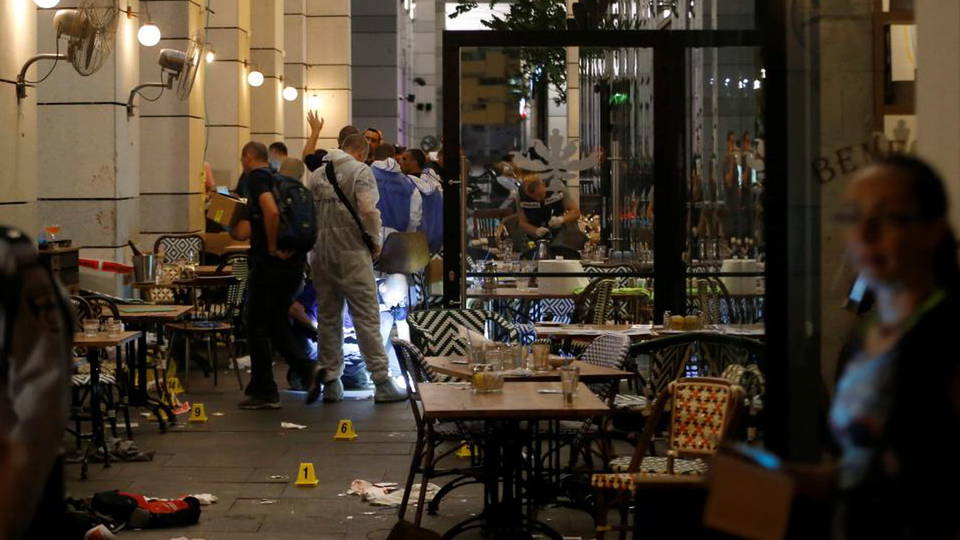
In Israel, two Palestinian suspects opened fire on civilians in a restaurant in Tel Aviv Wednesday, killing four people. Police have identified the attackers as cousins from the Israeli-occupied West Bank.
Sanders to Meet with Obama at the White House
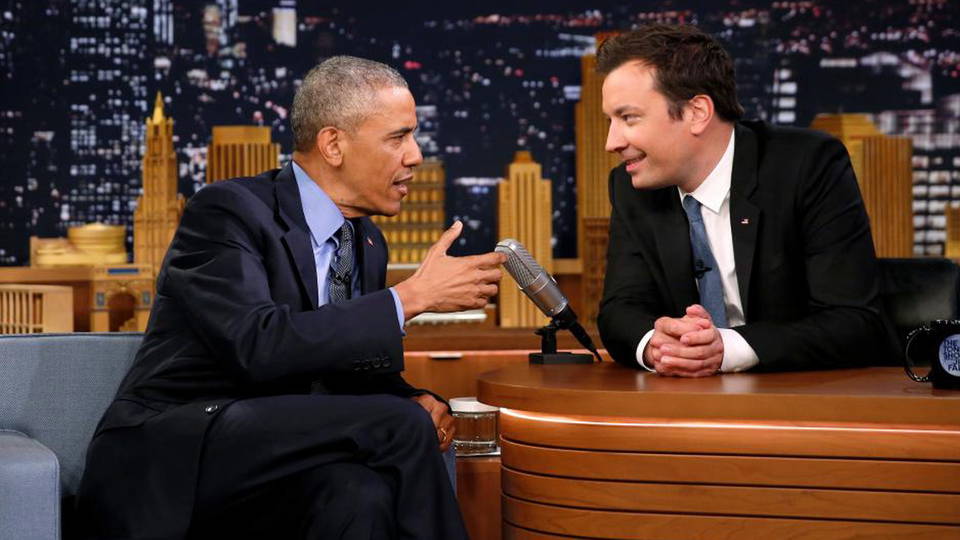
In the United States, Senator Bernie Sanders returned home to Vermont Wednesday after his rival Hillary Clinton claimed the Democratic presidential nomination. Sanders heads to the White House today for a meeting with President Obama, who is expected to endorse Clinton in the coming days. Speaking on "The Tonight Show," Obama said he hopes Democrats will be able to "pull things together" over the coming weeks.
President Barack Obama: "I’ve actually spoken to Hillary and Bernie at certain points during the campaign. And, you know, I don’t know if they ask me for advice, but I give it anyway. And—but you know what? It was a healthy thing for the Democratic Party to have a contested primary. I thought that Bernie Sanders brought enormous energy and new ideas, and he pushed the party and challenged them. I thought it made Hillary a better candidate."
We’ll have more on the race for the White House with Green Party presidential candidate Jill Stein after headlines.
Climate Activists Call for Fracking Ban in DNC Platform

Climate activists have delivered more than 90,000 petitions to the Democratic National Committee demanding the party’s platform for the 2016 race include a nationwide ban on fracking. This comes as voters in Butte County, California, have approved a local ban on fracking, the oil and gas drilling technique critics say threatens health and the climate.
U.N. Says Eritrean Gov't Committed Crimes Against Humanity

The United Nations says the government of Eritrea has committed crimes against humanity. The crimes against civilians since 1991 include enslavement, imprisonment, enforced disappearance, torture, persecution, rape and murder, all aimed at keeping leadership in power. Eritreans are among those attempting to flee to Europe as part of the greatest refugee crisis since World War II.
U.S. Says 2 Al-Shabab Commanders Killed in Somalia
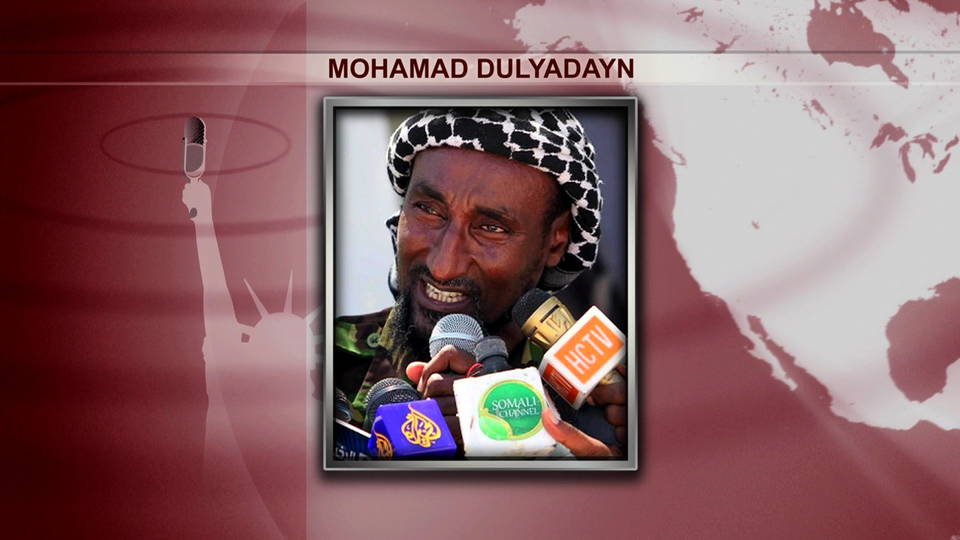
The military has confirmed two senior commanders of the militant group al-Shabab have been killed in Somalia. The U.S. Africa Command said one of the commanders was killed by a U.S. airstrike in late May, while the other, Mohamud Dulyadeyn, died in a Somali ground operation. He was accused of masterminding the attacks on a Kenyan university last year that killed 148 people.
CIA Officer Faces Extradition to Italy over Role in Rendition of Cleric
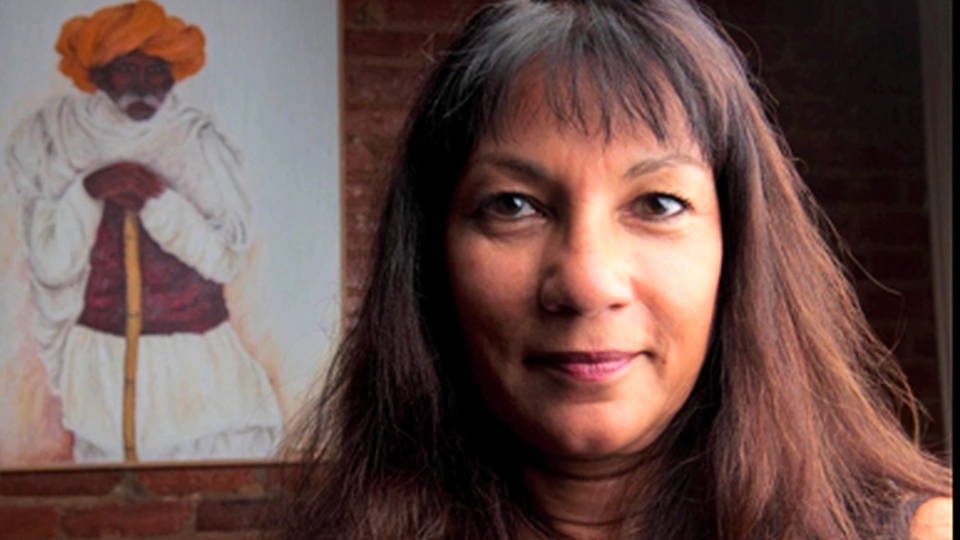
A former CIA officer convicted of a role in the kidnapping of an Egyptian cleric under the CIA’s "extraordinary rendition" program says she is facing extradition to Italy. Sabrina De Sousa faces four years in prison after an Italian court convicted her in absentia for the kidnapping of Abu Omar. Omar was snatched off the streets of Milan in 2003 and sent to Egypt, where he said he was tortured. If De Sousa is imprisoned in Italy, it would mark the first time any CIA officer involved in the rendition program has gone to jail.
New York: Correction Officers' Union Leader Arrested on Corruption Charges
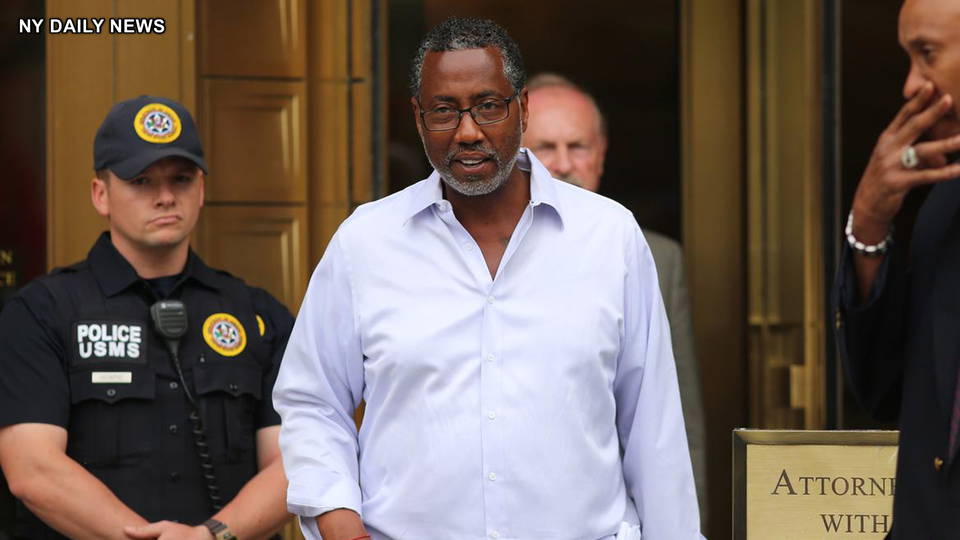
Here in New York, the powerful leader of one of the largest correction officers’ unions in the country has been arrested on corruption charges. Norman Seabrook has led the Correction Officers’ Benevolent Association for 21 years. U.S. Attorney Preet Bharara said Seabrook steered money for officers’ pensions into a high-risk hedge fund, in exchange for $60,000 in kickbacks.
Preet Bharara: "This morning, the FBI arrested Norman Seabrook, the longtime president of the Correction Officers’ Benevolent Association, or COBA, a union representing over 9,000 correction officers in New York City. We also charged and arrested Murray Huberfeld, the founder of Platinum Partners, a New York-based hedge fund. Seabrook and Huberfeld are charged with engaging in a straightforward and explicit bribery scheme. The complaint describes a simple quid pro quo: a $60,000 cash kickback to Seabrook, with promises of even more, in exchange for a $20 million investment in Huberfeld’s hedge fund."
Judge Who Sentenced Stanford Rapist to 6 Months Quietly Starts New 6-Year Term
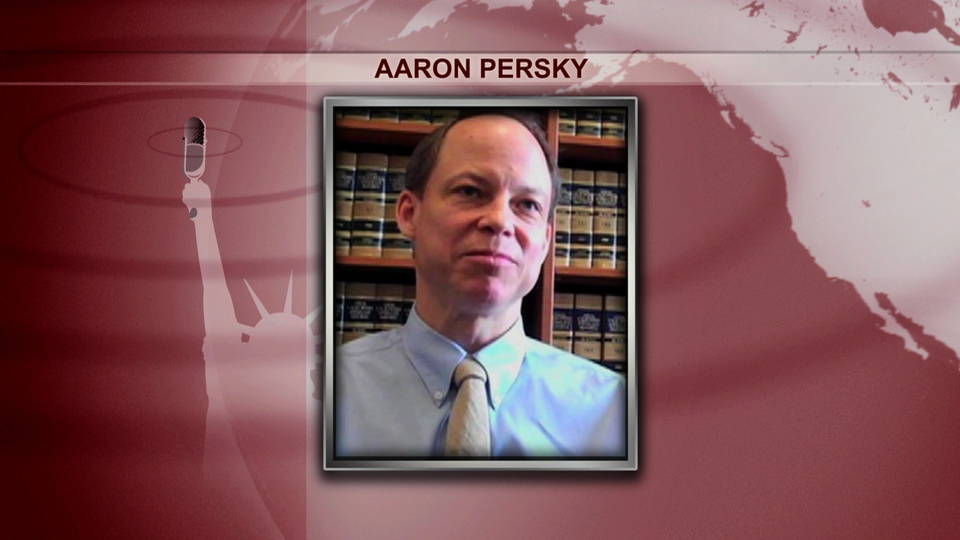
And in California, a judge who sparked national outrage by sentencing a former Stanford University swimmer to six months in jail after he was convicted of three felony counts for sexually assaulting an unconscious woman, has quietly started a new six-year term. Santa Clara County Superior Court Judge Aaron Persky did not face election for the new term because he had no challengers. Click here to see our interview with the Stanford law professor who has launched a recall campaign against Judge Persky. We’ll have more on the case later in the broadcast.
Donate today:
Follow:


SPEAKING EVENTS

6/11 Chicago, IL
6/14 New York, NY
6/25 New York, NY
7/29 Provincetown, MA
7/30 Martha's Vineyard, MA
more
NEW BOOK

Democracy Now!: Twenty Years Covering the Movements Changing America
COLUMN

"A Tale of Two Injustices: 'Lynching' and Sexual Assault in California" by Amy Goodman & Denis Moynihan
Cases of rape and lynching were in the courts of California, and in the news around the world, this week. In one case, a student convicted of sexual assault was given a light sentence, while the statement that his victim read to the court went viral, read by millions of people around the globe. In another case, a young African-American woman who founded a local branch of Black Lives Matter and had been charged with “felony lynching” was found guilty and sent to jail. The two cases could not be more starkly different, nor could they, together, better illustrate the vast disparities across race and class lines in our system of justice.
Both cases stem from events that occurred in 2015. On Jan. 17 of that year, a young woman attended a Stanford University fraternity party with her sister. She drank too much alcohol, and does not recall what happened to her. Two graduate students saw her being sexually assaulted while unconscious behind a dumpster late that night. They called campus police, then chased after Brock Turner, a star of the Stanford swim team, tackling him. Turner was arrested.
The second case involves an organizer with Black Lives Matter, Jasmine Richards. She described her activism in her own words in a video posted online last year:
“I started Black Lives Matter Pasadena in January of 2015. ... I felt like we didn’t have any community programs or anything happening in my community. And there’s been a lot of youth that have been killed by the Pasadena police. Kendrec McDade is currently the youth that I am specifically doing all these actions around. Leroy Barnes, he was killed by the Pasadena police. Big homie named Big BA also killed by the Pasadena police. Our police have been notorious for bullying.”
On Saturday, Aug. 29, 2015, Jasmine had organized a peaceful march to call attention to just that type of police bullying. And sure enough, after the march, as video documents, the police showed up and acted like bullies, overpowering a young African-American woman and dragging her off to be arrested. Jasmine was charged with “felony lynching” for intervening and trying to “de-arrest” the young woman. Central to the Black Lives Matter movement is the premise that young people of color, at any time but certainly while being arrested or in police custody, might be killed or seriously injured.“Felony lynching” was a law from 1933, drafted immediately after a notorious public lynching of two African-American men in San Jose, California. It was adopted to deter mobs from breaking into police stations and dragging prisoners out to lynch them. After another Black Lives Matter organizer was threatened with felony lynching in 2015, legislators, who found the word “lynching” offensive in this context, had it stripped from the law. But Jasmine was charged before the name change took effect.
“What you had were children on scooters and a couple of adults who were speaking up about state-sanctioned violence in Pasadena, about police murdering unarmed people in Pasadena,” Nana Gyamfi, Jasmine’s attorney, told us on the “Democracy Now!” news hour. “This is clearly a political persecution cooked up by the Pasadena District Attorney’s Office ... in what we are referring to as the attempted lynching of Jasmine Richards.”
Back in Santa Clara County Superior Court, Judge Aaron Persky presided over the trial of Brock Turner, who was convicted of intent to commit rape, sexual penetration with a foreign object of an intoxicated person and sexual penetration with a foreign object of an unconscious person. Turner faced up to 14 years in prison. The victim read her deeply personal, 7,000-word statement in court. But it seemed that Judge Persky was moved more by an appeal from Turner’s father, who wrote that he didn’t think Brock’s life should be ruined for “20 minutes of action.”
Stating that “a prison sentence would have a severe impact on him,” Persky sentenced Turner to just six months’ jail time with probation. Like Turner, Judge Persky was himself a star Stanford athlete. The judge is now facing a recall campaign organized by Stanford law professor Michele Landis Dauber.
Jasmine Richards was sentenced to 90 days and three years’ probation. Brock Turner, despite his multiple felony convictions for sexual assault, will likely get credit for good behavior and serve about the same amount of time as Jasmine. As for Brock Turner’s victim, her sentence is ongoing. As she said to Turner in court, reading her victim’s statement describing the impact of his attack, “It stays with me, it’s part of my identity, it has forever changed the way I carry myself, the way I live the rest of my life.”
WEB EXCLUSIVE

Just Before Giving Stanford Rapist 6 Months, Judge Dealt Another Light Sentence to Domestic Abuser
WORK WITH DN!

News Producer
Office Coordinator
Senior TV Producer
207 West 25th Street, 11th Floor
New York, New York 10001, United States
---------------------

No comments:
Post a Comment