NOTE: This is a digest of news features provided by United Methodist Communications for July 14-18. It includes summaries of United Methodist News Service stories and additional briefs from around the United Methodist connection. Full versions of the stories with photographs and related features can be found at umc.org/news.
______________
Top stories
Church seeks to meet needs in U.S. border crisis
DALLAS (UMNS) - United Methodists have mobilized to provide humanitarian relief and other assistance as the United States deals with a flood of Central American immigrants, including unaccompanied minors. But the magnitude of the need is sobering, and the crisis is likely to be long term, church leaders say.
Read story
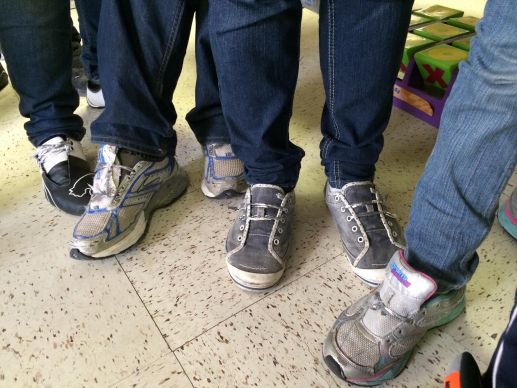
Photo courtesy Viky Garcia, Laredo Humanitarian Relief Team.
The Laredo (Texas) Humanitarian Relief Team is taking clothing donations as its helps with the sharp influx of Central Americans crossing the border. Requests include shoelaces, which the group says are needed since shoelaces are removed in detention.
 Church seeks to meet needs in border crisis by Sam Hodges
July 15, 2014 | DALLAS (UMNS)
From handing out hygiene kits to providing legal briefings, United Methodists are working to ease the crisis of unaccompanied minors and others from Central America coming into the United States in sharply escalated numbers.
But church leaders find the extent of the need sobering.
“It’s deepened my prayer life significantly,” said San Antonio Area Bishop James E. Dorff. “You know, in most crisis situations, you can determine that there is an end point. And I’m not sure where that is with this.”
Recent months have seen a flood of Central Americans — primarily from Honduras, Guatemala and El Salvador — making their way across Mexico and into the United States, apparently motivated by violence in their home countries and the perception that U.S. immigration laws and policies will allow them to settle here.
Unaccompanied minors detained for a border crossing come under the custody of the Department of Health and Human Services’ Office of Refugee Resettlement. That office expects to end fiscal year 2014 with 60,000 such referrals, compared to fewer than 14,000 in fiscal year 2012.
While media attention has focused on unaccompanied minors, there’s also been an influx of children traveling with a parent.
“There are really two situations, and two categories of need,” Dorff said.
An offer of hospitality
Typically, the parents and children are briefly detained, given an immigration court hearing date, and released. Most will soon move on to try to connect with a family member in the United States, but they arrive at the border tired, dirty and with little in the way of clothes or food.
______________
U.S. LAW & UNACCOMPANIED MINORS
Many unaccompanied minors detained while trying to cross the border fall, at present, under the William Wilberforce Trafficking Victims Protection Reauthorization Act of 2008, which passed the U.S. House of Representatives and Senate unanimously and was signed into law by President George W. Bush.
The 2008 human trafficking law, named for a famed British abolitionist, requires that children from countries not bordering the United States, including those in Central America, be given added legal protections before facing potential deportation. The bipartisan law requires that the children be allowed to appear at an asylum hearing and consult with an advocate, and it recommends that they have access to counsel to represent them and “protect them from mistreatment, exploitation, and trafficking.” The law also directs the U.S. Department of Health and Human Services to place the minors “in the least restrictive setting that is in the best interest of the child” and to explore reuniting them with family members.
President Barack Obama has asked Congress to give the U.S. Department of Homeland Security more authority to send children back to Guatemala, Honduras and El Salvador more quickly. Reuters reported July 10 that U.S. Speaker of the House John Boehner has expressed support for changes to the immigration law that would let the United States deport children from Central America as quickly as it does those from Mexico. Some families were deported back to Honduras on July 14. But on the same day, White House press secretary Josh Earnest said that it was “likely” that immigrant children facing mortal danger in their home countries would be allowed to stay in the United States.
_____________
That’s an opportunity for United Methodists eager to help.
“The basic thing we’re doing is offering hospitality, in a way that is needed by the traveling Central American women and children who are coming through,” said the Rev. Paul Harris, pastor of the First United Methodist Church in Laredo.
Harris and members of his church are part of the Laredo Humanitarian Relief Team, and are working as well with Laredo’s Holding Institute, a community center that is a United Methodist Women National Mission Institution.
One of three local welcome centers for the new arrivals, the Holding Institute is offering showers and donated clothes.
Two other UMW affiliates — the Neighborhood House of Calexico in Calexico, Calif., and the Houchen Community Center in El Paso, Texas — are also serving as front-line centers for helping the parents and children. United Methodists have been providing Houchen with health kits and socks, said the Rev. Lourdes Calderon, pastor of Cornerstone United Methodist Church in Albuquerque, N.M.
Tobin Park United Methodist in El Paso is gearing up to be the fourth such welcome site in that city and in nearby Las Cruces, N.M.
“If it wasn’t for us, all these people would just be released on the street,” said Rick Snow, a real estate broker and missions chair of Western Hills United Methodist in El Paso, who agreed to be site coordinator at Tobin Park.
Elsewhere, such as in the Rio Grande Valley cities of Brownsville and McAllen, Texas, Catholic churches and ministries have taken the lead as welcome centers. United Methodists and others are providing volunteers and donations of shoes and other clothing.
“Everybody’s pulling together, all up and down the border, doing everything they can, and that is really a tremendous blessing,” Dorff said.
The United Methodist Committee on Relief has been a major supplier to welcome centers, providing 18,000 health kits in McAllen, Laredo and Brownsville, as well as making an initial $10,000 grant to the Southwest Texas Annual (regional) Conference.
“The churches have really been rising up and providing hospitality,” said Greg Forrester, UMCOR’s coordinator of U.S. disaster response. “We’re looking for ways to support them in that effort.”
Meanwhile, United Methodist Women made a $7,500 grant to the Holding Institute for air-conditioner repairs and other emergency needs, reported Yvette Moore for UMW’s Response magazine.
Limited access
Helping unaccompanied minors is proving much more of a challenge. The influx has prompted the opening of emergency detainment centers, such as at Lackland Air Force Base, in San Antonio, Texas.
But access is restricted.
“We have some of our United Methodist people who are working with others to see about what kind of assistance we can provide, but it’s really been pretty much a closed operation,” Dorff said.
One United Methodist group that has been able to help at Lackland is National Justice for Our Neighbors, which provides legal assistance on immigration issues.
Julie Flanders of the group’s Austin office worked previously for the Refugee and Immigrant Center for Education and Legal Services, which is doing in-take legal work with unaccompanied minors held at Lackland, and briefing them on the legal process.
Through her contacts with the refugee center, Flanders secured for National Justice for Our Neighbors an invitation to help with the effort at Lackland. Beginning in August, bilingual lawyers from that organization’s other affiliates will be coming to San Antonio to assist.
“When this crisis hit the news, everyone here said, `How can we help?’” said Rob Rutland-Brown, National Justice for Our Neighbors executive director. “We’re in a unique position to do that now.”
Flanders already has spent two days recently at Lackland, working with unaccompanied minors. Nearly all, she said, came by bus or riding on top of a train.
“The baseline, the minimum, is that they traveled a long way and didn’t have a lot of food on the journey,” she said. “The average kid has suffered a lot to get here.”
Dorff and the Rev. Laura Merrill, superintendent for the McAllen District of the Southwest Texas and Rio Grande Conferences, were part of a small group of United Methodists who got to visit July 11 with unaccompanied minors at a processing center in McAllen.
“There were the kids whose eyes welled up the minute we started talking, and there were the kids whose blank expressions never left their faces,” Merrill said. “Then there were the young ones who brightened and smiled — beautiful children.”
Los Angeles Area Bishop Minerva G. Carcaño was among a group of religious leaders who on July 8 visited the Oxnard, Calif., detention facility, where about 575 children between the ages of 13 and 17 are held.
“We were not allowed to speak with the children, but they did greet us with ‘Buenos Dias,’ and ‘Good morning,’ and with many smiles,” the bishop said in a teleconference. “They were clean and dressed in casual clothes and tennis shoes and looked just like U.S. children. They appeared healthy and happy.”
She said many in Oxnard community are ready to help the children in various ways including foster care, but government rules do not allow for that kind of aid.
A plea for understanding
United Methodist leaders are urging financial donations to UMCOR and other relief efforts. Churches wanting to provide material donations or send volunteer teams need to do their homework, to see what’s really helpful.
But bilingual volunteers, especially, are needed at some welcome centers.
“People can come,” said Harris, the Laredo pastor. “We have a way of housing temporary teams, six to 20 people, here at First United Methodist. And there are plenty of hotels in town.”
The United Methodist Board of Church and Society is urging United Methodists to contact their members of Congress and ask that they not, in response to the crisis, repeal provisions in the William Wilberforce Trafficking Victims Protection Reauthorization Act.
Overturning or weakening that law, which Congress approved unanimously, would increase the chances that minors are deported to life-threatening situations, the agency maintains.
The agency has concerns that President Obama’s request for $3.7 billion in federal spending to deal with the crisis is skewed toward border enforcement that’s unlikely to work.
“The immigration system will become more orderly when we begin dealing humanely with immigrants and address the root causes of why people are fleeing their countries of origin,” said Bill Mefford, Church and Society’s director of civil and human rights.
Many churches and conferences are having prayer vigils regarding the border crisis. Carcaño, for example, joined Bishop J. Jon Bruno of the Episcopal Diocese of Los Angeles in calling for July 18-20 to be an Interfaith Weekend of Compassion and Prayer for Unaccompanied Minors.
Merrill hopes United Methodists will pray but also educate themselves on the conditions the immigrants are fleeing as well as U.S. laws.
“I think as United Methodists we try to understand things of some complexity, and to understand them deeply,” she said. “I hope we take the opportunity to try to learn and read and not just believe the sound bites.”
Moved again
While President Obama and Congress are under pressure to find ways to slow the influx, the increased numbers of Central Americans here already have church leaders planning for a long-haul assistance effort.
Perhaps the best evidence is Dorff’s decision to create a new position, director of United Methodist immigration ministries in South Texas. He is applying to UMCOR for help with funding.
“We’re creating it in order to provide some assistance and direction and coordination, because of the issues we’ve been presented with,” Dorff said.
Going into that job immediately will be the Rev. Javier Leyva, whom Dorff described as a “blessed saint” for agreeing to go back to the Rio Grande Valley.
“I just moved him less than a month ago from the Valley to San Antonio,” Dorff said. “But the more I looked and saw and realized, the more I just knew we needed to have our very best person down there to work fulltime in immigration ministries.”
Hodges, a United Methodist News Service writer, lives in Dallas. UMNS writers Kathy Gilbert, Heather Hahn and Linda Bloom contributed to this report. Contact Hodges at (615) 742-5470 or newsdesk@umcom.org
_____________________
Arizona church leaders seek ways to help children
NOGALES, Ariz. (UMNS) - The Rev. Dottie Escobedo-Frank, superintendent of the South District of the Desert Southwest Annual (regional) Conference, led a team to Nogales July 14 to learn more about the conditions of unaccompanied migrant children being held in detention centers there. Christina Dillabough, director of communication for the conference, has the story.
Read story
Help for the unaccompanied immigrant children
July 16, 2014
Violent gangs, such as the Mara Salvatrucha in Central America, are forcing young children and teens to join their forces. Those resisting the recruitment are being injured or threatened with death. In response, many families are paying as much as $5,000 to coyotes who are selling transportation and falsely guaranteeing asylum for the youth in the United States. Fearing for their lives, increasing numbers of children and teens are leaving their countries of El Salvador, Honduras, and Guatemala to seek asylum in Mexico, Costa Rica, Nicaragua, and the United States. Upon arrival at the U.S. border, the coyotes stay on the Mexico side and instruct the unaccompanied minors to go to the people wearing the green uniforms (the Border Patrol) on the U.S. side.
The laws of the United States provide for asylum for certain refugees fearing persecution in their home countries. Unaccompanied minors have traveled to the U.S. seeking asylum before this growing crisis and under the Bush administration, a system had been built that could process 6,000-8,000 a year. Part of the problem now is that there are now 52,000 seeking asylum and some would prefer that the U.S. border would work as an absolute blockade, not allowing anyone across if they don’t already have the proper paperwork to enter the United States. The strain on the system and political controversy surrounding the growing humanitarian crisis on the U.S. border is causing what appears as a standstill.
Last month, clergy and laity from the Desert Southwest Conference traveled to Nogales bringing donations for the children and searching for information about how The United Methodist Church can help care for the unaccompanied migrant children. The message at that point was that nothing could be done and the donations could not be accepted. The Border Patrol was handling their care. Visit http://desertconnection.org/abundant-donations-for-immigrant-minors-in-nogales to read more.
 Photo by D. VelazquezA new group, led by South District Superintendent Rev. Dr. Dottie Escobedo-Frank, traveled to Nogales on Monday, July 14, 2014 to learn more about the conditions that the children were being held in and if there are any avenues in which the Desert Southwest Conference of The United Methodist Church might offer some relief and care for these children. Gustavo Soto, Special Operations Supervisor assigned to the Nogales Processing Center, revealed that the conditions for the children have improved greatly. Upon their arrival the minors shower and get their clothes washed. Next, they are given food and medical attention. They are vaccinated and separated by age and gender but are allowed to spend time with their siblings when they request to do so. Recreation facilities have been created for the children and additional personnel resources such as chaplains and a chef have been pulled from other agencies to help meet the children’s needs. Bibles, toys, and games are all available for the children. All of the volunteers and staff that work with the children speak Spanish. The children spend anywhere from one to five days at this processing center awaiting their turn to continue to the next step which is transfer to a shelter assignment provided by the U.S. Department of Health and Human Services until a sponsor or relative is identified on a case-by case basis pending the outcome of the immigration process. Soto reports that the children are happy and well cared for.
Avenues for individuals to help
Currently the Red Cross is working on-site providing a volunteer base to help with the children. They are actively recruiting mothers and fathers to travel to the Nogales Processing Center to play with the kids and provide comfort to the little ones that are afraid and alone. Visit http://www.redcross.org/support/volunteer to find out how to become a Red Cross volunteer in the Nogales Processing Center. Federal Emergency Management Agency (FEMA) is also present providing vaccinations, medical care, counseling, and recreational areas. As with any disaster area in the United States, it is expected that once FEMA’s responsibilities have ended, continued aid will be available through the United Methodist Committee on Relief (UMCOR).
On July 12, 2014 Bishop Bob Hoshibata published a letter to the Conference, sharing that UMCOR approved a $10,000 emergency grant and has created a means for individuals to donate at http://tinyurl.com/UMCOR901670 . New ministries have already begun at the Phoenix and Tucson Greyhound bus stations offering hospitality to immigrant families that have received temporary legal status through humanitarian parole and are being dropped off at bus stations. More information on how the Desert Southwest Conference will partner in these efforts will be published soon but please note that unaccompanied minors are not being dropped off at the bus stations.Rev. Dr. Escobedo-Frank will contact the Office of Refugee and Resettlement to determine if there are any other areas where faith-based communities can help. El Mesias UMC, located only three minutes from the Processing Center, is on alert and ready to serve.
An interfaith weekend of compassion and prayer for unaccompanied migrant children has been scheduled for July 18-20, 2014 from sunset to sunset. During this time of compassion and prayer, individuals are encouraged to participate in writing letters and posting prayers or photos at http://www.theyarechildren.com .
_____________________
Bishops urge compassion, prayer for border crisis
WASHINGTON (UMNS) - In response to the rise in unaccompanied children crossing the U.S. border, the executive committee of the Council of Bishops has called on United Methodists across the connection to "pray, reflect and engage in acts of compassion."
Read statement
Bishops urge compassion, prayer for border crisis
Council of Bishops of The United Methodist Church
100 Maryland Ave. NE
Washington, D.C. 20002
FOR IMMEDIATE RELEASE
July 17, 2014
Bishops Urge Compassion, Prayer for Border Crisis
Washington, D.C.: In response to the rise in unaccompanied migrant children crossing the U.S. border, the executive committee of the Council of Bishops has called on United Methodists across the connection to “pray, reflect and engage in acts of compassion.”
According to U.S. Customs and Border Protection, tens of thousands of unaccompanied minors have been traveling through Mexico and arriving at the Southwest U.S. border in recent months, specifically in the Rio Grande Valley. About 75 percent of the migrant children are from El Salvador, Guatemala and Honduras. As of mid-June, more than 52,000 children had been apprehended.
The influx of children is creating humanitarian challenges for the law enforcement organization as they seek to care for large numbers of children in need of food, water and shelter. Many United Methodist churches are eager to help.
The text of the bishops’ statement reads:
“The United Methodist Council of Bishops Executive Committee, meeting in Chicago, July 16, 2014, calls on all United Methodists to pray, reflect on God's Word, and engage in acts of compassion concerning the humanitarian crisis of thousands of unaccompanied children on the southern border of the United States. There are also refugees and migrant people throughout the world for whom God and we have concern.
Jesus invited the children to come to him. He called us to welcome strangers and love our neighbors as ourselves. Let us be guided by Christ's example.
We commend to all the July 18-20, 2014, "Interfaith Weekend of Compassion and Prayer for Unaccompanied Migrant Children" and the "Pastoral Letter" from the United Methodist Bishops in Texas, as well as other resources available through our Annual Conferences and General Boards and Agencies.
As in all things, we seek to serve God, follow Christ, and be empowered by the Holy Spirit.”
###
Contact:
Diane Degnan ddegnan@umcom.org
(615)742-5406 (o) 615.483.1765 (c)
_____________________
Bishop: Blessed responsibility to God's children
WORTHINGTON, Ohio (UMNS) - "From the Middle East to the U.S. border, children's lives seem to be ready pawns used in political arguments, economic wars and military conflicts," writes Ohio West Area Bishop Gregory V. Palmer. He reminds United Methodists of Jesus' words in Mark 9:37: "Whoever receives one such child in my name receives me, and whoever receives me, receives not me but him who sent me."
Read commentary and post a comment.
Our blessed responsibility to God's children
Dear friends,
 Along with you, I have watched and read over the last few weeks the heartbreaking and deeply disturbing stories, both here in our country and across the world, of the horrifying affect today’s world has had on the safety and health of so many children. From the Middle East to the U.S. border, children lives seem to be ready pawns used in political arguments, economic wars and military conflicts.
 In Mark 9:37 we read the words of Jesus, “Whoever receives one such child in my name receives me, and whoever receives me, receives not me but him who sent me.” Those words are among the many, many references in our Gospel to the blessed place children have in the heart of our God, and to the clear instructions we have been given to love all children and be their protectors.
U.S. - Mexico Border
Since October, more than 52,000 children — most from Central America and many of them unaccompanied by adults — have crossed the border into our country and been taken into custody. This is an enormous influx of children in need, stretching the resources of the area beyond its limits. Estimates range from 70-90,000 unaccompanied minors will cross the border by the end of year. Along with other faith-based organizations, members of our United Methodist congregations along the Mexico-U.S. border are working tirelessly to help with this humanitarian crisis.
Specifically how can you help?
Pray without ceasing for the protection of these children and an end to the political strife that threatens their security both here and in their home countries. I am asking specifically that all West Ohio congregations especially lift up these children in prayer when you gather in worship this weekend.
Read the Plea for Unaccompanied Children from Bishop Robert T. Hoshibata of the Desert Southwest Conference, the Statement on Unaccompanied Children from Bishop Minerva G. Carcano of the California-Pacific Conference and join in an Interfaith Weekend of Compassion and Prayer for Unaccompanied Migrant Children. These conferences are on the front lines at our border.
Write to your congressional representatives and President Obama and push for meaningful action on Immigration Reform. You can find the names of your Senators and Representatives here.
Visit prayerfully our United Methodist Social Principles concerning the Rights of Children and the Rights of Immigrants.
Give to UMCOR in response to this humanitarian emergency. Information on how to contribute is found here: U.S. Disaster Response.
Palestine/Israel Conflict
The strife in the Middle East between Palestine and Israel is longstanding and full of heartbreak on all sides. Families are being decimated, children injured and killed and parents in two nations are grieving. I was moved to read of the meeting of two members of the bereaved families of teens killed. Families of Slain Israeli and Palestinian Teens Turn to Each Other for Comfort. Regardless of political viewpoints, as Christians we must move to help end this conflict and bring reconciliation.
How can you help?
Pray without ceasing for reconciliation and an end to this division.
Read about the violence escalating in Israel and Palestine in Killing Children.
Visit prayerfully our United Methodist Social Principles concerning the World Community.
Become part of the conversation and learn more by attending this important August event, held in West Ohio and jointly sponsored by the General Board of Global Ministries and Ginghamsburg United Methodist Church: Walking with Palestinian Christians...for holy justice and peace.
Thank you for joining me in prayer and action in calling for an end to the suffering of our children. I remain,
Your Servant in Christ
Bishop Gregory V. Palmer
Ohio West Area
_____________________
As typhoon hits, church youth take shelter and pray
TAGAYTAY, Philippines (UMNS) - Youth and young adults from across the United Methodist connection were safely sheltered during Typhoon Rammasun, locally known as Glenda. Organizers of the Global Young People's Convocation have moved the event to a new venue near Manila because of the storm's damage. This story includes video footage of the storm's aftermath.
Read story and post a comment
Delegates Benjamin Musasizi and Lee Rodeo share their experiences
_____________________
A lens-eye view of the civil rights struggle
NASHVILLE, Tenn. (UMNS) - Larry McCormack, a United Methodist and newspaper photographer, gives his own twist on civil rights history by combining black-and-white images from the struggle for integration with color photos of the same settings today. "There was a time when people of color were looked at like they didn't belong as part of Nashville, and that hurts my heart because we are all God's children," he said.
Read story and post a comment
_____________________
Firdaus Kharas: Activism through animation
NASHVILLE, Tenn. (UMNS) - Firdaus Kharas has created a series of animated shorts that confront issues such as AIDS and domestic violence in the hopes of creating what he calls "a cultural shift." Kharas is a panelist at the upcoming Game Changers Summit, hosted by United Methodist Communications Sept. 3-5 in Nashville. The conference will demonstrate how information and communications technology can be used to improve all facets of life.
Read story
_____________________
Ministry idea: Post-it identity
SONOMA, Calif. (UMNS) - Is your church welcoming a new pastor? David W. Chambers, a member of Sonoma United Methodist Church in California, shares the following idea for helping to familiarize that pastor with a congregation's ministries, and what parishioners might be interested in doing differently.
Read blog
_____________________
Women's colleges cultivate leadership
NASHVILLE, Tenn. (UMNS) - Ruth A. Knox, a 1975 graduate and now president of Wesleyan College, knows firsthand that women's colleges give their students "countless opportunities to develop as leaders and thinkers, to explore and accept challenges, to experience success and failure, and - even when not hitting the mark - to keep trying." Wesleyan, in Macon, Georgia; Columbia College in Columbia, South Carolina, and Bennett College in Greensboro, North Carolina, are all United Methodist-related women's schools.
Read story
_____________________
United Methodist Publishing House to move
NASHVILLE, Tenn. (UMNS) - The United Methodist Publishing House, a self-supporting church agency, plans to move to Nashville's Metro Center area of office parks in the first half of 2015. The agency bought the Lake Front Office Park in Metro Center for $9.25 million. Florida-based Turnberry Associates has the current 3.7-acre publishing house headquarters site, across the street from Nashville's new convention center, under contract. The Tennessean reports.
Read story
_____________________
Wisconsin Conference celebrates donor
NEW LONDON, Wis. (UMNS) - Stanley Cottrill is a 92-year-old retired plumber and member of New London United Methodist Church who lives his faith and believes in generosity. He recently presented a check for $1 million for the Wisconsin United Methodist Foundation Seminary Scholarship Fund. That's not the only example of Cottrill's altruism, the Wisconsin Annual (regional) Conference reports.
Read story
_____________________
Theological education grants for 2015 available
NASHVILLE, Tenn. (UMNS) - Applications for the 2015 grants for theological education in Africa, Europe and the Philippines are open through Sept. 30. The Central Conference Theological Education Commission expects to award an additional $1 million to theological institutions, Boards of Ordained Ministry, and agencies integrally related to training United Methodist pastors.
Read more
List of grants awarded in 2014
_____________________
Malaria goal gain in Alabama-West Florida
MONTGOMERY, Ala. (UMNS) - United Methodists in the Alabama-West Florida Annual (regional) Conference had cause to celebrate at their annual gathering this year: An outpouring of grass-roots support has put them at almost 60 percent of a $1 million goal for Imagine No Malaria.
Read story and post a comment
Read Alabama-West Florida Conference report
_____________________
Looking ahead
Here are some of the activities ahead for United Methodists across the connection. If you have an item to share, email newsdesk@umcom.org and put Digest in the subject line.
Deadline to register for online course "United Methodism 101," Tuesday, July 22 - United Methodist Communications will offer the course July 23-Sept. 3. $9.99. Details.
Free webinar "Congregations as Discipling Communities" Tuesday, July 22 - 6:30 p.m. CT. This webinar will focus on a model where congregations can create safe, open and relational spaces where disciples at all stages of their faith journey can share their experiences. Details.
Free webinar "Creating a Culture of Innovation Part 2: VAP-IT (Values, Assets, Process-Initiate, Test)," Thursday, July 24 - 6:30 p.m. CT. This webinar will discuss how to use the VAP-IT tool to launch new ideas and revamp existing ministries. Details.
Festival of Wisdom and Grace, Monday to Thursday, July 28-31 - Columbia (S.C.) Area Bishop Jonathan Holston will be the conference preacher at this time of worship and learning at Lake Junaluska (N.C) Conference and Retreat Center. The theme is "Living Ordinary Time with EEEE's - Enthusiasm, Encouragement, Engagement and Empowerment." Details.
Deadline to register for United Methodist conference "Walking with Palestinian Christians," Wednesday, July 30 - Gathering Thursday-Friday, Aug. 7-8 sponsored by the United Methodist Board of Global Ministries and host Ginghamsburg Church, 6759 S. County Road 25A, Tipp City, Ohio. Details.
Deadline for early-bird registration for "Make Worship More Creative" workshops in the Upper New York Conference, Friday, Aug. 1 - Day-long workshops featuring worship coach Jason Moore will be Monday, Sept. 8 through Thursday, Sept. 11 at different churches around the conference. Cost is $25 per person, and $65 per church. Details.
A Weekend of Music: The Lake Junaluska Singers & David Troy Francis, special guest star Broadway performer Mark Morales, Friday-Saturday, Aug. 1-2 - The Lake Junaluska Singers will be in concert Aug. 1, and David Troy Francis on Aug. 2 will perform Rachmaninoff, Gershwin and American hymns at Lake Junaluska Conference and Retreat Center in North Carolina. Details.
Webinar "Plan Your Year Round Stewardship Campaign," Tuesday, Aug. 5 - 7-8 p.m. ET. Course teaches how a congregation can develop a holistic process that will help people grow in faith and give generously, led by the Rev. Paul B. Nickerson, former pastor and now owner of Nickerson Coaching. $10. Details.
Free webinar "Planning for Advent," Thursday, Aug. 7 - 7:30 p.m. CT. This webinar will provide an overview of key themes of the Season of Advent and the Scriptures of the season. Details.
Annual meeting of MARCHA (Methodists Associated Representing the Cause of Hispanic Americans), Thursday, Aug. 7 to Sunday, Aug. 10 - Gathering will be at Hacienda Hotel LAX in Los Angeles. The Rev. Alexia Salvatierra, lecturer at New York Theological Seminary and expert on faith-rooted advocacy, will be the main speaker. Bishops Minerva Carcaño and Warner Brown will preach. Details.
Free webinar "S.O.S. for Teachers Schedule, Organization, Safety," Thursday, Aug. 7 - 7-8 p.m. ET, Help for a successful Christian education season, led by Jane Kintzi, a consultant at the Parish Resource Center. Details.
Lion & Lamb Christian Festival, Friday-Sunday, Aug. 8-10 - A number of United Methodist entities, including the Indiana Annual (regional) Conference, are sponsors of this gathering at Fort Wayne, Indiana. $25 before Aug. 8. Details.
Shreveport, Louisiana Skeeter Run, Saturday, Aug. 9 - The first of six 5K and one-mile run/walks in the Louisiana Annual (regional) Conference to support Imagine No Malaria, the denomination's initiative to eradicate preventable deaths from the disease. The other five runs will take place across the state on Saturday, Oct. 11. $20 registration. Details.
Deadline to apply for Ethnic Local Church Grants, Sunday, Aug. 10 - The grants, distributed by the United Methodist Board of Church and Society, aim to strengthen ethnic minority local churches through education, advocacy or leadership development as they engage in social justice. Details.
United Theological Seminary's Preaching Retreat, Tuesday-Thursday, Aug. 12-14 - "The Promise of New Testament Apocalyptic" will be the theme of the retreat at the seminary's campus at 4501 Denlinger Road, Dayton, Ohio. The event aims to help pastors and students gain competence in preaching apocalyptic texts in the New Testament. Details.
Deadline to apply to join regional Healthy Families, Healthy Planet advocacy training, Friday, Aug. 15 - The free United Methodist training in advocating for women and girls will be Saturday, Sept. 6 with an optional session on Monday, Sept. 8 in Peoria, Illinois. Applications are required. Details and application.
Deadline to register for Just Save One conference to equip HIV and AIDS Ministries, Friday, Aug. 15 - The gathering will be Thursday through Saturday, Sept. 11-13 at the Renaissance Hotel in Denver and sponsored by the United Methodist Global AIDS Fund. Details.
Online courses from BeADisciple.com in August and September - Aug. 18-Sept. 2: Come to the Table (study of United Methodist theology and practice of the sacrament of Holy Communion); Aug. 18-Sept. 2: Come to the Waters (study of United Methodist theology and practice of the sacrament of Baptism); Aug. 18-Sept. 2: Biblical Storytelling I; Sept. 8-23: Life Together in the United Methodist Connection; Sept. 8-23: Living Our United Methodist Beliefs; Sept. 8-19: Becoming an Even Better Sunday School or Small Group Teacher; Sept. 15-26: Youth Ministry 101; Sept. 22-Oct. 3: Active Learning for Today's Children. Details.
Seven Levers Workshop: Missional Strategies for Conferences with Bishop Robert Schnase, Saturday, Aug. 23 - 10 a.m. to 2 p.m. CT at Collierville United Methodist Church, 454 W. Poplar Ave., Collier, Tennessee. $10. Details.
Deadline to register for workshop "Small Churches Can Have A Big Impact: Making your Voice & Vote Count!" Monday, Aug. 25 - Event is at 9 a.m. to 4 p.m. ET Saturday, Sept. 6. Ohio West Area Bishop Gregory V. Palmer will be the keynote speaker at this workshop at The Methodist Theological School in Ohio, 3081 Columbus Pike, Delaware, Ohio. $20-25. Details on PDF.
____________________

No comments:
Post a Comment