 Upper Room Daily Reflections of Nashville, Tennessee, United States - daily words of wisdom and faith “Bottoms: When They Fall Out" for Monday, 2 March 2015
 Today’s Reflection:
 WHEN PERSONS COME FORWARD to receive Holy Communion, I look into their eyes to see if they understand Easter as resurrection. A slight smile, a knowing glance, or a moist eye hints that they get it. I feel that until the bottom gets knocked out of our lives, it is difficult for us to embrace the gift of Easter.
Those who have experienced the sadness woven into life’s fabric – sickness, loss, yearning, loneliness, fear, and death – understand the importance of Easter. The childhood memory of my aunt trying to pull my uncle out of his coffin, forcing his eyes open with a scream, “Speak to me!” remains vivid to this day. I heard a parishioner overcome with grief after her husband’s death sob, “He promised not to leave without me.”
Death seems final. No wonder the disciples couldn’t believe the unbelievable. Resurrection rumors could only be idle talk. Even after seeing the empty tomb, Mary Magdalene drew the only reasonable conclusion: someone had stolen Jesus’ body.
Yet the disciples did learn to believe, and they shared the story of a resurrected Christ with others. Peter and John were arrested for their beliefs. But why incarcerate a handful of broken peasants for saying they saw a dead man walk through their locked door? …
The most powerful case for Easter is the resuscitation of hope from hopelessness. Such hope is what made the leaders edgy. “When they saw the boldness of Peter and John and realized that they were uneducated and ordinary men, they were amazed” (Acts 4:13). …
These poor, broken, hopeless outcasts were standing fearlessly before the leaders of their time – no longer harmless riffraff but commanding men with unbelievable poise, power, certainty, and conviction. In the disciples’ strength, the authorities beheld the very one they had executed, who challenged the powers and principalities with a rival authority. The issue is not what the disciples believed but what happened when they did believe. …
The evidence for Easter remains the same today. Resurrection means being “born again” after the bottom falls out. Truth of the Resurrection hangs daily in the balance, tested by the willingness of Christians to live and die as Christ for others.[W. Paul Jones, Becoming Who God Wants You to Be]
From pages 46-47 of Becoming Who God Wants You to Be: 60 Meditations for Personal Spiritual Direction by W. Paul Jones. Copyright © 2013 by W. Paul Jones. All rights reserved. Used by permission of Upper Room Books. http://bookstore.upperroom.org/ Learn more about or purchase this book.
Today’s Question:
Which person do you most identify with in the resurrection story?
Today’s Scripture:
Then God spoke all these words: I am the LORD your God, who brought you out of the land of Egypt, out of the house of slavery; you shall have no other gods before me.[Exodus 20:1-3, NRSV]
This Week: pray for single parents.
____________________________
Did You Know?
In need of prayer? The Upper Room Living Prayer Center is a 7-day-a-week intercessory prayer ministry staffed by trained volunteers, call 1-800-251-2468 or visit The Living Prayer Center web site.
____________________________
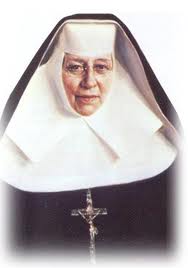 Saints, Inc.:
This week we remember: Katherine Drexel (March 3).
Katherine Drexel was born in 1858 into a wealthy Philadelphia family. Katherine's parents were generous with their wealth and encouraged their daughters to care for less fortunate citizens. Even though she was a social debutante and inherited $14,000,000 when her father died, Katherine was attracted to the spiritual life and saw her wealth as a way to give back to God.
In a private audience with Pope Leo XIII Katherine, who felt a special concern for Native- and African Americans, encouraged him to provide priests on Native American reservations. Pope Leo challenged her to become a missionary herself. When she was unable to find a religious order that shared her passion, Katherine established the Sisters of the Blessed Sacrament for Indians and Colored People.
She donated more than a million dollars to Indian Missions and mission schools and endowed a seminary that focused on people of color. In 1915 Katherine founded Xavier University in New Orleans for African Americans. Her money funded 50 schools for African Americans, 12 schools for Native Americans, and 145 Catholic missions; she herself kept a vow of poverty.
Mother Katherine, as she was known, died on March 31, 1955 at the age of ninety-six.
If Katharine Drexel had taken the Spiritual Types Test she probably would have been a Prophet. Katharine Drexel is remembered on March 3.
____________________________
Lectionary Readings
(Courtesy of Vanderbilt Divinity Library)
Third Sunday in Lent
Daylight Saving Time Begins
Lectionary Scriptures:
Exodus 20:1-17
Psalm 19
1 Corinthians 1:18-25
John 2:13-22
Lectionary Texts:
Exodus 20:1 Then God said all these words:
א 2 “I am Adonai your God, who brought you out of the land of Egypt, out of the abode of slavery.
ב 3 “You are to have no other gods before me. 4 You are not to make for yourselves a carved image or any kind of representation of anything in heaven above, on the earth beneath or in the water below the shoreline. 5 You are not to bow down to them or serve them; for I, Adonai your God, am a jealous God, punishing the children for the sins of the parents to the third and fourth generation of those who hate me, 6 but displaying grace to the thousandth generation of those who love me and obey my mitzvot.
ג 7 “You are not to use lightly the name of Adonai your God, because Adonai will not leave unpunished someone who uses his name lightly.
ד 8 “Remember the day, Shabbat, to set it apart for God. 9 You have six days to labor and do all your work, 10 but the seventh day is a Shabbat for Adonai your God. On it, you are not to do any kind of work — not you, your son or your daughter, not your male or female slave, not your livestock, and not the foreigner staying with you inside the gates to your property. 11 For in six days, Adonai made heaven and earth, the sea and everything in them; but on the seventh day he rested. This is why Adonai blessed the day, Shabbat, and separated it for himself.
ה 12 “Honor your father and mother, so that you may live long in the land which Adonai your God is giving you.
ו 13 “Do not murder.
ז (14) “Do not commit adultery.
ח (15) “Do not steal.
ט (16) “Do not give false evidence against your neighbor.
י 14 (17) “Do not covet your neighbor’s house; do not covet your neighbor’s wife, his male or female slave, his ox, his donkey or anything that belongs to your neighbor.”
(A: vii) 15 (18) All the people experienced the thunder, the lightning, the sound of the shofar, and the mountain smoking. When the people saw it, they trembled. Standing at a distance, 16 (19) they said to Moshe, “You, speak with us; and we will listen. But don’t let God speak with us, or we will die.” 17 (20) Moshe answered the people, “Don’t be afraid, because God has come only to test you and make you fear him, so that you won’t commit sins.”
Psalm 19:1 (0) For the leader. A psalm of David:
2 (1) The heavens declare the glory of God,
the dome of the sky speaks the work of his hands.
3 (2) Every day it utters speech,
every night it reveals knowledge.
4 (3) Without speech, without a word,
without their voices being heard,
5 (4) their line goes out through all the earth
and their words to the end of the world.
In them he places a tent for the sun,
6 (5) which comes out like a bridegroom from the bridal chamber,
with delight like an athlete to run his race.
7 (6) It rises at one side of the sky,
circles around to the other side,
and nothing escapes its heat.
8 (7) The Torah of Adonai is perfect,
restoring the inner person.
The instruction of Adonai is sure,
making wise the thoughtless.
9 (8) The precepts of Adonai are right,
rejoicing the heart.
The mitzvah of Adonai is pure,
enlightening the eyes.
10 (9) The fear of Adonai is clean,
enduring forever.
The rulings of Adonai are true,
they are righteous altogether,
11 (10) more desirable than gold,
than much fine gold,
also sweeter than honey
or drippings from the honeycomb.
12 (11) Through them your servant is warned;
in obeying them there is great reward.
13 (12) Who can discern unintentional sins?
Cleanse me from hidden faults.
14 (13) Also keep your servant from presumptuous sins,
so that they won’t control me.
Then I will be blameless
and free of great offense.
15 (14) May the words of my mouth
and the thoughts of my heart
be acceptable in your presence,
Adonai, my Rock and Redeemer.
1 Corinthians 1:18 For the message about the execution-stake is nonsense to those in the process of being destroyed, but to us in the process of being saved it is the power of God. 19 Indeed, the Tanakh says,
“I will destroy the wisdom of the wise
and frustrate the intelligence of the intelligent.”[a]
20 Where does that leave the philosopher, the Torah-teacher, or any of today’s thinkers? Hasn’t God made this world’s wisdom look pretty foolish? 21 For God’s wisdom ordained that the world, using its own wisdom, would not come to know him. Therefore God decided to use the “nonsense” of what we proclaim as his means of saving those who come to trust in it. 22 Precisely because Jews ask for signs and Greeks try to find wisdom, 23 we go on proclaiming a Messiah executed on a stake as a criminal! To Jews this is an obstacle, and to Greeks it is nonsense; 24 but to those who are called, both Jews and Greeks, this same Messiah is God’s power and God’s wisdom! 25 For God’s “nonsense” is wiser than humanity’s “wisdom.”
And God’s “weakness” is stronger than humanity’s “strength.”[Footnotes:
1 Corinthians 1:19 Isaiah 29:14]
John 2:13 It was almost time for the festival of Pesach in Y’hudah, so Yeshua went up to Yerushalayim. 14 In the Temple grounds he found those who were selling cattle, sheep and pigeons, and others who were sitting at tables exchanging money. 15 He made a whip from cords and drove them all out of the Temple grounds, the sheep and cattle as well. He knocked over the money-changers’ tables, scattering their coins; 16 and to the pigeon-sellers he said, “Get these things out of here! How dare you turn my Father’s house into a market?” 17 (His talmidim later recalled that the Tanakh says, “Zeal for your house will devour me.” )[a] 18 So the Judeans confronted him by asking him, “What miraculous sign can you show us to prove you have the right to do all this?” 19 Yeshua answered them, “Destroy this temple, and in three days I will raise it up again.” 20 The Judeans said, “It took 46 years to build this Temple, and you’re going to raise it in three days?” 21 But the “temple” he had spoken of was his body. 22 Therefore, when he was raised from the dead, his talmidim remembered that he had said this, and they trusted in the Tanakh and in what Yeshua had said[Footnotes:
John 2:17 Psalm 69:10(9)]
John Wesley's Notes-Commentary for Exodus 20:1-17
Verse 1
[1] And God spake all these words, saying,
God spake all these words - The law of the ten commandments is a law of God's making; a law of his own speaking. God has many ways of speaking to the children of men by his spirit, conscience, providences; his voice in all which we ought carefully to attend to: but he never spake at any time upon any occasion so as he spake the ten commandments, which therefore we ought to hear with the more earnest heed. This law God had given to man before, it was written in his heart by nature; but sin had so defaced that writing, that it was necessary to revive the knowledge of it.
Verse 2
[2] I am the LORD thy God, which have brought thee out of the land of Egypt, out of the house of bondage.
I am the Lord thy God — Herein, God asserts his own authority to enact this law; and proposeth himself as the sole object of that religious worship which is enjoined in the four first commandments. They are here bound to obedience. 1. Because God is the Lord, Jehovah, self-existent, independent, eternal, and the fountain of all being and power; therefore he has an incontestable right to command us. 2. He was their God; a God in covenant with them; their God by their own consent. 3. He had brought them out of the land of Egypt - Therefore they were bound in gratitude to obey him, because he had brought them out of a grievous slavery into a glorious liberty. By redeeming them, he acquired a farther right to rule them; they owed their service to him, to whom they owed their freedom. And thus, Christ, having rescued us out of the bondage of sin, is entitled to the best service we can do him. The four first commandments, concern our duty to God (commonly called the first-table.) It was fit those should be put first, because man had a Maker to love before he had a neighbour to love, and justice and charity are then only acceptable to God when they flow from the principles of piety.
Verse 3
[3] Thou shalt have no other gods before me.
The first commandment is concerning the object of our worship, Jehovah, and him only, Thou shalt have no other gods before me - The Egyptians, and other neighbouring nations, had many gods, creatures of their own fancy. This law was pre-fixed because of that transgression; and Jehovah being the God of Israel, they must entirely cleave to him, and no other, either of their own invention, or borrowed from their neighbours. The sin against this commandment, which we are most in danger of, is giving that glory to any creature which is due to God only. Pride makes a God of ourselves, covetousness makes a God of money, sensuality makes a God of the belly. Whatever is loved, feared, delighted in, or depended on, more than God, that we make a god of. This prohibition includes a precept which is the foundation of the whole law, that we take the Lord for our God, accept him for ours, adore him with humble reverence, and set our affections entirely upon him. There is a reason intimated in the last words before me. It intimates, 1. That we cannot have any other god but he will know it. 2. That it is a sin that dares him to his face, which he cannot, will not, overlook. The second commandment is concerning the ordinances of worship, or the way in which God will be worshipped, which it is fit himself should appoint. Here is, 1. The prohibition; we are forbidden to worship even the true God by images, Exodus 20:4,5. First, The Jews (at least after the captivity) thought themselves forbidden by this to make any image or picture whatsoever. It is certain it forbids making any image of God, for to whom can we liken him? Isaiah 40:18,25. It also forbids us to make images of God in our fancies, as if he were a man as we are. Our religious worship must be governed by the power of faith, not by the power of imagination. Secondly, They must not bow down to them - Shew any sign of honour to them, much less serve them by sacrifice, or any other act of religious worship. When they paid their devotion to the true God, they must not have any image before them for the directing, exciting, or assisting their devotion. Though the worship was designed to terminate in God, it would not please him if it came to him through an image. The best and most ancient lawgivers among the Heathen forbad the setting up of images in their temples. It was forbidden in Rome by Numa a Pagan prince, yet commanded in Rome by the Pope, a Christian bishop. The use of images in the church of Rome, at this day, is so plainly contrary to the letter of this command, that in all their catechisms, which they put into the hand of the people, they leave out this commandment, joining the reason of it to the first, and so the third commandment they call the second, the fourth the third, etc. only to make up the number ten, they divide the tenth into two. For I the Lord Jehovah, thy God, am a jealous God, especially in things of this nature. It intimates the care he has of his own institutions, his displeasure against idolaters, and that he resents every thing in his worship that looks like, or leads to, idolatry: visiting the iniquity of the fathers upon the children unto the third and fourth generation - Severely punishing. Nor is it an unrighteous thing with God if the parents died in their iniquity, and the children tread in their steps, when God comes, by his judgments, to reckon with them, to bring into the account the idolatries their fathers were guilty of. Keeping mercy for thousands of persons, thousands of generations, of them that love me and keep my commandments - This intimates, that the second commandment, though in the letter of it is only a prohibition of false worship, yet includes a precept of worshipping God in all those ordinances which he hath instituted. As the first commandment requires the inward worship of love, desire, joy, hope, so this the outward worship of prayer and praise, and solemn attendance on his word. This mercy shall extend to thousands, much further than the wrath threatened to those that hate him, for that reaches but to the third or fourth generation.
Verse 7
[7] Thou shalt not take the name of the LORD thy God in vain; for the LORD will not hold him guiltless that taketh his name in vain.
The third commandment is concerning the manner of our worship; Where we have, 1. A strict prohibition.
Thou shalt not take the name of the Lord thy God in vain — Supposing that, having taken Jehovah for their God, they would make mention of his name, this command gives a caution not to mention it in vain, and it is still as needful as ever. We take God's name in vain, First, By hypocrisy, making profession of God's name, but not living up to that profession. Secondly, By covenant breaking. If we make promises to God, and perform not to the Lord our vows, we take his name in vain. Thirdly, By rash swearing, mentioning the name of God, or any of his attributes, in the form of an oath, without any just occasion for it, but to no purpose, or to no good purpose. Fourthly, By false-swearing, which some think is chiefly intended in the letter of the commandment. Fifthly, By using the name of God lightly and carelessly. The profanation of the form of devotion is forbidden, as well as the profanation of the forms of swearing; as also, the profanation of any of those things whereby God makes himself known.
For the Lord will not hold him guiltless — Magistrates that punish other offences, may not think themselves concerned to take notice of this; but God, who is jealous for his honour, will not connive at it. The sinner may perhaps hold himself guiltless, and think there is no harm in it; to obviate which suggestion, the threatening is thus expressed, God will not hold him guiltless - But more is implied, that God will himself be the avenger of those that take his name in vain; and they will find it a fearful thing to fall into the hands of the living God.
Verse 8
[8] Remember the sabbath day, to keep it holy.
The fourth commandment concerns the time of worship; God is to be served and honoured daily; but one day in seven is to be particularly dedicated to his honour, and spent in his service.
Remember the sabbath day, to keep it holy; in it thou shalt do no manner of work — It is taken for granted that the sabbath was instituted before. We read of God's blessing and sanctifying a seventh day from the beginning, Genesis 2:3, so that this was not the enacting of a new law, but the reviving of an old law. 1st. They are told what is the day, they must observe, a seventh after six days labour, whether this was the seventh by computation from the first seventh, or from the day of their coming out of Egypt, or both, is not certain. A late pious Writer seems to prove, That the sabbath was changed, when Israel came out of Egypt; which change continued till our Lord rose again: But that then the Original Sabbath was restored. And he makes it highly probable, at least, That the sabbath we observe, is the seventh day from the creation. 2dly, How it must be observed; 1. As a day of rest; they were to do no manner of work on this day, in their worldly business. 2. As a holy day, set apart to the honour of the holy God, and to be spent in holy exercises. God, by his blessing it, had made it holy; they, by solemn blessing him, must keep it holy, and not alienate it to any other purpose than that for which the difference between it and other days was instituted. 3dly, Who must observe it? Thou and thy son and thy daughter - The wife is not mentioned, because she is supposed to be one with the husband, and present with him, and if he sanctify the sabbath, it is taken for granted she will join with him; but the rest of the family is instanced in it, children and servants must keep it according to their age and capacity. In this, as in other instances of religion, it is expected that masters of families should take care, not only to serve the Lord themselves, but that their houses also should serve him. Even the proselyted strangers must observe a difference between this day and other days, which, if it laid some restraint upon them then, yet proved a happy indication of God's gracious design, to bring the Gentiles into the church. By the sanctification of the sabbath, the Jews declared that they worshipped the God that made the world, and so distinguished themselves from all other nations, who worshipped gods which they themselves made. God has given us an example of rest after six days work; he rested the seventh day - Took a complacency in himself, and rejoiced in the work of his hand, to teach us on that day, to take a complacency in him, and to give him the glory of his works. The sabbath begun in the finishing of the work of creation; so will the everlasting sabbath in the finishing of the work of providence and redemption; and we observe the weekly sabbath in expectation of that, as well as in remembrance of the former, in both conforming ourselves to him we worship. He hath himself blessed the sabbath day and sanctified it. He hath put an honour upon it; it is holy to the Lord, and honourable; and he hath put blessings into it which he hath encouraged us to expect from him in the religious observation of that day. Let us not profane, dishonour, and level that with common time, which God's blessing hath thus dignified and distinguished.
Verse 12
[12] Honour thy father and thy mother: that thy days may be long upon the land which the LORD thy God giveth thee.
We have here the laws of the second table, as they are commonly called; the six last commandments which concern our duty to ourselves, and one another, and are a comment upon the second great commandment, Thou shalt love thy neighbour as thyself. As religion towards God is, an essential branch of universal righteousness, so righteousness towards men is an essential branch of true religion: godliness and honesty must go together. The fifth commandment is concerning the duties we owe to our relations; that of children to their parents is only instanced in, honour thy father and thy mother, which includes, 1. an inward esteem of them, outwardly expressed upon all occasions in our carriage towards them; fear them, Leviticus 19:3, give them reverence, Hebrews 12:9. The contrary to this is mocking at them or despising them, 2. Obedience to their lawful commands; so it is expounded, Ephesians 6:1-3. Children obey your parents; come when they call you, go where they send you, do what they bid you, do not what they forbid you; and this chearfully, and from a principle of love. Though you have said you will not, yet afterwards repent and obey. 3. Submission to their rebukes, instructions and corrections, not only to the good and gentle, but also to the froward. 4. Disposing of themselves with the advice, direction and consent of parents, not alienating their property, but with their approbation. 5. Endeavouring in every thing to be the comfort of their parents, and to make their old age easy to them; maintaining them if they stand in need of support.
That thy days may be long in the land which the Lord thy God giveth thee — This promise, (which is often literally fulfilled) is expounded in a more general sense Ephesians 6:3.
That it may be well with thee, and thou mayst live long on the earth — Those that in conscience towards God keep this and other of God's commandments, may be sure it shall be well with them, and they shall live as long on the earth as infinite wisdom sees good for, them, and what they may seem to be cut short of on earth, shall be abundantly made up in eternal life, the heavenly Canaan which God will give them.
Verse 13
[13] Thou shalt not kill.
Thou shalt not kill — Thou shalt not do any thing hurtful to the health, or life of thy own body, or any other's. This doth not forbid our own necessary defence, or the magistrates putting offenders to death; but it forbids all malice and hatred to any, for he that hateth his brother is a murderer, and all revenge arising therefrom; likewise anger and hurt said or done, or aimed to be done in a passion; of this our Saviour expounds this commandment, Matthew 5:22.
Verse 14
[14] Thou shalt not commit adultery.
Thou shalt not commit adultery — This commandment forbids all acts of uncleanness, with all those desires, which produce those acts and war against the soul.
Verse 15
[15] Thou shalt not steal.
Thou shalt not steal — This command forbids us to rob ourselves of what we have, by sinful spending, or of the use and comfort of it by sinful sparing; and to rob others by invading our neighbour's rights, taking his goods, or house, or field, forcibly or clandestinely, over-reaching in bargains, not restoring what is borrowed or found, with-holding just debts, rents or wages; and, which is worst of all, to rob the public in the coin or revenue, or that which is dedicated to the service of religion.
Verse 16
[16] Thou shalt not bear false witness against thy neighbour.
Thou shalt not bear false witness — This forbids, 1. Speaking falsely in any matter, lying, equivocating, and any way devising and designing to deceive our neighbour. 2. Speaking unjustly against our neighbour, to the prejudice of his reputation; And 3. (which is the highest offence of both these kinds put together) Bearing false witness against him, laying to his charge things that he knows not, either upon oath, by which the third commandment, the sixth or eighth, as well as this, are broken, or in common converse, slandering, backbiting, tale-bearing, aggravating what is done amiss, and any way endeavouring to raise our own reputation upon the ruin of our neighbor's.
Verse 17
[17] Thou shalt not covet thy neighbour's house, thou shalt not covet thy neighbour's wife, nor his manservant, nor his maidservant, nor his ox, nor his ass, nor any thing that is thy neighbour's.
Thou shalt not covet — The foregoing commands implicitly forbid all desire of doing that which will be an injury to our neighbour, this forbids all inordinate desire of having that which will be a gratification to ourselves. O that such a man's house were mine! such a man's wife mine! such a man's estate mine! This is certainly the language of discontent at our own lot, and envy at our neighbour's, and these are the sins principally forbidden here. God give us all to see our face in the glass of this law, and to lay our hearts under the government of it!
Verse 18
[18] And all the people saw the thunderings, and the lightnings, and the noise of the trumpet, and the mountain smoking: and when the people saw it, they removed, and stood afar off.
They removed and stood afar off — Before God began to speak, they were thrusting forward to gaze, but now they were effectually cured of their presumption, and taught to keep their distance.
Verse 19
[19] And they said unto Moses, Speak thou with us, and we will hear: but let not God speak with us, lest we die.
Speak thou with us — Hereby they obliged themselves to acquiesce in the mediation of Moses, they themselves nominating him as a fit person to deal between them and God, and promising to hearken to him as to God's messenger.
Verse 20
[20] And Moses said unto the people, Fear not: for God is come to prove you, and that his fear may be before your faces, that ye sin not.
Fear not — That is, Think not that this thunder and fire is, designed to consume you. No; it was intended, (1.) To prove them, to try how they could like dealing with God immediately, without a mediator, and so to convince them how admirably well God had chosen for them in putting Moses into that office. Ever since Adam fled upon hearing God's voice in the garden, sinful man could not bear either to speak to God, or hear from him immediately. (2.) To keep them to their duty, and prevent their sinning against God. We must not fear with amazement; but we must always have in our minds a reverence of God's majesty, a dread of his displeasure, and an obedient regard to his sovereign authority.
Psalm 19
Verse 1
[1] The heavens declare the glory of God; and the firmament sheweth his handywork.
The heavens — They are as a legible book, wherein he that runs may read it.
The glory — His eternal power and Godhead, his infinite wisdom and goodness.
Firmament — Or, the expansion, all the vast space extended from the earth to the highest heavens, with all its goodly furniture.
Verse 2
[2] Day unto day uttereth speech, and night unto night sheweth knowledge.
Day — Every day and night repeats these demonstrations of God's glory.
Uttereth — Or, poureth forth, constantly and abundantly, as a fountain doth water; So this Hebrew word signifies.
Knowledge — Gives us a clear knowledge or discovery of God their author.
Verse 3
[3] There is no speech nor language, where their voice is not heard.
Heard — Or, understood; there are divers nations in the world, which have several languages, so that one cannot discourse with, or be understood by another, but the heavens are such an universal teacher, that they can speak to all people, and be clearly understood by all.
Verse 4
[4] Their line is gone out through all the earth, and their words to the end of the world. In them hath he set a tabernacle for the sun,
Line — Their lines, the singular number being put for the plural. And this expression is very proper, because the heavens do not teach men audibly, or by speaking to their ears, but visibly by propounding things to their eyes, which is done in lines or writings.
Gone — Is spread abroad.
Earth — So as to be seen and read, by all the inhabitants of the earth.
Words — Their magnificent structure, their exquisite order, and most regular course, by which they declare their author, no less than men discover their minds by their words.
Sun — Which being the most illustrious and useful of all the heavenly bodies, is here particularly mentioned.
Verse 5
[5] Which is as a bridegroom coming out of his chamber, and rejoiceth as a strong man to run a race.
Bridegroom — Gloriously adorned with light as with a beautiful garment, and smiling upon the world with a pleasant countenance.
Chamber — In which he is poetically supposed to have rested all night, and thence to break forth as it were on a sudden.
Strong man — Conscious and confident of his own strength.
Verse 6
[6] His going forth is from the end of the heaven, and his circuit unto the ends of it: and there is nothing hid from the heat thereof.
The ends — His course is constant from east to west, and thence to the east again. So that there is no part of the earth which doth not one time or other feel the benefit of his light and heat.
Verse 7
[7] The law of the LORD is perfect, converting the soul: the testimony of the LORD is sure, making wise the simple.
The law — The doctrine delivered to his church, whether by Moses, or by other prophets. Having discoursed hitherto of the glory of God shining forth in, the visible heavens, he now proceeds to another demonstration of God's glory, which he compares with and prefers before the former.
Perfect — Completely discovering both the nature and will of God, and the whole duty of man, what he is to believe and practice, and whatsoever is necessary to his present and eternal happiness. Whereas the creation, although it did declare so much of God, as left all men without excuse, yet did not fully manifest the will of God, nor bring men to eternal salvation.
Converting — From sin to God, from whom all men are naturally revolted.
Testimony — His law, so called because it is a witness between God and man, what God requires of man, and what upon the performance of that condition, he will do for man.
Sure — Heb. faithful or true, which is most necessary in a witness: it will not mislead any man, but will infallibly bring him to happiness.
Simple — Even persons of the lowest capacities.
Verse 8
[8] The statutes of the LORD are right, rejoicing the heart: the commandment of the LORD is pure, enlightening the eyes.
Right — Both in themselves, and in their effect, as guiding men in the ready way to eternal happiness.
Rejoicing — By the discoveries of God's love to sinful men, in offers and promises of mercy.
Commandment — All his commands.
Pure — Without the least mixture of error.
The eyes — Of the mind, with a compleat manifestation of God's will and man's duty: both which, the works of nature, and all the writings of men discover but darkly and imperfectly.
Verse 9
[9] The fear of the LORD is clean, enduring for ever: the judgments of the LORD are true and righteous altogether.
The fear — The law and word of God, because it is both the object and the rule, and the cause of holy fear.
Clean — Sincere, not adulterated with any mixture. Constant and unchangeable, the same for substance in all ages.
Judgments — God's laws are frequently called his judgments, because they are the declarations of his righteous will, and as it were his judicial sentence by which he expects that men should govern themselves, and by which he will judge them at the last day.
Verse 12
[12] Who can understand his errors? cleanse thou me from secret faults.
Who — Thy law, O Lord, is holy and just and good. But I fall infinitely short of it.
Cleanse — Both by justification, through the blood of thy son; and by sanctification thro' thy holy spirit. Though the first may seem to be principally intended, because he speaks of his past sins.
Secret — From the guilt of such sins as were secret either, from others; such as none knows but God and my own conscience: or, from myself; such as I never observed, or did not discern the evil of. Pardon my unknown sins, of which I never repented particularly, as I should have done.
Verse 13
[13] Keep back thy servant also from presumptuous sins; let them not have dominion over me: then shall I be upright, and I shall be innocent from the great transgression.
Presumptuous — From known and evident sins, such as are committed against knowledge, against the checks of conscience, and the motions of God's spirit.
Dominion — If I be at any time tempted to such sins, Lord let them not prevail over me, and if I do fall into them, let me speedily rise again.
Verse 14
[14] Let the words of my mouth, and the meditation of my heart, be acceptable in thy sight, O LORD, my strength, and my redeemer.
Let — Having prayed that God would keep him from sinful actions, he now prays that God would govern, and sanctify his words and thoughts: and this was necessary to preserve him from presumptuous sins, which have their first rise in the thoughts.
Redeemer — This expression seems to be added emphatically, and with special respect to Christ, to whom alone this word Goel can properly belong.
1 Corinthians 1:18-25
Verse 18
[18] For the preaching of the cross is to them that perish foolishness; but unto us which are saved it is the power of God.
To them that perish — By obstinately rejecting the only name whereby they can be saved.
But to us who are saved — Now saved from our sins, and in the way to everlasting salvation, it is the great instrument of the power of God.
Verse 19
[19] For it is written, I will destroy the wisdom of the wise, and will bring to nothing the understanding of the prudent.
For it is written — And the words are remarkably applicable to this great event. Isaiah 29:14
Verse 20
[20] Where is the wise? where is the scribe? where is the disputer of this world? hath not God made foolish the wisdom of this world?
Where is the wise? etc.-The deliverance of Judea from Sennacherib is what Isaiah refers to in these words; in a bold and beautiful allusion to which, the apostle in the clause that follows triumphs over all the opposition of human wisdom to the victorious gospel of Christ. What could the wise men of the gentiles do against this? or the Jewish scribes? or the disputers of this world? - Those among both, who, proud of their acuteness, were fond of controversy, and thought they could confute all opponents.
Hath not God made foolish the wisdom of this world — That is, shown it to be very foolishness. Isaiah 33:18
Verse 21
[21] For after that in the wisdom of God the world by wisdom knew not God, it pleased God by the foolishness of preaching to save them that believe.
For since in the wisdom of God — According to his wise disposals, leaving them to make the trial.
The world — Whether Jewish or gentile, by all its boasted wisdom knew not God - Though the whole creation declared its Creator, and though he declared himself by all the prophets; it pleased God, by a way which those who perish count mere foolishness, to save them that believe.
Verse 22
[22] For the Jews require a sign, and the Greeks seek after wisdom:
For whereas the Jews demand of the apostles, as they did of their Lord, more signs still, after all they have seen already; and the Greeks, or gentiles, seek wisdom - The depths of philosophy, and the charms of eloquence.
Verse 23
[23] But we preach Christ crucified, unto the Jews a stumblingblock, and unto the Greeks foolishness;
We go on to preach, in a plain and historical, not rhetorical or philosophical, manner, Christ crucified, to the Jews a stumblingblock - Just opposite to the "signs" they demand.
And to the Greeks foolishness — A silly tale, just opposite to the wisdom they seek.
Verse 24
[24] But unto them which are called, both Jews and Greeks, Christ the power of God, and the wisdom of God.
But to them that are called — And obey the heavenly calling.
Christ — With his cross, his death, his life, his kingdom. And they experience, first, that he is the power, then, that he is the wisdom, of God.
Verse 25
[25] Because the foolishness of God is wiser than men; and the weakness of God is stronger than men.
Because the foolishness of God — The gospel scheme, which the world judge to be mere foolishness, is wiser than the wisdom of men; and, weak as they account it, stronger than all the strength of men.
John 2:13-22
Verse 14
[14] And found in the temple those that sold oxen and sheep and doves, and the changers of money sitting:
Oxen, and sheep, and doves — Used for sacrifice: And the changers of money - Those who changed foreign money for that which was current at Jerusalem, for the convenience of them that came from distant countries.
Verse 15
[15] And when he had made a scourge of small cords, he drove them all out of the temple, and the sheep, and the oxen; and poured out the changers' money, and overthrew the tables;
Having made a scourge of rushes — (Which were strewed on the ground,) he drove all out of the temple, (that is, the court of it,) both the sheep and the oxen - Though it does not appear that he struck even them; and much less, any of the men. But a terror from God, it is evident, fell upon them.
Verse 17
[17] And his disciples remembered that it was written, The zeal of thine house hath eaten me up.
Psalms 69:9.
Verse 18
[18] Then answered the Jews and said unto him, What sign shewest thou unto us, seeing that thou doest these things?
Then answered the Jews — Either some of those whom he had just driven out, or their friends: What sign showest thou? - So they require a miracle, to confirm a miracle!
Verse 19
[19] Jesus answered and said unto them, Destroy this temple, and in three days I will raise it up.
This temple — Doubtless pointing, while he spoke, to his body, the temple and habitation of the Godhead.
Verse 20
[20] Then said the Jews, Forty and six years was this temple in building, and wilt thou rear it up in three days?
Forty and six years — Just so many years before the time of this conversation, Herod the Great had begun his most magnificent reparation of the temple, (one part after another,) which he continued all his life, and which was now going on, and was continued thirty-six years longer, till within six or seven years of the destruction of the state, city, and temple by the Romans.
Verse 22
[22] When therefore he was risen from the dead, his disciples remembered that he had said this unto them; and they believed the scripture, and the word which Jesus had said.
They believed the scripture, and the word which Jesus had said — Concerning his resurrection.
____________________________
(Courtesy of Vanderbilt Divinity Library)
Third Sunday in Lent
Daylight Saving Time Begins
Lectionary Scriptures:
Exodus 20:1-17
Psalm 19
1 Corinthians 1:18-25
John 2:13-22
Lectionary Texts:
Exodus 20:1 Then God said all these words:
א 2 “I am Adonai your God, who brought you out of the land of Egypt, out of the abode of slavery.
ב 3 “You are to have no other gods before me. 4 You are not to make for yourselves a carved image or any kind of representation of anything in heaven above, on the earth beneath or in the water below the shoreline. 5 You are not to bow down to them or serve them; for I, Adonai your God, am a jealous God, punishing the children for the sins of the parents to the third and fourth generation of those who hate me, 6 but displaying grace to the thousandth generation of those who love me and obey my mitzvot.
ג 7 “You are not to use lightly the name of Adonai your God, because Adonai will not leave unpunished someone who uses his name lightly.
ד 8 “Remember the day, Shabbat, to set it apart for God. 9 You have six days to labor and do all your work, 10 but the seventh day is a Shabbat for Adonai your God. On it, you are not to do any kind of work — not you, your son or your daughter, not your male or female slave, not your livestock, and not the foreigner staying with you inside the gates to your property. 11 For in six days, Adonai made heaven and earth, the sea and everything in them; but on the seventh day he rested. This is why Adonai blessed the day, Shabbat, and separated it for himself.
ה 12 “Honor your father and mother, so that you may live long in the land which Adonai your God is giving you.
ו 13 “Do not murder.
ז (14) “Do not commit adultery.
ח (15) “Do not steal.
ט (16) “Do not give false evidence against your neighbor.
י 14 (17) “Do not covet your neighbor’s house; do not covet your neighbor’s wife, his male or female slave, his ox, his donkey or anything that belongs to your neighbor.”
(A: vii) 15 (18) All the people experienced the thunder, the lightning, the sound of the shofar, and the mountain smoking. When the people saw it, they trembled. Standing at a distance, 16 (19) they said to Moshe, “You, speak with us; and we will listen. But don’t let God speak with us, or we will die.” 17 (20) Moshe answered the people, “Don’t be afraid, because God has come only to test you and make you fear him, so that you won’t commit sins.”
Psalm 19:1 (0) For the leader. A psalm of David:
2 (1) The heavens declare the glory of God,
the dome of the sky speaks the work of his hands.
3 (2) Every day it utters speech,
every night it reveals knowledge.
4 (3) Without speech, without a word,
without their voices being heard,
5 (4) their line goes out through all the earth
and their words to the end of the world.
In them he places a tent for the sun,
6 (5) which comes out like a bridegroom from the bridal chamber,
with delight like an athlete to run his race.
7 (6) It rises at one side of the sky,
circles around to the other side,
and nothing escapes its heat.
8 (7) The Torah of Adonai is perfect,
restoring the inner person.
The instruction of Adonai is sure,
making wise the thoughtless.
9 (8) The precepts of Adonai are right,
rejoicing the heart.
The mitzvah of Adonai is pure,
enlightening the eyes.
10 (9) The fear of Adonai is clean,
enduring forever.
The rulings of Adonai are true,
they are righteous altogether,
11 (10) more desirable than gold,
than much fine gold,
also sweeter than honey
or drippings from the honeycomb.
12 (11) Through them your servant is warned;
in obeying them there is great reward.
13 (12) Who can discern unintentional sins?
Cleanse me from hidden faults.
14 (13) Also keep your servant from presumptuous sins,
so that they won’t control me.
Then I will be blameless
and free of great offense.
15 (14) May the words of my mouth
and the thoughts of my heart
be acceptable in your presence,
Adonai, my Rock and Redeemer.
1 Corinthians 1:18 For the message about the execution-stake is nonsense to those in the process of being destroyed, but to us in the process of being saved it is the power of God. 19 Indeed, the Tanakh says,
“I will destroy the wisdom of the wise
and frustrate the intelligence of the intelligent.”[a]
20 Where does that leave the philosopher, the Torah-teacher, or any of today’s thinkers? Hasn’t God made this world’s wisdom look pretty foolish? 21 For God’s wisdom ordained that the world, using its own wisdom, would not come to know him. Therefore God decided to use the “nonsense” of what we proclaim as his means of saving those who come to trust in it. 22 Precisely because Jews ask for signs and Greeks try to find wisdom, 23 we go on proclaiming a Messiah executed on a stake as a criminal! To Jews this is an obstacle, and to Greeks it is nonsense; 24 but to those who are called, both Jews and Greeks, this same Messiah is God’s power and God’s wisdom! 25 For God’s “nonsense” is wiser than humanity’s “wisdom.”
And God’s “weakness” is stronger than humanity’s “strength.”[Footnotes:
1 Corinthians 1:19 Isaiah 29:14]
John 2:13 It was almost time for the festival of Pesach in Y’hudah, so Yeshua went up to Yerushalayim. 14 In the Temple grounds he found those who were selling cattle, sheep and pigeons, and others who were sitting at tables exchanging money. 15 He made a whip from cords and drove them all out of the Temple grounds, the sheep and cattle as well. He knocked over the money-changers’ tables, scattering their coins; 16 and to the pigeon-sellers he said, “Get these things out of here! How dare you turn my Father’s house into a market?” 17 (His talmidim later recalled that the Tanakh says, “Zeal for your house will devour me.” )[a] 18 So the Judeans confronted him by asking him, “What miraculous sign can you show us to prove you have the right to do all this?” 19 Yeshua answered them, “Destroy this temple, and in three days I will raise it up again.” 20 The Judeans said, “It took 46 years to build this Temple, and you’re going to raise it in three days?” 21 But the “temple” he had spoken of was his body. 22 Therefore, when he was raised from the dead, his talmidim remembered that he had said this, and they trusted in the Tanakh and in what Yeshua had said[Footnotes:
John 2:17 Psalm 69:10(9)]
John Wesley's Notes-Commentary for Exodus 20:1-17
Verse 1
[1] And God spake all these words, saying,
God spake all these words - The law of the ten commandments is a law of God's making; a law of his own speaking. God has many ways of speaking to the children of men by his spirit, conscience, providences; his voice in all which we ought carefully to attend to: but he never spake at any time upon any occasion so as he spake the ten commandments, which therefore we ought to hear with the more earnest heed. This law God had given to man before, it was written in his heart by nature; but sin had so defaced that writing, that it was necessary to revive the knowledge of it.
Verse 2
[2] I am the LORD thy God, which have brought thee out of the land of Egypt, out of the house of bondage.
I am the Lord thy God — Herein, God asserts his own authority to enact this law; and proposeth himself as the sole object of that religious worship which is enjoined in the four first commandments. They are here bound to obedience. 1. Because God is the Lord, Jehovah, self-existent, independent, eternal, and the fountain of all being and power; therefore he has an incontestable right to command us. 2. He was their God; a God in covenant with them; their God by their own consent. 3. He had brought them out of the land of Egypt - Therefore they were bound in gratitude to obey him, because he had brought them out of a grievous slavery into a glorious liberty. By redeeming them, he acquired a farther right to rule them; they owed their service to him, to whom they owed their freedom. And thus, Christ, having rescued us out of the bondage of sin, is entitled to the best service we can do him. The four first commandments, concern our duty to God (commonly called the first-table.) It was fit those should be put first, because man had a Maker to love before he had a neighbour to love, and justice and charity are then only acceptable to God when they flow from the principles of piety.
Verse 3
[3] Thou shalt have no other gods before me.
The first commandment is concerning the object of our worship, Jehovah, and him only, Thou shalt have no other gods before me - The Egyptians, and other neighbouring nations, had many gods, creatures of their own fancy. This law was pre-fixed because of that transgression; and Jehovah being the God of Israel, they must entirely cleave to him, and no other, either of their own invention, or borrowed from their neighbours. The sin against this commandment, which we are most in danger of, is giving that glory to any creature which is due to God only. Pride makes a God of ourselves, covetousness makes a God of money, sensuality makes a God of the belly. Whatever is loved, feared, delighted in, or depended on, more than God, that we make a god of. This prohibition includes a precept which is the foundation of the whole law, that we take the Lord for our God, accept him for ours, adore him with humble reverence, and set our affections entirely upon him. There is a reason intimated in the last words before me. It intimates, 1. That we cannot have any other god but he will know it. 2. That it is a sin that dares him to his face, which he cannot, will not, overlook. The second commandment is concerning the ordinances of worship, or the way in which God will be worshipped, which it is fit himself should appoint. Here is, 1. The prohibition; we are forbidden to worship even the true God by images, Exodus 20:4,5. First, The Jews (at least after the captivity) thought themselves forbidden by this to make any image or picture whatsoever. It is certain it forbids making any image of God, for to whom can we liken him? Isaiah 40:18,25. It also forbids us to make images of God in our fancies, as if he were a man as we are. Our religious worship must be governed by the power of faith, not by the power of imagination. Secondly, They must not bow down to them - Shew any sign of honour to them, much less serve them by sacrifice, or any other act of religious worship. When they paid their devotion to the true God, they must not have any image before them for the directing, exciting, or assisting their devotion. Though the worship was designed to terminate in God, it would not please him if it came to him through an image. The best and most ancient lawgivers among the Heathen forbad the setting up of images in their temples. It was forbidden in Rome by Numa a Pagan prince, yet commanded in Rome by the Pope, a Christian bishop. The use of images in the church of Rome, at this day, is so plainly contrary to the letter of this command, that in all their catechisms, which they put into the hand of the people, they leave out this commandment, joining the reason of it to the first, and so the third commandment they call the second, the fourth the third, etc. only to make up the number ten, they divide the tenth into two. For I the Lord Jehovah, thy God, am a jealous God, especially in things of this nature. It intimates the care he has of his own institutions, his displeasure against idolaters, and that he resents every thing in his worship that looks like, or leads to, idolatry: visiting the iniquity of the fathers upon the children unto the third and fourth generation - Severely punishing. Nor is it an unrighteous thing with God if the parents died in their iniquity, and the children tread in their steps, when God comes, by his judgments, to reckon with them, to bring into the account the idolatries their fathers were guilty of. Keeping mercy for thousands of persons, thousands of generations, of them that love me and keep my commandments - This intimates, that the second commandment, though in the letter of it is only a prohibition of false worship, yet includes a precept of worshipping God in all those ordinances which he hath instituted. As the first commandment requires the inward worship of love, desire, joy, hope, so this the outward worship of prayer and praise, and solemn attendance on his word. This mercy shall extend to thousands, much further than the wrath threatened to those that hate him, for that reaches but to the third or fourth generation.
Verse 7
[7] Thou shalt not take the name of the LORD thy God in vain; for the LORD will not hold him guiltless that taketh his name in vain.
The third commandment is concerning the manner of our worship; Where we have, 1. A strict prohibition.
Thou shalt not take the name of the Lord thy God in vain — Supposing that, having taken Jehovah for their God, they would make mention of his name, this command gives a caution not to mention it in vain, and it is still as needful as ever. We take God's name in vain, First, By hypocrisy, making profession of God's name, but not living up to that profession. Secondly, By covenant breaking. If we make promises to God, and perform not to the Lord our vows, we take his name in vain. Thirdly, By rash swearing, mentioning the name of God, or any of his attributes, in the form of an oath, without any just occasion for it, but to no purpose, or to no good purpose. Fourthly, By false-swearing, which some think is chiefly intended in the letter of the commandment. Fifthly, By using the name of God lightly and carelessly. The profanation of the form of devotion is forbidden, as well as the profanation of the forms of swearing; as also, the profanation of any of those things whereby God makes himself known.
For the Lord will not hold him guiltless — Magistrates that punish other offences, may not think themselves concerned to take notice of this; but God, who is jealous for his honour, will not connive at it. The sinner may perhaps hold himself guiltless, and think there is no harm in it; to obviate which suggestion, the threatening is thus expressed, God will not hold him guiltless - But more is implied, that God will himself be the avenger of those that take his name in vain; and they will find it a fearful thing to fall into the hands of the living God.
Verse 8
[8] Remember the sabbath day, to keep it holy.
The fourth commandment concerns the time of worship; God is to be served and honoured daily; but one day in seven is to be particularly dedicated to his honour, and spent in his service.
Remember the sabbath day, to keep it holy; in it thou shalt do no manner of work — It is taken for granted that the sabbath was instituted before. We read of God's blessing and sanctifying a seventh day from the beginning, Genesis 2:3, so that this was not the enacting of a new law, but the reviving of an old law. 1st. They are told what is the day, they must observe, a seventh after six days labour, whether this was the seventh by computation from the first seventh, or from the day of their coming out of Egypt, or both, is not certain. A late pious Writer seems to prove, That the sabbath was changed, when Israel came out of Egypt; which change continued till our Lord rose again: But that then the Original Sabbath was restored. And he makes it highly probable, at least, That the sabbath we observe, is the seventh day from the creation. 2dly, How it must be observed; 1. As a day of rest; they were to do no manner of work on this day, in their worldly business. 2. As a holy day, set apart to the honour of the holy God, and to be spent in holy exercises. God, by his blessing it, had made it holy; they, by solemn blessing him, must keep it holy, and not alienate it to any other purpose than that for which the difference between it and other days was instituted. 3dly, Who must observe it? Thou and thy son and thy daughter - The wife is not mentioned, because she is supposed to be one with the husband, and present with him, and if he sanctify the sabbath, it is taken for granted she will join with him; but the rest of the family is instanced in it, children and servants must keep it according to their age and capacity. In this, as in other instances of religion, it is expected that masters of families should take care, not only to serve the Lord themselves, but that their houses also should serve him. Even the proselyted strangers must observe a difference between this day and other days, which, if it laid some restraint upon them then, yet proved a happy indication of God's gracious design, to bring the Gentiles into the church. By the sanctification of the sabbath, the Jews declared that they worshipped the God that made the world, and so distinguished themselves from all other nations, who worshipped gods which they themselves made. God has given us an example of rest after six days work; he rested the seventh day - Took a complacency in himself, and rejoiced in the work of his hand, to teach us on that day, to take a complacency in him, and to give him the glory of his works. The sabbath begun in the finishing of the work of creation; so will the everlasting sabbath in the finishing of the work of providence and redemption; and we observe the weekly sabbath in expectation of that, as well as in remembrance of the former, in both conforming ourselves to him we worship. He hath himself blessed the sabbath day and sanctified it. He hath put an honour upon it; it is holy to the Lord, and honourable; and he hath put blessings into it which he hath encouraged us to expect from him in the religious observation of that day. Let us not profane, dishonour, and level that with common time, which God's blessing hath thus dignified and distinguished.
Verse 12
[12] Honour thy father and thy mother: that thy days may be long upon the land which the LORD thy God giveth thee.
We have here the laws of the second table, as they are commonly called; the six last commandments which concern our duty to ourselves, and one another, and are a comment upon the second great commandment, Thou shalt love thy neighbour as thyself. As religion towards God is, an essential branch of universal righteousness, so righteousness towards men is an essential branch of true religion: godliness and honesty must go together. The fifth commandment is concerning the duties we owe to our relations; that of children to their parents is only instanced in, honour thy father and thy mother, which includes, 1. an inward esteem of them, outwardly expressed upon all occasions in our carriage towards them; fear them, Leviticus 19:3, give them reverence, Hebrews 12:9. The contrary to this is mocking at them or despising them, 2. Obedience to their lawful commands; so it is expounded, Ephesians 6:1-3. Children obey your parents; come when they call you, go where they send you, do what they bid you, do not what they forbid you; and this chearfully, and from a principle of love. Though you have said you will not, yet afterwards repent and obey. 3. Submission to their rebukes, instructions and corrections, not only to the good and gentle, but also to the froward. 4. Disposing of themselves with the advice, direction and consent of parents, not alienating their property, but with their approbation. 5. Endeavouring in every thing to be the comfort of their parents, and to make their old age easy to them; maintaining them if they stand in need of support.
That thy days may be long in the land which the Lord thy God giveth thee — This promise, (which is often literally fulfilled) is expounded in a more general sense Ephesians 6:3.
That it may be well with thee, and thou mayst live long on the earth — Those that in conscience towards God keep this and other of God's commandments, may be sure it shall be well with them, and they shall live as long on the earth as infinite wisdom sees good for, them, and what they may seem to be cut short of on earth, shall be abundantly made up in eternal life, the heavenly Canaan which God will give them.
Verse 13
[13] Thou shalt not kill.
Thou shalt not kill — Thou shalt not do any thing hurtful to the health, or life of thy own body, or any other's. This doth not forbid our own necessary defence, or the magistrates putting offenders to death; but it forbids all malice and hatred to any, for he that hateth his brother is a murderer, and all revenge arising therefrom; likewise anger and hurt said or done, or aimed to be done in a passion; of this our Saviour expounds this commandment, Matthew 5:22.
Verse 14
[14] Thou shalt not commit adultery.
Thou shalt not commit adultery — This commandment forbids all acts of uncleanness, with all those desires, which produce those acts and war against the soul.
Verse 15
[15] Thou shalt not steal.
Thou shalt not steal — This command forbids us to rob ourselves of what we have, by sinful spending, or of the use and comfort of it by sinful sparing; and to rob others by invading our neighbour's rights, taking his goods, or house, or field, forcibly or clandestinely, over-reaching in bargains, not restoring what is borrowed or found, with-holding just debts, rents or wages; and, which is worst of all, to rob the public in the coin or revenue, or that which is dedicated to the service of religion.
Verse 16
[16] Thou shalt not bear false witness against thy neighbour.
Thou shalt not bear false witness — This forbids, 1. Speaking falsely in any matter, lying, equivocating, and any way devising and designing to deceive our neighbour. 2. Speaking unjustly against our neighbour, to the prejudice of his reputation; And 3. (which is the highest offence of both these kinds put together) Bearing false witness against him, laying to his charge things that he knows not, either upon oath, by which the third commandment, the sixth or eighth, as well as this, are broken, or in common converse, slandering, backbiting, tale-bearing, aggravating what is done amiss, and any way endeavouring to raise our own reputation upon the ruin of our neighbor's.
Verse 17
[17] Thou shalt not covet thy neighbour's house, thou shalt not covet thy neighbour's wife, nor his manservant, nor his maidservant, nor his ox, nor his ass, nor any thing that is thy neighbour's.
Thou shalt not covet — The foregoing commands implicitly forbid all desire of doing that which will be an injury to our neighbour, this forbids all inordinate desire of having that which will be a gratification to ourselves. O that such a man's house were mine! such a man's wife mine! such a man's estate mine! This is certainly the language of discontent at our own lot, and envy at our neighbour's, and these are the sins principally forbidden here. God give us all to see our face in the glass of this law, and to lay our hearts under the government of it!
Verse 18
[18] And all the people saw the thunderings, and the lightnings, and the noise of the trumpet, and the mountain smoking: and when the people saw it, they removed, and stood afar off.
They removed and stood afar off — Before God began to speak, they were thrusting forward to gaze, but now they were effectually cured of their presumption, and taught to keep their distance.
Verse 19
[19] And they said unto Moses, Speak thou with us, and we will hear: but let not God speak with us, lest we die.
Speak thou with us — Hereby they obliged themselves to acquiesce in the mediation of Moses, they themselves nominating him as a fit person to deal between them and God, and promising to hearken to him as to God's messenger.
Verse 20
[20] And Moses said unto the people, Fear not: for God is come to prove you, and that his fear may be before your faces, that ye sin not.
Fear not — That is, Think not that this thunder and fire is, designed to consume you. No; it was intended, (1.) To prove them, to try how they could like dealing with God immediately, without a mediator, and so to convince them how admirably well God had chosen for them in putting Moses into that office. Ever since Adam fled upon hearing God's voice in the garden, sinful man could not bear either to speak to God, or hear from him immediately. (2.) To keep them to their duty, and prevent their sinning against God. We must not fear with amazement; but we must always have in our minds a reverence of God's majesty, a dread of his displeasure, and an obedient regard to his sovereign authority.
Psalm 19
Verse 1
[1] The heavens declare the glory of God; and the firmament sheweth his handywork.
The heavens — They are as a legible book, wherein he that runs may read it.
The glory — His eternal power and Godhead, his infinite wisdom and goodness.
Firmament — Or, the expansion, all the vast space extended from the earth to the highest heavens, with all its goodly furniture.
Verse 2
[2] Day unto day uttereth speech, and night unto night sheweth knowledge.
Day — Every day and night repeats these demonstrations of God's glory.
Uttereth — Or, poureth forth, constantly and abundantly, as a fountain doth water; So this Hebrew word signifies.
Knowledge — Gives us a clear knowledge or discovery of God their author.
Verse 3
[3] There is no speech nor language, where their voice is not heard.
Heard — Or, understood; there are divers nations in the world, which have several languages, so that one cannot discourse with, or be understood by another, but the heavens are such an universal teacher, that they can speak to all people, and be clearly understood by all.
Verse 4
[4] Their line is gone out through all the earth, and their words to the end of the world. In them hath he set a tabernacle for the sun,
Line — Their lines, the singular number being put for the plural. And this expression is very proper, because the heavens do not teach men audibly, or by speaking to their ears, but visibly by propounding things to their eyes, which is done in lines or writings.
Gone — Is spread abroad.
Earth — So as to be seen and read, by all the inhabitants of the earth.
Words — Their magnificent structure, their exquisite order, and most regular course, by which they declare their author, no less than men discover their minds by their words.
Sun — Which being the most illustrious and useful of all the heavenly bodies, is here particularly mentioned.
Verse 5
[5] Which is as a bridegroom coming out of his chamber, and rejoiceth as a strong man to run a race.
Bridegroom — Gloriously adorned with light as with a beautiful garment, and smiling upon the world with a pleasant countenance.
Chamber — In which he is poetically supposed to have rested all night, and thence to break forth as it were on a sudden.
Strong man — Conscious and confident of his own strength.
Verse 6
[6] His going forth is from the end of the heaven, and his circuit unto the ends of it: and there is nothing hid from the heat thereof.
The ends — His course is constant from east to west, and thence to the east again. So that there is no part of the earth which doth not one time or other feel the benefit of his light and heat.
Verse 7
[7] The law of the LORD is perfect, converting the soul: the testimony of the LORD is sure, making wise the simple.
The law — The doctrine delivered to his church, whether by Moses, or by other prophets. Having discoursed hitherto of the glory of God shining forth in, the visible heavens, he now proceeds to another demonstration of God's glory, which he compares with and prefers before the former.
Perfect — Completely discovering both the nature and will of God, and the whole duty of man, what he is to believe and practice, and whatsoever is necessary to his present and eternal happiness. Whereas the creation, although it did declare so much of God, as left all men without excuse, yet did not fully manifest the will of God, nor bring men to eternal salvation.
Converting — From sin to God, from whom all men are naturally revolted.
Testimony — His law, so called because it is a witness between God and man, what God requires of man, and what upon the performance of that condition, he will do for man.
Sure — Heb. faithful or true, which is most necessary in a witness: it will not mislead any man, but will infallibly bring him to happiness.
Simple — Even persons of the lowest capacities.
Verse 8
[8] The statutes of the LORD are right, rejoicing the heart: the commandment of the LORD is pure, enlightening the eyes.
Right — Both in themselves, and in their effect, as guiding men in the ready way to eternal happiness.
Rejoicing — By the discoveries of God's love to sinful men, in offers and promises of mercy.
Commandment — All his commands.
Pure — Without the least mixture of error.
The eyes — Of the mind, with a compleat manifestation of God's will and man's duty: both which, the works of nature, and all the writings of men discover but darkly and imperfectly.
Verse 9
[9] The fear of the LORD is clean, enduring for ever: the judgments of the LORD are true and righteous altogether.
The fear — The law and word of God, because it is both the object and the rule, and the cause of holy fear.
Clean — Sincere, not adulterated with any mixture. Constant and unchangeable, the same for substance in all ages.
Judgments — God's laws are frequently called his judgments, because they are the declarations of his righteous will, and as it were his judicial sentence by which he expects that men should govern themselves, and by which he will judge them at the last day.
Verse 12
[12] Who can understand his errors? cleanse thou me from secret faults.
Who — Thy law, O Lord, is holy and just and good. But I fall infinitely short of it.
Cleanse — Both by justification, through the blood of thy son; and by sanctification thro' thy holy spirit. Though the first may seem to be principally intended, because he speaks of his past sins.
Secret — From the guilt of such sins as were secret either, from others; such as none knows but God and my own conscience: or, from myself; such as I never observed, or did not discern the evil of. Pardon my unknown sins, of which I never repented particularly, as I should have done.
Verse 13
[13] Keep back thy servant also from presumptuous sins; let them not have dominion over me: then shall I be upright, and I shall be innocent from the great transgression.
Presumptuous — From known and evident sins, such as are committed against knowledge, against the checks of conscience, and the motions of God's spirit.
Dominion — If I be at any time tempted to such sins, Lord let them not prevail over me, and if I do fall into them, let me speedily rise again.
Verse 14
[14] Let the words of my mouth, and the meditation of my heart, be acceptable in thy sight, O LORD, my strength, and my redeemer.
Let — Having prayed that God would keep him from sinful actions, he now prays that God would govern, and sanctify his words and thoughts: and this was necessary to preserve him from presumptuous sins, which have their first rise in the thoughts.
Redeemer — This expression seems to be added emphatically, and with special respect to Christ, to whom alone this word Goel can properly belong.
1 Corinthians 1:18-25
Verse 18
[18] For the preaching of the cross is to them that perish foolishness; but unto us which are saved it is the power of God.
To them that perish — By obstinately rejecting the only name whereby they can be saved.
But to us who are saved — Now saved from our sins, and in the way to everlasting salvation, it is the great instrument of the power of God.
Verse 19
[19] For it is written, I will destroy the wisdom of the wise, and will bring to nothing the understanding of the prudent.
For it is written — And the words are remarkably applicable to this great event. Isaiah 29:14
Verse 20
[20] Where is the wise? where is the scribe? where is the disputer of this world? hath not God made foolish the wisdom of this world?
Where is the wise? etc.-The deliverance of Judea from Sennacherib is what Isaiah refers to in these words; in a bold and beautiful allusion to which, the apostle in the clause that follows triumphs over all the opposition of human wisdom to the victorious gospel of Christ. What could the wise men of the gentiles do against this? or the Jewish scribes? or the disputers of this world? - Those among both, who, proud of their acuteness, were fond of controversy, and thought they could confute all opponents.
Hath not God made foolish the wisdom of this world — That is, shown it to be very foolishness. Isaiah 33:18
Verse 21
[21] For after that in the wisdom of God the world by wisdom knew not God, it pleased God by the foolishness of preaching to save them that believe.
For since in the wisdom of God — According to his wise disposals, leaving them to make the trial.
The world — Whether Jewish or gentile, by all its boasted wisdom knew not God - Though the whole creation declared its Creator, and though he declared himself by all the prophets; it pleased God, by a way which those who perish count mere foolishness, to save them that believe.
Verse 22
[22] For the Jews require a sign, and the Greeks seek after wisdom:
For whereas the Jews demand of the apostles, as they did of their Lord, more signs still, after all they have seen already; and the Greeks, or gentiles, seek wisdom - The depths of philosophy, and the charms of eloquence.
Verse 23
[23] But we preach Christ crucified, unto the Jews a stumblingblock, and unto the Greeks foolishness;
We go on to preach, in a plain and historical, not rhetorical or philosophical, manner, Christ crucified, to the Jews a stumblingblock - Just opposite to the "signs" they demand.
And to the Greeks foolishness — A silly tale, just opposite to the wisdom they seek.
Verse 24
[24] But unto them which are called, both Jews and Greeks, Christ the power of God, and the wisdom of God.
But to them that are called — And obey the heavenly calling.
Christ — With his cross, his death, his life, his kingdom. And they experience, first, that he is the power, then, that he is the wisdom, of God.
Verse 25
[25] Because the foolishness of God is wiser than men; and the weakness of God is stronger than men.
Because the foolishness of God — The gospel scheme, which the world judge to be mere foolishness, is wiser than the wisdom of men; and, weak as they account it, stronger than all the strength of men.
John 2:13-22
Verse 14
[14] And found in the temple those that sold oxen and sheep and doves, and the changers of money sitting:
Oxen, and sheep, and doves — Used for sacrifice: And the changers of money - Those who changed foreign money for that which was current at Jerusalem, for the convenience of them that came from distant countries.
Verse 15
[15] And when he had made a scourge of small cords, he drove them all out of the temple, and the sheep, and the oxen; and poured out the changers' money, and overthrew the tables;
Having made a scourge of rushes — (Which were strewed on the ground,) he drove all out of the temple, (that is, the court of it,) both the sheep and the oxen - Though it does not appear that he struck even them; and much less, any of the men. But a terror from God, it is evident, fell upon them.
Verse 17
[17] And his disciples remembered that it was written, The zeal of thine house hath eaten me up.
Psalms 69:9.
Verse 18
[18] Then answered the Jews and said unto him, What sign shewest thou unto us, seeing that thou doest these things?
Then answered the Jews — Either some of those whom he had just driven out, or their friends: What sign showest thou? - So they require a miracle, to confirm a miracle!
Verse 19
[19] Jesus answered and said unto them, Destroy this temple, and in three days I will raise it up.
This temple — Doubtless pointing, while he spoke, to his body, the temple and habitation of the Godhead.
Verse 20
[20] Then said the Jews, Forty and six years was this temple in building, and wilt thou rear it up in three days?
Forty and six years — Just so many years before the time of this conversation, Herod the Great had begun his most magnificent reparation of the temple, (one part after another,) which he continued all his life, and which was now going on, and was continued thirty-six years longer, till within six or seven years of the destruction of the state, city, and temple by the Romans.
Verse 22
[22] When therefore he was risen from the dead, his disciples remembered that he had said this unto them; and they believed the scripture, and the word which Jesus had said.
They believed the scripture, and the word which Jesus had said — Concerning his resurrection.
____________________________
Upper Room Ministries, a ministry of GBOD
PO Box 340004
Nashville, Tennessee 37203-0004 United States
____________________________
Sermon Story "Love and Respect" by Gary Lee Parker for Second Sunday of Lent, 8 March 2015 with Scripture Text: Exodus 20:1 Then God said all these words:
PO Box 340004
Nashville, Tennessee 37203-0004 United States
____________________________
Sermon Story "Love and Respect" by Gary Lee Parker for Second Sunday of Lent, 8 March 2015 with Scripture Text: Exodus 20:1 Then God said all these words:
א 2 “I am Adonai your God, who brought you out of the land of Egypt, out of the abode of slavery.
ב 3 “You are to have no other gods before me. 4 You are not to make for yourselves a carved image or any kind of representation of anything in heaven above, on the earth beneath or in the water below the shoreline. 5 You are not to bow down to them or serve them; for I, Adonai your God, am a jealous God, punishing the children for the sins of the parents to the third and fourth generation of those who hate me, 6 but displaying grace to the thousandth generation of those who love me and obey my mitzvot.
ג 7 “You are not to use lightly the name of Adonai your God, because Adonai will not leave unpunished someone who uses his name lightly.
ד 8 “Remember the day, Shabbat, to set it apart for God. 9 You have six days to labor and do all your work, 10 but the seventh day is a Shabbat for Adonai your God. On it, you are not to do any kind of work — not you, your son or your daughter, not your male or female slave, not your livestock, and not the foreigner staying with you inside the gates to your property. 11 For in six days, Adonai made heaven and earth, the sea and everything in them; but on the seventh day he rested. This is why Adonai blessed the day, Shabbat, and separated it for himself.
ה 12 “Honor your father and mother, so that you may live long in the land which Adonai your God is giving you.
ו 13 “Do not murder.
ז (14) “Do not commit adultery.
ח (15) “Do not steal.
ט (16) “Do not give false evidence against your neighbor.
י 14 (17) “Do not covet your neighbor’s house; do not covet your neighbor’s wife, his male or female slave, his ox, his donkey or anything that belongs to your neighbor.”
(A: vii) 15 (18) All the people experienced the thunder, the lightning, the sound of the shofar, and the mountain smoking. When the people saw it, they trembled. Standing at a distance, 16 (19) they said to Moshe, “You, speak with us; and we will listen. But don’t let God speak with us, or we will die.” 17 (20) Moshe answered the people, “Don’t be afraid, because God has come only to test you and make you fear him, so that you won’t commit sins.”
We have come to this third Sunday of Lent 2015 and Have begun to explore the God-given Ten Commandments to the People of Israel. According to the Scriptures God came directly to the People giving His requirements that they should obey, but they were scared due to the fact He came with loud thunder. The people heard God's voice gave the requirements for their obedience to continue have God's Presence. God was saying that there is Grace in these laws that call for the people to love Him with their whole heart and to respect other people's property and family. Mainly, God was telling the people to be careful of the Seven Deadly sins that a Christian put together a few centuries ago which consists of:
Gary Lee Parker
4147 Idaho Street, Apt. 1
San Diego, California 92104-1844
_____________________________
- Pride is excessive belief in one's own abilities, that interferes with the individual's recognition of the grace of God. It has been called the sin from which all others arise. Pride is also known as Vanity.
- Envy is the desire for others' traits, status, abilities, or situation.
- Gluttony is an inordinate desire to consume more than that which one requires.
- Lust is an inordinate craving for the pleasures of the body.
- Anger is manifested in the individual who spurns love and opts instead for fury. It is also known as Wrath.
- Greed is the desire for material wealth or gain, ignoring the realm of the spiritual. It is also called Avarice or Covetousness.
- Sloth is the avoidance of physical or spiritual work.
Moses led God's children out
To find the promised land
And on the way he stopped each day
And looked to Heaven and.
Asked God for help as he
Could not withstand the task alone
And then one day he looked away
And thereby lay a stone.
God said write upon this stone
These words I say to you
And if you all obey My rules
I'll see you safely through.
God opened Heavens doors
And then He guided Moses hand
And said go and tell My children
These are My commands.
Go and climb that mountain Moses
Climb that mountain now and pray
Climb that mountain now and tell us
What our Lord has had to say
Thou shall have no gods before Me
Is My first command
And thou shall not make any graven image
By thy hand.
Thou shalt not take My name in vain
And thou wilt guiltless be
Remember thou to keep the Sabbath day
Alone for Me.
Honor thy father and thy mother
And thou shall not kill
Thou shall not commit adultery
And thou shall not steal.
Love thy neighbor as thyself
And show thy neighbor peace
Covet not thy neighbor's house
Nor anything that's his.
Go and climb that mountain Moses
Climb that mountain now and pray
Climb that mountain now and tell us
What our Lord has had to say.
Moses showed these words of God
To all the children there.
They pulled up stakes and headed out
To find the Promised Land.
That Moses had described to them
And told of comforts there
The children of oppression
Thought they'd not find anywhere.
But they were soon to part from him
And push alone awhile
For it was never meant for him
To walk that final mile.
The children cried as we must go on
Moses without you
Then talk to God just one more time
And tell us what to do.
Go and climb that mountain Moses
Climb that mountain now and pray
Climb that mountain now and tell us
What our Lord has had to say.
Go and climb that mountain Moses
Climb that mountain now and pray
Climb that mountain now and tell us
What our Lord has had to say...
_____________________________Gary Lee Parker
4147 Idaho Street, Apt. 1
San Diego, California 92104-1844
_____________________________

No comments:
Post a Comment