
 Upper Room Daily Reflections from The Upper Room Ministries of Nashville, Tennessee, United States "Bringing Our Burdens to Jesus" for Sunday, 14 June 2015
Today's Reflection:
 OFTEN IN THE FAMILIES of addicts, children or wives shoulder the burden of responsibility: “If I just did a better job of being his wife. . . .”; “If I didn’t do things that upset my dad. . . .” Some alcoholics in the throes of a drinking binge may hurl insults that reinforce feelings of responsibility and guilt.
To be sure, honesty demands that we acknowledge the sin in our own lives and take steps to deal with it. Let’s never do this in a codependent spirit, though; let’s never take on a burden of guilt for sin that isn’t legitimately ours. The best approach we can take at the point of another’s sin or addiction is to pray for that loved one’s repentance and recovery in the same way we pray for our own.
Jesus understands the addict’s struggles; he knows the spiritual, psychological, and physiological factors driving the addiction. How he must grieve over the intergenerational history of enslavement that underlies the situation! We can take heart that Jesus also understands all the ins and outs of the sinful responses to which we ourselves fall prey. The cue from this passage [Matthew 11:20-30] in Matthew’s Gospel seems to be whether or not we and the addicts we love are sufficiently broken in spirit to surrender and repent. If so, we can imagine the rush of compassion coming from Jesus’ heart and his eagerness to extend forgiveness.[Alyssa Phillips, Loving an Addict]
From pages 77-78 of Loving an Addict: Gospel Reflections of Hope and Healing by Alyssa Phillips. Copyright © 2014 by Alyssa Phillips. Used with permission of Upper Room Books. All rights reserved. http://bookstore.upperroom.org/ Learn more about or purchase this book.
Today’s Question:
Pray for someone suffering from addiction.
Today’s Scripture:
With many such parables he spoke the word to them, as they were able to hear it…[Mark 4:33, NRSV]
This Week: pray for someone needing encouragement.
OFTEN IN THE FAMILIES of addicts, children or wives shoulder the burden of responsibility: “If I just did a better job of being his wife. . . .”; “If I didn’t do things that upset my dad. . . .” Some alcoholics in the throes of a drinking binge may hurl insults that reinforce feelings of responsibility and guilt.To be sure, honesty demands that we acknowledge the sin in our own lives and take steps to deal with it. Let’s never do this in a codependent spirit, though; let’s never take on a burden of guilt for sin that isn’t legitimately ours. The best approach we can take at the point of another’s sin or addiction is to pray for that loved one’s repentance and recovery in the same way we pray for our own.
Jesus understands the addict’s struggles; he knows the spiritual, psychological, and physiological factors driving the addiction. How he must grieve over the intergenerational history of enslavement that underlies the situation! We can take heart that Jesus also understands all the ins and outs of the sinful responses to which we ourselves fall prey. The cue from this passage [Matthew 11:20-30] in Matthew’s Gospel seems to be whether or not we and the addicts we love are sufficiently broken in spirit to surrender and repent. If so, we can imagine the rush of compassion coming from Jesus’ heart and his eagerness to extend forgiveness.[Alyssa Phillips, Loving an Addict]
From pages 77-78 of Loving an Addict: Gospel Reflections of Hope and Healing by Alyssa Phillips. Copyright © 2014 by Alyssa Phillips. Used with permission of Upper Room Books. All rights reserved. http://bookstore.upperroom.org/ Learn more about or purchase this book.
Today’s Question:
Pray for someone suffering from addiction.
Today’s Scripture:
With many such parables he spoke the word to them, as they were able to hear it…[Mark 4:33, NRSV]
This Week: pray for someone needing encouragement.
 Upper Room Daily Reflections from The Upper Room Ministries of Nashville, Tennessee, United States "Shine On Me" for Saturday, 13 June 2015
Today's Reflection:
 AT FIRST I wanted the dark.
I wanted to feel the shadows around me,
holding me, hiding me.
I burrowed into it. I hibernated
deep in a cave, rolled up like a sleeping bear,
my dark past clutched inside me,
my secret safe. But then
a light shone in,
small but strong, like a flashlight’s beam.
Someone was searching for me.
Eyes closed, I burrowed deeper
until I felt myself weakening, shriveling.
The darkness deepened, blotting out
love, joy, peace, like itself.
“Come back!” I heard my muffled voice, calling to the light.
“Find me, please. Shine on me.”[Elizabeth Reumann, “Shine On Me”]
“Shine On Me” by Elizabeth Reumann, from page 38,
devozine: Devotional Lifestyle Magazine for Teens, March-April 2015. Copyright © 2015 by The Upper Room. All rights reserved. Used by permission. “http://bookstore.upperroom.org/ Learn more about or purchase this book.
Today’s Question:
Save and recall this poem during a dark time. AT FIRST I wanted the dark.
I wanted to feel the shadows around me,
holding me, hiding me.
I burrowed into it. I hibernated
deep in a cave, rolled up like a sleeping bear,
my dark past clutched inside me,
my secret safe. But then
a light shone in,
small but strong, like a flashlight’s beam.
Someone was searching for me.
Eyes closed, I burrowed deeper
until I felt myself weakening, shriveling.
The darkness deepened, blotting out
love, joy, peace, like itself.
“Come back!” I heard my muffled voice, calling to the light.
“Find me, please. Shine on me.”[Elizabeth Reumann, “Shine On Me”]
Today’s Scripture:
“But when the grain is ripe, at once he goes in with his sickle, because the harvest has come.”[Mark 4:29, NRSV]
This Week: pray for someone needing encouragement.
AT FIRST I wanted the dark.I wanted to feel the shadows around me,
holding me, hiding me.
I burrowed into it. I hibernated
deep in a cave, rolled up like a sleeping bear,
my dark past clutched inside me,
my secret safe. But then
a light shone in,
small but strong, like a flashlight’s beam.
Someone was searching for me.
Eyes closed, I burrowed deeper
until I felt myself weakening, shriveling.
The darkness deepened, blotting out
love, joy, peace, like itself.
“Come back!” I heard my muffled voice, calling to the light.
“Find me, please. Shine on me.”[Elizabeth Reumann, “Shine On Me”]
“Shine On Me” by Elizabeth Reumann, from page 38,
devozine: Devotional Lifestyle Magazine for Teens, March-April 2015. Copyright © 2015 by The Upper Room. All rights reserved. Used by permission. “http://bookstore.upperroom.org/ Learn more about or purchase this book.
Today’s Question:
Save and recall this poem during a dark time. AT FIRST I wanted the dark.
I wanted to feel the shadows around me,
holding me, hiding me.
I burrowed into it. I hibernated
deep in a cave, rolled up like a sleeping bear,
my dark past clutched inside me,
my secret safe. But then
a light shone in,
small but strong, like a flashlight’s beam.
Someone was searching for me.
Eyes closed, I burrowed deeper
until I felt myself weakening, shriveling.
The darkness deepened, blotting out
love, joy, peace, like itself.
“Come back!” I heard my muffled voice, calling to the light.
“Find me, please. Shine on me.”[Elizabeth Reumann, “Shine On Me”]
Today’s Scripture:
“But when the grain is ripe, at once he goes in with his sickle, because the harvest has come.”[Mark 4:29, NRSV]
This Week: pray for someone needing encouragement.
 Upper Room Daily Reflections from The Upper Room Ministries of Nashville, Tennessee, United States "The Lives of the Saints" for Friday, 12 June 2015
Today's Reflection:
 IF WE LOOK into the lives of the saints, we had best brace ourselves for a shock. Saints are like the rest of us, only more so. They do not epitomize in some grand fashion all that our culture holds dear.
As Carroll Stuhlmueller suggested in Time, “Saints tend to be on the outer edge, where the maniacs, the idiots and the geniuses are. They break the mould.” And Martin Marty was right when he said, “A saint has to be a misfit. A person who embodies what his culture considers typical or normal cannot be exemplary.”
We are trained to be suspicious of misfits, for they threaten the status quo. But frequently it is the outsider, the strange one, who helps us see the truth of things.[James C. Howell,
Servants, Misfits, and Martyrs]
From page 18 of Servants, Misfits, and Martyrs: Saints and Their Stories by James C. Howell. Copyright 1999 by James C. Howell. Used with permission of Upper Room Books. All rights reserved. http://bookstore.upperroom.org/ Learn more about or purchase this book.
Today’s Question:
Who do you know that has the qualities of a saint?
Today’s Scripture:
So if anyone is in Christ, there is a new creation: everything old has passed away; see, everything has become new![2 Corinthians 5:17, NRSV]
This Week: pray for someone needing encouragement.
IF WE LOOK into the lives of the saints, we had best brace ourselves for a shock. Saints are like the rest of us, only more so. They do not epitomize in some grand fashion all that our culture holds dear.As Carroll Stuhlmueller suggested in Time, “Saints tend to be on the outer edge, where the maniacs, the idiots and the geniuses are. They break the mould.” And Martin Marty was right when he said, “A saint has to be a misfit. A person who embodies what his culture considers typical or normal cannot be exemplary.”
We are trained to be suspicious of misfits, for they threaten the status quo. But frequently it is the outsider, the strange one, who helps us see the truth of things.[James C. Howell,
Servants, Misfits, and Martyrs]
From page 18 of Servants, Misfits, and Martyrs: Saints and Their Stories by James C. Howell. Copyright 1999 by James C. Howell. Used with permission of Upper Room Books. All rights reserved. http://bookstore.upperroom.org/ Learn more about or purchase this book.
Today’s Question:
Who do you know that has the qualities of a saint?
Today’s Scripture:
So if anyone is in Christ, there is a new creation: everything old has passed away; see, everything has become new![2 Corinthians 5:17, NRSV]
This Week: pray for someone needing encouragement.
 Upper Room Daily Reflections from The Upper Room Ministries of Nashville, Tennessee, United States "Liturgy and Mystery" for Thursday, 11 June 2015
Today's Reflection:
 When a congregation is doing the liturgy, it is an assembly of the faithful engaged in ordered celebration. Liturgy has to do with the use of symbols and signs deeply and truthfully lived; with truth telling and honesty about the pain and tragic dimensions of life in the hope of the grace that raised Christ from the dead. The liturgy contains mystery and depth.
Don Saliers hints at this when he writes, “The liturgy waits for us.” I invite you to play with that image as we journey together.[Daniel T. Benedict, Jr., Patterned by Grace: How Liturgy Shapes Us]
From pages 24 of Patterned by Grace: How Liturgy Shapes Us by Daniel T. Benedict, Jr. Copyright © 2007 by Daniel T. Benedict, Jr. Used with permission of Upper Room Books. All Rights Reserved. http://bookstore.upperroom.org/ Learn more about or purchase this book.
Today’s Question:
How do you interpret, “the liturgy waits for us”?
Today’s Scripture:
For the love of Christ urges us on, because we are convinced that one has died for all; therefore all have died.[2 Corinthians 5:14, NRSV]
This Week: pray for someone needing encouragement.
When a congregation is doing the liturgy, it is an assembly of the faithful engaged in ordered celebration. Liturgy has to do with the use of symbols and signs deeply and truthfully lived; with truth telling and honesty about the pain and tragic dimensions of life in the hope of the grace that raised Christ from the dead. The liturgy contains mystery and depth.Don Saliers hints at this when he writes, “The liturgy waits for us.” I invite you to play with that image as we journey together.[Daniel T. Benedict, Jr., Patterned by Grace: How Liturgy Shapes Us]
From pages 24 of Patterned by Grace: How Liturgy Shapes Us by Daniel T. Benedict, Jr. Copyright © 2007 by Daniel T. Benedict, Jr. Used with permission of Upper Room Books. All Rights Reserved. http://bookstore.upperroom.org/ Learn more about or purchase this book.
Today’s Question:
How do you interpret, “the liturgy waits for us”?
Today’s Scripture:
For the love of Christ urges us on, because we are convinced that one has died for all; therefore all have died.[2 Corinthians 5:14, NRSV]
This Week: pray for someone needing encouragement.
 Upper Room Daily Reflections from The Upper Room Ministries of Nashville, Tennessee, United States "Praying with Beads" for Wednesday, 10 June 2015
Today's Reflection:
 ONE OF THE SIMPLEST uses of [prayer] beads is to hold them. Just hold them. Lovely and simple.
If you are a veteran pray-er, say whatever prayer you would normally say as you hold the beads. Let the feel of the beads keep you focused, grounded.
If you are new to prayer, hold them while you experiment with ways of praying. Use the beads to remind you that God is with you and hearing you no matter what you say or do.
Most importantly, for the grieved, the distressed, and the confused, hold the beads and feel God’s comforting presence.[Kristen E. Vincent, A Bead and a Prayer]
From page 58 of A Bead and a Prayer: A Beginner’s Guide to Protestant Prayer Beads by Kristen E. Vincent. Copyright © 2013 by Kristen E. Vincent. All rights reserved. Used by permission of Upper Room Books. http://bookstore.upperroom.org/ Learn more about or purchase this book.
Today’s Question:
Have you ever used beads as you pray?
Today’s Scripture:
Give victory to the king, O LORD; answer us when we call.[Psalm 20:9, NRSV]
This Week: pray for someone needing encouragement.
ONE OF THE SIMPLEST uses of [prayer] beads is to hold them. Just hold them. Lovely and simple.If you are a veteran pray-er, say whatever prayer you would normally say as you hold the beads. Let the feel of the beads keep you focused, grounded.
If you are new to prayer, hold them while you experiment with ways of praying. Use the beads to remind you that God is with you and hearing you no matter what you say or do.
Most importantly, for the grieved, the distressed, and the confused, hold the beads and feel God’s comforting presence.[Kristen E. Vincent, A Bead and a Prayer]
From page 58 of A Bead and a Prayer: A Beginner’s Guide to Protestant Prayer Beads by Kristen E. Vincent. Copyright © 2013 by Kristen E. Vincent. All rights reserved. Used by permission of Upper Room Books. http://bookstore.upperroom.org/ Learn more about or purchase this book.
Today’s Question:
Have you ever used beads as you pray?
Today’s Scripture:
Give victory to the king, O LORD; answer us when we call.[Psalm 20:9, NRSV]
This Week: pray for someone needing encouragement.
 Upper Room Daily Reflections from The Upper Room Ministries of Nashville, Tennessee, United States "God’s Infinite Love" for Tuesday, 9 June 2015
Today's Reflection:
 I HAVE NEVER liked the old saying, “God is easy to please but hard to satisfy.” I believe that each step of growth, each expanding awareness and wisdom, is fully satisfying to the One who loves us infinitely. From that delighted satisfaction comes our power to keep growing and exploring new dimensions. Even when we reach the dimensions of the highest angels, God will love us not one whit more than God loves us now. The only change is that we become more aware of God’s love already embracing us and are more able to respond to that love.[Flora Siosson Wuellner, Beyond Death]
From page 45 of Beyond Death: What Jesus Revealed about Eternal Life by Flora Siosson Wuellner. Copyright © 2014 by Flora Siosson Wuellner. All rights reserved. Used by permission of Upper Room Books. http://bookstore.upperroom.org/ Learn more about or purchase this book.
Today’s Question:
Give thanks for the abundant nature of God’s love.
Today’s Scripture:
The LORD answer you in the day of trouble! The name of the God of Jacob protect you![Psalm 20:1, NRSV]
This Week: pray for someone needing encouragement.
I HAVE NEVER liked the old saying, “God is easy to please but hard to satisfy.” I believe that each step of growth, each expanding awareness and wisdom, is fully satisfying to the One who loves us infinitely. From that delighted satisfaction comes our power to keep growing and exploring new dimensions. Even when we reach the dimensions of the highest angels, God will love us not one whit more than God loves us now. The only change is that we become more aware of God’s love already embracing us and are more able to respond to that love.[Flora Siosson Wuellner, Beyond Death]From page 45 of Beyond Death: What Jesus Revealed about Eternal Life by Flora Siosson Wuellner. Copyright © 2014 by Flora Siosson Wuellner. All rights reserved. Used by permission of Upper Room Books. http://bookstore.upperroom.org/ Learn more about or purchase this book.
Today’s Question:
Give thanks for the abundant nature of God’s love.
Today’s Scripture:
The LORD answer you in the day of trouble! The name of the God of Jacob protect you![Psalm 20:1, NRSV]
This Week: pray for someone needing encouragement.
 Upper Room Daily Reflections from The Upper Room Ministries of Nashville, Tennessee, United States "Jesus Welcomed All" for Monday, 8 June 2015
Today's Reflection:
JESUS WELCOMED AND INCLUDED all races and cultures. He gave healing and guidance to Gentiles and pagans as well as to Jews and the orthodox. … He recognized no impassable barriers between himself and those considered heretics, such as the Samaritan woman with whom he talked at the well. A “good Samaritan” businessman became the model of courageous compassion in his most famous parable.
Jesus gathered into his warmth those whom orthodoxy labeled as outcast sinners to be avoided. He touched and let himself be touched by those whom society condemned as impure and contaminating. … He treated destitute beggars with dignity.
Jesus emphasized that what flows from the heart is what matters most to God. We are set free to make choices and to set others free also to choose. We are free to speak to God without intermediaries. We are given freedom to thrust aside the walls of exclusion and give healing love directly to one another.[Flora Slosson Wuellner, Beyond Death]
From page 50 of Beyond Death: What Jesus Revealed about Eternal Life by Flora Slosson Wuellner. Copyright © 2014 by Flora Slosson Wuellner. All rights reserved. Used by permission of Upper Room Books. http://bookstore.upperroom.org/ Learn more about or purchase this book.
Today’s Question:
Give thanks for the inclusive nature of God’s love.
Today’s Scripture:
Then Samuel took the horn of oil, and anointed him in the presence of his brothers; and the spirit of the LORD came mightily upon David from that day forward. Samuel then set out and went to Ramah.[1 Samuel 16:13, NRSV]
This Week: pray for someone needing encouragement.
____________________________
JESUS WELCOMED AND INCLUDED all races and cultures. He gave healing and guidance to Gentiles and pagans as well as to Jews and the orthodox. … He recognized no impassable barriers between himself and those considered heretics, such as the Samaritan woman with whom he talked at the well. A “good Samaritan” businessman became the model of courageous compassion in his most famous parable.Jesus gathered into his warmth those whom orthodoxy labeled as outcast sinners to be avoided. He touched and let himself be touched by those whom society condemned as impure and contaminating. … He treated destitute beggars with dignity.
Jesus emphasized that what flows from the heart is what matters most to God. We are set free to make choices and to set others free also to choose. We are free to speak to God without intermediaries. We are given freedom to thrust aside the walls of exclusion and give healing love directly to one another.[Flora Slosson Wuellner, Beyond Death]
From page 50 of Beyond Death: What Jesus Revealed about Eternal Life by Flora Slosson Wuellner. Copyright © 2014 by Flora Slosson Wuellner. All rights reserved. Used by permission of Upper Room Books. http://bookstore.upperroom.org/ Learn more about or purchase this book.
Today’s Question:
Give thanks for the inclusive nature of God’s love.
Today’s Scripture:
Then Samuel took the horn of oil, and anointed him in the presence of his brothers; and the spirit of the LORD came mightily upon David from that day forward. Samuel then set out and went to Ramah.[1 Samuel 16:13, NRSV]
This Week: pray for someone needing encouragement.
____________________________
Saints, Inc.:
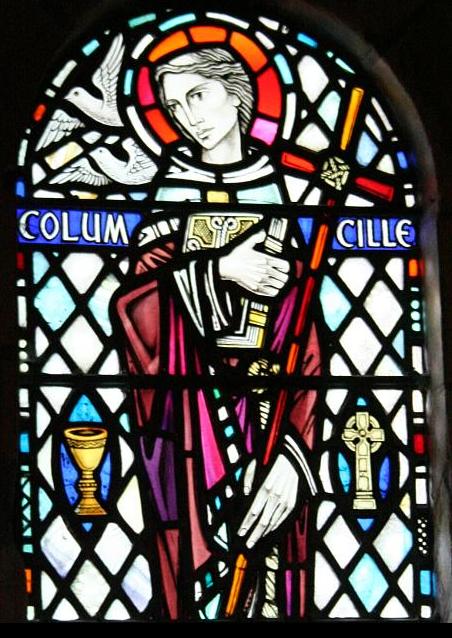 This week we remember: Columba (June 9).
Columba (521-297) was born in Donegal, Ireland to a royal clan. He received a monastic education, became an abbot, and founded monasteries at Derry, Durrow, and Kells. In the middle of his life, Columba traveled with twelve companions by small boat from Ireland to the island of Iona off Scotland's coast. During his more than thirty years on Iona Columba trained monks, offered spiritual direction, and made hundreds of copies of sacred texts. He served as a peacemaker between warring clans and traveled as a missionary to the northern Picts, among others.
Columba was known for his beautiful voice, deep prayer life, and charismatic personality as well as for his work with sacred texts. He is the patron saint of Scotland and Ireland.
Despite Iona's remote location, the monastery Columba established there was an important part of the evangelization of Scotland and England, and for many years after his death, Celtic Christians continued to follow Columban traditions and the Columban Rule.
If Columba had taken the Spiritual Types Test, he probably would have been a Sage. Columba is remembered on June 9.
(Image is a stained glass window in Iona Abbey.)
____________________________
This week we remember: Columba (June 9).Columba (521-297) was born in Donegal, Ireland to a royal clan. He received a monastic education, became an abbot, and founded monasteries at Derry, Durrow, and Kells. In the middle of his life, Columba traveled with twelve companions by small boat from Ireland to the island of Iona off Scotland's coast. During his more than thirty years on Iona Columba trained monks, offered spiritual direction, and made hundreds of copies of sacred texts. He served as a peacemaker between warring clans and traveled as a missionary to the northern Picts, among others.
Columba was known for his beautiful voice, deep prayer life, and charismatic personality as well as for his work with sacred texts. He is the patron saint of Scotland and Ireland.
Despite Iona's remote location, the monastery Columba established there was an important part of the evangelization of Scotland and England, and for many years after his death, Celtic Christians continued to follow Columban traditions and the Columban Rule.
If Columba had taken the Spiritual Types Test, he probably would have been a Sage. Columba is remembered on June 9.
(Image is a stained glass window in Iona Abbey.)
____________________________
Lectionary Readings:
(Courtesy of Vanderbilt Divinity Library)
1 Samuel 15:34 – 16:13
Psalm 138
2 Corinthians 5:6-10, (11-13), 14-17
Mark 4:26-34
Lectionary Texts:
1 Samuel 15:34 Sh’mu’el returned to Ramah, and Sha’ul went up to his house in Giv‘at-Sha’ul. 35 Never again did Sh’mu’el see Sha’ul, until the day he died. But Sh’mu’el grieved over Sha’ul, and Adonai regretted that he had made Sha’ul king over Isra’el.
16:1 Adonai said to Sh’mu’el, “How much longer are you going to go on grieving for Sha’ul, now that I have rejected him as king over Isra’el? Fill your horn with oil, and set out; I will send you to Yishai the Beit-Lachmi, because I have chosen myself a king from among his sons.” 2 Sh’mu’el said, “How can I go? If Sha’ul hears of it, he will have me killed.” Adonai said, “Take a female cow with you and say, ‘I have come to sacrifice to Adonai.’ 3 Summon Yishai to the sacrifice. I will tell you what to do, and you are to anoint for me the person I point out to you.”
4 Sh’mu’el did what Adonai said and arrived at Beit-Lechem. The leaders of the city came trembling to meet him and asked, “Are you coming in peace?” 5 He answered, “In peace. I have come to sacrifice to Adonai. Consecrate yourselves, and come with me to the sacrifice.” He consecrated Yishai and his sons and summoned them to the sacrifice. 6 When they had come, he looked at Eli’av and said, “This has to be Adonai’s anointed one, here before him.” 7 But Adonai said to Sh’mu’el, “Don’t pay attention to how he looks or how tall he is, because I have rejected him. Adonai doesn’t see the way humans see — humans look at the outward appearance, but Adonai looks at the heart.” 8 Then Yishai called Avinadav and presented him to Sh’mu’el; but he said, “Adonai hasn’t chosen this one either.” 9 Yishai presented Shammah; again Sh’mu’el said, “Adonai hasn’t chosen this one either.” 10 Yishai presented seven of his sons to Sh’mu’el; but Sh’mu’el told Yishai, “Adonai has not chosen these. 11 Are all your sons here?” Sh’mu’el asked Yishai. He replied, “There is still the youngest; he’s out there tending the sheep.” Sh’mu’el said to Yishai, “Send and bring him back, because we won’t sit down to eat until he gets here.” 12 He sent and brought him in. With ruddy cheeks, red hair and bright eyes, he was a good-looking fellow. Adonai said, “Stand up and anoint him; he’s the one.” 13 Sh’mu’el took the horn of oil and anointed him there in his brothers’ presence. From that day on, the Spirit of Adonai would fall upon David with power. So Sh’mu’el set out and went to Ramah.
Psalm 138:(0) By David:
(1) I give you thanks with all my heart.
Not to idols, but to you I sing praise.
2 I bow down toward your holy temple
and give thanks to your name for your grace and truth;
for you have made your word [even] greater
than the whole of your reputation.
3 When I called, you answered me,
you made me bold and strong.
4 All the kings of the earth will thank you, Adonai,
when they hear the words you have spoken.
5 They will sing about Adonai’s ways,
“Great is the glory of Adonai!”
6 For though Adonai is high, he cares for the lowly;
while the proud he perceives from afar.
7 You keep me alive when surrounded by danger;
you put out your hand when my enemies rage;
with your right hand you save me.
8 Adonai will fulfill his purpose for me.
Your grace, Adonai, continues forever.
Don’t abandon the work of your hands!
2 Corinthians 5:6 So we are always confident — we know that so long as we are at home in the body, we are away from our home with the Lord; 7 for we live by trust, not by what we see. 8 We are confident, then, and would much prefer to leave our home in the body and come to our home with the Lord.
9 Therefore, whether at home or away from home, we try our utmost to please him; 10 for we must all appear before the Messiah’s court of judgment, where everyone will receive the good or bad consequences of what he did while he was in the body.
11 So it is with the fear of the Lord before us that we try to persuade people. Moreover, God knows us as we really are; and I hope that in your consciences you too know us as we really are. 12 We are not recommending ourselves to you again but giving you a reason to be proud of us, so that you will be able to answer those who boast about a person’s appearance rather than his inner qualities. 13 If we are insane, it is for God’s sake; and if we are sane, it is for your sake.
14 For the Messiah’s love has hold of us, because we are convinced that one man died on behalf of all mankind (which implies that all mankind was already dead), 15 and that he died on behalf of all in order that those who live should not live any longer for themselves but for the one who on their behalf died and was raised. 16 So from now on, we do not look at anyone from a worldly viewpoint. Even if we once regarded the Messiah from a worldly viewpoint, we do so no longer. 17 Therefore, if anyone is united with the Messiah, he is a new creation — the old has passed; look, what has come is fresh and new!
Mark 4:26 And he said, “The Kingdom of God is like a man who scatters seed on the ground. 27 Nights he sleeps, days he’s awake; and meanwhile the seeds sprout and grow — how, he doesn’t know. 28 By itself the soil produces a crop — first the stalk, then the head, and finally the full grain in the head. 29 But as soon as the crop is ready, the man comes with his sickle, because it’s harvest-time.”
30 Yeshua also said, “With what can we compare the Kingdom of God? What illustration should we use to describe it? 31 It is like a mustard seed, which, when planted, is the smallest of all the seeds in the field; 32 but after it has been planted, it grows and becomes the largest of all the plants, with such big branches that the birds flying about can build nests in its shade.”
33 With many parables like these he spoke the message to them, to the extent that they were capable of hearing it. 34 He did not say a thing to them without using a parable; when he was alone with his own talmidim he explained everything to them.
1 Samuel 15:34 – 16:13
Psalm 138
2 Corinthians 5:6-10, (11-13), 14-17
Mark 4:26-34
Lectionary Texts:
1 Samuel 15:34 Sh’mu’el returned to Ramah, and Sha’ul went up to his house in Giv‘at-Sha’ul. 35 Never again did Sh’mu’el see Sha’ul, until the day he died. But Sh’mu’el grieved over Sha’ul, and Adonai regretted that he had made Sha’ul king over Isra’el.
16:1 Adonai said to Sh’mu’el, “How much longer are you going to go on grieving for Sha’ul, now that I have rejected him as king over Isra’el? Fill your horn with oil, and set out; I will send you to Yishai the Beit-Lachmi, because I have chosen myself a king from among his sons.” 2 Sh’mu’el said, “How can I go? If Sha’ul hears of it, he will have me killed.” Adonai said, “Take a female cow with you and say, ‘I have come to sacrifice to Adonai.’ 3 Summon Yishai to the sacrifice. I will tell you what to do, and you are to anoint for me the person I point out to you.”
4 Sh’mu’el did what Adonai said and arrived at Beit-Lechem. The leaders of the city came trembling to meet him and asked, “Are you coming in peace?” 5 He answered, “In peace. I have come to sacrifice to Adonai. Consecrate yourselves, and come with me to the sacrifice.” He consecrated Yishai and his sons and summoned them to the sacrifice. 6 When they had come, he looked at Eli’av and said, “This has to be Adonai’s anointed one, here before him.” 7 But Adonai said to Sh’mu’el, “Don’t pay attention to how he looks or how tall he is, because I have rejected him. Adonai doesn’t see the way humans see — humans look at the outward appearance, but Adonai looks at the heart.” 8 Then Yishai called Avinadav and presented him to Sh’mu’el; but he said, “Adonai hasn’t chosen this one either.” 9 Yishai presented Shammah; again Sh’mu’el said, “Adonai hasn’t chosen this one either.” 10 Yishai presented seven of his sons to Sh’mu’el; but Sh’mu’el told Yishai, “Adonai has not chosen these. 11 Are all your sons here?” Sh’mu’el asked Yishai. He replied, “There is still the youngest; he’s out there tending the sheep.” Sh’mu’el said to Yishai, “Send and bring him back, because we won’t sit down to eat until he gets here.” 12 He sent and brought him in. With ruddy cheeks, red hair and bright eyes, he was a good-looking fellow. Adonai said, “Stand up and anoint him; he’s the one.” 13 Sh’mu’el took the horn of oil and anointed him there in his brothers’ presence. From that day on, the Spirit of Adonai would fall upon David with power. So Sh’mu’el set out and went to Ramah.
Psalm 138:(0) By David:
(1) I give you thanks with all my heart.
Not to idols, but to you I sing praise.
2 I bow down toward your holy temple
and give thanks to your name for your grace and truth;
for you have made your word [even] greater
than the whole of your reputation.
3 When I called, you answered me,
you made me bold and strong.
4 All the kings of the earth will thank you, Adonai,
when they hear the words you have spoken.
5 They will sing about Adonai’s ways,
“Great is the glory of Adonai!”
6 For though Adonai is high, he cares for the lowly;
while the proud he perceives from afar.
7 You keep me alive when surrounded by danger;
you put out your hand when my enemies rage;
with your right hand you save me.
8 Adonai will fulfill his purpose for me.
Your grace, Adonai, continues forever.
Don’t abandon the work of your hands!
2 Corinthians 5:6 So we are always confident — we know that so long as we are at home in the body, we are away from our home with the Lord; 7 for we live by trust, not by what we see. 8 We are confident, then, and would much prefer to leave our home in the body and come to our home with the Lord.
9 Therefore, whether at home or away from home, we try our utmost to please him; 10 for we must all appear before the Messiah’s court of judgment, where everyone will receive the good or bad consequences of what he did while he was in the body.
11 So it is with the fear of the Lord before us that we try to persuade people. Moreover, God knows us as we really are; and I hope that in your consciences you too know us as we really are. 12 We are not recommending ourselves to you again but giving you a reason to be proud of us, so that you will be able to answer those who boast about a person’s appearance rather than his inner qualities. 13 If we are insane, it is for God’s sake; and if we are sane, it is for your sake.
14 For the Messiah’s love has hold of us, because we are convinced that one man died on behalf of all mankind (which implies that all mankind was already dead), 15 and that he died on behalf of all in order that those who live should not live any longer for themselves but for the one who on their behalf died and was raised. 16 So from now on, we do not look at anyone from a worldly viewpoint. Even if we once regarded the Messiah from a worldly viewpoint, we do so no longer. 17 Therefore, if anyone is united with the Messiah, he is a new creation — the old has passed; look, what has come is fresh and new!
Mark 4:26 And he said, “The Kingdom of God is like a man who scatters seed on the ground. 27 Nights he sleeps, days he’s awake; and meanwhile the seeds sprout and grow — how, he doesn’t know. 28 By itself the soil produces a crop — first the stalk, then the head, and finally the full grain in the head. 29 But as soon as the crop is ready, the man comes with his sickle, because it’s harvest-time.”
30 Yeshua also said, “With what can we compare the Kingdom of God? What illustration should we use to describe it? 31 It is like a mustard seed, which, when planted, is the smallest of all the seeds in the field; 32 but after it has been planted, it grows and becomes the largest of all the plants, with such big branches that the birds flying about can build nests in its shade.”
33 With many parables like these he spoke the message to them, to the extent that they were capable of hearing it. 34 He did not say a thing to them without using a parable; when he was alone with his own talmidim he explained everything to them.
John Wesley's Notes-commentary for 1 Samuel 15:34 – 16:13
Verse 35
[35] And Samuel came no more to see Saul until the day of his death: nevertheless Samuel mourned for Saul: and the LORD repented that he had made Saul king over Israel.
To see Saul — That is, to visit him, in token of respect or friendship: or, to seek counsel from God for him. Otherwise he did see him chap. 19:24. Though indeed it was not Samuel that came thither with design to see Saul, but Saul went thither to see Samuel, and that accidentally.
Verse 1
[1] And the LORD said unto Samuel, How long wilt thou mourn for Saul, seeing I have rejected him from reigning over Israel? fill thine horn with oil, and go, I will send thee to Jesse the Bethlehemite: for I have provided me a king among his sons.
Mourn — And pray for his restitution, which the following words imply he did.
Oil — Which was used in the inauguration of kings. But here it is used in the designation of a king; for David was not actually made king by it, but still remained a subject. And the reason of this anticipation was the comfort of Samuel, and other good men, against their fears in case of Saul's death, and the assurance of David's title, which otherwise would have been doubtful.
I have provided — This phrase is very emphatical, and implies the difference between this and the former king. Saul was a king of the people's providing, he was the product of their sinful desires: but this is a king of my own providing, to fulfil all my will, and to serve my glory.
Verse 4
[4] And Samuel did that which the LORD spake, and came to Bethlehem. And the elders of the town trembled at his coming, and said, Comest thou peaceably?
Trembled — Because it was strange and unexpected to them, this being but an obscure town, and remote from Samuel, and therefore they justly thought there was some extraordinary reason for it.
Peaceable — The Hebrew phrase, comest thou in peace, is as much as to say (in our phrase) is all well?
Verse 5
[5] And he said, Peaceably: I am come to sacrifice unto the LORD: sanctify yourselves, and come with me to the sacrifice. And he sanctified Jesse and his sons, and called them to the sacrifice.
He sanctified — It seems evident that there was something peculiar in Jesse's invitation. For first, both he and his sons were invited, whereas the others were only invited for their own persons. Secondly, the different phrase here used, that he sanctified these, when he only bade the other sanctify themselves; argues a singular care of Samuel in their sanctification. Which makes it probable, that the rest were only to join with them in the act of sacrificing; but these, and only these, were invited to feast upon the remainders of the sacrifices.
Verse 6
[6] And it came to pass, when they were come, that he looked on Eliab, and said, Surely the LORD's anointed is before him.
Before him — That is, in this place where God is now present. For it is observable, that not only the sacrifice is said to be offered, but even the feast upon the remainders of it is said, to be eaten before the Lord, Deuteronomy 12:7, that is, before or near his altar, where God was present in a special manner. This I take to be the person I am sent to anoint: wherein yet be was mistaken, as other prophets sometimes were, when they hastily spake their own thoughts, before they had consulted God.
Verse 10
[10] Again, Jesse made seven of his sons to pass before Samuel. And Samuel said unto Jesse, The LORD hath not chosen these.
Seven — There are but seven named, 1 Chronicles 2:13-15, because one of them was either born of a concubine: or, died immediately after this time.
Verse 11
[11] And Samuel said unto Jesse, Are here all thy children? And he said, There remaineth yet the youngest, and, behold, he keepeth the sheep. And Samuel said unto Jesse, Send and fetch him: for we will not sit down till he come hither.
Keepeth sheep — And consequently is the most unfit of all my sons for that high employment. Either therefore he did not understand David's wisdom and valour, or he judged him unfit, by reason of his mean education. And God so ordered it by his providence, that David's choice might plainly appear to be God's work, and not Samuel's, or Jesse's. David signifies beloved: a fit name for so eminent a type of the Beloved Son. It is supposed, David was now about twenty years old. If so, his troubles by Saul lasted near ten years: for he was thirty years old when Saul died. Samuel having done this went to Ramah. He retired to die in peace, since his eyes had seen the salvation, even the sceptre brought into the tribe of Judah.
Verse 13
[13] Then Samuel took the horn of oil, and anointed him in the midst of his brethren: and the Spirit of the LORD came upon David from that day forward. So Samuel rose up, and went to Ramah.
Anointed him — David's brethren saw David's unction, yet did not understand, that he was anointed to the kingdom; but were only told by Samuel, that he was anointed to some great service, which hereafter they should know. Thus Jesse only, and David, understood the whole business, and his brethren were able to attest to that act of Samuel's anointing him, which, with other collateral evidences, was abundantly sufficient to prove David's right to the kingdom, if need should be.
The spirit, etc., — That is, he was immediately endowed with extraordinary gifts of God's Spirit, as strength, and courage, and wisdom, and other excellent qualities which fitted him for, and put him upon noble attempts.Psalm 138
Verse 1
[1] I will praise thee with my whole heart: before the gods will I sing praise unto thee.
The gods — Before kings and princes.
Verse 2
[2] I will worship toward thy holy temple, and praise thy name for thy lovingkindness and for thy truth: for thou hast magnified thy word above all thy name.
Temple — Where the ark was. He was not permitted to enter into it.
Magnified — For thou hast glorified thy word or promise unto me more than any other of thy glorious perfections.
Verse 4
[4] All the kings of the earth shall praise thee, O LORD, when they hear the words of thy mouth.
The kings — A prophecy of the calling of the Gentiles.
Hear — The gospel preached among then.
Verse 5
[5] Yea, they shall sing in the ways of the LORD: for great is the glory of the LORD.
The ways — His wonderful counsel and gracious providences.
Verse 8
[8] The LORD will perfect that which concerneth me: thy mercy, O LORD, endureth for ever: forsake not the works of thine own hands.
Perfect — Will finish the great work of my deliverance.
Forsake not — Or, do not give over, the work of my salvation, which is thus far advanced, not by any human help, but by thy power and providence.2 Corinthians 5:6-10, (11-13), 14-17
Verse 6
[6] Therefore we are always confident, knowing that, whilst we are at home in the body, we are absent from the Lord:
Therefore we behave undauntedly — But most of all when we have death in view; knowing that our greatest happiness lies beyond the grave.
Verse 7
[7] (For we walk by faith, not by sight:)
For we cannot clearly see him in this life, wherein we walk by faith only: an evidence, indeed, that necessarily implies a kind of "seeing him who is invisible;" yet as far beneath what we shall have in eternity, as it is above that of bare, unassisted reason.
Verse 8
[8] We are confident, I say, and willing rather to be absent from the body, and to be present with the Lord.
Present with the Lord — This demonstrates that the happiness of the saints is not deferred till the resurrection.
Verse 9
[9] Wherefore we labour, that, whether present or absent, we may be accepted of him.
Therefore we are ambitious — The only ambition which has place in a Christian.
Whether present — In the body.
Or absent — From it.
Verse 10
[10] For we must all appear before the judgment seat of Christ; that every one may receive the things done in his body, according to that he hath done, whether it be good or bad.
For we all — Apostles as well as other men, whether now present in the body, or absent from it.
Must appear — Openly, without covering, where all hidden things will be revealed; probably the sins, even of the faithful, which were forgiven long before. For many of their good works, as their repentance, their revenge against sin, cannot other wise appear. But this will be done at their own desire, without grief, and without shame.
According to what he hath done in the body, whether good or evil — In the body he did either good or evil; in the body he is recompensed accordingly.
Verse 11
[11] Knowing therefore the terror of the Lord, we persuade men; but we are made manifest unto God; and I trust also are made manifest in your consciences.
Knowing therefore the terror of the Lord, we the more earnestly persuade men to seek his favour; and as God knoweth this, so, I trust, ye know it in your own consciences.
Verse 12
[12] For we commend not ourselves again unto you, but give you occasion to glory on our behalf, that ye may have somewhat to answer them which glory in appearance, and not in heart.
We do not say this, as if we thought there was any need of again recommending ourselves to you, but to give you an occasion of rejoicing and praising God, and to furnish you with an answer to those false apostles who glory in appearance, but not in heart, being condemned by their own conscience.
Verse 13
[13] For whether we be beside ourselves, it is to God: or whether we be sober, it is for your cause.
For if we are transported beyond ourselves — Or at least, appear so to others, treated of, 2 Corinthians 5:15-21, speaking or writing with uncommon vehemence.
It is to God — He understands (if men do not) the emotion which himself inspires.
If we be sober — Treated of, 2 Corinthians 6:1-10. If I proceed in a more calm, sedate manner.
It is for your sakes — Even good men bear this, rather than the other method, in their teachers. But these must obey God, whoever is offended by it.
Verse 14
[14] For the love of Christ constraineth us; because we thus judge, that if one died for all, then were all dead:
For the love of Christ — To us, and our love to him.
Constraineth us — Both to the one and the other; beareth us on with such a strong, steady, prevailing influence, as winds and tides exert when they waft the vessel to its destined harbour. While we thus judge, that if Christ died for all, then are all, even the best of men, naturally dead - In a state of spiritual death, and liable to death eternal. For had any man been otherwise, Christ had not needed to have died for him.
Verse 15
[15] And that he died for all, that they which live should not henceforth live unto themselves, but unto him which died for them, and rose again.
And that he died for all — That all might be saved.
That they who live — That all who live upon the earth.
Should not henceforth — From the moment they know him.
Live unto themselves — Seek their own honour, profit, pleasure.
But unto him — In all righteousness and true holiness.
Verse 16
[16] Wherefore henceforth know we no man after the flesh: yea, though we have known Christ after the flesh, yet now henceforth know we him no more.
So that we from this time — That we knew the love of Christ.
Know no one — Neither ourselves, nor you, neither the rest of the apostles, Galatians 2:6, nor any other person.
After the flesh — According to his former state, country, descent, nobility, riches, power, wisdom. We fear not the great. We regard not the rich or wise. We account not the least less than ourselves. We consider all, only in order to save all. Who is he that thus knows no one after the flesh? ln what land do these Christians live? Yea, if we have known even Christ after the flesh - So as to love him barely with a natural love, so as to glory in having conversed with him on earth, so as to expect only temporal benefits from him.
Verse 17
[17] Therefore if any man be in Christ, he is a new creature: old things are passed away; behold, all things are become new.
Therefore if any one be in Christ — A true believer in him.
There is a new creation — Only the power that makes a world can make a Christian. And when he is so created, the old things are passed away - Of their own accord, even as snow in spring.
Behold — The present, visible, undeniable change! All things are become new - He has new life, new senses, new faculties, new affections, new appetites, new ideas and conceptions. His whole tenor of action and conversation is new, and he lives, as it were, in a new world. God, men, the whole creation, heaven, earth, and all therein, appear in a new light, and stand related to him in a new manner, since he was created anew in Christ Jesus.Mark 4:26-34
Verse 26
[26] And he said, So is the kingdom of God, as if a man should cast seed into the ground;
So is the kingdom of God — The inward kingdom is like seed which a man casts into the ground - This a preacher of the Gospel casts into the heart. And he sleeps and rises night and day - That is, he has it continually in his thoughts. Meantime it springs and grows up he knows not how - Even he that sowed it cannot explain how it grows. For as the earth by a curious kind of mechanism, which the greatest philosophers cannot comprehend, does as it were spontaneously bring forth first the blade, then the ear, then the full corn in the ear: so the soul, in an inexplicable manner, brings forth, first weak graces, then stronger, then full holiness: and all this of itself, as a machine, whose spring of motion is within itself. Yet observe the amazing exactness of the comparison. The earth brings forth no corn (as the soul no holiness) without both the care and toil of man, and the benign influence of heaven.
Verse 29
[29] But when the fruit is brought forth, immediately he putteth in the sickle, because the harvest is come.
He putteth in the sickle — God cutteth down and gathereth the corn into his garner.
Verse 30
[30] And he said, Whereunto shall we liken the kingdom of God? or with what comparison shall we compare it?
Matthew 13:31; Luke 13:18.
Verse 33
[33] And with many such parables spake he the word unto them, as they were able to hear it.
He spake the word as they were able to hear it — Adapting it to the capacity of his hearers; and speaking as plain as he could without offending them. A rule never to be forgotten by those who instruct others.
Verse 35
[35] And Samuel came no more to see Saul until the day of his death: nevertheless Samuel mourned for Saul: and the LORD repented that he had made Saul king over Israel.
To see Saul — That is, to visit him, in token of respect or friendship: or, to seek counsel from God for him. Otherwise he did see him chap. 19:24. Though indeed it was not Samuel that came thither with design to see Saul, but Saul went thither to see Samuel, and that accidentally.
Verse 1
[1] And the LORD said unto Samuel, How long wilt thou mourn for Saul, seeing I have rejected him from reigning over Israel? fill thine horn with oil, and go, I will send thee to Jesse the Bethlehemite: for I have provided me a king among his sons.
Mourn — And pray for his restitution, which the following words imply he did.
Oil — Which was used in the inauguration of kings. But here it is used in the designation of a king; for David was not actually made king by it, but still remained a subject. And the reason of this anticipation was the comfort of Samuel, and other good men, against their fears in case of Saul's death, and the assurance of David's title, which otherwise would have been doubtful.
I have provided — This phrase is very emphatical, and implies the difference between this and the former king. Saul was a king of the people's providing, he was the product of their sinful desires: but this is a king of my own providing, to fulfil all my will, and to serve my glory.
Verse 4
[4] And Samuel did that which the LORD spake, and came to Bethlehem. And the elders of the town trembled at his coming, and said, Comest thou peaceably?
Trembled — Because it was strange and unexpected to them, this being but an obscure town, and remote from Samuel, and therefore they justly thought there was some extraordinary reason for it.
Peaceable — The Hebrew phrase, comest thou in peace, is as much as to say (in our phrase) is all well?
Verse 5
[5] And he said, Peaceably: I am come to sacrifice unto the LORD: sanctify yourselves, and come with me to the sacrifice. And he sanctified Jesse and his sons, and called them to the sacrifice.
He sanctified — It seems evident that there was something peculiar in Jesse's invitation. For first, both he and his sons were invited, whereas the others were only invited for their own persons. Secondly, the different phrase here used, that he sanctified these, when he only bade the other sanctify themselves; argues a singular care of Samuel in their sanctification. Which makes it probable, that the rest were only to join with them in the act of sacrificing; but these, and only these, were invited to feast upon the remainders of the sacrifices.
Verse 6
[6] And it came to pass, when they were come, that he looked on Eliab, and said, Surely the LORD's anointed is before him.
Before him — That is, in this place where God is now present. For it is observable, that not only the sacrifice is said to be offered, but even the feast upon the remainders of it is said, to be eaten before the Lord, Deuteronomy 12:7, that is, before or near his altar, where God was present in a special manner. This I take to be the person I am sent to anoint: wherein yet be was mistaken, as other prophets sometimes were, when they hastily spake their own thoughts, before they had consulted God.
Verse 10
[10] Again, Jesse made seven of his sons to pass before Samuel. And Samuel said unto Jesse, The LORD hath not chosen these.
Seven — There are but seven named, 1 Chronicles 2:13-15, because one of them was either born of a concubine: or, died immediately after this time.
Verse 11
[11] And Samuel said unto Jesse, Are here all thy children? And he said, There remaineth yet the youngest, and, behold, he keepeth the sheep. And Samuel said unto Jesse, Send and fetch him: for we will not sit down till he come hither.
Keepeth sheep — And consequently is the most unfit of all my sons for that high employment. Either therefore he did not understand David's wisdom and valour, or he judged him unfit, by reason of his mean education. And God so ordered it by his providence, that David's choice might plainly appear to be God's work, and not Samuel's, or Jesse's. David signifies beloved: a fit name for so eminent a type of the Beloved Son. It is supposed, David was now about twenty years old. If so, his troubles by Saul lasted near ten years: for he was thirty years old when Saul died. Samuel having done this went to Ramah. He retired to die in peace, since his eyes had seen the salvation, even the sceptre brought into the tribe of Judah.
Verse 13
[13] Then Samuel took the horn of oil, and anointed him in the midst of his brethren: and the Spirit of the LORD came upon David from that day forward. So Samuel rose up, and went to Ramah.
Anointed him — David's brethren saw David's unction, yet did not understand, that he was anointed to the kingdom; but were only told by Samuel, that he was anointed to some great service, which hereafter they should know. Thus Jesse only, and David, understood the whole business, and his brethren were able to attest to that act of Samuel's anointing him, which, with other collateral evidences, was abundantly sufficient to prove David's right to the kingdom, if need should be.
The spirit, etc., — That is, he was immediately endowed with extraordinary gifts of God's Spirit, as strength, and courage, and wisdom, and other excellent qualities which fitted him for, and put him upon noble attempts.Psalm 138
Verse 1
[1] I will praise thee with my whole heart: before the gods will I sing praise unto thee.
The gods — Before kings and princes.
Verse 2
[2] I will worship toward thy holy temple, and praise thy name for thy lovingkindness and for thy truth: for thou hast magnified thy word above all thy name.
Temple — Where the ark was. He was not permitted to enter into it.
Magnified — For thou hast glorified thy word or promise unto me more than any other of thy glorious perfections.
Verse 4
[4] All the kings of the earth shall praise thee, O LORD, when they hear the words of thy mouth.
The kings — A prophecy of the calling of the Gentiles.
Hear — The gospel preached among then.
Verse 5
[5] Yea, they shall sing in the ways of the LORD: for great is the glory of the LORD.
The ways — His wonderful counsel and gracious providences.
Verse 8
[8] The LORD will perfect that which concerneth me: thy mercy, O LORD, endureth for ever: forsake not the works of thine own hands.
Perfect — Will finish the great work of my deliverance.
Forsake not — Or, do not give over, the work of my salvation, which is thus far advanced, not by any human help, but by thy power and providence.2 Corinthians 5:6-10, (11-13), 14-17
Verse 6
[6] Therefore we are always confident, knowing that, whilst we are at home in the body, we are absent from the Lord:
Therefore we behave undauntedly — But most of all when we have death in view; knowing that our greatest happiness lies beyond the grave.
Verse 7
[7] (For we walk by faith, not by sight:)
For we cannot clearly see him in this life, wherein we walk by faith only: an evidence, indeed, that necessarily implies a kind of "seeing him who is invisible;" yet as far beneath what we shall have in eternity, as it is above that of bare, unassisted reason.
Verse 8
[8] We are confident, I say, and willing rather to be absent from the body, and to be present with the Lord.
Present with the Lord — This demonstrates that the happiness of the saints is not deferred till the resurrection.
Verse 9
[9] Wherefore we labour, that, whether present or absent, we may be accepted of him.
Therefore we are ambitious — The only ambition which has place in a Christian.
Whether present — In the body.
Or absent — From it.
Verse 10
[10] For we must all appear before the judgment seat of Christ; that every one may receive the things done in his body, according to that he hath done, whether it be good or bad.
For we all — Apostles as well as other men, whether now present in the body, or absent from it.
Must appear — Openly, without covering, where all hidden things will be revealed; probably the sins, even of the faithful, which were forgiven long before. For many of their good works, as their repentance, their revenge against sin, cannot other wise appear. But this will be done at their own desire, without grief, and without shame.
According to what he hath done in the body, whether good or evil — In the body he did either good or evil; in the body he is recompensed accordingly.
Verse 11
[11] Knowing therefore the terror of the Lord, we persuade men; but we are made manifest unto God; and I trust also are made manifest in your consciences.
Knowing therefore the terror of the Lord, we the more earnestly persuade men to seek his favour; and as God knoweth this, so, I trust, ye know it in your own consciences.
Verse 12
[12] For we commend not ourselves again unto you, but give you occasion to glory on our behalf, that ye may have somewhat to answer them which glory in appearance, and not in heart.
We do not say this, as if we thought there was any need of again recommending ourselves to you, but to give you an occasion of rejoicing and praising God, and to furnish you with an answer to those false apostles who glory in appearance, but not in heart, being condemned by their own conscience.
Verse 13
[13] For whether we be beside ourselves, it is to God: or whether we be sober, it is for your cause.
For if we are transported beyond ourselves — Or at least, appear so to others, treated of, 2 Corinthians 5:15-21, speaking or writing with uncommon vehemence.
It is to God — He understands (if men do not) the emotion which himself inspires.
If we be sober — Treated of, 2 Corinthians 6:1-10. If I proceed in a more calm, sedate manner.
It is for your sakes — Even good men bear this, rather than the other method, in their teachers. But these must obey God, whoever is offended by it.
Verse 14
[14] For the love of Christ constraineth us; because we thus judge, that if one died for all, then were all dead:
For the love of Christ — To us, and our love to him.
Constraineth us — Both to the one and the other; beareth us on with such a strong, steady, prevailing influence, as winds and tides exert when they waft the vessel to its destined harbour. While we thus judge, that if Christ died for all, then are all, even the best of men, naturally dead - In a state of spiritual death, and liable to death eternal. For had any man been otherwise, Christ had not needed to have died for him.
Verse 15
[15] And that he died for all, that they which live should not henceforth live unto themselves, but unto him which died for them, and rose again.
And that he died for all — That all might be saved.
That they who live — That all who live upon the earth.
Should not henceforth — From the moment they know him.
Live unto themselves — Seek their own honour, profit, pleasure.
But unto him — In all righteousness and true holiness.
Verse 16
[16] Wherefore henceforth know we no man after the flesh: yea, though we have known Christ after the flesh, yet now henceforth know we him no more.
So that we from this time — That we knew the love of Christ.
Know no one — Neither ourselves, nor you, neither the rest of the apostles, Galatians 2:6, nor any other person.
After the flesh — According to his former state, country, descent, nobility, riches, power, wisdom. We fear not the great. We regard not the rich or wise. We account not the least less than ourselves. We consider all, only in order to save all. Who is he that thus knows no one after the flesh? ln what land do these Christians live? Yea, if we have known even Christ after the flesh - So as to love him barely with a natural love, so as to glory in having conversed with him on earth, so as to expect only temporal benefits from him.
Verse 17
[17] Therefore if any man be in Christ, he is a new creature: old things are passed away; behold, all things are become new.
Therefore if any one be in Christ — A true believer in him.
There is a new creation — Only the power that makes a world can make a Christian. And when he is so created, the old things are passed away - Of their own accord, even as snow in spring.
Behold — The present, visible, undeniable change! All things are become new - He has new life, new senses, new faculties, new affections, new appetites, new ideas and conceptions. His whole tenor of action and conversation is new, and he lives, as it were, in a new world. God, men, the whole creation, heaven, earth, and all therein, appear in a new light, and stand related to him in a new manner, since he was created anew in Christ Jesus.Mark 4:26-34
Verse 26
[26] And he said, So is the kingdom of God, as if a man should cast seed into the ground;
So is the kingdom of God — The inward kingdom is like seed which a man casts into the ground - This a preacher of the Gospel casts into the heart. And he sleeps and rises night and day - That is, he has it continually in his thoughts. Meantime it springs and grows up he knows not how - Even he that sowed it cannot explain how it grows. For as the earth by a curious kind of mechanism, which the greatest philosophers cannot comprehend, does as it were spontaneously bring forth first the blade, then the ear, then the full corn in the ear: so the soul, in an inexplicable manner, brings forth, first weak graces, then stronger, then full holiness: and all this of itself, as a machine, whose spring of motion is within itself. Yet observe the amazing exactness of the comparison. The earth brings forth no corn (as the soul no holiness) without both the care and toil of man, and the benign influence of heaven.
Verse 29
[29] But when the fruit is brought forth, immediately he putteth in the sickle, because the harvest is come.
He putteth in the sickle — God cutteth down and gathereth the corn into his garner.
Verse 30
[30] And he said, Whereunto shall we liken the kingdom of God? or with what comparison shall we compare it?
Matthew 13:31; Luke 13:18.
Verse 33
[33] And with many such parables spake he the word unto them, as they were able to hear it.
He spake the word as they were able to hear it — Adapting it to the capacity of his hearers; and speaking as plain as he could without offending them. A rule never to be forgotten by those who instruct others.
_________________________________
Upper Room Ministries, a ministry of Discipleship Ministries
PO Box 340004
Nashville, Tennessee 37203-0004 United States
___________________________________
___________________________________
Sermon Story "Choosing A New Leader" by Gary Lee Parker for Sunday, 14 June 2015 with Scripture: 1 Samuel 15:34 Sh’mu’el returned to Ramah, and Sha’ul went up to his house in Giv‘at-Sha’ul. 35 Never again did Sh’mu’el see Sha’ul, until the day he died. But Sh’mu’el grieved over Sha’ul, and Adonai regretted that he had made Sha’ul king over Isra’el.
16:1 Adonai said to Sh’mu’el, “How much longer are you going to go on grieving for Sha’ul, now that I have rejected him as king over Isra’el? Fill your horn with oil, and set out; I will send you to Yishai the Beit-Lachmi, because I have chosen myself a king from among his sons.” 2 Sh’mu’el said, “How can I go? If Sha’ul hears of it, he will have me killed.” Adonai said, “Take a female cow with you and say, ‘I have come to sacrifice to Adonai.’ 3 Summon Yishai to the sacrifice. I will tell you what to do, and you are to anoint for me the person I point out to you.”
4 Sh’mu’el did what Adonai said and arrived at Beit-Lechem. The leaders of the city came trembling to meet him and asked, “Are you coming in peace?” 5 He answered, “In peace. I have come to sacrifice to Adonai. Consecrate yourselves, and come with me to the sacrifice.” He consecrated Yishai and his sons and summoned them to the sacrifice. 6 When they had come, he looked at Eli’av and said, “This has to be Adonai’s anointed one, here before him.” 7 But Adonai said to Sh’mu’el, “Don’t pay attention to how he looks or how tall he is, because I have rejected him. Adonai doesn’t see the way humans see — humans look at the outward appearance, but Adonai looks at the heart.” 8 Then Yishai called Avinadav and presented him to Sh’mu’el; but he said, “Adonai hasn’t chosen this one either.” 9 Yishai presented Shammah; again Sh’mu’el said, “Adonai hasn’t chosen this one either.” 10 Yishai presented seven of his sons to Sh’mu’el; but Sh’mu’el told Yishai, “Adonai has not chosen these. 11 Are all your sons here?” Sh’mu’el asked Yishai. He replied, “There is still the youngest; he’s out there tending the sheep.” Sh’mu’el said to Yishai, “Send and bring him back, because we won’t sit down to eat until he gets here.” 12 He sent and brought him in. With ruddy cheeks, red hair and bright eyes, he was a good-looking fellow. Adonai said, “Stand up and anoint him; he’s the one.” 13 Sh’mu’el took the horn of oil and anointed him there in his brothers’ presence. From that day on, the Spirit of Adonai would fall upon David with power. So Sh’mu’el set out and went to Ramah.
We have heard this story over and over in our lives or maybe you have never heard this story beofre. Samuel rebuked King Saul for his disobedinece to God's command and God rejected Saul as God's King of Israel. Samuel went home to his home and was grieving the loss of Saul as God's King, but God came to Samuel. God told Samuel to go to Bethlehem to the household of Jesse to choose a king for Jesse's sons. Samuel was fearful because he thought that King Saul would hear about it and kill Samuel. God said take a hiefer and plan to sacrifice to God. This is what Samuel did and waht he told the townsfold when he arrived and they asked him if anything was wrong. Then, Samuel went to Jesse and had Jesse bring his ons to Samuel that God may choose the one to anoint to be the next King of Israel. Jesse did, but God rejected all of them to be Israel's King. Samuel asked Jesse if he had any more sons to which Jesse said that he only has one more who is the baby of the family and is out shepherding the sheep. Samuel tod Jesse to go and get him because they would not sacrifice the calf and eat until he arrived. When the baby of the sons, David, arrived, Chose him for Samuel to anoint him to be the next King of Israel. Neither Jesse nor Samuel chose David, but God chose because God knew David's heart. David was anointed and they ate, but he did not become King until it was God's timing, so Samuel went to his home where he lived and died from this earth. What characters do you relate to or not relate to in this story? Would you have chosen the baby of the family? How would you have responded to God choosing David over his seven older brothers? How do you choose the next leader in your church of ministry? do you seek out someone who has been successful in their other ministries or do you let God lead you to His chosen person? We come and seek God's way to choose leaders, not out society's or the world's as we come to seek God's Grace in this matter to come and eat the Body of Jesus and drink His Blood through the the participation in the Holy Sacrament of the Holy Eucharist. We come singing the Hymn "God Has Chosen Me" by Bernadette Farrell
1. God has chosen me, God has chosen me
to bring good news to the poor.
God has chosen me, God has chosen me
to bring new sight to those searching for light:
God has chosen me, chosen me:
Refrain:
And to tell the world that God's kingdom is near,
to remove oppression and breakdown fear,
yes, God's time is near, God's time is near,
God's time is near, God's time is near.
2. God has chosen me, God has chosen me
to set alight a new fire.
God has chosen me, God has chosen me
to bring to birth a new kingdom on earth:
God has chosen me, chosen me:Refrain:
And to tell the world that God's kingdom is near,
to remove oppression and breakdown fear,
yes, God's time is near, God's time is near,
God's time is near, God's time is near.
3. God is calling me, God is calling me
in all whose cry is unheard.
God is calling me, God is calling me
to raise up the voice with no power or choice:
God is calling me, calling me:Refrain:
And to tell the world that God's kingdom is near,
to remove oppression and breakdown fear,
yes, God's time is near, God's time is near,
God's time is near, God's time is near.
____________________________
16:1 Adonai said to Sh’mu’el, “How much longer are you going to go on grieving for Sha’ul, now that I have rejected him as king over Isra’el? Fill your horn with oil, and set out; I will send you to Yishai the Beit-Lachmi, because I have chosen myself a king from among his sons.” 2 Sh’mu’el said, “How can I go? If Sha’ul hears of it, he will have me killed.” Adonai said, “Take a female cow with you and say, ‘I have come to sacrifice to Adonai.’ 3 Summon Yishai to the sacrifice. I will tell you what to do, and you are to anoint for me the person I point out to you.”
4 Sh’mu’el did what Adonai said and arrived at Beit-Lechem. The leaders of the city came trembling to meet him and asked, “Are you coming in peace?” 5 He answered, “In peace. I have come to sacrifice to Adonai. Consecrate yourselves, and come with me to the sacrifice.” He consecrated Yishai and his sons and summoned them to the sacrifice. 6 When they had come, he looked at Eli’av and said, “This has to be Adonai’s anointed one, here before him.” 7 But Adonai said to Sh’mu’el, “Don’t pay attention to how he looks or how tall he is, because I have rejected him. Adonai doesn’t see the way humans see — humans look at the outward appearance, but Adonai looks at the heart.” 8 Then Yishai called Avinadav and presented him to Sh’mu’el; but he said, “Adonai hasn’t chosen this one either.” 9 Yishai presented Shammah; again Sh’mu’el said, “Adonai hasn’t chosen this one either.” 10 Yishai presented seven of his sons to Sh’mu’el; but Sh’mu’el told Yishai, “Adonai has not chosen these. 11 Are all your sons here?” Sh’mu’el asked Yishai. He replied, “There is still the youngest; he’s out there tending the sheep.” Sh’mu’el said to Yishai, “Send and bring him back, because we won’t sit down to eat until he gets here.” 12 He sent and brought him in. With ruddy cheeks, red hair and bright eyes, he was a good-looking fellow. Adonai said, “Stand up and anoint him; he’s the one.” 13 Sh’mu’el took the horn of oil and anointed him there in his brothers’ presence. From that day on, the Spirit of Adonai would fall upon David with power. So Sh’mu’el set out and went to Ramah.
We have heard this story over and over in our lives or maybe you have never heard this story beofre. Samuel rebuked King Saul for his disobedinece to God's command and God rejected Saul as God's King of Israel. Samuel went home to his home and was grieving the loss of Saul as God's King, but God came to Samuel. God told Samuel to go to Bethlehem to the household of Jesse to choose a king for Jesse's sons. Samuel was fearful because he thought that King Saul would hear about it and kill Samuel. God said take a hiefer and plan to sacrifice to God. This is what Samuel did and waht he told the townsfold when he arrived and they asked him if anything was wrong. Then, Samuel went to Jesse and had Jesse bring his ons to Samuel that God may choose the one to anoint to be the next King of Israel. Jesse did, but God rejected all of them to be Israel's King. Samuel asked Jesse if he had any more sons to which Jesse said that he only has one more who is the baby of the family and is out shepherding the sheep. Samuel tod Jesse to go and get him because they would not sacrifice the calf and eat until he arrived. When the baby of the sons, David, arrived, Chose him for Samuel to anoint him to be the next King of Israel. Neither Jesse nor Samuel chose David, but God chose because God knew David's heart. David was anointed and they ate, but he did not become King until it was God's timing, so Samuel went to his home where he lived and died from this earth. What characters do you relate to or not relate to in this story? Would you have chosen the baby of the family? How would you have responded to God choosing David over his seven older brothers? How do you choose the next leader in your church of ministry? do you seek out someone who has been successful in their other ministries or do you let God lead you to His chosen person? We come and seek God's way to choose leaders, not out society's or the world's as we come to seek God's Grace in this matter to come and eat the Body of Jesus and drink His Blood through the the participation in the Holy Sacrament of the Holy Eucharist. We come singing the Hymn "God Has Chosen Me" by Bernadette Farrell
1. God has chosen me, God has chosen me
to bring good news to the poor.
God has chosen me, God has chosen me
to bring new sight to those searching for light:
God has chosen me, chosen me:
Refrain:
And to tell the world that God's kingdom is near,
to remove oppression and breakdown fear,
yes, God's time is near, God's time is near,
God's time is near, God's time is near.
2. God has chosen me, God has chosen me
to set alight a new fire.
God has chosen me, God has chosen me
to bring to birth a new kingdom on earth:
God has chosen me, chosen me:Refrain:
And to tell the world that God's kingdom is near,
to remove oppression and breakdown fear,
yes, God's time is near, God's time is near,
God's time is near, God's time is near.
3. God is calling me, God is calling me
in all whose cry is unheard.
God is calling me, God is calling me
to raise up the voice with no power or choice:
God is calling me, calling me:Refrain:
And to tell the world that God's kingdom is near,
to remove oppression and breakdown fear,
yes, God's time is near, God's time is near,
God's time is near, God's time is near.
____________________________
Gary Lee Parker
4147 Idaho Street, Apt. 1
San Diego, California 92104-1844, United States
____________________________
____________________________

No comments:
Post a Comment