 Alban Weekly "Recalibrating Expectations for Clergy by the Rev. Nathan E. Kirkpatrick for Monday, October 26, 2015
"Recalibrating Expectations for Clergy" by the Rev. Nathan E. Kirkpatrick
Last year, I taught an introductory parish leadership class to 40 part-time pastors. Most of them were bivocational, balancing the demands of ministry with their obligations as police officers, truck drivers, school teachers, nurses and social workers. Many were serving congregations at considerable distances from their homes (one had a 100-mile roundtrip journey on winding North Carolina back roads every Sunday morning). All of them were in congregations that would be without a ministerial presence if not for their service.
Those 40 are part of a steadily increasing number of American clergy who are part-time, bivocational or unpaid. Hartford Seminary's 2010 Faith Communities Today survey indicated that about 30 percent of American congregations are served by paid, part-time clergy (2 percent are served by unpaid clergy). A thought-provoking essay by the Rev. Carol Howard Merritt in the August 2013 issue of the The Christian Century offers a slightly starker picture, saying that roughly half -- though it could be as high as 70 percent -- of American congregations are finding themselves unable to afford a full-time clergyperson today.
This trend toward part-time, bivocational and unpaid clergy raises a host of questions for denominations and congregations that have based expectations for clergy on a model of full-time, paid ministry.
Some of these questions are seemingly small and insignificant. What to do, for example, about a monthly, weekday clergy meeting when such a gathering might necessitate a person's absence from her other job? Should a part-time pastor be excused from the meeting, recognizing that a two-hour meeting might represent as much as 20 percent of her compensated hours that week? Should the meeting be held on a Saturday to accommodate bivocational folks, even if that takes full-time and part-time clergy away from family and other obligations? All of these choices have pitfalls. Few have upsides.
Other questions are more vexing still, in some cases pitting long-held convictions against each other.
Some denominations are finding their commitment to a "learned clergy" in conflict with a missional need to serve smaller congregations and underserved communities. The question becomes how much training can a denomination reasonably expect a part-time or unpaid clergyperson to have? If not a three (or four) year master's degree, then what? What are the non-negotiable elements of that training, and what are the elements that would be nice but are not essential? Must training precede ministerial service, or could people be trained concurrently with their service? There are no easy answers, and in many denominations, no one is happy with a compromise.
Likewise, congregations have difficult decisions to make.
Imagine that a church can only afford compensation equal to quarter-time employment (which, in most cases, means that the clergyperson has to find additional paid employment to balance a personal budget). What can that congregation reasonably expect of that clergyperson, and what is the work of ministry must laity assume? This will require renewed education about the calling and ministry of the laity (a clear good in all of this!), and it will mean -- and in some places, already does mean -- that some ministries will no longer happen. Prioritizing the pastoral workload will be a new practice required of vestries, sessions and personnel committees.
In many settings, denominations and congregations have relied on the goodwill of part-time, bivocational and unpaid clergy and have not recalibrated their expectations about ministerial role and work. That is an unsustainable solution. Now is the time for creativity, innovation and experimentation to adjust to what is increasingly a new normal for congregations around the country.
___________________________
Denominations and congregations have based their expectations on full-time, paid ministry -- and yet the trend is toward part-time, bivocational and unpaid clergy.
Earlier this year, I taught an introductory parish leadership class to 40 part-time local church pastors. Most of them were bivocational, balancing the demands of ministry with their obligations as police officers, truck drivers, school teachers, nurses and social workers. Many were serving congregations at considerable distances from their homes (one had a 100-mile roundtrip journey on winding North Carolina back roads every Sunday morning). All of them were in congregations that would be without a ministerial presence if not for their service.
Those 40 are part of a steadily increasing number of American clergy who are part-time, bivocational or unpaid. Hartford Seminary’s 2010 Faith Communities Today survey (link is external) indicated that about 30 percent of American congregations are served by paid, part-time clergy (2 percent are served by unpaid clergy). A thought-provoking essay (link is external) by the Rev. Carol Howard Merritt (link is external) in the August 2013 issue of the The Christian Century offers a slightly starker picture, saying that roughly half -- though it could be as high as 70 percent -- of American congregations are finding themselves unable to afford a full-time clergyperson today.
This trend toward part-time, bivocational and unpaid clergy raises a whole host of questions for denominations and congregations that have based their expectations for clergy on a model of full-time, paid ministry.
Some of these questions are seemingly small and insignificant. What to do, for example, about a monthly, weekday clergy meeting when such a gathering might necessitate a person’s absence from her other job? Should a part-time pastor be excused from the meeting, recognizing that a two-hour meeting might represent as much as 20 percent of her compensated hours that week? Should the meeting be held on a Saturday to accommodate bivocational folks, even if that takes full-time and part-time clergy away from family and other obligations? All of these choices have pitfalls. Few have upsides.
Other questions are more vexing still, in some cases pitting long-held convictions against each other.
Some denominations are finding their commitment to a “learned clergy” in conflict with a missional need to serve smaller congregations and underserved communities. The question becomes how much training can a denomination reasonably expect a part-time or unpaid clergyperson to have? If not a three (or four) year master’s degree, then what? What are the non-negotiable elements of that training, and what are the elements that would be nice but are not essential? Must training precede ministerial service, or could people be trained concurrently with their service? There are no easy answers. In many denominations, no one is happy with a compromise.
Likewise, congregations have difficult decisions to make.
Imagine that a church can only afford compensation equal to quarter-time employment (which, in most cases, means that the clergyperson has to find additional paid employment to balance his personal budget). What can that congregation reasonably expect of that clergyperson, and what is the work of ministry must laity assume? This will require renewed education about the calling and ministry of the laity (a clear good in all of this!), and it will mean -- and in some places, already does mean -- that some ministries will no longer happen. Prioritizing the pastoral workload will be a new practice required of vestries, sessions and personnel committees.
In many settings, denominations and congregations have relied on the goodwill of part-time, bivocational and unpaid clergy and have not recalibrated their expectations about ministerial role and work. That is an unsustainable solution. Now is the time for creativity, innovation and experimentation to adjust to what is increasingly the new normal for congregations around the country.
----------------------------
The Rev. Nathan Kirkpatrick is the managing director of Alban at Duke Divinity School. This column was originally published on Faith & Leadership on August 5, 2014.
Monday, October 26, 2015
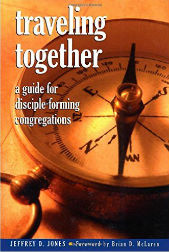
Traveling Together by Jeffrey D. Jones is written to help congregations re-imagine existing programs and processes for Christian formation -- or to develop them for the first time. In this age when membership in many mainline congregations is declining, Jones argues that forming disciples is the only way that the church will recover a vitality necessary to grow again. Anyone concerned for the life and ministry of the church, who has a sense that things are not what they might be, and who is seeking a new understanding of congregational life and mission will find hope and help in the pages of this book.
Buy the book »


Ideas that Impact: Alternative Models for Pastoral Ministry
"Alternative Pastoral Models" by C. Jeff Woods
Monday, October 26, 2015
Traveling Together by Jeffrey D. Jones is written to help congregations re-imagine existing programs and processes for Christian formation -- or to develop them for the first time. In this age when membership in many mainline congregations is declining, Jones argues that forming disciples is the only way that the church will recover a vitality necessary to grow again. Anyone concerned for the life and ministry of the church, who has a sense that things are not what they might be, and who is seeking a new understanding of congregational life and mission will find hope and help in the pages of this book.
Buy the book »
Ideas that Impact: Alternative Models for Pastoral Ministry
"Alternative Pastoral Models" by C. Jeff Woods
The traditional pastoral model is built upon a set of very expensive assumptions that include three years of post-bachelor education, a building owned by the congregants, and a full-time compensation package supplied by a single source of income. Increasingly, congregations are unable to afford this model, but still desire excellent pastoral ministry.
The pastoral models described below offer alternatives to the traditional pastoral model, primarily by expanding the sources of income for the pastoral minister. Each of the models detailed seeks to provide a full-time compensation package for a sufficiently trained pastor through multiple sources of income. Virtually all of these models have been around for quite some time, although some may seem somewhat new conceptually and others simply re-named for clarity.
The models originated several years ago out of a group that I resource called the “Professional Ministries Team” that includes staff whose primary portfolios relate to pastoral ministry in the American Baptist Churches, USA. Since then, I have revised the models somewhat based upon feedback from workshops and sessions where I have promoted these alternatives.
These models are offered as an adventurous alternative to congregations somehow thinking that they are “less than” if they cannot afford to fund a full-time pastor with their congregation as the sole source of income. Clearly, this self-esteem issue appears to be the greatest hurdle to the exploration of new models. Many congregations carry the perception that they have somehow gone backward if they cannot afford their own pastor. Yet, many of the models below are probably more rooted in New Testament congregational life than the traditional model that we lift up as normative today.
In my mind, the greater concern is that continuing to pursue the pathway of a full-time pastor when circumstances call for alternative models can be a very poor stewardship of resources. Although cases can be cited where a part-time pastorate returned to full-time, such instances are rare. Congregations that spend the principals of substantial dollars given by previous generations for missions and ministry should ask themselves whether their current needs are greater than those of their ancestors or grandchildren. Congregations that strategically seek outside funding or designate a portion of their endowment for such purposes should develop an intentional plan for rebuilding the congregation and carefully monitor the results of their efforts to ensure that such resources are not depleted prior to achieving the goal of returning to full time ministry.
Perhaps the more fruitful approach would be to approach pastoral ministry in a new way. Changing times call for alternative models, not just increased effort. The models below offer creative, enriching, life-giving solutions to a vast majority of struggling congregations. As you catch a vision for some of these alternatives, grab onto the possibilities of synergy rather than subtraction, of “greater than” rather than “less than.” None of these models claim to return a congregation to the golden era and congregations seeking that era are probably not quite ready to move forward into one of these models. But, for the adventurous, here are a few alternatives worth exploring.
Bi-Vocational Model:
Sharing a pastor with a business or company
It is estimated that about one-quarter to one-half of all clergy in the United States are bivocational, serving a local church, but also drawing from another source of income. In the traditional bivocational model, the primary responsibility to work out the details of the time spent in each location is up to the person serving in the two places. Sometimes, the “other” setting is somewhat invisible to the congregation, but such invisibility can lead to added pressure and unrealistic expectations for the pastor if not discussed openly with the congregational leadership. Ideally, the two organizations will welcome the dual identity of this person serving in two settings.
More and more seminaries are encouraging their graduates to prepare themselves for bivocational or bi-professional ministry and many regions are encouraging their candidates for ministry to prepare for this option. Many bivocational clergy consider themselves to be working full-time in the congregation with at least 30 hours of service. Thus, clarifying expectations for compensation and hours worked is critically important in bivocational settings.
One of the advantages of bivocational ministry is that benefits are sometimes available through the secular employer. Congregations should still supplement the purchase of such benefits such as health care, but the price of the benefits may be more affordable if obtained from the secular employer. A local employer can also provide a very stable source of additional income leading to a long and healthy pastorate.
Bi-Ministry Model:
Sharing a pastor with
another ministry setting
Another option in calling a pastor with an additional source of income is to call a pastor who is also serving in another ministry setting such as serving as a chaplain or as a minister in a community service agency.
Many endorsed chaplains from the American Baptist Church also serve as full or part time pastors who have negotiated with the churches time for this additional ministry as associated home missionaries. The risk the church (and pastor) takes if military chaplaincy is the supplementing source of income is that there could be a deployment or other interruption to the civilian ministry. The other risk the church takes is that the pastor/chaplain may decide to go on active duty. There is less risk of interruption if the chaplain is serving as an intermittent or part time chaplain in a non-military setting such as a hospital or if the chaplain has a private practice as a pastoral counselor. The challenge is to define the hours available for both forms of service while preserving some kind of Sabbath or day off for the pastor who does this.
The bi-ministry model could become an increasing and emerging model of ministry as many seminarians are currently preparing for service in a nonprofit or community agency setting. In the past, congregations preferred sharing their pastor with General Motors rather than with another congregation or another ministry agency, but the rise in the Missional Congregation movement may shift some of these perspectives. Congregations might even see the other ministry setting as an extension of their own setting even though the two organizations would have completely separate governing and financial structures.
One of the advantages of sharing a pastor with a ministry setting is that a ministry setting might be more understanding and flexible than a business or corporate setting when a pastor needs time off to conduct a funeral mid-week.
Bi-Congregational Model: Sharing a pastor with
another congregation
Yoking congregations or circuit preaching has been around since the Christian church was established in the United States. Two or more congregations that are in close proximity might choose this option. This model continues to support a full-time pastor as the sharing of a pastor spreads the expenses out between the yoked congregations.
If there is any difficulty in this kind of arrangement it is in finding the right match of a pastor for both congregations. Because the two congregations often differ in their cultures and strengths, it is not uncommon for the pastor to appeal more to one congregation than the other. It is suggested that a common leadership team be established to appoint a common search committee and continue to serve after a call is extended to provide support and supervision for the pastor and to discuss any other concerns. Addressing such differences in a single group can help one congregation better appreciate the strengths of the pastor and work toward solutions before they escalate into unsolvable problems. Additionally, but not unrelated, over time one congregation may increase or decrease what it is able to contribute toward the pastor’s compensation. Renegotiating the package annually allows for these differences.
Congregational Mergers: Merging with another congregation
Two nearby congregations of similar or even differing denominations might choose to pool their resources and assets permanently and become a single congregation, eliminating the need to maintain more than one building, leadership system, nomination process, etc. This option is often pursued by two weaker congregations hoping to create one strong and healthy congregation from the resulting merger. This result may or may not occur based upon the health of the congregations prior to the merger and the process used to merge the congregations.
The natural tendency for two merging organizations is for the culture of the larger organization to dominate the culture of the smaller organization. What happens in many mergers is that one congregation is simply subsumed by the other. The worship, the activities, the processes, and the ministries of the newly created congregation tend to reflect the dominant culture of the stronger congregation.
With care, however, a new identity can emerge that is separate from the two original congregations. Joining members without prior knowledge of the pre-existing separate identities of the former congregations also reinforces this new identity. To create this type of merger, it is suggested that a common task force be formed to create new systems and activities that are different from either of the merging congregations. The congregations should take the time to understand one another’s strengths and preferences in order to create a new and stronger congregation than any of the previous congregations.
If the congregations work to create something new, this option can result in a stronger congregation for the long term. If they do not, the merger will be no stronger than the dominant congregation and if it struggled before, it will struggle again in a very short time down the road.
Cross Congregational Staff Team: Calling a single staff team for multiple congregations
This model is similar to sharing your pastor with another congregation, except that congregations involved share more than one staff member. For instance, two congregations might seek to call a clergy couple or two part-time staff members with complementary skills. In an area where several congregations are in close proximity, three or four congregations might pool their resources to call a worship specialist, a missional specialist, and a family life specialist, some of whom may be part-time.
This model seeks to pool the resources of congregations in order to call a more specialized leadership team. Obviously, it will be important for each congregation from the outset to determine the percentage of pastoral compensation that they can contribute to the team. An assessment of ministry needs must also be conducted. Then, a representative team from all of the congregations involved can begin to put together a pastoral team from the resources available and needs identified. Increasingly, congregations are discovering that calling a pastoral “generalist” can place unrealistic expectations on the pastor called. This model recognizes that one person will not possess all of the leadership skills needed and seeks to call people with complementary or specialized skills to advance similar ministries in each congregation.
Some ministries today, such as contemporary worship and community ministry, seem to cry out for specialization. This model allows for certain congregations to afford specialization that might not have been possible otherwise. Additionally, many seminary graduates are looking for nontraditional settings in which to work. This model might be one that could attract the brightest and most creative new graduates.
This model involves much more change than some of the other models and thus may lead to conflict. Congregations not ready for extensive change will have difficulty reaping the benefits of such a system. The resources that were formerly poured into the preaching and pastoral care ministries may go elsewhere, meaning that more traditional ministries will also need to be done in a new way. Members who expect to see the same face performing the same ministry every week will be disappointed by this model.
The congregations involved must take significant time to envision their futures and then decide what specific leadership skills are needed to achieve those visions. Separate search committees should be formed for each position desired, but a common personnel committee should relate to all staff. If one senior staff member does not oversee the other staff, the most difficult aspect of this model will be making the team concept work without a senior leader. While this model will require a lot of work, if the changes occur, each congregation could ultimately be stronger than before.
Congregational Mentoring Model: Asking another congregation to mentor your congregation
This model uses the resources previously earmarked for pastoral compensation to contract with a stronger congregation to mentor your congregation toward renewed health. Typically, the mentoring congregation will provide the preaching, worship leadership, pastoral care, and other leadership responsibilities while assessing, training, and making recommendations for the future.
Many growing and healthy congregations love to share their ideas with others. Too often, such ideas are shared in one-day seminars, leaving the participants to implement the principles with little or no further contact. Individuals mentoring individuals has proven to be a very strong model of leadership growth. Opening up the entire congregational system for reflection and improvement is a more holistic approach to improvement than changing or training a few of the congregation’s leaders.
There will be a temptation on the part of both congregations for one congregation to simply emulate the practices of the other, which seldom works. The key will be to adapt what is working in one setting to a completely different setting. This model will also require a great deal of change, and thus readiness for change, on the part of the mentored congregation.
It takes a great deal of humility to ask for help. Humility will be a key in moving forward. This will require an extreme openness to having one’s ministries critiqued, challenged, and changed. Be clear about the desired goals of the contract and build in check-in points for evaluating results along the way.
If successful, the mentored congregation should become more like the congregation doing the mentoring and the mentoring congregation should also become stronger by reflecting upon its principles and practices. The mentored congregation may eventually choose to become a satellite center for the mentoring congregation, or it may retain its individual identity.
Pastoral Consultant: Calling someone to train the congregational leaders
This model involves the complete transformation of a congregation from a pastoral-led model to a laity-led model. Resources previously utilized for pastoral leadership are now used for training the laity to carry out ministerial tasks.
In New Testament times, laity were much more involved in ministry tasks than many are today. One of the strongest ways to transfer the ministry to the people is to remove the pastor from the local congregational setting. Congregations already differ a great deal according to what ministries are performed by paid staff and what ministries are performed by volunteer staff. This model seeks to turn all of the ministries over to the laity, using whatever pastoral compensation remains to train the laity to do the ministry, contracting with a pastoral trainer or by placing a pastoral consultant on retainer.
This model is completely dependent upon leaders willing to learn new skills, but studies have shown that leaders develop best through experience. Learning new skills also generates energy and enthusiasm for the existing ministries.
Either a single congregation or multiple congregations may implement this model together. If a single congregation adopts this model, they would use the remaining resources allotted for pastoral leadership to call a part-time trainer (rather than a traditional pastor) to train the laity to carry out the tasks of preaching, pastoral care, visitation, youth ministry, etc. Multiple congregations may also work together in this model by jointly identifying the ministries in which they would like to be trained. In this case, volunteer teams should be formed across congregations.
In addition to the benefit of cross-fertilization of leadership training, a second advantage to working with multiple congregations is that the congregations could pool their resources to call a permanent on-site pastoral consultant rather than a part-time trainer.
Certainly, some congregations may not be ready to assume all of the pastoral duties. Even those that say they are willing in the beginning may find it difficult to follow through with commitments.
The congregation should go through an assessment phase to discover what ministries need to be done in the future. The assessment phase should be conducted prior to committing to this model. Teams should then be formed of people willing to be trained to perform those tasks. Although not recommended, a single individual may volunteer to take on one of the ministries alone rather than a team.
Once the ministries have been named and the people recruited, the search committee can be formed to call a pastoral consultant with the ability to train others in the areas designated. The key to this model is forming the teams prior to calling the consultant in order to demonstrate commitment to the model.
For a single congregation adopting this model, the pool of candidates may include retired or interim pastors, while multiple congregations may be able to call a permanent full-time pastoral consultant. While at first glance, one might wonder who would apply, the applicant pool for such a position might be quite large. Many pastors with many years of experience are looking for a new challenge.
Once a congregation gets past the willingness stage, calling a pastoral consultant could indeed result in a long-term solution for the viability of the congregation involved.
Differences of Pastoral Leadership Models
| ||||
Model
|
Pastoral Leadership
|
How pastoral resources are used
|
Key to implementation
|
Degree of change required
|
Bi-Vocational Model
|
Part-time Pastor
|
Pastoral compensation
|
Involving new people in ministry
|
Minimal
|
|
Bi-Ministry Model
|
Full-time Pastor
in two settings |
Pastoral compensation
|
Balancing the two ministerial roles
|
Minimal
|
|
Bi-Congregational Model
|
Full-time Pastor
in two settings |
Pastoral compensation
|
Working cooperatively with the other congregation
|
Minimal
|
|
Merger of congregations
|
Solo Pastor
|
Pastoral compensation
|
Forming a new congregation different from the previous
|
Major
|
|
Cross-congregational
staff team |
Pastoral staff team
|
Pastoral compensation
|
Identifying specialized staff needs
|
Moderate
|
|
Congregational mentoring model
or multi-site |
Leadership from
another congregation |
Contract for services
|
Finding the right mentoring congregation
|
Extreme
|
|
Pastoral Consultant Model
|
Pastoral Trainer
|
Consultant compensation
|
Forming ministry teams willing to be trained
|
Extreme
|
Discussion Questions:
- Which alternative model described is most appealing to you?
- Which of these alternative models already exist within your faith tradition?
- What would it take for your congregation to consider an alternative form of pastoral ministry?
- What would be the greatest hurdle for your congregation to overcome in order to consider an alternative form of pastoral ministry?
- What signs might God be revealing to your congregation that would cause you to consider an alternative form of pastoral ministry?
Read more »
"Creative Ministry with Fewer Resources" by David L. Odom
"Calling all the Baptized: Innovative Governance Structures Cultivate Members' Ministries" by Sheryl A. Kujawa-Holbrook
Read more »
Visit Alban.org
STAY CONNECTED


Alban
"Creative Ministry with Fewer Resources" by David L. Odom
Troubled communities need mainline churches with well-equipped leaders. Keeping them will require creativity across denominational lines.
As mainline congregations’ membership has aged and declined, a shift in leadership is occurring that is troubling. Writing in “The Christian Century,” Barbara Wheeler of Auburn Seminary documents (link is external) the growing number of part-time pastors with very limited formal education who serve mainline congregations in distressed areas. In my experience, these pastors are dedicated to the care of these struggling congregations. I fully support their work, but these part-time pastors have limited time and energy to do much more than preaching, teaching and visitation.
Wheeler is right that well-trained pastors make a difference.
How can congregations cultivate a hopeful imagination in communities that are distressed? What about sending well-equipped pastors who see the significance of ministry beyond the congregation?
In the communities where I have lived, the mainline congregations have begun most of the social services. They have provided the initial inspiration and often the perspiration for the food bank, the homeless shelter, the free clinics and more. The ministerial associations composed mostly of mainline pastors brought critical issues before government leaders. The mainline is experienced in developing and encouraging pastors as community leaders. Will those gifts be lost as congregations lose their ability to afford full-time pastors?
Wheeler’s own Presbyterian congregation in Granville, N.Y., bucked the trend. When their part-time pastor lost his second ministry job, the neighboring United Methodist congregation in town decided that keeping the Presbyterian pastor as a leader in the community was so important that they would forgo the appointment of a United Methodist pastor if the Presbyterian would serve both congregations. It was not so much that the congregations needed better pastors, but that the community needed the sort of focused, prophetic attention that this pastor serving full-time could bring. The congregations agreed on the plan and presented it to their respective denominations.
I wonder if the congregations in Granville and their initiative have something to teach their denominations. What if executive presbyters, district superintendents and bishops looked first at the communities they served and asked, “What leadership is needed for those communities to flourish?” What if they talked to one another across denominational lines and looked for the best pastor or network of pastors they could appoint or send to serve the entire community across congregational lines? Don’t worry about convincing the congregations. Only work with the ones that catch a vision for what this can mean for their communities. I could foresee a Presbyterian pastor working with a team of lay pastors serving several congregations in a community or a key two-point charge of downtown congregations in a tiny town. What kind of difference could that make?
Such cooperation would be a return to the past (link is external) for many communities. One of the ways that congregations started in the frontier was through a union Sunday School. Once these bible studies took hold the participants would seek to affiliate with one or more denominations. Frequently they would continue to cooperate in study and worship.
American Christianity is increasingly congregationalist. The church growth movement has rightly taught us to focus on the health of congregations as the key sign of a vibrant denomination. However, healthy congregations are not marked by numbers alone. They are a result of a clear mission that is pointing to God’s reign. If sharing a pastor with other congregations in the same parish helped focus on a mission beyond the care of the congregation that would be a different and fruitful pathway to health.
I wonder if the future of mainline denominations is found in focusing more on what they have always done well. The communities I have in mind need every kind of help imaginable to confront the overwhelming challenges. They need a gospel hope that is beyond the current circumstances. They need faithful and patient work with sparks of imagination and lots and lots of dedication. They need a vision of God’s reign that is certain in the future and only partially visible in this moment. They need congregations that are more than places to be cared for; they need congregations that are agents of God in the tough places outside the doors.
----------------------------
David L. Odom is Executive Vice President and Chief Operating Officer of Leadership Education at Duke Divinity.
Read more »"Calling all the Baptized: Innovative Governance Structures Cultivate Members' Ministries" by Sheryl A. Kujawa-Holbrook
Washington County, a rural region in the state of Maine, is the first area in the United States to see the sunrise every morning. The small towns that inhabit the Atlantic coastline were traditionally supported by seasonal industries and the sea, but this way of life is disappearing as the families who have been there for generations grow older and the Maine coast grows more gentrified by people from “away.” Despite the financial means of some of its more recent residents, Washington County remains one of the four poorest counties in the United States. Mainline denominations, such as the Episcopal Diocese of Maine, are struggling to adapt models of church and ministry that respond to the realities of this remote area.
“The people who are here have been in Washington County for generations,” says Linton Studdiford, a diocesan staff member and one of the Diocese of Maine’s two pastoral enrichment coordinators assigned to Washington County. “To respond to the people in the region, we have had to raise up for ministry local people who are an integral part of their larger community.”
Of the three Episcopal congregations in the county—St. Aidan’s, Machias; St. Anne’s, Calais; and Christ Church, Eastport—two are supported by the interwoven ministries of laity and a deacon. The one congregation that has a priest assigned to it has been growing and maintains its presence in the community even though the priest is currently on active duty in Iraq. Rather than duplicating church structures and committee systems more characteristic of larger and more affluent congregations, the heart of the gospel in these historic churches in Washington County lies in enhancing the ministry of all the baptized, and strengthening the role of the church within the larger community.
Affirming the People’s Ministry
“The raising up of local deacons here is not so much a clerical model as a way to affirm the ministry of people who were already central to their congregation,” says Studdiford. Currently, the Diocese of Maine recognizes the importance of affirming local authority by treating all parishes and missions equally, regardless of their size or status.
Nancy Moore, the vicar of three small congregations in central Maine and the diocese’s other pastoral enrichment coordinator, says the congregations she serves need models of decision making that are flexible and include “the whole body” on Sunday morning—models consisting of something other than committee or vestry meetings. “I want people to claim their own authority, which starts by making them aware of it,” Moore says. She contends that the congregations she serves were, to varying degrees, capable of self-governance when she arrived. Her role has been to support the laity in making decisions as a group. “The pattern they had grown up with was that the priest or one or two very strong-willed parishioners made all the decisions. People would want to be in leadership so that they could be decision makers, but they didn’t have a sense of cooperation with each other. We have made great strides…it is very encouraging to see this change in action.”
The Church as People of God
The Pastoral Excellence Program (PEP) of the Episcopal Divinity School in Cambridge, Massachusetts, sees its primary purpose with the three dioceses of northern New England—Maine, Vermont, and New Hampshire—as being to strengthen the ministry of the baptized in rural and isolated areas, and to develop differing perspectives on the church and ministry to respond to these contexts. In addition to programs, the project funds four pastoral enrichment coordinators—two in Maine and one each in New Hampshire and Vermont. The assignment of these pastoral enrichment coordinators has been made in an effort to directly respond to the needs of congregations and regions where the church is viewed primarily as the “people of God” rather than as only an institution.
A key emphasis throughout the Pastoral Excellence Program is that the authority for ministry comes with baptism. The program focuses on an image of the church that is always changing and is mission-centered and world-centered rather than focused on preserving a self-centered institution. The congregations and judicatories of the Episcopal Church in northern New England do not have the luxury of surplus seminary-trained clergy, extensive committee structures, or corporate programs, nor could such models of church and ministry be sustained in the region now or in the foreseeable future. Rather, pastoral excellence in northern New England depends on models of church and ministry that support the formation and education of all the baptized as the ministers of God’s saving love in their families and communities. “Early Christian communities were often creative in their accommodation of movement and change,” says Fredrica Harris Thompsett, a member of the Episcopal Divinity School faculty and co-director of the Pastoral Excellence Program. “We cannot do less if we today wish to survive and thrive in challenging settings. If the church, as the people of God, is to thrive and grow, our structures of governance need considerable reshaping to accommodate and value corporate witness.” (See the box on page 19 for a look at the assumptions that frame a church when it is seen as an institution versus the assumptions underlying a church viewed as a community of people of God.)
Countering Consumerist Attitudes
Certainly, changes in our image of the church and ministry must also impact theological education. “For years seminaries have been talking about working more directly on the local level. The question was always how,” says Bishop Steven Charleston, dean and president of the Episcopal Divinity School. “If the role of theological education is to empower ministers to carry out the gospel, and the mission of the church is to embody that gospel in the world, then with programs like PEP we unite these two dynamics. The gospel is both empowered and embodied like never before.”
A collaborative partner with the Episcopal Divinity School, its Pastoral Excellence Program, and the dioceses of northern New England is the Episcopal Diocese of Northern Michigan, a judicatory that has been deliberately engaged in changing perceptions of the church and ministry since the mid-1980s. At that time, the diocese simply could no longer financially sustain conventional judicatory or congregational models. In addition, the 1979 Book of Common Prayer, with its renewed emphasis on the ministry of the baptized and the centrality of the Eucharist as the primary expression of the gathered community, evoked a theology that nurtured and sustained a visionary movement within the diocese. Further, diocesan leaders became aware of the negative effects of consumer-oriented culture on the church’s understanding of community.
“We had become people gathered around a minister, with the expectation of paying to receive a divine service,” says Kevin Thew Forrester, canon for ministry development for the Diocese of Northern Michigan. That recognition led to action among diocesan leaders. “We were convinced that the countercultural movement of Jesus invited us into becoming adults gathered into ministering communities.” The primary question became, says Thew Forrester, “How do we set a table in the wilderness, for that is precisely what we are being invited to do.” Specifically, “the question was how do we set the table, and not how does someone else set the table for us.” Thus, new models of the church and ministry in the wilderness go beyond the need to help small, rural, isolated congregations survive; they also offer ways to identify, call forth, and form indigenous leadership. “Economics should not dictate sound theology and way of life,” says Thew Forrester. “Rather, sound theology and ecclesiology invite us to rework our economic structure so that it can support the gifts for ministry with which the Spirit has endowed us.”1
Shifts at the Judicatory Level
In addition to changing perspectives on the church and ministry in northern New England congregations, the Pastoral Excellence Program has also witnessed changes in governance on the judicatory level. Beginning in January 2004, Bishop Gene Robinson of the Episcopal Diocese of New Hampshire launched an ambitious “re-imagining” of the diocese using Appreciative Inquiry as a tool to discern what ministries are needed in the diocese, as well as who has the skills for those ministries. Importantly, Appreciative Inquiry is a departure from traditional mission studies and judicatory evaluations that focus on past problems or the negative. Rather, the purpose is to recreate and foster the growth of life-giving organizations. As Mark Lau Branson explains inMemories, Hopes, and Conversations: Appreciative Inquiry and Congregational Change, “The thesis of Appreciative Inquiry is that an organization, such as a church [or judicatory], can be recreated by its conversations. And if that new creation is to feature the most life-giving forces and forms possible, then the conversations must be shaped by appreciative questions.”2
The focus of the re-imagining process for the Diocese of New Hampshire is on listening to God’s call and for diocesan leaders and members to begin to embody it in their actions. In a facilitated and collaborative 22-member committee of laity and clergy, members of the diocese were invited to explore the aspects of the church and ministry for which they felt the most passion. This “Dream Process” was one of discovering “What in God’s name is going on here?” and designing the church structures that would best enable dreams to become realities. Through this process, the diocese revealed the importance of furthering connections between people and congregations; building congregational partnerships; and enhancing evangelism, outreach, education, and ministries with young people. It also made concrete recommendations for staffing, support, and structure. Overall, the diocese said in a report on the re-imagining process issued last fall, the use of the Appreciative Inquiry process sparked “fresh fire in the work and ministry” of the diocese, congregations, people, commissions, and schools of the Episcopal Church in New Hampshire.3
Supporting Ministry with Teams
John T. LeSueur, the pastoral enrichment coordinator for the Diocese of New Hampshire, has seen a significant increase in the number of congregational discernment groups throughout the diocese, as well as in the depth of theological reflection among participants. A challenge, says LeSueur, is convincing people that accomplishing what is in their hearts can be done at little or no cost. Instead, he says, people often see additional programs as something that will mean “that they will have to spend some of their scarce resources from the parish budget.”
Since 2001, the Episcopal Diocese of Vermont has also developed models of church and ministry that are supportive of the region and its emphasis on the importance of baptismal ministry. When Bishop Thomas C. Ely came to the diocese that year, he put in place a decentralized diocesan staffing model called the Ministry Support Team, which focuses on supporting congregations. Three part-time ministry developers work out of their homes in different parts of the state. The ministry developers have different and complementary gifts and skills, and they minister in different congregations depending on the need, although it is often the case that they are more closely relating to congregations in their proximity. Ely meets with the ministry developers every other week for a full day of team building and conversation related to their mutual ministry in the congregations of the diocese. The canon to the ordinary and the pastoral enrichment coordinator of the diocese are also part of the Ministry Support Team, as are members with specific programmatic responsibilities, such as youth ministry and communication. The members of the Ministry Support Team who work out of the traditional diocesan offices in Burlington are limited to a part-time receptionist, an administrative assistant (whose services are shared by all team members), the financial administrator, and the canon to the ordinary. Ely says that although it has been hard to shake people’s notion of a need for traditional diocesan staff rather than ministry developers focused on supporting congregations, he believes that “gradually people are growing to appreciate the concept of a support team.” The full team meets every six weeks.
“We are definitely organizing around a diocesan-wide, regional, and local plan for ministry,” says Thaddeus Bennett, canon for ministry development and deployment for the Diocese of Vermont and part-time rector of the small, rural congregation of St. Mary’s, Wilmington. “The ‘Episcopal See’ is no longer the center. We are clear that the center is the people of God where they are, and that we diocesan folk need to go where they are. Programs and systems are adapted to meet the needs there. For instance, our deployment process for 23 congregations in the last three years probably used nine different models of working with lay leaders… The exciting work is fitting the ‘basics’ of deployment—which everyone really does need to pay attention to—to the size and circumstances of the congregation.”
Susan Ohlidal, pastoral enrichment coordinator for the Diocese of Vermont, affirms that the new clergy calling process is a sign of a new level of partnership between the diocese and congregations, as opposed to the older “the bishop sent us a clergyperson” model. “I cannot imagine a diocese opening up their clergy search process to this kind of review unless the governance systems and structures within the diocese are authentically and genuinely committed to all the ministries of the baptized: to hearing, valuing, and then implementing the changes brought forth by the wisdom of experience of pastoral leaders in parishes; and to take the risk that ‘the way we have always done this’ may no longer apply nor even be good enough any longer.” A surprising result from the evaluation and review of the new clergy calling process in the Diocese of Vermont was a widened perspective among members of the rural congregations involved, as well as a sense of greater connection with the diocese. “We heard favorable things as well as what we need to do better and what demands continued refinement or total trashing and creating anew,” says Ohlidal. “Hearing others’ stories of their experience with the process led to feeling less isolated in this very rural diocese and as if no one has done it before.” Ohlidal believes the review and revision of the ministry development processes of the diocese will be continuous, “reflecting the changing ministries and needs of the parishes as they, in partnership with the bishop and the diocese, discern and call new clergy leaders.”
Thad Bennett asserts that the keys to nurturing the diocesan structures of the Diocese of Vermont are time and energy. “I’d say the most important things are the intentional team building [Bishop Ely] and we have done with the Ministry Support Team that works the most closely with congregations. We meet every other week for six hours to connect, build our faith community, discuss what we are working on, come up with ways to move forward, etc. That is a lot of time!”
Ely notes that the Diocese of Vermont already has several examples of the Ministry Support Team model operating in congregations, and various conversations going on with other faith communities about how to move in this direction. On the congregational level, the Ministry Support Team works in concert with the vestry, who maintain their canonical responsibilities. The Ministry Support Teams tend to focus on responsibility for pastoral care, liturgy, and education. The concept of a team, rather than an individual, helps foster a deeper sense of community among members of the team, but also among members of the congregation as a whole. The team approach also helps reinforce “the understanding of the variety of gifts present in the community, as well as each person’s participation in the life and well-being of the community,” says Ely.
Ely believes that current Episcopal canons continue to be fairly restrictive in terms of the roles of laity and clergy, and would like to see them open up, allowing for more possibilities in terms of judicatory and congregational structures, including Ministry Support Teams. “I think less restrictive language on organizational models for faith communities might open up some creative thinking about structures for ministry. I think we still need some clarity and structure for congregations, but opening up (canonically) the possibility of other ways might help.” Ely also sees the need for a more expansive vision that would encourage the start of new congregations that might not fit the status quo.
From Committees to Ministries
LeaderResources of Leeds, Massachusetts, is a collaborative partner of the Pastoral Excellence Program of the Episcopal Divinity School and the dioceses of northern New England. Linda L. Grenz, founder and CEO of the organization, has worked with many congregations and judicatories interested in changing perspectives on church and ministry. “My work with congregations has been focused around moving from committees to ministries,” she says. “You need a few—but only a few—committees, such as finance and property. But the rest need to be ministry teams: education, communication, pastoral care, liturgy, etc.” Grenz believes ministry teams address the changing roles between clergy and laity— “a move from the priest or pastor as the primary leader who does all (or most) of the ministry (or at least the most important parts) to a shared ministry with lots of people involved in a fairly quickly changing environment which provides lots of entry points for people entering the community.” (See the box on page 20 for Grenz’s list of what she believes are the characteristics of effective ministry teams.)
Overall, moving into new perspectives on church and ministry is most renewing in organizations that are flexible and committed to making changes. Grenz believes the congregations and judicatories who most successfully adapt church structures to emergent theology and ministry are those that successfully develop an attitude that says “we’ll try it, and if it doesn’t work, we’ll try something else” instead of “but we’ve always done it this way.” Adopting practices of making decisions fairly quickly, trying things out, and being willing to jettison whatever doesn’t work without blaming or complaining are important qualities, she says. Perhaps most important, at all levels of the church and ministry, is the authenticity of the spiritual life of the organization. “Making God’s presence more obvious and expressing gratitude for all God has given us,” she says, as well as having a “sense of thankfulness for abundance” rather than complaining about what is lacking makes a huge difference!
References:
_______________1. Kevin Thew Forrester, I Have Called You Friends: An Invitation to Ministry (New York: Church Publishing, 2003), 90.
2. Mark Lau Branson, Memories, Hopes, and Conversations: Appreciative Inquiry and Congregational Change (Herndon, VA: Alban Institute, 2004), xiii.
3. “Re-Imagining Report, Convention Draft,” Episcopal Diocese of New Hampshire, October 12, 2004; also, www.dnhdream.org.
----------------------------
Questions or Reflection:
- As you reflect on your entire experience of your congregation (or judicatory), what do you value the most about this experience? What makes you the most helpful? What are the valuable ways your congregation (or judicatory) contributes to the wider church and/or community?
- How would you characterize the relationships among the people of your congregation (or judicatory)? For you, what are the most valuable aspects of your common life? WHen you think about church (or judicatory) governance, what aspects of structures, decision-making processes, the exercise of authority, and communication patterns do you find the healthiest?
- Make three wishes for the future of your church (or judicatory). What would it look like if these wishes came true?
Adapted from Mark Lau Branson’s Memories, Hopes, and Conversations: Appreciative Inquiry and Congregational Change (Herndon, VA: Alban Institute, 2004).
Congregations, 2005-04-01
Spring 2005, Number 2Read more »
Visit Alban.org
STAY CONNECTED
Alban
312 Blackwell Street, Suite 101
Durham, North Carolina 27701, United States
____________________________
____________________________

No comments:
Post a Comment