Saturday, June 17, 2017

My Utmost for His Highest for Sunday, 18 June 2017 "Don’t Think Now, Take The Road" by Oswald Chambers


My Utmost for His Highest
 
Facebook   Twitter   Instagram   Donate
My Utmost for His Highest for Sunday, 18 June 2017 "Don’t Think Now, Take The Road" by Oswald Chambers
And Peter…walked on the water, to go to Jesus. But when he saw the wind boisterous, he was afraid. [Matthew 14:29-30]

The wind was actually boisterous, the waves were actually high, but Peter did not see them at first. He did not reckon with them, he simply recognised his Lord and stepped out in recognition of Him, and walked on the water. Then he began to reckon with the actual things, and down he went instantly. Why could not our Lord have enabled him to walk at the bottom of the waves as well as on the top of them? Neither could be done saving by recognition of the Lord Jesus.
We step right out on God over some things, then self-consideration enters in and down we go. If you are recognising your Lord, you have no business with where He engineers your circumstances. The actual things are, but immediately you look at them you are overwhelmed, you cannot recognise Jesus, and the rebuke comes: “Wherefore didst thou doubt?” Let actual circumstances be what they may, keep recognising Jesus, maintain complete reliance on Him.
If you debate for a second when God has spoken, it is all up. Never begin to say — “Well, I wonder if He did speak?” Be reckless immediately, fling it all out on Him. You do not know when His voice will come, but whenever the realisation of God comes in the faintest way imaginable, recklessly abandon. It is only by abandon that you recognise Him. You will only realise His voice more clearly by recklessness.
Wisdom From Oswald Chambers
Much of the misery in our Christian life comes not because the devil tackles us, but because we have never understood the simple laws of our make-up. We have to treat the body as the servant of Jesus Christ: when the body says “Sit,” and He says “Go,” go! When the body says “Eat,” and He says “Fast,” fast! When the body says “Yawn,” and He says “Pray,” pray! [Biblical Ethics, 107 R]

Bible in One Year: Nehemiah 10-11; Acts 4:1-22


 Nehemiah 10:1 (9:38) “‘In view of all this, we are making a binding covenant, putting it in writing and having it sealed by our leaders, our L’vi’im and our cohanim.’”(1) On the sealed document were the names of: Nechemyah the Tirshata the son of Hakhalyah, Tzedekyah, (2) S’rayah, ‘Azaryah, Yirmeyah, (3) Pash’chur, Amaryah, Malkiyah, (4) Hatush, Sh’vanyah, Malukh, (5) Harim, M’remot, ‘Ovadyah, (6) Dani’el, Ginton, Barukh, (7) Meshulam, Aviyah, Miyamin, (8) Ma‘azyah, Bilgai and Sh’ma‘yah. These were the cohanim.
10 (9) The L’vi’im were: Yeshua the son of Azanyah, Binui a descendant of Henadad, Kadmi’el, 11 (10) and their kinsmen Sh’vanyah, Hodiyah, K’lita, P’layah, Hanan, 12 (11) Mikha, Rechov, Hashavyah, 13 (12) Zakur, Sherevyah, Sh’vanyah, 14 (13) Hodiyah, Bani and B’ninu.
15 (14) The leaders of the people: Par‘osh, Pachat-Mo’av, ‘Eilam, Zatu, Bani, 16 (15) Buni, ‘Azgad, B’vai, 17 (16) Adoniyah, Bigvai, ‘Adin, 18 (17) Ater, Hizkiyah, ‘Azur, 19 (18) Hodiyah, Hashum, Betzai, 20 (19) Harif, ‘Anatot, Neivai, 21 (20) Magpi‘ash, Meshulam, Hezir, 22 (21) Mesheizav’el, Tzadok, Yadua, 23 (22) P’latyah, Hanan, ‘Anayah, 24 (23) Hoshea, Hananyah, Hashuv, 25 (24) HaLochesh, Pilcha, Shovek, 26 (25) Rechum, Hashavnah, Ma‘aseiyah, 27 (26) Achiyah, Hanan, ‘Anan, 28 (27) Malukh, Harim and Ba‘anah.
29 (28) The rest of the people, the cohanim, the L’vi’im, the gatekeepers, the singers, the temple servants and all who had separated themselves from the peoples of the lands to the Torah of God, along with their wives, sons and daughters, everyone capable of knowing and understanding, 30 (29) joined their kinsmen and their leaders in swearing an oath, accompanied by a curse [in case of noncompliance], as follows:
“We will live by God’s Torah, given by Moshe the servant of God, and will perform and obey all the mitzvot, rulings and laws of Adonai our Lord.
31 (30) “We will not give our daughters as wives to the peoples of the land or take their daughters as wives for our sons.
32 (31) “If the peoples of the lands bring merchandise or food to sell on Shabbat, we will not buy from them on Shabbat or on a holy day.
“We will forego [planting and harvesting our fields] during the seventh year and collecting debts then.
33 (32) “We will impose on ourselves a yearly tax of one-third of a shekel [one-seventh of an ounce of silver] for the service of the house of our God, 34 (33) for the showbread, for the regular grain offering, for the regular burnt offering, for [the offerings] on Shabbat, on Rosh-Hodesh, at the designated times and at other holy times, for the sin offerings to make atonement for Isra’el, and for all the work connected with the house of our God.
35 (34) “We, the cohanim, the L’vi’im and the people, will cast lots in connection with the wood offering, so that it will be brought to the house of our God according to our fathers’ clans, at specified times, year by year, and then be burned on the altar of Adonai our God, as prescribed in the Torah.
36 (35) “Every year we will bring the firstfruits of our land and the firstfruits of all fruit from every kind of tree to the house of Adonai. 37 (36) “We will also bring the firstborn of our sons and of our livestock, as prescribed in the Torah, and the firstborn of our herds and flocks, to the house of our God, to the cohanim ministering in the house of our God.
38 (37) “We will bring the first of our dough, our contributions, the fruit of every kind of tree, wine and olive oil to the cohanim in the storerooms of the house of our God, along with the tenths from our land for the L’vi’im; since they, the L’vi’im, take the tenths in all the cities where we farm. 39 (38) The cohen the descendant of Aharon is to be with the L’vi’im when the L’vi’im take tenths. The L’vi’im will bring the tenth of the tenth to the house of our God, to the storerooms for supplies. 40 (39) For the people of Isra’el and the descendants of Levi are to bring the contribution of grain, wine and olive oil to the rooms where the equipment for the sanctuary, the ministering cohanim, the gatekeepers and the singers are. We will not abandon the house of our God.”
11:The leaders of the people took up residence in Yerushalayim; while the rest of the people cast lots to bring one-tenth of them to live in Yerushalayim the holy city, with the other nine-tenths in the other cities. The people blessed all those who volunteered to live in Yerushalayim.
In the cities of Y’hudah, everyone lived on his own property — the people of Isra’el, the cohanim, the L’vi’im, the temple servants and the descendants of Shlomo’s servants. But the leaders of the province lived in Yerushalayim. Some of those living in Yerushalayim were from people of Y’hudah, and others were from people of Binyamin. Those from the people of Y’hudah were: ‘Atayah the son of ‘Uziyah, the son of Z’kharyah, the son of Amaryah, the son of Sh’fatyah, the son of Mahalal’el, from the descendants of Peretz; and Ma‘aseiyah the son of Barukh, the son of Kol-Hozeh, the son of Hazayah, the son of ‘Adayah, the son of Yoyariv, the son of Z’kharyah, who belonged to the family of Shelah. The total number of descendants of Peretz living in Yerushalayim was 468 courageous men.
These are the people of Binyamin: Salu the son of Meshulam, the son of Yo‘ed, the son of P’dayah, the son of Kolayah, the son of Ma‘aseiyah, the son of Iti’el, the son of Yesha‘yah. After him: Gabai, Salai; 928 in all. Yo’el the son of Zikhri was their overseer, and Y’hudah the son of Hasnu’ah was second in charge of the city.
10 From the cohanim: Y’da‘yah the son of Yoyariv, Yakhin, 11 S’rayah the son of Hilkiyah, the son of Meshulam, the son of Tzadok, the son of M’rayot, the son of Achituv, the supervisor of the house of God, 12 and their kinsmen who did the work for the house; in all 822; and ‘Adayah the son of Yerocham, the son of P’lalyah, the son of Amtzi, the son of Z’kharyah, the son of Pash’chur, the son of Malkiyah; 13 with his kinsmen, heads of fathers’ clans, 242; and ‘Amash’sai the son of ‘Azar’el, the son of Achzai, the son of Meshillemot, the son of Immer; 14 with his kinsmen, courageous men, 128; their overseer was Zavdi’el the son of HaG’dolim.
15 From the L’vi’im: Sh’ma‘yah the son of Hashuv, the son of ‘Azrikam, the son of Hashavyah, the son of Buni, 16 and Shabtai and Yozavad, from the leaders of the L’vi’im, who were in charge of external affairs for the house of God; 17 and Matanyah the son of Mikha, the son of Zavdi, the son of Asaf, the leader who began the thanksgiving prayer; and Bakbukyah, the second among his kinsmen; and ‘Avda the son of Shamua, the son of Galal, the son of Y’dutun. 18 All the L’vi’im in the holy city numbered 284.
19 The gatekeepers: ‘Akuv, Talmon and their kinsmen, who kept watch at the gates, numbered 172.
20 The rest of Isra’el, [the rest of] the cohanim and [the rest of] the L’vi’im were in all the cities of Y’hudah, each on his own property.
21 The temple servants lived in the ‘Ofel; Tzicha and Gishpa were in charge of the temple servants.
22 The overseer of the L’vi’im in Yerushalayim was ‘Uzi the son of Bani, the son of Hashavyah, the son of Matanyah, the son of Mikha, from the descendants of Asaf the singers; [he was] in charge of the work of the house of God. 23 For they were subject to the king’s orders; and there was a fixed schedule for the singers, assigning them their daily duties. 24 P’tachyah the son of Mesheizav’el, from the descendants of Zerach the son of Y’hudah, was the king’s deputy in all affairs concerning the people.
25 As for the villages and their surrounding fields: some of the people of Y’hudah lived in Kiryat-Arba and its villages, in Divon and its villages, in Y’kabze’el and its villages, 26 in Yeshua, in Moladah, in Beit-Pelet, 27 in Hatzar-Shu‘al and its villages, in Be’er-Sheva and its villages, 28 in Ziklag, in M’khonah and its villages, 29 in ‘Ein-Rimmon, in Tzor‘ah, in Yarmut, 30 Zanoach, Adulam and their villages, in Lakhish and its surrounding fields, and in ‘Azekah and its villages. Thus they occupied the territory from Be’er-Sheva as far as the Hinnom Valley.
31 The people of Binyamin lived from Geva onward, in Mikhmas and ‘Ayah, in Beit-El and its villages, 32 and in ‘Anatot, Nov, ‘Ananyah, 33 Hatzor, Ramah, Gittayim, 34 Hadid, Tzvo‘im, N’valat, 35 Lud, Ono and Gei-Harashim.
36 Of the L’vi’im, some divisions from Y’hudah settled in Binyamin.
Acts 4:1 Kefa and Yochanan were still speaking to the people when the cohanim, the captain in charge of the Temple police, and the Tz’dukim came upon them, very annoyed that they were teaching the people the doctrine of resurrection from the dead and offering Yeshua as proof. The Temple police arrested them; and since it was already evening, they put them in custody overnight. However, many of those who heard the message trusted; the number of men alone was about five thousand.
The next day, the people’s rulers, elders and Torah-teachers assembled in Yerushalayim, along with ‘Anan the cohen hagadol, Kayafa, Yochanan, Alexander and the other men from the family of the cohen hagadol. They had the emissaries stand before them and asked, “By what power or in what name did you do this?”
Then Kefa, filled with the Ruach HaKodesh, said to them, “Rulers and elders of the people! If we are being examined today about a good deed done for a disabled person, if you want to know how he was restored to health, 10 then let it be known to you and to all the people of Isra’el that it is in the name of the Messiah, Yeshua from Natzeret, whom you had executed on a stake as a criminal but whom God has raised from the dead, that this man stands before you perfectly healed.
11 “This Yeshua is the stone rejected by you builders which has become the cornerstone.[Acts 4:11 Psalm 118:22] 12 There is salvation in no one else! For there is no other name under heaven given to mankind by whom we must be saved!”
13 When they saw how bold Kefa and Yochanan were, even though they were untrained ‘am-ha’aretz, they were amazed; also they recognized them as having been with Yeshua. 14 Moreover, since they could see the man who had been healed standing right there beside them, there was nothing they could say to discredit the healing. 15 So they told them to step away from the Sanhedrin while they discussed the matter privately. 16 “What can we do with these men?” they asked each other. “Why, anyone in Yerushalayim can see that a remarkable miracle has come about through them — we can’t possibly deny that. 17 But to prevent it from spreading any further among the people, let’s warn them not to speak any more to anyone in this name.”
18 So they called them in again and ordered them under no circumstances to speak or teach in the name of Yeshua. 19 But Kefa and Yochanan answered, “You must judge whether it is right in the sight of God to listen to you rather than God. 20 As for us, we can’t help talking about what we have actually seen and heard.” 21 They threatened them some more but finally let them go — they couldn’t punish them because of the people, for everyone was praising God over what had happened, 22 since the man who had been miraculously healed was more than forty years old.
23 Upon being released, they went back to their friends and reported what the head cohanim and elders had said to them. 24 When they heard it, they raised their voices to God with singleness of heart. “Master,” they prayed, “You made heaven, earth, the sea and everything in them.[Acts 4:24 Psalm 146:6] 25 By the Ruach HaKodesh, through the mouth of our father David, your servant, you said,
‘Why did the nations rage
and the peoples devise useless plans?
26 The kings of the earth took their stand;
and the rulers assembled together
against Adonai
and against his Messiah.’[Acts 4:26 Psalm 2:1–2]
27 “This has come true in this city, since Herod and Pontius Pilate, with Goyim and the peoples of Isra’el, all assembled against your holy servant Yeshua, whom you made Messiah, 28 to do what your power and plan had already determined beforehand should happen.
29 “So now, Lord, take note of their threats; and enable your slaves to speak your message with boldness! 30 Stretch out your hand to heal and to do signs and miracles through the name of your holy servant Yeshua!”
31 While they were still praying, the place where they were gathered was shaken. They were all filled with the Ruach HaKodesh, and they spoke God’s message with boldness.
32 All the many believers were one in heart and soul, and no one claimed any of his possessions for himself, but everyone shared everything he had. 33 With great power the emissaries continued testifying to the resurrection of the Lord Yeshua, and they were all held in high regard. 34 No one among them was poor, since those who owned lands or houses sold them and turned over the proceeds 35 to the emissaries to distribute to each according to his need. 36 Thus Yosef, whom the emissaries called Bar-Nabba (which means “the Exhorter”), a Levi and a native of Cyprus, 37 sold a field which belonged to him and brought the money to the emissaries.
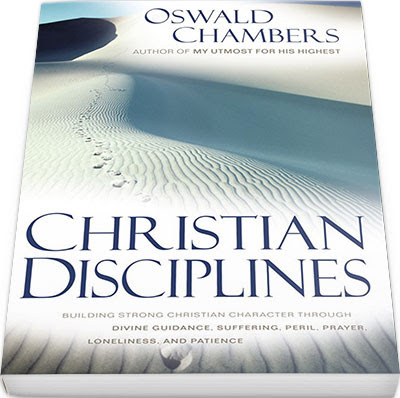
Christian Disciplines
Building Strong Christian Character through Divine Guidance, Suffering, Peril, Prayer, Loneliness, and Patience
Take a look at six important spiritual disciplines to help you build a strong Christian character and more inimate relationship with God.
BUY NOW
-------
My Utmost for His Highest
 
Facebook   Twitter   Instagram   Donate
My Utmost for His Highest for Saturday, 17 June 2017 "The Uncritical Temper"
Judge not, that ye be not judged. [Matthew 7:1]

Jesus says regarding judging — Don’t. The average Christian is the most penetratingly critical individual. Criticism is a part of the ordinary faculty of man; but in the spiritual domain nothing is accomplished by criticism. The effect of criticism is a dividing up of the powers of the one criticised; the Holy Ghost is the only One in the true position to criticise, He alone is able to show what is wrong without hurting and wounding. It is impossible to enter into communion with God when you are in a critical temper; it makes you hard and vindictive and cruel, and leaves you with the flattering unction that you are a superior person. Jesus says, as a disciple cultivate the uncritical temper. It is not done once and for all. Beware of anything that puts you in the superior person’s place.
There is no getting away from the penetration of Jesus. If I see the mote in your eye, it means I have a beam in my own. Every wrong thing that I see in you, God locates in me. Every time I judge, I condemn myself (see Romans 2:17-20). Stop having a measuring rod for other people. There is always one fact more in every man’s case about which we know nothing. The first thing God does is to give us a spiritual spring-cleaning; there is no possibility of pride left in a man after that. I have never met the man I could despair of after discerning what lies in me apart from the grace of God.
Wisdom From Oswald Chambers
The great thing about faith in God is that it keeps a man undisturbed in the midst of disturbance. [Notes on Isaiah, 1376 R]

Bible in One Year: Nehemiah 7-9; Acts 3


Nehemiah 7:1 After the wall had been rebuilt, and I had set up its doors, and the gatekeepers, singers and L’vi’im had been appointed, I put my kinsman Hanani in charge of Yerushalayim, along with Hananyah the commander of the citadel. For he was a faithful man, and he feared God more than most. I said to them, “The gates of Yerushalayim are not to be opened until the sun is hot; and while the gatekeepers are still on duty, have them shut the doors; and you, put up the bars. Appoint watchmen from among those living in Yerushalayim; assign each one his time to guard, and have each one serving near his own house.”The city was large and spacious, but there were few people in it, and the houses had not been rebuilt. My God put it in my heart to assemble the nobles, the leaders and the people, so that they could be registered according to their genealogies. I located the record of the genealogies of those who had come up at the beginning and found written in it:
“Here is a list of the people of the province who had been exiled, carried off to Bavel by N’vukhadnetzar king of Bavel, but who later returned from exile and went up to Yerushalayim and Y’hudah, each to his own city; they went with Z’rubavel, Yeshua, Nechemyah, ‘Azaryah, Ra‘amyah, Nachmani, Mordekhai, Bilshan, Misperet, Bigvai, N’chum and Ba‘anah.
“The number of men from the people of Isra’el:
descendants of Par‘osh2,172
descendants of Sh’fatyah372
10 descendants of Arach652
11 descendants of Pachat-Mo’av,
from the descendants of Yeshua and Yo’av2,818
12 descendants of ‘Eilam1,254
13 descendants of Zatu845
14 descendants of Zakkai760
15 descendants of Binui648
16 descendants of B’vai628
17 descendants of ‘Azgad2,322
18 descendants of Adonikam667
19 descendants of Bigvai2,067
20 descendants of ‘Adin655
21 descendants of Ater, of Y’chizkiyah98
22 descendants of Hashum328
23 descendants of Betzai324
24 descendants of Harif112
25 descendants of Giv‘on95
26 people of Beit-Lechem and N’tofah188
27 people of ‘Anatot128
28 people of Beit-‘Azmavet42
29 people of Kiryat-Ye‘arim, K’firah and Be’erot743
30 people of Ramah and Geva621
31 people of Mikhmas122
32 people of Beit-El and ‘Ai123
33 people from the other N’vo52
34 people from the other ‘Eilam1,254
35 descendants of Harim320
36 descendants of Yericho345
37 descendants of Lod, Hadid and Ono721
38 descendants of S’na’ah3,930
39 “The cohanim:
descendants of Y’da‘yah, of the house of Yeshua973
40 descendants of Immer1,052
41 descendants of Pash’chur1,247
42 descendants of Harim1,017
43 “The L’vi’im:
descendants of Yeshua, of Kadmi’el,
of the descendants of Hodvah74
44 “The singers:
descendants of Asaf148
45 “The gatekeepers:
descendants of Shalum,
descendants of Ater,
descendants of Talmon,
descendants of ‘Akuv,
descendants of Hatita, and
descendants of Shovai138
46 “The temple servants:
descendants of Tzicha,
descendants of Hasufa,
descendants of Taba‘ot,
47 descendants of Keros,
descendants of Si‘a,
descendants of Padon,
48 descendants of L’vanah,
descendants of Hagava,
descendants of Salmai,
49 descendants of Hanan,
descendants of Giddel,
descendants of Gachar,
50 descendants of Re’ayah,
descendants of Retzin,
descendants of N’koda,
51 descendants of Gazam,
descendants of ‘Uza,
descendants of Paseach,
52 descendants of Besai,
descendants of Me‘unim,
descendants of N’fish’sim,
53 descendants of Bakbuk,
descendants of Hakufa,
descendants of Harhur,
54 descendants of Batzlit,
descendants of M’chida,
descendants of Harsha,
55 descendants of Barkos,
descendants of Sisra,
descendants of Temach,
56 descendants of N’tziach, and
descendants of Hatifa.
57 “The descendants of Shlomo’s servants:
descendants of Sotai,
descendants of Soferet,
descendants of P’rida,
58 descendants of Ya‘lah,
descendants of Darkon,
descendants of Giddel,
59 descendants of Sh’fatyah,
descendants of Hatil,
descendants of Pokheret-Hatzvayim, and
descendants of Amon.
60 “All the temple servants and the
descendants of Shlomo’s servants numbered392
61 “The following went up from Tel-Melach, Tel-Harsha, K’ruv, Adon and Immer; but they could not state which fathers’ clan they and their children belonged to, [so it was not clear] whether they were from Isra’el:
62 descendants of D’layah,
descendants of Toviyah, and
descendants of N’koda642
63 and of the cohanim:
descendants of Havayah,
descendants of Hakotz, and
descendants of Barzillai, who took a wife from the
daughters of Barzillai the Gil‘adi and was named after them.
64 “These tried to locate their geneaolgical records, but they weren’t found. Therefore they were considered defiled and were not allowed to serve as cohanim. 65 The Tirshata told them not to eat any of the especially holy food until a cohen appeared who could consult the urim and tumim.
66 “The entire assembly numbered 42,360, 67 not including their male and female slaves, of whom there were 7,337. They also had 245 male and female singers. 68 Their horses numbered 736; their mules, 245; * 69 their camels, 435; and their donkeys, 6,720.
70 “Some from among the heads of fathers’ clans made contributions for the work. The Tirshata contributed to the treasury a thousand gold darkmonim [twenty-one pounds], fifty basins and 530 tunics for the cohanim. 71 Some of the heads of fathers’ clans gave into the treasury for the work 20,000 gold darkmonim [420 pounds] and 2,200 silver manim [one-and-a-third tons]. 72 The rest of the people gave 20,000 gold darkmonim, 2,000 silver manim [about one-and-a-quarter tons] and sixty-seven tunics for the cohanim.
73 “So the cohanim, the L’vi’im, the gatekeepers, the singers, some of the people, the temple servants and all Isra’el lived in their towns.”
(8:1) When the seventh month arrived, after the people of Isra’el had resettled in their towns,
8:all the people gathered with one accord in the open space in front of the Water Gate and asked ‘Ezra the Torah-teacher to bring the scroll of the Torah of Moshe, which Adonai had commanded Isra’el. ‘Ezra the cohen brought the Torah before the assembly, which consisted of men, women and all children old enough to understand. It was the first day of the seventh month. Facing the open space in front of the Water Gate, he read from it to the men, the women and the children who could understand from early morning until noon; and all the people listened attentively to the scroll of the Torah. ‘Ezra the Torah-teacher stood on a wood platform which they had made for the purpose; beside him on his right stood Mattityah, Shema, ‘Anayah, Uriyah, Hilkiyah and Ma‘aseiyah; while on his left were P’dayah, Misha’el, Malkiyah, Hashum, Hashbadanah, Z’kharyah and Meshulam. ‘Ezra opened the scroll where all the people could see him, because he was higher than all the people; when he opened it, all the people rose to their feet. ‘Ezra blessed Adonai, the great God; and all the people answered, “Amen! Amen!” as they lifted up their hands, bowed their heads and fell prostrate before Adonai with their faces to the ground. The L’vi’im Yeshua, Bani, Sherevyah, Yamin, ‘Akuv, Shabtai, Hodiyah, Ma‘aseiyah, K’lita, ‘Azaryah, Yozavad, Hanan and P’layah explained the Torah to the people, while the people remained in their places. They read clearly from the scroll, in the Torah of God, translated it, and enabled them to understand the sense of what was being read.
Nechemyah the Tirshata, ‘Ezra the cohen and Torah-teacher and the L’vi’im who taught the people said to all the people, “Today is consecrated to Adonai your God; don’t be mournful, don’t weep.” For all the people had been weeping when they heard the words of the Torah. 10 Then he said to them, “Go, eat rich food, drink sweet drinks, and send portions to those who can’t provide for themselves; for today is consecrated to our Lord. Don’t be sad, because the joy of Adonai is your strength.” 11 In this way the L’vi’im quieted the people, as they said, “Be quiet, for today is holy; don’t be sad.” 12 Then the people went off to eat, drink, send portions and celebrate; because they had understood the words that had been proclaimed to them.
13 On the second day, the heads of fathers’ clans of all the people assembled with the cohanim and L’vi’im before ‘Ezra the Torah-teacher to study the words of the Torah. 14 They found written in the Torah that Adonai had ordered through Moshe that the people of Isra’el were to live in sukkot during the feast of the seventh month; 15 and that they were to announce and pass the word in all their cities and in Yerushalayim, “Go out to the mountains, and collect branches of olives, wild olives, myrtles, palms, and other leafy trees to make sukkot, as prescribed.” 16 So the people went out, brought them and made sukkot for themselves, each one on the roof of his house, also in their courtyards, in the courtyards of the house of God, in the open space by the Water Gate and in the open space by the Efrayim Gate. 17 The entire community of those who had returned from the exile made sukkot and lived in the sukkot, for the people of Isra’el had not done this since the days of Yeshua the son of Nun. So there was very great joy. 18 Also they read every day, from the first day until the last day, in the scroll of the Torah of God. They kept the feast for seven days; then on the eighth day there was a solemn assembly, according to the rule.
9:On the twenty-fourth day of this month the people of Isra’el, wearing sackcloth and with dirt on them, assembled for a fast. Those descended from Isra’el separated themselves from all foreigners; then they stood up and confessed their own sins and the iniquities of their ancestors. Standing where they were, they read in the scroll of the Torah of Adonai their God for one-quarter of the day. For another quarter they confessed and prostrated themselves before Adonai their God. On the platform of the L’vi’im stood Yeshua, Bani, Kadmi’el, Sh’vanyah, Buni, Sherevyah, Bani and K’nani; they cried out loudly to Adonai their God. Then the L’vi’im Yeshua, Kadmi’el, Bani, Hashavn’yah, Sherevyah, Hodiyah, Sh’vanyah and P’tachyah said, “Stand up, and bless Adonai your God from everlasting to everlasting; let them say:
“‘Blessed be your glorious name,
exalted above all blessing and praise!
“‘You are Adonai, you alone.
You made heaven,
the heaven of heavens, with all their array,
the earth and all the things that are in it,
the seas and all that is in them;
and you preserve them all.
The army of heaven worships you.
“‘You are Adonai, the God who chose Avram,
brought him out of Ur-Kasdim
and gave him the name of Avraham.
Finding that he was faithful to you,
you made a covenant with him
to give the land of the Kena‘ani,
the Hitti, Emori and P’rizi,
the Y’vusi and the Girgashi,
to give it to his descendants;
and you have done what you promised,
because you are just.
“‘You saw the distress of our ancestors in Egypt
and heard their cry by the Sea of Suf.
10 You performed signs and wonders against Pharaoh,
against all his servants and the people of the land;
for you knew how arrogantly they treated them;
and you won yourself a name which is yours to this day.
11 You divided the sea ahead of them,
so that they could pass through the sea on dry land;
then you hurled their pursuers into the depths,
like a stone into turbulent waters.
12 “‘In a column of cloud you led them by day,
and by night in a column of fire,
so that they would have light ahead of them
on the way that they were to go.
13 “‘You descended on Mount Sinai
and spoke with them from heaven.
You gave them right rulings and true teachings,
good laws and mitzvot.
14 You revealed to them your holy Shabbat
and gave them mitzvot, laws and the Torah
through Moshe your servant.
15 “‘For their hunger you gave them bread from heaven;
for their thirst you brought forth for them water from the rock.
You ordered them to enter and possess the land
you had sworn with your hand to give them.
16 “‘But they and our ancestors were arrogant;
they stiffened their necks and ignored your mitzvot;
17 they refused to listen and paid no attention
to the wonders you had done among them.
No, they stiffened their necks, and in their rebellion
appointed a leader to return them to their slavery.
But because you are a God of forgiveness,
merciful, full of compassion,
slow to grow angry and full of grace,
you did not abandon them.
18 Even when they cast themselves a metal calf,
saying of it, “This is your god
that brought you up from Egypt,”
and committing other gross provocations;
19 still, you, in your great compassion,
did not abandon them in the desert.
The column of cloud did not leave them by day;
it kept leading them along the way.
By night the column of fire
kept showing them light and the path to take.
20 You also gave your good Spirit to teach them,
did not withhold man from their mouths
and provided them water to quench their thirst.
21 Yes, forty years you sustained them in the desert;
they lacked nothing —
their clothes did not wear out;
their feet did not swell up.
22 “‘You gave them kingdoms and peoples;
you even gave them extra land,
so that they took possession of the land of Sichon,
also the land of the king of Heshbon
and the land of ‘Og king of Bashan.
23 You made their children as numerous
as the countless stars in the sky.
“‘Then you brought them into the land
about which you had said to their fathers
that they should go in and take possession of it.
24 So the children went in and possessed the land,
as you subdued ahead of them
the Kena‘ani living in the land,
and handed them over to them,
along with their kings and the peoples of the land,
for them to do with as they wished.
25 They took fortified cities and fertile land,
possessed houses full of all kinds of good things,
dug-out cisterns, vineyards, olive groves,
fruit trees in plenty;
so they ate their fill and grew robust,
luxuriating in your great goodness.
26 “‘Yet they disobeyed and rebelled against you,
throwing your Torah behind their backs.
They killed your prophets for warning them
that they should return to you
and committed other gross provocations.
27 So you handed them over to the power
of their adversaries, who oppressed them.
Yet in the time of their trouble,
when they cried out to you,
you heard from heaven, and in keeping
with your great compassion,
you gave them saviors to save them
from the power of their adversaries.
28 But as soon as they had gotten some relief,
they went back to do evil before you.
So you left them in the power of their enemies,
who came down hard on them.
Yet when they returned and cried out to you,
you heard from heaven many times
and saved them, according to your compassion.
29 You warned them, in order to bring them back
to your Torah; yet they were arrogant.
They paid no attention to your mitzvot,
but sinned against your rulings,
which, if a person does them,
he will have life through them.
However, they stubbornly turned their shoulders,
stiffened their necks and refused to hear.
30 Many years you extended them mercy
and warned them by your Spirit through your prophets;
yet they would not listen.
Therefore you handed them over
to the peoples of the lands.
31 Even so, in your great compassion,
you didn’t completely destroy them;
nor did you abandon them,
for you are a compassionate and merciful God.
32 “‘Now therefore, our God,
great, mighty, fearsome God,
who keeps both covenant and grace:
let not all this suffering seem little to you
that has come on us, our kings, our leaders,
our cohanim, our prophets, our ancestors,
and on all your people,
from the times of the kings of Ashur
until this very day.
33 There is no question that you are just
in all that has come upon us;
for you have treated us fairly.
It is we who have acted wickedly.
34 Our kings, our leaders, our cohanim and ancestors
did not keep your Torah,
pay attention to your mitzvot
or heed the warnings you gave them.
35 Even when they ruled their own kingdom,
even when you prospered them greatly,
in the great, rich land you gave them,
they did not serve you;
nor did they turn from their wicked deeds.
36 “‘So here we are today, slaves.
Yes, in the land you gave our ancestors,
so that they could eat what it produces
and enjoy its good —
here we are in it, slaves!
37 Its rich yield now goes to the kings
you have set over us because of our sins;
they have power over our bodies,
they can do what they please to our livestock,
and we are in great distress!
Acts 3:1 One afternoon at three o’clock, the hour of minchah prayers, as Kefa and Yochanan were going up to the Temple, a man crippled since birth was being carried in. Every day people used to put him at the Beautiful Gate of the Temple, so that he could beg from those going into the Temple court. When he saw Kefa and Yochanan about to enter, he asked them for some money. But they stared straight at him; and Kefa said, “Look at us!” The crippled man fixed his attention on them, expecting to receive something from them. Kefa said, “I don’t have silver, and I don’t have gold, but what I do have I give to you: in the name of the Messiah, Yeshua of Natzeret, walk!” And taking hold of him by his right hand, Kefa pulled him up. Instantly his feet and ankles became strong; so that he sprang up, stood a moment, and began walking. Then he entered the Temple court with them, walking and leaping and praising God! Everyone saw him walking and praising God. 10 They recognized him as the same man who had formerly sat begging at the Beautiful Gate of the Temple, and they were utterly amazed and confounded at what had happened to him. 11 While he clung to Kefa and Yochanan, all the people came running in astonishment toward them in Shlomo’s Colonnade.
12 Seeing this, Kefa addressed the people: “Men of Isra’el! Why are you amazed at this? Or why do you stare at us as if we had made this man walk through some power or godliness of our own? 13 The God of Avraham, Yitz’chak and Ya‘akov, the God of our fathers,[Acts 3:13 Exodus 3:6, 15] has glorified his servant Yeshua — the same Yeshua you handed over and disowned before Pilate, even after he had decided to release him. 14 You denied the holy and innocent one, and instead asked for the reprieve of a murderer! 15 You killed the author of life!
“But God has raised him from the dead! Of this we are witnesses. 16 And it is through putting trust in his name that his name has given strength to this man whom you see and know. Yes, it is the trust that comes through Yeshua which has given him this perfect healing in the presence of you all.
17 “Now, brothers, I know that you did not understand the significance of what you were doing; neither did your leaders. 18 But this is how God fulfilled what he had announced in advance, when he spoke through all the prophets, namely, that his Messiah was to die.
19 “Therefore, repent and turn to God, so that your sins may be erased; 20 so that times of refreshing may come from the Lord’s presence; and he may send the Messiah appointed in advance for you, that is, Yeshua. 21 He has to remain in heaven until the time comes for restoring everything, as God said long ago, when he spoke through the holy prophets. 22 For Moshe himself said, Adonai will raise up for you a prophet like me from among your brothers. You are to listen to everything he tells you. 23 Everyone who fails to listen to that prophet will be removed from the people and destroyed.’[[Acts 3:23 Deuteronomy 18:15–16] 24 Indeed, all the prophets announced these days, starting with Sh’mu’el and continuing through all who followed.
25 “You are the sons of the prophets; and you are included in the covenant which God made with our fathers when he said to Avraham,
‘By your seed will all the families of the earth be blessed.’[Acts 3:25 Genesis 22:18; 26:4]
26 So it is to you first that God has sent his servant whom he has raised up, so that he might bless you by turning each one of you from your evil ways.”


Knocking at God’s Door Perpetual Calendar
The Personal Prayers of Oswald Chambers
Learn how to pray using Oswald Chambers’ personal prayers that encourage you to live your “utmost for His highest.”
BUY NOW
 
My Utmost for His Highest
My Utmost for His Highest © 1927 in the U.K. by Oswald Chambers Publications Association, Ltd. © 1935 by Dodd, Mead & Company, Inc. Copyright renewed 1963 by Oswald Chambers Publications Association, Ltd. All rights reserved. United States publication rights are held by Discovery House, which is affiliated with Our Daily Bread Ministries.

Scripture taken from the New King James Version. Copyright © 1982 by Thomas Nelson, Inc. Used by permission. All rights reserved.

Special offers are valid only for orders placed online and may not be combined with any other offers or coupons.

-------

No comments:

Post a Comment